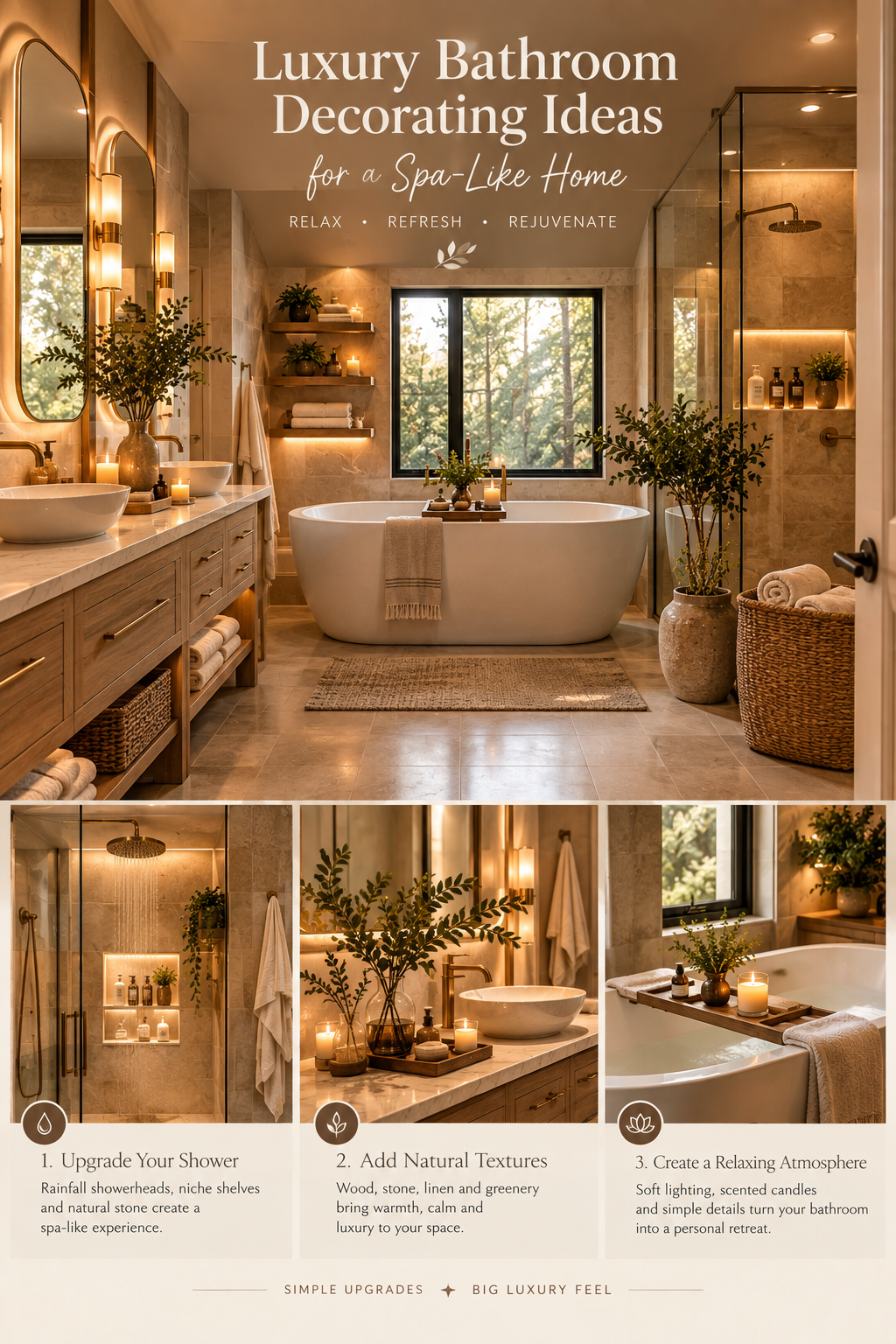
If you are looking for luxury bathroom decorating ideas for spa like home your bathroom should feel like more than a place for everyday routines. With the right combination of materials, lighting, organization, color, texture, and carefully selected fixtures, even an ordinary bathroom can become a private retreat that feels peaceful, sophisticated, and wonderfully indulgent. The goal is not simply to make the room look expensive. A truly beautiful luxury bathroom should create a sense of calm the moment you walk through the door.
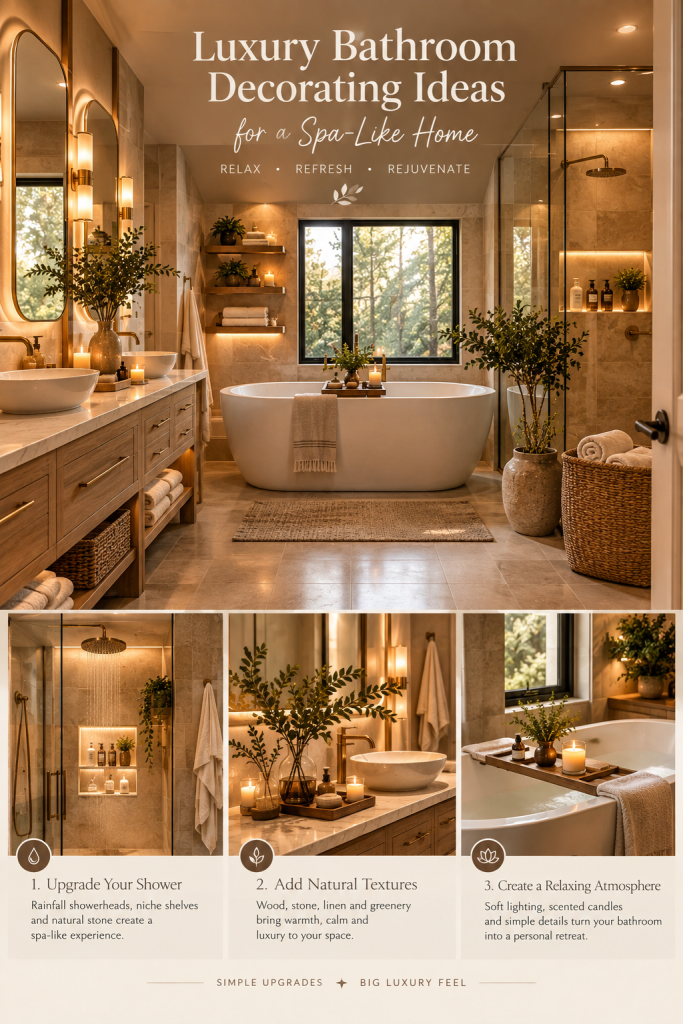
That spa-like feeling is becoming increasingly important in contemporary bathroom design. Current 2026 design coverage points toward bathrooms that prioritize wellness, tactile materials, personalized comfort, natural finishes, and thoughtful lighting rather than relying on a single dramatic feature. Designers are also using large-format stone, warm wood, layered illumination, generous shower zones, and carefully edited decorative details to create bathrooms that feel more like private wellness retreats than purely functional rooms. (Elle Decor)
The good news is that creating this atmosphere does not necessarily mean completely rebuilding your bathroom. Some transformations can come from decorative changes such as replacing harsh lighting, introducing coordinated towels, upgrading mirrors, adding natural textures, or changing the color palette. Other ideas require more planning, such as installing a walk-in shower, adding a freestanding bathtub, changing the vanity, or creating a custom stone feature wall.
The most successful luxury bathroom decorating ideas work because every element has a purpose. The materials feel connected, the colors transition naturally, storage keeps visual clutter hidden, and lighting changes the mood throughout the day. Instead of filling every empty surface with accessories, the room allows a few beautiful features to become the focus.
For a Pinterest-worthy bathroom, visual simplicity is particularly powerful. A photograph of a serene stone bathroom with a sculptural bathtub, warm lighting, soft towels, and one carefully placed piece of greenery can communicate luxury much more effectively than a room packed with decorative objects. The strongest spaces create an immediate emotional response: calm, comfort, warmth, and the feeling of escaping into a boutique spa without leaving home.
Below are 12 carefully developed luxury bathroom decorating ideas that combine sophisticated aesthetics with practical functionality. Each concept approaches the room differently, so you can adapt the ideas according to your bathroom’s size, architecture, budget, and personal style.
1. Create a Warm Stone Bathroom With a Seamless Luxury Look
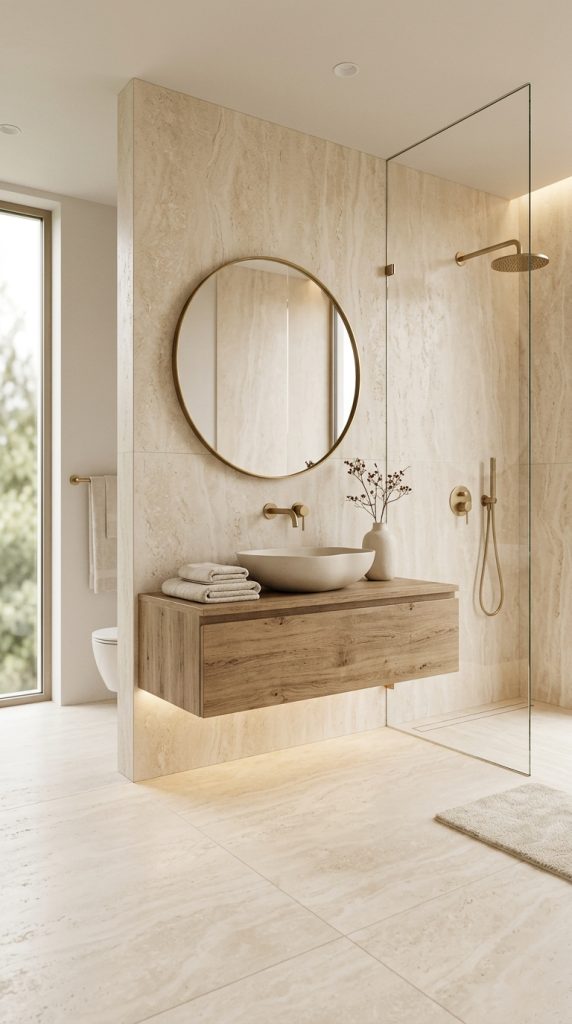
One of the most effective ways to make a bathroom feel luxurious is to let the material itself become the decoration. Instead of covering every surface with numerous competing patterns, choose one beautiful stone-inspired finish and allow it to visually connect several areas of the room.
Large-format marble, travertine-inspired porcelain, limestone-look surfaces, or warm stone-effect slabs can create an architectural background that immediately elevates the bathroom. Contemporary bathroom designers are increasingly using large-format surfaces because fewer grout lines create a calmer, more continuous appearance. (Good Housekeeping)
For a sophisticated spa bathroom, avoid selecting a stone simply because it is dramatic. Look for a finish with subtle movement, natural variation, and an undertone that works with your lighting. Creamy ivory stone with delicate beige veining can feel timeless, while warmer taupe or greige stone creates a more contemporary atmosphere.
One particularly beautiful approach is to use the same or visually related stone on the shower wall, vanity backsplash, and one architectural feature. This creates continuity without requiring every surface to be identical.
A warm stone wall behind the vanity can become the room’s primary focal point. Pair it with a simple floating vanity in natural oak and an integrated countertop basin. The contrast between organic stone and warm wood produces a sophisticated atmosphere without excessive decoration.
For the shower, consider extending the stone-look material vertically from floor to ceiling. This makes the shower feel larger and gives the bathroom the visual character of a luxury hotel suite.
The finishing details matter. Choose hardware in brushed brass, aged bronze, or another warm metallic finish if the stone has creamy or earthy undertones. If the room has cooler gray stone, brushed nickel or understated black may work more naturally.
Keep the decorative accessories extremely selective. One sculptural vase, a folded stack of plush towels, and a small wooden bath accessory can be enough.
For smaller bathrooms, use the stone strategically rather than covering everything. A feature wall behind the vanity can create the same luxury impression without overwhelming the room.
The important principle is continuity. When surfaces appear visually connected, the bathroom feels more intentional and architecturally sophisticated.
2. Design a Spa-Worthy Walk-In Shower With a Built-In Bench
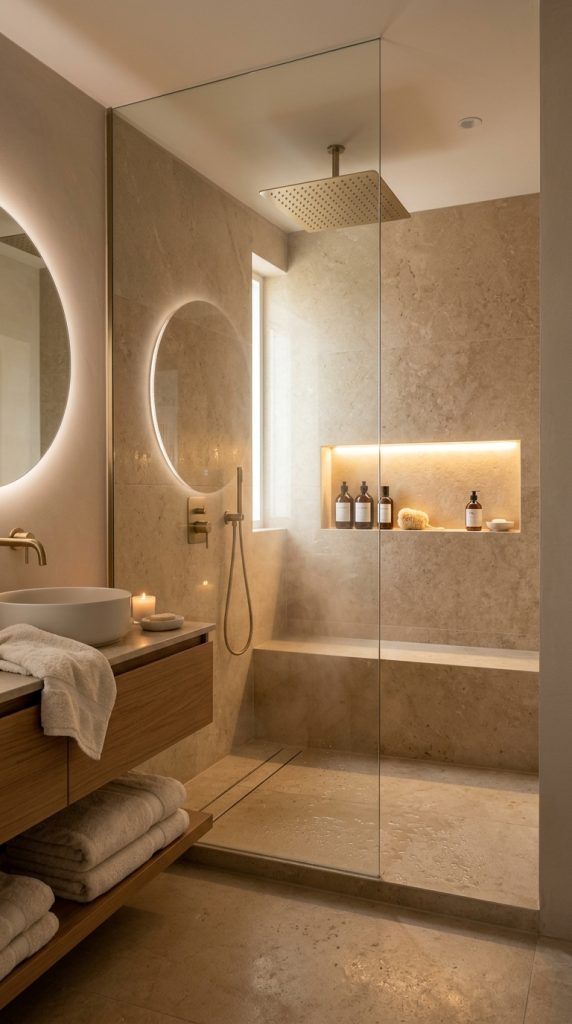
A beautiful walk-in shower can become the true centerpiece of a modern luxury bathroom. Rather than treating the shower as a small functional enclosure, design it as a comfortable wellness zone with generous proportions and carefully planned details.
A spacious walk-in shower immediately changes the experience of the room. Frameless glass keeps sightlines open, allowing the surrounding materials to remain visible. A curbless or low-threshold entrance can further strengthen the seamless appearance when appropriate for the home’s construction and drainage requirements.
Inside the shower, create visual interest through material rather than excessive decoration. A large-format stone surface, softly textured tile, or handmade-look wall finish can establish a sophisticated backdrop.
A built-in bench adds another level of comfort. It can be finished in the same stone as the walls or topped with a contrasting material. Instead of making the bench look like an additional object, integrate it into the architecture.
The shower niche should also be planned carefully. A recessed niche can hold shampoo, conditioner, soap, and other necessities while preventing bottles from covering the floor. Matching containers can make the area even more visually refined.
For a more luxurious experience, consider combining different shower functions. A large overhead rain shower can provide a relaxing flow while a separate handheld fixture offers practical flexibility.
The controls should be positioned thoughtfully so they can be reached without standing directly beneath the water stream. This small planning decision can make the shower more comfortable in everyday use.
Lighting is equally important. A shower needs functional illumination, but the goal is to avoid turning it into an overly bright commercial-looking space. Recessed waterproof lighting combined with soft ambient illumination can create a calmer atmosphere.
If your bathroom has a window, protect privacy while allowing natural light to enter through textured glass, appropriate window treatments, or architectural screening.
For a Pinterest-worthy composition, imagine a shower photographed through clear glass with a warm stone wall, built-in bench, recessed niche, soft lighting, and one neatly folded towel. The result communicates luxury without requiring dozens of accessories.
Current bathroom design coverage continues to highlight walk-in showers, wellness-oriented layouts, and comfortable shower experiences as important directions in contemporary luxury bathrooms. (Homebuilding)
3. Make a Freestanding Bathtub the Sculptural Focal Point
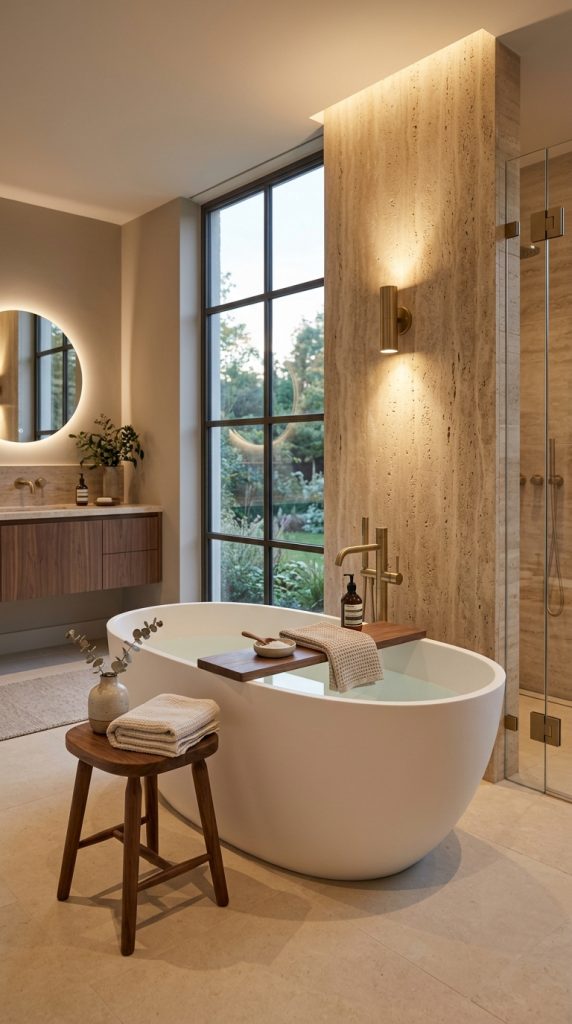
If you genuinely enjoy taking baths and have enough floor area, a freestanding tub can give your bathroom the visual drama of a boutique hotel or private spa.
The key is not simply purchasing an expensive bathtub. The surrounding space needs to support it.
An oval soaking tub with a smooth silhouette works beautifully in a calm luxury bathroom. White, warm ivory, stone, or matte finishes can create a softer appearance than highly glossy surfaces.
Placement is crucial. Instead of squeezing the tub into an unused corner, consider giving it enough visual breathing room to become an intentional architectural feature. A large window, textured wall, stone backdrop, or beautiful pendant fixture can strengthen its position as the focal point.
However, the bathtub should not dominate the entire room if doing so compromises functionality. Current 2026 bathroom discussions show that some homeowners are removing rarely used tubs to create larger showers and wellness zones, while freestanding tubs remain attractive when bathing is genuinely part of the homeowner’s lifestyle. (House Beautiful)
That makes the decision personal rather than purely trend-driven.
For decoration, use restraint. A slim wooden bath tray can hold a book or small accessory. A single ceramic vessel with a delicate branch can provide height. A neatly folded towel placed on a nearby stool adds softness.
Avoid turning the tub area into a collection of candles, plants, baskets, trays, and bottles. The empty space around the bathtub is part of its luxury.
If your bathroom is compact, choose a smaller sculptural soaking tub rather than forcing an oversized model into the room.
For homeowners who rarely take baths, use the available space differently. A large walk-in shower, built-in storage, or comfortable dressing area may provide more everyday value.
The luxury comes from creating a deliberate experience, not from installing a particular fixture simply because it looks impressive.
4. Layer the Bathroom Lighting Like a Five-Star Spa
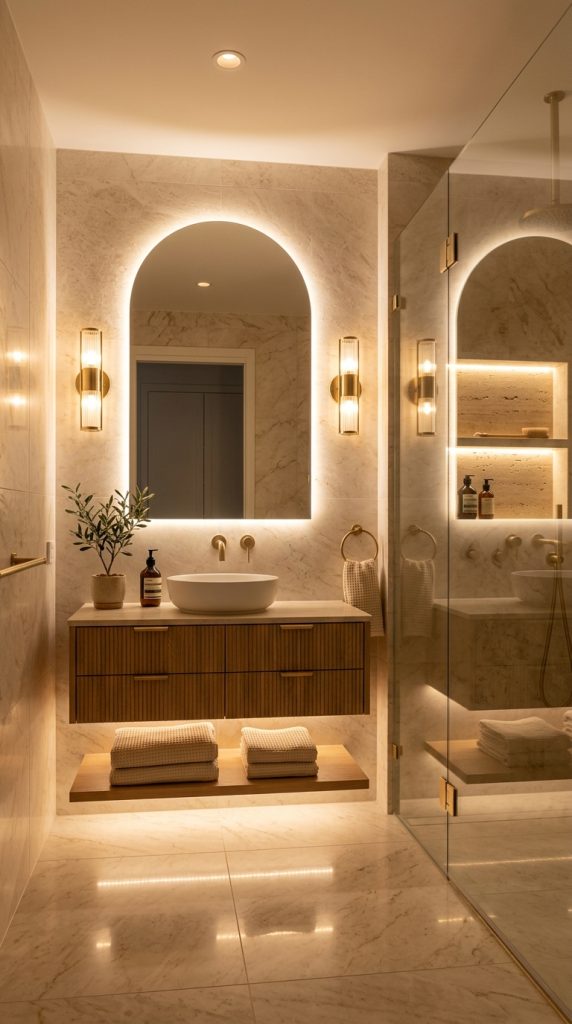
Lighting can completely change how an expensive bathroom looks and feels.
Even beautiful marble, elegant cabinetry, and designer fixtures can appear ordinary under a single harsh ceiling light. On the other hand, thoughtfully layered lighting can make simple materials feel dramatically more sophisticated.
Current 2026 bathroom trend reporting places strong emphasis on layered lighting rather than relying on one type of illumination. (Good Housekeeping)
Start by identifying the different functions of the room.
General lighting provides overall visibility. Task lighting helps around the vanity and mirror. Accent lighting highlights architectural features. Ambient lighting creates the relaxing atmosphere associated with a spa.
Around the vanity, use lighting that illuminates the face evenly. Wall sconces positioned appropriately beside the mirror can reduce unflattering shadows. Backlit mirrors can add a soft glow while keeping the vanity visually clean.
For architectural areas, concealed LED strips can highlight a recessed niche, floating vanity, shelving unit, or bathtub platform.
Under-vanity illumination is another elegant detail. A subtle glow beneath a floating vanity makes the cabinetry appear lighter and adds a beautiful nighttime effect.
If your bathroom has a bathtub, a decorative pendant can provide visual interest above or beside it where appropriate and safely installed.
Color temperature matters. Extremely cool white lighting can make a spa bathroom feel clinical. Warmer illumination generally creates a softer evening environment, while brighter task lighting can be used where precision is required.
The best solution allows the room to have different moods. Bright enough for morning routines, softer for evening relaxation.
Lighting controls can make this even more practical. Separate circuits or dimmers allow you to adjust the atmosphere without changing the fixtures.
Remember that bathroom electrical installations must follow local safety requirements and use fixtures rated for their specific location.
A beautiful bathroom should not merely be well lit. It should be beautifully illuminated.
5. Pair Natural Wood With Stone for Organic Luxury
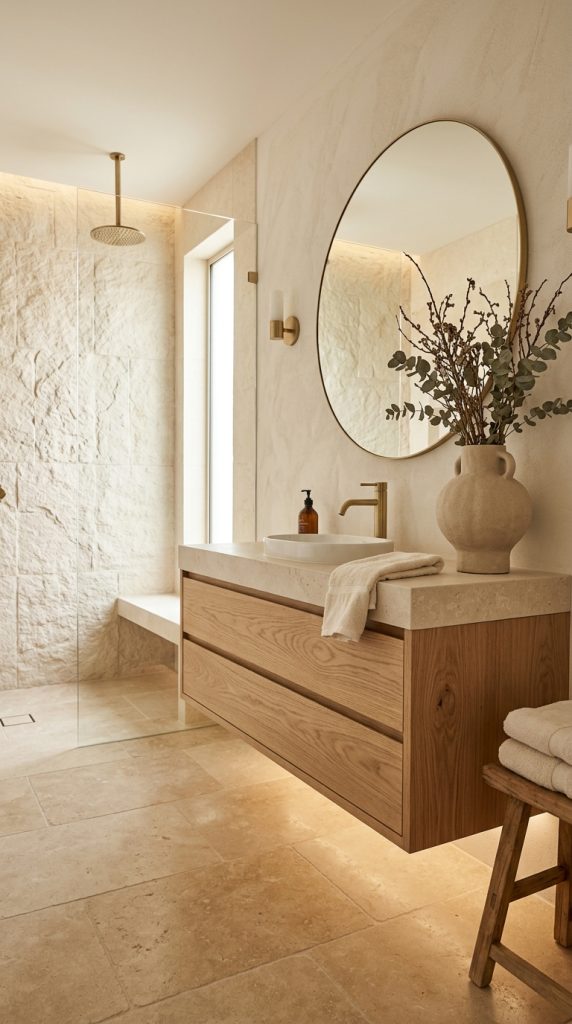
Luxury does not have to mean marble everywhere, polished metal, and glossy surfaces. Some of the most inviting high-end bathrooms combine hard architectural materials with warm natural textures.
Natural wood is particularly effective because bathrooms naturally contain many cool, smooth surfaces. Stone, porcelain, glass, and metal can sometimes feel visually hard. Wood introduces warmth and depth.
A floating oak vanity is one of the easiest ways to achieve this balance. Choose a simple cabinet with visible grain and minimal decorative detailing.
Walnut creates a deeper, richer atmosphere, while white oak creates a lighter Scandinavian or organic-modern feeling.
Pair the vanity with a stone countertop in a complementary tone. Cream stone with warm oak produces a soft, sophisticated palette. Darker walnut can work beautifully with limestone-inspired surfaces or muted marble.
You can continue the wood through smaller details without overusing it. A wooden stool, bath tray, framed mirror, or carefully selected storage box can reinforce the material story.
The important consideration is bathroom suitability. Real wood products should be appropriately sealed and selected for humid environments. Where maintenance is a concern, quality wood-look finishes can provide a similar appearance.
The overall color palette should remain restrained.
Imagine warm ivory walls, sand-colored stone, honey oak cabinetry, brushed brass fixtures, and cream textiles. There is very little visual noise, yet the combination feels rich because each material contributes a different texture.
This approach also works exceptionally well for Pinterest because natural materials photograph beautifully. Grain, stone variation, linen, woven baskets, and soft towels create visual depth even when the overall room is minimalist.
The result feels less like a showroom and more like a sophisticated private retreat.
6. Build a Luxury Vanity Wall With Hotel-Inspired Symmetry
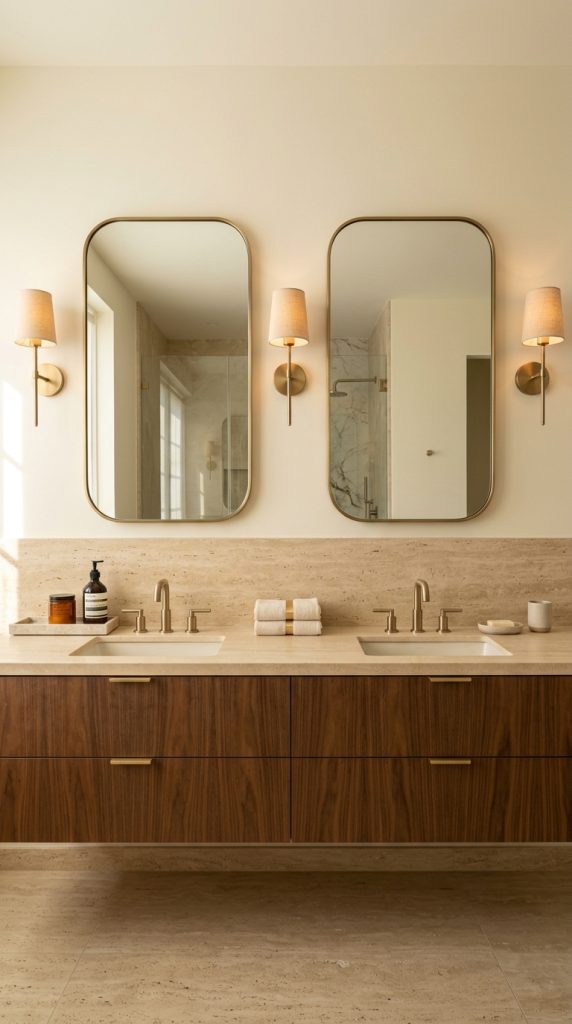
A beautifully designed vanity can give the bathroom an instant sense of order.
For larger bathrooms, consider designing the vanity wall as one complete architectural composition rather than purchasing separate pieces that happen to sit next to each other.
A long floating vanity with two integrated sinks can establish symmetry. Place matching mirrors above each sink and use coordinated wall lighting to create balance.
Between the mirrors, a narrow vertical shelf or decorative stone panel can introduce a subtle focal point.
For a more luxurious appearance, extend the countertop slightly beyond the cabinetry and use a continuous backsplash material. This creates a custom-built appearance.
Storage is essential. A beautiful vanity should hide the practical items that can make a bathroom look messy.
Use drawers with internal organizers for cosmetics, grooming products, hair tools, and everyday essentials. Keep frequently used items accessible but concealed whenever possible.
Instead of leaving dozens of products on the countertop, reserve the visible surface for only a few intentional objects.
A ceramic soap dispenser, small stone tray, folded hand towel, and simple vase may be enough.
The mirror should also be considered part of the architecture. Oversized rectangular mirrors create a clean contemporary look, while softly rounded mirrors can make the room feel more relaxed.
Integrated medicine cabinets can provide hidden storage without adding visual bulk. Some modern versions combine concealed storage with integrated illumination.
Hardware should connect with the rest of the room. If the shower uses brushed brass, repeat that finish subtly at the vanity rather than introducing an unrelated metallic color.
Symmetry works particularly well when you want the bathroom to feel calm and luxurious because the eye can easily understand the composition.
7. Introduce a Quiet Earth-Tone Color Palette
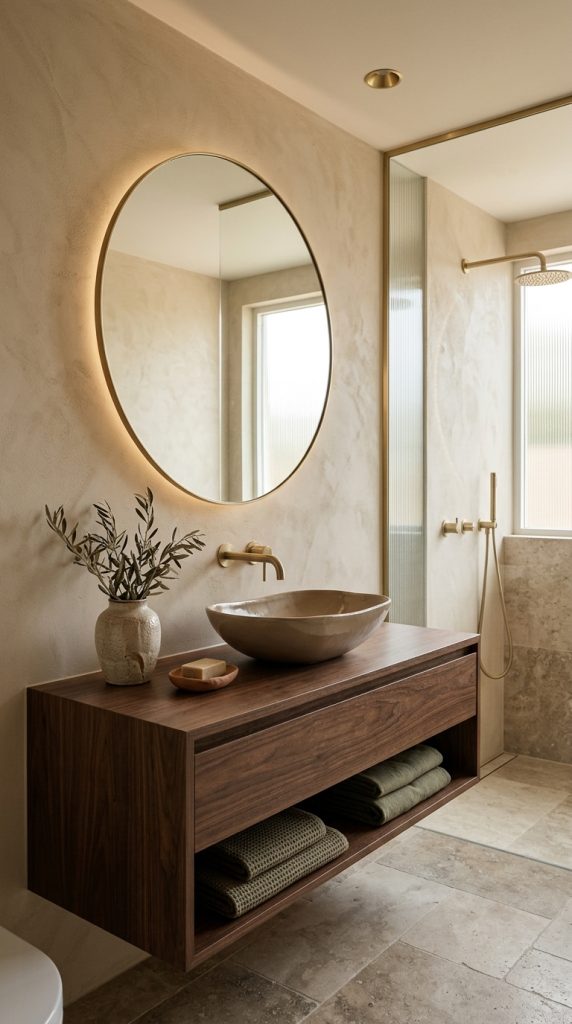
Color is one of the easiest ways to transform a bathroom without changing its entire layout.
For a spa-like atmosphere, start with colors inspired by nature rather than highly saturated tones. Warm ivory, sand, taupe, mushroom, clay, muted olive, soft beige, and gentle stone gray can all work beautifully.
The trick is to use several shades within the same visual family instead of treating every surface as a separate color.
For example, the walls could be a warm ivory, the vanity a medium oak, the floor a sandy stone, and the towels a slightly darker taupe.
This creates depth without visual chaos.
You can introduce a restrained accent color through textiles or artwork. Muted olive can provide an organic feeling. Deep brown can add sophistication. Soft terracotta can bring warmth.
Current 2026 bathroom coverage describes a movement toward warmer, more tactile and natural palettes rather than relying exclusively on stark white finishes. (Elle Decor)
That does not mean white bathrooms are unusable. White can still be elegant when combined with texture and warm undertones. The problem occurs when every surface has the same bright, flat white finish and the room begins to feel clinical.
If you have white tile that cannot be replaced, introduce warmth through wood, towels, lighting, rugs, artwork, and accessories.
For small bathrooms, tonal decorating can also help the room feel visually continuous. When walls, floors, and major fixtures have closely related tones, there are fewer strong visual interruptions.
For a Pinterest image, earth tones photograph beautifully under warm natural light.
The final effect should resemble a quiet desert spa, boutique hotel bathroom, or refined wellness retreat rather than a heavily decorated traditional bathroom.
8. Add a Dedicated Towel and Textile Experience
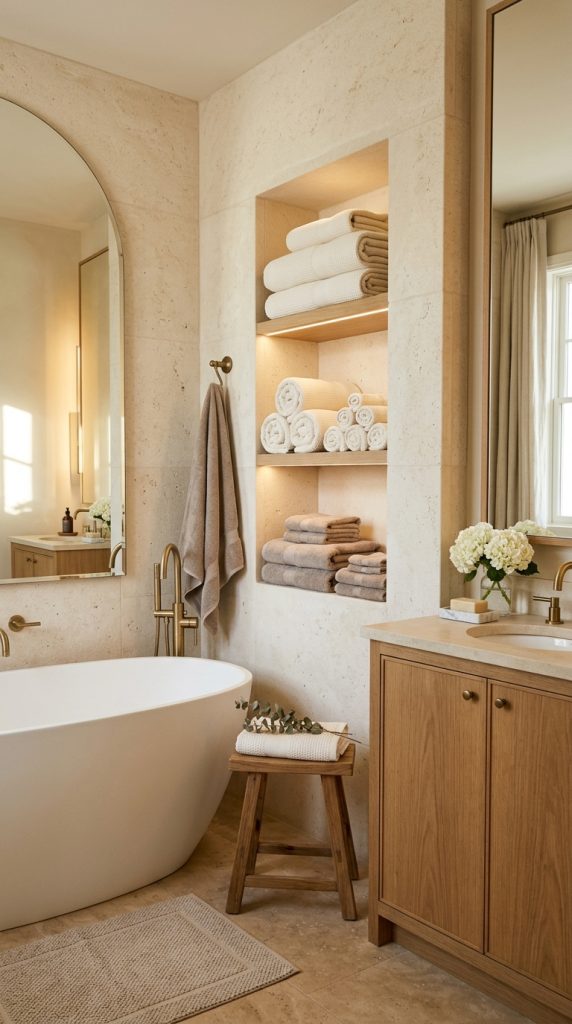
Soft textiles are an underrated part of luxury bathroom design.
A beautiful bathroom can still feel unfinished if towels are thin, mismatched, or randomly displayed.
Instead, treat towels as part of the room’s visual styling.
Choose a coordinated palette that complements the walls, vanity, and flooring. Cream, ivory, taupe, warm gray, muted sage, and soft brown are versatile choices for a sophisticated bathroom.
Use different sizes intentionally. Large bath sheets can be folded or rolled in a dedicated open niche, while hand towels can be placed near the vanity.
Instead of displaying dozens of towels, keep only a curated selection visible.
A heated towel rail can add comfort where appropriate, while a sculptural ladder-style towel rack can create a more decorative appearance.
A small upholstered or wooden stool near the bathtub can hold one neatly folded towel without creating clutter.
For a more hotel-inspired feeling, fold towels consistently. A stack with clean edges looks considerably more polished than loosely piled textiles.
Storage should remain practical. Reserve closed cabinets for backup towels, cleaning supplies, and extra toiletries so the open areas remain visually calm.
You can also introduce a washable bath mat with subtle texture rather than a heavily patterned design. Natural-looking cotton, stone-inspired tones, or understated woven materials work especially well.
The tactile experience matters. A spa atmosphere is not only visual. Soft towels, comfortable flooring underfoot, pleasant lighting, and organized surfaces all contribute to how the space feels during daily use.
This idea is also relatively accessible for renters or homeowners who do not want a major renovation.
Sometimes replacing textiles and improving their presentation can make the entire bathroom feel refreshed.
9. Create a Biophilic Spa Bathroom With Carefully Chosen Greenery
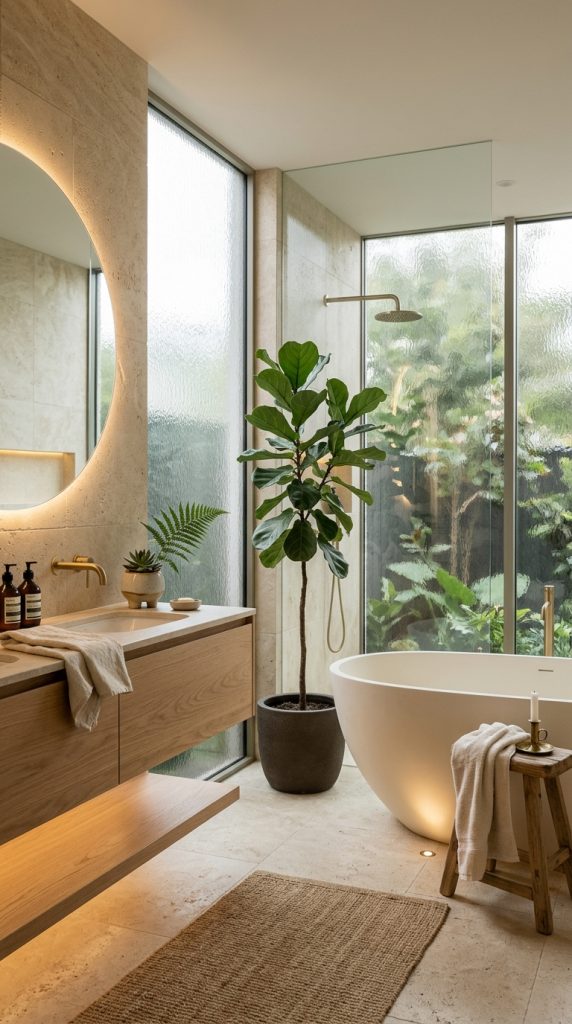
Plants can soften a bathroom’s architectural surfaces, but luxury styling requires restraint.
Instead of placing small plants on every available shelf, choose one or two pieces that have enough visual presence to matter.
A tall plant can fill an otherwise empty corner beside a vanity or bathtub. A smaller moisture-tolerant plant can sit on a shelf or countertop if the environment suits it.
The plant should complement the bathroom rather than become its main feature.
For a warm organic bathroom, pair greenery with wood, stone, and woven materials. A sculptural plant in a textured ceramic planter can look particularly sophisticated.
If natural light is limited, choose appropriate low-light options or use realistic high-quality artificial greenery rather than forcing a plant into an unsuitable environment.
The container matters as much as the plant. Cheap plastic pots can undermine an otherwise luxurious bathroom. Choose ceramic, stone, matte finishes, or carefully selected woven containers that coordinate with the room.
You can also create a more subtle biophilic feeling without actual plants. Natural stone patterns, wood grain, earthy colors, organic shapes, and daylight can all introduce a connection to nature.
This is particularly effective in bathrooms where maintenance or humidity makes plant care difficult.
A large window overlooking greenery can be an extraordinary design feature if privacy and architecture permit. Frosted or textured glass can allow daylight while protecting the room from direct views.
The goal is not to create a jungle.
It is to create a quiet visual connection with nature.
One carefully selected plant against a warm stone wall can have more impact than ten small decorative plants scattered throughout the room.
10. Turn the Bathroom Into a Personal Wellness Zone
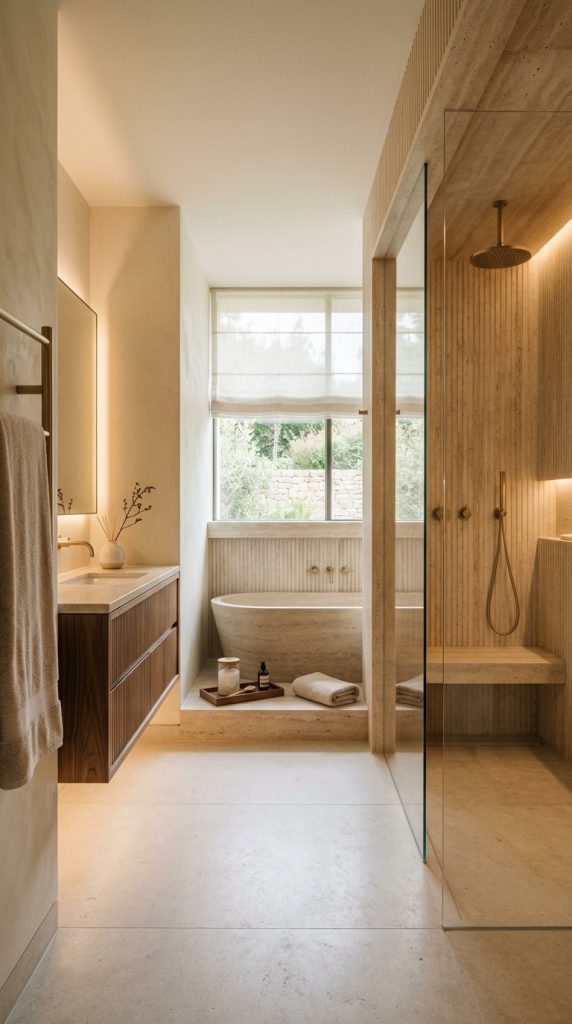
A spa-like bathroom becomes truly meaningful when it supports the way you actually relax.
Think beyond decoration.
If you enjoy long showers, prioritize a generous shower area and comfortable water controls. If you enjoy bathing, make the tub the centerpiece. If skincare is part of your daily routine, design convenient storage around the vanity. If you value quiet mornings, make lighting and organization support a slower start to the day.
Wellness-focused bathroom design is increasingly influencing contemporary luxury spaces. Current industry and design coverage highlights features such as steam showers, saunas, improved shower experiences, comfortable seating, and other wellness-oriented elements. (Good Housekeeping)
You do not need every feature.
Instead, choose one or two that genuinely improve your routine.
A built-in shower bench can provide comfort. A handheld shower can improve practicality. A deep soaking tub can create a dedicated relaxation ritual. A heated towel solution can make mornings more comfortable.
You can also create a small self-care shelf or cabinet containing only the products you use regularly.
Keep the area visually calm.
For example, a beautiful tray beside the bathtub could hold a small candle, bath salts in a covered container, and one folded towel. The rest remains stored away.
Music can also become part of the atmosphere through appropriately installed bathroom-safe technology.
A dimmer-controlled lighting system can transition from brighter morning illumination to softer evening lighting.
The key is personalization.
A luxury bathroom should not imitate a generic hotel room perfectly. It should borrow the qualities people love about spas—quietness, comfort, order, sensory softness, and thoughtful details—and adapt them to your lifestyle.
11. Use Architectural Mirrors to Make the Bathroom Feel Larger
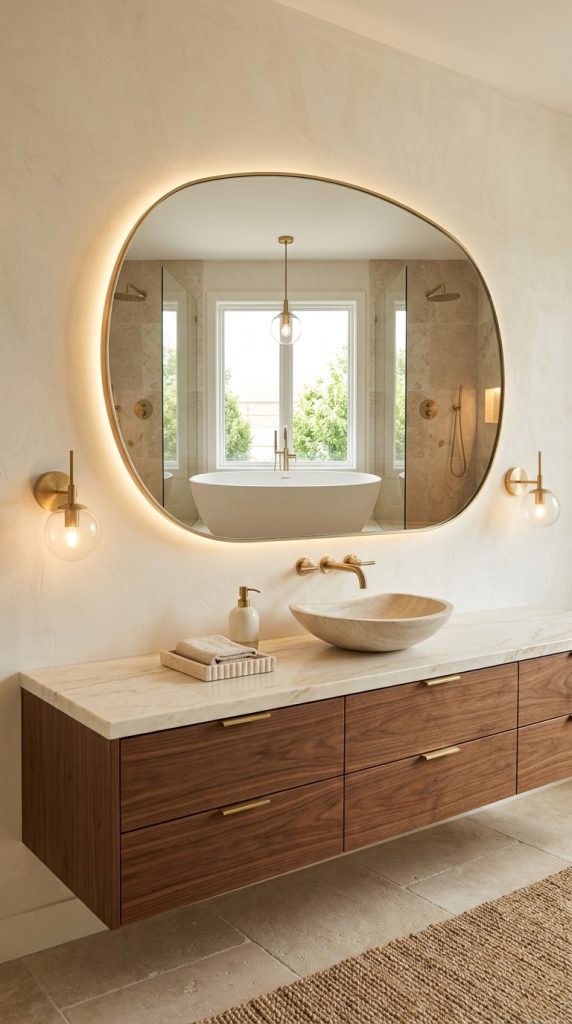
A mirror is not merely a practical object. In a luxury bathroom, it can function as a major architectural element.
A large mirror can reflect natural light, visually expand the room, and create a stronger sense of proportion around the vanity.
For a modern bathroom, consider a large frameless mirror extending across the vanity wall. This can create a seamless appearance and visually enlarge the space.
For a softer design, use mirrors with rounded corners or organic silhouettes.
A thin metal frame can introduce a subtle decorative detail. Brass works well with warm palettes, while black can create a stronger contemporary contrast.
Backlighting is another option. A softly illuminated mirror can create an elegant floating effect, particularly in the evening.
However, the mirror should not become excessively bright. The purpose of integrated lighting is to support both visibility and atmosphere.
If your bathroom is narrow, a wide mirror can make the room appear broader. If the ceiling is low, a vertically oriented mirror can emphasize height.
Double vanities benefit from either one large continuous mirror or two carefully proportioned mirrors. Choose the arrangement according to the architecture rather than following a rigid rule.
The area around the mirror should remain visually quiet.
Avoid placing too many accessories directly around it because reflections multiply visual clutter.
A simple mirror, beautiful lighting, elegant vanity, and restrained accessories can produce a remarkably sophisticated result.
For Pinterest photography, mirrors also create opportunities for depth. A carefully composed reflection can show the bathtub, pendant lighting, or greenery without requiring those elements to dominate the main frame.
This makes the bathroom appear more layered and spacious.
12. Finish the Room With Curated Luxury Details
The final layer of a luxury bathroom should be intentional rather than excessive.
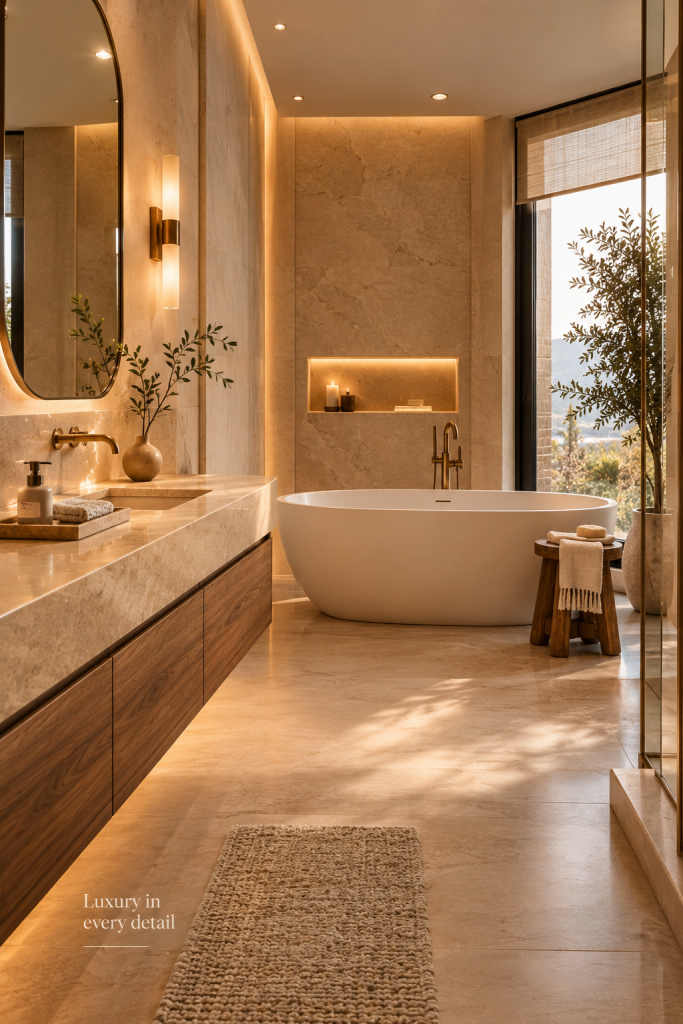
Once the major decisions—layout, flooring, walls, vanity, shower, bathtub, and lighting—are complete, decorative details should reinforce the design instead of competing with it.
Begin with the countertop.
Leave generous negative space around the sink. Place only the objects that genuinely contribute to the room.
A beautiful stone tray can organize a soap dispenser and hand lotion. A small ceramic vessel can hold one branch. A sculptural object can add personality if there is enough room.
Near the bathtub, use one wooden tray, a folded towel, or a simple bath accessory.
Wall art can also work beautifully in a bathroom when the artwork and framing are appropriate for the environment. Abstract landscapes, botanical drawings, photography, or understated graphic pieces can add personality without making the room feel busy.
Hardware is another important detail.
Coordinate the visible finishes across faucets, cabinet pulls, towel bars, shower fixtures, and other hardware where appropriate. Consistency creates a polished appearance.
However, luxury does not necessarily require every item to be identical. Carefully mixed finishes can create a more collected look, provided there is a clear relationship between them.
Storage should be the final invisible luxury.
The bathroom should look beautiful because everyday clutter has somewhere to go.
Keep spare toilet paper, cleaning products, extra toiletries, hair tools, and backup towels inside appropriate cabinets or drawers. Open shelving should be reserved for objects that are attractive enough to remain visible.
A beautiful bathroom needs breathing room.
Do not fill every corner simply because there is space available.
Current luxury-bathroom guidance increasingly emphasizes intentionality, tactile materials, comfort, and visual calm rather than decorating every surface. (Homebuilding)
The final room should feel effortless.
When you walk in, the eye should immediately understand the design. The materials should feel connected, the lighting should be flattering, storage should be discreet, and the decorative objects should look chosen rather than accumulated.
That is what turns a decorated bathroom into a luxurious personal retreat.
How to Make a Bathroom Feel Luxurious Without a Full Remodel
A complete bathroom renovation is not always necessary to create a more sophisticated atmosphere.
Start by identifying the elements that visually make the room feel dated or chaotic.
Lighting is often one of the easiest places to begin. Replace overly harsh bulbs with more flattering illumination and consider adding a decorative wall light or illuminated mirror where appropriate.
Next, improve the textiles. Coordinated towels, a refined bath mat, and one attractive shower curtain if applicable can immediately make the room feel more intentional.
Change the visual clutter.
Move everyday products into drawers, cabinets, or matching containers. Keep only a few beautiful objects visible.
Introduce warmth through wood-look accessories, natural baskets, stone trays, or ceramic pieces.
A new mirror can also dramatically alter the room without changing plumbing or flooring.
If the walls are suitable for painting, choose a warm neutral rather than an overly cool white.
Finally, focus on one major focal point. This could be a beautiful mirror, an upgraded vanity, an attractive shower wall, a sculptural bathtub, or an elegant piece of lighting.
You do not need every luxury feature at once.
One strong architectural improvement combined with several small styling changes can create a much more cohesive result.
How to Choose a Luxury Bathroom Style That Will Stay Beautiful
Before purchasing expensive fixtures or materials, decide what kind of atmosphere you want.
An organic modern bathroom works well with natural oak, warm stone, soft neutral colors, rounded shapes, and minimal accessories.
A modern luxury bathroom can combine large-format stone, floating cabinetry, frameless glass, sculptural fixtures, and understated metallic details.
A Japandi spa bathroom can use pale wood, textured stone, warm neutrals, clean lines, and very limited decoration.
A boutique hotel bathroom can emphasize dramatic mirrors, elegant lighting, plush textiles, marble-inspired surfaces, and sophisticated hardware.
A warm traditional bathroom can incorporate classic cabinetry, natural stone, aged brass, framed mirrors, and timeless architectural details.
Choosing a direction before shopping prevents the room from becoming a mixture of unrelated trends.
The goal is not to copy every popular bathroom style appearing on Pinterest.
Instead, identify the elements that create the emotional response you want and combine them into a coherent design.
Small Luxury Bathroom Decorating Ideas
A small bathroom can still feel incredibly expensive.
The secret is visual continuity.
Use fewer materials and repeat them strategically. A single stone-inspired surface can visually connect the shower and vanity. A wall-to-wall mirror can make the room appear larger. Floating cabinetry can create more visible floor area.
Choose a compact vanity with excellent internal storage rather than an oversized cabinet.
A frameless glass shower enclosure can prevent the shower from visually dividing the room.
Use vertical space through tall storage, recessed niches, and full-height wall treatments.
Keep decorative objects to a minimum.
A small bathroom does not need fewer beautiful details; it needs better-selected details.
Warm lighting is particularly important because a small room can quickly feel clinical under strong overhead illumination.
A soft combination of vanity lighting, ceiling lighting, and subtle accent illumination can create depth.
If you love luxury stone but cannot afford a full slab installation, consider using a premium porcelain or stone-look material in a strategic area.
The goal is to make every visible element count.
Luxury Bathroom Decorating Mistakes to Avoid
Even an expensive bathroom can lose its sophisticated appearance when too many unrelated decisions compete for attention.
One common mistake is mixing several stone patterns. If the floor has strong veining, the shower walls have another dramatic pattern, and the countertop introduces a third, the room can quickly feel chaotic.
Another problem is excessive open storage. Shelves filled with brightly colored product bottles rarely create a spa atmosphere.
Poor lighting is another major issue. A bathroom designed around beautiful materials still needs illumination that supports both function and mood.
Oversized furniture can also make the room uncomfortable. Luxury is not about filling every available square foot.
A bathroom should have enough clearance around major fixtures for comfortable movement and cleaning.
Another mistake is choosing finishes only because they are currently popular. Trends can provide inspiration, but materials should also suit the architecture of the home and your long-term preferences.
Finally, avoid excessive decoration.
A spa-like bathroom should have moments of quiet.
The empty wall, open floor space, uncluttered countertop, and clean sightline are all part of the design.
How to Make Your Luxury Bathroom More Pinterest-Worthy
Pinterest favors visual ideas that immediately communicate an aspirational transformation.
For a luxury bathroom pin, choose one clear focal point rather than trying to show every design feature simultaneously.
A sculptural bathtub against a beautiful stone wall is one composition.
A warm wood vanity with an oversized mirror is another.
A dramatic walk-in shower with a built-in bench creates a third.
Use vertical imagery with enough negative space around the main feature so the room remains easy to understand on a mobile screen.
Photography should emphasize texture. Marble or stone veining, wood grain, plush towels, brushed metal, glass, and soft lighting all create visual interest.
Avoid filling the image with excessive accessories.
The most save-worthy luxury bathroom images usually make the viewer imagine themselves experiencing the space.
Show comfort.
Show warmth.
Show beautiful materials.
Show organization.
Show an atmosphere that feels achievable in concept, even if the exact room is aspirational.
For text overlays, keep the wording short. A simple phrase such as “Luxury Bathroom Ideas”, “Spa Bathroom Inspiration”, or “Create a Spa-Like Bathroom” is easier to read than a paragraph placed over the photograph.
The image should remain the hero.
Final Thoughts
A luxury bathroom is ultimately about creating an experience.
The most beautiful spaces do not rely on expensive materials alone. They combine thoughtful planning, comfortable proportions, calming colors, tactile surfaces, intelligent storage, flattering lighting, and a small number of memorable details.
Whether you are designing a large primary bathroom or refreshing a compact space, begin with the feeling you want the room to create.
Maybe you want a quiet Japanese-inspired retreat with warm wood and stone.
Maybe you prefer a glamorous boutique-hotel atmosphere with marble and brass.
Perhaps an organic modern bathroom with natural textures feels more appropriate.
Or you may simply want a comfortable room where the daily routine feels calmer and more enjoyable.
Start there.
Then choose every element around that intention.
Current bathroom design is increasingly moving toward spaces that support relaxation, wellness, comfort, and individuality rather than purely decorative luxury. (Elle Decor)
That makes the spa-like bathroom an especially strong direction for homeowners who want both beauty and functionality.
The best luxury bathroom decorating ideas are not necessarily the most extravagant ones. They are the ones that make the room feel considered from every angle.
A beautiful stone surface can establish the foundation.
A warm wood vanity can add character.
A spacious shower can improve everyday comfort.
Layered lighting can change the mood.
Soft textiles can introduce tactile luxury.
Hidden storage can remove visual distractions.
And a carefully chosen decorative object can give the room personality.
When these elements work together, the bathroom becomes more than a functional space. It becomes a private retreat—a place where the first moments of the morning feel calmer and the final moments of the evening feel more restorative.
That is the real meaning of luxury at home: not simply having more, but creating a space where every element feels intentional, beautiful, comfortable, and completely suited to the way you live.
Leave a Reply