
Spicy cinnamon and chocolate brown living room ideas are perfect for creating a home that feels warm, inviting, elegant, and timeless. This rich color combination brings together the comforting warmth of cinnamon, the deep sophistication of chocolate brown, and the softness of complementary neutrals such as cream, ivory, beige, and warm taupe. Whether you prefer a modern living room, a cozy apartment, a contemporary luxury interior, or a relaxed space filled with natural textures, these earthy shades can help you create a room that feels both stylish and comfortable.

Chocolate brown has become a beautiful alternative to traditional black, gray, and cool-toned neutrals. It offers depth without feeling as harsh as black and adds more character than a plain beige palette. Cinnamon introduces a spicy, reddish-brown warmth that makes the room feel lively without relying on bright or overwhelming colors. Together, these shades create a layered interior that looks sophisticated in natural daylight and especially inviting under warm evening lighting.
The secret to decorating with these colors is balance. Too much dark brown can make a small living room feel heavy, while too much cinnamon can make the overall design appear overly orange or visually busy. Combining both shades with lighter fabrics, natural wood, carefully selected lighting, and varied textures creates a more harmonious result. You can use chocolate brown as the foundation through a sofa, accent wall, or large rug, then introduce cinnamon through cushions, curtains, throws, artwork, and decorative accessories.
These colors also work beautifully with different interior design styles. In a modern living room, chocolate brown furniture paired with clean-lined cream seating creates a refined contrast. In a rustic space, cinnamon textiles, walnut furniture, and textured ceramics bring out the natural character of the palette. For a luxurious interior, velvet upholstery, marble surfaces, sculptural lamps, and subtle brass accents add richness without making the room feel excessive. If you prefer a minimalist home, just a few carefully selected cinnamon and chocolate brown elements can create enough warmth and personality.
Lighting is another important part of this color scheme. Chocolate brown absorbs more light than pale neutrals, so it helps to incorporate several sources of illumination instead of depending entirely on one ceiling fixture. Table lamps, floor lamps, wall sconces, and soft accent lighting create a comfortable glow that enhances the depth of brown furniture and cinnamon textiles. During the day, sheer curtains and unobstructed windows can help maintain an airy feeling, especially in smaller living rooms.
You do not need to purchase an entirely new furniture set to achieve this look. If your living room already has a beige, cream, gray, or neutral sofa, you can introduce the palette gradually through cinnamon-colored cushions, chocolate brown curtains, a warm wood coffee table, or a patterned rug. A few coordinated accessories can transform the atmosphere without requiring a complete renovation. Renters can also experiment with removable wall coverings, portable lamps, lightweight textiles, and decorative objects that can move with them.
The following 20 ideas explore different ways to use spicy cinnamon and chocolate brown in a living room. Each approach focuses on a distinct design feature, from statement sofas and accent walls to layered rugs, curtains, artwork, lighting, and natural materials. You will also find practical styling guidance to help you choose colors, arrange furniture, avoid common decorating mistakes, and adapt the look to different room sizes and budgets.
The goal is not simply to make your living room brown. It is to create a thoughtfully layered space where rich earthy colors feel intentional, the furniture remains comfortable, and every detail contributes to a warm, sophisticated atmosphere.
1. Create a Chocolate Brown Sofa as the Main Focal Point
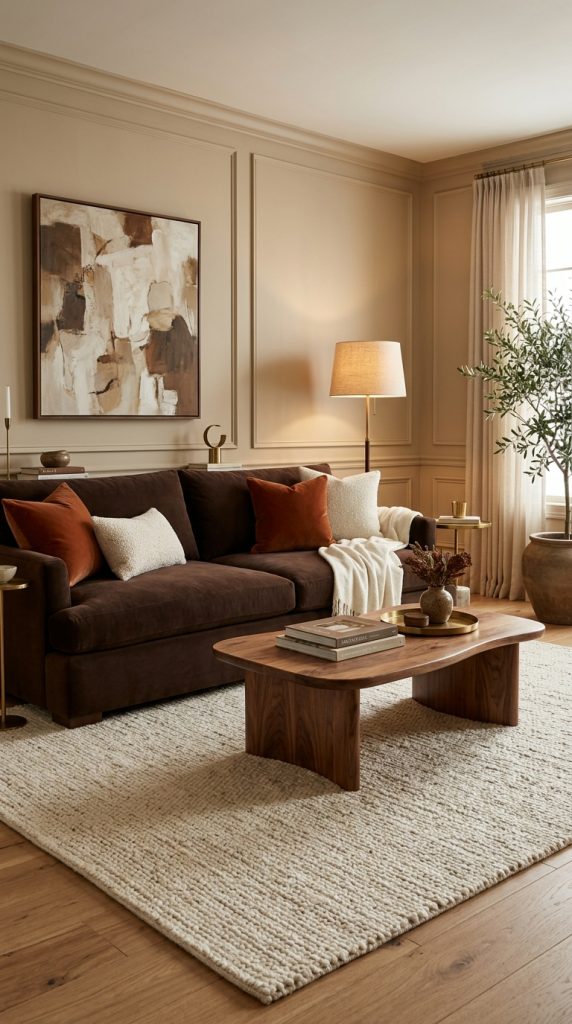
A chocolate brown sofa is one of the most effective ways to establish a sophisticated foundation for a cinnamon-inspired living room. Its deep, earthy color creates visual weight and makes lighter accessories stand out beautifully. Depending on the upholstery, a chocolate sofa can look modern, traditional, luxurious, or relaxed.
For a contemporary space, choose a sofa with clean lines, gently rounded arms, and simple cushions. A low-profile design can make the room feel modern, while a generously cushioned silhouette creates a more relaxed atmosphere. Velvet upholstery introduces a subtle sheen and rich color variation, whereas linen-look fabric or textured woven upholstery offers a softer, more casual appearance.
Pair the sofa with cinnamon-colored cushions in different shades. One or two spicy cinnamon cushions can introduce warmth, while cream and beige cushions prevent the arrangement from appearing too dark. A textured ivory throw draped over one arm adds softness and breaks up the solid brown surface.
A warm oak or walnut coffee table works particularly well with this arrangement. Choose a table with a shape that complements the sofa rather than competing with it. A rounded wooden table can soften a room dominated by rectangular furniture, while a simple rectangular design suits a more structured layout.
For the surrounding palette, use warm white walls, a beige area rug, and understated artwork. This combination allows the chocolate brown sofa to remain the focal point without making the entire living room feel heavy.
How to style it: Begin with the sofa, then add two cinnamon cushions, two cream cushions, a textured throw, and a warm wood coffee table. Repeat chocolate brown in a smaller accessory elsewhere in the room to make the color feel connected rather than isolated.
Best for: Modern living rooms, apartments, family spaces, and anyone who wants a timeless furniture investment.
2. Design a Cinnamon Accent Wall Behind Neutral Furniture
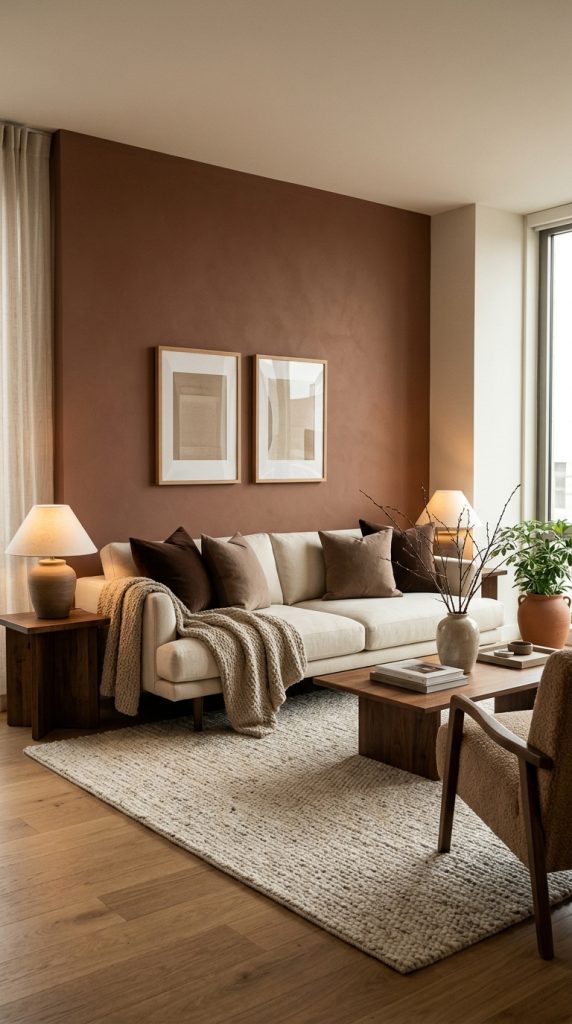
A cinnamon accent wall introduces warmth and personality without requiring dark colors across every surface. It works particularly well behind a cream sofa, beige sectional, or light neutral seating arrangement because the contrast feels intentional and balanced.
Cinnamon can range from muted terracotta-brown to deeper reddish spice tones. For a sophisticated interior, select a shade with earthy undertones rather than a highly saturated orange. The right shade should feel warm and grounded in both daylight and artificial lighting.
Before painting, test a few sample colors on different parts of the wall. Cinnamon can look lighter and more orange in direct sunlight, while evening lighting may make it appear deeper and redder. Observe the samples throughout the day before making a final decision.
Place a cream or oatmeal sofa in front of the accent wall. Add chocolate brown cushions, a walnut side table, and artwork that incorporates ivory, brown, muted rust, or charcoal. A large framed artwork can provide a visual anchor, but leave enough wall visible to appreciate the color.
Lighting can enhance the effect. A floor lamp with a warm shade or a pair of wall sconces can create a gentle glow across the painted surface. Avoid overly bright, cool-toned bulbs, which can make earthy colors appear less inviting.
If painting is not permitted, removable wallpaper in a suitable warm terracotta or cinnamon shade may provide an alternative, provided the product is appropriate for the wall surface and rental agreement.
How to style it: Keep the larger furniture pieces neutral, use chocolate brown for smaller accents, and allow the cinnamon wall to provide the strongest color statement.
Best for: Renters using removable finishes, neutral living rooms that need more character, and spaces where a single wall can become a focal point.
3. Layer Cinnamon and Chocolate Brown Throw Pillows
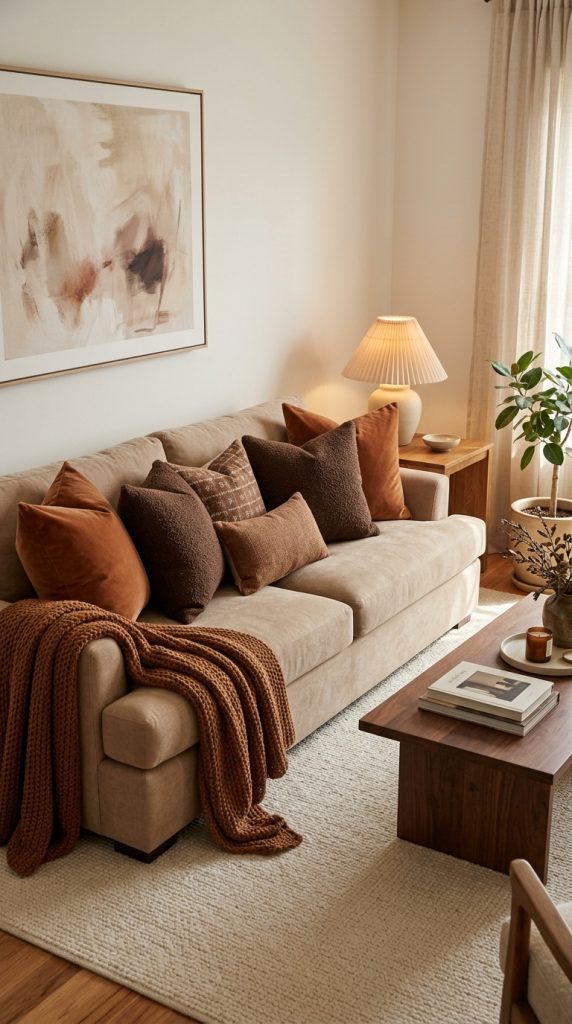
Throw pillows are an easy way to introduce the color combination without changing your main furniture. They also allow you to experiment with different shades and textures before committing to a larger purchase.
Start with a base of cream or beige cushions, then add cinnamon and chocolate brown in varying sizes. A balanced arrangement might include two larger chocolate brown cushions, two medium cinnamon cushions, and one smaller patterned cushion that combines both colors with ivory.
Texture matters as much as color. Velvet brings depth and a refined finish, woven cotton adds casual comfort, and bouclé or nubby fabrics introduce tactile interest. Linen-look covers can create a relaxed appearance that suits modern organic and minimalist interiors.
Avoid selecting every cushion in the same material. A collection of identical smooth fabrics can look flat, even when the colors are attractive. Combining matte and subtly lustrous surfaces creates a more layered arrangement.
For a sectional sofa, distribute the colors across the seating rather than grouping all the brown cushions at one end. A cinnamon cushion near one corner can be balanced by a similar shade on the opposite side. The arrangement does not need to be perfectly symmetrical, but it should feel visually connected.
You can also use the same palette on an accent chair. A chocolate brown chair with a cinnamon lumbar cushion can help repeat the colors without making the main sofa arrangement too busy.
How to style it: Use an approximate 60–30–10 balance across the cushion colors, adjusting the proportions to suit the sofa and surrounding decor. Treat this as a starting point rather than a strict rule.
Best for: Budget-friendly updates, seasonal refreshes, neutral sofas, and anyone who enjoys changing accessories throughout the year.
4. Combine a Chocolate Brown Sofa With a Cream Area Rug
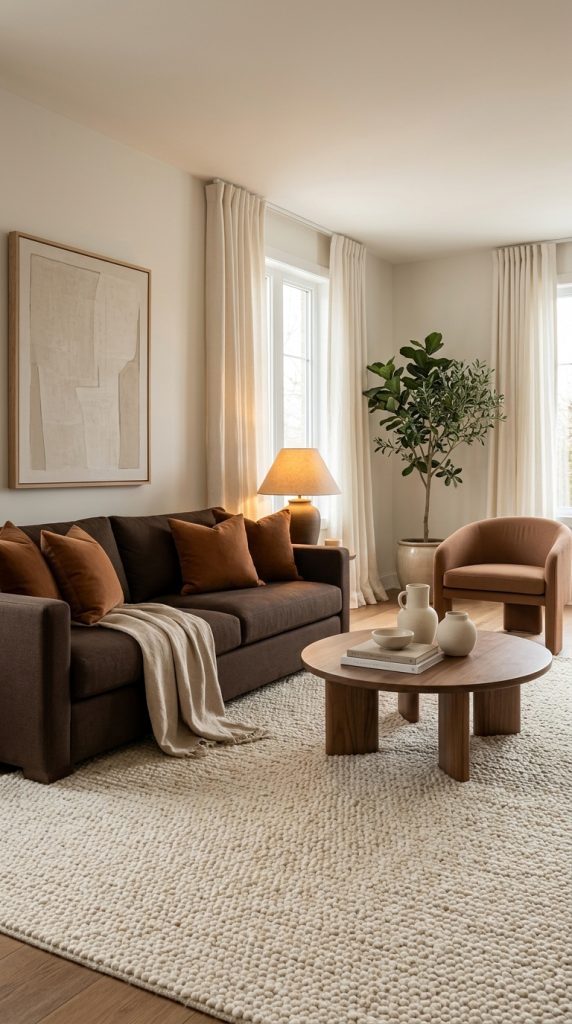
A cream area rug can visually lighten a living room anchored by dark brown furniture. It creates contrast beneath the sofa and coffee table while helping the entire seating arrangement feel connected.
Choose a rug with enough texture to prevent the cream color from appearing flat. Wool, wool-blend, cotton, and other suitable textured materials can add dimension without introducing an additional dominant color. A subtle geometric pattern or low-contrast brown motif can also connect the rug to the furniture.
Size is especially important. A rug that is too small may make the furniture arrangement look disconnected. Whenever possible, select a size that allows the front legs of the sofa and chairs to rest on the rug. In a larger room, a rug that accommodates most of the seating arrangement can create a more unified appearance.
Introduce cinnamon through a throw, cushions, or a small decorative object on the coffee table. The rug should provide a calm visual foundation rather than compete with the warm accent colors.
If you have children or pets, consider the practical demands of a pale rug. A washable rug or a durable, stain-resistant material may be easier to maintain than a delicate cream textile. Check the manufacturer’s care instructions and use a suitable rug pad to help prevent slipping.
For a polished look, repeat cream elsewhere through curtains, lampshades, or wall art. This creates continuity and prevents the rug from looking like an isolated pale area beneath dark furniture.
How to style it: Choose the rug before adding smaller decorative accessories. Its color and size will influence the balance of the entire seating area.
Best for: Small living rooms that need visual lightness, dark sofas, open-plan homes, and modern interiors.
5. Add Warm Wood Furniture for Natural Depth
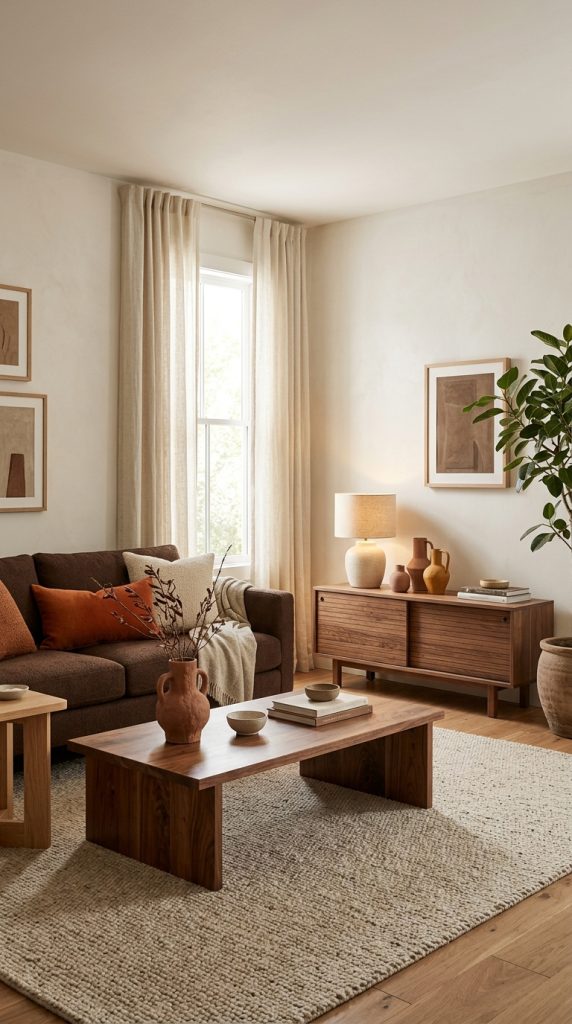
Warm wood is a natural partner for cinnamon and chocolate brown because it shares the palette’s earthy undertones. Walnut, medium oak, and other warm-toned finishes can make a living room feel cohesive without requiring every surface to match.
A walnut coffee table can introduce depth, while a lighter oak side table can provide contrast. This combination is often more interesting than using the exact same wood finish for every piece of furniture.
For a sophisticated look, prioritize a few well-proportioned pieces. A sculptural coffee table, a simple media console, or a compact wooden side table can contribute more to the overall design than numerous small furniture items.
If your sofa is chocolate brown, select wood furniture that contrasts slightly with its upholstery. A medium walnut finish often creates a beautiful transition between dark fabric and lighter walls. If your room already has dark floors, introduce lighter wood in smaller pieces to keep the space from feeling overly dense.
Cinnamon can appear through ceramic vases, linen cushions, or artwork. These smaller elements connect the wood to the rest of the palette without making the room look entirely brown.
Pay attention to undertones. Very orange wood can clash with certain reddish cinnamon shades, while strongly gray-toned wood may feel disconnected from a warm palette. Bringing physical samples together before purchasing can help you evaluate the combination under your actual lighting.
How to style it: Use one main wood finish for the largest pieces and introduce a second related finish sparingly. Repeat the selected tones in frames, trays, or smaller accessories.
Best for: Modern organic interiors, rustic contemporary rooms, mid-century-inspired living rooms, and homes that emphasize natural materials.
6. Use Cinnamon Curtains to Frame the Windows
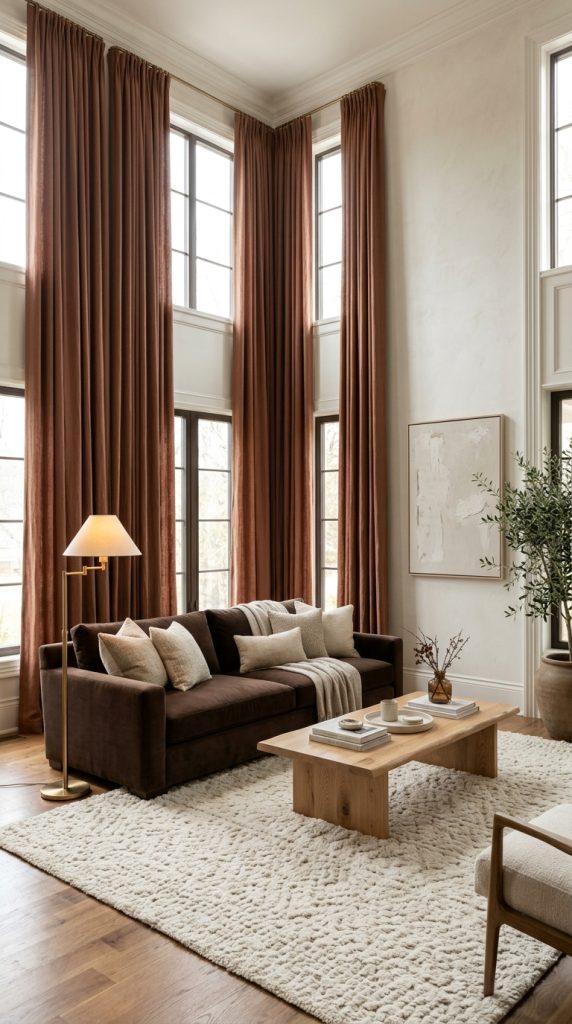
Cinnamon curtains can soften a living room and introduce warm color around the windows. They are especially effective in spaces with cream walls, chocolate brown furniture, and natural wood accents.
For an elegant appearance, choose full-length curtains that extend close to the floor. Mounting the curtain rod slightly above the window frame can draw the eye upward, while allowing the fabric to hang in generous folds creates a more finished look.
The fabric determines the atmosphere. Linen or linen-look curtains create a relaxed, natural appearance. Velvet curtains introduce more drama and can complement a luxurious chocolate brown sofa. Medium-weight woven fabrics offer a practical middle ground.
Consider how much natural light the room receives. In a darker living room, lighter cinnamon or muted terracotta curtains may be more suitable than a very deep reddish brown. In a bright room, richer cinnamon curtains can provide a striking contrast.
Chocolate brown can be repeated through a curtain rod, side table, or cushions. However, avoid matching every textile exactly. A slight variation in shade and texture creates a more sophisticated layered result.
For privacy, consider a suitable lining or combine decorative curtains with separate blinds. If the living room is small, choose a curtain design with minimal pattern so the windows remain visually calm.
How to style it: Pair cinnamon curtains with a cream rug, chocolate brown furniture, and a warm wood coffee table. Keep the window area uncluttered so the fabric remains the main feature.
Best for: Living rooms with large windows, neutral walls, high ceilings, and interiors that need warmth without a full repaint.
7. Create a Chocolate Brown Accent Wall With Cinnamon Decor
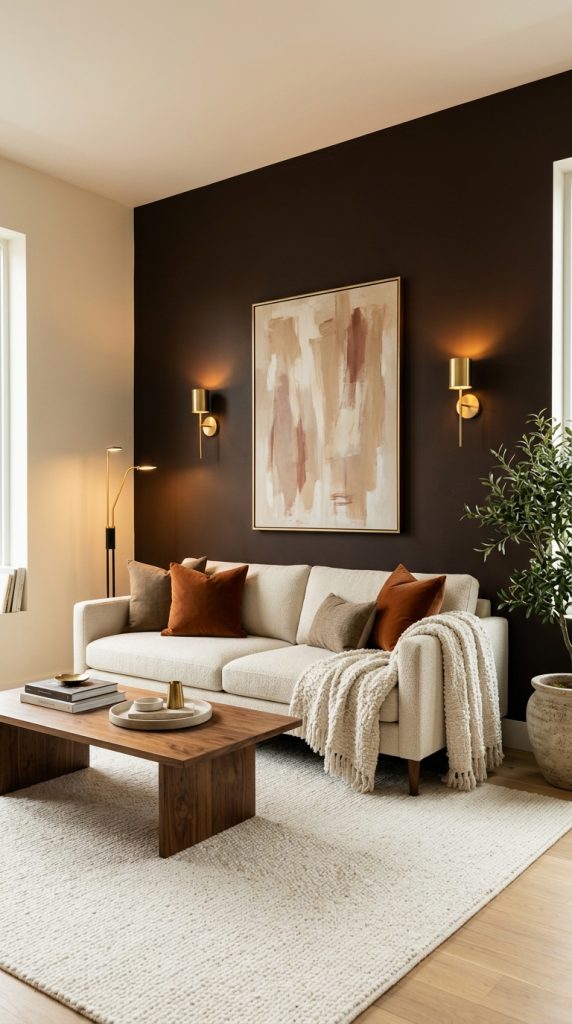
If you prefer a dramatic interior, a chocolate brown accent wall can create a rich background for cinnamon accessories. This approach differs from a cinnamon wall because the darker backdrop makes the room feel more intimate and visually grounded.
Choose a deep brown with a warm undertone rather than a shade that appears almost black in the room’s lighting. Paint can look substantially darker across a large surface than it does on a small sample, so testing the color is essential.
A chocolate brown wall works well behind a cream sofa, a light upholstered chair, or a carefully arranged gallery wall. Natural wood furniture can connect the dark wall to the rest of the room, while cinnamon cushions and ceramics introduce controlled warmth.
Lighting is particularly important. A dark accent wall can absorb light, so combine daylight with floor lamps, table lamps, or wall sconces. Place a lamp near the seating area to create a welcoming pool of light rather than relying on a single bright ceiling fixture.
Keep the surrounding walls lighter if you want a balanced contrast. If you prefer a more enveloping look, you can extend the darker palette to a second surface, but be mindful of the room’s size and available light.
Artwork with cream, cinnamon, muted rust, or warm metallic details can stand out beautifully against the wall. Choose a few larger pieces rather than filling the entire surface with small objects.
How to style it: Use chocolate brown as the architectural feature, cream as the main visual relief, and cinnamon as the accent color. Layer warm lighting to preserve depth without sacrificing comfort.
Best for: Larger living rooms, well-lit spaces, media walls, and homeowners who enjoy a dramatic yet refined atmosphere.
8. Style a Cinnamon Velvet Accent Chair
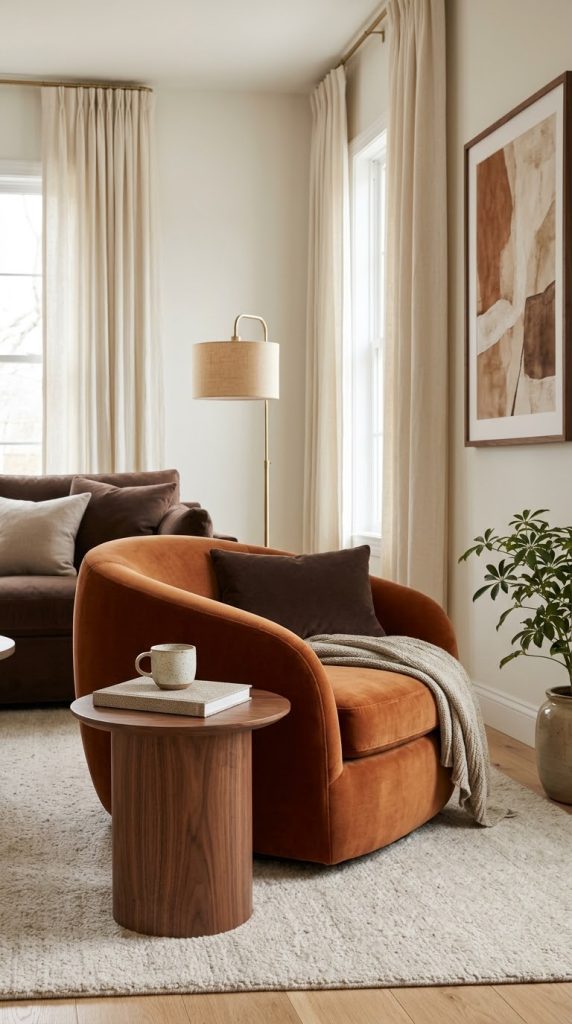
A cinnamon velvet accent chair can introduce a concentrated burst of warmth without overwhelming the living room. It is an especially useful option when your main sofa is beige, cream, or chocolate brown.
Look for a chair with a shape that complements the rest of your furniture. A rounded silhouette creates a softer, more relaxed impression, while a structured chair with slim legs can look more contemporary. Choose a size that leaves enough room for comfortable movement around the seating area.
Velvet adds richness because its surface reflects light differently depending on the direction of the fibers. This variation can make cinnamon appear deeper and more dimensional than it would in a flat fabric.
Place the chair near a window, beside a small walnut side table, or at an angle facing the main sofa. A floor lamp and a small stack of books can turn the corner into a functional reading area.
To connect the chair to the rest of the palette, repeat cinnamon in a small cushion, artwork detail, or ceramic vase. Chocolate brown can appear through the coffee table or a nearby upholstered piece.
Avoid surrounding the chair with too many competing accent colors. Its purpose is to provide a clear focal point, so let the upholstery remain prominent.
How to style it: Combine the chair with a neutral rug, a warm wood side table, and a soft cream throw. Add a warm-shaded lamp to make the corner feel inviting after sunset.
Best for: Small living rooms, reading corners, neutral furniture schemes, and interiors that need one distinctive accent piece.
9. Build a Layered Look With Chocolate Brown and Cinnamon Textiles
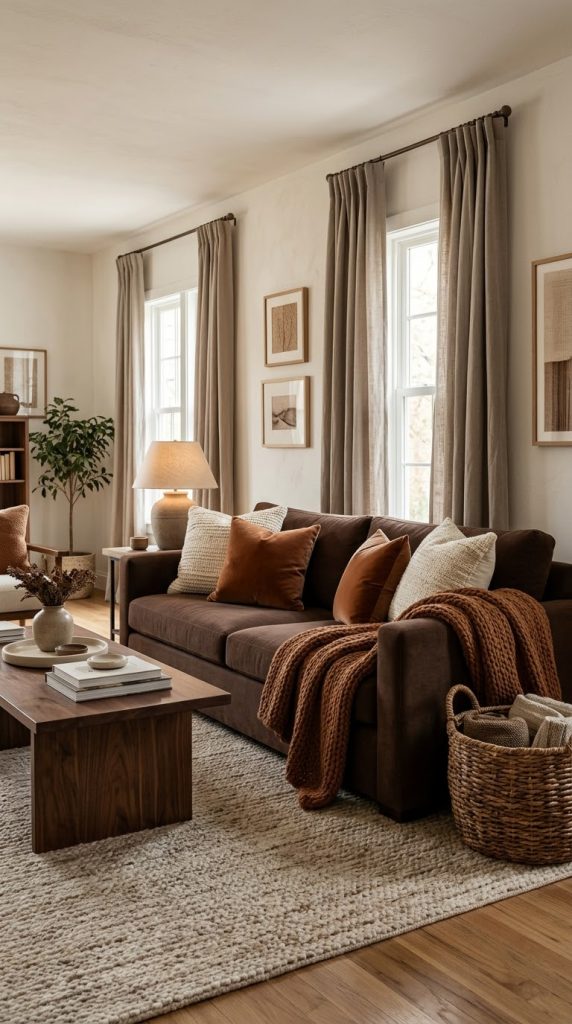
Textiles make a living room feel comfortable and visually complete. By combining chocolate brown and cinnamon across cushions, throws, curtains, and rugs, you can create a coordinated interior that feels rich rather than overly matched.
Begin with the largest textile surfaces. A cream or beige rug provides a calm base, while cinnamon curtains or a chocolate brown sofa introduce stronger color. Smaller textiles can then connect the larger pieces.
Use different textures to give each color its own character. A knitted cinnamon throw feels relaxed, velvet cushions look refined, and a woven brown rug adds natural texture. The palette becomes more interesting when the materials contrast gently.
Consider the weight of each fabric. Heavy velvet can feel luxurious in a spacious living room, while lightweight cotton and linen-look fabrics may be more comfortable in a warm climate or a compact apartment. You can also change lighter accessories seasonally without replacing larger pieces.
Patterns should support the color scheme rather than dominate it. A subtle stripe, small geometric motif, or understated botanical pattern can add visual interest. Choose designs that repeat at least two of the main colors so they integrate naturally.
When layering textiles, avoid covering every surface with decorative fabric. Leave some open areas and allow the sofa, rug, and curtains to remain visually distinct.
How to style it: Choose three main textures, such as velvet, woven cotton, and wool-like fabric. Repeat each material at least once to make the arrangement feel intentional.
Best for: Cozy family rooms, seasonal decorating, neutral furniture, and anyone who wants a richer interior without major renovations.
10. Introduce Cinnamon and Chocolate Brown Through Artwork
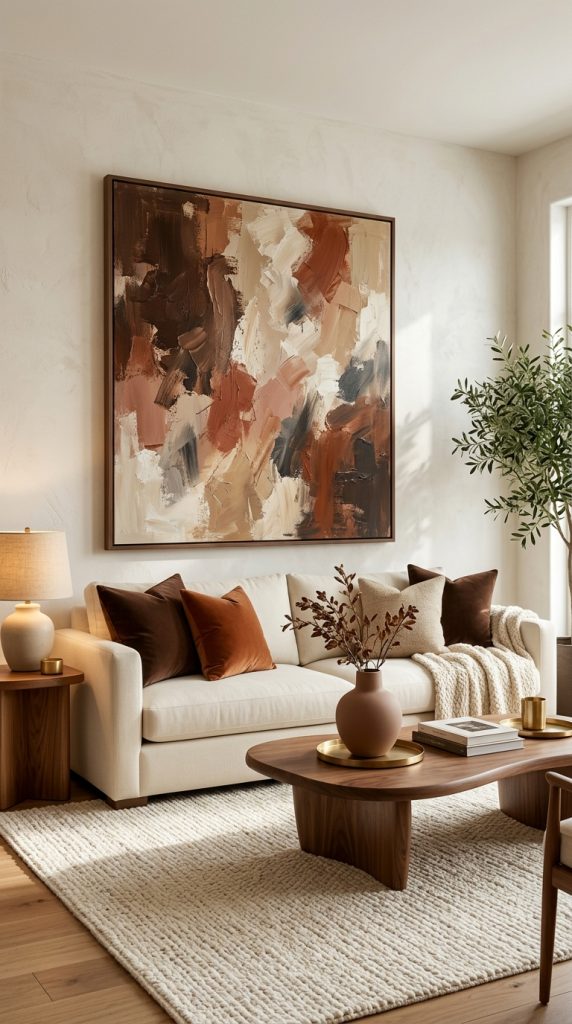
Artwork offers a flexible way to incorporate spicy cinnamon and chocolate brown without changing walls or furniture. It can also establish the palette when the room already contains neutral pieces.
Look for abstract paintings, landscape prints, textured artwork, or minimalist compositions that combine earthy browns, muted terracotta, cream, and soft charcoal. The artwork does not need to include every shade equally; even a small cinnamon detail can connect the room to the palette.
A large statement piece above the sofa can create a focal point and visually anchor the seating area. If you prefer a gallery wall, combine a few carefully selected pieces in related tones. Keep the frame finishes coordinated, using walnut, dark brown, or understated black where appropriate.
Scale matters. A very small picture above a large sofa may appear disconnected, while an oversized piece can overwhelm a compact wall. Consider the furniture beneath the artwork and leave enough breathing room around the frame.
Repeat one or two colors from the artwork through cushions, ceramics, or a throw. This helps the composition feel connected to the room rather than like a separate decorative choice.
If your living room already has a dark accent wall, artwork with cream backgrounds can create contrast. On a light wall, deeper brown compositions can provide the visual weight needed to balance dark furniture.
How to style it: Select the artwork before purchasing small accessories. Use its colors to guide the choice of cushions, decorative objects, and other accent pieces.
Best for: Renters, art lovers, minimalist homes, and rooms where color needs to be introduced gradually.
11. Choose a Chocolate Brown Coffee Table for a Grounded Look
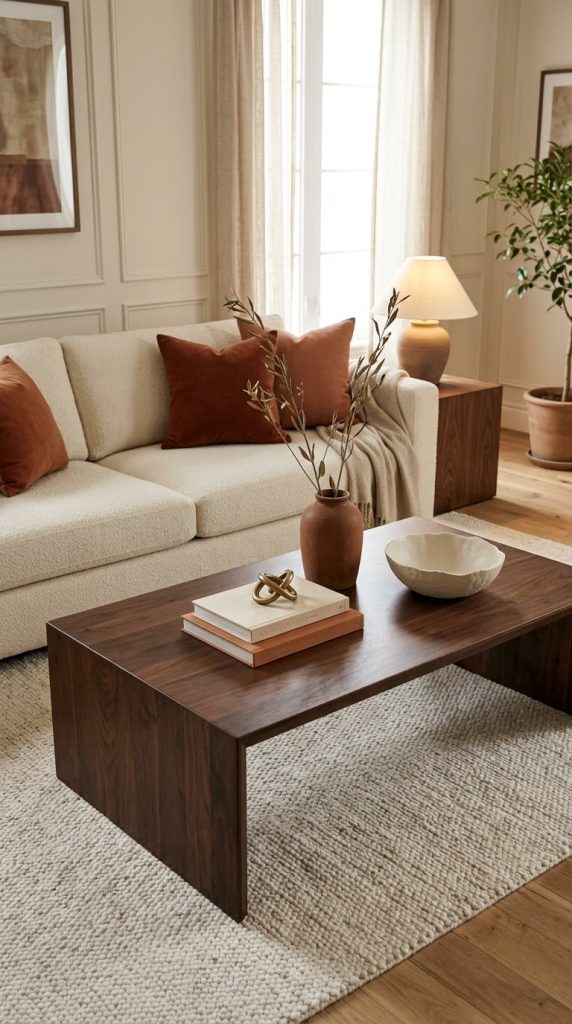
A chocolate brown coffee table can anchor a living room while complementing cinnamon textiles and warm wood accents. Depending on the material, it can create a modern, classic, or luxurious appearance.
A dark-stained wooden table adds natural depth, while a brown stone or stone-look surface can introduce a more contemporary finish. Choose a design that suits the size of the seating arrangement and leaves adequate room for walking around it.
For a balanced arrangement, pair the table with a lighter sofa or rug. The contrast helps the table stand out without making the center of the room feel too heavy.
Style the surface with a small stack of books, a ceramic bowl, and a vase in a cinnamon or muted terracotta tone. A tray can help group smaller items, especially if the table is used regularly for drinks, snacks, or remote controls.
Avoid filling every part of the surface with accessories. The table should remain practical, with enough clear space for everyday use. If you have a small apartment, a round or oval table may make movement around the seating area easier.
Repeat chocolate brown in a picture frame, lamp base, or cushion to establish a connection across the room. A single dark table can look disconnected if no other element relates to its color.
How to style it: Keep the arrangement low and compact. Combine one tall object, one low object, and a small horizontal stack to create variation without clutter.
Best for: Contemporary living rooms, cream sofas, open-plan spaces, and interiors that need a strong central anchor.
12. Add Warm Brass Lighting and Chocolate Brown Accents
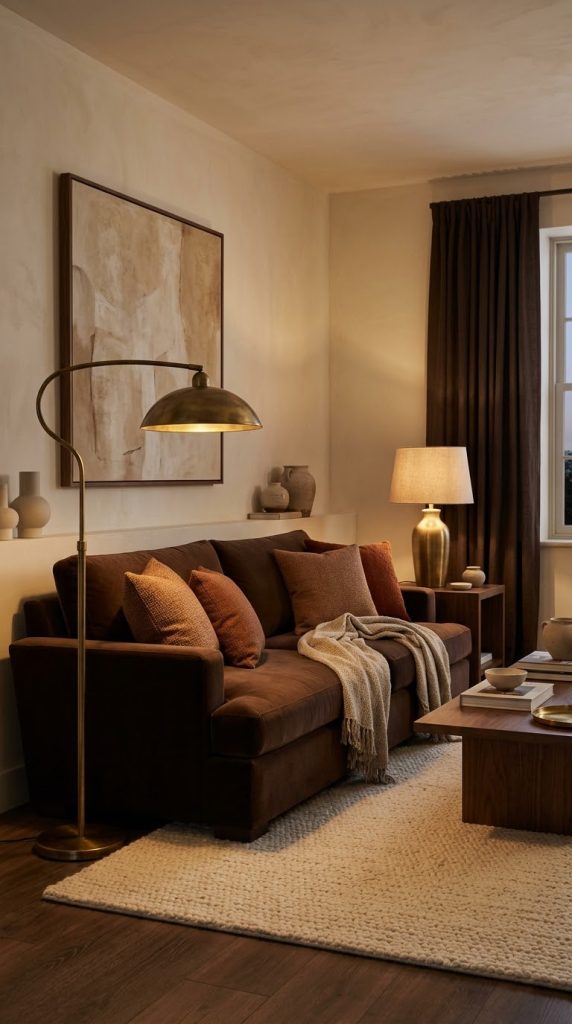
Warm brass lighting can bring out the richness of chocolate brown and the reddish warmth of cinnamon. Used thoughtfully, it introduces a subtle glow and a refined finish without making the living room look overly ornate.
Consider a floor lamp beside the sofa, a table lamp on a wooden side table, or wall sconces around an accent wall. Select fixtures with simple silhouettes if the furniture already has strong shapes or textures.
Brushed or aged brass often works well with earthy palettes because its finish feels softer than highly polished gold. Pair it with cream lampshades, dark brown lamp bases, or natural wood details.
Lighting temperature also matters. Warm-white bulbs generally complement cinnamon and chocolate brown more naturally than very cool lighting. The exact bulb choice should reflect your room’s function and the atmosphere you want to create.
Layer several light sources at different heights. A table lamp creates a cozy pool of light, while a floor lamp can illuminate a reading chair. Wall lighting can highlight artwork or add depth to a feature wall.
Avoid placing all the light in the center of the ceiling. Multiple sources help dark furniture look dimensional and allow you to adjust the atmosphere for reading, entertaining, or relaxing.
How to style it: Use two or three coordinated light sources where space allows. Repeat brass sparingly in a frame, tray, or cabinet handle for a cohesive finish.
Best for: Evening relaxation, luxury-inspired interiors, chocolate brown accent walls, and living rooms that feel too flat under overhead lighting alone.
13. Create a Modern Organic Living Room With Earthy Brown Shades
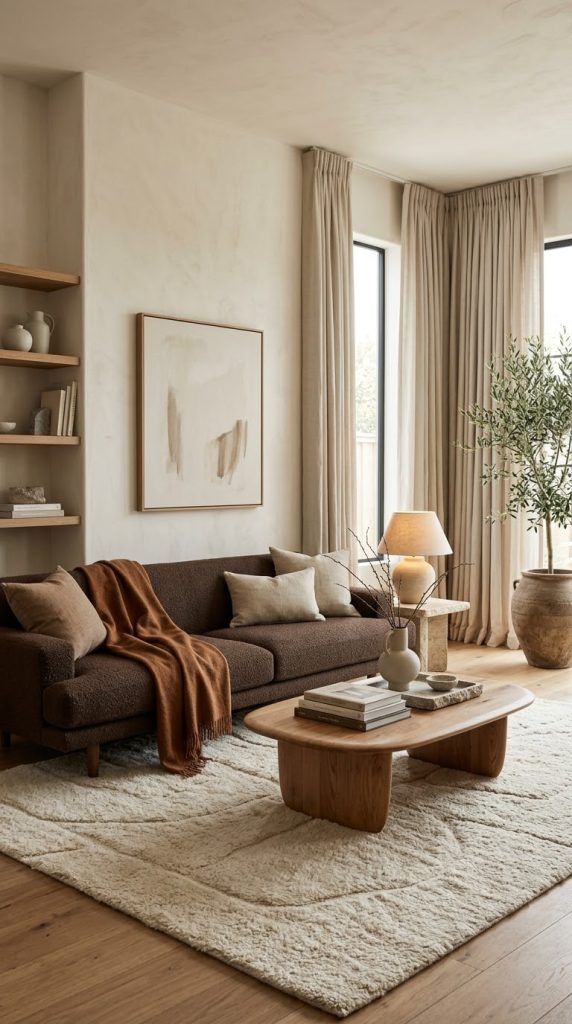
Modern organic interiors combine clean shapes with natural materials and a calm, earthy color palette. Cinnamon and chocolate brown fit this style beautifully because they add warmth while remaining grounded in nature-inspired tones.
Start with simple furniture in chocolate brown, cream, or warm beige. A streamlined sofa, rounded coffee table, and understated accent chair create a foundation that feels comfortable rather than formal.
Introduce natural materials through wood, stone, woven baskets, linen-look fabrics, and textured ceramics. These materials add variation without requiring additional strong colors. A medium oak coffee table can soften a dark sofa, while a cream rug provides visual lightness.
Cinnamon can appear through cushions, a throw, artwork, or a handcrafted-looking vase. Keep these accents concentrated so the room maintains a calm appearance.
Plants can contribute a natural green contrast if you enjoy greenery, but they are optional. You can achieve the same earthy atmosphere through wood grain, stone surfaces, and tactile fabrics without adding many decorative objects.
The modern organic look benefits from negative space. Avoid filling every shelf or corner. Choose a few substantial accessories that have interesting shapes and textures rather than many small pieces.
How to style it: Combine one dark anchor, such as a chocolate brown sofa, with a lighter foundation, such as cream walls and a beige rug. Add warm wood and a few cinnamon accents to connect the palette.
Best for: Minimalist homes, modern apartments, nature-inspired interiors, and anyone who prefers understated sophistication.
14. Decorate a Small Living Room With Cinnamon and Chocolate Brown
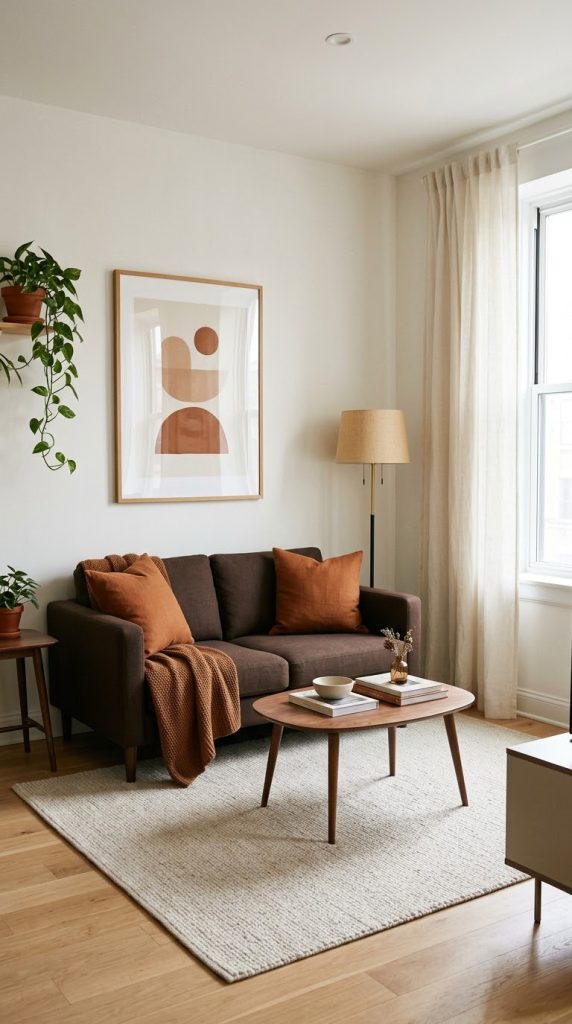
Dark brown and cinnamon can work in a small living room when their placement is carefully considered. The goal is to create warmth without making the room feel crowded or visually compressed.
Start by evaluating the natural light. If the room is dim, use cream or warm white on the walls and choose a chocolate brown sofa with a relatively streamlined silhouette. If the room receives generous daylight, you may be able to introduce a deeper brown accent wall or heavier cinnamon curtains.
Use a few well-chosen pieces rather than oversized furniture. A compact sofa, small coffee table, and narrow side table can provide functionality without blocking circulation. Furniture with exposed legs may help more of the floor remain visible, creating a lighter impression.
Introduce cinnamon through smaller elements such as cushions, a throw, artwork, or a ceramic vase. This allows you to enjoy the warmth of the color without covering large surfaces.
A pale rug can provide contrast beneath the seating arrangement. Curtains mounted higher than the window frame may visually emphasize the room’s height, while mirrors can reflect available light when positioned thoughtfully.
Storage is important because clutter can compete with the rich palette. Use closed storage for everyday items and leave decorative surfaces relatively simple.
How to style it: Keep the largest surfaces relatively light if natural light is limited, then add chocolate brown through selected furniture and cinnamon through smaller accessories.
Best for: Studio apartments, compact family rooms, small rental living rooms, and spaces with limited natural light.
15. Mix Cinnamon With Beige, Taupe, and Cream

Cinnamon and chocolate brown become especially versatile when supported by a range of warm neutrals. Beige, taupe, and cream soften the darker shades and help the room feel layered rather than monochromatic.
Use cream on the largest light surfaces, such as walls, curtains, or upholstery. Beige can appear through the rug, accent chair, or cushions, while taupe creates a subtle transition between pale neutrals and deeper brown furniture.
Chocolate brown provides the strongest depth, while cinnamon introduces a more noticeable warm accent. This relationship allows each color to contribute without competing for attention.
Undertones are important. Warm beige generally complements cinnamon and chocolate brown more naturally than a strongly cool gray. However, neutral shades vary considerably, so compare samples under the lighting in your room.
Texture can make a restrained palette feel interesting. Combine a smooth sofa with a woven rug, textured cushions, a matte ceramic vase, and natural wood furniture. The differences in surface finish create dimension even when the colors remain close.
This approach is particularly effective if you prefer a timeless interior that will not need frequent updates. You can change the cinnamon accessories or artwork later while keeping the larger neutral pieces.
How to style it: Choose cream as the lightest color, beige and taupe as supporting neutrals, chocolate brown as the anchor, and cinnamon as the accent. Adjust the proportions to suit your space.
Best for: Timeless interiors, transitional homes, neutral decor lovers, and people who want a warm palette that can evolve over time.
16. Add a Textured Chocolate Brown Rug
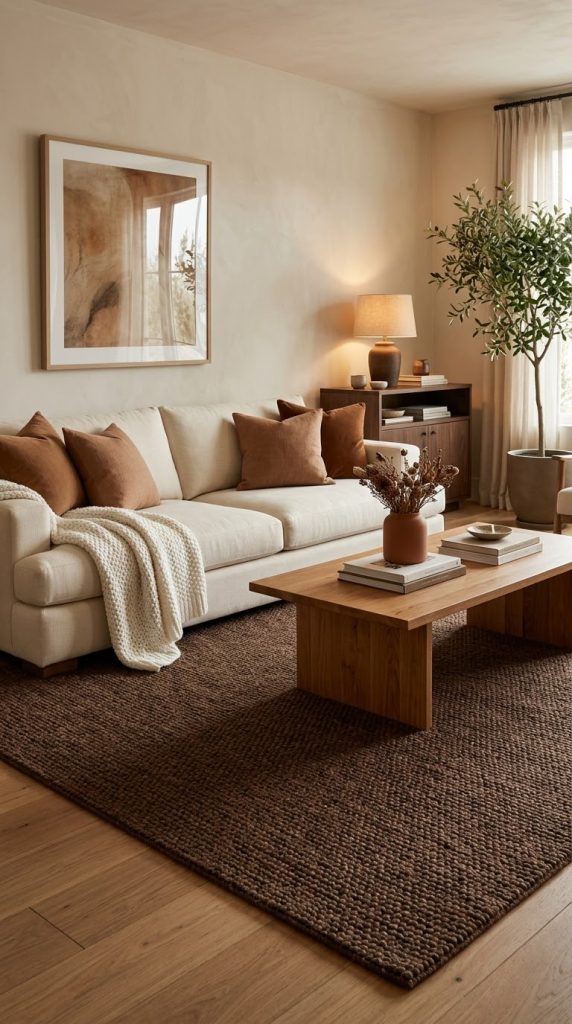
A chocolate brown rug can create a rich foundation beneath a cream sofa or a mixed seating arrangement. It introduces depth at floor level and can help define the living room in an open-plan home.
Choose the rug material according to your lifestyle. A textured wool or wool-blend rug may provide a soft, substantial feel, while a durable synthetic or washable option may be more practical for a busy household. Check the care requirements before purchasing, particularly if the rug will sit beneath a coffee table or dining-adjacent seating area.
Because chocolate brown is visually strong, consider a rug with a subtle texture or low-contrast pattern rather than a completely flat surface. A design featuring warm beige, cinnamon, or ivory details can connect the rug to the rest of the palette.
A light sofa above a dark rug creates a clear contrast. If your sofa is also chocolate brown, use a rug with lighter flecks or a cream border to prevent the entire seating area from blending into one dark block.
Place the rug so that it relates to the furniture rather than appearing like a small isolated mat. In many layouts, positioning the front legs of the sofa and accent chairs on the rug helps establish a coherent seating zone.
How to style it: Use a cream throw and cinnamon cushions to lift the darker rug. Add a wood coffee table that is slightly different in tone from the rug to preserve visual separation.
Best for: Open-plan living rooms, neutral seating, large spaces, and households that want a grounded, cozy atmosphere.
17. Style Open Shelves With Cinnamon and Chocolate Brown Accessories
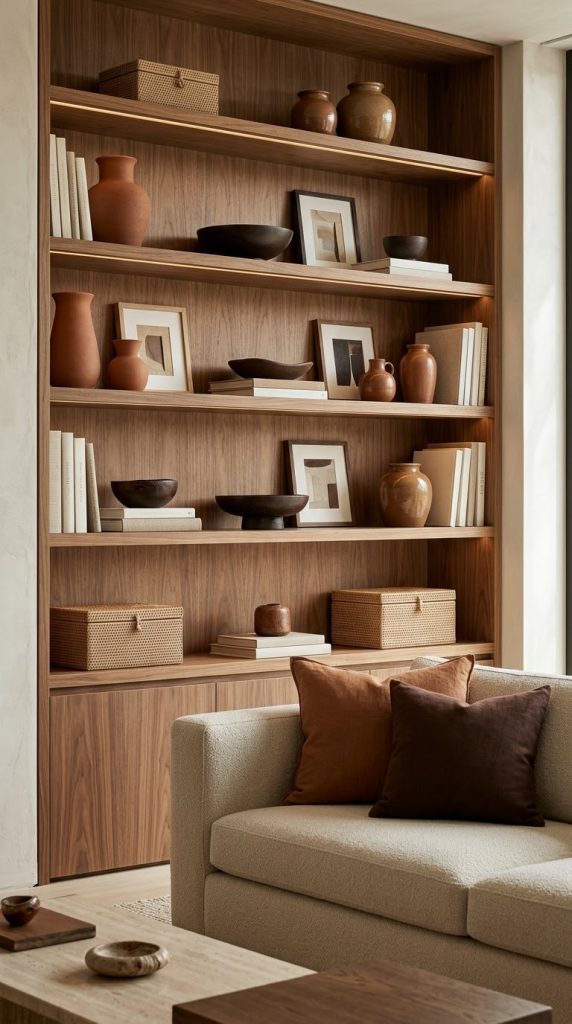
Open shelving offers an opportunity to repeat the living room palette through decorative objects while keeping the furniture and walls relatively simple. It is especially useful when the room already contains a chocolate brown sofa or cinnamon accent wall.
Begin by choosing a limited selection of objects. Ceramic vases, framed artwork, small bowls, books, and textured boxes can create a cohesive arrangement when their colors relate to the room.
Use chocolate brown for a few grounding elements, such as a frame or decorative vessel. Cinnamon can appear through a vase, book cover, or small sculptural object, while cream and beige help maintain visual balance.
Vary the height and shape of the accessories. Place a taller object beside a horizontal stack of books, then leave some open shelf space around the arrangement. Repeating the same shape and size across every shelf can make the display feel too uniform.
If the shelving is made from warm wood, allow the grain to remain visible. Too many objects can hide the material and make the shelves appear crowded.
Practical storage can also be attractive. Use a few coordinated baskets or closed boxes for smaller items that would otherwise create clutter. Keep frequently used objects within easy reach and reserve higher shelves for decorative pieces or items used less often.
How to style it: Repeat the main colors two or three times across the shelving, but avoid making every object brown. A few lighter pieces create contrast and give the eye a place to rest.
Best for: Living rooms with built-in shelves, compact apartments, media walls, and homes where accessories need to feel coordinated.
18. Create a Cozy Reading Corner With Cinnamon and Chocolate Brown
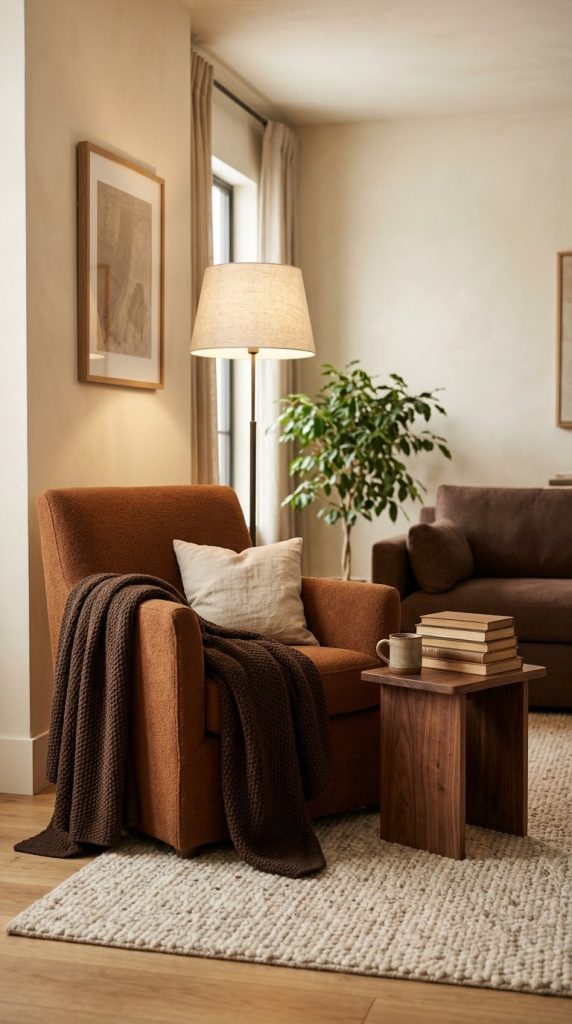
A reading corner can become one of the most inviting parts of a living room when it combines comfortable seating, warm colors, and thoughtful lighting. Cinnamon and chocolate brown are particularly suitable because they create a calm, intimate atmosphere.
Choose a comfortable accent chair in cinnamon, chocolate brown, or a warm neutral. If your main sofa is dark brown, a cinnamon chair provides contrast. If the room already contains cinnamon curtains or a strong accent wall, a cream or taupe chair may create a more balanced arrangement.
Place a compact side table within easy reach. It should be large enough for a book, a cup, and perhaps a small lamp, but not so large that it blocks movement around the chair.
Lighting is essential for both comfort and function. A floor lamp with an adjustable head or a well-positioned table lamp can provide focused reading light. A warm ambient source nearby can soften the surrounding space.
Layer a small throw over the chair and add one cushion that repeats the living room palette. A chocolate brown side table or walnut finish can connect the reading corner to the main furniture.
If space permits, a small rug can help distinguish the corner from the rest of the room. Choose one that complements the main area rug without needing to match it exactly.
How to style it: Prioritize the chair and lighting first, then add only the accessories that improve comfort. A useful reading corner should remain functional rather than becoming a display area.
Best for: Small apartments, family living rooms, book lovers, and anyone who wants a quiet place to relax.
19. Use Cinnamon and Chocolate Brown in a Minimalist Living Room
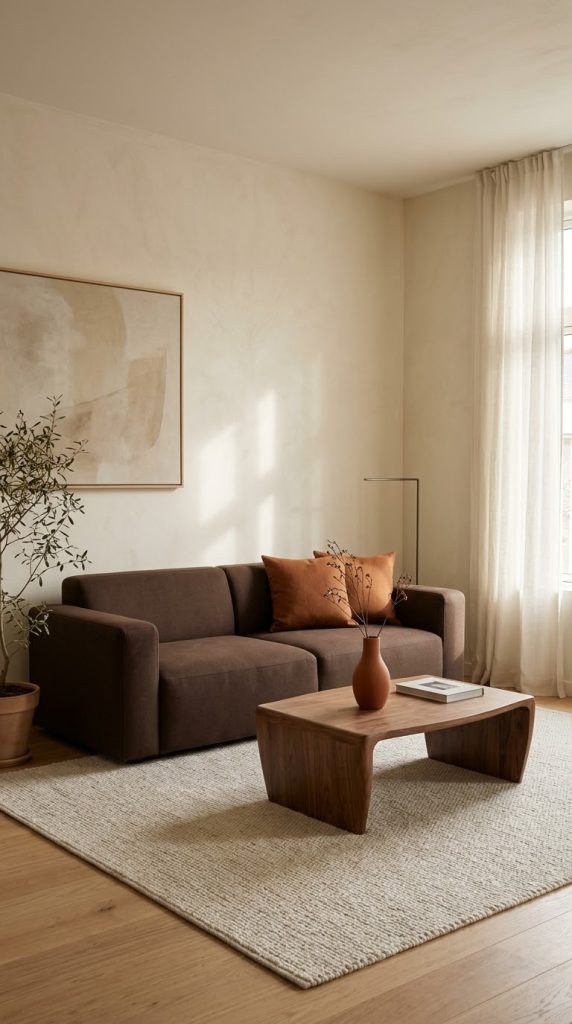
A minimalist living room does not need to rely on white and gray. Cinnamon and chocolate brown can introduce warmth while preserving clean lines and a restrained arrangement.
Start with a limited number of furniture pieces. A simple chocolate brown sofa, a warm wood coffee table, and a neutral rug can establish the palette without overwhelming the room.
Use cinnamon sparingly through one or two carefully selected accents. A cushion, a small ceramic vase, or a piece of abstract artwork may be enough. The aim is to make the color noticeable without turning it into a busy decorative theme.
Keep surfaces relatively clear. Instead of displaying many small objects, select a few pieces with strong shape, material, or texture. A sculptural lamp or substantial ceramic bowl can contribute more visual interest than a collection of unrelated accessories.
Lighting should support the clean design. A floor lamp with a simple silhouette and a table lamp with a neutral shade can create a warm atmosphere without introducing unnecessary ornamentation.
Texture is especially valuable in minimalist spaces. A woven rug, smooth wood, soft upholstery, and matte ceramics create variety while keeping the palette controlled.
How to style it: Limit the main palette to chocolate brown, cinnamon, and two warm neutrals. Leave open space around furniture and decorative objects so each element can be appreciated.
Best for: Modern minimalist homes, smaller rooms, uncluttered interiors, and anyone who prefers simple but warm styling.
20. Complete the Look With Carefully Selected Cinnamon and Brown Accessories
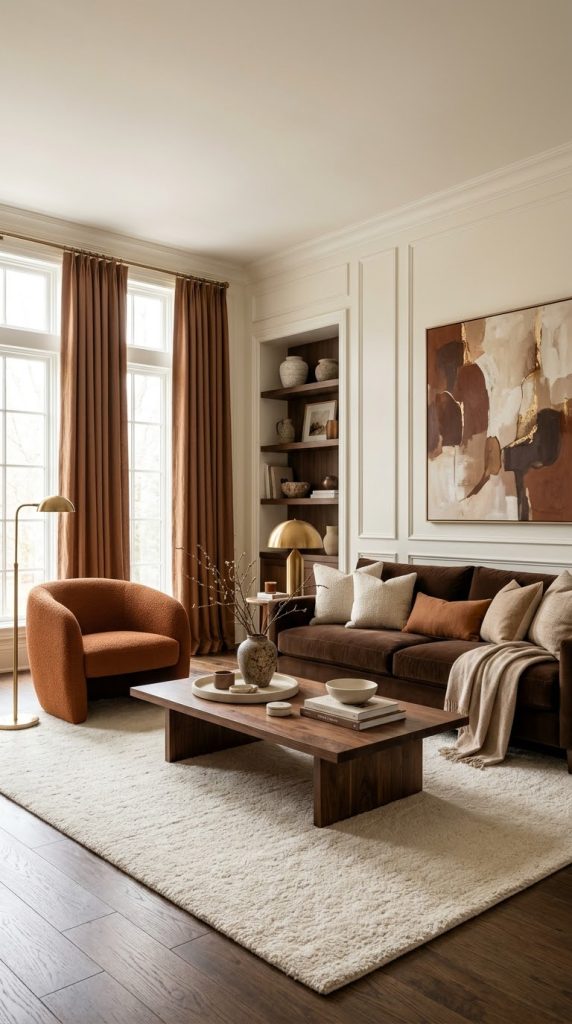
The final layer of a sophisticated living room comes from the small details that connect the main furniture, colors, and textures. Cinnamon and chocolate brown accessories can create a cohesive finish when they are selected with intention.
Start with a few useful decorative pieces. A cinnamon ceramic vase, a chocolate brown tray, a textured cream bowl, and a warm wood picture frame can reinforce the palette without making the room feel overloaded.
Consider the surfaces where these accessories will appear. A coffee table may benefit from a small tray and one sculptural object, while a side table can hold a lamp and a book. A console table can accommodate a larger arrangement, provided it does not obstruct the room’s circulation.
Materials help distinguish the accessories. Matte ceramics provide a quiet finish, glass introduces transparency, wood adds warmth, and subtle brass details create a refined accent. Combining a few materials makes the palette feel richer than using only one finish.
Avoid buying every accessory in exactly the same shade of brown. Chocolate brown, cinnamon, walnut, and warm taupe should relate to one another without becoming identical. Small differences in tone create a natural, collected appearance.
Practicality matters, too. Keep frequently used surfaces available for everyday items, and avoid placing delicate objects where they could easily be knocked over. In a family living room, choose accessories that are durable and easy to move when needed.
Finally, step back and assess the room from the entrance. If one corner feels too dark, introduce a lighter textile or improve the lighting. If the palette feels disconnected, repeat one existing color in a small accessory elsewhere.
How to style it: Finish with a restrained selection of objects that repeat the room’s existing colors and materials. Add accessories gradually rather than purchasing everything at once.
Best for: Final styling, budget-friendly makeovers, neutral living rooms, and interiors that need a polished, coordinated appearance.
Common Mistakes to Avoid When Decorating With Cinnamon and Chocolate Brown
Even a beautiful color palette can feel unbalanced if the shades, proportions, or lighting are not considered carefully. A few practical decisions can help you achieve a more cohesive result.
Using too much dark brown in a dim room: Chocolate brown creates depth, but covering the sofa, walls, curtains, and rug in deep brown can make a poorly lit room feel smaller. Introduce cream, warm white, or beige through larger surfaces to provide contrast.
Choosing cinnamon that looks too orange: Some cinnamon shades lean strongly toward orange or bright rust. If you want a sophisticated look, test muted, earthy shades before painting or buying large textiles.
Mixing incompatible undertones: A cool gray can sometimes look disconnected beside reddish cinnamon and warm chocolate brown. This does not mean gray is forbidden; choose a gray with a compatible undertone and repeat it thoughtfully if you want to include it.
Relying on one overhead light: A single bright ceiling fixture may flatten the rich colors and make the room feel less comfortable. Add lamps or other appropriate lighting sources to create different levels of illumination.
Matching every wood finish exactly: A living room can look overly coordinated when all the wood is identical. Using two related finishes with similar warmth can create a more natural appearance.
Overfilling the room with accessories: Rich colors already contribute visual weight. Leave breathing room around furniture and shelves, and prioritize accessories that have a clear purpose or design role.
Ignoring the room’s scale: A large chocolate brown sectional, heavy curtains, and oversized coffee table may overwhelm a compact living room. Choose furniture and textiles that suit the available floor area.
Buying everything before testing the palette: Small samples can look different in daylight and artificial lighting. Test paint, fabric, and wood samples together before committing to expensive purchases.
How to Decorate on a Budget
You do not need a complete furniture replacement to create a spicy cinnamon and chocolate brown living room. A gradual update can deliver a noticeable change while keeping the budget under control.
Start with what you already own. A beige sofa can become part of the palette with cinnamon cushions and a chocolate brown throw. Existing wooden furniture may work perfectly well if its undertone complements the new colors.
Next, choose one high-impact update. This might be a cinnamon accent wall, a chocolate brown cushion set, a new area rug, or a pair of curtains. Concentrating your budget on one feature often creates a more intentional result than buying many small accessories.
Consider secondhand furniture and decorative pieces when appropriate. A wooden side table, picture frame, or ceramic vase can be refreshed or styled to fit the room. Check the condition of upholstered furniture carefully, especially for odors, stains, and structural damage.
You can also rearrange the room before spending money. Moving a reading chair closer to a window, repositioning a lamp, or removing unnecessary accessories may improve the overall composition immediately.
For renters, portable elements are especially useful. Cushions, throws, rugs, table lamps, artwork, and freestanding furniture can introduce the palette without permanent alterations. Always confirm permission before making changes that affect walls or built-in features.
A simple budget sequence:
- Choose a chocolate brown, cinnamon, and warm-neutral palette.
- Reuse existing furniture that fits the color scheme.
- Add two or three coordinated textiles.
- Improve lighting where needed.
- Introduce one distinctive accessory or artwork piece.
- Reassess the room before buying anything else.
This gradual approach helps you avoid unnecessary purchases and makes it easier to see which changes create the greatest improvement.
Final Thoughts
Spicy cinnamon and chocolate brown living room ideas offer a beautiful way to create a home that feels cozy, sophisticated, and timeless. The combination works because chocolate brown provides depth while cinnamon introduces warmth and character. Cream, beige, taupe, and warm wood help balance the richer shades, allowing the room to feel inviting rather than heavy.
You can achieve this look through a chocolate brown sofa, a cinnamon accent wall, layered cushions, warm wood furniture, textured rugs, elegant curtains, or carefully selected artwork. The most successful designs do not require every element to feature both colors. Instead, they distribute the shades thoughtfully across furniture, textiles, lighting, and accessories.
Start with the largest surfaces, consider your room’s natural light, and introduce the accent colors gradually. Use varied textures to create depth, keep walkways clear, and choose furniture that suits the scale of the space. A few well-chosen changes can make a neutral living room feel more personal without requiring a complete makeover.
Whether you prefer modern organic styling, minimalist simplicity, a luxurious velvet sofa, or a cozy reading corner, this earthy palette can adapt to your home and lifestyle. The result is a living room that feels warm and comfortable every day while maintaining the polished look of a thoughtfully designed interior.
Leave a Reply