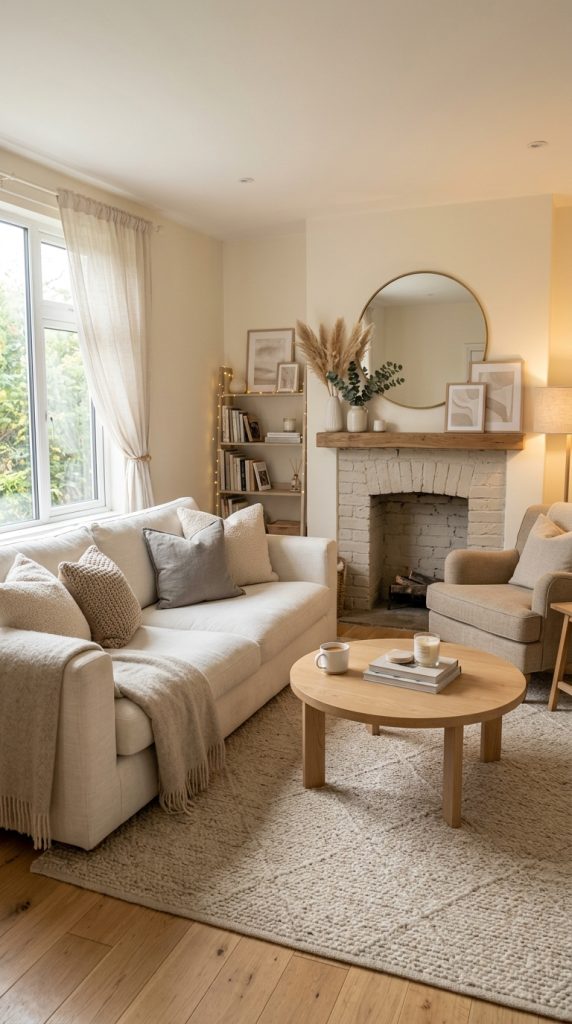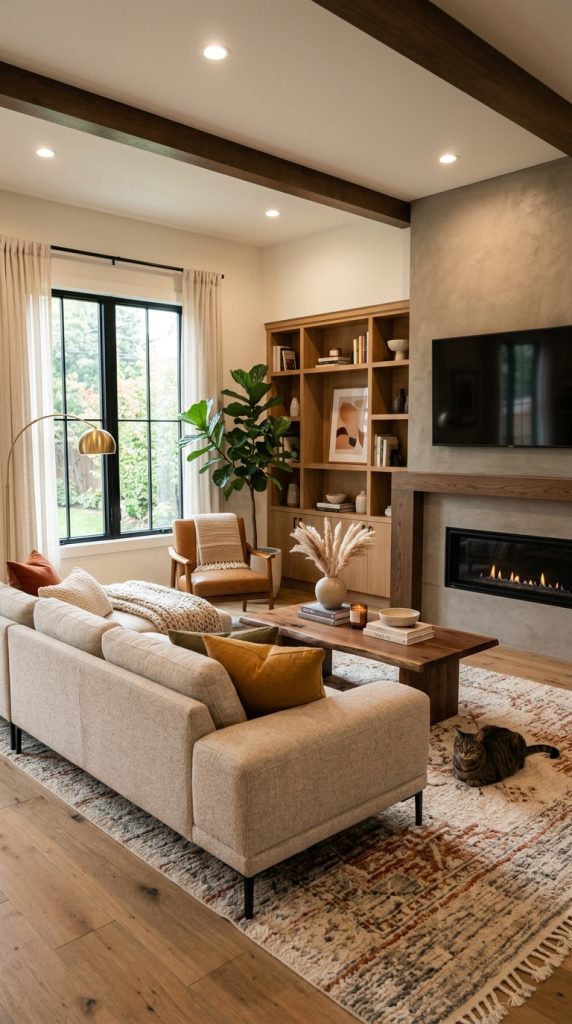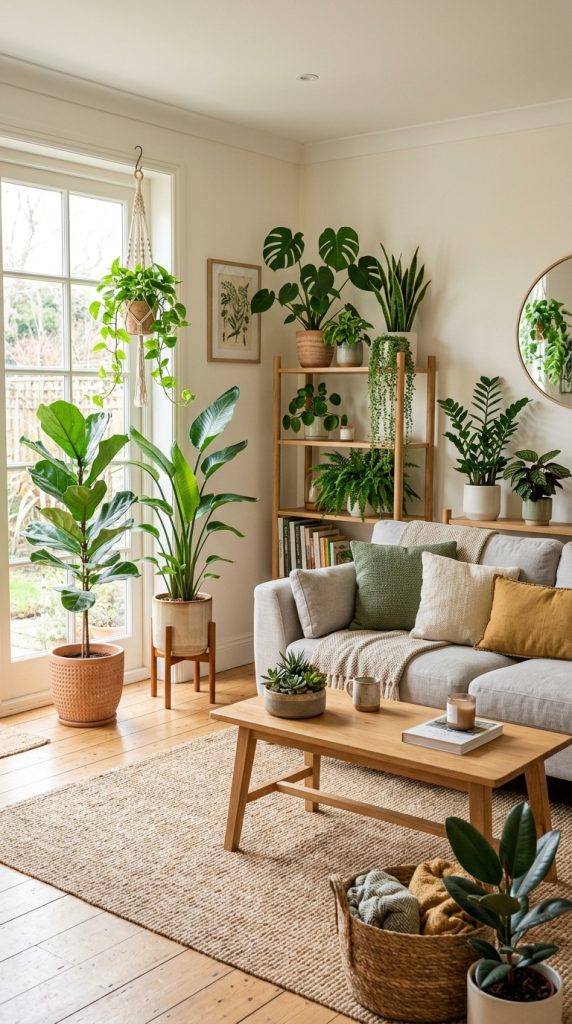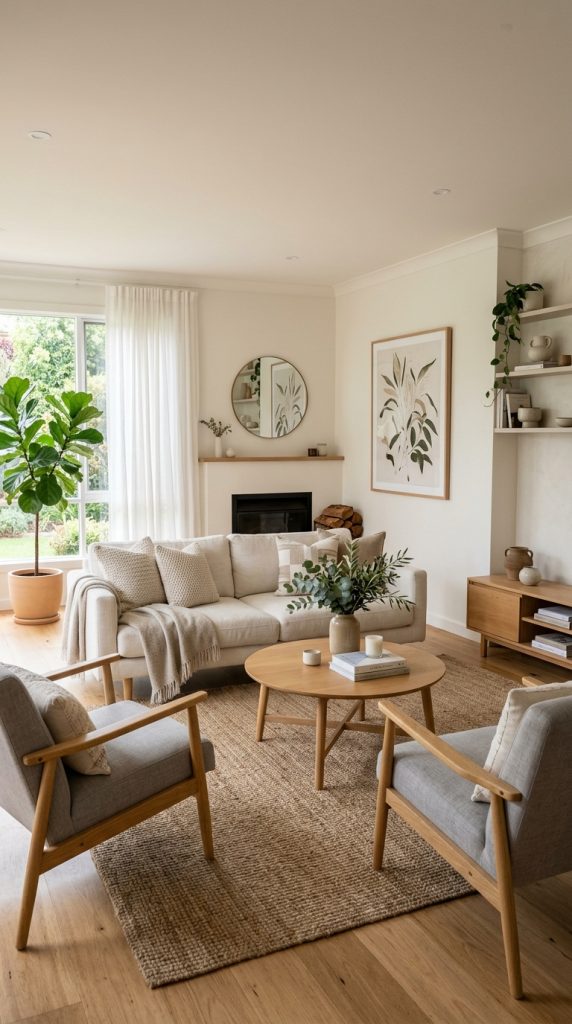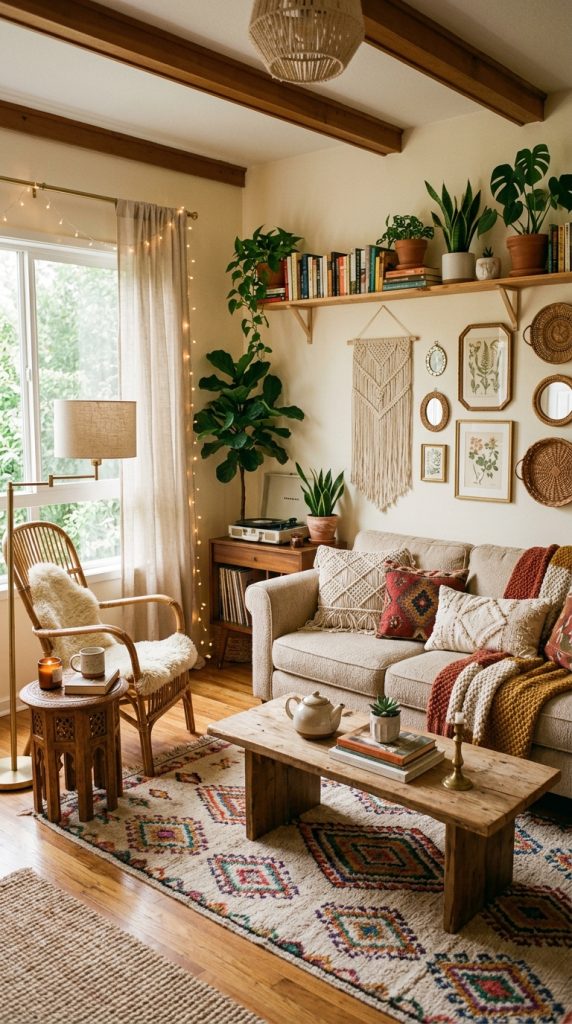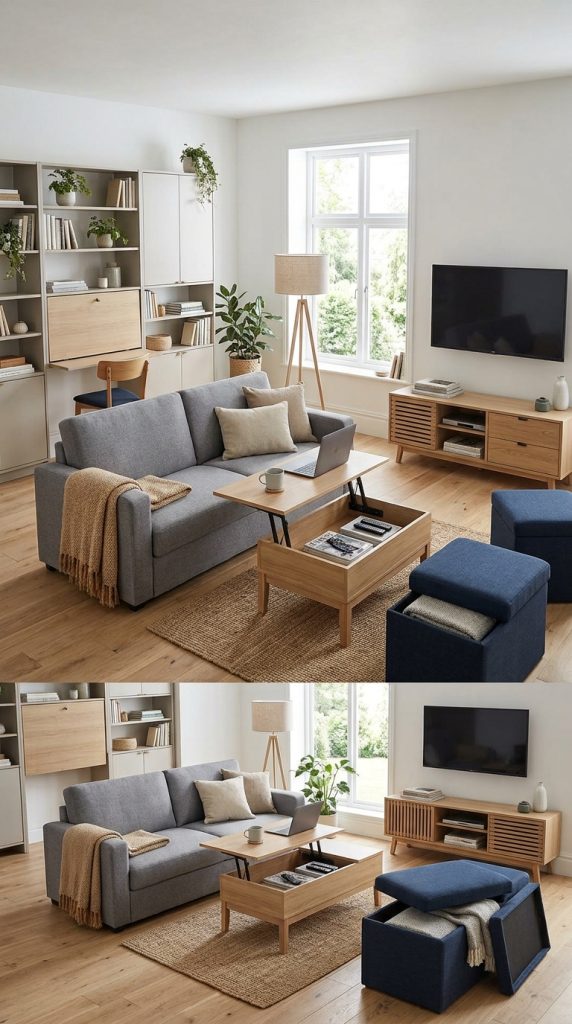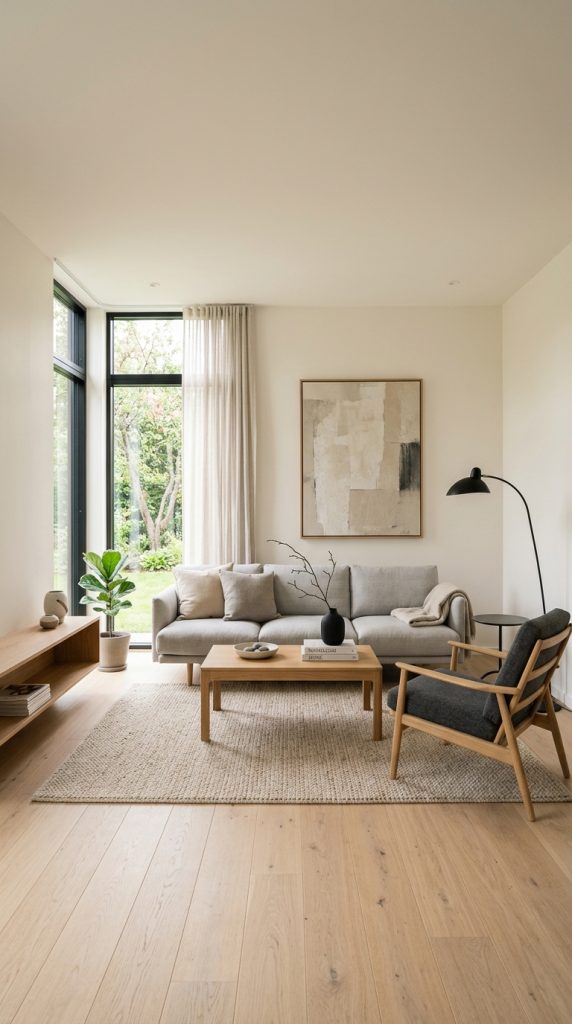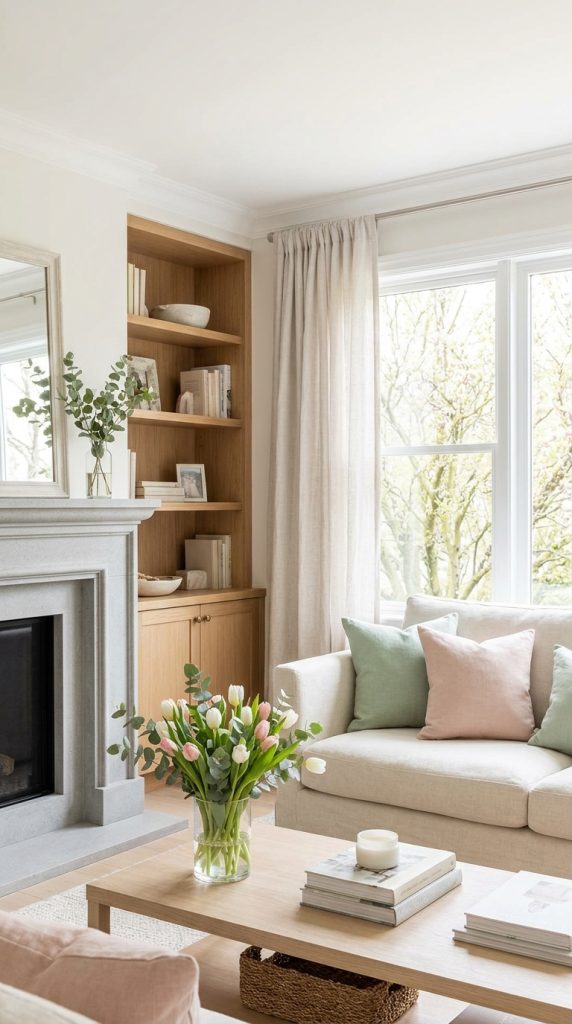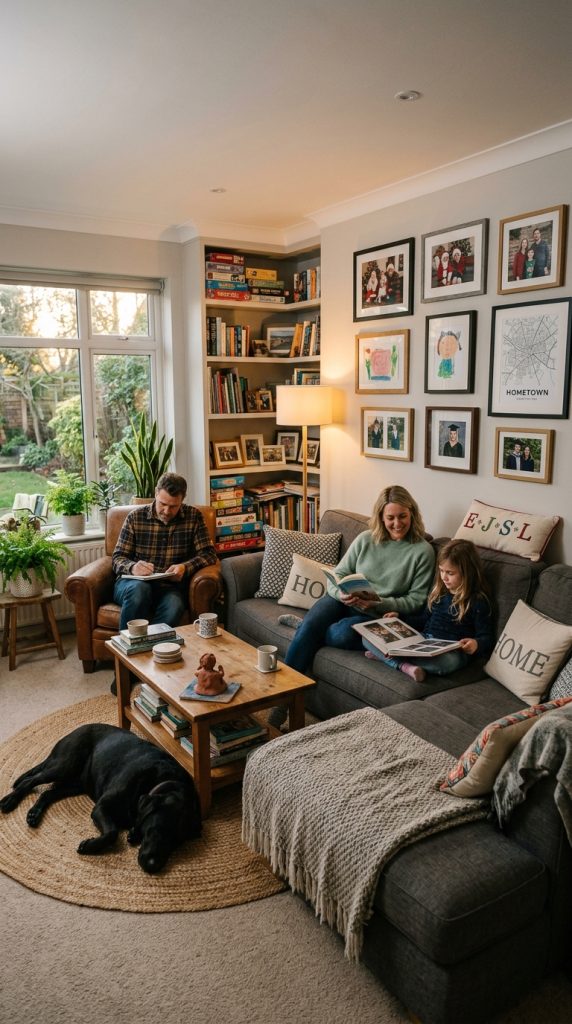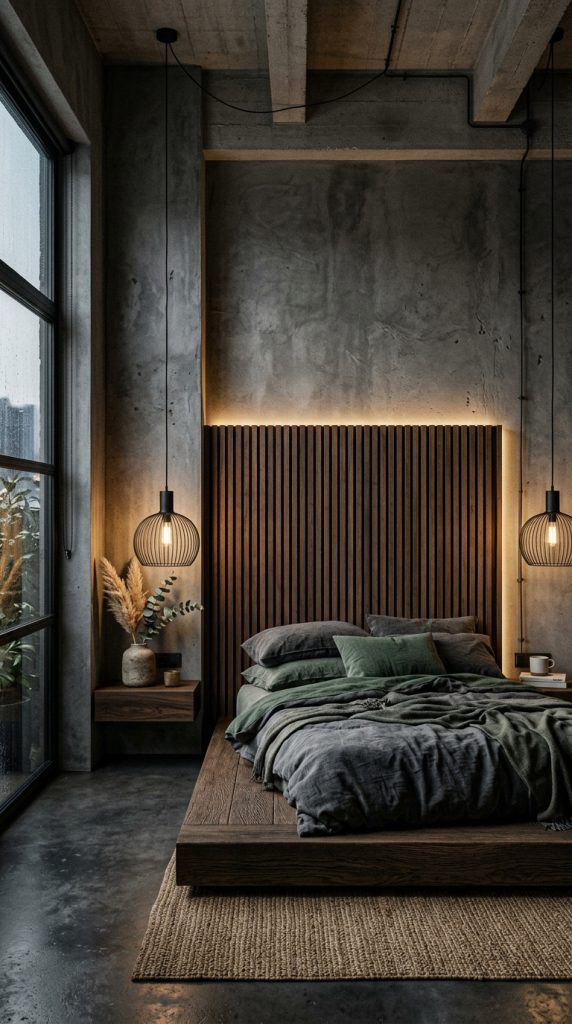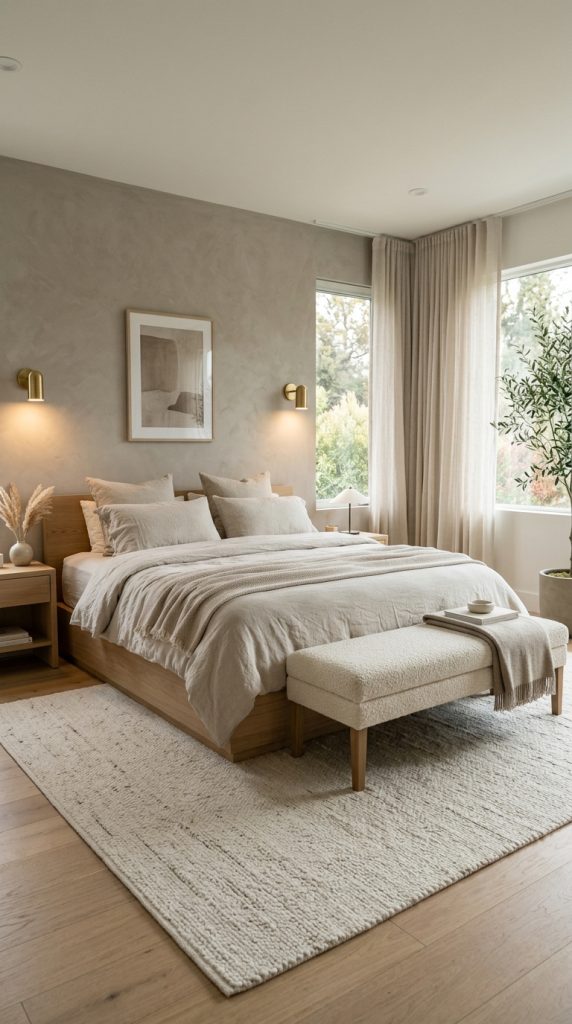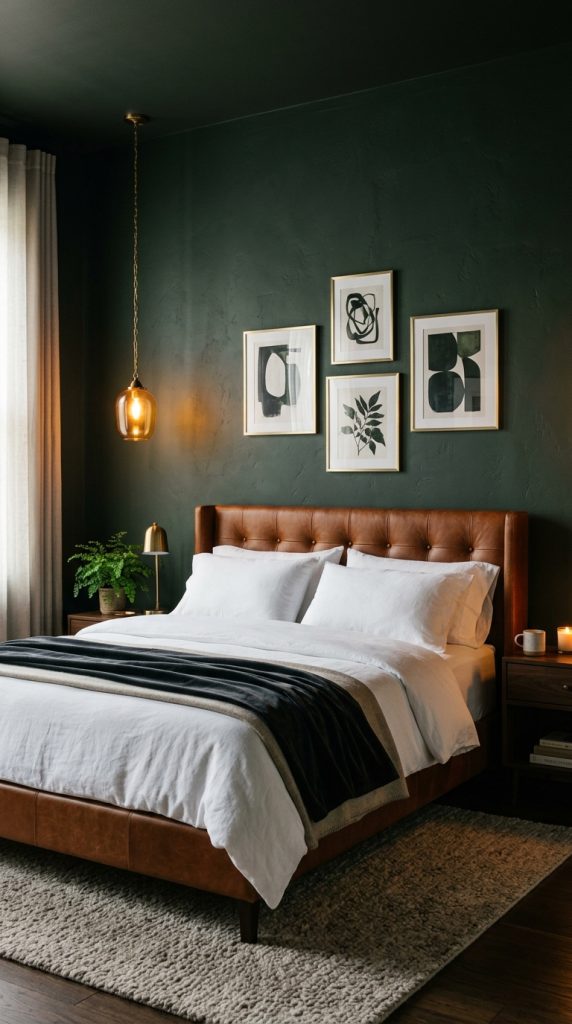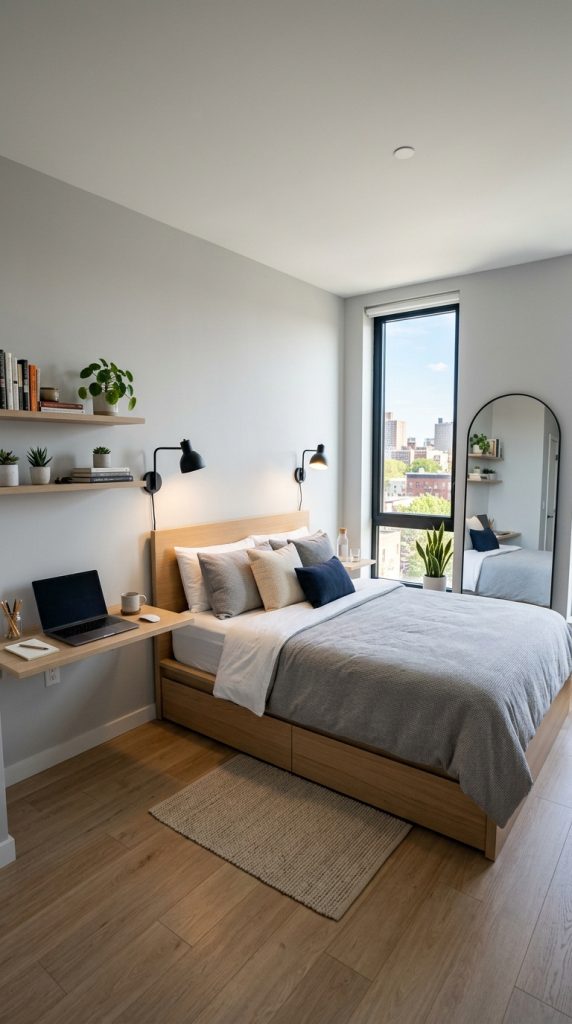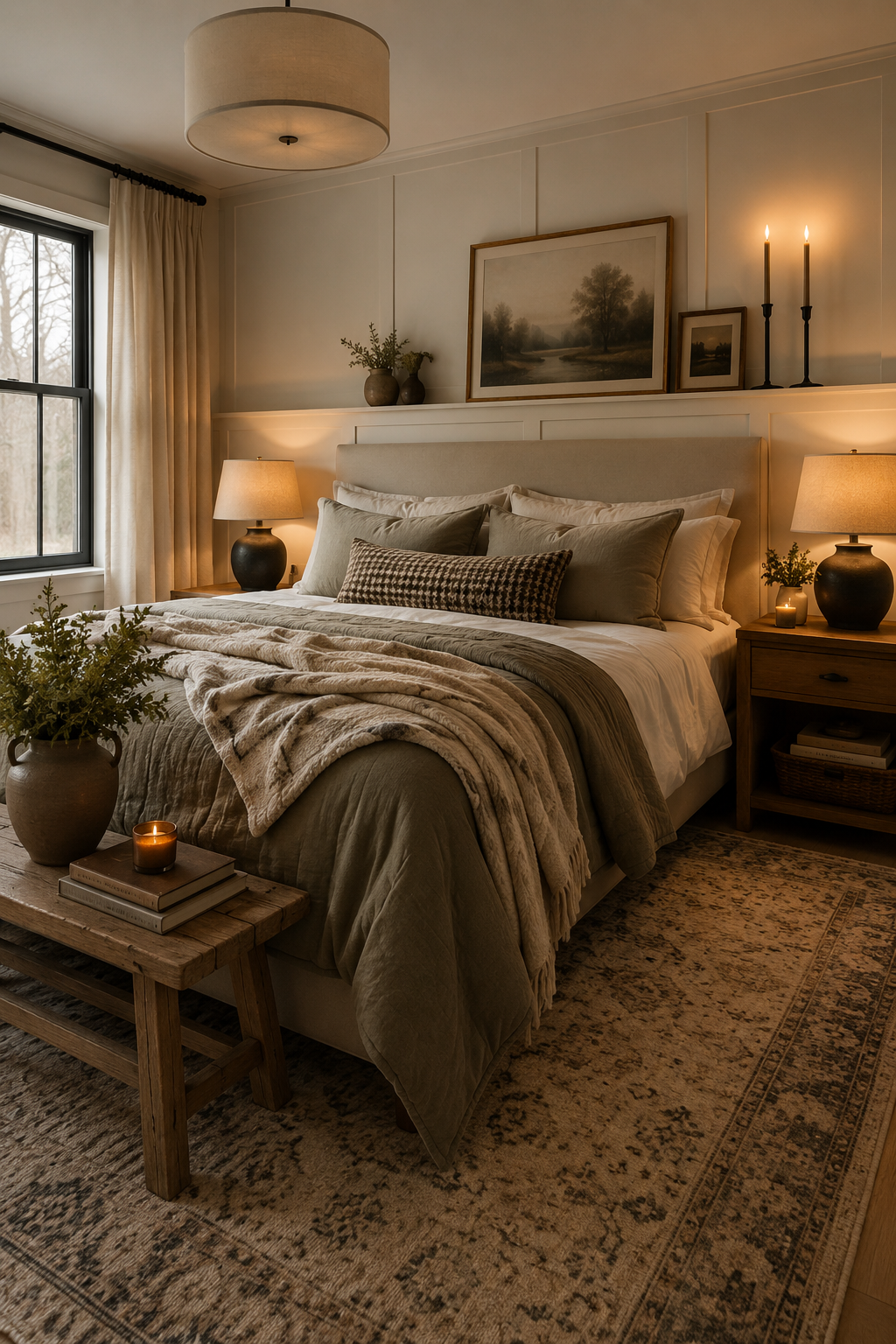
Creating a cozy bedroom is about much more than adding a few cushions or throwing a blanket across the bed. A truly cozy bedroom should feel like a personal retreat where you can relax, recharge, read, sleep, and escape from the busyness of everyday life. The growing popularity of cozy bedroom decor reflects a broader desire for interiors that feel warm, comfortable, personal, and visually calming. Instead of rooms that look overly staged or cold, homeowners are increasingly choosing soft textures, warm lighting, natural materials, layered bedding, gentle colors, and meaningful accessories that make the bedroom feel lived-in and welcoming.
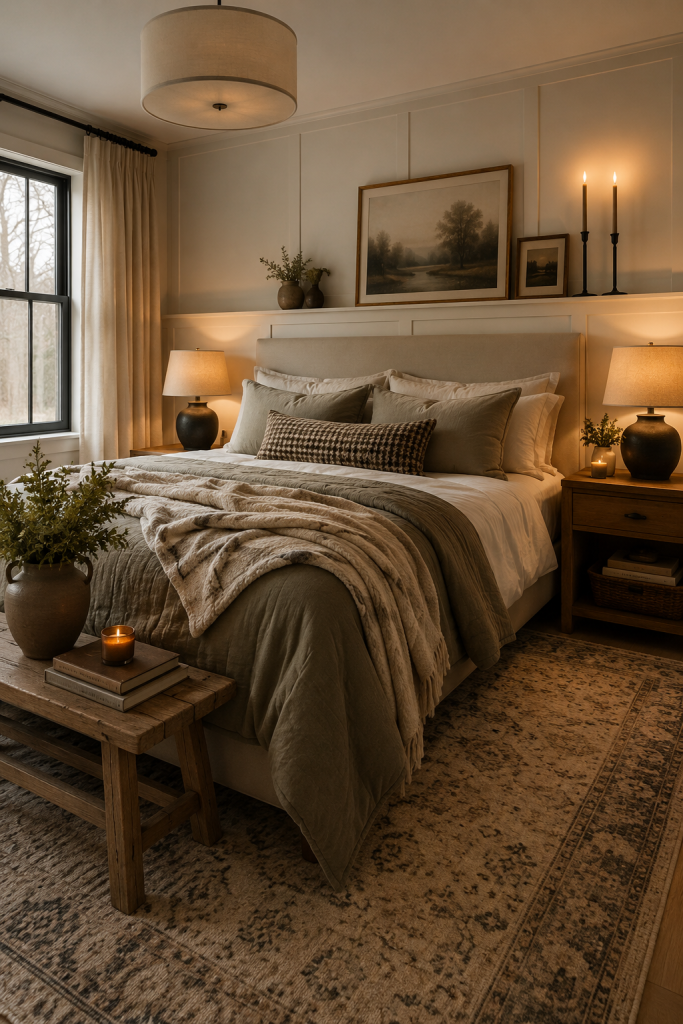
One of the best things about cozy bedroom decorating is that it does not require a huge budget or a complete renovation. Small changes can have a surprisingly dramatic effect. Swapping harsh white lighting for warm lamps, adding a textured throw, introducing natural wood, changing the bedding, or creating a beautiful bedside arrangement can completely transform the atmosphere. The key is understanding how different elements work together. Colors influence mood, textures create visual warmth, lighting establishes ambiance, furniture determines comfort, and accessories give the space personality.
For Pinterest lovers, cozy bedroom ideas are especially inspiring because there are countless ways to interpret the style. A minimalist bedroom can become cozy through soft fabrics and warm lighting. A rustic room can feel inviting with reclaimed wood, chunky knit blankets, and earthy colors. A modern bedroom can gain warmth through cream bedding, curved furniture, natural materials, and carefully selected decorative pieces. Even a small bedroom can feel luxurious when every element is chosen with comfort and proportion in mind.
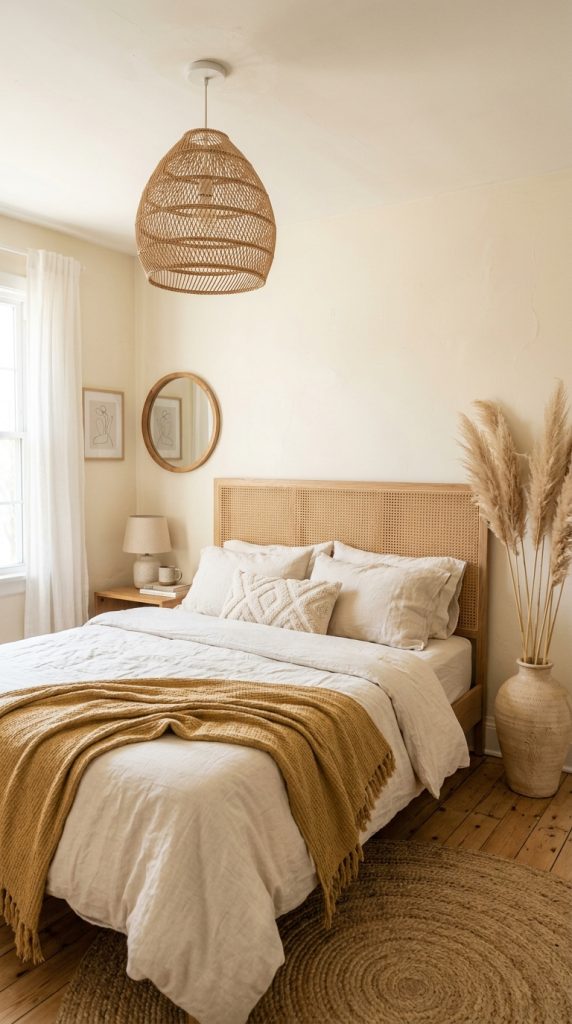
The foundation of a cozy bedroom usually begins with the bed because it is naturally the main focal point. Layering different bedding textures can immediately make the room look more inviting. Start with comfortable sheets, add a duvet or quilt, place a folded blanket across the bottom, and finish with a combination of sleeping pillows and decorative cushions. The goal is not simply to add more items but to create visual depth. Combining cotton, linen, boucle, velvet, wool, or knitted textures can make a simple bed look beautifully layered.
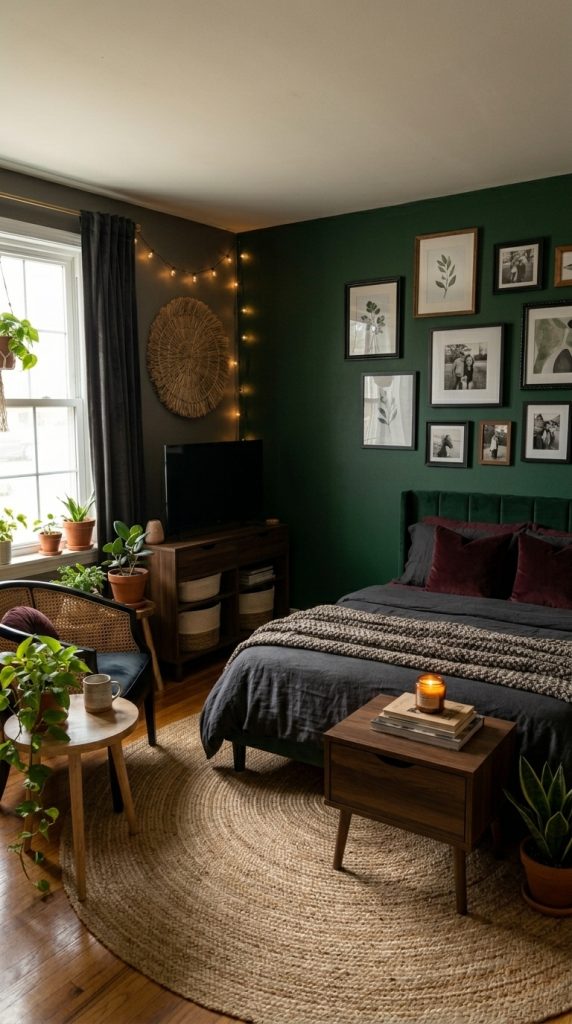
Color is equally important. Cozy bedrooms generally benefit from warm neutrals, muted earth tones, soft beige, creamy white, warm taupe, dusty rose, muted terracotta, olive green, caramel, and soft brown. These shades create a relaxing atmosphere without overwhelming the senses. However, cozy does not have to mean beige. Deep green, navy, charcoal, or warm burgundy can also create an intimate feeling when balanced with lighter fabrics and appropriate lighting.
Lighting is another major factor that is sometimes overlooked. A bedroom can have beautiful furniture and accessories but still feel uncomfortable if it is illuminated by one harsh ceiling light. Layered lighting is much more effective. Consider bedside lamps, wall sconces, floor lamps, fairy lights, dimmable fixtures, and small accent lights. Warm bulbs generally create a softer evening atmosphere than cool white bulbs. Lighting should make the bedroom feel peaceful rather than overly bright.
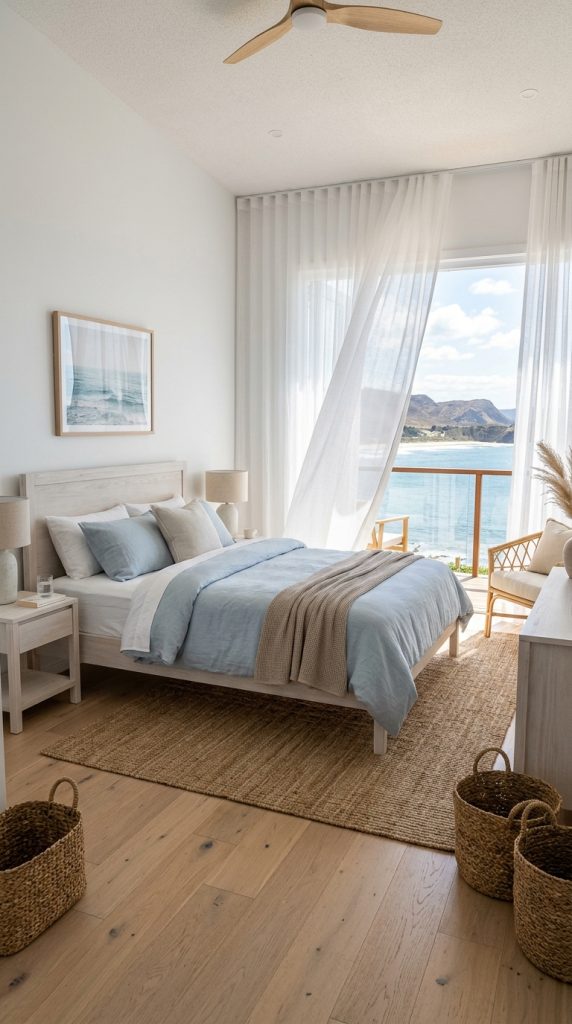
Natural materials can also contribute significantly to the cozy feeling. Wood furniture, woven baskets, rattan accents, linen curtains, wool rugs, cotton bedding, ceramic accessories, and dried branches introduce tactile variety. These materials help prevent a room from looking flat or overly manufactured. Even a single wooden bench at the foot of the bed or a woven basket beside a dresser can make a noticeable difference.
Another important principle is personalization. A cozy bedroom should not look like a generic showroom. Include items that have meaning to you, such as favorite books, framed photographs, artwork, travel souvenirs, handmade ceramics, or a plant you enjoy caring for. These details make the room feel authentic and help create an emotional connection with the space.
The following ten cozy bedroom decor ideas are designed to be practical, beginner-friendly, and adaptable to different bedroom sizes and budgets. Each concept can be used individually or combined with other ideas to create a complete bedroom makeover. Whether you are decorating a small apartment bedroom, refreshing a master bedroom, designing a guest room, or simply looking for inexpensive ways to make your existing space feel warmer, these ideas provide a flexible starting point.
1. Create a Layered Cozy Bed With Soft Textures
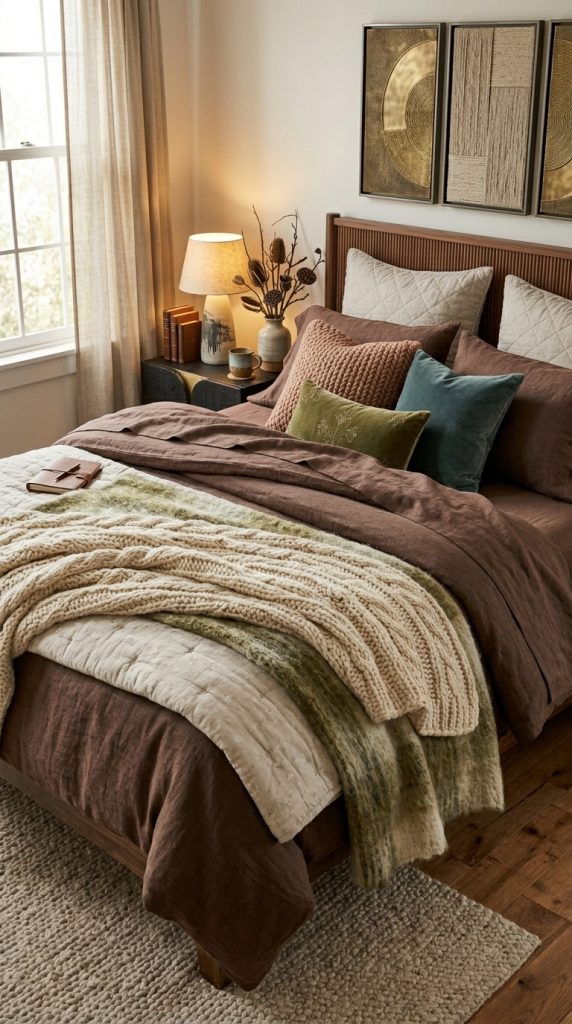
The bed is naturally the centerpiece of most bedrooms, so transforming it into a soft, inviting focal point is one of the easiest ways to create a cozy atmosphere. A layered bed combines multiple bedding textures, colors, and proportions to create a relaxed appearance that feels comfortable rather than overly formal. Instead of using one flat comforter and a couple of pillows, the goal is to build several layers that make the bed look irresistible at the end of a long day.
Begin with a comfortable fitted sheet and top sheet in a breathable material such as cotton or linen. Choose a calm neutral color if you want a timeless look. Cream, ivory, beige, soft gray, and warm white work particularly well. Next, add a duvet, quilt, or comforter. For extra visual interest, select a slightly different shade from the sheets rather than matching everything perfectly.
The next layer should be a throw blanket. Fold it loosely and place it across the lower third of the bed. Chunky knit blankets, waffle-textured throws, brushed cotton blankets, and soft woven styles are excellent choices. Do not worry about making the throw perfectly symmetrical. A slightly relaxed arrangement can actually make the room feel more inviting.
Pillows can add another level of comfort. Start with sleeping pillows at the back, followed by two larger decorative pillows and one or two smaller accent cushions. Mix shapes and textures carefully. For example, pair plain linen pillows with a boucle cushion or a subtle knitted design. Avoid using too many competing patterns because the goal is relaxation rather than visual clutter.
A bed bench can further enhance the design if space allows. A wooden bench introduces natural warmth, while an upholstered bench creates a softer, more luxurious appearance. If your bedroom is small, you can skip the bench and simply use a neatly folded blanket at the foot of the bed.
Materials and items to consider include cotton or linen sheets, a duvet or quilt, textured throws, decorative pillows, a bed runner, an upholstered or wooden bench, and a soft mattress topper.
The biggest benefit of this approach is versatility. You can change the colors and fabrics seasonally without replacing the entire bedroom. Use lightweight linen and cotton during warmer months and introduce heavier wool, fleece, velvet, or chunky knits during colder seasons.
For Pinterest-worthy results, focus on texture rather than excessive decoration. A simple cream-colored bed with several beautiful tactile layers can look more luxurious than a bed covered in dozens of decorative accessories.
2. Use Warm Lighting to Build a Relaxing Bedroom Atmosphere
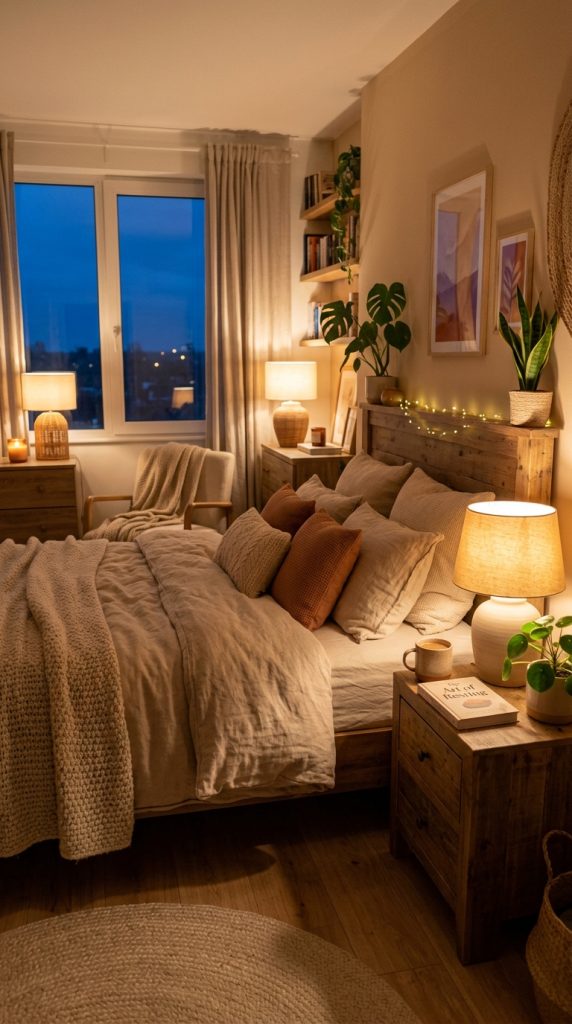
Lighting can completely change the mood of a bedroom. Even the most beautifully decorated space can feel cold if it relies entirely on bright overhead lighting. Cozy bedroom decor works best when lighting is layered and adjustable, allowing the room to transition from bright and functional during the day to soft and relaxing at night.
Start by evaluating your existing ceiling light. If it produces a harsh, overly cool glow, consider replacing the bulb with a warmer option or installing a dimmer if your fixture allows it. Warm lighting creates a softer visual environment and complements neutral, earthy, and natural bedroom palettes.
Bedside lighting is especially important. A pair of matching table lamps can create symmetry, while mismatched lamps can give the room a more collected and personal appearance. Choose lamps with fabric shades, ceramic bases, wood details, or softly diffused glass. These materials help distribute light more gently.
Wall sconces are another excellent option, especially for small bedrooms. They free up space on the bedside table and can create an elegant hotel-inspired appearance. Adjustable sconces are particularly useful if you enjoy reading in bed.
Floor lamps can illuminate darker corners and add height to the room. Place one beside a reading chair, near a dresser, or in an empty corner. If you have a particularly small bedroom, a slim floor lamp can provide atmospheric lighting without occupying much visual space.
Accent lighting can be added through small lamps, decorative lanterns, or subtle string lights. However, use these elements thoughtfully. Too many visible light sources can make the room feel cluttered rather than cozy.
Candles can also contribute to the atmosphere when used safely. Battery-operated candles are a practical alternative if you want the warm visual effect without an open flame. Always follow safety instructions and keep any flame-based candle away from bedding, curtains, and other flammable materials.
Materials and items may include warm-toned bulbs, bedside lamps, wall sconces, floor lamps, dimmer switches, decorative lanterns, and battery-operated candles.
A useful strategy is to create three lighting levels: general lighting for everyday activities, task lighting for reading or getting ready, and accent lighting for atmosphere. This layered approach makes the bedroom much more flexible.
For a Pinterest-inspired appearance, photograph or arrange the bedroom with the strongest overhead light turned off and the softer lamps illuminated. The combination of warm pools of light, soft bedding, and natural textures instantly creates a peaceful visual story.
3. Decorate With Warm Neutral Colors and Earthy Tones
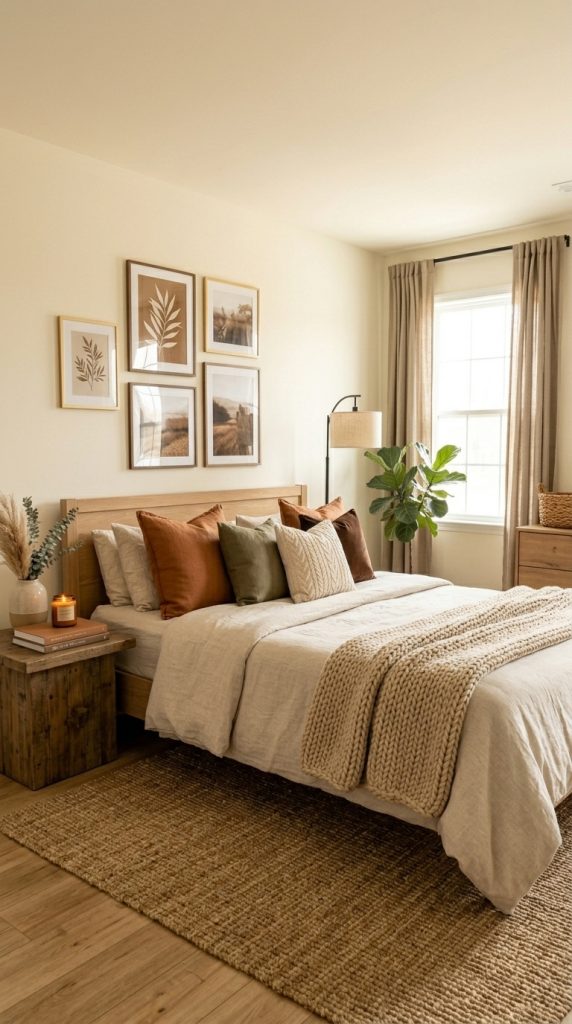
Color is one of the most powerful tools for creating a cozy bedroom. Warm neutrals and earthy tones can make a room feel calmer, softer, and more welcoming without requiring expensive furniture or structural changes. This decorating approach is particularly effective for beginners because it creates a flexible foundation that works with many furniture styles.
Begin by choosing a dominant base color. Cream, warm white, beige, taupe, oatmeal, or soft greige can create an airy background. Avoid choosing a stark, blue-toned white if your goal is warmth. Instead, look for whites with subtle cream or beige undertones.
Once the base is established, introduce one or two supporting shades. Warm brown, caramel, terracotta, muted olive, dusty rose, clay, or soft tan can add depth. You do not need to paint the entire room. These colors can appear through bedding, curtains, rugs, cushions, artwork, or small accessories.
A particularly effective strategy is the 60-30-10 approach. Use one dominant neutral across approximately 60 percent of the room, a secondary color across about 30 percent, and a smaller accent color across approximately 10 percent. This creates balance without requiring everything to match.
For example, imagine a bedroom with warm cream walls, oatmeal bedding, light oak furniture, a muted terracotta cushion, and a woven beige rug. The colors are different, but they belong to the same warm visual family.
Texture becomes especially important when working with neutral colors. A room containing only flat beige surfaces can feel dull. Add linen curtains, a knitted blanket, a textured rug, woven baskets, ceramic accessories, and wood furniture to create contrast.
Earthy colors also connect naturally with plants and natural materials. Olive green can complement leafy plants, while terracotta works beautifully with clay pots and wooden accessories.
Materials and items can include warm neutral paint, cream bedding, beige curtains, taupe cushions, earthy artwork, wooden furniture, terracotta accessories, woven rugs, and ceramic decor.
The benefit of this color strategy is longevity. Unlike highly saturated trends, warm neutral palettes can evolve easily. You can change accent colors from season to season while keeping the main foundation intact.
For Pinterest content, warm neutral bedrooms are highly versatile because they can be adapted to minimalist, rustic, Scandinavian, modern, farmhouse, bohemian, and organic interior styles. The result should feel calm, collected, and comfortable rather than overly coordinated.
4. Add a Soft Area Rug for Comfort and Visual Warmth
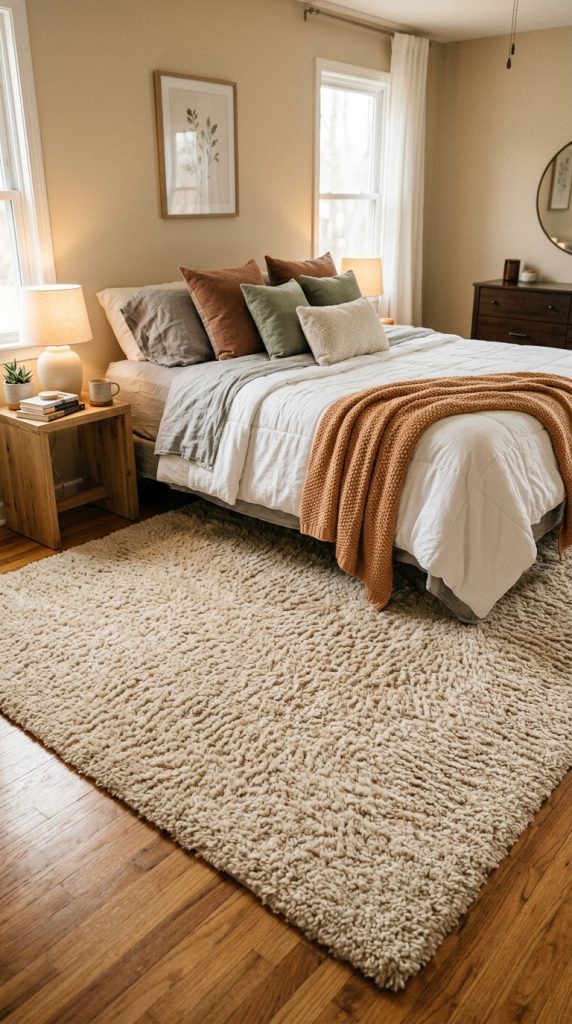
A bedroom can instantly feel cozier when a soft rug is introduced. Flooring is often overlooked in bedroom decorating, yet the surface beneath your feet has a major effect on how comfortable the space feels. A rug can provide softness, absorb sound, visually define the sleeping area, and introduce another layer of texture.
The first decision is size. Ideally, the rug should be large enough to extend beyond the sides of the bed. In a spacious bedroom, a large area rug can sit underneath most of the bed and extend outward toward the nightstands. For smaller rooms, runners or smaller rugs can be positioned along the sides of the bed.
Choose the rug according to your lifestyle. If you enjoy a plush, luxurious appearance, consider a high-pile or shag-style rug. If you prefer a cleaner and easier-to-maintain option, a low-pile woven rug may be more practical. Wool, cotton, jute, and washable synthetic materials each provide different benefits.
Color should complement the bedroom rather than compete with it. A cream or beige rug works beautifully with neutral bedding. A muted patterned rug can introduce personality into a simpler room. If the bedroom already contains several patterns, choose a subtle solid or lightly textured rug.
Texture is particularly important for cozy decor. A fluffy rug beside the bed creates a comforting sensation when you step out in the morning. A woven rug can add natural character, while a thick wool rug can provide both warmth and visual depth.
Safety should also be considered. Use an appropriate rug pad underneath the rug to reduce slipping and protect the floor. Make sure the rug does not create a trip hazard around doors or walkways.
Materials and items include an area rug, runner, washable rug, wool rug, cotton rug, jute rug, and non-slip rug pad.
A rug can also help visually connect furniture pieces. For example, placing the bed, bench, and nightstands within the same rug zone creates a more unified composition.
For a Pinterest-friendly cozy bedroom, combine a soft rug with layered bedding, warm lighting, and natural wood furniture. The resulting space feels tactile and inviting from every angle.
5. Bring Natural Wood and Organic Materials Into the Bedroom
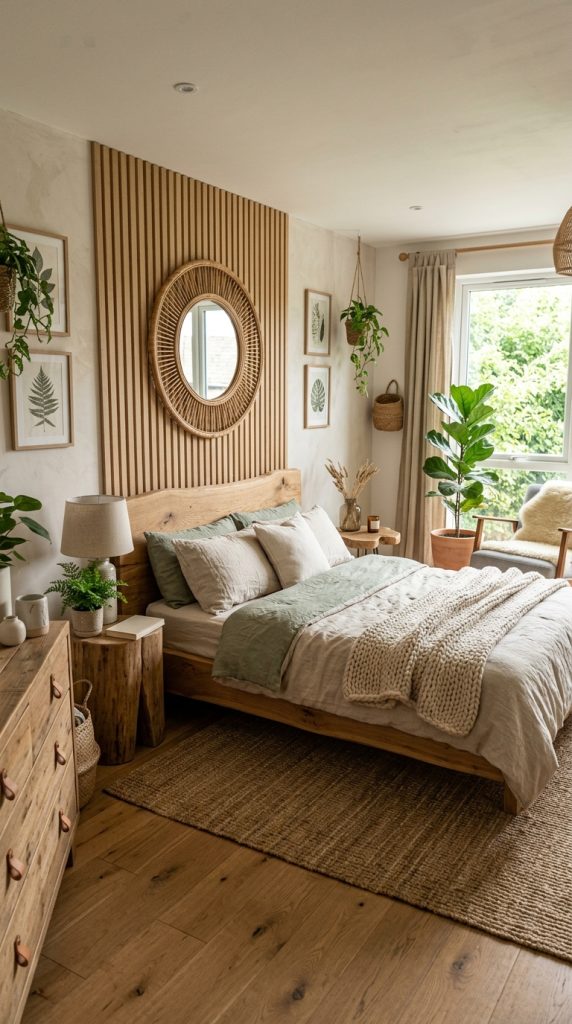
Natural materials are one of the easiest ways to make a bedroom feel warm and grounded. Wood, rattan, bamboo, wicker, linen, cotton, wool, and ceramic materials introduce organic texture that can soften the appearance of modern furniture and plain walls.
Start with furniture. A wooden bed frame, nightstand, dresser, or bench can become a strong foundation for cozy bedroom decor. Light oak creates a bright Scandinavian-inspired feeling, while walnut and darker wood tones create a richer, more intimate atmosphere.
If replacing furniture is not practical, introduce smaller wooden elements. A wooden tray on the nightstand, a small stool, framed wooden artwork, or a simple decorative box can provide enough natural texture to change the overall feeling.
Woven materials are another excellent addition. Use rattan baskets for blankets, wicker storage baskets for accessories, or woven trays for bedside organization. These pieces are practical as well as decorative.
Linen is especially useful for cozy bedrooms. Linen curtains allow soft natural light to filter into the room, while linen bedding provides a relaxed, breathable texture. Cotton, wool, and other natural textiles can be layered to create additional softness.
Plants can also strengthen the natural aesthetic. Choose plants appropriate for the available light and your ability to maintain them. If live plants are not suitable, high-quality artificial greenery can provide a similar visual effect.
Ceramic accessories add another organic element. A handmade-looking vase, simple pottery lamp, or small ceramic dish can make a bedside arrangement feel more personal.
Materials and items include wooden furniture, rattan baskets, wicker trays, bamboo accessories, linen curtains, linen bedding, cotton textiles, wool blankets, ceramic vases, and natural greenery.
The important thing is balance. Do not fill every surface with natural materials. A few carefully selected pieces will have more impact than a room overloaded with baskets, wood, and plants.
This approach works particularly well with modern, minimalist, Scandinavian, organic modern, rustic, and farmhouse bedrooms. It creates warmth while maintaining a clean and sophisticated appearance.
6. Create a Cozy Reading Corner in an Empty Bedroom Space
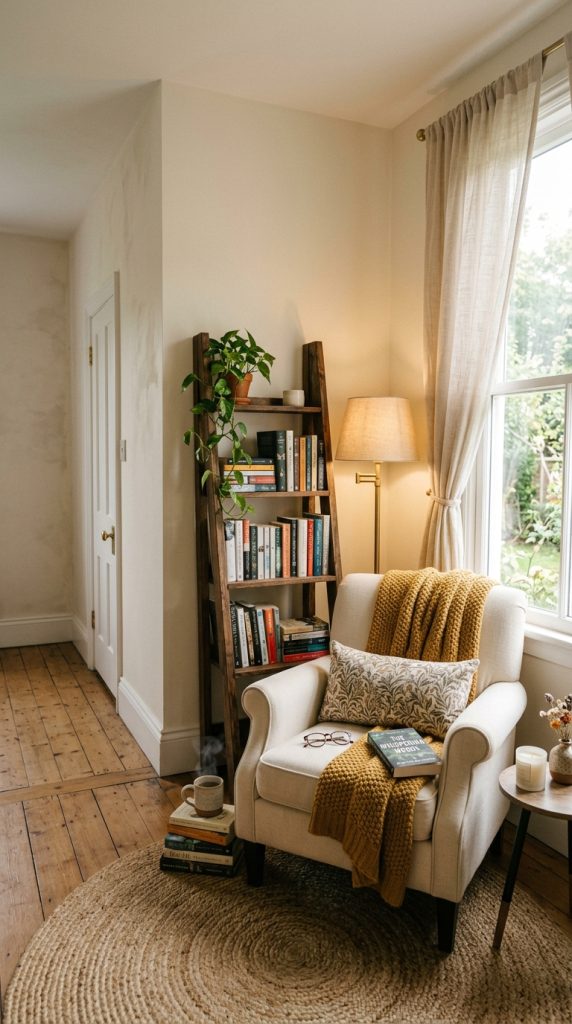
A reading corner can transform an unused bedroom area into a purposeful and inviting retreat. Even if you do not regularly read, the space can function as a quiet place for morning coffee, journaling, relaxing, or simply sitting away from the bed.
Begin by identifying an underused corner. A space beside a window is ideal because natural daylight makes reading more pleasant. However, any quiet corner can work with appropriate lighting.
The essential furniture is a comfortable chair. Choose an upholstered armchair, boucle chair, wooden lounge chair with cushions, or compact accent chair according to your bedroom style. If space is limited, consider a small bench or floor cushion instead.
Add a small side table next to the chair. It should be large enough for a book, cup, glasses, or small lamp without overwhelming the space. A round table can soften rooms with lots of rectangular furniture.
Lighting is essential. Place a floor lamp or table lamp near the chair. Adjustable lighting is particularly useful because it allows you to direct light toward your reading area without illuminating the entire room.
Then introduce a soft throw blanket and one or two cushions. These small details make the chair visually inviting and reinforce the cozy theme.
A small rug beneath the chair can define the area and provide additional softness. You can also add a basket beside the chair for books or extra blankets.
Materials and items include an accent chair, side table, reading lamp, floor lamp, cushions, throw blanket, small rug, book basket, and favorite books.
If you have a window with a pleasant view, avoid blocking it with large furniture. Instead, position the chair slightly to the side so the area feels open.
For Pinterest inspiration, focus on creating a simple visual story: a comfortable chair, warm lamp, soft throw, small table, and a few books. This arrangement communicates relaxation immediately.
The greatest advantage is that the corner does not need to be expensive. A secondhand chair can be refreshed with a new cushion or throw, while a simple wooden stool can replace a traditional side table.
7. Use Curtains to Make the Bedroom Feel Softer and More Private
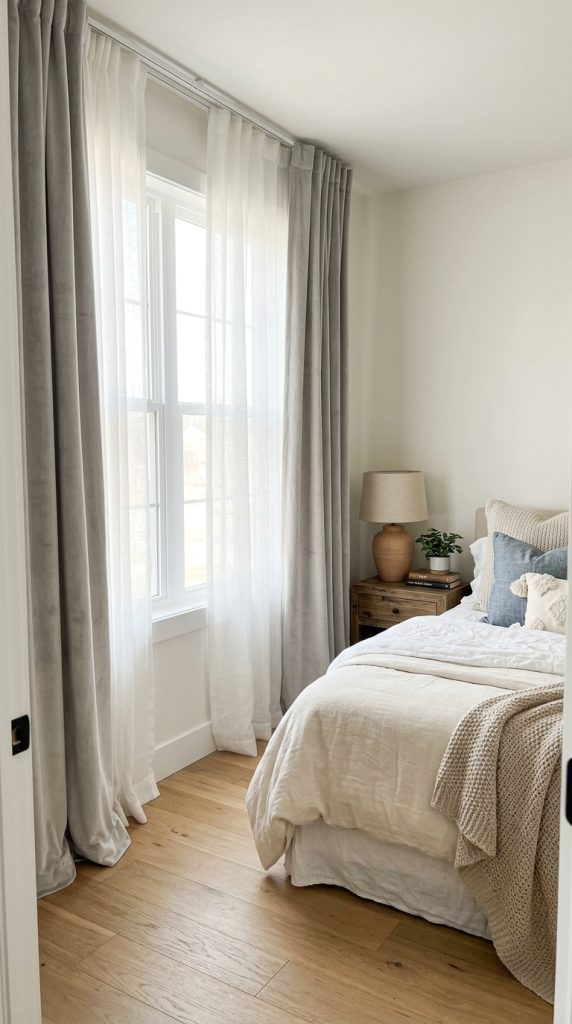
Window treatments can dramatically influence bedroom atmosphere. Bare windows can sometimes make a room feel unfinished or exposed, while soft curtains can add warmth, privacy, texture, and visual height.
For a cozy bedroom, fabric curtains are usually more effective than extremely rigid or formal window coverings. Linen-look, cotton, lightweight woven, and soft textured curtains can create a relaxed appearance.
Choose colors that complement your walls and bedding. Cream, oatmeal, warm beige, taupe, dusty rose, or soft gray can work beautifully. If the walls are already neutral, slightly darker curtains can add depth without creating strong contrast.
Curtain length matters. Hanging curtains closer to the ceiling and allowing them to fall toward the floor can make the room appear taller. If possible, choose panels long enough to create an elegant vertical line rather than stopping directly at the windowsill.
Layering can also improve functionality. Combine sheer curtains with blackout curtains when you want daytime softness and nighttime privacy. The sheer layer filters natural light, while the heavier layer provides darkness and insulation.
Texture should match the overall bedroom concept. Linen creates a relaxed natural appearance, velvet feels luxurious, and cotton creates a simple casual look.
Materials and items include curtain panels, curtain rods, sheer curtains, blackout curtains, curtain rings, tiebacks, and optional window shades.
Avoid choosing extremely complicated curtain designs if the bedroom already has plenty of visual interest. Simple fabric panels often create the most timeless result.
Curtains also influence natural lighting throughout the day. During the morning, sheer panels can diffuse sunlight and create a soft glow. In the evening, heavier curtains can make the bedroom feel more enclosed and intimate.
For Pinterest-style styling, let curtains frame the windows naturally rather than pulling them tightly to the sides. Combine them with warm bedding, wood accents, and soft lighting to create a peaceful atmosphere.
8. Style a Beautiful and Functional Bedside Table
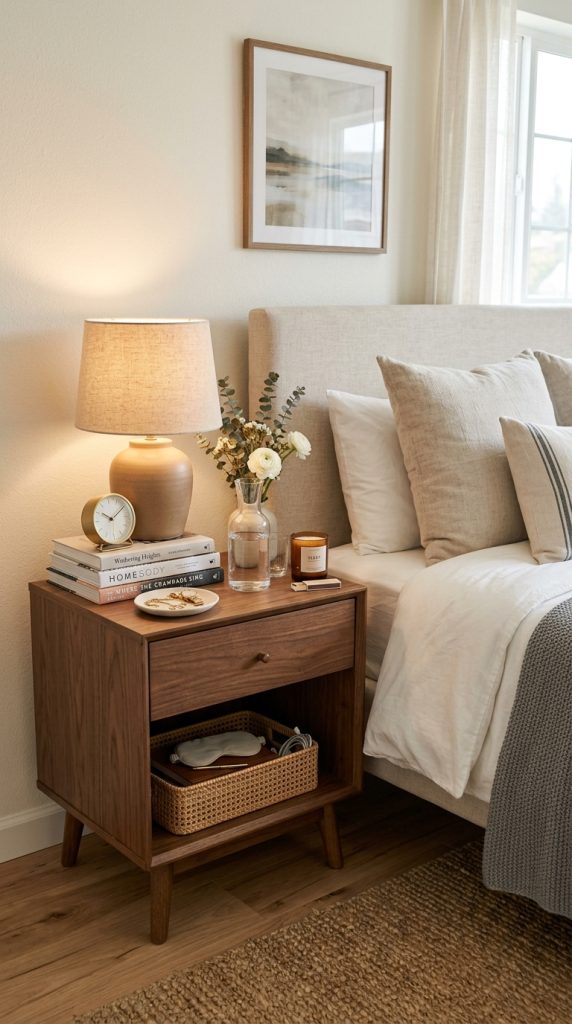
A bedside table may be small, but it can have a major impact on the overall look of a cozy bedroom. A well-styled nightstand should balance beauty with functionality. It should contain the things you genuinely use while avoiding the clutter that can make a bedroom feel stressful.
Start by clearing the surface completely. Only return items that serve a purpose or contribute meaningfully to the design.
A small lamp should usually be the main element because it provides essential nighttime lighting. Next, add one or two functional pieces, such as a small tray for jewelry, a water glass, an alarm clock, or a book.
A small plant, ceramic vase, or framed photograph can provide personality. However, keep decorative items limited. The nightstand should remain easy to use.
Trays are particularly helpful because they visually organize small objects. A wooden, ceramic, metal, or woven tray can group several items into one intentional arrangement.
Books are another excellent cozy accessory. Stack two or three books horizontally and place a small decorative object on top if the surface allows. Choose books you actually enjoy rather than using them only as props.
A bedside drawer can provide hidden storage for chargers, personal items, and other objects. If your nightstand does not have a drawer, use a small decorative box or basket.
Materials and items include a bedside lamp, tray, books, ceramic dish, small plant, framed photo, alarm clock, water glass, storage box, and decorative object.
Symmetry can be useful when styling two nightstands. Matching lamps can create a balanced appearance, while slightly different accessories can keep the room from feeling too rigid.
The goal is not to make the nightstand look perfect at all times. Instead, create a system that makes keeping it tidy easy.
For Pinterest, a simple bedside composition often photographs beautifully: one warm lamp, a small stack of books, a ceramic accessory, and a soft neutral background. This combination communicates comfort without visual overload.
9. Add Personal Artwork and Meaningful Decorative Details
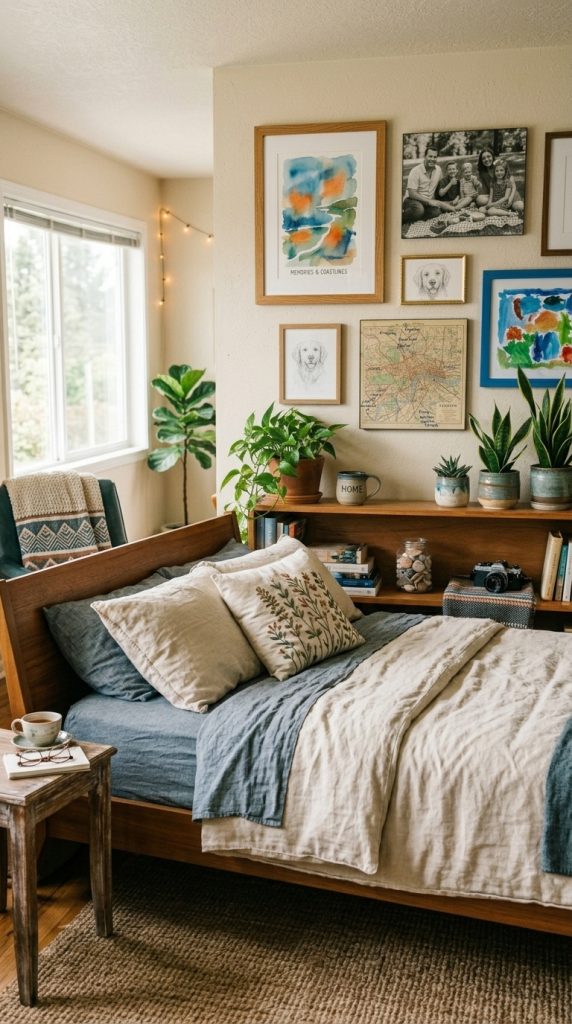
A cozy bedroom should feel personal rather than copied directly from a showroom. Artwork, photographs, sentimental objects, and handmade pieces can turn a beautiful bedroom into a space that actually feels like yours.
Begin by choosing artwork that makes you feel calm or happy. Landscape prints, botanical illustrations, abstract art, soft photography, line drawings, and typography can all work depending on your style.
Large artwork above the bed can create a strong focal point. If you prefer a more casual arrangement, create a small gallery wall using several coordinated frames.
Keep the color palette connected to the bedroom. If your room uses warm neutrals, choose artwork with cream, beige, brown, muted green, or dusty tones. This creates cohesion without requiring identical colors.
Personal photographs can add emotional warmth. Rather than covering every wall, select a few meaningful images and display them in simple frames.
Decorative objects should also tell a story. A handmade vase, travel souvenir, inherited object, favorite book, or craft item can make the room feel unique.
Mirrors can serve both decorative and practical purposes. A large mirror can reflect light and make a small bedroom appear more spacious. Choose a wooden or softly finished frame for additional warmth.
When arranging wall decor, pay attention to scale. Tiny artwork above a large bed can appear lost, while oversized pieces can overwhelm a small room. The furniture should determine the approximate visual scale of the artwork.
Materials and items include framed artwork, photographs, gallery frames, mirrors, handmade ceramics, decorative objects, books, and personal keepsakes.
Avoid filling every wall simply because there is empty space. Negative space helps important pieces stand out.
Pinterest-worthy bedrooms often have a few memorable details rather than dozens of decorations. A single large botanical print, a handmade ceramic vase, or a meaningful photograph can become a stronger focal point than an entire collection of unrelated accessories.
The most important rule is authenticity. Choose pieces because you genuinely like them, not because they happen to be trending.
10. Build a Cozy Minimalist Bedroom With Less Clutter
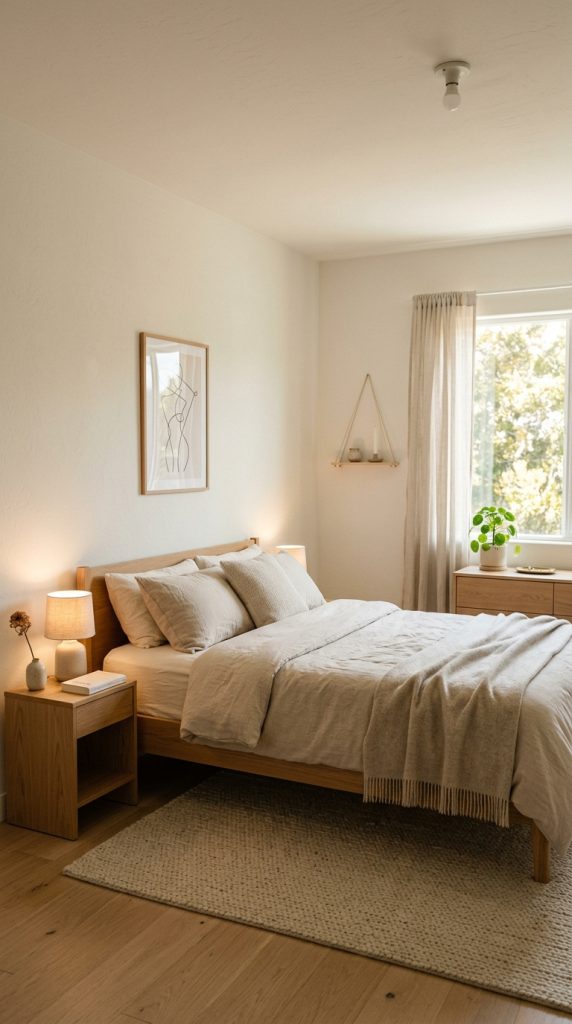
Cozy and minimalist may seem like opposite decorating styles, but they can work beautifully together. A cozy minimalist bedroom combines the calmness of minimalism with the warmth of comfortable textiles, natural materials, soft lighting, and carefully selected accessories.
The first step is reducing visual clutter. Look at every surface and ask whether the item is useful, meaningful, or genuinely beautiful. If it does not contribute to the room, consider removing it.
Keep the furniture practical. A comfortable bed, two nightstands if space allows, a dresser or storage solution, and perhaps one chair may be enough. Avoid filling the room simply because there is available floor space.
Choose a restrained color palette. Cream, warm white, beige, taupe, light brown, and muted green work particularly well. Use texture to create interest instead of introducing many colors.
Layer the bed with one or two beautiful blankets and a small number of cushions. A soft rug can add comfort without creating visual clutter.
Storage is essential. Use under-bed storage, baskets, drawers, built-in closets, or closed cabinets to keep everyday objects out of sight. Open shelving should be used selectively because too many visible objects can quickly make a minimalist bedroom feel busy.
Lighting should remain soft and purposeful. One or two well-chosen lamps can be more effective than several decorative lights.
Natural materials such as wood, linen, cotton, wool, and ceramic prevent minimalism from becoming sterile.
Materials and items include simple wooden furniture, neutral bedding, textured blanket, soft rug, woven basket, closed storage, warm lamp, ceramic accessory, and minimal artwork.
A cozy minimalist bedroom is especially useful for people who want their bedroom to feel peaceful and easy to maintain. Fewer objects mean less dusting, less organizing, and less visual distraction.
For Pinterest, the strongest visual formula is simple: uncluttered surfaces, warm neutral colors, layered bedding, natural wood, soft lighting, and one or two meaningful decorative pieces.
The final room should not feel empty. It should feel intentional. The difference is that every visible element has a purpose, and comfort remains the priority.
11. Create a Cozy Canopy Bed for a Dreamy Bedroom Retreat
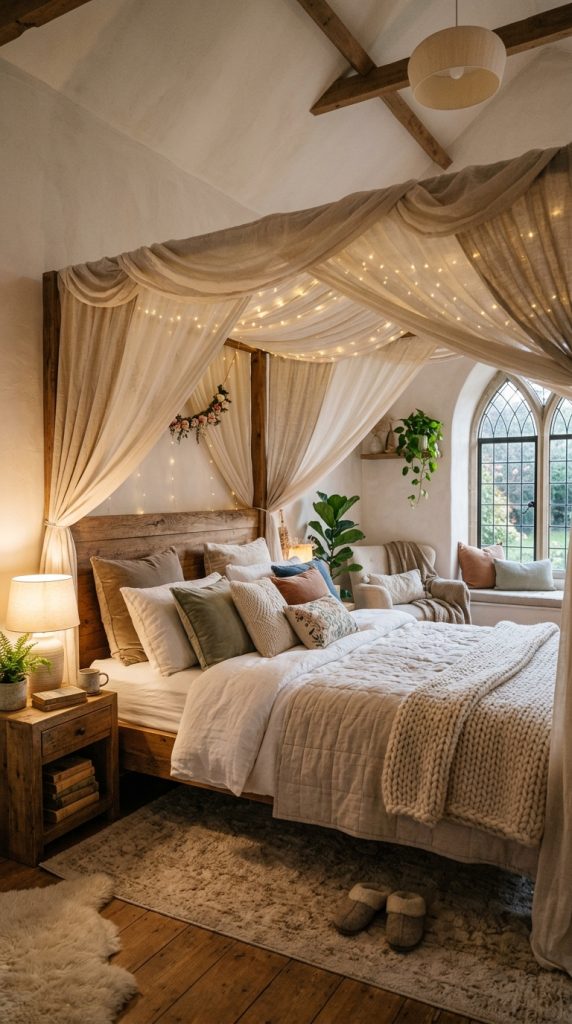
A canopy bed is one of the most beautiful ways to make a bedroom feel intimate, dreamy, and luxurious without completely redesigning the space. The soft fabric surrounding the bed creates a sense of privacy and enclosure, making the sleeping area feel like a peaceful little retreat. While traditional canopy beds can look elaborate, modern versions can be surprisingly simple. You can create the same cozy effect with lightweight curtains, a simple canopy frame, ceiling-mounted fabric, or even a four-poster bed styled with flowing textiles.
The key to making a canopy bedroom feel cozy rather than overly dramatic is choosing soft materials and a restrained color palette. Cream, ivory, beige, warm white, oatmeal, and muted earthy colors are especially effective. These shades allow the fabric to blend naturally with the rest of the bedroom while creating a soft visual frame around the bed.
Start by deciding how much coverage you want. If you prefer an airy bedroom, allow lightweight fabric to hang loosely from the corners of the bed. For a more intimate atmosphere, use curtains that can partially or completely surround the sleeping area. Sheer fabric works beautifully when you want natural light to pass through while still creating a romantic effect.
The bed itself should remain comfortable and visually inviting. Layer cotton or linen sheets with a duvet, quilt, soft blanket, and several pillows. A chunky knitted throw placed casually at the foot of the bed can make the arrangement feel even warmer.
Materials and Things You Need
- Canopy bed or simple canopy frame
- Lightweight cotton, linen, or sheer fabric
- Curtain rods or ceiling-mounted tracks
- Appropriate hooks or mounting hardware
- Neutral bedding
- Textured throw blanket
- Decorative pillows
- Bedside lamps
- Soft area rug
- Optional string or accent lighting
Step-by-Step Decorating Process
First, measure the bed and surrounding space. Make sure the canopy will not interfere with doors, windows, ceiling fixtures, or walking paths.
Next, select fabric. If your bedroom is small, lightweight material is usually preferable because heavy curtains can visually reduce the available space. In a larger bedroom, fuller fabric can create a dramatic cocoon-like effect.
Install the canopy structure securely according to the manufacturer’s instructions. If you are using ceiling hardware, make sure it is appropriate for the ceiling material and fabric weight.
Once the structure is installed, hang the fabric. Do not worry about creating perfectly symmetrical folds. Slightly relaxed fabric often looks more natural and cozy.
Finally, style the bed with layered bedding. Keep the colors coordinated with the curtains. For example, cream curtains can be paired with ivory sheets, beige bedding, and a taupe throw.
Why This Cozy Bedroom Idea Works
A canopy bed creates a strong focal point immediately. Instead of needing numerous wall decorations or accessories, the canopy itself provides architectural interest. It also changes the perceived scale of the bed, making it feel more substantial and luxurious.
This idea works particularly well in romantic bedrooms, cottage-style rooms, bohemian spaces, Scandinavian interiors, and modern organic bedrooms.
For Pinterest-worthy styling, focus on soft natural light, neutral bedding, flowing fabric, and warm lamps. The finished space should feel relaxed rather than overly formal.
If you are working with a limited budget, you do not need to replace your bed. A simple DIY fabric canopy can create a similar effect. Concentrate on high-quality-looking fabric and beautiful bedding because those elements will have the strongest visual impact.
12. Add Warm Lighting for a Soft and Relaxing Bedroom Atmosphere
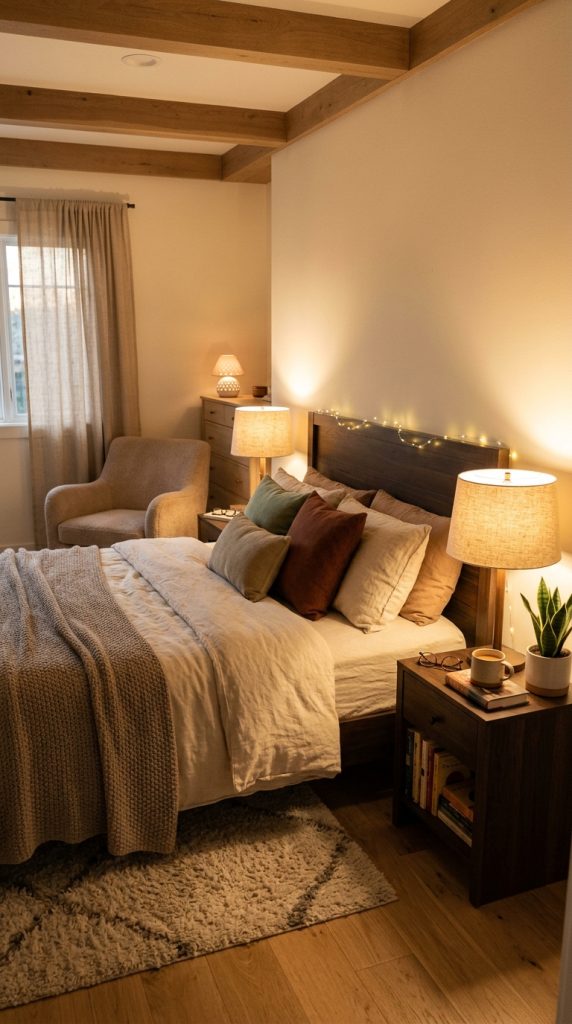
Lighting is one of the most important elements in creating cozy bedroom decor, yet it is frequently overlooked. A room can have beautiful furniture, stylish bedding, and carefully selected accessories but still feel cold if the lighting is too bright or harsh. Cozy bedrooms benefit from multiple layers of illumination that allow you to change the atmosphere throughout the day.
Instead of relying on one ceiling fixture, think about lighting the bedroom in zones. General lighting provides enough illumination for everyday activities, task lighting supports activities such as reading, and accent lighting creates atmosphere.
Begin with your main ceiling fixture. If it produces an overly bright or cool light, consider replacing the bulb with a warmer option that is suitable for the fixture. A dimmer can also provide greater flexibility when compatible with the electrical setup.
Bedside lighting is especially valuable. Table lamps with fabric shades can soften the light and create a warm pool of illumination around the bed. Ceramic, wood, glass, and woven lamp bases can also introduce additional texture.
Wall sconces are another excellent option. They are particularly useful in small bedrooms because they provide bedside lighting without occupying valuable nightstand space. Adjustable sconces are ideal if you enjoy reading in bed.
A floor lamp can brighten a dark corner and create visual height. Place one beside a reading chair, dresser, or empty corner. Choose a design that complements the bedroom rather than competing with it.
Materials and Things You Need
- Warm-toned light bulbs
- Bedside table lamps
- Wall sconces
- Floor lamp
- Dimmable lighting where appropriate
- Decorative lantern
- Battery-operated candles
- Small accent lamps
- Extension or cable-management solutions where safely appropriate
Step-by-Step Lighting Plan
Start by identifying the darkest areas of the room. These are usually corners, spaces beside furniture, and areas away from the ceiling fixture.
Place bedside lamps first because they are both practical and decorative.
Next, add a floor lamp if you have an empty corner. Position it where it provides useful light without creating glare.
If you have artwork or a special architectural feature, consider accent lighting that highlights it.
Finally, evaluate the room at night. Turn off the main light and switch on your smaller lamps. Notice whether there are still areas that feel excessively dark or whether the light feels balanced.
Safety should always come first. Keep electrical cords organized, avoid placing lamps where they can be knocked over, and keep open flames away from bedding and curtains.
Why Warm Lighting Makes a Bedroom Cozier
Warm lighting changes the emotional quality of a room. Soft pools of light make furniture and textiles appear gentler, while layered illumination creates depth.
This is especially useful in bedrooms because the room has multiple purposes. Bright lighting can help you get dressed or clean, while softer lighting can create a relaxing evening environment.
For a Pinterest-inspired look, combine warm lamps with cream bedding, wooden furniture, textured blankets, and soft curtains. The resulting glow can make even a simple bedroom look sophisticated.
You can also create a cozy atmosphere without spending much money. A single attractive bedside lamp can have a greater effect than purchasing numerous decorative accessories.
The best cozy bedroom lighting is flexible, comfortable, and purposeful. It should help you see when you need to see and disappear into the background when you want to relax.
13. Transform a Small Bedroom Into a Cozy and Functional Retreat
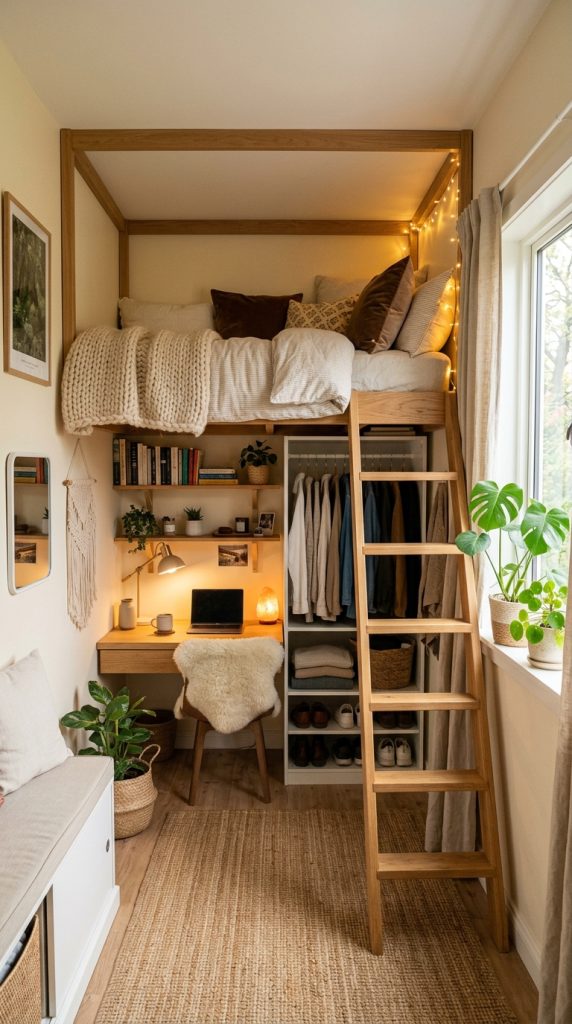
Small bedrooms have a natural advantage when it comes to coziness. Their compact proportions can create an intimate atmosphere, but poor furniture placement and excessive clutter can quickly make them feel cramped. The goal is therefore not to make a small bedroom look artificially large. Instead, design it so that every inch contributes to comfort, storage, and visual calm.
Start by evaluating the bed because it usually takes up the most floor space. Select a size that provides enough room for comfortable movement. If storage is limited, a bed with built-in drawers or an organized under-bed storage system can be extremely useful.
Color also has a significant impact. Warm white, cream, beige, soft taupe, and light earthy colors can help the room feel open while maintaining warmth. You can still introduce darker shades through cushions, artwork, lamps, or small furniture pieces.
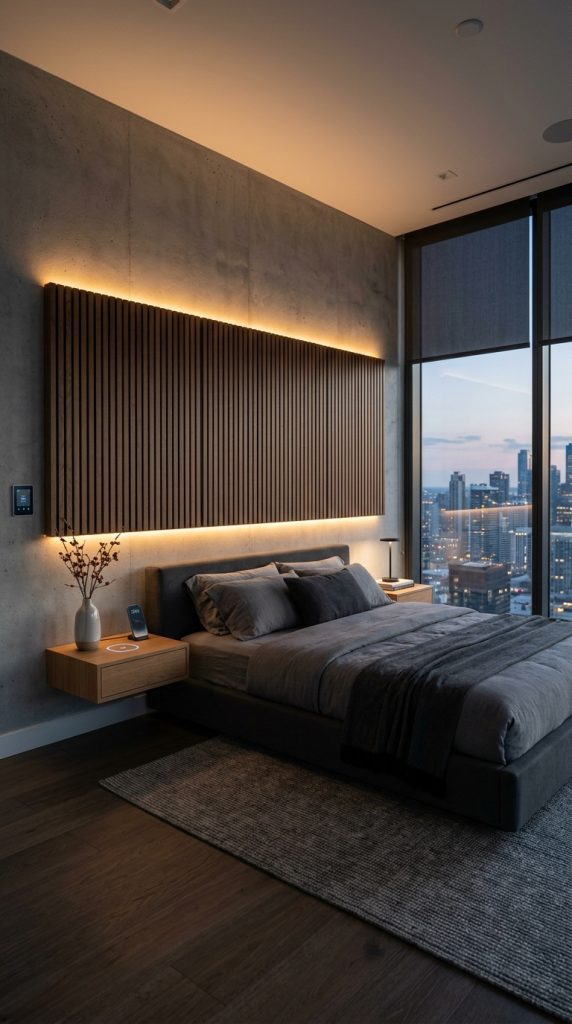
Vertical space should become your best friend. Instead of placing everything on the floor, use wall-mounted shelves, floating nightstands, tall storage cabinets, hooks, and vertical artwork.
A floating bedside shelf is particularly useful. It provides enough space for a lamp, phone, book, or decorative item without taking up floor space.
Mirrors can also help. Position a mirror where it reflects daylight or an attractive section of the room. This can create a stronger sense of depth.
Materials and Things You Need
- Storage bed or under-bed storage
- Floating nightstand
- Wall-mounted shelves
- Compact dresser
- Tall storage cabinet
- Mirror
- Wall sconces
- Small area rug
- Neutral bedding
- Storage baskets
- Multifunctional ottoman
- Light curtains
Step-by-Step Small Bedroom Makeover
Begin by removing furniture that is not essential. Measure the remaining pieces and determine whether they allow comfortable movement.
Next, establish the bed position. Avoid placing furniture in ways that block doors or windows.
Add compact storage. Use the area beneath the bed, vertical shelving, and closed storage boxes to keep everyday objects organized.
Replace bulky bedside furniture with floating shelves or narrow tables.
Then introduce soft textiles. A comfortable duvet, textured blanket, and small rug can make the room cozy without taking up additional floor space.
Use wall-mounted lighting instead of large lamps when possible.
Finally, add a few personal decorative pieces. Avoid covering every surface because visual clutter is especially noticeable in a small room.
Why This Idea Works
Small spaces often become uncomfortable because there are simply too many objects competing for limited space. By reducing clutter and choosing multifunctional furniture, you can create a room that feels calm and intentional.
A small bedroom can actually feel more inviting than a large one because it naturally creates a sense of enclosure. Soft lighting, layered textiles, and warm colors enhance that feeling.
For Pinterest, focus on a clear visual story: a beautifully made bed, warm lamp, floating shelf, soft rug, natural texture, and uncluttered walls.
You do not need to spend a large amount of money. Rearranging furniture, decluttering, changing lighting, and adding a few textiles can produce a major transformation.
The ultimate goal is to make the bedroom feel comfortable without sacrificing functionality.
14. Create a Nature-Inspired Cozy Bedroom With Sage Green and Botanical Decor
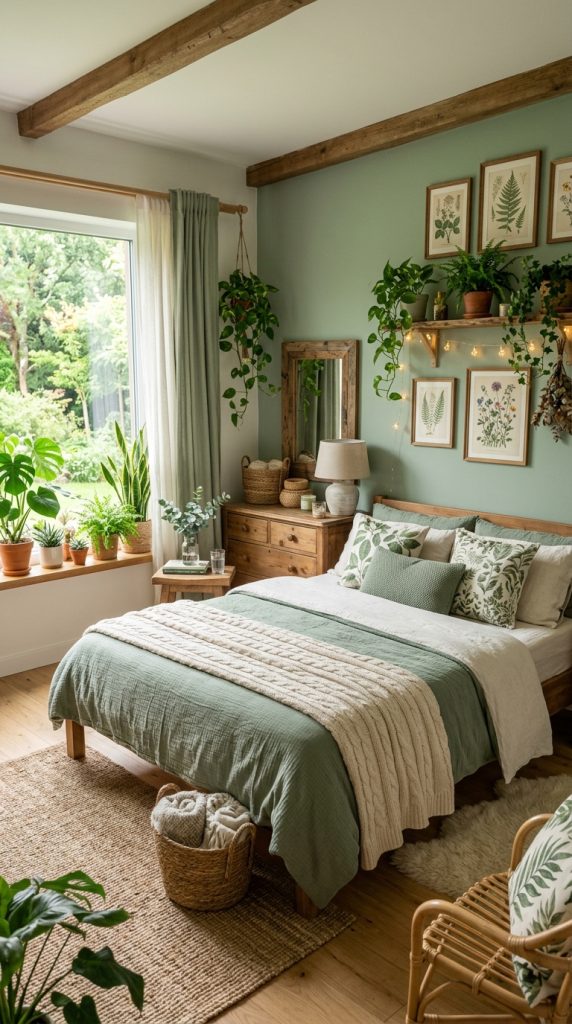
A nature-inspired bedroom can feel peaceful, fresh, and comforting at the same time. Sage green, olive, eucalyptus, moss, and muted botanical shades are particularly effective because they introduce color without becoming visually overwhelming. When combined with warm neutrals and natural materials, green can transform an ordinary bedroom into a relaxing retreat inspired by the outdoors.
You can introduce green in several ways depending on how dramatic you want the transformation to be. Painting the wall behind the bed is one of the strongest options. However, if you prefer a temporary or lower-cost update, use green bedding, curtains, cushions, artwork, rugs, or decorative accessories.
Sage green works beautifully with cream and warm white. Olive green pairs naturally with brown and wood. Deeper forest green can create a dramatic bedroom when combined with ivory bedding and warm lighting.
Botanical artwork is another easy way to establish the theme. Choose leaf illustrations, pressed-botanical prints, landscape photography, or abstract artwork inspired by natural forms.
Plants can add another layer of life. Select plants according to the light conditions in your bedroom and your ability to care for them. A large plant can fill an empty corner, while a smaller plant can sit on a dresser or shelf.
Natural materials strengthen the overall design. Light wood, rattan, wicker, linen, cotton, ceramic, and woven fibers all complement green beautifully.
Materials and Things You Need
- Sage, olive, or muted green paint
- Green bedding
- Cream or ivory duvet
- Botanical artwork
- Indoor plants
- Ceramic planters
- Wooden furniture
- Rattan baskets
- Linen curtains
- Woven rug
- Natural-fiber cushions
- Warm lighting
Step-by-Step Decorating Process
First, select your primary shade of green. Test a small sample before painting a large wall because natural and artificial lighting can change how the color appears.
Next, choose your neutral base. Cream or warm white bedding works particularly well.
Introduce natural wood through furniture or smaller accessories.
Add botanical artwork above the bed, beside a dresser, or on an empty wall.
Then bring in plants. Use different heights to create a natural composition, but avoid overcrowding the room.
Add woven storage baskets and linen textiles to increase texture.
Finally, use warm lighting to bring out the richness of the green in the evening.
Why This Style Feels So Cozy
Nature-inspired decor creates a visual connection to organic materials and outdoor environments. Green can add personality without the intensity of brighter colors, while wood and woven textures make the room feel grounded.
This concept works particularly well with Scandinavian, organic modern, farmhouse, cottage, bohemian, and minimalist interiors.
For Pinterest, a sage green accent wall combined with cream bedding, natural wood, botanical artwork, and warm lamps creates a highly cohesive visual composition.
The most important principle is moderation. You do not need green on every surface. Let it act as a supporting color while warm neutrals provide balance.
You can also adapt the palette throughout the year. Lighter sage and fresh greenery can create a spring-like atmosphere, while deeper olive and warm brown accessories can make the same bedroom feel richer during autumn and winter.
15. Create a Cozy Hotel-Inspired Bedroom at Home
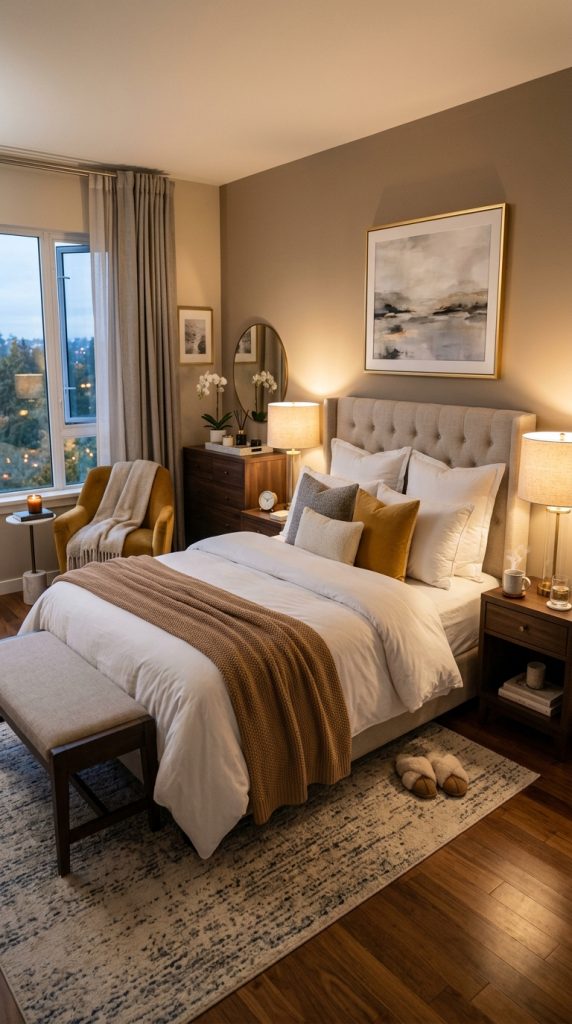
A hotel-inspired bedroom combines comfort, simplicity, symmetry, and understated luxury. You do not need a huge budget to recreate the atmosphere of a beautiful boutique hotel. Instead, concentrate on the visual and functional details that make hotel bedrooms feel relaxing: inviting bedding, balanced furniture, soft lighting, quality-looking curtains, uncluttered surfaces, and carefully selected accessories.
The bed should be the primary focal point. Begin with clean, comfortable sheets and add a duvet or quilt. Cream, ivory, and warm white create a classic hotel appearance, while beige and taupe offer a softer interpretation.
Layer the bed with a folded throw at the bottom and several pillows. Avoid using so many pillows that the bed becomes difficult to use. The objective is to communicate comfort.
Symmetry can make the bedroom feel more polished. Matching nightstands and bedside lamps create a balanced composition. You can personalize each side with different books or small accessories while keeping the major elements consistent.
Curtains are another important detail. Floor-length curtains can make the room appear taller and more sophisticated. Choose neutral fabric that complements the bedding and wall color.
A bench at the end of the bed can add another luxurious detail. An upholstered bench is especially effective, although a simple wooden bench can create a more natural look.
Materials and Things You Need
- Comfortable sheets
- Cream or ivory duvet
- Decorative pillows
- Soft throw blanket
- Matching nightstands
- Bedside lamps
- Floor-length curtains
- Upholstered or wooden bench
- Soft area rug
- Neutral artwork
- Decorative tray
- Ceramic vase
- Mirror
- Warm lighting
Step-by-Step Hotel Bedroom Makeover
Begin by decluttering visible surfaces. Hotel rooms feel relaxing partly because unnecessary objects are kept out of sight.
Next, make the bed the focal point. Layer the bedding carefully, keeping the colors coordinated.
Place matching nightstands on both sides of the bed if space allows.
Add matching lamps to establish visual symmetry.
Install or hang curtains so they frame the windows from a higher point toward the floor.
Place a bench at the foot of the bed if the room has sufficient space.
Add one or two pieces of artwork rather than filling every wall.
Finish with a rug, small decorative tray, and perhaps a ceramic vase or plant.
Why Hotel-Inspired Decor Works
Hotels are designed around comfort and relaxation, which makes their decorating principles particularly suitable for bedrooms. The emphasis on balanced furniture, high-quality-looking textiles, soft lighting, and uncluttered surfaces creates a calm environment.
You can make the design feel more personal by adding favorite books, photographs, handmade ceramics, or meaningful artwork. This prevents the room from becoming too formal.
For Pinterest, focus on the bed as the hero element. A beautifully layered cream bed surrounded by matching lamps, warm curtains, and natural accessories creates an elegant image.
You can also achieve the look gradually. Start with bedding, then improve lighting, curtains, and storage. There is no need to purchase everything simultaneously.
The final bedroom should feel luxurious but still comfortable enough for everyday life. Avoid sacrificing practicality for appearance.
The best hotel-inspired bedrooms combine polished styling with genuine comfort, giving you the feeling of a private retreat without leaving home.
Conclusion
Creating a cozy bedroom is ultimately about designing a space that feels warm, comfortable, peaceful, and personal. Throughout these cozy bedroom decor ideas, one important principle remains consistent: a beautiful bedroom does not have to be expensive, oversized, or filled with decorations. The most inviting spaces are created through thoughtful choices that combine comfort, functionality, texture, lighting, color, and personality.
The easiest place to begin is with the bed. Since it is usually the main focal point, layered bedding can immediately change the atmosphere of the entire room.
Lighting is equally important. Harsh overhead lighting can make even a beautifully decorated bedroom feel cold, while warm bedside lamps, sconces, floor lamps, and subtle accent lighting can create a relaxing evening atmosphere. Instead of relying on one light source, use several layers so the bedroom can feel bright when necessary and calm when it is time to unwind.
Color also plays a major role in creating the right mood. Warm neutrals such as cream, beige, oatmeal, taupe, and warm white create a timeless foundation, while earthy shades such as sage green, olive, terracotta, brown, and muted rose can add personality. For those who prefer dramatic interiors, deeper shades such as forest green, navy, charcoal, or chocolate brown can create an intimate cocoon-like feeling when balanced with softer textiles and warm illumination.
Natural materials are another powerful way to bring warmth into the bedroom. Wood furniture, rattan baskets, woven accessories, linen curtains, cotton bedding, ceramic pieces, wool blankets, and plants can make the space feel grounded and connected to nature. These materials are especially effective because they introduce texture without making the room feel overly decorated.
For small bedrooms, the key is thoughtful organization. A compact room can still feel luxurious when furniture is appropriately scaled and clutter is controlled. Floating nightstands, wall-mounted shelves, storage beds, multifunctional furniture, mirrors, and vertical storage can help preserve valuable floor space. Instead of trying to make a small bedroom look bigger at all costs, embrace its intimate proportions and enhance them with soft textiles, warm lighting, and carefully selected furniture.
Personal touches are what ultimately turn a decorated bedroom into a meaningful bedroom. Artwork, photographs, favorite books, plants, handmade ceramics, travel memories, and sentimental objects can give the room character. These details do not need to follow a particular trend. In fact, the most memorable interiors often contain objects that tell a story about the person who lives there.
One of the biggest lessons from these cozy bedroom ideas is that cozy does not mean cluttered. Adding more pillows, blankets, baskets, candles, artwork, and accessories does not automatically make a room more comfortable. Sometimes removing unnecessary objects creates a stronger sense of peace. The goal is to create layers thoughtfully while leaving enough negative space for the room to breathe.
If you are decorating on a budget, textiles and lighting are excellent places to begin. A new duvet cover, textured throw, affordable rug, warm lamp, and a few coordinated cushions can transform the appearance of a bedroom without replacing major furniture. Renters can focus on portable changes such as curtains, artwork, bedding, rugs, lamps, baskets, and plants. Homeowners can explore more permanent updates such as paint, paneling, built-in storage, or architectural details.
For a more luxurious bedroom, invest in pieces that you interact with every day. A comfortable mattress, supportive pillows, quality bedding, attractive curtains, practical lighting, and durable furniture can provide more lasting value than simply buying decorative accessories.
Most importantly, do not feel pressured to copy a particular Pinterest aesthetic exactly. Use inspiration as a starting point and adapt it to your own space, budget, lifestyle, and personality. A cozy Scandinavian bedroom may focus on light wood and minimalism. A rustic bedroom may emphasize natural textures and warm brown tones. A modern bedroom may combine clean furniture with soft fabrics. A romantic bedroom may use flowing curtains, gentle colors, and layered lighting. A moody bedroom may rely on deep walls and warm lamps. All of these approaches can be cozy when comfort remains the priority.
The perfect cozy bedroom is not necessarily the one that looks the most expensive or receives the most attention online. It is the one that makes you feel relaxed when you enter it. It should give you a sense of calm at the end of a busy day and make your mornings feel comfortable and welcoming.
So, whether you begin with a simple throw blanket, a new bedside lamp, a soft rug, a sage green accent wall, a canopy, or a complete bedroom refresh, focus on creating an environment that feels authentically yours.
Layer textures. Choose calming colors. Use warm lighting. Add natural materials. Keep clutter under control. Introduce meaningful details. Prioritize comfort.
When these elements work together, even the simplest bedroom can become a beautiful personal retreat.
Your cozy bedroom does not need to be perfect. It simply needs to feel like home.