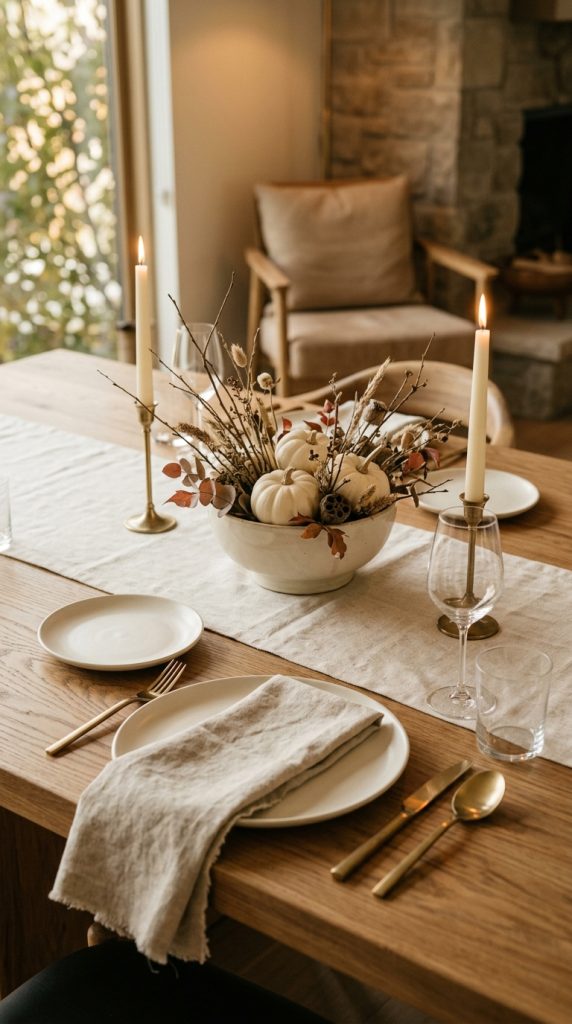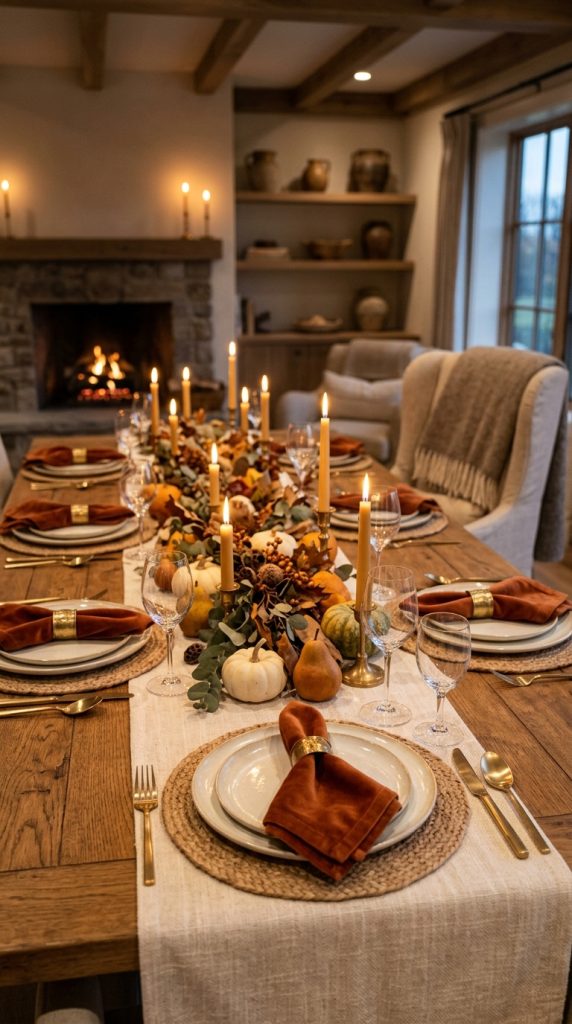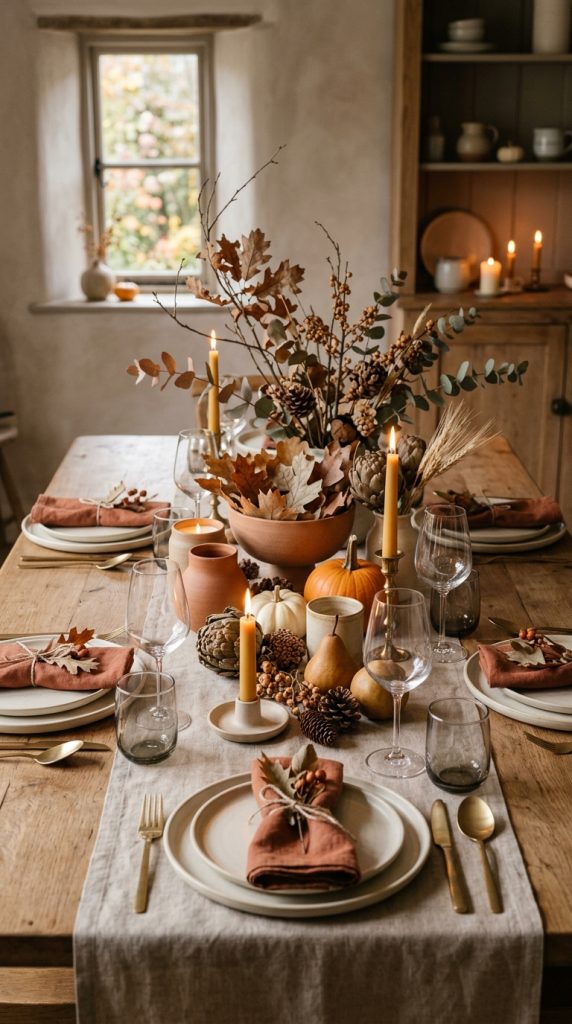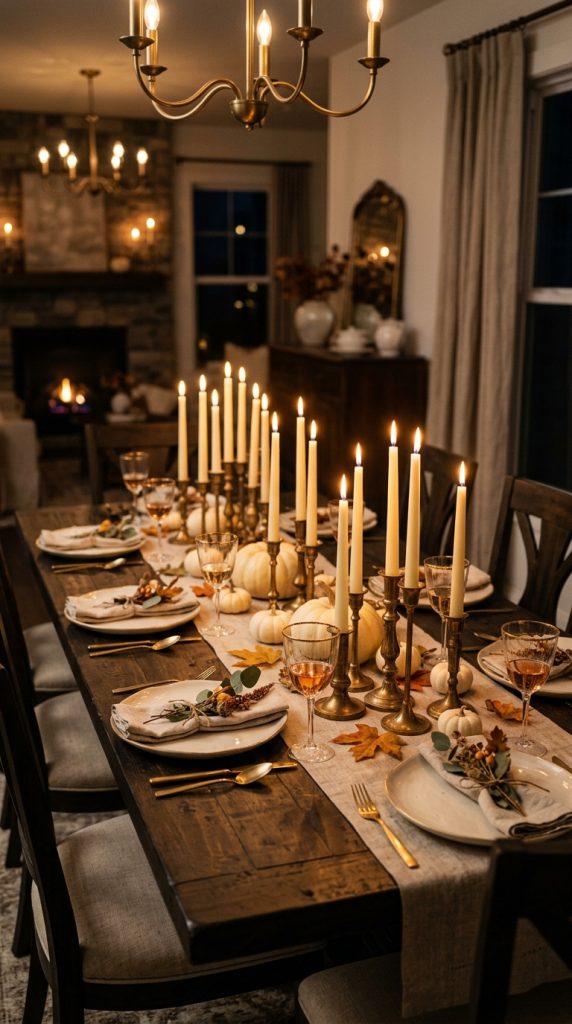
Blog

  • Halloween Dining Table Decorating Ideas for an Elegant Dinner

    Halloween Dining Table Decorating Ideas for an Elegant Dinner

    Halloween decorating does not have to mean bright orange pumpkins, plastic spiders, cartoon ghosts, or an overwhelming collection of novelty decorations. If you are hosting an adult Halloween dinner, an intimate October gathering, or a sophisticated seasonal dinner party, your dining table can feel mysterious, atmospheric, elegant, and beautifully curated without looking like a traditional Halloween party display.
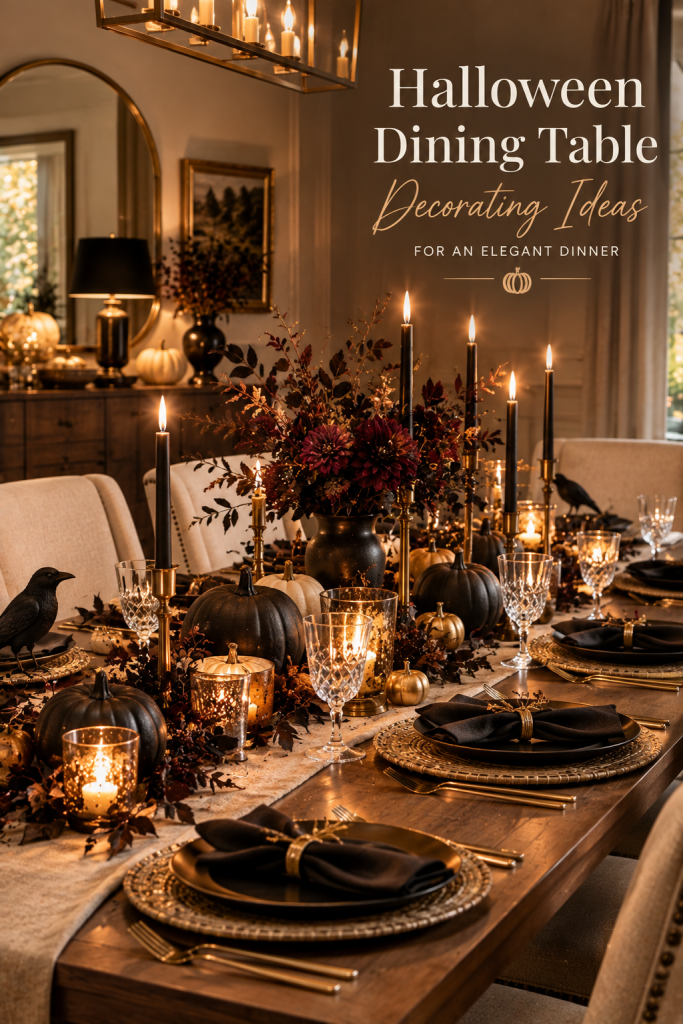
    The secret is to treat Halloween as an interior design mood rather than a theme that needs to be displayed everywhere.

    Think candlelight reflecting from glassware, deep burgundy napkins beside ivory plates, black taper candles rising from aged brass holders, dark botanical branches running naturally along the center of a wooden table, and a few carefully selected seasonal details that create a subtle sense of mystery.

    This approach allows your dining room to feel festive while still looking sophisticated enough for a formal dinner.

    The best Halloween dining table decorating ideas for an elegant dinner combine traditional Halloween atmosphere with timeless entertaining details. Instead of relying on obvious decorations, they use color, texture, lighting, tableware, flowers, natural materials, and carefully chosen accents to create the mood.

    Current 2026 Halloween decorating inspiration is increasingly showing how dark, refined palettes can replace overly bright seasonal colors. Black, burgundy, cream, antique brass, deep green, smoky glass, dried botanicals, and warm candlelight are particularly effective for creating an elevated Halloween atmosphere. (DecorWillow)

    This style is also practical because many of the elements can be reused beyond Halloween. A black linen runner can become part of a fall table. Brass candlesticks can be used throughout the year. Cream dinnerware works for Thanksgiving and Christmas. Dried branches can remain in your dining room long after October ends.

    That makes an elegant Halloween tablescape a worthwhile decorating project rather than a collection of decorations that only works for one night.

    Another important advantage is that sophisticated Halloween decor photographs beautifully.

    Pinterest is highly visual, so your dining table should have a clear focal point, a cohesive color palette, interesting textures, and enough negative space for every detail to remain visible. A table covered with too many pumpkins, signs, figurines, and novelty decorations may technically communicate Halloween, but it can become visually overwhelming.

    An elegant table works differently.

    It creates atmosphere through restraint.

    You might use one dramatic centerpiece, several candles, beautiful napkins, refined dinnerware, and one or two unexpected Halloween details. The result can feel more memorable because every piece has a purpose.

    Before decorating, think about the type of dinner you are hosting.

    A formal dinner may benefit from black and ivory with antique brass. A romantic Halloween dinner can use burgundy roses, candlelight, and dark velvet. A modern gathering may look better with charcoal, matte black, smoky glass, and sculptural ceramics. A vintage-inspired table could combine aged silver, lace, old-fashioned glassware, and antique-style candlesticks.

    The possibilities are much broader than the traditional orange-and-black combination.

    Below are ten elegant Halloween dining table decorating ideas designed to help you create a sophisticated dinner setting that feels seasonal, inviting, and Pinterest-worthy.

    1. Create a Moody Black, Burgundy, and Brass Tablescape
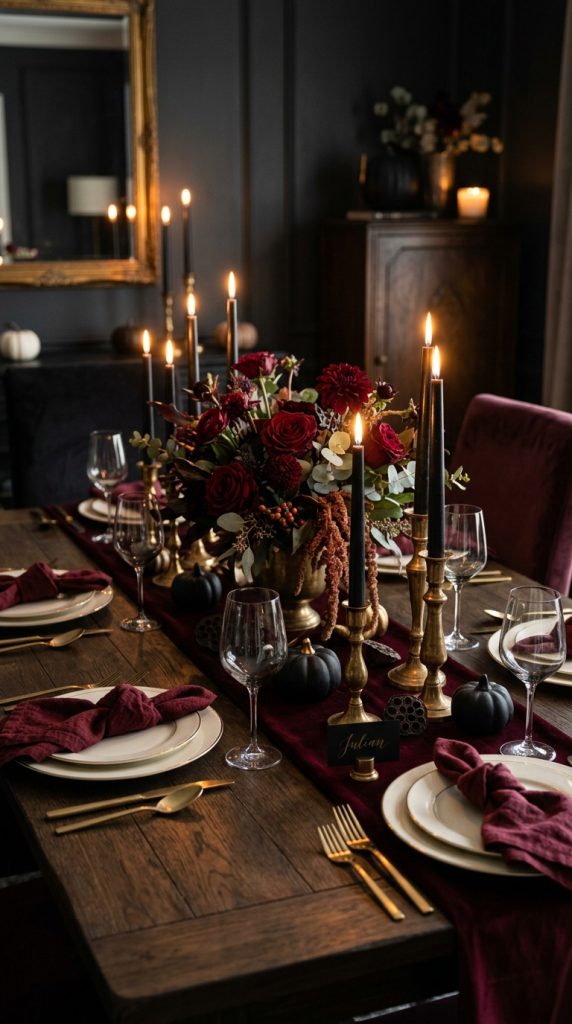
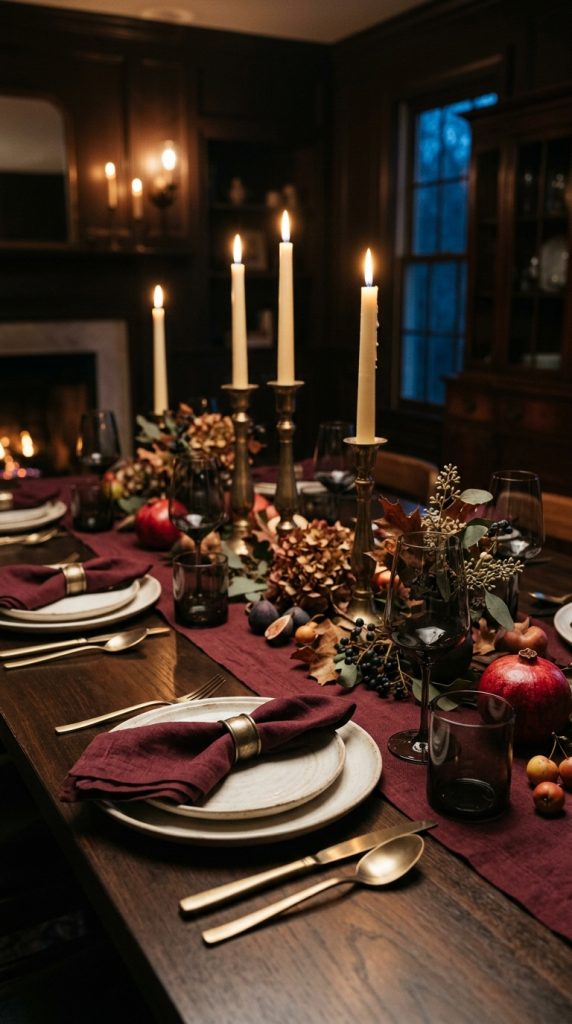
    For an elegant Halloween dinner, one of the most sophisticated combinations is black, deep burgundy, and aged brass.

    This palette immediately creates a dramatic atmosphere without depending on novelty Halloween decorations. Burgundy brings warmth, black provides depth, and aged brass prevents the arrangement from feeling too cold.

    Begin with your table itself.

    If you have a beautiful dark wood dining table, allow the natural wood to remain visible and use a narrow burgundy or charcoal runner instead of covering the entire surface. The warmth of the wood will provide an important contrast against the darker decorative elements.

    For a lighter dining table, use a black or deep charcoal tablecloth as the foundation.

    Layer the table with neutral dinnerware rather than making every element black. Ivory or cream plates will create a beautiful contrast and keep the setting visually balanced.

    Add dark burgundy linen napkins at each place setting.

    Fold them simply rather than creating complicated shapes. Place them directly on the plate or slightly underneath it, depending on the style of your dinnerware.

    Now introduce aged brass.

    Use brass candleholders, vintage-inspired flatware, small brass bowls, or subtle metallic napkin rings. The brass should appear warm and slightly aged rather than extremely shiny.

    For the centerpiece, create a low arrangement of deep burgundy flowers and dark foliage. Burgundy roses, dahlias, dark chrysanthemums, dried branches, or preserved botanicals can work beautifully.

    Add black taper candles between the floral elements.

    Keep the centerpiece low enough that guests can comfortably see one another across the table. This is especially important for a seated dinner because a beautiful arrangement should never interfere with conversation.

    Finish the table with smoky glassware or clear glasses with dark-colored details.

    The result should feel like a sophisticated autumn dinner with an unmistakable Halloween atmosphere.

    The beauty of this color palette is that it can transition into late fall. After Halloween, remove the most obviously seasonal accents and keep the burgundy, brass, candles, and flowers for another elegant autumn dinner.

    2. Design an Ivory and Matte Black Halloween Table
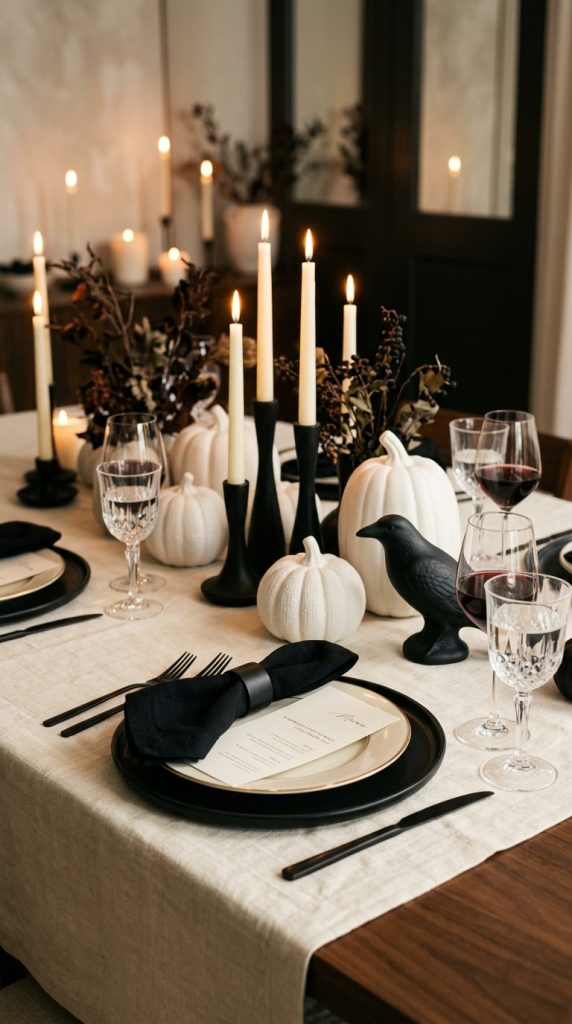
    If you prefer a lighter dining room, create your Halloween tablescape around ivory and matte black.

    This combination feels modern, dramatic, and sophisticated while still being relatively easy to recreate.

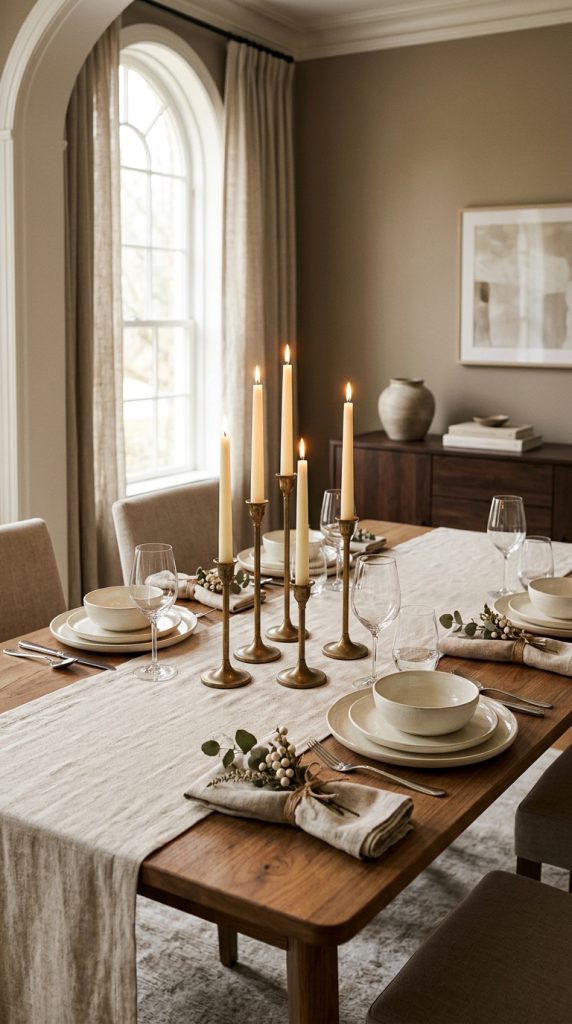
    Start with a warm ivory tablecloth or natural linen table runner.

    The soft fabric creates a gentle background for the darker accessories.

    Use ivory or cream dinner plates and layer them over matte black charger plates. The contrast between the two colors creates an immediate visual statement without requiring elaborate decorations.

    At each place setting, use a black linen napkin.

    You can place the napkin across the plate or fold it loosely beside the flatware.

    For glassware, clear crystal-style glasses are ideal because they allow the dark elements to remain dominant without making the table visually heavy.

    The centerpiece can be intentionally simple.

    Place several matte black candlesticks along the middle of the table. Use ivory taper candles to create contrast rather than black candles.

    Between the candlesticks, add a few small white pumpkins.

    Choose pumpkins with smooth, understated shapes rather than highly decorated or brightly painted versions.

    A few white pumpkins can communicate the Halloween season while maintaining an elegant appearance.

    For an additional detail, introduce a small black ceramic bird, raven-inspired sculpture, or abstract sculptural object.

    Use only one or two.

    The goal is subtle symbolism rather than a collection of Halloween props.

    This look works particularly well in modern dining rooms with white walls, light wood furniture, black window frames, or contemporary lighting.

    It also photographs beautifully because the strong contrast between black and ivory creates clear visual definition.

    If you want a Halloween table that feels elegant rather than heavily themed, this is an excellent direction.

    3. Style a Romantic Halloween Dinner With Burgundy Florals and Candlelight
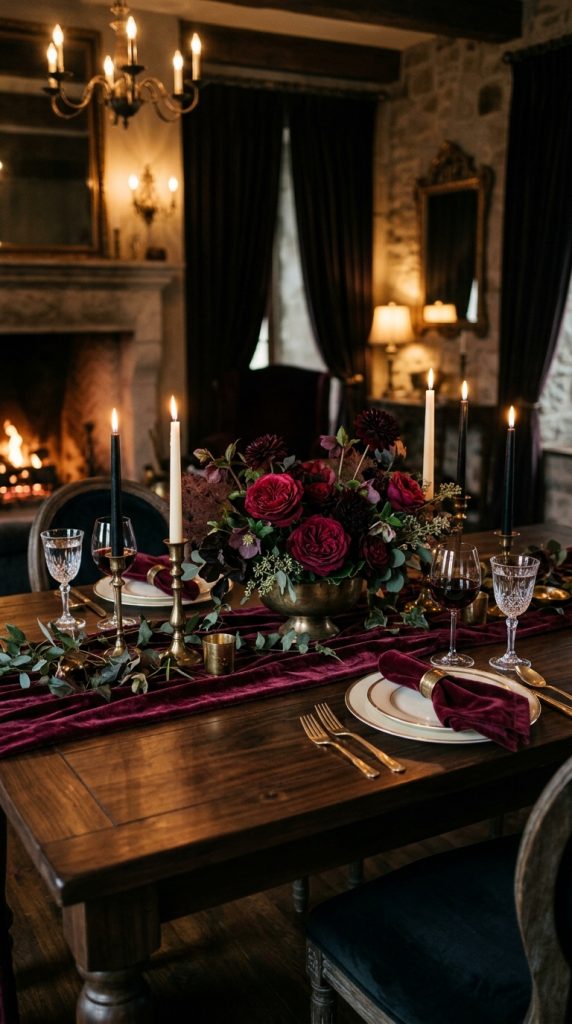
    Halloween can also become surprisingly romantic when the table is styled around deep flowers, warm candlelight, and luxurious textiles.

    This idea is ideal for couples, intimate dinner parties, or anyone who wants Halloween decorating to feel atmospheric rather than spooky.

    Use a dark wooden table if available.

    The natural warmth of wood will make the burgundy floral arrangement feel richer.

    Add a soft black, wine-colored, or deep plum runner through the center.

    For the centerpiece, use a low arrangement of burgundy roses, dark dahlias, plum-colored flowers, dried foliage, and delicate branches.

    Avoid making the arrangement perfectly symmetrical.

    A slightly organic shape will make it feel more natural and romantic.

    Surround the arrangement with candles.

    Use slender taper candles in antique brass holders or low ivory pillar candles in textured ceramic vessels.

    The combination of flowers and candlelight creates a warm glow across the table.

    For the place settings, use cream plates with dark burgundy napkins.

    Add gold-toned or aged-brass flatware for a subtle luxurious accent.

    You can introduce velvet through the napkins, ribbon details, or small table accessories.

    Velvet works especially well for Halloween because it naturally evokes old-world interiors and evening entertaining.

    For glassware, choose clear glasses with a delicate silhouette.

    Avoid overly decorative wine glasses because the table already contains strong visual elements.

    If you want a small Halloween detail, place a single dark feather or miniature black botanical element beside each napkin.

    Keep it subtle.

    The overall atmosphere should feel like a candlelit autumn dinner with a mysterious Halloween influence.

    This approach proves that Halloween decoration does not have to be frightening to be memorable.

    4. Create a Gothic Manor-Inspired Dinner Table
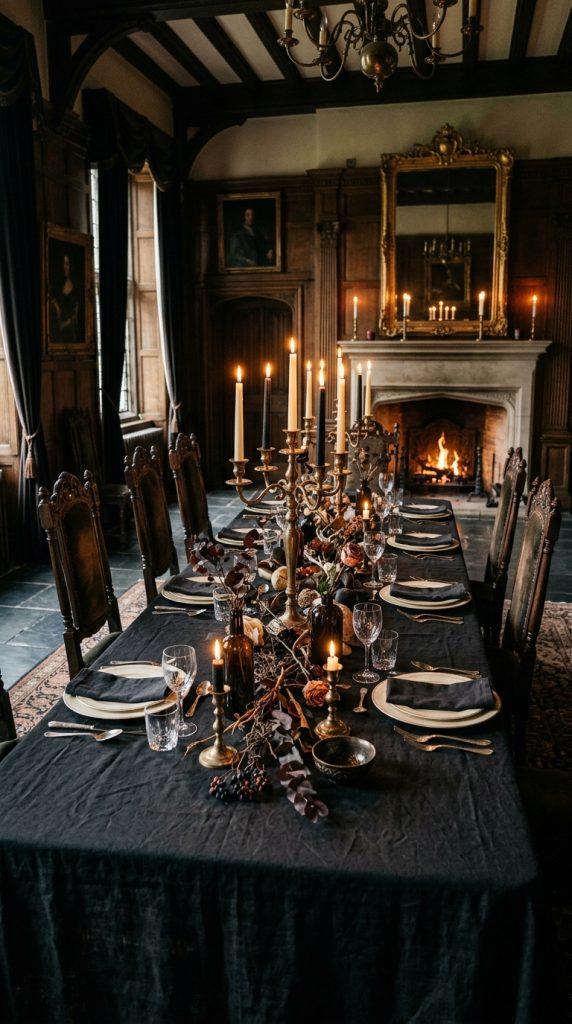
    For a more dramatic look, transform your dining table into an elegant gothic manor-inspired Halloween setting.

    This style works particularly well if your dining room already contains dark wood, traditional furniture, antique-style mirrors, ornate frames, or vintage lighting.

    Begin with a dark foundation.

    A charcoal, black, or deep brown tablecloth can create the feeling of an old European dining room.

    Layer black chargers underneath cream or bone-colored plates.

    This gives the place settings architectural depth.

    Use dark napkins folded simply at each setting.

    If you have antique silverware, this is the perfect opportunity to use it.

    If not, brushed silver or aged-metal flatware can create a similar impression.

    For the centerpiece, choose a black or aged-brass candelabra.

    Use several taper candles of different heights to create vertical drama.

    Allowing a small amount of natural wax to build up can add an old-world quality, but keep the arrangement controlled and safe.

    Surround the candelabra with dried branches, deep burgundy foliage, and a few small antique-inspired decorative objects.

    A vintage-looking glass bottle can be particularly effective.

    You can also add a small dark ceramic vessel filled with dried stems.

    The table should feel as though it belongs in an old manor prepared for an elegant evening gathering.

    However, avoid adding too many overtly gothic props.

    A few carefully selected elements will communicate the theme more effectively than a table covered in skulls and skeletons.

    For lighting, keep the overhead light soft.

    Use the warm glow from candles and nearby lamps to create depth.

    Place lights at appropriate locations around the dining room so the table remains visible without losing its atmospheric quality.

    The finished effect should be mysterious, sophisticated, and slightly theatrical.

    5. Build a Natural Halloween Tablescape With Dried Botanicals
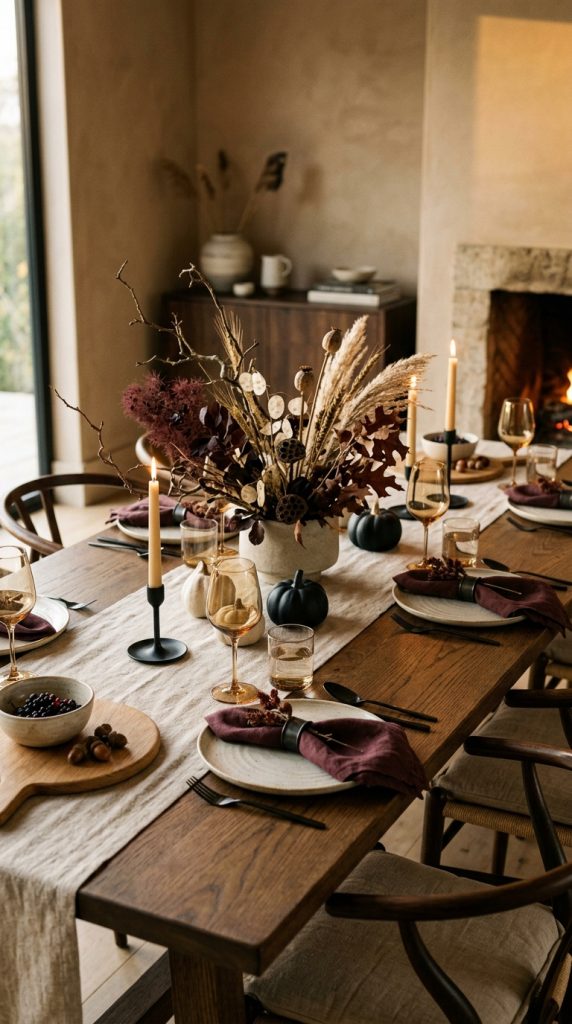
    If you prefer organic interiors, create a Halloween table using dried branches, natural textures, muted colors, and subtle seasonal accents.

    This approach is particularly useful if your home already follows an organic modern, rustic, Scandinavian, or neutral decorating style.

    Instead of changing your entire dining room for Halloween, simply introduce seasonal texture through the table.

    Start with a natural linen runner in oatmeal, beige, cream, or taupe.

    Allow the wood surface of the table to remain visible.

    For the centerpiece, choose a low ceramic or stone-colored vessel.

    Fill it with dried branches, seed pods, preserved foliage, wheat-like stems, dried grasses, and a few dark burgundy elements.

    Keep the arrangement loose.

    It should look gathered from nature rather than perfectly manufactured.

    Add a few small matte black pumpkins around the base.

    These provide the Halloween reference without dominating the arrangement.

    For dinnerware, use cream or ivory ceramic plates.

    Add brown, charcoal, or muted burgundy linen napkins.

    Natural wood serving boards can be incorporated into the table as functional pieces.

    For example, a wooden board could hold bread, appetizers, or a small selection of seasonal foods.

    This makes the table feel lived-in rather than purely decorative.

    Add simple black or aged-brass candleholders.

    The contrast between natural wood, dried botanicals, black accents, and warm candlelight creates an elegant seasonal atmosphere.

    This style is particularly versatile because the same dried arrangement can remain on the table throughout fall.

    After Halloween, simply remove the black pumpkins and replace them with small gourds or neutral autumn accents.

    6. Create a Sophisticated Black-and-Gold Halloween Dinner
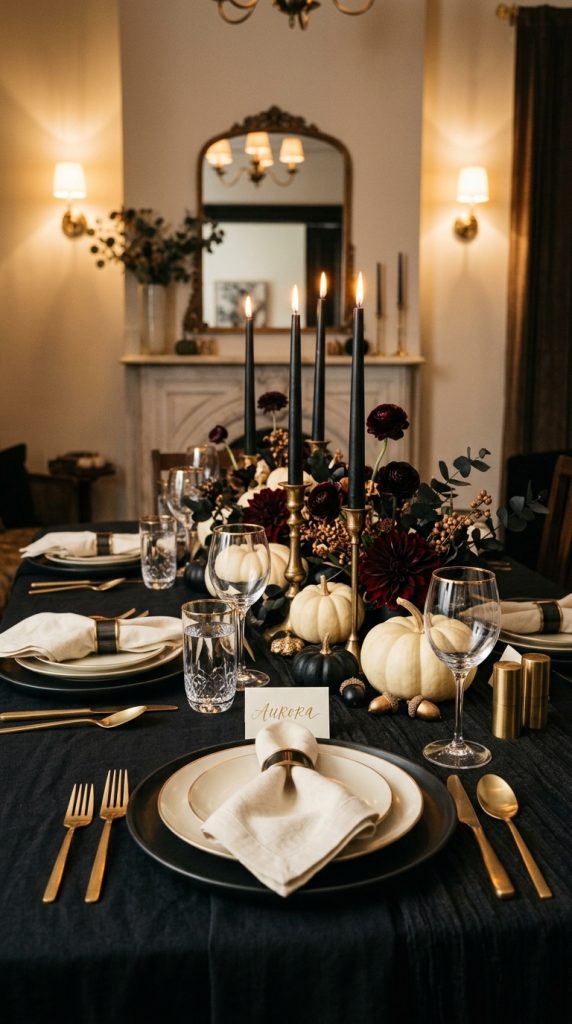
    For a glamorous Halloween dinner, combine matte black, warm gold, and soft cream.

    The important distinction is choosing sophisticated gold finishes rather than extremely shiny metallic decorations.

    Aged brass, brushed gold, or antique gold will generally create a richer appearance.

    Begin with a black table runner or dark charcoal tablecloth.

    Layer cream plates over black chargers.

    Add warm gold flatware.

    At each place setting, use a cream or champagne-colored napkin with a simple gold-toned napkin ring.

    For the centerpiece, use a mixture of black candles and small gold accents.

    A long arrangement of low black candleholders can create a dramatic horizontal line across the table.

    Between them, place a few cream pumpkins or small matte-black pumpkins with subtle gold stems.

    Avoid painting everything gold.

    The purpose of the metallic finish is to create highlights rather than dominate the table.

    For glassware, use clear glasses with thin gold rims if available.

    If your existing glassware does not have gold details, clear crystal-style glasses will still work beautifully.

    A small floral arrangement can be added using cream roses, dried grasses, or pale flowers with dark foliage.

    This prevents the table from becoming too monochromatic.

    The result is sophisticated enough for a formal dinner but still unmistakably appropriate for Halloween.

    This look is particularly effective in dining rooms with dark wood furniture because the black and gold details naturally reinforce the room’s architectural warmth.

    7. Create an Elegant Halloween Table With Dark Green and Brass
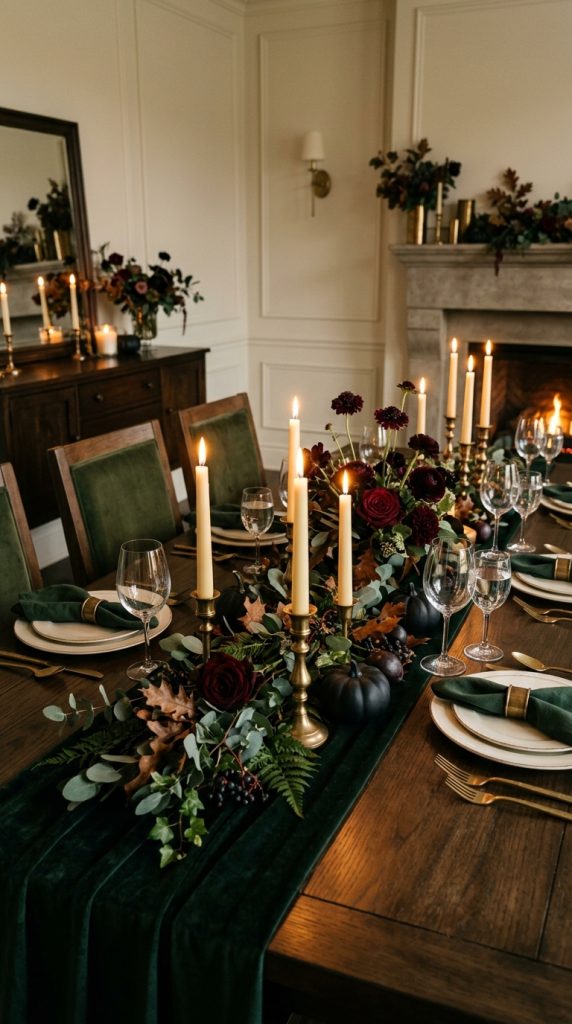
    Halloween decorating does not have to revolve around black.

    Deep forest green can create a mysterious, luxurious atmosphere while offering a softer alternative to an entirely dark table.

    Start with a forest-green runner.

    Choose one made from velvet or textured linen if possible.

    The texture will add richness before you add any decorations.

    Use ivory or cream dinnerware.

    Introduce brass through the flatware, candleholders, or small decorative accents.

    For the centerpiece, create a low arrangement of dark green foliage, dried branches, and a few deep burgundy flowers.

    You can also add small matte-black pumpkins as subtle seasonal accents.

    The combination of forest green, black, brass, and cream feels sophisticated because the colors are naturally deep and muted.

    For napkins, use either cream or dark green.

    If the table already contains a lot of green, cream napkins can provide visual relief.

    Choose simple place settings rather than highly decorated plates.

    This allows the textiles and centerpiece to remain the stars.

    For the lighting, use warm candlelight.

    Brass candleholders will reflect the flame beautifully and create small points of light across the table.

    A nearby floor lamp or dining room wall light can provide gentle background illumination.

    Avoid strong cool-white lighting because it can flatten the rich green and brass tones.

    This table is especially beautiful in rooms with natural wood.

    The green connects with the organic character of the wood, while the brass provides the polished element that makes the arrangement feel suitable for an elegant dinner.

    8. Style a Vintage Halloween Tablescape With Antique Details

    A vintage-inspired Halloween dining table can feel incredibly sophisticated because the style naturally works with old-world textures and atmospheric lighting.

    Instead of purchasing a complete Halloween tableware collection, use ordinary vintage-looking objects and allow the Halloween mood to come from the combination.

    Begin with a linen tablecloth in ivory, faded cream, or soft charcoal.

    Use antique-style plates if you have them.

    They do not have to match perfectly.

    In fact, slightly different plates can make the table feel collected over time.

    Add old-fashioned glassware.

    Cut-glass tumblers, amber glasses, smoky goblets, or vintage-inspired wine glasses can create visual character.

    For the centerpiece, use an antique brass candlestick collection.

    Mixing slightly different candlestick designs can actually make the arrangement more convincing.

    Use ivory or dark burgundy taper candles.

    Add a few dried roses or dark botanical stems in a small vintage vase.

    For the place settings, use cloth napkins tied loosely with black ribbon.

    A small handwritten place card can be tucked beneath the ribbon.

    If you want a Halloween-specific detail, use a tiny wax seal on the place card.

    This gives the table a mysterious old-world quality without introducing obvious novelty decor.

    You can also place one small vintage-style framed photograph or botanical print near the centerpiece.

    Do not overdo the antique objects.

    The table should still feel like a dinner table rather than a historical display.

    The goal is to create the impression that every piece has a story.

    9. Create a Minimalist Halloween Table With One Dramatic Centerpiece
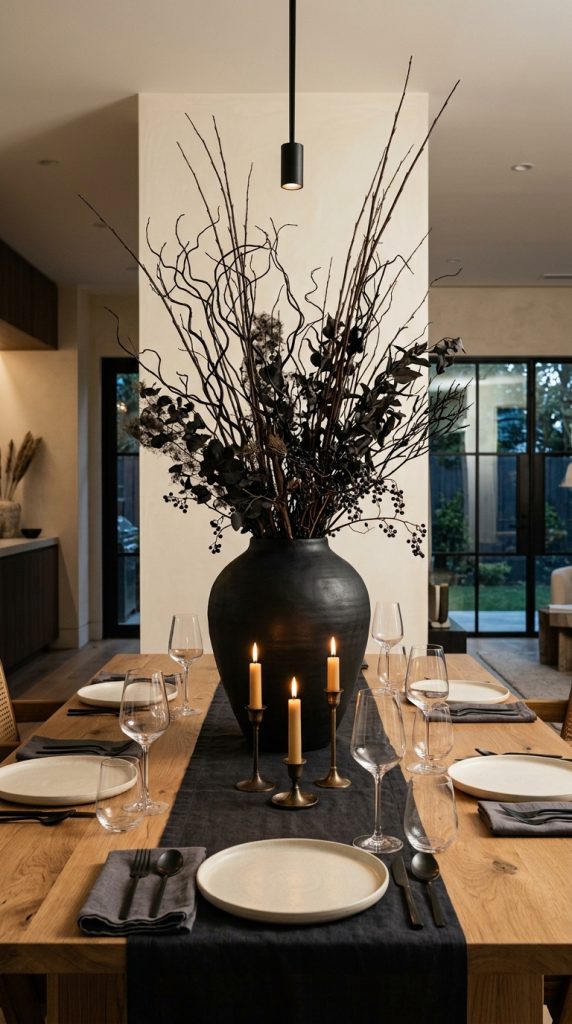
    If you prefer modern interiors or dislike heavily decorated tables, a minimalist Halloween tablescape may be the perfect choice.

    The concept is simple:

    Use fewer objects, but make each one visually important.

    Start with a clean dining table.

    If the table has beautiful natural wood, allow most of it to remain visible.

    Use a narrow black runner if you want additional contrast.

    Set the table with simple cream plates and dark napkins.

    Then choose one dramatic centerpiece.

    This could be an oversized matte-black ceramic vase filled with dark branches.

    It could be a large ivory sculptural pumpkin.

    It could be one substantial black candelabra.

    Or it could be a long arrangement of dark foliage.

    Do not combine all four.

    Choose one.

    Surround the centerpiece with only a few supporting elements.

    For example, if the centerpiece is a large black vase with branches, add three small candles and nothing else.

    If you choose a large candelabra, allow the candlelight to provide the drama.

    This approach is particularly effective for contemporary dining rooms because the clean architecture becomes part of the decoration.

    The empty space around the centerpiece is not wasted space.

    It is part of the design.

    A minimalist Halloween table can also be one of the easiest styles to recreate because it requires fewer purchases and less preparation.

    The finished effect is calm, sophisticated, and editorial.

    10. Create an Elegant Halloween Dinner With Moody Smoked Glass and Candlelight
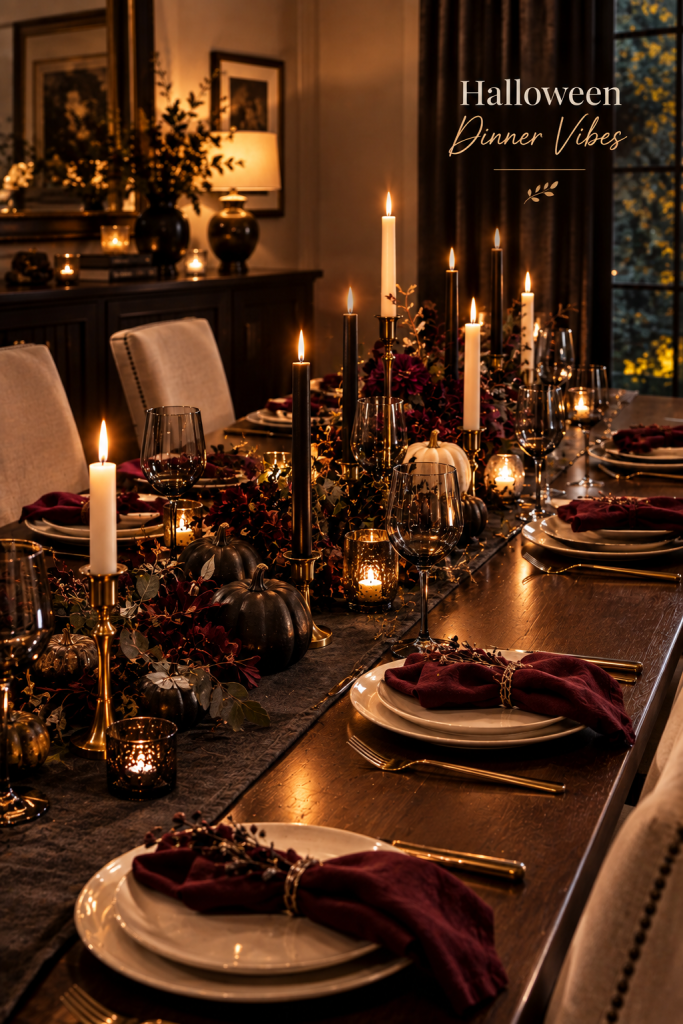
    For the most atmospheric option, build your table around smoked glass, dark textiles, candlelight, and warm neutral dinnerware.

    This is a beautiful choice for an evening Halloween dinner because the glass catches and reflects the candlelight.

    Start with a dark wood or black table.

    Add a charcoal, black, or deep burgundy runner.

    Use ivory plates to provide contrast.

    Then introduce smoky gray or dark-tinted glassware.

    The glasses should remain transparent enough to show their shape and allow the candlelight to pass through them.

    For the centerpiece, use a collection of low candles.

    Black, charcoal, ivory, or deep burgundy tapers can all work.

    Place them at varied heights using simple holders.

    Between the candles, add dark foliage or a few dried branches.

    Avoid a large floral arrangement because the visual interest is already coming from the glass and candlelight.

    At each place setting, use a folded linen napkin.

    A small black or burgundy detail can be added through a ribbon, napkin ring, or place card.

    For the final Halloween touch, consider a few tiny matte-black pumpkins or sculptural ceramic objects positioned between the candleholders.

    Keep these details sparse.

    Once the candles are lit, the smoked glass will catch the warm reflections and create a beautiful evening atmosphere.

    This type of tablescape is particularly effective for photography because it creates depth.

    The foreground contains dinnerware and glassware, the middle contains candles and botanicals, and the background can contain softly illuminated dining-room furniture.

    Use warm lamps in the surrounding room rather than relying only on the candles.

    Place lights at appropriate locations so the dining area remains comfortable and visible while the candlelight remains the primary mood element.

    How to Choose the Right Color Palette for an Elegant Halloween Dining Table

    Choosing a controlled palette is one of the easiest ways to make Halloween decorating look sophisticated.

    Instead of using every traditional Halloween color at once, choose two or three dominant colors and one supporting neutral.

    For example, black, burgundy, and cream create a dramatic autumn atmosphere.

    Black, ivory, and aged brass feel more glamorous.

    Forest green, brass, and cream create an organic luxury appearance.

    Charcoal, smoky gray, ivory, and black feel modern.

    Deep plum, burgundy, and antique gold create a romantic gothic atmosphere.

    If you want to use orange, choose a muted version.

    Burnt orange, terracotta, rust, or ochre can feel much more sophisticated than extremely bright orange.

    The same principle applies to purple.

    A deep plum or aubergine is generally easier to integrate into an elegant dinner setting than a bright purple.

    The goal is not to eliminate color.

    It is to control it.

    How to Choose a Halloween Centerpiece for Dinner

    The centerpiece should be beautiful but practical.

    Before choosing one, consider the size of your table and how many guests will be seated.

    A very tall centerpiece can interfere with conversation.

    For a dinner party, low arrangements are usually easier because guests can see across the table.

    If you prefer height, use slender candleholders rather than a wide, oversized arrangement.

    This creates vertical interest while keeping the center visually open.

    Another useful strategy is creating a centerpiece in sections.

    Instead of one enormous arrangement, use several small vessels, candles, and decorative elements spread along the center.

    This creates rhythm and allows guests to see the table more easily.

    Current Halloween tablescape guidance also emphasizes keeping dinner-party centerpieces low enough to preserve conversation and sightlines. (Red Cheeks Girl)

    How to Make an Elegant Halloween Place Setting

    A sophisticated place setting does not require expensive tableware.

    Start with the largest layer and work inward.

    Place the charger first.

    Add the dinner plate.

    If you are serving multiple courses, layer the appropriate plates carefully.

    Fold the napkin in a simple shape.

    Add flatware according to the meal.

    Then introduce one small seasonal detail.

    This could be a wax-sealed place card, a dark feather, a tiny dried botanical, a small black pumpkin, or a miniature ceramic accent.

    The detail should feel personal rather than theatrical.

    If every place setting has several decorations, the table may become crowded.

    One memorable detail is often enough.

    How to Use Candles Without Making the Table Look Overdone

    Candles are particularly powerful for Halloween because they create atmosphere through light rather than decoration.

    Use different heights to create visual rhythm.

    Taper candles provide vertical drama.

    Pillar candles create a heavier architectural presence.

    Small votives provide low points of light.

    You can combine them, but avoid using too many different candle styles.

    Choose one main type and one supporting type.

    For example, black taper candles could be the main feature with a few small ivory votives.

    Or ivory pillar candles could be combined with several thin burgundy tapers.

    Keep the holders visually consistent.

    Aged brass and matte black are particularly versatile finishes for this type of table. Current 2026 Halloween tablescape inspiration frequently uses these finishes alongside dark botanical elements and restrained seasonal accents. (DecorWillow)

    Always consider candle safety, especially around dried foliage, fabric napkins, and guests.

    If children or pets will be present, flameless candles can provide a similar visual atmosphere with less risk.

    How to Make a Halloween Tablescape Look Expensive

    You do not need expensive tableware to create an elevated table.

    The biggest difference often comes from styling.

    First, use textiles.

    Linen-look runners and cloth napkins immediately feel more intentional than disposable paper products.

    Second, focus on materials.

    Ceramic, glass, wood, brass, dried botanicals, and fabric create richer visual texture than a collection of plastic decorations.

    Third, repeat your palette.

    If you choose black, burgundy, cream, and brass, carry those colors through the table rather than introducing many unrelated shades.

    Fourth, create variation in height.

    Candles, flowers, glasses, and dinnerware should not all sit at the same visual level.

    Finally, leave some empty space.

    An expensive-looking table does not need to be completely covered.

    Negative space allows beautiful pieces to stand out.

    How to Decorate a Halloween Dining Table on a Budget

    An elegant Halloween dinner table can absolutely be created without a large decorating budget.

    Start with pieces you already own.

    Use your existing white or cream plates.

    Use ordinary clear glassware.

    Look around your home for wood trays, vases, bowls, candlesticks, and neutral textiles.

    Then purchase only a few seasonal additions.

    Black taper candles can create a dramatic transformation.

    A small bundle of dried branches can become a centerpiece.

    Dark ribbon can transform ordinary napkins.

    A few inexpensive miniature pumpkins can add seasonal character.

    Thrift stores can also be useful for finding brass candlesticks, vintage glassware, old frames, and decorative vessels.

    The objective is not to buy ten new Halloween products.

    It is to transform familiar pieces through styling.

    How to Keep an Elegant Halloween Table From Looking Too Themed

    This is one of the most important principles for an adult Halloween dinner.

    Choose one or two recognizable Halloween elements and allow the rest of the table to look like an elegant dinner setting.

    For example, you could use black taper candles and small matte-black pumpkins.

    Everything else can be classic dinnerware, linen, flowers, brass, and glassware.

    Or you could use a sculptural skull as the centerpiece while keeping the rest of the table neutral.

    The seasonal element becomes more powerful when it is not repeated everywhere.

    Avoid placing a ghost, spider, pumpkin, skull, bat, witch hat, and skeleton at the same table.

    That turns the dinner into a themed party display.

    Elegant Halloween decorating is more about suggestion.

    A black candle.

    A dark flower.

    A mysterious old frame.

    A deep burgundy napkin.

    A small sculptural skull.

    These details allow guests to understand the season without overwhelming the room.

    How to Make Your Halloween Dining Table Pinterest-Worthy

    A Pinterest-worthy table should have a strong visual story.

    Start by choosing a clear focal point.

    The centerpiece should immediately attract attention.

    Then create layers around it.

    Use dinnerware, textiles, glassware, candles, and smaller details to guide the eye across the table.

    Photography also matters.

    For a vertical Pinterest image, photograph the table from a slightly elevated angle that shows both the centerpiece and the place settings.

    Avoid shooting completely straight from the side because much of the table may disappear.

    Natural window light can work beautifully during the day.

    For an evening mood, use warm lamps and candlelight.

    Avoid overly bright overhead lighting because it can flatten the atmosphere.

    Make sure the table is visually clean before photographing it.

    Remove unnecessary serving containers, packaging, random utensils, and anything that does not contribute to the composition.

    Pinterest users should be able to understand the decorating idea immediately.

    The image should communicate the color palette, centerpiece, place settings, and overall mood within a few seconds.

    How to Create a Cozy Halloween Dinner Atmosphere Beyond the Table

    The dining table should feel connected to the surrounding room.

    You do not need to decorate the entire dining room heavily.

    Instead, repeat one or two elements.

    If the table uses burgundy flowers, place a small matching arrangement on a nearby console.

    If you use brass candleholders, repeat the brass subtly in the room.

    If the table features dark greenery, add a small botanical accent elsewhere.

    Lighting is especially important.

    Turn down harsh overhead lights and introduce warm illumination from table lamps, floor lamps, sconces, or nearby accent lighting.

    The dining table should remain the brightest visual focal point without being excessively bright.

    This creates depth and makes the dinner feel more intimate.

    Elegant Halloween Dinner Table Mistakes to Avoid

    One of the biggest mistakes is using too many decorations.

    A dining table needs functional space for plates, serving dishes, drinks, and conversation.

    Another mistake is choosing a centerpiece that is too tall.

    Guests should not have to move decorations simply to see one another.

    Using too many colors can also weaken the design.

    Choose a controlled palette.

    Avoid mixing bright orange, neon purple, bright green, red, metallic silver, and gold all together.

    Another issue is relying entirely on novelty products.

    A few Halloween-specific pieces are enough.

    Finally, do not forget comfort.

    Napkins should be usable.

    Plates should have enough room.

    Glasses should not be squeezed between decorations.

    Candles should be positioned safely.

    Beautiful design should support the dinner rather than interfere with it.

    Final Thoughts

    The most beautiful Halloween dining table decorating ideas for an elegant dinner do not depend on expensive decorations or an overwhelming collection of seasonal objects.

    They depend on atmosphere.

    A dark table runner can establish the foundation.

    Beautiful linen napkins can add softness.

    Cream dinnerware can provide contrast.

    Aged brass can introduce warmth.

    Dried botanicals can create natural texture.

    Black candles can bring dramatic height.

    Burgundy flowers can add richness.

    Smoked glass can reflect candlelight.

    And one carefully chosen Halloween accent can give the entire table its seasonal identity.

    The best approach is to decide on your mood before you begin decorating.

    If you want glamorous, choose black, cream, and aged brass.

    If you want romantic, choose burgundy, dark florals, velvet, and candlelight.

    If you want modern, choose matte black, ivory, charcoal, and sculptural ceramics.

    If you want natural, choose wood, linen, dried botanicals, muted black, and earthy tones.

    If you want vintage, choose antique-style brass, old-fashioned glassware, lace-inspired textiles, and candlelight.

    The most important thing is to avoid trying to use every Halloween symbol at once.

    Elegant Halloween decor works because it leaves something to the imagination.

    A black taper candle can feel mysterious.

    A dark floral arrangement can feel dramatic.

    A small sculptural skull can feel intriguing.

    A burgundy napkin can make a neutral place setting suddenly feel appropriate for October.

    This restrained approach also makes your dining table more versatile.

    After Halloween, many of the pieces can remain.

    Remove the skulls, pumpkins, or other obvious seasonal accents and keep the candles, brass, linen, wood, glassware, and dried botanicals for the rest of fall.

    That is what makes an elegant Halloween tablescape particularly valuable for a home.

    It is festive without being disposable.

    It is dramatic without being overwhelming.

    It is seasonal without sacrificing your personal decorating style.

    And most importantly, it creates a dining experience where the table feels beautiful enough to become part of the evening itself.

    For Pinterest, this concept also provides strong visual opportunities around searches such as elegant Halloween tablescape ideas, Halloween dining table decor, Halloween dinner table decorations, classy Halloween table decor, sophisticated Halloween tablescape, Halloween table setting ideas, elegant Halloween dinner party, black and burgundy Halloween decor, gothic Halloween tablescape, and spooky chic table decor.

    The final goal is simple: create a table that feels like an elegant autumn dinner first and a Halloween celebration second.

    That balance is what gives the finished tablescape its sophisticated, memorable character.
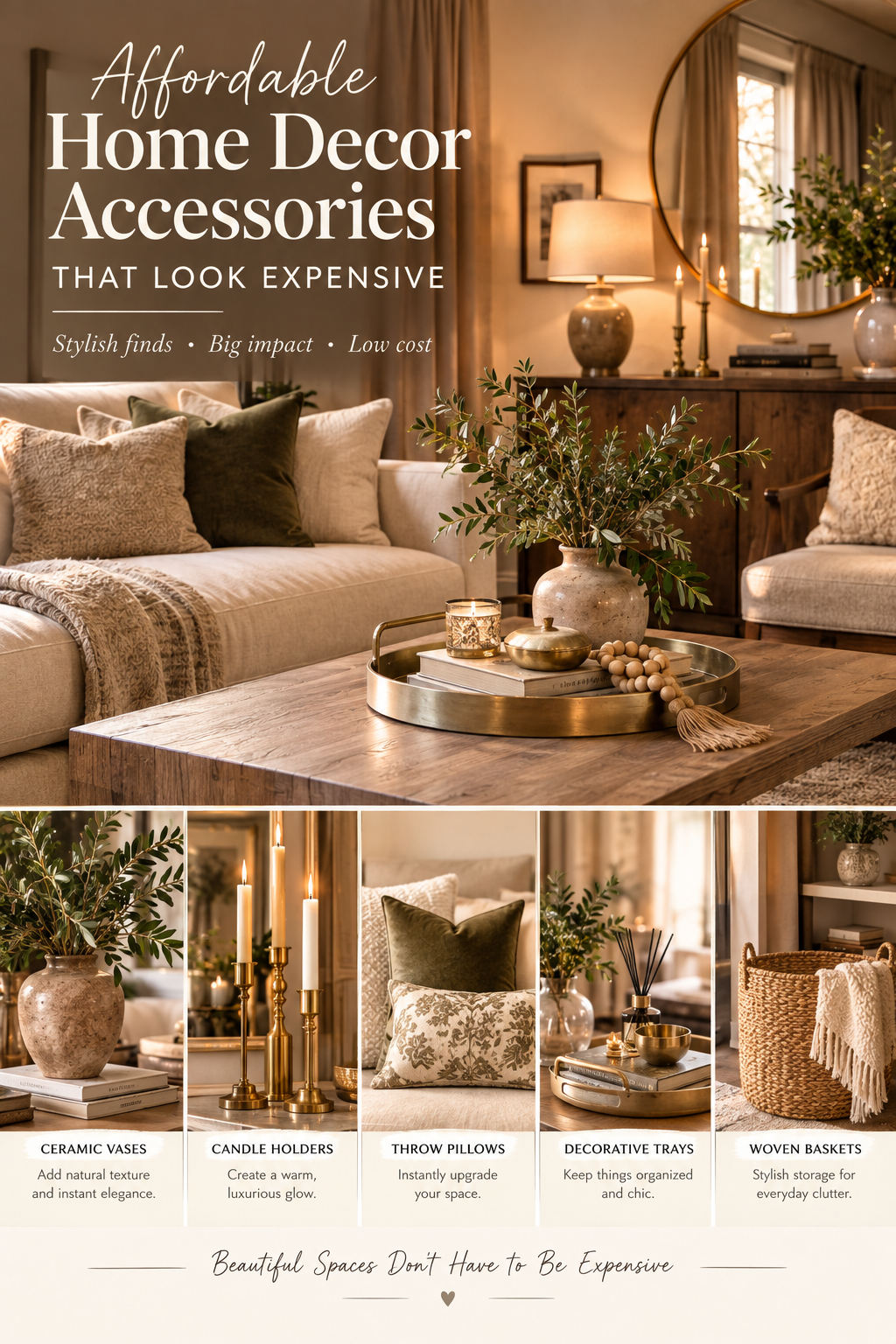

  • Affordable Home Decor Accessories That Look Expensive

    Affordable Home Decor Accessories That Look Expensive

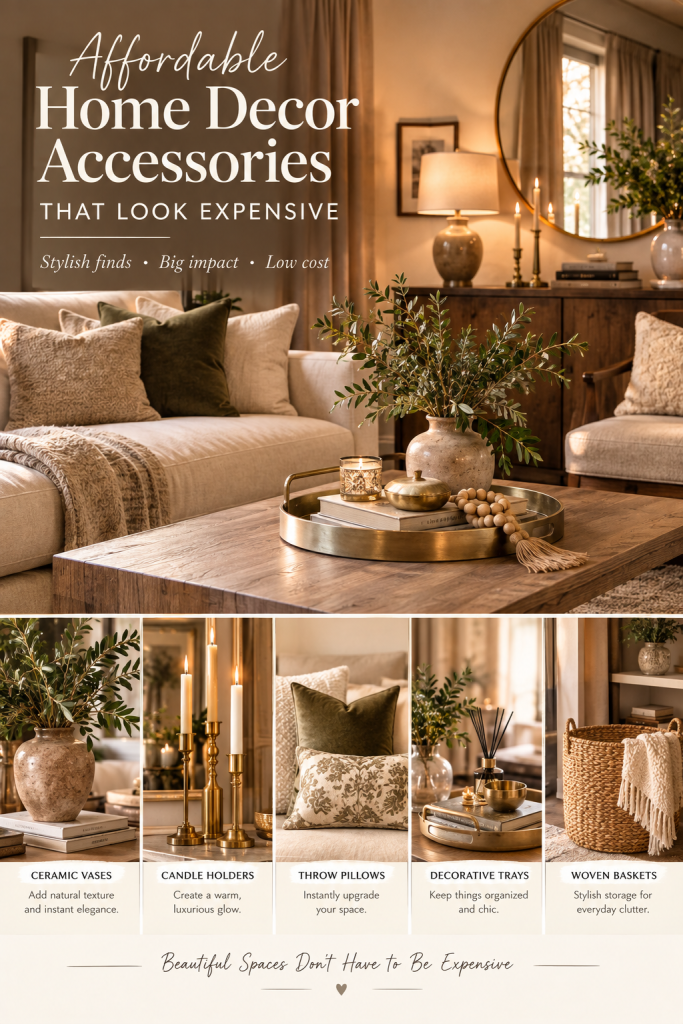
    Creating a beautiful home does not always require an expensive furniture budget, designer accessories, or a complete renovation. Sometimes, the smallest decorative changes can have the biggest visual impact. The right vase on a console, a beautiful tray on a coffee table, an oversized mirror on an empty wall, or a pair of elegant lamps can completely change the atmosphere of a room.

    That is the secret behind affordable home decor accessories that look expensive. Instead of filling your home with lots of inexpensive decorations, the goal is to choose a smaller number of pieces with beautiful shapes, sophisticated finishes, interesting textures, and timeless colors. When those accessories are styled intentionally, the entire room can feel more polished and luxurious.

    This approach is especially useful if you are decorating an apartment, refreshing a rental, furnishing your first home, or simply trying to make your existing space look more elevated without spending a fortune. You do not necessarily need expensive marble, designer furniture, or custom-made pieces. You can create a similar visual impression by paying attention to proportion, texture, symmetry, material, and placement.

    Pinterest is particularly well suited to this type of decorating content because people often use the platform to discover visual ideas before making changes to their homes. Pinterest’s 2026 trend reporting highlights a movement toward more personal, expressive interiors rather than perfectly uniform spaces, while its broader home trends include vintage influences, statement colors, layered textures, and creative low-lift room updates. (Pinterest)

    That makes affordable luxury home decor a particularly useful content direction. It combines several strong search intentions: budget home decor, affordable home accessories, luxury home decor on a budget, cheap home decor that looks expensive, elegant home accessories, high-end home decor ideas, and affordable luxury decor.

    The key is understanding what actually makes an accessory appear expensive.

    A luxury-looking piece usually has one or more of these characteristics: a sophisticated silhouette, a restrained color palette, tactile material, substantial visual weight, an elegant finish, or a distinctive shape. It does not have to be genuinely expensive to create that impression.

    For example, a simple ceramic vase in a sculptural shape can look more refined than a shelf filled with numerous small decorative objects. A large framed art print can create more visual impact than several tiny pictures scattered across a wall. A textured neutral pillow can make an inexpensive sofa feel considerably more polished when paired with the right throw and coffee table styling.

    The same principle applies throughout the home.

    In the living room, decorative trays, sculptural objects, lamps, pillows, mirrors, and coffee-table accessories can create a sophisticated focal point. In the bedroom, bedding accents, bedside lamps, artwork, and decorative boxes can make the space feel more like a boutique hotel. In the kitchen, beautiful cutting boards, ceramic vessels, trays, and carefully selected countertop accessories can add warmth without creating clutter. Even a bathroom can benefit from a stone-look tray, elegant soap dispenser, folded towels, or a small sculptural vessel.

    Another important principle is editing.

    A room rarely looks expensive because it contains more things. It usually looks expensive because the things that are visible have been selected carefully. Too many decorative objects can compete with one another and make a space feel chaotic. Affordable pieces become much more convincing when they are given enough visual breathing room.

    Color matters too. Cream, ivory, taupe, warm beige, walnut, natural wood, charcoal, soft black, muted green, aged brass, and earthy tones can create an elegant foundation. However, an expensive-looking home does not have to be completely neutral. Pinterest’s 2026 trend direction is increasingly embracing personal expression, richer color, vintage character, and decorative individuality. (Pinterest)

    The goal is therefore not to copy a particular luxury style. Instead, it is to learn how to choose affordable pieces that have strong visual character.

    Below are 20 affordable home decor accessories that can help create that elevated effect.

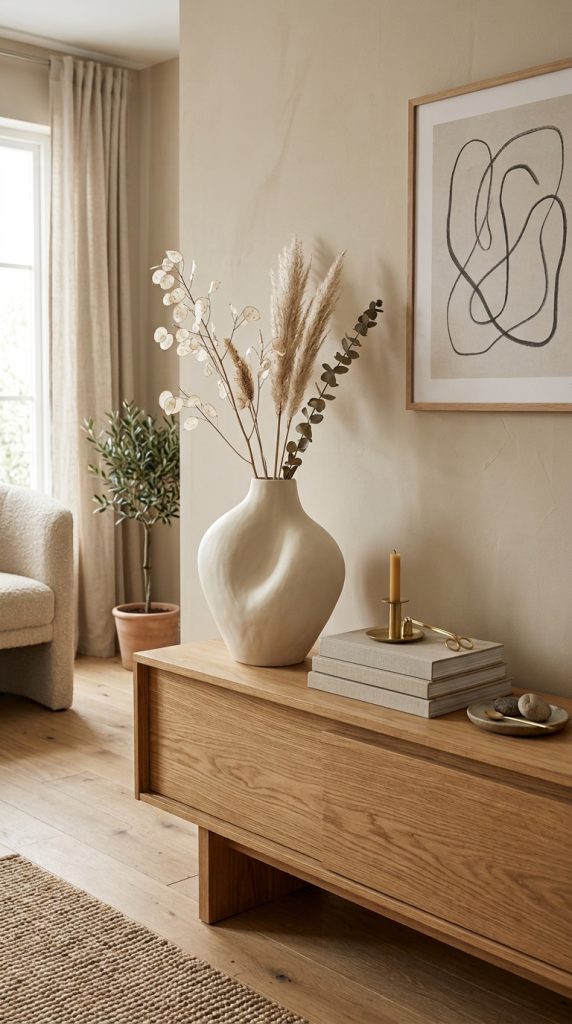
    1. Sculptural Ceramic Vases for an Instant Designer Look

    A sculptural ceramic vase is one of the easiest affordable home decor accessories to use when you want a room to feel more expensive.

    Unlike ordinary decorative vases that simply function as containers for flowers, sculptural vessels can act almost like artwork. Their unusual silhouettes, rounded shapes, narrow openings, curved handles, asymmetrical forms, or handmade-looking surfaces create visual interest even when the vase is empty.

    Look for pieces in matte ivory, warm white, stone, taupe, charcoal, muted brown, or soft earthy shades. These colors tend to work easily with different decorating styles and can remain useful even when you change your room’s color palette.

    The most important factor is scale. A vase that is too small can disappear on a large console or coffee table. A larger sculptural vessel immediately creates a stronger focal point.

    For a sophisticated living room, place one large ceramic vase on a console table and leave some surrounding space rather than filling the surface with accessories. Add a few tall dried branches if you want height, but allow the shape of the vessel itself to remain visible.

    You can also use two vases with different heights on an open shelf. The forms should complement each other without being identical.

    In a bedroom, a small sculptural ceramic vessel can sit on a nightstand beside a lamp and a book. In a bathroom, a tiny stone-colored vessel with one or two delicate stems can provide an understated decorative touch.

    The luxury effect comes from the shape and restraint, not from filling the room with vases.

    This makes sculptural ceramics one of the most versatile affordable luxury home decor accessories for almost any room.

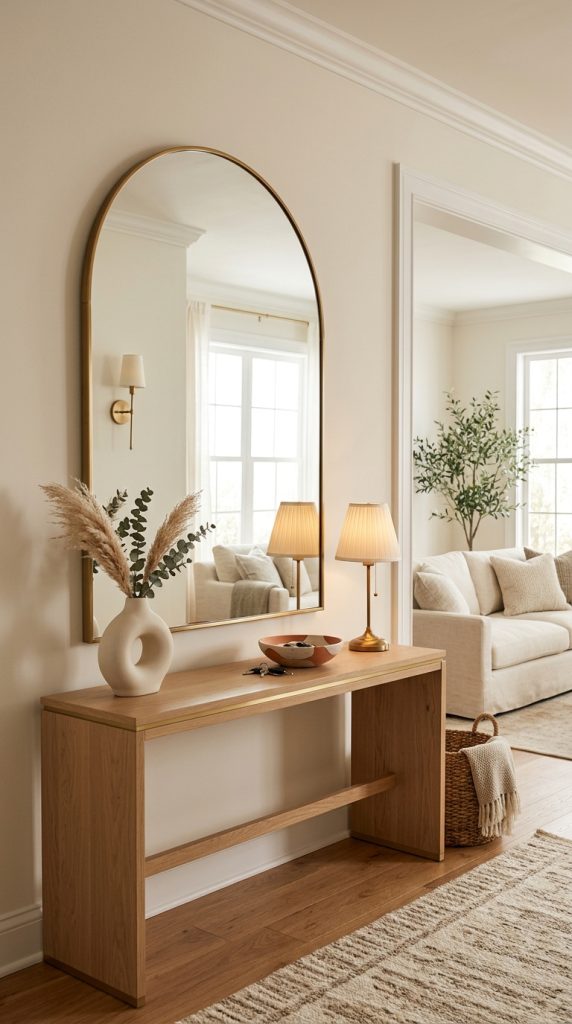
    2. Oversized Decorative Mirrors That Add Architectural Impact

    An oversized mirror can make an ordinary room feel considerably more finished.

    Instead of selecting several small decorative mirrors, consider one large mirror with a distinctive frame. A rounded, arched, organic, antique-inspired, or softly rectangular silhouette can become a major design feature.

    For a luxury-looking effect, pay attention to the frame.

    Thin black frames can create a contemporary appearance. Warm brass can add a subtle glamorous quality. Natural wood can make the mirror feel organic and sophisticated. A vintage-style frame can introduce character and make the room feel collected rather than newly purchased.

    Placement also matters.

    An oversized mirror above a console creates a classic entryway arrangement. In a dining room, a large mirror can reflect light and visually expand the space. In a bedroom, an arched mirror leaning against a wall can create a relaxed boutique-hotel feeling.

    If your budget is limited, you do not need an expensive custom mirror. Focus on finding an affordable mirror with a convincing silhouette and a frame that works with your existing finishes.

    Avoid surrounding it with too many small objects. Let the mirror carry the visual weight.

    The result can look far more sophisticated than a wall covered with numerous inexpensive decorations.

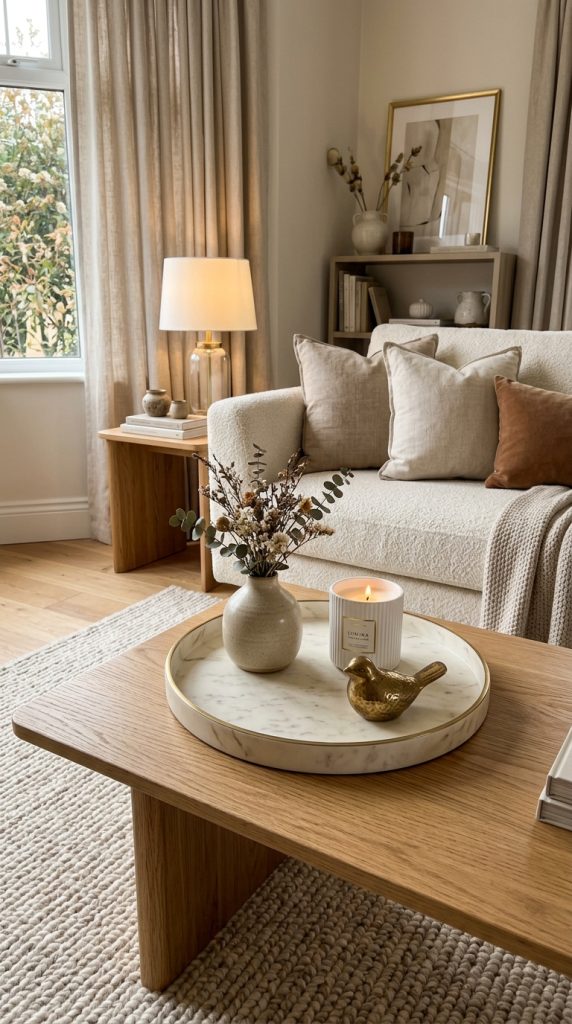
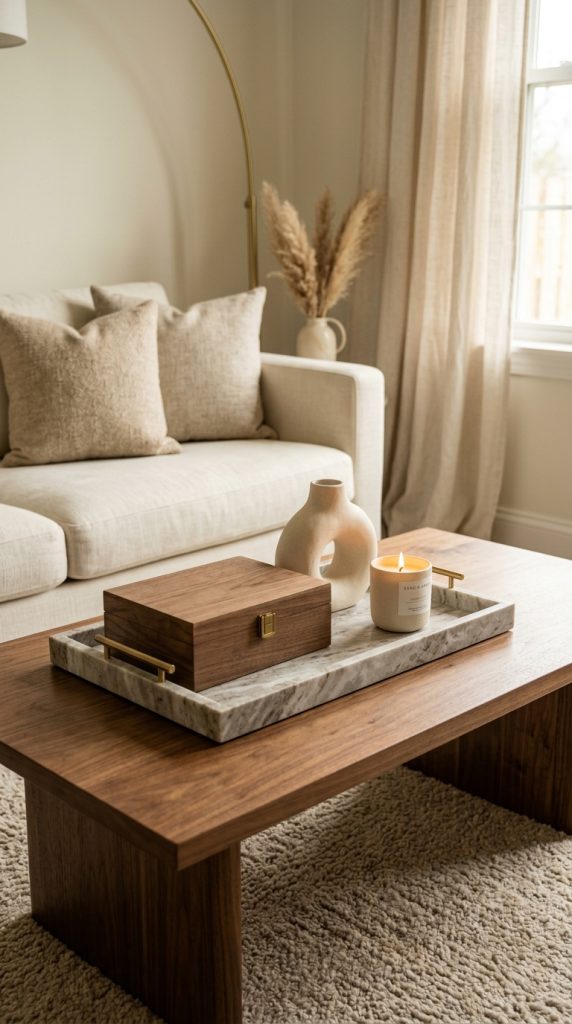
    3. Decorative Trays for Coffee Tables and Consoles

    A decorative tray is a small accessory with surprisingly strong styling potential.

    It creates a visual boundary that makes individual objects appear intentionally grouped rather than randomly placed. This is particularly useful on coffee tables, ottomans, consoles, bathroom counters, and bedroom dressers.

    For an expensive-looking appearance, choose trays with materials or finishes such as faux marble, natural wood, brushed metal, stone, rattan, or textured resin.

    A rectangular tray can work beautifully on a long coffee table. A round tray can soften a square ottoman. A narrow tray can organize perfume bottles and jewelry on a dresser.

    The key is what you put inside it.

    Instead of filling the tray completely, create a small composition. You might combine a candle, a small ceramic vessel, and one decorative object. On a console, a tray could hold a bowl and a small sculpture.

    Leave visible space around the objects.

    That empty space is important because it prevents affordable accessories from looking crowded. The tray gives everything a clear visual home.

    For renters and apartment dwellers, this is particularly useful because a single inexpensive tray can be moved from room to room as your decorating needs change.

    4. Elegant Table Lamps With Sculptural Bases

    Lighting is one of the easiest ways to change how expensive a room feels.

    A basic room with overhead lighting can look flat, while a room with thoughtfully positioned table lamps can feel warm, layered, and intentional.

    You do not need a designer lamp to achieve this effect.

    Look for affordable lamps with sculptural bases, ceramic bodies, fluted details, linen shades, ribbed glass, dark wood, antique-inspired metal, or simple architectural shapes.

    A pair of matching lamps on a console or bedroom nightstands can create symmetry and immediately make the arrangement feel deliberate.

    For a more collected look, use two complementary lamps instead of identical ones. For example, a ceramic lamp on one side of a console could be balanced by a smaller brass or dark wood lamp on the other side.

    The shade is just as important as the base.

    Linen-look shades often produce a softer, more refined glow than shiny synthetic shades. Warm bulbs can further improve the atmosphere.

    Place lights at appropriate locations so the room has multiple levels of illumination rather than depending entirely on one overhead fixture.

    This is one of the most effective ways to make cheap home decor look expensive because lighting changes the entire perception of surrounding furniture and accessories.

    5. Textured Throw Pillows That Make a Sofa Look Custom

    Throw pillows are inexpensive compared with replacing a sofa, but they can dramatically alter its appearance.

    The secret is avoiding a collection of unrelated pillows.

    Instead, create a controlled combination of textures. A neutral sofa could be paired with an ivory bouclรฉ pillow, a warm beige linen pillow, and a darker velvet accent.

    You can also introduce subtle patterns such as stripes, small checks, geometric designs, or vintage-inspired motifs.

    The most luxurious-looking pillow arrangements usually combine different textures rather than relying entirely on matching patterns.

    For example, place a larger neutral textured pillow toward the back, add a medium-sized linen pillow in front, and finish with one smaller accent pillow.

    The goal is depth.

    Avoid stuffing every available section of the sofa with pillows. Leave enough room for the furniture itself to remain visible.

    For an affordable update, replacing pillow covers rather than purchasing entire pillows can be particularly economical.

    Seasonal covers can also refresh the room without requiring permanent changes.

    6. Large Framed Art Prints for a Gallery-Inspired Interior

    Wall art can completely transform a room, but expensive-looking art is not necessarily about the price of the original artwork.

    A well-selected large print in a beautiful frame can have tremendous impact.

    Look for abstract artwork, botanical illustrations, architectural photography, vintage-inspired prints, still-life compositions, or artistic landscapes.

    The frame should complement the room.

    Warm wood works beautifully in organic interiors. Black frames can create contrast in contemporary spaces. Aged brass or antique-style frames can suit traditional and vintage rooms.

    Instead of covering a wall with many tiny prints, consider one larger piece.

    Scale is important because oversized artwork can create the impression of a professionally designed room. A small piece placed on a large empty wall may look accidental, while a larger work can anchor the surrounding furniture.

    You can also create an inexpensive gallery wall, but keep the frame colors and visual theme controlled.

    For Pinterest-friendly interiors, art that feels personal, collected, and slightly unexpected can be especially effective because current Pinterest design trends emphasize self-expression rather than perfectly generic rooms. (Pinterest)

    7. Stone-Look Bowls and Catchall Dishes

    A decorative bowl is an underrated accessory.

    Place one on a coffee table, kitchen island, console, dresser, or entryway table and it can provide both style and function.

    Look for bowls inspired by marble, travertine, limestone, ceramic, or natural stone.

    The objective is not to make the accessory look artificially luxurious. Instead, choose a design with a simple shape and substantial appearance.

    A shallow stone-look bowl can hold decorative spheres or a few natural objects on a coffee table. A smaller bowl can collect keys in an entryway.

    In the bedroom, a sculptural bowl can sit on a dresser for jewelry.

    The best designs are often simple.

    Avoid overly elaborate patterns or excessive metallic decoration if your goal is an understated luxury appearance.

    A beautiful shape combined with a restrained finish can be much more effective.

    8. Faux Marble and Wood Accent Pieces

    Natural materials have long been associated with elevated interiors, but affordable versions can still provide a sophisticated visual effect when selected carefully.

    Faux marble trays, wood boxes, stone-look coasters, decorative blocks, and small accent tables can introduce material contrast without requiring a large investment.

    The trick is to avoid products that look overly glossy or artificially printed.

    Matte and lightly textured surfaces tend to feel more convincing.

    Pairing different materials can also improve the result.

    For example, place a stone-look tray on a wooden coffee table, or use a warm wood decorative box beside a ceramic vase.

    Contrast creates depth.

    If everything in the room has the same finish, the space can feel flat. A combination of wood, ceramic, woven fibers, glass, and metal can create a richer visual experience.

    This is especially useful for luxury home decor on a budget because the visual richness comes from layering materials rather than purchasing expensive objects.

    9. Decorative Candles and Sophisticated Candleholders

    Candles can make a room feel warmer and more elegant, but the container and presentation matter.

    Instead of choosing novelty designs, look for candles housed in ceramic, glass, stone-look, or understated metallic containers.

    You can also use decorative candleholders.

    A pair of vintage-inspired brass candlesticks can create a classic appearance on a dining table or console. A black sculptural candleholder can add contrast to a neutral room. Ceramic holders can introduce softness.

    Arrange candles at different heights when creating a centerpiece.

    On a coffee table, a single substantial candle may be enough.

    On a dining table, several slender candles can create a sophisticated evening atmosphere without taking up much visual space.

    Choose scents carefully if fragrance is important to you. Warm woods, amber, vanilla, sandalwood, fig, or subtle citrus can complement an elegant interior.

    Avoid filling every surface with candles.

    One thoughtfully styled arrangement usually has greater impact than multiple scattered pieces.

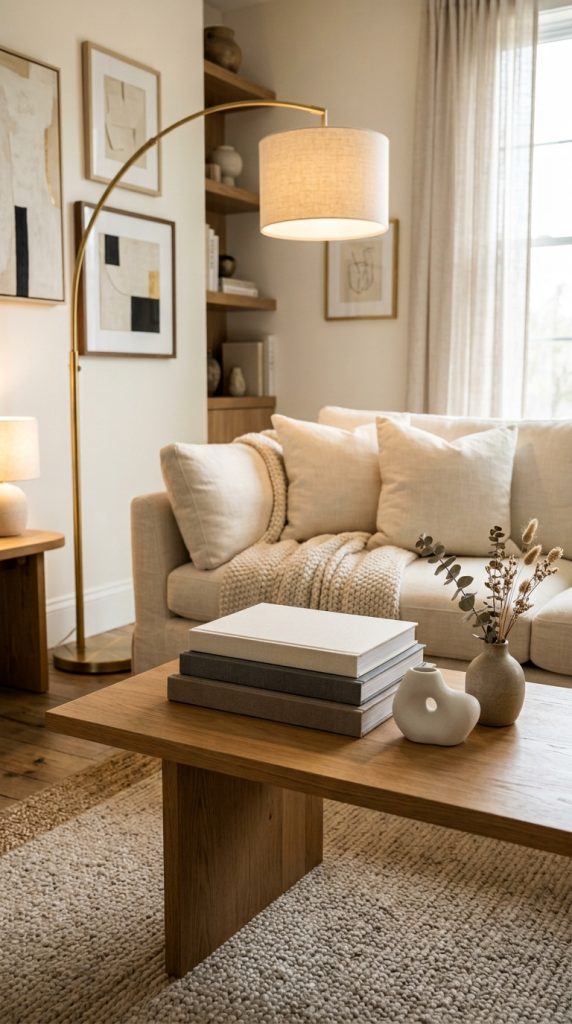
    10. Decorative Books That Create a Curated Coffee Table

    Coffee-table books have become a popular styling tool because they add both visual structure and personality.

    You do not need a large collection.

    Two or three attractive books can create an elegant foundation for a coffee-table arrangement.

    Look for books with neutral covers, beautiful photography, architecture, design, travel, art, gardening, or subjects that genuinely interest you.

    Stack them horizontally and place one sculptural object or small vase on top.

    You can also display a single large book slightly open to an attractive page.

    The key is authenticity.

    A home tends to feel more sophisticated when the objects appear connected to the people who live there.

    Avoid buying dozens of books solely for decoration. A few thoughtfully selected volumes can provide the same visual effect.

    This also gives you an opportunity to combine function and styling. Guests can actually browse the books, making the arrangement feel natural rather than staged.

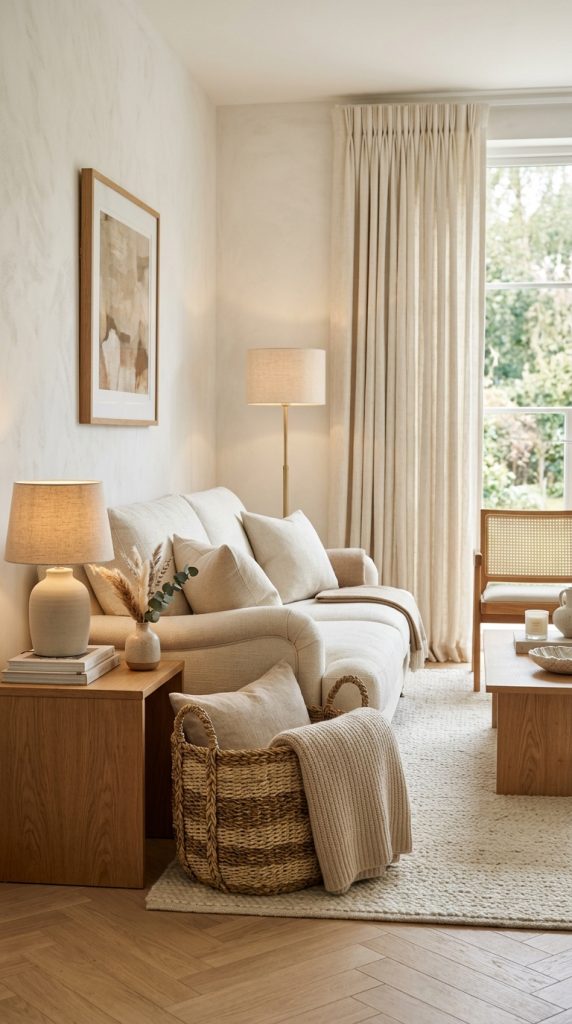
    11. Woven Baskets With Beautiful Natural Texture

    Woven baskets can add warmth while also providing practical storage.

    Choose baskets made from natural-looking materials such as seagrass, rattan, jute, cane, or woven fibers.

    A large basket beside a sofa can hold blankets. A smaller basket can organize bathroom towels. Several coordinated baskets can improve open shelving or bedroom storage.

    Their texture is particularly useful in neutral interiors.

    If a room contains many smooth surfaces such as painted walls, glass, metal, and polished furniture, woven accessories introduce softness.

    For an expensive-looking result, select baskets with clean shapes and consistent construction.

    Avoid filling every corner with baskets. One large, well-positioned basket can look more intentional than several unrelated ones.

    Natural texture also works beautifully with wood, linen, ceramic, and muted colors.

    12. Vintage-Inspired Brass Accessories

    Brass accessories can add warmth and visual depth without dominating the room.

    Look for small pieces such as candlesticks, picture frames, trays, bowls, table clocks, decorative boxes, or small sculptures.

    The finish matters.

    Highly shiny gold can sometimes feel less refined, while aged, brushed, antique, or softly polished brass can create a more collected appearance.

    You can use brass as a small accent rather than covering the entire room in metallic finishes.

    For example, pair a brass picture frame with a warm wood console. Add a brass candleholder to a coffee table. Use a small brass bowl on a dresser.

    Current Pinterest trend reporting also identifies brass and antique-inspired elements within the rising Neo Deco direction, including searches around brass aesthetics and antique bar carts. (Pinterest)

    The important thing is balance.

    A few warm metallic accents can make neutral furnishings feel considerably richer.

    13. Sculptural Decorative Objects

    Sculptural objects can make inexpensive styling feel artistic.

    Look for abstract forms, rounded stone-like shapes, geometric objects, wooden sculptures, metal forms, or handmade-looking pieces.

    These accessories work particularly well on bookshelves, consoles, coffee tables, and open shelving.

    A sculpture should have enough surrounding space to be noticed.

    Place it against a relatively simple background rather than surrounding it with numerous small decorations.

    You can also use asymmetry.

    For example, place a large sculptural object on one side of a console and balance it visually with a lamp or vase on the opposite side.

    This creates a professionally styled appearance without requiring a large collection.

    Choose pieces that have interesting silhouettes from different angles.

    Because these accessories function visually like artwork, they can make a room feel more curated and individual.

    14. Linen-Look Textiles for Soft Luxury

    Textiles are one of the easiest ways to introduce understated luxury.

    Curtains, table runners, pillow covers, napkins, throws, and bedding accents can all benefit from linen or linen-look fabrics.

    The texture is more important than creating a perfectly matching set.

    A cream linen-look curtain can soften a bedroom. A taupe throw can add depth to a sofa. A natural runner can make a dining table feel more relaxed and elegant.

    Choose colors that complement the existing architecture.

    Cream, oatmeal, flax, warm white, beige, taupe, muted olive, dusty blue, and earthy brown are versatile options.

    If your room already has strong patterns, keep the textiles relatively quiet.

    If the furniture is simple, you can introduce subtle texture or pattern through fabric.

    The goal is to make the room feel tactile.

    Luxury interiors rarely rely exclusively on hard surfaces. Soft textiles help create that layered quality.

    15. Oversized Decorative Baskets and Storage Boxes

    Beautiful storage can serve as both organization and decoration.

    Instead of leaving blankets, magazines, children’s items, or everyday objects exposed, use attractive baskets and boxes to hide visual clutter.

    Choose storage pieces that coordinate with the room’s materials.

    A woven basket works beautifully with organic modern interiors. A fabric storage box can suit a bedroom. A wood box can add warmth to an office or living room.

    Decorative boxes can also sit on shelves or consoles.

    When everything has a designated place, the room naturally looks more polished.

    This is an especially useful strategy for small homes and apartments where visible clutter can quickly overwhelm the space.

    The expensive-looking effect does not come from the storage container itself. It comes from the overall feeling of organization.

    16. Glass Accessories for Light and Airiness

    Glass is an excellent material for adding elegance without visually crowding a room.

    Try clear glass vases, cloches, candleholders, decorative bottles, bowls, or small tabletop objects.

    Because transparent accessories allow light to pass through them, they can work particularly well in smaller spaces.

    Place a clear vase on a dining table with a few delicate branches. Use glass candleholders on a console. Add a transparent decorative bowl to a coffee table.

    Mix glass with heavier materials.

    For example, clear glass beside dark wood creates contrast. Glass combined with brass feels more traditional. Glass with stone and linen creates a softer organic look.

    The key is keeping the shapes elegant.

    Avoid using too many glass objects together because the room can begin to feel visually disconnected.

    One or two well-selected pieces are usually sufficient.

    17. Decorative Hardware as a Small Luxury Upgrade

    Sometimes the accessory that makes the biggest difference is not something you place on a table.

    Cabinet knobs, drawer pulls, hooks, and small hardware can dramatically influence how a kitchen, bathroom, or storage area feels.

    Affordable hardware in aged brass, brushed metal, matte black, or warm bronze can replace basic builder-grade pieces.

    This is a relatively small change but can create a more custom appearance.

    In a kitchen, coordinated cabinet hardware can make inexpensive cabinetry appear more intentional.

    In a bathroom, updated vanity pulls can complement mirrors and lighting.

    The important thing is consistency.

    Choose a finish that works with the other metals already present in the room.

    You do not necessarily need every metal to match perfectly, but the combination should feel deliberate.

    This is a particularly useful idea for renters or homeowners working with existing cabinetry because the visual improvement can be significant without replacing the entire structure.

    18. Beautiful Decorative Boxes and Catchalls

    Small decorative boxes are perfect for hiding everyday items while maintaining a polished appearance.

    Use them on nightstands for charging cables, on desks for small office supplies, or on consoles for keys and miscellaneous objects.

    Choose boxes with interesting materials such as wood, faux leather, textured fabric, ceramic, or metal.

    A decorative box can also become part of a shelf composition.

    Place it beneath a stack of books or beside a small vase.

    This creates visual variation while providing useful storage.

    Function is one of the easiest ways to make budget decorating feel intentional.

    When accessories solve a practical problem while looking attractive, they become part of the home’s design rather than simply additional objects.

    19. Natural Branches and Dried Botanical Arrangements

    You do not need an expensive floral arrangement to create a dramatic centerpiece.

    Natural branches, dried grasses, preserved stems, eucalyptus, pampas-style textures, or seasonal botanical elements can provide height and movement.

    Use a large vessel with a small number of branches rather than a crowded arrangement.

    The shape should extend naturally upward and outward.

    This works especially well on dining tables, consoles, mantels, and entryway tables.

    Choose muted tones if you want an understated luxury effect.

    For autumn, for example, dried branches in warm brown, rust, ochre, or burgundy can introduce seasonal character without relying on novelty decorations. Recent design advice has similarly emphasized natural materials, dried florals, handmade pottery, and muted seasonal colors as alternatives to overly themed decorating. (The Spruce)

    For an evergreen arrangement, natural branches and dried foliage can remain in the room throughout much of the year.

    20. One Statement Accessory With a Strong Silhouette

    Sometimes the most effective affordable decor strategy is simply buying one memorable piece.

    Instead of purchasing ten inexpensive decorations, choose one object with a strong shape.

    It could be a large sculptural vase, an oversized bowl, an unusual lamp, an artistic mirror, a distinctive clock, a vintage-inspired object, or a substantial decorative sculpture.

    Give it space.

    A statement piece needs visual breathing room to work.

    Place it somewhere where the eye naturally lands, such as the center of a console, the middle of a coffee table, or a prominent shelf.

    Then keep the surrounding accessories restrained.

    This principle can make even an inexpensive item feel more important.

    The objective is not to make visitors think the object cost a certain amount. The objective is to make the room feel intentional, interesting, and visually complete.

    How to Make Affordable Home Decor Look Expensive

    Buying the right accessories is only half of the process. Styling determines whether those pieces look sophisticated or simply inexpensive.

    Start by choosing a visual direction.

    You might prefer warm organic luxury, modern neutral, vintage-inspired elegance, contemporary black-and-brass, or colorful collected interiors.

    Once you establish a direction, choose accessories that support it.

    Do not buy every beautiful object you see.

    A room becomes more cohesive when accessories share a relationship through color, material, shape, or period.

    For example, a warm neutral living room could combine:

    • Natural wood
    • Cream ceramic
    • Aged brass
    • Linen
    • Stone-look accessories
    • Warm brown accents

    Another room might use:

    • Black metal
    • Walnut
    • Ivory
    • Glass
    • A small amount of brass

    Neither approach requires expensive purchases.

    The visual consistency does much of the work.

    Use the Rule of Visual Breathing Room

    One of the most common mistakes in budget decorating is filling every surface.

    If a console has six different accessories, each item competes for attention.

    Instead, allow empty areas.

    An oversized vase may look far more impressive when it stands alone than when it is surrounded by ten small objects.

    The same applies to shelves.

    Leave some sections empty and vary the heights of the pieces you display.

    Negative space gives the eye somewhere to rest and makes individual accessories feel more significant.

    Mix Textures Instead of Buying More Decorations

    If your room feels boring, your first reaction might be to buy additional accessories.

    Try adding texture instead.

    A smooth ceramic vase can be paired with a woven basket. A linen pillow can sit beside velvet. A wood tray can hold a stone-look bowl.

    Different textures create depth without requiring many objects.

    This is particularly effective in neutral rooms where color variation is limited.

    Pay Attention to Scale

    Scale is one of the strongest tools for creating a designer-inspired appearance.

    Tiny accessories can disappear in large rooms.

    At the same time, too many oversized objects can overwhelm a small apartment.

    Consider the furniture around the accessory.

    A large sectional can support larger pillows, artwork, lamps, and coffee-table pieces. A small side table needs more delicate accessories.

    When the proportions feel right, the room immediately appears more intentional.

    Choose Quality of Appearance Over Quantity

    Affordable decorating does not mean buying the cheapest possible version of everything.

    It means spending selectively.

    You might purchase one excellent-looking ceramic vase instead of three ordinary ones.

    You might invest slightly more in a large mirror while saving money on decorative bowls.

    You might choose beautiful pillow covers and keep your existing sofa.

    This approach creates a better overall result because the eye naturally notices the strongest pieces first.

    How to Style Affordable Accessories in the Living Room

    The living room usually benefits from accessories that combine comfort with visual sophistication.

    Start with the largest elements.

    A rug, sofa, coffee table, and curtains establish the foundation.

    Then introduce accessories through smaller layers.

    A coffee table might include a tray, two books, a ceramic vessel, and one sculptural object.

    A console could feature a lamp, artwork or mirror, and one decorative bowl.

    A sofa can receive textured pillows and a throw.

    Do not attempt to decorate every surface.

    Choose a few focal zones.

    This creates a more natural and professionally styled appearance.

    How to Make a Bedroom Look Expensive on a Budget

    The bedroom should feel calm rather than overloaded.

    Start with bedding.

    Neutral sheets, textured pillows, a soft throw, and layered materials can create a boutique-inspired atmosphere.

    Add matching or complementary bedside lamps.

    Place one decorative object on each nightstand rather than filling them with accessories.

    An oversized framed artwork or mirror can become the main wall feature.

    A woven basket near the bed can provide storage while contributing texture.

    The result should feel comfortable enough for everyday life but polished enough to photograph beautifully.

    Affordable Accessories for a Luxury-Looking Kitchen

    Kitchen accessories should be particularly selective because countertops already contain functional objects.

    Instead of displaying everything, create one or two attractive zones.

    A wooden cutting board can lean against the backsplash. Beside it, place a ceramic utensil container.

    A stone-look tray can organize olive oil bottles or coffee supplies.

    A sculptural vase with a small branch can soften an island.

    A beautiful bowl filled with seasonal fruit can create a natural centerpiece.

    The important thing is to avoid turning the countertop into a storage area.

    A few carefully chosen accessories can look more luxurious than an entire collection.

    Affordable Bathroom Accessories That Look High End

    Bathrooms benefit from simple details.

    Replace mismatched containers with coordinated soap dispensers.

    Fold towels neatly and place them in a woven basket.

    Use a small stone-look tray to organize everyday products.

    Add a ceramic vessel with a few stems.

    Choose a mirror with an architectural silhouette.

    A small candle can create a spa-like mood.

    The goal is cleanliness, simplicity, and texture.

    Bathrooms rarely need many decorative objects to feel luxurious.

    Affordable Entryway Accessories That Create a Polished First Impression

    The entryway is the first part of the home many visitors see.

    A small console can become a sophisticated focal point with the right accessories.

    Try an oversized mirror, a small lamp, a decorative bowl, and one sculptural object.

    If space is limited, use a wall-mounted shelf with a framed print and a small vase.

    Add a woven basket for shoes or everyday items if needed.

    Keep the floor clear whenever possible.

    A clean entryway instantly creates a sense of organization.

    Affordable Luxury Decor for Small Apartments

    Small homes require a different strategy.

    Instead of purchasing numerous accessories, choose pieces that serve multiple purposes.

    A decorative tray can organize objects on a coffee table.

    A mirror can add decoration while making the room feel visually larger.

    A woven basket can provide storage and texture.

    A sculptural lamp can provide both lighting and visual interest.

    A decorative box can hide small everyday items.

    This approach prevents the space from becoming crowded.

    For apartment decorating, the goal should be high visual impact with low visual clutter.

    Pinterest’s current design direction toward low-lift, personalized room updates makes this especially relevant for renters and people working with existing spaces. (Pinterest)

    Mistakes That Can Make Affordable Decor Look Cheap

    Not every inexpensive accessory looks inexpensive, but certain styling choices can reduce the overall effect.

    One common problem is excessive quantity.

    Another is mixing too many unrelated colors.

    Overly shiny finishes can sometimes look less sophisticated than matte or aged surfaces.

    Very small accessories scattered across large furniture can also make a room feel unfinished.

    Matching every object perfectly can create a showroom-like appearance rather than a personal home.

    Another issue is choosing decorative pieces purely because they are trendy.

    A more timeless approach is to combine a few current accents with pieces that have enduring appeal.

    This is particularly important because Pinterest’s 2026 reporting suggests users are increasingly treating trends as opportunities for personal expression rather than rigid decorating rules. (Pinterest)

    How to Create an Expensive-Looking Home Without Overdecorating

    The most important principle is intentionality.

    Before adding an accessory, ask yourself three questions:

    Does this improve the room visually?

    Does it contribute texture, function, color, or shape?

    Does it work with the pieces already here?

    If the answer to all three is yes, it may deserve a place.

    If the answer is no, leaving the space empty may actually create a better result.

    Luxury is often communicated through restraint.

    You do not need a house filled with expensive objects to create an elevated interior. You need a home where the visible pieces feel thoughtfully selected.

    How to Shop for Affordable Home Decor Accessories

    When shopping for affordable home accessories, avoid focusing only on the price.

    Look at the silhouette first.

    Then examine the material appearance.

    Check the dimensions.

    Think about where the item will be placed.

    Consider whether it can work in more than one room.

    A versatile accessory gives you more value because you can change its location when you refresh your decor.

    Neutral ceramics, wood accessories, woven baskets, trays, mirrors, lamps, and decorative textiles are especially versatile.

    For more distinctive pieces, vintage-inspired accessories can add character.

    The combination of timeless basics and a few expressive accents creates a more personalized result than purchasing everything from the same collection.

    Final Thoughts

    Creating a beautiful home does not have to mean spending thousands of dollars on designer accessories.

    The real secret behind an expensive-looking interior is thoughtful selection.

    A sculptural ceramic vase can create a focal point. A large mirror can transform an empty wall. A textured pillow can refresh an old sofa. A decorative tray can organize a coffee table. A beautiful lamp can change the atmosphere of an entire room. A woven basket can add texture while solving a storage problem.

    The most effective affordable home decor accessories that look expensive are not necessarily the most elaborate ones. They are the pieces with beautiful proportions, sophisticated finishes, useful functions, interesting textures, and strong visual presence.

    Rather than decorating every surface, choose a few accessories that deserve attention.

    Rather than buying everything in one style, create relationships between materials.

    Rather than following every trend, select pieces that reflect your personality.

    And rather than thinking luxury means expensive, think of luxury as intentional, comfortable, layered, and beautifully edited.

    That approach allows you to create an elegant home while staying within a realistic budget.

    For Pinterest, this also creates a strong content opportunity because the subject naturally connects with multiple search intentions, including cheap home decor that looks expensive, affordable luxury home decor, budget-friendly home accessories, elegant home decor on a budget, luxury home decor ideas, high-end home decor on a budget, and affordable home accessories.

    Most importantly, these ideas are not limited to one season. You can use them throughout the year and adapt them to changing colors, holidays, and decorating styles.

    A beautiful home is not defined by how much was spent on every object.

    It is defined by how thoughtfully everything works together.


  • Neutral Thanksgiving Tablescape Ideas for an Elegant Home

    Neutral Thanksgiving Tablescape Ideas for an Elegant Home

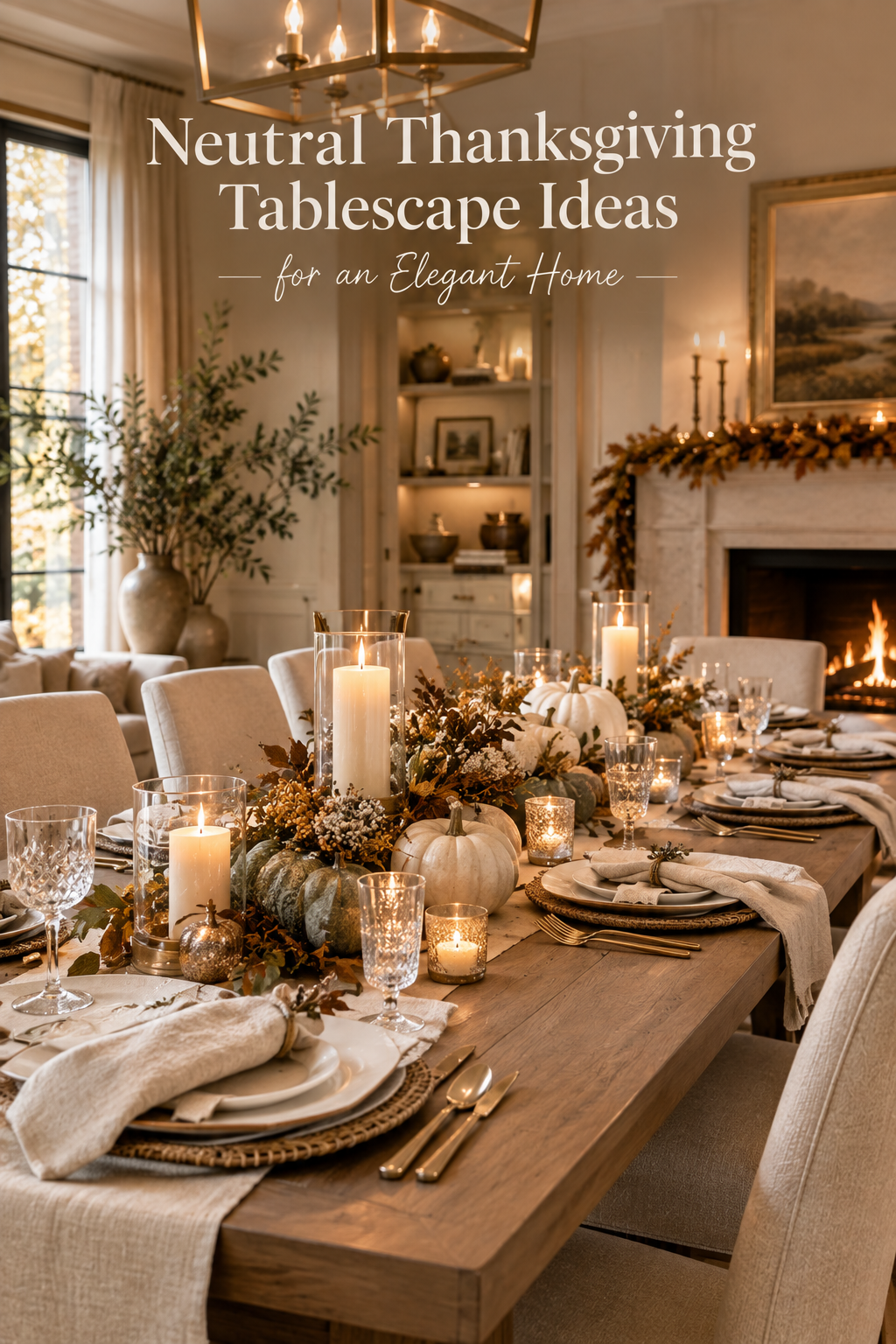
    Thanksgiving is one of those occasions when the dining table becomes much more than a place to eat. It becomes the visual center of the celebration, the backdrop for family photographs, the setting for long conversations, and the place where carefully prepared food is finally shared. Because of that, creating a beautiful Thanksgiving tablescape can completely change the atmosphere of the entire gathering.

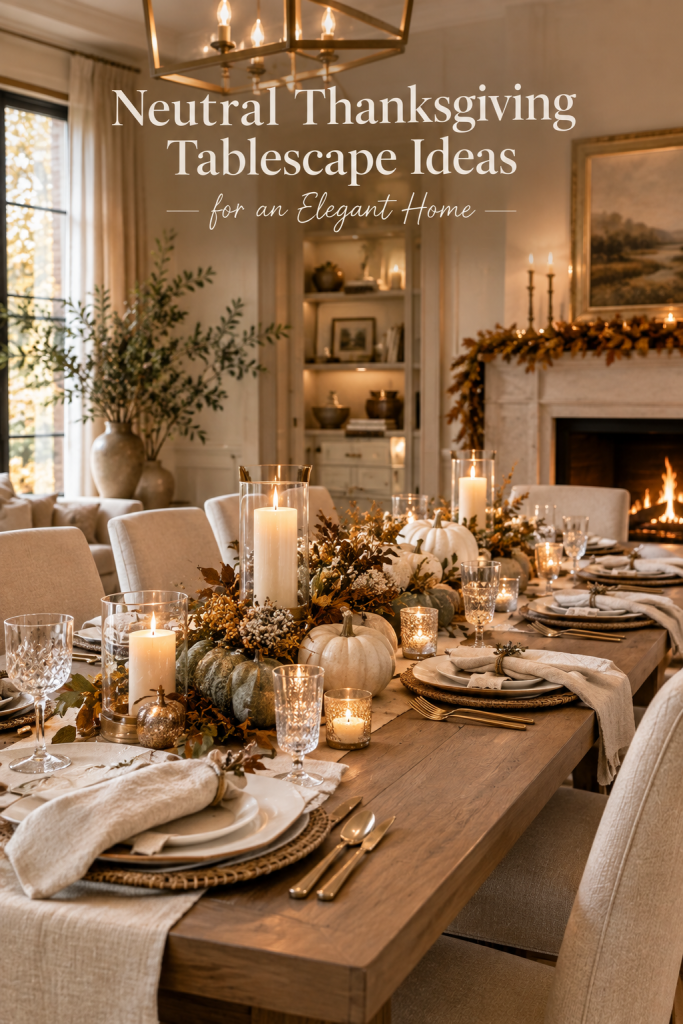
    But an elegant Thanksgiving table does not have to rely on bright orange pumpkins, traditional red leaves, oversized turkey decorations, or heavily themed accessories. A neutral Thanksgiving tablescape can feel just as festive while creating a calmer, more sophisticated atmosphere that blends naturally with an elegant home.

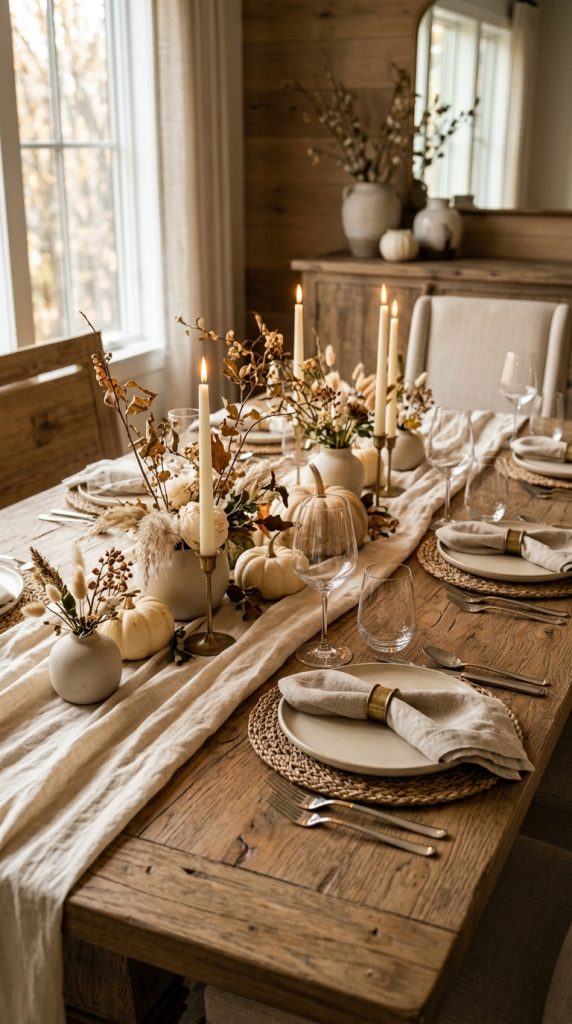
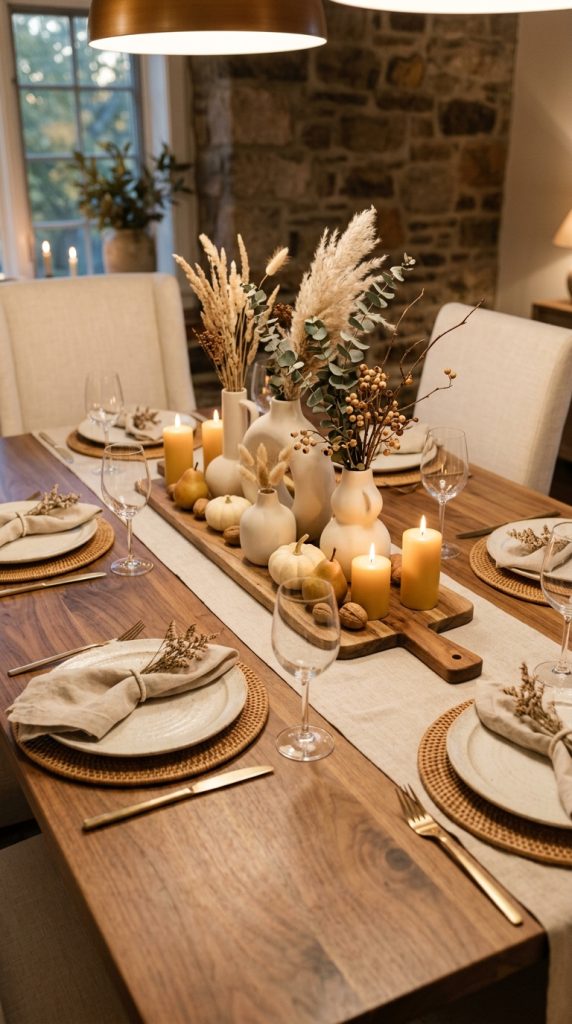
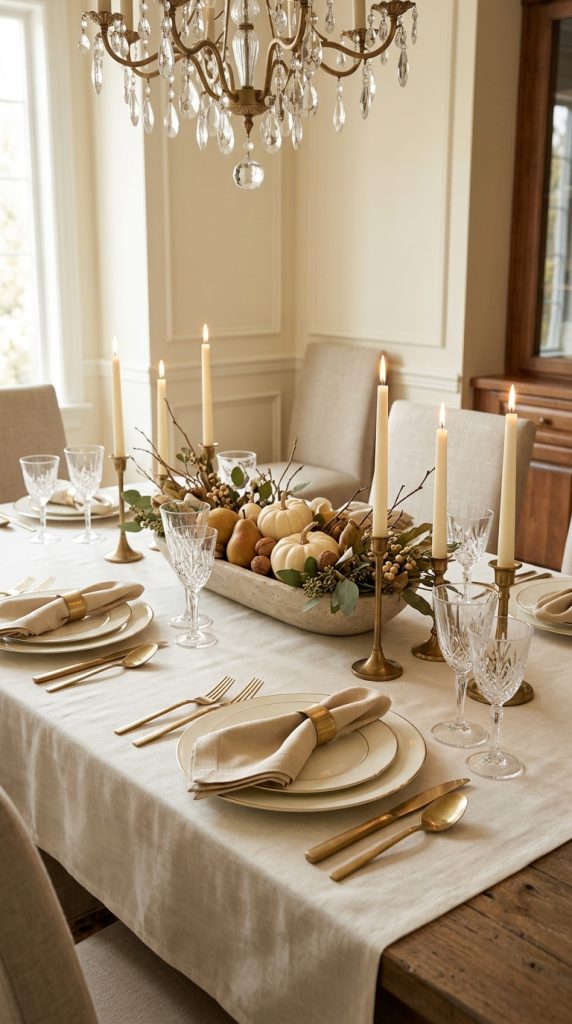
    Neutral Thanksgiving decorating is especially beautiful when it combines different textures rather than depending on strong colors. Cream linen, ivory dinnerware, natural wood, warm beige ceramics, soft taupe napkins, aged brass, clear glass, dried branches, wheat stems, subtle greenery, and candlelight can create layers of visual interest without making the table feel busy. Current 2026 Thanksgiving decorating inspiration is also leaning toward warm neutrals, natural materials, understated seasonal accents, and tables designed to remain practical for an actual meal.

    The secret is knowing how to make neutral colors feel rich rather than flat.

    A table covered entirely in plain white can sometimes feel unfinished. The solution is not necessarily to add more color. Instead, introduce variation through texture, shape, finish, and height. A rough linen runner can contrast beautifully with smooth ceramic plates. A warm wood table can provide depth beneath creamy dinnerware. Brushed brass can add a subtle glow. Transparent glass can keep the arrangement visually light. Candles can introduce movement through flickering light.

    Another important part of a successful Thanksgiving tablescape is proportion. The centerpiece should look beautiful without becoming an obstacle. Guests need enough space to see one another, pass dishes, place glasses, and enjoy the meal comfortably. Recent Thanksgiving tablescape guidance has emphasized designing around the actual meal rather than creating a centerpiece that has to be removed as soon as dinner begins.

    This is particularly important for Thanksgiving because the table often needs to accommodate serving dishes, water glasses, wine glasses, bread baskets, gravy boats, side dishes, and desserts. A beautiful table that leaves no room for dinner is not practical.

    The strongest neutral Thanksgiving tablescapes therefore balance beauty and function.

    You can create a luxurious appearance without purchasing an entirely new dinnerware collection. Existing white plates can look completely different when paired with textured linen napkins, natural chargers, elegant glassware, and a carefully designed centerpiece. Vintage pieces can also add character. A slightly imperfect ceramic bowl or antique brass candlestick can make the table feel collected rather than staged.

    The color palette can remain surprisingly simple.

    Think ivory, cream, oatmeal, beige, taupe, warm white, natural brown, muted sage, soft gray, champagne, and subtle metallic accents. If you want a stronger autumn feeling, introduce tiny amounts of muted rust, dried wheat, cinnamon, or deep brown rather than allowing a bright seasonal color to dominate the entire table.

    This approach makes the Thanksgiving decor easier to blend with the rest of the dining room. It also allows the table to remain attractive throughout the season rather than looking like a one-day holiday display.

    Another advantage of neutral Thanksgiving decor is its flexibility. The same linen runner may work for Thanksgiving dinner, Christmas gatherings, winter brunches, or everyday entertaining. Neutral ceramic plates can be reused throughout the year. Wooden serving boards can move from the dining table to the kitchen. Glass candle holders can become part of another tablescape later.

    That makes the style particularly useful for homeowners who prefer timeless decorating over buying holiday-specific accessories every year.

    In this guide, you will find 10 different neutral Thanksgiving tablescape ideas designed for an elegant home. Each concept has its own visual identity, materials, centerpiece approach, and styling method, so the ideas do not simply repeat the same combination of pumpkins, candles, and greenery.

    Whether you have a rustic farmhouse table, a contemporary dining room, a traditional wooden table, or a small apartment dining area, these ideas can be adapted to your space.

    1. Create a Warm Ivory and Linen Thanksgiving Tablescape

    A warm ivory tablescape is one of the most timeless ways to create an elegant Thanksgiving setting. Instead of making autumn decorations the dominant feature, build the table around a soft monochromatic foundation and let subtle seasonal details provide the holiday character.

    Begin with the table itself.

    If you have a beautiful natural wood dining table, consider leaving most of the surface visible. The warmth of the wood can provide the darker foundation needed to keep an ivory palette from looking too pale.

    If the tabletop is not particularly attractive or you want a more formal appearance, use a natural linen tablecloth in warm ivory. Avoid an extremely bright white if the goal is warmth. Cream or oatmeal linen generally creates a softer visual effect.

    Place simple ceramic dinnerware on each setting. Matte ivory stoneware works particularly well because its slight texture prevents the table from looking overly polished or sterile.

    Instead of introducing patterned plates, create interest through the layers beneath them.

    A natural woven charger can provide a subtle textural boundary around each place setting. Choose one with a refined weave rather than an overly rustic appearance.

    For napkins, use soft linen in oatmeal, warm beige, or slightly darker taupe. Fold them simply and place them either beside the plate or across the lower portion of the setting.

    This table does not need elaborate napkin rings.

    A small dried wheat stem tucked into the fold can introduce a Thanksgiving reference without making the place setting look overly themed.

    The centerpiece should remain low and horizontal.

    Use a narrow ceramic vessel filled with delicate dried grasses, soft beige stems, and a few muted seasonal branches. The arrangement should stretch naturally along the center of the table instead of becoming one large vertical bouquet.

    Add a few small cream-colored gourds or heirloom pumpkins between the stems, but keep their placement irregular enough to feel natural.

    Candles should be used selectively.

    Rather than filling the entire table with candle holders, place several slim ivory tapers in simple holders at intervals along the arrangement. Their warm glow will become increasingly beautiful as evening arrives.

    Glassware can remain transparent.

    Clear water glasses and simple wine glasses prevent the table from becoming visually heavy.

    If your dining room already contains brass lighting or hardware, introduce a small amount of aged brass through candle holders or flatware. The metallic finish should act as a warm accent rather than another major color.

    The finished table should feel soft, welcoming, and sophisticated.

    This is an especially effective choice if your home already has cream sofas, beige walls, natural wood furniture, or warm neutral accessories because the Thanksgiving table will feel connected to the rest of the interior.

    The most important styling rule is to allow the ivory palette to breathe.

    Do not add every neutral accessory you own simply because the colors match. Empty areas are what allow the textures and materials to remain visible.

    For an elegant home, restraint becomes part of the decoration.

    2. Design a Natural Wood Thanksgiving Table With Cream Ceramics

    If you own a beautiful wooden dining table, let it become the foundation of your Thanksgiving design.

    Natural wood provides depth and warmth that can make neutral dinnerware look significantly more luxurious.

    Instead of covering the entire table, use a narrow textured runner running lengthwise through the center. Choose oatmeal linen, natural flax, or a soft beige cotton with visible weave.

    The wood should remain visible on both sides.

    This creates a relaxed but sophisticated atmosphere and allows the grain of the table to become part of the tablescape.

    For the place settings, use cream or warm-white ceramic plates with understated shapes. Handmade-look dinnerware is particularly attractive because subtle variations in glaze and texture make each setting feel individual.

    Place a simple neutral napkin either beneath the plate or folded beside it.

    Rather than using a decorative napkin ring, tie the napkin loosely with natural linen cord and add one tiny dried botanical stem. This creates a handmade appearance without requiring a complicated craft project.

    The centerpiece can take inspiration from the materials already present.

    Use a long wooden serving board as a decorative base for a carefully arranged collection of ceramic vessels, small neutral pumpkins, pears, and low seasonal branches.

    The board creates a visual boundary so the objects feel connected rather than randomly scattered.

    For a more sophisticated effect, vary the heights.

    Place one medium-height ceramic vessel near the center, smaller objects toward the ends, and leave visible gaps between them.

    Avoid creating a continuous wall of decoration.

    The dining table should still feel open.

    For lighting, use warm taper candles in understated ceramic or aged-metal holders. If your dining room has a chandelier, allow its light to combine with the candles rather than relying entirely on overhead illumination.

    Glassware can introduce another texture.

    Choose lightly tinted clear glass, such as soft amber or smoky transparent glass, if you want a slightly warmer effect. If you prefer a cleaner look, traditional clear glass works beautifully.

    The beauty of this arrangement comes from contrast.

    The rough grain of wood contrasts with smooth ceramic.

    The soft linen contrasts with hard glass.

    The flickering candlelight contrasts with the solid tabletop.

    The neutral palette therefore does not feel boring because the materials are doing the visual work.

    This approach is particularly useful for an informal Thanksgiving gathering where you want the table to feel elegant but not excessively formal.

    It can also work beautifully in modern rustic, organic modern, Scandinavian, farmhouse, or transitional dining rooms.

    The result should look as though the table was assembled thoughtfully from beautiful everyday pieces rather than decorated exclusively for one holiday.

    3. Build an Elegant Cream-and-Brass Thanksgiving Tablescape

    For a slightly more glamorous interpretation of neutral Thanksgiving decor, combine creamy textiles and dinnerware with restrained brass accents.

    This style works particularly well in dining rooms with warm lighting, traditional architecture, elegant chandeliers, or sophisticated furniture.

    Start with an ivory or champagne-colored tablecloth.

    The fabric should have enough texture to prevent the surface from looking flat. Linen or a linen-blend material is ideal.

    Use cream dinner plates with a simple silhouette. If you already own white porcelain, there is no need to replace it.

    Add gold or brass-toned flatware to introduce warmth.

    The important distinction is between refined metallic detailing and excessive shine. Choose brushed, antique, or softly aged brass rather than highly reflective gold if you want the tablescape to feel timeless.

    For the napkins, choose warm taupe or champagne linen.

    Fold each one into a simple rectangular shape and place it neatly beside the plate.

    The centerpiece should be more sculptural than botanical.

    Try a series of low brass candle holders arranged down the center of the table. Vary their heights slightly while keeping the overall arrangement low enough for conversation.

    Between them, place a few small cream pumpkins or matte ceramic gourds.

    This gives you a Thanksgiving reference without relying on bright seasonal colors.

    Another option is to use a long shallow stone bowl filled with neutral pears, walnuts, and a few dried branches.

    The bowl adds a natural component that prevents the brass from becoming too formal.

    For glassware, clear crystal-style glasses can add elegance without introducing another color.

    If you have a chandelier with brass details, the repeated metallic finish will create visual continuity.

    One of the advantages of this tablescape is that the brass can become the bridge between the neutral foundation and the warm atmosphere of the holiday.

    Keep the rest of the decor quiet.

    Do not add brass pumpkins, gold leaves, metallic chargers, shiny napkin rings, and multiple reflective objects simultaneously. One metallic finish repeated carefully is more sophisticated than many metallic decorations competing for attention.

    For the final touch, dim the dining-room lighting slightly and let the candlelight become part of the experience.

    The same table that looks polished in daylight can become dramatically intimate after sunset.

    That transition is one of the easiest ways to make a Thanksgiving tablescape feel luxurious without adding more objects.

    4. Style a Minimalist Thanksgiving Table With Sculptural Ceramics

    Minimalism does not mean removing all personality from the Thanksgiving table.

    Instead, it means choosing fewer objects and allowing each one to make a stronger contribution.

    For this approach, begin with a bare wood table or a simple cream linen runner.

    Keep the foundation extremely quiet.

    Use sculptural ceramic dinnerware in warm white, stone, or pale taupe. Choose plates with interesting rims, handmade edges, or subtle irregularities.

    The goal is to make the dinnerware itself part of the decoration.

    For the centerpiece, avoid a traditional floral arrangement.

    Instead, use three or four sculptural ceramic vessels in different sizes. Place them along the center of the table with plenty of space between them.

    Fill only one or two with dried branches or delicate grasses.

    Leave the others empty.

    An empty vessel can be just as visually important as a filled one because its shape creates a focal point without adding visual clutter.

    Between the vessels, add a few small natural elements such as walnuts, pinecones, or understated cream gourds.

    Use these sparingly.

    The table should feel intentionally edited.

    For lighting, choose a few simple candles rather than a large collection.

    Low pillar candles in stone or ceramic holders can produce a soft glow and work particularly well with the sculptural quality of the table.

    Napkins should remain plain.

    A warm-gray, oatmeal, or natural flax napkin is enough. Fold it into a clean rectangle and place it beside each setting.

    Avoid printed patterns.

    The beauty of this tablescape comes from silhouette and texture rather than color.

    This style is particularly suitable for contemporary homes where the architecture already provides visual interest.

    It can also work beautifully in Japandi-inspired spaces because the combination of natural materials, restrained decoration, and functional simplicity creates a calm atmosphere. Neutral natural-texture Thanksgiving tables are also being used in minimalist and Japandi-inspired tablescape inspiration.

    If your table is small, this idea becomes even more useful.

    Instead of trying to recreate an elaborate centerpiece, select two or three beautiful objects that leave sufficient room for serving dishes.

    The result should feel peaceful rather than empty.

    That distinction comes from choosing objects with strong shapes and interesting textures.

    Minimalism works when every piece has a reason to be there.

    5. Create a Soft Sage and Ivory Thanksgiving Tablescape

    Neutral does not have to mean completely beige.

    Soft sage is an excellent accent for Thanksgiving because it introduces a subtle natural color while maintaining the calm feeling associated with a neutral palette.

    Start with an ivory linen runner or tablecloth.

    Choose dinnerware in warm white or pale cream.

    Then introduce sage through the napkins.

    Soft sage linen napkins can provide enough color to make the table feel layered without turning it into a traditional green-and-orange autumn display.

    For the centerpiece, use fresh or dried greenery in a low arrangement.

    Olive branches, eucalyptus, delicate foliage, or another suitable seasonal greenery can create an organic horizontal line down the center of the table.

    Avoid creating a dense wall of foliage.

    The arrangement should remain airy.

    This is especially important if the dining table is narrow.

    Add small cream or pale green pumpkins around the base of the greenery if desired.

    Instead of placing identical pumpkins at regular intervals, vary their sizes and allow some areas to remain empty.

    This creates a more natural appearance.

    For the place settings, consider adding a small ceramic bread plate or shallow bowl in a slightly darker neutral shade.

    This gives each setting an additional layer without relying on decorative objects.

    Wooden or natural-fiber chargers can introduce another material.

    Glassware should remain simple and transparent.

    If you want a subtle autumn reference, use amber-tinted glassware, but keep the color restrained so the table remains predominantly neutral.

    The lighting should be warm.

    Small candles placed among the greenery will create beautiful highlights once the room becomes darker.

    If you are using fresh greenery, make sure the materials are appropriate for an indoor dining setting and do not interfere with candles or serving dishes.

    This style works especially well in homes decorated with warm whites, light woods, cream upholstery, and natural textures.

    It creates a bridge between everyday organic decor and Thanksgiving without requiring an obvious holiday theme.

    The final impression should be fresh, elegant, and quietly seasonal.

    6. Create a Vintage-Inspired Neutral Thanksgiving Table

    A vintage-inspired Thanksgiving tablescape can feel incredibly elegant when old-world pieces are balanced with a restrained neutral palette.

    This approach is ideal if you enjoy antique dishes, vintage glassware, heirloom silverware, brass candlesticks, or furniture with visible age.

    Begin with an ivory linen tablecloth.

    Do not worry if the fabric has a slightly relaxed texture. Perfectly pressed fabric is not required for this style.

    The charm comes from softness and character.

    Use vintage or vintage-inspired ceramic plates in cream, ivory, or very pale gray.

    If your collection does not match perfectly, that can actually become part of the aesthetic.

    The important thing is to keep the overall colors related.

    For example, cream, faded beige, soft gray, and muted brown can coexist beautifully.

    Place a different vintage glass at each setting if you have a small collection of mismatched pieces. The variations can create personality without making the table chaotic.

    The centerpiece should have an antique character.
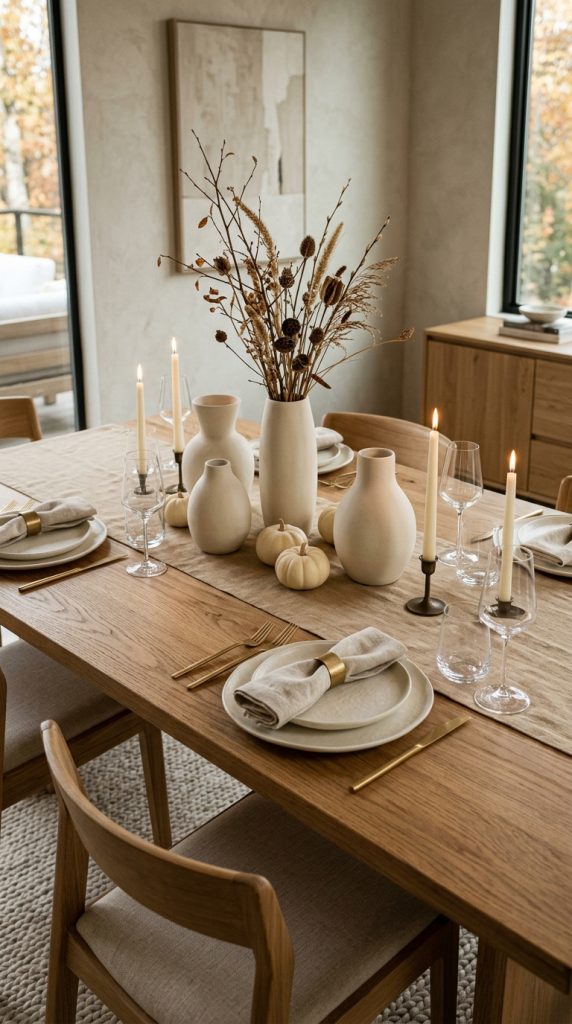
    Use aged brass candlesticks with ivory taper candles.

    Between them, place a long low arrangement of dried branches, muted foliage, or delicate seasonal stems.

    You can also use a vintage ceramic bowl filled with pears, walnuts, figs, or other neutral-toned seasonal produce.

    Avoid plastic or overly artificial decorations because they can conflict with the collected appearance of the table.

    Place cards can be handwritten on small cream cards and tucked beneath each napkin.

    The paper should be simple rather than highly decorated.

    For additional texture, place a narrow woven runner beneath the centerpiece.

    The combination of linen, aged metal, ceramic, glass, and wood will give the table visual richness even though the colors remain restrained.

    This style is particularly beautiful under warm chandelier light.

    The candle flames will reflect softly against vintage glassware and metallic surfaces.

    One advantage of vintage-inspired styling is that it naturally avoids the feeling of mass-produced seasonal decor.

    Each piece can tell a small story.

    The result feels intimate and personal.

    If you do not own antiques, you can recreate the atmosphere with handmade ceramics, aged-looking brass, thrifted glassware, and natural textiles.

    The objective is not to make the table look old.

    It is to make it look collected.

    7. Design a Neutral Thanksgiving Tablescape With Dried Botanicals

    Dried botanicals can provide dramatic texture without introducing strong seasonal colors.

    For this idea, let the dried materials become the main visual feature.

    Begin with a soft beige or natural linen runner.

    Use cream stoneware plates and taupe linen napkins.

    The place settings should remain understated because the centerpiece will provide the texture.

    For the centerpiece, select dried grasses, wheat, pampas-like stems, seed heads, or other suitable dried botanicals in natural beige, cream, tan, and muted brown.

    Arrange them in a long low vessel rather than a very tall vase.

    The arrangement should be airy enough that guests can see across the table.

    If the stems are tall, divide them into several smaller vessels instead of creating one oversized bouquet.

    This allows the table to feel more spacious.

    Place the vessels at different intervals with gaps between them.

    Add a few neutral ceramic pumpkins or small natural gourds around the base if you want a clearer Thanksgiving connection.

    Alternatively, use pears or figs for a more understated seasonal look.

    The organic shapes of the fruit will contrast beautifully with the linear quality of the dried stems.

    For candles, use slim ivory tapers in simple holders.

    Their vertical form can complement the dried botanicals without overwhelming the arrangement.

    Keep the rest of the table simple.

    The beauty of dried botanicals comes from their texture, so there is no need to introduce patterned plates or elaborate napkin accessories.

    This tablescape is especially effective for homes with organic-modern, rustic-modern, Scandinavian, or transitional interiors.

    It can also be relatively affordable because dried stems can often be reused for other seasonal arrangements.

    If you want to make the table feel more luxurious, focus on the quality of the vessels.

    A beautiful ceramic vase, stoneware bowl, or handmade container can make inexpensive dried materials look much more sophisticated.

    Avoid using too many different types of dried foliage.

    Choose a limited selection and repeat it.

    This gives the arrangement visual unity.

    The finished table should look naturally gathered rather than artificially assembled.

    8. Create a Cozy Neutral Thanksgiving Table With Candlelight

    If your Thanksgiving dinner will take place in the evening, build the entire tablescape around warm candlelight.

    Instead of making the centerpiece the main attraction, use illumination to create the atmosphere.

    Begin with a deep neutral foundation.

    A warm taupe or oatmeal linen runner can create more contrast than ivory while remaining within the neutral palette.

    Use cream dinnerware with simple silhouettes.

    For napkins, choose a slightly darker beige or warm brown.

    The darker textiles create depth once the candles are lit.

    Now create the centerpiece around candlelight.

    Use a collection of low ceramic, stone, or aged-metal candle holders. Place them in a long horizontal composition rather than concentrating them in the middle.

    Vary the heights slightly, but keep all flames low enough that guests can see across the table.

    Add small natural elements between the candle holders.

    A few walnuts, dried leaves, neutral berries, or small branches can provide texture.

    Do not surround every candle with decorative material.

    Allow some of the tabletop to remain visible.

    For an even softer atmosphere, add a few small votives in transparent glass holders.

    The combination of taper flames and small points of light creates depth.

    Your overhead lighting should be reduced so that the candles become part of the visual experience.

    However, the dining area still needs enough illumination for guests to eat comfortably and safely.

    If your dining room has dimmable lighting, this is an ideal occasion to use it.

    The color palette should remain warm.

    Cream, oatmeal, taupe, walnut, antique brass, and soft brown work beautifully together.

    This approach is especially effective for intimate Thanksgiving dinners.

    The candlelight creates a sense of closeness, while the neutral colors prevent the room from feeling overly themed.

    The food itself becomes part of the composition.

    Roasted vegetables, bread, pies, cranberry dishes, and other Thanksgiving foods naturally introduce subtle colors and textures to the table.

    That is another reason to keep the decorative palette quiet.

    You do not need the centerpiece to provide every seasonal color.

    Let the meal contribute to the visual richness.

    9. Style a Modern Neutral Thanksgiving Tablescape With Black Accents

    For a contemporary home, small amounts of black can provide structure and contrast without abandoning the neutral Thanksgiving aesthetic.

    The key is to use black as a controlled accent rather than a dominant color.

    Begin with a cream or natural linen tablecloth.

    Use warm-white dinner plates.

    Then introduce black through flatware, candle holders, napkin rings, or small ceramic vessels.

    A matte finish works particularly well because it feels sophisticated and architectural.

    For the centerpiece, use a long low arrangement of neutral foliage and cream flowers or dried stems.

    Place it inside a simple black ceramic vessel.

    This creates a strong focal point without requiring bright seasonal decoration.

    For napkins, choose oatmeal, beige, or soft taupe.

    The contrast between the warm neutral textile and black accent creates a modern appearance.

    Add wooden elements to soften the combination.

    A natural wood serving board, small wooden bowls, or a warm walnut centerpiece tray can prevent the table from feeling too stark.

    If your dining chairs or lighting fixtures already contain black details, repeat that finish carefully on the table.

    This creates visual continuity between the dining room and tablescape.

    Glassware should remain clear.

    Avoid introducing another strong color because the palette already has enough contrast.

    For the Thanksgiving element, use cream pumpkins, pears, dried wheat, or subtle autumn branches rather than traditional orange decorations.

    The result feels seasonal through material and form rather than color.

    This is an especially strong approach for contemporary, modern organic, minimalist, or transitional interiors.

    The black accents also make the table photograph beautifully.

    In a Pinterest image, the contrast between cream linens, dark details, warm wood, and candlelight creates an immediate visual hierarchy.

    Keep the composition clean.

    Do not use black plates, black napkins, black candles, black vessels, and black flatware simultaneously.

    Choose two or three areas where the accent appears and let the rest remain light.

    That restraint is what keeps the look elegant.

    10. Create a Relaxed Luxury Thanksgiving Tablescape With Natural Textures

    The final idea combines the most inviting elements of neutral Thanksgiving decorating: soft linen, natural wood, handmade ceramics, woven textures, seasonal produce, and warm candlelight.

    This approach is ideal if you want your Thanksgiving table to feel luxurious but comfortable rather than formal.

    Begin with a natural linen runner in oatmeal, beige, or soft cream.

    Allow the table surface to remain visible.

    Choose handmade-style ceramic plates in warm white or pale stone.

    The subtle irregularity of the glaze will make each place setting feel more personal.

    For napkins, use a heavier linen or textured cotton.

    Fold them simply rather than creating elaborate shapes.

    Instead of placing a decorative ring around the napkin, tuck a small natural element into the fold.

    A single dried leaf, wheat stem, or tiny branch can be enough.

    For the centerpiece, create a long, low composition using natural textures.

    Place a few handmade ceramic vessels along the center, each containing a different type of delicate seasonal stem.

    Add small pears, figs, walnuts, or cream-colored gourds between the vessels.

    This makes the centerpiece feel connected to the food and harvest spirit of Thanksgiving without becoming a traditional autumn display.

    Introduce woven texture through small chargers or a narrow natural-fiber runner underneath the central arrangement.

    Wooden serving boards can be positioned at the ends of the table or used to serve bread and appetizers.

    The lighting should remain warm and gentle.

    Use several candles distributed across the centerpiece rather than creating one large cluster.

    For glassware, choose clear or softly tinted glasses with simple silhouettes.

    Do not worry if every item comes from the same collection.

    A relaxed-luxury table often looks better when different textures and materials have a subtle relationship rather than perfect uniformity.

    The final atmosphere should feel generous and welcoming.

    Guests should be able to reach the food.

    Conversation should remain easy.

    There should be enough space for plates and glasses.

    Nothing should feel so precious that people are afraid to use the table.

    That balance is what makes relaxed luxury so effective for Thanksgiving.

    How to Choose a Neutral Thanksgiving Color Palette

    A neutral tablescape becomes much easier to style when you choose a specific color family before selecting individual decorations.

    Warm neutrals are usually the easiest starting point.

    Cream, ivory, oatmeal, beige, camel, taupe, and natural brown can create a soft autumn atmosphere without relying on bright orange.

    If you want a slightly cooler look, combine ivory with soft gray, mushroom, muted sage, and natural wood.

    For a more glamorous table, introduce champagne or aged brass.

    For a modern table, use small amounts of matte black.

    For an organic appearance, add muted olive.

    The important part is limiting the number of dominant colors.

    A useful approach is to choose one main neutral, one supporting neutral, and one accent.

    For example:

    Cream + natural wood + brass.

    Ivory + taupe + sage.

    Oatmeal + walnut + black.

    Beige + stone + aged brass.

    This creates enough contrast to keep the table interesting without making it visually chaotic.

    How to Make a Neutral Thanksgiving Tablescape Look Expensive

    Luxury rarely comes from adding more decorations.

    It usually comes from choosing better proportions and materials.

    Start with textiles.

    Natural linen immediately introduces texture and tends to look more sophisticated than shiny synthetic fabrics.

    Then focus on dinnerware.

    Simple plates can look luxurious when they are properly layered with chargers, napkins, and glassware.

    Next, consider the centerpiece.

    A few high-quality vessels are generally more effective than a large collection of inexpensive seasonal decorations.

    Lighting is another major factor.

    Warm candlelight can transform even a simple table.

    Finally, create negative space.

    Do not cover every inch of the table.

    Allow the tabletop, linen texture, and individual objects to remain visible.

    Current decorating advice is increasingly favoring natural materials, muted tones, handmade-feeling pieces, and edited seasonal styling instead of excessive novelty decor.

    How to Keep the Thanksgiving Table Functional

    The table should be designed around the actual meal.

    Before finalizing your centerpiece, place the serving dishes you expect to use on the table.

    This immediately shows how much space remains.

    If the centerpiece leaves no room for the turkey, vegetables, bread, or gravy, simplify it.

    Low arrangements are usually easier for conversation and serving.

    Another option is to move some serving dishes to a nearby sideboard and allow guests to serve themselves buffet-style.

    If you have a very long table, repeat a smaller decorative composition rather than creating one enormous centerpiece.

    For smaller tables, use one central arrangement with a narrow footprint.

    Keep candle flames away from sleeves, foliage, napkins, and serving areas.

    Choose stable candle holders and never leave burning candles unattended.

    These practical decisions are what separate a beautiful photograph from a tablescape that actually works during Thanksgiving dinner.

    How to Make Your Neutral Thanksgiving Tablescape Pinterest-Worthy

    For Pinterest, the visual story should be instantly understandable.

    Choose one dominant composition.

    A warm cream table with candlelight.

    A natural wood table with ivory ceramics.

    A sculptural centerpiece surrounded by neutral place settings.

    A vintage-inspired table with brass candlesticks.

    Avoid trying to show every decorating detail in one image.

    The photograph should have a clear focal point.

    Vertical 2:3 compositions work especially well for Pinterest because they occupy more screen space while allowing enough room to show the full tablescape.

    Use warm natural daylight for daytime photographs or soft candlelight for evening inspiration.

    Make sure the table looks realistic.

    Include enough plates, glasses, and seating to communicate that it is a real Thanksgiving table rather than an abstract decoration display.

    At the same time, avoid unnecessary clutter.

    For Pinterest text overlays, use a short title such as:

    Neutral Thanksgiving Tablescape Ideas

    or

    Elegant Thanksgiving Table Decor

    or

    Neutral Thanksgiving Table Inspiration

    Keep the typography minimal and allow the photograph to remain the main attraction.

    Final Thoughts

    A neutral Thanksgiving tablescape proves that holiday decorating does not need to be loud to feel special.

    Cream linen can create softness.

    Natural wood can provide warmth.

    Ceramics can add handcrafted character.
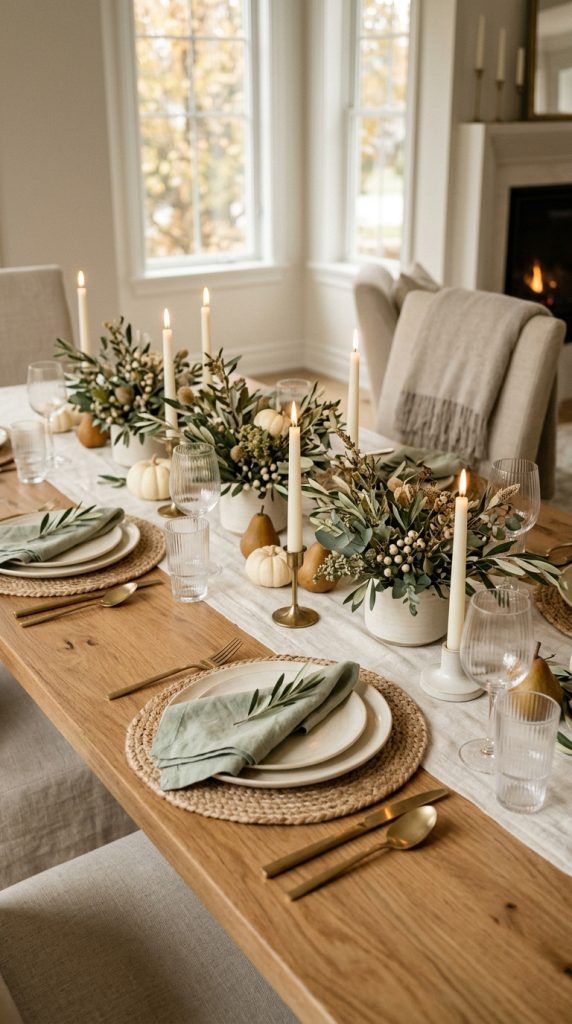
    Brass can introduce subtle elegance.

    Dried botanicals can bring seasonal texture.

    Muted greenery can create freshness.

    Candlelight can transform the mood.

    And carefully selected Thanksgiving details can make the table feel festive without overwhelming the rest of the home.

    The most successful neutral Thanksgiving tables are not simply beige versions of traditional holiday tables. They have their own identity.

    One may focus on sculptural ceramics.

    Another may highlight vintage pieces.

    Another may use warm brass.

    Another may rely on natural wood.

    Another may use sage greenery.

    These differences are what make the ideas adaptable to different homes and decorating personalities.

    If your dining room is already neutral, you can create a Thanksgiving transformation without changing its entire character. Work with what you already own and introduce seasonal elements through texture, lighting, natural materials, and carefully chosen accents.
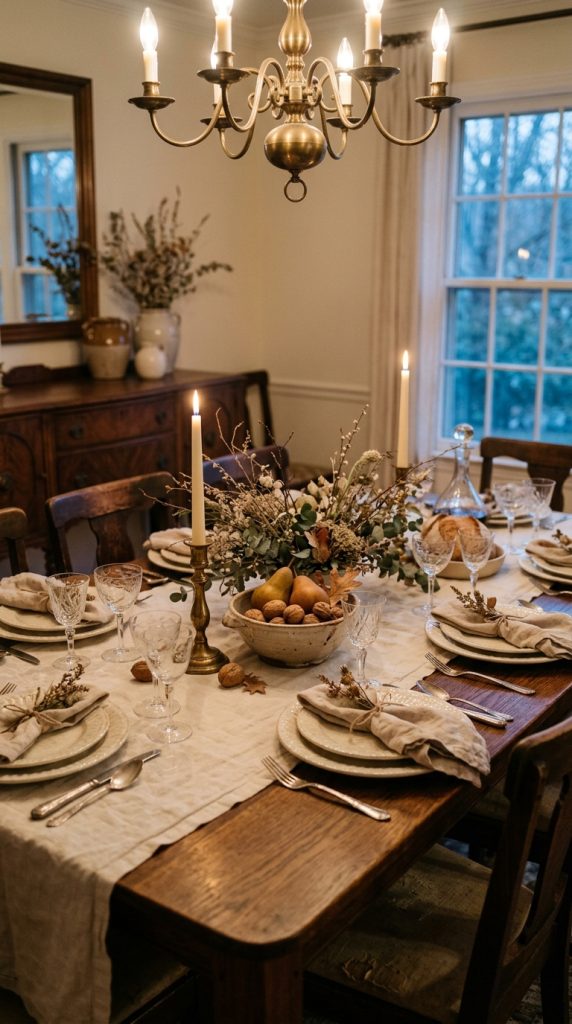
    If your home is more traditional, vintage glassware and brass can create a beautiful bridge between classic furniture and modern neutral styling.

    If your home is contemporary, cream ceramics, black accents, sculptural vessels, and clean lines can create a sophisticated holiday atmosphere.

    If you prefer organic interiors, natural wood, linen, stoneware, dried botanicals, and muted greenery can create a warm gathering space.

    The most important principle is to design the table for people first.

    Leave enough room for conversation.

    Make the plates comfortable to use.

    Keep serving areas accessible.

    Make sure the centerpiece does not block anyone’s view.

    Use candlelight to create atmosphere without compromising safety.

    Then allow the decoration to support the gathering rather than compete with it.

    Thanksgiving already brings abundance through food, family, conversation, and tradition. The table does not need to compete with that abundance.

    Instead, it can provide a calm and beautiful setting where everything else becomes the focus.

    That is the strength of neutral Thanksgiving decorating.

    It feels elegant without being excessive, seasonal without being overly themed, and beautiful without becoming impractical.

    With the right combination of texture, proportion, natural materials, warm lighting, and restrained seasonal details, your Thanksgiving table can become one of the most inviting spaces in your homeโ€”and a timeless source of inspiration for future gatherings long after the holiday has passed.


  • Aesthetic Bedroom Organization Ideas for a Clean & Beautiful Space

    Aesthetic Bedroom Organization Ideas for a Clean & Beautiful Space

    A beautifully organized bedroom can completely change the way a home feels. When clothing is easy to find, surfaces remain visually calm, accessories have designated places, and furniture works efficiently, the bedroom becomes more than a place to sleep. It becomes a peaceful personal retreat that feels comfortable, polished, and effortless to maintain. That is why aesthetic bedroom organization ideas have become such a popular home-decor topic for people who want their rooms to look beautiful while still functioning well for everyday life.

    An organized bedroom does not have to look extremely minimalist or empty. You can have books, clothing, decorative objects, artwork, bedding, plants, and personal belongings while still creating a clean appearance. The secret is designing a system that separates what needs to be visible from what should remain concealed. Beautiful organization is not about hiding everything. It is about giving every category of belongings an appropriate home and then styling the visible areas intentionally.

    For Pinterest-inspired bedrooms, this distinction is especially important. A room may look gorgeous in a photograph because the composition is carefully controlled, but the best bedroom organization ideas are the ones that can actually survive everyday routines. Clothes need to be accessible. Jewelry needs to be easy to reach. Shoes need a defined location. Bed linens need somewhere practical to live. Chargers, books, beauty products, bags, and seasonal clothing should not have to compete for the same surface.

    The strongest approach is to organize the bedroom according to how you actually use it.

    Instead of purchasing random storage containers first, begin by looking at the room as a series of zones. The sleeping zone should support rest. The wardrobe zone should make dressing easy. The bedside zone should contain nighttime essentials. A vanity or beauty zone should keep small products contained. If the bedroom includes a work area, that space needs its own system so paperwork and electronics do not gradually spread into the sleeping area.

    This type of zoning is particularly useful in smaller bedrooms. Recent organization guidance continues to emphasize making use of overlooked areas such as under the bed, vertical walls, wardrobe height, and multifunctional furniture rather than simply adding more freestanding storage. (Architectural Digest)

    Aesthetic organization also depends heavily on visual consistency. Storage does not have to look like storage. A beautiful wooden cabinet can hide everyday items. A fabric-lined drawer can keep accessories organized while maintaining a refined appearance. A built-in wardrobe can disappear into the wall when its finish matches the surrounding architecture.

    Color is another important consideration. If every storage box, hanger, container, and accessory has a different color, even a technically organized bedroom can look visually busy. Choosing a limited palette makes the room feel more intentional. Cream, warm white, beige, natural wood, muted gray, soft olive, and gentle brown can create a sophisticated foundation, although colorful bedrooms can also look beautiful when the organization system follows a deliberate color story.

    The goal is not to create a bedroom that looks untouched. A beautiful room should still feel lived in.

    A book beside the bed can be inviting. A folded blanket can add softness. A small jewelry tray can become part of the decor. A carefully arranged clothing rail can even become a design feature. Organization and decoration can work together instead of competing.

    Lighting also contributes to the feeling of cleanliness. Dark corners can make a room appear more crowded, while thoughtful lighting reveals storage areas and makes the entire bedroom feel more open. Layered lighting is especially useful around wardrobes, dressing areas, bedside tables, and shelves. Place lights at appropriate places so storage zones remain functional without turning the bedroom into an overly bright space.

    Another important principle is accessibility. Items that are used every day should be the easiest to reach. Seasonal or occasional belongings can be placed higher, farther back, or beneath furniture. This simple distinction prevents storage systems from becoming frustrating.

    For example, everyday clothing should not be stored behind rarely used luggage. Your most-used skincare products should not be buried underneath products you only use occasionally. Bed linens should be accessible without requiring you to empty an entire cabinet.

    A good organization system reduces small daily decisions.

    When everything has a logical place, putting something away becomes almost automatic.

    This is also why beautiful organization should not depend on perfection. If a system requires every object to be folded in exactly the same way or every shelf to remain perfectly styled, it may become difficult to maintain. Practical organization should accommodate real life.

    The ideas below combine storage, layout, styling, and visual design in different ways. Each one focuses on a separate part of the bedroom, so you can choose the solutions that suit your room rather than repeating the same storage trick everywhere.

    Whether you have a spacious primary bedroom, a compact apartment bedroom, a guest room, or a bedroom with limited closet space, these aesthetic bedroom organization ideas can help create a cleaner, calmer, and more beautiful environment.

    1. Turn the Space Under Your Bed Into an Organized Hidden Storage Zone

    The area underneath a bed is one of the most valuable spaces in a bedroom because it provides storage without requiring additional floor space. Instead of allowing this area to become a forgotten collection of miscellaneous belongings, turn it into a deliberate storage zone for items that do not need to be accessed every day.

    Under-bed storage works particularly well for seasonal clothing, spare bedding, extra pillows, handbags, luggage accessories, and other belongings that need protection but do not require daily access. Current bedroom-storage guidance frequently highlights under-bed drawers and lift-up beds as practical ways to increase storage capacity without adding another large furniture piece. (Architectural Digest)

    The first step is choosing the right type of storage according to the bed design.

    If your bed has built-in drawers, assign each drawer a category rather than filling them randomly. One drawer might contain spare sheets, another winter clothing, and another extra blankets.

    If the bed has open space underneath, shallow rolling containers are useful because they can be pulled out without moving the furniture.

    For a more polished appearance, choose containers that have solid sides or fabric covers. This keeps dust away from textiles and prevents the underside of the bed from becoming visually chaotic.

    Before storing anything underneath the bed, measure the available height. A container that is too tall will be difficult to remove and may scratch the floor or interfere with the bed frame.

    Choose shallow storage that fits comfortably.

    You can also use labels, but keep them subtle. Small neutral labels on the front of storage boxes can make it easy to identify contents without disrupting the bedroom’s aesthetic.

    The organization should follow frequency of use.

    Store rarely needed belongings farther toward the back.

    Keep things you access every few months closer to the sides.

    Avoid storing everyday clothing underneath the bed if you have another convenient option. Constantly pulling out containers can become inconvenient and may discourage you from maintaining the system.

    Under-bed storage can also be especially helpful in guest bedrooms. Extra bedding can remain hidden until visitors arrive, leaving the rest of the room free from unnecessary cabinets.

    For children’s or teenagers’ rooms, the same principle can be used for seasonal clothing, school supplies, or hobby materials.

    The visual advantage is significant. Because the storage remains concealed, the bedroom keeps its open appearance.

    This is especially valuable in smaller rooms where another dresser or cabinet might consume valuable walking space.

    A storage bed can also become a major furniture feature. An upholstered platform bed with hidden storage can combine comfort, style, and functionality in one piece.

    When choosing a new bed, consider both the sleeping surface and the storage capacity underneath.

    A beautiful bed that provides no storage may require another large furniture item later.

    The best organization solutions often come from furniture that performs multiple jobs.

    Keep the area underneath the bed reserved for clean, organized categories rather than miscellaneous objects. That small distinction can turn an overlooked space into one of the most useful storage areas in the entire bedroom.

    2. Design a Floor-to-Ceiling Wardrobe That Becomes Part of the Architecture

    A wardrobe is often the largest storage feature in a bedroom, which means its appearance can dramatically influence the room.

    Instead of treating the wardrobe as a separate bulky object, consider making it feel like part of the architecture.

    Floor-to-ceiling cabinetry is particularly effective because it uses the vertical space that would otherwise remain unused. It can also create a more seamless visual effect when the doors, walls, and surrounding finishes are coordinated. Contemporary bedroom-storage advice increasingly highlights full-height wardrobes as a way to combine substantial storage capacity with a cleaner architectural appearance. (Boucl Home)

    If you are designing a custom wardrobe, take the cabinetry as close to the ceiling as practical.

    This creates additional space for less frequently used belongings such as suitcases, formal clothing, spare bedding, or seasonal accessories.

    The lower and middle sections should contain items that are accessed regularly.

    Think of the wardrobe as a vertical hierarchy.

    Everyday clothing belongs at comfortable reach.

    Occasional items can occupy upper compartments.

    Shoes and folded accessories can use lower drawers or shelves.

    This arrangement reduces unnecessary movement and makes the wardrobe easier to use.

    The exterior finish is equally important.

    For a calm aesthetic, match the wardrobe fronts closely to the wall color.

    Cream cabinetry against a warm ivory wall can almost disappear visually.

    Natural wood can create a more luxurious appearance, particularly when paired with neutral bedding and soft textiles.

    For a more contemporary room, flat-panel doors with minimal hardware can create a clean appearance.

    If you prefer a softer bedroom, consider reeded or lightly textured wardrobe doors.

    Glass-front sections can be used selectively for handbags, shoes, or carefully arranged clothing.

    Avoid turning every wardrobe section into an open display.

    The purpose of the wardrobe is still organization.

    Internal storage should be designed around your actual belongings.

    Include a mixture of:

    • Hanging space
    • Drawers
    • Adjustable shelves
    • Shoe storage
    • Small accessory compartments

    Different clothing categories need different storage conditions.

    Long dresses and coats require taller hanging sections.

    Folded knitwear needs deeper shelves.

    Smaller garments can benefit from drawers.

    Shoes should ideally remain separated from clothing.

    If the wardrobe has limited internal lighting, add discreet illumination that turns on when doors open.

    Place lights at appropriate places inside wardrobe compartments and near dressing areas so darker sections remain easy to use.

    The exterior should remain visually calm.

    Avoid placing multiple decorative objects on top of the wardrobe if the unit already reaches the ceiling.

    If there is an intentional open section, style it with only a few pieces.

    A floor-to-ceiling wardrobe can also help smaller bedrooms because it replaces several separate storage pieces with one coordinated system.

    Instead of having a wardrobe, dresser, shoe rack, and cabinet competing for space, one integrated wall can handle multiple categories.

    The result is cleaner visually and often more practical.

    3. Create an Aesthetic Bedside Station With Functional Hidden Storage

    The bedside area is one of the smallest zones in the bedroom, yet it can become one of the messiest.

    Phones, chargers, books, glasses, skincare, tissues, water bottles, and miscellaneous objects often accumulate around the bed because they are used frequently.

    The solution is not necessarily a larger bedside table. It is a better-designed bedside station.

    Choose a nightstand with at least one drawer or concealed compartment.

    This gives everyday objects a private home while leaving the upper surface available for a small number of attractive items.

    A good bedside surface might contain:

    A warm table lamp.

    One book.

    A small ceramic object.

    A glass of water.

    That is enough.

    The drawer can hold chargers, hand cream, sleep accessories, glasses, or other nighttime essentials.

    Use a small internal divider if the drawer contains several categories.

    This prevents tiny objects from becoming mixed together.

    The height of the bedside table should also relate comfortably to the mattress. A table that is too low or too high can be inconvenient.

    If floor space is limited, consider a wall-mounted bedside shelf.

    This eliminates the legs and can make the area feel visually lighter.

    It is particularly useful in very narrow bedrooms where traditional nightstands make circulation difficult.

    A floating shelf can hold a lamp, book, and small accessory while leaving the floor completely clear.

    Another option is a headboard with integrated bedside storage.

    This combines several functions in one structure and can eliminate the need for separate nightstands.

    For example, a built-in headboard might contain shallow shelves for books, charging ports, and small personal items.

    This creates a strong architectural feature while reducing furniture.

    The color and material of the bedside zone should coordinate with the rest of the bedroom.

    Warm wood can create a cozy appearance.

    Cream lacquer can feel contemporary.

    Dark walnut can add sophistication.

    Avoid introducing a completely unrelated finish unless you intentionally want the nightstands to become accent pieces.

    Lighting is particularly important here.

    Place lights at appropriate places, such as compact bedside lamps, wall sconces, or integrated headboard lighting, so the sleeping area has enough illumination without requiring a harsh overhead light.

    Cable management is another detail that makes a surprisingly large difference.

    Use cable clips or a hidden charging station to keep wires from spilling across the bedside surface.

    A beautiful nightstand can quickly look messy if several cables are visible.

    The objective is to make the bedside zone feel effortless.

    Everything you need should be nearby, but very little should need to remain visible.

    4. Organize Your Closet as a Color-Coordinated Boutique Display

    A closet can become both a practical storage system and an attractive visual feature when clothing is arranged intentionally.

    Instead of organizing garments only according to available space, consider creating a boutique-style arrangement.

    Begin by separating clothing into broad categories.

    For example:

    • Everyday tops
    • Trousers
    • Dresses
    • Jackets
    • Occasion wear
    • Homewear

    Then arrange each category in a logical sequence.

    Within a category, you can organize by color.

    A gradual progression from light to dark creates a visually satisfying appearance and makes clothing easier to locate.

    Neutral clothing can be grouped together while stronger colors can form their own sections.

    The objective is not perfection. It is creating a system that allows you to see what you actually own.

    Matching hangers can dramatically improve the appearance of a wardrobe.

    Choose one hanger style and use it consistently.

    Slim hangers are particularly useful because they take up less horizontal space than thick wooden versions.

    However, if you love wooden hangers, use them consistently and allow enough space between garments.

    Overcrowding the hanging rail makes clothing difficult to see and can cause fabrics to wrinkle.

    Use vertical dividers or shelf organizers for folded clothing.

    Rather than creating enormous stacks, make manageable categories.

    For example, separate:

    T-shirts.

    Sweaters.

    Jeans.

    Sleepwear.

    Workout clothing.

    This makes the wardrobe easier to maintain.

    If you use open clothing rails, treat them like a decorative feature.

    Choose the garments that remain visible carefully.

    An edited selection of neutral clothing can create an elegant boutique effect.

    Current design coverage also notes that open clothing rails work best when the visible wardrobe is deliberately edited rather than allowed to become an uncontrolled accumulation. (Boucl Home)

    A wardrobe can also benefit from a dedicated accessory area.

    Scarves, belts, and handbags can be organized on hooks or specialized inserts.

    Keep accessories visible only if they are visually pleasing and frequently used.

    Otherwise, concealed drawers are preferable.

    Shoes should have their own location.

    A dedicated shoe shelf prevents footwear from spreading across the bedroom floor.

    Arrange shoes by frequency of use, with everyday pairs easiest to reach.

    If your wardrobe has limited depth, vertical shoe storage can save valuable space.

    Lighting can transform the closet experience.

    Place lights at appropriate places inside hanging sections, above shelves, or along wardrobe interiors so you can clearly distinguish colors and fabrics.

    A well-lit wardrobe can feel more like a boutique dressing room.

    The final result should be visually calm but practical enough for everyday use.

    5. Give Accessories Their Own Beautiful Organization System

    Small accessories are often responsible for making a bedroom look untidy because they are easy to leave on surfaces.

    Jewelry, watches, sunglasses, hair accessories, belts, scarves, and small bags can quickly accumulate on dressers and nightstands.

    Instead of storing them randomly, create one dedicated accessory station.

    A drawer with compartments is ideal for jewelry because it protects delicate pieces while keeping them sorted.

    Separate categories rather than mixing everything together.

    For example:

    Earrings in one compartment.

    Rings in another.

    Bracelets in a third.

    Necklaces can hang vertically to prevent tangling.

    A velvet-lined organizer can make the drawer feel luxurious while protecting delicate items.

    If you prefer visible organization, a beautiful jewelry stand can become part of the bedroom decor.

    However, limit the display to pieces you wear regularly.

    A wall-mounted accessory board can work well for scarves, hats, and lightweight bags.

    Use hooks at different heights to create an attractive composition while keeping everything accessible.

    For handbags, consider a dedicated shelf rather than stacking them on the floor.

    Stuffing bags lightly with tissue or soft fabric can help them maintain their shape.

    Keep everyday bags at a comfortable height.

    Special-occasion pieces can occupy higher shelves.

    Sunglasses can be organized in a shallow drawer insert or displayed in a small compartmented box.

    Hair accessories benefit from narrow containers because they are small and easy to scatter.

    The important principle is separation.

    Small items should not all share one container.

    When categories are separated, returning something to its correct place becomes simple.

    This is particularly helpful in the morning when you are getting ready quickly.

    The organization station should also fit the visual identity of the room.

    A natural wood organizer can complement an organic bedroom.

    A brass or glass tray can work in a glamorous space.

    A matte black organizer can suit a modern bedroom.

    Do not purchase several unrelated organizers simply because they are attractive individually.

    Choose pieces that look like part of the same system.

    If you have a dressing table, use the drawers strategically.

    Keep daily beauty products in the most accessible drawer.

    Less frequently used items can move to lower storage.

    Avoid covering the entire vanity surface with products.

    One beautiful tray can contain the few items you use most often.

    Place lights at appropriate places around the accessory or dressing station so small details remain easy to see.

    A dedicated accessory system can make the entire bedroom look cleaner because small objects stop migrating between furniture surfaces.

    6. Use a Storage Bench to Organize the Window or End-of-Bed Zone

    A bedroom bench can be much more than a decorative piece.

    When selected with internal storage, it can provide a useful home for blankets, pillows, seasonal textiles, handbags, or other soft items while also creating a comfortable place to sit.

    This makes the storage bench particularly valuable in bedrooms where floor space is limited.

    The end of the bed is often an underused area.

    A properly scaled bench can transform it into a functional zone without requiring a full dresser.

    Choose a bench that leaves enough walking space around it.

    The furniture should not interfere with opening wardrobes or moving around the bed.

    For a smaller bedroom, select a narrow design with a relatively low profile.

    A large upholstered bench may look luxurious in a spacious primary suite but can overwhelm a compact room.

    If your bedroom has a window seat, consider built-in drawers beneath it.

    This creates a beautiful architectural feature while providing hidden storage.

    The drawers can hold:

    • Extra bedding
    • Seasonal blankets
    • Decorative cushions
    • Reading materials
    • Guest linens

    Because these items are not usually needed every day, the location is convenient without becoming a high-traffic storage zone.

    A window bench can also become a reading corner.

    Add one cushion and perhaps a small throw rather than covering the entire seat with accessories.

    This keeps the area functional and visually relaxed.

    Material selection matters.

    A linen-upholstered bench can create a soft, sophisticated appearance.

    Natural wood can provide a more minimalist look.

    Bouclรฉ can introduce texture in a contemporary bedroom.

    Choose a fabric that relates to the bedding rather than matching every element exactly.

    If the bedroom already contains several soft textures, a wooden bench may provide useful contrast.

    If the room has a lot of hard surfaces, upholstery can soften it.

    Lighting can define this zone.

    Place lights at appropriate places, such as a slim floor lamp beside a window bench or a wall-mounted reading light nearby.

    This turns storage furniture into a genuine part of the bedroom’s lifestyle rather than a purely functional object.

    The storage should remain accessible.

    Do not fill it with objects you never use.

    Its greatest value comes from keeping frequently rotated soft goods organized and out of sight.

    7. Transform an Awkward Corner Into a Purposeful Organization Zone

    Bedrooms often contain awkward corners that are too small for standard furniture but large enough to become useful.

    Instead of allowing these areas to collect miscellaneous objects, assign them a specific function.

    A narrow corner might become a compact dressing area.

    Another could become a reading zone.

    A small alcove could hold a vertical cabinet.

    The important part is choosing furniture according to the exact dimensions of the space.

    Measure width, depth, and ceiling height before buying anything.

    A narrow shelving tower can use vertical space without consuming much floor area.

    This can hold books, folded accessories, baskets, or decorative objects.

    If the corner is beside a wardrobe, it could become a shoe-storage zone.

    A slim vertical shoe cabinet can hold many pairs while maintaining a small footprint.

    Another option is a small wall-mounted desk.

    This works particularly well if the bedroom needs a work or study area.

    Recent design guidance recommends integrating bedroom desks carefully so the workspace does not visually dominate the relaxing function of the room. (Ideal Home)

    Use a fold-down desk if the room is very small.

    When closed, it becomes almost invisible.

    When open, it provides a practical surface for a laptop or notebook.

    Keep the associated storage concealed.

    A small drawer can hold stationery.

    A wall-mounted cable channel can prevent wires from becoming visible.

    If the corner is used as a dressing zone, install a narrow mirror.

    A vertical mirror can make the area feel larger while providing a practical function.

    Add one small stool only if there is enough clearance.

    Do not force furniture into an area that is too narrow.

    Sometimes the best solution is a single wall-mounted shelf and mirror.

    The corner should feel intentional.

    Use a consistent finish so it relates to the rest of the bedroom.

    For example, a walnut shelf with a walnut-framed mirror can create a cohesive mini-zone.

    Or use cream cabinetry against a warm neutral wall for a seamless effect.

    Place lights at appropriate places around the corner so it does not become a dark unused pocket.

    A small wall sconce or concealed LED strip can be enough.

    The objective is to turn an overlooked area into a functional part of the room without making it feel crowded.

    8. Create a Dedicated Linen Organization System

    Bed linens, towels, blankets, pillowcases, and seasonal bedding can take up substantial storage space if they are not organized properly.

    Instead of mixing all household textiles together, give bedroom linens their own defined system.

    Start by grouping matching sets together.

    Place the fitted sheet, flat sheet, and pillowcases inside one matching pillowcase when possible.

    This keeps complete sets together and makes changing the bed faster.

    Fold bulky blankets separately.

    Avoid creating extremely tall stacks that become difficult to remove.

    A shelf divider can help maintain manageable piles.

    If your bedroom wardrobe has a high shelf, this can become the linen zone because these items do not need to be accessed constantly.

    Use breathable fabric storage bags for textiles that will remain stored for extended periods.

    Avoid overfilling containers because compressed fabrics become difficult to retrieve.

    If your bed has under-storage, seasonal bedding can live there.

    Keep frequently used sheets closer to the bedroom’s primary storage area.

    The linen system should also reflect household routines.

    If you change bedding weekly, the current sets need to be easy to reach.

    If you have guest bedding that is used only occasionally, store it separately.

    Label shelves or containers when necessary.

    A small neutral label such as โ€œGuest,โ€ โ€œWinter,โ€ or โ€œSheetsโ€ can be useful.

    The goal is to reduce the amount of searching.

    Storage containers can also contribute to the aesthetic.

    Neutral fabric bins can look elegant inside an open wardrobe.

    Woven baskets can work in a bedroom where natural textures are already present.

    For a modern room, simple matching boxes create a cleaner appearance.

    Avoid using transparent plastic containers everywhere if visual calm is important.

    Although clear containers are practical, a wall of visible contents can make an otherwise beautiful wardrobe look busy.

    If you use clear containers, reserve them for categories where visibility genuinely improves convenience.

    For example, a transparent box may work well for small seasonal accessories.

    A closed fabric box may be better for bulky bedding.

    The key is matching the container type to the item.

    Lighting is useful here as well.

    Place lights at appropriate places inside tall linen cupboards or wardrobe shelves so the back of the storage area does not become difficult to see.

    A well-organized linen system makes the bedroom easier to maintain because one of the most frequently handled categories has a permanent home.

    9. Organize Your Bedroom Entry and Floor With a Dedicated Drop Zone

    The area near the bedroom entrance can quietly become a major source of clutter.

    Bags are placed on the floor.

    Shoes remain beside the door.

    Jackets land on chairs.

    Keys and small belongings move from one surface to another.

    A dedicated drop zone prevents this daily accumulation from spreading across the bedroom.

    If space allows, install a narrow wall-mounted shelf near the entrance.

    It can hold small daily items such as a watch, glasses, or accessories.

    Below it, install a few hooks for lightweight bags or robes.

    If you have more room, a narrow cabinet can conceal shoes and everyday belongings.

    Choose a cabinet with doors so the entry area remains visually clean.

    A small bench can provide seating while putting on shoes, but make sure it does not obstruct the door or walking route.

    For very compact bedrooms, use vertical storage instead.

    A slim hook rail can take advantage of wall space without reducing floor area.

    Assign specific hooks to specific categories.

    One hook for your everyday bag.

    Another for a robe.

    Another for frequently used accessories.

    This reduces the tendency to place belongings on the bed or floor.

    Shoes should ideally have their own designated storage.

    A narrow shoe cabinet can be particularly useful because it keeps footwear contained while using little floor depth.

    If you prefer open shoe storage, maintain a small number of everyday pairs and keep the rest elsewhere.

    The entrance zone should not become an overflow wardrobe.

    The purpose is to manage the items that naturally arrive with you when entering the room.

    This is particularly helpful if the bedroom also functions as a dressing area.

    A small tray can contain daily accessories.

    A hook can hold tomorrow’s outfit.

    A slim laundry hamper can sit nearby if space allows.

    Choose a hamper with a lid or attractive woven construction so it looks like furniture rather than an exposed utility container.

    Color coordination can make this area feel more decorative.

    Use one finish for hooks and hardware.

    Coordinate the bench with the wardrobe.

    Select baskets or containers in colors that complement the bedroom palette.

    Place lights at appropriate places, particularly near the entrance and storage cabinet, so the drop zone remains functional in the evening.

    The benefit is simple: the moment you enter the bedroom, there is a clear place for everything.

    That prevents clutter from traveling deeper into the room.

    10. Build a Daily Reset System That Keeps the Bedroom Beautiful

    The final organization idea is not a piece of furniture. It is a simple system that makes the organization you create easier to maintain.

    A bedroom can be perfectly organized on Sunday and cluttered again by Wednesday if there is no practical daily routine.

    The solution is to create a short reset process that takes only a few minutes.

    Start by identifying the items that repeatedly appear in the wrong places.

    Perhaps clothes accumulate on a chair.

    Maybe books remain on the floor.

    Perhaps skincare products spread across the dresser.

    Maybe charging cables stay on the bed.

    These repeated problems reveal where the organization system needs improvement.

    Instead of repeatedly cleaning the same mess, give each category a more convenient home.

    If clothes are always left on a chair, add a dedicated hook or valet area.

    If books accumulate beside the bed, create a small reading shelf.

    If accessories spread across the dresser, add a compartment tray.

    The best organization system follows behavior rather than fighting it.

    Create a simple evening reset.

    Return clothing to the wardrobe or laundry hamper.

    Clear the bedside surface.

    Put accessories away.

    Return books to their shelf.

    Remove cups or dishes.

    Straighten the bedding.

    The entire process can take only a few minutes when every item already has a logical destination.

    A morning reset can be equally simple.

    Open curtains.

    Make the bed.

    Return sleepwear to its location.

    Put away anything that was left out overnight.

    This creates an immediate sense of order.

    The bedroom should also have a designated laundry system.

    A beautiful hamper prevents clothing from being thrown onto chairs or floors.

    Choose a hamper that suits the room’s design.

    A woven basket works well in an organic bedroom.

    A fabric hamper can feel softer.

    A slim lidded hamper may be better for a compact room.

    Another useful habit is a weekly surface review.

    Look at the dresser, nightstand, shelves, and floor.

    Remove objects that do not belong.

    This prevents small amounts of clutter from becoming overwhelming.

    Seasonal editing is also valuable.

    At the beginning of a new season, move clothing that will not be used for several months into higher wardrobe storage or under-bed compartments.

    Bring the next season’s clothing into the easiest-to-access areas.

    Recent organization advice similarly emphasizes removing unused clothing, excess products, and items that no longer serve the room as part of maintaining a calmer bedroom. (Real Simple)

    Do not turn the reset into an exhausting cleaning routine.

    The purpose is simply to restore the room’s baseline.

    Visual calm also depends on stopping clutter before it accumulates.

    Before buying a new organizer, ask whether the item solves a real problem.

    More containers do not automatically create better organization.

    Sometimes the solution is owning fewer duplicate items.

    Sometimes it is changing where something is stored.

    Sometimes it is simply creating a better daily habit.

    Lighting can make the reset feel more pleasant.

    Place lights at appropriate places, using warm bedside lamps or soft accent lighting so evening organization does not require harsh overhead illumination.

    The bedroom should end the day feeling peaceful rather than chaotic.

    A successful organization system is one you can maintain without constantly thinking about it.

    When putting something away becomes easier than leaving it out, the room naturally stays cleaner.

    That is the real goal of aesthetic bedroom organization: not a perfect photograph, but a beautiful space that continues to look and feel good during ordinary life.

    Conclusion

    Creating a clean and beautiful bedroom is not about removing every personal item or turning the room into a completely minimalist space. The most effective aesthetic bedroom organization ideas combine practical storage with thoughtful styling so the room remains both functional and visually peaceful.

    Under-bed storage can handle seasonal belongings without consuming floor space. A floor-to-ceiling wardrobe can turn clothing storage into part of the room’s architecture. A well-designed bedside station can keep everyday essentials accessible without allowing them to cover the nightstand.

    Accessories become easier to manage when jewelry, bags, shoes, and small belongings each have dedicated locations. A storage bench can give unused space a purpose, while awkward corners can become compact dressing, reading, or work zones.

    Even linens and bedroom-entry clutter deserve their own systems because these small categories can have a major effect on the overall appearance of the room.

    The final piece is maintenance. An organization system only works when it fits your everyday habits. The most beautiful storage solution is not necessarily the most complicated one. It is the one that makes putting things away easy enough that you actually continue doing it.

    For a Pinterest-worthy bedroom, focus on clear surfaces, intentional storage, cohesive materials, comfortable access, and a few beautiful details. Let organization become part of the design instead of something hidden behind it.

    A clean bedroom should still feel warm, personal, and lived in. Books, textiles, artwork, meaningful objects, and carefully chosen decor can remain visible while less attractive everyday clutter stays contained.

    When storage is designed thoughtfully, the bedroom becomes easier to use and easier to enjoy. The result is a space that feels organized without feeling sterile, beautiful without feeling overly styled, and peaceful enough to become a genuine retreat at the end of the day.


  • Luxury Bathroom Decorating Ideas for a Spa-Like Home

    Luxury Bathroom Decorating Ideas for a Spa-Like Home

    If you are looking for luxury bathroom decorating ideas for spa like home your bathroom should feel like more than a place for everyday routines. With the right combination of materials, lighting, organization, color, texture, and carefully selected fixtures, even an ordinary bathroom can become a private retreat that feels peaceful, sophisticated, and wonderfully indulgent. The goal is not simply to make the room look expensive. A truly beautiful luxury bathroom should create a sense of calm the moment you walk through the door.

    That spa-like feeling is becoming increasingly important in contemporary bathroom design. Current 2026 design coverage points toward bathrooms that prioritize wellness, tactile materials, personalized comfort, natural finishes, and thoughtful lighting rather than relying on a single dramatic feature. Designers are also using large-format stone, warm wood, layered illumination, generous shower zones, and carefully edited decorative details to create bathrooms that feel more like private wellness retreats than purely functional rooms. (Elle Decor)

    The good news is that creating this atmosphere does not necessarily mean completely rebuilding your bathroom. Some transformations can come from decorative changes such as replacing harsh lighting, introducing coordinated towels, upgrading mirrors, adding natural textures, or changing the color palette. Other ideas require more planning, such as installing a walk-in shower, adding a freestanding bathtub, changing the vanity, or creating a custom stone feature wall.

    The most successful luxury bathroom decorating ideas work because every element has a purpose. The materials feel connected, the colors transition naturally, storage keeps visual clutter hidden, and lighting changes the mood throughout the day. Instead of filling every empty surface with accessories, the room allows a few beautiful features to become the focus.

    For a Pinterest-worthy bathroom, visual simplicity is particularly powerful. A photograph of a serene stone bathroom with a sculptural bathtub, warm lighting, soft towels, and one carefully placed piece of greenery can communicate luxury much more effectively than a room packed with decorative objects. The strongest spaces create an immediate emotional response: calm, comfort, warmth, and the feeling of escaping into a boutique spa without leaving home.

    Below are 12 carefully developed luxury bathroom decorating ideas that combine sophisticated aesthetics with practical functionality. Each concept approaches the room differently, so you can adapt the ideas according to your bathroom’s size, architecture, budget, and personal style.

    1. Create a Warm Stone Bathroom With a Seamless Luxury Look

    One of the most effective ways to make a bathroom feel luxurious is to let the material itself become the decoration. Instead of covering every surface with numerous competing patterns, choose one beautiful stone-inspired finish and allow it to visually connect several areas of the room.

    Large-format marble, travertine-inspired porcelain, limestone-look surfaces, or warm stone-effect slabs can create an architectural background that immediately elevates the bathroom. Contemporary bathroom designers are increasingly using large-format surfaces because fewer grout lines create a calmer, more continuous appearance. (Good Housekeeping)

    For a sophisticated spa bathroom, avoid selecting a stone simply because it is dramatic. Look for a finish with subtle movement, natural variation, and an undertone that works with your lighting. Creamy ivory stone with delicate beige veining can feel timeless, while warmer taupe or greige stone creates a more contemporary atmosphere.

    One particularly beautiful approach is to use the same or visually related stone on the shower wall, vanity backsplash, and one architectural feature. This creates continuity without requiring every surface to be identical.

    A warm stone wall behind the vanity can become the room’s primary focal point. Pair it with a simple floating vanity in natural oak and an integrated countertop basin. The contrast between organic stone and warm wood produces a sophisticated atmosphere without excessive decoration.

    For the shower, consider extending the stone-look material vertically from floor to ceiling. This makes the shower feel larger and gives the bathroom the visual character of a luxury hotel suite.

    The finishing details matter. Choose hardware in brushed brass, aged bronze, or another warm metallic finish if the stone has creamy or earthy undertones. If the room has cooler gray stone, brushed nickel or understated black may work more naturally.

    Keep the decorative accessories extremely selective. One sculptural vase, a folded stack of plush towels, and a small wooden bath accessory can be enough.

    For smaller bathrooms, use the stone strategically rather than covering everything. A feature wall behind the vanity can create the same luxury impression without overwhelming the room.

    The important principle is continuity. When surfaces appear visually connected, the bathroom feels more intentional and architecturally sophisticated.

    2. Design a Spa-Worthy Walk-In Shower With a Built-In Bench

    A beautiful walk-in shower can become the true centerpiece of a modern luxury bathroom. Rather than treating the shower as a small functional enclosure, design it as a comfortable wellness zone with generous proportions and carefully planned details.

    A spacious walk-in shower immediately changes the experience of the room. Frameless glass keeps sightlines open, allowing the surrounding materials to remain visible. A curbless or low-threshold entrance can further strengthen the seamless appearance when appropriate for the home’s construction and drainage requirements.

    Inside the shower, create visual interest through material rather than excessive decoration. A large-format stone surface, softly textured tile, or handmade-look wall finish can establish a sophisticated backdrop.

    A built-in bench adds another level of comfort. It can be finished in the same stone as the walls or topped with a contrasting material. Instead of making the bench look like an additional object, integrate it into the architecture.

    The shower niche should also be planned carefully. A recessed niche can hold shampoo, conditioner, soap, and other necessities while preventing bottles from covering the floor. Matching containers can make the area even more visually refined.

    For a more luxurious experience, consider combining different shower functions. A large overhead rain shower can provide a relaxing flow while a separate handheld fixture offers practical flexibility.

    The controls should be positioned thoughtfully so they can be reached without standing directly beneath the water stream. This small planning decision can make the shower more comfortable in everyday use.

    Lighting is equally important. A shower needs functional illumination, but the goal is to avoid turning it into an overly bright commercial-looking space. Recessed waterproof lighting combined with soft ambient illumination can create a calmer atmosphere.

    If your bathroom has a window, protect privacy while allowing natural light to enter through textured glass, appropriate window treatments, or architectural screening.

    For a Pinterest-worthy composition, imagine a shower photographed through clear glass with a warm stone wall, built-in bench, recessed niche, soft lighting, and one neatly folded towel. The result communicates luxury without requiring dozens of accessories.

    Current bathroom design coverage continues to highlight walk-in showers, wellness-oriented layouts, and comfortable shower experiences as important directions in contemporary luxury bathrooms. (Homebuilding)

    3. Make a Freestanding Bathtub the Sculptural Focal Point

    If you genuinely enjoy taking baths and have enough floor area, a freestanding tub can give your bathroom the visual drama of a boutique hotel or private spa.

    The key is not simply purchasing an expensive bathtub. The surrounding space needs to support it.

    An oval soaking tub with a smooth silhouette works beautifully in a calm luxury bathroom. White, warm ivory, stone, or matte finishes can create a softer appearance than highly glossy surfaces.

    Placement is crucial. Instead of squeezing the tub into an unused corner, consider giving it enough visual breathing room to become an intentional architectural feature. A large window, textured wall, stone backdrop, or beautiful pendant fixture can strengthen its position as the focal point.

    However, the bathtub should not dominate the entire room if doing so compromises functionality. Current 2026 bathroom discussions show that some homeowners are removing rarely used tubs to create larger showers and wellness zones, while freestanding tubs remain attractive when bathing is genuinely part of the homeowner’s lifestyle. (House Beautiful)

    That makes the decision personal rather than purely trend-driven.

    For decoration, use restraint. A slim wooden bath tray can hold a book or small accessory. A single ceramic vessel with a delicate branch can provide height. A neatly folded towel placed on a nearby stool adds softness.

    Avoid turning the tub area into a collection of candles, plants, baskets, trays, and bottles. The empty space around the bathtub is part of its luxury.

    If your bathroom is compact, choose a smaller sculptural soaking tub rather than forcing an oversized model into the room.

    For homeowners who rarely take baths, use the available space differently. A large walk-in shower, built-in storage, or comfortable dressing area may provide more everyday value.

    The luxury comes from creating a deliberate experience, not from installing a particular fixture simply because it looks impressive.

    4. Layer the Bathroom Lighting Like a Five-Star Spa

    Lighting can completely change how an expensive bathroom looks and feels.

    Even beautiful marble, elegant cabinetry, and designer fixtures can appear ordinary under a single harsh ceiling light. On the other hand, thoughtfully layered lighting can make simple materials feel dramatically more sophisticated.

    Current 2026 bathroom trend reporting places strong emphasis on layered lighting rather than relying on one type of illumination. (Good Housekeeping)

    Start by identifying the different functions of the room.

    General lighting provides overall visibility. Task lighting helps around the vanity and mirror. Accent lighting highlights architectural features. Ambient lighting creates the relaxing atmosphere associated with a spa.

    Around the vanity, use lighting that illuminates the face evenly. Wall sconces positioned appropriately beside the mirror can reduce unflattering shadows. Backlit mirrors can add a soft glow while keeping the vanity visually clean.

    For architectural areas, concealed LED strips can highlight a recessed niche, floating vanity, shelving unit, or bathtub platform.

    Under-vanity illumination is another elegant detail. A subtle glow beneath a floating vanity makes the cabinetry appear lighter and adds a beautiful nighttime effect.

    If your bathroom has a bathtub, a decorative pendant can provide visual interest above or beside it where appropriate and safely installed.

    Color temperature matters. Extremely cool white lighting can make a spa bathroom feel clinical. Warmer illumination generally creates a softer evening environment, while brighter task lighting can be used where precision is required.

    The best solution allows the room to have different moods. Bright enough for morning routines, softer for evening relaxation.

    Lighting controls can make this even more practical. Separate circuits or dimmers allow you to adjust the atmosphere without changing the fixtures.

    Remember that bathroom electrical installations must follow local safety requirements and use fixtures rated for their specific location.

    A beautiful bathroom should not merely be well lit. It should be beautifully illuminated.

    5. Pair Natural Wood With Stone for Organic Luxury

    Luxury does not have to mean marble everywhere, polished metal, and glossy surfaces. Some of the most inviting high-end bathrooms combine hard architectural materials with warm natural textures.

    Natural wood is particularly effective because bathrooms naturally contain many cool, smooth surfaces. Stone, porcelain, glass, and metal can sometimes feel visually hard. Wood introduces warmth and depth.

    A floating oak vanity is one of the easiest ways to achieve this balance. Choose a simple cabinet with visible grain and minimal decorative detailing.

    Walnut creates a deeper, richer atmosphere, while white oak creates a lighter Scandinavian or organic-modern feeling.

    Pair the vanity with a stone countertop in a complementary tone. Cream stone with warm oak produces a soft, sophisticated palette. Darker walnut can work beautifully with limestone-inspired surfaces or muted marble.

    You can continue the wood through smaller details without overusing it. A wooden stool, bath tray, framed mirror, or carefully selected storage box can reinforce the material story.

    The important consideration is bathroom suitability. Real wood products should be appropriately sealed and selected for humid environments. Where maintenance is a concern, quality wood-look finishes can provide a similar appearance.

    The overall color palette should remain restrained.

    Imagine warm ivory walls, sand-colored stone, honey oak cabinetry, brushed brass fixtures, and cream textiles. There is very little visual noise, yet the combination feels rich because each material contributes a different texture.

    This approach also works exceptionally well for Pinterest because natural materials photograph beautifully. Grain, stone variation, linen, woven baskets, and soft towels create visual depth even when the overall room is minimalist.

    The result feels less like a showroom and more like a sophisticated private retreat.

    6. Build a Luxury Vanity Wall With Hotel-Inspired Symmetry

    A beautifully designed vanity can give the bathroom an instant sense of order.

    For larger bathrooms, consider designing the vanity wall as one complete architectural composition rather than purchasing separate pieces that happen to sit next to each other.

    A long floating vanity with two integrated sinks can establish symmetry. Place matching mirrors above each sink and use coordinated wall lighting to create balance.

    Between the mirrors, a narrow vertical shelf or decorative stone panel can introduce a subtle focal point.

    For a more luxurious appearance, extend the countertop slightly beyond the cabinetry and use a continuous backsplash material. This creates a custom-built appearance.

    Storage is essential. A beautiful vanity should hide the practical items that can make a bathroom look messy.

    Use drawers with internal organizers for cosmetics, grooming products, hair tools, and everyday essentials. Keep frequently used items accessible but concealed whenever possible.

    Instead of leaving dozens of products on the countertop, reserve the visible surface for only a few intentional objects.

    A ceramic soap dispenser, small stone tray, folded hand towel, and simple vase may be enough.

    The mirror should also be considered part of the architecture. Oversized rectangular mirrors create a clean contemporary look, while softly rounded mirrors can make the room feel more relaxed.

    Integrated medicine cabinets can provide hidden storage without adding visual bulk. Some modern versions combine concealed storage with integrated illumination.

    Hardware should connect with the rest of the room. If the shower uses brushed brass, repeat that finish subtly at the vanity rather than introducing an unrelated metallic color.

    Symmetry works particularly well when you want the bathroom to feel calm and luxurious because the eye can easily understand the composition.

    7. Introduce a Quiet Earth-Tone Color Palette

    Color is one of the easiest ways to transform a bathroom without changing its entire layout.

    For a spa-like atmosphere, start with colors inspired by nature rather than highly saturated tones. Warm ivory, sand, taupe, mushroom, clay, muted olive, soft beige, and gentle stone gray can all work beautifully.

    The trick is to use several shades within the same visual family instead of treating every surface as a separate color.

    For example, the walls could be a warm ivory, the vanity a medium oak, the floor a sandy stone, and the towels a slightly darker taupe.

    This creates depth without visual chaos.

    You can introduce a restrained accent color through textiles or artwork. Muted olive can provide an organic feeling. Deep brown can add sophistication. Soft terracotta can bring warmth.

    Current 2026 bathroom coverage describes a movement toward warmer, more tactile and natural palettes rather than relying exclusively on stark white finishes. (Elle Decor)

    That does not mean white bathrooms are unusable. White can still be elegant when combined with texture and warm undertones. The problem occurs when every surface has the same bright, flat white finish and the room begins to feel clinical.

    If you have white tile that cannot be replaced, introduce warmth through wood, towels, lighting, rugs, artwork, and accessories.

    For small bathrooms, tonal decorating can also help the room feel visually continuous. When walls, floors, and major fixtures have closely related tones, there are fewer strong visual interruptions.

    For a Pinterest image, earth tones photograph beautifully under warm natural light.

    The final effect should resemble a quiet desert spa, boutique hotel bathroom, or refined wellness retreat rather than a heavily decorated traditional bathroom.

    8. Add a Dedicated Towel and Textile Experience

    Soft textiles are an underrated part of luxury bathroom design.

    A beautiful bathroom can still feel unfinished if towels are thin, mismatched, or randomly displayed.

    Instead, treat towels as part of the room’s visual styling.

    Choose a coordinated palette that complements the walls, vanity, and flooring. Cream, ivory, taupe, warm gray, muted sage, and soft brown are versatile choices for a sophisticated bathroom.

    Use different sizes intentionally. Large bath sheets can be folded or rolled in a dedicated open niche, while hand towels can be placed near the vanity.

    Instead of displaying dozens of towels, keep only a curated selection visible.

    A heated towel rail can add comfort where appropriate, while a sculptural ladder-style towel rack can create a more decorative appearance.

    A small upholstered or wooden stool near the bathtub can hold one neatly folded towel without creating clutter.

    For a more hotel-inspired feeling, fold towels consistently. A stack with clean edges looks considerably more polished than loosely piled textiles.

    Storage should remain practical. Reserve closed cabinets for backup towels, cleaning supplies, and extra toiletries so the open areas remain visually calm.

    You can also introduce a washable bath mat with subtle texture rather than a heavily patterned design. Natural-looking cotton, stone-inspired tones, or understated woven materials work especially well.

    The tactile experience matters. A spa atmosphere is not only visual. Soft towels, comfortable flooring underfoot, pleasant lighting, and organized surfaces all contribute to how the space feels during daily use.

    This idea is also relatively accessible for renters or homeowners who do not want a major renovation.

    Sometimes replacing textiles and improving their presentation can make the entire bathroom feel refreshed.

    9. Create a Biophilic Spa Bathroom With Carefully Chosen Greenery

    Plants can soften a bathroom’s architectural surfaces, but luxury styling requires restraint.

    Instead of placing small plants on every available shelf, choose one or two pieces that have enough visual presence to matter.

    A tall plant can fill an otherwise empty corner beside a vanity or bathtub. A smaller moisture-tolerant plant can sit on a shelf or countertop if the environment suits it.

    The plant should complement the bathroom rather than become its main feature.

    For a warm organic bathroom, pair greenery with wood, stone, and woven materials. A sculptural plant in a textured ceramic planter can look particularly sophisticated.

    If natural light is limited, choose appropriate low-light options or use realistic high-quality artificial greenery rather than forcing a plant into an unsuitable environment.

    The container matters as much as the plant. Cheap plastic pots can undermine an otherwise luxurious bathroom. Choose ceramic, stone, matte finishes, or carefully selected woven containers that coordinate with the room.

    You can also create a more subtle biophilic feeling without actual plants. Natural stone patterns, wood grain, earthy colors, organic shapes, and daylight can all introduce a connection to nature.

    This is particularly effective in bathrooms where maintenance or humidity makes plant care difficult.

    A large window overlooking greenery can be an extraordinary design feature if privacy and architecture permit. Frosted or textured glass can allow daylight while protecting the room from direct views.

    The goal is not to create a jungle.

    It is to create a quiet visual connection with nature.

    One carefully selected plant against a warm stone wall can have more impact than ten small decorative plants scattered throughout the room.

    10. Turn the Bathroom Into a Personal Wellness Zone

    A spa-like bathroom becomes truly meaningful when it supports the way you actually relax.

    Think beyond decoration.

    If you enjoy long showers, prioritize a generous shower area and comfortable water controls. If you enjoy bathing, make the tub the centerpiece. If skincare is part of your daily routine, design convenient storage around the vanity. If you value quiet mornings, make lighting and organization support a slower start to the day.

    Wellness-focused bathroom design is increasingly influencing contemporary luxury spaces. Current industry and design coverage highlights features such as steam showers, saunas, improved shower experiences, comfortable seating, and other wellness-oriented elements. (Good Housekeeping)

    You do not need every feature.

    Instead, choose one or two that genuinely improve your routine.

    A built-in shower bench can provide comfort. A handheld shower can improve practicality. A deep soaking tub can create a dedicated relaxation ritual. A heated towel solution can make mornings more comfortable.

    You can also create a small self-care shelf or cabinet containing only the products you use regularly.

    Keep the area visually calm.

    For example, a beautiful tray beside the bathtub could hold a small candle, bath salts in a covered container, and one folded towel. The rest remains stored away.

    Music can also become part of the atmosphere through appropriately installed bathroom-safe technology.

    A dimmer-controlled lighting system can transition from brighter morning illumination to softer evening lighting.

    The key is personalization.

    A luxury bathroom should not imitate a generic hotel room perfectly. It should borrow the qualities people love about spasโ€”quietness, comfort, order, sensory softness, and thoughtful detailsโ€”and adapt them to your lifestyle.

    11. Use Architectural Mirrors to Make the Bathroom Feel Larger

    A mirror is not merely a practical object. In a luxury bathroom, it can function as a major architectural element.

    A large mirror can reflect natural light, visually expand the room, and create a stronger sense of proportion around the vanity.

    For a modern bathroom, consider a large frameless mirror extending across the vanity wall. This can create a seamless appearance and visually enlarge the space.

    For a softer design, use mirrors with rounded corners or organic silhouettes.

    A thin metal frame can introduce a subtle decorative detail. Brass works well with warm palettes, while black can create a stronger contemporary contrast.

    Backlighting is another option. A softly illuminated mirror can create an elegant floating effect, particularly in the evening.

    However, the mirror should not become excessively bright. The purpose of integrated lighting is to support both visibility and atmosphere.

    If your bathroom is narrow, a wide mirror can make the room appear broader. If the ceiling is low, a vertically oriented mirror can emphasize height.

    Double vanities benefit from either one large continuous mirror or two carefully proportioned mirrors. Choose the arrangement according to the architecture rather than following a rigid rule.

    The area around the mirror should remain visually quiet.

    Avoid placing too many accessories directly around it because reflections multiply visual clutter.

    A simple mirror, beautiful lighting, elegant vanity, and restrained accessories can produce a remarkably sophisticated result.

    For Pinterest photography, mirrors also create opportunities for depth. A carefully composed reflection can show the bathtub, pendant lighting, or greenery without requiring those elements to dominate the main frame.

    This makes the bathroom appear more layered and spacious.

    12. Finish the Room With Curated Luxury Details

    The final layer of a luxury bathroom should be intentional rather than excessive.

    Once the major decisionsโ€”layout, flooring, walls, vanity, shower, bathtub, and lightingโ€”are complete, decorative details should reinforce the design instead of competing with it.

    Begin with the countertop.

    Leave generous negative space around the sink. Place only the objects that genuinely contribute to the room.

    A beautiful stone tray can organize a soap dispenser and hand lotion. A small ceramic vessel can hold one branch. A sculptural object can add personality if there is enough room.

    Near the bathtub, use one wooden tray, a folded towel, or a simple bath accessory.

    Wall art can also work beautifully in a bathroom when the artwork and framing are appropriate for the environment. Abstract landscapes, botanical drawings, photography, or understated graphic pieces can add personality without making the room feel busy.

    Hardware is another important detail.

    Coordinate the visible finishes across faucets, cabinet pulls, towel bars, shower fixtures, and other hardware where appropriate. Consistency creates a polished appearance.

    However, luxury does not necessarily require every item to be identical. Carefully mixed finishes can create a more collected look, provided there is a clear relationship between them.

    Storage should be the final invisible luxury.

    The bathroom should look beautiful because everyday clutter has somewhere to go.

    Keep spare toilet paper, cleaning products, extra toiletries, hair tools, and backup towels inside appropriate cabinets or drawers. Open shelving should be reserved for objects that are attractive enough to remain visible.

    A beautiful bathroom needs breathing room.

    Do not fill every corner simply because there is space available.

    Current luxury-bathroom guidance increasingly emphasizes intentionality, tactile materials, comfort, and visual calm rather than decorating every surface. (Homebuilding)

    The final room should feel effortless.

    When you walk in, the eye should immediately understand the design. The materials should feel connected, the lighting should be flattering, storage should be discreet, and the decorative objects should look chosen rather than accumulated.

    That is what turns a decorated bathroom into a luxurious personal retreat.

    How to Make a Bathroom Feel Luxurious Without a Full Remodel

    A complete bathroom renovation is not always necessary to create a more sophisticated atmosphere.

    Start by identifying the elements that visually make the room feel dated or chaotic.

    Lighting is often one of the easiest places to begin. Replace overly harsh bulbs with more flattering illumination and consider adding a decorative wall light or illuminated mirror where appropriate.

    Next, improve the textiles. Coordinated towels, a refined bath mat, and one attractive shower curtain if applicable can immediately make the room feel more intentional.

    Change the visual clutter.

    Move everyday products into drawers, cabinets, or matching containers. Keep only a few beautiful objects visible.

    Introduce warmth through wood-look accessories, natural baskets, stone trays, or ceramic pieces.

    A new mirror can also dramatically alter the room without changing plumbing or flooring.

    If the walls are suitable for painting, choose a warm neutral rather than an overly cool white.

    Finally, focus on one major focal point. This could be a beautiful mirror, an upgraded vanity, an attractive shower wall, a sculptural bathtub, or an elegant piece of lighting.

    You do not need every luxury feature at once.

    One strong architectural improvement combined with several small styling changes can create a much more cohesive result.

    How to Choose a Luxury Bathroom Style That Will Stay Beautiful

    Before purchasing expensive fixtures or materials, decide what kind of atmosphere you want.

    An organic modern bathroom works well with natural oak, warm stone, soft neutral colors, rounded shapes, and minimal accessories.

    A modern luxury bathroom can combine large-format stone, floating cabinetry, frameless glass, sculptural fixtures, and understated metallic details.

    A Japandi spa bathroom can use pale wood, textured stone, warm neutrals, clean lines, and very limited decoration.

    A boutique hotel bathroom can emphasize dramatic mirrors, elegant lighting, plush textiles, marble-inspired surfaces, and sophisticated hardware.

    A warm traditional bathroom can incorporate classic cabinetry, natural stone, aged brass, framed mirrors, and timeless architectural details.

    Choosing a direction before shopping prevents the room from becoming a mixture of unrelated trends.

    The goal is not to copy every popular bathroom style appearing on Pinterest.

    Instead, identify the elements that create the emotional response you want and combine them into a coherent design.

    Small Luxury Bathroom Decorating Ideas

    A small bathroom can still feel incredibly expensive.

    The secret is visual continuity.

    Use fewer materials and repeat them strategically. A single stone-inspired surface can visually connect the shower and vanity. A wall-to-wall mirror can make the room appear larger. Floating cabinetry can create more visible floor area.

    Choose a compact vanity with excellent internal storage rather than an oversized cabinet.

    A frameless glass shower enclosure can prevent the shower from visually dividing the room.

    Use vertical space through tall storage, recessed niches, and full-height wall treatments.

    Keep decorative objects to a minimum.

    A small bathroom does not need fewer beautiful details; it needs better-selected details.

    Warm lighting is particularly important because a small room can quickly feel clinical under strong overhead illumination.

    A soft combination of vanity lighting, ceiling lighting, and subtle accent illumination can create depth.

    If you love luxury stone but cannot afford a full slab installation, consider using a premium porcelain or stone-look material in a strategic area.

    The goal is to make every visible element count.

    Luxury Bathroom Decorating Mistakes to Avoid

    Even an expensive bathroom can lose its sophisticated appearance when too many unrelated decisions compete for attention.

    One common mistake is mixing several stone patterns. If the floor has strong veining, the shower walls have another dramatic pattern, and the countertop introduces a third, the room can quickly feel chaotic.

    Another problem is excessive open storage. Shelves filled with brightly colored product bottles rarely create a spa atmosphere.

    Poor lighting is another major issue. A bathroom designed around beautiful materials still needs illumination that supports both function and mood.

    Oversized furniture can also make the room uncomfortable. Luxury is not about filling every available square foot.

    A bathroom should have enough clearance around major fixtures for comfortable movement and cleaning.

    Another mistake is choosing finishes only because they are currently popular. Trends can provide inspiration, but materials should also suit the architecture of the home and your long-term preferences.

    Finally, avoid excessive decoration.

    A spa-like bathroom should have moments of quiet.

    The empty wall, open floor space, uncluttered countertop, and clean sightline are all part of the design.

    How to Make Your Luxury Bathroom More Pinterest-Worthy

    Pinterest favors visual ideas that immediately communicate an aspirational transformation.

    For a luxury bathroom pin, choose one clear focal point rather than trying to show every design feature simultaneously.

    A sculptural bathtub against a beautiful stone wall is one composition.

    A warm wood vanity with an oversized mirror is another.

    A dramatic walk-in shower with a built-in bench creates a third.

    Use vertical imagery with enough negative space around the main feature so the room remains easy to understand on a mobile screen.

    Photography should emphasize texture. Marble or stone veining, wood grain, plush towels, brushed metal, glass, and soft lighting all create visual interest.

    Avoid filling the image with excessive accessories.

    The most save-worthy luxury bathroom images usually make the viewer imagine themselves experiencing the space.

    Show comfort.

    Show warmth.

    Show beautiful materials.

    Show organization.

    Show an atmosphere that feels achievable in concept, even if the exact room is aspirational.

    For text overlays, keep the wording short. A simple phrase such as โ€œLuxury Bathroom Ideasโ€, โ€œSpa Bathroom Inspirationโ€, or โ€œCreate a Spa-Like Bathroomโ€ is easier to read than a paragraph placed over the photograph.

    The image should remain the hero.

    Final Thoughts

    A luxury bathroom is ultimately about creating an experience.

    The most beautiful spaces do not rely on expensive materials alone. They combine thoughtful planning, comfortable proportions, calming colors, tactile surfaces, intelligent storage, flattering lighting, and a small number of memorable details.

    Whether you are designing a large primary bathroom or refreshing a compact space, begin with the feeling you want the room to create.

    Maybe you want a quiet Japanese-inspired retreat with warm wood and stone.

    Maybe you prefer a glamorous boutique-hotel atmosphere with marble and brass.

    Perhaps an organic modern bathroom with natural textures feels more appropriate.

    Or you may simply want a comfortable room where the daily routine feels calmer and more enjoyable.

    Start there.

    Then choose every element around that intention.

    Current bathroom design is increasingly moving toward spaces that support relaxation, wellness, comfort, and individuality rather than purely decorative luxury. (Elle Decor)

    That makes the spa-like bathroom an especially strong direction for homeowners who want both beauty and functionality.

    The best luxury bathroom decorating ideas are not necessarily the most extravagant ones. They are the ones that make the room feel considered from every angle.

    A beautiful stone surface can establish the foundation.

    A warm wood vanity can add character.
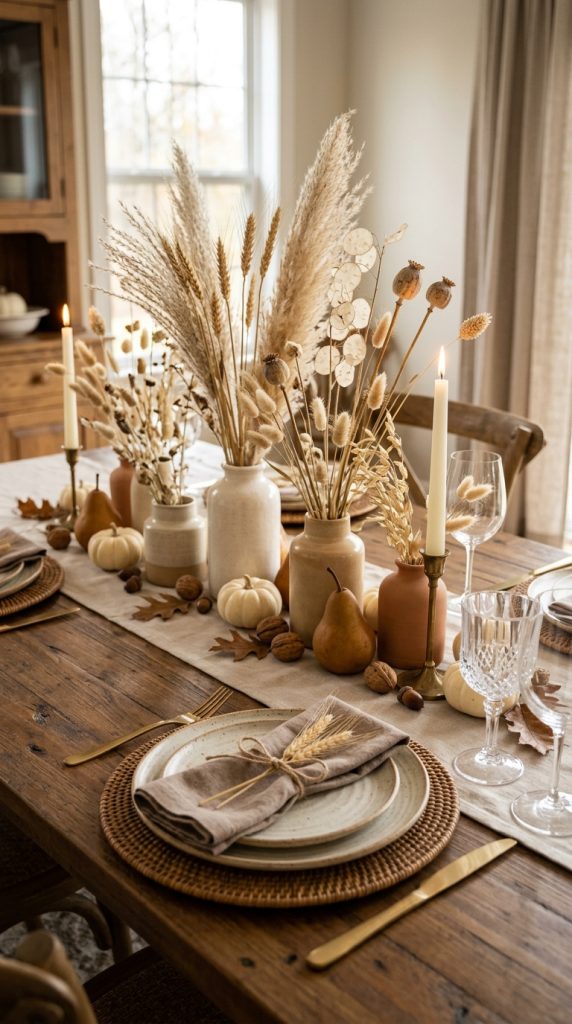
    A spacious shower can improve everyday comfort.

    Layered lighting can change the mood.

    Soft textiles can introduce tactile luxury.

    Hidden storage can remove visual distractions.

    And a carefully chosen decorative object can give the room personality.

    When these elements work together, the bathroom becomes more than a functional space. It becomes a private retreatโ€”a place where the first moments of the morning feel calmer and the final moments of the evening feel more restorative.

    That is the real meaning of luxury at home: not simply having more, but creating a space where every element feels intentional, beautiful, comfortable, and completely suited to the way you live.


  • Small Kitchen Decorating Ideas That Make the Space Feel Bigger

    Small Kitchen Decorating Ideas That Make the Space Feel Bigger

    A small kitchen does not have to feel cramped, dark, or difficult to decorate. With the right design decisions, even a narrow apartment kitchen or compact galley kitchen can look brighter, more spacious, organized, and surprisingly luxurious. The trick is not simply adding more storage or choosing white cabinets. A successful small kitchen design uses color, proportion, visual continuity, lighting, furniture, and carefully selected decorative details to create the feeling of extra space without physically expanding the room.

    For Pinterest users searching for small kitchen decorating ideas, the most useful inspiration combines beauty with practical solutions. A kitchen may have limited cabinets, a tiny countertop, awkward corners, or little room for a dining area, yet thoughtful decorating can make those limitations feel intentional. Instead of trying to hide the size of the kitchen, the goal is to make every surface work harder while keeping the overall design visually calm.

    One of the biggest mistakes in a compact kitchen is assuming that every available surface needs to be filled. Small rooms actually benefit from restraint. When countertops, walls, shelves, and floors become overloaded with objects, the eye has nowhere to rest and the kitchen immediately feels smaller. Strategic decorating takes the opposite approach: choose fewer features, make them attractive, and allow enough negative space around them.

    Color is another powerful tool. A pale palette can reflect natural and artificial light, while closely related colors can reduce the visual boundaries between cabinets, walls, backsplash, and countertops. This does not mean your kitchen has to be completely white. Warm ivory, oatmeal, light greige, pale taupe, soft sage, natural oak, and creamy beige can all create an airy appearance while giving the room considerably more personality.

    Scale matters just as much. A huge pendant, oversized dining table, bulky stools, or deep shelving can consume precious visual and physical space. Compact kitchens often look better when furniture and accessories have slimmer profiles. This leaves more visible floor area and keeps important pathways open.

    Vertical design can also dramatically change the perception of a small room. Tall cabinetry, narrow shelving, vertically stacked tiles, and appropriately positioned artwork can direct the eye upward. This creates a stronger sense of height rather than emphasizing the limited width of the kitchen.

    Lighting deserves special attention because dark corners make small kitchens appear even more enclosed. A combination of ceiling lighting, under-cabinet illumination, task lighting, and carefully positioned decorative fixtures can make the room feel more open and functional. Warm light can add coziness, while sufficient task lighting keeps work areas clear and practical.

    Decorating a small kitchen is also an opportunity to create a strong visual identity. Instead of filling the room with generic accessories, choose a few elements that express your style. A beautiful ceramic vase, a slim wooden shelf, an interesting backsplash, a framed print, or an elegant pendant can provide personality without overwhelming the room.

    For renters, many of these ideas can be achieved without permanent renovation. Removable lighting, peel-and-stick backsplash options, freestanding storage, decorative trays, compact carts, textiles, and artwork can make a significant difference while preserving flexibility.

    For homeowners planning a renovation, the same principles can be incorporated into cabinetry, flooring, countertops, appliances, and architectural details. The important thing is to think about the entire visual composition rather than treating each feature independently.

    The following 10 small kitchen decorating ideas focus on different ways to make a compact kitchen feel larger while keeping it stylish, functional, and Pinterest-worthy. Each idea uses a distinct design strategy, so you can choose the solutions that fit your own kitchen instead of trying to apply every suggestion at once.

    1. Create an Airy Small Kitchen With a Light Tonal Color Scheme

    A carefully planned color palette can transform the perceived size of a small kitchen without changing its footprint. When multiple surfaces have similar light values, the boundaries between them become less visually obvious. This creates a smoother appearance and allows the kitchen to feel more continuous.

    Instead of automatically choosing bright white, consider warmer shades that provide the same spacious effect with a softer personality. Cream, ivory, pale beige, light greige, soft mushroom, and warm off-white are excellent choices for compact kitchens.

    The ceiling can remain a lighter version of the wall color to create additional height. Cabinets can be slightly deeper in tone while still staying within the same family.

    For example, imagine a kitchen with warm ivory walls, creamy cabinets, pale quartz countertops, and light oak flooring. Nothing is dramatically contrasting, so the eye moves easily from one surface to another.

    This approach is particularly effective in kitchens that receive limited daylight.

    A dark compact kitchen can sometimes feel enclosed because the walls visually move forward. Lighter tones can create the opposite effect by reflecting available light and making surfaces appear less dominant.

    If you love darker colors, you do not need to eliminate them completely. Instead, use them as controlled accents.

    Matte black cabinet handles, a dark faucet, charcoal artwork, or a single dark stool can create definition without making the entire kitchen visually heavy.

    Another way to add personality is through subtle tonal variation.

    You could combine:

    Cream cabinets
    Warm white walls
    Light beige countertops
    Pale oak shelves
    Soft taupe textiles

    These colors are different enough to prevent the kitchen from looking flat, but similar enough to maintain an open feeling.

    The backsplash can become part of this visual strategy. Rather than choosing a highly contrasting tile, select a design that relates closely to the countertop.

    A pale stone-look backsplash extending behind the countertop can visually connect the two surfaces.

    This reduces the number of strong horizontal divisions.

    Cabinet interiors can also contribute to the effect if you have glass-front doors. Using a restrained palette inside the cabinets keeps the display from becoming visually chaotic.

    If your kitchen has a small dining area, continue the same palette into that zone. A light wood table and cream-colored chairs can make the kitchen and eating area feel like one unified space.

    For renters, color can be introduced through removable elements.

    Consider:

    • Neutral kitchen runners
    • Cream-colored curtains
    • Light-toned artwork
    • Beige seat cushions
    • Pale wooden accessories

    These changes can create a cohesive appearance without repainting or replacing cabinets.

    If you are renovating, consider using the same or closely related material across several surfaces. A continuous countertop and backsplash combination can create a sophisticated, uninterrupted appearance.

    Do not interpret a light color palette as a requirement to remove contrast. Contrast is useful when it is carefully positioned.

    A slim black faucet can provide definition.

    A walnut cutting board can introduce warmth.

    A small terracotta accessory can provide an earthy accent.

    The important point is that these darker elements remain secondary to the overall light foundation.

    Window treatments should also complement the palette. Heavy dark curtains can visually close a compact kitchen, particularly around a small window. Lightweight linen or sheer panels can preserve the brightness while adding softness.

    The result should be a kitchen that feels naturally bright rather than artificially white.

    A successful light-toned kitchen has enough warmth and variation to feel like a home, while the controlled palette keeps the room visually spacious.

    2. Draw the Eye Upward With Vertical Kitchen Decorating

    When a kitchen is limited in width, emphasizing its height can change how the entire room is perceived. Vertical decorating creates upward movement, directing attention toward the ceiling instead of allowing the eye to focus on the narrow floor area.

    This strategy is especially useful in compact kitchens with standard-height cabinets or unused wall space.

    One of the strongest options is tall cabinetry.

    If you are remodeling, cabinets that extend closer to the ceiling can eliminate the awkward gap above standard cabinets. The uninterrupted vertical structure makes the kitchen feel taller and provides valuable storage at the same time.

    Use the highest sections for items you do not need every day, such as serving pieces, seasonal kitchenware, or backup supplies.

    If replacing cabinets is not practical, tall decorative elements can achieve a similar visual effect.

    A narrow framed artwork piece can draw the eye upward.

    A vertically oriented mirror can create height and reflection.

    A slim open shelf installed vertically can add storage while reinforcing the upward direction.

    Tile orientation can also influence perception.

    Vertically stacked rectangular tiles emphasize height, while extremely busy horizontal patterns can make the room feel more compressed.

    A narrow vertical tile layout can work beautifully in a modern or contemporary kitchen.

    Open shelving should be used selectively.

    Instead of installing several broad shelves across the entire wall, consider a narrow vertical shelving unit.

    Use it for attractive objects such as:

    • Ceramic mugs
    • Small bowls
    • Cookbooks
    • A single plant
    • Decorative glassware

    The arrangement should leave plenty of empty wall visible.

    Another clever technique is hanging kitchen tools vertically.

    A slim rail beneath a cabinet can hold frequently used utensils while keeping them organized.

    This works especially well for kitchens where drawer space is limited.

    However, the rail should not become an overcrowded collection of tools. Choose only the pieces you regularly use.

    Pendant lights can also reinforce vertical proportions.

    A slender fixture with a long drop can make the ceiling feel higher, provided it does not obstruct important sightlines.

    For a small kitchen island or breakfast counter, select a pendant with an appropriately compact scale.

    Artwork placement can have a similar effect.

    Instead of one wide horizontal print, a pair of narrow vertical prints can create upward movement.

    The same principle works with decorative mirrors.

    A tall, narrow mirror placed where it can reflect natural light can visually stretch the room while adding an elegant feature.

    If your kitchen has an awkward corner, use a tall plant with an upright silhouette rather than a wide bushy plant.

    The plant becomes a vertical accent without occupying much floor area.

    Be careful not to fill every vertical surface. Too many shelves, pictures, cabinets, and hanging objects can create visual congestion.

    The objective is to create one clear upward direction.

    For example, a kitchen might have tall cabinets on one side, a narrow pendant above the breakfast counter, and a vertical artwork piece near the entrance.

    These elements work together without competing.

    This decorating approach is particularly effective for small galley kitchens because it helps redirect attention away from the narrow corridor-like layout.

    Instead of thinking only about how to make the kitchen wider, think about how to make it appear taller and more architecturally intentional.

    3. Use a Reflective Backsplash to Add Visual Depth

    A compact kitchen can benefit enormously from carefully selected reflective surfaces. Reflection creates the illusion of additional depth because light and surrounding surfaces appear to continue beyond their physical boundaries.

    The backsplash is one of the easiest areas to use this technique because it naturally occupies a large visual plane.

    You do not necessarily need a completely mirrored kitchen. In fact, subtle reflection often looks more sophisticated.

    Glossy ceramic tiles, polished stone, glass tile, or lightly reflective surfaces can bounce light around the room.

    A soft marble-look backsplash with gentle sheen can create depth while maintaining a luxury appearance.

    If your kitchen receives natural sunlight, position reflective surfaces where they can interact with that light.

    A backsplash near a window can capture daylight and distribute it across the room.

    For kitchens with limited natural light, reflective materials can make artificial lighting feel more effective.

    One attractive option is a glossy subway tile in a warm neutral shade.

    The individual tiles create texture while the finish reflects light.

    Another option is a large-format stone-look tile with subtle veining.

    Large tiles have fewer grout lines, which can produce a cleaner visual field.

    If you prefer a more dramatic style, antique mirror backsplash can create character. This works particularly well in elegant kitchens with brass hardware, warm wood, or vintage-inspired details.
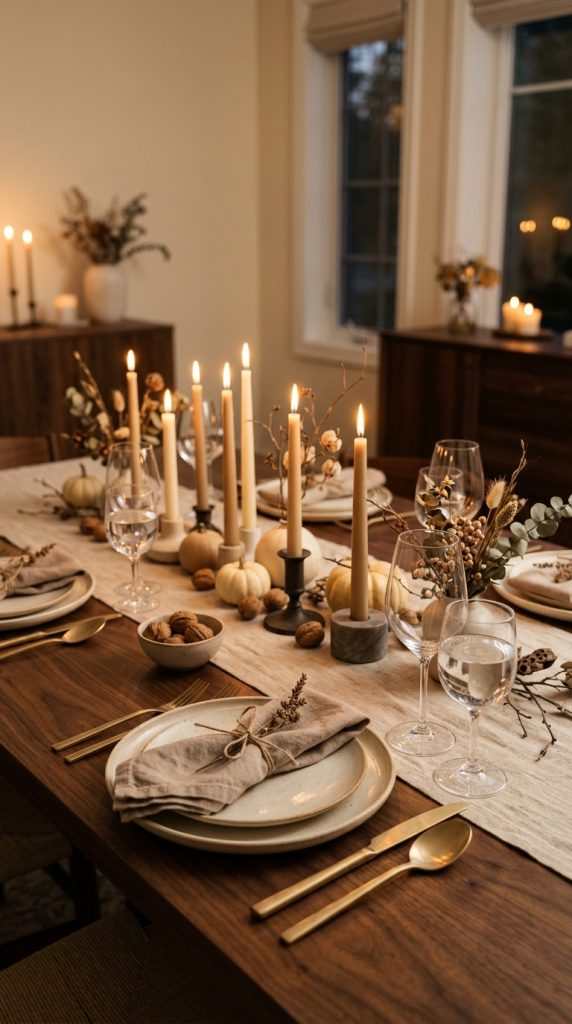
    However, reflective surfaces require thoughtful maintenance.

    Choose finishes that are practical for the area where they will be installed. A beautiful backsplash still needs to withstand cooking and cleaning.

    Mirrored cabinet fronts can also create depth, but use them selectively.

    A few glass-front cabinets may be enough.

    If every cabinet reflects the room, the kitchen can begin to feel visually complicated.

    Glass-front cabinetry has an additional advantage: it creates a sense of openness because the eye can see through the cabinet doors.

    Keep the interior styling simple.

    Matching plates, neutral bowls, and a few glass containers can create an attractive display.

    Do not use transparent surfaces as an excuse to display clutter.

    The reflection strategy also works with smaller decorative details.

    A glass vase can catch sunlight.

    A polished metal tray can reflect nearby colors.

    A framed mirror can visually extend a wall.

    The key is to place these elements intentionally.

    For a small kitchen, one strong reflective feature can be more effective than many smaller shiny accessories.

    You should also consider what the reflective surface will show.

    A mirror facing a cluttered countertop will reflect that clutter and multiply the visual noise.

    A reflective surface facing an attractive window, artwork, or clean architectural feature will create a much more pleasing result.

    This makes placement just as important as the material itself.

    When done carefully, reflective decorating can give a compact kitchen an airy, sophisticated feeling while adding a touch of luxury.

    4. Choose Slim Furniture and Compact Seating for Better Floor Flow

    Furniture can consume a surprising amount of space in a small kitchen. Even when a table or stool physically fits, its visual weight can make the room feel crowded.

    The solution is to choose furniture according to the scale of the kitchen rather than selecting pieces simply because they are attractive individually.

    Start with the dining area.

    A bulky rectangular table may dominate a compact kitchen. A small round table can provide the same function while making movement around it easier.

    Because a round table has no sharp corners, it can be particularly useful in a narrow walkway.

    If there is not enough space for a traditional dining table, consider a slim breakfast bar.

    A wall-mounted folding table can provide an eating surface when needed and disappear when not in use.

    For seating, look for chairs with open or slim frames.

    A chair with visible legs allows more of the floor to remain visible.

    This creates a lighter visual impression than a thick upholstered chair with a large solid base.

    Counter stools should also be chosen carefully.

    Avoid oversized stools with wide backs if your kitchen has a narrow island or peninsula.

    Backless stools can sometimes work beautifully because they can slide completely underneath the counter when not being used.

    However, comfort should remain a priority if the seating is used frequently.

    The same principle applies to kitchen carts.

    A slim rolling cart can provide additional preparation or storage space without requiring a permanent island.

    Choose a design that matches the kitchen rather than introducing a completely different style.

    For example, a light oak cart can complement warm neutral cabinets.

    A metal cart can work in an industrial-inspired kitchen.

    A painted cart can provide a subtle color accent.

    Furniture height can also influence perception.

    Lower-profile pieces can create more visible wall area and make the room feel less crowded.

    However, avoid making everything extremely low. A mixture of practical heights keeps the space functional.

    Open-legged furniture is especially useful because it preserves sightlines.

    When you can see more of the floor underneath a table or stool, the kitchen can appear less occupied.

    The same idea applies to storage benches.

    If you need seating near a breakfast area, choose a narrow bench that can sit flush against the wall when not in use.

    Do not underestimate the importance of clearance.

    Measure walking routes before purchasing furniture.

    A beautiful table is not a successful choice if it makes the main kitchen pathway difficult to navigate.

    Leave enough space for cabinet doors, appliances, and normal movement.

    This is one area where decorating and functionality must work together.

    A small kitchen should feel easy to move through.

    Avoid placing decorative furniture simply because there is an empty corner.

    Every piece should have a clear purpose.

    If a corner can support a slim chair, a small table, or a narrow storage unit without disrupting circulation, use it.

    If not, leaving the corner empty may actually make the kitchen feel larger.

    The final arrangement should create a sense of openness around the main working areas.

    The eye should be able to move naturally across the kitchen without constantly encountering bulky furniture.

    5. Decorate With One Strong Focal Point Instead of Many Small Accessories

    A compact kitchen does not need to be filled with decorative objects to feel stylish. In fact, one carefully chosen focal point can create considerably more impact than a collection of unrelated accessories.

    The first step is deciding what you want people to notice when they enter the kitchen.

    It could be:

    • A beautiful backsplash
    • A sculptural pendant
    • A striking range hood
    • A piece of artwork
    • A colorful runner
    • A distinctive cabinet color

    Once you select the focal point, keep surrounding areas quieter.

    For example, if your backsplash has beautiful handmade tiles, allow that surface to become the star.

    Do not cover the countertop directly below it with numerous decorative objects.

    If the pendant is visually dramatic, choose simpler stools and accessories.

    This approach creates visual hierarchy.

    The eye knows where to look first and then moves naturally through the rest of the space.

    Artwork can be an excellent focal point in kitchens that lack architectural features.

    A large framed print placed away from the main cooking area can introduce personality.

    Choose artwork with colors that connect to existing materials.

    A kitchen with cream cabinetry and walnut accents might work beautifully with artwork featuring muted brown, beige, charcoal, and clay tones.

    A runner can provide another focal point.

    Instead of choosing a tiny mat that disappears visually, use a narrow runner with a subtle but distinctive pattern.

    This can add character while defining the main floor area.

    If the kitchen is already visually busy, choose a quieter pattern.

    If the cabinetry and walls are simple, a slightly more expressive textile can provide interest.

    A decorative range hood can also become an architectural feature.

    A plaster-style hood, sculptural metal design, or custom wood treatment can draw attention upward and give the kitchen a high-end appearance.

    The key is ensuring that the feature relates to the overall design.

    Do not add a dramatic element simply to make the room interesting.

    A strong focal point should feel like part of the architecture.

    Decorative objects should support the main feature rather than compete with it.

    A small ceramic vase, wooden bowl, or sculptural object may be enough.

    Try grouping objects in odd numbers only if the arrangement looks natural; the more important principle is variation in height and proportion.

    Leave some empty space between pieces.

    This is especially important in small kitchens.

    Empty space gives the focal point room to breathe and makes the entire kitchen appear more deliberate.

    Another useful technique is creating a focal point at the end of a galley kitchen.

    A beautiful artwork piece, window, pendant, or contrasting cabinet wall can draw attention toward the far end of the room.

    This can make the kitchen feel visually longer.

    Avoid placing multiple competing focal points along the same sightline.

    If a visitor sees a busy backsplash, colorful appliances, elaborate shelving, and a large gallery wall simultaneously, the kitchen may feel smaller despite having attractive individual features.

    Simplicity creates sophistication.

    A compact kitchen can look expensive when its design has clear priorities.

    6. Install Under-Cabinet Lighting to Brighten Work Surfaces and Corners

    Lighting can completely change how a small kitchen feels. Even a beautifully decorated space can appear cramped if the work surfaces and corners remain dark.

    Under-cabinet lighting is particularly useful because it illuminates the countertop without requiring additional floor or wall space.

    This makes it an excellent solution for compact kitchens.

    Install task lighting underneath upper cabinets where possible.

    It can illuminate food preparation areas, sinks, and frequently used sections of the countertop.

    The result is not only more practical but also visually cleaner.

    Instead of having one bright ceiling light casting shadows across the room, the kitchen receives illumination exactly where it is needed.

    For a more sophisticated appearance, use concealed LED strips rather than bulky visible fixtures.

    The light source itself can remain discreet while the countertop appears softly illuminated.

    This is especially effective at night.

    The cabinets become a darker architectural frame while the countertop has a subtle glow.

    You can also use interior cabinet lighting if you have glass-front doors.

    A softly illuminated cabinet can become a decorative feature while making the kitchen feel deeper.

    Keep the displayed contents restrained so the lighting highlights the objects rather than emphasizing clutter.

    Toe-kick lighting is another possibility in certain kitchen designs.

    A subtle strip of light beneath lower cabinets can create the impression that the cabinetry is floating.

    This can make the floor feel more visually open.

    However, this should be used as an architectural accent rather than a replacement for proper task lighting.

    Pendant lighting can provide another layer.

    A compact pendant over a peninsula or breakfast counter can create a defined zone without requiring a large fixture.

    Choose a shape that complements the kitchen.

    A clear glass pendant can maintain visual openness.

    A woven shade can add warmth.

    A slim metal fixture can create a contemporary appearance.

    Ceiling fixtures should also be scaled appropriately.

    A large chandelier may be beautiful but can overwhelm a compact kitchen.

    A low-profile flush mount or semi-flush fixture may be more suitable for rooms with limited ceiling height.

    Lighting placement should correspond with how the kitchen is used.

    The sink may need direct illumination.

    The countertop where food is prepared needs clear task lighting.

    A dining corner may benefit from softer illumination.

    Place lights at appropriate places rather than spreading identical fixtures everywhere.

    This creates a more sophisticated layered lighting plan.

    Choose a warm but functional light temperature so the room feels inviting without compromising visibility.

    If your kitchen has limited daylight, lighting becomes even more important.

    Combine natural light with several controlled artificial sources so the room remains comfortable throughout the day.

    The purpose is not simply to make the kitchen brighter.

    It is to make the space feel more open by eliminating heavy-looking dark areas.

    7. Use Open Space and Hidden Storage to Keep the Kitchen Visually Calm

    One of the most effective ways to make a small kitchen feel larger is to control what remains visible.

    A kitchen can have plenty of storage and still appear cluttered if too many objects are displayed on counters, shelves, or appliances.

    Think of your countertop as valuable visual real estate.

    Keep only the items that are genuinely useful or contribute significantly to the design.

    A coffee maker that is used every morning may deserve a permanent place.

    A decorative appliance used twice a month probably does not.

    Store occasional items inside cabinets or drawers.

    Trays can help organize small groups of objects without allowing them to spread across the countertop.

    For example, a wooden tray could hold:

    • A ceramic utensil container
    • Olive oil
    • Salt
    • Pepper

    This creates one organized zone instead of several scattered objects.

    Hidden storage can also be created inside cabinet doors.

    Slim racks can hold spices, cleaning supplies, or small tools.

    Drawer organizers can make better use of narrow spaces.

    Pull-out systems can transform difficult cabinet corners into usable storage.

    The decorating benefit is significant because better organization allows more surfaces to remain visually clear.

    Open shelving should be limited to areas where you can maintain a tidy arrangement.

    If you struggle to keep shelves organized, closed cabinetry may actually create a better result.

    A small kitchen does not have to display everything.

    You can create personality through carefully selected objects rather than exposing every item.

    Appliances should also be considered part of the visual composition.

    If several appliances have different colors or finishes, the countertop can appear fragmented.

    Where practical, choose finishes that coordinate.

    For example, stainless steel appliances can be balanced with stainless hardware.

    Black appliances can relate to dark cabinet pulls.

    White appliances can blend more easily with pale cabinetry.

    Storage containers can also be coordinated.

    Matching glass jars or neutral containers can make open storage appear more intentional.

    Labels can help organization, but keep the presentation simple.

    The objective is a kitchen that looks orderly without appearing overly staged.

    Vertical storage can free countertops.

    A wall-mounted rail can hold cooking tools.

    A narrow magnetic strip can organize suitable kitchen utensils.

    A pegboard can provide flexible storage if its design suits the room.

    Use these systems carefully.

    An entire wall covered in hanging objects can make the kitchen feel busy.

    Choose one storage zone rather than covering every available wall.

    Another useful strategy is assigning every category a home.

    Cooking tools belong together.

    Breakfast items should be accessible near the coffee area.

    Baking supplies can occupy one cabinet.

    This reduces the amount of searching and rearranging required during everyday activities.

    A visually calm kitchen often feels larger because the eye can see uninterrupted surfaces.

    The goal is not minimalism for its own sake.

    It is creating enough visual breathing room that the kitchen can function comfortably.

    8. Introduce Light Wood and Natural Materials Without Making the Room Heavy

    Natural materials can make a small kitchen feel warmer and more sophisticated, but the wrong proportions can make a compact room feel visually dense.

    Light wood is particularly useful because it adds organic character while maintaining an airy appearance.

    Oak, ash, maple, and pale natural wood tones can work beautifully in small kitchens.

    Use them selectively.

    A light oak shelf can soften white cabinetry.

    Wooden stools can add warmth to a breakfast bar.

    A slim butcher-block section can introduce natural texture to a countertop.

    A wooden cutting board can provide a simple decorative accent.

    If your cabinets are already dark, consider introducing lighter wood rather than adding another deep tone.

    This creates contrast while preventing the room from becoming visually heavy.

    Natural materials can also be introduced through smaller accessories.

    Ceramic vases, stone trays, linen textiles, woven baskets, and wooden bowls can all contribute to the organic appearance.

    The key is choosing pieces that are proportional to the kitchen.

    A huge woven basket may take up too much floor space.

    A small basket on an upper shelf may provide the same textural effect without consuming valuable room.

    The backsplash can also incorporate natural inspiration.

    Stone-look surfaces, handmade ceramic tiles, or subtle mineral patterns can create visual interest without requiring many decorative objects.

    Avoid combining too many different natural materials in one small area.

    For example, if you already have strong wood grain, stone counters, patterned tile, and woven shelving, adding several more textures may make the kitchen feel busy.

    Instead, choose two or three dominant materials and allow them to repeat subtly.

    A light oak shelf might relate to an oak cutting board.

    A stone countertop might connect to a small stone bowl.

    This creates a sense of intentional design.

    Natural materials are also useful for softening modern kitchens.

    A kitchen with flat cabinets and sleek appliances can sometimes feel cold.

    A wooden stool, ceramic vase, or linen curtain can make it feel more welcoming.

    At the same time, the modern architecture keeps the room from becoming rustic.

    This balance is particularly attractive for Pinterest because it combines functionality with the warm organic-modern aesthetic.

    When selecting wood, consider undertones.

    Yellow-orange woods may clash with cool gray cabinetry.

    A softer neutral oak may work better with cream and beige.

    Walnut creates a richer appearance and should be used more selectively in compact rooms.

    The objective is to introduce warmth without visually shrinking the kitchen.

    Light natural materials can achieve that balance beautifully.

    9. Make a Tiny Kitchen Feel Bigger With a Carefully Positioned Mirror

    A mirror can be a surprisingly effective decorating feature in a small kitchen because it changes the perception of depth.

    Instead of simply reflecting the wall directly in front of it, a strategically positioned mirror can create the impression that the room continues beyond its physical boundaries.

    The placement matters more than the size.

    A mirror facing a window can reflect daylight and make the kitchen feel brighter.

    A mirror positioned toward an attractive dining area can visually connect the kitchen with the neighboring space.

    A mirror facing a cluttered countertop, however, can make the room feel even busier.

    Choose a location where the reflection is appealing.

    A backsplash mirror can create a dramatic effect, particularly in sophisticated kitchens.

    For a softer approach, install a framed mirror on an unused wall.

    Rounded mirrors are especially attractive in modern kitchens because they introduce a curved shape among cabinets and rectangular surfaces.

    A slim brass frame can add elegance.

    A wooden frame can support an organic-modern design.

    A frameless mirror can provide a cleaner contemporary appearance.

    The scale should match the wall.

    A tiny mirror on a large empty wall may look accidental.

    An oversized mirror may become impractical near cooking areas.

    Select a size that creates reflection without interfering with function.

    Cleaning should also be considered.

    A mirror directly behind a cooktop may require frequent maintenance because of splashes and grease.

    For many kitchens, a side wall or dining area is more practical.

    Mirrored cabinet fronts can provide a similar effect.

    Glass-front cabinets are a softer alternative if full reflection feels too dramatic.

    The mirror does not have to be the only reflective element.

    Small amounts of polished metal can reinforce the effect.

    Brass hardware, chrome faucets, or glass lighting fixtures can catch light without dominating the design.

    Keep the rest of the surfaces relatively calm.

    Reflection works best when it has something beautiful to reflect.

    A clean window.

    A pendant light.

    A carefully styled shelf.

    A piece of artwork.

    These elements become visually repeated through the mirror.

    For narrow galley kitchens, a mirror at one end can be especially effective because it creates the illusion of additional length.

    A large vertical mirror can also reinforce height.

    This makes mirrors a versatile decorating tool for compact kitchens.

    The goal is not to make the kitchen look larger through trickery alone.

    It is to create a visual environment where the boundaries feel less restrictive.

    10. Connect the Kitchen to the Adjoining Space for a More Open Feeling

    When a small kitchen opens into a dining room, living room, hallway, or breakfast area, the way these spaces relate to one another can significantly affect how large the kitchen feels.

    Even if the kitchen itself cannot be expanded, visual continuity can make the entire area appear more spacious.

    Start by considering flooring.

    If the kitchen and adjoining area use the same flooring material, there is no strong visual line separating them.

    Light natural wood flooring can create a seamless transition between kitchen and living spaces.

    If changing the floor is not possible, use rugs carefully.

    Avoid placing a small rug directly at the kitchen boundary if it creates an obvious visual division.

    Color continuity is equally important.

    The kitchen does not need to match the adjacent room exactly.

    Instead, repeat related colors.

    For example, cream kitchen cabinetry can connect with a beige living room sofa.

    Oak kitchen shelving can relate to a wooden coffee table.

    Black kitchen hardware can be echoed by a small black frame or lamp in the neighboring space.

    This creates a visual conversation between rooms.

    Furniture placement should also preserve sightlines.

    Avoid placing tall furniture directly at the opening of a small kitchen if it blocks the view.

    Low-profile furniture can maintain the sense of openness.

    If you have a peninsula, keep the surrounding area visually light.

    Slim stools can allow the eye to move between the kitchen and adjacent room.

    Lighting can also create continuity.

    The fixtures do not need to match, but they should share a similar finish or design language.

    A brass kitchen pendant can relate to brass details in the dining area.

    Warm illumination can create a consistent evening atmosphere across connected spaces.

    Artwork can provide another bridge.

    A kitchen print might contain colors that appear again in the nearby dining or living area.

    This makes the spaces feel intentionally connected rather than randomly decorated.

    If the kitchen has a small dining nook, consider using the same material language in both zones.

    A wooden table and woven chairs can relate naturally to wooden kitchen shelving.

    The goal is to avoid creating a visual stop at the kitchen entrance.

    This is especially important in open-plan apartments where every square foot contributes to the overall sense of space.

    Curtains can also influence the connection.

    If the kitchen has a window near the living area, choose window treatments that coordinate with the adjacent room.

    The same fabric family can create continuity.

    Finally, resist the temptation to overdecorate the boundary between rooms.

    Keep the transition clean.

    When the eye can travel from the kitchen into the adjoining space without encountering excessive objects, the entire area feels more open.

    This strategy is particularly useful when structural changes are impossible.

    You may not be able to remove a wall, but you can make the existing space feel visually connected.

    Conclusion

    A small kitchen can become one of the most attractive spaces in a home when decorating decisions are based on proportion, visual continuity, and practical use rather than simply adding more decoration.

    The most effective small kitchen decorating ideas do not all require expensive renovations. A light tonal palette can soften the boundaries of the room, vertical elements can emphasize ceiling height, reflective surfaces can introduce depth, and appropriately scaled furniture can preserve valuable floor space.

    Other changes, such as under-cabinet lighting, carefully controlled countertop styling, light wood accents, mirrors, and visual connections with adjoining rooms, can transform the atmosphere without changing the kitchen’s actual dimensions.

    The most important principle is to avoid treating every empty surface as an opportunity for decoration. In a compact kitchen, open space is part of the design. When countertops remain clear, pathways stay comfortable, and decorative elements have room around them, the entire room feels more intentional.

    For a Pinterest-worthy result, focus on one strong visual direction rather than combining every trend at once. A warm neutral kitchen with light oak may need only a beautiful pendant and handmade ceramics. A modern white kitchen might benefit from a dramatic backsplash. A narrow apartment kitchen could gain more from vertical storage and a mirror than from additional furniture.

    Your kitchen does not need to become larger to feel better. It needs a design that respects its proportions and makes every element work with the available space.

    With thoughtful choices, even the smallest kitchen can feel bright, stylish, functional, spacious, and beautifully finishedโ€”without losing the personality that makes it feel like home.


  • 15 Organic Modern Luxury Home Decor Ideas for a Warm & Timeless Space

    15 Organic Modern Luxury Home Decor Ideas for a Warm & Timeless Space

    Organic modern home decor has become one of the most desirable interior styles because it combines the simplicity of contemporary design with the warmth and character of natural elements. This style creates spaces that feel calm, sophisticated, comfortable, and connected to nature.

    Unlike traditional luxury interiors that often rely on heavy decoration, organic modern luxury focuses on thoughtful details, high-quality materials, and a balanced atmosphere. The beauty comes from the combination of soft neutral colors, natural textures, handcrafted pieces, clean architectural lines, and carefully selected furniture.

    The main purpose of organic modern design is to create a home that feels timeless rather than temporary. Trends may change, but natural wood, stone, linen, handmade ceramics, and earthy colors continue to create interiors that feel elegant for years.

    This style is perfect for homeowners who want a peaceful environment without sacrificing sophistication. It allows rooms to feel luxurious while still being comfortable enough for everyday living.

    The organic modern approach is built around a few important principles:

    Natural materials should feel authentic.

    Furniture should prioritize comfort and quality.

    Decor should be intentional instead of excessive.

    Colors should reflect nature.

    Spaces should have breathing room.

    Lighting should create warmth and atmosphere.

    Whether you are decorating a large home, a small apartment, or refreshing only one room, organic modern design can be adapted to your lifestyle.

    The following ideas explore different ways to bring this beautiful style into your home while creating a warm and timeless atmosphere.

    1. Create a Warm Neutral Living Room With Organic Modern Elegance

    The living room is often the heart of an organic modern home because it is where comfort, design, and daily life come together. A luxury organic modern living room does not need bold colors or excessive accessories. Instead, it creates impact through balance, texture, and carefully selected materials.

    Begin with a neutral foundation. Warm shades such as ivory, beige, soft taupe, sand, and creamy white create a peaceful background. These colors allow natural materials and furniture shapes to become the main focus.

    A neutral palette does not mean the room should feel boring. The secret is using different textures within similar tones.

    For example, a cream sofa can be paired with:

    • A woven rug
    • Linen cushions
    • A boucle chair
    • A wooden coffee table
    • Ceramic accessories

    Although the colors remain simple, the different surfaces create depth.

    Furniture selection is extremely important in organic modern interiors. Choose pieces that have clean shapes but still feel comfortable. Oversized sofas with soft curves are popular because they create a relaxed luxury feeling.

    A curved sofa or rounded armchair can soften the straight architectural lines often found in modern homes.

    The coffee table should act as a natural centerpiece. Instead of choosing something overly decorative, select a piece with beautiful material quality.

    A solid wood table introduces warmth.

    A travertine table adds natural stone texture.

    A sculptural stone table creates an artistic focal point.

    The goal is not to fill the room with furniture but to choose pieces that feel meaningful.

    Flooring also influences the overall mood. Natural oak floors, wide wood planks, or warm-toned flooring create the perfect foundation for organic modern styling.

    If changing flooring is not possible, a large natural fiber rug can introduce softness and warmth.

    Artwork should follow the same philosophy.

    Large abstract artwork with earthy shades works beautifully because it adds personality without creating visual noise.

    Handmade paintings, textured wall pieces, and minimalist photography can also complement the style.

    Avoid covering every wall. Organic modern interiors often use empty space as part of the design.

    A single statement artwork can sometimes create more luxury than multiple smaller decorations.

    Accessories should be selected carefully.

    Instead of many small objects, choose a few larger pieces:

    • A handcrafted ceramic vase
    • A sculptural bowl
    • A natural wood tray
    • A textured decorative object

    Each item should contribute something to the room.

    Plants can also enhance the organic feeling. However, the style usually works better with fewer larger plants rather than many small ones.

    A tall olive tree, sculptural indoor tree, or large leafy plant can add freshness while maintaining a clean appearance.

    Lighting plays an important role in making the room feel luxurious.

    Place lights at appropriate places, including floor lamps beside seating areas, table lamps on consoles, and soft accent lighting near artwork or architectural features.

    Warm lighting enhances wood, fabric, and natural materials, making the room feel inviting during the evening.

    The finished living room should feel effortless. Every element should work together to create a space that looks sophisticated but still feels comfortable enough for everyday moments.

    2. Add Rich Natural Wood Elements for Timeless Luxury

    Natural wood is one of the most recognizable elements of organic modern design because it brings warmth, texture, and a connection to nature.

    Unlike synthetic materials that can feel temporary, natural wood develops character over time. Its grain patterns, subtle variations, and organic imperfections create a sense of authenticity.

    The key to using wood in a luxury organic modern home is choosing pieces with quality craftsmanship rather than adding wood everywhere.

    A single beautiful wooden element can completely transform a room.

    A walnut dining table can become the gathering point of a dining area.

    A solid oak console can elevate an entryway.

    A wooden bed frame can create a peaceful bedroom atmosphere.

    A natural wood coffee table can anchor a living room.

    The tone of the wood influences the mood of the space.

    Light oak creates an airy Scandinavian-inspired feeling.

    Walnut introduces richness and sophistication.

    Teak creates warmth and durability.

    Dark wood adds elegance when balanced with lighter surroundings.

    One of the best combinations in organic modern interiors is warm wood with soft neutral fabrics.

    For example:

    A walnut table with cream chairs.

    An oak bed with linen bedding.

    A wooden console with stone accessories.

    These combinations create contrast while maintaining harmony.

    Wood can also be introduced through architectural features.

    Built-in shelving is a beautiful way to add both storage and character.
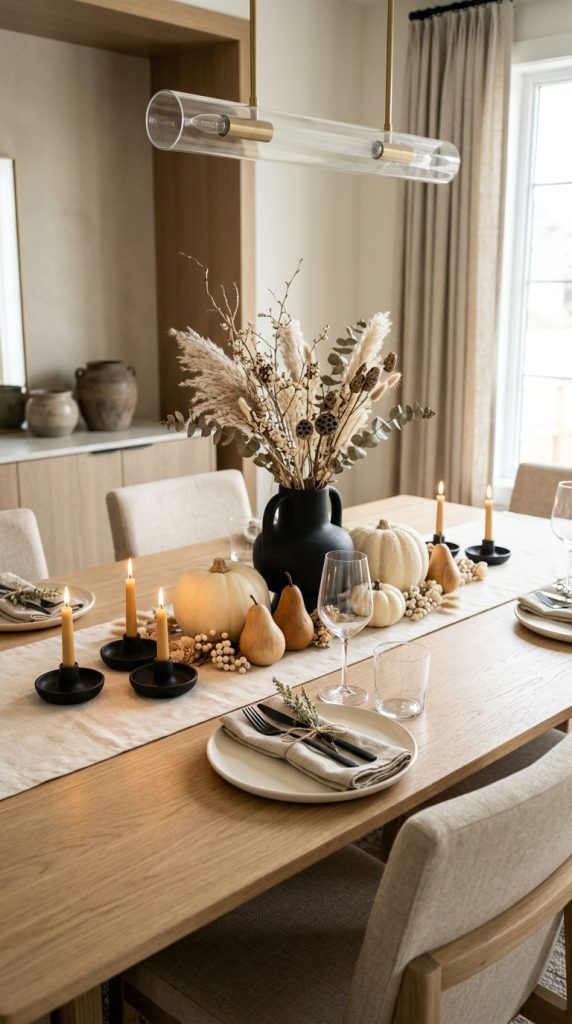
    A wooden accent wall can create a custom-designed appearance.

    Vertical wood panels can make ceilings appear taller.

    Wooden beams can add architectural interest to open spaces.

    In kitchens, natural wood cabinetry can soften modern surfaces such as marble, quartz, or stone countertops.

    Open wooden shelves can display handmade ceramics and natural objects while creating warmth.

    The finish of the wood is important.

    Organic modern interiors usually favor finishes that allow the natural beauty of the material to remain visible.

    Matte, brushed, or lightly finished wood often looks more timeless than highly glossy surfaces.

    Another important consideration is balance.

    Too much wood without contrast can make a room feel heavy.

    Balance wooden elements with lighter materials.

    Pair wood with:

    • Linen fabrics
    • Stone surfaces
    • Cream textiles
    • Soft neutral paint
    • Glass accents

    This creates a sophisticated layered appearance.

    Wood also works beautifully with handmade objects.

    A wooden surface styled with a ceramic vase, woven basket, or sculptural accessory feels collected and personal.

    Avoid making every wooden piece identical.

    Different wood tones can work together when they share similar warmth.

    Organic modern luxury is about creating a natural relationship between materials rather than making everything perfectly matched.

    The result is a home that feels grounded, elegant, and connected to nature.

    3. Design a Soft Linen-Focused Bedroom Retreat

    A bedroom should be more than visually attractive. It should create a feeling of comfort, relaxation, and escape. Organic modern design achieves this by focusing on natural fabrics, soft colors, and peaceful simplicity.

    Linen is one of the most important materials for this style because it combines luxury with a relaxed appearance.

    Unlike fabrics that look overly polished, linen has a natural texture that makes a room feel comfortable and lived-in.

    Start with the bedding because it creates the foundation of the bedroom.

    Choose soft colors inspired by nature:

    • Warm white
    • Ivory
    • Beige
    • Sand
    • Light taupe

    Instead of purchasing a perfectly matching bedding set, create layers.

    Combine different textures:

    A linen duvet.

    Cotton sheets.

    A knitted throw.

    Textured pillows.

    A wool blanket.

    These layers create visual richness without requiring bright colors.

    The bed frame also influences the atmosphere.

    Natural wood frames create warmth.

    Boucle upholstered beds add softness.

    Curved headboards introduce a gentle luxury feeling.

    A large upholstered headboard in cream or beige can become the main feature of the bedroom.

    Nightstands should remain simple and functional.

    Choose materials that support the organic feeling:

    • Wood
    • Stone
    • Ceramic
    • Natural finishes

    Keep accessories limited.

    A small lamp, a book, or a handmade object is often enough.

    Window treatments should enhance the softness of the room.

    Linen curtains are ideal because they filter sunlight beautifully and create a calm atmosphere.

    Avoid overly heavy or decorative curtains that compete with the peaceful feeling.

    A bedroom rug can add another layer of comfort.

    Natural wool rugs or textured neutral rugs create warmth underfoot and make the room feel complete.

    Lighting should support relaxation.

    including bedside lamps, subtle wall sconces, and soft ambient lighting that creates a peaceful evening mood.

    Avoid harsh overhead lighting whenever possible.

    Natural elements can be added through small details.

    A wooden bench at the end of the bed, a ceramic vase with branches, or a simple artwork piece can personalize the room.

    The goal is not to create a showroom bedroom.

    The goal is to create a space that feels beautiful, calming, and comfortable every day.

    4. Use Natural Stone Elements for a Sophisticated Organic Modern Look

    Natural stone is one of the most powerful materials for creating an organic modern luxury atmosphere because it adds a sense of permanence, texture, and timeless beauty. Unlike decorative trends that quickly become outdated, stone has been used in architecture and interiors for centuries because of its natural character.
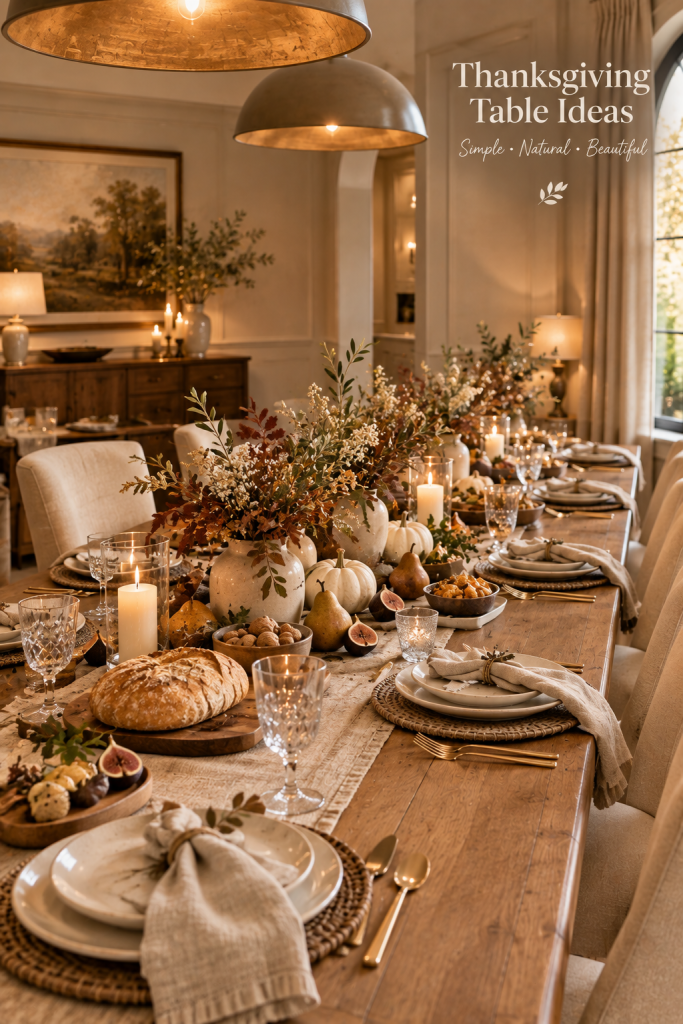
    In organic modern homes, stone is not used only as a practical surface. It becomes an artistic element that adds visual interest and a connection to the earth.

    One of the most popular ways to introduce stone is through a statement surface.

    A large stone coffee table can become the centerpiece of a living room.

    A marble kitchen island can create a luxurious focal point.

    A limestone fireplace can add architectural warmth.

    A stone bathroom vanity can transform an ordinary space into a spa-like retreat.

    The beauty of natural stone comes from its individuality. Every piece has unique patterns, colors, and textures. This means the material itself becomes a form of decoration.

    For a warm organic modern look, choose stones with soft natural tones.

    Popular options include:

    • Travertine with warm beige variations
    • Limestone with subtle texture
    • Marble with gentle veining
    • Soapstone with a smooth matte appearance
    • Natural quartzite with earthy patterns

    These materials work beautifully with neutral interiors because they add character without overwhelming the space.

    A common mistake is using too many polished surfaces together. Organic modern luxury usually works better when materials have different finishes.

    For example:

    A smooth stone table can be balanced with a textured linen sofa.

    A polished countertop can be softened with wooden accessories.

    A stone fireplace can be paired with woven textiles.

    This contrast creates a more comfortable and layered environment.

    Bathrooms are another excellent place to incorporate natural stone.

    A stone shower wall, floating stone vanity, or textured stone flooring can create a relaxing spa-inspired atmosphere.

    The goal is not to make the bathroom feel cold or overly modern. Balance stone with warmer elements such as wood cabinetry, soft towels, and natural lighting.

    Stone accessories can also introduce the material in smaller ways.

    Consider:

    • Stone trays
    • Marble bowls
    • Ceramic pieces inspired by natural textures
    • Sculptural stone objects

    These details create a connection between different areas of the home.

    When using stone, allow the material to be appreciated. Avoid covering every surface with decorations.

    A beautiful stone surface often needs space around it to make an impact.

    Lighting is also important because it reveals the natural texture of stone, including accent lighting near fireplaces, under-cabinet lighting in kitchens, and soft illumination around bathroom surfaces.

    The shadows created by lighting can highlight the depth and natural variations of the material.

    Natural stone brings a sense of quiet luxury. It does not need bright colors or excessive decoration to attract attention. Its beauty comes from texture, craftsmanship, and authenticity.

    When combined with wood, linen, and warm neutral colors, stone becomes one of the strongest foundations of a timeless organic modern home.

    5. Create a Minimal Yet Warm Organic Modern Kitchen

    The organic modern kitchen is a perfect example of how luxury and simplicity can exist together. Instead of focusing on excessive decoration, this style creates beauty through high-quality materials, thoughtful layouts, and functional design.

    A successful organic modern kitchen should feel clean but not sterile.

    The foundation often begins with natural colors and materials.

    Warm white cabinetry, oak finishes, stone countertops, and textured backsplashes create a welcoming environment.

    Unlike traditional luxury kitchens that may rely heavily on glossy finishes, organic modern kitchens usually prefer matte surfaces and natural textures.

    Cabinet design is especially important.

    Simple flat-panel cabinets create a contemporary appearance while allowing materials to become the main focus.

    Natural wood cabinetry can add warmth.

    Painted cabinets in soft neutral tones can create a calm atmosphere.

    A combination of wood and painted finishes can add visual balance.

    Countertops should feel durable and natural.

    Stone surfaces such as quartzite, marble, or textured quartz can provide elegance while maintaining a connection to organic materials.

    A kitchen island can become the central gathering point.

    Choose a design that combines function and beauty.

    A waterfall stone edge creates a modern statement.

    A wooden island introduces warmth.

    A contrasting island color can create architectural interest.

    Open shelving is another popular feature in organic modern kitchens.

    However, the styling should remain intentional.

    Instead of filling shelves with many items, display carefully selected pieces:

    • Handmade ceramics
    • Wooden bowls
    • Glass containers
    • Neutral pottery

    This creates a curated appearance.

    Hardware choices also influence the overall feeling.

    Brushed brass, aged bronze, matte black, and natural wood handles can complement organic materials beautifully.

    Lighting is another important design element.

    Pendant lights above an island can become sculptural features.

    Choose fixtures made from:

    • Woven materials
    • Glass
    • Metal with soft finishes
    • Natural fibers

    Place lights at appropriate places, including pendant lighting above work areas, under-cabinet illumination, and warm ambient lighting around dining zones.

    The dining area connected to the kitchen should continue the same design language.

    A wooden dining table, textured chairs, and simple decorative pieces create a seamless transition.

    Avoid overcrowding countertops.

    A few meaningful objects create more luxury than many random accessories.

    A ceramic bowl filled with seasonal fruit can add life.

    A wooden cutting board can provide warmth.

    A vase with branches can introduce natural shape.

    Organic modern kitchens are designed for real life.

    They should be beautiful but also practical.

    Every material should be chosen not only for appearance but also for how it supports daily activities.

    The result is a kitchen that feels sophisticated, peaceful, and timeless.

    6. Add Curved Furniture for a Softer Luxury Feel

    Curved furniture has become an important feature in organic modern interiors because it creates softness and movement within spaces that often contain clean architectural lines.

    Modern homes frequently include straight walls, rectangular windows, and structured layouts. Curved furniture introduces balance by adding gentle shapes that feel more natural and inviting.

    A curved sofa is one of the most effective ways to introduce this style.

    Unlike traditional straight sofas, curved designs encourage conversation and create a more relaxed seating arrangement.

    Choose fabrics that enhance the organic feeling:

    • Boucle
    • Linen
    • Soft cotton
    • Textured upholstery

    Neutral colors such as cream, beige, and warm gray allow the shape of the furniture to become the main feature.

    Rounded coffee tables are another excellent addition.

    A circular stone table, oval wooden table, or softly shaped table can break up the straight lines of a room.

    The combination of different shapes creates a more balanced composition.

    Curved chairs can also make a room feel more luxurious.

    A sculptural lounge chair in a corner can create a beautiful reading area.

    A rounded accent chair can soften a formal living room.

    In bedrooms, curved headboards create a relaxing focal point.

    A softly rounded upholstered headboard can make the bed feel more comfortable and elegant.

    The key to using curved furniture successfully is avoiding too many competing shapes.

    Choose one or two statement pieces and allow them to stand out.

    Pair curved furniture with simple architectural elements.

    For example:

    A curved sofa with a rectangular rug.

    A round coffee table with a linear bookshelf.

    A curved chair beside a straight console.

    This creates visual balance.

    Materials also matter.

    Organic modern interiors look best when curves are combined with natural materials.

    Examples include:

    A boucle curved sofa with a wooden table.

    A stone rounded coffee table with linen chairs.

    A wooden curved bench with textured cushions.

    These combinations create a warm and sophisticated feeling.

    Curved furniture also improves the flow of a room.

    Sharp corners can sometimes make spaces feel rigid. Rounded forms create a more relaxed movement throughout the home.

    Lighting can enhance these shapes.

    Place lights at appropriate places, such as floor lamps beside curved seating, pendant lights above rounded tables, and soft accent lighting that highlights sculptural furniture.

    The final result is a home that feels modern but approachable.

    Curved furniture adds elegance without making the space feel formal or uncomfortable.

    It creates the perfect balance between contemporary design and natural softness.

    7. Layer Natural Textures for Depth and Comfort

    Texture is one of the most important elements in organic modern design because it prevents neutral spaces from feeling flat.

    When a room uses mostly earthy colors, texture becomes the feature that creates visual interest.

    The secret is combining different materials that feel different both visually and physically.

    A smooth surface should be balanced with something rough.

    A soft fabric should be combined with a natural material.

    A polished element should be paired with something handmade.

    For example, a living room may include:

    A linen sofa.

    A wool rug.

    A wooden table.

    A woven basket.

    A ceramic vase.

    Each material contributes a different feeling.

    Textured rugs are especially valuable because they define spaces while adding comfort.

    Natural fiber rugs, wool rugs, and handwoven designs work beautifully with organic modern interiors.

    Choose subtle patterns or solid textures rather than overly decorative designs.

    Curtains also contribute significantly to texture.

    Linen curtains create softness and movement.

    They allow natural light to filter through while adding warmth.

    Pillows and throws provide another opportunity to introduce layers.

    Instead of choosing many decorative cushions with different patterns, combine different fabrics in similar tones.

    For example:

    A linen cushion.

    A knitted throw.

    A boucle pillow.

    A woven textile.

    The room becomes richer without becoming busy.

    Wall texture can also create a luxury effect.

    Consider:

    • Limewash finishes
    • Textured plaster
    • Natural stone surfaces
    • Wood panels

    These finishes create depth without requiring artwork.

    Handmade objects are another important part of organic modern styling.

    Mass-produced decorations often lack personality.

    A handmade ceramic bowl or imperfect vase adds character because it feels connected to craftsmanship.

    Natural fibers can also be introduced through accessories.

    Examples include:

    • Woven baskets
    • Rattan furniture
    • Jute details
    • Hemp textiles

    However, use them carefully.

    Too many woven elements can make the room feel more rustic than modern.

    The goal is balance.

    Lighting enhances texture by creating shadows and highlighting surfaces.

    Place lights at appropriate places, especially near textured walls, woven furniture, and decorative materials.

    Soft lighting can reveal details that disappear under harsh illumination.

    Texture is what gives organic modern interiors their comfortable luxury.

    It creates rooms that feel interesting even when the color palette remains simple.

    A well-layered space feels calm, rich, and naturally beautiful.

    8. Design an Organic Modern Dining Space With Timeless Character

    The dining area is where organic modern design can become especially meaningful because it represents gathering, connection, and everyday experiences.

    A luxury dining room does not need excessive decoration. The focus should be on creating a welcoming environment where materials, furniture, and lighting work together.

    The dining table is the main feature.

    A solid wood table is one of the strongest choices for this style because it provides warmth and natural character.
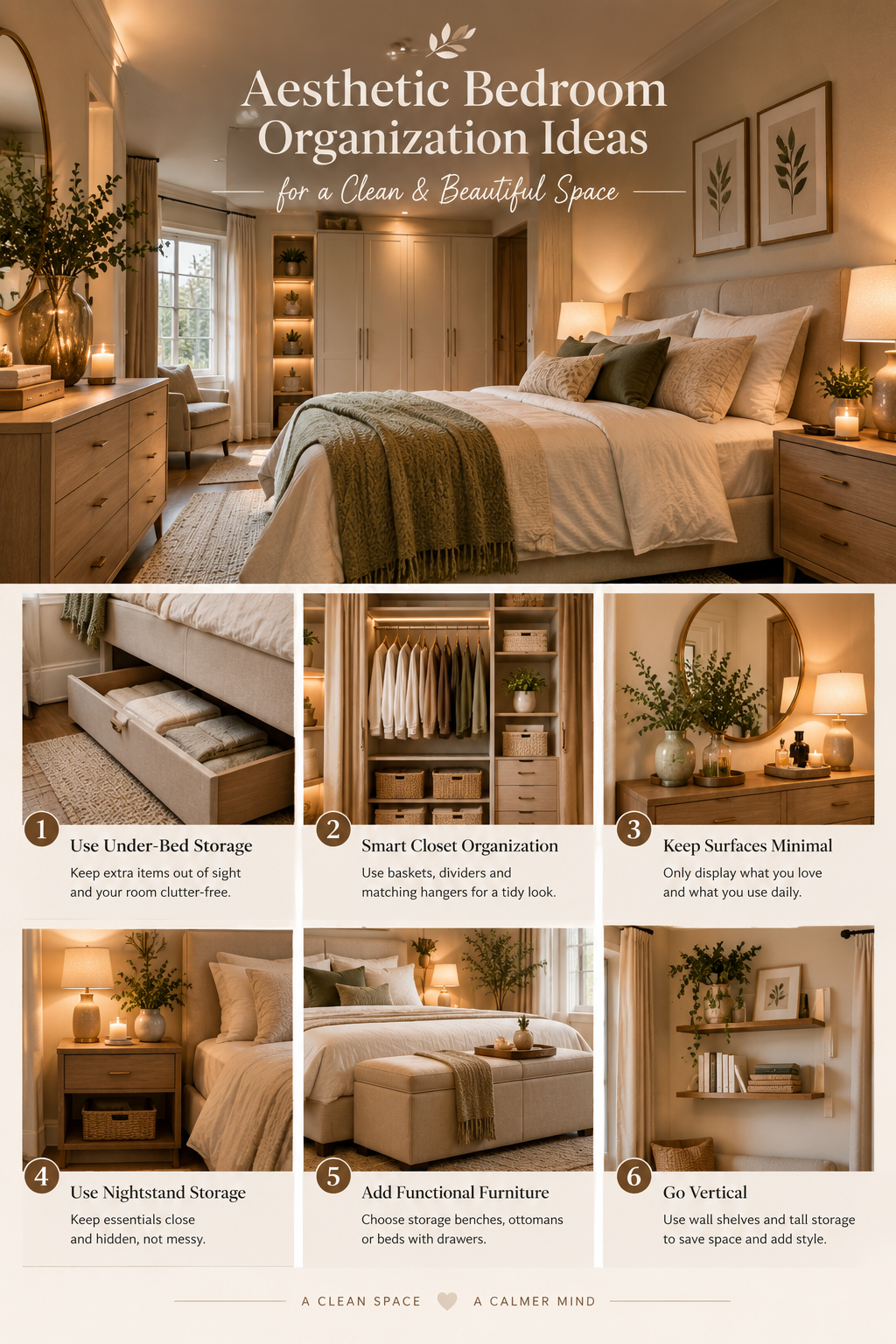
    Choose designs with visible grain and simple craftsmanship.

    Avoid overly complicated shapes.

    The beauty should come from the material itself.

    A stone dining table can create a more contemporary luxury feeling.

    Travertine, marble, or limestone tables add elegance while maintaining an organic appearance.

    Dining chairs should balance the table.

    Upholstered chairs can introduce softness.

    Wooden chairs create a more natural feeling.

    Woven chairs can add texture.

    Mixing materials often creates a more sophisticated look than using a complete matching set.

    A beautiful organic modern dining room might include:

    A walnut table.

    Cream upholstered chairs.

    A stone centerpiece.

    Soft linen curtains.

    A sculptural pendant light.

    This combination feels refined but comfortable.

    Lighting above the dining table deserves special attention.

    A statement pendant can become a piece of artwork.

    Choose designs with natural materials or interesting shapes.

    Examples:

    • Woven pendants
    • Sculptural glass fixtures
    • Soft metal designs
    • Handmade ceramic lighting

    Place lights at appropriate places, especially directly above the dining table and around nearby areas to create a warm atmosphere during evening meals.

    Table styling should remain simple.

    A large ceramic bowl, seasonal branches, or a natural stone centerpiece can be enough.

    Avoid filling the table permanently with decorations.

    The dining area should remain functional.

    Wall decor can include large artwork, textured panels, or simple natural elements.

    A single oversized piece often creates more impact than many small decorations.

    The goal of an organic modern dining room is not to impress guests with decoration.

    It is to create a space that feels welcoming, comfortable, and timeless.

    9. Use Warm Earth-Tone Colors to Create a Calm Organic Atmosphere

    Color is one of the strongest tools in organic modern design because it controls the emotional feeling of a room. While this style is often associated with neutral interiors, the beauty comes from using carefully chosen earth-inspired shades that add warmth and personality.

    Organic modern homes usually avoid extremely bright or artificial colors. Instead, they take inspiration from nature and use tones that feel calm, balanced, and timeless.

    Some of the most beautiful organic modern color combinations include:

    • Warm white with beige
    • Sand with caramel
    • Taupe with walnut brown
    • Clay with ivory
    • Olive green with natural wood
    • Soft gray with stone tones
    • Terracotta with cream

    These colors create a peaceful foundation while allowing furniture and materials to become the main focus.

    Warm neutrals are especially effective because they make spaces feel comfortable without limiting future decorating choices.

    For example, a living room with warm beige walls can easily adapt to different furniture styles. The same space can feel modern, traditional, or minimalist depending on the accessories added later.
    One of the best ways to use earth tones is through layering.

    Instead of choosing one color and repeating it everywhere, combine different shades that naturally work together.
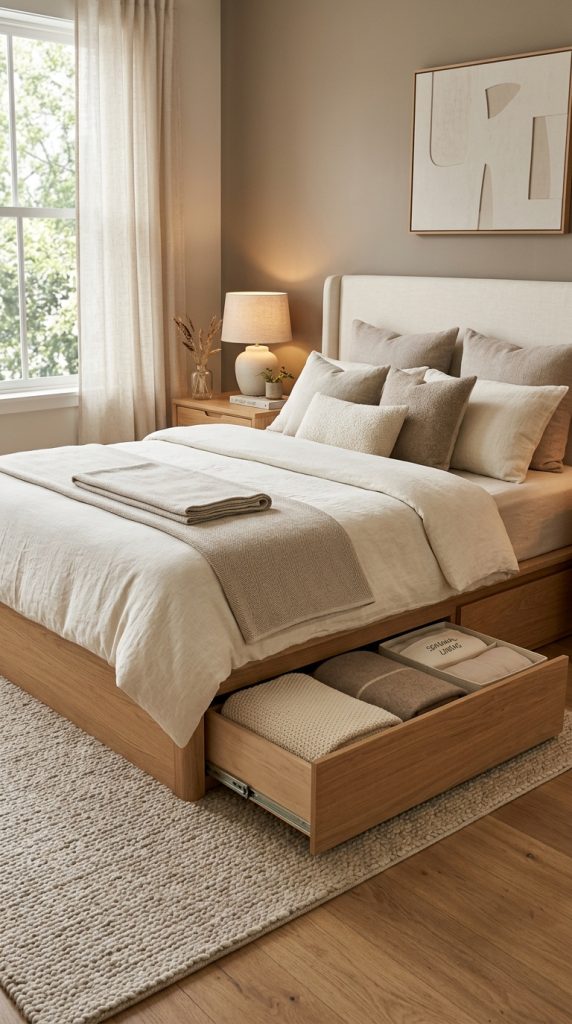
    A bedroom could include:

    A warm ivory wall.

    A beige linen bed.

    A walnut nightstand.

    A clay-colored throw.

    A soft brown rug.

    Although each element is different, the overall feeling remains harmonious.

    Paint color selection is also important.

    Pure white can sometimes feel too sharp in organic modern spaces. Warmer whites with subtle beige or cream undertones create a softer appearance.

    For a more dramatic look, deeper earthy shades can be introduced.

    Examples include:

    • Charcoal gray walls
    • Deep olive cabinetry
    • Chocolate brown furniture
    • Muted terracotta accents

    These colors add richness while maintaining the connection to nature.

    Accent colors should be used thoughtfully.

    Instead of adding many different colors, choose one or two tones that complement the overall palette.

    A muted olive chair can add freshness.

    A rust-colored artwork can introduce warmth.

    A dark brown leather piece can create sophistication.

    The key is keeping the color story connected.

    Another beautiful aspect of earth tones is how they interact with natural light.

    Morning sunlight can make beige and cream shades feel soft and airy.

    Evening lighting can create a deeper, more intimate atmosphere.

    The same room can change throughout the day, which adds to its beauty.

    Decorative accessories are another opportunity to introduce color.
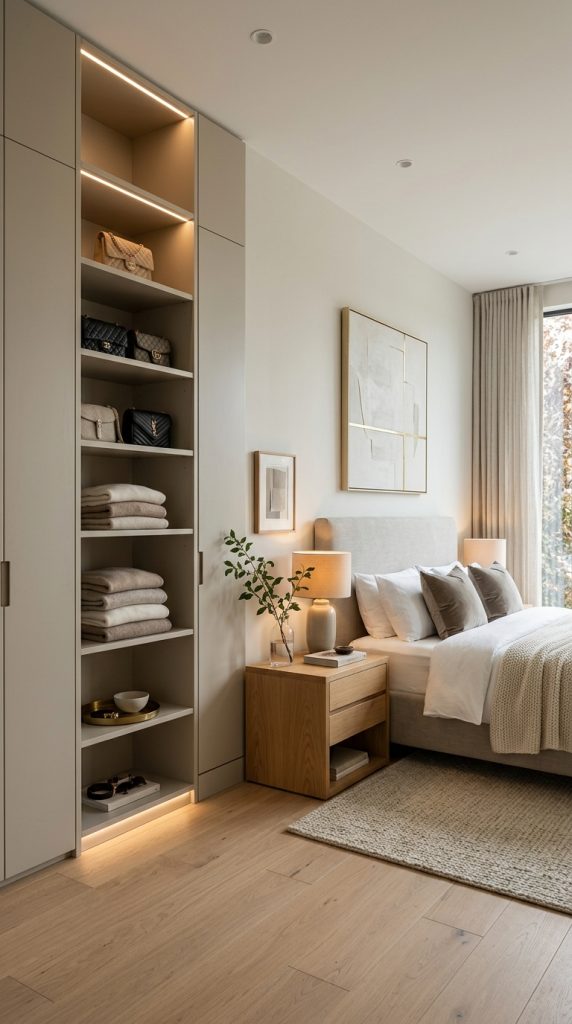
    Handmade ceramics, books, artwork, and textiles can bring subtle variations without overwhelming the room.
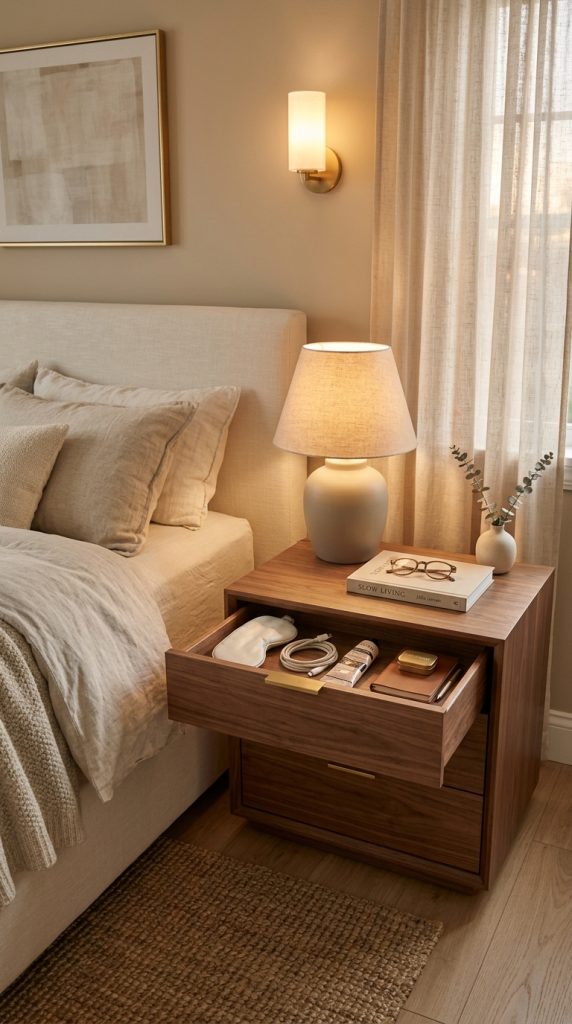
    Avoid choosing accessories only because they match. Organic modern spaces feel more authentic when items have individual character.

    A home should feel collected over time rather than perfectly arranged.

    Color psychology also plays an important role.

    Earth tones are often associated with comfort, stability, and relaxation. This makes them ideal for bedrooms, living rooms, and spaces where people want to feel calm.

    The purpose of organic modern color design is not to create a dramatic visual statement. It is to create an environment that feels naturally beautiful and emotionally comfortable.

    When earth-inspired colors are combined with quality materials and thoughtful furniture choices, they create interiors that remain elegant for many years.

    10. Add Statement Lighting With Natural Materials

    Lighting is not only a practical necessity in organic modern interiors; it is also an important design feature that can influence the entire personality of a room.

    A beautifully designed light fixture can work like a piece of artwork, adding shape, texture, and architectural interest.

    Organic modern lighting focuses on warmth and natural materials rather than overly bright or industrial fixtures.

    The goal is to create a comfortable atmosphere where every area of the home feels inviting.

    Pendant lighting is one of the most popular choices for this style.

    A large woven pendant above a dining table or kitchen island can immediately introduce an organic element.

    Materials such as:

    • Rattan
    • Bamboo
    • Woven fibers
    • Linen
    • Handmade ceramic

    create beautiful texture and visual interest.

    In living rooms, statement floor lamps can create elegant reading corners.

    Choose designs with natural finishes, curved shapes, or handcrafted details.

    A simple room can feel more luxurious when lighting has a sculptural quality.

    Wall sconces are another excellent addition.

    They can highlight artwork, architectural features, or specific areas without taking up floor space.

    In bedrooms, soft wall lighting creates a peaceful hotel-inspired atmosphere.

    The placement of lighting matters as much as the fixture itself.

    A room with only one ceiling light often feels flat because everything is illuminated equally.

    Organic modern interiors use layered lighting to create depth.

    Different lighting sources can serve different purposes:

    General lighting for overall visibility.

    Task lighting for specific activities.

    Accent lighting for atmosphere and highlighting features.

    Place lights at appropriate places, including beside sofas, above work surfaces, near artwork, around architectural details, and in cozy corners that need additional warmth.

    The color temperature of bulbs also affects the feeling of the room.

    Warm illumination enhances natural materials such as:

    • Wood
    • Stone
    • Linen
    • Leather
    • Woven textures

    It creates a softer evening environment compared with cool white lighting.

    Natural materials in lighting fixtures also help connect different areas of the home.

    For example, a woven pendant in the kitchen can relate to a rattan chair in the dining area or a wooden accessory in the living room.

    This creates visual continuity throughout the house.

    Lighting should also support the architecture of the room.

    Tall ceilings can benefit from large pendant fixtures.

    Small rooms may look better with compact wall lights and carefully positioned lamps.

    The goal is not to fill the room with lights but to create a balanced atmosphere.

    A luxury organic modern home feels beautiful because of the relationship between materials, colors, furniture, and lighting.

    The right lighting reveals the beauty of every other design choice.

    11. Style Open Shelving With Carefully Selected Organic Decor

    Open shelving is a beautiful feature in organic modern homes because it combines functionality with personal expression.

    However, successful shelving design requires balance. When shelves become crowded with too many objects, the peaceful feeling of organic modern style can disappear.

    The purpose of open shelving is not to display everything you own. It is to highlight meaningful pieces and create visual harmony.

    Start by choosing shelves made from natural materials.

    Wood shelves are especially effective because they introduce warmth and complement neutral interiors.

    Oak, walnut, and reclaimed wood can create beautiful contrast against light walls.

    The styling process should focus on balance.

    Instead of placing objects randomly, consider:

    Height variation.

    Material contrast.

    Negative space.

    Color harmony.

    A beautiful shelf might include:

    A handmade ceramic vase.

    A stack of neutral books.

    A wooden bowl.

    A small sculpture.

    A framed artwork.

    The arrangement should feel intentional but not overly perfect.

    Mixing different textures creates more interest.

    For example:

    Smooth ceramic beside rough wood.

    Glass beside woven materials.

    Stone objects beside soft textiles.

    These combinations create depth.

    Books are useful because they add personality and warmth.

    Choose books with covers that complement the roomโ€™s color palette.

    They can be stacked horizontally or arranged vertically.

    Artwork can also be included on shelves.

    Small framed prints leaning against the wall create a relaxed gallery effect.

    This approach feels more casual than traditional wall hanging.

    In kitchens, open shelving can display beautiful everyday items.

    Examples include:

    Handmade plates.

    Wooden cutting boards.

    Glass jars.

    Ceramic cups.

    The key is keeping useful objects visually appealing.

    Avoid turning shelves into storage areas filled with random items.

    Organic modern interiors value simplicity.

    Plants can be added carefully.

    A small trailing plant or sculptural branch arrangement can bring natural movement.

    However, too many plants may distract from the clean design.

    Shelves should also include empty space.

    Negative space allows important pieces to stand out and prevents the display from feeling crowded.

    A common mistake is filling every inch because empty areas may feel unfinished.

    In organic modern design, empty space is part of the beauty.

    It creates calmness and allows the eye to rest.

    Open shelving works best when it reflects the personality of the homeowner.

    The most beautiful displays are not expensive collections. They are thoughtful combinations of objects that tell a story.

    12. Bring Nature Indoors With Intentional Greenery

    Plants have always been connected with interior design, but organic modern homes approach greenery differently.

    Instead of creating an indoor jungle, this style focuses on carefully selected plants that enhance architecture and bring life into the space.

    The goal is quality rather than quantity.

    One large, beautifully shaped plant can often create more impact than many small plants scattered throughout the room.

    Choose plants with interesting forms.

    Popular choices include:

    • Olive trees
    • Fiddle leaf figs
    • Palm varieties
    • Snake plants
    • Large leafy tropical plants

    A sculptural plant can act as a living piece of artwork.

    Placement is important.

    A tall plant beside a window can soften empty corners.

    A small plant on a shelf can add freshness.

    A branch arrangement on a dining table can create seasonal beauty.

    The container also matters.

    Traditional plastic pots often do not match the organic modern aesthetic.

    Choose containers made from:

    • Ceramic
    • Stone
    • Terracotta
    • Concrete
    • Natural woven materials

    These materials connect the plant with the rest of the room.

    Greenery works especially well with natural materials.

    A wooden console with a ceramic planter.

    A stone table with a simple branch arrangement.

    A linen sofa beside a large leafy plant.

    These combinations create a natural relationship between elements.

    Dried plants can also be used.

    Dried branches, pampas grass, or preserved botanical arrangements can add texture without requiring constant maintenance.

    However, they should be used carefully because excessive dried decor can make a space feel outdated.

    The type of greenery should match the roomโ€™s atmosphere.

    A minimalist bedroom may need only one simple plant.

    A large living room may support a taller statement tree.

    A kitchen may benefit from herbs or small natural arrangements.

    Plants should not block movement or overcrowd surfaces.

    Organic modern design values openness and breathing space.

    Lighting also affects how greenery appears.

    Natural sunlight helps plants become part of the architecture.

    Soft evening lighting can highlight their shapes beautifully.

    Place lights at appropriate places, such as near large plants, beside architectural corners, or around decorative greenery to create depth.

    The purpose of greenery in organic modern homes is not simply decoration.

    Plants add softness, movement, and a connection to the natural world.

    They make the home feel more alive while maintaining the calm elegance of the style.

    13. Create a Luxury Organic Modern Bathroom Retreat

    The bathroom is one of the best spaces to apply organic modern design because it naturally connects with elements that create relaxation: water, stone, wood, and soft textures.

    A luxury organic modern bathroom should feel like a private spa rather than a purely functional area. The focus should be on creating a peaceful environment where materials, colors, and lighting work together to create comfort.

    Start with the foundation of the room. Natural-inspired surfaces immediately create a sophisticated atmosphere.

    Popular choices include:

    • Travertine-inspired tiles
    • Limestone textures
    • Natural stone countertops
    • Warm wood cabinetry
    • Matte ceramic finishes

    These materials create a timeless appearance because they are inspired by nature rather than short-term trends.

    The vanity area can become the main design feature.

    A floating wooden vanity adds warmth and makes the room feel more spacious.

    Natural oak, walnut, or teak finishes work beautifully with stone surfaces.

    Pairing wood with a stone countertop creates a balanced combination of softness and durability.

    The sink style can also influence the overall feeling.

    A stone vessel sink can create an artistic appearance.

    A simple ceramic sink can maintain a cleaner modern look.

    The goal is to select pieces that feel intentional rather than overly decorative.

    The shower area is another opportunity to introduce organic luxury.

    Large-format stone tiles can create a seamless appearance.

    A built-in shower niche can provide practical storage while maintaining a clean design.

    Add simple details such as:

    • Neutral-colored towels
    • Wooden bath accessories
    • Handmade soap dishes
    • Ceramic containers

    These small details support the overall style without creating clutter.

    The bathtub area can become a relaxing focal point.

    A freestanding tub surrounded by natural materials creates a high-end spa feeling.

    Adding a small wooden stool, a stone tray, or a simple plant can complete the atmosphere.

    Color choices should remain connected to nature.

    Beautiful bathroom palettes include:

    • Warm white with beige
    • Sand with natural wood
    • Soft gray with stone
    • Earthy brown with cream

    Avoid overly bright colors that compete with the peaceful mood.

    Mirrors also play an important role.

    A rounded mirror can soften the straight lines of a modern bathroom.

    Wood-framed mirrors add warmth.

    Backlit mirrors provide a subtle luxury effect.

    Lighting should create a relaxing environment.

    Place lights at appropriate places, including around mirrors, inside shower niches, near vanities, and in corners where soft illumination can highlight textures.

    Warm lighting works especially well because it enhances natural materials and creates a calming atmosphere.

    Storage should remain practical but visually simple.

    Hidden cabinets, built-in shelves, and organized drawers help maintain the clean appearance that defines organic modern interiors.

    The most successful organic modern bathrooms do not look overly decorated. They feel peaceful because every element has a purpose.

    By combining natural materials, soft colors, and thoughtful design, the bathroom becomes more than a functional space. It becomes a personal retreat within the home.

    14. Mix Handmade Decor With Contemporary Design

    One of the most beautiful characteristics of organic modern interiors is the combination of modern simplicity with handmade character.
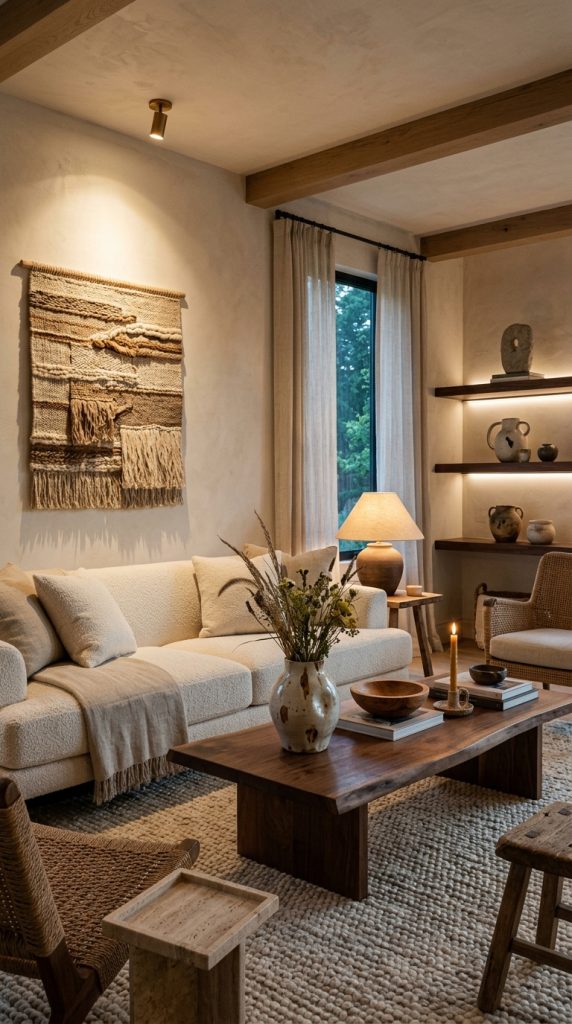
    Contemporary furniture can sometimes feel too perfect or uniform. Handmade pieces introduce personality, warmth, and a sense of craftsmanship that makes a home feel unique.

    The purpose of handmade decor is not to fill the home with accessories. Instead, it is about choosing meaningful pieces that add authenticity.

    Ceramics are one of the easiest ways to introduce handmade beauty.

    A handcrafted ceramic vase on a console.

    A textured bowl on a coffee table.

    A collection of pottery displayed on shelves.

    These pieces bring natural imperfections that make the space feel more personal.

    Unlike mass-produced decorations, handmade objects often show small variations that make them special.

    Textiles are another important element.

    Handwoven blankets, artisan rugs, and natural fiber cushions can add depth and comfort.

    Look for pieces made from:

    • Linen
    • Wool
    • Cotton
    • Jute
    • Hemp

    These materials create softness while supporting the organic modern aesthetic.

    Wall decor can also include handmade elements.

    Examples include:

    • Textured fiber art
    • Hand-painted artwork
    • Sculptural wall pieces
    • Artisan prints

    These choices create a more collected feeling compared with generic decorations.

    Furniture can also include handcrafted details.

    A wooden bench made by artisans.

    A carved side table.

    A handmade dining chair.

    These pieces often become conversation starters because they carry a story.

    The key is balancing handmade elements with modern design.

    Too many rustic pieces can change the style completely.

    Organic modern interiors work because they combine different worlds:

    A modern sofa with a handmade ceramic table lamp.

    A contemporary kitchen with artisan pottery.

    A minimalist bedroom with a woven textile.

    This contrast creates sophistication.

    Handmade decor also allows homeowners to express personality.

    A beautiful home should not look like a showroom where everything appears untouched.

    It should reflect the people who live there.

    Choose pieces that have meaning, memories, or craftsmanship behind them.

    Another benefit of handmade items is their timeless quality.

    Trendy decorations may lose appeal after a few years, but well-crafted objects often become more valuable emotionally over time.

    Display handmade pieces with intention.

    A single beautiful object can have more impact than many decorative items.

    Give important pieces enough space so their details can be appreciated.

    Lighting can enhance handmade textures.

    Place lights at appropriate places, including accent lighting near artwork, shelf lighting for ceramics, and soft lamps that highlight handcrafted surfaces.

    The combination of contemporary structure and handmade warmth is what makes organic modern homes feel comfortable, elegant, and personal.

    15. Create a Complete Timeless Organic Modern Home Atmosphere

    The final step in creating an organic modern luxury home is understanding that the style is not about individual decorations. It is about creating harmony between every room.

    A truly successful organic modern home feels connected from one space to another.

    The living room, kitchen, bedroom, and bathroom should each have their own personality while still sharing the same design language.

    The foundation begins with consistency.

    This does not mean every room should look identical.

    Instead, repeat certain qualities throughout the home:

    • Natural materials
    • Calm colors
    • Comfortable furniture
    • Quality craftsmanship
    • Thoughtful lighting

    These elements create a sense of flow.

    For example, the warmth of wooden furniture in the living room can continue through kitchen cabinetry or bedroom details.

    The neutral tones used in one room can inspire the palette of another area.

    This creates a home that feels intentionally designed.

    One of the biggest differences between temporary trends and timeless interiors is quality.

    Organic modern luxury focuses on choosing fewer but better pieces.

    Instead of replacing furniture frequently, invest in items that can last for years.

    A beautiful wooden dining table.

    A comfortable linen sofa.

    A handcrafted ceramic collection.

    A high-quality rug.

    These pieces become part of the homeโ€™s story.

    Another important aspect is maintaining balance.

    Organic modern design should not feel empty or overly minimal.

    A home needs warmth and personality.

    Add meaningful items such as:

    • Family photographs
    • Travel memories
    • Favorite books
    • Personal artwork

    These details prevent the space from feeling like a magazine display.

    At the same time, avoid unnecessary clutter.

    Every object should contribute to the atmosphere.

    A peaceful home is created not only by what is added but also by what is removed.

    Storage plays an important role in maintaining this balance.

    Hidden storage solutions allow everyday items to remain organized while keeping the visual appearance calm.

    Lighting should support the entire home experience.

    Different rooms require different moods.

    The kitchen may need brighter functional lighting.

    The bedroom may require softer relaxing illumination.

    The living room may benefit from layered lighting for different activities.

    Place lights at appropriate places throughout the home to create comfort, highlight beautiful materials, and improve the overall atmosphere.

    Natural elements should also remain connected.

    Wood, stone, plants, and organic fabrics create a relationship between indoor spaces and the natural world.

    This connection is what makes organic modern design feel peaceful.

    The beauty of this style is that it does not depend on perfection.

    A small natural variation in wood.

    A handmade ceramic shape.

    A slightly uneven stone texture.

    These details create authenticity.

    The best organic modern homes feel relaxed because they are designed for real life.

    They welcome guests.

    They provide comfort.

    They support daily routines.

    They age beautifully.

    A timeless home is not created by following every design trend. It is created by understanding what materials, colors, and layouts make people feel comfortable and connected.

    Organic modern luxury achieves this balance by combining contemporary simplicity with natural warmth.

    The result is a home that feels elegant today, comfortable tomorrow, and beautiful for many years to come.

    Conclusion

    Organic modern luxury home decor is more than an interior design trend. It is a lifestyle approach focused on creating peaceful, meaningful, and comfortable spaces.

    By combining natural materials, warm colors, thoughtful furniture, handmade details, and carefully planned lighting, any home can achieve a timeless organic atmosphere.

    The most successful designs do not rely on excessive decoration. They focus on quality, balance, and emotional connection.

    Whether you introduce a few organic modern elements or redesign your entire home, the goal remains the same: create a space that feels warm, sophisticated, and naturally beautiful.

    A truly luxurious home is not only one that looks impressive. It is one that feels like a place where you can relax, recharge, and enjoy everyday moments.


  • Black Accent Wall Ideas That Make Any Room Look Expensive

    Black Accent Wall Ideas That Make Any Room Look Expensive

    A black accent wall can completely transform the character of a home. Used thoughtfully, this dramatic color can make an ordinary room feel more architectural, sophisticated, and intentionally designed. While black may seem like a daring choice, it can actually be remarkably versatile. It works with warm neutrals, natural wood, creamy fabrics, metallic finishes, contemporary furniture, vintage pieces, and even relaxed organic textures.

    The secret to making a black accent wall look expensive is not simply choosing the darkest paint available. Luxury comes from the relationship between the wall and everything surrounding it. The finish, proportions, lighting, furniture, materials, and accessories all contribute to the final result.

    A matte black wall can give a living room a dramatic designer feel. A charcoal-black bedroom wall can create an intimate retreat. Black wood paneling can add architectural texture, while a black fireplace wall can make an existing feature feel custom-built. In a kitchen, black can introduce contemporary sophistication, while in a home office, it can create a polished backdrop.

    For homeowners who love modern luxury, contemporary interiors, organic modern decor, minimalist spaces, or sophisticated traditional rooms, there is a black accent wall idea that can work beautifully.

    Another advantage is that you do not necessarily need a large renovation. Sometimes painting one strategically selected wall can create more impact than replacing an entire room of furniture.

    The following 10 ideas explore different ways to use black accent walls throughout the home. Each approach focuses on a different design direction so you can find inspiration without making every room look identical.

    1. Create a Luxury Living Room With a Matte Black Accent Wall

    The living room is one of the most effective places to experiment with a black accent wall because it naturally contains several elements that can balance a dramatic background. Sofas, rugs, coffee tables, artwork, lamps, and decorative accessories all give you opportunities to soften and complement the dark surface.

    A matte black wall is particularly effective when you want a sophisticated appearance. Unlike glossy finishes, matte paint absorbs light and creates a deep, velvety background. This makes the wall feel architectural rather than flashy.

    The first decision is choosing which wall should become the feature. In many living rooms, the strongest candidate is the wall behind the sofa. If the room has a fireplace or media unit, however, that wall may naturally be more appropriate.

    Think about the room from the entrance. Which wall immediately catches your attention? Which wall already functions as the visual anchor? That is usually the best place for black.

    A cream or beige sofa can look especially beautiful against a matte black background. The contrast is dramatic but still inviting. If your existing sofa is gray, camel, brown, or even muted olive, it can also work well.

    The important thing is to avoid surrounding the black wall with too many competing dark elements. A black wall paired with a charcoal sofa, black rug, dark curtains, and black furniture can become visually heavy.

    Instead, create contrast.

    Try combining a black wall with:

    • Cream upholstery
    • Warm beige cushions
    • Natural wood
    • Soft ivory rugs
    • Brass lighting
    • Neutral artwork
    • Textured fabrics

    Warm wood is particularly useful because it introduces natural variation.

    A walnut coffee table against a black wall can create an expensive, custom-designed feeling. The wood grain provides warmth while the black provides depth.

    You can also use a large piece of artwork on the wall. Light-colored abstract artwork can look striking against matte black. Instead of covering the entire wall with multiple small frames, consider one oversized artwork piece.

    Large-scale decor often creates a more luxurious appearance because it gives the room a sense of proportion.

    Lighting is another major factor.

    Black surfaces absorb significant amounts of light, so you need to think about illumination before committing to the color.

    Rather than depending entirely on a ceiling fixture, create several lighting zones.

    A floor lamp can illuminate one side of the seating area. A table lamp can add warmth near a console. Wall sconces can provide architectural lighting. Accent lighting can highlight artwork.

    Place lights at appropriate places, using warm illumination around the seating area and subtle lighting directed toward important architectural or decorative elements.

    During the day, natural light will prevent the black wall from feeling too heavy. In the evening, layered lighting will make it feel cozy rather than gloomy.

    Texture is also important.

    A black wall with completely smooth surfaces throughout the room can sometimes look stark. Introduce tactile materials such as linen, boucle, wool, leather, or woven textiles.

    For example, imagine a matte black wall behind a cream boucle sofa, a walnut coffee table, an ivory wool rug, and a warm brass floor lamp. The combination feels sophisticated because every material contributes something different.

    If your living room has high ceilings, a black accent wall can make the architecture feel even more dramatic. If the room is small, keep the rest of the palette lighter and use mirrors or reflective surfaces strategically.

    You do not have to make the entire room luxurious through expensive purchases. The wall itself becomes a major visual investment, so the surrounding pieces can remain relatively simple.

    The most important principle is intentionality.

    Do not treat the black wall as an isolated decoration. Let it interact with the sofa, artwork, furniture, flooring, and lighting.

    When all of these elements support one another, the result can feel like a professionally designed living room rather than simply a room with a dark wall.

    2. Turn the Bedroom Into a Cozy Retreat With a Black Feature Wall

    A black bedroom accent wall can create one of the most intimate and sophisticated atmospheres in the home.

    Bedrooms are naturally suited to deeper colors because they are spaces designed for rest and relaxation. A dark backdrop behind the bed can create a cocoon-like feeling while making the bed look more substantial.

    The wall behind the headboard is usually the strongest location.

    It creates an immediate focal point and naturally frames the bed.

    For a particularly luxurious appearance, consider an upholstered headboard against the black wall. Cream, taupe, beige, camel, or muted gray upholstery can create beautiful contrast.

    You can also use a black wall as a backdrop for a wooden bed.

    A walnut bed frame against matte black creates a sophisticated combination of dark and warm tones.

    If you want additional architectural interest, consider using wall molding or decorative paneling rather than relying solely on paint.

    For example, narrow vertical panels painted black can add subtle dimension. The shadows created by the molding become visible as the lighting changes throughout the day.

    Another option is a black fluted wall.

    Vertical fluted panels create texture and can make the ceiling feel taller.

    The bedding should be chosen carefully.

    Light bedding is often the easiest way to balance a dark wall.

    Cream linen sheets, ivory pillows, a beige duvet, and a soft brown throw can make the room feel warm and inviting.

    You can also introduce one richer accent color.

    Burgundy, olive green, rust, deep navy, or chocolate brown can all work beautifully with black.

    However, avoid introducing too many colors. The goal is to create a controlled palette.

    Nightstands are another opportunity to reinforce the design.

    Warm wood nightstands can soften the black wall. Alternatively, light stone or cream-colored nightstands can increase contrast.

    Metallic details can also add sophistication.

    A pair of brushed brass lamps beside the bed can introduce a subtle glow. Bronze or aged brass can feel softer and more timeless than extremely shiny gold.

    Lighting becomes especially important in a bedroom because the room needs to transition between different moods.

    Bright lighting may be necessary when getting dressed or cleaning, while softer lighting is better for winding down.

    Use bedside lamps or wall sconces for focused illumination.

    Place lights at appropriate places, especially on both sides of the bed, near seating areas, and around important architectural details.

    Warm bulbs will enhance the cozy atmosphere.

    Avoid making the black wall completely empty if it feels unfinished, but do not overdecorate it either.

    A single oversized artwork piece above the headboard can be enough.

    Alternatively, allow the headboard itself to become the primary focal point.

    Floor-to-ceiling curtains can make the bedroom feel more luxurious.

    Choose soft neutral fabric that complements the bedding.

    Linen-look curtains create an organic appearance, while heavier curtains create a more hotel-inspired feeling.

    A large rug beneath the bed can also make the room feel warmer.

    The rug does not need to be heavily patterned. A subtle texture may be more effective.

    If the bedroom is small, use the black wall strategically rather than painting every surface dark. Keep the remaining walls light and choose furniture with clean profiles.

    Mirrors can also help distribute natural and artificial light.

    The finished space should feel dramatic but restful.

    The black wall provides depth, while soft bedding, natural textures, and warm lighting ensure that the bedroom remains comfortable.

    3. Make a Fireplace Wall the Dramatic Center of the Room

    A fireplace already has the potential to become the most important architectural feature in a room. Painting the surrounding wall black can amplify that effect and create a sophisticated focal point.

    This approach works particularly well in living rooms, family rooms, and large bedrooms.

    The fireplace itself does not necessarily need to be black.

    In fact, contrast can make the feature even more beautiful.

    Imagine a black wall surrounding a creamy limestone fireplace. The light stone becomes highly visible against the dark background.

    Marble can create an even more luxurious effect.

    White marble with subtle veining looks striking against black.

    Travertine and limestone can create a warmer, organic appearance.

    If your fireplace has a simple white surround, painting the wall black may be enough to transform it.

    For a more contemporary look, consider a plaster fireplace against a deep charcoal-black wall.

    Built-in shelving can also be incorporated around the fireplace.

    Black built-ins can create the appearance of custom cabinetry.

    The shelves can be styled with carefully selected objects:

    • Books
    • Ceramic vessels
    • Sculptural objects
    • Small artwork
    • Natural branches
    • A few personal pieces

    Avoid filling every shelf.

    Empty space is part of the design.

    It allows the objects that you choose to appear more important.

    If the fireplace wall includes a television, black can help the screen visually blend into the background.

    This can create a cleaner appearance when the television is not being used.

    Furniture should provide softness.

    A large cream sofa can balance the dark architectural feature.

    Brown leather chairs can introduce another layer of warmth.

    A natural wood coffee table can connect the fireplace to the rest of the room.

    For a more contemporary look, choose a stone or light wood table.

    The surrounding rug should provide contrast.

    Cream, oatmeal, beige, or warm gray can all work well.

    Lighting should emphasize the fireplace without making it look theatrical.

    Wall sconces can frame the fireplace.

    Small accent lights can illuminate shelving.

    A floor lamp can provide additional warmth near the seating area.

    Place lights at appropriate places, especially around the fireplace, built-in shelving, and nearby seating.

    If your fireplace is functional, the natural glow from the fire will become another layer of lighting.

    For safety, maintain appropriate clearances around the fireplace and follow the manufacturer’s or local installation requirements.

    The black fireplace wall should feel integrated into the architecture.

    Do not add dozens of decorative objects simply because the wall is dark.

    Instead, choose a few high-quality elements.

    A large ceramic vase, a stack of beautiful books, and one sculptural piece may be enough.

    This approach creates the kind of understated luxury often seen in high-end interiors.

    The wall becomes dramatic without becoming chaotic.

    4. Add Architectural Texture With a Black Wood Slat Wall

    If you want a black accent wall that feels architectural rather than simply painted, consider black wood slats or vertical paneling.

    This approach adds depth through texture and shadow.

    The individual slats create a rhythm across the wall, making the surface visually interesting even when the decor is minimal.

    A black wood slat wall can work beautifully behind a bed.

    In this application, the wall becomes a large-scale headboard.

    Instead of purchasing an enormous upholstered headboard, the wall itself provides the architectural backdrop.

    Pair it with cream bedding and warm wood furniture.

    The combination of black wood and natural wood can be particularly sophisticated because both materials share a natural grain.

    You can also use black slats behind a living room sofa.

    In that setting, the wall can frame artwork, shelving, or a media console.

    Another option is a black slat wall in a dining area.

    A simple dining table in warm wood can look dramatic against the dark vertical texture.

    Choose chairs in cream, tan, or natural upholstery to keep the room balanced.

    One of the advantages of slat walls is their ability to add visual height.

    Vertical lines naturally draw the eye upward.

    This can be particularly effective in rooms with lower ceilings.

    For a more subtle effect, choose narrow slats with small spaces between them.

    For a stronger architectural appearance, use wider panels.

    The finish also matters.

    A completely opaque black finish creates a dramatic contemporary appearance.

    A black stain that allows some wood grain to remain visible creates a warmer and more organic look.

    If you are installing actual wood panels, consider the room’s moisture levels and maintenance requirements before selecting the material.

    The surrounding furniture should not compete with the wall.

    Clean-lined pieces work particularly well.

    For example, a black slat wall behind a low-profile cream sofa, a simple walnut coffee table, and a textured neutral rug can look extremely sophisticated.

    Avoid placing numerous patterned objects against a highly textured wall.

    The wall already contains visual movement.

    Instead, choose smooth surfaces nearby.

    A stone table, ceramic vase, or simple artwork can provide contrast.

    Lighting is one of the most exciting elements of this design.

    Because the slats create shadows, lighting can emphasize their depth.

    Wall-mounted fixtures can create beautiful gradients across the surface.

    Hidden accent lighting can also produce a subtle glow.

    Place lights at appropriate places, especially where they can reveal the texture and vertical rhythm of the panels without producing harsh glare.

    The final result is architectural, modern, and highly intentional.

    A black slat wall can make a relatively simple room feel custom-built because it changes the architecture rather than merely adding decoration.

    5. Use Black and Brass for an Elegant, Expensive-Looking Combination

    Black and brass have long been associated with sophisticated interiors because the contrast between the deep dark surface and warm metallic finish creates visual richness.

    The key is using brass carefully.

    You do not need every accessory to be gold.

    In fact, excessive metallic decoration can make a room feel overly formal.

    Instead, use brass in a few strategically selected areas.

    Lighting is one of the easiest places to introduce brass.

    A brass wall sconce against a black wall can become a beautiful decorative feature.

    In a bedroom, matching brass sconces on either side of the bed can create symmetry.

    In a hallway, one or two brass fixtures can provide subtle elegance.

    Furniture hardware is another option.

    Black cabinetry with brass handles is particularly effective in kitchens, offices, and built-ins.

    A black accent wall can complement those finishes without requiring additional metallic accessories.

    Artwork can also introduce brass.

    A large framed artwork piece with a thin aged-brass frame can stand out beautifully against black.

    Choose artwork with neutral, cream, brown, or muted colors so that the metallic frame remains a supporting element.

    Natural materials should be introduced to prevent the room from feeling too glamorous.

    Warm wood is an excellent partner for black and brass.

    Stone is another.

    Consider a black wall with a walnut console, brass lamp, and travertine accessories.

    The combination feels luxurious but grounded.

    Textiles are equally important.

    Cream linen curtains can soften the overall appearance.

    A beige wool rug can provide warmth.

    A camel leather chair can add another layer of richness.

    The idea is to combine different materials instead of relying entirely on decorative accessories.

    If you are decorating a bedroom, a black wall with brass sconces, cream bedding, walnut nightstands, and a taupe rug can create an elegant boutique-hotel feeling.

    In a dining room, a black wall behind the dining table can provide a sophisticated backdrop for brass lighting and artwork.

    In a home office, black can create a professional environment while brass adds refinement.

    Lighting should remain warm.

    Place lights at appropriate places, using warm bulbs in brass fixtures and softer illumination around furniture and artwork.

    Warm lighting makes brass appear richer and gives the black wall more dimension.

    Be cautious with shiny finishes.

    Highly reflective gold can sometimes feel less timeless.

    Brushed, aged, or satin brass tends to look more sophisticated.

    The same principle applies to accessories.

    One beautiful brass object is usually more effective than a collection of unrelated metallic decorations.

    The luxury effect comes from restraint.

    Black provides the depth.

    Brass introduces warmth.

    Wood and textiles create comfort.

    Together, they create a room that feels expensive without appearing excessive.

    6. Give a Home Office a Sophisticated Black Backdrop

    A home office can benefit enormously from a black accent wall because the color creates a sense of focus and visual authority.

    Instead of using black throughout the entire room, choose the wall behind the desk.

    This creates a strong backdrop while keeping the rest of the office visually open.

    The desk becomes the main piece of furniture.

    Warm walnut is particularly effective against black.

    The contrast between the dark wall and natural wood creates a refined executive appearance.

    For a contemporary office, pair the wall with a clean-lined desk.

    For a more traditional space, use a substantial wooden desk with elegant details.

    A leather chair can add another layer of sophistication.

    Choose brown, tan, or black leather depending on the rest of the palette.

    If the room has built-in shelving, black can be extended onto the shelving to create a seamless appearance.

    This is especially effective when the shelves are styled with books and a limited number of decorative pieces.

    A black wall can also make lighter objects more visible.

    Cream ceramics, white books, natural wood frames, and muted artwork will stand out beautifully.

    The goal is not to create a dramatic office simply for appearance.

    The room should remain practical.

    Task lighting is therefore essential.

    A desk lamp can provide focused light for paperwork.

    Wall sconces can provide additional illumination.

    A floor lamp can soften the corner of the room.

    Place lights at appropriate places, particularly over or beside the workspace, near reading areas, and along shelving.

    Choose warm-neutral illumination that allows you to work comfortably without making the room feel sterile.

    Natural daylight should also be considered.

    If your office receives strong sunlight, the black wall may look completely different throughout the day.

    This is not necessarily a problem.

    The changing light can add depth and character.
    Window treatments should therefore be chosen carefully.

    Simple linen curtains can soften the architecture without making the office feel too casual.

    A neutral rug can help define the workspace.

    Artwork should be selected according to the atmosphere you want.

    Black walls work beautifully with monochromatic photography, abstract artwork, vintage prints, or simple line drawings.

    If you use several pieces, keep the arrangement organized.

    A chaotic gallery wall may undermine the clean professional feeling.

    Storage is another important part of a luxury office.

    Clutter instantly makes an expensive-looking room feel less polished.

    Use drawers, cabinets, baskets, or built-in storage to keep paperwork and miscellaneous items out of sight.

    A black accent wall is most successful when the office itself is organized.

    The result can feel sophisticated, focused, and custom-designed.

    7. Warm Up a Black Wall With Natural Wood and Organic Materials

    Black can sometimes feel formal or dramatic.

    Natural materials can soften it.

    This is why the combination of black, wood, linen, stone, and woven textures works so well.

    If you love organic modern interiors but want something with more contrast, a black accent wall can provide the perfect foundation.

    Start with the wall.

    Choose a matte or low-sheen black finish.

    Then introduce warm wood.

    Walnut, oak, teak, or medium-toned natural wood can all work beautifully.

    A walnut console against a black wall is an especially simple way to achieve this look.

    Add a stone lamp or ceramic vase.

    These natural materials create variation without introducing excessive color.

    Textiles should remain soft and relaxed.

    Linen is ideal.

    A cream linen sofa, beige curtains, or natural bedding can make the dark wall feel much more approachable.

    Wool rugs are another excellent choice.

    Their texture adds comfort while their neutral colors maintain the sophisticated palette.

    You can also introduce subtle greenery.

    One large plant can provide a natural contrast against black.

    Choose a plant with a strong silhouette rather than filling the room with numerous small plants.

    Branches in a large ceramic vase can provide a more sculptural effect.

    The idea is to create an organic composition.

    Avoid mixing too many unrelated materials.

    For example, if the room already has black walls, walnut furniture, woven baskets, and stone accessories, adding several different metallic finishes may create unnecessary visual noise.

    Choose a small number of material families and repeat them.

    This creates cohesion.

    Lighting should support the natural character of the room.

    Warm light works particularly well with wood.

    Place lights at appropriate places, including warm table lamps near wood furniture, floor lamps beside seating, and subtle accent lighting that reveals the texture of the wall.

    If your black wall is in a room with large windows, allow natural daylight to remain a major part of the design.

    Use curtains that filter light rather than blocking it completely when privacy allows.

    This approach is especially effective in living rooms, bedrooms, dining areas, and entryways.

    The finished room feels modern but not cold.

    It has the drama of black but the warmth of natural materials.

    That balance is what makes this approach so timeless.

    8. Create a Dramatic Kitchen With a Black Accent Wall

    A black accent wall can completely change the atmosphere of a kitchen.

    While black cabinetry has become increasingly popular, a single black wall offers a more controlled way to introduce the trend.

    This works particularly well when the rest of the kitchen is light.

    Imagine warm white cabinetry, natural wood shelves, cream stone countertops, and one dramatic black wall.

    The contrast immediately creates depth.

    A black wall can be used behind a dining nook, around a pantry area, or as a visual backdrop for open shelving.

    If you are using black in a backsplash or cooking area, select a surface appropriate for moisture, heat, cleaning, and the manufacturer’s specifications.

    Matte black tile can create a sophisticated appearance.

    Black stone can feel exceptionally luxurious.

    A dark textured surface can add architectural interest.

    For painted areas, use a durable finish appropriate for kitchen conditions.

    Cabinet hardware can reinforce the color story.

    Brass handles provide warmth.

    Matte black hardware creates a monochromatic effect.

    Wood handles can introduce organic contrast.

    Choose one dominant direction instead of mixing too many finishes.

    Pendant lighting can become a major part of the kitchen design.

    Warm brass pendants over an island can contrast beautifully with a black wall.

    Natural wood stools can soften the overall appearance.

    Cream or light-colored countertops will help maintain brightness.

    If the kitchen has limited natural light, avoid allowing black to dominate too much of the room.

    Use lighter cabinetry and reflective surfaces to maintain openness.

    Lighting should be carefully layered.

    Under-cabinet lighting is particularly useful because it provides practical illumination while creating a soft evening glow.

    Pendant fixtures can illuminate the island.

    Ceiling lighting can provide general visibility.

    Place lights at appropriate places, especially above work areas, under cabinets, around the island, and near the black feature wall.

    Decorative objects should remain simple.

    A few ceramic vessels, a wooden cutting board, or a small arrangement of branches can provide personality.

    Avoid turning the black wall into a display area filled with miscellaneous objects.

    The architecture should remain visible.

    A black kitchen accent wall can be especially effective in open-plan homes because it creates a visual zone without requiring a physical divider.

    It can separate the kitchen from the dining or living area while keeping the overall layout connected.

    The result is contemporary, sophisticated, and functional.

    9. Turn a Black Wall Into an Art Gallery Backdrop

    If you love artwork, a black accent wall can become a beautiful gallery-style feature.

    Dark backgrounds allow light-colored artwork to stand out dramatically.

    This approach can work in living rooms, hallways, dining rooms, bedrooms, stairways, and home offices.

    The first decision is whether you want one large piece or several smaller works.

    For an expensive-looking appearance, oversized artwork is often the simplest option.

    One large abstract painting can create a sophisticated focal point without requiring additional wall decoration.

    Choose artwork that includes shades already present in the room.

    For example, if your room has cream upholstery, walnut furniture, and brass lighting, artwork containing cream, brown, muted gold, and soft gray can create cohesion.

    If you prefer a gallery wall, plan the composition before hanging anything.

    Use consistent spacing.

    You can mix different artworks, but they should share a visual connection.

    That connection might be:

    • Similar frame color
    • Similar palette
    • Similar subject
    • Similar artistic style
    • Similar proportions

    Black walls also work beautifully with vintage artwork.

    Old botanical prints, architectural drawings, portraits, or antique-inspired pieces can create an elegant atmosphere.

    The contrast between traditional artwork and a contemporary black wall can be particularly interesting.

    Frames matter.

    Thin brass frames create elegance.

    Natural wood frames create warmth.

    Black frames create a seamless gallery appearance.

    White or cream mats can make artwork stand out more strongly.

    Do not automatically assume that every frame needs to match.

    However, there should be a deliberate relationship between them.

    Lighting is essential for artwork.

    Picture lights can illuminate individual pieces.

    Adjustable fixtures can highlight larger works.

    Place lights at appropriate places, ensuring that artwork receives gentle illumination without excessive glare or harsh shadows.

    If the wall is near a window, consider how sunlight affects the artwork and use appropriate window coverings when needed.

    Furniture in front of an art wall should remain relatively simple.

    A cream sofa, low console, or understated bench can support the artwork without competing with it.

    Avoid placing a large number of decorative objects directly below an already busy gallery wall.

    Give the artwork breathing room.

    The luxury effect comes from curation.

    It should feel like every piece was selected deliberately.

    A black gallery wall can make inexpensive artwork look more substantial because the dark background creates contrast and visual drama.

    The same principle works with photography.

    Black-and-white photographs look especially sophisticated against black when displayed with light mats or frames.

    Color photography can also be effective when the artwork contains strong tones that contrast with the wall.

    This approach is perfect for homeowners who want their accent wall to feel personal rather than purely decorative.

    10. Make a Small Room Look Sophisticated With a Carefully Chosen Black Wall

    A small room does not automatically mean you should avoid black.

    In fact, a carefully selected black accent wall can make a small space feel more intentional and visually interesting.

    The most important factor is choosing the right wall.

    Instead of painting the entire room black, select one wall that can become the focal point.

    In a small bedroom, the wall behind the bed is an excellent choice.

    In a small living room, the wall behind the sofa may work better.

    In a home office, the desk wall can become the feature.

    The rest of the room should support the dark wall.

    Light furniture is usually a safe choice.

    Cream, beige, ivory, light gray, and natural wood can create contrast.

    This does not mean the entire room must be white.

    Warm neutral colors can actually make the space feel more comfortable.

    Mirrors can also help.

    A large mirror placed opposite a light source can reflect daylight and create a greater sense of openness.

    Choose a mirror with a simple frame so it does not compete with the black wall.

    Furniture proportions are particularly important in small rooms.

    Avoid selecting oversized pieces simply because they look luxurious in photographs.

    A large sectional may overwhelm a small living room.

    Instead, choose a sofa with a refined profile and enough visible floor around it.

    Furniture with exposed legs can also make the room feel lighter.

    Storage should be carefully considered.

    A cluttered small room will feel even more cramped against a dark background.

    Use closed storage for everyday items.

    Keep open shelving selective.

    The goal is to create visual breathing room.

    Lighting should be layered because small rooms often need help maintaining brightness.

    Wall sconces are particularly useful because they take up less surface space than table lamps.

    A compact floor lamp can work in a corner.

    A ceiling fixture can provide general illumination.

    Place lights at appropriate places, especially beside seating, beside the bed, above work areas, and near the black feature wall.

    Natural light should remain visible whenever possible.

    Avoid heavy curtains that completely block daylight unless necessary for privacy or sleep.

    Light-filtering curtains can provide softness while maintaining brightness.

    Another useful technique is to repeat the black color in small amounts elsewhere.

    For example, if you have a black accent wall, add a black picture frame, a small black lamp detail, or a black furniture leg elsewhere.

    This creates cohesion.

    However, do not scatter black accents everywhere.

    The accent wall should remain the primary feature.

    Texture can make a small room feel more sophisticated.

    A textured rug, linen curtains, upholstered furniture, or a woven basket can add depth without requiring more furniture.

    Choose fewer, better pieces.

    A small room can actually look more luxurious than a large one when every element has a clear purpose.

    The black wall becomes the statement, while the remaining space stays calm and functional.

    How to Make a Black Accent Wall Look More Expensive

    The expensive appearance usually comes from materials, scale, proportion, and restraint rather than the price of individual decorations.

    Choose a few visually significant elements.

    An oversized headboard.

    A large artwork piece.

    A substantial mirror.

    A beautiful light fixture.

    A quality-looking rug.

    A well-proportioned console.

    These can create more impact than dozens of inexpensive accessories.

    Keep surfaces relatively clear.

    Luxury interiors often have visible negative space.

    Avoid filling every shelf, table, and corner.

    Choose accessories with different heights and textures.

    A large ceramic vase next to a stack of books can look more sophisticated than several tiny decorative objects.

    Pay attention to symmetry when appropriate.

    Matching bedside lamps can create an immediate sense of order.

    In living rooms, however, asymmetry can feel more relaxed.

    The goal is not perfection.

    It is intentionality.

    Black Accent Walls and Different Interior Styles

    Black walls are surprisingly adaptable.

    For modern interiors, pair black with clean-lined furniture, glass, metal, and simple artwork.

    For organic modern spaces, combine black with walnut, linen, stone, ceramics, and greenery.

    For traditional interiors, use black with molding, antique brass, classic furniture, and elegant artwork.

    For industrial rooms, combine black with exposed materials, leather, metal, and concrete-inspired surfaces.

    For minimalist interiors, allow the black wall to be the primary statement and keep everything else simple.

    For glamorous rooms, use controlled amounts of brass, velvet, marble, and sophisticated lighting.

    This versatility is one reason black accent walls remain such a useful design choice.

    Common Mistakes to Avoid With Black Accent Walls

    A black accent wall can look stunning, but there are several mistakes that can reduce its impact.

    One is choosing the wrong wall.

    A random wall with no relationship to the room’s furniture may look disconnected.

    Another is using too many dark elements.

    If the wall, furniture, curtains, rug, and accessories are all dark, the room may feel unnecessarily heavy.

    Another common issue is poor lighting.

    Black needs enough illumination to reveal its texture and surrounding furniture.

    Relying entirely on one overhead light can make the room feel flat.

    Overdecorating is another problem.

    A black wall is already visually powerful.

    Adding excessive artwork, shelves, mirrors, and accessories can make it chaotic.

    Finally, do not choose black simply because it is trending.

    Consider your home’s architecture, natural lighting, furniture, and personal style.

    A successful accent wall should feel like part of the room rather than an isolated trend.

    Final Thoughts

    Black accent walls have the ability to make a room feel dramatically more sophisticated when they are used with intention.

    The color itself is powerful, but the surrounding materials determine whether the final result feels luxurious or simply dark.

    A matte black living room wall can create a sophisticated backdrop for cream upholstery and warm wood.

    A black bedroom wall can transform the sleeping area into a cozy retreat.

    A black fireplace wall can emphasize architecture and create a dramatic focal point.

    Black wood slats can introduce dimension and custom-built character.

    Black and brass can provide elegant contrast.

    A black home office can feel polished and professional.

    Natural wood and organic materials can soften the drama.

    A black kitchen wall can add contemporary sophistication.

    Artwork can turn a dark wall into a personal gallery.

    And even a small room can benefit from a carefully positioned black feature wall.

    The most successful designs share a few characteristics: clear focal points, balanced contrast, appropriate lighting, thoughtful proportions, and restraint.

    You do not need to purchase an entirely new collection of furniture to create an expensive-looking room.

    Sometimes the biggest transformation comes from one wall and a few carefully selected supporting elements.

    If you are nervous about using black, start small.

    Choose the wall behind the bed.

    Try the fireplace wall.

    Create a dramatic backdrop behind a desk.

    Or use black on a single architectural feature.

    Test your paint first, observe the color throughout the day, and consider how it interacts with your existing furniture.

    Then build the room around the wall rather than decorating randomly around it.

    The goal is not simply to make your home darker.

    The goal is to create depth, contrast, character, and sophistication.

    When black is balanced with warm wood, soft fabrics, natural stone, neutral colors, and carefully positioned lighting, it can make even a simple room feel remarkably elevated.

    That is what makes the black accent wall such a powerful decorating idea: it does not require excessive decoration to make an impression.

    It creates the impression through contrast.

    And when every surrounding element has a purpose, the result can feel timeless, sophisticated, cozy, and genuinely expensive.


  • Luxury Bedroom Decorating Ideas for a Cozy & Sophisticated Retreat

    Luxury Bedroom Decorating Ideas for a Cozy & Sophisticated Retreat

    A luxury bedroom should feel like more than a beautiful room. It should feel like a private retreat where you can slow down, relax, and enjoy a sense of comfort at the end of the day. The most successful luxury bedrooms are not necessarily the largest or most expensive. Instead, they combine thoughtful proportions, beautiful materials, layered textures, warm lighting, and carefully selected furniture to create an atmosphere that feels polished without becoming cold.

    For 2026, luxury bedroom design is increasingly centered on quiet elegance and comfortable sophistication. Rather than filling a room with flashy accessories, designers are creating spaces where quality, texture, and atmosphere do most of the work. Upholstered beds, warm woods, soft neutral palettes, sculptural lighting, layered bedding, natural stone, oversized curtains, and subtle metallic accents can make an ordinary bedroom feel remarkably elevated.

    The goal is also to maintain livability. A bedroom should not look like a showroom that is too perfect to use. It should have softness, practical storage, comfortable seating, accessible lighting, and enough personality to feel connected to the people who live there.

    Whether you have a spacious primary bedroom or a smaller room, the following ideas can help you create a cozy and sophisticated retreat. Each approach has its own visual identity, allowing you to choose elements that suit your existing home rather than copying an entire design.Luxury Bedroom Decorating Ideas for a Cozy & Sophisticated Retreat is explained in these ideas.

    1. Create a Sophisticated Neutral Bedroom With Layered Textures

    Neutral colors are one of the easiest ways to create a luxury bedroom because they provide a calm foundation while allowing texture and material quality to become the main focus.

    Instead of decorating the entire room in plain white, build a layered neutral palette using several related shades.

    Think about:

    • Warm ivory
    • Soft beige
    • Oatmeal
    • Taupe
    • Mushroom
    • Warm gray
    • Caramel
    • Chocolate brown

    The secret is not simply choosing neutral colors. It is combining them in different materials.

    For example, an ivory upholstered bed can be paired with beige linen bedding, a taupe throw, cream boucle cushions, a warm wooden nightstand, and a textured rug.

    Although the colors are similar, the different surfaces prevent the room from looking flat.

    Start With the Bed

    The bed should be the visual anchor of a luxury bedroom.

    An upholstered headboard immediately creates softness and visual importance.

    For a sophisticated appearance, consider:

    • Tall upholstered headboards
    • Channel tufting
    • Soft rounded edges
    • Linen upholstery
    • Velvet upholstery
    • Boucle upholstery
    • Natural woven upholstery

    A tall headboard can make the ceiling appear higher while giving the bed a hotel-inspired appearance.

    If your room is smaller, avoid choosing a headboard that is excessively wide or visually heavy. The proportions should match the room.

    Layer the Bedding

    Luxury bedding is rarely about one expensive duvet.

    Instead, the appearance comes from layering.

    Begin with high-quality sheets.

    Add a duvet or quilt.

    Then introduce a folded blanket or throw near the bottom of the bed.

    Finish with several pillows arranged in decreasing sizes.

    You can mix:

    • Crisp cotton
    • Linen
    • Velvet
    • Quilted fabrics
    • Soft woven materials

    Avoid making every textile identical.

    The contrast creates visual depth.

    Introduce Warm Wood

    A neutral room can sometimes feel too pale.

    Warm wood solves that problem.

    Use walnut, oak, or medium-toned wood for nightstands, benches, shelving, or a dresser.

    The wood introduces natural character while balancing soft textiles.

    Add a Textured Rug

    A large rug placed beneath the bed can make the room feel more cohesive.

    Ideally, the rug should extend far enough beyond the bed to provide a soft landing area.

    Neutral rugs with subtle patterns can add interest without overwhelming the room.

    Use Soft Lighting

    Lighting is especially important in neutral bedrooms because it creates the warmth that color alone may not provide.

    Use several sources instead of relying entirely on a ceiling fixture.

    Consider:

    • Bedside lamps
    • Wall sconces
    • A floor lamp
    • Pendant lighting
    • Accent lighting

    Place lights at appropriate places, especially warm bedside lighting on both sides of the bed and subtle ambient illumination throughout the room.

    Avoid extremely cool white bulbs because they can make beige and cream materials appear flat or gray.

    Finish With Minimal Accessories

    Do not fill every surface.

    A nightstand might only need a lamp, a small book, and one decorative object.

    The simplicity allows the textures to remain visible.

    The finished bedroom should feel quiet, warm, and expensive without appearing excessive.

    2. Design a Warm Wood Luxury Bedroom

    If you want a bedroom that feels sophisticated but grounded, make warm wood one of the primary design elements.

    Wood brings natural warmth into a bedroom and can prevent luxury interiors from becoming overly formal.

    For this approach, focus on walnut, oak, teak, or other warm-toned finishes.

    Choose a Statement Wooden Bed

    A wooden bed can become a beautiful focal point.

    Look for clean architectural lines rather than highly ornate designs.

    A large wooden headboard can create an impressive visual feature without requiring artwork above the bed.

    You can choose:

    • Vertical wood slats
    • Wide wood panels
    • Natural oak
    • Walnut veneer
    • Ribbed wood
    • Curved wood

    The finish should complement the existing flooring and furniture.

    Balance Wood With Soft Fabrics

    Too much wood can make the bedroom feel visually heavy.

    Balance it with soft textiles.

    Use:

    • Cream bedding
    • Beige curtains
    • Boucle cushions
    • Linen duvet covers
    • Soft wool rugs

    This creates contrast between hard and soft materials.

    Add a Wooden Bench

    A bench at the foot of the bed is both practical and decorative.

    A simple upholstered bench with wooden legs can add another layer of sophistication.

    It also provides a convenient place to sit while getting ready.

    Add Natural Stone

    Warm wood looks beautiful with stone.

    Consider a small stone side table, marble tray, travertine lamp base, or stone decorative object.

    You do not need a large stone installation.

    Small touches can be enough.

    Use Earthy Colors

    A warm wood bedroom works particularly well with:

    • Cream
    • Sand
    • Camel
    • Terracotta
    • Olive
    • Taupe
    • Chocolate

    These shades reinforce the natural character of the room.

    Keep Accessories Intentional

    Use a few sculptural objects rather than many small decorations.

    For example, a ceramic vase on a dresser can have more visual impact than a collection of ten unrelated pieces.

    Add Warm Evening Lighting

    Place lights at appropriate places, including bedside lamps, wall sconces, and a soft floor lamp in a reading corner.

    Warm illumination will emphasize the wood grain and make the room feel especially cozy at night.

    This style is ideal for anyone who wants a bedroom that feels luxurious without being overly glamorous.

    3. Create a Boutique-Hotel Bedroom at Home

    One of the most effective ways to make a bedroom feel luxurious is to borrow design principles from high-end boutique hotels.

    The key is not copying a hotel room exactly.

    Instead, focus on the elements that make hotel bedrooms feel comfortable, organized, and sophisticated.

    Make the Bed the Star

    Choose a substantial bed with a large upholstered headboard.

    The headboard should visually anchor the wall.

    For a boutique appearance, consider a headboard that extends wider than the mattress.

    Use Symmetry

    Symmetry creates an immediate sense of order.

    Place matching or visually balanced nightstands on both sides of the bed.

    Then add similar lamps.

    You can still introduce small differences in accessories while maintaining overall balance.

    Layer the Bedding

    Use several layers.

    A possible arrangement could include:

    1. Fitted sheet
    2. Flat sheet
    3. Duvet
    4. Folded blanket
    5. Decorative cushions
    6. Accent pillows

    Choose fabrics that feel comfortable rather than purely decorative.

    Add Full-Length Curtains

    Curtains can dramatically improve a bedroom.

    Install them high and wide enough to frame the windows.

    Floor-length curtains can make the ceiling feel taller.

    Choose:

    • Linen
    • Cotton blend
    • Velvet
    • Heavy woven fabric

    For a sophisticated appearance, use curtains in a shade slightly darker or lighter than the walls.

    Add a Large Rug

    A generous rug beneath the bed helps unify the room.

    A subtle geometric or organic pattern can provide sophistication without competing with the bedding.

    Introduce a Seating Area

    If space allows, add a small chair and side table near a window.

    This creates a secondary zone within the bedroom.

    It can become a reading corner, morning coffee area, or quiet place to relax.

    Add Hotel-Inspired Lighting

    Layer the lighting carefully.

    Use bedside lamps for reading.

    Use accent lighting for atmosphere.

    Use a ceiling fixture for general illumination.

    Place lights at appropriate places so that no single light source has to illuminate the entire room.

    The final effect should be polished but still comfortable.

    4. Add Elegant Velvet for a Rich and Cozy Retreat

    Velvet can instantly make a bedroom feel richer because its surface catches light differently from cotton, linen, or wood.

    However, the goal is not to cover everything in velvet.

    Use it strategically.

    Choose One Main Velvet Feature

    A velvet headboard is one of the most effective options.

    Deep colors such as:

    • Forest green
    • Burgundy
    • Chocolate
    • Navy
    • Charcoal

    can create dramatic sophistication.

    If you prefer a lighter bedroom, choose:

    • Warm beige
    • Taupe
    • Dusty rose
    • Cream

    Pair Velvet With Linen

    Velvet becomes more interesting when paired with a contrasting fabric.

    Use linen bedding against a velvet headboard.

    The relaxed texture of linen prevents the room from looking overly formal.

    Add a Velvet Bench

    If the headboard is not velvet, use a velvet bench at the foot of the bed.

    This provides a luxurious accent without dominating the entire room.

    Introduce Brass

    Velvet and warm metals can work beautifully together.

    Consider:

    • Brass bedside lamps
    • Brass handles
    • A small brass tray
    • Aged brass wall sconces

    Choose brushed or aged finishes for a softer appearance.

    Use Darker Colors Carefully

    If you use a dark velvet headboard, balance it with lighter bedding and walls.

    For example:

    Charcoal headboard + cream bedding + warm wood + beige rug

    This keeps the room sophisticated without becoming too dark.

    Add Soft Lighting

    Velvet looks particularly beautiful under warm evening light.

    Place lights at appropriate places, especially beside the bed and near accent furniture.

    Use warm bulbs and diffused shades to prevent harsh highlights.

    Avoid Excessive Glamour

    Velvet does not need crystal chandeliers, mirrored furniture, and metallic accessories everywhere.

    One or two luxurious materials can be enough.

    The strongest luxury bedrooms often combine one dramatic material with many quiet supporting elements.

    5. Create a Cozy Luxury Bedroom With a Fireplace-Inspired Focal Point

    A fireplace can transform a bedroom into an especially inviting retreat.

    If your home already has a fireplace, make it a central design feature.

    If you do not have one, you can create a similar architectural focal point with a mantel-style feature, textured wall, or carefully designed media area.

    Use Natural Materials

    A stone or plaster fireplace can introduce architectural character.
    For a softer luxury aesthetic, consider:

    • Limestone
    • Travertine
    • Plaster
    • Light marble
    • Textured stone

    Choose a finish that works with your room rather than following a trend blindly.

    Keep the Mantel Simple

    Place only a few carefully selected objects.

    For example:

    • Large ceramic vase
    • Small artwork
    • Sculptural object
    • Candle
    • Dried branches

    Do not cover the entire mantel.

    Position the Bed Thoughtfully

    If the architecture allows it, orient the bed so that the fireplace is visible from the sleeping position.

    This creates a strong focal relationship between the bed and fireplace.

    Use a Cozy Seating Area

    Place an armchair near the fireplace.

    Add a small side table and soft throw.

    This can transform an unused corner into a comfortable retreat.

    Use Warm Textiles

    Layer:

    • Wool
    • Linen
    • Boucle
    • Cotton
    • Velvet

    The combination creates a tactile atmosphere.

    Create Evening Ambiance

    Place lights at appropriate places, such as a floor lamp near the chair, bedside lamps, and subtle accent lighting around the fireplace.

    If using candles, place them safely away from curtains and bedding.

    The goal is to create a peaceful evening atmosphere rather than excessive decorative lighting.

    6. Create a Modern Luxury Bedroom With Sculptural Lighting

    Lighting can become artwork in a luxury bedroom.

    Instead of treating lighting as something purely functional, choose fixtures that contribute to the room’s design.

    Choose a Statement Ceiling Fixture

    A sculptural chandelier or pendant can create a dramatic focal point.

    Look for designs with:

    • Curved forms
    • Soft geometric shapes
    • Textured glass
    • Matte metal
    • Warm brass
    • Sculptural silhouettes

    The fixture should be appropriately scaled to the room.

    Add Bedside Wall Sconces

    Wall sconces can free up nightstand space.

    They also create a symmetrical appearance.

    Install them at a practical height for reading.

    Use Decorative Table Lamps

    If you prefer table lamps, select sculptural ceramic, stone, glass, or metal bases.

    A beautiful lamp can function almost like a piece of art.

    Add Floor Lighting

    A floor lamp can create a cozy reading area.

    Position it beside an armchair or near a corner that needs additional illumination.

    Choose Warm Bulbs

    Warm lighting is especially effective in bedrooms.

    It creates a relaxing atmosphere and works beautifully with:

    • Cream
    • Beige
    • Brown
    • Wood
    • Brass
    • Taupe

    Layer the Lighting

    A sophisticated bedroom should have different lighting levels.

    You might use:

    Ceiling fixture โ†’ general illumination

    Bedside lamps โ†’ reading

    Floor lamp โ†’ seating area

    Accent light โ†’ artwork or architectural feature

    Soft ambient light โ†’ evening atmosphere

    Place lights at appropriate places rather than simply adding more fixtures.

    The objective is flexibility.

    You should be able to create bright functional lighting in the morning and soft atmospheric lighting at night.

    7. Design a Luxury Bedroom With an Elegant Statement Wall

    A statement wall can make a bedroom look custom-designed without requiring a complete renovation.

    The wall behind the bed is usually the strongest location because it naturally functions as the room’s focal point.

    Try Architectural Wall Panels

    Wall paneling can add sophistication.

    Options include:

    • Vertical panels
    • Traditional molding
    • Fluted panels
    • Upholstered panels
    • Wood slats

    Choose a design that matches the architecture of your home.

    Use Textured Wallpaper

    A subtle wallpaper can create depth.

    Consider:

    • Linen-look wallpaper
    • Grasscloth-inspired texture
    • Soft geometric patterns
    • Abstract organic patterns
    • Subtle metallic details

    Avoid extremely busy designs if you want the room to feel calm.

    Create a Plaster-Look Wall

    A textured plaster finish can provide an organic luxury appearance.

    Soft beige, ivory, mushroom, or warm gray can work beautifully.

    Add Artwork

    Instead of a statement wall treatment, you can create impact with oversized artwork.

    One large piece can often look more luxurious than several tiny frames.

    Choose artwork with colors that complement your bedding.

    Consider the Headboard

    Do not forget the relationship between the statement wall and headboard.

    If the wall is heavily textured, choose a simpler headboard.

    If the wall is simple, the headboard can become more dramatic.

    Add Appropriate Lighting

    Place lights at appropriate places, particularly bedside sconces or subtle accent lighting that highlights the statement wall.

    Avoid lighting that creates harsh glare.

    Keep the Rest of the Room Quiet

    When one wall becomes the focal point, simplify the surrounding decor.

    This creates visual hierarchy.

    The bedroom will feel designed rather than decorated randomly.

    8. Create a Soft Cream and Warm Brown Luxury Retreat

    For a bedroom that feels exceptionally cozy, combine creamy whites with warm brown.

    This combination has a timeless quality and works across many design styles.

    Start with warm cream walls.

    Then introduce brown through furniture and accessories.

    Use Warm Brown Furniture

    Walnut nightstands, a dark oak dresser, or a brown upholstered bench can anchor the room.

    Avoid choosing too many unrelated wood tones.

    Try to keep the finishes within a similar warmth level.

    Choose Cream Bedding

    Cream bedding keeps the room light.

    Layer different textures rather than different colors.

    For example:

    • Cotton sheets
    • Linen duvet
    • Quilted coverlet
    • Boucle cushions
    • Woven throw

    Add Brown Accents

    Introduce brown through:

    • Throw blankets
    • Cushions
    • Leather chair
    • Wooden frame
    • Ceramic accessories

    Add a Textured Rug

    A cream or beige rug with subtle brown variation can connect the room together.

    Use Curtains

    Floor-length curtains in warm beige can make the room feel softer.

    Layer sheer curtains with heavier panels if privacy and light control are important.

    Add Natural Accessories

    A ceramic vase, wooden bowl, stone lamp, or dried branches can add organic character.

    Keep the quantity limited.

    Warm the Room With Lighting

    Place lights at appropriate places, especially bedside lamps with fabric shades, a floor lamp near the seating area, and gentle ambient lighting.

    Warm light against cream and brown materials creates an especially inviting evening atmosphere.

    This style is ideal if you want luxury that feels calm rather than dramatic.

    9. Create a Small Luxury Bedroom That Feels Spacious

    Luxury is not limited to large bedrooms.

    A small room can feel remarkably sophisticated when every piece is carefully selected.

    The most important principle is to avoid filling the room simply because there is space available.

    Choose the Right Bed

    A large headboard can create luxury, but an oversized bed can make a small room feel cramped.

    Choose proportions carefully.

    An upholstered headboard with a slim profile can provide elegance without consuming too much visual space.

    Use Wall-Mounted Lighting

    Wall sconces are particularly useful in small bedrooms.

    They free up bedside table space.

    You can then use smaller nightstands.

    Choose Furniture With Storage

    A storage bed or narrow dresser can provide practical function.

    Luxury should not come at the expense of organization.

    Use Mirrors Strategically

    A large mirror can make the room feel more open.

    Place it where it reflects natural light or an attractive part of the room.

    Avoid positioning it where it creates visual confusion.

    Use One Large Rug

    A small rug floating in the middle of the room can make the space feel fragmented.

    A properly sized rug beneath the bed can visually unify the room.

    Keep the Palette Light

    Cream, beige, soft taupe, and warm white can help maintain visual openness.

    You can still introduce darker accents through wood, lighting, or small accessories.

    Use Curtains Correctly

    Hang curtains close to the ceiling and allow them to fall to the floor.

    This can make the room feel taller.

    Layer Lighting

    Place lights at appropriate places, particularly wall sconces beside the bed and a small ambient lamp elsewhere in the room.

    Avoid relying on one bright overhead light.

    Keep Surfaces Clear

    A small room benefits enormously from visual simplicity.

    Choose only the objects you genuinely love.

    The result can feel more luxurious than a larger bedroom filled with unnecessary furniture.

    10. Create an Ultimate Cozy & Sophisticated Bedroom Retreat

    The final approach combines many of the most successful luxury bedroom principles into one cohesive design.

    The objective is not to use every possible luxury element.

    Instead, combine carefully chosen features that work together.

    Start With a Strong Foundation

    Choose a warm neutral palette.

    Cream, beige, taupe, warm brown, and muted charcoal provide a timeless foundation.

    Use one darker shade for contrast.

    Invest in the Bed

    The bed should be the most comfortable and visually important element.

    Choose a quality mattress and comfortable bedding.

    Then add a substantial headboard.

    A tall upholstered headboard can create a sophisticated focal point.

    Layer Different Textures

    Use several materials without overwhelming the room.

    For example:

    Linen + velvet + boucle + wood + ceramic + glass + metal

    Each texture contributes something different.

    Add Warm Wood

    Use warm wood for:

    • Nightstands
    • Dresser
    • Bench
    • Accent table
    • Decorative objects

    Wood adds depth and prevents the room from feeling sterile.

    Introduce One Luxurious Material

    Choose one material to make the room feel special.

    It might be:

    • Velvet
    • Marble
    • Brass
    • Natural stone
    • Boucle
    • Handmade ceramic

    You do not need all of them.

    Create a Comfortable Seating Area

    If the room allows, add an armchair.

    Pair it with a small side table and floor lamp.

    This transforms the bedroom into a retreat rather than simply a place to sleep.

    Add Oversized Curtains

    Full-length curtains can dramatically improve the atmosphere.

    Choose soft neutral fabric with enough weight to create beautiful folds.

    Add Art

    Use one large piece above a dresser or a carefully selected piece near the seating area.

    Art should support the room’s palette.

    Style the Nightstands

    Keep them functional.

    A good arrangement might include:

    • Lamp
    • Book
    • Small ceramic object
    • Water glass or carafe

    Avoid filling every available surface.

    Create a Layered Lighting Plan

    Lighting is what brings the entire bedroom together.

    Use:

    • Ceiling fixture
    • Bedside lamps
    • Wall sconces
    • Floor lamp
    • Accent lighting

    Place lights at appropriate places according to how the room is used.

    The bedroom should have enough lighting for practical activities while remaining capable of becoming soft and atmospheric at night.

    Add Soft Evening Details

    A folded throw at the foot of the bed can make the room feel inviting.

    A candle on a dresser can introduce gentle ambiance when used safely.

    A textured rug can make the first step out of bed more comfortable.

    Fresh flowers or a small branch arrangement can add a natural finishing touch.

    Keep the Bedroom Personal

    The final step is often the most important.

    Luxury should not eliminate personality.

    Include a few objects that mean something to you.

    A favorite book.

    A meaningful artwork.

    A vintage lamp.

    A beautiful photograph.

    A handmade ceramic piece.

    These personal details keep the bedroom from feeling like a generic luxury hotel.

    How to Choose a Luxury Bedroom Color Palette

    Before purchasing furniture and accessories, choose your primary palette.

    This prevents the bedroom from becoming visually disconnected.

    Cream and Warm Beige

    Best for a calm, timeless retreat.

    Combine cream walls with beige bedding, warm wood, and brass accents.

    Taupe and Brown

    Ideal for a richer atmosphere.

    Use taupe walls, brown furniture, cream textiles, and warm lighting.

    Charcoal and Cream

    Perfect for sophisticated contrast.

    Use charcoal selectively so the bedroom does not become too dark.

    Olive and Beige

    Excellent for an organic luxury bedroom.

    Pair muted olive with warm wood and cream.

    Burgundy and Cream

    Ideal for a dramatic romantic bedroom.

    Use burgundy through velvet cushions, a throw, or an accent chair.

    Soft Gray and Warm Wood

    A sophisticated contemporary combination.

    Choose warm gray rather than an overly cool gray.

    How to Make a Bedroom Look Luxurious on a Budget

    Luxury design does not require replacing everything.

    Start with the elements that have the greatest visual impact.

    Upgrade the Bedding

    A beautifully made bed can transform the entire room.

    Choose coordinated neutral bedding and add layers.

    Improve the Lighting

    Replace harsh bulbs with warm illumination.

    Add a pair of matching lamps if possible.

    Add Full-Length Curtains

    Curtains can make the room appear taller and more polished.

    Use Oversized Artwork

    One large affordable artwork can have more impact than many small decorative pieces.

    Add a Large Rug

    A properly sized rug can visually connect the furniture.

    Declutter

    This costs nothing but can dramatically improve the room.

    Remove unnecessary objects from surfaces.

    Introduce One Luxury Accent

    Choose one focal material.

    A velvet bench, marble tray, sculptural lamp, or beautiful ceramic vase can elevate the entire space.

    Use Matching Hardware

    Updating dresser handles or nightstand hardware can create a more cohesive appearance.

    Luxury Bedroom Lighting Guide

    Lighting deserves special attention because it changes how every other element looks.

    A room with beautiful furniture can still feel uncomfortable if the lighting is too harsh.

    Ambient Lighting

    This provides general illumination.

    A ceiling fixture can serve this purpose.

    Task Lighting

    Bedside lamps and sconces are useful for reading.

    Accent Lighting

    Use accent lights to highlight artwork, architectural details, or a decorative feature.

    Decorative Lighting

    A sculptural chandelier or pendant can function as a visual statement.

    Warm Lighting

    For evening use, warm illumination generally creates a more relaxing bedroom atmosphere.

    Place lights at appropriate places instead of concentrating every source in one area.

    How to Arrange Furniture for a Luxury Look

    Furniture placement can be just as important as the furniture itself.

    Begin with the bed.

    It should usually have a strong relationship with the main wall.

    Then add nightstands.

    Make sure there is enough room to comfortably access both sides of the bed.

    If possible, create a clear pathway between the bed and the bedroom entrance.

    Place a dresser where it does not interfere with movement.

    If you have space, add a chair or bench to create a separate relaxation zone.

    Do not push every piece of furniture against a wall simply because the room allows it.

    Sometimes a small amount of breathing space around furniture makes the room feel much more intentional.

    How to Avoid Making a Luxury Bedroom Look Overdecorated

    One of the biggest mistakes in luxury decorating is assuming that more decoration automatically creates more luxury.

    Usually, the opposite is true.

    Luxury depends on visual control.

    If you have a dramatic headboard, simplify the bedding.

    If you have a statement chandelier, avoid adding several competing ceiling features.

    If the wallpaper is patterned, choose calmer furniture.

    If you have a large artwork, let it breathe.

    Use negative space intentionally.

    A few beautiful objects are more effective when they have room around them.

    Final Thoughts

    Creating a luxury bedroom is ultimately about designing an environment that feels beautiful, comfortable, calm, and intentional.

    The most sophisticated bedrooms do not depend on a single expensive piece. They succeed because multiple details work together.

    A beautiful bed establishes the focal point.

    Layered bedding introduces softness.

    Warm wood adds natural depth.

    Velvet or boucle creates tactile luxury.

    A large rug makes the room feel grounded.

    Full-length curtains soften the architecture.

    Artwork adds personality.

    A carefully chosen chair creates a private retreat within the room.

    And layered warm lighting transforms the entire atmosphere after sunset.

    For a timeless approach, start with warm neutrals and natural textures.

    For a richer look, introduce walnut, chocolate brown, burgundy, or deep olive.

    For a modern luxury aesthetic, combine clean architectural forms with sculptural lighting and minimal accessories.

    For a cozy hotel-inspired retreat, prioritize an exceptional bed, layered bedding, symmetry, soft curtains, and multiple lighting sources.

    And if your bedroom is small, remember that luxury is still possible. Choose furniture carefully, use vertical space, keep surfaces uncluttered, and allow a few high-impact pieces to become the focus.

    The most important thing is to design the room around how you want to feel, not simply how you want the room to photograph.

    A luxury bedroom should make you want to stay there.

    It should feel soft in the morning, peaceful in the afternoon, and warm and intimate in the evening.

    It should have enough organization to feel calm but enough personality to feel like home.

    For 2026, that balance between refinement and comfort is what makes a luxury bedroom truly successful.

    You do not need to fill the room with expensive objects.

    Instead, choose fewer pieces, make them work together, layer natural and luxurious materials, control the color palette, and pay close attention to lighting.

    When every element has a purpose, even a relatively simple bedroom can feel remarkably sophisticated.

    The result is not just a stylish bedroom.

    It is a private retreat designed for rest, comfort, and everyday luxury.


  • Elegant Thanksgiving Table Decor Ideas for 2026

    Elegant Thanksgiving Table Decor Ideas for 2026

    Thanksgiving is one of those occasions when the table becomes more than a place to eat. It becomes the visual heart of the celebrationโ€”a gathering point for family, friends, conversation, gratitude, and the comforting feeling of being together.

    For 2026, elegant Thanksgiving table decorating is moving toward a more refined and personal approach. Instead of filling the table with every traditional autumn decoration, the goal is to create a thoughtfully layered tablescape where every element has a purpose. Natural textures, sophisticated autumn colors, beautiful dinnerware, soft candlelight, seasonal produce, vintage-inspired details, and understated centerpieces can work together to create a table that feels festive without looking overdecorated.

    The best part is that an elegant Thanksgiving table does not have to look formal or expensive. You can create a luxurious appearance by focusing on texture, proportion, color coordination, and thoughtful placement.

    A simple linen tablecloth can establish the foundation. Beautiful plates can add structure. A few seasonal branches can create height. Candles can introduce warmth. Small pumpkins, pears, figs, or pomegranates can provide seasonal character without making the table feel like a Halloween display.

    The following 15 Thanksgiving table decor ideas are designed to help you create a beautiful, welcoming tablescape for 2026. Each idea offers a different design direction, so you can choose the look that best matches your home and entertaining style.

    1. Create a Warm Neutral Thanksgiving Tablescape

    A warm neutral Thanksgiving table is an excellent choice if you love elegant interiors with a calm, timeless appearance.

    Instead of relying heavily on bright orange and red, build the tablescape around cream, beige, taupe, warm brown, soft caramel, and subtle muted gold.

    Begin with a natural linen tablecloth or runner. Linen immediately gives the table a relaxed but sophisticated appearance because its texture adds visual interest without requiring a complicated pattern.

    Layer neutral dinnerware over the table linen.

    Cream or ivory plates work particularly well. If your dishes have a slightly irregular handmade appearance, even better. Handmade-looking ceramics can make the table feel warm and personal instead of overly formal.

    Add Warm Wood

    A wooden serving board or natural wood charger can introduce an earthy element.

    Choose wood with visible grain rather than highly polished finishes. The natural variation adds character.
    You could place a wooden serving board in the center of the table with:

    • Pears
    • Small pumpkins
    • Dried foliage
    • Bread
    • Candles

    The arrangement should remain relatively low so guests can easily see one another.

    Use Beige and Brown Napkins

    Fold linen napkins simply and place them either on top of each plate or beside the forks.

    Warm taupe, cinnamon, oatmeal, or caramel napkins can add subtle seasonal color.

    Introduce Metallic Details

    A few brushed brass elements can make the neutral palette feel more elevated.

    Consider brass:

    • Candlesticks
    • Flatware
    • Napkin rings
    • Small serving bowls

    Avoid using too much shiny metallic decoration.

    Matte or brushed finishes generally create a softer appearance.

    Finish With Candlelight

    Warm candlelight is especially beautiful against neutral materials.

    Use several small candleholders spaced along the center rather than one enormous centerpiece.

    Place lights at appropriate places, especially warm candle-style illumination and subtle ambient lighting around the dining area, to create a welcoming evening atmosphere.

    The finished table should feel luxurious but relaxedโ€”perfect for a Thanksgiving meal where comfort matters as much as appearance.

    2. Use Burnt Orange and Burgundy for a Sophisticated Autumn Look

    If you want a Thanksgiving table that feels unmistakably seasonal, combine traditional autumn colors with more sophisticated tones.

    Instead of bright orange, choose burnt orange.

    Then introduce burgundy, deep rust, warm brown, and cream.

    This palette feels rich without becoming overly colorful.

    Start with a cream or natural linen tablecloth.

    Add a burnt-orange runner through the center.

    For dinnerware, choose cream or white plates.

    Then introduce burgundy napkins.

    Build the Centerpiece With Seasonal Foliage

    Use a collection of autumn branches rather than an enormous floral arrangement.

    Branches with muted orange, rust, brown, or burgundy leaves can create natural height.

    Arrange them loosely in a ceramic vase.

    Avoid making the arrangement perfectly symmetrical.

    A slightly organic shape feels more natural.

    Add Small Seasonal Fruits

    Pomegranates can be particularly effective because their deep red color works beautifully with burgundy and rust.

    Scatter a few around the centerpiece or place them in a shallow bowl.

    You can also incorporate pears or figs.

    Add Gold Carefully

    Brushed gold flatware or a few gold-toned candleholders can enhance the richness of the palette.

    Keep metallic accents limited.

    The goal is warmth rather than sparkle.

    Layer the Lighting

    Warm lighting makes burgundy and burnt orange look deeper and richer.

    Place lights at appropriate places, such as warm candles along the table and soft ambient lamps in the surrounding dining area.

    This creates a beautiful evening Thanksgiving atmosphere.

    3. Design an Elegant Thanksgiving Tablescape With White Pumpkins

    White pumpkins are an easy way to make Thanksgiving decor feel sophisticated.

    They provide seasonal character while fitting naturally into neutral, modern, farmhouse, traditional, and contemporary interiors.

    Start with a cream linen tablecloth.

    Use white or ivory dinnerware.

    Then create a centerpiece using different sizes of white pumpkins.

    Mix Pumpkin Shapes

    Do not use pumpkins that all look identical.

    Combine:

    • Small round pumpkins
    • Mini pumpkins
    • Flat pumpkins
    • Slightly elongated varieties

    The variation makes the arrangement feel natural.

    Add Greenery

    Introduce a small amount of muted greenery.

    Olive branches, eucalyptus, or subtle autumn foliage can work well.

    Avoid excessive greenery if you want the table to remain elegant and uncluttered.

    Add Brown Elements

    White pumpkins can sometimes look too stark.

    Introduce warm brown through wooden chargers, woven napkin rings, or a natural wood serving board.

    Use Cream Candles

    Cream taper candles can reinforce the soft palette.

    Place them in brass or dark metal holders for contrast.

    Add Texture

    Texture becomes especially important when the colors are restrained.

    Combine:

    • Linen
    • Ceramic
    • Wood
    • Glass
    • Metal

    The different surfaces prevent the table from looking flat.

    The final effect is seasonal but sophisticated, making white pumpkins an excellent choice for an elegant 2026 Thanksgiving table.

    4. Try a Modern Organic Thanksgiving Table

    Modern organic decorating continues to be a beautiful direction for Thanksgiving because it combines clean design with natural warmth.

    This approach is ideal if your dining room already includes natural wood, neutral upholstery, stone, linen, or minimalist furniture.

    Begin with a natural wood dining table.

    If the tabletop is beautiful, you may not need a full tablecloth.

    Instead, use a simple linen runner.

    Choose Handmade-Looking Ceramics

    Use plates and bowls in:

    • Ivory
    • Sand
    • Warm gray
    • Beige
    • Cream

    Slightly imperfect edges can add personality.

    Create a Low Centerpiece

    Use a long wooden tray.

    Fill it with:

    • Pears
    • Small pumpkins
    • Dried leaves
    • Ceramic vessels
    • A few candles

    Keep everything relatively low.

    This allows the centerpiece to decorate the table without interrupting conversation.

    Add Stone or Ceramic Elements

    A stoneware serving bowl can become part of the centerpiece.

    A textured ceramic vase filled with a few branches can also work.

    Keep Colors Natural

    Avoid introducing too many seasonal colors.

    Instead, allow the materials to communicate the season.

    Brown wood, cream ceramics, dried foliage, and warm candlelight already create a Thanksgiving feeling.

    Lighting Matters

    Place lights at appropriate places, particularly warm candles along the center and subtle ambient lighting around the dining room.

    The final table should look contemporary, warm, and organic rather than overly rustic.

    5. Create a Moody Burgundy Thanksgiving Tablescape

    For a more dramatic Thanksgiving dinner, build the table around deep burgundy.

    Burgundy creates an intimate and luxurious atmosphere, especially in the evening.

    Pair it with chocolate brown, charcoal, cream, antique brass, and muted rust.

    Start With Dark Napkins

    If you already own neutral table linens, you do not need to replace everything.

    Simply add burgundy linen napkins.

    This can immediately transform the appearance of the table.

    Add Dark Glassware

    Smoked or amber glassware can add depth.

    You do not need an entire matching collection.

    Even a few vintage-inspired glasses can create character.
    Choose Antique Brass

    Brass candleholders look especially beautiful against burgundy.

    Use different heights for visual rhythm.

    Add Seasonal Foliage

    Choose foliage in:

    • Deep red
    • Burgundy
    • Brown
    • Rust
    • Muted green

    Avoid highly saturated artificial colors.

    Use Cream to Balance the Darkness

    Cream plates or a neutral tablecloth can prevent the table from becoming too heavy.

    The contrast between light dinnerware and deep burgundy accents creates sophistication.

    Create Evening Ambiance

    Place lights at appropriate places, using warm candlelight along the table and gentle surrounding illumination.

    The result is romantic, intimate, and especially suitable for an evening Thanksgiving dinner.

    6. Style a Thanksgiving Table With Pears and Seasonal Fruit

    You do not have to use pumpkins to make a Thanksgiving table feel seasonal.

    Fresh fruit can create a more elegant and unexpected centerpiece.

    Pears are particularly beautiful because their natural color works with neutral autumn palettes.

    Choose a mixture of green and golden pears.

    Place them in a low wooden bowl or ceramic serving dish.

    Add Apples

    Muted red or golden apples can provide another layer of color.

    Avoid using too many.

    A curated arrangement will look more sophisticated.

    Include Pomegranates

    Pomegranates bring rich color and texture.

    Their deep red skin works beautifully with:

    • Burgundy
    • Rust
    • Cream
    • Brown
    • Brass

    Add Dried Foliage

    Place a few dried branches around the fruit.

    This creates height without requiring a large floral arrangement.

    Use Natural Linen

    A beige or oatmeal runner works particularly well.

    The relaxed texture contrasts beautifully with glossy fruit.

    Add Candles

    Place candles around the fruit arrangement.

    Do not position them where they could interfere with serving dishes.

    Place lights at appropriate places so the warm glow catches the fruit and creates subtle highlights across the table.

    This idea feels abundant, seasonal, and elegant without relying heavily on traditional Thanksgiving decorations.

    7. Create a Vintage Thanksgiving Table With Antique Details

    If you love vintage interiors, Thanksgiving provides the perfect opportunity to bring out antique-inspired pieces.

    This table can feel as though it belongs in a beautiful old family home where traditions have been celebrated for generations.

    Begin with vintage-style dinnerware.

    Floral china, ivory plates, or traditional patterns can work beautifully.

    Use Mismatched Plates

    Your plates do not necessarily have to match perfectly.

    A carefully coordinated collection of different patterns can create a charming collected appearance.

    Keep the color palette consistent.

    Cream, brown, faded green, muted blue, and burgundy work well.

    Add Antique Brass

    Use vintage-style brass candlesticks.

    Slight variations in shape can make the table feel authentic.

    Use Old-Fashioned Glassware

    Colored glass or vintage-style goblets can introduce another layer.

    Create a Floral Centerpiece

    Instead of a modern structured arrangement, use loose seasonal flowers and foliage.

    Think about:

    • Dried hydrangeas
    • Autumn leaves
    • Small chrysanthemums
    • Dried grasses
    • Branches

    Add Handwritten Place Cards

    Simple handwritten cards can make each guest feel special.

    Use cream cardstock and a classic handwritten style.

    Keep the Table Comfortable

    Even though the look is vintage, the table should not feel fragile or untouchable.

    Use washable linens where practical.

    Choose serving pieces that can actually be used during dinner.

    The final result should feel nostalgic, personal, and welcoming.

    8. Make a Minimalist Thanksgiving Tablescape

    Elegant Thanksgiving decorating does not always mean adding more.

    A minimalist table can be extremely beautiful when every element is carefully selected.

    Start with a clean wooden table.

    Add a simple linen runner.

    Then choose one centerpiece.

    For example, a long ceramic bowl filled with white pumpkins and dried branches.

    Keep Dinnerware Simple

    Use plain cream or white plates.

    Avoid elaborate patterns.

    Choose One Accent Color

    Pick one seasonal accent.

    You might choose:

    • Rust
    • Olive
    • Burgundy
    • Brown
    • Terracotta

    Use that color only through napkins or small accessories.

    Reduce Decorative Objects

    Instead of five different types of centerpieces, choose one.

    Instead of several types of tableware, keep the place setting simple.

    Add Texture

    Minimalism should not mean everything is smooth.

    Combine linen with ceramic and wood.

    These textures create warmth without adding visual clutter.

    Use Soft Lighting

    Place lights at appropriate places, especially a few warm candles spaced evenly along the center.

    The soft glow will add atmosphere while maintaining the minimalist appearance.

    This is an excellent option for people who prefer modern, calm, Pinterest-worthy interiors.

    9. Design a Rustic-Luxe Thanksgiving Table

    Rustic and elegant styles can work beautifully together.

    The key is to combine rustic materials with refined details.

    Start with a natural wood table.

    Allow some of the wood grain to remain visible.

    Add a linen runner in cream, beige, or warm taupe.

    Use Woven Chargers

    Woven chargers can introduce natural texture.

    Place cream dinnerware over them.

    Add Velvet Napkins

    This is where the luxurious element enters.

    Choose rust, burgundy, olive, or chocolate brown velvet napkins.

    Add Brass Flatware

    Brushed brass flatware can elevate the rustic foundation.

    Create a Seasonal Centerpiece

    Use a long wooden board or shallow tray.

    Add pumpkins, pears, dried foliage, and candles.

    Keep the arrangement loose.

    Add One Dramatic Floral Element

    A small vase of dried flowers can provide height.

    Choose muted autumn tones rather than bright arrangements.

    Layer Warm Lighting

    Place lights at appropriate places, including warm candles along the table and subtle lighting around the dining area.

    The result should feel like an elegant country dinner rather than a heavily decorated rustic event.

    10. Use Black and Cream for a Modern Elegant Thanksgiving

    Black and cream create a striking Thanksgiving table for homeowners who prefer contemporary design.

    This palette is especially effective when your dining room already includes black furniture, dark accents, or modern architecture.

    Start with a cream tablecloth.

    Use black dinner plates or black chargers.

    Then add cream napkins.

    Introduce Natural Wood

    Without a natural element, black and cream can sometimes feel too formal.

    Add a wooden centerpiece tray or wooden serving board.

    Add Muted Seasonal Color

    You can introduce a small amount of rust or brown.

    For example, use a few dried branches or miniature pumpkins.

    Keep these accents restrained.

    Add Aged Brass

    Black looks particularly sophisticated with brass.

    Use brass candleholders or flatware.

    Create Contrast With Texture

    Combine smooth ceramics with:

    • Linen
    • Wood
    • Dried foliage
    • Textured glass

    Use Warm Lighting

    Place lights at appropriate places, especially warm candles along the table and a softly illuminated dining area.

    Warm light will soften the black elements and make the table feel inviting rather than stark.

    11. Create a Thanksgiving Table Inspired by Nature

    Bring the beauty of the outdoors directly onto your Thanksgiving table.

    This idea works especially well for people who prefer organic and understated decorating.

    Instead of buying numerous decorative items, collect inspiration from natural materials.

    Use Branches

    A few beautiful branches can become the main centerpiece.

    Choose branches with interesting shapes.

    Place them in a large ceramic vase.

    Add Seasonal Leaves

    Arrange a small amount of foliage around the base.

    Do not cover the entire table.

    Add Pinecones

    A few natural pinecones can introduce texture.

    Choose clean, dry pieces and arrange them selectively.

    Add Seasonal Fruit

    Pears, apples, figs, or pomegranates can make the centerpiece feel abundant.

    Use Natural Linen

    A flax-colored linen runner creates a beautiful base.

    Choose Earthy Dinnerware

    Stoneware in cream, beige, brown, or soft gray works naturally with this style.

    Add Candlelight

    Place lights at appropriate places, especially warm candles around the natural centerpiece.

    The flickering light will emphasize the textures of branches, leaves, wood, and ceramics.

    The final result feels connected to autumn without becoming overly themed.

    12. Style an Elegant Thanksgiving Table With Candles and Taper Holders

    Sometimes lighting can become the main decorative element.

    A candle-focused Thanksgiving table can look incredibly elegant.

    Choose traditional taper candles.

    Cream, ivory, taupe, muted orange, burgundy, or deep brown can work depending on your color palette.

    Mix Candleholder Heights

    Use several different heights.

    This creates movement across the table.

    Choose a Cohesive Material

    Aged brass is excellent for traditional interiors.

    Black metal works for gothic or modern tables.

    Ceramic holders can create a softer organic appearance.

    Keep the Centerpiece Low

    Let the candleholders provide vertical interest.

    Surround them with small seasonal details such as:

    • Dried leaves
    • Mini pumpkins
    • Pears
    • Small branches

    Avoid Excessive Decoration

    If you use many candles, you do not need many other objects.

    The candlelight itself creates drama.

    Coordinate the Place Settings

    Keep dinnerware relatively simple.

    This allows the candles to remain visually important.

    Place lights at appropriate places throughout the dining area so the table is warmly illuminated without relying entirely on ceiling lighting.

    For safety, use suitable holders and keep candles away from fabrics, foliage, and areas where guests will reach frequently. Flameless candle options can also create a similar visual effect.

    13. Create an Elegant Thanksgiving Farmhouse Table

    Farmhouse Thanksgiving decor can be elegant when it avoids excessive signs, overly rustic objects, and too many themed accessories.

    Start with a wooden table.

    If you have a reclaimed or distressed table, let its character remain visible.

    Add a cream linen runner.

    Choose Simple Dinnerware

    White or cream plates are ideal.

    Add natural woven chargers.

    Use Seasonal Foliage

    Create a loose centerpiece using:

    • Eucalyptus
    • Dried grasses
    • Autumn leaves
    • Olive branches
    • Small seasonal flowers

    Add Ceramic Pumpkins

    A few ceramic pumpkins can provide subtle seasonal character.
    Choose cream, brown, or muted terracotta.

    Use Wooden Serving Boards

    A large wooden board can hold bread, fruit, or appetizers while also functioning as part of the table styling.

    Keep Textiles Soft

    Linen napkins in oatmeal, beige, rust, or olive can bring warmth.

    Add Warm Illumination

    Place lights at appropriate places, especially warm candles along the centerpiece and soft ambient lighting in the dining room.

    The finished table should feel relaxed, practical, and beautiful enough for a special holiday gathering.

    14. Create a Romantic Thanksgiving Table With Florals and Soft Colors

    For a softer Thanksgiving atmosphere, use romantic colors and delicate seasonal flowers.

    This style works particularly well for intimate Thanksgiving dinners.

    Choose a palette of:

    • Cream
    • Dusty rose
    • Muted peach
    • Burgundy
    • Soft brown
    • Warm beige

    Use a Floral Centerpiece

    Instead of traditional bright autumn arrangements, choose flowers in muted tones.

    Combine them with dried foliage.

    A loose arrangement will feel more natural.

    Use Soft Linen

    A blush-beige or cream linen tablecloth creates a gentle foundation.

    Add Elegant Place Settings

    Layer a charger, dinner plate, and smaller plate.

    Place a folded linen napkin on top.

    Add a Small Seasonal Detail

    A miniature pear, dried leaf, or tiny pumpkin at each place setting can make the table feel personalized.

    Use Glass Candleholders

    Clear or lightly tinted glass allows candlelight to become part of the visual design.

    Keep Lighting Warm

    Place lights at appropriate places, using warm candles and soft surrounding illumination.

    The result should feel intimate, elegant, and romantic without losing the Thanksgiving connection.

    15. Create a Luxurious Thanksgiving Tablescape With Layered Textures

    If you want your 2026 Thanksgiving table to feel especially rich and sophisticated, focus on layering textures rather than simply adding more decorations.

    This approach works because texture creates depth.

    Begin with a linen tablecloth.

    Add woven or wooden chargers.

    Place ceramic dinnerware over them.

    Use linen or velvet napkins.

    Then introduce glassware.

    Finally, add metal through flatware or candleholders.

    Each material contributes something different.

    Layer the Table Foundation

    A beautiful table might include:

    Natural linen โ†’ woven charger โ†’ ceramic plate โ†’ linen napkin โ†’ elegant flatware โ†’ textured glassware

    This creates a sophisticated place setting without excessive decoration.

    Build a Textured Centerpiece

    Use a long low arrangement.

    Combine:

    • Dried foliage
    • Small pumpkins
    • Pears
    • Ceramic vessels
    • Wooden elements
    • Candles

    The centerpiece should feel collected rather than perfectly coordinated.

    Add Velvet

    Velvet napkins are particularly effective if you want a luxurious appearance.

    Choose burgundy, rust, chocolate brown, or olive.

    Add Antique Metal

    Aged brass candleholders can provide warmth.

    Do not use too many metallic objects.

    A few pieces are enough.

    Introduce Natural Elements

    Wood and dried foliage prevent the table from feeling overly formal.

    They also reinforce the autumn theme.

    Create Evening Atmosphere

    Lighting becomes the finishing layer.

    Place lights at appropriate places, including warm candles across the table, subtle table or floor lighting around the dining area, and gentle ambient illumination that allows the textures to remain visible.

    The result is an elegant Thanksgiving table that feels rich without appearing excessive.


    How to Choose the Best Thanksgiving Table Color Palette for 2026

    Choosing a color palette before decorating can make the entire tablescape easier to coordinate.

    Instead of buying individual decorations and hoping they work together, select three to five colors first.

    Warm Neutral

    Cream + beige + caramel + brown + muted gold

    Perfect for timeless, organic interiors.

    Classic Autumn

    Burnt orange + rust + cream + brown + burgundy

    Ideal if you want a recognizable Thanksgiving atmosphere.

    Moody Elegant

    Burgundy + charcoal + cream + espresso + antique brass

    Excellent for evening dinners.

    Natural Organic

    Olive + beige + cream + brown + terracotta

    Beautiful for modern organic interiors.

    Modern Contrast

    Black + cream + wood + muted rust + brass

    Ideal for contemporary homes.

    Romantic

    Cream + dusty rose + burgundy + beige + muted peach

    Great for intimate gatherings.


    How to Make a Thanksgiving Table Look Expensive Without Spending a Fortune

    An expensive-looking table is usually more about coordination than price.

    You do not need designer dinnerware or a massive floral arrangement.

    Instead, focus on a few important areas.

    First, keep your color palette consistent.

    Second, mix textures.

    Third, vary heights carefully.

    Fourth, avoid excessive decoration.

    Fifth, use warm lighting.

    You can also make inexpensive items look more sophisticated by combining them with natural materials.

    For example, inexpensive pumpkins can look beautiful when placed on a wooden tray with linen and candles.

    Simple white plates can look elegant when paired with woven chargers and cloth napkins.

    A basic glass vase can become a centerpiece when filled with beautiful branches.


    How to Set an Elegant Thanksgiving Place Setting

    A beautiful place setting does not have to be complicated.

    Start with your charger.

    Place the dinner plate on top.

    If you are serving multiple courses, add the appropriate smaller plate or bowl.

    Place the napkin neatly.

    Arrange flatware in a practical order.

    Add the glassware above and to the right of the plate.

    Finally, add a small decorative element if desired.

    A tiny pumpkin, pear, dried leaf, or handwritten name card can personalize the setting.

    Avoid placing large decorations directly in front of guests.

    The table needs to remain functional.


    How to Create a Pinterest-Worthy Thanksgiving Table

    Pinterest-friendly tablescapes usually have several characteristics in common.

    They have a clear focal point.

    They use a cohesive color palette.

    They contain several textures.

    They have natural-looking styling.

    They avoid excessive clutter.
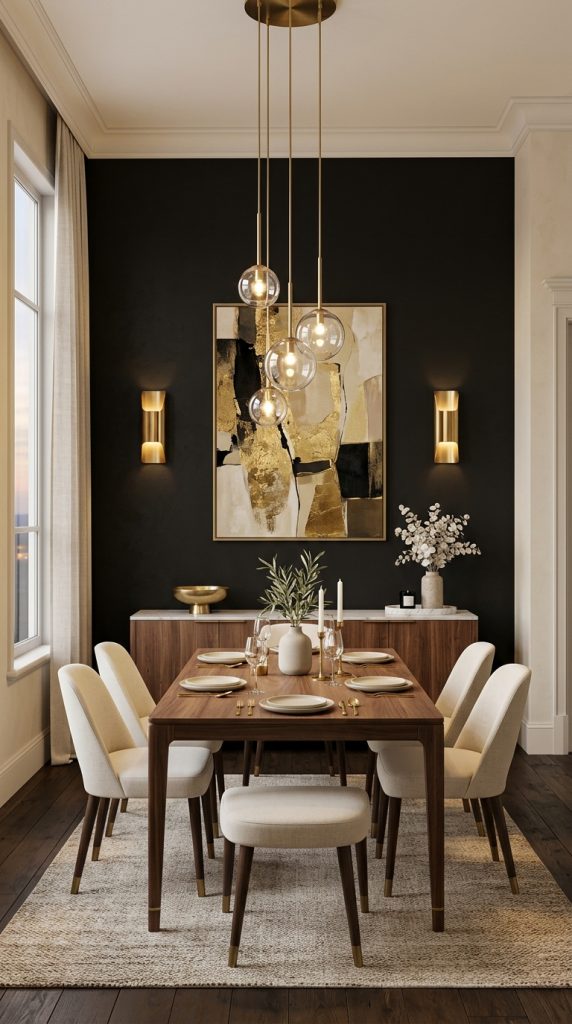
    And they use beautiful lighting.

    When photographing your table, natural daylight can reveal the details of linen, ceramics, wood, and foliage.

    For evening photographs, warm lighting can create a more intimate atmosphere.

    Keep the camera angle slightly above table height so the viewer can see both the place settings and centerpiece.

    A vertical composition is especially useful for Pinterest.


    Common Thanksgiving Table Decorating Mistakes to Avoid

    Even a beautiful idea can lose its impact if the table becomes too crowded.

    Too Many Centerpieces

    Choose one main centerpiece rather than several competing arrangements.

    Decorations That Are Too Tall

    Guests should be able to see one another.

    Too Many Colors

    Three to five coordinated colors are usually enough.

    Excessive Matching

    Everything does not have to come from the same collection.

    Mixing materials often creates more personality.

    Too Much Orange

    Orange is beautiful, but using it everywhere can make the table feel overly themed.

    Use burnt orange or rust selectively.

    Ignoring Practicality

    Remember that Thanksgiving involves serving food, passing dishes, and moving around the table.

    Leave functional space.

    Harsh Lighting

    Bright overhead lighting can flatten the atmosphere.

    Use layered warm illumination when appropriate.


    Final Thoughts

    Elegant Thanksgiving table decor for 2026 is less about following one specific trend and more about creating a table that feels intentional, warm, sophisticated, and personal.

    You can achieve that feeling with a neutral palette and natural textures, or you can create something more dramatic with burgundy, charcoal, dark wood, and antique brass.

    White pumpkins can provide a clean seasonal touch.

    Pears and pomegranates can create an unexpected centerpiece.

    Vintage china can bring family traditions into the design.

    Natural branches can add height and movement.

    Velvet napkins can introduce luxury.

    Linen can soften the entire arrangement.

    Wood can make the table feel grounded.

    And warm lighting can bring everything together once the sun goes down.

    The most important thing is not to decorate every available inch.

    Instead, give your table room to breathe.

    Let beautiful materials speak for themselves.

    A textured linen runner can be more effective than an elaborate table covering. A few carefully chosen pumpkins can look more sophisticated than a large collection. A simple ceramic vase filled with seasonal branches can create a stronger focal point than an oversized floral arrangement.

    For a timeless Thanksgiving table, begin with cream, beige, natural wood, and warm brown.

    For a classic autumn appearance, introduce burnt orange, rust, and burgundy.

    For a sophisticated evening gathering, experiment with deep burgundy, charcoal, espresso, cream, and aged brass.

    For a modern organic table, allow linen, ceramic, wood, stone, and dried foliage to create most of the visual interest.

    And for a luxurious tablescape, focus on layered textures, beautiful place settings, velvet accents, elegant glassware, and warm candlelight.

    Above all, remember that Thanksgiving is about gathering together. The table should look beautiful, but it should also feel welcoming.
    Leave enough room for serving dishes.

    Keep the centerpiece low enough for conversation.

    Choose comfortable textiles.

    Use decorations that do not interfere with dinner.

    And create lighting that makes people want to sit, relax, talk, and stay a little longer.

    The most memorable Thanksgiving tables are rarely the ones with the most decorations. They are the ones where every elementโ€”from the linen napkin to the candlelightโ€”feels thoughtfully chosen.

    That is what makes an elegant Thanksgiving tablescape feel special.

    For 2026, embrace natural materials, sophisticated autumn colors, vintage touches, warm lighting, seasonal produce, and intentional simplicity. Combine those elements with your own style, and you can create a Thanksgiving table that feels beautiful in photographs and even better when everyone gathers around it.