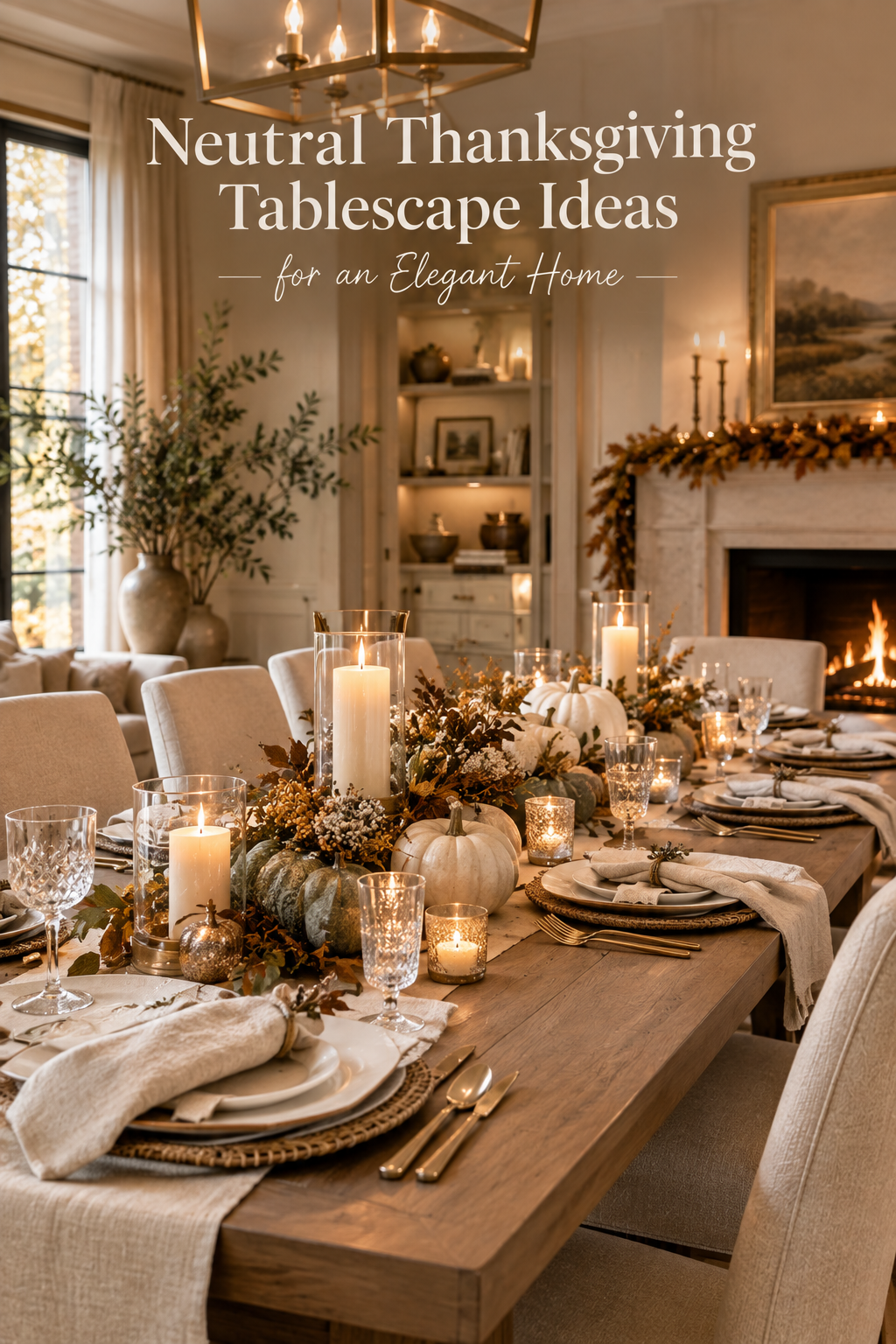
Thanksgiving is one of those occasions when the dining table becomes much more than a place to eat. It becomes the visual center of the celebration, the backdrop for family photographs, the setting for long conversations, and the place where carefully prepared food is finally shared. Because of that, creating a beautiful Thanksgiving tablescape can completely change the atmosphere of the entire gathering.
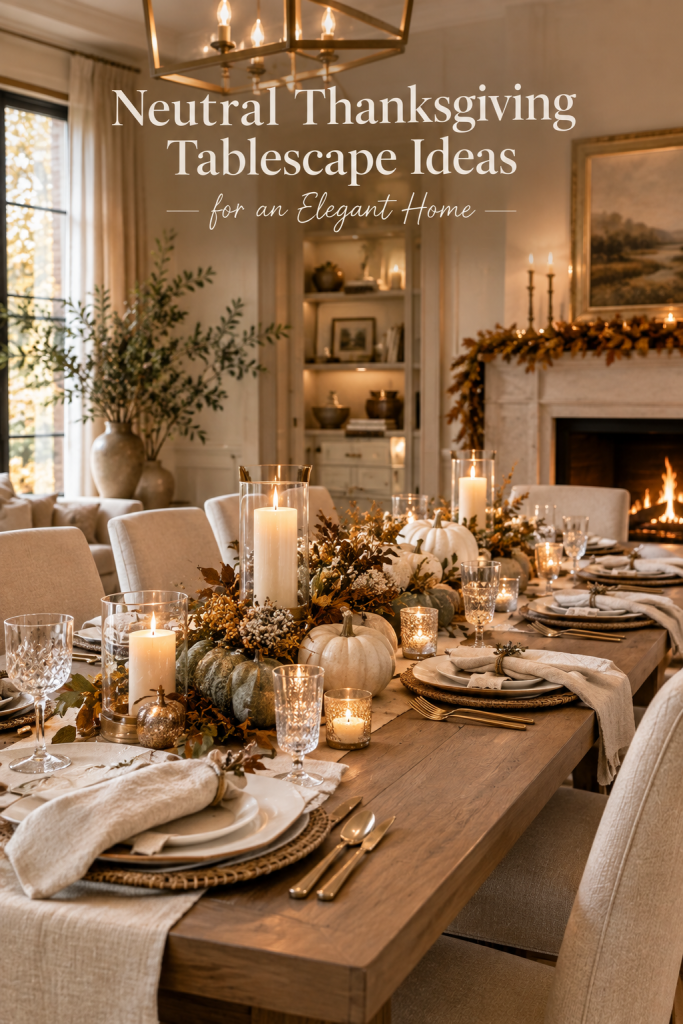
But an elegant Thanksgiving table does not have to rely on bright orange pumpkins, traditional red leaves, oversized turkey decorations, or heavily themed accessories. A neutral Thanksgiving tablescape can feel just as festive while creating a calmer, more sophisticated atmosphere that blends naturally with an elegant home.
Neutral Thanksgiving decorating is especially beautiful when it combines different textures rather than depending on strong colors. Cream linen, ivory dinnerware, natural wood, warm beige ceramics, soft taupe napkins, aged brass, clear glass, dried branches, wheat stems, subtle greenery, and candlelight can create layers of visual interest without making the table feel busy. Current 2026 Thanksgiving decorating inspiration is also leaning toward warm neutrals, natural materials, understated seasonal accents, and tables designed to remain practical for an actual meal.
The secret is knowing how to make neutral colors feel rich rather than flat.
A table covered entirely in plain white can sometimes feel unfinished. The solution is not necessarily to add more color. Instead, introduce variation through texture, shape, finish, and height. A rough linen runner can contrast beautifully with smooth ceramic plates. A warm wood table can provide depth beneath creamy dinnerware. Brushed brass can add a subtle glow. Transparent glass can keep the arrangement visually light. Candles can introduce movement through flickering light.
Another important part of a successful Thanksgiving tablescape is proportion. The centerpiece should look beautiful without becoming an obstacle. Guests need enough space to see one another, pass dishes, place glasses, and enjoy the meal comfortably. Recent Thanksgiving tablescape guidance has emphasized designing around the actual meal rather than creating a centerpiece that has to be removed as soon as dinner begins.
This is particularly important for Thanksgiving because the table often needs to accommodate serving dishes, water glasses, wine glasses, bread baskets, gravy boats, side dishes, and desserts. A beautiful table that leaves no room for dinner is not practical.
The strongest neutral Thanksgiving tablescapes therefore balance beauty and function.
You can create a luxurious appearance without purchasing an entirely new dinnerware collection. Existing white plates can look completely different when paired with textured linen napkins, natural chargers, elegant glassware, and a carefully designed centerpiece. Vintage pieces can also add character. A slightly imperfect ceramic bowl or antique brass candlestick can make the table feel collected rather than staged.
The color palette can remain surprisingly simple.
Think ivory, cream, oatmeal, beige, taupe, warm white, natural brown, muted sage, soft gray, champagne, and subtle metallic accents. If you want a stronger autumn feeling, introduce tiny amounts of muted rust, dried wheat, cinnamon, or deep brown rather than allowing a bright seasonal color to dominate the entire table.
This approach makes the Thanksgiving decor easier to blend with the rest of the dining room. It also allows the table to remain attractive throughout the season rather than looking like a one-day holiday display.
Another advantage of neutral Thanksgiving decor is its flexibility. The same linen runner may work for Thanksgiving dinner, Christmas gatherings, winter brunches, or everyday entertaining. Neutral ceramic plates can be reused throughout the year. Wooden serving boards can move from the dining table to the kitchen. Glass candle holders can become part of another tablescape later.
That makes the style particularly useful for homeowners who prefer timeless decorating over buying holiday-specific accessories every year.
In this guide, you will find 10 different neutral Thanksgiving tablescape ideas designed for an elegant home. Each concept has its own visual identity, materials, centerpiece approach, and styling method, so the ideas do not simply repeat the same combination of pumpkins, candles, and greenery.
Whether you have a rustic farmhouse table, a contemporary dining room, a traditional wooden table, or a small apartment dining area, these ideas can be adapted to your space.
1. Create a Warm Ivory and Linen Thanksgiving Tablescape
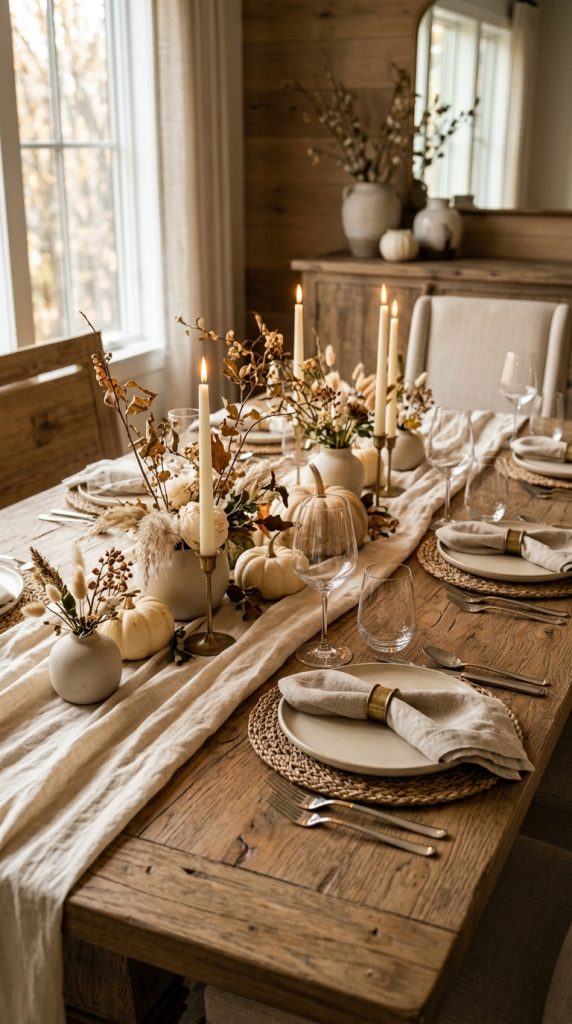
A warm ivory tablescape is one of the most timeless ways to create an elegant Thanksgiving setting. Instead of making autumn decorations the dominant feature, build the table around a soft monochromatic foundation and let subtle seasonal details provide the holiday character.
Begin with the table itself.
If you have a beautiful natural wood dining table, consider leaving most of the surface visible. The warmth of the wood can provide the darker foundation needed to keep an ivory palette from looking too pale.
If the tabletop is not particularly attractive or you want a more formal appearance, use a natural linen tablecloth in warm ivory. Avoid an extremely bright white if the goal is warmth. Cream or oatmeal linen generally creates a softer visual effect.
Place simple ceramic dinnerware on each setting. Matte ivory stoneware works particularly well because its slight texture prevents the table from looking overly polished or sterile.
Instead of introducing patterned plates, create interest through the layers beneath them.
A natural woven charger can provide a subtle textural boundary around each place setting. Choose one with a refined weave rather than an overly rustic appearance.
For napkins, use soft linen in oatmeal, warm beige, or slightly darker taupe. Fold them simply and place them either beside the plate or across the lower portion of the setting.
This table does not need elaborate napkin rings.
A small dried wheat stem tucked into the fold can introduce a Thanksgiving reference without making the place setting look overly themed.
The centerpiece should remain low and horizontal.
Use a narrow ceramic vessel filled with delicate dried grasses, soft beige stems, and a few muted seasonal branches. The arrangement should stretch naturally along the center of the table instead of becoming one large vertical bouquet.
Add a few small cream-colored gourds or heirloom pumpkins between the stems, but keep their placement irregular enough to feel natural.
Candles should be used selectively.
Rather than filling the entire table with candle holders, place several slim ivory tapers in simple holders at intervals along the arrangement. Their warm glow will become increasingly beautiful as evening arrives.
Glassware can remain transparent.
Clear water glasses and simple wine glasses prevent the table from becoming visually heavy.
If your dining room already contains brass lighting or hardware, introduce a small amount of aged brass through candle holders or flatware. The metallic finish should act as a warm accent rather than another major color.
The finished table should feel soft, welcoming, and sophisticated.
This is an especially effective choice if your home already has cream sofas, beige walls, natural wood furniture, or warm neutral accessories because the Thanksgiving table will feel connected to the rest of the interior.
The most important styling rule is to allow the ivory palette to breathe.
Do not add every neutral accessory you own simply because the colors match. Empty areas are what allow the textures and materials to remain visible.
For an elegant home, restraint becomes part of the decoration.
2. Design a Natural Wood Thanksgiving Table With Cream Ceramics
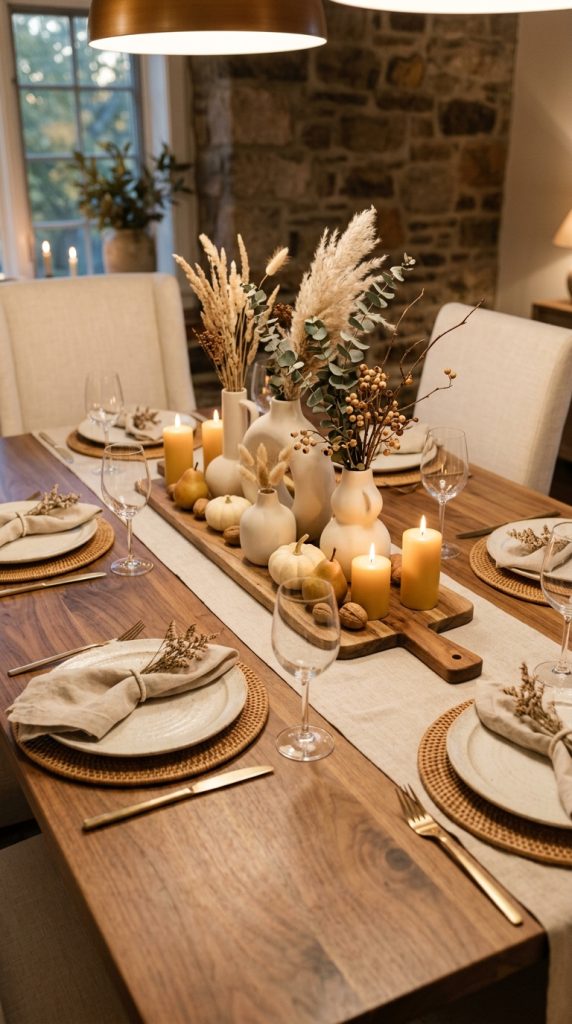
If you own a beautiful wooden dining table, let it become the foundation of your Thanksgiving design.
Natural wood provides depth and warmth that can make neutral dinnerware look significantly more luxurious.
Instead of covering the entire table, use a narrow textured runner running lengthwise through the center. Choose oatmeal linen, natural flax, or a soft beige cotton with visible weave.
The wood should remain visible on both sides.
This creates a relaxed but sophisticated atmosphere and allows the grain of the table to become part of the tablescape.
For the place settings, use cream or warm-white ceramic plates with understated shapes. Handmade-look dinnerware is particularly attractive because subtle variations in glaze and texture make each setting feel individual.
Place a simple neutral napkin either beneath the plate or folded beside it.
Rather than using a decorative napkin ring, tie the napkin loosely with natural linen cord and add one tiny dried botanical stem. This creates a handmade appearance without requiring a complicated craft project.
The centerpiece can take inspiration from the materials already present.
Use a long wooden serving board as a decorative base for a carefully arranged collection of ceramic vessels, small neutral pumpkins, pears, and low seasonal branches.
The board creates a visual boundary so the objects feel connected rather than randomly scattered.
For a more sophisticated effect, vary the heights.
Place one medium-height ceramic vessel near the center, smaller objects toward the ends, and leave visible gaps between them.
Avoid creating a continuous wall of decoration.
The dining table should still feel open.
For lighting, use warm taper candles in understated ceramic or aged-metal holders. If your dining room has a chandelier, allow its light to combine with the candles rather than relying entirely on overhead illumination.
Glassware can introduce another texture.
Choose lightly tinted clear glass, such as soft amber or smoky transparent glass, if you want a slightly warmer effect. If you prefer a cleaner look, traditional clear glass works beautifully.
The beauty of this arrangement comes from contrast.
The rough grain of wood contrasts with smooth ceramic.
The soft linen contrasts with hard glass.
The flickering candlelight contrasts with the solid tabletop.
The neutral palette therefore does not feel boring because the materials are doing the visual work.
This approach is particularly useful for an informal Thanksgiving gathering where you want the table to feel elegant but not excessively formal.
It can also work beautifully in modern rustic, organic modern, Scandinavian, farmhouse, or transitional dining rooms.
The result should look as though the table was assembled thoughtfully from beautiful everyday pieces rather than decorated exclusively for one holiday.
3. Build an Elegant Cream-and-Brass Thanksgiving Tablescape
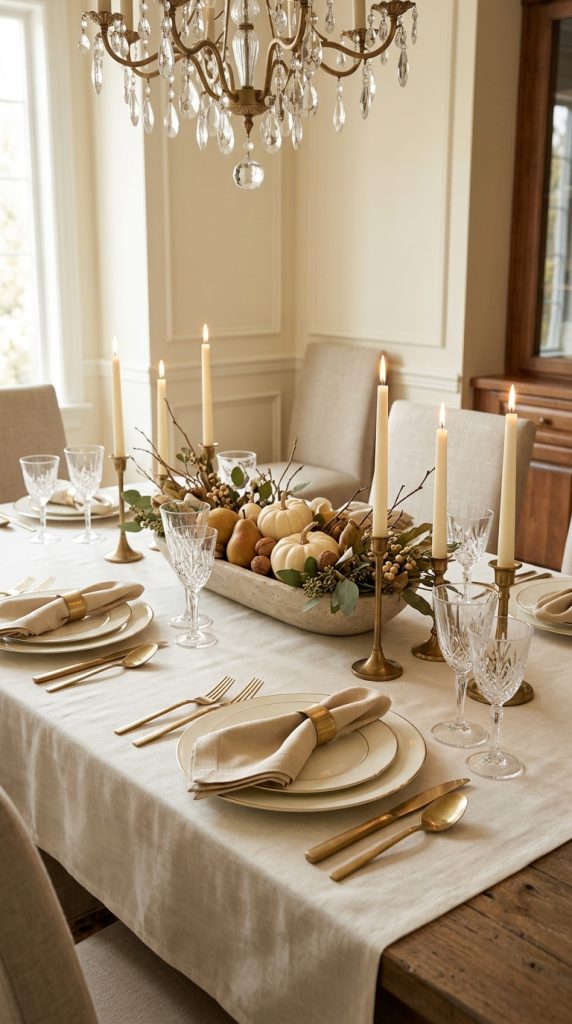
For a slightly more glamorous interpretation of neutral Thanksgiving decor, combine creamy textiles and dinnerware with restrained brass accents.
This style works particularly well in dining rooms with warm lighting, traditional architecture, elegant chandeliers, or sophisticated furniture.
Start with an ivory or champagne-colored tablecloth.
The fabric should have enough texture to prevent the surface from looking flat. Linen or a linen-blend material is ideal.
Use cream dinner plates with a simple silhouette. If you already own white porcelain, there is no need to replace it.
Add gold or brass-toned flatware to introduce warmth.
The important distinction is between refined metallic detailing and excessive shine. Choose brushed, antique, or softly aged brass rather than highly reflective gold if you want the tablescape to feel timeless.
For the napkins, choose warm taupe or champagne linen.
Fold each one into a simple rectangular shape and place it neatly beside the plate.
The centerpiece should be more sculptural than botanical.
Try a series of low brass candle holders arranged down the center of the table. Vary their heights slightly while keeping the overall arrangement low enough for conversation.
Between them, place a few small cream pumpkins or matte ceramic gourds.
This gives you a Thanksgiving reference without relying on bright seasonal colors.
Another option is to use a long shallow stone bowl filled with neutral pears, walnuts, and a few dried branches.
The bowl adds a natural component that prevents the brass from becoming too formal.
For glassware, clear crystal-style glasses can add elegance without introducing another color.
If you have a chandelier with brass details, the repeated metallic finish will create visual continuity.
One of the advantages of this tablescape is that the brass can become the bridge between the neutral foundation and the warm atmosphere of the holiday.
Keep the rest of the decor quiet.
Do not add brass pumpkins, gold leaves, metallic chargers, shiny napkin rings, and multiple reflective objects simultaneously. One metallic finish repeated carefully is more sophisticated than many metallic decorations competing for attention.
For the final touch, dim the dining-room lighting slightly and let the candlelight become part of the experience.
The same table that looks polished in daylight can become dramatically intimate after sunset.
That transition is one of the easiest ways to make a Thanksgiving tablescape feel luxurious without adding more objects.
4. Style a Minimalist Thanksgiving Table With Sculptural Ceramics
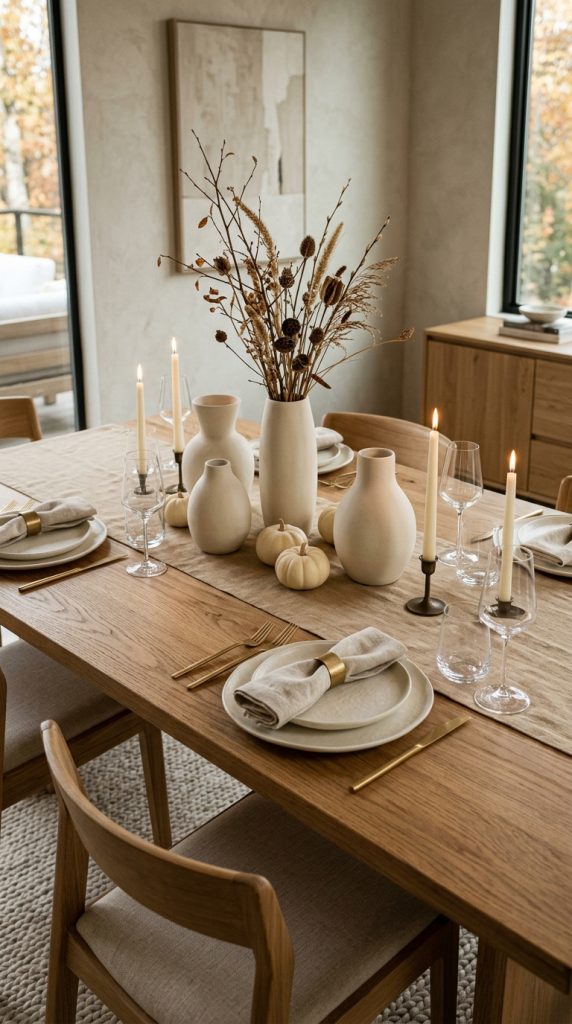
Minimalism does not mean removing all personality from the Thanksgiving table.
Instead, it means choosing fewer objects and allowing each one to make a stronger contribution.
For this approach, begin with a bare wood table or a simple cream linen runner.
Keep the foundation extremely quiet.
Use sculptural ceramic dinnerware in warm white, stone, or pale taupe. Choose plates with interesting rims, handmade edges, or subtle irregularities.
The goal is to make the dinnerware itself part of the decoration.
For the centerpiece, avoid a traditional floral arrangement.
Instead, use three or four sculptural ceramic vessels in different sizes. Place them along the center of the table with plenty of space between them.
Fill only one or two with dried branches or delicate grasses.
Leave the others empty.
An empty vessel can be just as visually important as a filled one because its shape creates a focal point without adding visual clutter.
Between the vessels, add a few small natural elements such as walnuts, pinecones, or understated cream gourds.
Use these sparingly.
The table should feel intentionally edited.
For lighting, choose a few simple candles rather than a large collection.
Low pillar candles in stone or ceramic holders can produce a soft glow and work particularly well with the sculptural quality of the table.
Napkins should remain plain.
A warm-gray, oatmeal, or natural flax napkin is enough. Fold it into a clean rectangle and place it beside each setting.
Avoid printed patterns.
The beauty of this tablescape comes from silhouette and texture rather than color.
This style is particularly suitable for contemporary homes where the architecture already provides visual interest.
It can also work beautifully in Japandi-inspired spaces because the combination of natural materials, restrained decoration, and functional simplicity creates a calm atmosphere. Neutral natural-texture Thanksgiving tables are also being used in minimalist and Japandi-inspired tablescape inspiration.
If your table is small, this idea becomes even more useful.
Instead of trying to recreate an elaborate centerpiece, select two or three beautiful objects that leave sufficient room for serving dishes.
The result should feel peaceful rather than empty.
That distinction comes from choosing objects with strong shapes and interesting textures.
Minimalism works when every piece has a reason to be there.
5. Create a Soft Sage and Ivory Thanksgiving Tablescape
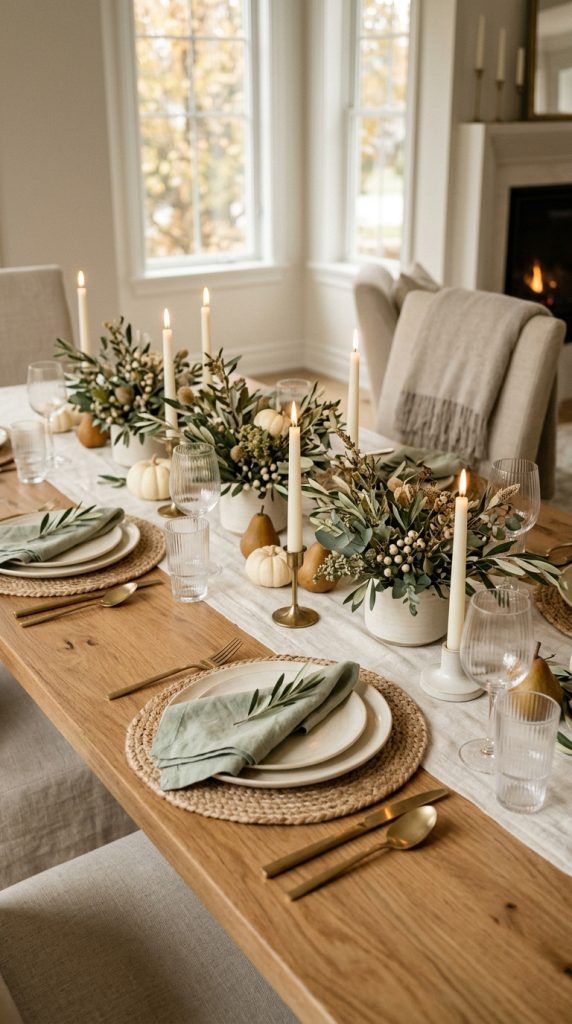
Neutral does not have to mean completely beige.
Soft sage is an excellent accent for Thanksgiving because it introduces a subtle natural color while maintaining the calm feeling associated with a neutral palette.
Start with an ivory linen runner or tablecloth.
Choose dinnerware in warm white or pale cream.
Then introduce sage through the napkins.
Soft sage linen napkins can provide enough color to make the table feel layered without turning it into a traditional green-and-orange autumn display.
For the centerpiece, use fresh or dried greenery in a low arrangement.
Olive branches, eucalyptus, delicate foliage, or another suitable seasonal greenery can create an organic horizontal line down the center of the table.
Avoid creating a dense wall of foliage.
The arrangement should remain airy.
This is especially important if the dining table is narrow.
Add small cream or pale green pumpkins around the base of the greenery if desired.
Instead of placing identical pumpkins at regular intervals, vary their sizes and allow some areas to remain empty.
This creates a more natural appearance.
For the place settings, consider adding a small ceramic bread plate or shallow bowl in a slightly darker neutral shade.
This gives each setting an additional layer without relying on decorative objects.
Wooden or natural-fiber chargers can introduce another material.
Glassware should remain simple and transparent.
If you want a subtle autumn reference, use amber-tinted glassware, but keep the color restrained so the table remains predominantly neutral.
The lighting should be warm.
Small candles placed among the greenery will create beautiful highlights once the room becomes darker.
If you are using fresh greenery, make sure the materials are appropriate for an indoor dining setting and do not interfere with candles or serving dishes.
This style works especially well in homes decorated with warm whites, light woods, cream upholstery, and natural textures.
It creates a bridge between everyday organic decor and Thanksgiving without requiring an obvious holiday theme.
The final impression should be fresh, elegant, and quietly seasonal.
6. Create a Vintage-Inspired Neutral Thanksgiving Table
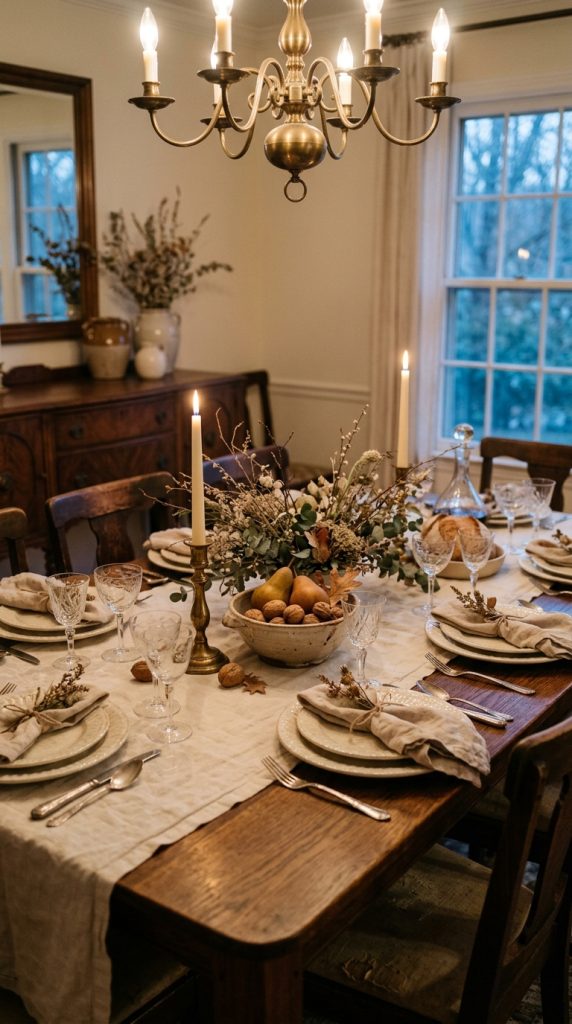
A vintage-inspired Thanksgiving tablescape can feel incredibly elegant when old-world pieces are balanced with a restrained neutral palette.
This approach is ideal if you enjoy antique dishes, vintage glassware, heirloom silverware, brass candlesticks, or furniture with visible age.
Begin with an ivory linen tablecloth.
Do not worry if the fabric has a slightly relaxed texture. Perfectly pressed fabric is not required for this style.
The charm comes from softness and character.
Use vintage or vintage-inspired ceramic plates in cream, ivory, or very pale gray.
If your collection does not match perfectly, that can actually become part of the aesthetic.
The important thing is to keep the overall colors related.
For example, cream, faded beige, soft gray, and muted brown can coexist beautifully.
Place a different vintage glass at each setting if you have a small collection of mismatched pieces. The variations can create personality without making the table chaotic.
The centerpiece should have an antique character.
Use aged brass candlesticks with ivory taper candles.
Between them, place a long low arrangement of dried branches, muted foliage, or delicate seasonal stems.
You can also use a vintage ceramic bowl filled with pears, walnuts, figs, or other neutral-toned seasonal produce.
Avoid plastic or overly artificial decorations because they can conflict with the collected appearance of the table.
Place cards can be handwritten on small cream cards and tucked beneath each napkin.
The paper should be simple rather than highly decorated.
For additional texture, place a narrow woven runner beneath the centerpiece.
The combination of linen, aged metal, ceramic, glass, and wood will give the table visual richness even though the colors remain restrained.
This style is particularly beautiful under warm chandelier light.
The candle flames will reflect softly against vintage glassware and metallic surfaces.
One advantage of vintage-inspired styling is that it naturally avoids the feeling of mass-produced seasonal decor.
Each piece can tell a small story.
The result feels intimate and personal.
If you do not own antiques, you can recreate the atmosphere with handmade ceramics, aged-looking brass, thrifted glassware, and natural textiles.
The objective is not to make the table look old.
It is to make it look collected.
7. Design a Neutral Thanksgiving Tablescape With Dried Botanicals
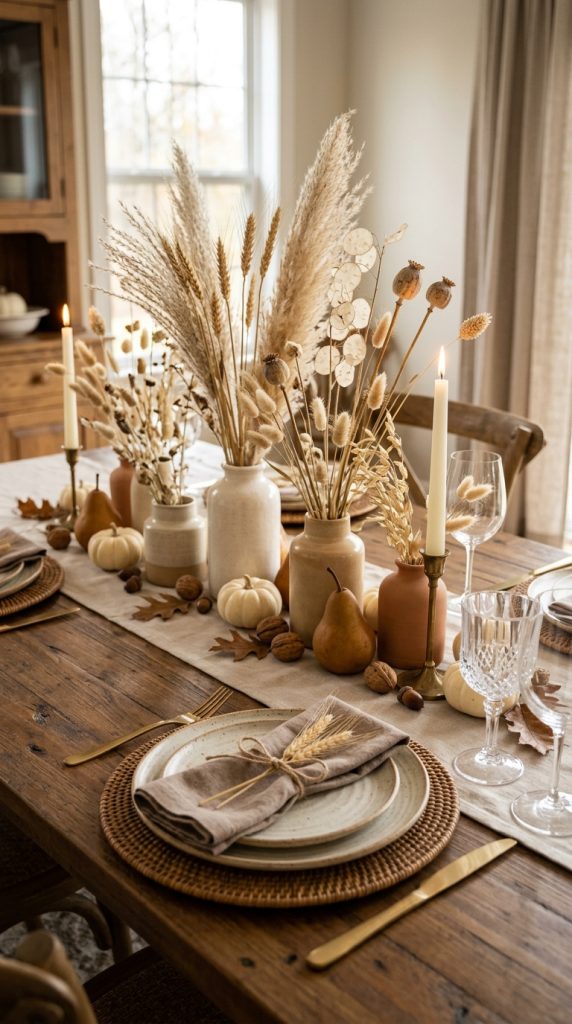
Dried botanicals can provide dramatic texture without introducing strong seasonal colors.
For this idea, let the dried materials become the main visual feature.
Begin with a soft beige or natural linen runner.
Use cream stoneware plates and taupe linen napkins.
The place settings should remain understated because the centerpiece will provide the texture.
For the centerpiece, select dried grasses, wheat, pampas-like stems, seed heads, or other suitable dried botanicals in natural beige, cream, tan, and muted brown.
Arrange them in a long low vessel rather than a very tall vase.
The arrangement should be airy enough that guests can see across the table.
If the stems are tall, divide them into several smaller vessels instead of creating one oversized bouquet.
This allows the table to feel more spacious.
Place the vessels at different intervals with gaps between them.
Add a few neutral ceramic pumpkins or small natural gourds around the base if you want a clearer Thanksgiving connection.
Alternatively, use pears or figs for a more understated seasonal look.
The organic shapes of the fruit will contrast beautifully with the linear quality of the dried stems.
For candles, use slim ivory tapers in simple holders.
Their vertical form can complement the dried botanicals without overwhelming the arrangement.
Keep the rest of the table simple.
The beauty of dried botanicals comes from their texture, so there is no need to introduce patterned plates or elaborate napkin accessories.
This tablescape is especially effective for homes with organic-modern, rustic-modern, Scandinavian, or transitional interiors.
It can also be relatively affordable because dried stems can often be reused for other seasonal arrangements.
If you want to make the table feel more luxurious, focus on the quality of the vessels.
A beautiful ceramic vase, stoneware bowl, or handmade container can make inexpensive dried materials look much more sophisticated.
Avoid using too many different types of dried foliage.
Choose a limited selection and repeat it.
This gives the arrangement visual unity.
The finished table should look naturally gathered rather than artificially assembled.
8. Create a Cozy Neutral Thanksgiving Table With Candlelight
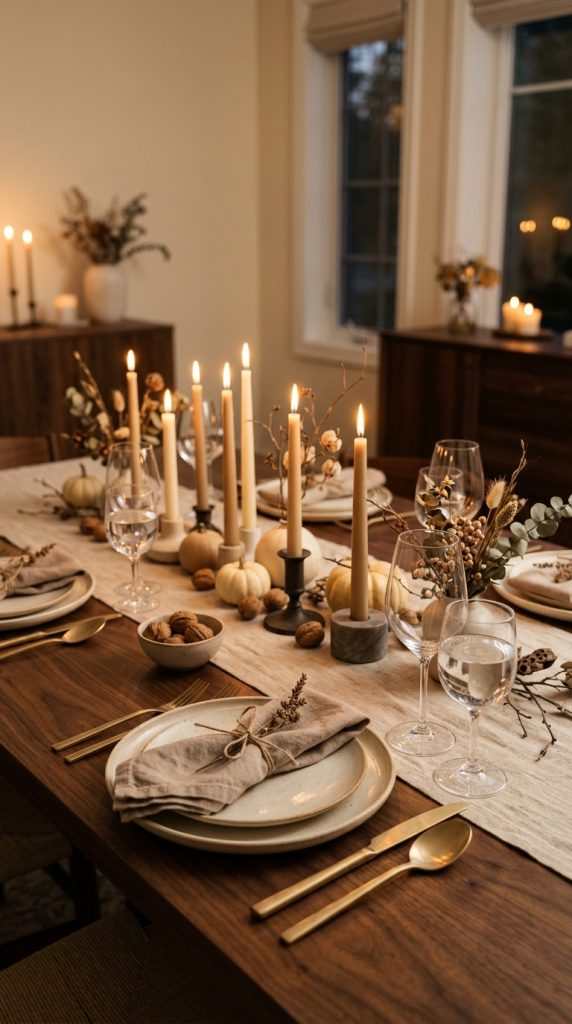
If your Thanksgiving dinner will take place in the evening, build the entire tablescape around warm candlelight.
Instead of making the centerpiece the main attraction, use illumination to create the atmosphere.
Begin with a deep neutral foundation.
A warm taupe or oatmeal linen runner can create more contrast than ivory while remaining within the neutral palette.
Use cream dinnerware with simple silhouettes.
For napkins, choose a slightly darker beige or warm brown.
The darker textiles create depth once the candles are lit.
Now create the centerpiece around candlelight.
Use a collection of low ceramic, stone, or aged-metal candle holders. Place them in a long horizontal composition rather than concentrating them in the middle.
Vary the heights slightly, but keep all flames low enough that guests can see across the table.
Add small natural elements between the candle holders.
A few walnuts, dried leaves, neutral berries, or small branches can provide texture.
Do not surround every candle with decorative material.
Allow some of the tabletop to remain visible.
For an even softer atmosphere, add a few small votives in transparent glass holders.
The combination of taper flames and small points of light creates depth.
Your overhead lighting should be reduced so that the candles become part of the visual experience.
However, the dining area still needs enough illumination for guests to eat comfortably and safely.
If your dining room has dimmable lighting, this is an ideal occasion to use it.
The color palette should remain warm.
Cream, oatmeal, taupe, walnut, antique brass, and soft brown work beautifully together.
This approach is especially effective for intimate Thanksgiving dinners.
The candlelight creates a sense of closeness, while the neutral colors prevent the room from feeling overly themed.
The food itself becomes part of the composition.
Roasted vegetables, bread, pies, cranberry dishes, and other Thanksgiving foods naturally introduce subtle colors and textures to the table.
That is another reason to keep the decorative palette quiet.
You do not need the centerpiece to provide every seasonal color.
Let the meal contribute to the visual richness.
9. Style a Modern Neutral Thanksgiving Tablescape With Black Accents
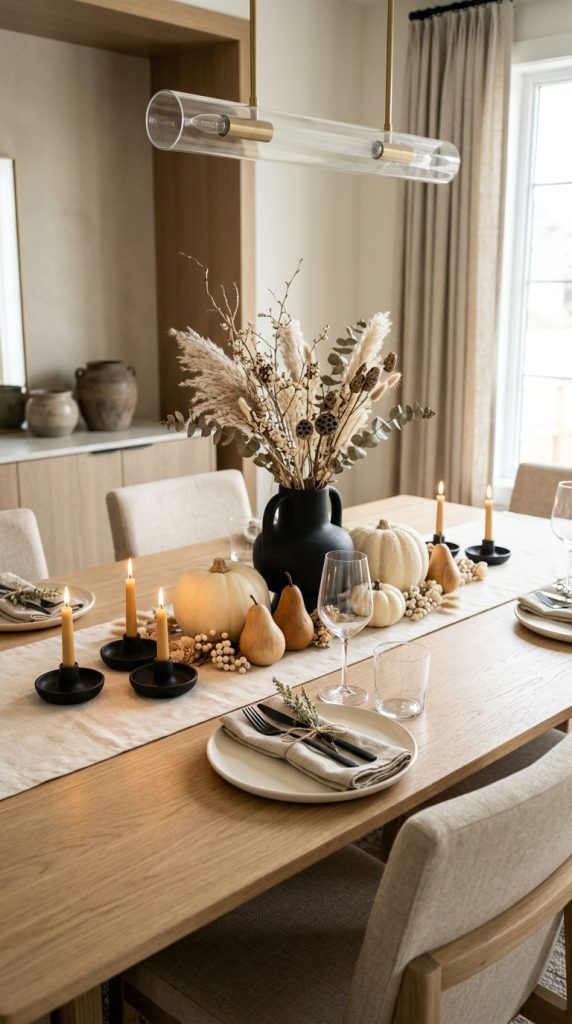
For a contemporary home, small amounts of black can provide structure and contrast without abandoning the neutral Thanksgiving aesthetic.
The key is to use black as a controlled accent rather than a dominant color.
Begin with a cream or natural linen tablecloth.
Use warm-white dinner plates.
Then introduce black through flatware, candle holders, napkin rings, or small ceramic vessels.
A matte finish works particularly well because it feels sophisticated and architectural.
For the centerpiece, use a long low arrangement of neutral foliage and cream flowers or dried stems.
Place it inside a simple black ceramic vessel.
This creates a strong focal point without requiring bright seasonal decoration.
For napkins, choose oatmeal, beige, or soft taupe.
The contrast between the warm neutral textile and black accent creates a modern appearance.
Add wooden elements to soften the combination.
A natural wood serving board, small wooden bowls, or a warm walnut centerpiece tray can prevent the table from feeling too stark.
If your dining chairs or lighting fixtures already contain black details, repeat that finish carefully on the table.
This creates visual continuity between the dining room and tablescape.
Glassware should remain clear.
Avoid introducing another strong color because the palette already has enough contrast.
For the Thanksgiving element, use cream pumpkins, pears, dried wheat, or subtle autumn branches rather than traditional orange decorations.
The result feels seasonal through material and form rather than color.
This is an especially strong approach for contemporary, modern organic, minimalist, or transitional interiors.
The black accents also make the table photograph beautifully.
In a Pinterest image, the contrast between cream linens, dark details, warm wood, and candlelight creates an immediate visual hierarchy.
Keep the composition clean.
Do not use black plates, black napkins, black candles, black vessels, and black flatware simultaneously.
Choose two or three areas where the accent appears and let the rest remain light.
That restraint is what keeps the look elegant.
10. Create a Relaxed Luxury Thanksgiving Tablescape With Natural Textures
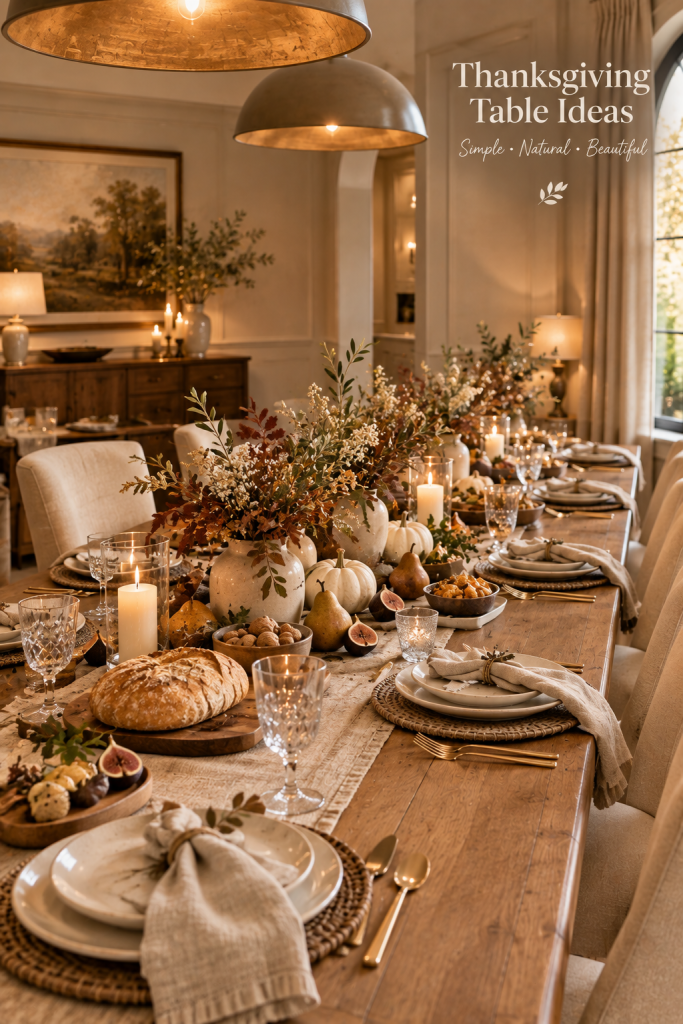
The final idea combines the most inviting elements of neutral Thanksgiving decorating: soft linen, natural wood, handmade ceramics, woven textures, seasonal produce, and warm candlelight.
This approach is ideal if you want your Thanksgiving table to feel luxurious but comfortable rather than formal.
Begin with a natural linen runner in oatmeal, beige, or soft cream.
Allow the table surface to remain visible.
Choose handmade-style ceramic plates in warm white or pale stone.
The subtle irregularity of the glaze will make each place setting feel more personal.
For napkins, use a heavier linen or textured cotton.
Fold them simply rather than creating elaborate shapes.
Instead of placing a decorative ring around the napkin, tuck a small natural element into the fold.
A single dried leaf, wheat stem, or tiny branch can be enough.
For the centerpiece, create a long, low composition using natural textures.
Place a few handmade ceramic vessels along the center, each containing a different type of delicate seasonal stem.
Add small pears, figs, walnuts, or cream-colored gourds between the vessels.
This makes the centerpiece feel connected to the food and harvest spirit of Thanksgiving without becoming a traditional autumn display.
Introduce woven texture through small chargers or a narrow natural-fiber runner underneath the central arrangement.
Wooden serving boards can be positioned at the ends of the table or used to serve bread and appetizers.
The lighting should remain warm and gentle.
Use several candles distributed across the centerpiece rather than creating one large cluster.
For glassware, choose clear or softly tinted glasses with simple silhouettes.
Do not worry if every item comes from the same collection.
A relaxed-luxury table often looks better when different textures and materials have a subtle relationship rather than perfect uniformity.
The final atmosphere should feel generous and welcoming.
Guests should be able to reach the food.
Conversation should remain easy.
There should be enough space for plates and glasses.
Nothing should feel so precious that people are afraid to use the table.
That balance is what makes relaxed luxury so effective for Thanksgiving.
How to Choose a Neutral Thanksgiving Color Palette
A neutral tablescape becomes much easier to style when you choose a specific color family before selecting individual decorations.
Warm neutrals are usually the easiest starting point.
Cream, ivory, oatmeal, beige, camel, taupe, and natural brown can create a soft autumn atmosphere without relying on bright orange.
If you want a slightly cooler look, combine ivory with soft gray, mushroom, muted sage, and natural wood.
For a more glamorous table, introduce champagne or aged brass.
For a modern table, use small amounts of matte black.
For an organic appearance, add muted olive.
The important part is limiting the number of dominant colors.
A useful approach is to choose one main neutral, one supporting neutral, and one accent.
For example:
Cream + natural wood + brass.
Ivory + taupe + sage.
Oatmeal + walnut + black.
Beige + stone + aged brass.
This creates enough contrast to keep the table interesting without making it visually chaotic.
How to Make a Neutral Thanksgiving Tablescape Look Expensive
Luxury rarely comes from adding more decorations.
It usually comes from choosing better proportions and materials.
Start with textiles.
Natural linen immediately introduces texture and tends to look more sophisticated than shiny synthetic fabrics.
Then focus on dinnerware.
Simple plates can look luxurious when they are properly layered with chargers, napkins, and glassware.
Next, consider the centerpiece.
A few high-quality vessels are generally more effective than a large collection of inexpensive seasonal decorations.
Lighting is another major factor.
Warm candlelight can transform even a simple table.
Finally, create negative space.
Do not cover every inch of the table.
Allow the tabletop, linen texture, and individual objects to remain visible.
Current decorating advice is increasingly favoring natural materials, muted tones, handmade-feeling pieces, and edited seasonal styling instead of excessive novelty decor.
How to Keep the Thanksgiving Table Functional
The table should be designed around the actual meal.
Before finalizing your centerpiece, place the serving dishes you expect to use on the table.
This immediately shows how much space remains.
If the centerpiece leaves no room for the turkey, vegetables, bread, or gravy, simplify it.
Low arrangements are usually easier for conversation and serving.
Another option is to move some serving dishes to a nearby sideboard and allow guests to serve themselves buffet-style.
If you have a very long table, repeat a smaller decorative composition rather than creating one enormous centerpiece.
For smaller tables, use one central arrangement with a narrow footprint.
Keep candle flames away from sleeves, foliage, napkins, and serving areas.
Choose stable candle holders and never leave burning candles unattended.
These practical decisions are what separate a beautiful photograph from a tablescape that actually works during Thanksgiving dinner.
How to Make Your Neutral Thanksgiving Tablescape Pinterest-Worthy
For Pinterest, the visual story should be instantly understandable.
Choose one dominant composition.
A warm cream table with candlelight.
A natural wood table with ivory ceramics.
A sculptural centerpiece surrounded by neutral place settings.
A vintage-inspired table with brass candlesticks.
Avoid trying to show every decorating detail in one image.
The photograph should have a clear focal point.
Vertical 2:3 compositions work especially well for Pinterest because they occupy more screen space while allowing enough room to show the full tablescape.
Use warm natural daylight for daytime photographs or soft candlelight for evening inspiration.
Make sure the table looks realistic.
Include enough plates, glasses, and seating to communicate that it is a real Thanksgiving table rather than an abstract decoration display.
At the same time, avoid unnecessary clutter.
For Pinterest text overlays, use a short title such as:
Neutral Thanksgiving Tablescape Ideas
or
Elegant Thanksgiving Table Decor
or
Neutral Thanksgiving Table Inspiration
Keep the typography minimal and allow the photograph to remain the main attraction.
Final Thoughts
A neutral Thanksgiving tablescape proves that holiday decorating does not need to be loud to feel special.
Cream linen can create softness.
Natural wood can provide warmth.
Ceramics can add handcrafted character.
Brass can introduce subtle elegance.
Dried botanicals can bring seasonal texture.
Muted greenery can create freshness.
Candlelight can transform the mood.
And carefully selected Thanksgiving details can make the table feel festive without overwhelming the rest of the home.
The most successful neutral Thanksgiving tables are not simply beige versions of traditional holiday tables. They have their own identity.
One may focus on sculptural ceramics.
Another may highlight vintage pieces.
Another may use warm brass.
Another may rely on natural wood.
Another may use sage greenery.
These differences are what make the ideas adaptable to different homes and decorating personalities.
If your dining room is already neutral, you can create a Thanksgiving transformation without changing its entire character. Work with what you already own and introduce seasonal elements through texture, lighting, natural materials, and carefully chosen accents.
If your home is more traditional, vintage glassware and brass can create a beautiful bridge between classic furniture and modern neutral styling.
If your home is contemporary, cream ceramics, black accents, sculptural vessels, and clean lines can create a sophisticated holiday atmosphere.
If you prefer organic interiors, natural wood, linen, stoneware, dried botanicals, and muted greenery can create a warm gathering space.
The most important principle is to design the table for people first.
Leave enough room for conversation.
Make the plates comfortable to use.
Keep serving areas accessible.
Make sure the centerpiece does not block anyone’s view.
Use candlelight to create atmosphere without compromising safety.
Then allow the decoration to support the gathering rather than compete with it.
Thanksgiving already brings abundance through food, family, conversation, and tradition. The table does not need to compete with that abundance.
Instead, it can provide a calm and beautiful setting where everything else becomes the focus.
That is the strength of neutral Thanksgiving decorating.
It feels elegant without being excessive, seasonal without being overly themed, and beautiful without becoming impractical.
With the right combination of texture, proportion, natural materials, warm lighting, and restrained seasonal details, your Thanksgiving table can become one of the most inviting spaces in your home—and a timeless source of inspiration for future gatherings long after the holiday has passed.
Leave a Reply