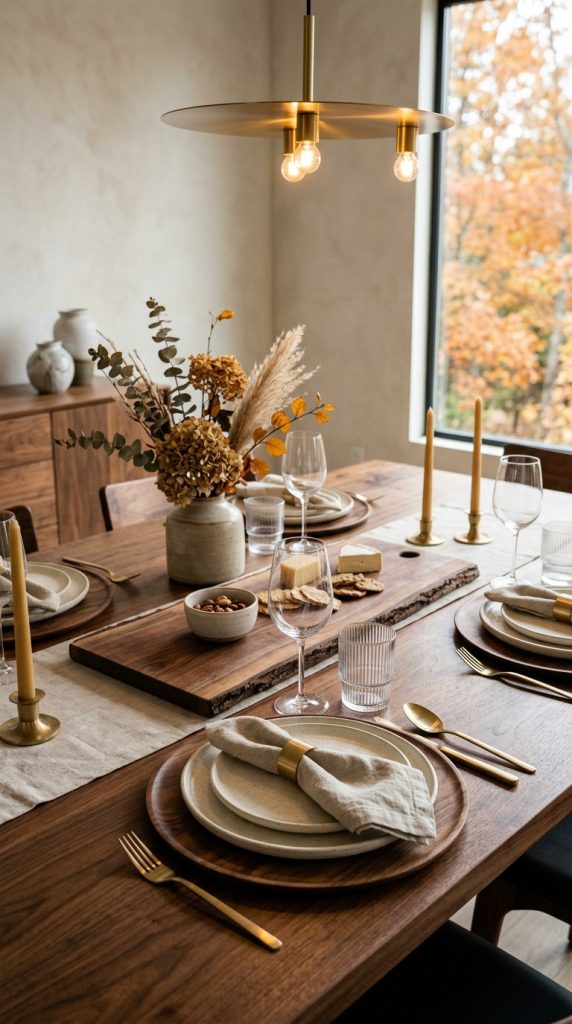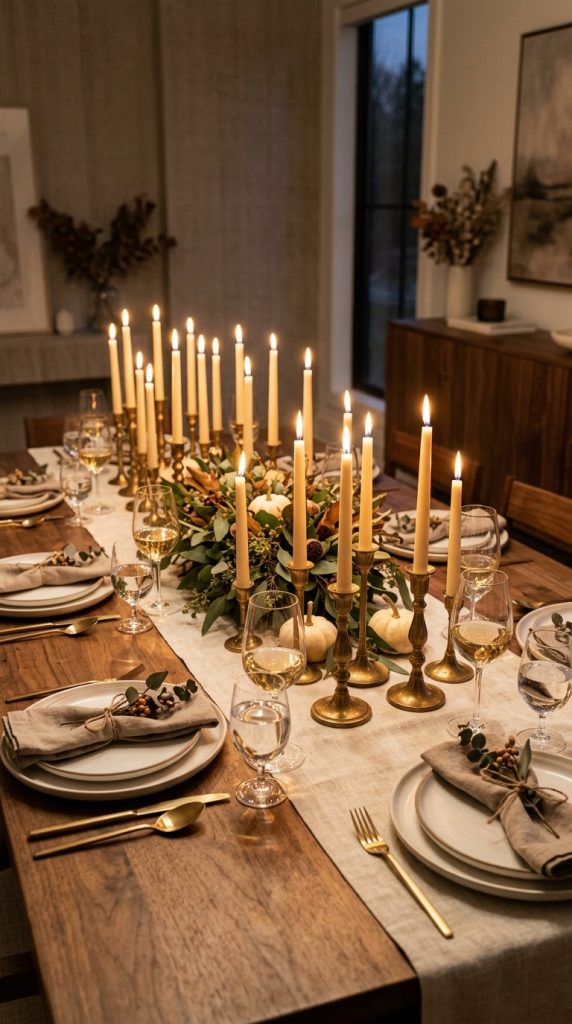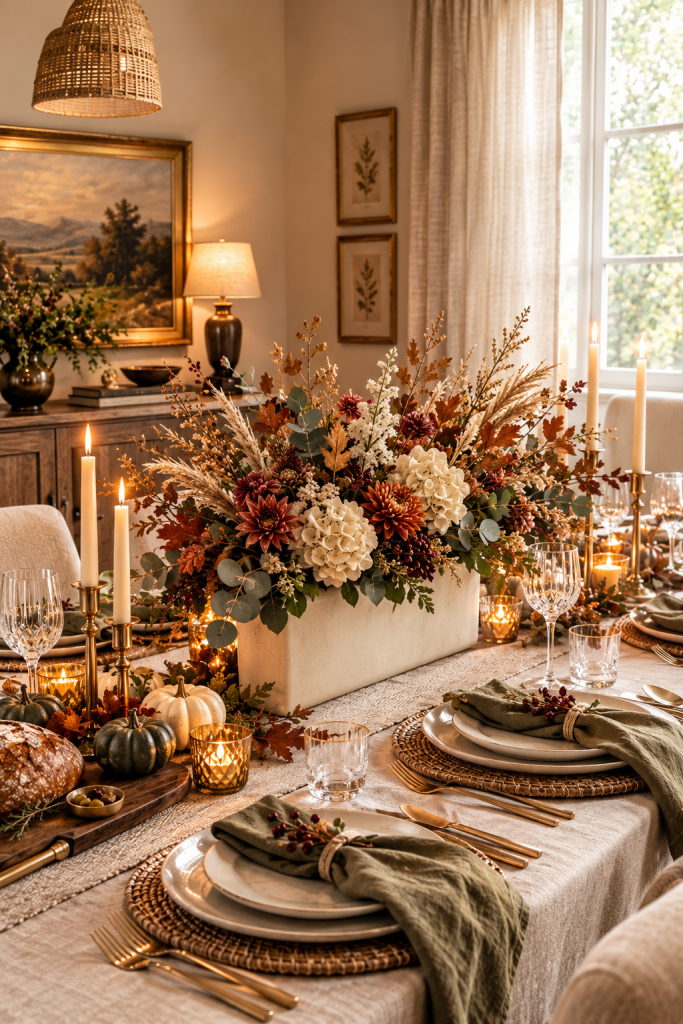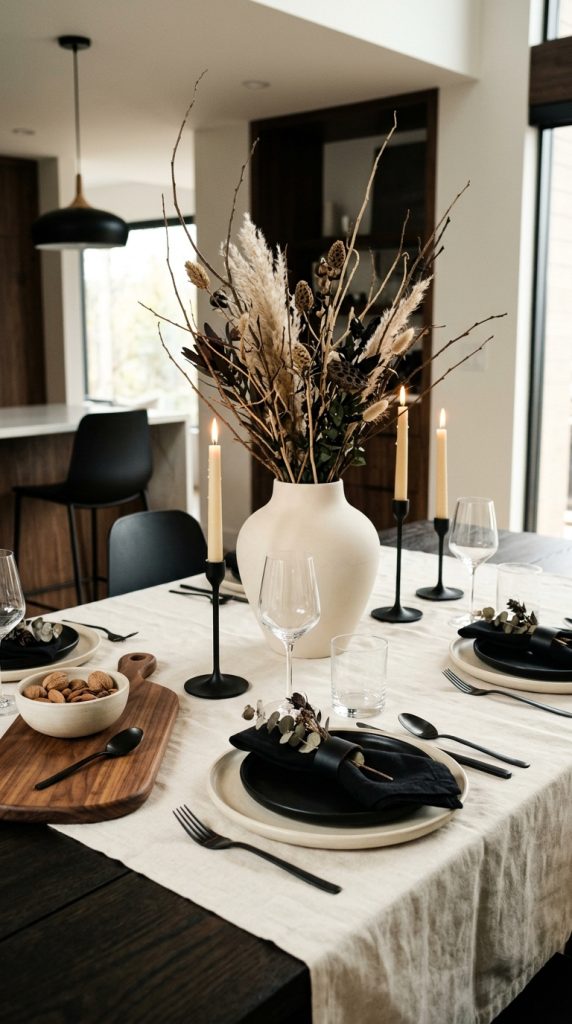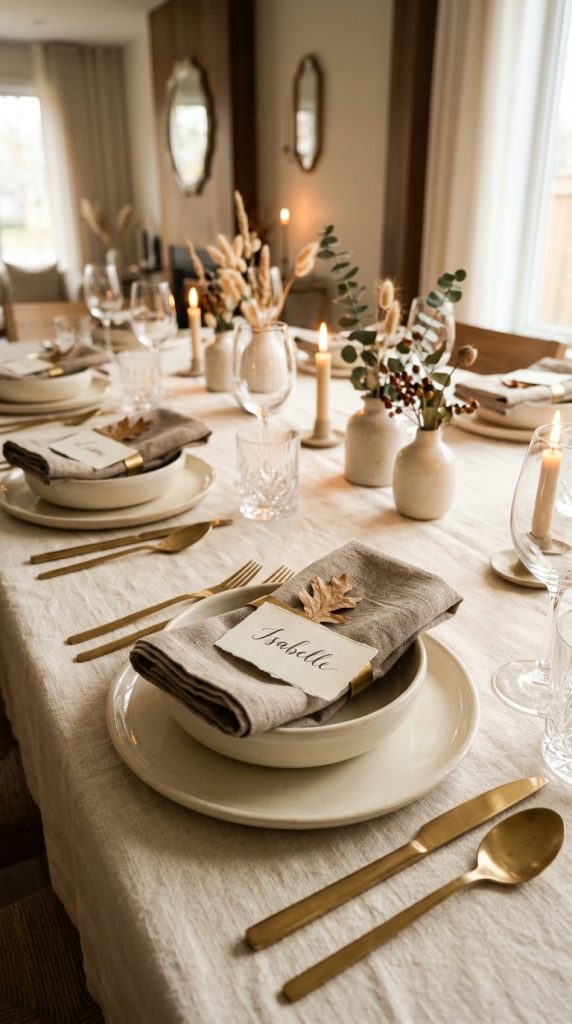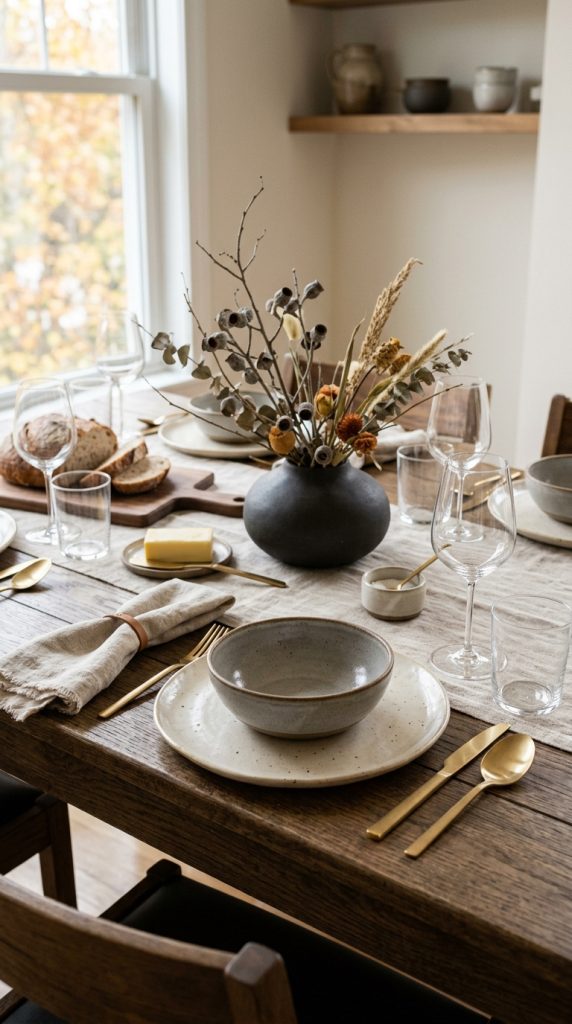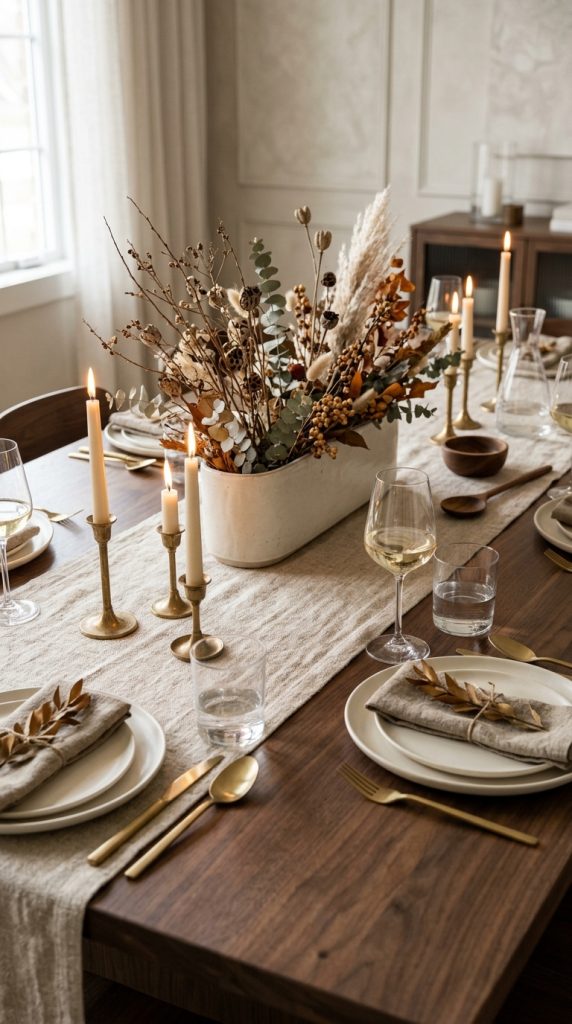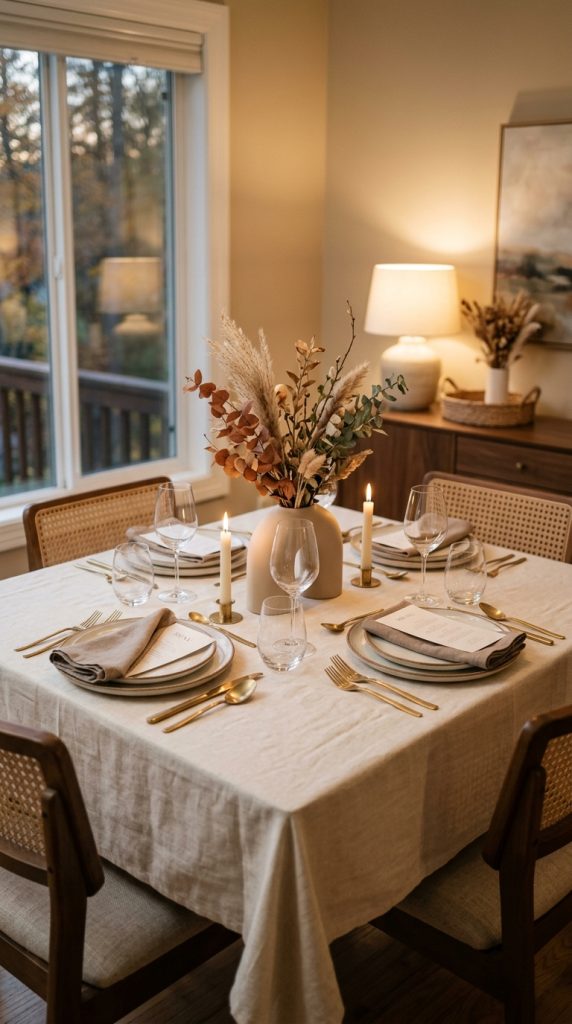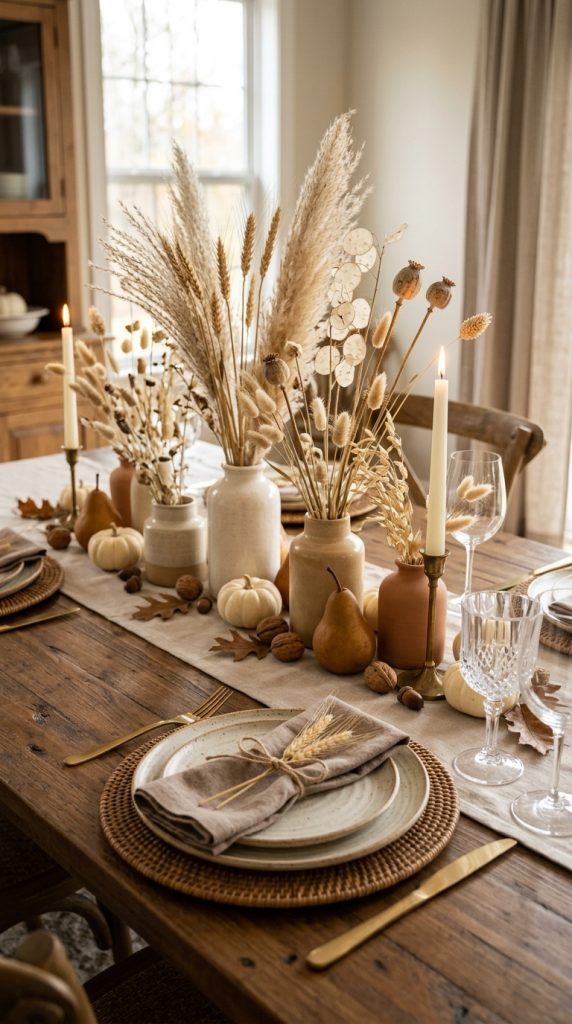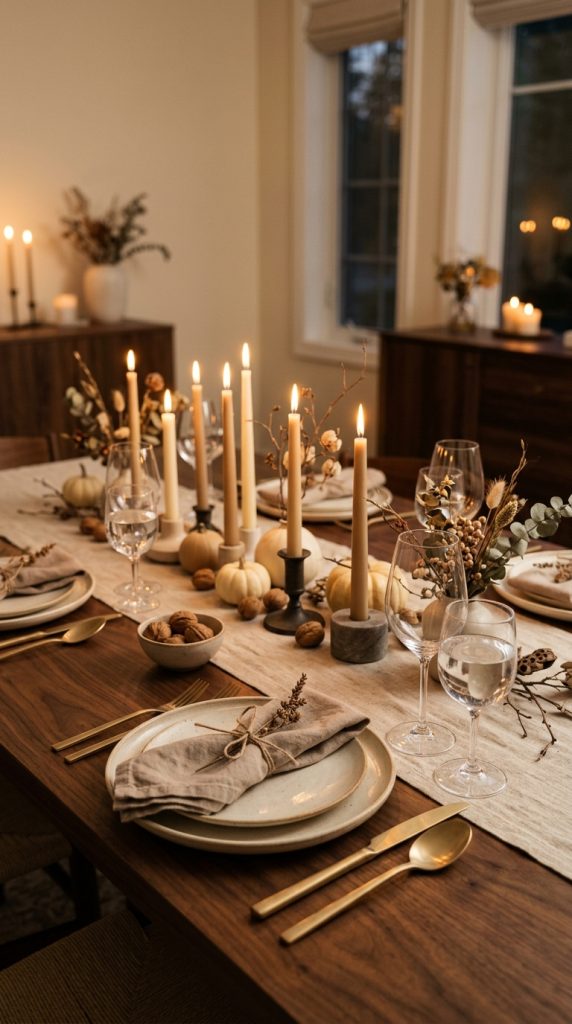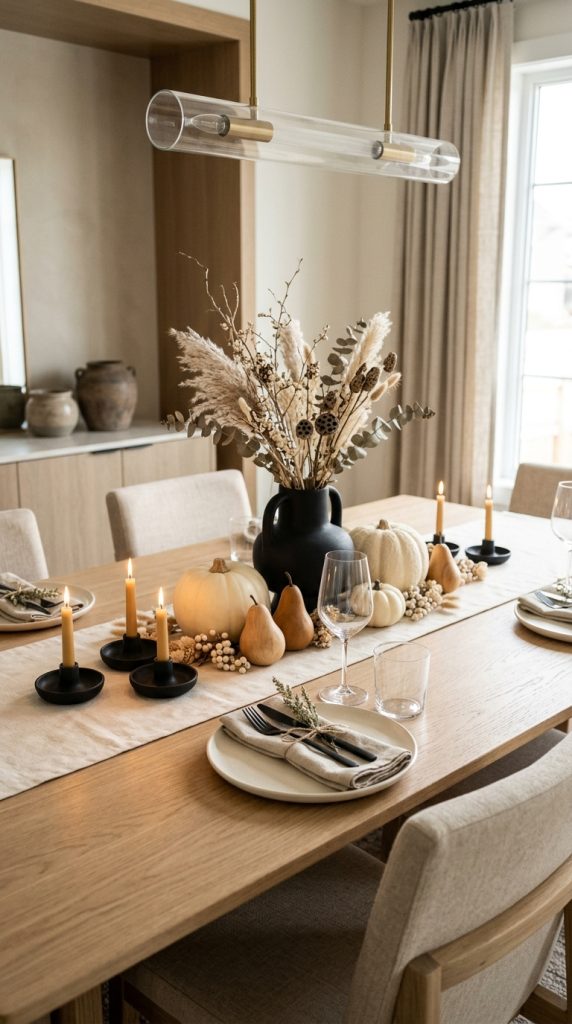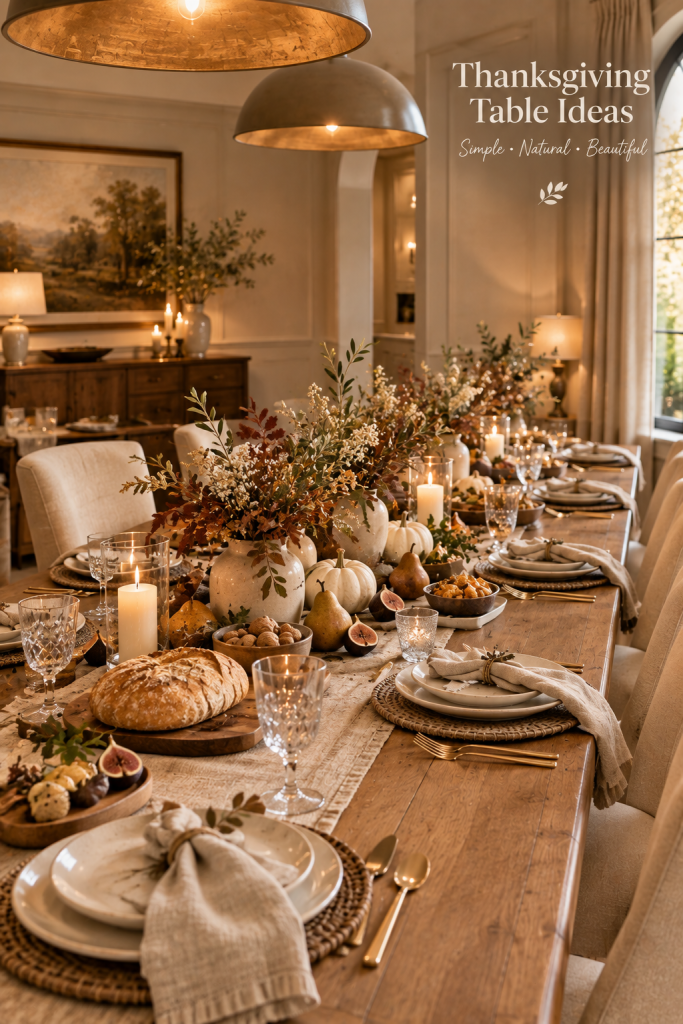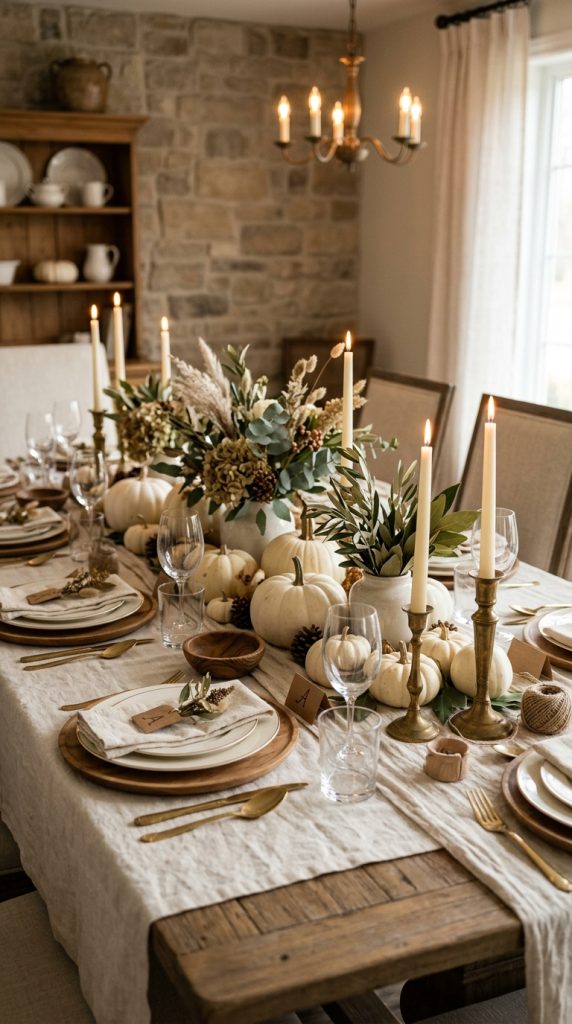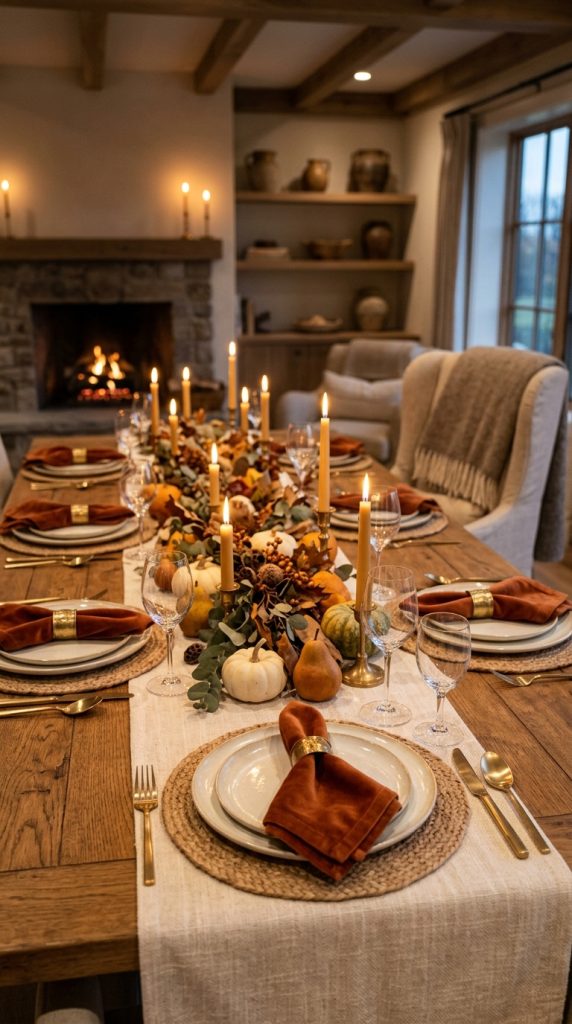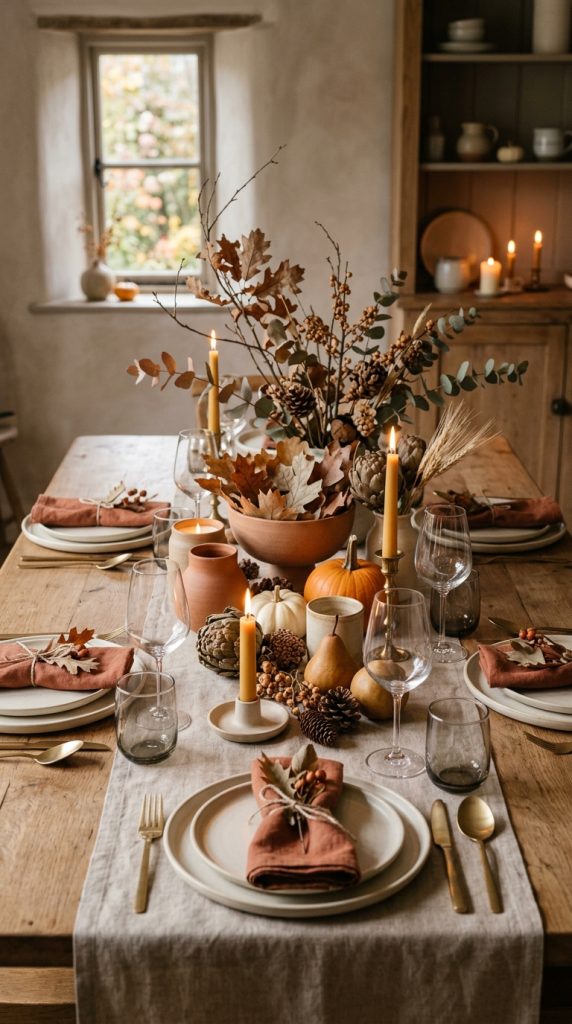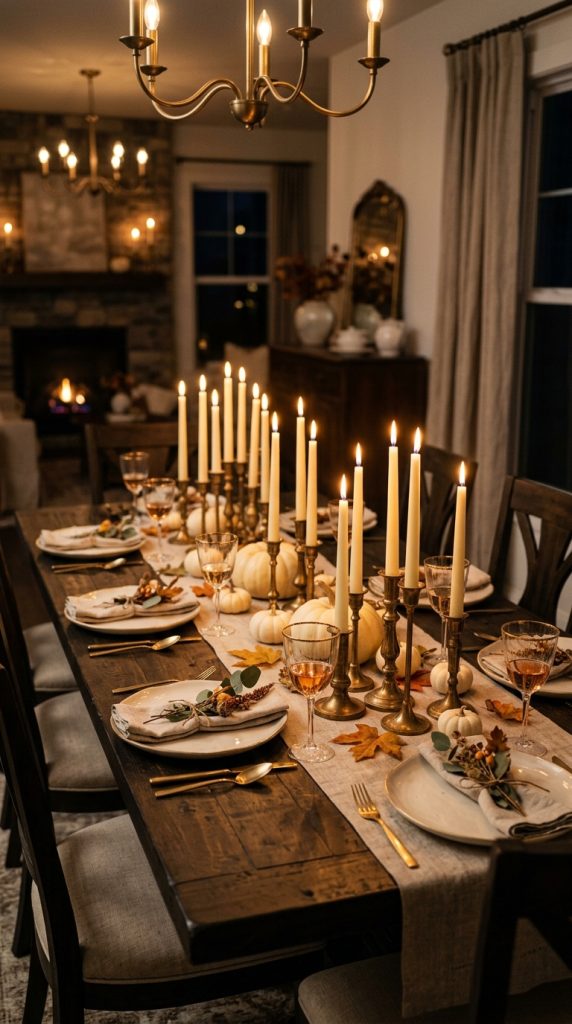
Category: Thanksgiving decore ieas

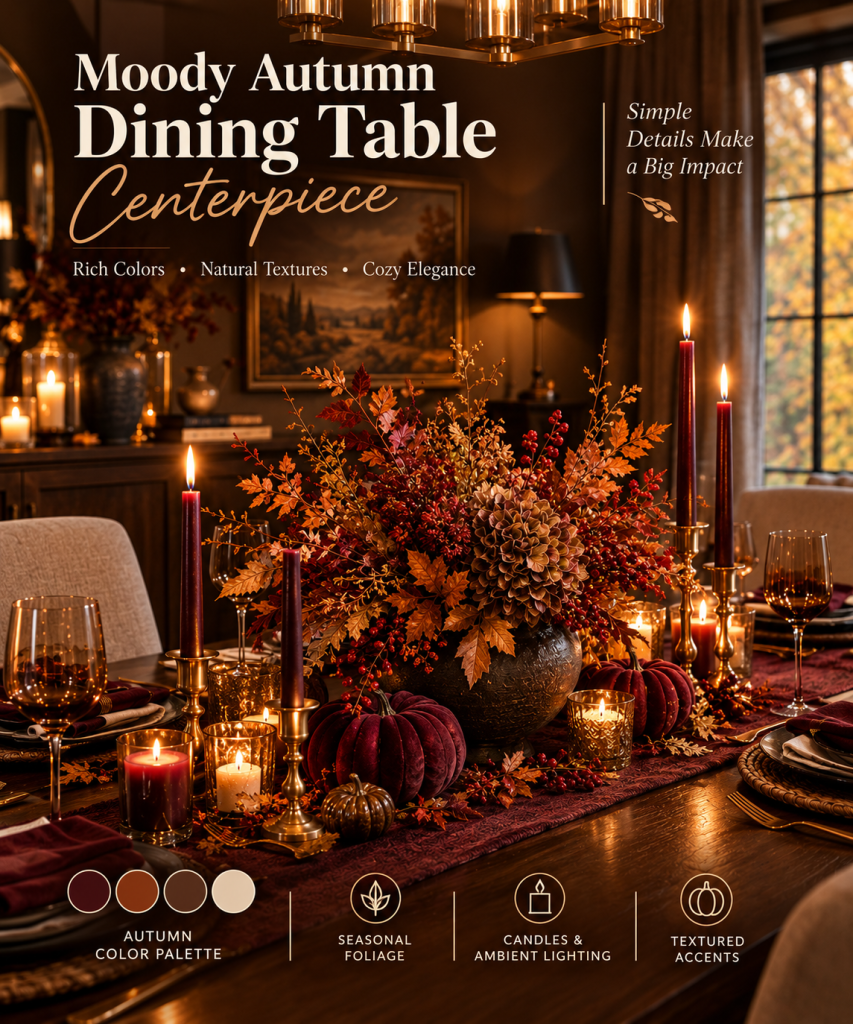
  • 19+Moody Autumn Dining Table Centerpieces Ideas

    19+Moody Autumn Dining Table Centerpieces Ideas

    The modern autumnal dining table has evolved beyond conventional commercial decorations composed of plastic pumpkins, neon orange gourds, synthetic fall leaves, and artificial craft glitter. In contemporary interior architecture, upscale residential styling, and hospitality-driven tablescape design, late autumn calls for a significantly richer, more evocative, and deeply sensory aesthetic known as moody organic design. Deeply inspired by the profound, atmospheric chiaroscuro shadows of seventeenth-century Dutch Golden Age still-life paintings, this design philosophy balances dark romanticism with untamed woodland naturalism. When the crisp, biting cold winds begin to strip the trees outdoors and twilight settles early across the landscape, the interior dining table transforms into the essential emotional and physical heart of the home. It becomes an intimate, welcoming sanctuary that beckons family and close guests to slow down, disconnect from modern digital static, and linger for hours over candlelit conversation, robust dark wines, artisanal breads, and slow-simmered seasonal meals.
    Creating an authentic moody autumn centerpiece is a disciplined masterclass in tactile texture, tonal contrast, lighting temperature, and botanical foraging. Rather than settling for a flat, predictable seasonal display that relies entirely on uniform orange and yellow hues, this aesthetic draws its commanding power from deep, brooding, and shadow-drenched palettes. The foundational colors of a moody autumn tablescape are drawn directly from the darker corners of nature: black plum, deep midnight aubergine, rich fermented burgundy, burnt umber, raw earth brown, oxidized copper, tarnished brass, weathered iron, and deep moody moss green. These profound depths are then brought to life with dynamic textural highlights—translucent dried seedpods, frayed-edge silk velvet ribbons, foraged woodland lichen, charred architectural branches, raw-edge linen runners, and slowly dripping beeswax tapers.

    The centerpiece serves as the visual and spatial anchor for the entire dining experience. It must command attention without ever severing the essential sightlines required for fluid, effortless dinner party conversation across the table. It must feel untamed, organic, and wild, yet remain anchored in deliberate spatial proportion and rigorous functional ergonomics. Most importantly, it must look just as mesmerizing under the bright, raking daylight of a lazy autumn afternoon as it does under the flickering, amber-toned glow of low candlelight after dark. The transition from daylight to twilight is where a moody centerpiece truly comes alive. Harsh overhead electrical fixtures must be completely abandoned in favor of multi-tiered ambient candlelight. When golden flames flicker at varied heights along the table, deep fruit tones glow like jewels, unlacquered brass catches luminous glints, and complex botanical shadows dance gently across the ceiling and walls.

    Equally vital to the success of an organic tablescape is the relationship between edible culinary elements and botanical architecture. A moody autumn centerpiece should never feel like an unapproachable museum display or an artificial retail staging. By integrating real, edible seasonal harvests—such as sliced open Mission figs revealing their deep crimson centers, cracked pomegranates glistening with ruby seeds, rough russet Bosc pears, dark Concord grapes, and raw artisanal honeycomb—the tabletop becomes an interactive, living still life that invites touch, aroma, and tasting. The tactile nature of raw wood, porous stone, and hand-loomed textiles grounds the entire dining environment in honest, earth-derived comfort. Below is an exhaustive, twenty-part masterclass detailing distinct, non-repeating ideas engineered to transform your dining table into an unforgettable moody autumnal sanctuary.

    1. The Dutch Golden Age Still Life with Ripe Seasonal Fruit and Taper Candles
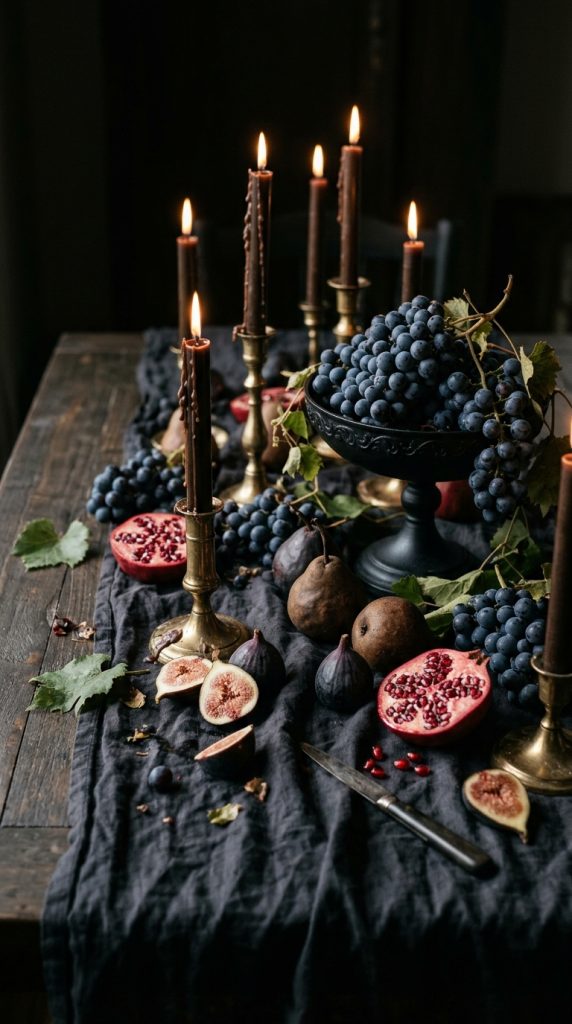
    Drawing direct inspiration from master still-life painters like Jan Davidsz de Heem and Rachel Ruysch, this centerpiece treats the tabletop as an evocative, three-dimensional oil canvas. Instead of confining elements to a formal vase, the arrangement spills organically along the center of the table, celebrating natural abundance alongside the quiet beauty of seasonal decay. It prioritizes dark, saturated fruit tones over bright summer shades, using deep purple figs sliced open to reveal their crimson seeds, dusty Concord grapes, deep red Bosc pears, and pomegranate halves resting directly on a crinkled linen runner.

    • Required Elements and Materials:
    • 1 charcoal-gray or dark plum washed linen table runner (minimum 300 cm length)
    • 5 to 7 vintage, tarnished solid brass candlesticks of staggered heights (15 cm to 35 cm)
    • Dripless, hand-dipped beeswax taper candles in deep espresso, aubergine, or charcoal
    • Fresh seasonal produce: 4 black Mission figs, 2 clusters of black seedless or Concord grapes, 2 pomegranate halves, and 3 dark russet Bosc pears
    • 2 matte black iron footed compote bowls
    • Fresh sprigs of dark purple smokebush (Cotinus) and trailing blackberry vines

    Begin by laying down the dark linen runner, gathering and pinching the fabric along the length of the table to create intentional ripples, folds, and textural valleys rather than a flat, ironed surface. Position your two matte iron compote bowls slightly off-center to serve as structural anchors. In the center of the arrangement, distribute the tarnished brass candleholders in an organic zig-zag line down the table spine, making sure to vary heights so the candle flames float at different elevations. Slice two of the pomegranates and several figs in half with a sharp paring knife, allowing their rich interior jewel tones and seeds to face upward. Heap the grape clusters so they spill over the rims of the compote bowls onto the linen below, nestling the pears and halved fruit directly into the folds of the runner. Tuck dark sprigs of smokebush and thorny blackberry vines between the fruit groupings to ground the display with wild garden texture.

    2. Charred Timber and Foraged Lichen Branch Architecture
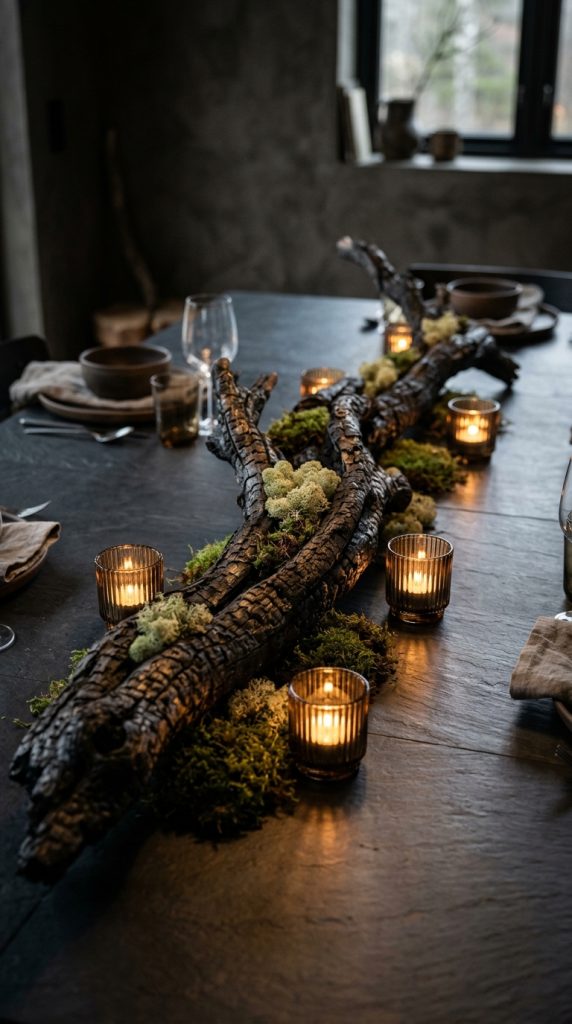
    When dining tables are long and narrow, traditional floral arrangements can quickly overcrowd the table and impede the placement of serving platters. This concept relies on an architectural, low-profile timber spine that introduces organic forest textures and dark visual drama without adding vertical bulk. Utilizing branches treated with Japanese Shou Sugi Ban charring techniques or naturally weathered dark oak limbs covered in pale sea-green lichen, this centerpiece captures the raw, stripped-down beauty of deep autumn woodlands.

    • Required Elements and Materials:
    • 1 sculptural, dried hardwood branch (approximately 90 cm to 120 cm long, with natural twists and bark)
    • Handheld mini blowtorch or black non-toxic wood stain (if charring raw timber manually)
    • Natural preserved tree lichen and rehydrated sheet moss
    • 6 to 8 low ribbed-glass or smoked-amber votive candle cups
    • Heavy-duty clear museum wax or floral putty
    • 1 brass florist frog (kenzan) for stability if the branch rolls

    Prepare the central branch by lightly charring the surface with a mini blowtorch to achieve a deep, matte carbonized finish, or wipe it down with a dark ebony wood stain, allowing the natural grain to show through. Test the branch on the table surface, using a small blob of clear museum wax underneath the heavy contact points so it rests completely stable without rocking. Tuck small cushions of pale green tree lichen and dark forest sheet moss into the natural crooks, crevices, and knots of the wood. Nestle smoked-amber glass votive cups directly along the base of the timber, keeping them close enough that their warm flames illuminate the charred wood grain and lichen without scorching the dry materials. This minimal yet striking design leaves generous counter space for place settings while creating a dramatic linear focal point.

    3. Smoked Black Glass Cloches with Dried Botanical Specimens
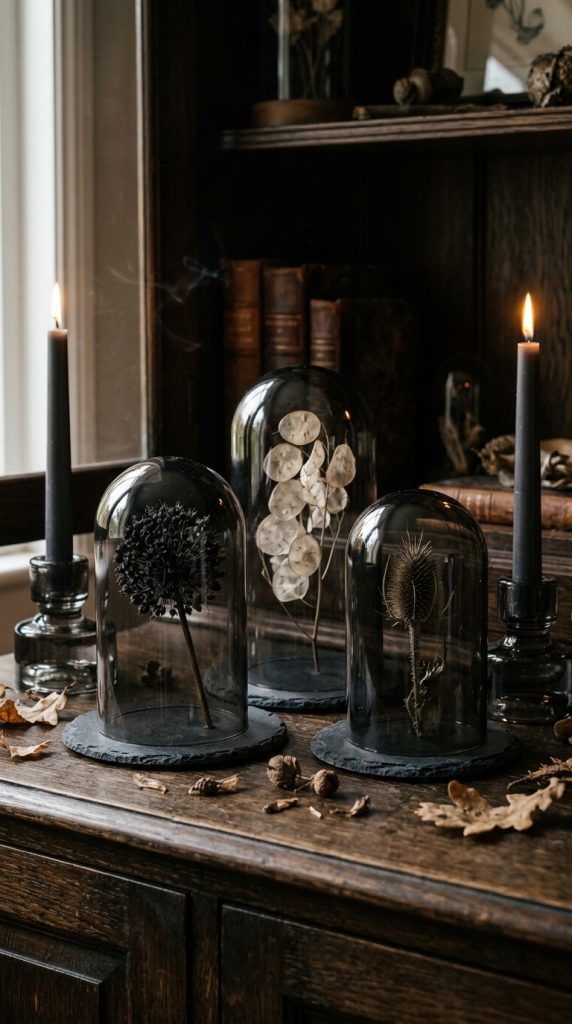
    Preserving botanical textures under transparent glass domes introduces a moody, Victorian-cabinet-of-curiosity aesthetic that immediately elevates an intimate dinner setting. Rather than relying on traditional clear glass bell jars, this centerpiece utilizes smoked charcoal, dark amber, or iridescent black glass cloches. The darkened glass acts as an atmospheric filter, muting daylight and casting a mysterious, vintage shadow over the delicate dried botanicals suspended within.

    • Required Elements and Materials:
    • 3 varied-height smoked-glass cloches with matching turned-wood or dark slate bases (20 cm to 35 cm tall)
    • Preserved botanical specimens: dried lotus seed heads, blackened allium globes, wild thistle pods, and dried honesty (Lunaria) seed discs
    • Small floral clay or brass pin frogs (kenzan) to anchor stems inside the bases
    • 4 low, heavy-base lead crystal or smoked glass taper candle holders
    • Unscented charcoal or deep oxblood taper candles

    Begin by anchoring a brass pin frog in the center of each slate or dark wooden cloche base using floral adhesive. Mount your dried botanical specimens onto the pins, arranging them as sculptural, sparse solitary stems—a single blackened allium head in the tallest cloche, two delicate papery Lunaria pods in the medium dome, and a spiky dried thistle in the shortest. Lower the smoked glass domes over the specimens, seating them securely into their base grooves. Place the three cloches down the center of the dining table in an asymmetrical cluster, leaving twenty centimeters of space between them. Flank the glass domes with smoked glass taper holders fitted with charcoal candles; when lit, the candle flames reflect against the curved outer surfaces of the cloches while casting soft, amber backlighting through the preserved seed pods within.

    4. The Monochromatic Black Calla Lily and Matte Stoneware Minimalist Runner
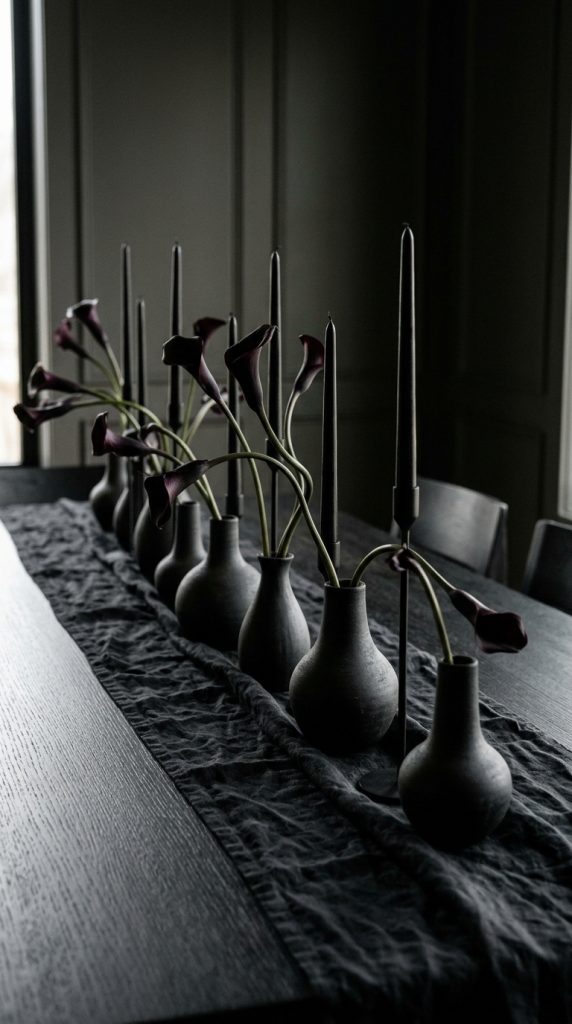
    For spaces with contemporary or minimalist architecture, classic multi-colored autumn decor can feel visually chaotic. This concept champions strict monochromatic discipline, relying on deep, dramatic tones and sculptural botanical silhouettes. The midnight-purple, near-black blooms of black calla lilies (Zantedeschia) paired with sculptural, unglazed black stoneware vessels create an arresting modern tablescape that prioritizes negative space, clean lines, and deep shadow play over sheer volume.

    • Required Elements and Materials:
    • 3 to 5 hand-thrown unglazed black ceramic bud vases of varying geometric silhouettes
    • 15 to 20 fresh stems of black calla lilies (‘Odessa’ or ‘Schwarzwalder’ cultivars)
    • Sharp florist floral knife
    • 1 long, unhemmed washed raw black silk or washed black Belgian linen runner
    • 6 slim, ultra-matte black iron taper holders with slender black dinner candles

    Lay your washed black linen runner flat down the center of the table, pulling the edges straight to honor clean, architectural lines. Arrange your black ceramic bud vases along the length of the runner at measured, rhythmic intervals. Trim the stems of the black calla lilies with clean, angled cuts at varying lengths, placing two or three stems into each vessel. Rather than forcing the stems upright, allow the natural weight of the thick lily heads to bow gracefully outward at dramatic, sculptural angles. Intersperse the matte black iron taper holders between the vases in a single, unbroken linear row, using slim black tapers to mirror the vertical stems. This creates a gallery-worthy centerpiece with a commanding, sophisticated silhouette.

    5. Copper Urn with Wild Foraged Autumn Foliage and Dark Dahlias
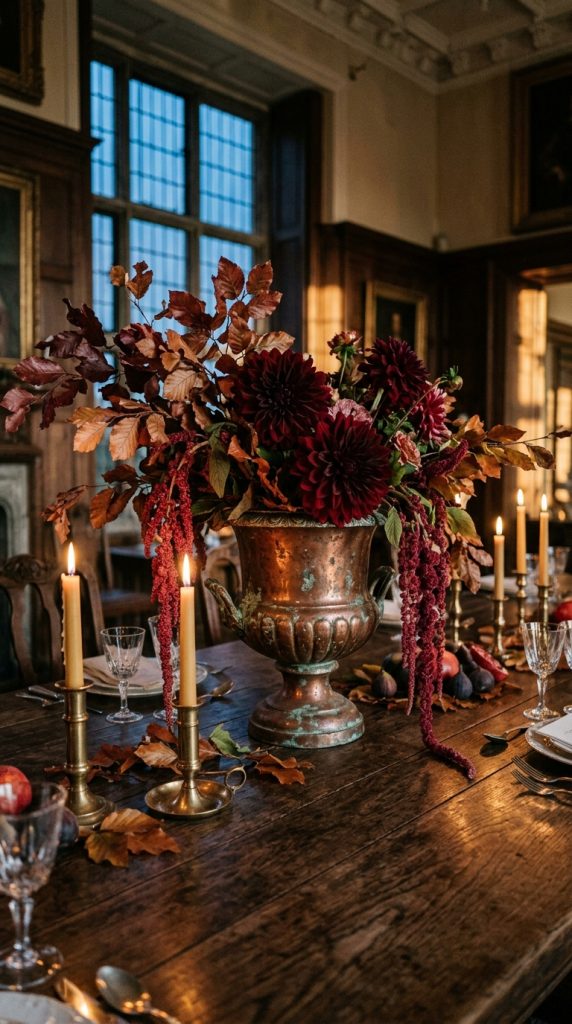
    A classic footed urn provides instant height and formal presence to a grand dining table. By selecting an antique, patinated copper urn or a heavily weathered blackened-bronze compote vessel, you introduce warm metallic undertones that naturally balance the cool slate and charcoal tones of modern dinnerware. Filled with a dramatic, sprawling arrangement of foraged turning foliage, deep wine-colored dahlias, and dangling amaranth, this centerpiece captures the untamed abundance of late October gardens.

    • Required Elements and Materials:
    • 1 antique footed copper or bronze urn (20 cm to 25 cm diameter, watertight)
    • Florist chicken wire (gauge 22 coated wire) and waterproof floral tape
    • Sharp bypass branch shears
    • Foraged branches with deep burgundy, rust, and copper-turning leaves (oak, beech, or maple)
    • 7 to 9 fresh ‘Rip City’ or ‘Black Knight’ dinnerplate dahlias
    • 5 stems of hanging red or chocolate amaranth (Amaranthus caudatus)
    • 4 solid brass chamberstick candle holders with finger loops

    Form a loose ball of coated chicken wire and wedge it firmly into the bowl of the copper urn, securing the top with two strips of waterproof floral tape stretched across the rim in an X-pattern. Fill the urn three-quarters full with fresh, room-temperature water. Begin building the framework by inserting your foraged branches at low, horizontal angles, allowing the longest branch to stretch outward across the length of the table to create an expansive horizontal silhouette. Insert dangling amaranth stems so they trail over the lip of the urn, sweeping down toward the table surface. Nest your deep burgundy dahlias close to the center and base of the arrangement to establish a rich, velvety focal point. Flank the completed copper urn with classic brass chamberstick holders fitted with ivory or beeswax candles, allowing warm metallic reflections to catch the leaves from below.

    6. The Forest Foraged Mushroom and Dark Woodland Terrarium Sprawl
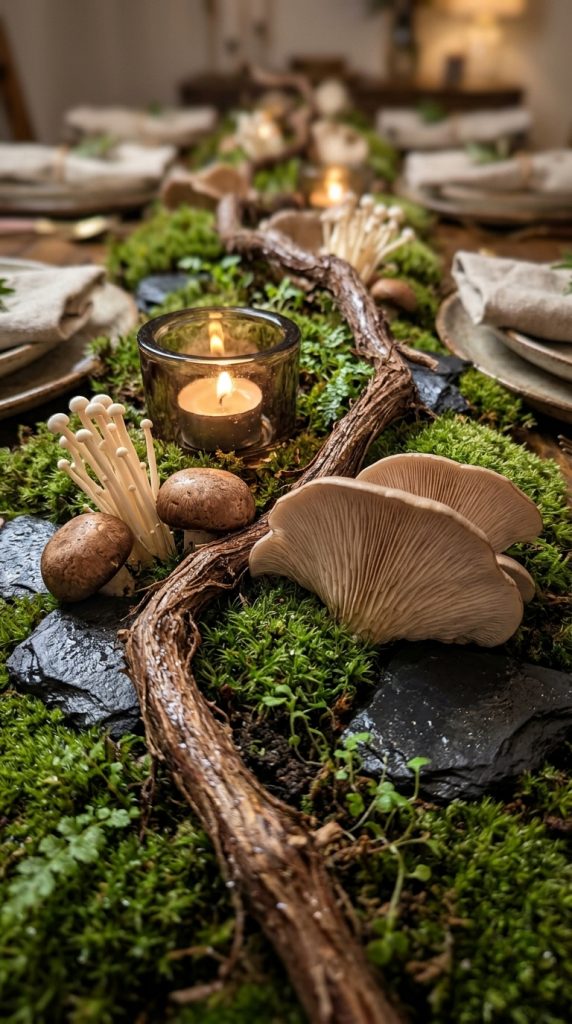
    Evoking the mysterious floor of an ancient, damp autumn forest, this unique centerpiece foregoes traditional cut flowers entirely. Instead, it relies on an earthy, living tapestry of fresh edible and medicinal mushrooms, deep green cushion mosses, dark damp river slate, and twisted roots. It brings rich, tactile organic texture directly to the table, creating an earthy, grounding centerpiece that pairs beautifully with wood-fired seasonal autumn menus.

    • Required Elements and Materials:
    • Assorted fresh cultivated mushrooms: golden enoki clusters, dark brown cremini, layered oyster mushrooms, and sculptural lion’s mane
    • 2 bags of preserved sheet moss and living forest cushion moss
    • Flat, dark river slates and tumbled charcoal shale stones
    • Twisted grapevines or dried manzanita root pieces
    • 6 to 8 dark green or smoked-glass tea light holders
    • Unscented tea light candles

    Lay a clean parchment or dark slate runner down the center of the table to protect the dining surface from residual moisture. Arrange pieces of twisted grapevine and dark shale down the center to form the primary structure of the display. Tuck pads of vibrant cushion moss and damp sheet moss between the stones and wood roots, pressing the edges down to create continuous, undulating landscape mounds. Inset clusters of oyster mushrooms and enoki into the moss banks as though they are naturally sprouting from the wood. Wedge dark cremini mushrooms into crevices between the river stones. Finish by nestling smoked tea light holders deeply into the moss beds; the soft, low-lying candlelight will illuminate the delicate gills of the mushrooms and the damp textures of the stones, creating an enchanting, fairy-tale forest floor.

    7. Moody Monochrome Dried Hydrangea and Foraged Thistle Clouds
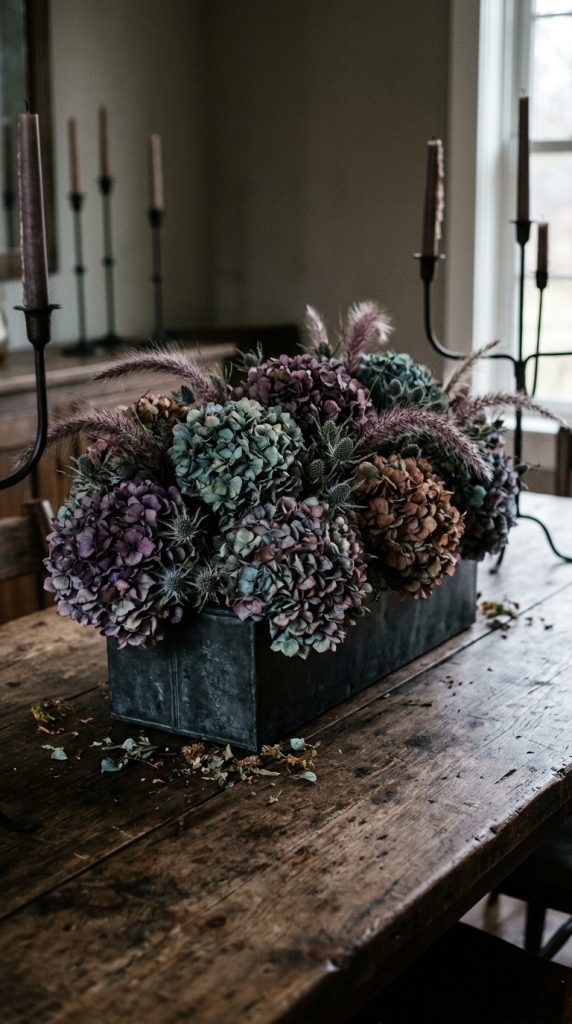
    Dried hydrangeas are an autumn tablescape staple, but when left in their faded, light-brown state, they can look dull and flat. Selecting late-harvest antique hydrangeas—those naturally aged on the shrub to deep, moody shades of bruised purple, dusty teal, rust, and forest green—transforms them into opulent, cloud-like textural masses. Paired with spiky wild thistles and dried ornamental grasses, this completely water-free centerpiece lasts the entire season.

    • Required Elements and Materials:
    • 7 to 9 large heads of naturally dried antique hydrangeas (featuring deep purple, teal, and russet tones)
    • 10 to 12 stems of dried blue sea holly (Eryngium) or wild globe thistle (Echinops)
    • Handful of dried plumes of purple fountain grass (Pennisetum)
    • 1 low, wide rectangular trough planter in matte blackened zinc or dark concrete
    • Dry floral foam (Oasis Sahara) or crumpled chicken wire
    • 4 tall wrought-iron candelabras or minimalist black pillar candle stands

    Wedge dry floral foam or a dense ball of chicken wire into your low blackened-zinc trough planter. Cut the dried hydrangea stems short, trimming them so that when inserted, the heads rest directly along the rim of the container. Insert the hydrangeas tightly together, clustering them into dense, pillowy mounds that conceal the planter completely. Thread the spiky heads of blue sea holly and thistle between the soft hydrangea petals, letting them poke out five to eight centimeters above the blooms to create textural contrast. Finish by sliding wispy stems of dried fountain grass throughout the display, introducing gentle horizontal movement. Place the trough in the center of the table, pairing it with tall wrought-iron candelabras at either end to elevate candlelight above the dense floral cloud.

    8. Sliced Pomegranates, Dark Figs, and Overflowing Wine Chalices
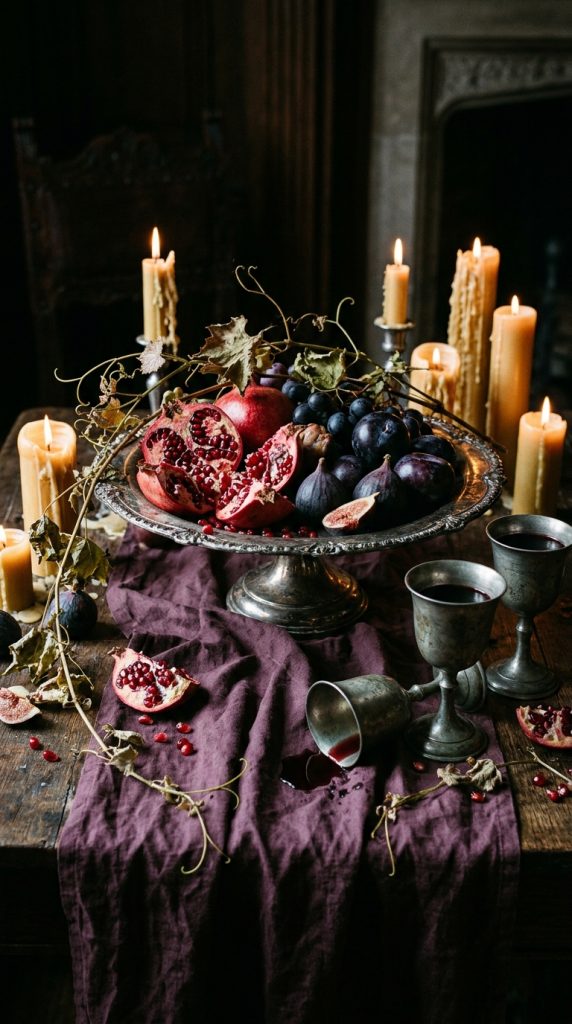
    This centerpiece embraces the decadent, sensory indulgence of late-autumn harvests, combining sliced fruits, overflowing dark wine, and rich metallic accents into an opulent dining display. Inspired by festive classical banquets, this setup uses dark pewter chalices, vintage silver footed bowls, and bruised seasonal fruits to create a lavish, lived-in atmosphere that feels warm, indulgent, and welcoming.

    • Required Elements and Materials:
    • 3 antique pewter or tarnished silver chalices and goblets
    • 1 footed vintage silver or pewter serving tray with natural age patina
    • 4 large fresh pomegranates, 6 fresh black Mission figs, and 2 bunches of dark purple plums
    • Trailing wild grapevines with dried leaves and curly tendrils
    • 1 bottle of deep, full-bodied red wine (Cabernet Sauvignon or Syrah)
    • 4 to 6 natural beeswax or dark plum pillar candles on small pewter saucers

    Position the vintage silver tray centrally on the dining table, resting it slightly askew over an unironed, dark plum linen runner. Place two of your pewter chalices on the tray, filling one to the brim with dark red wine and allowing a deliberate splash to spill over the edge and pool onto the silver surface. Tear two pomegranates open with your hands rather than cutting them with a knife; the jagged, irregular breaks expose the glistening arils with raw authenticity. Heap the torn pomegranates, figs, and plums onto the tray, letting them spill over the side onto the table runner below. Weave trailing wild grapevines around the fruit and chalices, tucking the curled tendrils around the bases of your pewter candle saucers. Light the pillar candles so their flames reflect off the dark wine and aged silver, creating an atmosphere of indulgent, moody celebration.

    9. Architectural Smoked Black Candelabra with Cascading Amaranth
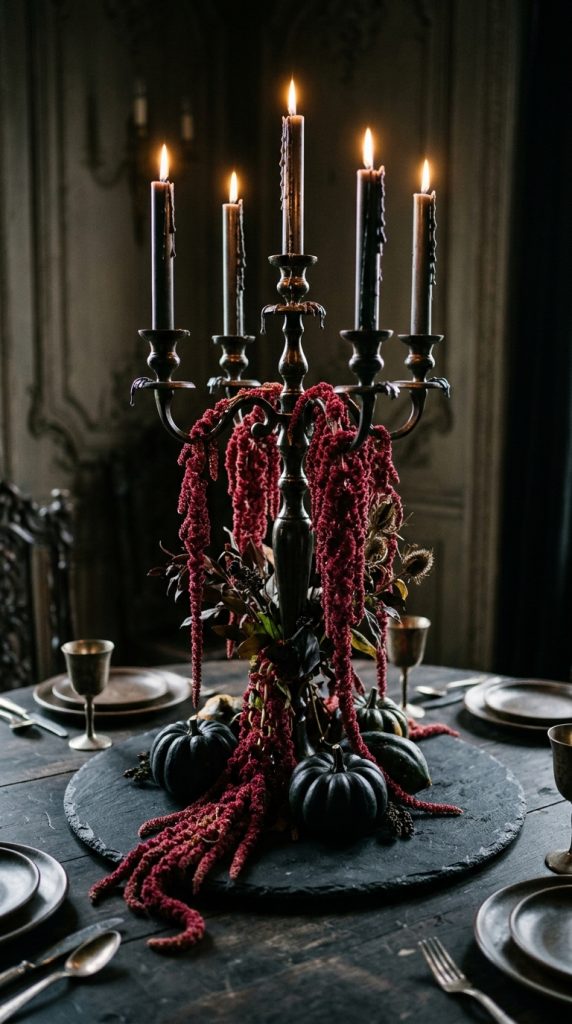
    When styling a grand dining table for an autumn feast, commanding vertical presence adds drama without claiming precious table space needed for plates and glassware. An oversized, multi-arm black candelabra creates an immediate focal point, lifting candle flames high above the eye line while trailing dark, velvety florals down toward the table surface.

    • Required Elements and Materials:
    • 1 five-arm or seven-arm wrought iron or matte black candelabra (minimum 50 cm height)
    • 5 to 7 dripless, hand-poured taper candles in deep black, dark charcoal, or oxblood
    • 8 to 10 stems of fresh weeping red amaranth (Amaranthus caudatus)
    • Florist bind wire or dark zip ties
    • 1 round, low black stone or slate base plate
    • Assorted small dark gourds (such as ‘Black Futsu’ or dark green acorn squash)

    Place your black slate plate in the exact center of the table and position the heavy wrought-iron candelabra firmly on top. Fit the taper candles into the sockets, using small melted wax drops or candle snuggers to ensure every taper stands plumb and secure. Take your long, pendulous stems of weeping amaranth and bind the cut ends to the upper arms of the candelabra with dark florist wire, positioning them directly beneath the candle cups. Allow the heavy, rope-like crimson blooms to spill downward, cascading past the central stem and pooling onto the slate plate below. Complete the base by arranging three or four small, dark green or ribbed black squash around the bottom of the candelabra, grounding the high vertical display with earthy seasonal weight.

    10. Moody Minimalist Foraged Berry Branches in Matte Ceramic Amphora
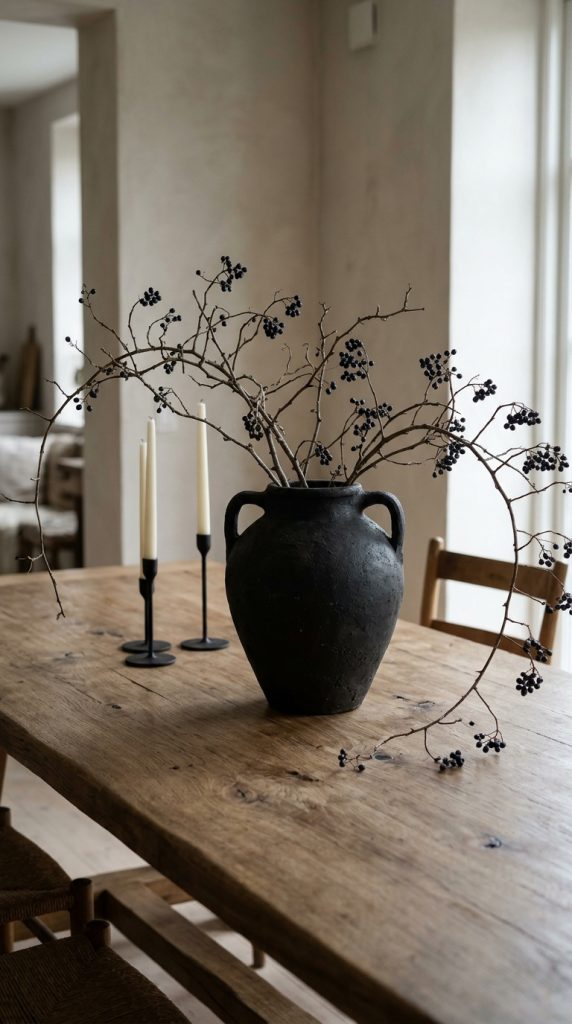
    Celebrating simplicity and negative space, this minimalist concept uses branches laden with late-autumn berries to create an open, sculptural centerpiece. By pairing a rustic, ancient-style ceramic amphora with wild bare branches covered in dark berries, this design introduces dynamic visual height while maintaining clear sightlines across the table.

    • Required Elements and Materials:
    • 1 large, heavy ceramic amphora vase with twin handles (matte charcoal, raw clay, or volcanic black glaze)
    • 3 to 5 tall, architecturally branching stems bearing dark autumn berries (privet, elderberry, viburnum, or dark winterberry)
    • Heavy branch loppers
    • Heavy brass kenzan (pin frog) or river stones for ballast
    • 4 minimalist matte black iron spike candle holders with smooth beeswax tapers

    Set the heavy ceramic amphora in the center of the table, adding several clean river stones into the bottom of the vessel to weight the base and prevent tall branches from tipping it over. Fill the amphora halfway with cool water. Select your most dramatic, curving berry-laden branch to serve as the dominant stem, trimming the base at a steep angle and setting it into the vase so it arches over the center of the table. Insert two smaller supporting branches at contrasting angles to balance the silhouette, keeping the structure light and airy rather than dense. Arrange minimalist iron spike candle holders in an asymmetrical cluster around the vase base. The sparse, arching berry branches draw the eye upward without blocking dinner guests’ view of one another.

    11. Preserved Velvet Moss Run with Raw Geodes and Dark Agate Slices
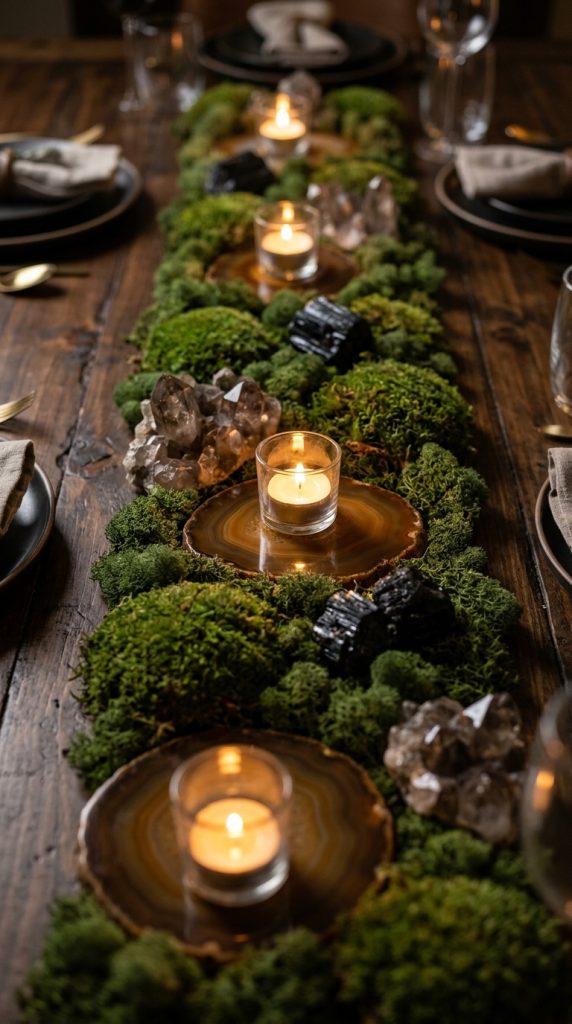
    For an earthy, mineral-rich dining experience, this concept blends geology and botany into a low-profile centerpiece that lasts indefinitely. Swapping conventional cut flowers for preserved mosses, raw mineral stones, and polished dark agate slices, this centerpiece introduces tactile textures that invite diners to touch and explore the display throughout the evening.

    • Required Elements and Materials:
    • 2 rolls of preserved dark forest green reindeer moss and sheet moss
    • 5 to 7 raw smoky quartz clusters, black tourmaline stones, or dark pyrite mineral specimens
    • 6 to 8 polished, deep-toned agate slices (charcoal, deep navy, or rich amber)
    • 6 to 8 low glass tea light cups
    • 1 narrow dark slate or raw-edge walnut wooden runner board

    Position your narrow slate or dark walnut runner board down the center of the table to serve as a clean structural boundary. Unroll and tear your preserved sheet moss, patting it into undulating, pillow-like mounds that completely cover the board surface. Distribute the raw smoky quartz clusters and black tourmaline chunks along the moss path, nestling them into natural depressions so they look like naturally exposed rock outcroppings. Slide polished, translucent agate slices underneath clear glass tea light cups, allowing the flickering flames to pass through the stone rings and cast warm, luminous halos across the deep green moss.

    12. Tarnished Vintage Silverware Urn with Deep Burgundy Garden Roses

    Embracing the charm of antique dining pieces, this design pairs the patina of tarnished vintage silver with the luxury of dark, velvety garden roses. When silver is left unpolished, it develops dark gray, iridescent undertones that perfectly complement the moody tones of late autumn, turning heirloom serving pieces into vessels for romantic florals.

    • Required Elements and Materials:
    • 1 tarnished vintage silver soup tureen, water pitcher, or deep footed trophy cup
    • Floral chicken wire and floral shears
    • 9 to 12 deep burgundy or blackberry-hued garden roses (‘Darcey Bussell’, ‘Munstead Wood’, or ‘Black Baccara’)
    • 5 stems of dark plum foliage (such as purple-leaf plum or ‘Diabolo’ ninebark)
    • 6 mismatched antique silver or silver-plate flatware pieces and small silver salt cellars
    • 4 tall, twisted taper candles in soft taupe or muted mauve

    Fit a ball of chicken wire into the tarnished silver soup tureen or trophy cup, securing it with clear floral tape, and fill it with fresh water. Build a loose, asymmetrical base using the dark plum foliage, letting several leafy stems dip low enough to brush the table surface. Cut your garden rose stems at varied lengths, inserting them into the chicken wire so their large, fully bloomed heads face outward at varying depths. Nestle three of the deepest blooms close to the rim of the silver vessel to anchor the arrangement with rich color. Place the completed silver centerpiece in the middle of the table, flanked by antique silver salt cellars filled with coarse black lava salt and soft taupe tapers, creating a refined, historic dinner atmosphere.

    13. The Minimalist Smoked Glass Bottle Runner with Single Feathery Grasses
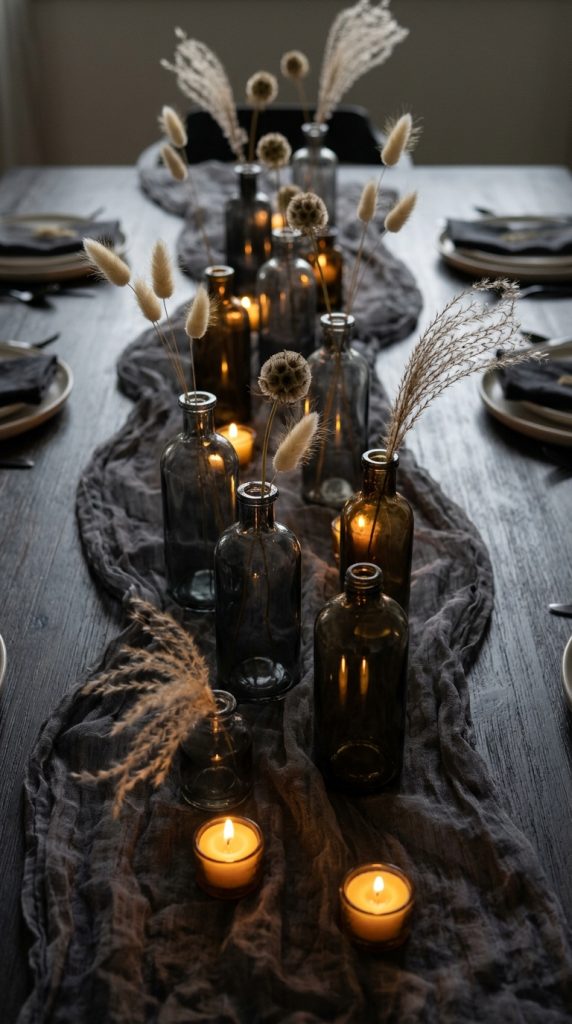
    Clean, contemporary dining tables often look best with light, repetitive arrangements rather than one heavy, central display. This concept uses an undulating run of small, assorted smoked glass bottles, each holding a single delicate autumn stem. The reflective charcoal glass catches candlelight, while the fine textures of dried grasses and seed heads add gentle, kinetic movement whenever conversation stirs the air.

    • Required Elements and Materials:
    • 9 to 12 vintage or modern smoked glass medicine bottles and apothecary vials in varying heights (10 cm to 20 cm)
    • Assorted fine autumn grasses: dried bunny tails (Lagurus ovatus), feather reed grass plumes, and dark quaking grass
    • 3 to 5 single stems of deep maroon dried scabiosa seed pods
    • 6 to 8 pure beeswax votive candles in clear glass cups
    • 1 narrow charcoal or deep slate-blue silk-gauze table runner

    Drape your sheer silk-gauze runner down the table length, gently gathering the sheer fabric into light ripples and curves. Arrange your smoked glass medicine bottles along the runner in a meandering, serpentine path that weaves down the table. Place a single dried grass plume or dried scabiosa pod into each bottle, varying the heights so the delicate seed heads float at different levels above the table. Inset glass votive candles into the open spaces along the bottle path. Because the individual stems are slender and light, the centerpiece feels airy and spacious, creating an intimate, glowing ambiance that never overwhelms the dining space.

    14. Charred Pomegranate Branches and Raw Honeycomb Table Runner
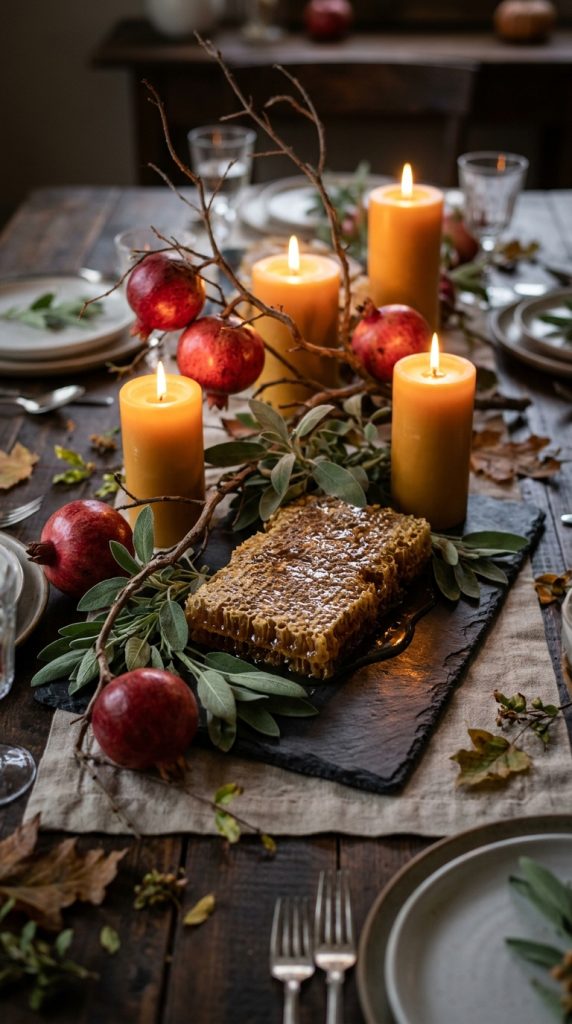
    Blending visual art with culinary elements, this centerpiece pairs dramatic, twisted pomegranate branches with artisanal, raw honeycomb displays. The golden amber tones of the honey create a striking visual contrast against the dark wood branches and deep red fruits, introducing warm light-reflective qualities and a subtle, natural aroma to the table.

    • Required Elements and Materials:
    • 2 to 3 architectural, bare woody branches (such as pruned fruit tree wood or grapevine stems)
    • 3 to 4 whole fresh pomegranates on their natural woody stems (or wired onto floral picks)
    • 1 large frame or block of pure, raw clover or wildflower honeycomb resting on a dark slate board
    • 1 small brass honey spoon or server
    • 6 brass or cast-iron pillar candle plates with wide beeswax pillar candles
    • Fresh sprigs of dark broadleaf sage and dried rosemary

    Lay your dark slate board in the center of the table and rest the raw honeycomb frame in its center, accompanied by an antique brass honey spoon. Arrange the bare, twisted woody branches down the center of the table, curving them around the slate board to frame the golden comb. Intersperse the heavy, whole pomegranates along the branch path, tucking fresh sage sprigs and rosemary sprigs around the bases of the fruit to introduce savory, herbaceous fragrance. Place wide beeswax pillar candles along the outer edges of the branches. The golden flicker of the candlelight reflects off the hexagonal facets of the fresh honeycomb, casting a warm, appetizing glow over the dining settings.

    15. The Blackened Urn with Dried Allium, Artichokes, and Smoked Pheasant Feathers
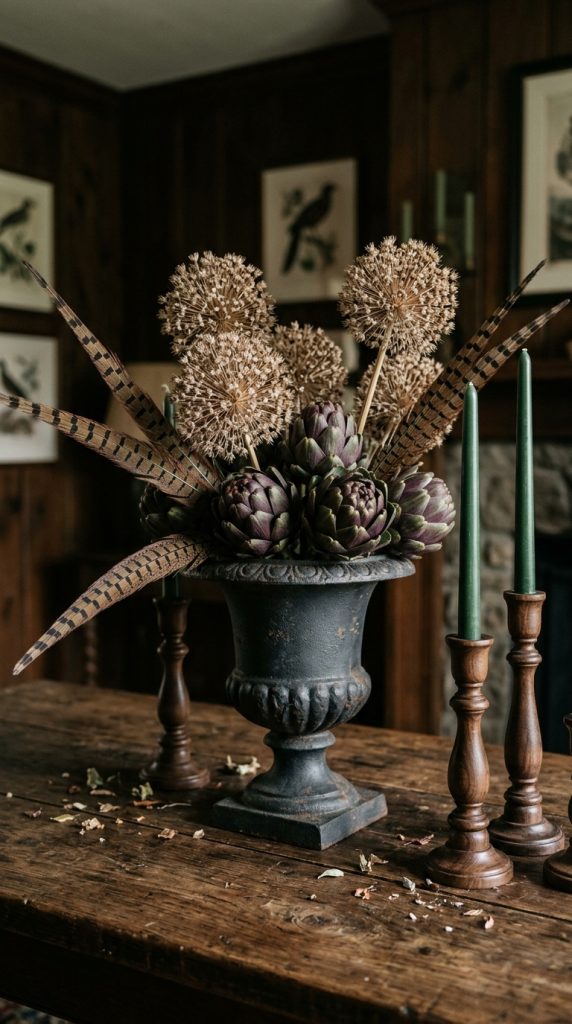
    Textural diversity is the secret to a rich, layered autumn tablescape. This centerpiece brings together three distinct natural materials: bold architectural dried allium globes, velvety purple globe artichokes, and the delicate patterns of ethically sourced pheasant or guinea fowl feathers, creating an earthy, game-lodge aesthetic tailored for late autumn dinner parties.

    • Required Elements and Materials:
    • 1 heavy, cast-iron or concrete footed urn finished in matte charcoal or cast bronze
    • 3 large dried allium flower heads (natural tan or dyed deep graphite)
    • 3 fresh purple globe artichokes
    • 6 to 8 naturally molted male pheasant tail feathers or barred guinea fowl feathers
    • 1 floral cage or chicken wire insert
    • 4 tall, dark walnut timber turned candleholders with forest-green tapers

    Secure a ball of chicken wire into the throat of your cast-iron urn. Insert the stiff, woody stems of your three purple artichokes into the center, resting their weighty heads securely against the rim of the urn to establish a solid structural core. Position the three round dried allium heads directly behind and above the artichokes, allowing their spherical, starry silhouettes to add height and open form. Carefully slide the pheasant tail feathers into the arrangement at dynamic, diagonal angles, letting their long, patterned tips extend outward to catch the room’s ambient light. Set the urn on the table between tall turned walnut candleholders fitted with deep forest-green tapers to complete the rustic, sophisticated look.

    16. Autumn Forest Floor Sprawl with Acorns, Pinecones, and Dried Mosses
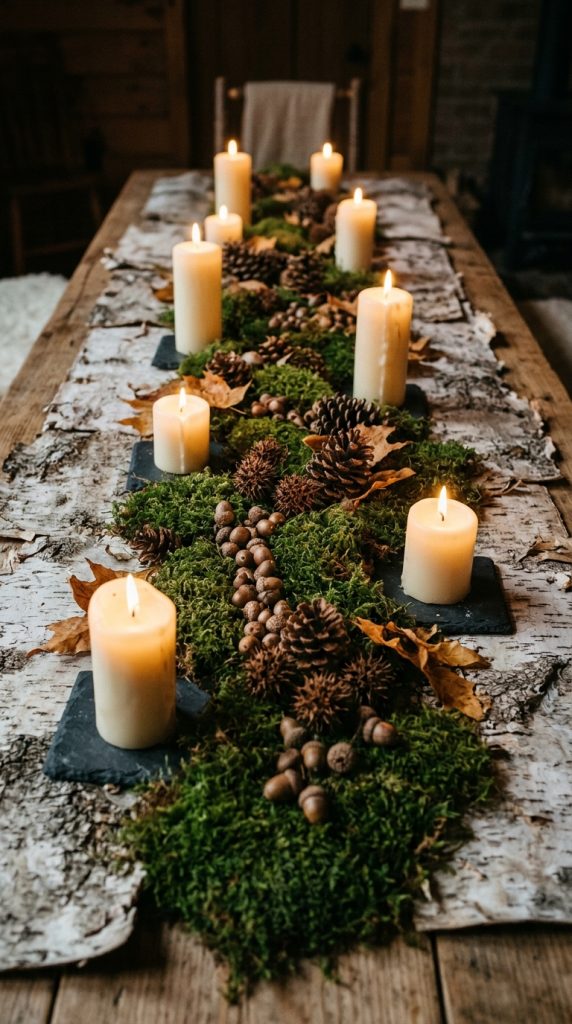
    This low, sprawling tablescape mimics the quiet natural beauty of an autumn forest floor, utilizing foraged woodland treasures arranged along a relaxed central path. Completely low-profile, it keeps sightlines entirely open across the table while wrapping dinner guests in the natural scents of aged pine, oak woods, and damp forest floor moss.

    • Required Elements and Materials:
    • 1 large basket of assorted foraged pinecones, dark acorns with caps, and spiky sweetgum seed pods
    • Preserved brown reindeer moss and dark green sheet moss
    • 5 to 7 thick, varied-height natural beeswax pillar candles (unscented)
    • Fire-safe slate coasters or ceramic plates for candle bases
    • Several pieces of weathered birch bark or fallen timber bark slabs

    Arrange your fire-safe slate coasters down the spine of the table, setting the varied-height beeswax pillar candles securely on top. Lay pieces of curved tree bark between the candle bases to create natural borders and miniature terraces along the table. Tuck handfuls of dried sheet moss into the gaps, letting it spill over the edges of the bark to form a continuous woodland runner. Scatter the foraged pinecones, acorn clusters, and sweetgum pods generously across the moss, nestling them close to the candle bases. When lit, the amber candlelight bathes the organic textures of the bark, acorns, and moss in warm shadows, turning simple foraged elements into a cozy, intimate tablescape.

    17. The Moody Romantic Velvet Ribbon Garland with Dried Hydrangeas and Pears
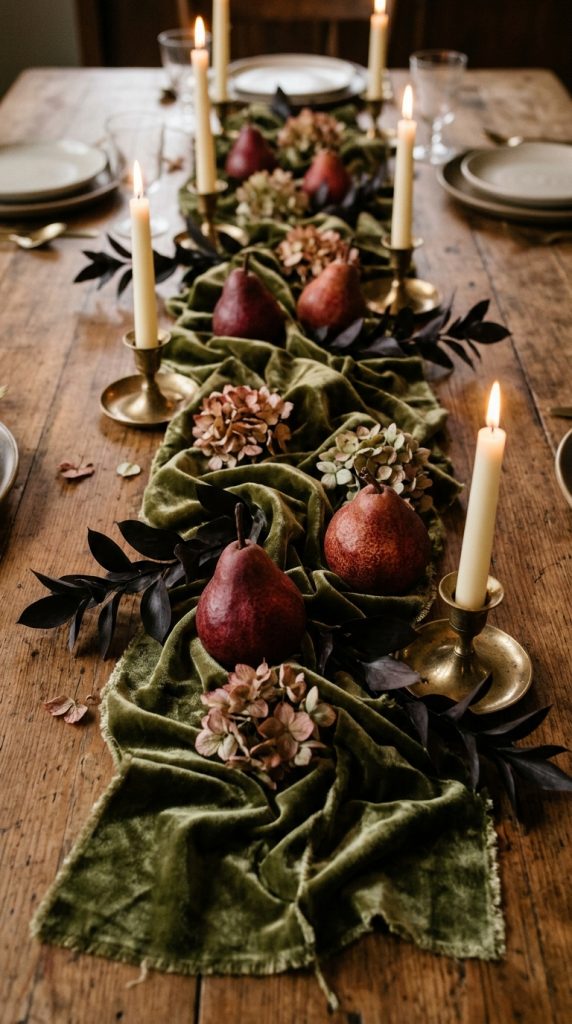
    Introducing fine textiles directly into a floral centerpiece adds tactile luxury and movement. This concept weaves a wide, frayed-edge silk velvet ribbon through an undulating garland of dried hydrangeas, dark foliage, and blushing autumn pears, softening the harder lines of the dining table with flowing fabric folds.

    • Required Elements and Materials:
    • 5 meters of wide (5 cm to 8 cm) hand-dyed silk velvet ribbon in deep olive, rust, or aubergine (with raw, frayed edges)
    • 5 heads of dried antique hydrangeas pulled into smaller florets
    • 6 firm, dark red Starkrimson or Bosc pears
    • Stems of preserved dark green Italian ruscus or seeded eucalyptus
    • 6 low brass tulip candle holders with pale ivory or beeswax taper candles

    Begin by anchoring the loose base foliage—such as preserved ruscus or eucalyptus—down the center of the table in a gentle, curving garland line. Weave your wide silk velvet ribbon through the leaves, letting it loop, twist, and pool naturally along the table surface rather than pulling it tight. Tuck clusters of dried hydrangea florets into the folds of the ribbon, using the fabric to support the delicate dried petals. Rest the fresh pears directly into the valleys of the ribbon loops, leaning them gently against the greenery. Intersperse low brass tulip candle holders along the outer curves of the ribbon trail, letting the candle flames highlight the rich, light-catching nap of the velvet fabric.

    18. The Modern Minimalist Smoked Acrylic Riser with Floating Florals
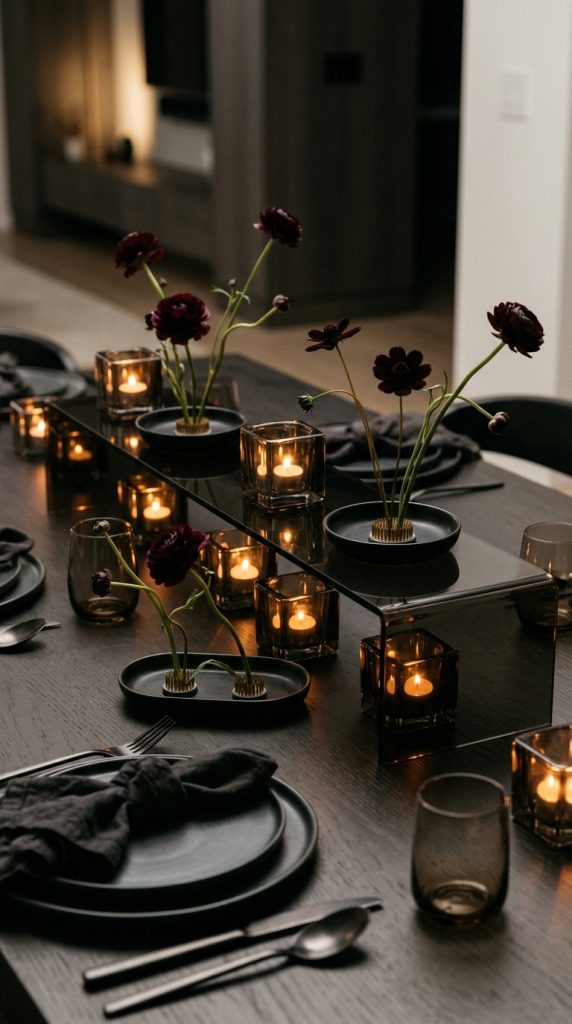
    For contemporary, industrial, or open-concept loft dining spaces, traditional urns and rustic runners can feel out of place. This modern concept uses an elevated, smoked-black translucent acrylic riser that runs down the length of the table. By lifting floral materials and candle votives above the table on a sleek, tinted platform, it creates a clean, architectural floating centerpiece that preserves clear sightlines.

    • Required Elements and Materials:
    • 1 custom or modular smoked-black translucent acrylic table riser (15 cm wide, 10 cm tall, 100 cm long)
    • 6 to 8 shallow, round black ceramic saucers or floral bowls
    • Fresh blooms: deep burgundy ranunculus, dark chocolate cosmos, and single stems of black baccara roses
    • Brass floral pin frogs (kenzan)
    • 8 to 10 battery-operated or traditional tea lights in heavy, square smoked-glass holders

    Place the smoked acrylic riser in the center of your dining table, setting its clean, straight edges parallel to the sides of the table. Arrange miniature ceramic saucers fitted with brass pin frogs along the top surface of the acrylic riser. Fill the saucers with a shallow layer of water, then press your stems of deep burgundy ranunculus and chocolate cosmos onto the pins at varied, minimalist angles. Place heavy, square smoked-glass tea lights between the floral saucers on top of the riser, and place a few additional tea lights directly on the table surface underneath the acrylic bridge. The double layer of glowing lights reflects through the smoked acrylic platform, producing a sleek, floating architectural centerpiece.

    19. Moody Dutch Botanical Wreath with Central Pillar Candle Hurricane
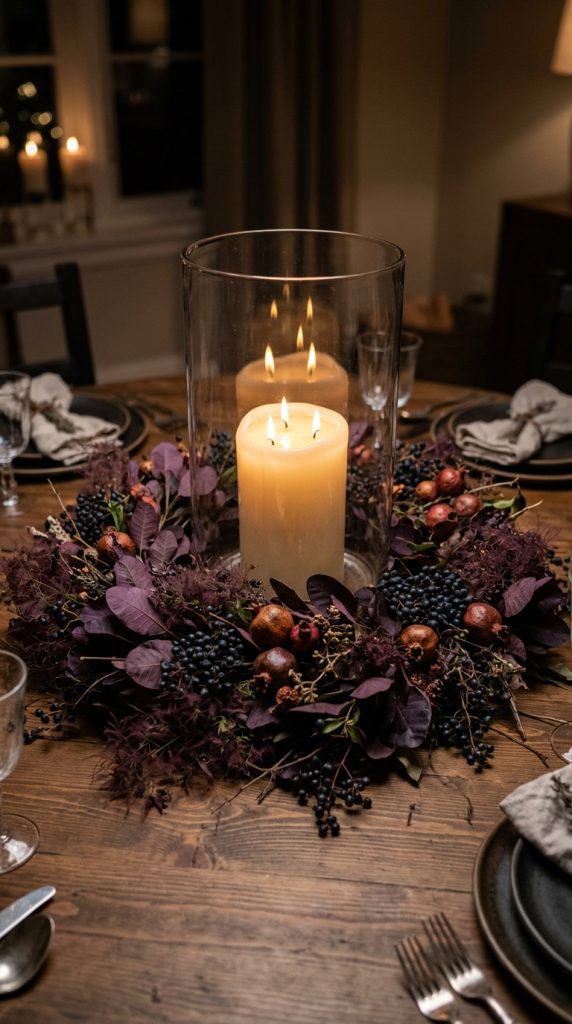
    A circular centerpiece offers natural, balanced proportion for round or square dining tables where a long runner would crowd place settings. This concept wraps a substantial, low-lying wreath of dark, textural autumn foliage, berries, and seed pods around an oversized glass hurricane cylinder, creating a protected, wind-resistant pillar candle display suitable for both indoor dining rooms and sheltered outdoor autumnal patios.

    • Required Elements and Materials:
    • 1 large clear or lightly smoked cylindrical glass hurricane shade (20 cm diameter, 30 cm tall)
    • 1 extra-large three-wick ivory or beeswax pillar candle
    • 1 circular wire or grapevine wreath base (35 cm to 40 cm outer diameter)
    • Stems of dark purple smokebush (Cotinus), seeded eucalyptus, and wild privet berries
    • 4 to 6 small dried pomegranate picks or dried lotus pods
    • Florist paddle wire

    Center the wire or grapevine wreath base on your dining table. Using florist paddle wire, bind small bundles of dark smokebush, seeded eucalyptus, and wild privet berries to the wreath frame, layering each bundle over the stems of the previous one to create a lush, continuous circle of dark greenery. Wire small dried pomegranates and lotus pods into the foliage at balanced intervals to introduce seasonal depth and texture. Place the large glass hurricane shade directly into the center opening of the finished wreath, checking that foliage leaves brush gently against the outer glass without hanging over the rim. Lower your heavy three-wick pillar candle into the hurricane; the glass enclosure shields the flame from drafts while focusing the warm candlelight onto the surrounding botanical wreath.

    20. The Dramatic Dark Fig and Bleached Fern High-Contrast Cascade
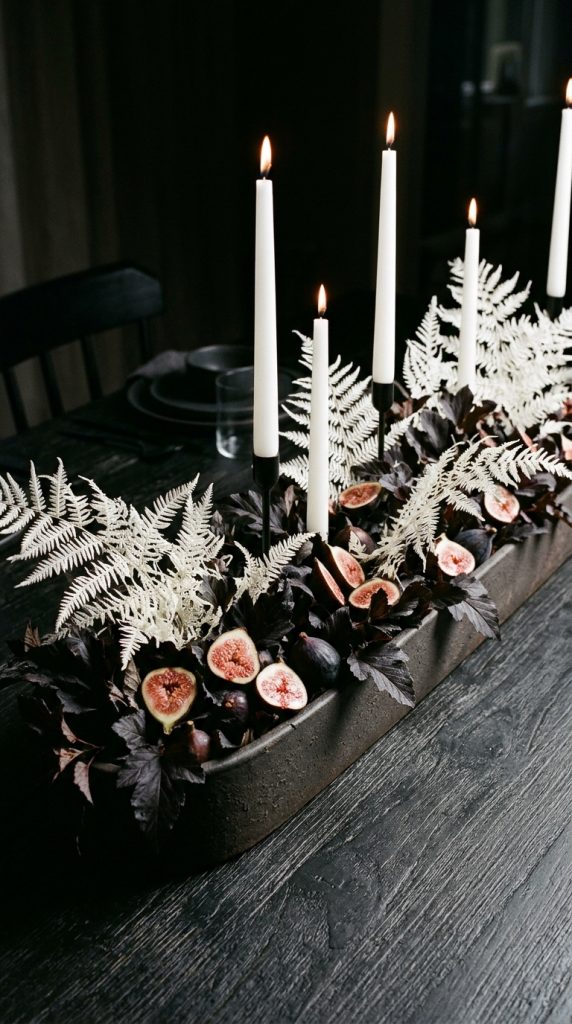
    High-contrast visual design creates an immediate, memorable impact. This modern concept pairs deep, shadow-drenched elements—such as dark purple figs, blackened stoneware, and deep burgundy foliage—with ghostly, bleached sun-dried botanicals like preserved white bracken ferns, bleached peacock feathers, and ivory thistle heads. This striking contrast catches the eye across the room, feeling both deeply autumnal and refreshingly avant-garde.

    • Required Elements and Materials:
    • 1 matte charcoal or deep slate-black low ceramic trough or runner plate
    • 6 to 8 fronds of preserved, bleached white bracken fern (Pteridium aquilinum)
    • 8 fresh, ripe black Mission figs, several cut open to expose their deep pink interiors
    • 5 stems of dark burgundy Ninebark foliage or fresh cotinus leaves
    • 4 to 6 minimalist matte black iron candle pins with ivory taper candles

    Lay your low charcoal ceramic trough down the center of the table to catch fallen particles and define the installation boundaries. Lay the dark burgundy foliage down as the bottom foundation, letting the leafy branches trail out to create deep, dark shadows along the table. Layer the delicate, bleached white bracken fern fronds directly over the dark leaves, allowing their bright, lacy ivory fingers to float gracefully above the dark foliage. Nestle the fresh black Mission figs into the central hollows between the fern stems, slicing three of the figs in half to introduce rich, jewel-toned pink seeds into the black-and-white color palette. Anchor the display with matte black candle pins holding slender ivory tapers; the tall candles echo the stark white tones of the ferns, resulting in a cohesive, museum-quality centerpiece.

    The art of curating a moody autumn dining table centerpiece is ultimately about cultivating intimacy, honoring the quiet poetry of seasonal transition, and designing an immersive sensory experience that lingers long after the final plates are cleared. By stepping away from generic commercial decor in favor of honest, rich materials—foraged architectural branches, velvety fruits, patinated heirloom metals, tactile raw textiles, and amber candlelight—your dining table becomes a living work of art. These arrangements invite your guests to slow down, engage their senses, and savor the comforting warmth of home as autumn deepens into winter.
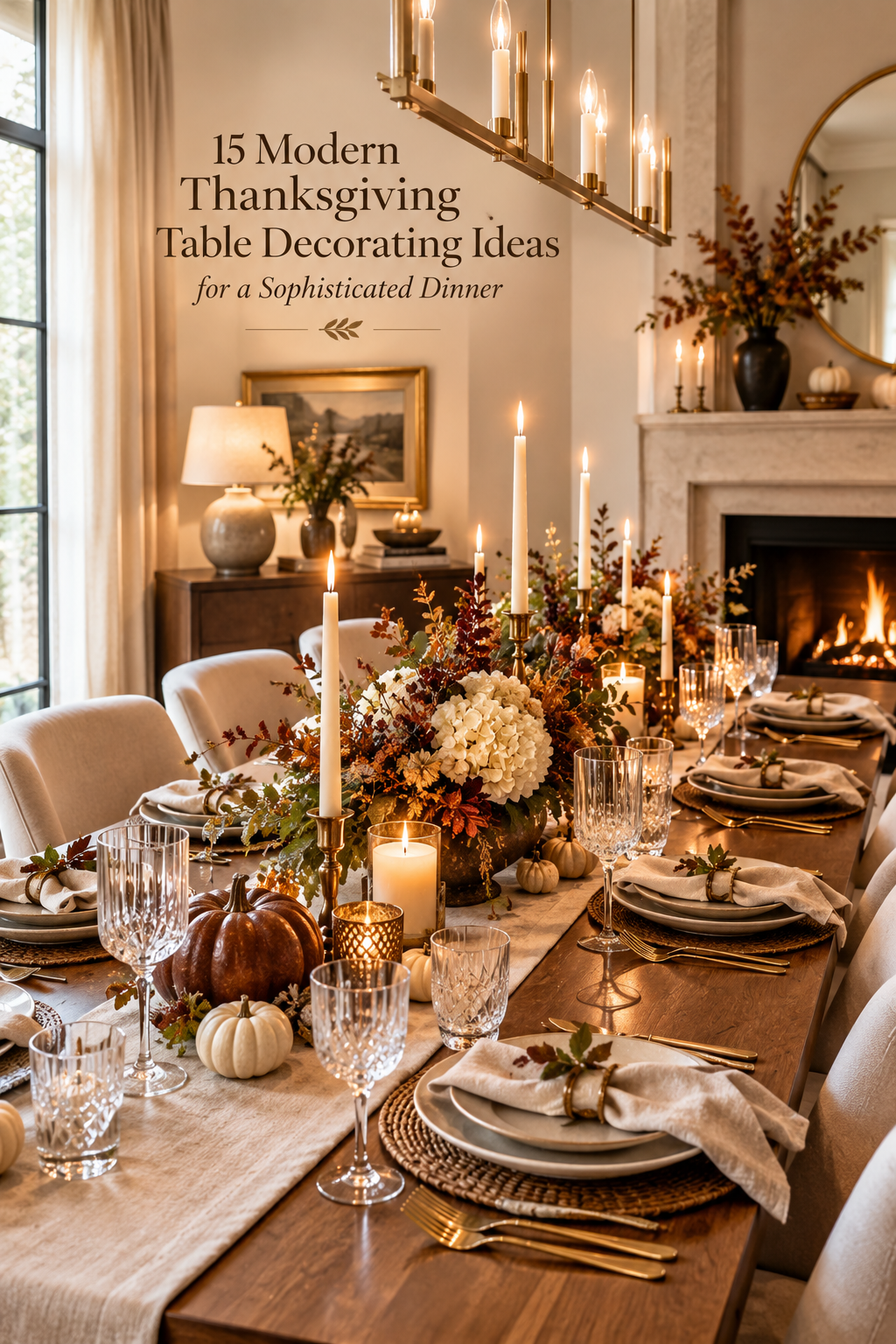
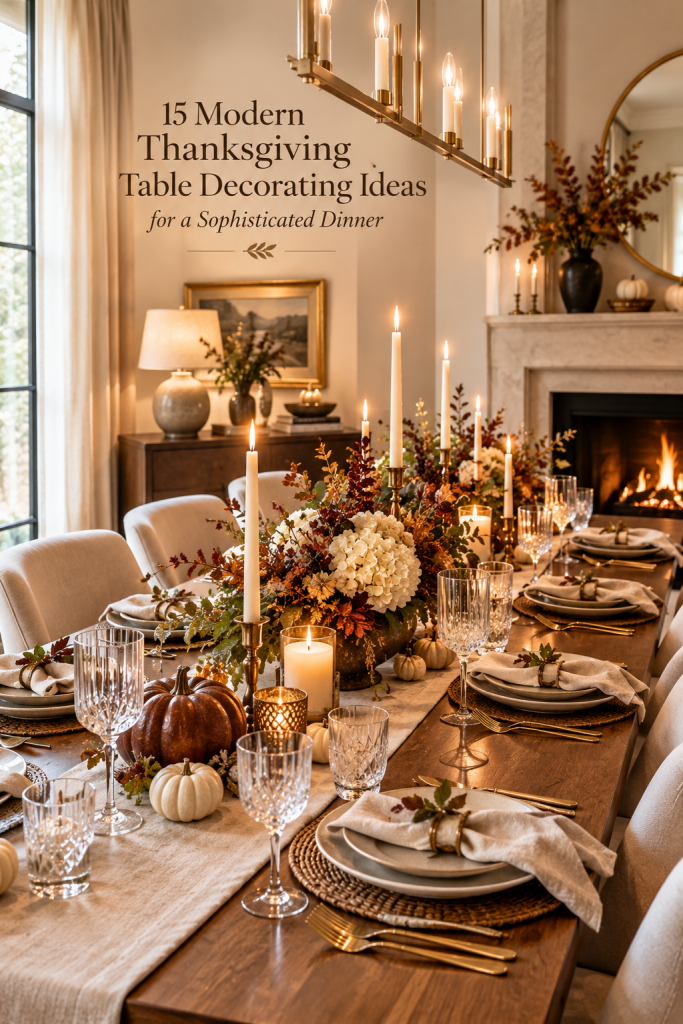
  • 15 Modern Thanksgiving Table Decorating Ideas for a Sophisticated Dinner

    15 Modern Thanksgiving Table Decorating Ideas for a Sophisticated Dinner

    Introduction

    Modern Thanksgiving table decorating ideas can transform an ordinary dining room into an elegant, welcoming setting that feels festive without looking overly traditional. For a sophisticated Thanksgiving dinner, the goal is not to cover the table with pumpkins, colorful leaves, and seasonal signs. Instead, a modern Thanksgiving tablescape uses thoughtful layers of texture, restrained autumn colors, beautiful tableware, natural materials, soft lighting, and one memorable centerpiece to create an atmosphere that feels polished and inviting.

    A beautifully decorated Thanksgiving table should make guests feel welcome before the first dish is served. It should encourage conversation, complement the dining room, and provide enough practical space for plates, glasses, serving dishes, and comfortable movement. The best modern Thanksgiving table ideas balance decoration with function, creating a setting that looks beautiful in photographs but still works naturally during a real family dinner.

    One of the biggest advantages of modern Thanksgiving decorating is flexibility. You can create an elegant tablescape without completely changing your existing dining room. A neutral linen runner, a few beautiful ceramic plates, warm brass candleholders, natural branches, and carefully chosen napkins may be enough to completely change the mood. You can also use pieces you already own and combine them with a few seasonal accents.

    Color is especially important when designing a sophisticated Thanksgiving table. Instead of relying only on bright orange and yellow, consider a more refined palette of ivory, cream, taupe, beige, chocolate brown, walnut, olive green, muted rust, burgundy, charcoal, and antique brass. These shades still feel connected to autumn but create a calmer and more contemporary appearance.

    Texture can make a simple tablescape feel luxurious. Natural linen provides softness, handmade ceramics add character, wood brings warmth, glass creates lightness, and brushed brass introduces a subtle glow. When these materials are layered carefully, the table can look rich without requiring dozens of decorative accessories.

    The centerpiece is another important consideration. Modern Thanksgiving decorating often works best with one strong focal point instead of several competing arrangements. A sculptural ceramic vessel filled with dried branches can become the visual anchor. A shallow bowl of seasonal fruit can provide a natural harvest reference. A collection of candles can create intimacy for an evening dinner. The important thing is to select one primary idea and allow the rest of the table to support it.

    Modern does not have to mean cold or minimalist. A sophisticated Thanksgiving table can still feel cozy. Warm candlelight, natural wood, soft textiles, seasonal foliage, and earthy colors can create plenty of warmth while maintaining clean lines and visual simplicity.

    Another advantage of this style is that it can transition beautifully into late-fall decorating. After Thanksgiving dinner, you can remove the most specific seasonal details while leaving the linen, candles, ceramics, branches, brass pieces, and neutral accessories in place.

    Whether you are hosting a large Thanksgiving gathering, an intimate family meal, or a small dinner with friends, the following 15 modern Thanksgiving table decorating ideas offer different ways to create a beautiful, sophisticated tablescape. Each idea has a distinct focal point so you can choose a style that suits your home, dining room, and personal taste.

    The goal is not to create a table that looks perfect in an artificial way. Instead, create a table that feels intentional, comfortable, warm, and memorable. Use beautiful materials, leave enough breathing room, and allow the Thanksgiving meal itself to remain part of the visual experience.

    1. Create a Neutral Layered Thanksgiving Tablescape

    A neutral Thanksgiving table is an excellent starting point when you want an elegant and timeless appearance.

    Begin with a cream, ivory, beige, or soft taupe linen tablecloth. Natural linen is particularly effective because its relaxed texture keeps the setting from feeling too formal. If you prefer to show the beauty of a wood dining table, skip the tablecloth and use a long linen runner instead.

    Layer each place setting carefully.

    Start with a charger if you have one, followed by a dinner plate and a smaller salad plate or bowl. Cream or ivory ceramics create a soft foundation that works with almost any seasonal accent.

    Choose linen napkins in a slightly darker shade such as taupe, warm beige, olive, muted rust, or chocolate brown.

    For flatware, brushed brass can add warmth. Matte black creates stronger contrast, while stainless steel provides a cleaner contemporary appearance.

    Add natural texture

    The neutral palette becomes much more interesting when several materials are combined.

    Use:

    • linen napkins
    • handmade ceramic plates
    • natural wood
    • clear glassware
    • brushed metal
    • woven details

    Instead of adding many decorative objects, allow these textures to create visual richness.

    Create a restrained centerpiece

    Place one low ceramic bowl or elongated vessel in the center.
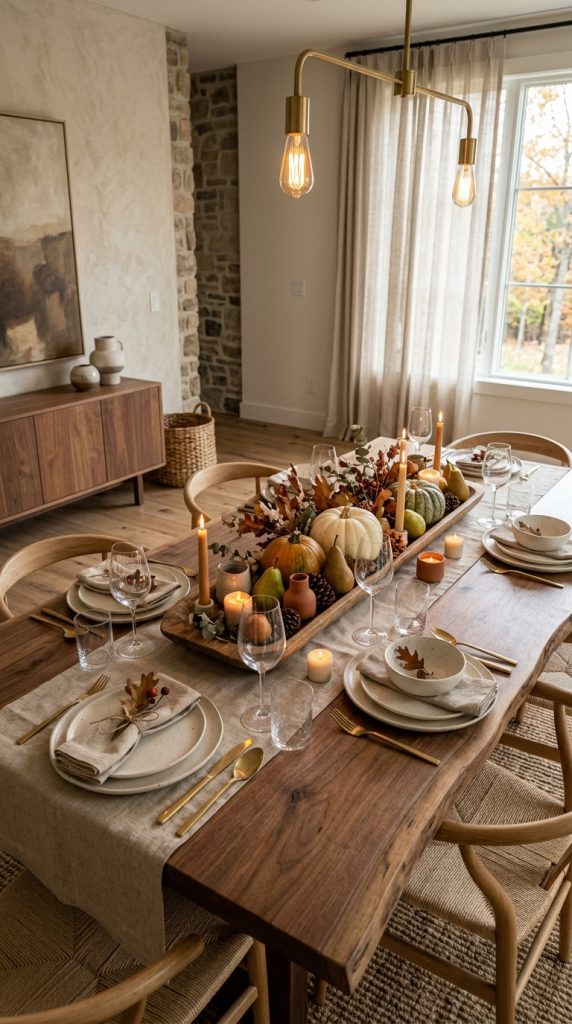
    Fill it with dried branches, olive foliage, eucalyptus, muted grasses, or seasonal stems.

    Keep the arrangement loose and organic rather than perfectly symmetrical.

    A few warm candles can surround the vessel without competing with it.

    This style is especially effective for homes with modern, Scandinavian, organic-modern, or transitional interiors.

    2. Make a Sculptural Ceramic Centerpiece the Star

    A sophisticated Thanksgiving table does not need an elaborate floral arrangement.

    A sculptural ceramic vessel can create a strong focal point while keeping the overall design modern.

    Choose a large handmade-looking vase, stoneware bowl, sculptural urn, or organic-shaped vessel.

    Look for interesting silhouettes rather than highly decorative patterns.

    A matte cream, warm gray, taupe, brown, or charcoal finish can work beautifully.

    Fill it with natural elements

    Use dried branches or seasonal foliage with enough height to create visual movement.

    Allow some branches to extend beyond the edges of the vessel.

    The slightly irregular shape makes the arrangement feel more natural.

    Keep everything else quiet

    Once the centerpiece becomes the focal point, the surrounding table should remain relatively restrained.

    Use simple cream dinnerware.

    Choose plain linen napkins.

    Add a few understated candleholders.

    Avoid placing small decorations around every plate.

    The negative space helps the centerpiece stand out.

    Make it functional

    For a dinner table, consider the height carefully.

    If the arrangement blocks the view between guests, shorten it or use a wider, lower vessel.

    A centerpiece should contribute to the conversation rather than interrupt it.

    3. Bring Warmth With Natural Wood Accents

    Natural wood can instantly make a contemporary Thanksgiving table feel warmer.

    This idea is particularly useful when your dining room has neutral walls, white furniture, or modern lighting.

    Introduce wood through chargers, serving boards, candleholders, trays, or small decorative bowls.

    Walnut provides a rich, sophisticated appearance.

    Oak feels lighter and more relaxed.

    Reclaimed wood adds character and a slightly rustic quality.

    Pair wood with refined materials

    The key to keeping the table sophisticated is balance.

    Pair a walnut serving board with ivory ceramics.

    Place brass flatware beside a light linen napkin.

    Use clear glassware to prevent the table from becoming visually heavy.

    This combination creates contrast without requiring bright seasonal colors.

    Use wood practically

    A beautiful wooden serving board can hold bread, cheese, fruit, or appetizers.

    A shallow wooden bowl can contain pears, figs, or pomegranates.

    This allows your decorative pieces to remain useful during dinner.

    4. Create a Candlelit Thanksgiving Dinner

    Lighting can make an enormous difference to a Thanksgiving tablescape, particularly if dinner takes place in the evening.

    Instead of relying completely on overhead lighting, create several smaller sources of illumination.

    Taper candles are a classic choice, while realistic flameless candles are useful when open flames are not practical.

    Choose modern candleholders

    Brushed brass holders provide warmth.

    Black metal creates a dramatic contemporary contrast.

    Clear glass holders make the table feel lighter.
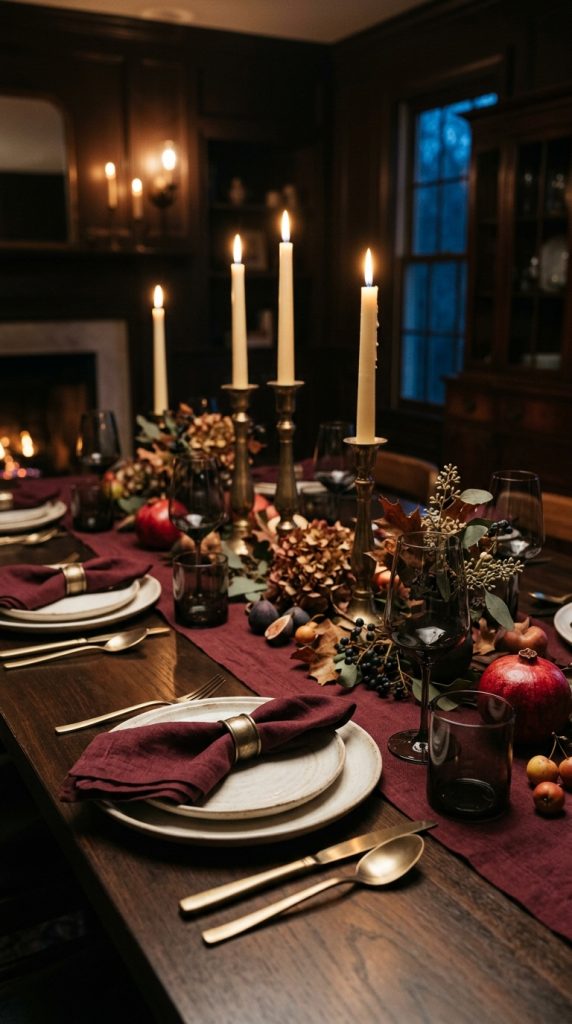
    Stone or ceramic holders can create a softer organic-modern appearance.

    Create different heights

    A combination of slightly different candle heights can produce a more natural arrangement.

    However, avoid creating tall objects directly in front of guests.

    The candlelight should enhance conversation rather than interfere with it.

    Let the glow reflect

    Place glassware near the candleholders.

    Clear, amber, or smoky glasses can catch the light and create subtle reflections.

    The result can feel especially beautiful once the room becomes darker.
    5. Style an Olive Green and Cream Thanksgiving Table

    Olive green is a sophisticated alternative to traditional bright autumn colors.

    Begin with an ivory or cream tablecloth.

    Use cream ceramic dinnerware and neutral linen napkins.

    Then introduce olive through foliage, napkins, glassware, or small ceramic accents.

    Build the centerpiece with greenery

    Use olive branches, eucalyptus, or another muted foliage arrangement.

    Place the stems inside a long neutral ceramic vessel.

    Allow some greenery to extend naturally across the table.

    Add warm metal

    Brushed brass pairs beautifully with olive green.

    Use brass flatware, candleholders, or a small serving tray.

    The warm metallic surface catches the light and prevents the palette from appearing too muted.

    Add darker contrast

    Walnut wood or charcoal details can give the table more depth.

    For example, use walnut serving boards and charcoal linen napkins.

    The combination of olive, cream, walnut, and brass creates a refined autumn atmosphere without relying on traditional orange.

    6. Use Burgundy for a Rich Contemporary Tablescape

    Burgundy can create an elegant and dramatic Thanksgiving table while still feeling warm and seasonal.

    The easiest way to introduce it is through textiles.

    Choose burgundy linen napkins or a narrow runner.

    Pair them with ivory plates and natural wood.
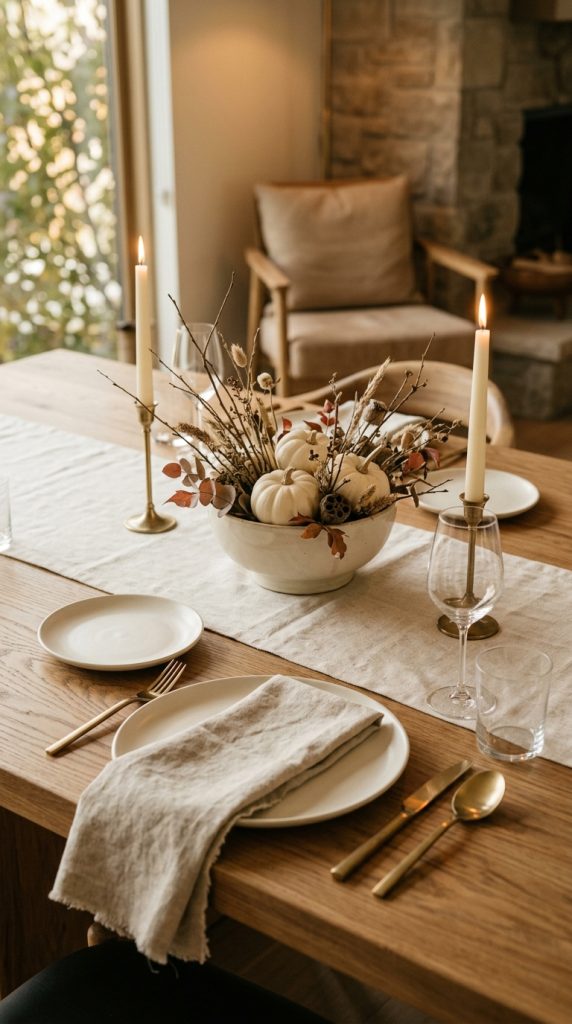
    Keep the centerpiece understated

    Use a dark ceramic vase filled with dried branches.

    Add a few muted rust or burgundy stems if desired.

    Avoid turning the centerpiece into a large multicolor floral arrangement.

    The burgundy textiles should provide most of the visual intensity.

    Add brass

    Brushed brass candleholders or flatware can warm the deep red tone.

    If you have burgundy dining chairs or nearby artwork, repeat the color subtly in the tablescape to connect the room.

    Balance the palette

    Burgundy looks particularly sophisticated alongside:

    • ivory
    • walnut
    • taupe
    • chocolate brown
    • muted olive
    • antique brass

    These colors soften the richness of the red.

    7. Design a Black-and-Cream Thanksgiving Table

    Black can make a Thanksgiving table feel modern, elegant, and architectural.

    Use a cream tablecloth as the foundation.

    Choose cream or ivory dinnerware.

    Then introduce black through flatware, candleholders, napkins, or small ceramic pieces.

    Add warm natural materials

    Because black can feel visually strong, soften it with natural elements.

    Add a walnut serving board.

    Use dried branches in a cream stoneware vase.

    Include warm candlelight.

    Create contrast

    The beauty of this palette comes from the relationship between light and dark.

    Cream dinnerware stands out against black accents.

    Warm brass can provide a bridge between the two.

    A few olive or brown foliage elements can connect the table to autumn.

    This approach is especially effective in contemporary dining rooms with clean architecture and minimal furniture.

    8. Create Elegant Individual Place Settings

    A beautiful place setting can make guests feel especially welcome.

    Begin with a neutral dinner plate.

    Layer a smaller plate or bowl on top.

    Place the linen napkin beside or across the setting.

    Add a subtle napkin ring

    Choose a material that complements the room.

    Good options include:

    • brushed brass
    • natural wood
    • black metal
    • woven fiber
    • ceramic

    Avoid highly themed Thanksgiving napkin rings if you want a sophisticated appearance.

    Add a personal detail

    A small handwritten place card can make the setting feel intentional.

    You could also place a tiny dried leaf, herb sprig, or natural fiber detail on the napkin.

    Keep the decoration small enough that it does not interfere with the guest’s place setting.

    Coordinate without matching perfectly

    The napkin can be slightly darker than the tablecloth.

    The napkin ring can repeat the centerpiece’s metal finish.

    The place card can echo the dinnerware color.

    These subtle relationships make the table feel cohesive.

    9. Use Handmade Ceramic Dinnerware

    Handmade or artisan-inspired ceramics can give a Thanksgiving table warmth and personality.

    Look for plates with subtle variations in glaze, shape, or texture.

    Cream and ivory are particularly versatile.

    Warm gray, taupe, brown, and charcoal can also work beautifully.

    Mix complementary forms

    You can combine round dinner plates with softly irregular bowls.

    Keep the number of shapes limited so the table does not become visually chaotic.

    Let the ceramics provide the decoration

    If your dinnerware has a beautiful handmade finish, you may not need decorative chargers or heavily patterned napkins.

    Pair the ceramics with simple linen.

    Add warm wood.

    Use understated glassware.

    The result will feel organic rather than overly decorated.

    Choose durable pieces

    Because Thanksgiving involves substantial food preparation and serving, choose tableware that can handle actual use.

    Beautiful design is most successful when it remains practical.

    10. Add Transparent or Tinted Glassware

    Glassware can add elegance without taking up much visual space.

    Clear glass is particularly useful when you want the tablescape to feel airy.

    Choose glasses with graceful silhouettes and thin-looking rims if that fits your style.

    Introduce subtle color

    For a more distinctive tablescape, try:

    • amber glass
    • smoky gray glass
    • pale olive glass
    • soft brown glass

    Keep the colors understated.

    The goal is to complement the table rather than create a rainbow of competing shades.

    Use glass to amplify candlelight

    Position the glasses where they can catch reflections from nearby candles.

    The result adds movement and glow to an evening dinner.

    Glass also works well with metallic flatware because both materials reflect small amounts of light.

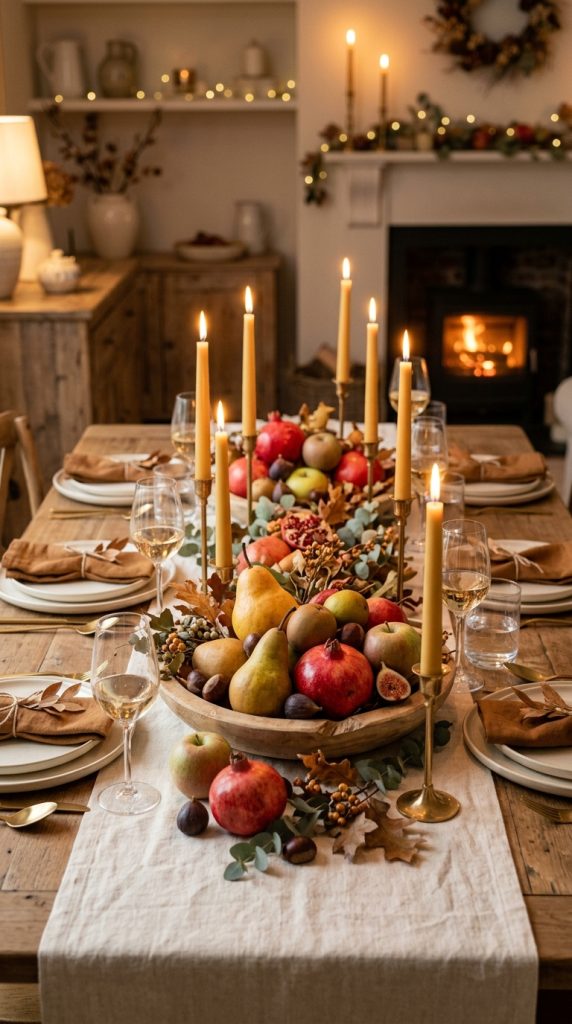
    11. Create a Minimal Harvest Fruit Centerpiece

    Thanksgiving is closely associated with harvest, so seasonal produce can become a beautiful centerpiece.

    Instead of filling the table with pumpkins, use a shallow stone or ceramic bowl containing carefully selected fruit.

    Consider:

    • pears
    • figs
    • pomegranates
    • apples
    • walnuts
    • seasonal grapes

    Choose a controlled palette

    Do not use every available color.

    For example, combine deep burgundy pomegranates with cream pears and warm brown walnuts.

    Another option is muted green pears with olive foliage and dark wood.

    Keep the arrangement natural

    The fruit does not need to be perfectly arranged.

    A relaxed composition can look more contemporary.

    Leave some empty space around the bowl so the centerpiece remains visually clear.

    Make it useful

    After dinner, the fruit can be served.

    This makes the centerpiece practical as well as decorative.

    12. Use a Textured Linen Runner

    A linen runner can define the center of a rectangular dining table without completely covering the tabletop.

    Choose a neutral shade such as:

    • ivory
    • oatmeal
    • taupe
    • beige
    • warm gray
    • muted brown

    Layer the centerpiece

    Place your primary vessel along the runner.

    Add candleholders at carefully spaced intervals.

    Use small natural elements around the centerpiece if needed.

    Allow the tabletop to remain visible

    This is particularly important when the table itself is beautiful.

    A walnut, oak, or stone surface can become part of the design.

    Try slight asymmetry

    A modern table does not need to be perfectly symmetrical.

    You can place the main vase slightly off-center and balance it with two smaller objects at the opposite side.

    The result should feel intentional rather than accidental.

    13. Combine Charcoal, Taupe, and Warm Brass

    For an especially sophisticated Thanksgiving table, move away from traditional autumn colors altogether.

    Use charcoal, taupe, cream, and warm brass.

    Charcoal plates or napkins create depth.

    Taupe linen softens the overall palette.

    Brass adds warmth and a subtle reflective quality.

    Introduce autumn through materials

    Instead of orange pumpkins, use:

    • dried grasses
    • walnut
    • amber glass
    • branches
    • natural linen
    • dark ceramic
    • muted foliage

    These elements create an autumn feeling without obvious seasonal symbols.

    Use lighting strategically

    Warm candlelight works particularly well with this palette.

    The brass reflects the glow.

    The charcoal creates contrast.

    The taupe and cream prevent the table from appearing too dark.

    This style is ideal for an evening Thanksgiving dinner.

    14. Create an Intimate Thanksgiving Table for Four

    A sophisticated Thanksgiving dinner does not need a huge dining room.

    For a smaller gathering, focus on creating intimacy.

    A round or compact rectangular table can become beautiful with just a few carefully selected pieces.

    Begin with a neutral linen tablecloth or runner.

    Use one low centerpiece.

    Then create individual place settings with quality ceramics, linen napkins, glassware, and elegant flatware.

    Keep the middle open

    Small tables become crowded quickly.

    Avoid filling the center with large arrangements.

    One vase surrounded by two or three small candles may be enough.

    Personalize each place

    A handwritten name card can make the dinner feel thoughtful.

    You can also place a tiny seasonal sprig on each napkin.

    Focus on atmosphere

    Because there are fewer guests, candlelight can play a stronger role.

    Use nearby lamps or wall sconces to create additional warmth.

    The result should feel intimate rather than sparse.

    15. Create a Chocolate Brown Thanksgiving Tablescape

    Chocolate brown is a rich and sophisticated alternative to bright orange.

    It works particularly well with walnut furniture, cream walls, beige upholstery, and warm lighting.

    Start with a cream tablecloth.

    Add chocolate-brown linen napkins.

    Use walnut serving boards or chargers.

    Then introduce cream ceramic dinnerware and brushed brass details.

    Build a natural centerpiece

    Place dried branches or muted foliage into a warm stoneware vessel.

    Add a few pears or pomegranates if you want a harvest reference.

    Avoid adding too many additional colors.

    Balance the dark tones

    Chocolate brown looks beautiful with:

    • ivory
    • cream
    • taupe
    • muted olive
    • soft rust
    • antique brass

    These shades create enough contrast while maintaining an earthy appearance.

    Finish with warm lighting

    Candlelight will bring out the warmth in the brown textiles and wood.

    The final result should feel cozy, elegant, and appropriate for an intimate Thanksgiving dinner.

    How to Choose the Right Thanksgiving Table Color Palette

    A sophisticated tablescape usually becomes easier to design when you choose the color palette before buying or arranging decorations.

    For a soft neutral table, combine:

    Ivory + beige + taupe + warm wood

    For a richer autumn look:

    Cream + chocolate brown + burgundy + brass

    For an organic modern style:

    Cream + olive + walnut + stone

    For a dramatic contemporary table:

    Ivory + charcoal + black + brass

    For a warm minimalist table:

    Oatmeal + cream + natural wood + muted rust

    You do not need to use every color equally.

    Choose one dominant shade, one supporting shade, and one or two accent colors.

    This makes the tablescape feel more intentional.

    How to Choose a Thanksgiving Centerpiece

    The centerpiece should match the shape and size of your table.

    A long rectangular table usually benefits from an elongated arrangement.

    A round table can accommodate a central bowl, vase, or sculptural object.

    A narrow table requires a compact design.

    Always consider the height.

    If guests cannot see one another across the table, the centerpiece may be too tall.

    For dinner parties, low arrangements are often easier.

    For decorative photographs taken before dinner, you can temporarily use a taller arrangement and move it later.

    How to Make a Thanksgiving Table Look Expensive

    A luxurious tablescape is not necessarily about expensive decorations.

    The appearance of quality often comes from consistency.

    Choose fewer pieces.

    Use natural-looking materials.

    Keep the color palette controlled.

    Repeat one metal finish.

    Coordinate your textiles.

    Leave some empty space.

    For example, a simple cream tablecloth can look exceptionally elegant when paired with handmade ceramics, linen napkins, brushed brass flatware, clear glassware, and a single sculptural centerpiece.

    The same table could feel less sophisticated if it contains many unrelated seasonal objects.

    Editing is one of the most powerful decorating tools.

    If an object does not contribute to the color, texture, function, or focal point of the table, consider removing it.

    How to Create a Thanksgiving Table Without Traditional Pumpkins

    If you want a modern Thanksgiving tablescape that looks different from conventional seasonal decorating, you can completely skip pumpkins.

    Use branches, dried grasses, pears, pomegranates, figs, walnuts, olive foliage, ceramic vessels, linen, wood, and candlelight.

    These elements still communicate autumn without creating a heavily themed appearance.

    This approach is particularly effective in homes with modern, minimalist, Scandinavian, organic-modern, or contemporary interiors.

    How to Keep the Table Elegant but Comfortable

    A Thanksgiving table should not simply look beautiful.

    It should work.

    Leave enough space between place settings.

    Make sure guests can reach serving dishes.

    Do not allow candleholders or decorations to block sightlines.

    Keep napkins easy to access.

    Use tableware that is comfortable to hold.

    If you are serving many dishes, consider placing the main food on a nearby buffet, sideboard, or kitchen island instead of crowding the dining table.

    This allows the table to remain visually clean while keeping dinner practical.

    How to Coordinate Your Tablescape With the Dining Room

    Your Thanksgiving table should feel connected to the surrounding room.

    If you have walnut furniture, repeat the wood tone through a serving board.

    If the dining room contains brass lighting, introduce brass candleholders.

    If your chairs are cream or beige, choose a similar neutral for the table linens.

    If the room has dark walls, lighter dinnerware can create contrast.

    If the room is already visually busy, keep the table simpler.

    If the room is minimal, the table can carry slightly more decorative interest.

    Think of the tablescape as another layer of the interior rather than a completely separate design.

    Final Thoughts

    A sophisticated Thanksgiving table does not need to look traditional to feel festive.

    The most beautiful modern Thanksgiving table decorating ideas often rely on simple principles: a restrained palette, beautiful texture, natural materials, thoughtful proportions, practical place settings, and one strong focal point.

    Start with your table itself.

    If you have beautiful wood, allow some of it to remain visible.

    If your dining room is neutral, introduce warmth through brass, walnut, olive, burgundy, or chocolate brown.

    If your furniture is already dramatic, keep the tableware simple.

    Choose one centerpiece that gives the table personality without overwhelming it.

    Then build outward.

    Layer the dinnerware.

    Add linen.

    Introduce glassware.

    Repeat one or two colors.

    Bring in a warm metallic finish.

    Finally, use lighting to bring everything together.

    Remember that Thanksgiving is ultimately about gathering people around the table. Decoration should support that experience rather than interfere with it.

    Leave enough space for food.

    Keep the centerpiece low enough for conversation.

    Use comfortable place settings.

    Make the lighting warm and inviting.

    And do not feel pressured to decorate every available inch.

    A little negative space can make the table look considerably more sophisticated.

    For a particularly memorable result, combine cream linen, handmade ceramics, walnut wood, muted seasonal foliage, brushed brass, and soft candlelight. This combination creates warmth while remaining modern and refined.

    You can also make the table more personal through small details. Handwritten place cards, family-owned dishes, vintage glassware, or a meaningful serving bowl can give the tablescape a story. These personal elements often make a table feel more special than expensive decorations.

    The best modern Thanksgiving tablescape is one that feels beautiful but not overly designed. It should look inviting enough that guests immediately want to sit down.

    Whether you choose a neutral tablescape, olive and cream palette, burgundy accents, chocolate brown layers, charcoal and brass contrast, or a minimalist harvest centerpiece, keep the overall composition intentional.

    Use fewer decorative pieces, but make each one count.

    Let natural materials provide texture.

    Allow candlelight to create warmth.

    Keep seasonal colors sophisticated.

    And most importantly, design the table around the people who will gather around it.

    When the styling, food, lighting, and conversation come together naturally, the table becomes more than Thanksgiving decoration. It becomes the visual and emotional center of the celebration.


  • Neutral Thanksgiving Tablescape Ideas for an Elegant Home

    Neutral Thanksgiving Tablescape Ideas for an Elegant Home

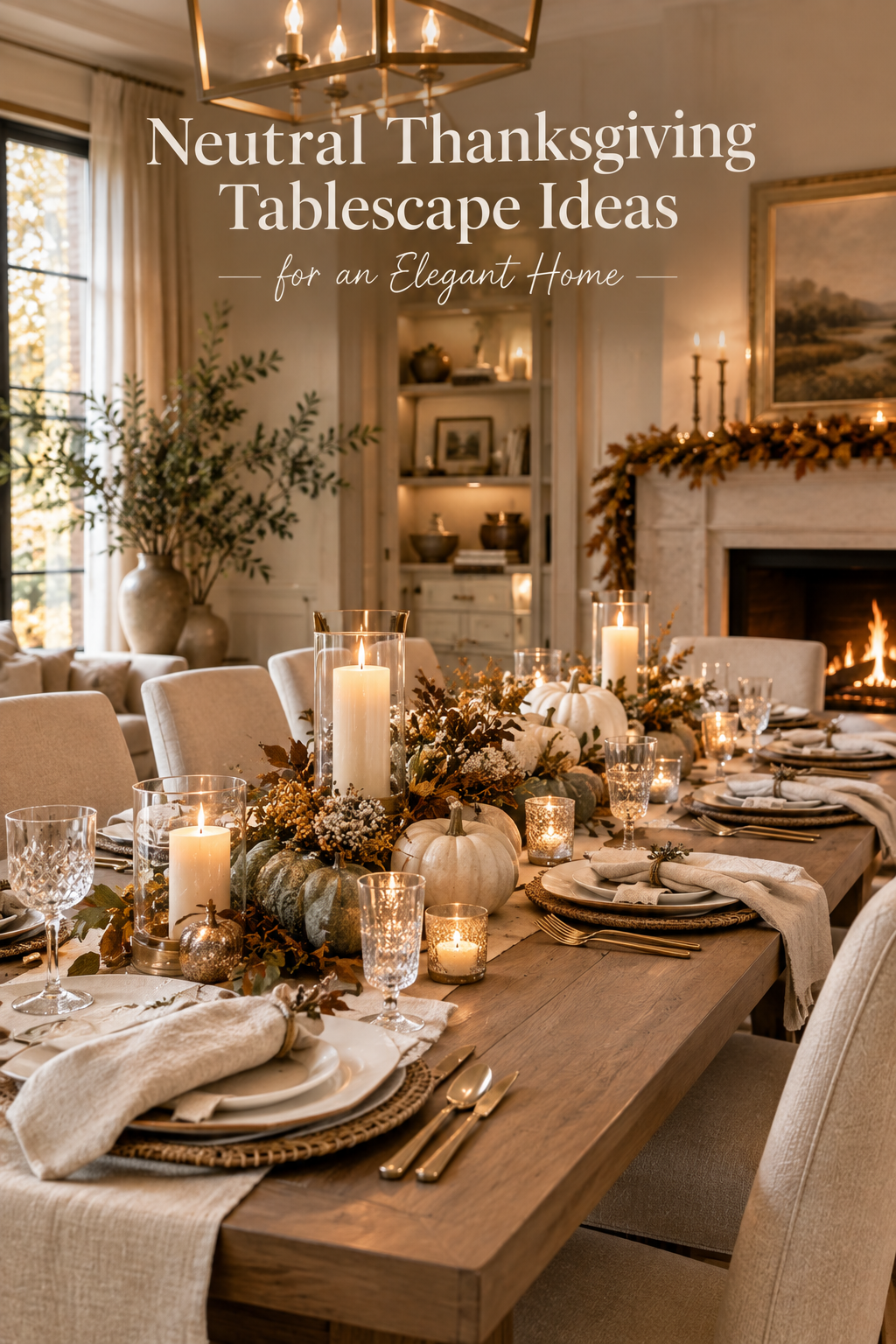
    Thanksgiving is one of those occasions when the dining table becomes much more than a place to eat. It becomes the visual center of the celebration, the backdrop for family photographs, the setting for long conversations, and the place where carefully prepared food is finally shared. Because of that, creating a beautiful Thanksgiving tablescape can completely change the atmosphere of the entire gathering.

    But an elegant Thanksgiving table does not have to rely on bright orange pumpkins, traditional red leaves, oversized turkey decorations, or heavily themed accessories. A neutral Thanksgiving tablescape can feel just as festive while creating a calmer, more sophisticated atmosphere that blends naturally with an elegant home.

    Neutral Thanksgiving decorating is especially beautiful when it combines different textures rather than depending on strong colors. Cream linen, ivory dinnerware, natural wood, warm beige ceramics, soft taupe napkins, aged brass, clear glass, dried branches, wheat stems, subtle greenery, and candlelight can create layers of visual interest without making the table feel busy. Current 2026 Thanksgiving decorating inspiration is also leaning toward warm neutrals, natural materials, understated seasonal accents, and tables designed to remain practical for an actual meal.

    The secret is knowing how to make neutral colors feel rich rather than flat.

    A table covered entirely in plain white can sometimes feel unfinished. The solution is not necessarily to add more color. Instead, introduce variation through texture, shape, finish, and height. A rough linen runner can contrast beautifully with smooth ceramic plates. A warm wood table can provide depth beneath creamy dinnerware. Brushed brass can add a subtle glow. Transparent glass can keep the arrangement visually light. Candles can introduce movement through flickering light.

    Another important part of a successful Thanksgiving tablescape is proportion. The centerpiece should look beautiful without becoming an obstacle. Guests need enough space to see one another, pass dishes, place glasses, and enjoy the meal comfortably. Recent Thanksgiving tablescape guidance has emphasized designing around the actual meal rather than creating a centerpiece that has to be removed as soon as dinner begins.

    This is particularly important for Thanksgiving because the table often needs to accommodate serving dishes, water glasses, wine glasses, bread baskets, gravy boats, side dishes, and desserts. A beautiful table that leaves no room for dinner is not practical.

    The strongest neutral Thanksgiving tablescapes therefore balance beauty and function.

    You can create a luxurious appearance without purchasing an entirely new dinnerware collection. Existing white plates can look completely different when paired with textured linen napkins, natural chargers, elegant glassware, and a carefully designed centerpiece. Vintage pieces can also add character. A slightly imperfect ceramic bowl or antique brass candlestick can make the table feel collected rather than staged.

    The color palette can remain surprisingly simple.

    Think ivory, cream, oatmeal, beige, taupe, warm white, natural brown, muted sage, soft gray, champagne, and subtle metallic accents. If you want a stronger autumn feeling, introduce tiny amounts of muted rust, dried wheat, cinnamon, or deep brown rather than allowing a bright seasonal color to dominate the entire table.

    This approach makes the Thanksgiving decor easier to blend with the rest of the dining room. It also allows the table to remain attractive throughout the season rather than looking like a one-day holiday display.

    Another advantage of neutral Thanksgiving decor is its flexibility. The same linen runner may work for Thanksgiving dinner, Christmas gatherings, winter brunches, or everyday entertaining. Neutral ceramic plates can be reused throughout the year. Wooden serving boards can move from the dining table to the kitchen. Glass candle holders can become part of another tablescape later.

    That makes the style particularly useful for homeowners who prefer timeless decorating over buying holiday-specific accessories every year.

    In this guide, you will find 10 different neutral Thanksgiving tablescape ideas designed for an elegant home. Each concept has its own visual identity, materials, centerpiece approach, and styling method, so the ideas do not simply repeat the same combination of pumpkins, candles, and greenery.

    Whether you have a rustic farmhouse table, a contemporary dining room, a traditional wooden table, or a small apartment dining area, these ideas can be adapted to your space.

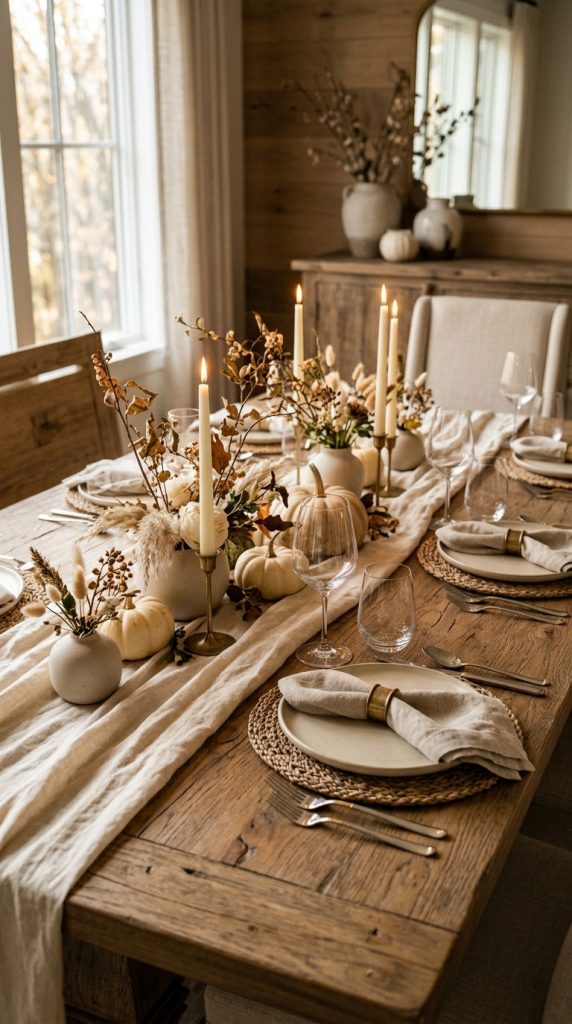
    1. Create a Warm Ivory and Linen Thanksgiving Tablescape

    A warm ivory tablescape is one of the most timeless ways to create an elegant Thanksgiving setting. Instead of making autumn decorations the dominant feature, build the table around a soft monochromatic foundation and let subtle seasonal details provide the holiday character.

    Begin with the table itself.

    If you have a beautiful natural wood dining table, consider leaving most of the surface visible. The warmth of the wood can provide the darker foundation needed to keep an ivory palette from looking too pale.

    If the tabletop is not particularly attractive or you want a more formal appearance, use a natural linen tablecloth in warm ivory. Avoid an extremely bright white if the goal is warmth. Cream or oatmeal linen generally creates a softer visual effect.

    Place simple ceramic dinnerware on each setting. Matte ivory stoneware works particularly well because its slight texture prevents the table from looking overly polished or sterile.

    Instead of introducing patterned plates, create interest through the layers beneath them.

    A natural woven charger can provide a subtle textural boundary around each place setting. Choose one with a refined weave rather than an overly rustic appearance.

    For napkins, use soft linen in oatmeal, warm beige, or slightly darker taupe. Fold them simply and place them either beside the plate or across the lower portion of the setting.

    This table does not need elaborate napkin rings.

    A small dried wheat stem tucked into the fold can introduce a Thanksgiving reference without making the place setting look overly themed.

    The centerpiece should remain low and horizontal.

    Use a narrow ceramic vessel filled with delicate dried grasses, soft beige stems, and a few muted seasonal branches. The arrangement should stretch naturally along the center of the table instead of becoming one large vertical bouquet.

    Add a few small cream-colored gourds or heirloom pumpkins between the stems, but keep their placement irregular enough to feel natural.

    Candles should be used selectively.

    Rather than filling the entire table with candle holders, place several slim ivory tapers in simple holders at intervals along the arrangement. Their warm glow will become increasingly beautiful as evening arrives.

    Glassware can remain transparent.

    Clear water glasses and simple wine glasses prevent the table from becoming visually heavy.

    If your dining room already contains brass lighting or hardware, introduce a small amount of aged brass through candle holders or flatware. The metallic finish should act as a warm accent rather than another major color.

    The finished table should feel soft, welcoming, and sophisticated.

    This is an especially effective choice if your home already has cream sofas, beige walls, natural wood furniture, or warm neutral accessories because the Thanksgiving table will feel connected to the rest of the interior.

    The most important styling rule is to allow the ivory palette to breathe.

    Do not add every neutral accessory you own simply because the colors match. Empty areas are what allow the textures and materials to remain visible.

    For an elegant home, restraint becomes part of the decoration.

    2. Design a Natural Wood Thanksgiving Table With Cream Ceramics

    If you own a beautiful wooden dining table, let it become the foundation of your Thanksgiving design.

    Natural wood provides depth and warmth that can make neutral dinnerware look significantly more luxurious.

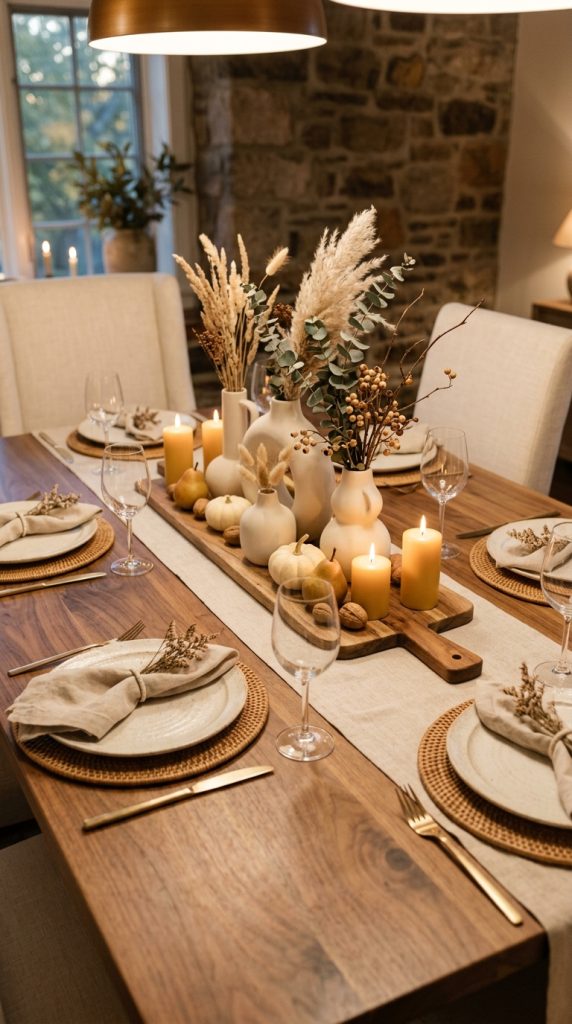
    Instead of covering the entire table, use a narrow textured runner running lengthwise through the center. Choose oatmeal linen, natural flax, or a soft beige cotton with visible weave.

    The wood should remain visible on both sides.

    This creates a relaxed but sophisticated atmosphere and allows the grain of the table to become part of the tablescape.

    For the place settings, use cream or warm-white ceramic plates with understated shapes. Handmade-look dinnerware is particularly attractive because subtle variations in glaze and texture make each setting feel individual.

    Place a simple neutral napkin either beneath the plate or folded beside it.

    Rather than using a decorative napkin ring, tie the napkin loosely with natural linen cord and add one tiny dried botanical stem. This creates a handmade appearance without requiring a complicated craft project.

    The centerpiece can take inspiration from the materials already present.

    Use a long wooden serving board as a decorative base for a carefully arranged collection of ceramic vessels, small neutral pumpkins, pears, and low seasonal branches.

    The board creates a visual boundary so the objects feel connected rather than randomly scattered.

    For a more sophisticated effect, vary the heights.

    Place one medium-height ceramic vessel near the center, smaller objects toward the ends, and leave visible gaps between them.

    Avoid creating a continuous wall of decoration.

    The dining table should still feel open.

    For lighting, use warm taper candles in understated ceramic or aged-metal holders. If your dining room has a chandelier, allow its light to combine with the candles rather than relying entirely on overhead illumination.

    Glassware can introduce another texture.

    Choose lightly tinted clear glass, such as soft amber or smoky transparent glass, if you want a slightly warmer effect. If you prefer a cleaner look, traditional clear glass works beautifully.

    The beauty of this arrangement comes from contrast.

    The rough grain of wood contrasts with smooth ceramic.

    The soft linen contrasts with hard glass.

    The flickering candlelight contrasts with the solid tabletop.

    The neutral palette therefore does not feel boring because the materials are doing the visual work.

    This approach is particularly useful for an informal Thanksgiving gathering where you want the table to feel elegant but not excessively formal.

    It can also work beautifully in modern rustic, organic modern, Scandinavian, farmhouse, or transitional dining rooms.

    The result should look as though the table was assembled thoughtfully from beautiful everyday pieces rather than decorated exclusively for one holiday.

    3. Build an Elegant Cream-and-Brass Thanksgiving Tablescape

    For a slightly more glamorous interpretation of neutral Thanksgiving decor, combine creamy textiles and dinnerware with restrained brass accents.

    This style works particularly well in dining rooms with warm lighting, traditional architecture, elegant chandeliers, or sophisticated furniture.

    Start with an ivory or champagne-colored tablecloth.

    The fabric should have enough texture to prevent the surface from looking flat. Linen or a linen-blend material is ideal.

    Use cream dinner plates with a simple silhouette. If you already own white porcelain, there is no need to replace it.

    Add gold or brass-toned flatware to introduce warmth.

    The important distinction is between refined metallic detailing and excessive shine. Choose brushed, antique, or softly aged brass rather than highly reflective gold if you want the tablescape to feel timeless.

    For the napkins, choose warm taupe or champagne linen.

    Fold each one into a simple rectangular shape and place it neatly beside the plate.

    The centerpiece should be more sculptural than botanical.

    Try a series of low brass candle holders arranged down the center of the table. Vary their heights slightly while keeping the overall arrangement low enough for conversation.

    Between them, place a few small cream pumpkins or matte ceramic gourds.

    This gives you a Thanksgiving reference without relying on bright seasonal colors.

    Another option is to use a long shallow stone bowl filled with neutral pears, walnuts, and a few dried branches.

    The bowl adds a natural component that prevents the brass from becoming too formal.

    For glassware, clear crystal-style glasses can add elegance without introducing another color.

    If you have a chandelier with brass details, the repeated metallic finish will create visual continuity.

    One of the advantages of this tablescape is that the brass can become the bridge between the neutral foundation and the warm atmosphere of the holiday.

    Keep the rest of the decor quiet.

    Do not add brass pumpkins, gold leaves, metallic chargers, shiny napkin rings, and multiple reflective objects simultaneously. One metallic finish repeated carefully is more sophisticated than many metallic decorations competing for attention.

    For the final touch, dim the dining-room lighting slightly and let the candlelight become part of the experience.

    The same table that looks polished in daylight can become dramatically intimate after sunset.

    That transition is one of the easiest ways to make a Thanksgiving tablescape feel luxurious without adding more objects.

    4. Style a Minimalist Thanksgiving Table With Sculptural Ceramics

    Minimalism does not mean removing all personality from the Thanksgiving table.

    Instead, it means choosing fewer objects and allowing each one to make a stronger contribution.

    For this approach, begin with a bare wood table or a simple cream linen runner.

    Keep the foundation extremely quiet.

    Use sculptural ceramic dinnerware in warm white, stone, or pale taupe. Choose plates with interesting rims, handmade edges, or subtle irregularities.

    The goal is to make the dinnerware itself part of the decoration.

    For the centerpiece, avoid a traditional floral arrangement.

    Instead, use three or four sculptural ceramic vessels in different sizes. Place them along the center of the table with plenty of space between them.

    Fill only one or two with dried branches or delicate grasses.

    Leave the others empty.

    An empty vessel can be just as visually important as a filled one because its shape creates a focal point without adding visual clutter.

    Between the vessels, add a few small natural elements such as walnuts, pinecones, or understated cream gourds.

    Use these sparingly.

    The table should feel intentionally edited.

    For lighting, choose a few simple candles rather than a large collection.

    Low pillar candles in stone or ceramic holders can produce a soft glow and work particularly well with the sculptural quality of the table.

    Napkins should remain plain.

    A warm-gray, oatmeal, or natural flax napkin is enough. Fold it into a clean rectangle and place it beside each setting.

    Avoid printed patterns.

    The beauty of this tablescape comes from silhouette and texture rather than color.

    This style is particularly suitable for contemporary homes where the architecture already provides visual interest.

    It can also work beautifully in Japandi-inspired spaces because the combination of natural materials, restrained decoration, and functional simplicity creates a calm atmosphere. Neutral natural-texture Thanksgiving tables are also being used in minimalist and Japandi-inspired tablescape inspiration.

    If your table is small, this idea becomes even more useful.

    Instead of trying to recreate an elaborate centerpiece, select two or three beautiful objects that leave sufficient room for serving dishes.

    The result should feel peaceful rather than empty.

    That distinction comes from choosing objects with strong shapes and interesting textures.

    Minimalism works when every piece has a reason to be there.

    5. Create a Soft Sage and Ivory Thanksgiving Tablescape

    Neutral does not have to mean completely beige.

    Soft sage is an excellent accent for Thanksgiving because it introduces a subtle natural color while maintaining the calm feeling associated with a neutral palette.

    Start with an ivory linen runner or tablecloth.

    Choose dinnerware in warm white or pale cream.

    Then introduce sage through the napkins.

    Soft sage linen napkins can provide enough color to make the table feel layered without turning it into a traditional green-and-orange autumn display.

    For the centerpiece, use fresh or dried greenery in a low arrangement.

    Olive branches, eucalyptus, delicate foliage, or another suitable seasonal greenery can create an organic horizontal line down the center of the table.

    Avoid creating a dense wall of foliage.

    The arrangement should remain airy.

    This is especially important if the dining table is narrow.

    Add small cream or pale green pumpkins around the base of the greenery if desired.

    Instead of placing identical pumpkins at regular intervals, vary their sizes and allow some areas to remain empty.

    This creates a more natural appearance.

    For the place settings, consider adding a small ceramic bread plate or shallow bowl in a slightly darker neutral shade.

    This gives each setting an additional layer without relying on decorative objects.

    Wooden or natural-fiber chargers can introduce another material.

    Glassware should remain simple and transparent.

    If you want a subtle autumn reference, use amber-tinted glassware, but keep the color restrained so the table remains predominantly neutral.

    The lighting should be warm.

    Small candles placed among the greenery will create beautiful highlights once the room becomes darker.

    If you are using fresh greenery, make sure the materials are appropriate for an indoor dining setting and do not interfere with candles or serving dishes.

    This style works especially well in homes decorated with warm whites, light woods, cream upholstery, and natural textures.

    It creates a bridge between everyday organic decor and Thanksgiving without requiring an obvious holiday theme.

    The final impression should be fresh, elegant, and quietly seasonal.

    6. Create a Vintage-Inspired Neutral Thanksgiving Table

    A vintage-inspired Thanksgiving tablescape can feel incredibly elegant when old-world pieces are balanced with a restrained neutral palette.

    This approach is ideal if you enjoy antique dishes, vintage glassware, heirloom silverware, brass candlesticks, or furniture with visible age.

    Begin with an ivory linen tablecloth.

    Do not worry if the fabric has a slightly relaxed texture. Perfectly pressed fabric is not required for this style.

    The charm comes from softness and character.

    Use vintage or vintage-inspired ceramic plates in cream, ivory, or very pale gray.

    If your collection does not match perfectly, that can actually become part of the aesthetic.

    The important thing is to keep the overall colors related.

    For example, cream, faded beige, soft gray, and muted brown can coexist beautifully.

    Place a different vintage glass at each setting if you have a small collection of mismatched pieces. The variations can create personality without making the table chaotic.

    The centerpiece should have an antique character.

    Use aged brass candlesticks with ivory taper candles.

    Between them, place a long low arrangement of dried branches, muted foliage, or delicate seasonal stems.

    You can also use a vintage ceramic bowl filled with pears, walnuts, figs, or other neutral-toned seasonal produce.

    Avoid plastic or overly artificial decorations because they can conflict with the collected appearance of the table.

    Place cards can be handwritten on small cream cards and tucked beneath each napkin.

    The paper should be simple rather than highly decorated.

    For additional texture, place a narrow woven runner beneath the centerpiece.

    The combination of linen, aged metal, ceramic, glass, and wood will give the table visual richness even though the colors remain restrained.

    This style is particularly beautiful under warm chandelier light.

    The candle flames will reflect softly against vintage glassware and metallic surfaces.

    One advantage of vintage-inspired styling is that it naturally avoids the feeling of mass-produced seasonal decor.

    Each piece can tell a small story.

    The result feels intimate and personal.

    If you do not own antiques, you can recreate the atmosphere with handmade ceramics, aged-looking brass, thrifted glassware, and natural textiles.

    The objective is not to make the table look old.

    It is to make it look collected.

    7. Design a Neutral Thanksgiving Tablescape With Dried Botanicals

    Dried botanicals can provide dramatic texture without introducing strong seasonal colors.

    For this idea, let the dried materials become the main visual feature.

    Begin with a soft beige or natural linen runner.

    Use cream stoneware plates and taupe linen napkins.

    The place settings should remain understated because the centerpiece will provide the texture.

    For the centerpiece, select dried grasses, wheat, pampas-like stems, seed heads, or other suitable dried botanicals in natural beige, cream, tan, and muted brown.

    Arrange them in a long low vessel rather than a very tall vase.

    The arrangement should be airy enough that guests can see across the table.

    If the stems are tall, divide them into several smaller vessels instead of creating one oversized bouquet.

    This allows the table to feel more spacious.

    Place the vessels at different intervals with gaps between them.

    Add a few neutral ceramic pumpkins or small natural gourds around the base if you want a clearer Thanksgiving connection.

    Alternatively, use pears or figs for a more understated seasonal look.

    The organic shapes of the fruit will contrast beautifully with the linear quality of the dried stems.

    For candles, use slim ivory tapers in simple holders.

    Their vertical form can complement the dried botanicals without overwhelming the arrangement.

    Keep the rest of the table simple.

    The beauty of dried botanicals comes from their texture, so there is no need to introduce patterned plates or elaborate napkin accessories.

    This tablescape is especially effective for homes with organic-modern, rustic-modern, Scandinavian, or transitional interiors.

    It can also be relatively affordable because dried stems can often be reused for other seasonal arrangements.

    If you want to make the table feel more luxurious, focus on the quality of the vessels.

    A beautiful ceramic vase, stoneware bowl, or handmade container can make inexpensive dried materials look much more sophisticated.

    Avoid using too many different types of dried foliage.

    Choose a limited selection and repeat it.

    This gives the arrangement visual unity.

    The finished table should look naturally gathered rather than artificially assembled.

    8. Create a Cozy Neutral Thanksgiving Table With Candlelight

    If your Thanksgiving dinner will take place in the evening, build the entire tablescape around warm candlelight.

    Instead of making the centerpiece the main attraction, use illumination to create the atmosphere.

    Begin with a deep neutral foundation.

    A warm taupe or oatmeal linen runner can create more contrast than ivory while remaining within the neutral palette.

    Use cream dinnerware with simple silhouettes.

    For napkins, choose a slightly darker beige or warm brown.

    The darker textiles create depth once the candles are lit.

    Now create the centerpiece around candlelight.

    Use a collection of low ceramic, stone, or aged-metal candle holders. Place them in a long horizontal composition rather than concentrating them in the middle.

    Vary the heights slightly, but keep all flames low enough that guests can see across the table.

    Add small natural elements between the candle holders.

    A few walnuts, dried leaves, neutral berries, or small branches can provide texture.

    Do not surround every candle with decorative material.

    Allow some of the tabletop to remain visible.

    For an even softer atmosphere, add a few small votives in transparent glass holders.

    The combination of taper flames and small points of light creates depth.

    Your overhead lighting should be reduced so that the candles become part of the visual experience.

    However, the dining area still needs enough illumination for guests to eat comfortably and safely.

    If your dining room has dimmable lighting, this is an ideal occasion to use it.

    The color palette should remain warm.

    Cream, oatmeal, taupe, walnut, antique brass, and soft brown work beautifully together.

    This approach is especially effective for intimate Thanksgiving dinners.

    The candlelight creates a sense of closeness, while the neutral colors prevent the room from feeling overly themed.

    The food itself becomes part of the composition.

    Roasted vegetables, bread, pies, cranberry dishes, and other Thanksgiving foods naturally introduce subtle colors and textures to the table.

    That is another reason to keep the decorative palette quiet.

    You do not need the centerpiece to provide every seasonal color.

    Let the meal contribute to the visual richness.

    9. Style a Modern Neutral Thanksgiving Tablescape With Black Accents

    For a contemporary home, small amounts of black can provide structure and contrast without abandoning the neutral Thanksgiving aesthetic.

    The key is to use black as a controlled accent rather than a dominant color.

    Begin with a cream or natural linen tablecloth.

    Use warm-white dinner plates.

    Then introduce black through flatware, candle holders, napkin rings, or small ceramic vessels.

    A matte finish works particularly well because it feels sophisticated and architectural.

    For the centerpiece, use a long low arrangement of neutral foliage and cream flowers or dried stems.

    Place it inside a simple black ceramic vessel.

    This creates a strong focal point without requiring bright seasonal decoration.

    For napkins, choose oatmeal, beige, or soft taupe.

    The contrast between the warm neutral textile and black accent creates a modern appearance.

    Add wooden elements to soften the combination.

    A natural wood serving board, small wooden bowls, or a warm walnut centerpiece tray can prevent the table from feeling too stark.

    If your dining chairs or lighting fixtures already contain black details, repeat that finish carefully on the table.

    This creates visual continuity between the dining room and tablescape.

    Glassware should remain clear.

    Avoid introducing another strong color because the palette already has enough contrast.

    For the Thanksgiving element, use cream pumpkins, pears, dried wheat, or subtle autumn branches rather than traditional orange decorations.

    The result feels seasonal through material and form rather than color.

    This is an especially strong approach for contemporary, modern organic, minimalist, or transitional interiors.

    The black accents also make the table photograph beautifully.

    In a Pinterest image, the contrast between cream linens, dark details, warm wood, and candlelight creates an immediate visual hierarchy.

    Keep the composition clean.

    Do not use black plates, black napkins, black candles, black vessels, and black flatware simultaneously.

    Choose two or three areas where the accent appears and let the rest remain light.

    That restraint is what keeps the look elegant.

    10. Create a Relaxed Luxury Thanksgiving Tablescape With Natural Textures

    The final idea combines the most inviting elements of neutral Thanksgiving decorating: soft linen, natural wood, handmade ceramics, woven textures, seasonal produce, and warm candlelight.

    This approach is ideal if you want your Thanksgiving table to feel luxurious but comfortable rather than formal.

    Begin with a natural linen runner in oatmeal, beige, or soft cream.

    Allow the table surface to remain visible.

    Choose handmade-style ceramic plates in warm white or pale stone.

    The subtle irregularity of the glaze will make each place setting feel more personal.

    For napkins, use a heavier linen or textured cotton.

    Fold them simply rather than creating elaborate shapes.

    Instead of placing a decorative ring around the napkin, tuck a small natural element into the fold.

    A single dried leaf, wheat stem, or tiny branch can be enough.

    For the centerpiece, create a long, low composition using natural textures.

    Place a few handmade ceramic vessels along the center, each containing a different type of delicate seasonal stem.

    Add small pears, figs, walnuts, or cream-colored gourds between the vessels.

    This makes the centerpiece feel connected to the food and harvest spirit of Thanksgiving without becoming a traditional autumn display.

    Introduce woven texture through small chargers or a narrow natural-fiber runner underneath the central arrangement.

    Wooden serving boards can be positioned at the ends of the table or used to serve bread and appetizers.

    The lighting should remain warm and gentle.

    Use several candles distributed across the centerpiece rather than creating one large cluster.

    For glassware, choose clear or softly tinted glasses with simple silhouettes.

    Do not worry if every item comes from the same collection.

    A relaxed-luxury table often looks better when different textures and materials have a subtle relationship rather than perfect uniformity.

    The final atmosphere should feel generous and welcoming.

    Guests should be able to reach the food.

    Conversation should remain easy.

    There should be enough space for plates and glasses.

    Nothing should feel so precious that people are afraid to use the table.

    That balance is what makes relaxed luxury so effective for Thanksgiving.

    How to Choose a Neutral Thanksgiving Color Palette

    A neutral tablescape becomes much easier to style when you choose a specific color family before selecting individual decorations.

    Warm neutrals are usually the easiest starting point.

    Cream, ivory, oatmeal, beige, camel, taupe, and natural brown can create a soft autumn atmosphere without relying on bright orange.

    If you want a slightly cooler look, combine ivory with soft gray, mushroom, muted sage, and natural wood.

    For a more glamorous table, introduce champagne or aged brass.

    For a modern table, use small amounts of matte black.

    For an organic appearance, add muted olive.

    The important part is limiting the number of dominant colors.

    A useful approach is to choose one main neutral, one supporting neutral, and one accent.

    For example:

    Cream + natural wood + brass.

    Ivory + taupe + sage.

    Oatmeal + walnut + black.

    Beige + stone + aged brass.

    This creates enough contrast to keep the table interesting without making it visually chaotic.

    How to Make a Neutral Thanksgiving Tablescape Look Expensive

    Luxury rarely comes from adding more decorations.

    It usually comes from choosing better proportions and materials.

    Start with textiles.

    Natural linen immediately introduces texture and tends to look more sophisticated than shiny synthetic fabrics.

    Then focus on dinnerware.

    Simple plates can look luxurious when they are properly layered with chargers, napkins, and glassware.

    Next, consider the centerpiece.

    A few high-quality vessels are generally more effective than a large collection of inexpensive seasonal decorations.

    Lighting is another major factor.

    Warm candlelight can transform even a simple table.

    Finally, create negative space.

    Do not cover every inch of the table.

    Allow the tabletop, linen texture, and individual objects to remain visible.

    Current decorating advice is increasingly favoring natural materials, muted tones, handmade-feeling pieces, and edited seasonal styling instead of excessive novelty decor.

    How to Keep the Thanksgiving Table Functional

    The table should be designed around the actual meal.

    Before finalizing your centerpiece, place the serving dishes you expect to use on the table.

    This immediately shows how much space remains.

    If the centerpiece leaves no room for the turkey, vegetables, bread, or gravy, simplify it.

    Low arrangements are usually easier for conversation and serving.

    Another option is to move some serving dishes to a nearby sideboard and allow guests to serve themselves buffet-style.

    If you have a very long table, repeat a smaller decorative composition rather than creating one enormous centerpiece.

    For smaller tables, use one central arrangement with a narrow footprint.

    Keep candle flames away from sleeves, foliage, napkins, and serving areas.

    Choose stable candle holders and never leave burning candles unattended.

    These practical decisions are what separate a beautiful photograph from a tablescape that actually works during Thanksgiving dinner.

    How to Make Your Neutral Thanksgiving Tablescape Pinterest-Worthy

    For Pinterest, the visual story should be instantly understandable.

    Choose one dominant composition.

    A warm cream table with candlelight.

    A natural wood table with ivory ceramics.

    A sculptural centerpiece surrounded by neutral place settings.

    A vintage-inspired table with brass candlesticks.

    Avoid trying to show every decorating detail in one image.

    The photograph should have a clear focal point.

    Vertical 2:3 compositions work especially well for Pinterest because they occupy more screen space while allowing enough room to show the full tablescape.

    Use warm natural daylight for daytime photographs or soft candlelight for evening inspiration.

    Make sure the table looks realistic.

    Include enough plates, glasses, and seating to communicate that it is a real Thanksgiving table rather than an abstract decoration display.

    At the same time, avoid unnecessary clutter.

    For Pinterest text overlays, use a short title such as:

    Neutral Thanksgiving Tablescape Ideas

    or

    Elegant Thanksgiving Table Decor

    or

    Neutral Thanksgiving Table Inspiration

    Keep the typography minimal and allow the photograph to remain the main attraction.

    Final Thoughts

    A neutral Thanksgiving tablescape proves that holiday decorating does not need to be loud to feel special.

    Cream linen can create softness.

    Natural wood can provide warmth.

    Ceramics can add handcrafted character.

    Brass can introduce subtle elegance.

    Dried botanicals can bring seasonal texture.

    Muted greenery can create freshness.

    Candlelight can transform the mood.

    And carefully selected Thanksgiving details can make the table feel festive without overwhelming the rest of the home.

    The most successful neutral Thanksgiving tables are not simply beige versions of traditional holiday tables. They have their own identity.

    One may focus on sculptural ceramics.

    Another may highlight vintage pieces.

    Another may use warm brass.

    Another may rely on natural wood.

    Another may use sage greenery.

    These differences are what make the ideas adaptable to different homes and decorating personalities.

    If your dining room is already neutral, you can create a Thanksgiving transformation without changing its entire character. Work with what you already own and introduce seasonal elements through texture, lighting, natural materials, and carefully chosen accents.

    If your home is more traditional, vintage glassware and brass can create a beautiful bridge between classic furniture and modern neutral styling.

    If your home is contemporary, cream ceramics, black accents, sculptural vessels, and clean lines can create a sophisticated holiday atmosphere.

    If you prefer organic interiors, natural wood, linen, stoneware, dried botanicals, and muted greenery can create a warm gathering space.

    The most important principle is to design the table for people first.

    Leave enough room for conversation.

    Make the plates comfortable to use.

    Keep serving areas accessible.

    Make sure the centerpiece does not block anyone’s view.

    Use candlelight to create atmosphere without compromising safety.

    Then allow the decoration to support the gathering rather than compete with it.

    Thanksgiving already brings abundance through food, family, conversation, and tradition. The table does not need to compete with that abundance.

    Instead, it can provide a calm and beautiful setting where everything else becomes the focus.

    That is the strength of neutral Thanksgiving decorating.

    It feels elegant without being excessive, seasonal without being overly themed, and beautiful without becoming impractical.

    With the right combination of texture, proportion, natural materials, warm lighting, and restrained seasonal details, your Thanksgiving table can become one of the most inviting spaces in your home—and a timeless source of inspiration for future gatherings long after the holiday has passed.


  • Elegant Thanksgiving Table Decor Ideas for 2026

    Elegant Thanksgiving Table Decor Ideas for 2026

    Thanksgiving is one of those occasions when the table becomes more than a place to eat. It becomes the visual heart of the celebration—a gathering point for family, friends, conversation, gratitude, and the comforting feeling of being together.

    For 2026, elegant Thanksgiving table decorating is moving toward a more refined and personal approach. Instead of filling the table with every traditional autumn decoration, the goal is to create a thoughtfully layered tablescape where every element has a purpose. Natural textures, sophisticated autumn colors, beautiful dinnerware, soft candlelight, seasonal produce, vintage-inspired details, and understated centerpieces can work together to create a table that feels festive without looking overdecorated.

    The best part is that an elegant Thanksgiving table does not have to look formal or expensive. You can create a luxurious appearance by focusing on texture, proportion, color coordination, and thoughtful placement.

    A simple linen tablecloth can establish the foundation. Beautiful plates can add structure. A few seasonal branches can create height. Candles can introduce warmth. Small pumpkins, pears, figs, or pomegranates can provide seasonal character without making the table feel like a Halloween display.

    The following 15 Thanksgiving table decor ideas are designed to help you create a beautiful, welcoming tablescape for 2026. Each idea offers a different design direction, so you can choose the look that best matches your home and entertaining style.

    1. Create a Warm Neutral Thanksgiving Tablescape

    A warm neutral Thanksgiving table is an excellent choice if you love elegant interiors with a calm, timeless appearance.

    Instead of relying heavily on bright orange and red, build the tablescape around cream, beige, taupe, warm brown, soft caramel, and subtle muted gold.

    Begin with a natural linen tablecloth or runner. Linen immediately gives the table a relaxed but sophisticated appearance because its texture adds visual interest without requiring a complicated pattern.

    Layer neutral dinnerware over the table linen.

    Cream or ivory plates work particularly well. If your dishes have a slightly irregular handmade appearance, even better. Handmade-looking ceramics can make the table feel warm and personal instead of overly formal.

    Add Warm Wood

    A wooden serving board or natural wood charger can introduce an earthy element.

    Choose wood with visible grain rather than highly polished finishes. The natural variation adds character.

    You could place a wooden serving board in the center of the table with:

    • Pears
    • Small pumpkins
    • Dried foliage
    • Bread
    • Candles

    The arrangement should remain relatively low so guests can easily see one another.

    Use Beige and Brown Napkins

    Fold linen napkins simply and place them either on top of each plate or beside the forks.

    Warm taupe, cinnamon, oatmeal, or caramel napkins can add subtle seasonal color.

    Introduce Metallic Details

    A few brushed brass elements can make the neutral palette feel more elevated.

    Consider brass:

    • Candlesticks
    • Flatware
    • Napkin rings
    • Small serving bowls

    Avoid using too much shiny metallic decoration.

    Matte or brushed finishes generally create a softer appearance.

    Finish With Candlelight

    Warm candlelight is especially beautiful against neutral materials.

    Use several small candleholders spaced along the center rather than one enormous centerpiece.

    Place lights at appropriate places, especially warm candle-style illumination and subtle ambient lighting around the dining area, to create a welcoming evening atmosphere.

    The finished table should feel luxurious but relaxed—perfect for a Thanksgiving meal where comfort matters as much as appearance.

    2. Use Burnt Orange and Burgundy for a Sophisticated Autumn Look

    If you want a Thanksgiving table that feels unmistakably seasonal, combine traditional autumn colors with more sophisticated tones.

    Instead of bright orange, choose burnt orange.

    Then introduce burgundy, deep rust, warm brown, and cream.

    This palette feels rich without becoming overly colorful.

    Start with a cream or natural linen tablecloth.

    Add a burnt-orange runner through the center.

    For dinnerware, choose cream or white plates.

    Then introduce burgundy napkins.

    Build the Centerpiece With Seasonal Foliage

    Use a collection of autumn branches rather than an enormous floral arrangement.

    Branches with muted orange, rust, brown, or burgundy leaves can create natural height.

    Arrange them loosely in a ceramic vase.

    Avoid making the arrangement perfectly symmetrical.

    A slightly organic shape feels more natural.

    Add Small Seasonal Fruits

    Pomegranates can be particularly effective because their deep red color works beautifully with burgundy and rust.

    Scatter a few around the centerpiece or place them in a shallow bowl.

    You can also incorporate pears or figs.

    Add Gold Carefully

    Brushed gold flatware or a few gold-toned candleholders can enhance the richness of the palette.

    Keep metallic accents limited.

    The goal is warmth rather than sparkle.

    Layer the Lighting

    Warm lighting makes burgundy and burnt orange look deeper and richer.

    Place lights at appropriate places, such as warm candles along the table and soft ambient lamps in the surrounding dining area.

    This creates a beautiful evening Thanksgiving atmosphere.

    3. Design an Elegant Thanksgiving Tablescape With White Pumpkins

    White pumpkins are an easy way to make Thanksgiving decor feel sophisticated.

    They provide seasonal character while fitting naturally into neutral, modern, farmhouse, traditional, and contemporary interiors.

    Start with a cream linen tablecloth.

    Use white or ivory dinnerware.

    Then create a centerpiece using different sizes of white pumpkins.

    Mix Pumpkin Shapes

    Do not use pumpkins that all look identical.

    Combine:

    • Small round pumpkins
    • Mini pumpkins
    • Flat pumpkins
    • Slightly elongated varieties

    The variation makes the arrangement feel natural.

    Add Greenery

    Introduce a small amount of muted greenery.

    Olive branches, eucalyptus, or subtle autumn foliage can work well.

    Avoid excessive greenery if you want the table to remain elegant and uncluttered.

    Add Brown Elements

    White pumpkins can sometimes look too stark.

    Introduce warm brown through wooden chargers, woven napkin rings, or a natural wood serving board.

    Use Cream Candles

    Cream taper candles can reinforce the soft palette.

    Place them in brass or dark metal holders for contrast.

    Add Texture

    Texture becomes especially important when the colors are restrained.

    Combine:

    • Linen
    • Ceramic
    • Wood
    • Glass
    • Metal

    The different surfaces prevent the table from looking flat.

    The final effect is seasonal but sophisticated, making white pumpkins an excellent choice for an elegant 2026 Thanksgiving table.

    4. Try a Modern Organic Thanksgiving Table

    Modern organic decorating continues to be a beautiful direction for Thanksgiving because it combines clean design with natural warmth.

    This approach is ideal if your dining room already includes natural wood, neutral upholstery, stone, linen, or minimalist furniture.

    Begin with a natural wood dining table.

    If the tabletop is beautiful, you may not need a full tablecloth.

    Instead, use a simple linen runner.

    Choose Handmade-Looking Ceramics

    Use plates and bowls in:

    • Ivory
    • Sand
    • Warm gray
    • Beige
    • Cream

    Slightly imperfect edges can add personality.

    Create a Low Centerpiece

    Use a long wooden tray.

    Fill it with:

    • Pears
    • Small pumpkins
    • Dried leaves
    • Ceramic vessels
    • A few candles

    Keep everything relatively low.

    This allows the centerpiece to decorate the table without interrupting conversation.

    Add Stone or Ceramic Elements

    A stoneware serving bowl can become part of the centerpiece.

    A textured ceramic vase filled with a few branches can also work.

    Keep Colors Natural

    Avoid introducing too many seasonal colors.

    Instead, allow the materials to communicate the season.

    Brown wood, cream ceramics, dried foliage, and warm candlelight already create a Thanksgiving feeling.

    Lighting Matters

    Place lights at appropriate places, particularly warm candles along the center and subtle ambient lighting around the dining room.

    The final table should look contemporary, warm, and organic rather than overly rustic.

    5. Create a Moody Burgundy Thanksgiving Tablescape

    For a more dramatic Thanksgiving dinner, build the table around deep burgundy.

    Burgundy creates an intimate and luxurious atmosphere, especially in the evening.

    Pair it with chocolate brown, charcoal, cream, antique brass, and muted rust.

    Start With Dark Napkins

    If you already own neutral table linens, you do not need to replace everything.

    Simply add burgundy linen napkins.

    This can immediately transform the appearance of the table.

    Add Dark Glassware

    Smoked or amber glassware can add depth.

    You do not need an entire matching collection.

    Even a few vintage-inspired glasses can create character.

    Choose Antique Brass

    Brass candleholders look especially beautiful against burgundy.

    Use different heights for visual rhythm.

    Add Seasonal Foliage

    Choose foliage in:

    • Deep red
    • Burgundy
    • Brown
    • Rust
    • Muted green

    Avoid highly saturated artificial colors.

    Use Cream to Balance the Darkness

    Cream plates or a neutral tablecloth can prevent the table from becoming too heavy.

    The contrast between light dinnerware and deep burgundy accents creates sophistication.

    Create Evening Ambiance

    Place lights at appropriate places, using warm candlelight along the table and gentle surrounding illumination.

    The result is romantic, intimate, and especially suitable for an evening Thanksgiving dinner.

    6. Style a Thanksgiving Table With Pears and Seasonal Fruit

    You do not have to use pumpkins to make a Thanksgiving table feel seasonal.

    Fresh fruit can create a more elegant and unexpected centerpiece.

    Pears are particularly beautiful because their natural color works with neutral autumn palettes.

    Choose a mixture of green and golden pears.

    Place them in a low wooden bowl or ceramic serving dish.

    Add Apples

    Muted red or golden apples can provide another layer of color.

    Avoid using too many.

    A curated arrangement will look more sophisticated.

    Include Pomegranates

    Pomegranates bring rich color and texture.

    Their deep red skin works beautifully with:

    • Burgundy
    • Rust
    • Cream
    • Brown
    • Brass

    Add Dried Foliage

    Place a few dried branches around the fruit.

    This creates height without requiring a large floral arrangement.

    Use Natural Linen

    A beige or oatmeal runner works particularly well.

    The relaxed texture contrasts beautifully with glossy fruit.

    Add Candles

    Place candles around the fruit arrangement.

    Do not position them where they could interfere with serving dishes.

    Place lights at appropriate places so the warm glow catches the fruit and creates subtle highlights across the table.

    This idea feels abundant, seasonal, and elegant without relying heavily on traditional Thanksgiving decorations.

    7. Create a Vintage Thanksgiving Table With Antique Details

    If you love vintage interiors, Thanksgiving provides the perfect opportunity to bring out antique-inspired pieces.

    This table can feel as though it belongs in a beautiful old family home where traditions have been celebrated for generations.

    Begin with vintage-style dinnerware.

    Floral china, ivory plates, or traditional patterns can work beautifully.

    Use Mismatched Plates

    Your plates do not necessarily have to match perfectly.

    A carefully coordinated collection of different patterns can create a charming collected appearance.

    Keep the color palette consistent.

    Cream, brown, faded green, muted blue, and burgundy work well.

    Add Antique Brass

    Use vintage-style brass candlesticks.

    Slight variations in shape can make the table feel authentic.

    Use Old-Fashioned Glassware

    Colored glass or vintage-style goblets can introduce another layer.

    Create a Floral Centerpiece

    Instead of a modern structured arrangement, use loose seasonal flowers and foliage.

    Think about:

    • Dried hydrangeas
    • Autumn leaves
    • Small chrysanthemums
    • Dried grasses
    • Branches

    Add Handwritten Place Cards

    Simple handwritten cards can make each guest feel special.

    Use cream cardstock and a classic handwritten style.

    Keep the Table Comfortable

    Even though the look is vintage, the table should not feel fragile or untouchable.

    Use washable linens where practical.

    Choose serving pieces that can actually be used during dinner.

    The final result should feel nostalgic, personal, and welcoming.

    8. Make a Minimalist Thanksgiving Tablescape

    Elegant Thanksgiving decorating does not always mean adding more.

    A minimalist table can be extremely beautiful when every element is carefully selected.

    Start with a clean wooden table.

    Add a simple linen runner.

    Then choose one centerpiece.

    For example, a long ceramic bowl filled with white pumpkins and dried branches.

    Keep Dinnerware Simple

    Use plain cream or white plates.

    Avoid elaborate patterns.

    Choose One Accent Color

    Pick one seasonal accent.

    You might choose:

    • Rust
    • Olive
    • Burgundy
    • Brown
    • Terracotta

    Use that color only through napkins or small accessories.

    Reduce Decorative Objects

    Instead of five different types of centerpieces, choose one.

    Instead of several types of tableware, keep the place setting simple.

    Add Texture

    Minimalism should not mean everything is smooth.

    Combine linen with ceramic and wood.

    These textures create warmth without adding visual clutter.

    Use Soft Lighting

    Place lights at appropriate places, especially a few warm candles spaced evenly along the center.

    The soft glow will add atmosphere while maintaining the minimalist appearance.

    This is an excellent option for people who prefer modern, calm, Pinterest-worthy interiors.

    9. Design a Rustic-Luxe Thanksgiving Table

    Rustic and elegant styles can work beautifully together.

    The key is to combine rustic materials with refined details.

    Start with a natural wood table.

    Allow some of the wood grain to remain visible.

    Add a linen runner in cream, beige, or warm taupe.

    Use Woven Chargers

    Woven chargers can introduce natural texture.

    Place cream dinnerware over them.

    Add Velvet Napkins

    This is where the luxurious element enters.

    Choose rust, burgundy, olive, or chocolate brown velvet napkins.

    Add Brass Flatware

    Brushed brass flatware can elevate the rustic foundation.

    Create a Seasonal Centerpiece

    Use a long wooden board or shallow tray.

    Add pumpkins, pears, dried foliage, and candles.

    Keep the arrangement loose.

    Add One Dramatic Floral Element

    A small vase of dried flowers can provide height.

    Choose muted autumn tones rather than bright arrangements.

    Layer Warm Lighting

    Place lights at appropriate places, including warm candles along the table and subtle lighting around the dining area.

    The result should feel like an elegant country dinner rather than a heavily decorated rustic event.

    10. Use Black and Cream for a Modern Elegant Thanksgiving

    Black and cream create a striking Thanksgiving table for homeowners who prefer contemporary design.

    This palette is especially effective when your dining room already includes black furniture, dark accents, or modern architecture.

    Start with a cream tablecloth.

    Use black dinner plates or black chargers.

    Then add cream napkins.

    Introduce Natural Wood

    Without a natural element, black and cream can sometimes feel too formal.

    Add a wooden centerpiece tray or wooden serving board.

    Add Muted Seasonal Color

    You can introduce a small amount of rust or brown.

    For example, use a few dried branches or miniature pumpkins.

    Keep these accents restrained.

    Add Aged Brass

    Black looks particularly sophisticated with brass.

    Use brass candleholders or flatware.

    Create Contrast With Texture

    Combine smooth ceramics with:

    • Linen
    • Wood
    • Dried foliage
    • Textured glass

    Use Warm Lighting

    Place lights at appropriate places, especially warm candles along the table and a softly illuminated dining area.

    Warm light will soften the black elements and make the table feel inviting rather than stark.

    11. Create a Thanksgiving Table Inspired by Nature

    Bring the beauty of the outdoors directly onto your Thanksgiving table.

    This idea works especially well for people who prefer organic and understated decorating.

    Instead of buying numerous decorative items, collect inspiration from natural materials.

    Use Branches

    A few beautiful branches can become the main centerpiece.

    Choose branches with interesting shapes.

    Place them in a large ceramic vase.

    Add Seasonal Leaves

    Arrange a small amount of foliage around the base.

    Do not cover the entire table.

    Add Pinecones

    A few natural pinecones can introduce texture.

    Choose clean, dry pieces and arrange them selectively.

    Add Seasonal Fruit

    Pears, apples, figs, or pomegranates can make the centerpiece feel abundant.

    Use Natural Linen

    A flax-colored linen runner creates a beautiful base.

    Choose Earthy Dinnerware

    Stoneware in cream, beige, brown, or soft gray works naturally with this style.

    Add Candlelight

    Place lights at appropriate places, especially warm candles around the natural centerpiece.

    The flickering light will emphasize the textures of branches, leaves, wood, and ceramics.

    The final result feels connected to autumn without becoming overly themed.

    12. Style an Elegant Thanksgiving Table With Candles and Taper Holders

    Sometimes lighting can become the main decorative element.

    A candle-focused Thanksgiving table can look incredibly elegant.

    Choose traditional taper candles.

    Cream, ivory, taupe, muted orange, burgundy, or deep brown can work depending on your color palette.

    Mix Candleholder Heights

    Use several different heights.

    This creates movement across the table.

    Choose a Cohesive Material

    Aged brass is excellent for traditional interiors.

    Black metal works for gothic or modern tables.

    Ceramic holders can create a softer organic appearance.

    Keep the Centerpiece Low

    Let the candleholders provide vertical interest.

    Surround them with small seasonal details such as:

    • Dried leaves
    • Mini pumpkins
    • Pears
    • Small branches

    Avoid Excessive Decoration

    If you use many candles, you do not need many other objects.

    The candlelight itself creates drama.

    Coordinate the Place Settings

    Keep dinnerware relatively simple.

    This allows the candles to remain visually important.

    Place lights at appropriate places throughout the dining area so the table is warmly illuminated without relying entirely on ceiling lighting.

    For safety, use suitable holders and keep candles away from fabrics, foliage, and areas where guests will reach frequently. Flameless candle options can also create a similar visual effect.

    13. Create an Elegant Thanksgiving Farmhouse Table

    Farmhouse Thanksgiving decor can be elegant when it avoids excessive signs, overly rustic objects, and too many themed accessories.

    Start with a wooden table.

    If you have a reclaimed or distressed table, let its character remain visible.

    Add a cream linen runner.

    Choose Simple Dinnerware

    White or cream plates are ideal.

    Add natural woven chargers.

    Use Seasonal Foliage

    Create a loose centerpiece using:

    • Eucalyptus
    • Dried grasses
    • Autumn leaves
    • Olive branches
    • Small seasonal flowers

    Add Ceramic Pumpkins

    A few ceramic pumpkins can provide subtle seasonal character.

    Choose cream, brown, or muted terracotta.

    Use Wooden Serving Boards

    A large wooden board can hold bread, fruit, or appetizers while also functioning as part of the table styling.

    Keep Textiles Soft

    Linen napkins in oatmeal, beige, rust, or olive can bring warmth.

    Add Warm Illumination

    Place lights at appropriate places, especially warm candles along the centerpiece and soft ambient lighting in the dining room.

    The finished table should feel relaxed, practical, and beautiful enough for a special holiday gathering.

    14. Create a Romantic Thanksgiving Table With Florals and Soft Colors

    For a softer Thanksgiving atmosphere, use romantic colors and delicate seasonal flowers.

    This style works particularly well for intimate Thanksgiving dinners.

    Choose a palette of:

    • Cream
    • Dusty rose
    • Muted peach
    • Burgundy
    • Soft brown
    • Warm beige

    Use a Floral Centerpiece

    Instead of traditional bright autumn arrangements, choose flowers in muted tones.

    Combine them with dried foliage.

    A loose arrangement will feel more natural.

    Use Soft Linen

    A blush-beige or cream linen tablecloth creates a gentle foundation.

    Add Elegant Place Settings

    Layer a charger, dinner plate, and smaller plate.

    Place a folded linen napkin on top.

    Add a Small Seasonal Detail

    A miniature pear, dried leaf, or tiny pumpkin at each place setting can make the table feel personalized.

    Use Glass Candleholders

    Clear or lightly tinted glass allows candlelight to become part of the visual design.

    Keep Lighting Warm

    Place lights at appropriate places, using warm candles and soft surrounding illumination.

    The result should feel intimate, elegant, and romantic without losing the Thanksgiving connection.

    15. Create a Luxurious Thanksgiving Tablescape With Layered Textures

    If you want your 2026 Thanksgiving table to feel especially rich and sophisticated, focus on layering textures rather than simply adding more decorations.

    This approach works because texture creates depth.

    Begin with a linen tablecloth.

    Add woven or wooden chargers.

    Place ceramic dinnerware over them.

    Use linen or velvet napkins.

    Then introduce glassware.

    Finally, add metal through flatware or candleholders.

    Each material contributes something different.

    Layer the Table Foundation

    A beautiful table might include:

    Natural linen → woven charger → ceramic plate → linen napkin → elegant flatware → textured glassware

    This creates a sophisticated place setting without excessive decoration.

    Build a Textured Centerpiece

    Use a long low arrangement.

    Combine:

    • Dried foliage
    • Small pumpkins
    • Pears
    • Ceramic vessels
    • Wooden elements
    • Candles

    The centerpiece should feel collected rather than perfectly coordinated.

    Add Velvet

    Velvet napkins are particularly effective if you want a luxurious appearance.

    Choose burgundy, rust, chocolate brown, or olive.

    Add Antique Metal

    Aged brass candleholders can provide warmth.

    Do not use too many metallic objects.

    A few pieces are enough.

    Introduce Natural Elements

    Wood and dried foliage prevent the table from feeling overly formal.

    They also reinforce the autumn theme.

    Create Evening Atmosphere

    Lighting becomes the finishing layer.

    Place lights at appropriate places, including warm candles across the table, subtle table or floor lighting around the dining area, and gentle ambient illumination that allows the textures to remain visible.

    The result is an elegant Thanksgiving table that feels rich without appearing excessive.


    How to Choose the Best Thanksgiving Table Color Palette for 2026

    Choosing a color palette before decorating can make the entire tablescape easier to coordinate.

    Instead of buying individual decorations and hoping they work together, select three to five colors first.

    Warm Neutral

    Cream + beige + caramel + brown + muted gold

    Perfect for timeless, organic interiors.

    Classic Autumn

    Burnt orange + rust + cream + brown + burgundy

    Ideal if you want a recognizable Thanksgiving atmosphere.

    Moody Elegant

    Burgundy + charcoal + cream + espresso + antique brass

    Excellent for evening dinners.

    Natural Organic

    Olive + beige + cream + brown + terracotta

    Beautiful for modern organic interiors.

    Modern Contrast

    Black + cream + wood + muted rust + brass

    Ideal for contemporary homes.

    Romantic

    Cream + dusty rose + burgundy + beige + muted peach

    Great for intimate gatherings.


    How to Make a Thanksgiving Table Look Expensive Without Spending a Fortune

    An expensive-looking table is usually more about coordination than price.

    You do not need designer dinnerware or a massive floral arrangement.

    Instead, focus on a few important areas.

    First, keep your color palette consistent.

    Second, mix textures.

    Third, vary heights carefully.

    Fourth, avoid excessive decoration.

    Fifth, use warm lighting.

    You can also make inexpensive items look more sophisticated by combining them with natural materials.

    For example, inexpensive pumpkins can look beautiful when placed on a wooden tray with linen and candles.

    Simple white plates can look elegant when paired with woven chargers and cloth napkins.

    A basic glass vase can become a centerpiece when filled with beautiful branches.


    How to Set an Elegant Thanksgiving Place Setting

    A beautiful place setting does not have to be complicated.

    Start with your charger.

    Place the dinner plate on top.

    If you are serving multiple courses, add the appropriate smaller plate or bowl.

    Place the napkin neatly.

    Arrange flatware in a practical order.

    Add the glassware above and to the right of the plate.

    Finally, add a small decorative element if desired.

    A tiny pumpkin, pear, dried leaf, or handwritten name card can personalize the setting.

    Avoid placing large decorations directly in front of guests.

    The table needs to remain functional.


    How to Create a Pinterest-Worthy Thanksgiving Table

    Pinterest-friendly tablescapes usually have several characteristics in common.

    They have a clear focal point.

    They use a cohesive color palette.

    They contain several textures.

    They have natural-looking styling.

    They avoid excessive clutter.

    And they use beautiful lighting.

    When photographing your table, natural daylight can reveal the details of linen, ceramics, wood, and foliage.

    For evening photographs, warm lighting can create a more intimate atmosphere.

    Keep the camera angle slightly above table height so the viewer can see both the place settings and centerpiece.

    A vertical composition is especially useful for Pinterest.


    Common Thanksgiving Table Decorating Mistakes to Avoid

    Even a beautiful idea can lose its impact if the table becomes too crowded.

    Too Many Centerpieces

    Choose one main centerpiece rather than several competing arrangements.

    Decorations That Are Too Tall

    Guests should be able to see one another.

    Too Many Colors

    Three to five coordinated colors are usually enough.

    Excessive Matching

    Everything does not have to come from the same collection.

    Mixing materials often creates more personality.

    Too Much Orange

    Orange is beautiful, but using it everywhere can make the table feel overly themed.

    Use burnt orange or rust selectively.

    Ignoring Practicality

    Remember that Thanksgiving involves serving food, passing dishes, and moving around the table.

    Leave functional space.

    Harsh Lighting

    Bright overhead lighting can flatten the atmosphere.

    Use layered warm illumination when appropriate.


    Final Thoughts

    Elegant Thanksgiving table decor for 2026 is less about following one specific trend and more about creating a table that feels intentional, warm, sophisticated, and personal.

    You can achieve that feeling with a neutral palette and natural textures, or you can create something more dramatic with burgundy, charcoal, dark wood, and antique brass.

    White pumpkins can provide a clean seasonal touch.

    Pears and pomegranates can create an unexpected centerpiece.

    Vintage china can bring family traditions into the design.

    Natural branches can add height and movement.

    Velvet napkins can introduce luxury.

    Linen can soften the entire arrangement.

    Wood can make the table feel grounded.

    And warm lighting can bring everything together once the sun goes down.

    The most important thing is not to decorate every available inch.

    Instead, give your table room to breathe.

    Let beautiful materials speak for themselves.

    A textured linen runner can be more effective than an elaborate table covering. A few carefully chosen pumpkins can look more sophisticated than a large collection. A simple ceramic vase filled with seasonal branches can create a stronger focal point than an oversized floral arrangement.

    For a timeless Thanksgiving table, begin with cream, beige, natural wood, and warm brown.

    For a classic autumn appearance, introduce burnt orange, rust, and burgundy.

    For a sophisticated evening gathering, experiment with deep burgundy, charcoal, espresso, cream, and aged brass.

    For a modern organic table, allow linen, ceramic, wood, stone, and dried foliage to create most of the visual interest.

    And for a luxurious tablescape, focus on layered textures, beautiful place settings, velvet accents, elegant glassware, and warm candlelight.

    Above all, remember that Thanksgiving is about gathering together. The table should look beautiful, but it should also feel welcoming.

    Leave enough room for serving dishes.

    Keep the centerpiece low enough for conversation.

    Choose comfortable textiles.

    Use decorations that do not interfere with dinner.

    And create lighting that makes people want to sit, relax, talk, and stay a little longer.

    The most memorable Thanksgiving tables are rarely the ones with the most decorations. They are the ones where every element—from the linen napkin to the candlelight—feels thoughtfully chosen.

    That is what makes an elegant Thanksgiving tablescape feel special.

    For 2026, embrace natural materials, sophisticated autumn colors, vintage touches, warm lighting, seasonal produce, and intentional simplicity. Combine those elements with your own style, and you can create a Thanksgiving table that feels beautiful in photographs and even better when everyone gathers around it.