
Colorful maximalist decor is all about embracing personality, creativity, pattern, color, texture, and visual abundance. Unlike minimalist interiors, where the goal is often to reduce objects and keep the palette restrained, maximalism encourages you to express yourself through layers of beautiful details. It is a decorating style that says your home does not have to follow strict rules to be stylish. You can combine bold colors, vintage furniture, patterned fabrics, artwork, plants, books, collected objects, decorative lighting, and unexpected combinations to create a home that feels energetic and completely personal.
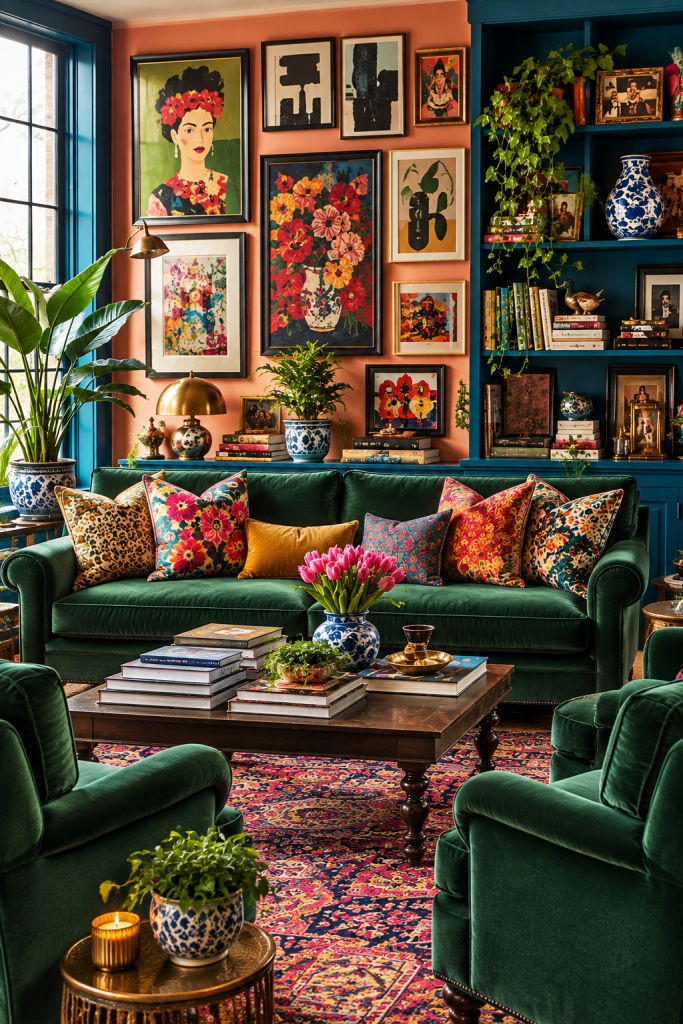
The most important thing to understand about colorful maximalism is that it is not simply about putting as many colorful objects into a room as possible. Successful maximalist decorating still requires thought, balance, repetition, and visual organization. A room can contain many colors and patterns while still looking intentional. The secret is creating relationships between the different elements so the room feels layered rather than chaotic.
Color is usually the starting point. You might choose a deep emerald green sofa, cobalt blue walls, terracotta accessories, mustard yellow cushions, or a vibrant pink accent chair. However, these colors should have some connection to one another. Repeating a color in several locations can help the room feel cohesive. For example, if you choose cobalt blue curtains, you could repeat that blue in artwork, cushions, books, or a decorative vase. The repetition makes the bold color feel intentional.
Patterns are another defining feature of maximalist interiors. Floral prints, stripes, checks, geometric designs, animal-inspired patterns, paisley, botanical motifs, and abstract artwork can all work together. The trick is to vary the scale. A large floral wallpaper can be paired with smaller geometric cushions and a medium-sized patterned rug. When every pattern has the same scale, the room can become visually overwhelming.
Texture is equally important. Velvet, linen, wool, boucle, rattan, wood, ceramic, glass, metal, woven fibers, and embroidered fabrics can create contrast. A colorful maximalist room should not only look interesting; it should feel interesting. Texture gives the eye different surfaces to discover and prevents the abundance of color from becoming flat.
Furniture can also contribute to maximalist character. Instead of buying an entire matching furniture set, consider mixing pieces with different shapes, periods, and finishes. A modern sofa can sit beside a vintage side table. An antique cabinet can share space with a contemporary lamp. A sculptural chair can become a focal point against a patterned wall.
Artwork is another major component. Maximalist homes often use artwork generously. Gallery walls, oversized paintings, framed prints, photographs, mirrors, tapestries, and decorative plates can all become part of the composition. The artwork does not necessarily need to match perfectly. Instead, look for colors, themes, or frames that create a connection.
Plants are also excellent for colorful maximalist interiors. Greenery adds another color layer while bringing softness into spaces filled with patterns and objects. Large tropical plants can create drama, while smaller plants can fill shelves, windowsills, and side tables.
Lighting should never be forgotten. A colorful room can become even more dramatic with statement lamps, colorful shades, sculptural fixtures, pendant lights, table lamps, and warm accent lighting. Lighting can highlight artwork and create different moods throughout the day.
Storage is especially important in maximalist homes. Since the style involves more objects, every item needs a place. Cabinets, shelves, baskets, decorative boxes, and closed storage can help maintain order while allowing collections and favorite objects to remain visible.
The biggest advantage of colorful maximalism is freedom. You do not have to choose between modern and vintage, bold and soft, elegant and playful. You can combine different influences to create a home that represents your personality.
At the same time, beginners should avoid trying to change everything at once. Start with one room and establish a color story. Add one strong focal point, then gradually introduce supporting colors, patterns, textures, and accessories.
The ten ideas below provide practical ways to create a colorful maximalist home without making it feel random. Each approach can be adapted to apartments, houses, bedrooms, living rooms, dining areas, home offices, and even small spaces. The goal is to create a home that feels expressive, joyful, layered, and memorable.
1. Create a Bold Color-Blocked Living Room

Color blocking is one of the easiest ways to introduce colorful maximalist decor because it gives you a clear starting structure. Instead of randomly placing bright colors throughout a room, you intentionally assign different colors to walls, furniture, textiles, and accessories.
A color-blocked living room can be dramatic, playful, sophisticated, or artistic depending on the shades you choose. For a sophisticated appearance, combine deep green with warm cream, burgundy, and mustard. For a playful interior, consider coral, cobalt blue, pink, and yellow. If you prefer an earthy maximalist style, combine terracotta, olive green, mustard, rust, and chocolate brown.
Begin by selecting your dominant color. This should appear on one of the largest surfaces or pieces of furniture. A painted accent wall, sofa, large rug, or curtains can become the foundation.
Next, choose two or three supporting colors. These should appear throughout the room rather than being isolated in one location.
For example, imagine a living room with a deep emerald green wall. A rust-colored sofa becomes the main furniture feature, while mustard cushions and cobalt artwork introduce contrast. A patterned rug can combine several of these shades and visually connect the entire composition.
Materials and Things You Need
- Interior paint
- Colorful sofa or slipcover
- Accent chairs
- Patterned area rug
- Colorful cushions
- Throw blankets
- Curtains
- Artwork
- Decorative ceramics
- Table lamps
- Plants
- Decorative books
Step-by-Step Decorating Process
Start by selecting your main color.
Choose a secondary color that creates contrast.
Add a third color through textiles or artwork.
Use a neutral shade to give the eye a resting point.
Introduce the colors repeatedly around the room.
Add patterns only after establishing the main color relationships.
Finish with small decorative objects.
The most important rule is repetition. If a color appears only once, it may feel disconnected. Repeat it at least a few times in smaller details.
For example, a bright pink chair could be connected to pink flowers in artwork, a pink decorative object, and a small pink cushion.
You can also use color blocking on walls. Paint one wall a bold color while leaving the remaining walls relatively calm. Alternatively, use two colors on the same wall with a horizontal or geometric division.
If painting feels too permanent, use colorful artwork, curtains, rugs, and furniture instead.
Furniture arrangement should remain relatively simple when the colors are strong. You want the room to feel abundant but still functional.
A large patterned rug can act as a visual bridge between several colors. If the rug contains green, pink, yellow, and blue, you can repeat those colors through cushions and artwork.
For Pinterest-worthy styling, make one element the hero. This could be a colorful sofa, dramatic wall, oversized artwork, or patterned rug. Everything else should support that focal point.
Lighting can change how colors appear. Warm lighting will make reds, oranges, yellows, and browns feel richer, while daylight may reveal the cooler qualities of blue and green.
Do not be afraid of contrast. Maximalism becomes exciting when unexpected colors meet.
However, contrast should still feel intentional. Use repetition and pattern to create visual connections.
The final living room should feel energetic but comfortable, with enough open space for movement.
2. Layer Bold Patterns Without Making the Room Look Chaotic

Pattern mixing is one of the defining characteristics of maximalist decorating. Floral wallpaper, striped cushions, geometric rugs, checked curtains, abstract artwork, and decorative textiles can all exist in one room when they are layered thoughtfully.
The biggest mistake beginners make is choosing too many patterns with the same visual strength. If every surface contains a large, complicated print, nothing becomes the focal point.
Instead, vary the scale.
Choose one large pattern, one medium pattern, and several smaller patterns. This creates a visual hierarchy.
For example, use large botanical wallpaper as the main pattern. Add a medium geometric rug and small striped cushions. The patterns are different, but they do not compete equally.
Color can also connect different patterns. If your wallpaper contains green, pink, and cream, choose cushions and rugs that repeat those shades.
Materials and Things You Need
- Patterned wallpaper
- Patterned rug
- Printed cushions
- Floral fabric
- Striped textiles
- Geometric accessories
- Artwork
- Curtains
- Decorative blankets
- Upholstered furniture
Step-by-Step Pattern Mixing
Choose one dominant pattern.
Select a second pattern with a different scale.
Introduce a smaller pattern.
Make sure at least one or two colors repeat between patterns.
Use solid-colored pieces to create breathing space.
Add artwork or accessories after the major patterns are established.
Step back and evaluate the room from the doorway.
Pattern mixing works particularly well in bedrooms and living rooms.
A floral headboard can be combined with striped cushions and a geometric rug. A patterned sofa can work with solid curtains and a printed artwork collection.
You do not have to match patterns exactly. In fact, maximalist interiors often look more interesting when patterns are intentionally different.
The key is finding a shared characteristic. This might be color, scale, style, or even a common organic theme.
For example, three different floral patterns can work together because they share botanical imagery even though their colors and sizes differ.
You can also use pattern through smaller objects. Patterned lampshades, books, trays, ceramics, and decorative boxes can add interest without requiring major purchases.
For Pinterest, a patterned room should still have a clear focal point. Choose the most visually powerful element and allow it to dominate.
Avoid placing multiple competing statement pieces directly beside each other.
For example, if you have dramatic floral wallpaper, choose relatively simple furniture. If the sofa has an elaborate pattern, use a quieter wall treatment.
This balance allows maximalism to remain expressive without becoming exhausting.
Pattern mixing is also an excellent way to personalize a room. You can combine traditional floral fabrics with modern geometric prints, vintage textiles with contemporary artwork, or global-inspired patterns with simple furniture.
The result should feel collected rather than purchased as a single matching set.
3. Decorate With a Jewel-Tone Maximalist Color Palette
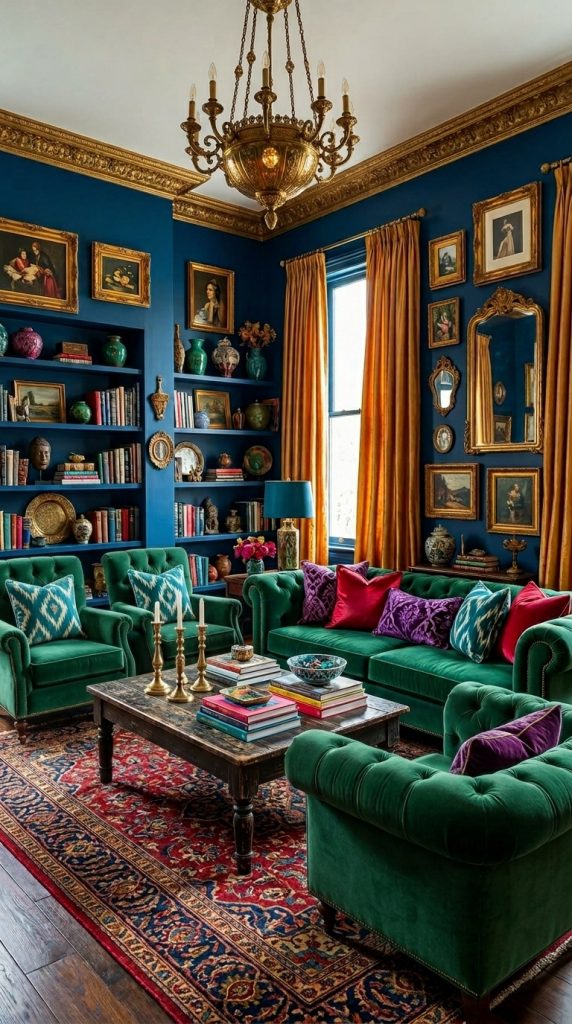
Jewel tones are perfect for creating dramatic and luxurious maximalist interiors. Emerald green, sapphire blue, ruby red, amethyst purple, deep teal, magenta, and rich amber can create a sophisticated environment when layered thoughtfully.
Jewel tones work especially well in rooms where you want an intimate atmosphere. They can make large rooms feel more enclosed and dramatic while adding depth to smaller spaces.
Start by choosing one dominant jewel tone. Emerald green is an especially versatile choice because it works well with gold, pink, blue, cream, and wood.
Next, choose one or two complementary jewel tones.
For example, an emerald green sofa could be paired with sapphire blue cushions, burgundy artwork, and brass lighting.
You can also combine jewel tones with warm neutrals. Cream walls, walnut furniture, and colorful textiles create a sophisticated foundation.
Materials and Things You Need
- Jewel-tone paint
- Velvet sofa
- Colorful cushions
- Rich curtains
- Patterned rug
- Brass accessories
- Artwork
- Ceramic decor
- Statement lamp
- Wood furniture
- Plants
Step-by-Step Jewel-Tone Styling
Choose your dominant jewel tone.
Apply it to a focal element.
Add one complementary jewel shade.
Introduce a warm neutral.
Use metallic or natural materials for balance.
Repeat colors throughout the room.
Add patterns after the main palette is established.
Velvet is particularly effective with jewel tones because its texture reflects light and creates visual depth.
An emerald velvet sofa can become an instant focal point. Pair it with a patterned rug containing small amounts of green and another accent color.
Blue walls can be paired with mustard furniture or warm wood.
Deep burgundy can work beautifully with cream, brown, brass, and dusty pink.
Purple can be softened with lavender, beige, and warm white.
The key is not to make every element equally saturated.
Use deeper colors in larger areas and brighter colors as accents.
For example, dark teal walls can provide a dramatic background while pink cushions and gold accessories add energy.
Natural wood can also prevent jewel tones from feeling too formal.
Plants provide another excellent contrast. Greenery works naturally with blue, purple, burgundy, and teal.
Lighting should be warm. Soft lamps can make jewel tones appear rich and sophisticated during the evening.
For Pinterest, jewel-tone maximalism works particularly well when photographed with warm lighting and layered textures.
Try combining velvet, wood, brass, ceramic, and patterned textiles.
The result can feel luxurious without requiring expensive furniture.
One of the advantages of jewel tones is that they can make ordinary pieces appear more dramatic. A simple chair becomes much more interesting when upholstered in deep green or blue.
If you are unsure about committing to dark walls, start with furniture and textiles.
Colorful curtains, cushions, rugs, and artwork can create the same atmosphere while remaining easier to change.
4. Build a Colorful Gallery Wall Full of Personality

A gallery wall is one of the most effective ways to express maximalist personality. Instead of choosing one artwork and leaving the rest of the wall empty, you can create a collection of paintings, photographs, prints, mirrors, illustrations, and decorative objects.
The goal is not perfect matching. The goal is visual connection.
Start by choosing a theme or color direction. Your gallery wall might contain botanical artwork, travel photography, vintage posters, abstract paintings, family photographs, or a mixture of several types.
Color can become the unifying factor.
If the room contains emerald green and pink, choose artwork that repeats those shades.
Frame styles can also be mixed. Gold, wood, black, colorful, and antique-style frames can all work together in maximalist interiors.
Materials and Things You Need
- Framed artwork
- Prints
- Photographs
- Mirrors
- Decorative plates
- Small textile pieces
- Picture frames
- Measuring tape
- Level
- Hanging hardware
- Paper templates
Step-by-Step Gallery Wall Process
Collect more artwork than you initially think you need.
Lay everything on the floor.
Experiment with different arrangements.
Create a rough visual balance.
Mix large and small pieces.
Include different frame styles.
Use paper templates on the wall before hanging.
Install the pieces carefully.
A gallery wall should have both structure and spontaneity.
You can create a grid if you prefer organization, or use an eclectic arrangement with varying spaces between pieces.
For maximalism, the eclectic arrangement is particularly effective.
Include unexpected objects such as a small mirror, decorative plate, textile, pressed botanical, or sculptural wall piece.
Do not make every frame the same color.
The variation contributes to the collected feeling.
However, repeat colors throughout the gallery so it does not appear completely random.
For example, a wall may contain gold frames, green artwork, pink prints, blue photography, and neutral illustrations.
If the room already contains strong patterns, keep some artwork simpler.
The gallery wall should complement the furniture rather than overwhelm it.
A gallery wall above a colorful sofa can create an impressive focal point.
In a dining room, it can create a conversation-starting feature.
In a bedroom, it can add personality around the headboard.
For Pinterest, gallery walls are highly visual and save-worthy because they provide many styling ideas in one image.
The most important thing is to display objects that actually mean something to you.
Maximalism becomes much more compelling when it tells a story.
A collection of travel photographs, inherited artwork, favorite illustrations, and vintage finds will naturally feel more personal than a wall filled with generic prints.
5. Mix Vintage and Modern Furniture for an Eclectic Maximalist Look

Colorful maximalism becomes especially interesting when old and new furniture are combined. Instead of purchasing everything from the same collection, mix pieces with different shapes, materials, periods, and finishes.
A modern sofa can work beautifully with a vintage wooden cabinet. A contemporary coffee table can sit beside an antique armchair. A traditional dresser can become interesting when paired with a modern colorful lamp.
The key is finding one or two connecting elements.
Color is one option. A vintage chair can be reupholstered in a fabric that matches the modern sofa.
Shape is another. Rounded furniture can soften a room filled with straight lines.
Material can also create connections. Wood, brass, glass, or ceramic can appear in both vintage and modern pieces.
Materials and Things You Need
- Modern sofa
- Vintage chair
- Antique cabinet
- Contemporary coffee table
- Wooden furniture
- Brass accessories
- Colorful upholstery
- Decorative mirror
- Vintage artwork
- Modern lighting
Step-by-Step Eclectic Styling
Begin with your largest furniture piece.
Add one vintage or antique element.
Introduce a modern piece with a different shape.
Connect them through color.
Add textiles to soften the contrast.
Introduce artwork that contains both traditional and contemporary influences.
Use lighting to create a focal point.
Do not attempt to make every piece look as though it belongs to the same period.
The contrast is the point.
A colorful vintage armchair can become the focal point in an otherwise modern living room.
An antique cabinet can provide character against a brightly painted wall.
A modern sculptural lamp can make an old wooden table feel fresh.
For maximalist decorating, imperfections can be valuable. Vintage furniture may have visible wear, unusual shapes, or slightly different finishes. These characteristics create authenticity.
If you find a secondhand piece with an unattractive color, consider whether it could be painted or reupholstered.
Colorful upholstery is an excellent way to transform vintage furniture.
For example, a traditional chair covered in emerald velvet can become a dramatic maximalist accent.
A vintage dresser painted deep blue can provide contrast against warm walls.
For Pinterest, mixing furniture styles creates a collected and aspirational look.
However, avoid adding too many large furniture pieces. The room still needs circulation and practical functionality.
Use accessories to create additional layers instead.
A modern lamp, vintage vase, colorful books, patterned cushions, and botanical artwork can connect furniture from different periods.
The finished space should feel as though it has evolved over time rather than being purchased all at once.
6. Create a Maximalist Bedroom With Colorful Bedding and Layered Textiles

The bedroom is one of the easiest rooms to transform with colorful maximalist decor because textiles provide endless opportunities for color and pattern.
Start with the bed because it is naturally the room’s focal point.
Instead of choosing a completely neutral bedding set, experiment with color.
A cobalt blue duvet can be paired with mustard cushions, pink blankets, and patterned sheets.
Alternatively, use a floral duvet with striped pillows and a solid jewel-tone throw.
The secret is layering.
Combine different patterns, but make sure they share at least one color.
Materials and Things You Need
- Colorful duvet
- Patterned sheets
- Decorative pillows
- Quilted blanket
- Throw
- Bed runner
- Patterned rug
- Colorful curtains
- Artwork
- Table lamps
- Decorative objects
- Plants
Step-by-Step Bedroom Styling
Choose a dominant color.
Select bedding in that shade.
Add a contrasting throw.
Introduce patterned pillows.
Add a rug that connects the colors.
Use curtains to create another layer.
Decorate the bedside tables.
Add artwork.
Finish with plants or decorative objects.
A maximalist bedroom should feel abundant but still restful.
If you choose very bright bedding, keep the wall color slightly calmer.
Alternatively, if the walls are bold, use bedding with several complementary colors rather than adding another competing color.
Wallpaper can also be extremely effective behind the bed.
Floral, botanical, geometric, and vintage-inspired wallpapers work beautifully with maximalist bedding.
You can also use a colorful headboard.
Velvet headboards in emerald, mustard, burgundy, blue, or pink can become dramatic focal points.
Lighting should remain warm and comfortable.
Use table lamps or wall sconces to create softer illumination in the evening.
For Pinterest, layer the bed generously while keeping the surrounding furniture relatively organized.
A colorful bed against patterned wallpaper can create a strong visual story.
Add artwork above the bed only if it does not compete with the wallpaper.
Plants can introduce another layer of green and help soften the abundance of patterns.
Maximalist bedrooms are especially good for expressing personality.
You can incorporate travel textiles, vintage cushions, handmade blankets, colorful artwork, and collections of objects.
The bedroom should ultimately remain comfortable.
Avoid using fabrics that are difficult to maintain or decorative pieces that interfere with everyday use.
A successful maximalist bedroom feels like a colorful retreat rather than a chaotic collection.
7. Use Colorful Kitchen Cabinets to Transform the Heart of the Home
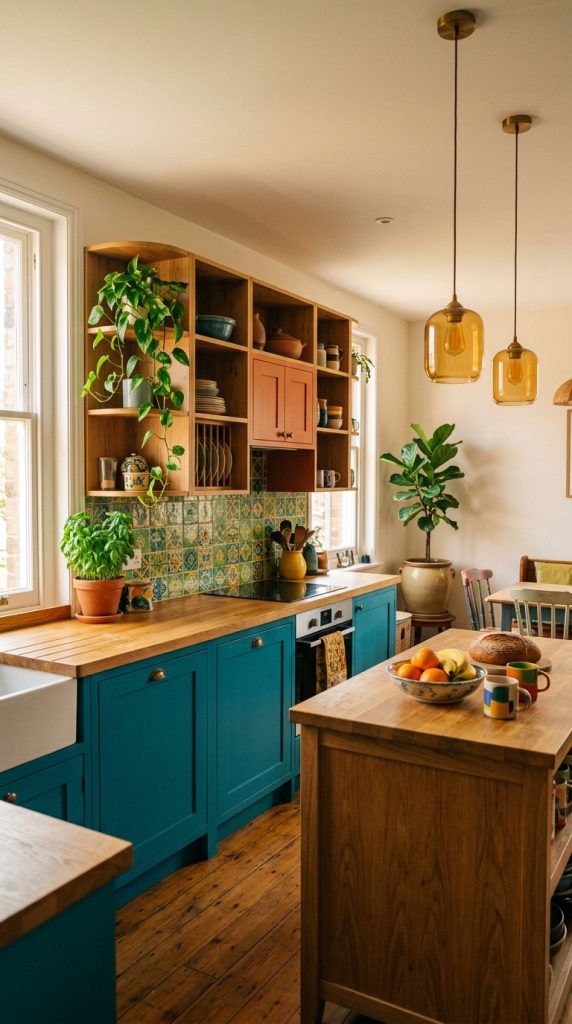
The kitchen is often dominated by neutral cabinetry, but colorful cabinets can turn the space into one of the most memorable rooms in the home.
Deep green, blue, burgundy, mustard, teal, terracotta, and even soft pink can create beautiful kitchens when combined with the right materials.
If you are renovating, cabinet color can become the main design feature.
If you are working with an existing kitchen, you can introduce color through smaller elements instead.
Painted cabinet doors, colorful bar stools, patterned backsplash tiles, bright appliances, textiles, artwork, and open shelving can all contribute to maximalist style.
Materials and Things You Need
- Colored cabinet paint where appropriate
- Cabinet hardware
- Colorful bar stools
- Patterned backsplash
- Open shelves
- Ceramic dishes
- Colorful cookware
- Kitchen textiles
- Artwork
- Plants
- Pendant lights
Step-by-Step Kitchen Styling
Choose your cabinet or accent color.
Test samples in the actual kitchen lighting.
Select hardware that complements the color.
Choose a backsplash that does not compete excessively.
Add colorful accessories.
Introduce artwork.
Use plants to soften hard surfaces.
Finish with warm lighting.
A green kitchen can work beautifully with brass hardware, cream walls, natural wood, and colorful ceramics.
Blue cabinets can be paired with warm wood, patterned tiles, and terracotta accessories.
Pink cabinets can become sophisticated when combined with muted green, brass, marble-look surfaces, or natural wood.
If you are not ready to repaint cabinets, start with accessories.
Colorful ceramic plates displayed on open shelves can immediately introduce maximalist energy.
Patterned curtains or a colorful runner can also change the atmosphere.
For Pinterest, open shelving is particularly useful because it allows colorful collections to become part of the decor.
However, avoid displaying every kitchen item.
Choose the pieces with the strongest visual appeal.
Ceramic bowls, colorful glassware, vintage plates, cookbooks, wooden boards, and small plants can create a curated display.
The kitchen should still remain practical.
Keep everyday work areas relatively clear.
Maximalist kitchens work best when visual abundance is concentrated in selected areas.
The result should feel joyful and collected rather than cluttered.
8. Transform Your Dining Room With Color, Pattern, and Statement Lighting

A dining room is an excellent place to experiment with maximalist decor because it can handle stronger colors and patterns without requiring the same level of calm as a bedroom.
Start with the dining table and chairs.
You can choose a colorful dining table or use chairs as the primary color feature.
Mismatched dining chairs can create an eclectic effect.
For example, combine wooden chairs with upholstered chairs in different colors that share a common palette.
The walls can also become a major focal point.
Patterned wallpaper is particularly effective in dining rooms because it creates an immersive atmosphere.
Materials and Things You Need
- Dining table
- Colorful chairs
- Patterned wallpaper
- Area rug
- Statement pendant
- Colorful tableware
- Table runner
- Artwork
- Decorative mirror
- Vase
- Flowers or greenery
Step-by-Step Dining Room Transformation
Choose a dominant wall or furniture color.
Add seating in complementary colors.
Introduce a statement light.
Select a patterned rug.
Add colorful tableware.
Create a centerpiece.
Hang artwork or a mirror.
Repeat colors through smaller accessories.
A statement chandelier or pendant can become the visual centerpiece.
Choose a fixture with an interesting shape, color, or material.
For example, a sculptural glass pendant can contrast beautifully with colorful walls.
A brass fixture can provide warmth against deep blue or green.
Table styling should remain flexible.
For everyday use, a colorful vase and simple greenery may be enough.
For entertaining, introduce patterned plates, linen napkins, candles, and decorative serving pieces.
The dining room can also become an excellent place to display collections.
A wall of vintage plates, framed botanical artwork, or colorful paintings can create a memorable backdrop.
For Pinterest, consider photographing the room with the table beautifully arranged.
Colorful dishes, flowers, patterned textiles, and statement lighting create a strong visual composition.
Do not forget the floor.
A patterned rug can connect all the colors in the room.
If the walls are already highly patterned, choose a rug with a simpler design.
The goal is to create layers without allowing one element to completely dominate everything else.
A colorful dining room can make everyday meals feel more special and encourage people to gather.
9. Turn Open Shelving Into a Colorful Maximalist Display
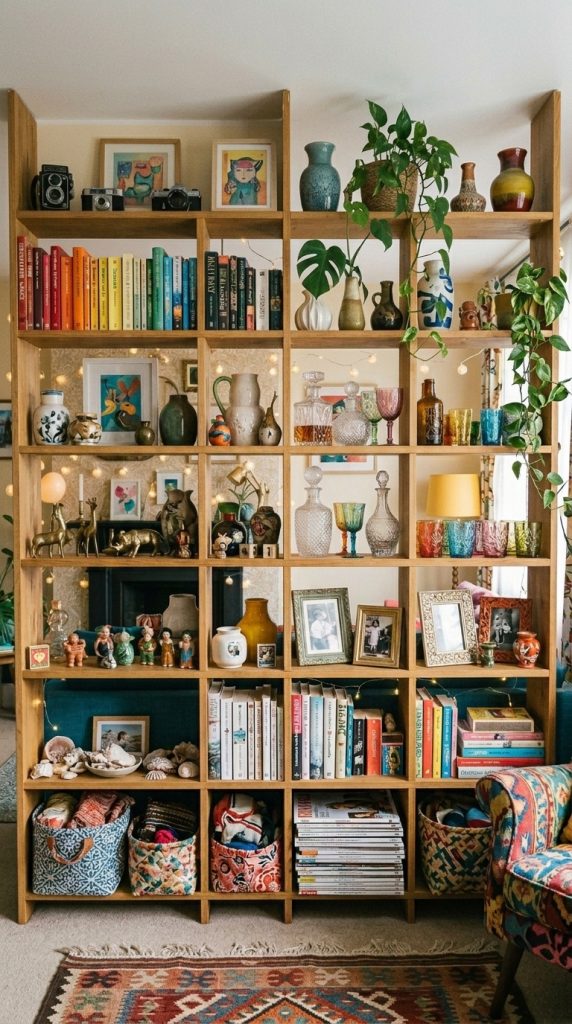
Open shelving provides an opportunity to turn everyday objects into decorative elements. Books, ceramics, artwork, plants, glassware, baskets, photographs, and collections can all become part of the room’s design.
The biggest mistake is filling every shelf completely.
Maximalism requires abundance, but visual organization is still necessary.
Start by choosing a color story.
For example, a shelf might feature blue, green, yellow, and cream.
Then arrange objects according to height and shape.
Place taller objects behind smaller pieces.
Mix horizontal stacks of books with vertical objects.
Introduce plants to soften the arrangement.
Materials and Things You Need
- Floating shelves
- Books
- Ceramic vases
- Artwork
- Small sculptures
- Plants
- Baskets
- Decorative boxes
- Photographs
- Collectibles
- Colorful glassware
Step-by-Step Shelf Styling
Clear the shelves.
Group your objects by color.
Place large pieces first.
Add books.
Introduce plants.
Add smaller accessories.
Repeat colors across different shelves.
Leave small areas of empty space.
Do not place every object directly beside another.
Visual breathing space helps the collection look intentional.
You can also create mini compositions on each shelf.
For example, combine a stack of books with a vase and small plant.
On another shelf, place a framed artwork beside a sculpture and ceramic bowl.
Vary the height between these groupings.
For maximalist interiors, shelves can display collections that might otherwise remain hidden.
Vintage cameras, pottery, travel souvenirs, colorful books, framed photographs, or collected objects can become meaningful decorations.
The key is editing.
Even maximalist shelves benefit from removing items that do not contribute to the overall composition.
For Pinterest, colorful shelves are highly useful because they provide viewers with many styling details to discover.
You can also change the display seasonally.
Autumn might introduce rust-colored ceramics and dried branches.
Spring could bring botanical prints and lighter colors.
Winter could include deeper shades and warm textures.
Shelving is particularly useful in small homes because it uses vertical space.
Instead of filling the floor with furniture, move some decorative storage upward.
The result is a colorful display that combines personality and functionality.
10. Create a Complete Colorful Maximalist Home With a Cohesive Color Story

The final step in creating colorful maximalist decor is connecting all the individual rooms into one cohesive home. Maximalism allows different rooms to have different personalities, but repeating colors, materials, patterns, and design details helps the entire home feel intentional.
Start by creating a whole-home color palette.
Choose approximately three to five main colors.
You do not need to use all of them equally in every room.
Instead, allow different colors to dominate different spaces while repeating small amounts throughout the home.
For example, your main palette could include emerald green, cobalt blue, mustard yellow, coral, and warm cream.
The living room might emphasize emerald and cream.
The bedroom could focus on cobalt and coral.
The dining room might use mustard and green.
The hallway could introduce artwork containing all five shades.
This creates variety without losing cohesion.
Materials and Things You Need
- Colorful paint
- Patterned wallpaper
- Colorful furniture
- Rugs
- Curtains
- Cushions
- Artwork
- Decorative objects
- Plants
- Statement lighting
- Books
- Vintage accessories
- Storage baskets
Step-by-Step Whole-Home Plan
Start by choosing your main color palette.
Create a mood board or collect inspiration images.
Decide which color dominates each room.
Repeat at least one color between neighboring spaces.
Use similar materials throughout the home.
Repeat wood, brass, ceramic, or woven elements.
Add artwork that connects different color schemes.
Use lighting consistently.
Edit objects that feel completely disconnected.
The hallway is particularly useful for creating transitions.
If one room is dominated by blue and another by green, artwork or accessories in the hallway can contain both colors.
This creates a visual bridge.
Flooring also contributes to cohesion.
If you have different rugs throughout the home, choose designs that share colors or materials.
Furniture does not have to match.
In fact, colorful maximalism benefits from variety.
However, there should be some repeating elements.
For example, brass hardware might appear in the kitchen, living room lamps, and dining room lighting.
Wood might appear in furniture throughout the home.
Greenery can be repeated in different rooms.
This repetition creates rhythm.
The biggest mistake in maximalist decorating is assuming that every surface needs decoration.
Instead, think about visual hierarchy.
Some rooms can be dramatic while others provide breathing space.
A maximalist hallway might contain bold wallpaper and a gallery wall, while the bedroom uses softer colors and layered textiles.
This creates a more comfortable overall home.
For Pinterest, a cohesive maximalist home is especially compelling because every room offers new inspiration while the overall design still feels connected.
The goal is not to create identical rooms.
The goal is to create a home that feels like one person’s creative world.
Colorful maximalism works best when it reflects your personality.
Display things you love.
Mix old and new.
Experiment with unexpected combinations.
Use color confidently.
But always leave enough room for the home to function.
Final Conclusion
Colorful maximalist decor is ultimately about creating a home that feels expressive, joyful, collected, and personal. It gives you permission to move beyond safe neutral interiors and experiment with colors, patterns, textures, artwork, furniture, plants, and objects that genuinely make you happy.
The most successful maximalist rooms are not simply full. They are layered with intention.
A bold color-blocked living room creates a strong foundation. Pattern mixing adds visual energy. Jewel tones bring drama and richness. Gallery walls tell stories. Vintage and modern furniture create contrast. Colorful bedrooms become personal retreats. Kitchens and dining rooms can become playful focal points, while open shelving provides opportunities to display collections.
The key to making all of these ideas work is balance.
Repeat colors instead of randomly introducing new ones. Vary pattern scale instead of placing equally strong prints everywhere. Combine different textures to create depth. Use neutral elements strategically to give the eye a place to rest.
Most importantly, remember that maximalism is personal.
There is no single correct color palette or furniture combination. Your home might feature emerald green and pink, cobalt blue and orange, mustard and burgundy, or an unexpected combination of several colors.
Start small if you are nervous.
Add colorful cushions.
Introduce a patterned rug.
Paint one wall.
Create a gallery wall.
Bring in a colorful chair.
Style your shelves with objects you love.
As your confidence grows, you can add larger elements such as wallpaper, colorful furniture, statement lighting, or painted cabinetry.
The ultimate goal is to create a space that makes you smile when you walk through the door.
Colorful maximalist decor is not about following rules. It is about turning your home into a visual expression of who you are.
Leave a Reply