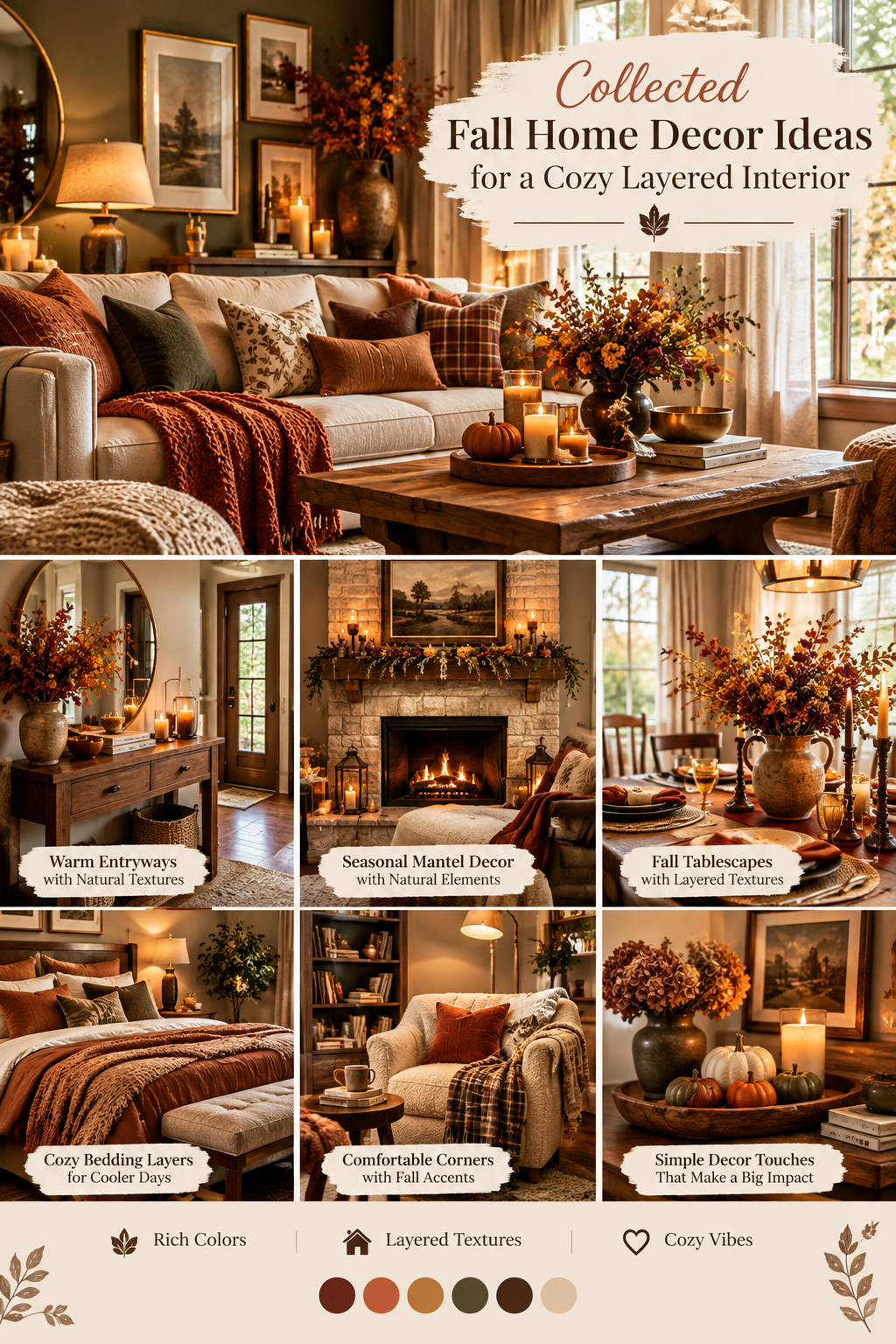
Fall has a way of changing how we want our homes to feel. As the days become shorter and evenings invite us to stay indoors longer, bright and lightweight summer interiors can suddenly feel a little too bare. We begin craving softer fabrics, warmer lighting, deeper colors, natural materials, comfortable seating, and rooms that feel welcoming rather than perfectly styled.
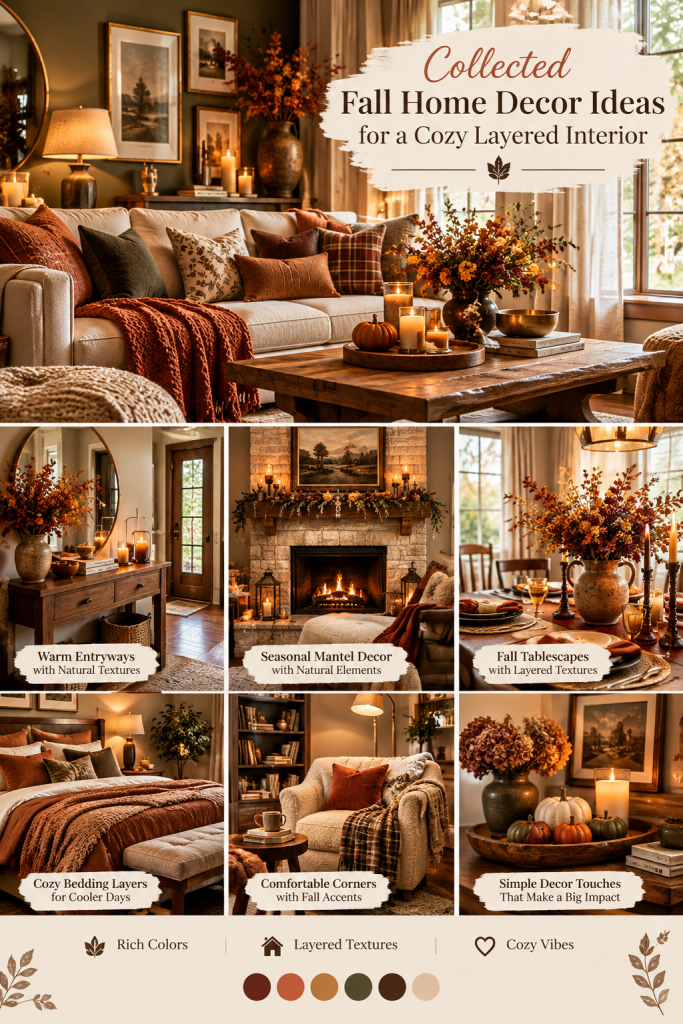
That is exactly why collected fall home decor is such a beautiful approach for the season.
Instead of transforming your home into a themed autumn display, collected decorating focuses on creating a room that looks as though it has developed naturally over time. A beautiful vintage vase can sit beside a modern lamp. A textured throw can be casually draped across a neutral sofa. Warm wood can balance cream upholstery. A few branches can bring the outdoors inside without making the room feel overly seasonal.
For Fall 2026, this layered and personal direction is especially relevant. Current design reporting points toward warmer palettes, earthy colors, richer textures, warm woods, natural materials, softer metals, and interiors that feel collected rather than perfectly coordinated. Designers are also emphasizing layering rather than complete room makeovers, meaning you can keep the foundation of your home and change its atmosphere with textiles, lighting, color, and carefully selected seasonal details.
The idea is simple: your home does not need more decorations; it needs more depth.
Depth can come from a wool rug beneath a coffee table, linen curtains filtering late-afternoon light, a chocolate-brown cushion against a cream sofa, an antique frame leaning on a shelf, or a warm lamp creating a pool of light in an otherwise quiet corner.
This approach is also much easier to maintain than completely redecorating every season. Instead of purchasing an entirely new collection of fall accessories, you can build around pieces you already own and introduce a handful of seasonal changes. A neutral sofa can stay exactly where it is. Your existing dining table can become autumnal with a linen runner and amber glassware. Your bedroom can feel warmer simply by changing the bedding layers and introducing deeper colors.
The result should feel cozy without being cluttered, seasonal without being themed, elegant without being overly formal, and personal without looking disorganized.
In this guide, you will find ten collected fall home decor ideas that can be adapted to living rooms, bedrooms, dining spaces, kitchens, entryways, and small homes. Each idea focuses on a different decorating layer so that you can build your autumn interior gradually and intentionally.
What Is Collected Fall Home Decor?
Collected fall home decor is an approach to seasonal decorating that combines different textures, materials, colors, furniture styles, vintage-inspired pieces, personal objects, and subtle autumn accents to create a home that feels naturally assembled over time.
Rather than buying matching seasonal decorations, collected interiors mix old and new.
You might have a modern cream sofa, a vintage wooden side table, a contemporary brass lamp, an antique-looking mirror, and handmade ceramic accessories all within the same room. They do not need to match perfectly because their differences create character.
For fall, the collected approach becomes especially beautiful because autumn naturally lends itself to warm materials and imperfect textures.
Think:
- warm walnut and oak
- linen and wool
- velvet and boucle
- aged brass
- antique bronze
- ceramic
- stone
- woven baskets
- dried branches
- vintage artwork
- old books
- amber glass
- muted earthy colors
- soft candlelight
- layered rugs
- comfortable throws
Current Fall 2026 design coverage describes this movement toward interiors that are warmer, more layered, more personal, and less dependent on obvious seasonal decorations. Houzz’s 2026 U.S. fall trends report specifically highlights warm wood tones, earthy colors, multiple textures, natural materials, and collected interiors with character and personal storytelling.
That means collected fall decorating does not require you to cover every surface with pumpkins, leaves, signs, or orange accessories.
Instead, the season can be communicated through atmosphere.
A darker wood tone makes a room feel grounded.
A wool throw adds visual and physical warmth.
A few branches introduce an organic seasonal reference.
A warmer light source changes the mood after sunset.
A deeper accent color gives a neutral room autumnal richness.
When these elements work together, the room feels like fall without needing to announce it.
1. Build a Warm Neutral Foundation With Rich Autumn Layers
The easiest way to create a collected fall interior is to begin with a calm neutral foundation and gradually build warmth on top.
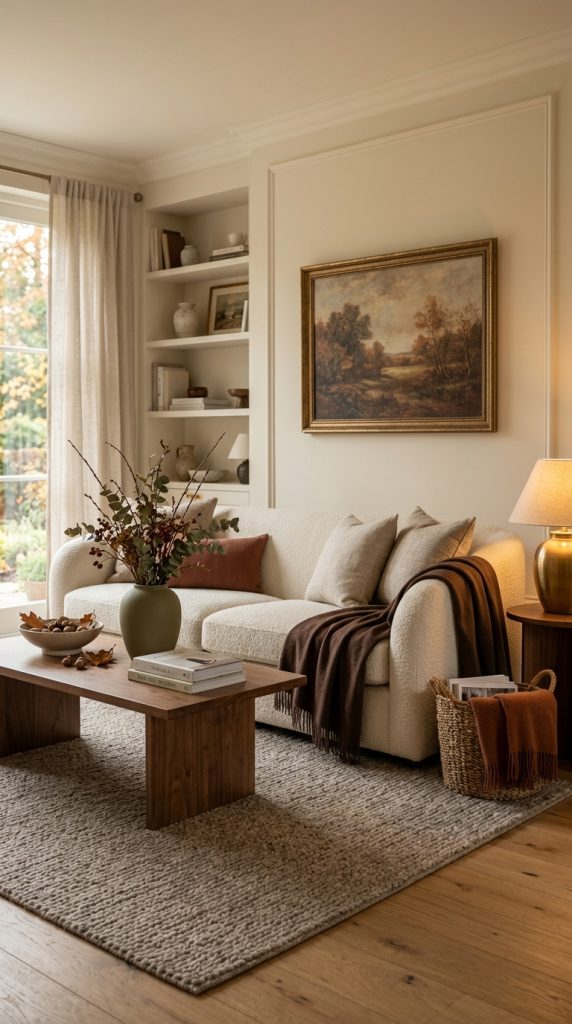
Cream, ivory, warm beige, taupe, mushroom, oatmeal, soft greige, and natural linen make excellent foundational colors because they allow seasonal accents to stand out without overwhelming the room.
Once the foundation is established, introduce deeper colors in smaller quantities.
Chocolate brown, tobacco, caramel, muted rust, olive green, burgundy, terracotta, and warm charcoal can create the visual depth associated with autumn.
The key is not to use every fall color at once.
Choose two or three deeper tones and repeat them throughout the room.
For example, imagine a cream living room with a neutral sofa. Instead of replacing the sofa, add two chocolate-brown cushions, one muted rust throw, and a small olive ceramic vase. Repeat the brown in a wooden coffee table and perhaps in one framed artwork.
The room immediately feels warmer.
This is more sophisticated than placing orange decorations randomly around the room because the color story has a relationship.
A collected room should feel connected from one corner to another.
You can also use the 60-30-10 approach as a loose guide without treating it as a strict decorating rule. Let approximately 60 percent of the room remain within your foundational neutral palette, around 30 percent come from warm secondary materials and tones, and use the remaining accents for richer autumn colors.
For example:
Foundation: cream walls, beige sofa, oatmeal rug
Secondary layer: walnut furniture, tan leather, warm linen
Accent layer: burgundy cushion, rust throw, olive ceramic vase
This approach is particularly useful if you already have a neutral home and do not want to make expensive changes.
How to make this look collected
Avoid purchasing every accessory from the same collection.
Instead, combine:
- one vintage-style frame
- one modern ceramic vessel
- one woven basket
- one antique-inspired brass object
- a few books
- a textile with visible texture
- one seasonal botanical element
The small differences make the room feel authentic.
Current fall trend reporting also points toward richer earthy palettes, including tobacco, terracotta, moss, and other warm tones that create a cocooning atmosphere.
Budget-friendly version
You do not need to buy new furniture.
Start with your existing neutral pieces and change only the soft accessories. Pillow covers, throws, candles, small vases, and table textiles can dramatically change the atmosphere while taking up very little storage space after the season.
2. Layer Textures Instead of Filling the Room With Decorations
Texture may be the most important ingredient in a cozy fall interior.
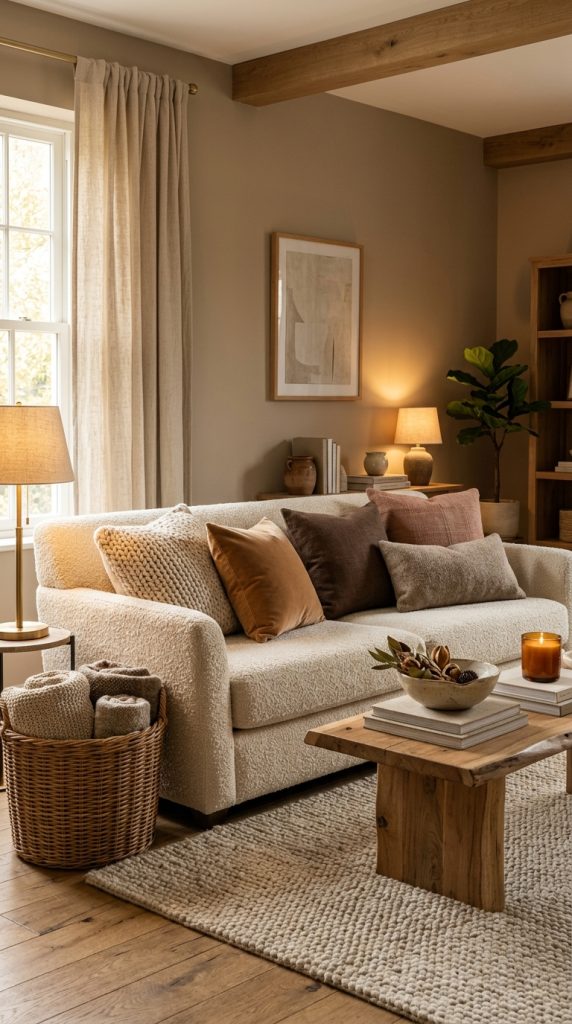
If you want your home to feel warmer without making it visually crowded, add texture before adding more objects.
A room containing a cream sofa, smooth coffee table, plain rug, and simple curtains can feel visually flat even when it is beautifully decorated.
Now imagine the same room with:
- a chunky knitted throw
- a velvet cushion
- a woven basket
- a wool rug
- linen curtains
- a ceramic vase
- a lightly textured wall
- natural wood furniture
Nothing has necessarily been added in large quantities, yet the room feels much richer.
This is the difference between decoration and layering.
Decoration adds objects.
Layering adds differences in touch, surface, weight, color, and visual depth.
For fall, consider introducing three major texture categories.
The first is soft texture.
Use wool, boucle, velvet, cotton, brushed linen, chunky knits, and plush bedding.
The second is natural texture.
Use wood, rattan, woven baskets, stone, ceramic, jute, dried branches, and natural fibers.
The third is subtle reflective texture.
Use aged brass, bronze, amber glass, or slightly reflective ceramics.
Combining these creates a room that looks interesting from different angles.
Current Fall 2026 reporting emphasizes tactile fabrics, richer materials, and multiple textures as part of the shift toward warmer, more character-filled interiors.
Layering a sofa
Start with the sofa itself.
Place one substantial throw over one side rather than covering the entire piece.
Add two or three cushions in different materials.
For example:
- cream linen
- chocolate velvet
- rust woven fabric
Avoid making every pillow patterned.
A combination of solids and subtle patterns generally feels more sophisticated.
Layering a bedroom
In a bedroom, texture can be introduced through bedding.
Begin with neutral sheets.
Add a quilt or coverlet.
Fold a heavier blanket at the bottom of the bed.
Finish with two or three decorative pillows.
Then introduce a textured rug beneath or beside the bed.
The room will feel significantly more inviting without needing a large number of seasonal accessories.
3. Use Warm Lighting to Create an Autumn Evening Atmosphere
Fall decorating is not only about what your home looks like during the day.
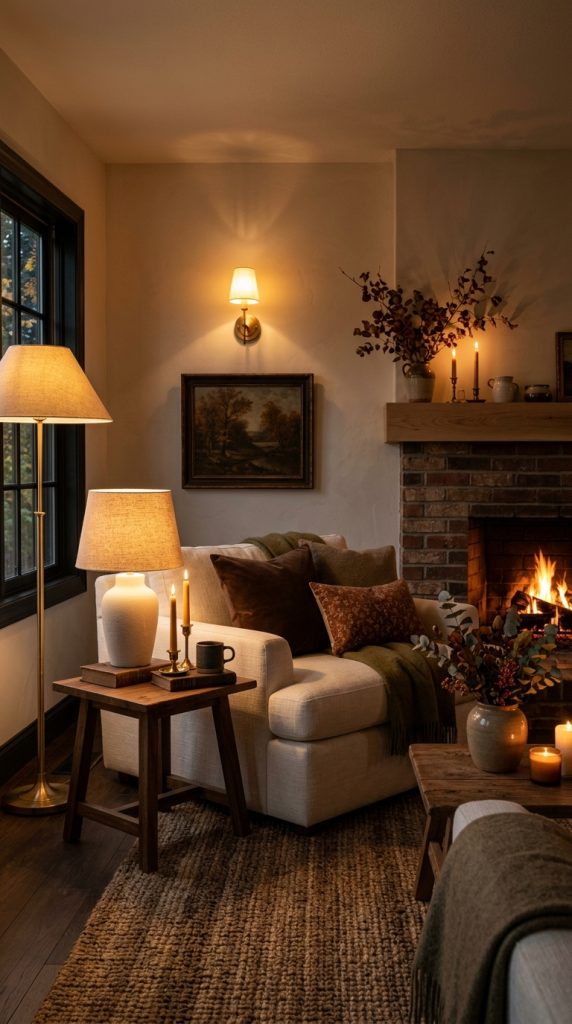
It is also about how the room feels after sunset.
As daylight becomes shorter, lighting becomes an important part of the seasonal atmosphere. Recent fall design coverage specifically highlights the importance of softer lamps, layered lighting, and warmer evening environments.
Instead of depending on one bright ceiling fixture, create several smaller pools of light.
Use:
- table lamps
- floor lamps
- wall sconces
- picture lights
- pendant lighting
- candles
- lanterns
- small portable lamps
The goal is not to make every corner equally bright.
The goal is to create layers of illumination.
A living room might have a floor lamp beside the sofa, a table lamp on a console, a small lamp on a side table, and a few candles on the coffee table.
This creates visual depth.
Use lighting as decoration
A beautiful lamp can function as both a practical object and a decorative feature.
Choose lamps with:
- ceramic bases
- linen shades
- aged brass
- antique bronze
- textured glass
- sculptural silhouettes
- warm wood
A lamp with an interesting shape can become part of the collected look.
Create candlelight carefully
Candles can add an unmistakable fall atmosphere.
Instead of placing ten identical candles across one surface, vary height and shape.
Try a combination of:
- one pillar candle
- two slim taper candles
- one small glass votive
Keep the arrangement restrained.
Current 2026 fall decorating coverage also discusses “candlescaping,” where candlelight and scent are intentionally layered as part of the home’s atmosphere. Experts recommend editing the number of fragrances and combining candle forms and heights rather than overwhelming the space.
If you use scented candles, choose a cohesive fragrance family rather than several competing scents.
Woody, amber, sandalwood, cedar, vanilla, fig, or subtle spice can work beautifully for autumn.
4. Bring in Warm Wood for a Collected, Grounded Look
Warm wood is one of the easiest ways to make a home feel richer for fall.
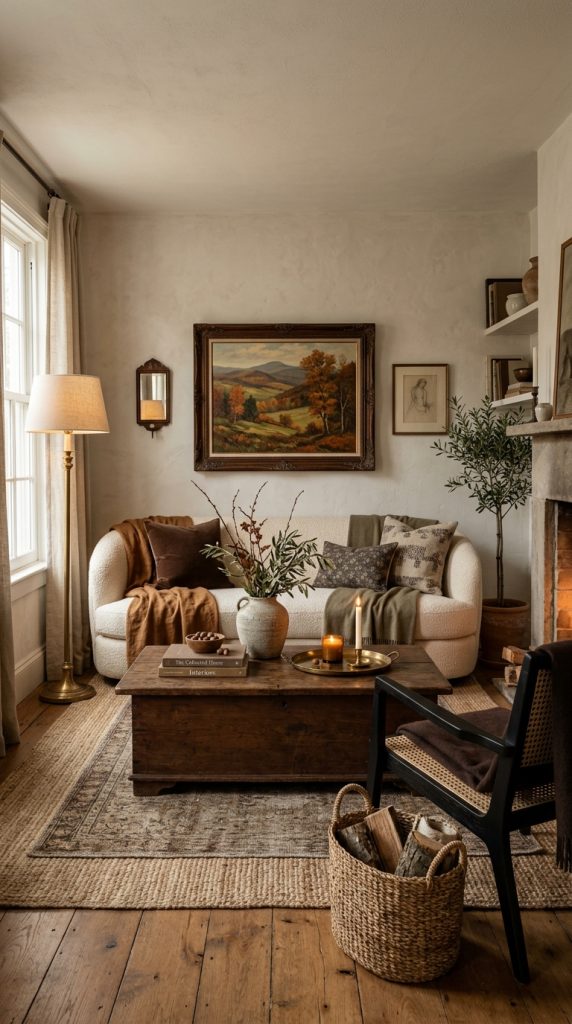
If your room currently has mostly light or painted furniture, introducing one or two darker wood elements can create beautiful contrast.
Think:
- walnut coffee tables
- oak side tables
- dark wood frames
- wooden trays
- carved stools
- vintage cabinets
- wood bowls
- antique wooden boxes
- natural wood picture frames
You do not need to replace your furniture.
Even small wood accessories can shift the visual temperature of a room.
For example, a cream sofa paired with a walnut coffee table instantly feels warmer than the same sofa paired with a glossy white table.
The same principle works in bedrooms.
A neutral upholstered bed becomes richer when paired with walnut nightstands.
In dining rooms, a wooden table can become the foundation for an autumn tablescape.
In kitchens, wooden cutting boards, stools, trays, and open shelving can introduce warmth without changing the cabinetry.
Current 2026 fall design reporting repeatedly highlights warm woods and richer wood stains as part of the move toward warmer, more grounded interiors.
Mix wood tones carefully
Collected interiors do not require every wood tone to match.
In fact, slightly different woods can create character.
However, they should share a similar temperature.
Warm walnut can work with warm oak.
Honey oak can work with natural medium wood.
Very orange wood mixed with cool gray wood may feel less cohesive.
Use rugs, upholstery, artwork, and accessories to visually connect different wood finishes.
5. Add Vintage and Thrifted Pieces for a True Collected Feeling
If you want your fall interior to feel genuinely collected, include something that does not look brand new.
This could be:
- an antique-looking mirror
- a thrifted wooden stool
- an old picture frame
- vintage books
- a secondhand ceramic vase
- an old brass candlestick
- a traditional landscape print
- a small wooden cabinet
- an inherited serving piece
The object does not need to be valuable.
Its purpose is to introduce history and individuality.
A perfectly coordinated room can sometimes look like it was purchased in one afternoon.
A collected room suggests that the homeowner has gathered things gradually.
That is what creates personality.
How to mix vintage with modern
Do not turn every room into an antique shop.
Instead, choose one or two vintage-inspired focal pieces.
For example, a modern living room could contain:
- contemporary cream sofa
- modern coffee table
- vintage landscape artwork
- antique brass lamp
- modern rug
The contrast makes both styles more interesting.
Another beautiful combination is a contemporary bedroom with one traditional wooden bench at the foot of the bed.
The key is balance.
If every item is vintage, the room can lose the clean, relaxed quality that makes collected decorating feel modern.
If everything is new, the room may feel overly coordinated.
Mixing the two creates a more natural result.
6. Create a Cozy Fall Living Room With Layers of Comfort
The living room is usually the easiest place to introduce collected fall decor because it already contains many of the elements needed for layering.
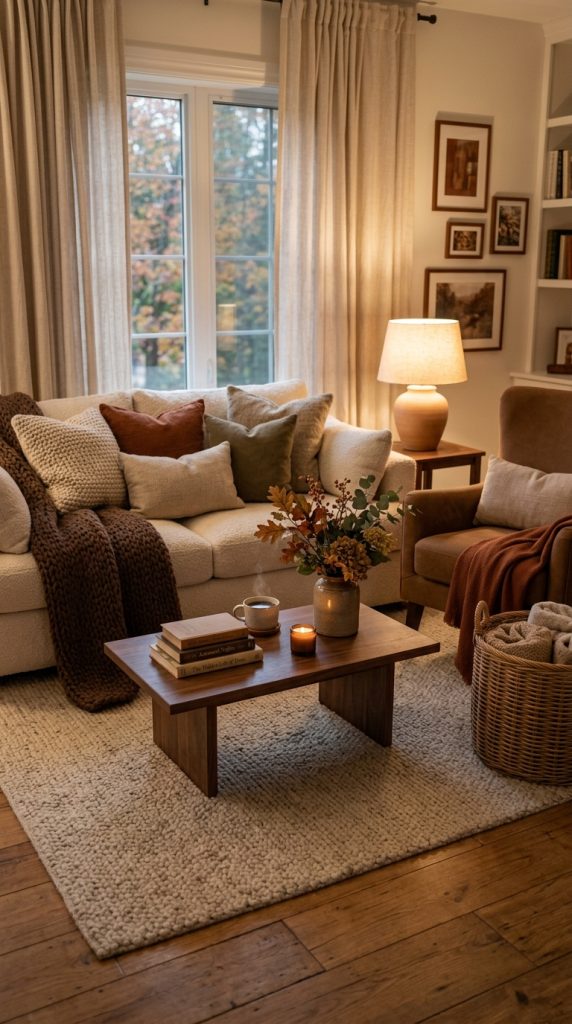
Start with the seating.
Add one substantial throw to the sofa.
Then introduce pillows in different textures.
Instead of choosing five seasonal pillows covered in obvious autumn designs, use timeless colors.
Try:
- cream
- chocolate
- caramel
- muted rust
- olive
- burgundy
These colors can remain useful beyond fall.
Next, focus on the coffee table.
A collected coffee table should not look like a seasonal display.
Start with a tray.
Add a stack of books.
Place a ceramic bowl or vase on top.
Introduce one seasonal botanical element such as dried branches, seed pods, or muted foliage.
Leave plenty of empty space.
Negative space is important.
It gives the eye somewhere to rest and prevents the room from feeling overloaded.
Make the seating arrangement feel intimate
Fall is a social season, so arrange furniture to encourage conversation.
If possible, angle accent chairs toward the sofa rather than pointing everything directly toward a television.
Place a small side table between seating areas.
Add a lamp within reach.
The goal is to create small destinations inside the room.
One chair can become a reading corner.
One sofa section can become the cozy movie-watching area.
A coffee table can become the place for evening tea.
This connects decorating with actual daily life.
Current fall design guidance increasingly focuses on creating rooms around comfort, rituals, and meaningful use rather than simply decorating for appearance.
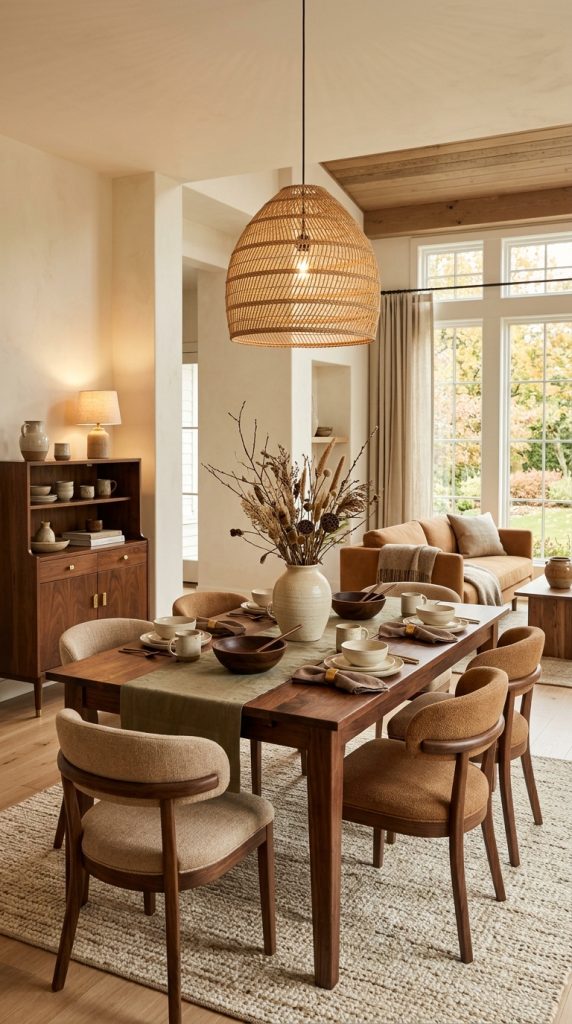
7. Style the Dining Table With Natural Materials and Collected Objects
A fall dining table does not need an elaborate centerpiece.
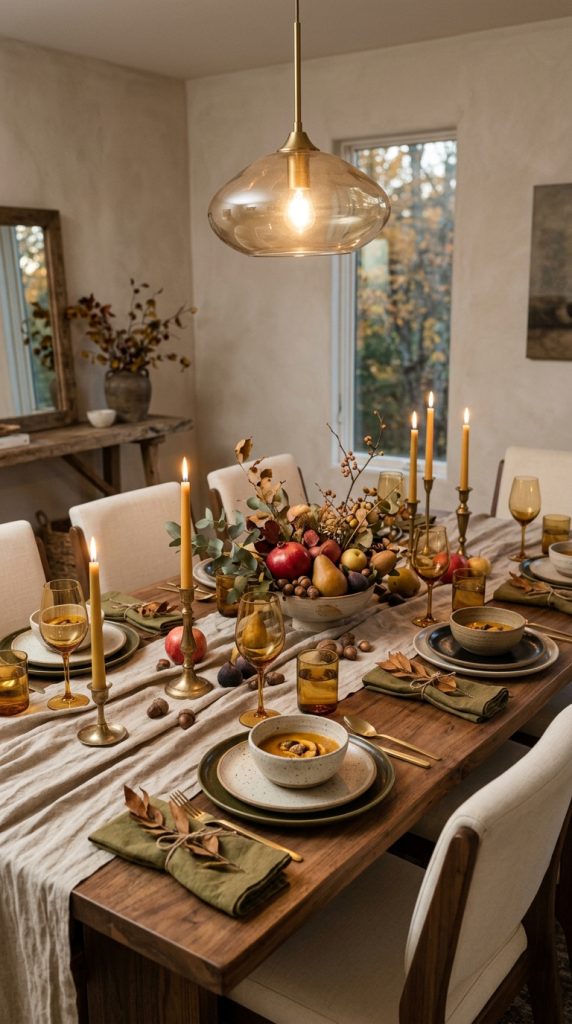
For a collected look, simplicity often creates more sophistication.
Start with a linen or cotton runner.
Choose a warm neutral shade such as oatmeal, cream, taupe, or muted brown.
Then add natural materials.
A wooden bowl filled with seasonal fruit can become the centerpiece.
Try:
- pears
- apples
- figs
- pomegranates
- grapes
- walnuts
You can also use dried foliage or branches.
Place them in a ceramic or stoneware vase.
Then introduce a few candles.
The important thing is to vary heights.
For example:
- low fruit bowl
- medium ceramic vessel
- tall branches
- small candlelight around the base
This creates a layered composition without filling the entire table.
Use imperfect pieces
Collected tables look beautiful when every item does not appear identical.
Mix:
- ceramic plates
- vintage-style glasses
- linen napkins
- wooden serving boards
- aged-brass utensils
- handmade-looking pottery
The slight differences make the table feel personal.
For a modern home, keep the color palette controlled.
Cream, warm brown, amber, olive, and muted burgundy can create an elegant autumn palette without becoming overly traditional.
8. Give the Bedroom a Soft, Layered Autumn Makeover
The bedroom should feel quieter than the living room.
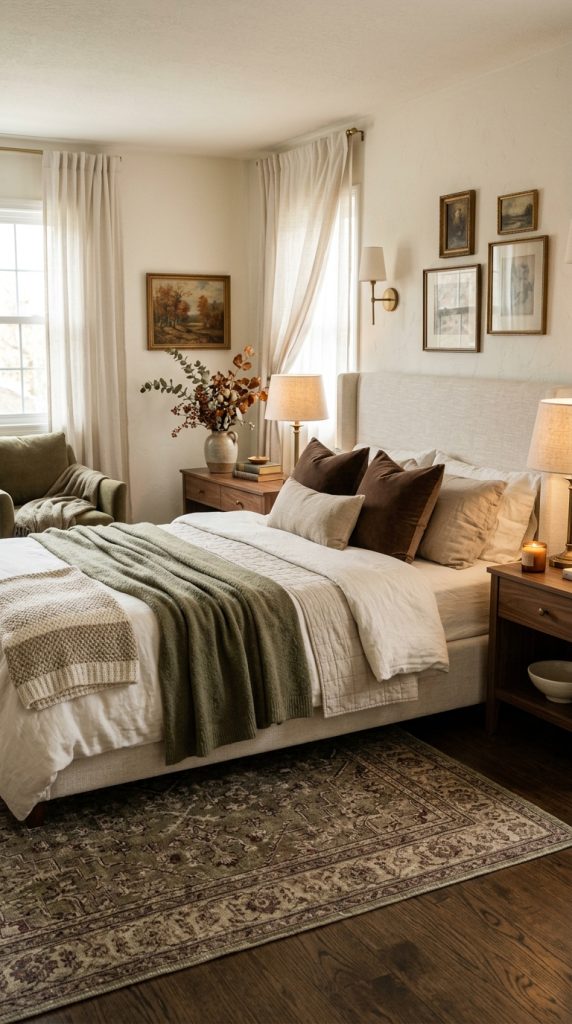
Instead of adding many seasonal objects, concentrate on texture and atmosphere.
Begin with the bed.
Use neutral bedding as your foundation.
Then add:
- a heavier quilt
- a textured blanket
- velvet or woven cushions
- a lumbar pillow
- a soft throw folded near the foot
Keep the color palette calm.
Cream, oatmeal, taupe, warm brown, muted olive, and dusty burgundy work beautifully together.
Add warmth through the bedside area
Place a warm table lamp on each nightstand if the room allows.
Choose shades that diffuse light rather than producing harsh brightness.
Add one or two personal objects.
A book.
A small ceramic vase.
A framed photograph.
A simple candle.
Avoid filling the nightstand with decorative objects because the bedroom should remain visually peaceful.
Make the floor feel warmer
A rug can make a significant difference.
If you already have a large rug, layer a smaller textured rug beside the bed.
This can introduce another material without changing the entire room.
Wool, woven fibers, vintage-style patterns, and muted earthy colors work particularly well.
Add natural elements
One vase of dried branches can create a beautiful seasonal moment.
Place it where it does not interfere with movement.
The bedroom should feel restful first and autumnal second.
9. Create Small Seasonal Moments Instead of Decorating Every Surface
One of the biggest mistakes in seasonal decorating is assuming every empty surface needs something.
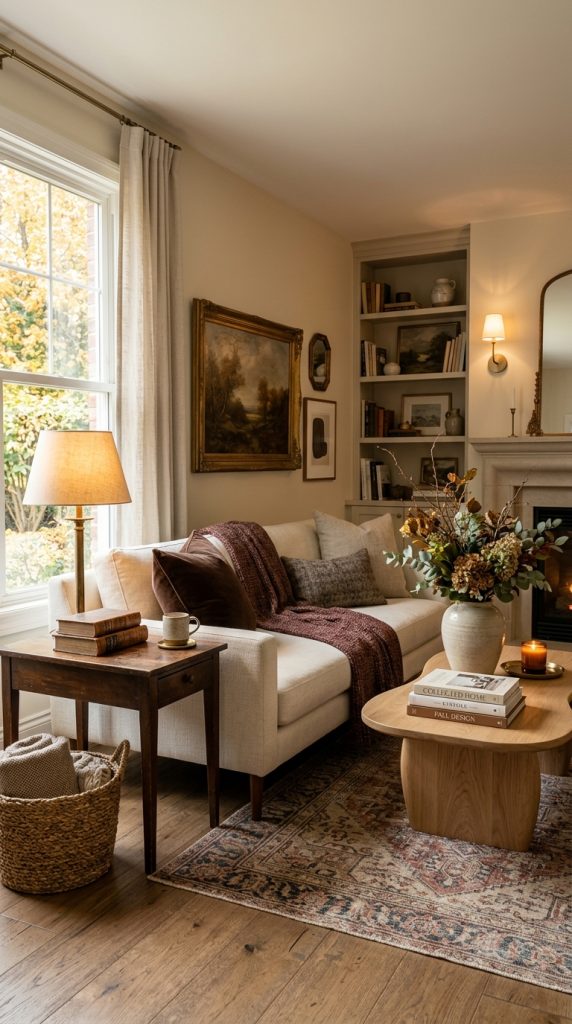
It does not.
Collected interiors need breathing room.
Instead of decorating every shelf, choose several intentional zones.
For example:
Entryway: one seasonal arrangement
Living room: textured cushions and a throw
Coffee table: one botanical arrangement
Dining room: simple seasonal centerpiece
Bedroom: richer bedding
Kitchen: one wooden tray with seasonal objects
This creates continuity without repetition.
You can also create a small “fall corner.”
A reading chair beside a floor lamp.
A small wooden table.
A stack of books.
A ceramic mug.
One soft throw.
One vase with branches.
That is enough.
The corner becomes an experience rather than merely a decorative arrangement.
Current fall decorating coverage is moving toward subtle seasonal shifts through color, texture, botanicals, lighting, and meaningful everyday objects rather than relying exclusively on traditional seasonal decorations.
Use seasonal objects selectively
If you love pumpkins, there is nothing wrong with using them.
The collected approach simply suggests editing them.
Instead of placing pumpkins everywhere, use one or two beautiful pieces.
A stone-colored ceramic pumpkin on a bookshelf can be more sophisticated than a dozen brightly colored decorations.
The same principle applies to autumn signs and seasonal typography.
Choose only pieces that genuinely fit your home’s existing style.
10. Connect the Whole Home With a Consistent Fall Story
The final step is to make the rooms feel connected.
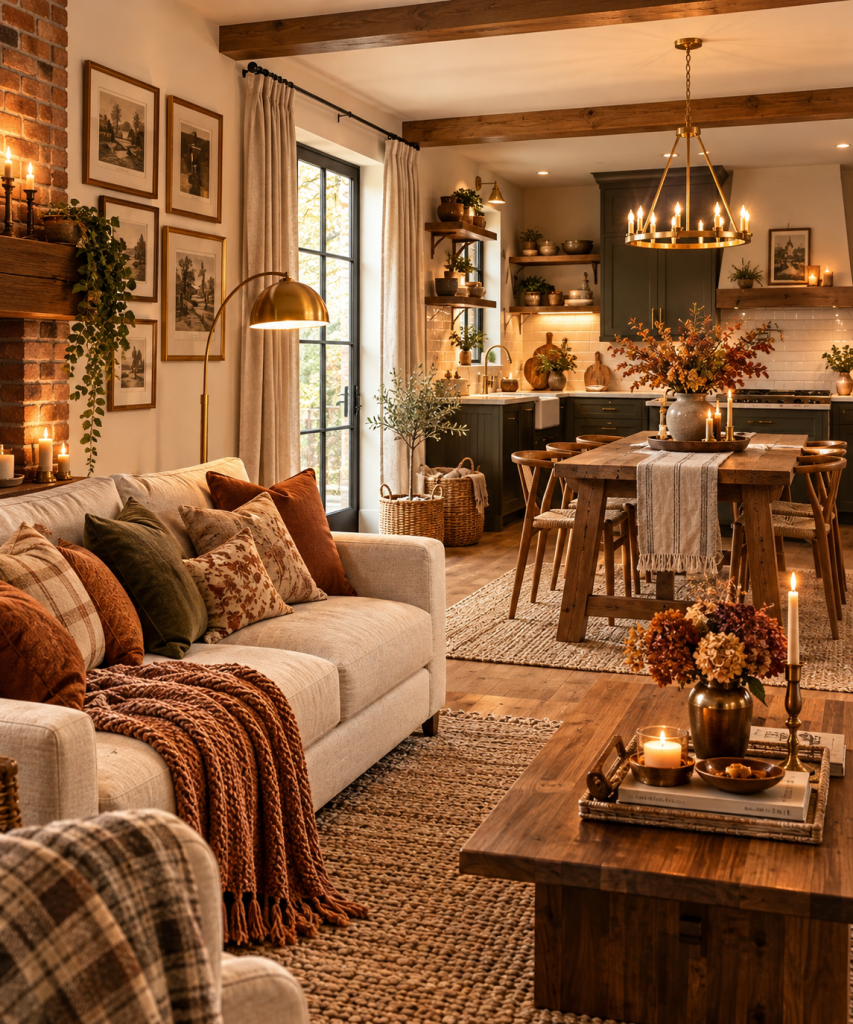
Your home does not need to look identical from room to room.
But it should share a visual language.
Choose a small group of colors and materials and allow them to appear in different ways.
For example:
Colors:
- cream
- chocolate brown
- muted rust
- olive
- burgundy
Materials:
- walnut
- linen
- wool
- ceramic
- aged brass
Now distribute these elements throughout the home.
The living room might use chocolate cushions and walnut furniture.
The dining room might use rust napkins and ceramic vessels.
The bedroom might use an olive throw and warm wood.
The entryway might feature an antique brass mirror.
The kitchen might contain a wooden cutting board and cream ceramics.
Nothing is identical.
Everything feels connected.
This is the foundation of a collected home.
Use repetition without duplication
There is an important difference between repeating an element and repeating an object.
You can repeat warm brass without using the same brass lamp in every room.
You can repeat olive green through artwork, cushions, ceramics, and foliage.
You can repeat wood through furniture, trays, frames, and bowls.
This creates rhythm.
The eye recognizes the connection even when the objects themselves are different.
How to Make Collected Fall Decor Look Expensive
A collected home does not have to be expensive.
The most important factor is editing.
Expensive-looking interiors generally have a sense of restraint.
Instead of twenty small accessories, choose five meaningful ones.
Instead of six different colors, establish a controlled palette.
Instead of decorating every wall, allow some walls to remain quiet.
Instead of purchasing a complete seasonal collection, invest in a few pieces that can work year after year.
Focus on materials
A simple ceramic vase can look more sophisticated than an elaborate plastic decoration.
A linen cushion can feel more luxurious than a heavily printed seasonal pillow.
A wooden bowl can become a beautiful centerpiece without requiring expensive flowers.
A warm brass lamp can transform a room more effectively than several small decorative objects.
Choose larger visual moments
One large branch arrangement can have more impact than multiple tiny arrangements.
One substantial artwork can anchor a wall.
One beautiful rug can define a seating area.
One sculptural lamp can become a focal point.
This creates stronger visual hierarchy.
Collected Fall Decor Ideas for a Small Home
Small spaces can benefit especially well from collected fall decorating because the approach naturally discourages clutter.
Instead of adding more furniture, use soft accessories and lighting.
Try:
- one textured throw
- two seasonal cushion covers
- one warm lamp
- one vintage frame
- one ceramic vase
- one small branch arrangement
- one woven basket
Use vertical space where possible.
A tall vase with branches can draw the eye upward.
A large mirror can reflect light.
A narrow console can provide a styling surface without taking much floor space.
Choose multifunctional pieces.
A wooden stool can serve as seating, a side table, or a plant stand.
A woven basket can hold blankets while adding texture.
A storage ottoman can function as seating and hidden storage.
The goal is to make every object useful or visually meaningful.
Ideally, it should do both.
Collected Fall Decor on a Budget
You do not need a large seasonal decorating budget.
Start by shopping your own home.
Move a wooden tray from the bedroom to the living room.
Bring a ceramic vase from the kitchen into the entryway.
Rearrange books by color.
Switch lightweight summer cushions for deeper textured covers.
Move a floor lamp closer to a reading chair.
These changes can make your home feel completely different without purchasing anything.
Shop secondhand
Thrift stores, flea markets, antique shops, and secondhand marketplaces can be excellent sources for collected pieces.
Look for:
- wooden bowls
- brass candlesticks
- frames
- baskets
- ceramic vessels
- small stools
- vintage books
- mirrors
- artwork
Do not worry about finding the “perfect” item.
Look for something with an interesting shape, material, or finish.
DIY simple seasonal pieces
You can also create fall decor yourself.
Fill a simple vase with dried branches.
Make a table runner from textured fabric.
Paint an inexpensive frame.
Create a simple artwork using neutral colors.
Refinish a wooden tray.
The goal is not to make everything yourself.
A few handmade elements are enough to give the home personality.
How to Create a Collected Fall Entryway
The entryway sets the tone for the rest of the home.
Keep it simple.
Start with a mirror.
Add a small wooden console or floating shelf if space allows.
Place a ceramic bowl for keys.
Add one vase with branches.
Hang one coat or woven bag.
Place a small rug beneath the area.
For a stronger autumn atmosphere, use warm wood, muted olive, brown, or rust.
Lighting is important here because entryways can become dark during fall evenings.
A wall sconce or small table lamp can make the space feel welcoming.
Avoid turning the entryway into a seasonal display.
The goal is to make guests feel that the entire home is warm and inviting.
How to Create a Cozy Fall Kitchen
The kitchen can be seasonal without looking decorated.
Start with materials.
Wooden cutting boards.
Woven baskets.
Ceramic bowls.
Linen towels.
Amber glass.
Warm lighting.
These functional pieces can double as decoration.
Display a small collection of wooden boards against the backsplash.
Place a ceramic bowl of pears or apples on the island.
Use a linen towel in a warm neutral or muted rust tone.
Add a small vase of seasonal branches to an open shelf.
If you have pendant lights, make sure the lighting feels warm and comfortable in the evening.
Recent fall kitchen trend coverage also points toward softer lighting and warmer, more welcoming kitchen environments rather than purely bright functional illumination.
Fall Color Palettes for a Collected Interior
The right color palette can make collected decorating much easier.
Cream, Chocolate Brown, and Olive
This combination feels sophisticated and grounded.
Use cream as the foundation, chocolate brown through furniture or textiles, and olive as a subtle accent.
Oatmeal, Rust, and Walnut
This is a warm and inviting palette.
Use oatmeal upholstery, walnut furniture, and muted rust textiles.
Beige, Burgundy, and Brass
This combination creates a slightly more elegant atmosphere.
Use burgundy sparingly so it becomes an accent rather than the dominant color.
Taupe, Caramel, and Olive
This works particularly well for modern homes.
The palette is warm without being strongly traditional.
Cream, Charcoal, and Tobacco
For a more contemporary fall interior, combine soft cream with charcoal and warm tobacco.
The contrast creates depth while maintaining sophistication.
Common Mistakes to Avoid With Collected Fall Decor
Collected does not mean chaotic.
There is a difference between a layered room and a cluttered room.
Using too many seasonal colors
If you combine orange, red, yellow, green, purple, brown, and burgundy, the room may lose cohesion.
Choose a small palette.
Buying matching seasonal accessories
Matching decorations can make a home feel temporary and themed.
Mix different materials and styles instead.
Decorating every surface
Empty space is part of the design.
Leave some shelves, tables, and countertops intentionally quiet.
Using too many tiny objects
Small objects can create visual noise.
Combine smaller pieces with larger anchors.
Ignoring lighting
Even a beautifully decorated room can feel cold if it is illuminated by one harsh overhead fixture.
Use multiple warm light sources.
Forgetting comfort
A fall room should not only photograph beautifully.
It should be comfortable.
Keep throws accessible.
Make seating practical.
Place lamps where they can actually be used.
Create areas where people naturally want to sit.
A Simple Formula for a Collected Fall Room
If you are unsure where to begin, use this formula:
One warm color + one natural material + one rich texture + one vintage element + one warm light source + one seasonal detail.
For example:
Chocolate brown + walnut + velvet + antique frame + table lamp + dried branches.
That is enough to create a fall atmosphere.
You can then add layers gradually.
If the room still feels flat, add texture.
If it feels cold, improve the lighting.
If it feels too neutral, introduce one deeper color.
If it feels too modern, add one vintage piece.
If it feels cluttered, remove three objects.
This approach makes decorating much easier because every addition has a purpose.
How to Transition From Summer to Fall Without Redecorating Everything
One of the smartest ways to decorate seasonally is to make small transitions rather than complete changes.
Keep your major furniture.
Keep your artwork.
Keep your main rug.
Keep your foundational colors.
Change:
- lightweight throws
- cushion covers
- bedding layers
- table linens
- decorative branches
- candles
- small ceramics
- lighting atmosphere
This saves money and storage space.
It also allows your home to feel naturally seasonal.
You are not creating an entirely different house.
You are simply changing its temperature and mood.
That is what makes collected fall decorating so practical.
How to Make Your Fall Home Feel Cozy Without Looking Cluttered
The secret is editing after layering.
Add the pieces you think the room needs.
Then step back.
Look at the room from the doorway.
Ask:
Does the eye have one obvious focal point?
Are there too many small objects?
Do the colors repeat naturally?
Are there enough empty spaces?
Does the lighting create depth?
Can people move comfortably?
Are the seasonal decorations supporting the room rather than dominating it?
If the answer to the last question is no, remove something.
A beautiful fall interior should feel like a home first and a seasonal space second.
Why Collected Fall Decorating Works So Well for 2026
The current Fall 2026 design conversation is moving toward interiors that feel warmer, more layered, more personal, and less dependent on short-lived seasonal styling. ELLE’s fall trend reporting describes a move toward intentional layering and richer colors, while Houzz identifies warmth, natural materials, earthy colors, multiple textures, and collected interiors as significant directions.
That makes the collected approach particularly useful because it combines seasonal atmosphere with long-term design.
A walnut table does not stop being useful after November.
A wool throw can remain on the sofa through winter.
A ceramic vase can be used all year.
A vintage mirror works in every season.
A warm lamp is useful every evening.
This is the difference between seasonal decorating and seasonal atmosphere.
Seasonal decorating depends heavily on objects.
Seasonal atmosphere depends on color, material, lighting, comfort, and mood.
The second approach is usually easier to maintain and more adaptable.
Final Thoughts
Collected fall home decor is about creating a home that feels warm, personal, layered, and comfortable rather than simply filling rooms with seasonal decorations.
The most successful fall interiors do not necessarily contain the most autumn accessories.
They contain the right combination of elements.
Warm wood gives the room depth.
Textiles add softness.
Earthy colors introduce seasonal richness.
Vintage pieces add personality.
Natural materials create connection with the outdoors.
Layered lighting changes the atmosphere after sunset.
A few seasonal details complete the story.
Start small.
Choose one room.
Begin with texture.
Introduce one deeper color.
Add warm lighting.
Bring in one vintage or handmade element.
Then step back and edit.
You do not need to buy an entirely new collection of fall decor.
You simply need to make your existing home feel a little warmer, richer, softer, and more inviting.
That is the beauty of a collected fall interior: it feels decorated, but never overdecorated; cozy, but never cluttered; seasonal, but never temporary.
Leave a Reply