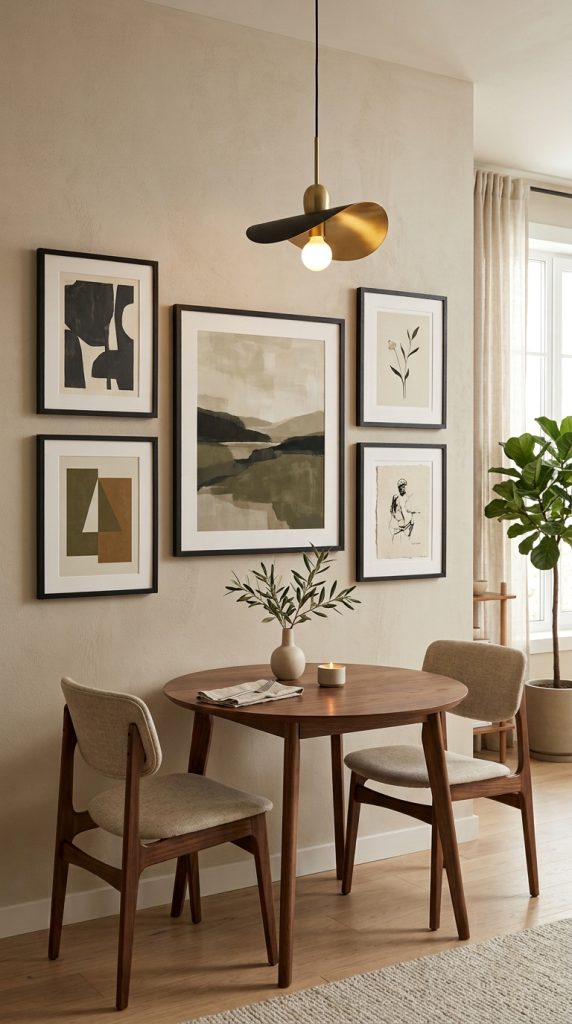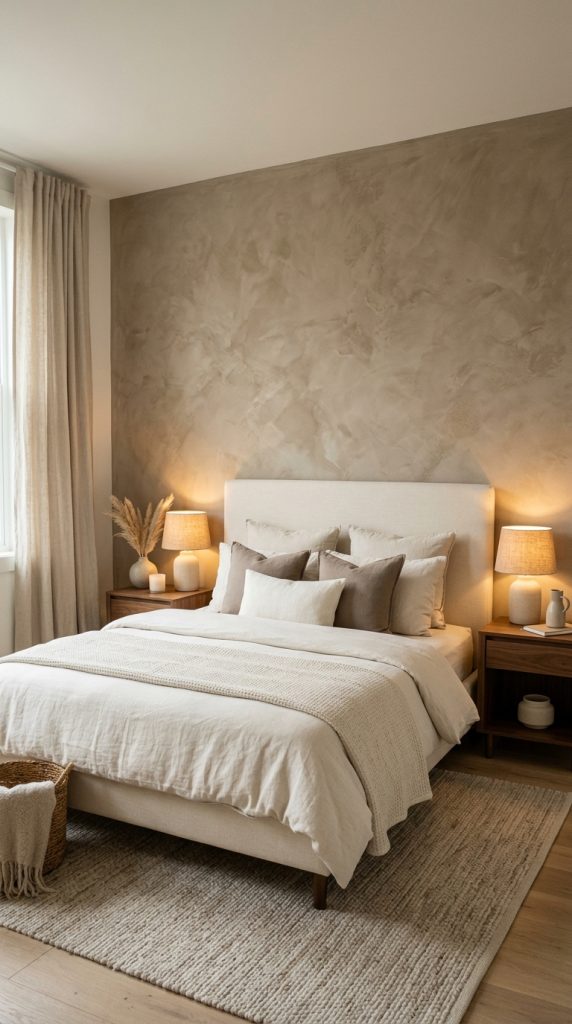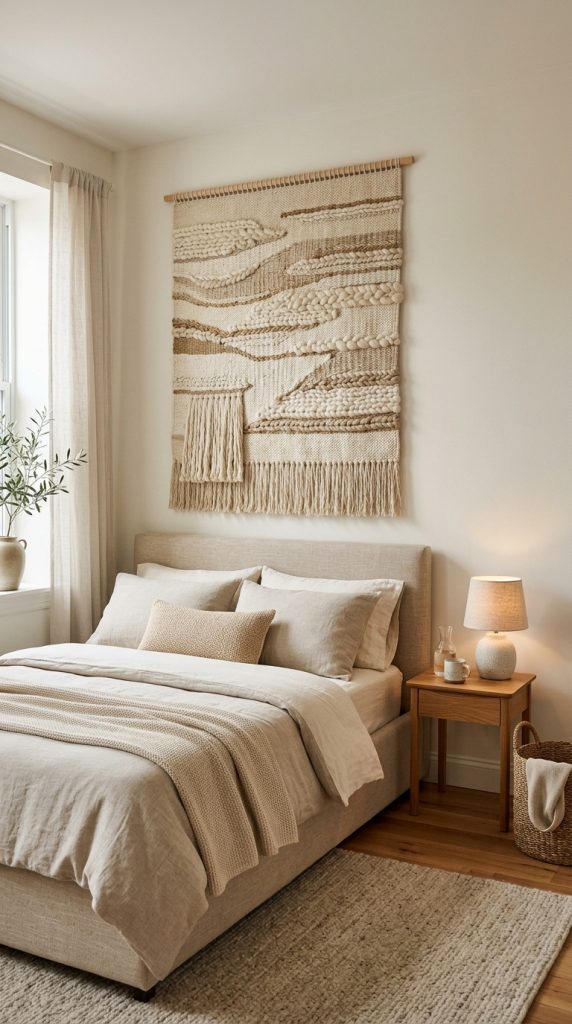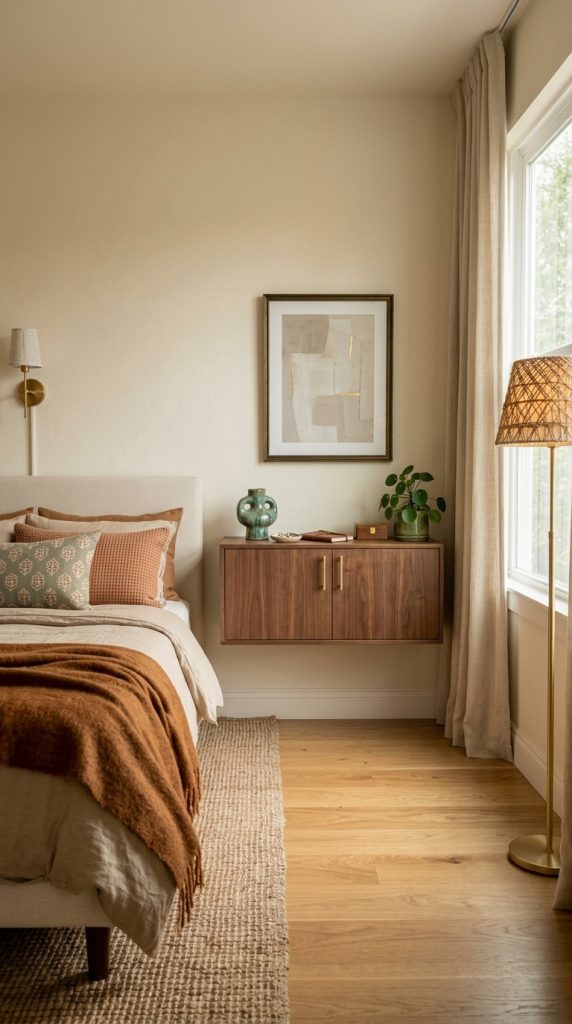
Category: Uncategorized

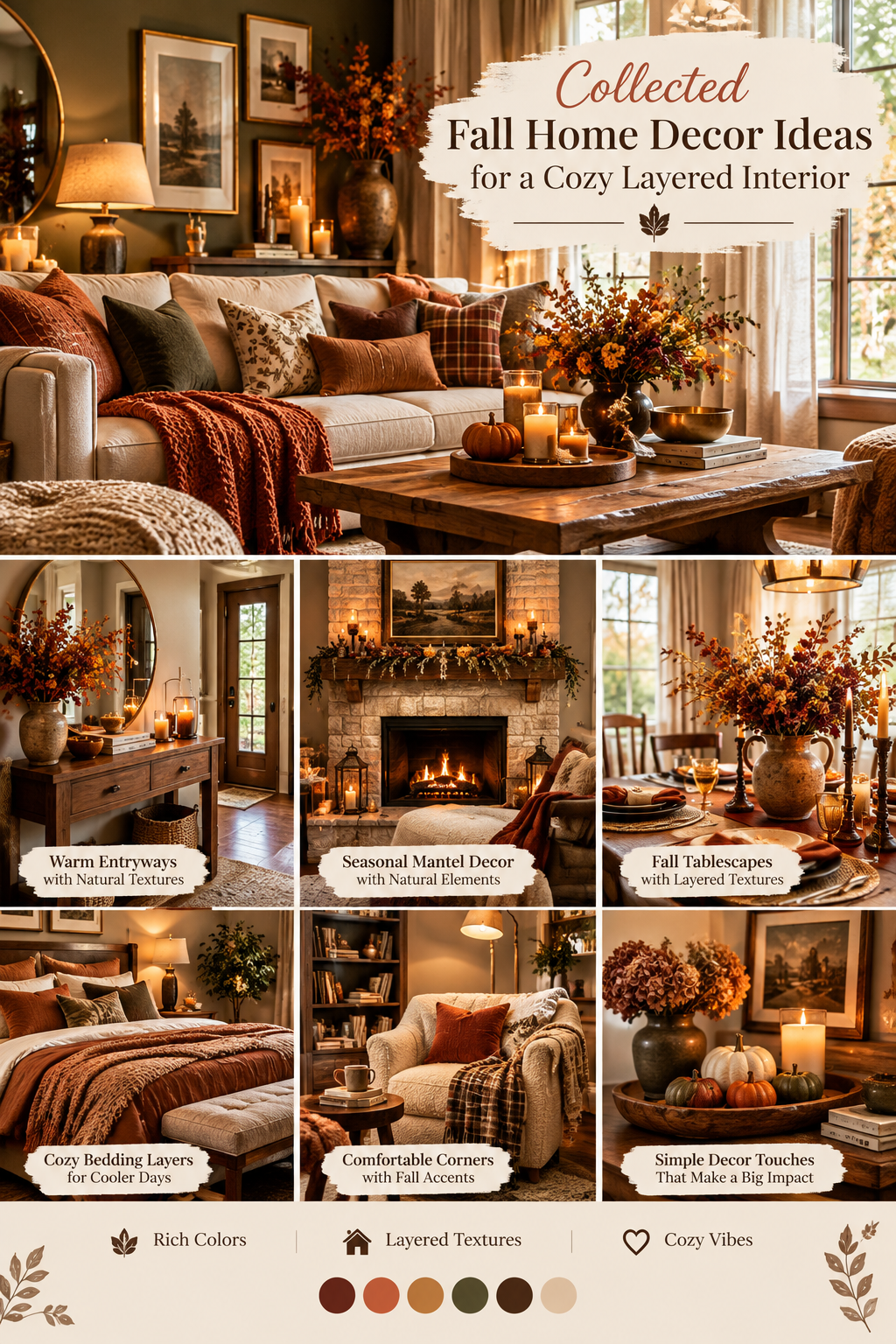
  • Collected Fall Home Decor Ideas for a Cozy Layered Interior

    Collected Fall Home Decor Ideas for a Cozy Layered Interior

    Fall has a way of changing how we want our homes to feel. As the days become shorter and evenings invite us to stay indoors longer, bright and lightweight summer interiors can suddenly feel a little too bare. We begin craving softer fabrics, warmer lighting, deeper colors, natural materials, comfortable seating, and rooms that feel welcoming rather than perfectly styled.
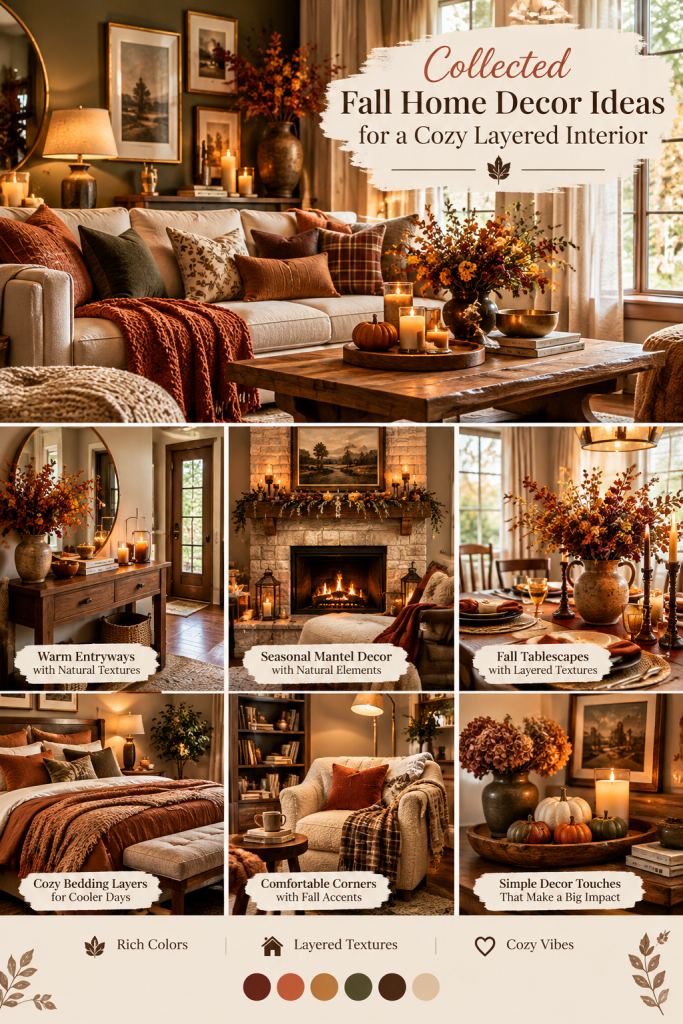
    That is exactly why collected fall home decor is such a beautiful approach for the season.

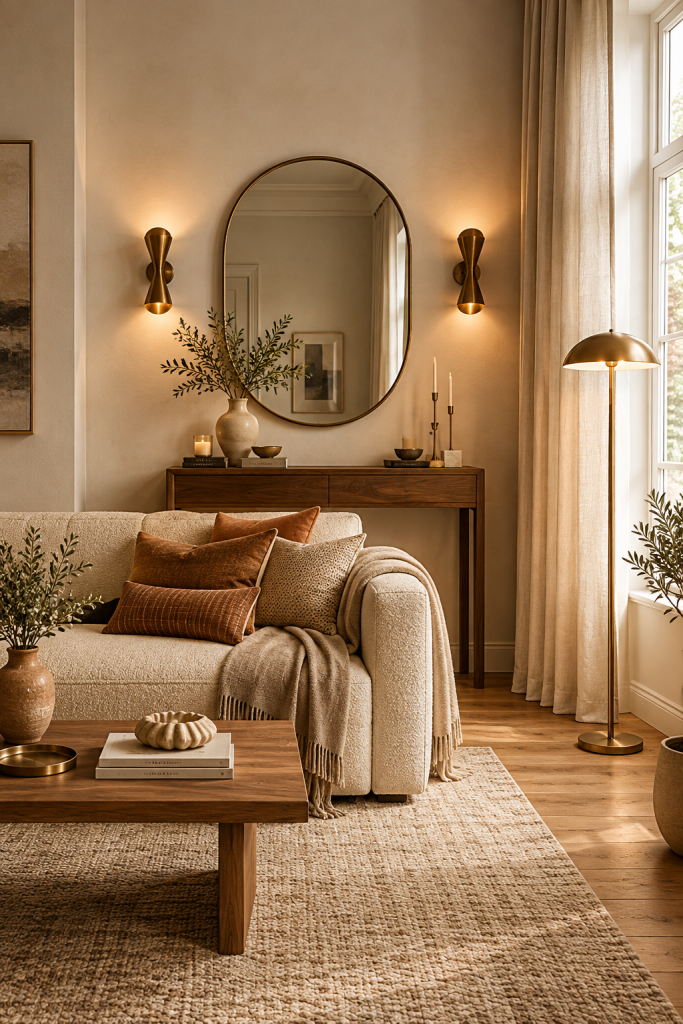
    Instead of transforming your home into a themed autumn display, collected decorating focuses on creating a room that looks as though it has developed naturally over time. A beautiful vintage vase can sit beside a modern lamp. A textured throw can be casually draped across a neutral sofa. Warm wood can balance cream upholstery. A few branches can bring the outdoors inside without making the room feel overly seasonal.

    For Fall 2026, this layered and personal direction is especially relevant. Current design reporting points toward warmer palettes, earthy colors, richer textures, warm woods, natural materials, softer metals, and interiors that feel collected rather than perfectly coordinated. Designers are also emphasizing layering rather than complete room makeovers, meaning you can keep the foundation of your home and change its atmosphere with textiles, lighting, color, and carefully selected seasonal details.

    The idea is simple: your home does not need more decorations; it needs more depth.

    Depth can come from a wool rug beneath a coffee table, linen curtains filtering late-afternoon light, a chocolate-brown cushion against a cream sofa, an antique frame leaning on a shelf, or a warm lamp creating a pool of light in an otherwise quiet corner.

    This approach is also much easier to maintain than completely redecorating every season. Instead of purchasing an entirely new collection of fall accessories, you can build around pieces you already own and introduce a handful of seasonal changes. A neutral sofa can stay exactly where it is. Your existing dining table can become autumnal with a linen runner and amber glassware. Your bedroom can feel warmer simply by changing the bedding layers and introducing deeper colors.

    The result should feel cozy without being cluttered, seasonal without being themed, elegant without being overly formal, and personal without looking disorganized.

    In this guide, you will find ten collected fall home decor ideas that can be adapted to living rooms, bedrooms, dining spaces, kitchens, entryways, and small homes. Each idea focuses on a different decorating layer so that you can build your autumn interior gradually and intentionally.

    What Is Collected Fall Home Decor?

    Collected fall home decor is an approach to seasonal decorating that combines different textures, materials, colors, furniture styles, vintage-inspired pieces, personal objects, and subtle autumn accents to create a home that feels naturally assembled over time.

    Rather than buying matching seasonal decorations, collected interiors mix old and new.

    You might have a modern cream sofa, a vintage wooden side table, a contemporary brass lamp, an antique-looking mirror, and handmade ceramic accessories all within the same room. They do not need to match perfectly because their differences create character.

    For fall, the collected approach becomes especially beautiful because autumn naturally lends itself to warm materials and imperfect textures.

    Think:

    • warm walnut and oak
    • linen and wool
    • velvet and boucle
    • aged brass
    • antique bronze
    • ceramic
    • stone
    • woven baskets
    • dried branches
    • vintage artwork
    • old books
    • amber glass
    • muted earthy colors
    • soft candlelight
    • layered rugs
    • comfortable throws

    Current Fall 2026 design coverage describes this movement toward interiors that are warmer, more layered, more personal, and less dependent on obvious seasonal decorations. Houzz’s 2026 U.S. fall trends report specifically highlights warm wood tones, earthy colors, multiple textures, natural materials, and collected interiors with character and personal storytelling.

    That means collected fall decorating does not require you to cover every surface with pumpkins, leaves, signs, or orange accessories.

    Instead, the season can be communicated through atmosphere.

    A darker wood tone makes a room feel grounded.

    A wool throw adds visual and physical warmth.

    A few branches introduce an organic seasonal reference.

    A warmer light source changes the mood after sunset.

    A deeper accent color gives a neutral room autumnal richness.

    When these elements work together, the room feels like fall without needing to announce it.

    1. Build a Warm Neutral Foundation With Rich Autumn Layers

    The easiest way to create a collected fall interior is to begin with a calm neutral foundation and gradually build warmth on top.
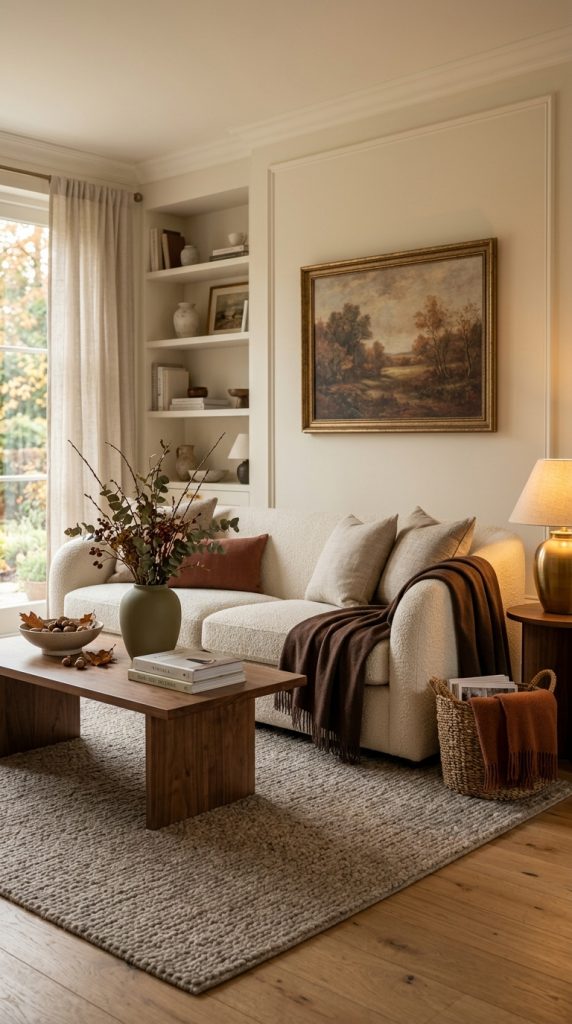
    Cream, ivory, warm beige, taupe, mushroom, oatmeal, soft greige, and natural linen make excellent foundational colors because they allow seasonal accents to stand out without overwhelming the room.

    Once the foundation is established, introduce deeper colors in smaller quantities.

    Chocolate brown, tobacco, caramel, muted rust, olive green, burgundy, terracotta, and warm charcoal can create the visual depth associated with autumn.

    The key is not to use every fall color at once.

    Choose two or three deeper tones and repeat them throughout the room.

    For example, imagine a cream living room with a neutral sofa. Instead of replacing the sofa, add two chocolate-brown cushions, one muted rust throw, and a small olive ceramic vase. Repeat the brown in a wooden coffee table and perhaps in one framed artwork.

    The room immediately feels warmer.

    This is more sophisticated than placing orange decorations randomly around the room because the color story has a relationship.

    A collected room should feel connected from one corner to another.

    You can also use the 60-30-10 approach as a loose guide without treating it as a strict decorating rule. Let approximately 60 percent of the room remain within your foundational neutral palette, around 30 percent come from warm secondary materials and tones, and use the remaining accents for richer autumn colors.

    For example:

    Foundation: cream walls, beige sofa, oatmeal rug

    Secondary layer: walnut furniture, tan leather, warm linen

    Accent layer: burgundy cushion, rust throw, olive ceramic vase

    This approach is particularly useful if you already have a neutral home and do not want to make expensive changes.

    How to make this look collected

    Avoid purchasing every accessory from the same collection.

    Instead, combine:

    • one vintage-style frame
    • one modern ceramic vessel
    • one woven basket
    • one antique-inspired brass object
    • a few books
    • a textile with visible texture
    • one seasonal botanical element

    The small differences make the room feel authentic.

    Current fall trend reporting also points toward richer earthy palettes, including tobacco, terracotta, moss, and other warm tones that create a cocooning atmosphere.

    Budget-friendly version

    You do not need to buy new furniture.

    Start with your existing neutral pieces and change only the soft accessories. Pillow covers, throws, candles, small vases, and table textiles can dramatically change the atmosphere while taking up very little storage space after the season.

    2. Layer Textures Instead of Filling the Room With Decorations

    Texture may be the most important ingredient in a cozy fall interior.
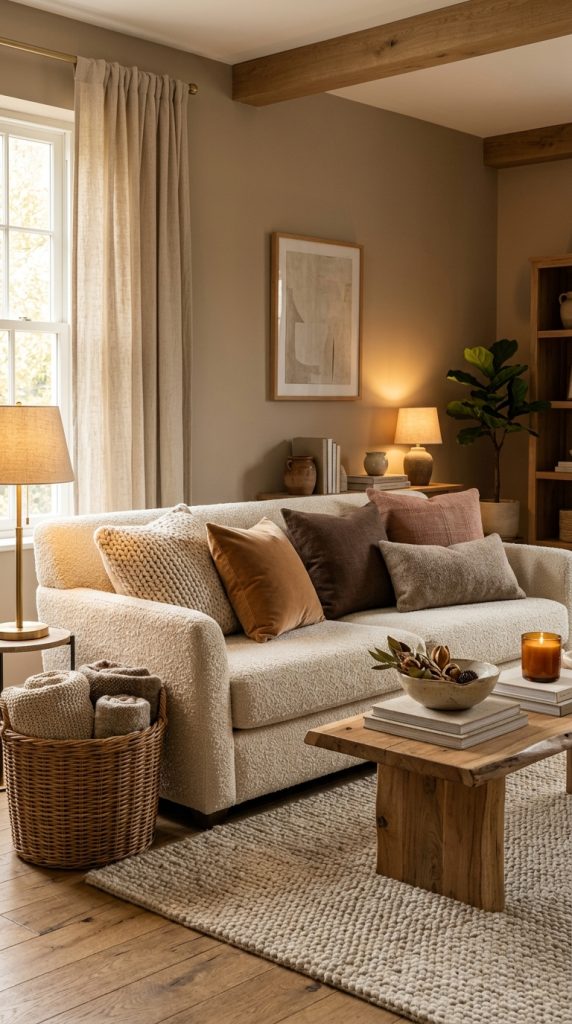
    If you want your home to feel warmer without making it visually crowded, add texture before adding more objects.

    A room containing a cream sofa, smooth coffee table, plain rug, and simple curtains can feel visually flat even when it is beautifully decorated.

    Now imagine the same room with:

    • a chunky knitted throw
    • a velvet cushion
    • a woven basket
    • a wool rug
    • linen curtains
    • a ceramic vase
    • a lightly textured wall
    • natural wood furniture

    Nothing has necessarily been added in large quantities, yet the room feels much richer.

    This is the difference between decoration and layering.

    Decoration adds objects.

    Layering adds differences in touch, surface, weight, color, and visual depth.

    For fall, consider introducing three major texture categories.

    The first is soft texture.

    Use wool, boucle, velvet, cotton, brushed linen, chunky knits, and plush bedding.

    The second is natural texture.

    Use wood, rattan, woven baskets, stone, ceramic, jute, dried branches, and natural fibers.

    The third is subtle reflective texture.

    Use aged brass, bronze, amber glass, or slightly reflective ceramics.

    Combining these creates a room that looks interesting from different angles.

    Current Fall 2026 reporting emphasizes tactile fabrics, richer materials, and multiple textures as part of the shift toward warmer, more character-filled interiors.

    Layering a sofa

    Start with the sofa itself.

    Place one substantial throw over one side rather than covering the entire piece.

    Add two or three cushions in different materials.

    For example:

    • cream linen
    • chocolate velvet
    • rust woven fabric

    Avoid making every pillow patterned.

    A combination of solids and subtle patterns generally feels more sophisticated.

    Layering a bedroom

    In a bedroom, texture can be introduced through bedding.

    Begin with neutral sheets.

    Add a quilt or coverlet.

    Fold a heavier blanket at the bottom of the bed.

    Finish with two or three decorative pillows.

    Then introduce a textured rug beneath or beside the bed.

    The room will feel significantly more inviting without needing a large number of seasonal accessories.

    3. Use Warm Lighting to Create an Autumn Evening Atmosphere

    Fall decorating is not only about what your home looks like during the day.
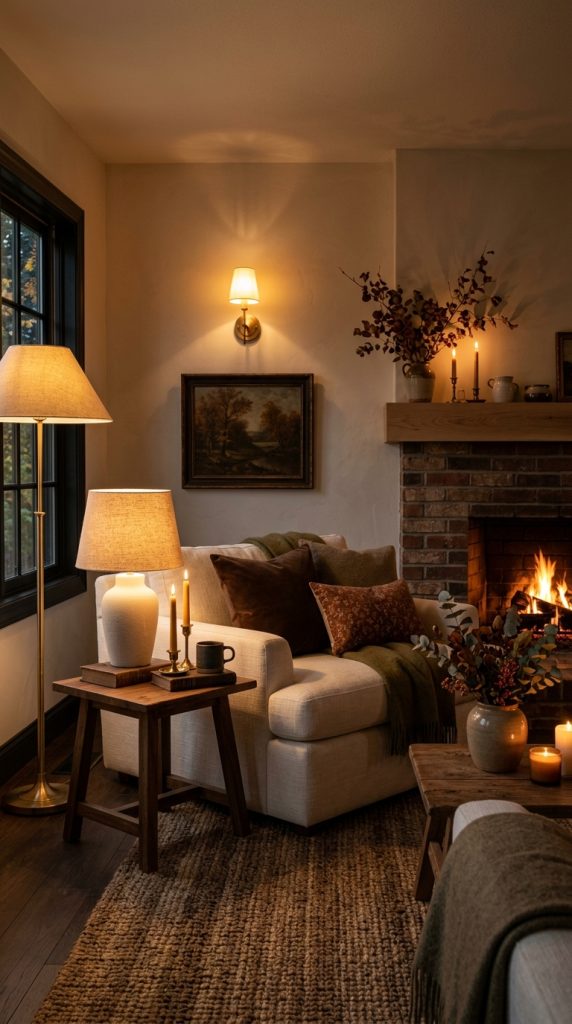
    It is also about how the room feels after sunset.

    As daylight becomes shorter, lighting becomes an important part of the seasonal atmosphere. Recent fall design coverage specifically highlights the importance of softer lamps, layered lighting, and warmer evening environments.

    Instead of depending on one bright ceiling fixture, create several smaller pools of light.

    Use:

    • table lamps
    • floor lamps
    • wall sconces
    • picture lights
    • pendant lighting
    • candles
    • lanterns
    • small portable lamps

    The goal is not to make every corner equally bright.

    The goal is to create layers of illumination.

    A living room might have a floor lamp beside the sofa, a table lamp on a console, a small lamp on a side table, and a few candles on the coffee table.

    This creates visual depth.

    Use lighting as decoration

    A beautiful lamp can function as both a practical object and a decorative feature.

    Choose lamps with:

    • ceramic bases
    • linen shades
    • aged brass
    • antique bronze
    • textured glass
    • sculptural silhouettes
    • warm wood

    A lamp with an interesting shape can become part of the collected look.

    Create candlelight carefully

    Candles can add an unmistakable fall atmosphere.

    Instead of placing ten identical candles across one surface, vary height and shape.

    Try a combination of:

    • one pillar candle
    • two slim taper candles
    • one small glass votive

    Keep the arrangement restrained.

    Current 2026 fall decorating coverage also discusses โ€œcandlescaping,โ€ where candlelight and scent are intentionally layered as part of the home’s atmosphere. Experts recommend editing the number of fragrances and combining candle forms and heights rather than overwhelming the space.

    If you use scented candles, choose a cohesive fragrance family rather than several competing scents.

    Woody, amber, sandalwood, cedar, vanilla, fig, or subtle spice can work beautifully for autumn.

    4. Bring in Warm Wood for a Collected, Grounded Look

    Warm wood is one of the easiest ways to make a home feel richer for fall.
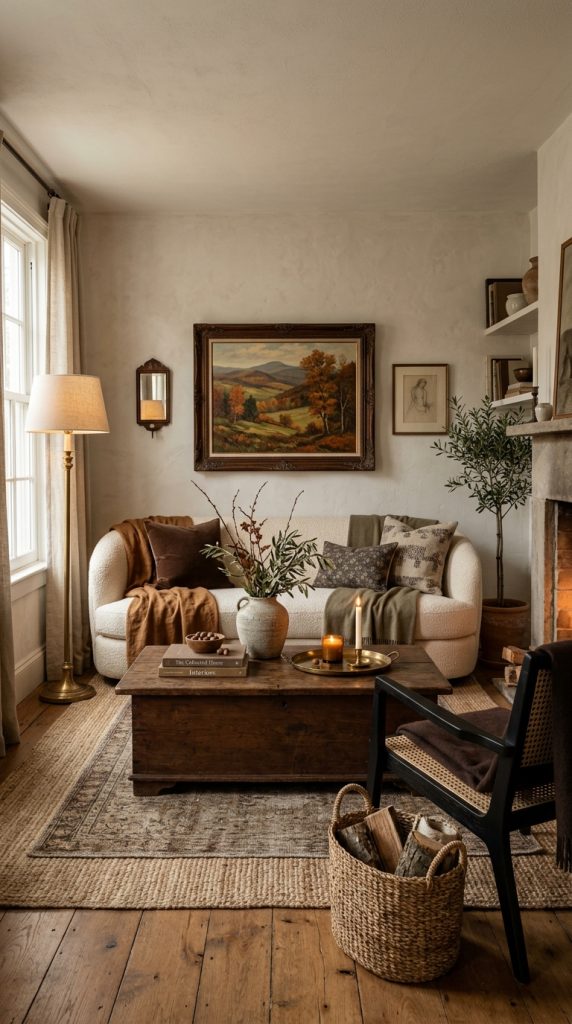
    If your room currently has mostly light or painted furniture, introducing one or two darker wood elements can create beautiful contrast.

    Think:

    • walnut coffee tables
    • oak side tables
    • dark wood frames
    • wooden trays
    • carved stools
    • vintage cabinets
    • wood bowls
    • antique wooden boxes
    • natural wood picture frames

    You do not need to replace your furniture.

    Even small wood accessories can shift the visual temperature of a room.

    For example, a cream sofa paired with a walnut coffee table instantly feels warmer than the same sofa paired with a glossy white table.

    The same principle works in bedrooms.

    A neutral upholstered bed becomes richer when paired with walnut nightstands.

    In dining rooms, a wooden table can become the foundation for an autumn tablescape.

    In kitchens, wooden cutting boards, stools, trays, and open shelving can introduce warmth without changing the cabinetry.

    Current 2026 fall design reporting repeatedly highlights warm woods and richer wood stains as part of the move toward warmer, more grounded interiors.

    Mix wood tones carefully

    Collected interiors do not require every wood tone to match.

    In fact, slightly different woods can create character.

    However, they should share a similar temperature.

    Warm walnut can work with warm oak.

    Honey oak can work with natural medium wood.

    Very orange wood mixed with cool gray wood may feel less cohesive.

    Use rugs, upholstery, artwork, and accessories to visually connect different wood finishes.

    5. Add Vintage and Thrifted Pieces for a True Collected Feeling

    If you want your fall interior to feel genuinely collected, include something that does not look brand new.
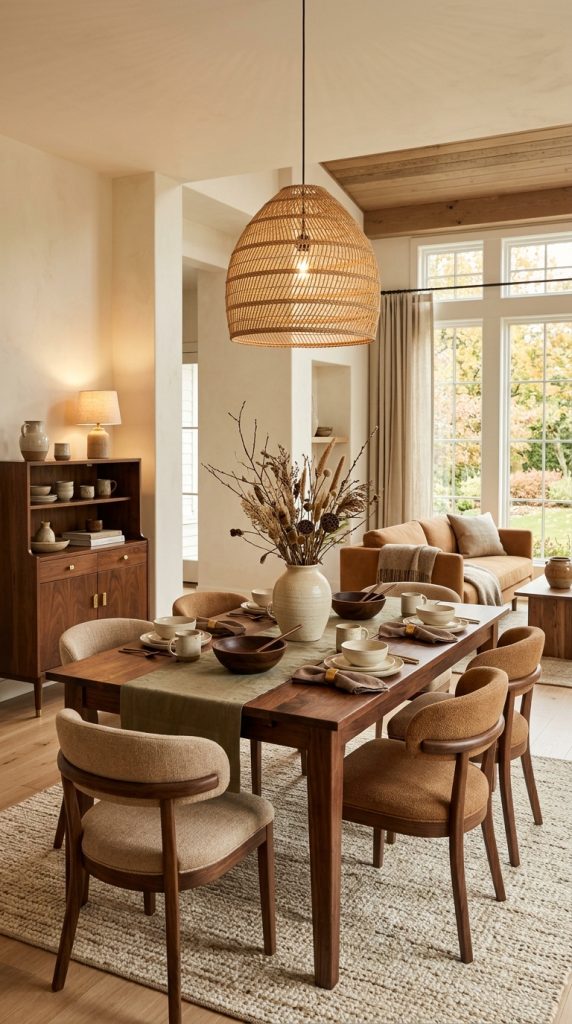
    This could be:

    • an antique-looking mirror
    • a thrifted wooden stool
    • an old picture frame
    • vintage books
    • a secondhand ceramic vase
    • an old brass candlestick
    • a traditional landscape print
    • a small wooden cabinet
    • an inherited serving piece

    The object does not need to be valuable.

    Its purpose is to introduce history and individuality.

    A perfectly coordinated room can sometimes look like it was purchased in one afternoon.

    A collected room suggests that the homeowner has gathered things gradually.

    That is what creates personality.

    How to mix vintage with modern

    Do not turn every room into an antique shop.

    Instead, choose one or two vintage-inspired focal pieces.

    For example, a modern living room could contain:

    • contemporary cream sofa
    • modern coffee table
    • vintage landscape artwork
    • antique brass lamp
    • modern rug

    The contrast makes both styles more interesting.

    Another beautiful combination is a contemporary bedroom with one traditional wooden bench at the foot of the bed.

    The key is balance.

    If every item is vintage, the room can lose the clean, relaxed quality that makes collected decorating feel modern.

    If everything is new, the room may feel overly coordinated.

    Mixing the two creates a more natural result.

    6. Create a Cozy Fall Living Room With Layers of Comfort

    The living room is usually the easiest place to introduce collected fall decor because it already contains many of the elements needed for layering.
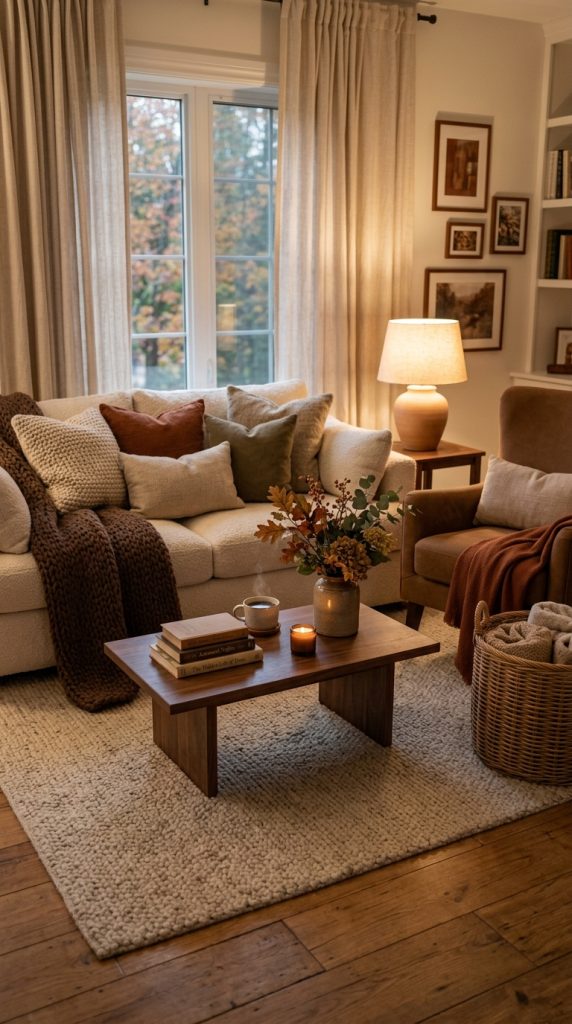
    Start with the seating.

    Add one substantial throw to the sofa.

    Then introduce pillows in different textures.

    Instead of choosing five seasonal pillows covered in obvious autumn designs, use timeless colors.

    Try:

    • cream
    • chocolate
    • caramel
    • muted rust
    • olive
    • burgundy

    These colors can remain useful beyond fall.

    Next, focus on the coffee table.

    A collected coffee table should not look like a seasonal display.

    Start with a tray.

    Add a stack of books.

    Place a ceramic bowl or vase on top.

    Introduce one seasonal botanical element such as dried branches, seed pods, or muted foliage.

    Leave plenty of empty space.

    Negative space is important.

    It gives the eye somewhere to rest and prevents the room from feeling overloaded.

    Make the seating arrangement feel intimate

    Fall is a social season, so arrange furniture to encourage conversation.

    If possible, angle accent chairs toward the sofa rather than pointing everything directly toward a television.

    Place a small side table between seating areas.

    Add a lamp within reach.

    The goal is to create small destinations inside the room.

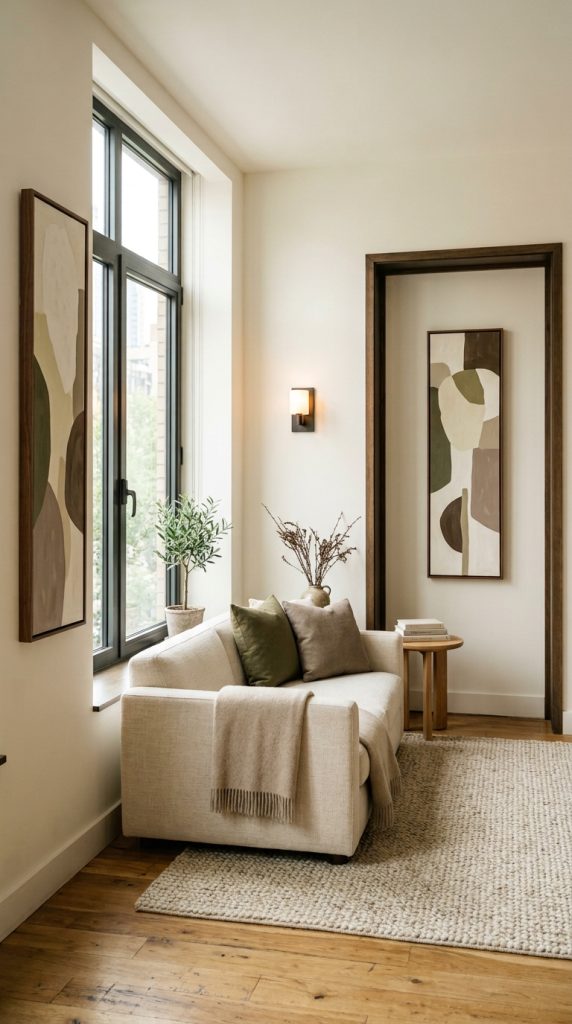
    One chair can become a reading corner.

    One sofa section can become the cozy movie-watching area.

    A coffee table can become the place for evening tea.

    This connects decorating with actual daily life.

    Current fall design guidance increasingly focuses on creating rooms around comfort, rituals, and meaningful use rather than simply decorating for appearance.

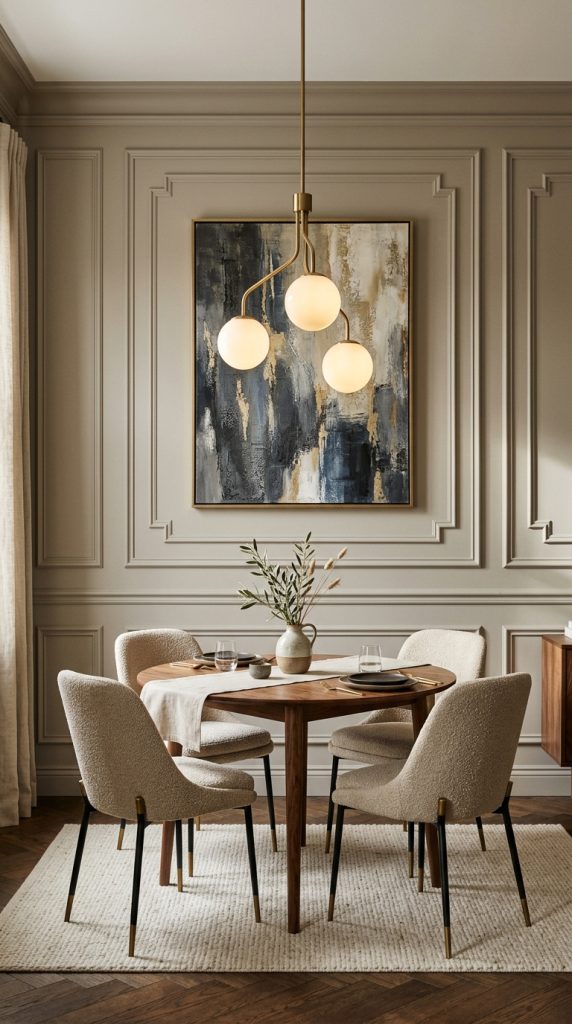
    7. Style the Dining Table With Natural Materials and Collected Objects

    A fall dining table does not need an elaborate centerpiece.
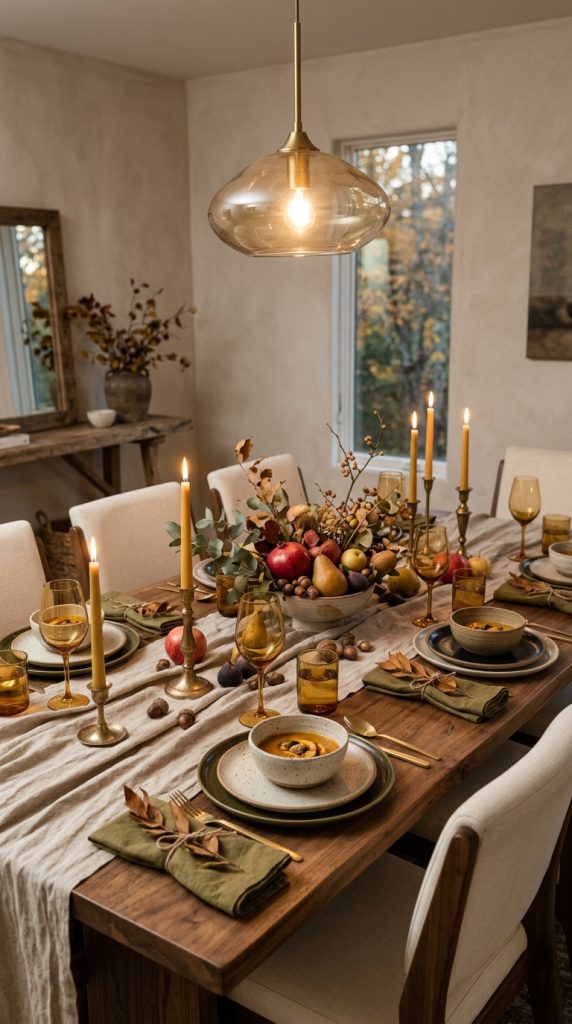
    For a collected look, simplicity often creates more sophistication.

    Start with a linen or cotton runner.

    Choose a warm neutral shade such as oatmeal, cream, taupe, or muted brown.

    Then add natural materials.

    A wooden bowl filled with seasonal fruit can become the centerpiece.

    Try:

    • pears
    • apples
    • figs
    • pomegranates
    • grapes
    • walnuts

    You can also use dried foliage or branches.

    Place them in a ceramic or stoneware vase.

    Then introduce a few candles.

    The important thing is to vary heights.

    For example:

    • low fruit bowl
    • medium ceramic vessel
    • tall branches
    • small candlelight around the base

    This creates a layered composition without filling the entire table.

    Use imperfect pieces

    Collected tables look beautiful when every item does not appear identical.

    Mix:

    • ceramic plates
    • vintage-style glasses
    • linen napkins
    • wooden serving boards
    • aged-brass utensils
    • handmade-looking pottery

    The slight differences make the table feel personal.

    For a modern home, keep the color palette controlled.

    Cream, warm brown, amber, olive, and muted burgundy can create an elegant autumn palette without becoming overly traditional.

    8. Give the Bedroom a Soft, Layered Autumn Makeover

    The bedroom should feel quieter than the living room.
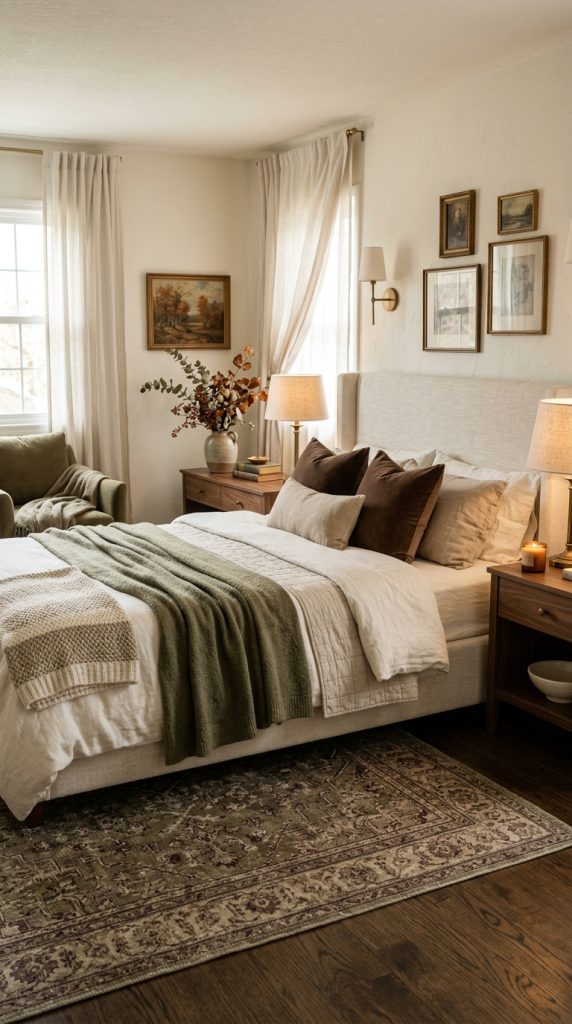
    Instead of adding many seasonal objects, concentrate on texture and atmosphere.

    Begin with the bed.

    Use neutral bedding as your foundation.

    Then add:

    • a heavier quilt
    • a textured blanket
    • velvet or woven cushions
    • a lumbar pillow
    • a soft throw folded near the foot

    Keep the color palette calm.

    Cream, oatmeal, taupe, warm brown, muted olive, and dusty burgundy work beautifully together.

    Add warmth through the bedside area

    Place a warm table lamp on each nightstand if the room allows.

    Choose shades that diffuse light rather than producing harsh brightness.

    Add one or two personal objects.

    A book.

    A small ceramic vase.

    A framed photograph.

    A simple candle.

    Avoid filling the nightstand with decorative objects because the bedroom should remain visually peaceful.

    Make the floor feel warmer

    A rug can make a significant difference.

    If you already have a large rug, layer a smaller textured rug beside the bed.

    This can introduce another material without changing the entire room.

    Wool, woven fibers, vintage-style patterns, and muted earthy colors work particularly well.

    Add natural elements

    One vase of dried branches can create a beautiful seasonal moment.

    Place it where it does not interfere with movement.

    The bedroom should feel restful first and autumnal second.

    9. Create Small Seasonal Moments Instead of Decorating Every Surface

    One of the biggest mistakes in seasonal decorating is assuming every empty surface needs something.
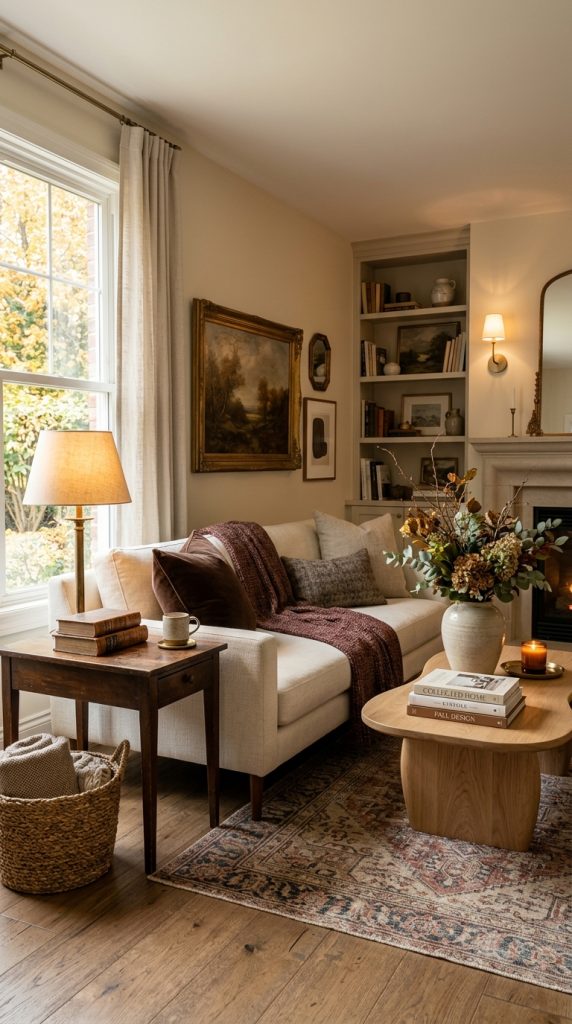
    It does not.

    Collected interiors need breathing room.

    Instead of decorating every shelf, choose several intentional zones.

    For example:

    Entryway: one seasonal arrangement

    Living room: textured cushions and a throw

    Coffee table: one botanical arrangement

    Dining room: simple seasonal centerpiece

    Bedroom: richer bedding

    Kitchen: one wooden tray with seasonal objects

    This creates continuity without repetition.

    You can also create a small โ€œfall corner.โ€

    A reading chair beside a floor lamp.

    A small wooden table.

    A stack of books.

    A ceramic mug.

    One soft throw.

    One vase with branches.

    That is enough.

    The corner becomes an experience rather than merely a decorative arrangement.

    Current fall decorating coverage is moving toward subtle seasonal shifts through color, texture, botanicals, lighting, and meaningful everyday objects rather than relying exclusively on traditional seasonal decorations.

    Use seasonal objects selectively

    If you love pumpkins, there is nothing wrong with using them.

    The collected approach simply suggests editing them.

    Instead of placing pumpkins everywhere, use one or two beautiful pieces.

    A stone-colored ceramic pumpkin on a bookshelf can be more sophisticated than a dozen brightly colored decorations.

    The same principle applies to autumn signs and seasonal typography.

    Choose only pieces that genuinely fit your home’s existing style.

    10. Connect the Whole Home With a Consistent Fall Story

    The final step is to make the rooms feel connected.
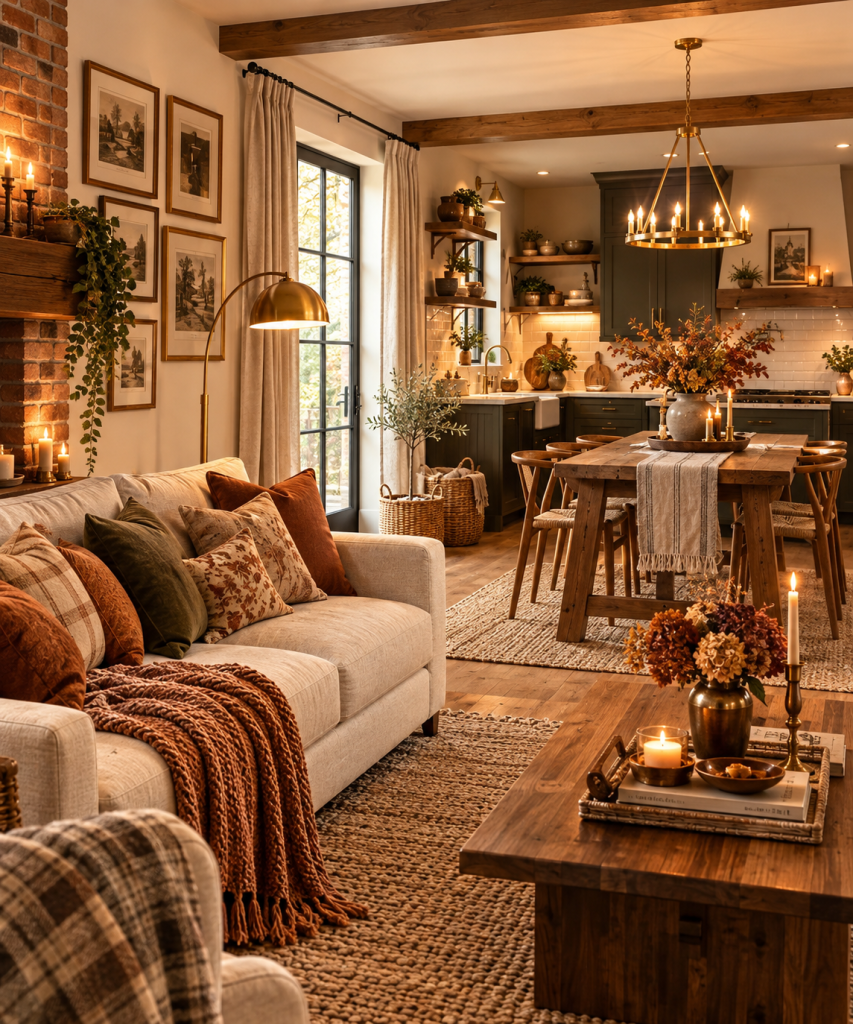
    Your home does not need to look identical from room to room.

    But it should share a visual language.

    Choose a small group of colors and materials and allow them to appear in different ways.

    For example:

    Colors:

    • cream
    • chocolate brown
    • muted rust
    • olive
    • burgundy

    Materials:

    • walnut
    • linen
    • wool
    • ceramic
    • aged brass

    Now distribute these elements throughout the home.

    The living room might use chocolate cushions and walnut furniture.

    The dining room might use rust napkins and ceramic vessels.

    The bedroom might use an olive throw and warm wood.

    The entryway might feature an antique brass mirror.

    The kitchen might contain a wooden cutting board and cream ceramics.

    Nothing is identical.

    Everything feels connected.

    This is the foundation of a collected home.

    Use repetition without duplication

    There is an important difference between repeating an element and repeating an object.

    You can repeat warm brass without using the same brass lamp in every room.

    You can repeat olive green through artwork, cushions, ceramics, and foliage.

    You can repeat wood through furniture, trays, frames, and bowls.

    This creates rhythm.

    The eye recognizes the connection even when the objects themselves are different.

    How to Make Collected Fall Decor Look Expensive

    A collected home does not have to be expensive.

    The most important factor is editing.

    Expensive-looking interiors generally have a sense of restraint.

    Instead of twenty small accessories, choose five meaningful ones.

    Instead of six different colors, establish a controlled palette.

    Instead of decorating every wall, allow some walls to remain quiet.

    Instead of purchasing a complete seasonal collection, invest in a few pieces that can work year after year.

    Focus on materials

    A simple ceramic vase can look more sophisticated than an elaborate plastic decoration.

    A linen cushion can feel more luxurious than a heavily printed seasonal pillow.

    A wooden bowl can become a beautiful centerpiece without requiring expensive flowers.

    A warm brass lamp can transform a room more effectively than several small decorative objects.

    Choose larger visual moments

    One large branch arrangement can have more impact than multiple tiny arrangements.

    One substantial artwork can anchor a wall.

    One beautiful rug can define a seating area.

    One sculptural lamp can become a focal point.

    This creates stronger visual hierarchy.

    Collected Fall Decor Ideas for a Small Home

    Small spaces can benefit especially well from collected fall decorating because the approach naturally discourages clutter.

    Instead of adding more furniture, use soft accessories and lighting.

    Try:

    • one textured throw
    • two seasonal cushion covers
    • one warm lamp
    • one vintage frame
    • one ceramic vase
    • one small branch arrangement
    • one woven basket

    Use vertical space where possible.

    A tall vase with branches can draw the eye upward.

    A large mirror can reflect light.

    A narrow console can provide a styling surface without taking much floor space.

    Choose multifunctional pieces.

    A wooden stool can serve as seating, a side table, or a plant stand.

    A woven basket can hold blankets while adding texture.

    A storage ottoman can function as seating and hidden storage.

    The goal is to make every object useful or visually meaningful.

    Ideally, it should do both.

    Collected Fall Decor on a Budget

    You do not need a large seasonal decorating budget.

    Start by shopping your own home.

    Move a wooden tray from the bedroom to the living room.

    Bring a ceramic vase from the kitchen into the entryway.

    Rearrange books by color.

    Switch lightweight summer cushions for deeper textured covers.

    Move a floor lamp closer to a reading chair.

    These changes can make your home feel completely different without purchasing anything.

    Shop secondhand

    Thrift stores, flea markets, antique shops, and secondhand marketplaces can be excellent sources for collected pieces.

    Look for:

    • wooden bowls
    • brass candlesticks
    • frames
    • baskets
    • ceramic vessels
    • small stools
    • vintage books
    • mirrors
    • artwork

    Do not worry about finding the โ€œperfectโ€ item.

    Look for something with an interesting shape, material, or finish.

    DIY simple seasonal pieces

    You can also create fall decor yourself.

    Fill a simple vase with dried branches.

    Make a table runner from textured fabric.

    Paint an inexpensive frame.

    Create a simple artwork using neutral colors.

    Refinish a wooden tray.

    The goal is not to make everything yourself.

    A few handmade elements are enough to give the home personality.

    How to Create a Collected Fall Entryway

    The entryway sets the tone for the rest of the home.

    Keep it simple.

    Start with a mirror.

    Add a small wooden console or floating shelf if space allows.

    Place a ceramic bowl for keys.

    Add one vase with branches.

    Hang one coat or woven bag.

    Place a small rug beneath the area.

    For a stronger autumn atmosphere, use warm wood, muted olive, brown, or rust.

    Lighting is important here because entryways can become dark during fall evenings.

    A wall sconce or small table lamp can make the space feel welcoming.

    Avoid turning the entryway into a seasonal display.

    The goal is to make guests feel that the entire home is warm and inviting.

    How to Create a Cozy Fall Kitchen

    The kitchen can be seasonal without looking decorated.

    Start with materials.

    Wooden cutting boards.

    Woven baskets.

    Ceramic bowls.

    Linen towels.

    Amber glass.

    Warm lighting.

    These functional pieces can double as decoration.

    Display a small collection of wooden boards against the backsplash.

    Place a ceramic bowl of pears or apples on the island.

    Use a linen towel in a warm neutral or muted rust tone.

    Add a small vase of seasonal branches to an open shelf.

    If you have pendant lights, make sure the lighting feels warm and comfortable in the evening.

    Recent fall kitchen trend coverage also points toward softer lighting and warmer, more welcoming kitchen environments rather than purely bright functional illumination.

    Fall Color Palettes for a Collected Interior

    The right color palette can make collected decorating much easier.

    Cream, Chocolate Brown, and Olive

    This combination feels sophisticated and grounded.

    Use cream as the foundation, chocolate brown through furniture or textiles, and olive as a subtle accent.

    Oatmeal, Rust, and Walnut

    This is a warm and inviting palette.

    Use oatmeal upholstery, walnut furniture, and muted rust textiles.

    Beige, Burgundy, and Brass

    This combination creates a slightly more elegant atmosphere.

    Use burgundy sparingly so it becomes an accent rather than the dominant color.

    Taupe, Caramel, and Olive

    This works particularly well for modern homes.

    The palette is warm without being strongly traditional.

    Cream, Charcoal, and Tobacco

    For a more contemporary fall interior, combine soft cream with charcoal and warm tobacco.

    The contrast creates depth while maintaining sophistication.

    Common Mistakes to Avoid With Collected Fall Decor

    Collected does not mean chaotic.

    There is a difference between a layered room and a cluttered room.

    Using too many seasonal colors

    If you combine orange, red, yellow, green, purple, brown, and burgundy, the room may lose cohesion.

    Choose a small palette.

    Buying matching seasonal accessories

    Matching decorations can make a home feel temporary and themed.

    Mix different materials and styles instead.

    Decorating every surface

    Empty space is part of the design.

    Leave some shelves, tables, and countertops intentionally quiet.

    Using too many tiny objects

    Small objects can create visual noise.

    Combine smaller pieces with larger anchors.

    Ignoring lighting

    Even a beautifully decorated room can feel cold if it is illuminated by one harsh overhead fixture.

    Use multiple warm light sources.

    Forgetting comfort

    A fall room should not only photograph beautifully.

    It should be comfortable.

    Keep throws accessible.

    Make seating practical.

    Place lamps where they can actually be used.

    Create areas where people naturally want to sit.

    A Simple Formula for a Collected Fall Room

    If you are unsure where to begin, use this formula:

    One warm color + one natural material + one rich texture + one vintage element + one warm light source + one seasonal detail.

    For example:

    Chocolate brown + walnut + velvet + antique frame + table lamp + dried branches.

    That is enough to create a fall atmosphere.

    You can then add layers gradually.

    If the room still feels flat, add texture.

    If it feels cold, improve the lighting.

    If it feels too neutral, introduce one deeper color.

    If it feels too modern, add one vintage piece.

    If it feels cluttered, remove three objects.

    This approach makes decorating much easier because every addition has a purpose.

    How to Transition From Summer to Fall Without Redecorating Everything

    One of the smartest ways to decorate seasonally is to make small transitions rather than complete changes.

    Keep your major furniture.

    Keep your artwork.

    Keep your main rug.

    Keep your foundational colors.

    Change:

    • lightweight throws
    • cushion covers
    • bedding layers
    • table linens
    • decorative branches
    • candles
    • small ceramics
    • lighting atmosphere

    This saves money and storage space.

    It also allows your home to feel naturally seasonal.

    You are not creating an entirely different house.

    You are simply changing its temperature and mood.

    That is what makes collected fall decorating so practical.

    How to Make Your Fall Home Feel Cozy Without Looking Cluttered

    The secret is editing after layering.

    Add the pieces you think the room needs.

    Then step back.

    Look at the room from the doorway.

    Ask:

    Does the eye have one obvious focal point?

    Are there too many small objects?

    Do the colors repeat naturally?

    Are there enough empty spaces?

    Does the lighting create depth?

    Can people move comfortably?

    Are the seasonal decorations supporting the room rather than dominating it?

    If the answer to the last question is no, remove something.

    A beautiful fall interior should feel like a home first and a seasonal space second.

    Why Collected Fall Decorating Works So Well for 2026

    The current Fall 2026 design conversation is moving toward interiors that feel warmer, more layered, more personal, and less dependent on short-lived seasonal styling. ELLE’s fall trend reporting describes a move toward intentional layering and richer colors, while Houzz identifies warmth, natural materials, earthy colors, multiple textures, and collected interiors as significant directions.

    That makes the collected approach particularly useful because it combines seasonal atmosphere with long-term design.

    A walnut table does not stop being useful after November.

    A wool throw can remain on the sofa through winter.

    A ceramic vase can be used all year.

    A vintage mirror works in every season.

    A warm lamp is useful every evening.

    This is the difference between seasonal decorating and seasonal atmosphere.

    Seasonal decorating depends heavily on objects.

    Seasonal atmosphere depends on color, material, lighting, comfort, and mood.

    The second approach is usually easier to maintain and more adaptable.

    Final Thoughts

    Collected fall home decor is about creating a home that feels warm, personal, layered, and comfortable rather than simply filling rooms with seasonal decorations.

    The most successful fall interiors do not necessarily contain the most autumn accessories.

    They contain the right combination of elements.

    Warm wood gives the room depth.

    Textiles add softness.

    Earthy colors introduce seasonal richness.

    Vintage pieces add personality.

    Natural materials create connection with the outdoors.

    Layered lighting changes the atmosphere after sunset.

    A few seasonal details complete the story.

    Start small.

    Choose one room.

    Begin with texture.

    Introduce one deeper color.

    Add warm lighting.

    Bring in one vintage or handmade element.

    Then step back and edit.

    You do not need to buy an entirely new collection of fall decor.

    You simply need to make your existing home feel a little warmer, richer, softer, and more inviting.

    That is the beauty of a collected fall interior: it feels decorated, but never overdecorated; cozy, but never cluttered; seasonal, but never temporary.
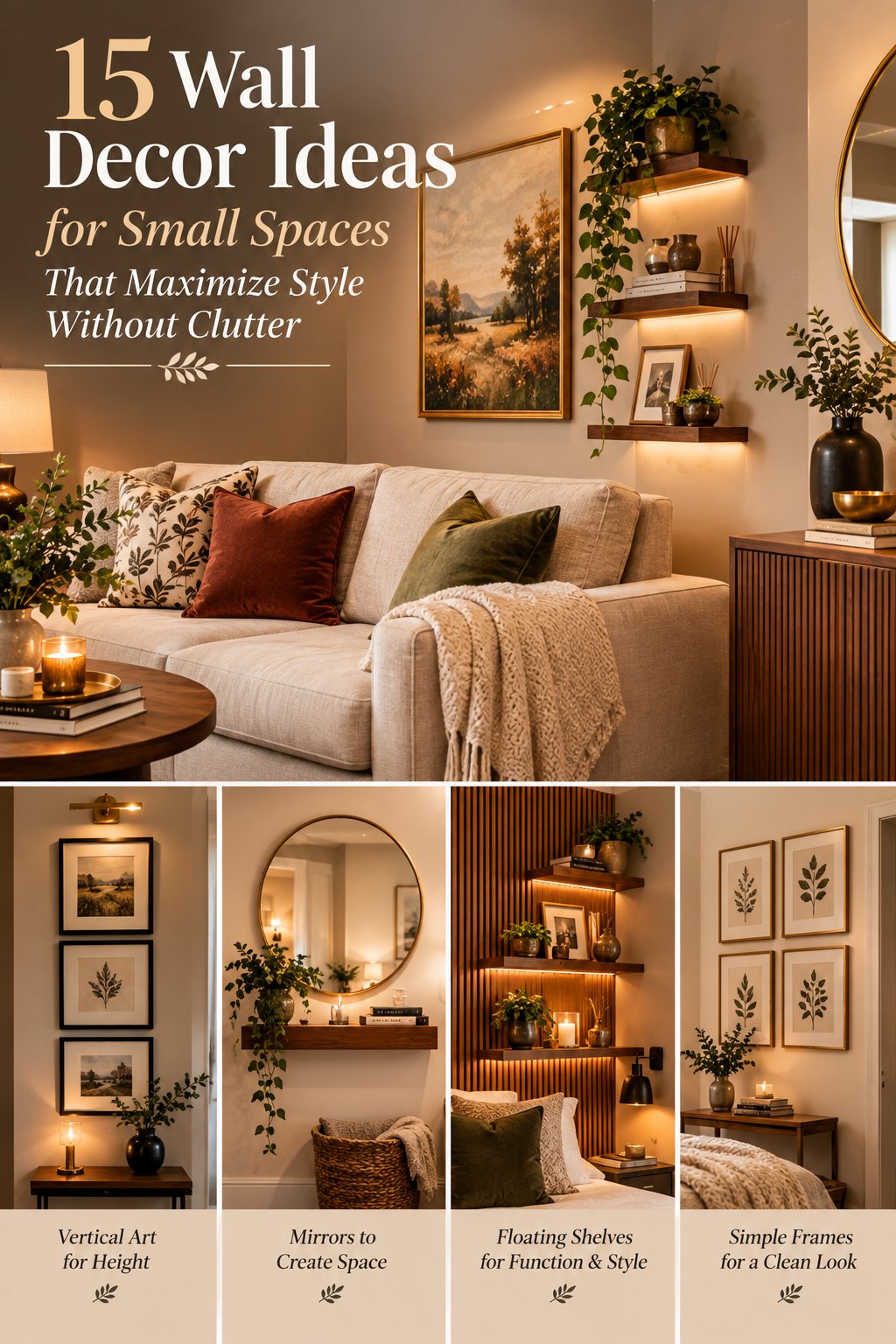
  • 15 Wall Decor Ideas for Small Spaces That Maximize Style Without Clutter

    15 Wall Decor Ideas for Small Spaces That Maximize Style Without Clutter

    Small rooms can be some of the most beautiful spaces in a home when every design decision is intentional. The challenge is that limited square footage leaves less room for bulky furniture, oversized accessories, and unnecessary decoration. That is exactly why the walls become so important. Instead of allowing vertical space to remain empty, you can turn it into an elegant design feature while keeping the floor open and the room visually calm.

    If you are searching for wall decor ideas for small spaces that maximize style without clutter, the best approach is not to put more things on the walls. It is to choose the right pieces, use the available height intelligently, and create visual impact without overwhelming the room.

    In a small bedroom, living room, apartment, hallway, home office, dining area, or entryway, wall decor can perform several jobs at once. A large mirror can reflect light and create the impression of additional space. Floating shelves can provide display space without taking up floor area. Wall sconces can add atmosphere while replacing bulky table lamps. A narrow wall-mounted cabinet can provide storage where a traditional piece of furniture would make the room feel cramped.

    Current small-space design is increasingly focused on using vertical areas rather than simply adding smaller furniture. Designers are recommending taller shelving, vertical artwork, large-scale pieces, and wall-mounted solutions that encourage the eye to move upward. (Architectural Digest)

    Another important shift is the move away from decorating small spaces with countless tiny objects. A collection of small frames, miniature shelves, little signs, and unrelated accessories can quickly become visual noise. One large artwork, one sculptural mirror, or one carefully arranged picture ledge can often create considerably more impact.

    This does not mean that small rooms need to be completely minimalist. A small space can still have personality, color, pattern, vintage pieces, artwork, texture, and meaningful objects. The secret is editing. Every item should have a reason to be there.

    Think about your wall decor as part of the architecture of the room. Instead of asking, โ€œWhat can I put on this empty wall?โ€ ask, โ€œWhat can this wall do for the room?โ€

    Could it make the room appear taller?

    Could it reflect more natural light?

    Could it provide hidden storage?

    Could it create a focal point?

    Could it make an awkward corner useful?

    Could it display meaningful artwork without taking over the room?

    Could it add texture without adding physical bulk?

    Those questions lead to much more sophisticated decorating decisions.

    Another advantage of wall decor is that it allows you to make a small home feel more personalized without sacrificing valuable floor space. A carefully chosen piece of art can communicate your personality. A vintage mirror can introduce character. A picture ledge can display changing photographs and artwork. A wall-mounted cabinet can hide everyday necessities. A sculptural sconce can become both lighting and decoration.

    The ideas below are designed around that balance. Some are purely decorative, while others combine beauty and function. Several can also be adapted to rental apartments, bedrooms, kitchens, entryways, narrow hallways, and small living rooms.

    You do not need to use all fifteen ideas. Choose two or three that suit your room and repeat their colors, materials, or shapes throughout the space. This creates a cohesive interior rather than a wall covered with unrelated decorations.

    1. Use an Oversized Mirror to Make a Small Room Feel Larger

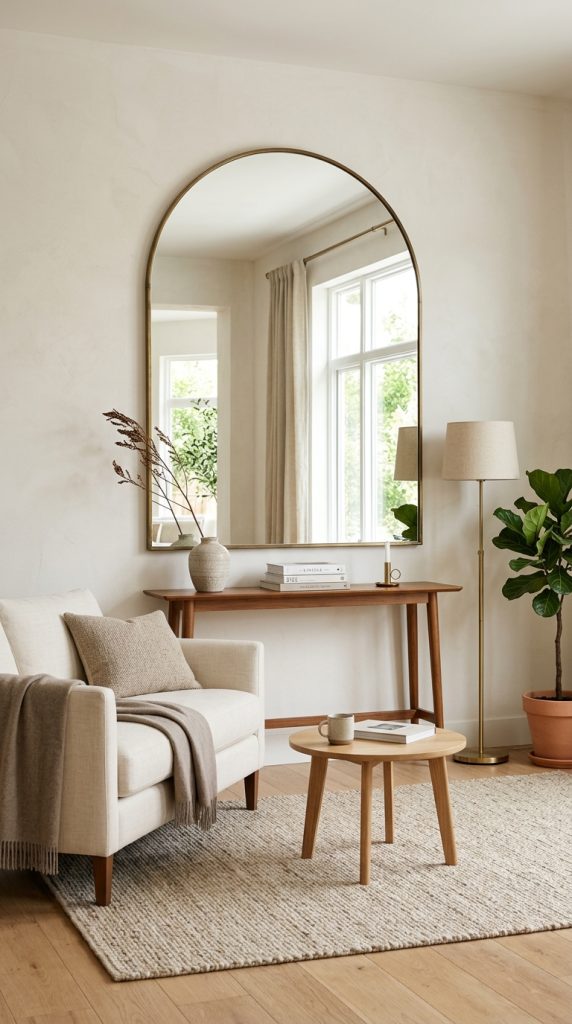
    One of the most effective wall decorating ideas for a small space is an oversized mirror.

    Mirrors are valuable because they provide decoration while also interacting with light and visual depth. A strategically positioned mirror can reflect a window, light fixture, artwork, or attractive part of the room, making the space feel more open.

    Current small-room design guidance continues to highlight reflective surfaces as a useful way to create an impression of greater space. (Homes and Gardens)

    Instead of using several tiny decorative mirrors, consider one substantial mirror that becomes the main feature of the wall.

    Choose the right shape

    The shape of the mirror can influence the personality of the room.

    A tall rectangular mirror works beautifully when you want to emphasize ceiling height. An arched mirror introduces softness. A round mirror creates contrast against furniture with straight lines. An irregular or organic-shaped mirror can provide an artistic focal point.

    For an elegant small living room, place a large mirror above a slim console.

    In a bedroom, position a tall mirror near the dresser or opposite a window.

    In an entryway, a large mirror can create a useful last-look station while visually expanding the narrow area.

    Make the mirror part of the design

    Avoid treating the mirror as an isolated object.

    Repeat its frame finish elsewhere in the room. For example, an aged-brass mirror can connect beautifully with brass lighting, while a dark wood frame can complement walnut furniture.

    If your room already contains many decorative details, choose a simple frameless or thin-framed mirror.

    If the room feels plain, a sculptural or antique-inspired frame can provide more personality.

    Avoid the mirror overload

    More mirrors do not automatically create more space.

    Too many reflective surfaces can make a small room feel visually confusing. One strong mirror positioned intentionally is usually more effective than covering every wall with reflections.

    The goal is to create depth, not visual distraction.

    2. Create a Minimalist Picture Ledge Instead of a Bulky Gallery Wall

    Picture ledges are an excellent alternative to traditional gallery walls, especially when you want flexibility without visual heaviness.

    A picture ledge is a narrow shelf designed to hold framed artwork, photographs, small objects, or decorative pieces. Because the artwork can simply rest on the ledge, you can change the arrangement without creating multiple holes in the wall.

    Design coverage in 2026 has specifically highlighted picture ledges as a more flexible, pared-back alternative to rigid gallery walls. (Homes and Gardens)

    Keep the composition edited

    For a small room, one or two narrow ledges may be enough.

    Use a combination of:

    • One larger framed print
    • Two smaller artworks
    • One photograph
    • One small ceramic object

    Leave empty sections of the ledge visible.

    That negative space keeps the display from feeling crowded.

    Use overlapping frames

    One of the advantages of a ledge is that frames can overlap slightly.

    Place the largest piece toward the back and smaller frames in front.

    This creates depth without requiring complicated wall arrangements.

    Coordinate the colors

    The easiest way to keep a picture ledge sophisticated is to limit the color palette.

    For example:

    Cream wall + black frames + sepia artwork + natural wood.

    Or:

    Warm beige wall + walnut frames + muted botanical artwork + ceramic accents.

    The pieces do not need to match exactly. They simply need to feel related.

    Use the ledge beyond artwork

    A picture ledge can also hold:

    • Small travel photographs
    • Postcards
    • Children’s artwork
    • Small mirrors
    • Pressed botanical prints
    • Meaningful objects

    This makes the wall display easy to update as your style changes.

    3. Decorate With One Large Statement Artwork

    Small rooms do not always require small artwork.

    In fact, one large artwork can sometimes make a compact room feel more sophisticated than a collection of tiny pieces.

    Architectural Digest’s recent small-space guidance specifically highlights oversized artwork as a way to draw the eye through a room and create a more immersive effect. (Architectural Digest)

    Why one large piece works

    A single artwork creates a clear visual focal point.

    Instead of the eye jumping between multiple small objects, it immediately understands where to look.

    This can make the room feel more organized.

    Choose artwork with depth

    You do not have to choose a completely neutral painting.

    Consider:

    • Abstract artwork
    • Oversized botanical artwork
    • Landscape photography
    • Vintage-inspired paintings
    • Monochrome photography
    • Textured canvas
    • Soft geometric artwork

    For a small neutral room, artwork can introduce a controlled accent color.

    For example, an otherwise cream and beige room could feature artwork containing muted olive, rust, charcoal, or dusty blue.

    Match the scale to the wall

    Large artwork should still be proportionate to the furniture beneath it.

    Above a sofa, the artwork should visually connect to the sofa rather than appearing like a tiny isolated rectangle.

    Above a bed, choose a piece wide enough to create a substantial focal point.

    Above a small console, a vertical artwork can work beautifully.

    Keep everything else quiet

    When using oversized artwork, you do not need five additional decorations on the same wall.

    Let the artwork breathe.

    That empty space around it is part of the composition.

    4. Install Floating Shelves for Style and Practical Storage

    Floating shelves are one of the most useful solutions when floor space is limited.

    They allow you to move storage and display upward while keeping the area beneath open.

    Current 2026 small-space coverage continues to highlight floating shelving because it provides storage and display without the visual weight of a bulky floor-standing unit. (Architectural Digest)

    Use fewer shelves

    Instead of covering an entire wall with shelves, start with two or three.

    A pair of long shelves can create a clean horizontal composition.

    Three narrow shelves stacked vertically can emphasize height.

    Style shelves with restraint

    Use a combination of practical and decorative items.

    For example:

    Top shelf:

    • One framed artwork
    • One ceramic vase
    • One small object

    Middle shelf:

    • A few books
    • One sculptural piece
    • One plant

    Bottom shelf:

    • A basket
    • A small stack of books
    • One decorative object

    Avoid filling every inch.

    Choose materials carefully

    Natural wood shelves work beautifully in warm interiors.

    White shelves can disappear into a light wall.

    Dark walnut shelves create a sophisticated contrast.

    Stone or marble-look shelves can create a more luxurious appearance.

    Use shelves where furniture would be too bulky

    Floating shelves work particularly well in:

    • Small kitchens
    • Home offices
    • Bedrooms
    • Narrow living rooms
    • Bathrooms
    • Entryways

    They can provide useful storage without reducing walking space.

    5. Use Vertical Wall Decor to Draw the Eye Upward

    When floor space is limited, take advantage of the room’s height.

    Vertical decorating can make walls appear taller and encourage the eye to move upward. Designers frequently recommend using vertical shelving, artwork, stripes, and tall decorative elements to maximize small spaces. (Architectural Digest)

    Try tall artwork

    Instead of a wide horizontal print, choose a vertical piece.

    This works particularly well beside:

    • A doorway
    • A narrow dresser
    • A reading chair
    • A small console
    • A compact desk

    Use vertical paneling

    Wood slats or narrow wall molding can emphasize height.

    Paint the treatment in a color close to the wall for a subtle appearance.

    For a dramatic effect, use a warm wood finish against a lighter wall.

    Consider vertical wallpaper

    Subtle stripes can visually elongate the wall.

    A narrow botanical pattern can achieve a similar effect without looking overly formal.

    Hang curtains high

    Although curtains are not traditional wall decor, they strongly influence how the wall is perceived.

    Mounting curtain hardware higher can visually extend the wall upward.

    Choose full-length panels that fall close to the floor.

    Keep the lower wall open

    The more visual weight you place at floor level, the smaller the room can feel.

    Use the upper wall strategically while allowing the lower portion to breathe.

    6. Add a Sculptural Wall Sconce for Beauty and Function

    Wall lighting is one of the smartest ways to combine decoration with functionality.

    A beautiful sconce can become artwork while providing useful illumination.

    This is particularly helpful in small spaces because it eliminates the need for a bulky floor lamp or large table lamp.

    Architectural Digest’s 2026 vertical-design guidance notes that sconces, particularly those that direct light upward, can help draw attention toward the height of a room. (Architectural Digest)

    Place sconces strategically

    Use them:

    • Beside a bed
    • Above a desk
    • On either side of artwork
    • Beside a bathroom mirror
    • Along a narrow hallway
    • Above a small reading chair

    Choose sculptural designs

    Look for:

    • Aged brass
    • Bronze
    • Ceramic
    • Ribbed glass
    • Opal glass
    • Matte black
    • Natural stone
    • Sculptural metal

    The fixture should complement your room’s existing finishes.

    Make lighting part of the artwork

    Instead of thinking of the sconce as merely functional, select one with a distinctive silhouette.

    A sculptural fixture can become the focal point of an otherwise simple wall.

    Use warm light

    Warm lighting helps prevent small rooms from feeling stark.

    Use dimmable fixtures where possible so you can adjust the atmosphere.

    A soft evening glow can make a compact room feel considerably more intimate.

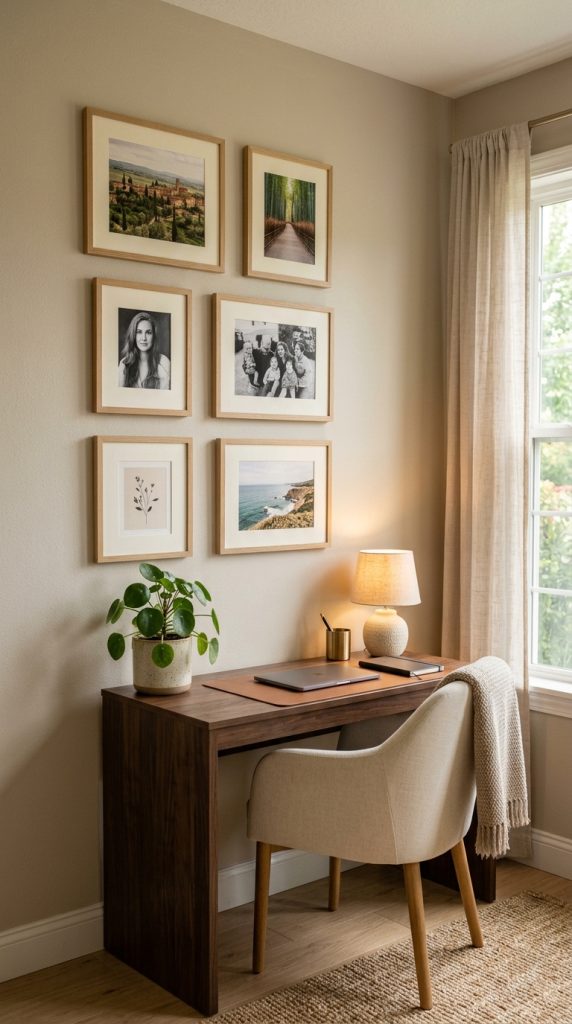
    7. Try a Small-Scale Gallery Wall With a Cohesive Color Palette

    Although oversized artwork and picture ledges can be excellent alternatives to gallery walls, a gallery wall can still work beautifully in a small space when it is carefully edited.

    The problem is not necessarily the number of frames. The problem is visual inconsistency.

    Choose one theme

    You could create a gallery around:

    • Black-and-white photography
    • Botanical prints
    • Vintage landscapes
    • Family photographs
    • Abstract artwork
    • Travel memories

    A clear theme immediately creates cohesion.

    Repeat the frame style

    Matching frames are an easy way to make multiple pieces feel intentional.

    Alternatively, mix frames while keeping one common element such as color, material, or width.

    For example:

    Black + walnut frames.

    Or:

    Natural wood + cream mats.

    Keep the arrangement compact

    Do not spread tiny pieces across an enormous wall.

    Instead, create one concentrated composition.

    Leave generous negative space around the gallery.

    Use a consistent color palette

    If every artwork contains different bright colors, the wall can become visually overwhelming.

    Muted tones are especially effective in small spaces.

    Try cream, black, taupe, brown, olive, dusty blue, or muted terracotta.

    Add one unexpected element

    A small mirror, woven object, or sculptural piece can break the repetitive quality of framed artwork.

    Keep it to one or two unusual elements rather than turning the wall into a collection of everything you own.

    8. Create a Textured Accent Wall With Wallpaper or Limewash

    A small room can benefit from a dramatic wall treatment.

    You do not necessarily need to leave small spaces completely plain.

    Current small-space design commentary has pushed back against the idea that compact rooms must always use conservative decorating. Designers are increasingly using bold wallpaper, pattern, and richer treatments to give small rooms personality. (Architectural Digest)

    Try subtle textured wallpaper

    Consider:

    • Linen-look wallpaper
    • Grasscloth-inspired texture
    • Fine stripes
    • Small-scale botanical patterns
    • Tonal geometric patterns
    • Soft plaster-effect wallpaper

    The pattern should support the room rather than compete with everything else.

    Consider limewash

    A softly mottled limewash-style finish can create depth without adding physical objects.

    It works especially well in:

    • Bedrooms
    • Reading corners
    • Small dining rooms
    • Home offices

    Use one feature wall

    If the room already contains plenty of furniture, treat one wall as the focal point.

    The remaining walls can stay quieter.

    Match the treatment to your furniture

    A textured beige wall pairs beautifully with warm wood.

    A muted olive wall can work with cream upholstery.

    A soft clay wall can complement walnut and brass.

    A charcoal wall can provide a sophisticated backdrop for light artwork.

    9. Hang a Large Textile or Woven Wall Art Piece

    Wall textiles are an excellent way to introduce warmth and texture without adding bulky furniture.

    A woven wall hanging, textile artwork, vintage tapestry, or fabric panel can soften an otherwise hard wall.

    Recent design coverage has highlighted the renewed popularity of woven wall art and tapestries because they add warmth, texture, character, and even acoustic benefits. (Homes and Gardens)

    Choose one substantial textile

    Rather than hanging multiple small woven pieces, select one that has enough visual presence to anchor the wall.

    A large neutral textile can work beautifully in a minimalist bedroom.

    A colorful woven piece can become the focal point in a neutral living room.

    Consider the material

    Options include:

    • Wool
    • Cotton
    • Linen
    • Jute
    • Handwoven fibers
    • Macramรฉ
    • Vintage textiles

    Use textiles to soften modern rooms

    If your room contains a lot of glass, metal, or polished surfaces, woven wall decor introduces softness.

    It can also make minimalist rooms feel warmer and more lived-in.

    Keep surrounding decor simple

    A large textile already provides significant visual texture.

    Avoid placing several busy artworks around it.

    Let the material become the feature.

    10. Use Narrow Wall-Mounted Cabinets in Tight Spaces

    Wall-mounted cabinets are ideal when you need storage but do not have room for another piece of floor furniture.

    A shallow cabinet can store everyday objects while keeping them hidden.

    This is especially useful in compact bedrooms, bathrooms, kitchens, and entryways.

    Choose a shallow profile

    The cabinet should not project too far into the room.

    Measure the available wall carefully before purchasing or installing anything.

    Hide visual clutter

    Use the cabinet for items that would otherwise remain visible.

    For example:

    Bedroom:

    • Accessories
    • Small electronics
    • Personal items

    Entryway:

    • Keys
    • Mail
    • Small bags

    Bathroom:

    • Toiletries
    • Towels
    • Beauty products

    Kitchen:

    • Small serving items
    • Pantry accessories
    • Everyday supplies

    Make the cabinet decorative

    The cabinet itself can become part of the design.

    Choose fluted wood, warm oak, walnut, painted cabinetry, cane, or a simple modern finish.

    Add attractive hardware in brass, bronze, or black.

    Keep the top lightly styled

    If the cabinet has a visible top, place only one or two objects there.

    A small vase or artwork is enough.

    The goal is concealed organization, not another cluttered display surface.

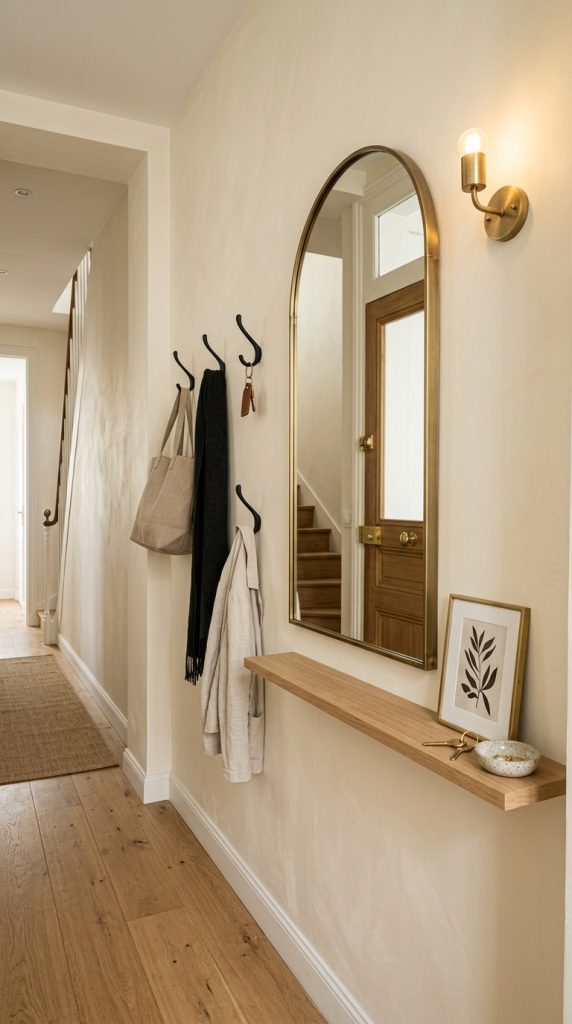
    11. Create a Slim Entryway Wall With Hooks and Decorative Art

    Small entryways often become cluttered because they have no obvious place for everyday belongings.

    A wall can solve this problem.

    Instead of adding a large console table, create a slim wall-mounted entry station.

    Build the composition

    Start with:

    • One mirror
    • Three or four hooks
    • One narrow shelf
    • One small artwork

    This creates a complete entryway without requiring much floor space.

    Choose attractive hooks

    Hooks do not have to look purely functional.

    Consider brass, black metal, natural wood, ceramic, or sculptural hooks.

    Add a narrow ledge

    A shallow ledge can hold:

    • Keys
    • Small tray
    • Candle
    • Tiny vase
    • Mail organizer

    Use the mirror as the focal point

    The mirror provides practical functionality while also reflecting light.

    This combination of mirror, hooks, ledge, and artwork is especially useful when there is no room for a traditional entry console. Architectural Digest has highlighted similar layered wall compositions as small-space solutions. (Architectural Digest)

    Keep the floor clear

    This is the biggest advantage.

    The wall performs several functions without creating another obstacle in the walking path.

    12. Decorate Around a Doorway or Window With Vertical Artwork

    Awkward wall areas around doors and windows are often ignored.

    Instead of leaving these narrow spaces blank, use them for tall, slim artwork.

    Use narrow proportions

    Choose artwork that fits the wall without crowding the doorway or window.

    A vertical botanical print, abstract painting, vintage poster, or framed textile can work beautifully.

    Create visual rhythm

    If you have two similar narrow wall spaces on either side of a doorway, consider placing related artwork on both sides.

    They do not have to be identical.

    The common color palette creates the connection.

    Use height strategically

    Position the artwork so that it guides the eye upward.

    This can make the room feel taller while also giving purpose to otherwise awkward wall space.

    Avoid overcrowding

    Leave breathing room around door frames, windows, and trim.

    Architectural features should remain visible.

    The artwork should enhance the architecture rather than compete with it.

    13. Use Architectural Molding for Elegant Wall Detail

    If you want your small space to look expensive without adding lots of objects, architectural wall detail can be a powerful solution.

    Panel molding, box molding, vertical trim, or simple wall battens can create depth without physically taking up room.

    Keep the color subtle

    One of the most sophisticated approaches is to paint the molding and wall the same color.

    The design becomes visible through shadows and texture rather than strong contrast.

    For example:

    • Cream wall + cream molding
    • Taupe wall + taupe molding
    • Soft gray + soft gray
    • Deep olive + deep olive
    • Warm white + warm white

    Use molding behind a bed

    A bedroom wall can instantly look more custom with simple panel molding around the headboard.

    Use it in a dining area

    A small dining wall can feel architectural with a few large rectangular panels.

    Add one artwork or mirror inside the central section.

    Use vertical battens

    Vertical wall battens can emphasize height.

    They work particularly well in compact rooms with low ceilings.

    Avoid overly complicated patterns

    Small spaces usually benefit from clean geometry.

    A simple panel design can feel more luxurious than an elaborate pattern covering every wall.

    14. Create a Personalized Memento Wall Without Visual Clutter

    Your home should not look like a showroom.

    Personal objects make a space feel meaningful, but displaying too many can create visual chaos.

    The solution is to create a deliberately edited memento wall.

    Choose a category

    Instead of displaying everything, choose one type of memory.

    For example:

    • Family photographs
    • Travel photographs
    • Children’s artwork
    • Vintage postcards
    • Collected botanical prints
    • Small inherited artwork

    Use consistent framing

    Matching frames create structure even when the contents are different.

    Black frames create a modern appearance.

    Natural wood frames feel warmer.

    Brass frames can create a more traditional look.

    Limit the number of pieces

    Choose the items that genuinely mean something.

    A wall containing six favorite photographs will usually feel more sophisticated than one containing twenty-five random pictures.

    Create breathing room

    Do not fill every available inch.

    Negative space gives personal collections a gallery-like quality.

    Rotate the display

    You do not have to display everything simultaneously.

    Store some pieces and rotate them seasonally or when your taste changes.

    This keeps the room fresh without adding more permanent wall clutter.

    15. Use One Beautiful Wall Composition Instead of Many Small Decorations

    Sometimes the best small-space wall decor idea is simply to create one complete composition.

    Instead of buying individual decorations for every empty section, design the entire wall as one visual arrangement.

    Combine complementary elements

    For example, a small living room could feature:

    • One large round mirror
    • One slim picture ledge
    • One sculptural wall sconce
    • Two framed artworks

    The pieces work together as a single composition.

    A bedroom could feature:

    • Oversized headboard
    • Two wall sconces
    • One large artwork
    • Minimal decorative accents

    An entryway could feature:

    • Tall mirror
    • Narrow ledge
    • Three hooks
    • One small artwork

    Repeat materials

    The easiest way to make a mixed wall composition feel intentional is to repeat materials.

    Use brass in the lighting and mirror frame.

    Use walnut in the shelf and furniture.

    Use cream and taupe in the artwork and textiles.

    Establish one focal point

    Not every element needs equal visual weight.

    Choose the main feature first.

    Everything else should support it.

    Leave negative space

    This is the most important rule.

    A sophisticated wall does not need to be completely filled.

    The empty areas allow the main pieces to stand out.

    How to Choose Wall Decor for a Small Room

    Before buying anything, consider five questions.

    What does the room need?

    Does the wall need decoration, storage, lighting, or a combination?

    If you need storage, a floating shelf or wall-mounted cabinet may be more useful than artwork.

    If the room feels dark, consider a mirror.

    If the wall feels plain, choose artwork or texture.

    What is the room’s focal point?

    Do not allow wall decor to compete with an existing focal point.

    If you already have a dramatic sofa, fireplace, or bed, choose wall decor that supports it.

    What colors already exist?

    Repeat colors that are already present.

    This makes even inexpensive wall decor feel more coordinated.

    How much visual weight can the room handle?

    A small room does not necessarily need tiny decor, but it does need balance.

    One large artwork can work beautifully.

    Five large artworks may not.

    Is the wall helping the room?

    Every piece should either add beauty, function, or both.

    If it does neither, it may not deserve the space.

    How to Decorate Small Walls Without Making Them Look Cluttered

    The secret is editing.

    Start by choosing one focal point.

    Then add one or two supporting elements.

    For example:

    Large mirror + small sconce

    Large artwork + picture light

    Floating shelf + three decorative objects

    Wall cabinet + one artwork

    Picture ledge + edited collection

    This creates a visual hierarchy.

    The eye knows what to look at first, second, and third.

    Avoid giving every object the same visual importance.

    Best Wall Decor Colors for Small Spaces

    Color can either calm a small room or make it feel busy.

    For a sophisticated small space, consider:

    Warm neutrals

    Cream, beige, taupe, oatmeal, and warm gray create a soft foundation.

    Natural wood

    Oak, walnut, and medium wood tones add warmth.

    Soft black

    Black frames, sconces, and hardware can create definition without requiring bright color.

    Muted green

    Olive and sage can bring an organic feeling.

    Dusty blue

    Soft blue works particularly well in bedrooms and bathrooms.

    Warm metallics

    Brass and aged bronze can provide a subtle luxury effect.

    Rather than introducing many unrelated colors, repeat two or three shades throughout the room.

    Wall Decor Ideas for Small Apartments

    Apartment walls can be especially challenging because floor space is limited and some renters cannot make permanent changes.

    If drilling is restricted, consider removable or lightweight solutions where appropriate and follow your lease requirements.

    Useful apartment-friendly approaches include:

    • Large lightweight mirrors
    • Removable wallpaper
    • Picture ledges where permitted
    • Leaning artwork when floor space allows
    • Slim floating-style shelves with appropriate installation
    • Framed textiles
    • Decorative removable hooks
    • Large artwork as a focal point

    If the apartment has plain white walls, warm wood frames, woven textures, and soft artwork can make it feel much more personal.

    Wall Decor Ideas for Small Bedrooms

    A small bedroom benefits from wall decor that performs more than one job.

    Wall sconces can provide bedside lighting.

    A picture ledge can replace multiple framed pieces.

    An oversized mirror can provide dressing functionality.

    A wall-mounted cabinet can provide storage.

    An upholstered or wood-paneled headboard can become the primary decorative wall.

    Keep the area around the bed particularly calm because excessive visual activity can make the room feel less restful.

    Wall Decor Ideas for Small Living Rooms

    In a small living room, the wall behind the sofa is often the most important decorative area.

    Consider:

    • One oversized artwork
    • A large mirror
    • Two picture ledges
    • A slim gallery wall
    • Wall sconces
    • A combination of artwork and lighting

    Do not automatically choose several tiny frames simply because the room is small.

    A substantial focal piece can actually make the room feel more intentional.

    Wall Decor Ideas for Small Entryways

    Entryways need to be both attractive and functional.

    If there is no room for a console, use the wall.

    A large mirror can sit above a narrow shelf.

    Hooks can hold everyday bags.

    A tiny ledge can collect keys.

    One small artwork can add personality.

    This creates an entryway moment without requiring a bulky piece of furniture.

    How to Make Small-Space Wall Decor Look Expensive

    Luxury is often about restraint.

    Choose fewer pieces with stronger visual impact.

    Use quality-looking materials such as:

    • Natural wood
    • Linen
    • Ceramic
    • Stone
    • Aged brass
    • Bronze
    • Glass
    • Textured paper
    • Woven fibers

    Repeat finishes throughout the room.

    Avoid covering every surface.

    Use large-scale artwork where appropriate.

    Choose frames with substantial-looking profiles.

    Most importantly, keep everything intentional.

    A $30 artwork displayed beautifully can look more sophisticated than an expensive artwork surrounded by clutter.

    Common Wall Decor Mistakes in Small Spaces

    Filling every wall

    A room needs empty space.

    Blank walls can help decorative features stand out.

    Using too many tiny objects

    Small objects often create visual noise.

    Try grouping fewer, larger pieces.

    Ignoring scale

    Tiny artwork above a large sofa can look disconnected.

    Large furniture often requires larger wall decor.

    Blocking natural light

    Do not position bulky wall storage where it interferes with windows or natural light.

    Hanging everything too high

    Vertical decorating does not mean every artwork should touch the ceiling.

    Use the furniture below it to determine appropriate placement.

    Mixing too many frame finishes

    A carefully mixed collection can work, but too many unrelated frames can look chaotic.

    Ignoring functionality

    Wall decor should not interfere with doors, windows, switches, outlets, or walking paths.

    Decorating without a focal point

    If everything demands attention, nothing becomes the focal point.

    Choose one main feature.

    A Simple Formula for Clutter-Free Small-Space Walls

    If you are unsure where to begin, use this simple formula:

    1 major focal point + 1 functional element + plenty of negative space.

    For example:

    Bedroom:
    Large artwork + wall sconce + empty space

    Living room:
    Oversized mirror + picture ledge + open wall area

    Entryway:
    Mirror + hooks + narrow shelf

    Home office:
    Large artwork + floating shelf + organized accessories

    Dining area:
    Statement artwork + sculptural sconce + clean surrounding wall

    This formula creates enough visual interest without turning the wall into a storage dump.

    Final Thoughts

    Decorating a small space does not mean sacrificing personality, elegance, or creativity. In fact, limited square footage can encourage better design decisions because every element has to earn its place.

    The most successful wall decor ideas for small spaces combine beauty with intention. A mirror can make the room feel brighter and more open. A picture ledge can display artwork while remaining flexible. Floating shelves can provide storage without consuming floor space. Vertical artwork can emphasize height. Wall sconces can provide both lighting and decoration. A textured wall can create character without adding physical clutter.

    The biggest lesson is that small rooms do not necessarily need smaller decoration. They need better-proportioned decoration.

    One oversized artwork can create more impact than ten tiny prints. One sculptural mirror can do more for a room than several small decorative objects. One carefully styled shelf can provide both storage and personality.

    Current 2026 small-space design thinking increasingly supports this approach, with designers encouraging homeowners to use vertical space, reflective surfaces, large-scale artwork, flexible picture ledges, and wall-mounted storage rather than allowing valuable floor space to become crowded. (Homes and Gardens)

    The key is to create visual hierarchy.

    Choose one focal point.

    Support it with one or two complementary elements.

    Repeat a few colors or materials.

    Leave room around everything.

    And always consider what the wall can contribute beyond decoration.

    When you approach wall decor this way, even a compact apartment or small room can feel sophisticated, spacious, organized, and highly personal.

    Your goal is not to decorate every inch.

    Your goal is to make every chosen inch count.


  • 15 Small Bathroom Storage Ideas to Maximize Space

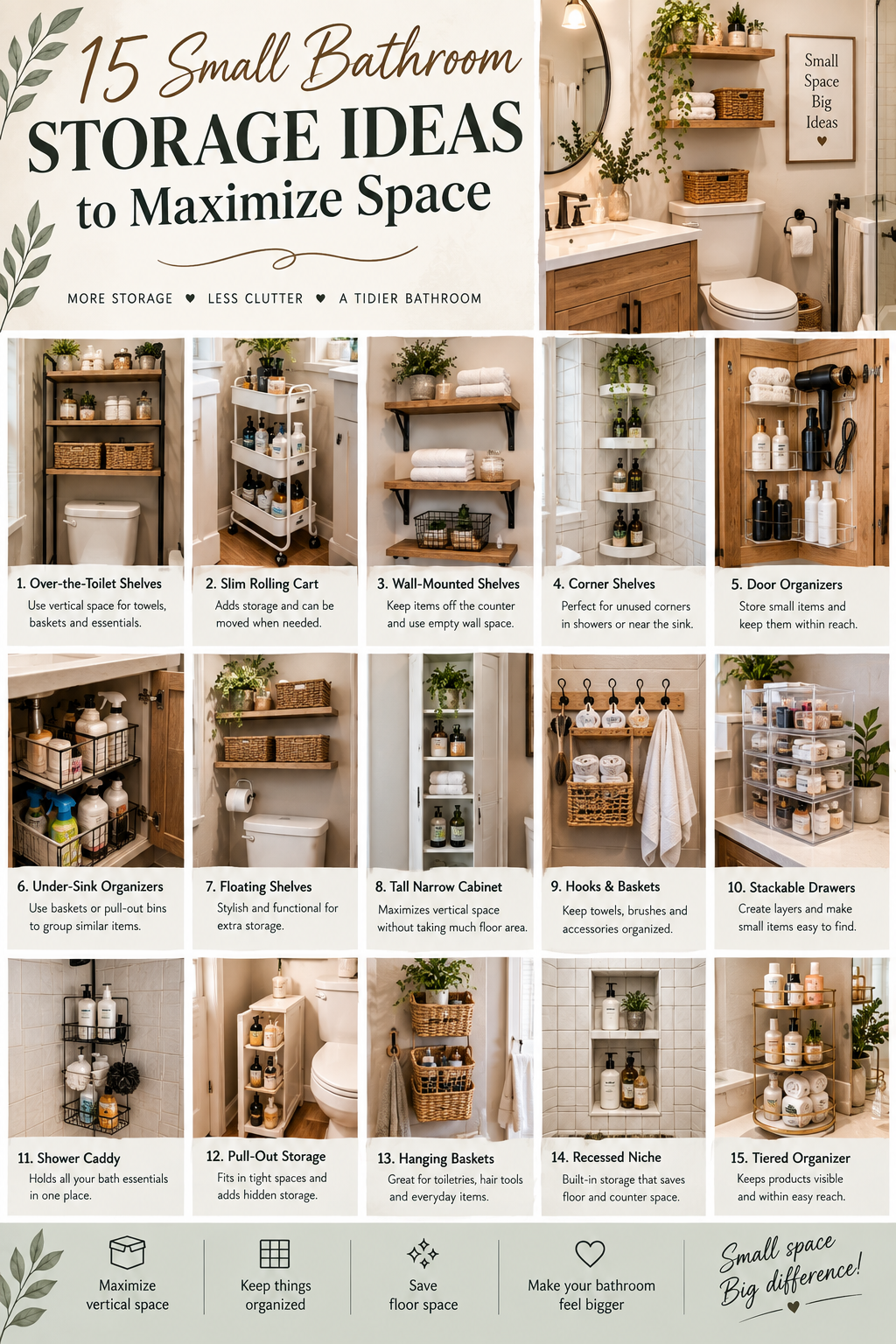
    15 Small Bathroom Storage Ideas to Maximize Space

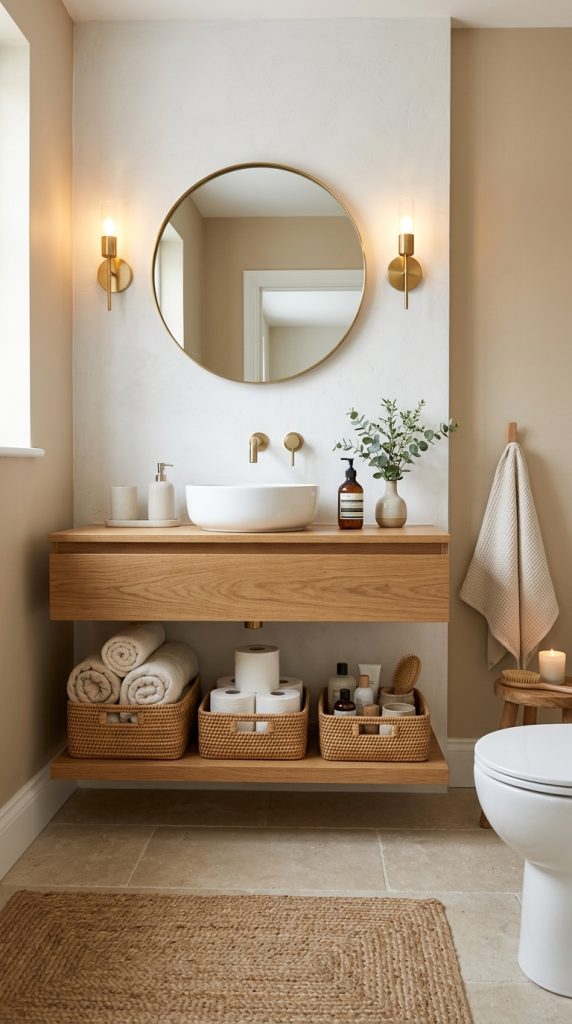
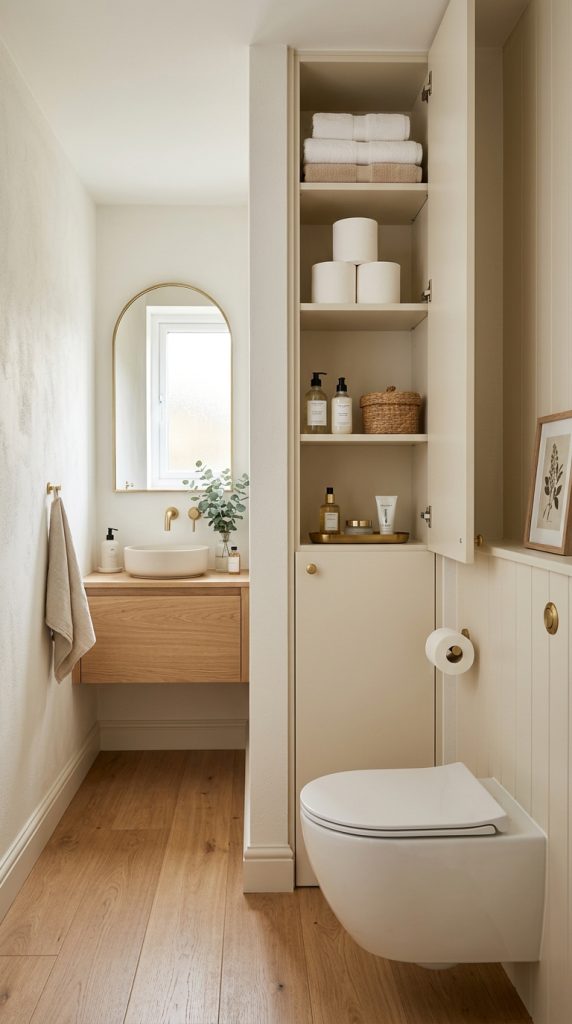
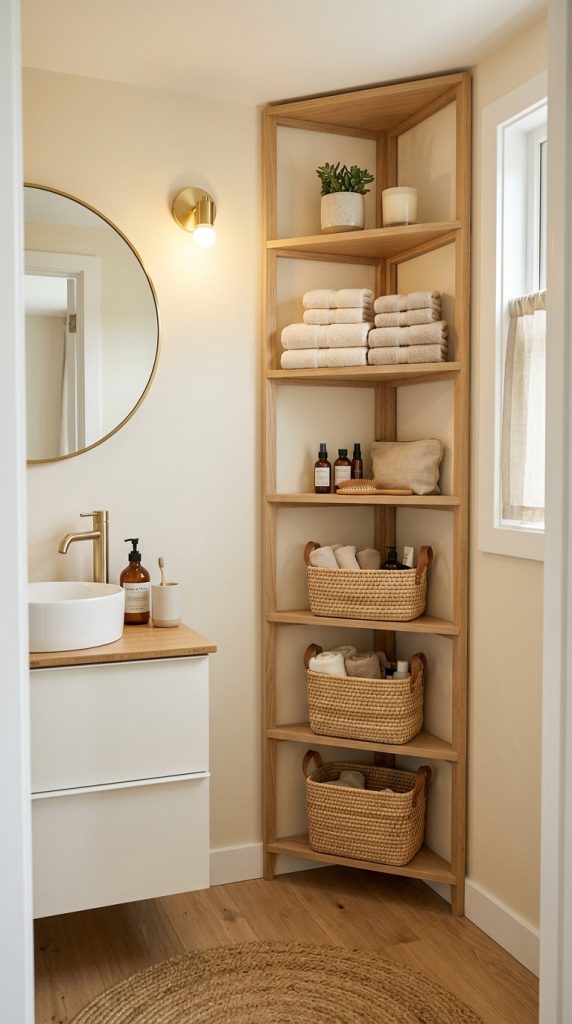
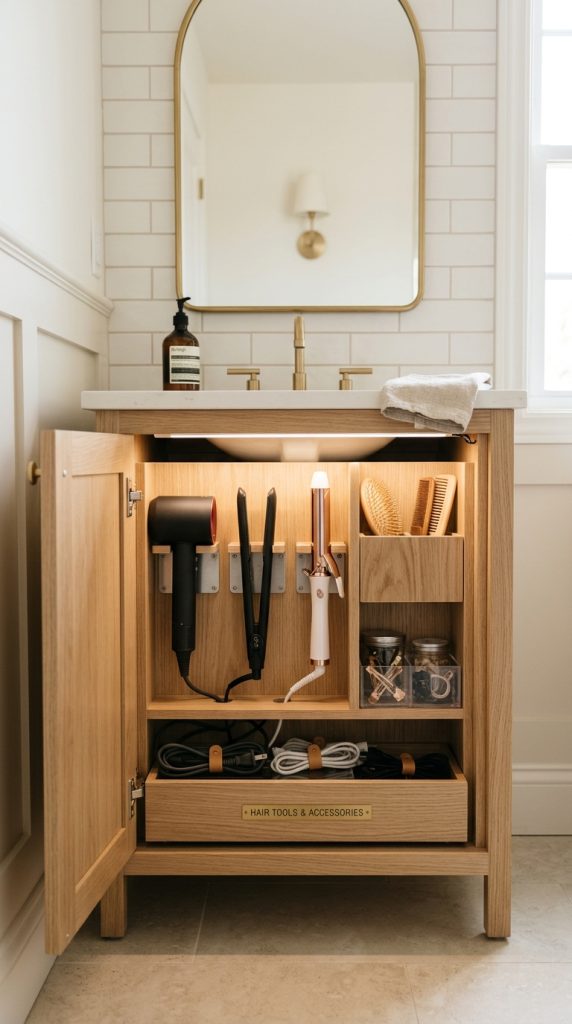
    A small bathroom can be one of the most challenging rooms in the home to organize. There may be barely enough floor space for the essentials, yet you still need somewhere to keep towels, toiletries, skincare products, cleaning supplies, toilet paper, hair tools, and everyday bathroom necessities.

    The good news is that a small bathroom does not have to feel cramped or permanently messy.

    The secret is to stop thinking only about the floor.

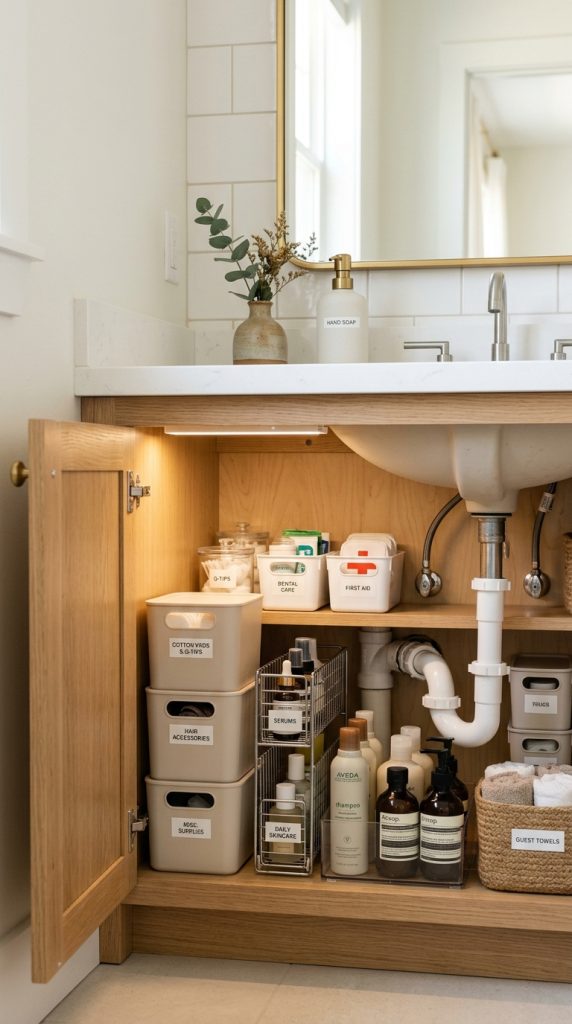
    When floor space is limited, the walls, doors, corners, cabinet interiors, and even the space above the toilet can become valuable storage areas. With the right combination of shelves, baskets, hooks, organizers, drawers, and clever vertical solutions, a tiny bathroom can hold much more than you might expect.

    The best small bathroom storage ideas do more than simply add places to put things. They also make everyday routines easier.

    Instead of digging through a crowded cabinet every morning, you can give frequently used products a designated home. Instead of allowing towels to pile on a chair or countertop, you can create an attractive hanging system. Instead of letting bottles take over the shower floor, you can move them onto a wall-mounted organizer.

    Good organization also makes a small bathroom appear larger.

    A clear countertop creates visual breathing room. Matching baskets reduce visual noise. Floating shelves keep the floor open. Vertical storage draws the eye upward instead of making the room feel wider and more crowded.

    You also do not need a major renovation to make a difference.

    Many of these ideas can be completed using affordable organizers, existing furniture, adhesive hooks, baskets, small shelves, and simple DIY solutions. If you are renting, several options can also be adapted without making permanent changes, provided the products and mounting methods are appropriate for your walls.

    Whether your bathroom is a tiny apartment bathroom, a narrow guest bathroom, a compact powder room, or a small family bathroom, these ideas can help you make the most of every available inch.

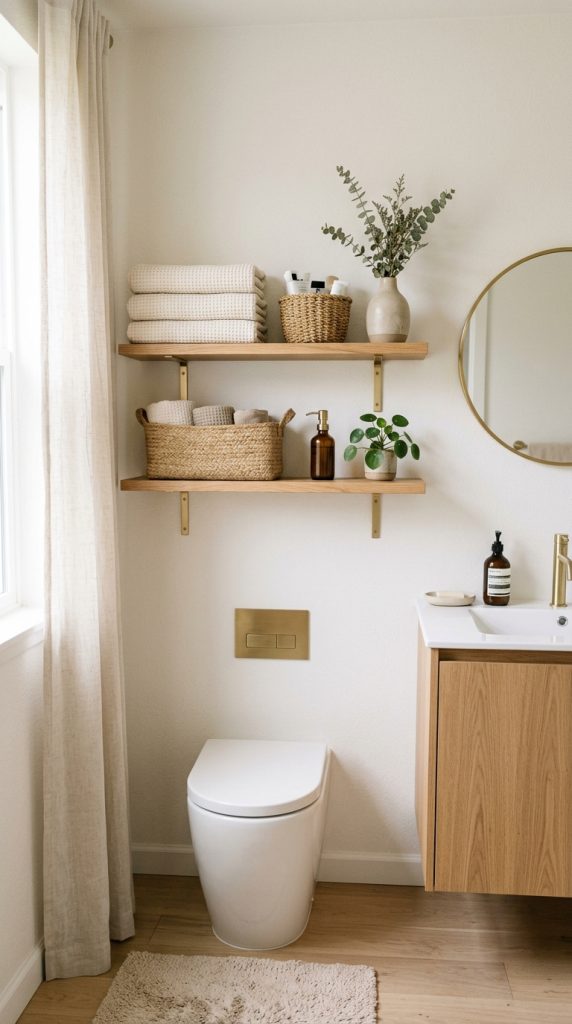
    1. Install Floating Shelves Above the Toilet

    The wall above the toilet is often one of the most underused areas in a small bathroom.

    Because this space is usually empty, adding floating shelves can instantly create useful storage without taking up valuable floor space.

    This is especially helpful when your bathroom does not have a large vanity or built-in storage cabinet.

    A simple arrangement of two or three floating shelves can hold a surprising number of essentials.

    Use the shelves for items such as:

    • Rolled hand towels
    • Extra toilet paper
    • Small baskets
    • Decorative containers
    • Skincare products
    • Spare soap
    • Small plants
    • Candles
    • Bathroom accessories

    The key is to avoid turning the shelves into another clutter zone.

    Instead of placing every bathroom product directly on the shelf, use attractive baskets or containers to group smaller items.

    For example, one woven basket can hold extra toilet paper while another can contain spare hand towels.

    This makes the storage look intentional.

    Choose the Right Shelf Style

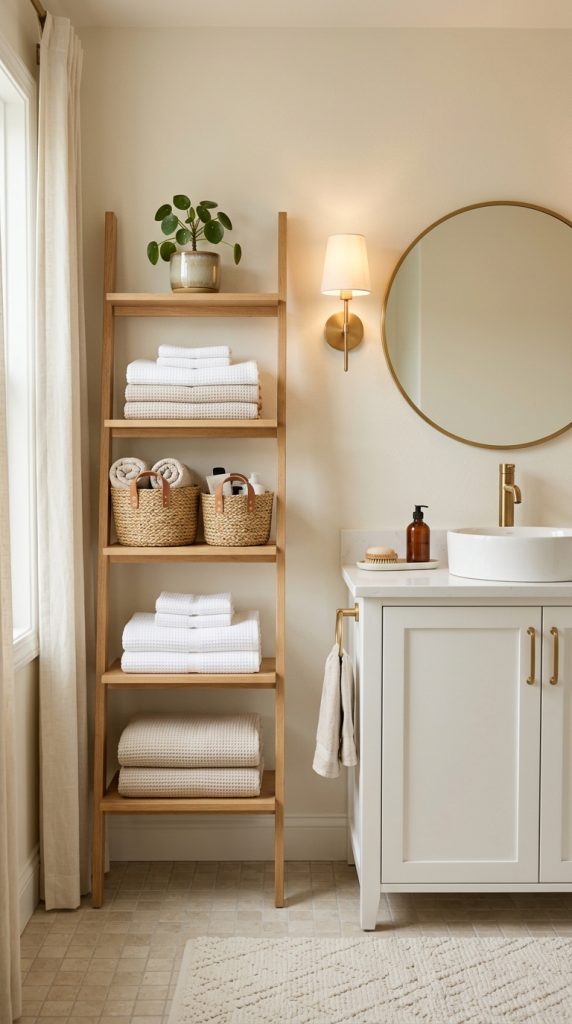
    For a warm and natural bathroom, try light wood shelves with woven baskets.

    For a modern bathroom, choose simple white or black floating shelves.

    For a luxurious look, consider shelves with warm wood and subtle brass brackets.

    If your bathroom is extremely small, choose shelves that are relatively shallow.

    You do not need a very deep shelf for towels or toilet paper.

    A shallow shelf keeps the wall storage useful without making the toilet area feel visually crowded.

    Create a Balanced Arrangement

    You can install three shelves directly above the toilet, or use two shelves and leave some open wall space between them.

    Another option is to place a small shelf above the toilet and a second one slightly higher.

    Keep heavier items on the lower shelf and lighter decorative pieces toward the top.

    Make It Pinterest-Worthy

    Use a limited color palette.

    For example:

    White towels + natural wood + beige baskets + small greenery.

    This creates a clean and sophisticated appearance.

    Instead of filling the shelves with brightly colored product packaging, transfer frequently used items into neutral containers where practical.

    The result is both functional and attractive.

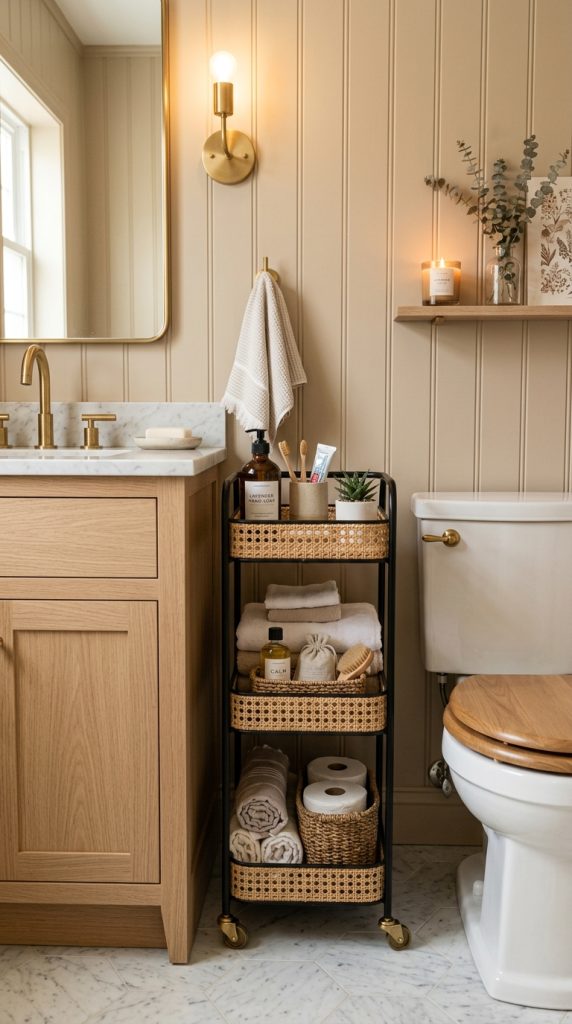
    2. Use a Slim Rolling Cart Between the Toilet and Vanity

    One of the smartest solutions for an extremely small bathroom is a narrow rolling storage cart.

    The advantage is that it can fit into awkward spaces that traditional cabinets cannot use.

    Look for a slim cart that is narrow enough to fit between the toilet and vanity, beside the bathtub, or in another unused gap.

    The cart can provide several levels of storage.

    Use the different shelves for different categories.

    For example:

    Top shelf: Everyday skincare and toiletries

    Middle shelf: Haircare and beauty supplies

    Bottom shelf: Toilet paper, cleaning supplies, or extra towels

    Because the cart has wheels, you can move it when cleaning or when you need access to the plumbing.

    Why Rolling Carts Work So Well

    A small gap may not seem useful.

    But when you multiply a few inches across three or four shelves, you can gain a surprising amount of storage.

    This is especially useful in rental apartments where you cannot install permanent cabinetry.

    Keep It Organized

    Do not simply throw everything onto the shelves.

    Use small containers inside the cart.

    One container can hold hair accessories.

    Another can hold skincare products.

    Another can hold extra soap.

    This prevents the cart from becoming messy.

    Choose a Stylish Cart

    Instead of choosing purely based on utility, consider the bathroom’s design.

    A white metal cart works well in a bright minimalist bathroom.

    A black cart looks attractive in a modern or industrial bathroom.

    A wood-and-metal cart can add warmth to a neutral bathroom.

    If the cart remains visible, treat it like part of the decor.

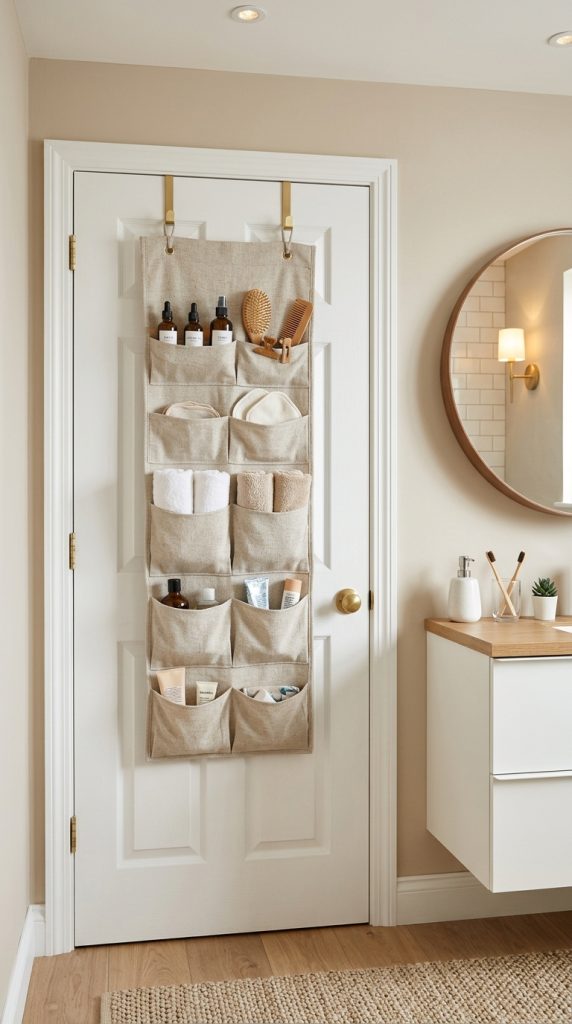
    3. Add an Over-the-Door Organizer

    The back of the bathroom door is valuable real estate.

    Most people see the door as an entrance and exit but forget that the back surface can provide significant storage.

    An over-the-door organizer can create multiple pockets for small bathroom necessities.

    Use it for:

    • Hairbrushes
    • Hair ties
    • Skincare
    • Makeup
    • Travel-size toiletries
    • Cleaning products
    • Extra toilet paper
    • Small towels
    • Personal-care accessories

    This is particularly useful if your vanity drawers are already full.

    Why Door Storage Is Ideal for Small Bathrooms

    It uses vertical space without taking away floor space.

    It also keeps many small items hidden from the main view when the door is closed.

    If you have a bathroom shared by several people, assign different pockets or sections to different categories.

    This can make mornings much easier.

    For a More Attractive Look

    Choose an organizer with neutral fabric, clear pockets, or a simple structured design.

    If the organizer will be visible frequently, avoid one with too many bright colors or visual patterns.

    A neutral organizer will blend into the bathroom.

    Important Consideration

    Make sure the organizer is compatible with your door and does not interfere with closing.

    Also check that the weight of stored items is appropriate for the organizer and door hardware.

    4. Turn the Side of the Vanity Into Vertical Storage

    The side of a bathroom vanity is often completely unused.

    If your vanity has an exposed side, you can use that surface for narrow storage.

    Install slim hooks, rails, or small baskets designed for appropriate wall mounting.

    This area can hold:

    • Hand towels
    • Washcloths
    • Hair tools
    • Small baskets
    • Cleaning brushes
    • Toiletry bags

    If you have a very narrow bathroom, even two or three hooks can make a noticeable difference.

    Use Hooks for Everyday Items

    Hooks are particularly useful because they make items easy to grab.

    Instead of folding a hand towel and stacking it somewhere, hang it directly on the side of the vanity.

    You can also hang a small toiletry pouch.

    Add a Narrow Basket

    A slim basket attached appropriately to the vanity side can hold products that would otherwise sit on the countertop.

    This is a great solution for renters if you can use a suitable removable mounting system.

    Keep the Countertop Clear

    The more storage you move vertically, the less you need to keep on the countertop.

    This is one of the easiest ways to make a small bathroom look larger.

    5. Install a Wall-Mounted Shower Organizer

    The shower is one of the areas where clutter becomes particularly noticeable.

    Shampoo, conditioner, body wash, facial cleanser, razors, sponges, and other products can quickly accumulate around the bathtub or shower floor.

    A wall-mounted shower organizer can bring order to the space.

    Choose an organizer with separate compartments.

    Assign each section a purpose.

    For example:

    • Hair products
    • Body products
    • Facial products
    • Shaving supplies

    If several people share the bathroom, consider assigning different shelves to different users.

    Make the Shower Look Cleaner

    Instead of displaying multiple colorful bottles, you can use matching refillable containers if the products and container materials are compatible.

    A consistent set of bottles creates a much calmer appearance.

    Label them clearly so everyone knows what is inside.

    Choose a Corner Organizer

    If wall space is limited, a corner organizer can be particularly effective.

    The corner is otherwise difficult to use.

    A tiered corner shelf can create several levels of storage while maintaining the shower’s usable space.

    Think About Drainage

    Any shower organizer should allow water to drain properly.

    Avoid designs that trap water around bottles.

    Keeping storage dry and clean will make maintenance much easier.

    6. Use the Space Under the Sink More Efficiently

    The cabinet beneath the sink is often one of the messiest storage areas in a small bathroom.

    Plumbing pipes take up some of the space, while bottles and cleaning supplies get pushed toward the back.

    Instead of treating the cabinet as one large storage box, divide it into zones.

    Use:

    • Stackable bins
    • Pull-out baskets
    • Small drawers
    • Sliding organizers
    • Adjustable shelves
    • Narrow containers

    The goal is to make everything accessible.

    Create Categories

    You might create one bin for cleaning supplies.

    Another can hold extra soap.

    Another can store personal-care products.

    A separate container can hold backup toiletries.

    This prevents products from becoming mixed together.

    Use the Cabinet Door

    The inside of the cabinet door can also become useful storage.

    Depending on the cabinet and mounting system, you can add small organizers for:

    • Sponges
    • Brushes
    • Gloves
    • Small cleaning tools
    • Hair accessories

    This creates storage in an area that is normally ignored.

    Avoid Overfilling

    The temptation with under-sink storage is to fill every available space.

    But if you cannot remove something easily, the organization is not working.

    Leave enough space to access plumbing and clean the cabinet.

    7. Add a Narrow Ladder Shelf for Towels

    A ladder shelf is an attractive way to add vertical storage without requiring a large cabinet.

    Its narrow footprint makes it especially useful in small bathrooms.

    Lean a ladder-style shelf against an appropriate wall and use the different levels for towels and accessories.

    The bottom levels can hold baskets.

    The upper levels can hold folded towels or decorative items.

    Style It Beautifully

    Try:

    • White towels
    • Beige baskets
    • Light wood
    • Small greenery
    • Neutral ceramic containers

    This creates a spa-inspired appearance.

    You can also use a dark wood ladder shelf for a warmer bathroom.

    Keep the Floor Open

    Because the ladder is narrow, it provides vertical storage while using relatively little floor area.

    However, make sure it is stable and properly secured when necessary.

    This is especially important in homes with children or where the shelf could be bumped.

    Use It Near the Shower

    A ladder shelf near the shower can hold clean towels.

    Keep the lowest basket for less frequently used supplies.

    The upper shelves can remain decorative.

    8. Install Hooks Instead of Traditional Towel Bars

    Traditional towel bars can take up more wall space than you realize.

    Hooks are often more efficient in a small bathroom.

    A single horizontal row of hooks can hold several towels while occupying relatively little width.

    You can also place hooks behind the bathroom door.

    Use Different Hooks for Different Purposes

    Install one hook for each person’s bath towel.

    Add smaller hooks for:

    • Hand towels
    • Washcloths
    • Robes
    • Hair towels

    This prevents towels from being thrown over furniture or left on the floor.

    Choose Attractive Hardware

    Because hooks are visible, choose hardware that complements your bathroom.

    For example:

    Modern bathroom: matte black hooks

    Traditional bathroom: brushed brass hooks

    Farmhouse bathroom: wood or antique-style hooks

    Minimalist bathroom: simple white hooks

    Small hardware changes can make a surprisingly big difference.

    Use Vertical Space

    Instead of installing hooks in one long horizontal line, consider a vertical arrangement if wall width is limited.

    Three hooks stacked vertically can fit into a narrow strip of wall.

    This is especially useful beside a vanity or shower.

    9. Create a Built-In Look With Recessed Wall Shelves

    If you are renovating your bathroom, recessed shelving can be one of the most effective long-term storage solutions.

    A recessed niche uses space inside the wall rather than projecting into the bathroom.

    This is especially valuable in small showers.

    A recessed shower niche can store:

    • Shampoo
    • Conditioner
    • Body wash
    • Soap
    • Razors
    • Skincare products

    Because the shelves are built into the wall, they do not reduce walking or showering space.

    Think About Placement

    Place the niche where it is comfortable to reach.

    For a shower, consider the height of the people using it.

    For a vanity wall, a recessed niche can display towels or decorative objects.

    Make It a Design Feature

    Storage does not have to look purely functional.

    You can finish the niche with attractive tile.

    Try a contrasting material inside the niche to create a focal point.

    For example:

    • White bathroom + warm stone niche
    • Beige bathroom + textured tile
    • Marble-look bathroom + darker niche
    • Neutral bathroom + handmade-look tile

    Renovation Consideration

    Because recessed niches involve modifying walls, they require proper planning.

    Before cutting into a wall, confirm plumbing, electrical, structural, waterproofing, and local building requirements with an appropriate professional.

    For a shower niche, correct waterproofing is particularly important.

    10. Use a Mirrored Medicine Cabinet for Hidden Storage

    A mirror and storage cabinet can perform two jobs at once.

    Instead of installing a simple mirror and then searching for another place to store medicines and toiletries, choose a mirrored medicine cabinet designed for bathroom use.

    The mirror helps the bathroom feel open.

    The cabinet provides hidden storage.

    This combination is ideal for small bathrooms.

    What to Store Inside

    Use it for products you reach for regularly:

    • Skincare
    • Toothpaste
    • Dental supplies
    • Small grooming products
    • Medicines where appropriate
    • Contact-lens supplies
    • Small beauty products

    Keep medicines stored safely and according to their labels and local guidance.

    Organize the Shelves

    Use small clear containers or shelf risers.

    Group similar items.

    For example:

    Daily skincare

    Dental care

    First-aid supplies

    Small grooming items

    This prevents the medicine cabinet from becoming another chaotic storage space.

    Keep the Countertop Minimal

    Once everyday items have a home inside the mirrored cabinet, you can remove much of the visual clutter from the sink area.

    This makes the bathroom feel instantly more spacious.

    11. Use Attractive Baskets to Hide Bathroom Clutter

    Baskets are one of the simplest ways to organize a small bathroom while improving its appearance.

    They are especially useful for items that are necessary but visually unattractive.

    Use baskets for:

    • Extra toilet paper
    • Towels
    • Hair products
    • Cleaning supplies
    • Extra toiletries
    • Guest supplies

    Choose Baskets That Fit Your Style

    For a warm bathroom, try woven baskets.

    For a minimalist bathroom, choose simple fabric or wire baskets.

    For a modern bathroom, use structured baskets in neutral colors.

    Label Them

    If several baskets look similar, labels can make everything easier to find.

    For example:

    Towels

    Toiletries

    Cleaning

    Extra Supplies

    Labels are particularly helpful in family bathrooms.

    Use Baskets on Shelves

    Instead of placing ten individual items on an open shelf, place them inside one basket.

    This reduces visual noise.

    It also makes cleaning easier.

    You can remove the basket, wipe the shelf, and put it back.

    Avoid Oversized Baskets

    A large basket may look attractive but can waste valuable space.

    Choose a size that matches the storage area.

    In a small bathroom, several smaller baskets can sometimes be more useful than one giant basket.

    12. Add a Slim Cabinet Between the Toilet and Wall

    If you have a narrow gap between the toilet and another wall or piece of furniture, consider using a slim freestanding cabinet.

    This is particularly useful when the space is too narrow for conventional furniture.

    A tall, narrow cabinet can provide several shelves.

    Use it for:

    • Toilet paper
    • Towels
    • Toiletries
    • Cleaning products
    • Extra soap
    • Guest supplies

    Choose a Vertical Design

    The taller the cabinet, the more storage you can gain without consuming much floor width.

    But make sure the cabinet does not make the bathroom difficult to navigate.

    Measure carefully before purchasing.

    Use Doors to Hide Clutter

    A closed cabinet can be particularly useful in a small bathroom because it visually hides products.

    Choose a cabinet with a simple front.

    White cabinetry can blend into a light bathroom.

    Natural wood can create warmth.

    Dark cabinetry can add contrast.

    Make It Feel Built In

    If the cabinet matches the bathroom’s colors and finishes, it can appear more intentional.

    Place a small decorative object on top if there is enough clearance.

    Avoid turning the top into another storage pile.

    13. Turn an Empty Corner Into a Storage Station

    Corners are often difficult to use, but they can become excellent storage areas with the right furniture.

    A corner shelf or triangular shelving unit can transform an empty corner into useful storage.

    This is especially effective in bathrooms with:

    • Empty corners beside the vanity
    • Space beside the bathtub
    • Wide corners near the door
    • Unused areas beside a shower

    Create a Vertical Corner

    A tall corner shelf can hold several levels of storage.

    Place frequently used items at eye level.

    Use lower shelves for baskets.

    Use the highest shelf for decorative pieces or backup supplies.

    Style With Purpose

    For example:

    Top: Small plant or decorative vase

    Middle: Rolled towels

    Lower: Basket of toiletries

    Bottom: Extra toilet paper

    This combines storage with decor.

    Use a Corner Shower Shelf

    If the corner is inside the shower, choose a waterproof organizer specifically designed for wet areas.

    This keeps bottles off the floor.

    Why Corners Matter

    Small bathrooms often have very little open wall space.

    Corners give you an opportunity to add storage without taking over the main walls.

    14. Create a Hidden Hair-Tool Storage Station

    Hair dryers, curling irons, straighteners, brushes, and styling products can create significant clutter.

    Instead of keeping them on the countertop, create a dedicated hair-tool station.

    One solution is to use a suitable heat-resistant organizer designed for bathroom hair tools.

    Another option is a cabinet organizer that keeps cords contained and tools separated.

    Organize by Frequency

    Keep everyday tools at the easiest-to-reach level.

    Store occasional-use tools higher or farther back.

    Use cord-management solutions designed for the equipment.

    Do not store hot styling tools in a way that creates a fire or heat hazard. Follow the manufacturer’s instructions and allow heated devices to cool completely before storing them.

    Use the Cabinet Door

    The inside of a vanity cabinet door can be useful for small hair accessories.

    You can store:

    • Hair ties
    • Clips
    • Brushes
    • Combs
    • Small styling products

    Keep the Countertop Clear

    A bathroom countertop covered with hair tools immediately makes a small room feel smaller.

    Moving them into one organized station creates a much cleaner appearance.

    15. Build a Multi-Purpose Storage Wall

    If you want the biggest possible transformation, combine several storage ideas into one organized wall.

    A storage wall does not necessarily require a full renovation.

    You can create the effect with:

    • Floating shelves
    • Hooks
    • Baskets
    • Narrow cabinets
    • A mirrored cabinet
    • Small wall organizers

    The idea is to assign every section of the wall a purpose.

    For example:

    Upper area: Decorative shelf

    Middle area: Everyday toiletries

    Lower area: Towels and baskets

    Side area: Hooks

    This creates a complete vertical storage system.

    Keep the Design Cohesive

    Use similar finishes throughout.

    For example:

    Light wood + white + beige + brushed brass

    or

    Black + white + warm wood

    or

    Cream + natural wood + woven baskets

    A consistent palette makes several different storage products appear like one coordinated system.

    Leave Breathing Room

    Do not cover the entire wall with objects.

    Leave some empty space between shelves and storage pieces.

    The goal is to maximize storage without creating visual overload.

    This is especially important in a small bathroom.

    How to Maximize Every Inch of a Tiny Bathroom

    The biggest mistake people make when organizing a small bathroom is focusing only on obvious storage.

    Instead, look at every surface.

    Ask yourself:

    Can this wall hold a shelf?

    Can the back of this door hold an organizer?

    Can this cabinet door hold hooks?

    Can this corner hold a narrow shelf?

    Can the gap beside the vanity hold a rolling cart?

    Can the space above the toilet be used?

    Can a mirror also provide hidden storage?

    Once you start looking vertically, a small bathroom suddenly offers many more possibilities.

    Keep the Countertop as Clear as Possible

    A crowded countertop makes a bathroom look smaller.

    Try to keep only the things you use every day.

    For example:

    • Soap dispenser
    • Toothbrush holder
    • One small decorative item

    Everything else can go into drawers, cabinets, baskets, or shelves.

    This creates visual breathing room.

    If you have many skincare products, consider keeping only your daily routine on the counter.

    Store backup products elsewhere.

    Use Matching Containers for a Cleaner Look

    Bathroom products often come in packaging with many different colors and labels.

    This can make even a well-organized shelf look messy.

    Matching containers can create a more cohesive appearance.

    You might use neutral containers for:

    • Cotton pads
    • Cotton swabs
    • Bath salts
    • Small accessories
    • Hair ties

    Transparent containers are also useful because you can see what is inside.

    However, always label containers clearly when the contents could be confused with another product.

    Declutter Before Buying Storage

    One of the most important steps is also the cheapest.

    Declutter first.

    Remove products that are:

    • Empty
    • Expired
    • Duplicates
    • No longer used
    • Damaged
    • Unnecessary

    You may discover that you need much less storage than you thought.

    Do not buy an organizer simply because it looks attractive.

    First decide what you actually need to store.

    Then choose the storage solution based on those items.

    Store Items According to Frequency of Use

    The easiest way to organize a bathroom is to place things according to how often you use them.

    Everyday Items

    Keep these at eye level or within easy reach.

    Examples include:

    • Toothpaste
    • Face wash
    • Moisturizer
    • Soap
    • Hairbrush

    Weekly Items

    These can go in drawers or baskets.

    Examples include:

    • Hair treatments
    • Face masks
    • Nail-care supplies

    Backup Items

    Store these higher or farther away.

    Examples include:

    • Extra shampoo
    • Spare toilet paper
    • Backup soap
    • Extra cleaning products

    This simple system prevents daily essentials from getting buried underneath rarely used items.

    Use Vertical Storage Whenever Possible

    In a small bathroom, vertical space is often more valuable than horizontal space.

    A tall narrow shelf can hold several levels of supplies while occupying only a small amount of floor area.

    Vertical storage can include:

    • Ladder shelves
    • Tall cabinets
    • Floating shelves
    • Wall hooks
    • Door organizers
    • Hanging baskets

    Look upward before adding more furniture.

    Make Small Bathrooms Feel Larger With Visual Simplicity

    Organization is not only about capacity.

    It is also about perception.

    A bathroom can physically contain many items but still feel spacious if those items are visually organized.

    Use:

    • Light colors
    • Matching containers
    • Clear surfaces
    • Simple shelves
    • Consistent materials
    • Hidden storage
    • Open floor space

    Avoid placing large decorative objects everywhere.

    One small plant can add life.

    One beautiful vase can add personality.

    One attractive basket can provide texture.

    You do not need dozens of accessories.

    Choose Storage That Matches Your Bathroom Style

    Storage should look like it belongs in the room.

    Modern Small Bathroom

    Use:

    • Matte black
    • White
    • Glass
    • Clean-lined shelves
    • Minimal baskets

    Warm Minimalist Bathroom

    Use:

    • Light oak
    • Beige
    • Cream
    • Woven baskets
    • Soft textiles

    Farmhouse Bathroom

    Use:

    • Rustic wood
    • Galvanized metal
    • Woven baskets
    • Neutral towels

    Luxury Bathroom

    Use:

    • Marble-look surfaces
    • Warm wood
    • Brushed brass
    • Glass containers
    • Soft neutral textiles

    When storage matches the room, practical organization becomes part of the decor.

    Budget-Friendly Small Bathroom Organization

    You do not need to remodel your bathroom to improve storage.

    Start with inexpensive solutions.

    Use Existing Jars

    Clean glass jars can hold:

    • Cotton balls
    • Cotton swabs
    • Hair accessories

    Reuse Small Baskets

    Move baskets from another room if they fit your bathroom.

    Add Simple Hooks

    A few strategically placed hooks can solve towel and robe storage problems.

    Use a Tension Rod

    A properly installed tension rod in an appropriate location can create hanging space for lightweight items.

    Do not overload it.

    Add Stackable Bins

    Stackable containers allow you to use vertical space inside cabinets.

    Repurpose a Small Tray

    A decorative tray can group everyday countertop products.

    Instead of five products scattered around the sink, place them together on one tray.

    The result immediately looks more intentional.

    How to Organize a Small Bathroom Vanity

    Start by removing everything.

    Clean the drawers and cabinet.

    Then divide products into categories.

    For example:

    Dental care

    Skincare

    Haircare

    Beauty

    Cleaning

    Backups

    Place everyday products in the easiest-to-reach areas.

    Use drawer dividers for small items.

    Use bins for larger categories.

    Do not leave large empty gaps inside drawers.

    Use organizers that make use of the available height.

    But avoid filling every inch.

    You need enough space to remove items easily.

    How to Organize a Tiny Guest Bathroom

    Guest bathrooms should feel simple and welcoming.

    You do not need to store every personal product in the open.

    Keep a small basket with:

    • Fresh hand towels
    • Extra toilet paper
    • Hand soap
    • Travel-size toiletries
    • Tissues

    Place it somewhere easy for guests to find.

    Keep the countertop mostly clear.

    A small vase, candle, or plant can provide decoration without taking up too much space.

    How to Organize a Small Family Bathroom

    A family bathroom needs stronger systems because several people may use the same products.

    Give everyone a designated space.

    For example:

    • One drawer per person
    • One basket per person
    • Different shelf sections
    • Labeled containers

    Children’s products should be stored safely and appropriately.

    Keep potentially dangerous products and medications inaccessible to children.

    The simpler the system, the more likely everyone is to maintain it.

    How to Keep a Small Bathroom Organized Long-Term

    Creating an organized bathroom is one thing.

    Keeping it organized is another.

    The best system is one that is easy to maintain.

    Try a five-minute reset at the end of the day.

    Put products back where they belong.

    Hang towels.

    Clear the countertop.

    Return toilet paper and supplies to their storage area.

    Once a week, quickly check for empty containers.

    Once a month, remove products you no longer need.

    This prevents clutter from building up.

    Final Thoughts

    A small bathroom does not have to mean small storage.

    The key is to use space creatively and intentionally.

    Instead of relying entirely on a traditional vanity, look at the walls, doors, corners, cabinet interiors, and unused areas above fixtures.

    Floating shelves can transform the wall above the toilet.

    A slim rolling cart can use an awkward gap.

    An over-the-door organizer can turn an unused door into a storage station.

    Hooks can replace bulky towel bars.

    A mirrored medicine cabinet can combine two essential functions.

    Baskets can hide everyday clutter.

    A ladder shelf can turn a narrow wall into vertical storage.

    A shower organizer can keep bottles off the floor.

    And a thoughtfully designed storage wall can bring several solutions together into one cohesive system.

    The most important principle is to organize vertically before adding more floor furniture.

    When floor space is limited, every inch matters.

    Think upward.

    Think about hidden areas.

    Think about the back of doors.

    Think about the inside of cabinets.

    Think about corners.

    Most importantly, think about how you actually use the bathroom.

    The best storage system is not necessarily the one with the most shelves.

    It is the one that makes your daily routine easier.

    Keep everyday products within reach.

    Move backup supplies out of the way.

    Group similar items together.

    Use baskets and containers to control visual clutter.

    Choose storage pieces that complement your bathroom’s style.

    And leave enough open space for the room to breathe.

    With a little creativity, even the smallest bathroom can become organized, functional, and beautiful.

    Whether you are working with a tiny apartment bathroom or simply trying to make a compact guest bathroom more practical, these 15 small bathroom storage ideas can help you maximize every inch without sacrificing style.

    A well-organized bathroom should not feel like a storage room.

    It should feel calm, clean, and easy to use.

    And sometimes, all it takes is one empty wall, one forgotten corner, or one narrow gap to create the extra storage your bathroom has been missing.


  • Hello world!

    Welcome to WordPress. This is your first post. Edit or delete it, then start writing!