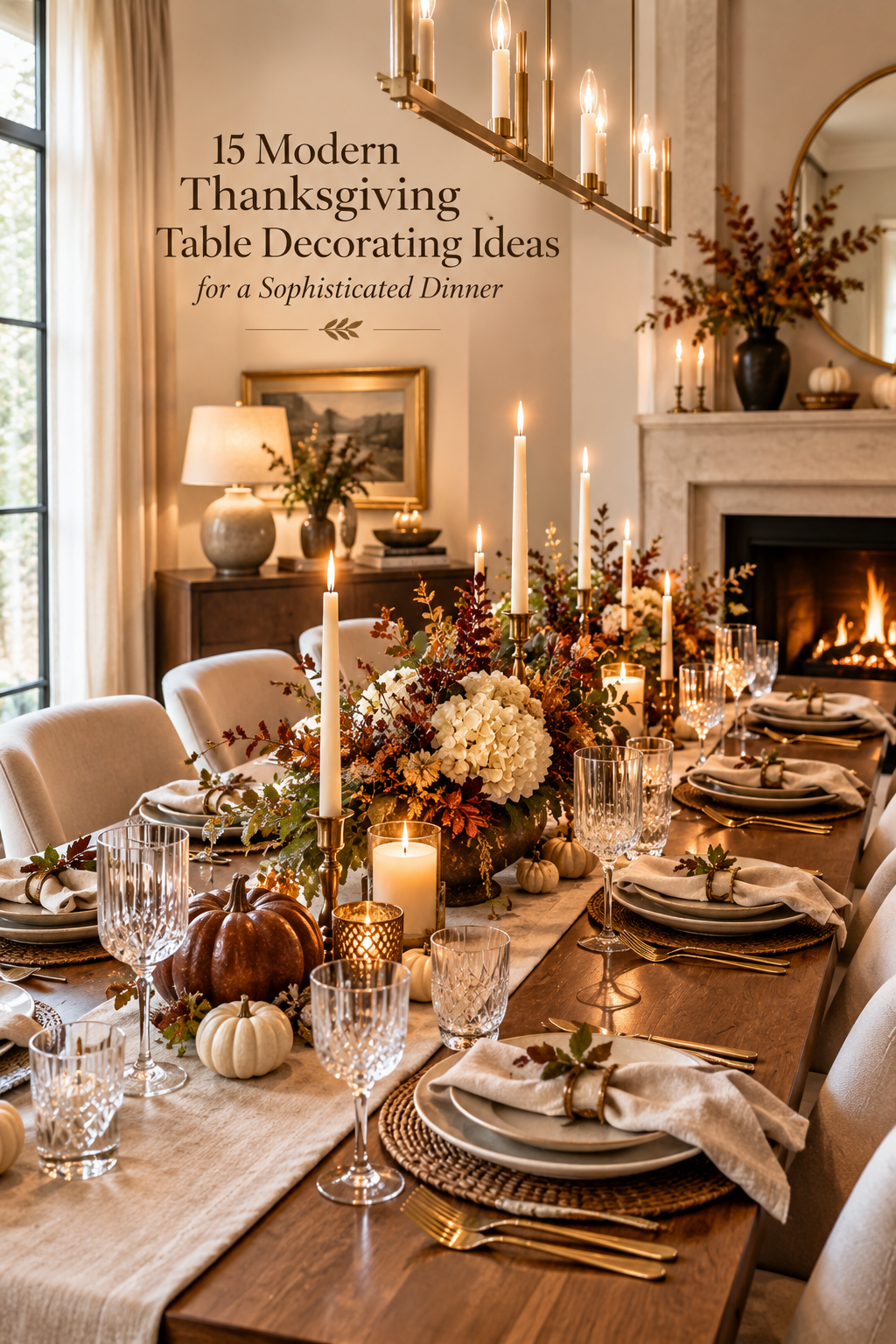
Introduction
Modern Thanksgiving table decorating ideas can transform an ordinary dining room into an elegant, welcoming setting that feels festive without looking overly traditional. For a sophisticated Thanksgiving dinner, the goal is not to cover the table with pumpkins, colorful leaves, and seasonal signs. Instead, a modern Thanksgiving tablescape uses thoughtful layers of texture, restrained autumn colors, beautiful tableware, natural materials, soft lighting, and one memorable centerpiece to create an atmosphere that feels polished and inviting.
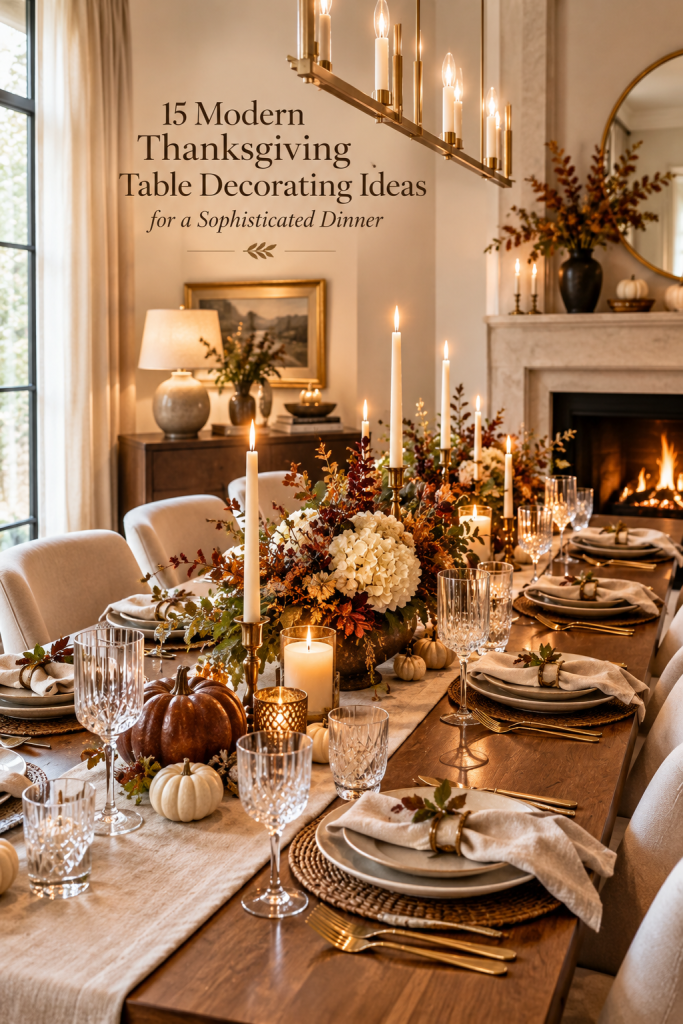
A beautifully decorated Thanksgiving table should make guests feel welcome before the first dish is served. It should encourage conversation, complement the dining room, and provide enough practical space for plates, glasses, serving dishes, and comfortable movement. The best modern Thanksgiving table ideas balance decoration with function, creating a setting that looks beautiful in photographs but still works naturally during a real family dinner.
One of the biggest advantages of modern Thanksgiving decorating is flexibility. You can create an elegant tablescape without completely changing your existing dining room. A neutral linen runner, a few beautiful ceramic plates, warm brass candleholders, natural branches, and carefully chosen napkins may be enough to completely change the mood. You can also use pieces you already own and combine them with a few seasonal accents.
Color is especially important when designing a sophisticated Thanksgiving table. Instead of relying only on bright orange and yellow, consider a more refined palette of ivory, cream, taupe, beige, chocolate brown, walnut, olive green, muted rust, burgundy, charcoal, and antique brass. These shades still feel connected to autumn but create a calmer and more contemporary appearance.
Texture can make a simple tablescape feel luxurious. Natural linen provides softness, handmade ceramics add character, wood brings warmth, glass creates lightness, and brushed brass introduces a subtle glow. When these materials are layered carefully, the table can look rich without requiring dozens of decorative accessories.
The centerpiece is another important consideration. Modern Thanksgiving decorating often works best with one strong focal point instead of several competing arrangements. A sculptural ceramic vessel filled with dried branches can become the visual anchor. A shallow bowl of seasonal fruit can provide a natural harvest reference. A collection of candles can create intimacy for an evening dinner. The important thing is to select one primary idea and allow the rest of the table to support it.
Modern does not have to mean cold or minimalist. A sophisticated Thanksgiving table can still feel cozy. Warm candlelight, natural wood, soft textiles, seasonal foliage, and earthy colors can create plenty of warmth while maintaining clean lines and visual simplicity.
Another advantage of this style is that it can transition beautifully into late-fall decorating. After Thanksgiving dinner, you can remove the most specific seasonal details while leaving the linen, candles, ceramics, branches, brass pieces, and neutral accessories in place.
Whether you are hosting a large Thanksgiving gathering, an intimate family meal, or a small dinner with friends, the following 15 modern Thanksgiving table decorating ideas offer different ways to create a beautiful, sophisticated tablescape. Each idea has a distinct focal point so you can choose a style that suits your home, dining room, and personal taste.
The goal is not to create a table that looks perfect in an artificial way. Instead, create a table that feels intentional, comfortable, warm, and memorable. Use beautiful materials, leave enough breathing room, and allow the Thanksgiving meal itself to remain part of the visual experience.
1. Create a Neutral Layered Thanksgiving Tablescape
A neutral Thanksgiving table is an excellent starting point when you want an elegant and timeless appearance.

Begin with a cream, ivory, beige, or soft taupe linen tablecloth. Natural linen is particularly effective because its relaxed texture keeps the setting from feeling too formal. If you prefer to show the beauty of a wood dining table, skip the tablecloth and use a long linen runner instead.
Layer each place setting carefully.
Start with a charger if you have one, followed by a dinner plate and a smaller salad plate or bowl. Cream or ivory ceramics create a soft foundation that works with almost any seasonal accent.
Choose linen napkins in a slightly darker shade such as taupe, warm beige, olive, muted rust, or chocolate brown.
For flatware, brushed brass can add warmth. Matte black creates stronger contrast, while stainless steel provides a cleaner contemporary appearance.
Add natural texture
The neutral palette becomes much more interesting when several materials are combined.
Use:
- linen napkins
- handmade ceramic plates
- natural wood
- clear glassware
- brushed metal
- woven details
Instead of adding many decorative objects, allow these textures to create visual richness.
Create a restrained centerpiece
Place one low ceramic bowl or elongated vessel in the center.
Fill it with dried branches, olive foliage, eucalyptus, muted grasses, or seasonal stems.
Keep the arrangement loose and organic rather than perfectly symmetrical.
A few warm candles can surround the vessel without competing with it.
This style is especially effective for homes with modern, Scandinavian, organic-modern, or transitional interiors.
2. Make a Sculptural Ceramic Centerpiece the Star
A sophisticated Thanksgiving table does not need an elaborate floral arrangement.

A sculptural ceramic vessel can create a strong focal point while keeping the overall design modern.
Choose a large handmade-looking vase, stoneware bowl, sculptural urn, or organic-shaped vessel.
Look for interesting silhouettes rather than highly decorative patterns.
A matte cream, warm gray, taupe, brown, or charcoal finish can work beautifully.
Fill it with natural elements
Use dried branches or seasonal foliage with enough height to create visual movement.
Allow some branches to extend beyond the edges of the vessel.
The slightly irregular shape makes the arrangement feel more natural.
Keep everything else quiet
Once the centerpiece becomes the focal point, the surrounding table should remain relatively restrained.
Use simple cream dinnerware.
Choose plain linen napkins.
Add a few understated candleholders.
Avoid placing small decorations around every plate.
The negative space helps the centerpiece stand out.
Make it functional
For a dinner table, consider the height carefully.
If the arrangement blocks the view between guests, shorten it or use a wider, lower vessel.
A centerpiece should contribute to the conversation rather than interrupt it.
3. Bring Warmth With Natural Wood Accents
Natural wood can instantly make a contemporary Thanksgiving table feel warmer.
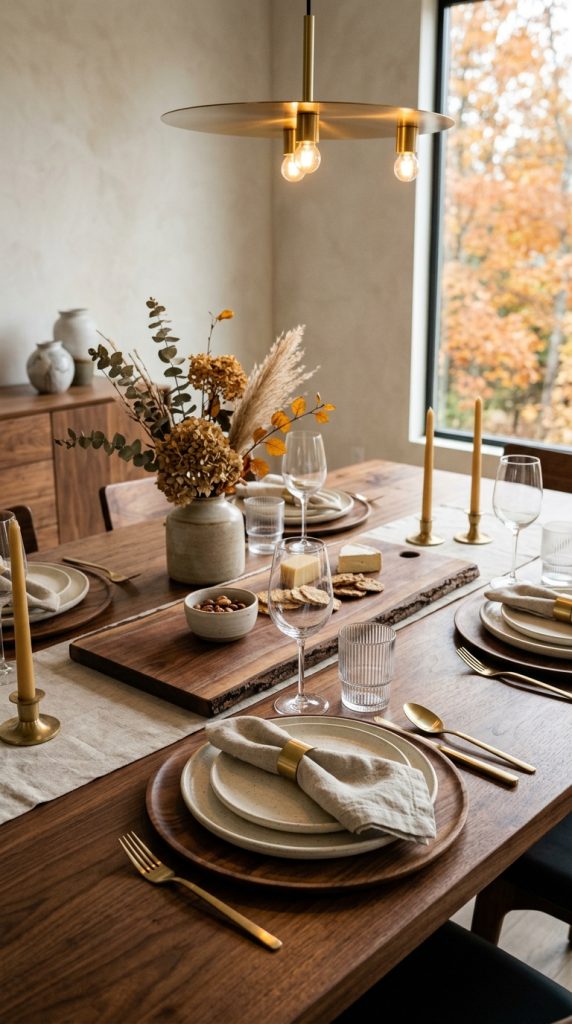
This idea is particularly useful when your dining room has neutral walls, white furniture, or modern lighting.
Introduce wood through chargers, serving boards, candleholders, trays, or small decorative bowls.
Walnut provides a rich, sophisticated appearance.
Oak feels lighter and more relaxed.
Reclaimed wood adds character and a slightly rustic quality.
Pair wood with refined materials
The key to keeping the table sophisticated is balance.
Pair a walnut serving board with ivory ceramics.
Place brass flatware beside a light linen napkin.
Use clear glassware to prevent the table from becoming visually heavy.
This combination creates contrast without requiring bright seasonal colors.
Use wood practically
A beautiful wooden serving board can hold bread, cheese, fruit, or appetizers.
A shallow wooden bowl can contain pears, figs, or pomegranates.
This allows your decorative pieces to remain useful during dinner.
4. Create a Candlelit Thanksgiving Dinner
Lighting can make an enormous difference to a Thanksgiving tablescape, particularly if dinner takes place in the evening.
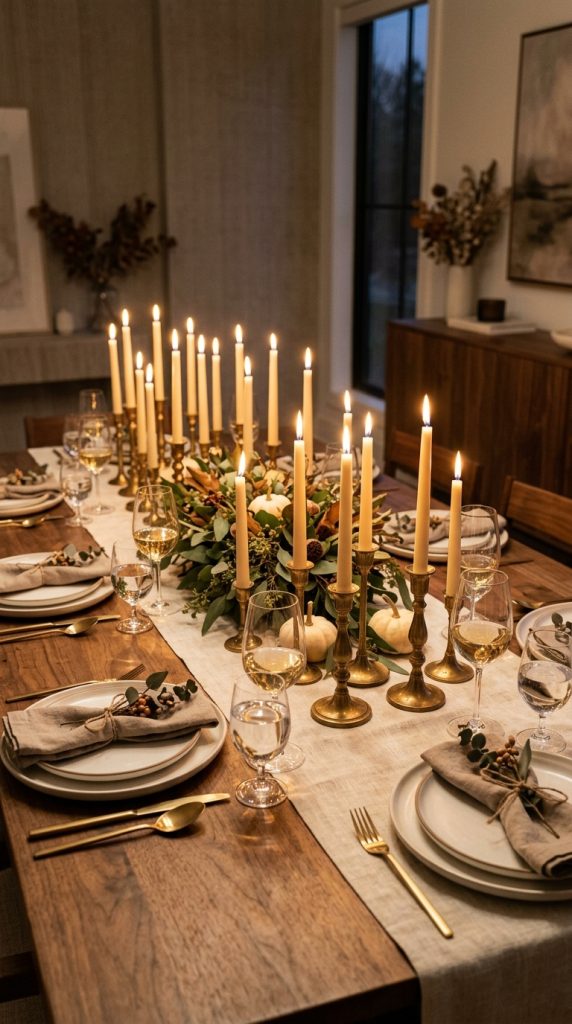
Instead of relying completely on overhead lighting, create several smaller sources of illumination.
Taper candles are a classic choice, while realistic flameless candles are useful when open flames are not practical.
Choose modern candleholders
Brushed brass holders provide warmth.
Black metal creates a dramatic contemporary contrast.
Clear glass holders make the table feel lighter.
Stone or ceramic holders can create a softer organic-modern appearance.
Create different heights
A combination of slightly different candle heights can produce a more natural arrangement.
However, avoid creating tall objects directly in front of guests.
The candlelight should enhance conversation rather than interfere with it.
Let the glow reflect
Place glassware near the candleholders.
Clear, amber, or smoky glasses can catch the light and create subtle reflections.
The result can feel especially beautiful once the room becomes darker.
5. Style an Olive Green and Cream Thanksgiving Table
Olive green is a sophisticated alternative to traditional bright autumn colors.
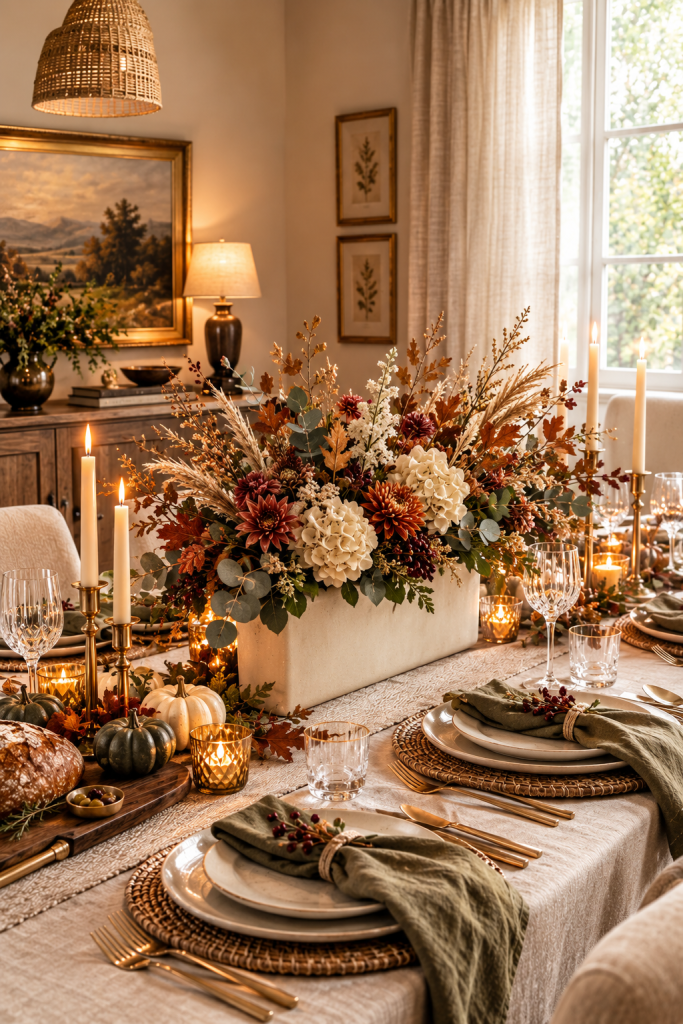
Begin with an ivory or cream tablecloth.
Use cream ceramic dinnerware and neutral linen napkins.
Then introduce olive through foliage, napkins, glassware, or small ceramic accents.
Build the centerpiece with greenery
Use olive branches, eucalyptus, or another muted foliage arrangement.
Place the stems inside a long neutral ceramic vessel.
Allow some greenery to extend naturally across the table.
Add warm metal
Brushed brass pairs beautifully with olive green.
Use brass flatware, candleholders, or a small serving tray.
The warm metallic surface catches the light and prevents the palette from appearing too muted.
Add darker contrast
Walnut wood or charcoal details can give the table more depth.
For example, use walnut serving boards and charcoal linen napkins.
The combination of olive, cream, walnut, and brass creates a refined autumn atmosphere without relying on traditional orange.
6. Use Burgundy for a Rich Contemporary Tablescape
Burgundy can create an elegant and dramatic Thanksgiving table while still feeling warm and seasonal.

The easiest way to introduce it is through textiles.
Choose burgundy linen napkins or a narrow runner.
Pair them with ivory plates and natural wood.
Keep the centerpiece understated
Use a dark ceramic vase filled with dried branches.
Add a few muted rust or burgundy stems if desired.
Avoid turning the centerpiece into a large multicolor floral arrangement.
The burgundy textiles should provide most of the visual intensity.
Add brass
Brushed brass candleholders or flatware can warm the deep red tone.
If you have burgundy dining chairs or nearby artwork, repeat the color subtly in the tablescape to connect the room.
Balance the palette
Burgundy looks particularly sophisticated alongside:
- ivory
- walnut
- taupe
- chocolate brown
- muted olive
- antique brass
These colors soften the richness of the red.
7. Design a Black-and-Cream Thanksgiving Table
Black can make a Thanksgiving table feel modern, elegant, and architectural.
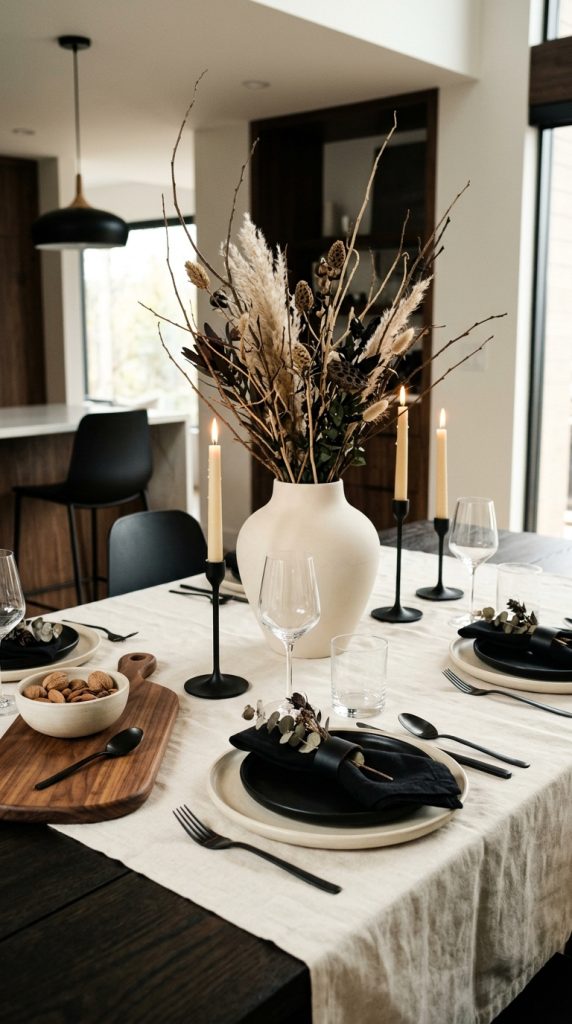
Use a cream tablecloth as the foundation.
Choose cream or ivory dinnerware.
Then introduce black through flatware, candleholders, napkins, or small ceramic pieces.
Add warm natural materials
Because black can feel visually strong, soften it with natural elements.
Add a walnut serving board.
Use dried branches in a cream stoneware vase.
Include warm candlelight.
Create contrast
The beauty of this palette comes from the relationship between light and dark.
Cream dinnerware stands out against black accents.
Warm brass can provide a bridge between the two.
A few olive or brown foliage elements can connect the table to autumn.
This approach is especially effective in contemporary dining rooms with clean architecture and minimal furniture.
8. Create Elegant Individual Place Settings
A beautiful place setting can make guests feel especially welcome.
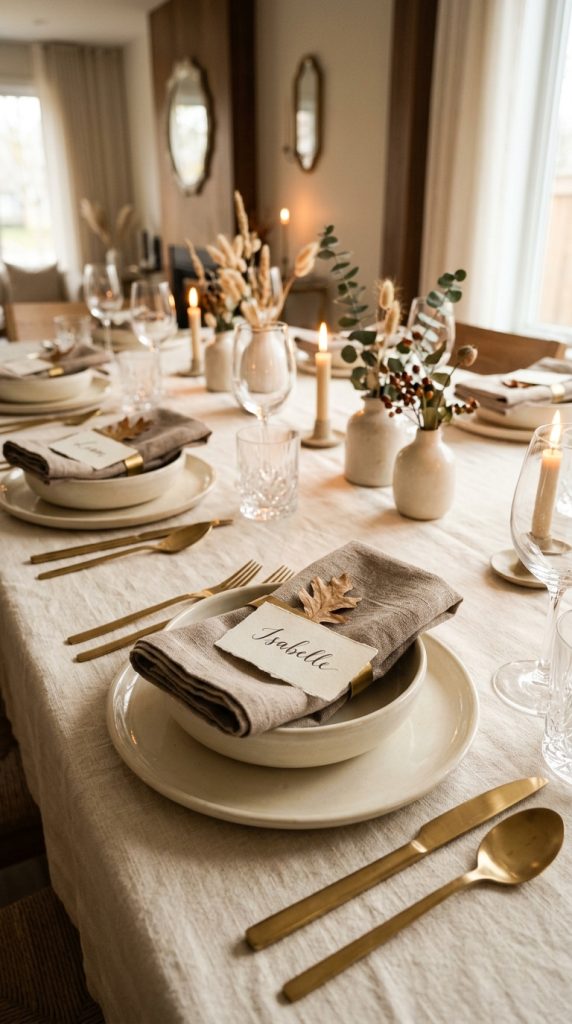
Begin with a neutral dinner plate.
Layer a smaller plate or bowl on top.
Place the linen napkin beside or across the setting.
Add a subtle napkin ring
Choose a material that complements the room.
Good options include:
- brushed brass
- natural wood
- black metal
- woven fiber
- ceramic
Avoid highly themed Thanksgiving napkin rings if you want a sophisticated appearance.
Add a personal detail
A small handwritten place card can make the setting feel intentional.
You could also place a tiny dried leaf, herb sprig, or natural fiber detail on the napkin.
Keep the decoration small enough that it does not interfere with the guest’s place setting.
Coordinate without matching perfectly
The napkin can be slightly darker than the tablecloth.
The napkin ring can repeat the centerpiece’s metal finish.
The place card can echo the dinnerware color.
These subtle relationships make the table feel cohesive.
9. Use Handmade Ceramic Dinnerware
Handmade or artisan-inspired ceramics can give a Thanksgiving table warmth and personality.
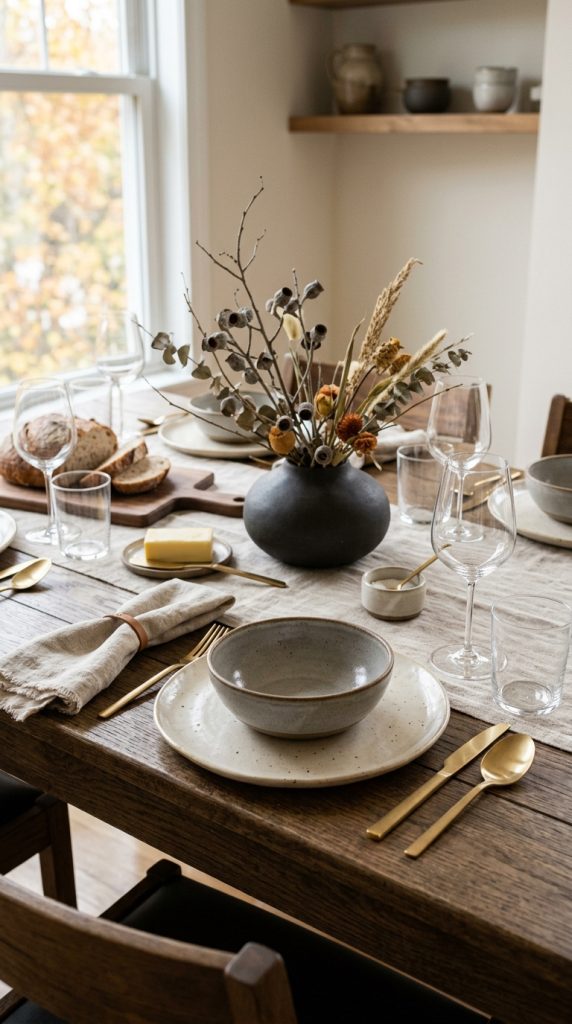
Look for plates with subtle variations in glaze, shape, or texture.
Cream and ivory are particularly versatile.
Warm gray, taupe, brown, and charcoal can also work beautifully.
Mix complementary forms
You can combine round dinner plates with softly irregular bowls.
Keep the number of shapes limited so the table does not become visually chaotic.
Let the ceramics provide the decoration
If your dinnerware has a beautiful handmade finish, you may not need decorative chargers or heavily patterned napkins.
Pair the ceramics with simple linen.
Add warm wood.
Use understated glassware.
The result will feel organic rather than overly decorated.
Choose durable pieces
Because Thanksgiving involves substantial food preparation and serving, choose tableware that can handle actual use.
Beautiful design is most successful when it remains practical.
10. Add Transparent or Tinted Glassware
Glassware can add elegance without taking up much visual space.

Clear glass is particularly useful when you want the tablescape to feel airy.
Choose glasses with graceful silhouettes and thin-looking rims if that fits your style.
Introduce subtle color
For a more distinctive tablescape, try:
- amber glass
- smoky gray glass
- pale olive glass
- soft brown glass
Keep the colors understated.
The goal is to complement the table rather than create a rainbow of competing shades.
Use glass to amplify candlelight
Position the glasses where they can catch reflections from nearby candles.
The result adds movement and glow to an evening dinner.
Glass also works well with metallic flatware because both materials reflect small amounts of light.
11. Create a Minimal Harvest Fruit Centerpiece
Thanksgiving is closely associated with harvest, so seasonal produce can become a beautiful centerpiece.

Instead of filling the table with pumpkins, use a shallow stone or ceramic bowl containing carefully selected fruit.
Consider:
- pears
- figs
- pomegranates
- apples
- walnuts
- seasonal grapes
Choose a controlled palette
Do not use every available color.
For example, combine deep burgundy pomegranates with cream pears and warm brown walnuts.
Another option is muted green pears with olive foliage and dark wood.
Keep the arrangement natural
The fruit does not need to be perfectly arranged.
A relaxed composition can look more contemporary.
Leave some empty space around the bowl so the centerpiece remains visually clear.
Make it useful
After dinner, the fruit can be served.
This makes the centerpiece practical as well as decorative.
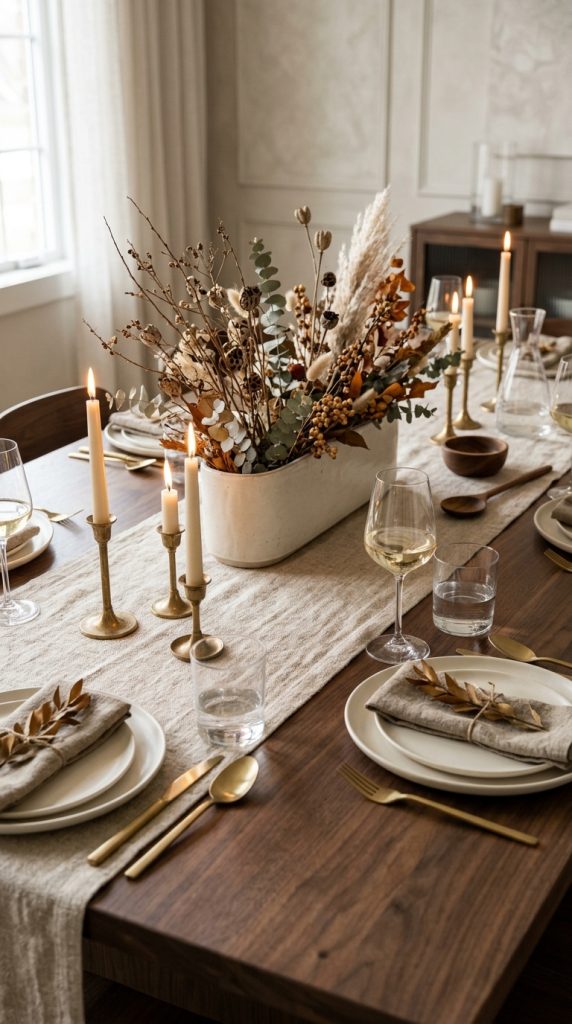
12. Use a Textured Linen Runner
A linen runner can define the center of a rectangular dining table without completely covering the tabletop.
Choose a neutral shade such as:
- ivory
- oatmeal
- taupe
- beige
- warm gray
- muted brown
Layer the centerpiece
Place your primary vessel along the runner.
Add candleholders at carefully spaced intervals.
Use small natural elements around the centerpiece if needed.
Allow the tabletop to remain visible
This is particularly important when the table itself is beautiful.
A walnut, oak, or stone surface can become part of the design.
Try slight asymmetry
A modern table does not need to be perfectly symmetrical.
You can place the main vase slightly off-center and balance it with two smaller objects at the opposite side.
The result should feel intentional rather than accidental.
13. Combine Charcoal, Taupe, and Warm Brass
For an especially sophisticated Thanksgiving table, move away from traditional autumn colors altogether.

Use charcoal, taupe, cream, and warm brass.
Charcoal plates or napkins create depth.
Taupe linen softens the overall palette.
Brass adds warmth and a subtle reflective quality.
Introduce autumn through materials
Instead of orange pumpkins, use:
- dried grasses
- walnut
- amber glass
- branches
- natural linen
- dark ceramic
- muted foliage
These elements create an autumn feeling without obvious seasonal symbols.
Use lighting strategically
Warm candlelight works particularly well with this palette.
The brass reflects the glow.
The charcoal creates contrast.
The taupe and cream prevent the table from appearing too dark.
This style is ideal for an evening Thanksgiving dinner.
14. Create an Intimate Thanksgiving Table for Four
A sophisticated Thanksgiving dinner does not need a huge dining room.
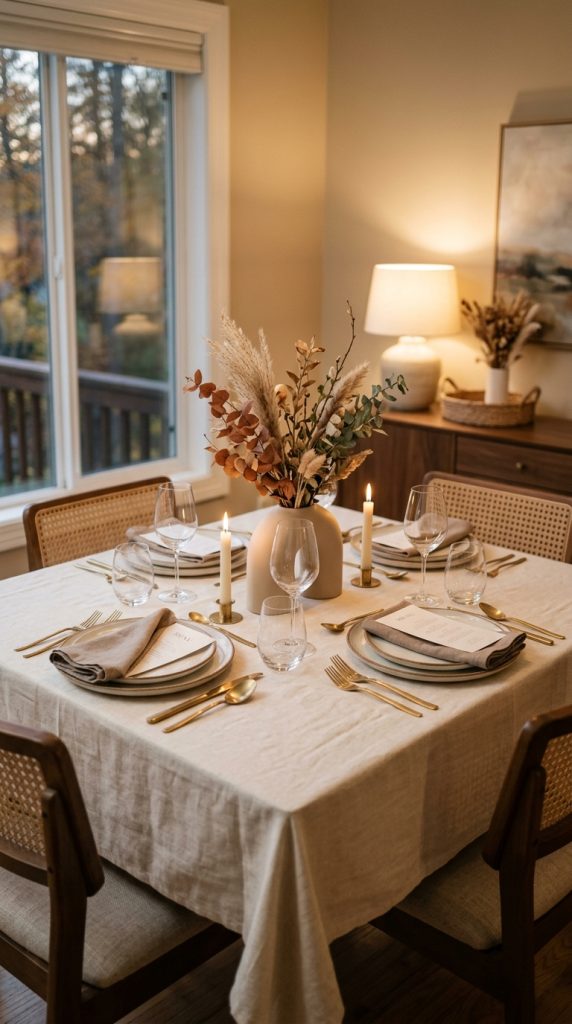
For a smaller gathering, focus on creating intimacy.
A round or compact rectangular table can become beautiful with just a few carefully selected pieces.
Begin with a neutral linen tablecloth or runner.
Use one low centerpiece.
Then create individual place settings with quality ceramics, linen napkins, glassware, and elegant flatware.
Keep the middle open
Small tables become crowded quickly.
Avoid filling the center with large arrangements.
One vase surrounded by two or three small candles may be enough.
Personalize each place
A handwritten name card can make the dinner feel thoughtful.
You can also place a tiny seasonal sprig on each napkin.
Focus on atmosphere
Because there are fewer guests, candlelight can play a stronger role.
Use nearby lamps or wall sconces to create additional warmth.
The result should feel intimate rather than sparse.
15. Create a Chocolate Brown Thanksgiving Tablescape
Chocolate brown is a rich and sophisticated alternative to bright orange.

It works particularly well with walnut furniture, cream walls, beige upholstery, and warm lighting.
Start with a cream tablecloth.
Add chocolate-brown linen napkins.
Use walnut serving boards or chargers.
Then introduce cream ceramic dinnerware and brushed brass details.
Build a natural centerpiece
Place dried branches or muted foliage into a warm stoneware vessel.
Add a few pears or pomegranates if you want a harvest reference.
Avoid adding too many additional colors.
Balance the dark tones
Chocolate brown looks beautiful with:
- ivory
- cream
- taupe
- muted olive
- soft rust
- antique brass
These shades create enough contrast while maintaining an earthy appearance.
Finish with warm lighting
Candlelight will bring out the warmth in the brown textiles and wood.
The final result should feel cozy, elegant, and appropriate for an intimate Thanksgiving dinner.
How to Choose the Right Thanksgiving Table Color Palette
A sophisticated tablescape usually becomes easier to design when you choose the color palette before buying or arranging decorations.
For a soft neutral table, combine:
Ivory + beige + taupe + warm wood
For a richer autumn look:
Cream + chocolate brown + burgundy + brass
For an organic modern style:
Cream + olive + walnut + stone
For a dramatic contemporary table:
Ivory + charcoal + black + brass
For a warm minimalist table:
Oatmeal + cream + natural wood + muted rust
You do not need to use every color equally.
Choose one dominant shade, one supporting shade, and one or two accent colors.
This makes the tablescape feel more intentional.
How to Choose a Thanksgiving Centerpiece
The centerpiece should match the shape and size of your table.
A long rectangular table usually benefits from an elongated arrangement.
A round table can accommodate a central bowl, vase, or sculptural object.
A narrow table requires a compact design.
Always consider the height.
If guests cannot see one another across the table, the centerpiece may be too tall.
For dinner parties, low arrangements are often easier.
For decorative photographs taken before dinner, you can temporarily use a taller arrangement and move it later.
How to Make a Thanksgiving Table Look Expensive
A luxurious tablescape is not necessarily about expensive decorations.
The appearance of quality often comes from consistency.
Choose fewer pieces.
Use natural-looking materials.
Keep the color palette controlled.
Repeat one metal finish.
Coordinate your textiles.
Leave some empty space.
For example, a simple cream tablecloth can look exceptionally elegant when paired with handmade ceramics, linen napkins, brushed brass flatware, clear glassware, and a single sculptural centerpiece.
The same table could feel less sophisticated if it contains many unrelated seasonal objects.
Editing is one of the most powerful decorating tools.
If an object does not contribute to the color, texture, function, or focal point of the table, consider removing it.
How to Create a Thanksgiving Table Without Traditional Pumpkins
If you want a modern Thanksgiving tablescape that looks different from conventional seasonal decorating, you can completely skip pumpkins.
Use branches, dried grasses, pears, pomegranates, figs, walnuts, olive foliage, ceramic vessels, linen, wood, and candlelight.
These elements still communicate autumn without creating a heavily themed appearance.
This approach is particularly effective in homes with modern, minimalist, Scandinavian, organic-modern, or contemporary interiors.
How to Keep the Table Elegant but Comfortable
A Thanksgiving table should not simply look beautiful.
It should work.
Leave enough space between place settings.
Make sure guests can reach serving dishes.
Do not allow candleholders or decorations to block sightlines.
Keep napkins easy to access.
Use tableware that is comfortable to hold.
If you are serving many dishes, consider placing the main food on a nearby buffet, sideboard, or kitchen island instead of crowding the dining table.
This allows the table to remain visually clean while keeping dinner practical.
How to Coordinate Your Tablescape With the Dining Room
Your Thanksgiving table should feel connected to the surrounding room.
If you have walnut furniture, repeat the wood tone through a serving board.
If the dining room contains brass lighting, introduce brass candleholders.
If your chairs are cream or beige, choose a similar neutral for the table linens.
If the room has dark walls, lighter dinnerware can create contrast.
If the room is already visually busy, keep the table simpler.
If the room is minimal, the table can carry slightly more decorative interest.
Think of the tablescape as another layer of the interior rather than a completely separate design.
Final Thoughts
A sophisticated Thanksgiving table does not need to look traditional to feel festive.
The most beautiful modern Thanksgiving table decorating ideas often rely on simple principles: a restrained palette, beautiful texture, natural materials, thoughtful proportions, practical place settings, and one strong focal point.
Start with your table itself.
If you have beautiful wood, allow some of it to remain visible.
If your dining room is neutral, introduce warmth through brass, walnut, olive, burgundy, or chocolate brown.
If your furniture is already dramatic, keep the tableware simple.
Choose one centerpiece that gives the table personality without overwhelming it.
Then build outward.
Layer the dinnerware.
Add linen.
Introduce glassware.
Repeat one or two colors.
Bring in a warm metallic finish.
Finally, use lighting to bring everything together.
Remember that Thanksgiving is ultimately about gathering people around the table. Decoration should support that experience rather than interfere with it.
Leave enough space for food.
Keep the centerpiece low enough for conversation.
Use comfortable place settings.
Make the lighting warm and inviting.
And do not feel pressured to decorate every available inch.
A little negative space can make the table look considerably more sophisticated.
For a particularly memorable result, combine cream linen, handmade ceramics, walnut wood, muted seasonal foliage, brushed brass, and soft candlelight. This combination creates warmth while remaining modern and refined.
You can also make the table more personal through small details. Handwritten place cards, family-owned dishes, vintage glassware, or a meaningful serving bowl can give the tablescape a story. These personal elements often make a table feel more special than expensive decorations.
The best modern Thanksgiving tablescape is one that feels beautiful but not overly designed. It should look inviting enough that guests immediately want to sit down.
Whether you choose a neutral tablescape, olive and cream palette, burgundy accents, chocolate brown layers, charcoal and brass contrast, or a minimalist harvest centerpiece, keep the overall composition intentional.
Use fewer decorative pieces, but make each one count.
Let natural materials provide texture.
Allow candlelight to create warmth.
Keep seasonal colors sophisticated.
And most importantly, design the table around the people who will gather around it.
When the styling, food, lighting, and conversation come together naturally, the table becomes more than Thanksgiving decoration. It becomes the visual and emotional center of the celebration.
Leave a Reply