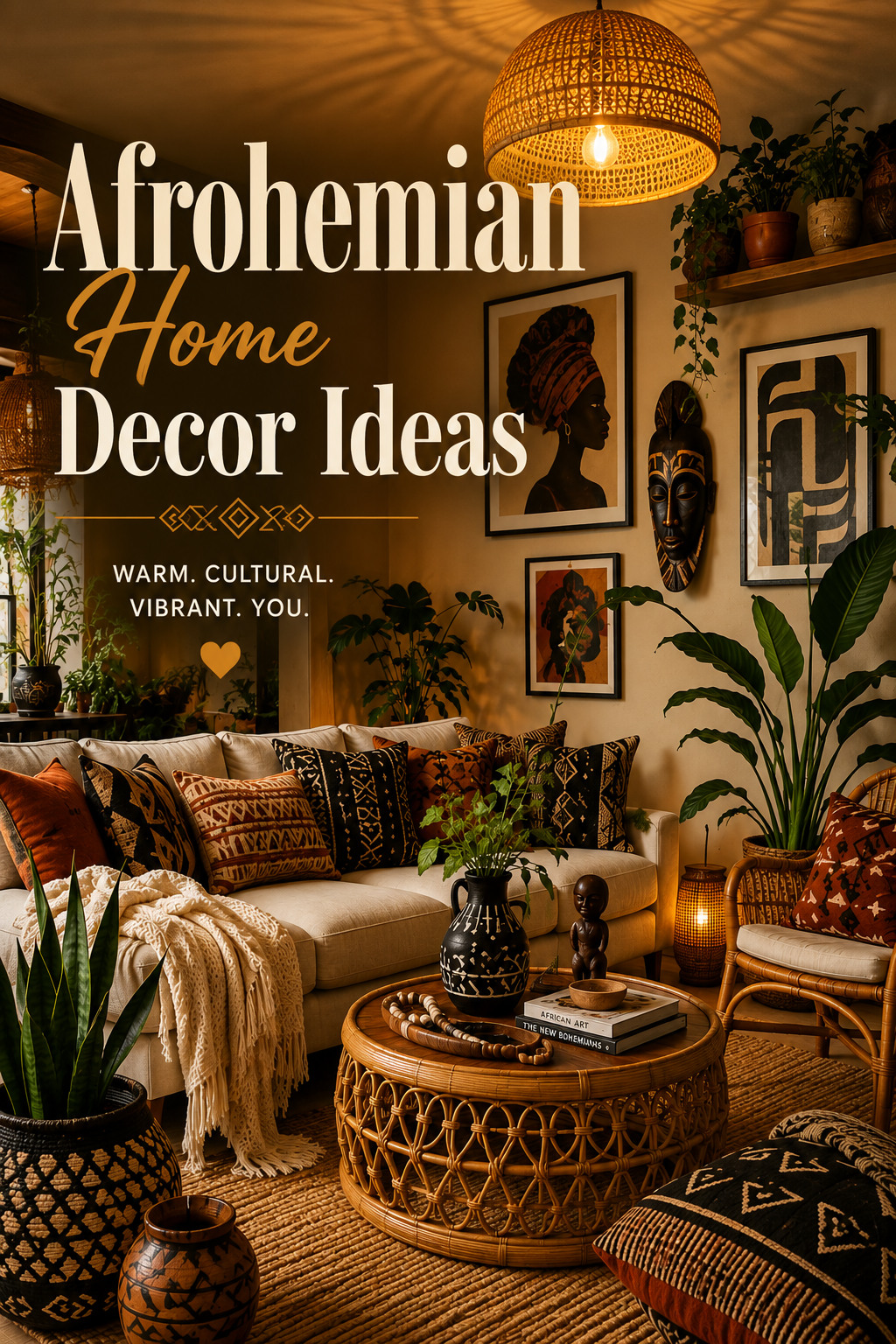
Afrohemian home decor is a beautiful interior style that brings together the warmth and cultural richness of African-inspired design with the relaxed, artistic character of bohemian interiors. It is a style filled with natural textures, earthy colors, handcrafted details, organic materials, expressive patterns, greenery, and meaningful decorative pieces. Rather than following a rigid decorating formula, Afrohemian interiors are about creating a home that feels warm, collected, personal, artistic, and connected to natural materials.
One of the most appealing aspects of Afrohemian decor is its ability to make a home feel inviting without looking overly polished or artificial. The style embraces imperfections, handmade details, layered textures, and objects that appear to have a story behind them. A woven basket beside a linen sofa, a carved wooden stool next to a ceramic vase, or a patterned textile layered over a neutral chair can create an interior that feels collected over time rather than purchased all at once.
The color palette is usually grounded in warm, natural shades. Think terracotta, clay, sand, caramel, warm beige, cream, chocolate brown, charcoal, muted olive, rust, ochre, and natural wood. These colors create a comfortable foundation while allowing stronger patterns and artwork to become focal points.
Natural materials are equally important. Rattan, cane, jute, sisal, bamboo, linen, cotton, clay, ceramic, leather, and wood can all contribute to the look. The goal is not to use every material in one room but to combine several textures so the interior feels rich and layered.
Patterns can also play an important role. Geometric motifs, tribal-inspired patterns, abstract prints, mudcloth-inspired textures, woven designs, and organic shapes can add personality. When using culturally inspired patterns, however, it is better to appreciate and thoughtfully incorporate authentic or responsibly sourced pieces rather than treating cultural motifs as disposable trends.
Afrohemian decor also works beautifully with plants. Large leafy greenery can soften wooden furniture and neutral walls, while smaller plants can be placed on shelves or side tables. Terracotta pots, woven baskets, and natural ceramic planters fit naturally into the aesthetic.
Lighting is another major part of the atmosphere. Harsh overhead lighting can make an earthy interior feel flat. Warm lamps, woven pendant lights, lantern-style fixtures, candles, and subtle accent lighting can create the soft glow associated with cozy Afrohemian spaces.
Furniture does not need to match perfectly. In fact, some of the charm comes from mixing pieces with different shapes, materials, and origins. A modern cream sofa can work beautifully with a vintage wooden side table. A woven chair can sit beside a contemporary coffee table. A carved stool can become a plant stand.
The most successful Afrohemian interiors usually have one thing in common: balance.
Too many patterns can make the room feel visually chaotic. Too many dark colors can make a small space feel heavy. Too many accessories can hide the beauty of individual pieces.
Instead, create a neutral foundation and introduce character through carefully selected textiles, artwork, furniture, plants, and handmade accessories.
The ten ideas below will show you how to bring this style into different areas of your home. Whether you want a complete Afrohemian makeover or simply want to introduce a few warm, artistic touches, these ideas can help you create a space that feels stylish, comfortable, expressive, and timeless.
1. Create a Warm Afrohemian Living Room With Earthy Colors
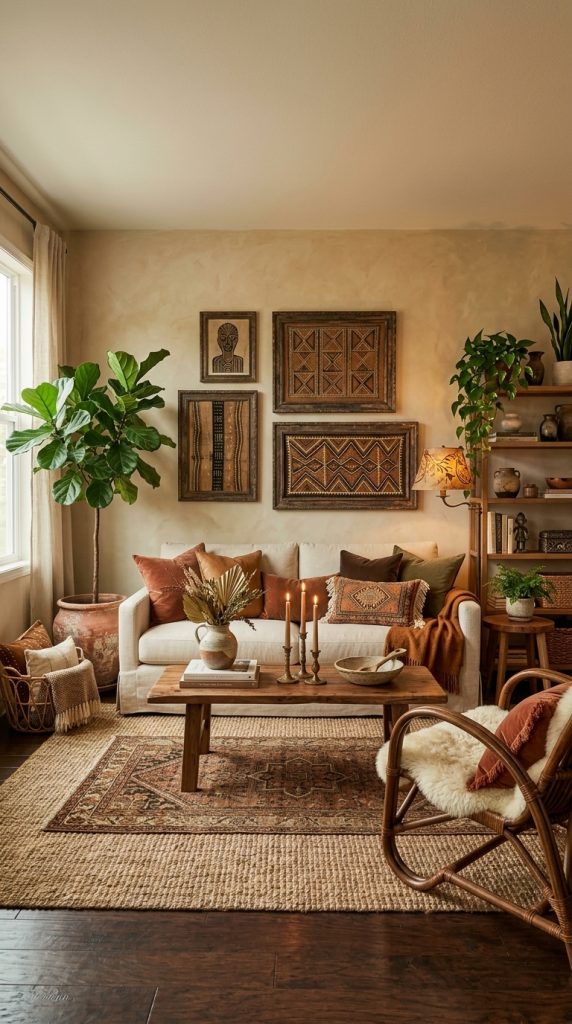
The living room is one of the easiest places to introduce Afrohemian decorating because it provides plenty of opportunities for layering textiles, artwork, plants, and natural materials.
Begin with a warm neutral foundation.
A cream, beige, camel, or warm brown sofa can work beautifully as the main furniture piece. The neutral sofa allows more expressive accessories to become focal points without making the room overwhelming.
Add cushions in earthy colors such as rust, terracotta, ochre, olive, chocolate brown, and cream.
Mix textures rather than relying entirely on patterns.
For example, combine a woven cushion with a linen cushion and one patterned textile.
Materials and Things You Need
- Cream or beige sofa
- Earth-toned cushions
- Woven throw
- Natural wood coffee table
- Jute or sisal rug
- Woven baskets
- Ceramic vase
- African-inspired artwork
- Indoor plants
- Warm table or floor lamp
Step-by-Step
Start by placing your largest furniture pieces.
Position the sofa so the room feels open and comfortable.
Add a natural-fiber rug underneath the seating area.
The rug should be large enough to visually connect the furniture.
Place a wooden coffee table in the center.
Add a small tray with a ceramic vase and one decorative object.
Then layer cushions onto the sofa.
Do not make every cushion heavily patterned.
Instead, choose one or two patterned pieces and surround them with solid-colored cushions.
Add a woven throw casually over one side of the sofa.
Finish the room with greenery.
A large plant in a woven basket can fill an empty corner beautifully.
The Final Look
The room should feel warm rather than overly decorated.
Use natural textures to create depth.
Allow some empty space around your statement pieces.
The result should feel artistic, relaxed, and inviting.
2. Use African-Inspired Artwork as the Main Focal Point
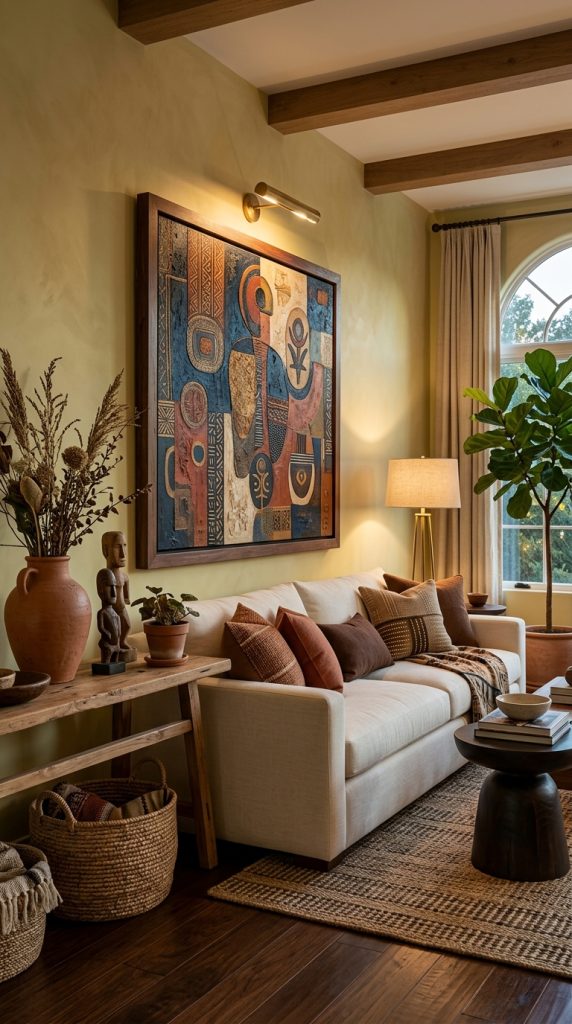
Artwork can transform an ordinary room into a highly personal Afrohemian interior.
Instead of decorating every wall with small objects, consider selecting one large statement artwork and allowing it to become the main focal point.
This could be an abstract painting, portrait artwork, photography, textile wall hanging, sculptural piece, or artwork inspired by African landscapes and cultural traditions.
Materials and Things You Need
- Large statement artwork
- Neutral frame
- Measuring tape
- Hanging hardware
- Console or sideboard
- Ceramic vase
- Wooden sculpture
- Small plant
Step-by-Step
Choose a wall that naturally attracts attention.
Above a sofa is an excellent location.
A large artwork should generally relate to the width of the furniture underneath it without completely overwhelming the wall.
Choose colors that connect with the rest of the room.
If your artwork contains terracotta and brown, repeat those colors through cushions or accessories.
If it contains black and cream, use those tones elsewhere for cohesion.
Place a simple console underneath if space allows.
Add only a few objects.
A ceramic vase, wooden sculpture, and small plant may be enough.
Avoid Overcrowding
The artwork should remain the star.
Do not cover the surrounding wall with dozens of decorations.
Afrohemian interiors can be expressive without becoming cluttered.
A single powerful artwork often creates more impact than a collection of unrelated pieces.
3. Layer Natural Textures With Rattan, Jute, Wood and Linen
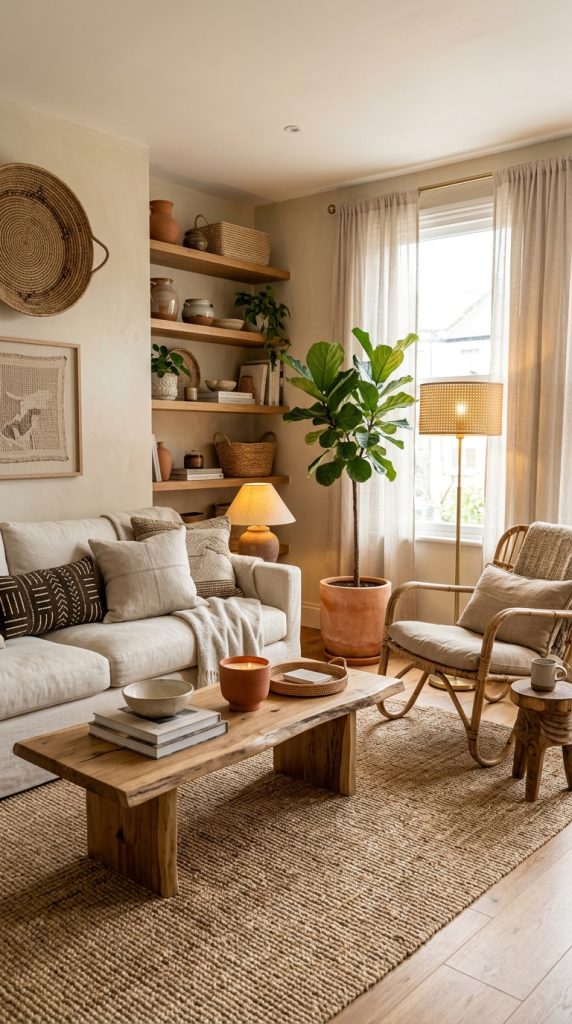
Natural materials are fundamental to creating an authentic-feeling Afrohemian atmosphere.
Rather than choosing furniture from one matching collection, combine different materials.
For example, pair a linen sofa with a wooden coffee table.
Place a jute rug underneath.
Add a rattan chair.
Use woven baskets for storage.
This creates visual richness without relying on excessive color.
Materials to Consider
- Rattan
- Cane
- Jute
- Sisal
- Bamboo
- Natural wood
- Linen
- Cotton
- Clay
- Ceramic
- Woven fibers
Step-by-Step
Begin with your largest piece.
A linen sofa provides a soft foundation.
Add a natural-fiber rug.
Place a wooden coffee table over the rug.
Introduce one woven chair.
Add a rattan basket.
Then use linen or cotton textiles on the sofa.
The different materials will create contrast.
Smooth ceramic looks beautiful against rough woven fibers.
Soft linen looks interesting beside carved wood.
Jute adds texture beneath polished furniture.
Why Texture Matters
Texture is especially important when using a neutral color palette.
Without texture, beige and cream can appear flat.
With texture, the same colors become warm and sophisticated.
You can create a luxurious atmosphere without purchasing expensive furniture simply by layering materials thoughtfully.
4. Decorate With Bold Afrohemian Textiles

Textiles provide one of the easiest ways to introduce Afrohemian personality without making permanent changes to your home.
You can use patterned cushions, throws, rugs, curtains, wall textiles, and upholstered chairs.
The key is to use patterns strategically.
Materials and Things You Need
- Patterned cushions
- Woven throw
- Textured rug
- Cotton or linen curtains
- Decorative textile
- Neutral sofa
- Basket
Step-by-Step
Begin with a neutral base.
A cream sofa or beige bed works beautifully.
Select one dominant pattern.
Then choose smaller patterns that complement rather than compete with it.
For example, if your main rug has a strong geometric design, choose cushions with simpler patterns.
Repeat one or two colors throughout the textiles.
Terracotta and cream work beautifully together.
Black and beige can create a more sophisticated appearance.
Olive and caramel can produce a natural earthy look.
Layering Tip
Do not place every patterned textile next to another patterned textile.
Break them up with solid colors.
A patterned cushion beside a plain linen cushion creates balance.
A patterned rug underneath neutral furniture allows the rug to become the visual anchor.
5. Create a Cozy Afrohemian Bedroom

The bedroom is perfect for Afrohemian decorating because the style naturally creates warmth and relaxation.
Begin with soft neutral bedding.
Cream, ivory, beige, warm taupe, and caramel create a calming foundation.
Then introduce earthy colors through pillows and throws.
Materials and Things You Need
- Neutral bedding
- Earth-toned cushions
- Woven throw
- Wooden bedside tables
- Rattan basket
- Ceramic lamp
- Natural-fiber rug
- Wall artwork
- Indoor plant
Step-by-Step
Start with the bed.
Layer the bedding using several textures.
Use cotton sheets.
Add a neutral duvet.
Place two or three decorative pillows in earthy colors.
Fold a woven throw at the foot of the bed.
Choose wooden bedside tables rather than highly polished modern pieces.
Add warm lamps.
Place a small ceramic object or vase beside the lamp.
A woven basket can hold extra blankets.
Add one or two plants if the room receives enough natural light.
Create a Calm Atmosphere
Avoid excessive decoration.
The bedroom should feel peaceful.
Choose a limited color palette.
Use warm lighting instead of harsh white bulbs.
Allow natural textures to provide visual interest.
The result should feel cozy, earthy, artistic, and comfortable.
6. Add Sculptural Wooden Furniture for an Artistic Touch
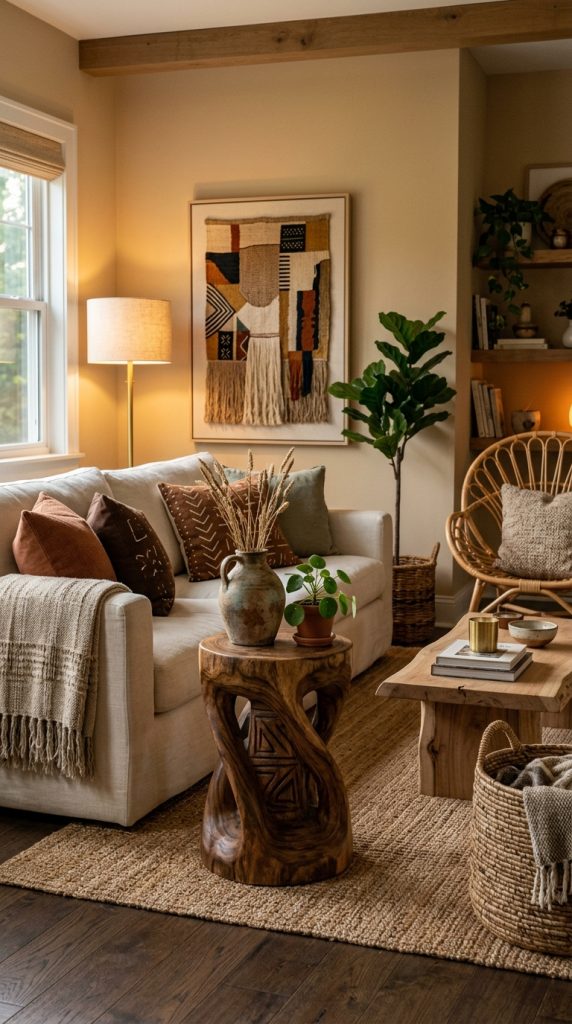
Wooden furniture can become a major feature in Afrohemian interiors.
Look for pieces with visible grain, organic shapes, carved details, or handmade character.
A wooden stool does not need to serve as a conventional seat.
It can become a plant stand, bedside table, decorative pedestal, or side table.
Furniture Ideas
- Carved wooden stool
- Wooden bench
- Natural wood coffee table
- Sculptural side table
- Carved console
- Wooden pedestal
- Small wooden cabinet
Step-by-Step
Choose one sculptural wooden piece.
Avoid adding too many similar pieces because the room may start to feel heavy.
Use the furniture as a focal point.
For example, place a carved wooden stool beside a cream sofa.
Put a ceramic vase or plant on top.
Or use a wooden bench beneath a large artwork.
The contrast between natural wood and soft fabrics creates a beautiful balance.
Styling Advice
Keep the surrounding accessories simple.
If the furniture itself has a strong shape, it does not need many decorations.
Let the craftsmanship become part of the design.
7. Bring Afrohemian Style Into a Small Apartment
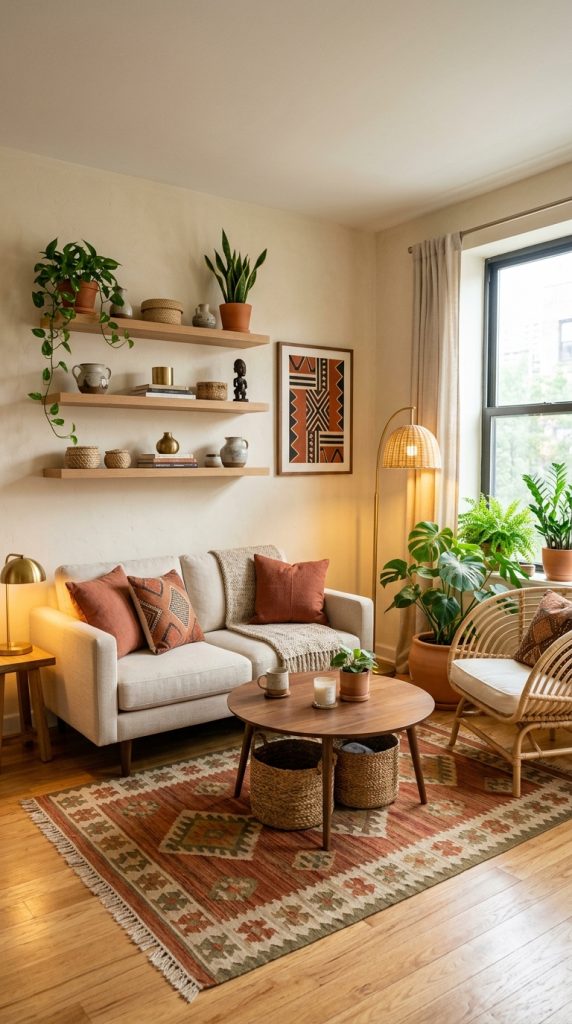
Afrohemian decor can work beautifully in small apartments because the style relies heavily on texture rather than large quantities of furniture.
Start with a neutral base.
Use multifunctional furniture where possible.
A storage ottoman can provide seating and storage.
A woven basket can hide blankets.
A narrow wooden console can provide display space without consuming much floor area.
Small-Space Materials
- Compact cream sofa
- Storage ottoman
- Jute rug
- Floating shelf
- Woven baskets
- Small plants
- Wall artwork
- Rattan accessories
Step-by-Step
Choose one major statement piece.
This might be an artwork, rug, mirror, or sculptural chair.
Then keep the remaining furniture simple.
Use the walls for decoration.
Floating shelves can display ceramics and plants without taking up floor space.
Use baskets for storage.
Choose furniture with visible legs to maintain visual openness.
Keep the Palette Controlled
In a small apartment, too many colors can make the room feel smaller.
Use cream or beige as the foundation.
Introduce terracotta, brown, black, and muted green as accents.
This creates warmth while maintaining visual consistency.
8. Create a Beautiful Afrohemian Dining Area
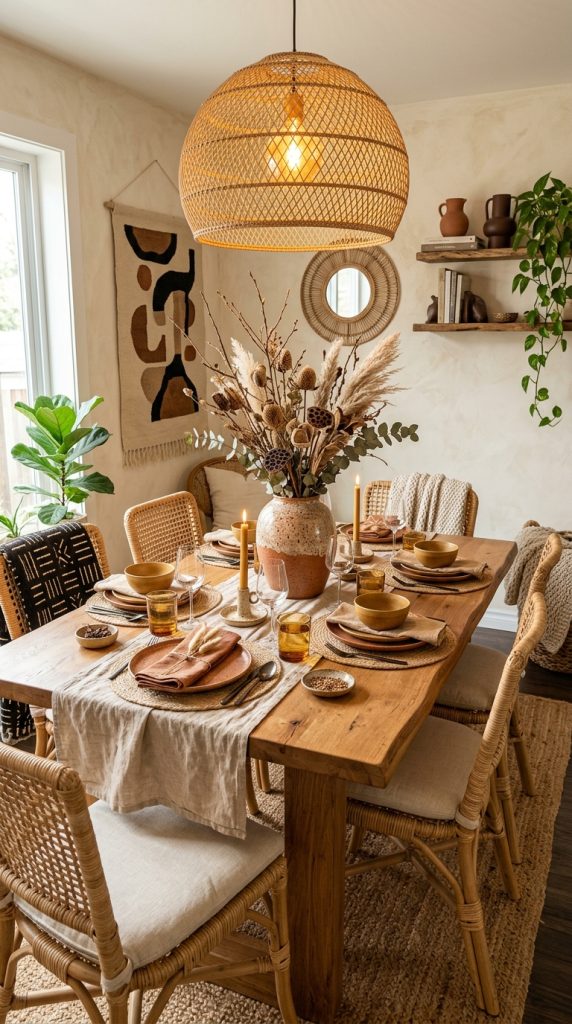
The dining room or dining corner can become a beautiful place to introduce handmade textures and natural materials.
Choose a wooden dining table as the foundation.
The wood does not need to be perfectly polished.
A slightly rustic or naturally textured surface can actually enhance the style.
Materials and Things You Need
- Natural wood dining table
- Woven dining chairs
- Linen table runner
- Ceramic dishes
- Handmade-style vase
- Dried branches
- Woven pendant light
- Neutral placemats
Step-by-Step
Place the dining table in the center of the area.
Choose chairs with different textures if they still feel visually coordinated.
Woven chairs work particularly well.
Add a simple linen runner.
Place a ceramic vase in the center.
Fill it with dried branches or natural foliage.
Keep the table setting simple.
Handmade-style ceramics can create character.
Lighting
A woven pendant light above the dining table can become an important focal point.
Choose warm lighting.
The combination of woven texture and warm illumination creates an intimate atmosphere during dinner.
Avoid excessively bright lighting.
A soft glow makes natural wood and earthy colors appear richer.
9. Create an Afrohemian Entryway With Baskets and Natural Decor

The entryway is the first area visitors see, so it is an excellent opportunity to introduce the style immediately.
A narrow wooden console can provide a practical foundation.
Add a large round mirror above it.
Then introduce woven baskets and natural accessories.
Materials and Things You Need
- Narrow wooden console
- Round mirror
- Woven basket
- Ceramic vase
- Small plant
- Wooden bowl
- Warm lamp
- Natural fiber rug
Step-by-Step
Begin with the console.
Choose one that does not overwhelm the entryway.
Place a decorative lamp on one side.
Add a ceramic vase or small plant on the other.
Use a wooden bowl for keys.
Hang a round mirror above the console.
Place a woven basket underneath.
The basket can hold shoes, scarves, or bags.
Add a small rug if there is enough space.
Keep It Functional
The entryway should not become a decorative obstacle.
Leave enough room to walk comfortably.
Choose storage pieces that actually solve everyday problems.
This combination of beauty and practicality is particularly important in small homes.
10. Create a Cozy Afrohemian Outdoor-Inspired Corner Indoors
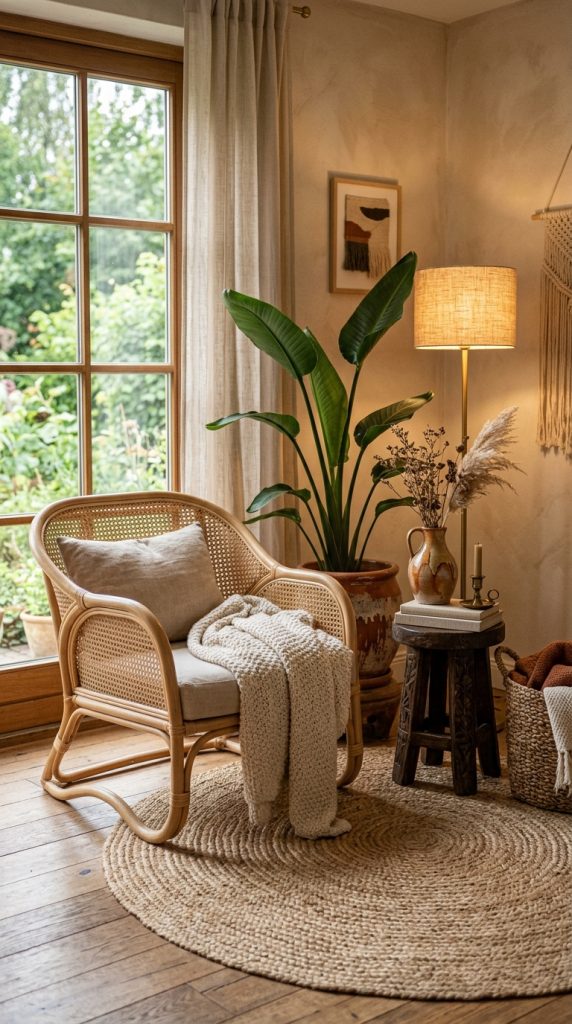
You do not need a large outdoor space to bring an earthy, nature-inspired atmosphere into your home.
Create a small indoor corner that feels connected to nature.
This can be beside a window, in a living-room corner, near a balcony door, or next to a reading chair.
Materials and Things You Need
- Rattan chair
- Jute rug
- Large indoor plant
- Woven basket
- Wooden stool
- Ceramic planter
- Linen cushion
- Warm floor lamp
Step-by-Step
Place a rattan chair near natural light.
Add a jute rug underneath.
Position a large leafy plant beside the chair.
Use a wooden stool as a small side table.
Add a linen cushion.
Place a woven basket nearby.
Finish the corner with a warm floor lamp.
Create a Relaxing Atmosphere
The purpose of this corner is to create a visual escape.
Keep the colors earthy.
Use natural materials.
Avoid excessive accessories.
Let the plant, chair, and lighting create the atmosphere.
This can become a reading area, meditation corner, coffee spot, or simply a beautiful place to relax.
How to Choose the Right Afrohemian Color Palette
A strong color palette makes Afrohemian decorating much easier.
Start with neutral colors.
Cream, beige, sand, warm white, taupe, and natural wood are excellent foundations.
Then choose two or three earthy accents.
Terracotta adds warmth.
Ochre introduces golden depth.
Rust creates a rich autumn-inspired feeling.
Chocolate brown adds grounding.
Olive green connects the interior with nature.
Charcoal or black can provide contrast.
You do not need to use every color.
Choose the combination that best suits your room.
For a soft Afrohemian interior, use cream, beige, caramel, and muted green.
For a dramatic look, combine cream, chocolate brown, black, and terracotta.
For a colorful room, introduce rust, ochre, olive, and warm orange.
How to Use Patterns Without Making the Room Look Busy
Patterns are beautiful but need balance.
Choose one dominant pattern.
Then use smaller patterns as supporting elements.
For example, if the rug has a strong geometric design, keep the sofa cushions relatively simple.
If your artwork is bold, use neutral furniture around it.
If your curtains contain a pattern, keep the rest of the room more restrained.
Pattern repetition can also create harmony.
Repeat one color from your main pattern somewhere else in the room.
This makes different objects feel connected.
How to Make Afrohemian Decor Look Elegant
Afrohemian does not have to mean crowded or overly colorful.
A sophisticated Afrohemian interior often relies on restraint.
Choose fewer but better accessories.
Use high-quality-looking natural textures.
Keep surfaces organized.
Allow artwork to breathe.
Use warm lighting.
Combine rough textures with smooth materials.
For example, pair a rough jute rug with a smooth ceramic vase.
Combine carved wood with soft linen.
Use woven baskets beside polished furniture.
This contrast creates sophistication.
How to Decorate on a Budget
You do not need to completely replace your furniture.
Start with textiles.
New cushions, throws, and rugs can transform an existing sofa.
Next, introduce baskets.
They provide storage and decoration simultaneously.
Then add plants.
A few carefully placed plants can change the entire atmosphere.
Look for secondhand wooden furniture.
An old stool can become a beautiful side table.
A vintage mirror can become a focal point.
A simple ceramic vase can add handmade character.
You can also refresh existing furniture with natural finishes or new hardware where appropriate.
The goal is to build the look gradually.
How to Use Lighting in an Afrohemian Home
Lighting can completely change the appearance of earthy interiors.
Choose warm bulbs.
Use several light sources.
A table lamp can illuminate a console.
A floor lamp can create a cozy corner.
A woven pendant can become a statement feature.
Small accent lights can highlight artwork.
Avoid relying entirely on a bright overhead light.
Instead, create layers.
During the daytime, allow natural light to enter.
In the evening, use lamps and softer sources.
Warm illumination enhances wood, woven fibers, terracotta, and textiles beautifully.
How to Style an Afrohemian Coffee Table
The coffee table should not become a storage area for every decorative object you own.
Choose three to five items.
A wooden or ceramic tray can create a foundation.
Add a coffee-table book.
Place a small ceramic vase beside it.
Add one candle or sculptural object.
A tiny plant can provide a natural touch.
Vary the heights.
Avoid making everything the same size.
The arrangement should look relaxed rather than perfectly symmetrical.
How to Use Plants in Afrohemian Decor
Plants are an excellent complement to earthy interiors.
Large leafy plants can become statement pieces.
Smaller plants can decorate shelves.
Trailing plants can soften floating shelves.
Use natural containers.
Woven baskets can cover simple plant pots.
Terracotta pots can add warm color.
Ceramic planters can create a more refined look.
Avoid filling every available corner with plants.
Choose a few plants and give them enough room to stand out.
Common Afrohemian Decorating Mistakes
One common mistake is using too many patterns.
Another is choosing too many decorative objects.
Afrohemian style should feel collected, not chaotic.
Another mistake is relying only on dark colors.
Earthy does not mean dark.
Cream, sand, beige, and warm white can create a beautiful foundation.
Another mistake is ignoring lighting.
Even a beautifully decorated room can feel cold under harsh lighting.
Finally, avoid buying culturally inspired objects simply because they are trendy.
Choose pieces thoughtfully.
Final Thoughts
Afrohemian home decor is more than a collection of earthy colors, woven baskets, plants, and patterned textiles.
At its best, it is a decorating style built around warmth, individuality, natural materials, craftsmanship, artistic expression, and meaningful details.
The beauty of this style is that it does not require everything to match.
A modern sofa can work with a vintage wooden table.
A rattan chair can sit beside a contemporary lamp.
A bold textile can become the focal point of an otherwise neutral room.
A handmade ceramic vase can add personality to a simple console.
A large plant can bring life to an empty corner.
These contrasts are part of what makes Afrohemian interiors so visually interesting.
The most effective way to create this look is to begin with a calm foundation.
Use cream, beige, sand, warm white, or natural wood as your base.
Then introduce earthy shades such as terracotta, rust, ochre, chocolate brown, olive, and charcoal.
From there, add texture.
Jute rugs, linen curtains, woven baskets, rattan furniture, wooden accessories, ceramic pieces, and cotton textiles can make even a neutral room feel rich.
Then add personality.
Choose artwork that genuinely speaks to you.
Display meaningful objects.
Use handmade pieces where possible.
Bring in plants.
Layer a few beautiful textiles.
And use warm lighting to bring everything together.
You also do not need to decorate your entire home at once.
Start with one room.
The living room is a natural starting point because it offers plenty of opportunities for textiles, furniture, artwork, and greenery.
Once you understand the palette and materials, you can carry the same principles into your bedroom, dining area, entryway, and other spaces.
Remember that balance is essential.
If you have a bold rug, keep some surrounding furniture simple.
If you have dramatic artwork, allow empty wall space around it.
If you have several textured accessories, balance them with smooth surfaces.
If your furniture is dark, introduce lighter textiles and warm lighting.
This prevents the room from becoming visually overwhelming.
For small homes, focus particularly on multifunctional furniture and vertical decorating.
A storage ottoman can provide both seating and hidden storage.
Floating shelves can display artwork and ceramics without using floor space.
A woven basket can hide blankets.
A narrow console can provide storage without dominating the room.
This allows the style to remain beautiful while still being practical.
Most importantly, make your Afrohemian home feel personal.
Do not try to copy a perfectly styled room piece by piece.
Instead, use the ideas as inspiration.
Choose the colors that make you feel comfortable.
Choose materials that you enjoy touching and seeing.
Choose artwork that has meaning.
Choose furniture that fits your lifestyle.
A truly beautiful home is not simply one that looks good in photographs.
It is one that feels comfortable when you live in it.
Afrohemian decorating is especially well suited to this philosophy because it celebrates warmth, texture, natural beauty, and individuality.
With a thoughtful combination of earthy colors, natural materials, handmade details, expressive artwork, cozy textiles, greenery, and warm lighting, you can create a home that feels artistic, welcoming, sophisticated, and deeply personal.
You do not need a huge budget or a large house.
You simply need to choose pieces intentionally and allow your personality to become part of the design.
Leave a Reply