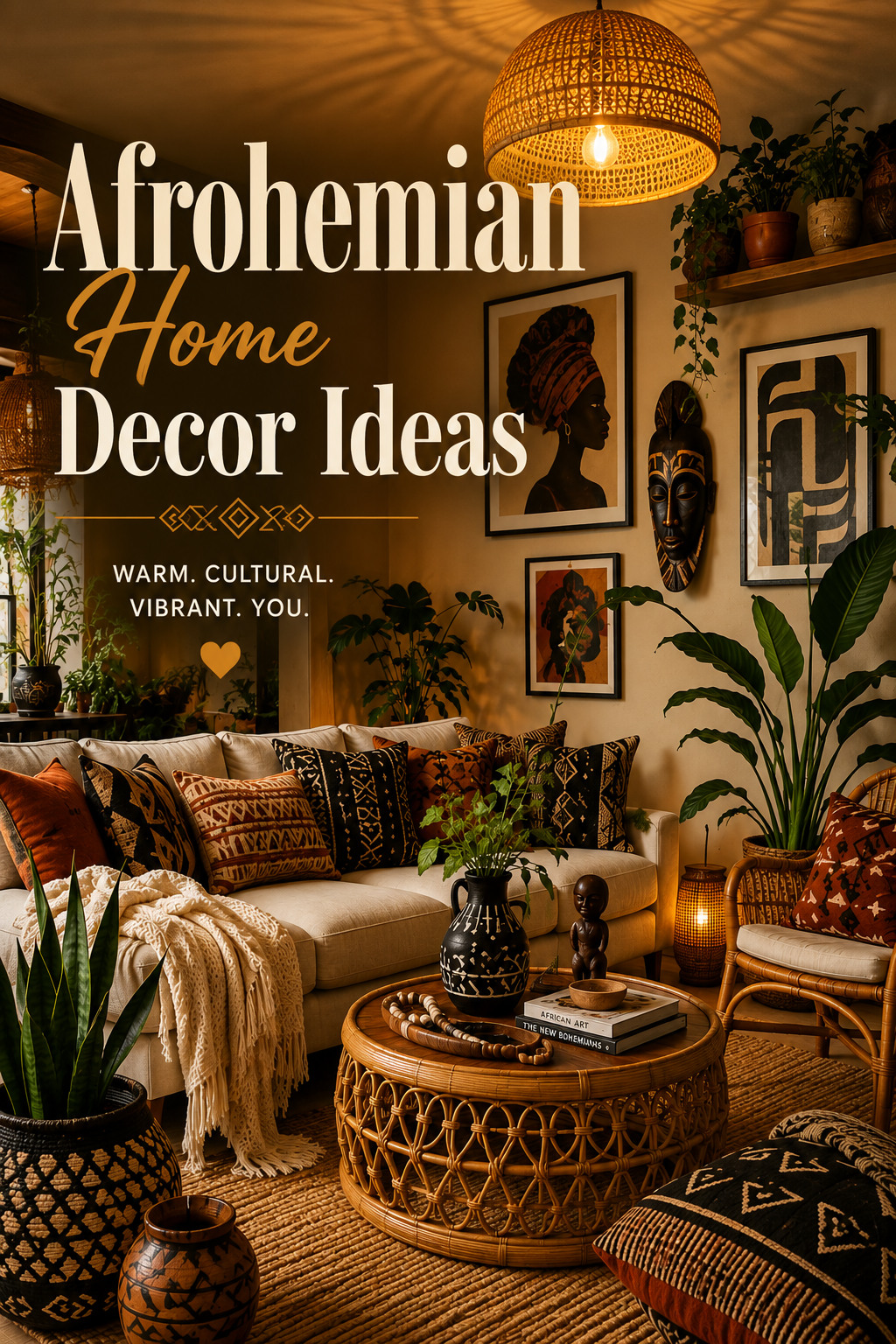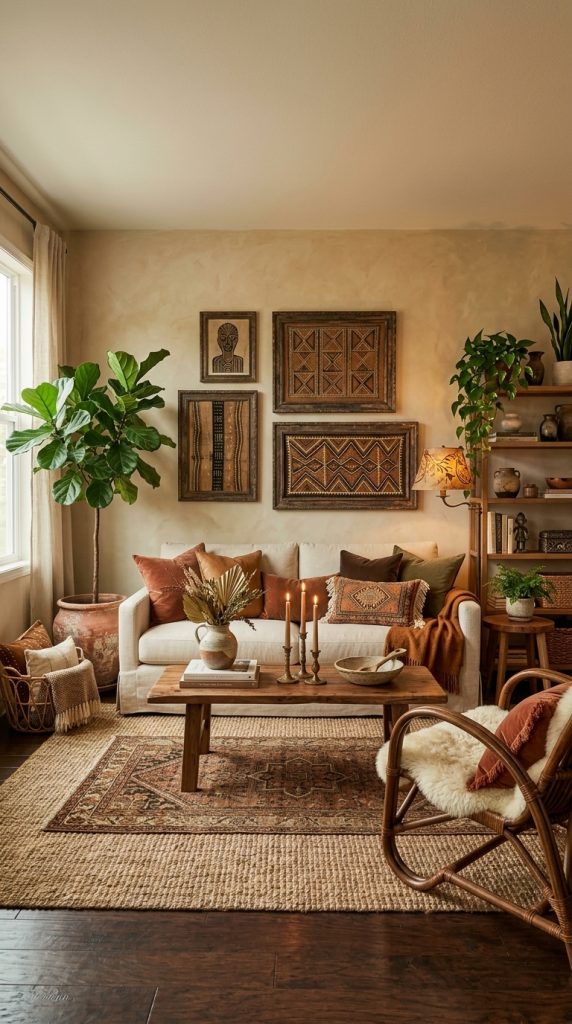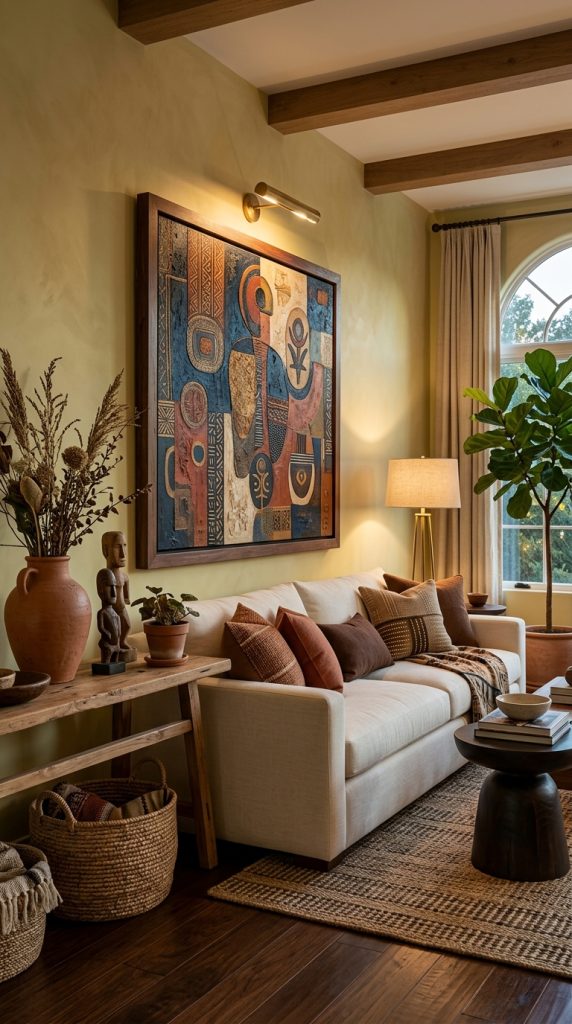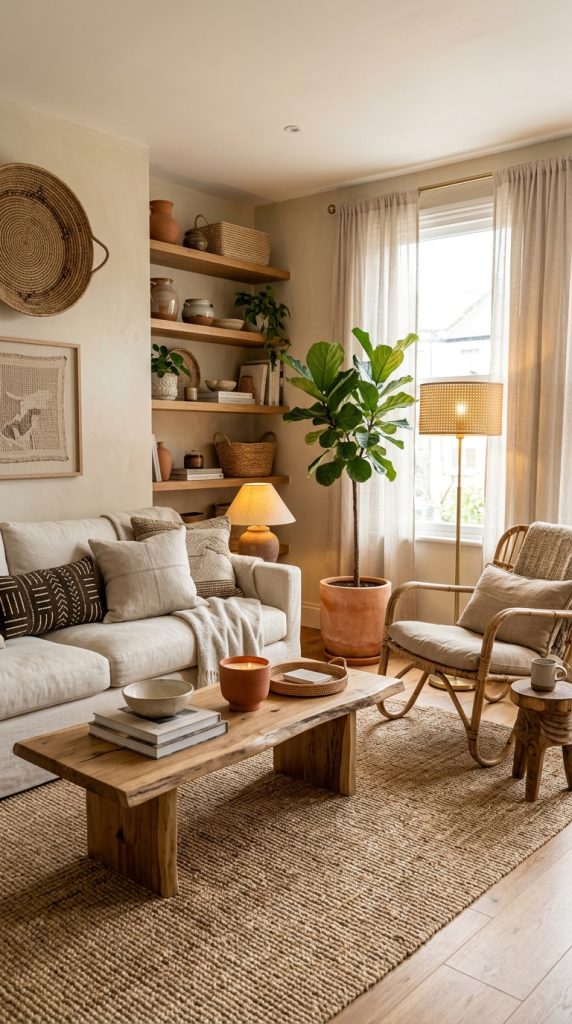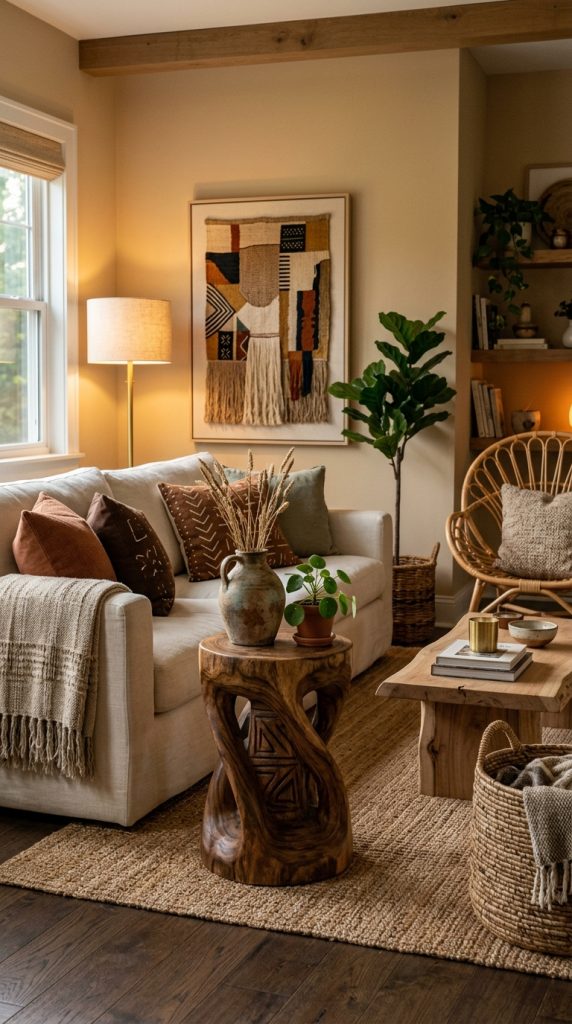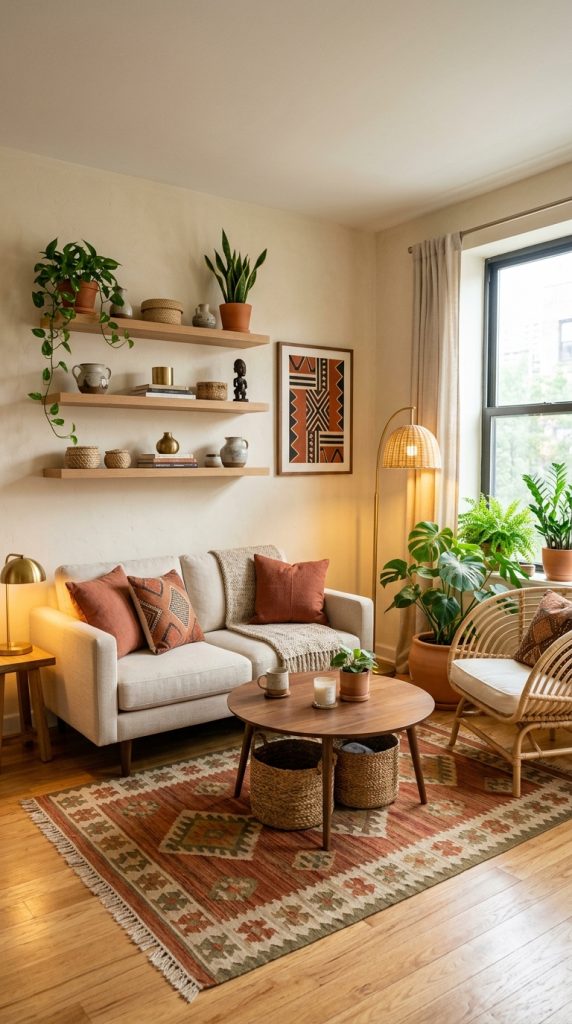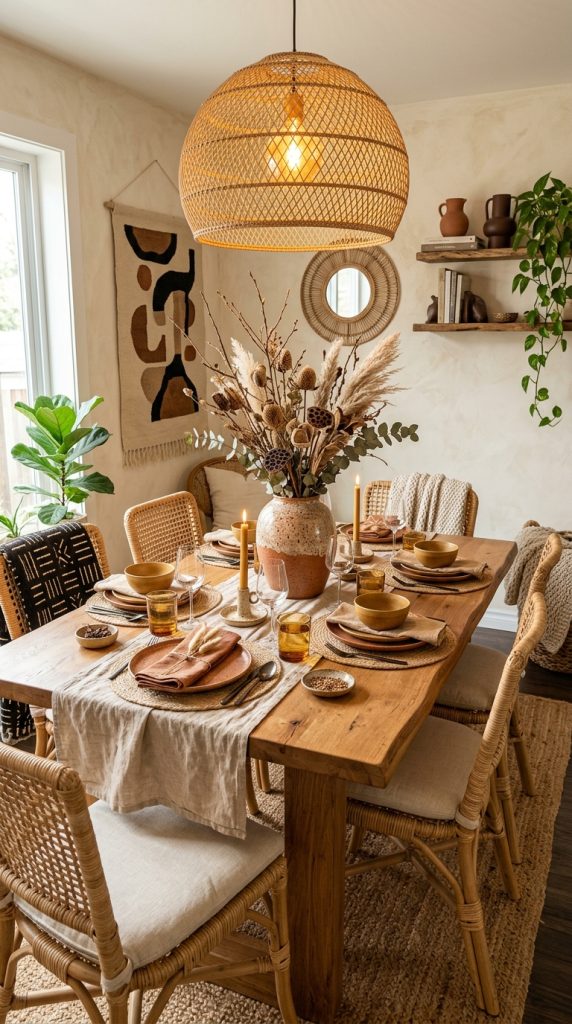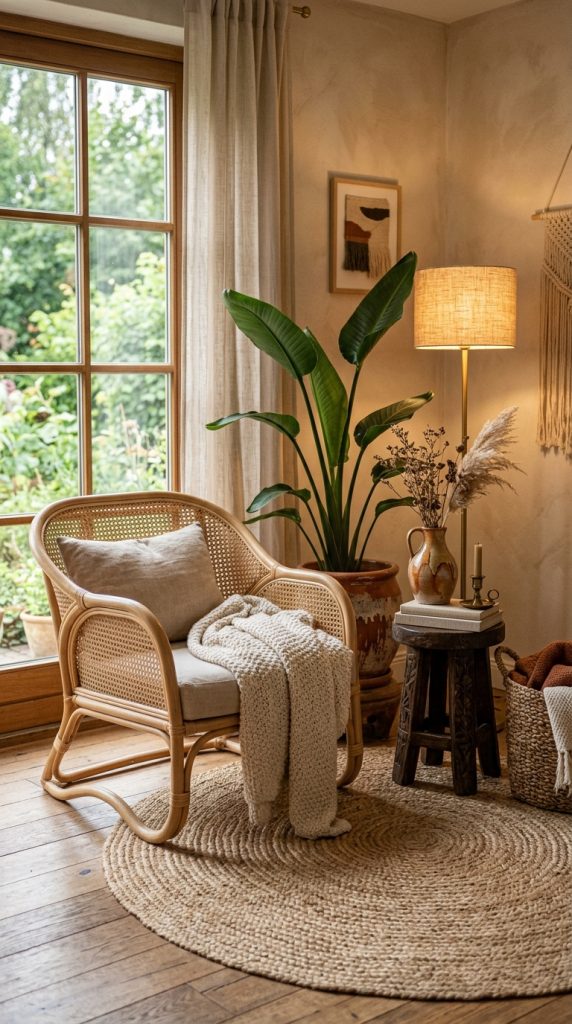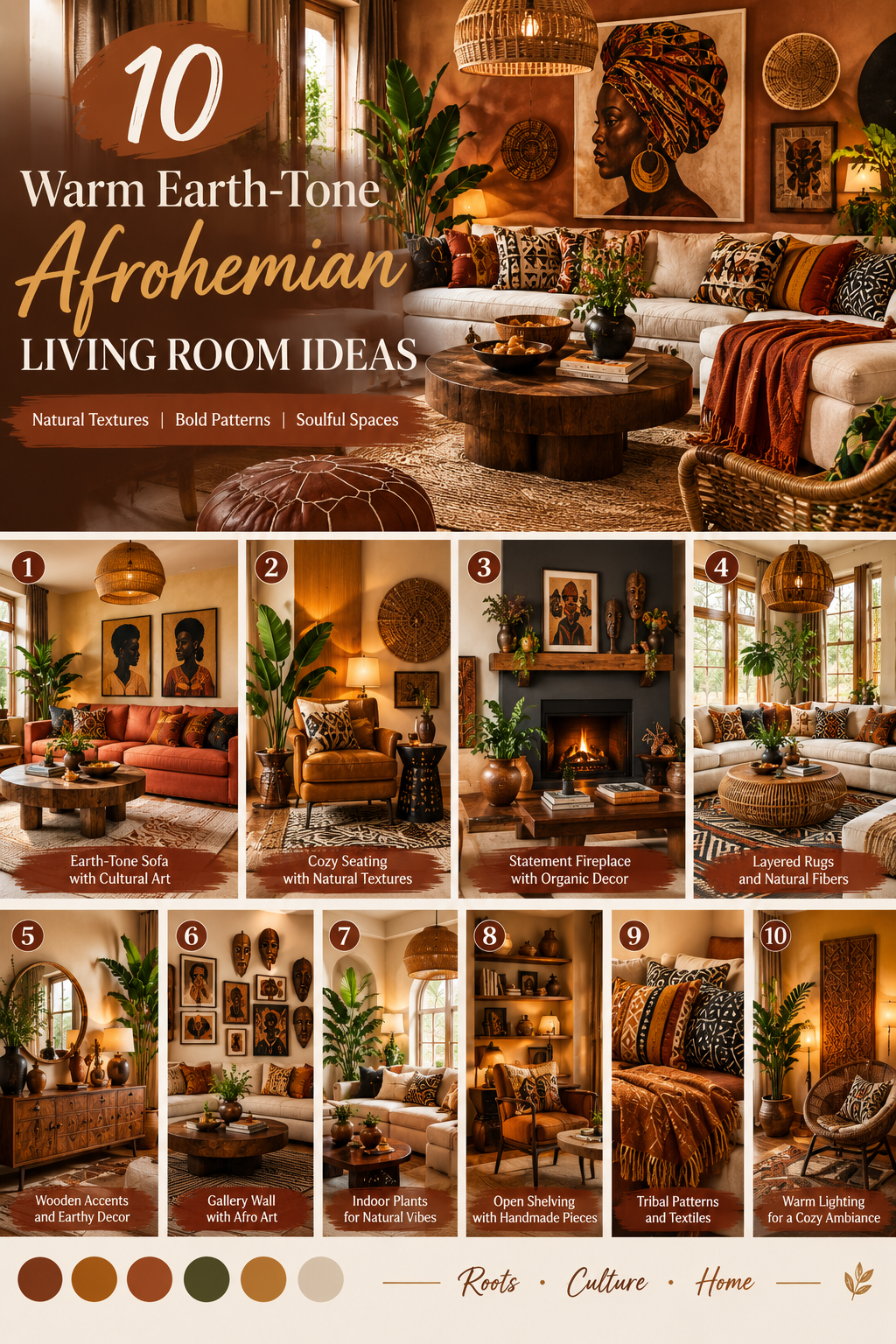
A warm earth-tone Afrohemian living room brings together the relaxed spirit of bohemian decorating with natural materials, expressive textures, earthy colors, handcrafted details, and African-inspired visual influences. The result is a space that feels artistic and personal while remaining comfortable enough for everyday living. Rather than relying on a single decorating style, Afrohemian interiors celebrate a beautiful mixture of modern furniture, natural elements, woven textures, meaningful artwork, plants, and rich colors inspired by the earth.
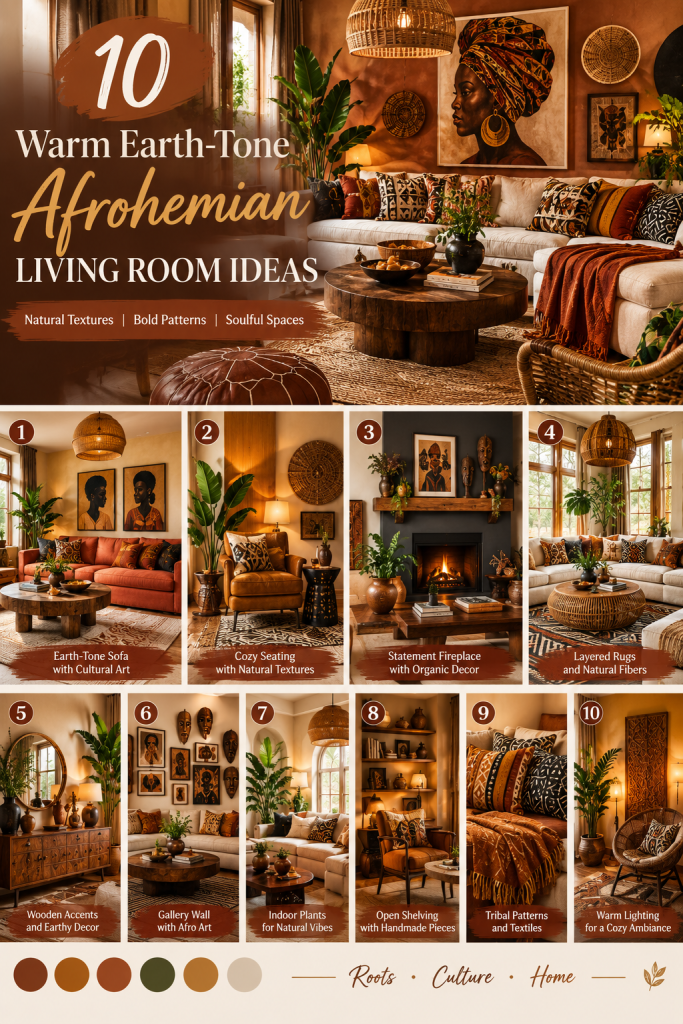
The most appealing feature of this style is its warmth. A neutral modern room can sometimes feel overly clean or impersonal, while a heavily decorated bohemian room can feel visually overwhelming. Afrohemian decorating creates a balance between these two extremes. It allows you to use patterns, artwork, baskets, textiles, and accessories while maintaining an intentional color palette and a comfortable sense of openness.
Earth tones are particularly effective for this aesthetic because they naturally complement organic materials. Terracotta, rust, camel, caramel, chocolate brown, sand, cream, beige, muted olive, clay, and warm tan can be layered together without appearing disconnected. These shades also work beautifully with wood, rattan, jute, linen, leather, stone, and ceramic pieces.
A warm earth-tone palette does not mean every object needs to be brown or orange. In fact, the room becomes much more sophisticated when neutral colors provide the foundation and deeper shades are introduced through carefully selected accents. A cream sofa can be combined with terracotta cushions, an olive plant, a walnut coffee table, a woven rug, and a chocolate-brown accent chair. Each element contributes warmth without competing for attention.
Texture is equally important. Afrohemian rooms often feel beautiful because there is something interesting to discover everywhere you look. A woven basket may sit beside a linen sofa. A textured rug may cover the floor beneath a carved wooden coffee table. A handmade ceramic vase may sit alongside a sculptural object. These combinations create depth even when the overall color palette remains relatively simple.
Plants also play an important role. Large leafy greenery can bring freshness to an earth-tone room while connecting the interior to the natural world. Palms, fiddle-leaf plants, rubber plants, olive trees, and other indoor greenery can all work beautifully depending on the available light and maintenance requirements.
Wall decor can provide another opportunity to express the Afrohemian character of the space. African-inspired patterns, abstract artwork, woven baskets, handcrafted pieces, photography, masks, sculptures, and natural fiber wall hangings can create a powerful focal point. The goal should be thoughtful inspiration rather than turning the room into a collection of unrelated decorative objects.
Lighting can completely change the atmosphere. Warm lamps, woven pendants, floor lamps, wall sconces, and subtle accent lighting help emphasize the rich colors and textures. Instead of using only one bright ceiling fixture, layer several sources of warm illumination throughout the room.
Furniture should be comfortable and relatively simple. A modern cream sofa can easily become the foundation for a more expressive Afrohemian space. Natural wood furniture, cane chairs, rattan pieces, leather accents, and rounded silhouettes can soften the room and provide the organic character this style needs.
Another advantage of an earth-tone Afrohemian living room is flexibility. You can create the look in a large house, a small apartment, a rental property, or a family room. You can also make it affordable by gradually introducing accessories instead of replacing everything at once.
The most important principle is balance. Choose a few dominant colors, repeat natural materials, mix patterns carefully, and leave enough breathing room between decorative pieces. The result should feel collected, welcoming, and authentic rather than overly staged.
The following ten ideas will show you how to build this look step by step, from choosing the color palette and furniture to adding textiles, artwork, plants, lighting, and personal accessories.
1. Build the Room Around a Warm Earth-Tone Color Palette
The easiest way to establish an Afrohemian living room is to begin with a carefully controlled earth-tone palette. Color creates the foundation for everything else, so choosing your shades before purchasing accessories can prevent the room from becoming visually chaotic.
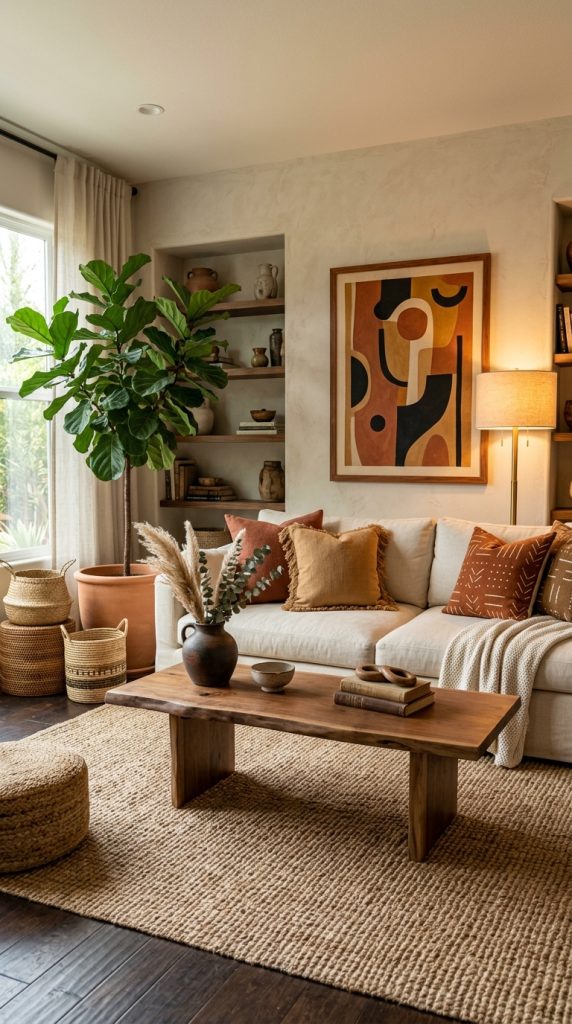
Start with one dominant neutral.
Warm cream, ivory, beige, sand, or soft taupe works especially well. These colors can be used on the sofa, walls, curtains, or large rug.
Next, introduce two or three earthy accent colors.
Terracotta and rust are excellent choices because they add warmth. Camel and caramel create softness, while chocolate brown provides depth. Muted olive green can introduce a natural botanical element.
Materials and Elements You Need
- Cream or beige sofa
- Terracotta cushions
- Camel or tan textiles
- Chocolate-brown accents
- Olive-green plants
- Natural wood furniture
- Neutral rug
- Earth-tone artwork
- Ceramic accessories
- Woven baskets
Step-by-Step Styling
Begin with the sofa.
Choose cream, oatmeal, warm beige, or light taupe rather than a very cool gray.
Add cushions in different earth tones.
Use one terracotta cushion, one camel cushion, one patterned cushion, and one neutral textured cushion.
The colors should appear elsewhere in the room.
For example, if you use terracotta on the sofa, repeat a small amount of terracotta in artwork or pottery.
Choose natural wood for the coffee table.
The brown tones of the wood will connect naturally with the earth-tone textiles.
Add an area rug with subtle geometric or tribal-inspired patterning.
Keep the background relatively neutral.
Finally, introduce plants to bring muted green into the palette.
How to Keep the Palette Balanced
Avoid using equal amounts of every color.
Your room could follow a simple visual hierarchy:
60% warm neutrals
30% natural wood and secondary earth tones
10% stronger accents such as rust, terracotta, or olive
The percentages do not have to be exact. The principle is simply to let a few colors dominate while others act as accents.
Why This Works
A controlled palette makes the Afrohemian style feel sophisticated.
You can include plenty of interesting textures and patterns without creating visual confusion because the colors remain connected.
2. Use Natural Wood Furniture for Organic Warmth
Natural wood is one of the strongest materials for creating an Afrohemian living room.

It adds warmth, texture, and natural variation while providing a connection to handcrafted design.
Instead of choosing furniture with highly glossy finishes, look for pieces that allow the natural grain of the wood to remain visible.
Materials and Elements You Need
- Natural oak coffee table
- Walnut console
- Wooden side tables
- Carved wood accessories
- Wooden shelves
- Cane or wood accent chair
- Neutral upholstery
Choosing the Right Furniture
A large wooden coffee table can become the center of the living room.
Choose a simple silhouette if the room already contains patterned textiles.
If you want a more expressive appearance, select a table with rounded edges, carved details, or an organically shaped top.
A wooden console behind the sofa can provide additional storage and styling space.
Side tables do not have to match perfectly.
Afrohemian design often looks better when furniture feels collected over time.
You might combine a round wooden table with a small carved stool or a cane side table.
Step-by-Step Arrangement
Start by positioning the sofa.
Place the coffee table in front of it while leaving enough space for comfortable movement.
Add an accent chair opposite or slightly angled toward the sofa.
Place a small wooden side table beside the chair.
Use the console behind the sofa or against another wall.
Make sure the furniture arrangement supports conversation rather than simply pointing everything toward a television.
Add Handcrafted Wood Details
Small carved bowls, sculptures, trays, or decorative stools can reinforce the aesthetic.
However, avoid filling every surface with wooden accessories.
Repeat the material without overusing it.
Why Natural Wood Works So Well
Wood softens modern furniture.
If you have a clean-lined cream sofa, adding a warm wood coffee table immediately introduces character.
The natural grain also creates visual interest without requiring bright colors.
3. Layer Woven Textures and Handmade Materials
Texture is one of the defining characteristics of an inviting Afrohemian living room.

You can create depth by combining several natural materials while keeping the color palette consistent.
Materials and Elements You Need
- Jute rug
- Woven baskets
- Rattan chair
- Macramé or woven wall hanging
- Linen cushions
- Cotton throw
- Cane accessories
- Seagrass storage
- Handmade ceramics
Start With the Floor
A jute or natural-fiber rug creates a textured foundation.
Choose a neutral tone so it does not compete with patterned cushions or artwork.
If the room is large, consider layering a smaller patterned rug over the larger natural rug.
This can create a relaxed bohemian appearance.
Add Woven Storage
Place a large woven basket beside the sofa.
Use it to store blankets, pillows, magazines, or children’s items.
This gives the room both texture and function.
Introduce Rattan or Cane
A rattan accent chair can provide a beautiful contrast against an upholstered sofa.
If a large chair is not practical, use smaller cane or woven accessories.
Add Linen
Linen cushions and curtains soften the harder texture of wood and woven fibers.
Choose natural shades such as:
- Cream
- Oatmeal
- Beige
- Sand
- Warm white
Keep Texture Varied
Do not use only woven materials.
Balance them with smooth ceramic, soft textiles, natural wood, and perhaps stone.
The contrast makes each material more noticeable.
Beginner Tip
If you are decorating on a budget, begin with one woven basket, one textured rug, and two linen cushions.
These three additions can make a noticeable difference without requiring a complete room makeover.
4. Create a Statement Wall With Afrohemian-Inspired Artwork
Wall decor can become the artistic heart of an Afrohemian living room.

Instead of decorating every wall equally, choose one primary wall and make it the focal point.
Materials and Elements You Need
- Large framed artwork
- African-inspired abstract prints
- Woven baskets
- Natural fiber wall hanging
- Wooden frame
- Neutral background art
- Sculptural wall decor
Choosing Artwork
Look for artwork that complements the room’s palette.
Earthy colors such as:
- Terracotta
- Burnt orange
- Brown
- Sand
- Black
- Cream
- Olive
can work beautifully.
Abstract art inspired by landscapes, organic shapes, textiles, or natural forms can create a sophisticated appearance.
If using culturally inspired artwork, choose pieces thoughtfully and respectfully, and consider supporting artists or makers connected to the traditions that inspire the work.
Create a Gallery Arrangement
You do not need ten pieces.
Three to five carefully selected works can be enough.
Place the largest artwork in the center.
Add smaller pieces around it.
Keep the spacing relatively consistent.
Alternative: Woven Wall Display
For a softer appearance, create a composition using woven baskets.
Use baskets in slightly different sizes and textures.
Keep the color palette within natural beige, brown, black, and cream.
Avoid Overcrowding
A statement wall needs breathing room.
If the artwork is large and visually powerful, keep the furniture and accessories underneath it relatively simple.
Why This Works
Afrohemian decorating is naturally artistic.
A thoughtfully chosen statement wall gives the room personality without requiring excessive accessories throughout the entire space.
5. Add Earth-Tone Cushions, Throws, and Layered Textiles
Textiles are one of the easiest ways to transform an existing living room.
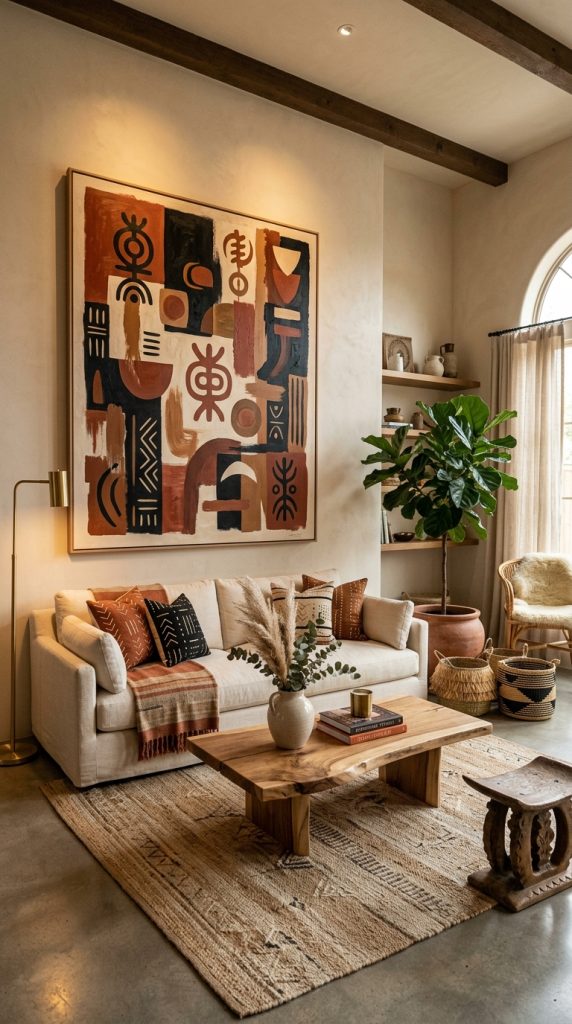
If you already own a neutral sofa, you do not need to replace it.
Instead, use cushions and throws to introduce Afrohemian colors and patterns.
Materials and Elements You Need
- Linen cushions
- Woven cushions
- Patterned pillows
- Cotton throw
- Chunky knit blanket
- Terracotta textiles
- Rust-colored accent
- Neutral base cushions
Choose a Mix of Patterns
Avoid making every cushion heavily patterned.
Combine:
One solid cream cushion
One terracotta cushion
One geometric patterned cushion
One woven textured cushion
One olive or camel accent
This creates variation without becoming chaotic.
Add a Throw
Drape a soft cotton or woven throw over one corner of the sofa.
Do not fold it perfectly.
A relaxed placement makes the room feel more lived-in.
Repeat the Colors
If the cushions contain terracotta and olive, repeat those colors somewhere else.
A terracotta vase and green plant can visually connect the seating area.
Use Pattern Carefully
African-inspired patterns can be beautiful, but one or two strong patterned textiles may be enough.
The goal is to allow patterns to become accents rather than making the entire room visually busy.
Seasonal Changes
Textiles make it easy to refresh the room.
During warmer months, use lightweight linen and cotton.
During cooler months, introduce chunky throws, heavier woven cushions, and deeper rust and brown tones.
This allows the same furniture to feel different throughout the year.
6. Bring in Large Green Plants for a Natural Afrohemian Feel
Plants can transform a warm earth-tone room by introducing life, movement, and natural color.

They also work beautifully against neutral walls and wooden furniture.
Materials and Elements You Need
- Large indoor plant
- Medium leafy plant
- Woven planter
- Ceramic planter
- Wooden plant stand
- Dried branches
- Natural basket
Choosing Plants
Select plants according to the light available in your room.
Large leafy varieties can create a dramatic focal point.
A tall plant can fill an empty corner.
A smaller plant can decorate a coffee table or console.
Use Different Heights
Place one tall plant on the floor.
Add a medium plant on a wooden stand.
Use a small plant on the console.
This creates visual layers.
Choose Natural Planters
Woven baskets are particularly effective for larger plants.
Terracotta pots work beautifully with the earth-tone palette.
Ceramic planters can add a smoother contrasting texture.
Avoid Turning the Room Into a Jungle
A few strategically placed plants can be more effective than filling every corner.
Leave enough space around the main furniture.
Add Dried Botanicals
Dried grasses or branches can provide texture without requiring regular maintenance.
Place them in a large ceramic or clay vase.
Their muted colors fit naturally with the earth-tone palette.
Why Greenery Works
The muted green of plants provides contrast against rust, terracotta, cream, and brown.
It also reinforces the natural foundation of Afrohemian design.
7. Combine Modern Furniture With Handcrafted Afrohemian Details
A beautiful Afrohemian living room does not need every item to be traditional, rustic, or heavily patterned.

One of the strongest approaches is to combine clean modern furniture with expressive handcrafted details.
Materials and Elements You Need
- Modern neutral sofa
- Contemporary coffee table
- Handmade pottery
- Carved wood object
- Woven basket
- Textured artwork
- Sculptural accessory
- Natural stone object
Start With Modern Foundations
Choose simple furniture with clean lines.
A cream sofa with a contemporary silhouette works particularly well.
Add a modern rug or simple wooden table.
Then introduce handcrafted elements.
Place a handmade ceramic vase on the coffee table.
Add a carved wooden bowl to the console.
Use a woven basket near the sofa.
Hang a handcrafted wall piece.
Why Contrast Is Important
If everything is rustic, the room can feel dated.
If everything is sleek and modern, it may lack warmth.
The contrast creates visual balance.
Create a Curated Look
Imagine the room as a collection gathered over time.
Not every item needs to match.
Instead, each object should complement the overall color palette and material story.
Keep Decorative Groups Small
On a coffee table, use:
- One ceramic vase
- One wooden bowl
- One small plant
- A couple of books
This is enough.
On the console, use:
- Artwork
- Vase
- Small sculpture
- Decorative tray
Avoid covering the entire surface.
The Result
The room feels sophisticated but personal.
This approach is particularly useful if you already own modern furniture and want to add Afrohemian character without replacing everything.
8. Create a Cozy Afrohemian Reading Corner
A small reading corner can add personality to a living room while making the space more functional.

It does not require a large amount of floor space.
Materials and Elements You Need
- Accent chair
- Small wooden side table
- Floor lamp
- Woven basket
- Throw blanket
- Cushion
- Small plant
- Books
Choose the Chair
A rattan, cane, leather, or textured fabric chair can work beautifully.
For an earth-tone room, consider camel, tan, cream, or warm brown upholstery.
Add a Wooden Side Table
Choose a small table with a natural finish.
Place a ceramic mug, small plant, or book on top.
Add Warm Lighting
A floor lamp beside the chair can create a beautiful evening reading atmosphere.
Choose warm illumination rather than harsh bright light.
A woven lampshade can create interesting shadows.
Add a Basket
Place a woven basket beside the chair.
Use it for blankets.
This adds both functionality and texture.
Add a Small Rug
A small textured rug can visually define the reading area.
Choose one that relates to the larger living-room rug.
Create Visual Connection
Repeat one or two colors from the main seating area.
For example, if the sofa contains terracotta cushions, add a small terracotta cushion to the reading chair.
This makes the corner feel like part of the same room.
Why This Idea Works
A reading corner creates a sense of comfort.
It also gives the living room a purpose beyond entertaining and television.
The result feels more personal and lived-in.
9. Add Warm Layered Lighting for Evening Ambiance
Lighting is essential in an earth-tone Afrohemian room because it can enhance every natural material.
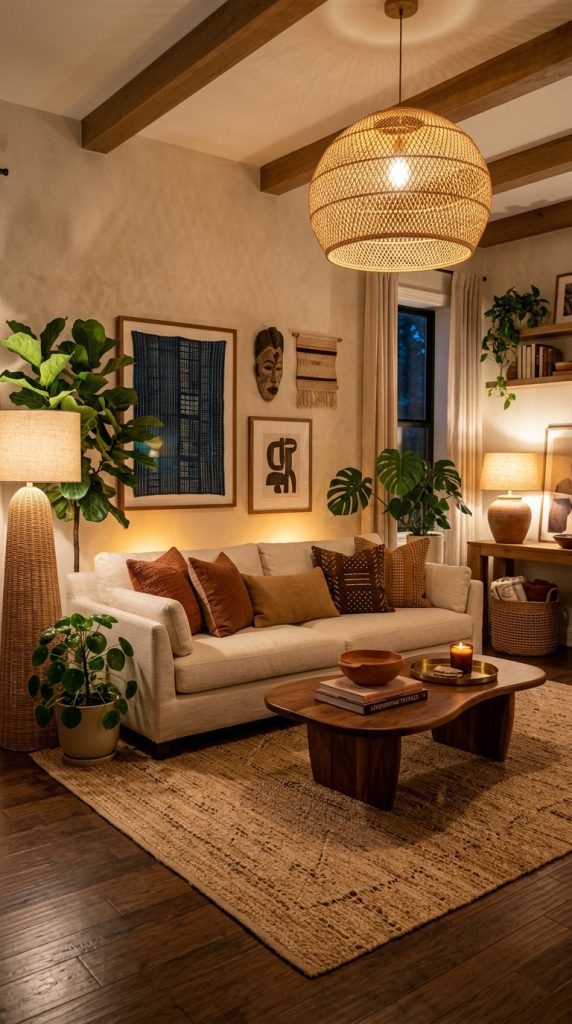
The same room can look completely different under harsh overhead lighting compared with soft layered illumination.
Materials and Elements You Need
- Floor lamp
- Table lamp
- Pendant light
- Wall sconce
- Warm bulbs
- Woven lampshade
- Decorative lantern
- Candles where appropriate
Start With General Lighting
Use your main room lighting to provide adequate visibility.
Then add smaller sources around the room.
Add a Floor Lamp
Place it near the sofa or reading corner.
A woven or natural-fiber shade can reinforce the aesthetic.
Add a Table Lamp
Place one on a console or side table.
Choose ceramic, wood, stone, or textured materials.
Use Pendant Lighting
A woven pendant above the main seating area can become a sculptural feature.
Make sure fixtures are correctly installed and appropriate for the room.
Choose Warm Illumination
Warm lighting generally complements:
- Wood
- Terracotta
- Cream
- Brown
- Rust
- Natural fibers
It can make the room feel more intimate during the evening.
Layer Instead of Overlighting
You do not need every lamp turned on at maximum brightness.
Use several softer sources.
This creates depth and allows you to adjust the atmosphere according to the time of day.
Final Touch
If appropriate for your home, candles can provide additional warmth.
Use safe placement and never leave open flames unattended.
10. Create a Sophisticated Afrohemian Living Room With a Curated Finish
The final idea brings everything together.
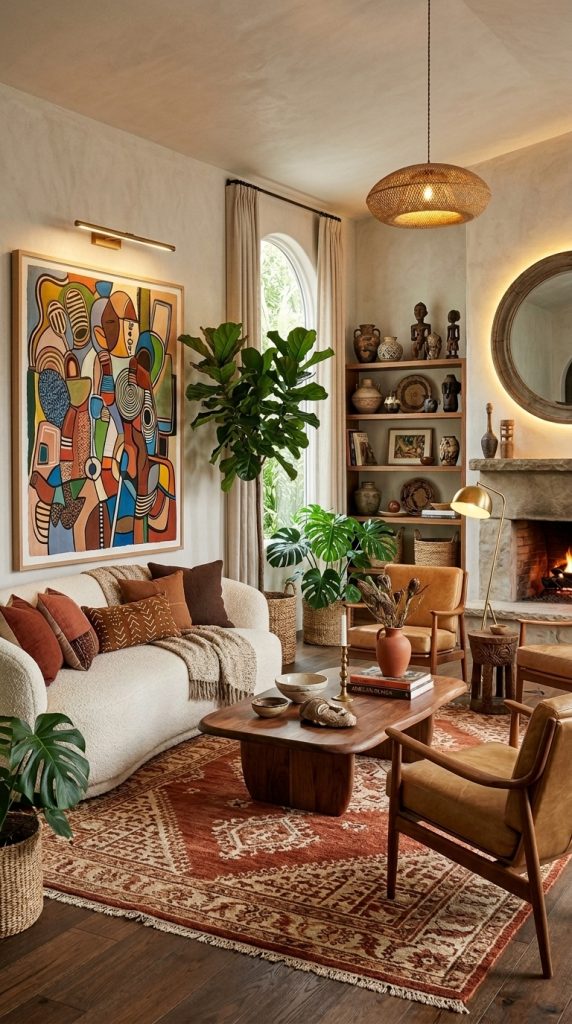
A sophisticated Afrohemian living room should feel layered but not cluttered, expressive but not chaotic, and comfortable while still looking polished.
Materials and Elements You Need
- Neutral sofa
- Natural wood coffee table
- Earth-tone cushions
- Textured rug
- Woven baskets
- Ceramic accessories
- African-inspired artwork
- Green plants
- Warm lighting
- Natural curtains
- Decorative books
- Sculptural objects
Begin With the Foundation
Use warm cream or beige as the primary color.
Add natural wood for the main furniture pieces.
Place a textured neutral rug underneath the seating arrangement.
Build the Textile Layer
Add cushions in:
- Cream
- Terracotta
- Camel
- Rust
- Olive
- Chocolate brown
Mix patterns with solid colors.
Add Artistic Elements
Choose one large statement artwork or a carefully arranged gallery.
Use pieces that complement the earth-tone palette.
Introduce Natural Materials
Add woven baskets, rattan, ceramic pottery, and carved wood.
Do not introduce every material in equal amounts.
Let wood and woven textures become the primary natural materials, with ceramics and stone acting as supporting elements.
Add Greenery
Place one large plant in an empty corner.
Add one or two smaller plants around the room.
Style the Coffee Table
A beautiful arrangement might include:
A handmade ceramic vase
A wooden bowl
A small plant
Two decorative books
Leave visible tabletop space.
Style the Console
Place one large artwork or mirror above it.
Add a ceramic vase on one side.
Place a wooden sculpture or small bowl on the other.
Keep the middle relatively open.
Add Warm Lighting
Use a floor lamp beside the seating area and a warm table lamp on the console.
If you have a pendant, allow it to provide a soft layer rather than making it the only source of light.
The Final Editing Process
Once everything is in place, walk around the room.
Remove anything that looks unnecessary.
If several objects have similar sizes, vary their heights.
If one area looks visually heavy, remove an accessory.
If a corner feels empty, add greenery or a small wooden stool rather than several small decorations.
The goal is balance.
How to Choose the Best Afrohemian Color Combination
A successful earth-tone palette usually starts with warm neutrals.
Consider:
- Cream
- Ivory
- Beige
- Sand
- Taupe
Then introduce:
- Terracotta
- Rust
- Camel
- Caramel
- Chocolate brown
Finally, use muted natural colors such as:
- Olive
- Sage
- Deep green
Black can also be used sparingly for contrast.
For example, black picture frames can make earthy artwork stand out.
How to Mix Patterns Without Making the Room Busy
Pattern is beautiful in Afrohemian interiors, but too many competing patterns can quickly become overwhelming.
Choose one dominant pattern.
Then use smaller patterns around it.
For example:
Large patterned rug
Solid terracotta cushion
Small geometric cushion
Plain cream cushion
Textured woven cushion
This gives the eye a place to rest.
Keep the colors related even when the patterns are different.
How to Make an Afrohemian Living Room Look Expensive
You do not need expensive furniture.
Focus on proportion and materials.
Choose one or two large focal points instead of many small accessories.
Use full-length curtains.
Select appropriately sized rugs.
Keep furniture proportional to the room.
Use warm lighting.
Add natural materials.
Avoid excessive clutter.
Choose fewer but more distinctive decorative objects.
A handmade ceramic vase, large plant, natural wood table, and beautiful rug can create more visual impact than dozens of inexpensive decorations.
Budget-Friendly Ways to Create the Style
Start with what you already own.
A neutral sofa can become the foundation.
Add affordable cushions in terracotta and camel.
Introduce a woven basket.
Add a plant.
Use a secondhand wooden table if appropriate.
Look for handmade ceramics from local makers.
Create artwork yourself using simple abstract earth-tone shapes.
Rearrange furniture before buying new pieces.
You may discover that changing the layout creates a completely different feeling.
A Simple Budget Transformation
First, remove unnecessary accessories.
Second, rearrange the furniture.
Third, introduce warm textiles.
Fourth, add natural wood.
Fifth, bring in greenery.
Sixth, improve the lighting.
Finally, add one strong artwork or decorative focal point.
This sequence allows you to see the impact of each change.
How to Keep the Afrohemian Style Authentic and Personal
Afrohemian decorating should feel personal rather than like a showroom.
Include objects that have meaning.
Display travel finds, handmade pieces, books, family photographs, artwork, textiles, or objects that reflect your interests.
If incorporating African-inspired decorative elements, choose them thoughtfully rather than using them simply as generic visual themes.
Supporting artists, designers, and craftspeople from the cultures that inspire your decor can also make your choices more meaningful.
The strongest interiors tell a story.
Your living room should feel like your home, not a collection of trend-driven objects.
Final Thoughts
A warm earth-tone Afrohemian living room is an excellent choice if you want a space that feels cozy, artistic, natural, and sophisticated at the same time.
The style works because it combines several qualities that are often difficult to balance.
Modern furniture creates structure.
Earth tones create warmth.
Natural materials add texture.
Plants bring life.
Artwork adds personality.
Handcrafted objects introduce character.
Warm lighting creates atmosphere.
The key is to combine these elements intentionally.
Start with a warm neutral foundation such as cream, beige, or sand. Add natural wood furniture to introduce depth. Layer jute, linen, cotton, rattan, and woven textures. Bring in terracotta, rust, camel, and chocolate brown through cushions and accessories.
Then create one or two artistic focal points.
A large piece of Afrohemian-inspired artwork can anchor a wall. A woven basket arrangement can add texture. A sculptural ceramic piece can become the centerpiece of a coffee table.
Do not forget greenery.
One large leafy plant can transform an otherwise neutral room, while smaller plants can add detail to shelves and tables.
Lighting should be soft and layered.
Warm lamps and woven fixtures can make natural materials look even richer in the evening.
Most importantly, resist the temptation to decorate every empty space.
Afrohemian style can certainly be expressive, but it becomes more elegant when there is room for individual pieces to stand out.
Think in layers.
Begin with the architecture and large furniture.
Add rugs and curtains.
Introduce cushions and throws.
Bring in wood and woven materials.
Add artwork.
Introduce greenery.
Finish with a few meaningful accessories.
Then step back and edit.
Remove anything that does not contribute to the room.
The result should feel comfortable enough for everyday life but beautiful enough to inspire you every time you walk into the room.
Whether your living room is large or compact, you can adapt this style to suit your space.
In a small apartment, focus on a neutral sofa, compact wood furniture, one textured rug, a few woven accessories, and strategically placed plants.
In a larger home, you can create multiple seating zones, introduce larger artwork, use statement lighting, and experiment with layered rugs.
You can also change the atmosphere seasonally without changing the foundation.
During warmer months, emphasize cream, sand, olive, and lightweight linen.
During fall and winter, bring in rust, terracotta, camel, chocolate brown, and heavier woven textiles.
This flexibility makes the style practical as well as beautiful.
Ultimately, the best warm earth-tone Afrohemian living room is not the one with the most decoration. It is the one where every element feels connected.
The colors should work together.
The textures should create depth.
The furniture should feel comfortable.
The artwork should have personality.
The plants should bring freshness.
The lighting should create warmth.
And the decorative objects should tell a story.
When these elements are balanced, you get a living room that feels naturally inviting, richly layered, and timeless — a space that celebrates modern comfort while embracing natural materials, artistic expression, and warm earthy beauty.