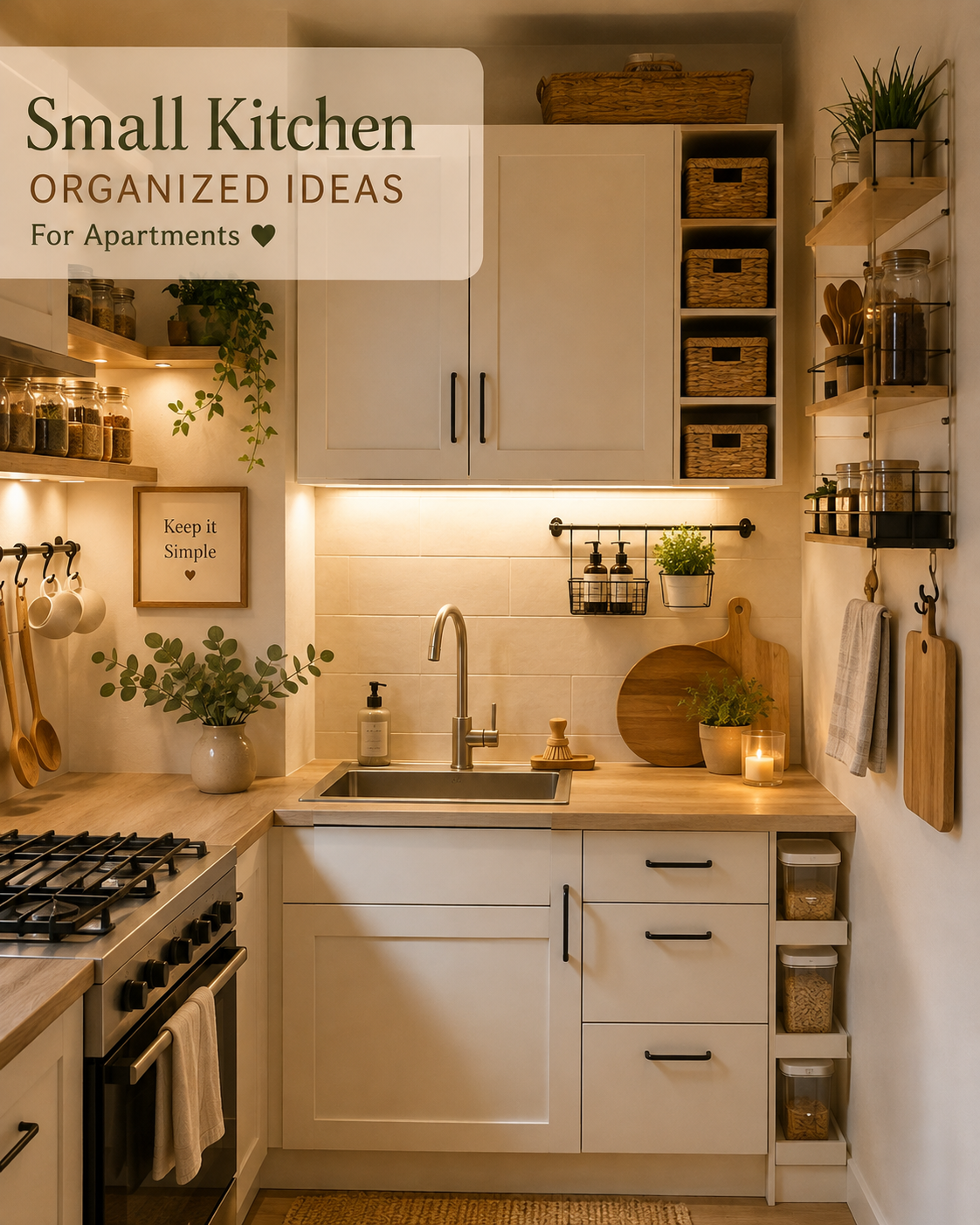
Apartment kitchens often come with one frustrating problem: there simply isn’t enough space for everything you need. You may have a beautiful kitchen with modern cabinets and a compact countertop, but once you add cookware, appliances, pantry ingredients, dishes, cleaning supplies, mugs, utensils, and everyday essentials, the available storage can disappear surprisingly quickly. The good news is that a small apartment kitchen does not need a complete renovation to become organized, functional, and attractive. With thoughtful planning and a few smart storage techniques, even a narrow rental kitchen can feel more spacious and significantly easier to use.
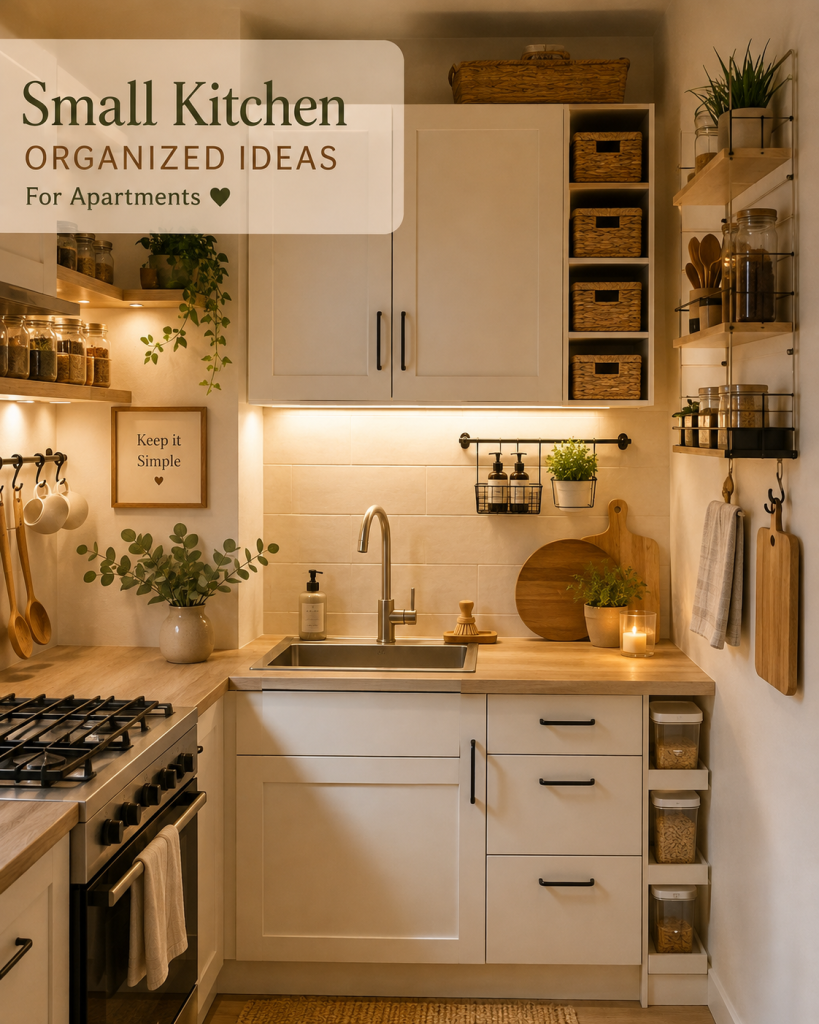
The secret to successful small-kitchen organization is not simply finding more places to put things. It is about using the space you already have more intelligently. Apartment kitchens often contain hidden storage opportunities that are easy to overlook. The inside of cabinet doors, the sides of cabinets, the wall above the countertop, the space beneath the sink, the backs of shelves, and even the vertical gaps between appliances can all become useful areas.
For renters, organization can be slightly more challenging because permanent modifications may not be allowed. You may not be able to drill into walls, replace cabinets, install new countertops, or build custom storage. That is why renter-friendly solutions such as removable hooks, tension rods, freestanding shelves, rolling carts, stackable organizers, over-the-door racks, and adhesive storage systems can be especially valuable.
Another important consideration is flexibility. Apartment living often means working with unusual layouts. One kitchen may have a narrow galley design, while another may have an open-plan kitchen connected to the living room. Some apartments have plenty of cabinets but almost no countertop space. Others have generous counters but very little pantry storage. The best organization system should adapt to the specific layout rather than forcing every kitchen into the same design.
Before purchasing any storage product, start by decluttering. This is one of the most important steps and one that costs absolutely nothing. Small kitchens become difficult to organize when they are storing duplicates, broken utensils, expired ingredients, appliances that are rarely used, and objects that no longer fit your lifestyle. Removing unnecessary items immediately creates more space.
After decluttering, group items according to how frequently you use them. Everyday plates, mugs, cooking utensils, coffee supplies, and frequently used ingredients should be placed somewhere easy to reach. Items used only occasionally can go into higher cabinets or less accessible storage areas. Seasonal equipment and specialty appliances should not take up prime real estate.
Another powerful strategy is to organize according to activity. Instead of putting things wherever there happens to be an empty spot, create small kitchen zones. A coffee zone can contain your coffee maker, mugs, coffee beans, sugar, and spoons. A baking zone can hold flour, measuring cups, baking trays, and mixing tools. A cooking zone can keep pots, pans, spices, and utensils close to the stove. A cleaning zone can organize sprays, sponges, cloths, and garbage bags around the sink.
This approach reduces unnecessary movement and makes the kitchen feel more intuitive. When you need something, you know exactly where to look.
Vertical storage is particularly powerful in apartment kitchens. Most people think horizontally when organizing, but walls and cabinet interiors offer unused vertical capacity. A narrow shelf can hold spices or mugs. A rail can hold utensils. Hooks can hang measuring cups or towels. A tall rolling cart can fit into a narrow gap. Stackable shelves can create a second level inside a cabinet.
Small kitchens also benefit from multipurpose products. A rolling cart can provide storage, counter space, and mobility. A storage bench can provide seating and hidden storage. A pegboard can hold several categories of kitchen tools while using very little depth. A tiered shelf can double the usable space inside a cabinet.
Countertop management is another major part of apartment kitchen organization. When every appliance and container remains on the counter, even a reasonably sized kitchen can feel tiny. Instead of automatically storing everything on the countertop, evaluate each appliance based on frequency of use. Keep the items you use daily accessible and store occasional appliances elsewhere.
However, organization does not mean your kitchen needs to become completely bare. A beautiful apartment kitchen can still have personality. Wooden cutting boards, ceramic mugs, woven baskets, glass containers, small plants, and neutral textiles can make an organized kitchen feel warm rather than clinical. The trick is to display a small number of attractive objects while hiding or containing visual clutter.
Color consistency can also improve the appearance of a small space. Matching or coordinated storage containers can make open shelves and countertops look calmer. Warm neutrals such as cream, beige, natural wood, soft gray, and muted earthy colors are especially useful for creating a cozy apartment kitchen.
The refrigerator should not be ignored either. A poorly organized refrigerator can waste space just as quickly as a messy cabinet. Clear bins, rotating trays, bottle organizers, and drawer dividers can group foods and make it easier to see what you have. This can also reduce food waste because ingredients are less likely to disappear behind other items.
The area under the sink is another common problem. Plumbing reduces usable space, and cleaning products can easily become scattered. Adjustable shelves, pull-out bins, and small baskets can turn this awkward cabinet into an efficient cleaning station.
Corners deserve attention too. Deep corner cabinets often contain a large amount of storage that is difficult to access. A rotating organizer can make bottles, jars, and pantry items easier to reach without requiring a remodel.
Whether your apartment kitchen is a narrow galley kitchen, a tiny studio kitchen, a compact kitchen with limited cabinets, or a small open-plan space, you can adapt these techniques to your needs.
The ultimate goal is simple: create a kitchen where everything has a purpose, everything has a home, and every available inch works harder for you.
1. Maximize Cabinet Space With Stackable Organizers
Apartment kitchens often have cabinets that appear full even though there is unused vertical space inside them. Plates, bowls, mugs, cans, and containers may be stacked on top of one another, making it difficult to reach anything at the bottom. Stackable shelves and cabinet risers are an inexpensive way to create additional levels inside existing cabinets.

Instead of placing one tall stack of plates in a cabinet, a shelf riser can divide the space into two sections. Plates can occupy the lower section while bowls or cups sit above them. This makes everything easier to see and reduces the need to move multiple items just to reach one plate.
Materials and Things to Use
- Stackable cabinet shelves
- Shelf risers
- Adjustable organizers
- Small baskets
- Plate dividers
- Clear containers
- Labels if needed
Step-by-Step Organization
- Empty one cabinet completely.
- Remove dishes or objects you rarely use.
- Measure the cabinet’s width, depth, and height.
- Identify unused vertical space.
- Choose stackable shelves that fit correctly.
- Place heavier items on stable lower surfaces.
- Group plates, bowls, and cups by category.
- Keep everyday items at the easiest-to-reach level.
- Leave enough space to remove items comfortably.
Avoid buying oversized organizers simply because they look attractive online. Apartment cabinets can vary dramatically in size, and an organizer that works in one kitchen may not fit another.
The best solution is always based on measurements.
You can also use small baskets inside cabinets for items that are difficult to stack. For example, packets, food wraps, or small kitchen gadgets can be grouped inside one basket rather than scattered throughout a shelf.
This method creates a much calmer cabinet interior and makes cleaning easier because categories are clearly separated.
For an aesthetic apartment kitchen, choose organizers in neutral colors or natural materials when they will be visible. If the cabinet doors remain closed most of the time, prioritize functionality over appearance.
2. Turn Empty Walls Into Vertical Storage
Apartment kitchens frequently have limited cabinet space but unused wall areas. Instead of allowing these walls to remain empty, turn them into practical vertical storage.

A narrow shelf can hold spices, mugs, jars, or cookbooks. A rail can hold cooking utensils. Hooks can hold measuring cups, towels, or lightweight pans.
If you rent your apartment, removable or low-impact storage solutions may be preferable, depending on your lease and wall type.
Materials and Things to Use
- Narrow floating shelf
- Removable hooks
- Adhesive organizers
- Wall rail
- Mug hooks
- Small baskets
- Spice rack
Step-by-Step Organization
- Walk around the kitchen and identify unused wall areas.
- Measure each potential storage zone.
- Decide what category belongs there.
- Choose a storage solution appropriate for the wall.
- Install it securely.
- Arrange objects by frequency of use.
- Keep heavy items on properly supported hardware.
- Avoid filling every inch of the wall.
One of the biggest mistakes is turning every empty wall into storage. This can make a small kitchen feel visually crowded. Instead, choose one or two strategic areas.
A shelf near the coffee station could hold mugs and coffee accessories. A rail near the stove could hold frequently used utensils. A small spice rack near the cooking area could make meal preparation faster.
This is particularly effective in galley kitchens because vertical storage does not significantly reduce walking space.
Natural wood shelves can also add warmth to an apartment kitchen. Combine them with cream ceramics, glass jars, and neutral accessories for a cozy aesthetic.
3. Create a Slim Rolling Storage Cart
A rolling cart is one of the most flexible storage solutions for apartment kitchens. Unlike permanent cabinetry, it can be moved whenever you need more floor or preparation space.
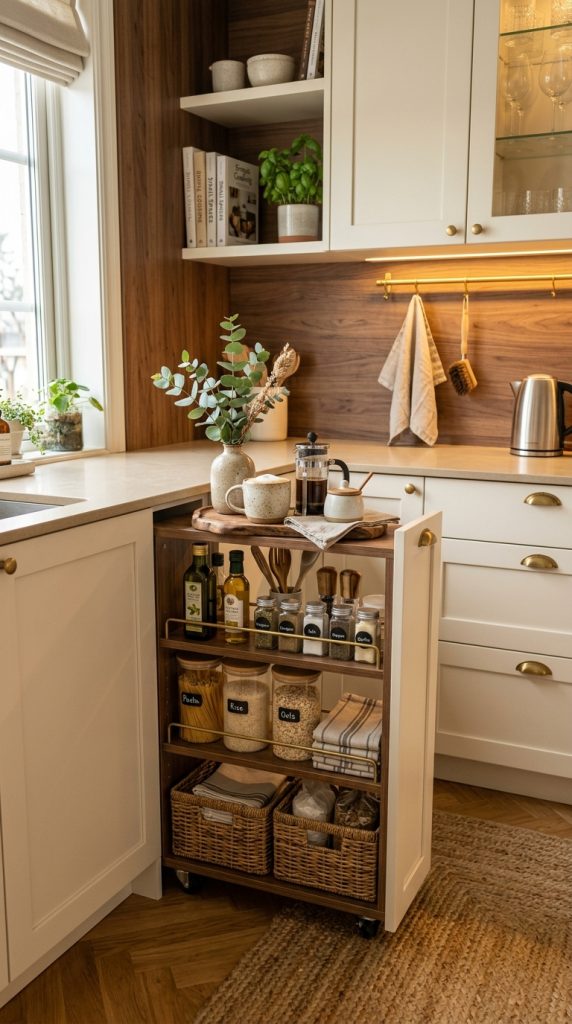
A narrow cart can fit beside a refrigerator, between cabinets, or along an unused wall. Depending on its design, it can store pantry items, kitchen appliances, cleaning supplies, coffee accessories, or cooking equipment.
Materials and Things to Use
- Slim rolling cart
- Woven baskets
- Clear storage containers
- Wooden tray
- Kitchen towels
- Small bins
- Labels
Step-by-Step Organization
- Measure the narrowest available gap.
- Choose a cart that leaves enough walking space.
- Decide what category it will store.
- Use the lower shelves for heavier items.
- Place frequently used items near the top.
- Use baskets to contain smaller products.
- Keep the top surface functional.
- Move the cart when necessary.
The key is to give the cart a specific purpose.
A coffee cart can hold a coffee machine, mugs, beans, tea, and accessories. A baking cart can store flour, sugar, mixing tools, baking pans, and ingredients. A pantry cart can hold snacks, canned goods, and dry ingredients.
Avoid turning the cart into a random collection of everything that does not fit elsewhere. Categorization makes the cart useful.
Because the cart is mobile, it can also act as temporary counter space during cooking or entertaining.
For Pinterest, style the cart with coordinated containers and a simple wooden tray. This turns a practical storage item into a decorative feature.
4. Use the Inside of Cabinet Doors
The inside of a cabinet door is hidden storage that can be extremely valuable in a small apartment kitchen.
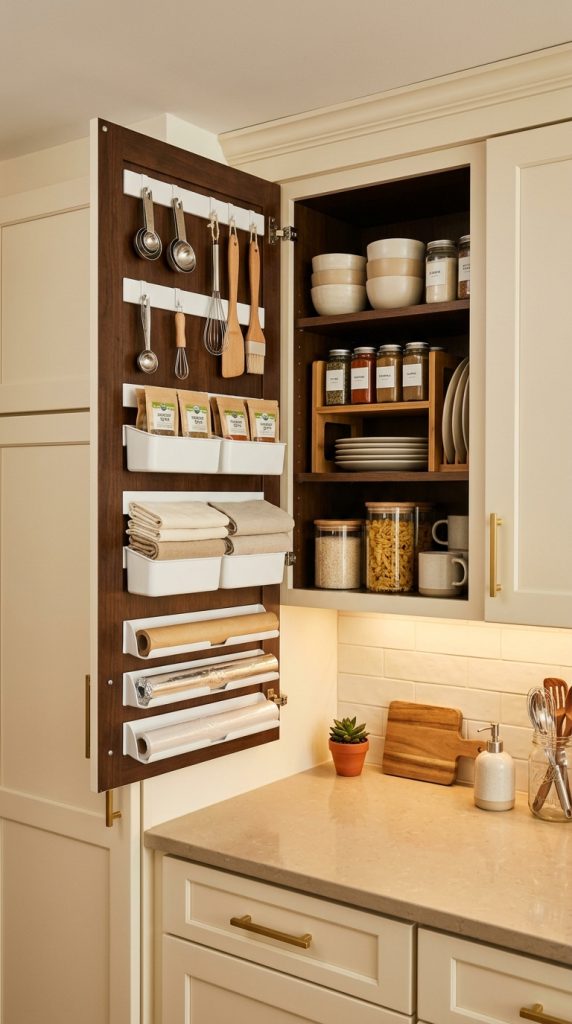
A slim organizer attached to the door can hold measuring spoons, wraps, cleaning supplies, small spices, kitchen towels, or other lightweight objects.
Materials and Things to Use
- Slim door organizer
- Adhesive hooks
- Small baskets
- Measuring spoon rack
- Kitchen towel hooks
- Removable adhesive strips
Step-by-Step Organization
- Empty the cabinet.
- Measure the door’s interior.
- Check the clearance between the door and cabinet shelves.
- Choose a slim organizer.
- Install it securely.
- Add lightweight items.
- Close the door to test clearance.
- Remove anything that prevents smooth closing.
This method is particularly helpful when cabinet shelves are already full.
For example, if your cooking utensils occupy an entire drawer, a cabinet-door rack could hold measuring spoons or small tools instead.
If you are renting, check whether adhesive products are appropriate for your cabinet finish before installing them.
Keep the door organization simple. Too much weight can damage hinges or cause the door to close improperly.
The beauty of this idea is that it adds storage without making the kitchen look more crowded. When the cabinet is closed, everything disappears.
5. Build a Compact Pantry in a Small Apartment
Not every apartment has a dedicated pantry. But you can create a mini pantry by using one cabinet, narrow shelf, rolling cart, or section of a larger cupboard.
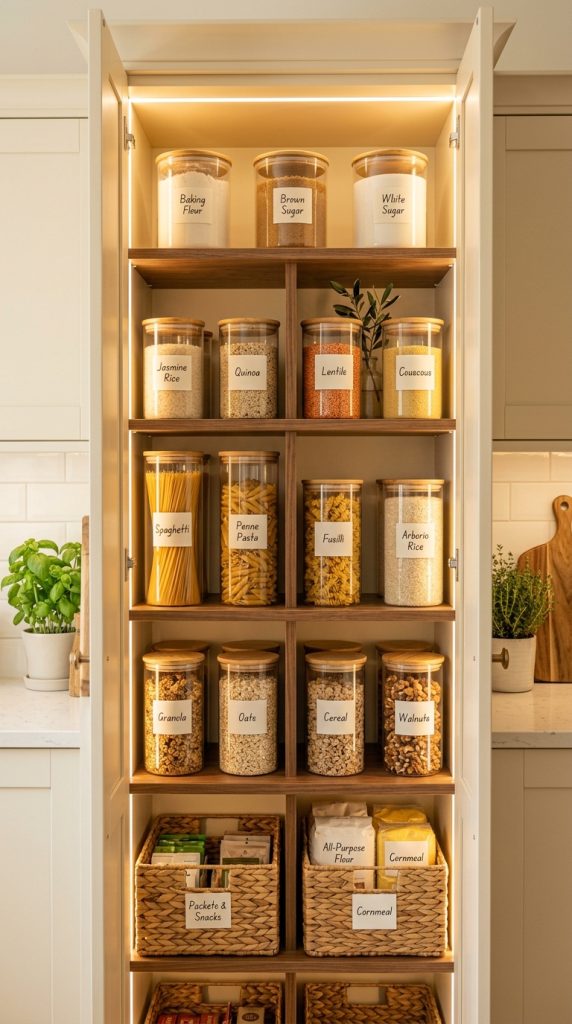
The goal is to group dry ingredients and packaged foods together so they are easy to see and access.
Materials and Things to Use
- Clear containers
- Airtight jars
- Narrow bins
- Stackable shelves
- Woven baskets
- Labels
- Shelf risers
Step-by-Step Organization
- Choose one area for pantry storage.
- Remove expired food.
- Group foods by category.
- Place frequently used ingredients at eye level.
- Use clear containers for suitable dry goods.
- Put small packets into baskets.
- Use risers to create additional levels.
- Label containers where useful.
- Leave enough space to see what you have.
Categories might include breakfast foods, baking ingredients, grains, snacks, canned foods, or cooking staples.
You do not need to use matching containers for everything. Use them where they genuinely improve organization.
For example, clear containers can make flour, rice, pasta, and cereal easier to identify, while a basket can contain smaller packaged snacks.
The goal is a pantry that is easy to maintain.
A beautiful pantry should also make shopping easier. When you can clearly see your supplies, you are less likely to buy duplicate products.
6. Organize Under the Sink With Compact Bins
The cabinet beneath the kitchen sink is often one of the least organized areas in an apartment. Pipes reduce available space, and cleaning supplies can quickly become scattered.

The solution is to work around the plumbing instead of trying to ignore it.
Materials and Things to Use
- Small stackable bins
- Pull-out basket
- Narrow shelf
- Spray bottle holder
- Cleaning cloth basket
- Trash-bag organizer
Step-by-Step Organization
- Remove everything from the cabinet.
- Check for leaks or moisture.
- Discard empty products.
- Group cleaning supplies.
- Use a shelf that accommodates the pipes.
- Place small products into bins.
- Keep frequently used items near the front.
- Leave plumbing accessible.
You can divide the cabinet into categories such as surface cleaners, dishwashing supplies, cloths, sponges, and trash bags.
Avoid overfilling this space because you may need access to plumbing.
A small bin can keep cleaning cloths together, while a narrow pull-out basket can hold bottles.
For renters, freestanding organizers are particularly convenient because they can usually be removed when moving.
7. Use a Vertical Organizer for Pots and Pans
Pots and pans are some of the most difficult kitchen items to store in a small apartment. Stacking them may save horizontal space, but it can make individual pieces difficult to access.
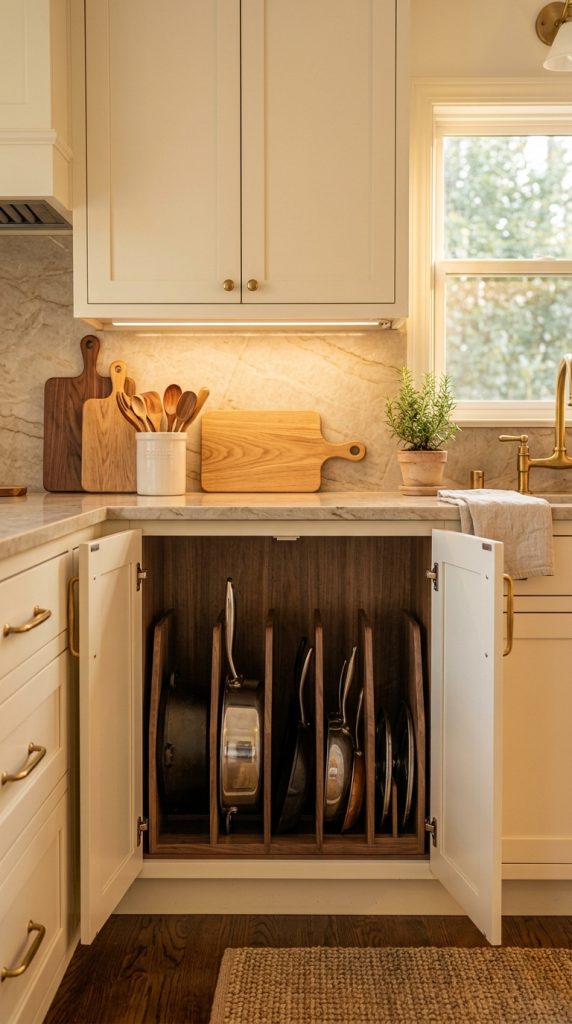
A vertical organizer can separate pans and trays so each item can be removed independently.
Materials and Things to Use
- Vertical pan organizer
- Cabinet dividers
- Adjustable rack
- Lid organizer
- Wall hooks if permitted
Step-by-Step Organization
- Remove all cookware.
- Separate frequently used items from rarely used ones.
- Measure the cabinet.
- Choose a suitable vertical organizer.
- Place pans into individual slots.
- Store lids separately when possible.
- Keep your most-used cookware closest to the front.
If your cabinet is deep, consider a pull-out organizer.
The goal is to eliminate the frustrating process of lifting several heavy pans to reach one at the bottom.
For an apartment, vertical cookware storage can make a surprisingly large difference because pots and pans consume so much cabinet volume.
If you have suitable wall space, hanging a few frequently used pans can also work, but make sure the hardware is securely installed and the placement does not interfere with cooking or movement.
8. Create a Countertop Coffee Station
A coffee station can make a small apartment kitchen feel more organized because it gives several small objects a dedicated home.
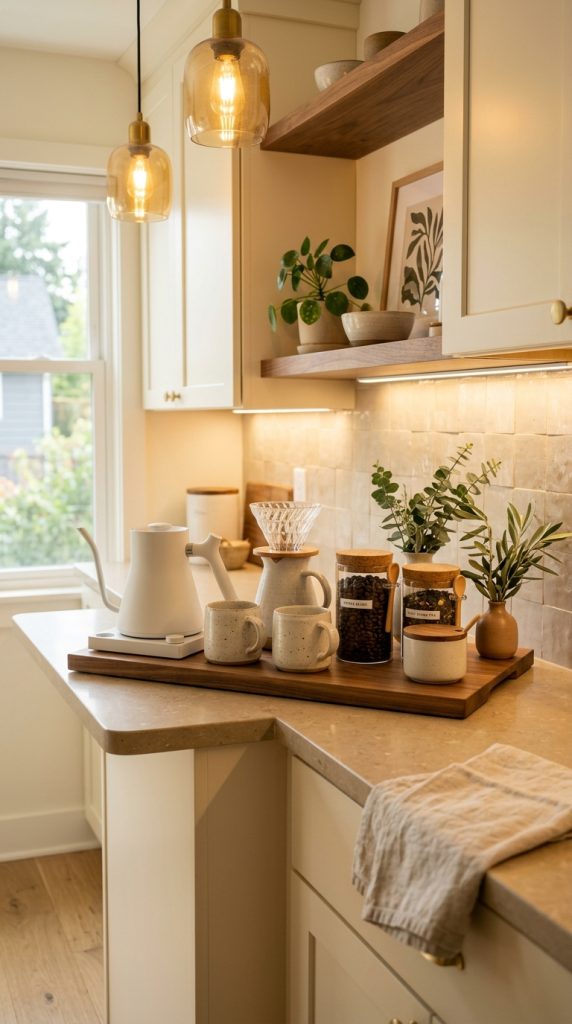
Instead of spreading coffee, mugs, sugar, tea, spoons, and accessories across different areas, group them together.
Materials and Things to Use
- Wooden or ceramic tray
- Coffee maker
- Ceramic mugs
- Glass coffee jar
- Tea container
- Sugar container
- Small spoon
- Small basket
Step-by-Step Organization
- Choose a corner of the countertop.
- Remove unrelated items.
- Place a tray.
- Position the coffee maker.
- Add two or three frequently used mugs.
- Store coffee and tea in containers.
- Add one small decorative object.
- Keep enough space for daily use.
The tray creates a visual boundary, making the station look intentional rather than cluttered.
If your counter is extremely limited, consider using a small rolling cart or wall shelf for the station.
A coffee station can also become a visual focal point. Cream mugs, natural wood, glass containers, and warm lighting create a cozy apartment aesthetic.
For Pinterest photography, focus on the coffee station while showing enough of the surrounding kitchen to communicate the small-space solution.
9. Make Refrigerator Storage Work Harder
The refrigerator is often overlooked when organizing a small kitchen. Yet poor refrigerator organization can waste a surprising amount of space.
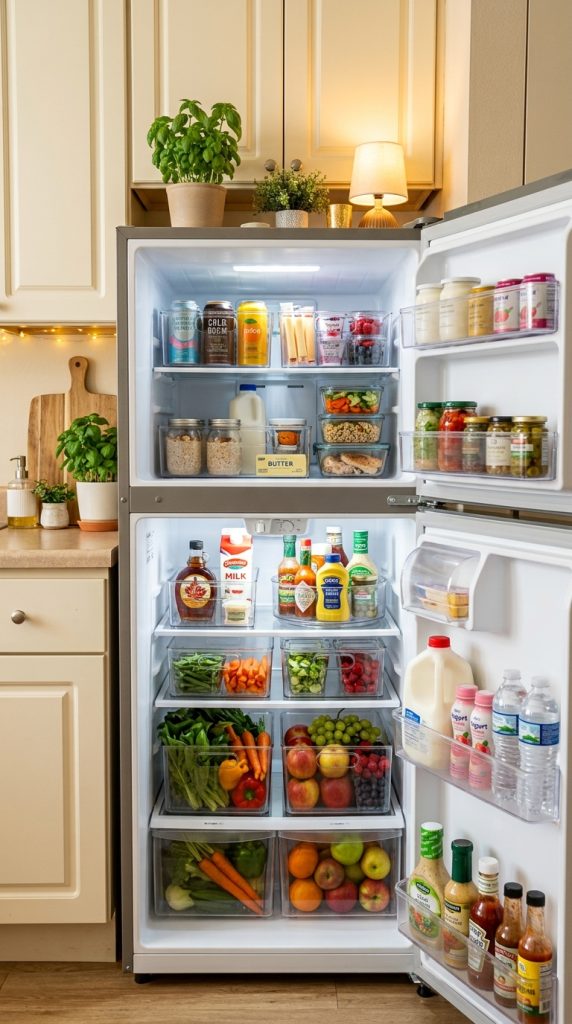
Clear bins allow you to group foods together and make better use of shelf depth.
Materials and Things to Use
- Clear refrigerator bins
- Rotating tray
- Bottle organizer
- Egg holder
- Drawer dividers
- Small containers
Step-by-Step Organization
- Remove everything.
- Clean shelves and drawers.
- Check expiration dates.
- Group similar foods.
- Place categories into bins.
- Use a rotating tray for sauces or condiments.
- Keep frequently used items easy to reach.
- Avoid overcrowding.
You could create categories based on your household’s needs. For example, breakfast items can stay together, snacks can occupy one bin, and sauces can be grouped on a rotating tray.
Do not fill every empty space. Air needs to circulate, and overcrowding makes the refrigerator harder to use.
The biggest advantage is visibility. Instead of searching through dozens of individual items, you can pull out one bin and quickly see its contents.
This system can also help reduce food waste because forgotten ingredients become easier to notice.
10. Create a Complete Renter-Friendly Small Kitchen System
The most effective apartment kitchen organization strategy is not one single product. It is a complete system that combines decluttering, zoning, vertical storage, hidden storage, and flexible organization.
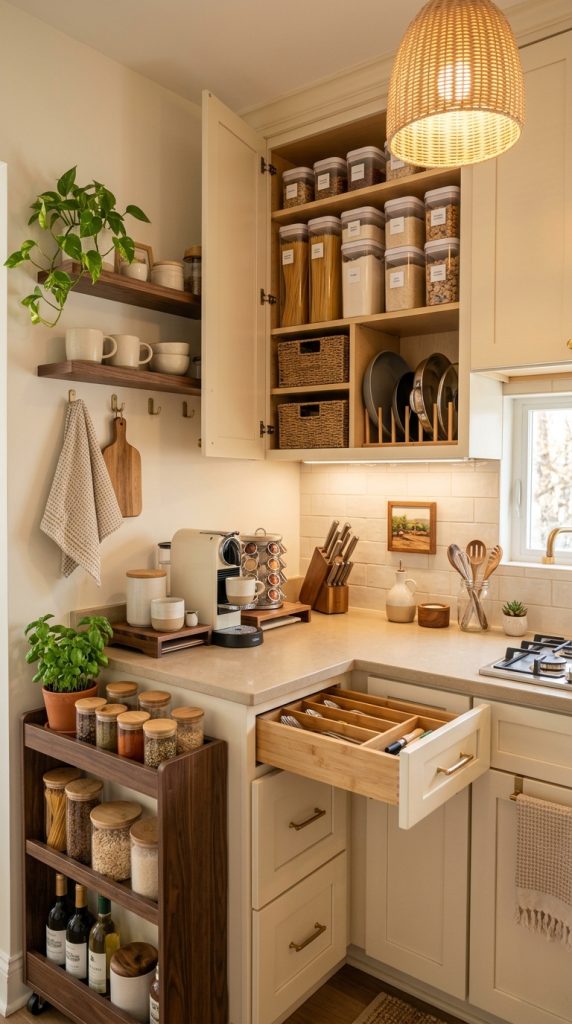
Begin with a complete kitchen audit.
Look at every cabinet, drawer, shelf, countertop, wall, and corner. Identify what is working and what is not.
Then remove duplicate and unnecessary items.
Next, create functional zones. Keep cooking tools near the stove. Store dishes near the dishwasher or dining area. Keep cleaning supplies near the sink. Create a coffee station for beverages. Place pantry staples together.
Materials and Things to Use
- Stackable shelves
- Drawer dividers
- Cabinet-door organizers
- Clear containers
- Woven baskets
- Removable hooks
- Narrow shelves
- Lazy Susan
- Rolling cart
- Pull-out organizers
- Vertical pan racks
- Trays
- Labels
Step-by-Step Organization Plan
- Declutter the entire kitchen.
- Group similar items.
- Decide which objects are used daily.
- Assign storage based on frequency.
- Create functional zones.
- Maximize vertical space.
- Use cabinet interiors efficiently.
- Organize awkward corners.
- Control countertop clutter.
- Add flexible storage for overflow.
- Label only where labels genuinely help.
- Reassess the system after using it for several days.
The most important part of a renter-friendly system is flexibility. You may move apartments in the future, so avoid creating an organization system that only works in one layout.
Freestanding carts, removable hooks, adjustable organizers, stackable shelves, and baskets can move with you.
You should also avoid buying storage products before determining what you actually need. An apartment kitchen can quickly become cluttered with organizers themselves.
Instead, solve one problem at a time.
If your biggest issue is cabinet height, buy shelf risers. If your biggest issue is countertop clutter, create an appliance storage zone. If your biggest problem is cookware, use vertical dividers. If pantry products are taking over your cabinets, create a compact pantry.
This targeted approach saves money and produces better results.
Final Thoughts
Organizing a small apartment kitchen is less about having more space and more about using the space you already have intelligently.
Start by removing things you do not need. This creates the foundation for every other organization strategy.
Then focus on vertical space. Walls, cabinet doors, cabinet interiors, and narrow gaps can all provide storage opportunities without taking away valuable floor space.
Use stackable shelves to increase cabinet capacity. Use vertical dividers for pans and cutting boards. Use baskets for small pantry items. Use clear containers where visibility matters. Use rolling carts when you need flexible storage that can move with you.
For renters, prioritize removable and freestanding solutions whenever appropriate. You can create a highly organized kitchen without making permanent changes.
Remember that organization should follow your daily habits. Frequently used items should be easy to reach. Rarely used appliances can go higher. Cleaning products should remain together. Coffee supplies should live together. Cooking tools should be near the cooking zone.
A small kitchen should also feel pleasant. Organization does not mean eliminating personality. Natural wood, cream ceramics, woven baskets, warm textiles, glass jars, and a little greenery can make a functional kitchen feel cozy and inviting.
The biggest mistake is trying to copy someone else’s organization system exactly. Every apartment kitchen has different dimensions, storage limitations, and daily routines. Take the ideas that solve your specific problems and adapt them to your space.
Most importantly, leave some breathing room. A kitchen that is packed from floor to ceiling may technically contain a lot of storage, but it will not necessarily feel spacious. A combination of concealed storage, organized displays, and clear countertops creates a much calmer visual environment.
The goal is not perfection.
The goal is a kitchen where you can open a cabinet and immediately find what you need, prepare a meal without moving ten objects out of the way, clean the counters quickly, and put everything back where it belongs.
When every inch has a purpose, even a tiny apartment kitchen can feel surprisingly functional.
And that is what makes these ideas so valuable for Pinterest: they are not simply beautiful decorating concepts. They solve real small-space problems while creating visually satisfying transformations that readers can save, share, and recreate in their own apartments.
Leave a Reply