
A vintage living room has a quality that is difficult to achieve with perfectly matched, brand-new furniture. It feels as though the room has developed naturally over time, with every chair, table, lamp, artwork, and textile contributing something different to the overall story. The best vintage interiors are not necessarily filled with expensive antiques. Instead, they combine character, proportion, texture, warmth, and carefully selected pieces to create an atmosphere that feels comfortable and personal.
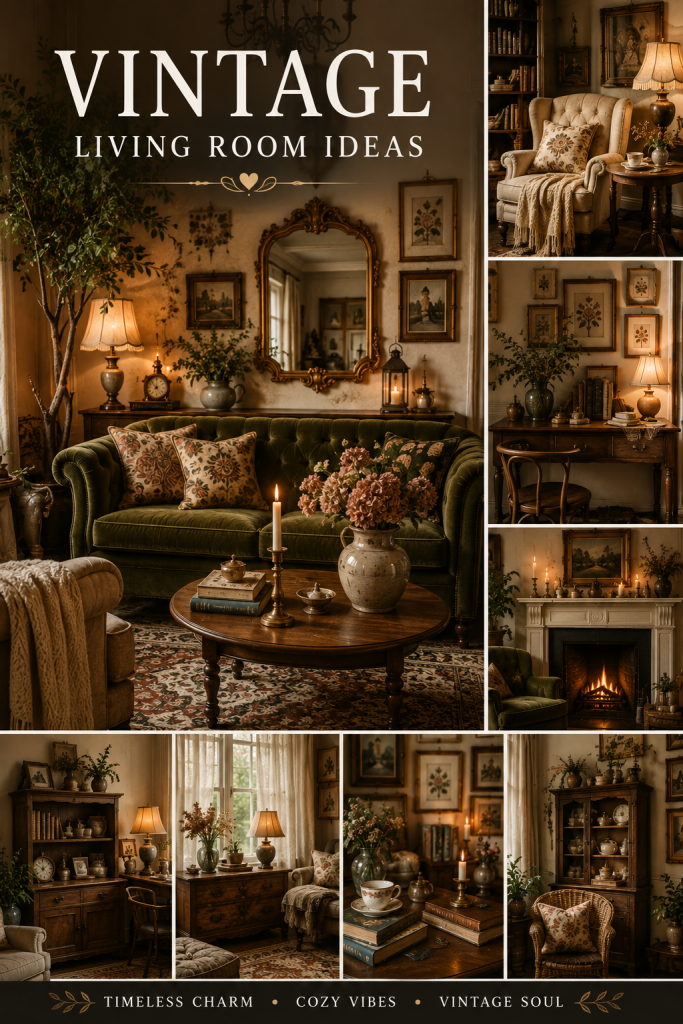
Modern designers increasingly favor interiors that mix old and new rather than recreating a single historical period. Vintage furniture can provide warmth and individuality, while contemporary pieces keep the room practical for everyday life.
That balance is especially useful when decorating a living room. You might already have a modern sofa that you love, for example, but the room could feel somewhat plain. Rather than replacing everything, you can introduce a vintage wooden table, an interesting lamp, an old-fashioned cabinet, a traditional rug, or a collection of framed artwork. Suddenly, the same room can feel much more layered.
Vintage living room design is also surprisingly flexible. You can create a soft romantic space with faded florals and creamy upholstery, a dark library-inspired room with walnut furniture and deep colors, a relaxed farmhouse interior with rustic wood, or a colorful retro room inspired by the 1960s and 1970s. Vintage does not mean following one exact era. It is about using elements associated with the past in a way that feels appropriate for your home.
A major secret to achieving this look is not using too many vintage objects at once. When every item is ornate, aged, patterned, or heavily decorative, the room can begin to look more like a themed set than a real home. Designers often recommend choosing a strong vintage anchor and allowing simpler pieces around it.
For example, a beautifully carved wooden cabinet can become the statement piece while the sofa, curtains, and coffee table remain relatively simple. Alternatively, a dramatic vintage rug can provide the historical feeling while the furniture has clean contemporary shapes.
Color also has a major role. Vintage living rooms often work beautifully with softened shades rather than extremely saturated colors. Think warm cream, tobacco brown, faded blue, olive, sage, terracotta, dusty rose, mustard, burgundy, caramel, and antique white. These colors can be combined in many different ways depending on the atmosphere you want.
If you prefer a brighter room, use cream and warm white as the foundation and introduce vintage colors through smaller elements. If you want something dramatic, use deep green, brown, burgundy, or charcoal on selected walls or furniture while balancing them with lighter upholstery and warm lighting.
Texture is just as important as color. A vintage room should feel interesting even when you look at it without noticing the individual objects. Combine smooth ceramic with rough wood, linen with velvet, woven baskets with polished glass, and aged metal with soft upholstery. This creates the layered appearance that makes vintage rooms feel comfortable rather than flat.
Lighting deserves special attention too. A vintage-inspired living room rarely looks its best under one harsh overhead light. Decorative lighting such as table lamps, floor lamps, sconces, and pendant fixtures creates warmth and gives different parts of the room their own atmosphere. Recent interior-design guidance also emphasizes decorative lighting as a way to add character and warmth instead of relying entirely on recessed ceiling lighting.
The furniture arrangement matters as well. A beautiful vintage room can still feel uncomfortable if the seating is pushed against walls or the walking paths are blocked. Begin by deciding how you want to use the space. Is it primarily for conversation? Reading? Watching television? Hosting guests? A combination of these activities? Once the purpose is clear, choose furniture accordingly.
Vintage pieces should also be evaluated for their proportions. A small antique side table can disappear beside a huge sectional, while an oversized cabinet may dominate a small apartment. The age of an item is less important than how well its scale works with the rest of the room.
Rugs are another powerful way to establish the look. A traditional or Persian-inspired rug can introduce history, pattern, and color without requiring you to replace your furniture. Designers frequently use quality rugs as a foundation for timeless living rooms because they visually anchor the seating area and add warmth.
Artwork can accomplish something similar. A vintage landscape, botanical print, architectural drawing, old photograph, or decorative portrait can give a plain wall a sense of personality. You can also create a gallery wall by combining different frame sizes and finishes.
But vintage decorating should not become clutter decorating.
One of the biggest mistakes is continuing to add accessories simply because they look vintage. A room becomes more sophisticated when you edit it. Choose objects that have meaning, useful function, beautiful craftsmanship, or a strong visual presence.
This is especially helpful when decorating on a budget. Instead of buying fifteen small accessories, invest your money in one substantial secondhand piece. A wooden cabinet, interesting armchair, traditional rug, or distinctive mirror can have much more impact than a shelf filled with inexpensive decorative objects.
Secondhand shopping is also one of the best ways to create an authentic look. Flea markets, thrift stores, estate sales, antique shops, local marketplaces, and inherited furniture can all provide pieces with genuine character. Current design coverage continues to highlight vintage furniture, heirlooms, lighting, and cabinets as effective ways to give modern interiors more personality.
When shopping, look beyond obvious imperfections. A scratch or faded finish may add charm. But structural instability, serious wood damage, mold, pests, or unsafe electrical components should not be ignored.
You can also update an older piece without destroying its character. Reupholstering an outdated chair with a beautiful contemporary fabric, for example, can allow the furniture’s original shape to remain while making it more suitable for your home.
The fifteen ideas below take different approaches to vintage living room design. They are intentionally varied so you can find a direction that matches your home instead of repeating the same formula.
1. Build the Room Around a Beautiful Vintage Sofa

A vintage sofa can immediately establish the character of a living room.
Instead of treating the sofa as just another piece of furniture, make it the visual starting point for the entire space. Look for silhouettes with distinctive details such as curved arms, tufted upholstery, exposed wooden legs, rolled edges, or beautifully aged leather.
You do not necessarily need an authentic antique sofa. A well-made vintage-inspired piece can create a similar feeling, particularly when the rest of the room supports it.
For a softer appearance, choose cream, oatmeal, faded olive, muted blue, or warm beige upholstery. If you prefer something dramatic, consider tobacco leather, deep brown, burgundy, or dark green.
Once the sofa is selected, keep the surrounding furniture comparatively simple.
A low wooden coffee table can provide contrast. A contemporary side table can prevent the room from feeling too historically themed. A simple floor lamp can add useful illumination without competing with the sofa.
Materials to Consider
- Vintage or vintage-inspired sofa
- Wooden coffee table
- Linen cushions
- Wool or cotton throw
- Traditional rug
- Ceramic vase
- Side table
- Floor lamp
- Framed artwork
How to Style It
Begin with the rug.
Position it so that the front legs of the sofa sit comfortably on it. This creates a connected seating zone rather than making the rug appear like a small island.
Add the coffee table at a practical distance from the sofa.
Then introduce cushions in only a few complementary colors.
If the sofa is patterned, choose mostly solid cushions.
If the sofa is plain, you can introduce one patterned cushion or throw.
Finish with artwork behind the sofa.
The result should feel comfortable and established without becoming visually overloaded.
The strongest version of this idea uses the sofa as the historical element and allows everything around it to remain edited.
2. Create a Vintage Library-Style Living Room

If you love old books, dark wood, traditional artwork, and cozy evening spaces, a library-inspired living room can be incredibly atmospheric.
The foundation is usually darker than a typical vintage interior.
Think walnut, espresso, deep olive, tobacco, burgundy, and warm cream.
Begin with a substantial bookcase.
It can be a freestanding wooden unit rather than a built-in installation. Choose one with visible wood grain and simple traditional detailing.
Fill it with books, but do not arrange every book perfectly.
Mix horizontal and vertical stacks.
Leave a few spaces between groups.
Add a ceramic object or small framed photograph in selected areas.
Materials
- Walnut bookcase
- Leather or upholstered chair
- Wooden side table
- Desk-style lamp
- Books
- Traditional artwork
- Brass accessories
- Wool rug
- Linen curtains
Place a comfortable chair near the bookcase.
A small reading lamp should provide focused light.
The coffee table can be relatively simple because the bookshelf provides most of the visual interest.
For artwork, consider old maps, botanical illustrations, landscapes, or architectural drawings.
The lighting should be warm and layered.
A table lamp near the chair can create a beautiful reading zone.
A second lamp across the room balances the composition.
This idea works especially well during the evening because the darker materials become richer under warm illumination.
To prevent the room from feeling too heavy, introduce cream upholstery or lighter curtains.
The goal is a cozy library atmosphere—not a dark, crowded room.
3. Use a Vintage Wooden Cabinet as the Focal Point

A cabinet can be much more distinctive than a traditional entertainment unit or generic console.
Look for an old wooden cabinet with doors, drawers, interesting handles, or visible signs of craftsmanship.
Once you find one, give it enough space to be appreciated.
Do not surround it with ten other statement pieces.
Place it against a simple wall.
Above it, hang one large artwork or a medium-sized decorative mirror.
Keep the cabinet surface relatively restrained.
A ceramic vase, a small stack of books, and one sculptural object may be enough.
Furniture Combination
Pair the cabinet with:
- Simple cream sofa
- Contemporary armchair
- Neutral rug
- Small round coffee table
- Floor lamp
This combination is effective because the cabinet provides historical character while the seating keeps the room comfortable and current.
If the cabinet is very dark, balance it with lighter upholstery.
If it is pale or painted, introduce darker accents elsewhere.
Avoid matching every wooden object to the cabinet.
Slightly different wood tones can make the room feel more naturally collected.
However, too many competing wood colors can become visually chaotic, so choose one dominant wood tone and let other finishes act as supporting accents.
This approach is especially useful for people who want a strong vintage statement without turning the entire living room into a period recreation.
4. Add a Large Vintage Mirror for Instant Character

A mirror can change the atmosphere of a living room without taking up much floor space.
For vintage styling, choose a frame that has character.
Possible finishes include aged gold, dark wood, bronze, antique cream, or distressed paint.
The mirror can become the main feature above a console, fireplace, sofa, or sideboard.
How to Make It Work
First consider the wall.
A large mirror needs enough surrounding space to look intentional.
If the wall is already busy with artwork or shelving, a simpler mirror may be more appropriate.
Place the mirror where it can reflect something attractive.
A window is particularly useful because the reflected daylight can make the room feel brighter.
Avoid positioning it so that it reflects clutter or an unattractive corner.
Under the mirror, use a simple console.
Add a lamp on one side and a ceramic vessel on the other.
You can introduce asymmetry by placing a small stack of books underneath the lamp.
Materials
- Vintage mirror
- Wooden console
- Ceramic vase
- Table lamp
- Small artwork
- Decorative tray
The mirror itself should do most of the decorative work.
This is a good example of why vintage decorating does not require dozens of accessories.
One strong object can establish the entire mood.
5. Design a Soft English-Cottage-Inspired Vintage Room

For a romantic and relaxed interpretation, draw inspiration from traditional cottage interiors.
The room should feel comfortable rather than formal.
Use soft upholstery, floral or botanical patterns, natural wood, woven materials, and gentle colors.
Choose a comfortable sofa in cream, beige, or faded green.
Add one floral armchair.
Rather than covering every surface in patterns, use the floral fabric as a controlled accent.
Suggested Palette
- Warm white
- Sage
- Dusty blue
- Faded pink
- Natural wood
- Soft brown
Use a small wooden coffee table with a simple shape.
Add a woven basket containing a folded blanket.
Place a ceramic vase near the window.
Hang two or three botanical prints in simple frames.
For curtains, lightweight linen or cotton works beautifully.
The room should receive plenty of natural daylight.
At night, use lamps with fabric shades for a soft glow.
This style is particularly attractive because it feels nostalgic without needing expensive antiques.
Many of the elements can be sourced secondhand.
A wooden chair can become beautiful with new upholstery.
A thrifted frame can hold botanical artwork.
An old basket can become practical storage.
The overall goal is relaxed charm.
6. Create a Mid-Century Vintage Living Room

Vintage does not always mean ornate.
A mid-century-inspired living room can feel clean, sophisticated, and highly modern while still having a strong vintage identity.
Focus on furniture silhouettes from the mid-20th century: tapered legs, curved seating, low wooden cabinets, simple geometric shapes, and warm natural wood.
Choose a sofa with a clean profile.
Pair it with a walnut or teak-style coffee table.
Add a sculptural armchair.
Use a low sideboard against one wall.
Color Ideas
- Walnut
- Cream
- Mustard
- Olive
- Burnt orange
- Teal
- Warm brown
You do not need to use all these colors.
Choose one strong accent.
For example, a mustard chair against cream upholstery can create a striking focal point.
Add a simple geometric rug.
Use a vintage-style floor lamp with a distinctive silhouette.
Decorate the sideboard with a ceramic vase and one piece of artwork.
The important thing here is restraint.
Do not mix every vintage era together.
If you choose mid-century furniture, allow the room to maintain that visual language.
The result should feel nostalgic but clean.
7. Introduce a Traditional Rug Before Changing the Furniture

If your existing furniture is already comfortable and functional, you may not need to replace it.
A rug can be the easiest way to introduce vintage character.
Choose a traditional pattern with softened colors.
Look for faded reds, muted blues, olive, beige, rust, or cream.
Avoid choosing a rug solely because it looks old.
Consider the furniture and room proportions first.
A rug should be large enough to visually connect the main seating pieces.
Styling Process
Place the rug first.
Then arrange the sofa and chairs around it.
Add the coffee table.
Introduce cushions that pick up one or two colors from the rug.
Choose artwork that complements—not exactly matches—the pattern.
This method creates cohesion without making everything look coordinated.
For example, if the rug contains muted blue, you might use a single blue cushion.
If it contains rust, introduce a terracotta ceramic object.
Do not repeat every color everywhere.
A few connections are enough.
The rug can become the historical foundation while the furniture remains contemporary.
This makes the room easier to update later.
8. Make a Vintage Gallery Wall the Main Attraction

A gallery wall is ideal if your living room furniture is simple but your walls feel empty.
Instead of purchasing one giant artwork, create a collection.
Mix:
- Botanical prints
- Landscapes
- Family photographs
- Architectural drawings
- Old maps
- Portraits
- Decorative illustrations
Use several frame styles.
Dark wood, brass, bronze, and aged cream can work together.
However, maintain a common thread.
For example, keep most frames warm-toned.
Planning the Arrangement
Place the frames on the floor.
Start with the largest piece.
Add medium-sized artwork around it.
Then use smaller pieces to fill the gaps.
Do not make the arrangement too symmetrical.
Slight variation makes the collection feel more authentic.
Once you are satisfied, photograph the arrangement.
This gives you a reference while hanging everything.
Under the gallery wall, use a simple sofa.
Do not place another dramatic feature directly below it.
The wall should remain the visual focus.
Add a small lamp nearby to create an attractive evening glow.
This idea works especially well in apartments because artwork can add historical personality without requiring major furniture changes.
9. Build a Vintage Conversation Area Without a Television as the Focal Point

If your living room currently revolves entirely around a television, consider creating an alternative arrangement where people face one another.
Use two comfortable armchairs opposite a sofa.
Place a round coffee table between them.
Add a small side table beside one chair.
Place a warm lamp there.
The furniture arrangement encourages conversation rather than directing everyone’s attention toward one screen.
Vintage Elements
Choose:
- Upholstered armchairs
- Wooden side table
- Traditional rug
- Ceramic lamp
- Antique-style artwork
- Small book collection
A round coffee table can soften a room filled with rectangular furniture.
Use a textured rug beneath the entire seating arrangement.
Keep the colors warm and neutral.
This setup can make a living room feel more social.
It is particularly effective for homes where entertaining guests is important.
The vintage details reinforce the feeling of hospitality because the room appears designed around people rather than technology.
10. Create a Retro 1960s–1970s Inspired Living Room

For something more colorful, explore retro vintage design.
This approach allows you to use stronger colors and more playful shapes.
Choose one dominant accent color rather than using every retro shade at once.
Mustard yellow, olive green, burnt orange, chocolate brown, and warm red are excellent options.
Start with a simple sofa.
Introduce the stronger color through an armchair, curtains, rug, or artwork.
Add a low wooden coffee table.
Choose a lamp with a sculptural shape.
Decor
Use:
- Abstract vintage artwork
- Ceramic pottery
- Geometric rug
- Wooden furniture
- Sculptural lamp
- Patterned cushions
The room should feel inspired by the period rather than like a movie set.
Avoid filling it with novelty objects.
One strong retro chair and one interesting lamp may communicate the style better than dozens of themed accessories.
Balance bold colors with cream or warm beige.
That keeps the room comfortable and contemporary.
11. Create a Vintage Fireplace Focal Point

If your living room has a fireplace, use it as the architectural foundation.
A fireplace naturally provides a sense of history.
If the original fireplace is attractive, keep the surrounding styling simple.
Place one large mirror or artwork above it.
Add two carefully selected objects to the mantel.
Avoid filling the mantel with small decorations.
Around the Fireplace
Place seating nearby.
A comfortable armchair can create a cozy corner.
A wooden coffee table can connect the seating area.
A traditional rug can anchor everything.
For evening atmosphere, use warm lamps around the room.
If you use candles or a fire, follow appropriate safety precautions and never leave an active flame unattended.
If your home does not have a fireplace, you can still create a focal point with a substantial vintage cabinet or architectural-style mantel where appropriate.
The important idea is to establish one strong center of attention.
12. Style a Vintage Living Room Around an Antique Trunk

An old trunk can become a surprisingly effective coffee table.
Its unusual shape and hardware immediately introduce character.
Choose a trunk that is structurally sound and appropriate for indoor use.
Place it in the center of the seating arrangement.
Because the trunk already has visual interest, keep its surface relatively clear.
A tray can organize a few objects.
Add one ceramic vase and a small stack of books.
Surrounding Furniture
Use:
- Neutral sofa
- Upholstered chair
- Traditional rug
- Simple side table
- Floor lamp
The combination of soft upholstery and the harder trunk surface creates contrast.
If the trunk is dark, balance it with cream furniture.
If it is lighter, use darker accents elsewhere.
This is also a useful option for people decorating on a budget because a secondhand trunk can serve both decorative and functional purposes.
Before using any vintage storage piece, inspect it carefully for structural problems, pests, odors, or damage.
13. Use a Vintage Bar Cart as a Decorative Feature

A bar cart can bring a sophisticated old-world feeling to a living room without requiring a major furniture change.
Choose a brass, wood, or mixed-material cart.
If you do not use it for beverages, it can become a decorative station.
Display a ceramic vase, books, glass objects, or a small collection of decorative pieces.
Keep the arrangement limited.
Where to Place It
A bar cart can work beside:
- A sofa
- A sideboard
- A reading corner
- A dining transition area
Avoid placing it where it blocks circulation.
A wall behind it can hold a small framed artwork.
Use a warm lamp nearby if space allows.
The bar cart becomes an interesting secondary feature rather than the centerpiece.
For homes with limited space, choose a narrow cart with wheels so it can be moved when necessary.
14. Create a Vintage Room With Natural Greenery
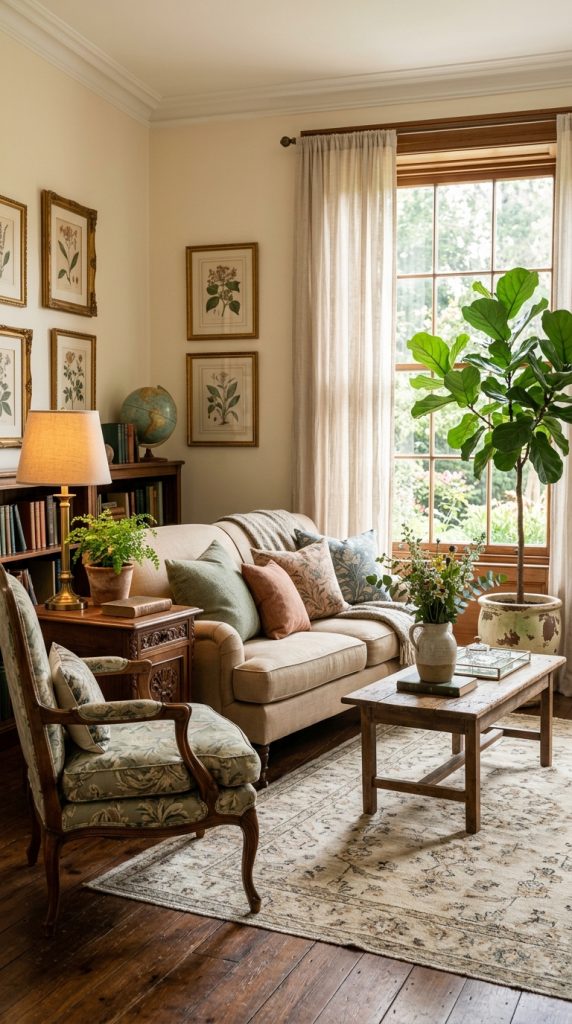
Greenery can prevent a vintage room from feeling overly formal.
Instead of filling the room with plants, select one or two meaningful placements.
A tall plant can occupy an empty corner.
A smaller plant can sit on a wooden side table.
A trailing plant can soften a bookshelf.
Combine Greenery With Vintage Materials
Plants look particularly attractive against:
- Dark wood
- Brass
- Terracotta
- Cream walls
- Woven baskets
- Aged ceramic
Choose containers that complement the room.
A traditional ceramic planter can feel more appropriate than a shiny modern plastic container.
Keep the plants healthy and appropriately sized for the room.
The goal is to add freshness, not create a botanical theme.
This approach works particularly well with warm neutral vintage interiors because the green provides a natural accent without requiring another strong color.
15. Create a Small Apartment Vintage Living Room

Vintage decorating can work beautifully in a small living room, but every piece needs a purpose.
Start by choosing one statement element.
It could be:
- An antique mirror
- A vintage chair
- A traditional rug
- A wooden cabinet
- A distinctive lamp
Then keep the remaining furniture relatively streamlined.
Choose a sofa with visible legs rather than a very bulky base.
Use a compact coffee table.
Choose one narrow side table.
Mount artwork vertically if the room has limited wall width.
Make the Room Feel Larger
A large mirror can reflect light.
Light-colored upholstery can visually open the space.
Furniture with exposed legs allows more floor to remain visible.
A rug can define the seating area without dividing the room visually.
Avoid filling every corner.
One empty corner can make the room feel larger than several decorative objects occupying the same space.
Lighting
Use several smaller light sources rather than one large fixture.
A table lamp, wall light, or compact floor lamp can create warmth without taking much room.
The final result should feel intimate rather than cramped.
Conclusion
A beautiful vintage living room does not come from buying as many old-looking objects as possible.
It comes from selection, balance, proportion, texture, and personality.
The strongest rooms often begin with one memorable piece and allow the rest of the design to develop around it.
That piece could be a vintage sofa, wooden cabinet, antique mirror, traditional rug, fireplace, reading chair, or even a collection of artwork.
From there, introduce contemporary pieces where they improve comfort and function.
A modern sofa can sit beside an antique table.
A contemporary lamp can illuminate an old cabinet.
A simple chair can balance an ornate mirror.
A clean-lined coffee table can soften a heavily patterned rug.
This mixing of periods is one of the easiest ways to keep vintage decorating from feeling dated. Current design guidance similarly emphasizes mixing eras, editing accessories, and allowing vintage pieces to stand out rather than creating a room that feels like a historical replica.
Color should support the mood.
For a soft room, use cream, sage, faded blue, dusty rose, and warm beige.
For a dramatic room, introduce walnut, burgundy, charcoal, olive, and antique brass.
For retro inspiration, experiment with mustard, burnt orange, olive, and warm brown.
For an elegant European feeling, keep the palette restrained with ivory, beige, walnut, muted green, and aged gold.
Do not feel obligated to use every traditional vintage color.
A mostly neutral room can still look strongly vintage if the furniture, artwork, materials, and lighting have character.
Texture is another way to create depth.
Combine linen and velvet.
Place ceramic objects on wooden furniture.
Use a woven basket beside upholstered seating.
Layer a soft throw over a vintage chair.
Introduce brass or aged metal in small quantities.
These material contrasts create visual richness without requiring excessive decoration.
Lighting should be considered part of the furniture arrangement rather than an afterthought.
A table lamp can establish a reading zone.
A floor lamp can brighten a dark corner.
A wall light can highlight artwork.
A pendant can define the center of the room.
Warm illumination can make wood, textiles, and aged finishes appear richer.
If you want a brighter daytime room, maximize natural light with appropriate window treatments while keeping the evening lighting warm.
Rugs deserve careful attention too.
An undersized rug can make a living room look disconnected, while a properly scaled rug can visually unite the furniture. Recent designer guidance continues to emphasize appropriately sized rugs as an important part of a well-furnished living room.
Vintage rugs do not have to be extremely colorful.
Muted patterns can provide the same historical feeling with a calmer appearance.
If the rug is highly patterned, simplify the cushions and curtains.
If the rug is quiet, you can introduce stronger artwork or upholstery.
The same principle applies to furniture.
If you have an elaborate antique cabinet, let it breathe.
If your sofa has dramatic upholstery, keep the coffee table simple.
If you have a large gallery wall, avoid putting another extremely decorative feature directly beneath it.
A room needs hierarchy.
The eye should know where to look first, second, and third.
This is what separates a collected vintage interior from a cluttered one.
Secondhand furniture is an excellent resource for achieving this aesthetic.
Look for pieces based on shape and construction rather than simply searching for the word “vintage.”
A plain wooden table with excellent proportions may be more valuable to your design than a highly decorated object that does not fit your space.
Inspect furniture carefully before buying.
Check its stability.
Look for signs of moisture or pests.
Inspect drawers and doors.
Examine upholstery.
For electrical pieces, prioritize safety and professional assessment when appropriate.
If a furniture piece has good bones but unattractive fabric, reupholstering can be an effective way to give it a new life while preserving its original character.
Do not feel that everything needs to be restored to perfect condition.
A little patina can be beautiful.
Natural wear can make a piece feel authentic.
But there is a difference between attractive aging and serious deterioration.
Use good judgment.
Vintage living rooms also benefit from personal objects.
Old family photographs can become artwork.
Books you actually read can become part of the shelves.
Inherited furniture can become a focal point.
Travel souvenirs can sit alongside older pieces.
A ceramic object from a flea market can become more meaningful when displayed with things you already own.
This is what gives a room its story.
Rather than copying a photograph from Pinterest exactly, use inspiration to develop your own interpretation.
Perhaps you love the colors of one room, the furniture arrangement of another, and the lighting of a third.
Combine those ideas with the architecture and lifestyle of your own home.
That is how you create something original.
If your budget is limited, begin with accessories that have a large visual effect.
A secondhand mirror can transform a wall.
A traditional rug can define the seating area.
A vintage lamp can change the evening atmosphere.
A wooden side table can introduce natural texture.
A framed artwork collection can make a plain wall feel established.
You do not need to renovate the entire room.
If you are renting, this is particularly useful.
Freestanding furniture, rugs, lamps, artwork, curtains, cushions, and mirrors can all introduce vintage character without permanent changes.
For homeowners, architectural details can be even more powerful.
Original fireplaces, molding, doors, built-ins, wood flooring, and other period details can provide an authentic foundation when they are already present.
If your home lacks these features, do not feel that you need to manufacture them.
The furniture and decor can communicate the style.
Most importantly, avoid creating a room that feels like a showroom.
A vintage living room should invite you to sit down.
There should be a comfortable place to read.
A surface for putting down a cup.
Storage for books and blankets.
Enough space to walk around.
Furniture should be arranged around how you actually live.
Beauty should support comfort rather than replace it.
This is especially important for Pinterest-inspired decorating because photographs often focus on appearance, while real homes must function every day.
The best design does both.
It photographs beautifully and feels wonderful to live in.
Finally, remember that vintage decorating does not need to happen all at once.
In fact, the style often becomes more convincing when it develops slowly.
Find one piece.
Live with it.
Notice what colors work beside it.
Then find the next piece.
Over time, the room begins to feel collected naturally.
That gradual process can also prevent unnecessary spending.
Instead of buying ten accessories simply to fill empty shelves, wait until you find something you genuinely love.
A vintage room should not communicate, “Everything was purchased yesterday.”
It should communicate, “These things have found their way here over time.”
That feeling is the real magic of vintage living room decor.
It is warm without being overly polished.
It is stylish without feeling temporary.
It can be elegant, rustic, colorful, romantic, dramatic, minimalist, or eclectic.
And most importantly, it can reflect the personality of the people who live there.
Choose fewer pieces. Choose better pieces. Mix old with new. Let materials show their character. Use warm lighting. Keep the room comfortable. And give every special object enough space to be appreciated.
That is how you create a vintage living room that feels timeless rather than simply old-fashioned.
Leave a Reply