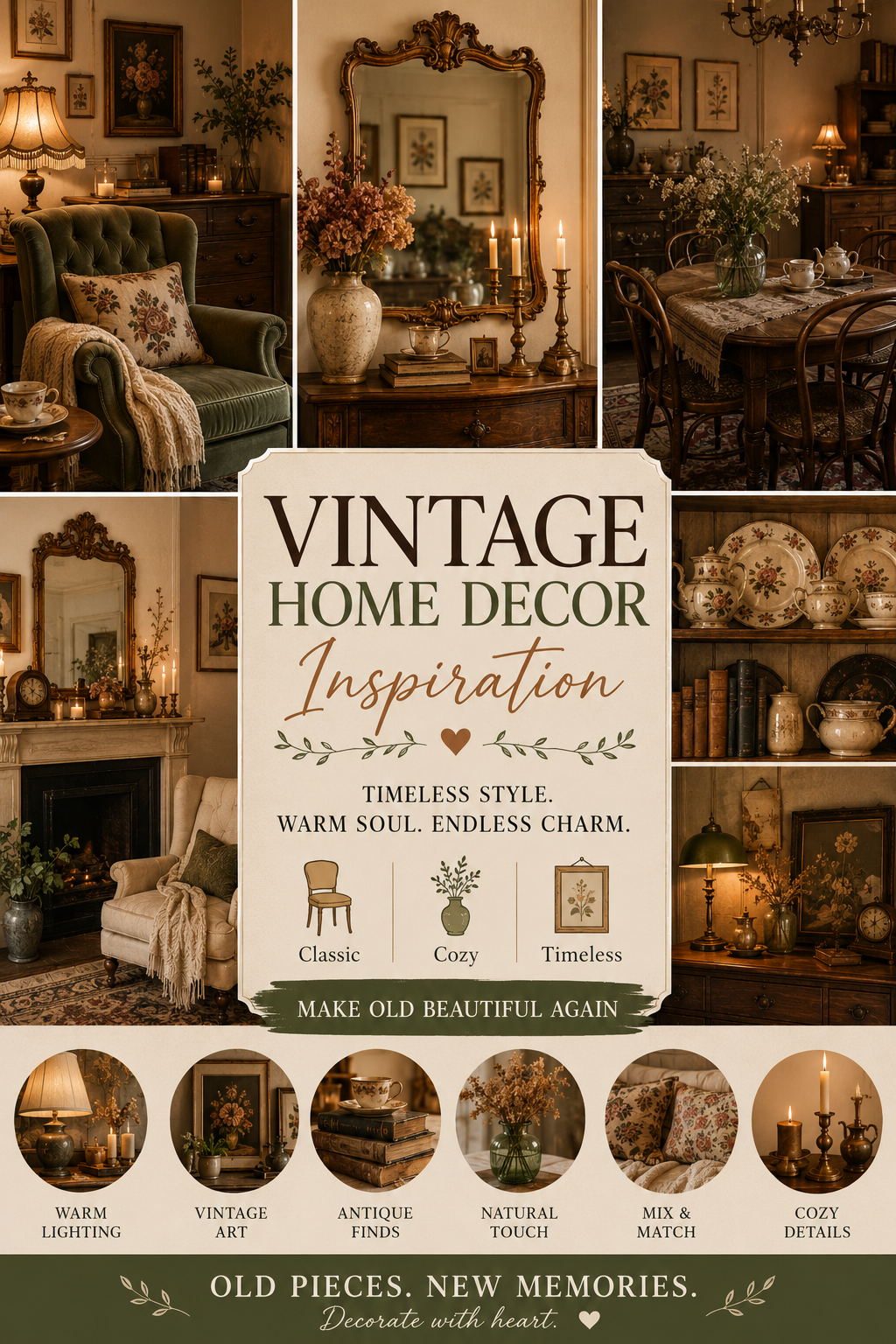
Vintage home decor has a special ability to make a house feel warm, personal, collected, and full of stories. Unlike decorating styles that focus heavily on matching furniture or perfectly coordinated accessories, vintage-inspired interiors celebrate character, history, texture, craftsmanship, and individuality. A vintage home does not have to look old-fashioned or cluttered. With the right balance, vintage pieces can work beautifully alongside modern furniture, creating a home that feels timeless rather than dated.

The beauty of vintage decorating is that there is no single formula. You can create a romantic vintage bedroom filled with floral textiles, an elegant living room inspired by old European interiors, a cozy farmhouse kitchen with antique wood pieces, or a modern home with just a few carefully selected vintage accents. The style can be colorful, neutral, rustic, elegant, dramatic, minimalist, or eclectic depending on the pieces you choose.
One of the biggest advantages of vintage home decor is that it can also be budget-friendly. You do not necessarily need to purchase expensive antiques from specialized stores. Thrift shops, flea markets, secondhand marketplaces, estate sales, family collections, and even your existing furniture can provide beautiful starting points. An old wooden chair, vintage mirror, ceramic vase, framed artwork, brass lamp, woven basket, or decorative box can add more personality to a room than a collection of generic new accessories.
Vintage decorating is also a wonderful way to make a home feel less temporary. Many modern interiors can sometimes look too uniform because they use the same furniture shapes, colors, and accessories. Vintage pieces introduce variation. A slightly weathered wooden table can bring warmth to a contemporary room. An antique-style mirror can soften a minimalist bedroom. A vintage rug can add color and history to a neutral living room. Old books can make a shelf feel collected. A traditional lamp can create a beautiful contrast against modern furniture.
The key is understanding that vintage does not mean filling every corner with old objects. In fact, too many unrelated vintage pieces can make a room feel crowded and visually confusing. The most successful vintage interiors usually have a clear design direction. They combine old and new thoughtfully, repeat colors, balance furniture proportions, and allow important pieces enough space to be appreciated.
Color is an important part of vintage decorating. Warm creams, dusty rose, muted sage, faded blue, terracotta, ochre, mustard, brown, burgundy, antique white, and warm beige can all create a nostalgic atmosphere. However, you do not have to use a traditional vintage palette. A contemporary room with black, cream, walnut, and brass can also include vintage elements beautifully.
Texture is equally important. Vintage spaces often feel inviting because they combine different materials. Think of aged wood beside linen, velvet beside brass, ceramic beside woven baskets, or a faded rug beneath a wooden table. These combinations create depth and make a room feel layered.
Furniture is often the foundation of vintage decorating. A wooden dresser with visible grain, an upholstered armchair with curved legs, a small antique table, or a vintage-inspired cabinet can immediately establish the style. You do not have to purchase an entire vintage furniture set. One statement piece can be enough.
Lighting can also transform the atmosphere. Vintage-style table lamps, brass fixtures, shaded floor lamps, glass pendant lights, and warm bulbs can make a room feel much more intimate. Lighting should be layered rather than relying on one bright overhead fixture. A warm lamp beside a reading chair, a small light on a console, or a soft pendant above a dining table can create beautiful pools of illumination.
Mirrors are another excellent vintage decorating tool. An ornate gold frame can create an elegant traditional atmosphere, while an aged wooden frame can create rustic charm. Even a simple vintage-style mirror can make a small room feel larger and brighter.
Artwork helps personalize the space. Instead of buying generic wall art, consider landscapes, botanical prints, old-fashioned portraits, architectural sketches, vintage posters, or framed textiles. A gallery wall can be especially effective when the frames have slightly different shapes and finishes while still sharing a common color palette.
Vintage decorating also encourages repurposing. A wooden ladder can become a blanket display. An old trunk can become a coffee table. A vintage suitcase can become decorative storage. A small cabinet can become a bathroom vanity or entryway console if its construction and dimensions are suitable. Repurposing gives furniture a second life and creates a home that feels unique.
The kitchen is another area where vintage inspiration works beautifully. Wooden cutting boards, ceramic pitchers, enamel containers, open shelves, traditional glass jars, vintage-style clocks, brass hardware, and old-fashioned textiles can create warmth without requiring a complete kitchen renovation. Even a modern kitchen can become more characterful through a carefully chosen collection of vintage accessories.
Bedrooms benefit particularly well from vintage styling because the style naturally supports softness and comfort. Floral bedding, embroidered cushions, old-fashioned bedside lamps, wooden furniture, framed botanical prints, and layered curtains can create a romantic retreat. For a more contemporary version, use one or two vintage elements against a neutral background.
Bathrooms can also incorporate vintage inspiration. Brass or aged-metal fixtures, framed mirrors, patterned tiles, pedestal sinks, glass containers, and traditional artwork can add character. You do not need to replace plumbing fixtures to achieve the look. Small decorative changes can create the impression of a vintage-inspired space.
The entryway is another ideal location because a single vintage mirror, console, coat rack, bench, or lamp can establish the style before guests enter the rest of the home.
Vintage decor also works particularly well with seasonal decorating. During fall, antique-style lanterns, dried foliage, wooden trays, ceramic pumpkins, and warm textiles can create an inviting autumn atmosphere. During winter, brass candleholders, vintage ornaments, old books, and cozy textiles can add nostalgia.
One of the most important principles of vintage decorating is editing. Before adding another object, consider whether it contributes to the room. Does it add texture? Does it provide function? Does it introduce an interesting shape? Does it have sentimental value? Does it complement the existing color palette?
If the answer is no, you may not need it.
A beautiful vintage room should still have breathing space.
Another important consideration is authenticity. You do not need every item to be genuinely antique. Vintage-inspired reproductions can be practical and affordable. The goal is to create the visual feeling you love rather than prove that every object has a particular age.
You can also mix eras. A mid-century wooden cabinet can work with a traditional floral rug. A Victorian-inspired mirror can sit above a modern console. A vintage ceramic lamp can be placed beside contemporary bedding. The contrast between periods often makes the room more interesting.
When shopping for secondhand furniture, look beyond surface imperfections. Consider the shape, material, construction, proportions, and potential. Scratches and faded finishes can sometimes add character. However, structural damage, pests, mold, unstable furniture, or unsafe electrical components require greater caution and may make a piece unsuitable.
If you are renting, you can still embrace vintage decor. Use freestanding furniture, removable artwork, decorative mirrors, vintage textiles, lamps, baskets, rugs, and accessories rather than permanent renovations. A vintage-inspired atmosphere can be created without changing the structure of the home.
The following ten ideas are designed to help beginners understand how to incorporate vintage home decor into different parts of the house. Each concept focuses on a different decorating strategy and explains how to create the look, what materials to use, how to style it, and how to keep the result comfortable and practical.
You do not need to implement all ten ideas.
Choose the ones that fit your home, lifestyle, and budget.
The goal is not to create a museum.
The goal is to create a home that feels collected, comfortable, meaningful, timeless, and beautifully lived in.
1. Create a Vintage-Inspired Living Room With Character
The living room is one of the best places to introduce vintage decor because it has enough space for furniture, artwork, lighting, rugs, and accessories to work together.

Instead of purchasing an entire vintage furniture collection, begin with one or two statement pieces.
A vintage wooden coffee table can become the centerpiece.
An antique-style armchair can create a reading corner.
A traditional rug can introduce color.
A large framed mirror can establish an elegant atmosphere.
The trick is to surround vintage pieces with simpler furniture so they remain visually important.
Materials and Things You Need
- Vintage or vintage-inspired coffee table
- Neutral sofa
- Vintage armchair
- Traditional-style rug
- Framed artwork
- Brass or bronze lamp
- Ceramic vase
- Old books
- Woven basket
- Decorative tray
- Throw blanket
- Cushions
Step-by-Step Decorating Process
Start with your existing sofa.
There is no need to replace it if it is comfortable and fits the room.
If the sofa is modern, use vintage accessories to soften its appearance.
Add a traditional rug underneath the seating arrangement.
Place a wooden coffee table in the center.
Choose a table with visible grain, curved edges, or a slightly aged finish.
Next, introduce one vintage-style armchair.
Place it at an angle rather than pushing it completely against the wall.
Add a small side table and a warm table lamp.
This creates a comfortable reading area.
Use a Vintage Rug as the Foundation
A vintage-inspired rug can immediately change the character of a room.
Look for faded patterns rather than extremely bold designs.
Traditional floral, medallion, Persian-inspired, or geometric patterns can work well.
If the rug contains several colors, choose two or three of those colors for cushions and artwork.
This creates visual consistency.
Style the Coffee Table
Do not fill the entire coffee table with decorations.
Use a simple arrangement.
Place a tray on one side.
Add two or three books.
Place a small ceramic vase on top.
Add one meaningful object.
Leave plenty of empty surface.
This makes the arrangement feel collected rather than cluttered.
Add Vintage Lighting
Lighting can dramatically enhance vintage furniture.
Choose warm-toned lamps.
Brass, bronze, aged metal, ceramic, and glass bases can all work.
If the living room has a dark corner, place a floor lamp there.
A warm pool of light can make the room feel especially inviting during the evening.
Mix Old and New
This is one of the most important rules.
Do not make every piece look old.
Pair a vintage coffee table with a contemporary sofa.
Place modern cushions on an antique-style chair.
Use a modern floor lamp beside an old wooden cabinet.
This contrast keeps the room fresh.
Budget-Friendly Approach
Search secondhand furniture before purchasing new pieces.
You can often find wooden tables, chairs, mirrors, and cabinets that have excellent shapes but imperfect finishes.
A thorough cleaning and appropriate restoration can sometimes dramatically improve their appearance.
However, avoid major restoration unless you know how to safely handle the materials and finishes.
2. Design a Romantic Vintage Bedroom
Vintage style naturally works with bedrooms because it emphasizes softness, comfort, and personal details.

A romantic vintage bedroom does not have to look overly feminine or old-fashioned.
You can create a sophisticated atmosphere using soft colors, traditional furniture, layered textiles, and warm lighting.
Materials and Things You Need
- Wooden or upholstered bed
- Vintage bedside table
- Floral or textured bedding
- Linen curtains
- Vintage-style lamp
- Framed botanical prints
- Decorative mirror
- Soft rug
- Ceramic vase
- Dried flowers
- Decorative cushions
Choose a Soft Color Palette
Consider:
- Cream
- Antique white
- Dusty rose
- Muted sage
- Faded blue
- Warm beige
- Soft brown
Choose one main neutral and two accent colors.
For example, cream, dusty rose, and sage can create a romantic atmosphere.
Style the Bed
Use layered bedding.
Start with neutral sheets.
Add a quilt or textured cover.
Place two sleeping pillows at the back.
Add two decorative cushions.
Finish with a soft throw at the foot of the bed.
Do not use too many patterns.
If the bedding is floral, keep the surrounding accessories relatively simple.
Add Vintage Bedside Furniture
A small wooden nightstand can create immediate character.
Look for curved legs, drawers with traditional handles, or visible wood grain.
You can place a warm lamp on top.
Add one book and a small ceramic object.
Keep the surface uncluttered.
Use Vintage Artwork
Botanical prints are especially effective.
You can also use:
- Landscape paintings
- Architectural sketches
- Floral illustrations
- Vintage-inspired portraits
- Old maps
Use frames in related finishes.
They do not need to match perfectly.
Add a Mirror
A decorative mirror above a dresser can become the bedroom’s secondary focal point.
Gold, bronze, dark wood, or aged finishes can work well.
Position the mirror so it reflects light or an attractive part of the room.
Create Soft Lighting
Use multiple light sources.
Bedside lamps should provide warm light.
A small dresser lamp can create another glow.
If possible, allow daylight through lightweight curtains during the day.
The combination of natural and warm artificial light creates depth.
3. Bring Vintage Charm Into the Kitchen
A vintage-inspired kitchen can feel warm, practical, and timeless.

You do not need to replace cabinets or appliances to achieve the look.
Small decorative details can introduce the style.
Materials and Things You Need
- Wooden cutting boards
- Ceramic pitcher
- Vintage-style clock
- Glass jars
- Enamel containers
- Woven basket
- Brass or aged-metal accessories
- Linen towels
- Wooden utensils
- Ceramic plates
- Open shelf
- Vintage artwork
Start With Natural Materials
Wood is particularly effective.
Use wooden cutting boards as both functional objects and decorative pieces.
Lean several boards against the backsplash.
Add a ceramic pitcher beside them.
Place a woven basket nearby.
This creates a warm layered arrangement.
Use Open Shelving Carefully
If you already have open shelving, style it with a combination of functional and decorative objects.
Place plates in small stacks.
Add ceramic bowls.
Use glass jars for dry ingredients where practical.
Include one or two decorative pieces.
Do not fill every inch.
Add Vintage-Inspired Textiles
Linen or cotton towels with simple stripes, checks, or traditional patterns can create a nostalgic atmosphere.
Hang one neatly rather than displaying multiple towels everywhere.
Introduce Vintage Artwork
A small framed botanical print or food illustration can make a kitchen feel more personal.
You can also display a vintage-style clock.
Choose Hardware Carefully
If you are considering replacing cabinet hardware, aged brass, bronze, or traditional metal finishes can provide a vintage impression.
Make sure replacement hardware is compatible with your existing cabinets and installation requirements.
Keep the Kitchen Functional
Vintage style should never interfere with cooking.
Keep frequently used items accessible.
Use decorative storage containers for everyday essentials.
Avoid placing fragile decorative objects near cooking surfaces.
4. Create a Vintage Entryway That Feels Collected
The entryway gives guests their first impression of your home.
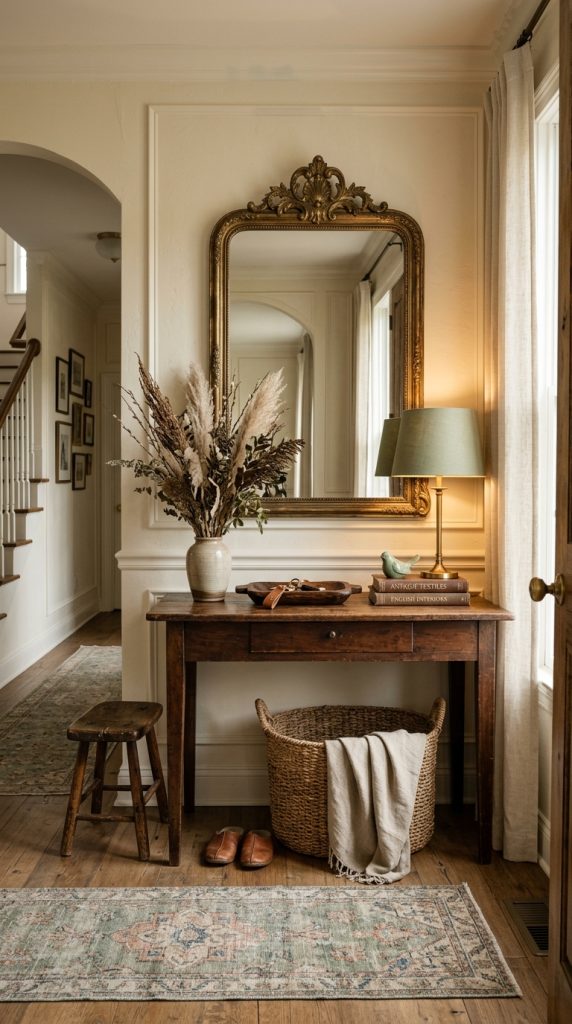
A vintage-inspired entryway can feel especially welcoming when it combines practical storage with character-filled decor.
Materials and Things You Need
- Vintage console
- Antique-style mirror
- Table lamp
- Wooden bowl
- Vintage artwork
- Woven basket
- Runner
- Ceramic vase
- Dried branches
- Small stool
Begin With the Console
If you have a secondhand wooden console, use it as the foundation.
If not, a simple modern console can still work.
The accessories are what create the vintage feeling.
Add a Large Mirror
A framed mirror above the console is an excellent focal point.
Choose:
- Aged gold
- Dark wood
- Bronze
- Antique white
The frame should complement the rest of the home.
Style the Surface
Use a lamp on one side.
Place a vase on the other.
Add a tray for keys.
Stack two books.
Include one small decorative object.
Leave space between the elements.
Add a Vintage Runner
A faded traditional-style runner can visually connect the entryway.
Choose a pattern that contains colors already present in the home.
Keep Storage Beautiful
Place baskets underneath the console.
Use them for:
- Shoes
- Scarves
- Bags
- Seasonal accessories
This keeps practical objects hidden while maintaining the vintage aesthetic.
5. Decorate With Vintage Mirrors and Antique-Style Frames
Mirrors and frames can provide a dramatic vintage effect without requiring major furniture purchases.
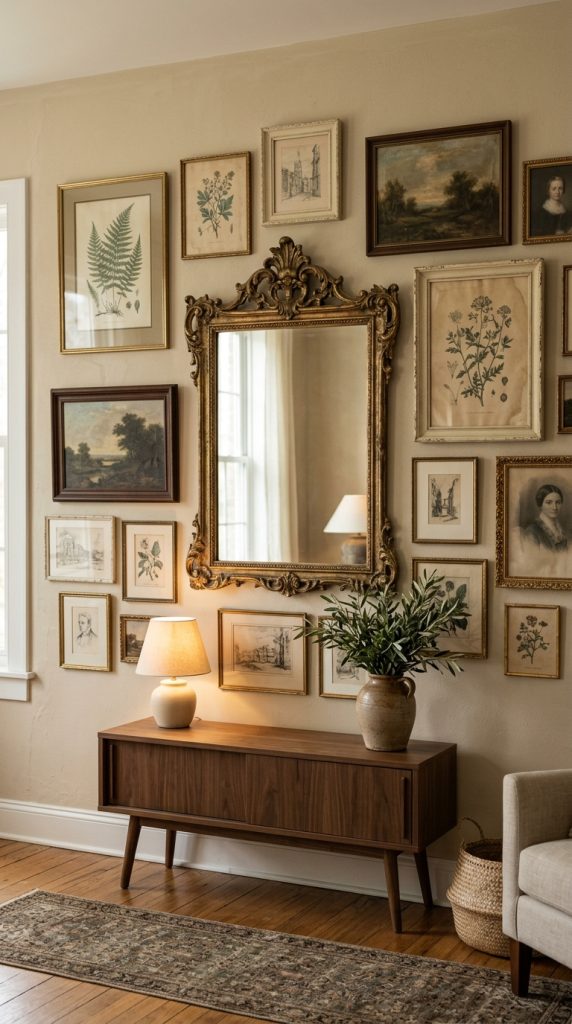
A beautifully framed mirror can transform an otherwise ordinary wall.
Materials and Things You Need
- Vintage mirror
- Antique-style frames
- Botanical prints
- Landscape artwork
- Small photographs
- Wall hooks
- Appropriate mounting hardware
Choose a Statement Mirror
An ornate mirror can work as the centerpiece of a living room, bedroom, hallway, or entryway.
Choose a size appropriate for the wall.
A very small mirror on a large empty wall can look disconnected.
Create a Gallery Wall
Mix several frames.
They can vary slightly in:
- Shape
- Size
- Finish
- Age-inspired appearance
But create cohesion through color.
For example, use mostly:
- Brass
- Bronze
- Dark wood
Choose Meaningful Artwork
Vintage-inspired art should not be chosen only because it looks old.
Choose imagery you genuinely enjoy.
Botanical drawings can create a calm feeling.
Landscapes can create warmth.
Architectural sketches can feel sophisticated.
Old maps can add visual interest.
Family photographs can make the wall personal.
Use Negative Space
Do not place frames too close together.
Give each piece enough breathing room.
Before mounting anything, arrange the frames on the floor.
Take a photograph.
Then adjust the composition.
This can prevent unnecessary holes in the wall.
Budget-Friendly Option
Thrifted frames can be transformed with suitable paint or refinishing techniques.
Even inexpensive prints can look more elevated when placed in substantial frames.
6. Add Vintage Lighting for an Old-World Atmosphere
Lighting has an enormous effect on vintage interiors.

The right fixture can make modern furniture feel warmer and more traditional.
Materials and Things You Need
- Table lamp
- Floor lamp
- Pendant light
- Warm bulbs
- Brass lamp base
- Glass shade
- Ceramic lamp
- Fabric lampshade
Choose Warm Materials
Brass and bronze are particularly effective.
Ceramic bases can add softness.
Glass shades can create an elegant old-world effect.
Fabric shades diffuse the light and make the room feel cozy.
Layer the Lighting
Use:
- Ceiling light for general illumination
- Table lamps for localized light
- Floor lamps for corners
- Accent lights for artwork
This creates depth.
Avoid Harsh Lighting
A very bright cool-toned bulb can make vintage furniture look less inviting.
Choose an appropriate warm-toned bulb for the fixture and room.
Always follow the fixture’s electrical and bulb specifications.
Highlight Vintage Objects
Use light intentionally.
A lamp beside a vintage chair creates a reading corner.
A small lamp on an antique console highlights the arrangement.
Accent lighting can draw attention to artwork.
Make Lighting a Decorative Feature
Instead of hiding every fixture, allow one beautiful lamp to become part of the room’s design.
A vintage-style lamp can be artwork in its own way.
7. Use Vintage Rugs to Add Instant Character
A rug can completely change the atmosphere of a room.

Vintage-inspired rugs are particularly effective because faded colors and traditional patterns create the feeling of age without requiring actual antique textiles.
Materials and Things You Need
- Vintage-style rug
- Rug pad
- Measuring tape
- Furniture
- Coordinating cushions
- Throw
Choose the Right Pattern
Consider:
- Traditional floral
- Persian-inspired
- Faded geometric
- Medallion
- Oriental-inspired patterns
The pattern should complement the room rather than compete with it.
Choose Muted Colors
Faded colors often look more authentic.
Consider:
- Rust
- Beige
- Dusty blue
- Sage
- Burgundy
- Cream
- Brown
Layer With Modern Furniture
A vintage rug can make contemporary furniture feel warmer.
Place a simple modern sofa over a traditional rug.
Add a vintage wooden table.
This creates a balanced combination.
Use Rugs in Bedrooms
A vintage-style rug under the bed can create warmth.
In small bedrooms, a runner beside the bed can be enough.
Use Rugs in Hallways
A narrow vintage runner can make a hallway feel much more interesting.
Ensure the rug is appropriately secured to reduce slipping hazards.
Budget Tip
Vintage-inspired machine-made rugs can offer the visual effect of traditional rugs at a lower cost.
The most important thing is the pattern, color, scale, and overall quality for your needs.
8. Create a Vintage Dining Room With Timeless Details
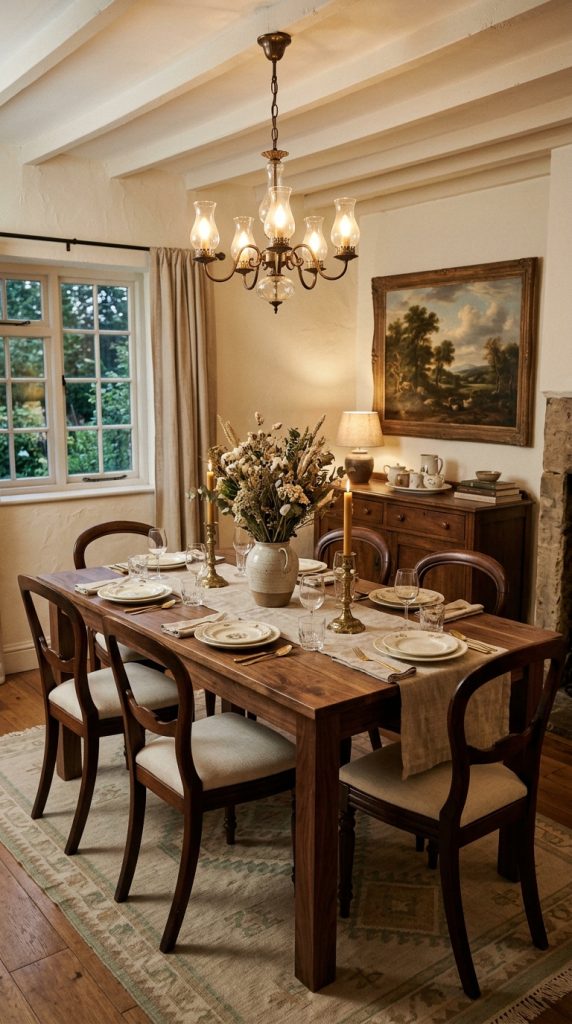
Dining rooms are naturally suited to vintage decorating because traditional furniture, tableware, lighting, and textiles create a welcoming atmosphere.
Materials and Things You Need
- Wooden dining table
- Vintage-style chairs
- Linen table runner
- Ceramic dishes
- Brass candlesticks
- Glassware
- Ceramic vase
- Dried flowers
- Traditional artwork
- Warm pendant light
Start With the Table
A wooden table with visible grain creates warmth.
You do not need a perfectly polished surface.
Some natural character can make the room feel more authentic.
Mix Chair Styles Carefully
Matching chairs are not required.
You can combine chairs with similar proportions but slightly different finishes.
Alternatively, use matching chairs and add one distinctive vintage-style chair at each end.
Style the Table
Use a simple linen runner.
Add a ceramic vase.
Place dried branches inside.
Add two or three candleholders.
Avoid filling the entire table.
Choose Traditional Tableware
Ceramic plates with subtle patterns can create a vintage feeling.
You can also use mismatched dishes if the colors coordinate.
The goal is intentional variation.
Add Wall Art
A landscape painting or vintage-inspired botanical print can make the dining room feel established.
Use warm wood or antique-style frames.
Lighting
A pendant fixture centered over the dining table can become the room’s focal point.
Choose warm illumination.
The dining area should feel intimate during evening meals.
9. Mix Vintage Pieces With Modern Decor
One of the easiest ways to make vintage decor feel fresh is to combine it with modern furniture.

This prevents the room from looking like a period display.
Materials and Things You Need
- Modern sofa
- Vintage coffee table
- Contemporary artwork
- Antique-style mirror
- Modern lamp
- Traditional rug
- Vintage ceramic accessories
Choose One Statement Vintage Piece
Do not introduce ten vintage objects at once.
Choose one strong piece.
For example:
A vintage coffee table.
An antique mirror.
A traditional cabinet.
A vintage armchair.
A wooden dresser.
Then allow the modern furniture to surround it.
Create Color Connections
If your vintage chair has rust-colored upholstery, repeat rust in one cushion.
If the antique mirror has brass details, add a small brass accessory elsewhere.
These subtle repetitions make the room feel coordinated.
Combine Different Shapes
Modern furniture often uses clean straight lines.
Vintage furniture may feature curves.
This contrast creates visual interest.
A curved vintage chair beside a rectangular modern sofa can look particularly sophisticated.
Avoid Too Many Eras
Mixing styles is wonderful, but too many unrelated pieces can create confusion.
Choose a general direction.
For example:
Modern + vintage European
Contemporary + mid-century
Minimalist + rustic vintage
Traditional + farmhouse
Keep the Background Simple
If the vintage furniture is visually strong, use neutral walls.
This gives the statement piece room to breathe.
10. Create a Collected Vintage Home With Personal Accessories
The final approach is to create a home that feels collected over time.

This is perhaps the most authentic way to use vintage decor.
Instead of decorating according to a strict theme, choose objects that have character and meaning.
Materials and Things You Need
- Old books
- Vintage photographs
- Ceramic pieces
- Wooden boxes
- Brass accessories
- Small clocks
- Decorative trays
- Baskets
- Artwork
- Family keepsakes
- Vintage textiles
Start With Meaningful Objects
Look around your home.
You may already own items that could become beautiful decor.
Old family photographs can be framed.
Books can be stacked.
A decorative box can hold small items.
A ceramic piece can become part of a shelf arrangement.
Create Small Collections
Instead of spreading individual objects throughout the house, group related items.
For example, place three ceramic vases together.
Or create a small collection of old books.
Or arrange several framed photographs on one shelf.
Collections feel more intentional.
Use Books as Decor
Books are excellent vintage-style accessories.
Stack two or three horizontally.
Place a small vase on top.
Stand a few books vertically beside them.
Mix colors naturally.
Add Textiles
Vintage-style quilts, embroidered cushions, linen runners, and woven throws can introduce softness.
Do not use every textile in the same room.
Choose one or two statement pieces.
Display Family History
If you have old photographs, letters, postcards, or inherited objects that are suitable for display, consider incorporating them into your decor.
This creates something no mass-produced decoration can replicate.
Avoid Creating Clutter
Collected does not mean crowded.
Edit regularly.
Remove objects that no longer contribute to the room.
Rotate seasonal or decorative pieces.
Give important items enough space.
Build the Look Slowly
A collected home should look as though it developed naturally.
Do not try to purchase everything in one weekend.
Find one beautiful piece at a time.
This approach can also be much more affordable.
Conclusion
Vintage home decor is more than a decorating trend.
It is a way of creating a home that feels personal, warm, layered, and timeless.
The most beautiful vintage-inspired homes do not look like museums.
They look lived in.
They combine old and new.
They use meaningful objects.
They embrace texture.
They celebrate craftsmanship.
And they allow the personality of the people who live there to become part of the design.
You do not need a house filled with genuine antiques to create this atmosphere.
A single vintage mirror can change an entryway.
A traditional rug can transform a living room.
A wooden dresser can give a bedroom character.
A brass lamp can create warmth.
A ceramic vase can add personality.
Old books can make shelves feel collected.
A vintage-inspired kitchen accessory can soften a modern space.
Small details can have surprisingly large effects.
One of the easiest ways to begin is to look at the furniture and accessories you already own.
Before purchasing something new, ask whether an existing piece can be rearranged, repurposed, repaired, or displayed differently.
A wooden chair that has been sitting unused might become a beautiful bedroom accent.
A small cabinet could become an entryway storage piece.
An old frame could become artwork.
A ceramic container could become a vase.
This approach is not only budget-friendly but also makes your home more individual.
When you do shop for vintage pieces, focus on shape, proportion, material, and condition.
A beautiful wooden table with a simple shape may be more useful than an ornate object that does not fit your room.
Think about where the item will go before purchasing it.
Measure the space.
Consider the colors.
Look at the surrounding furniture.
Ask whether the piece will contribute something meaningful.
Do not buy something simply because it is old.
Buy it because you love how it looks or because it serves a purpose.
Color is another important consideration.
A vintage home does not have to be dark.
Cream, warm white, beige, dusty blue, muted green, soft pink, terracotta, and warm wood can create a bright vintage atmosphere.
If you love darker colors, use them strategically.
A deep brown cabinet or burgundy chair can become a beautiful statement piece against lighter walls.
Texture is what makes many vintage spaces feel comfortable.
Combine wood with linen.
Pair velvet with brass.
Place ceramic beside woven materials.
Use a traditional rug beneath modern furniture.
These combinations create richness without requiring excessive decoration.
Lighting should also receive attention.
Vintage furniture can look completely different under warm evening illumination compared with harsh overhead light.
Use lamps.
Use floor lighting.
Use appropriate warm bulbs.
Allow natural daylight to enter when possible.
Create layers rather than relying on one source.
This makes the room feel more intimate.
Vintage mirrors are particularly useful because they combine decoration and function.
A large mirror can reflect daylight and make a small room appear more spacious.
A decorative frame can introduce historical character.
Similarly, artwork can establish the personality of the room.
Botanical prints, landscapes, architectural sketches, old maps, portraits, and vintage-inspired posters can all contribute to the aesthetic.
You do not need every wall to contain artwork.
Sometimes one large piece is more powerful than ten small pieces.
A gallery wall can also work beautifully when the frames have a common visual language.
Vintage decorating also works across different rooms.
In the living room, focus on rugs, tables, lamps, mirrors, and seating.
In the bedroom, use textiles, wooden furniture, soft lighting, and artwork.
In the kitchen, introduce ceramics, wood, glass, textiles, and traditional accessories.
In the dining room, use wooden furniture, tableware, linen, and warm lighting.
In the entryway, choose one strong mirror, console, bench, or wreath.
In the bathroom, introduce traditional frames, brass-inspired details, ceramic containers, and vintage-style artwork.
You can even bring vintage inspiration into a home with a very modern architectural design.
In fact, the contrast can be especially beautiful.
Imagine a minimalist white room with an antique wooden cabinet.
Or a contemporary bedroom with an ornate gold mirror.
Or a modern kitchen with a collection of traditional ceramics.
These contrasts prevent the space from feeling predictable.
If you prefer a more consistent vintage aesthetic, repeat materials and colors throughout the home.
For example, use walnut wood, aged brass, cream, and muted green across multiple rooms.
This creates a subtle connection.
However, do not make every room identical.
Each space should have its own personality.
Another important principle is restraint.
Vintage accessories are often visually detailed.
If you have a patterned rug, ornate mirror, and decorative furniture, you may not need a large collection of additional objects.
Let the strongest pieces stand out.
Empty space is not wasted space.
It allows the eye to rest and makes the important objects more noticeable.
This is particularly important for Pinterest-style interiors.
Beautiful photographs usually have a clear focal point.
A viewer should immediately understand what makes the room special.
That could be a vintage fireplace.
A beautiful bed.
An antique cabinet.
A gallery wall.
A statement mirror.
A traditional rug.
A carefully styled console.
Choose the focal point and build around it.
Vintage decorating is also an excellent opportunity to embrace imperfections.
A little wear on a wooden table can add character.
A faded rug can feel authentic.
An aged frame can add depth.
However, distinguish between attractive character and serious damage.
Furniture should remain stable and safe.
Electrical fixtures should be safe and appropriate.
Textiles should be clean and suitable for use.
Objects should be displayed securely.
Beautiful decorating should always be balanced with practical living.
If you have children or pets, consider which vintage objects can safely remain within reach.
Fragile ceramics and unstable furniture may require careful placement.
The same principle applies to candles, lamps, mirrors, and heavy artwork.
A stylish home should also be comfortable.
Do not sacrifice a comfortable sofa for a beautiful but unusable chair.
Do not fill a bedroom with fragile accessories that interfere with daily life.
Do not make your entryway impossible to walk through because of seasonal decorations.
The best vintage homes combine beauty and practicality.
You can also change vintage styling seasonally.
During fall, introduce dried leaves, warm brown textiles, terracotta ceramics, pumpkins, and brass lanterns.
During winter, add heavier throws, traditional ornaments, candles or flameless alternatives, and evergreen-inspired arrangements.
In spring, introduce botanical prints, soft floral textiles, and lighter colors.
In summer, use linen, wicker, pale wood, and fresh greenery.
The underlying vintage furniture can remain the same.
Only the smaller layers need to change.
This makes decorating more sustainable and budget-friendly.
Ultimately, vintage home decor is about creating a space that feels as though it has a story.
It does not need to tell someone else’s story.
It can tell yours.
Perhaps your story includes family photographs.
Maybe it includes books you love.
Maybe you enjoy collecting ceramics.
Maybe you found a beautiful secondhand chair.
Maybe you simply love the atmosphere of old European homes.
Whatever your inspiration, use it thoughtfully.
Do not worry about achieving a perfectly authentic historical style.
Instead, focus on creating a home that feels warm and visually connected.
Start small.
Choose one room.
Select one statement vintage piece.
Build the surrounding decor around it.
Observe how the room changes.
Then gradually add other elements.
This slower approach often creates a more authentic collected appearance than purchasing an entire matching collection.
The most important rule is simple:
Decorate with things you genuinely love.
Trends will change.
Colors will change.
Furniture styles will change.
But pieces that have character and personal meaning can remain beautiful for years.
That is why vintage decorating continues to appeal to homeowners who want something more personal than a perfectly coordinated showroom.
It offers freedom.
It allows imperfections.
It encourages creativity.
It supports secondhand shopping and repurposing.
And it creates rooms that feel welcoming rather than manufactured.
Whether you choose a romantic vintage bedroom, a rustic living room, an elegant dining room, a character-filled kitchen, or simply a vintage mirror in your entryway, the possibilities are almost endless.
Start with one beautiful object.
Add a little texture.
Introduce warm lighting.
Repeat a few colors.
Leave some breathing room.
Then allow your home to evolve.
The result can be a space that feels timeless, cozy, elegant, nostalgic, personal, and completely your own.
That is the real beauty of vintage home decor.
Leave a Reply