
A warm minimalist terracotta and cream bedding aesthetic is a beautiful way to transform an ordinary bedroom into a cozy, elegant, and peaceful retreat. This timeless combination brings together the softness of cream bedding, the earthy richness of terracotta, and the natural beauty of simple materials. The result is a bedroom that feels warm and inviting without looking cluttered or overly decorated. Whether you are refreshing a small bedroom, styling a modern apartment, or creating a relaxing master bedroom, this color palette offers endless opportunities to make your space feel personal and sophisticated.

Terracotta has become a favorite choice for earthy interiors because it introduces warmth without relying on bright or overpowering colors. Inspired by natural clay, sunbaked landscapes, and handcrafted pottery, terracotta can range from muted dusty rose and soft cinnamon to rich rust and burnt sienna. When paired with cream, these shades feel balanced and refined. Cream prevents the deeper terracotta tones from making the bedroom feel too dark, while terracotta adds depth to an otherwise neutral setting.
The secret to achieving a beautiful terracotta and cream bedroom is to focus on balance, texture, and thoughtful layering. Instead of decorating every corner with matching accessories, begin with a simple foundation of cream bedding and introduce terracotta through selected pillows, quilts, blankets, or artwork. Natural wood, woven rugs, linen curtains, and ceramic accessories can then connect the colors throughout the room. Each element should have a purpose, whether it adds comfort, texture, function, or visual interest.
This aesthetic is also suitable for people who appreciate minimalist interiors but do not want their bedrooms to feel cold or empty. Traditional minimalist rooms often rely on white surfaces, straight lines, and very limited decoration. A warm minimalist bedroom uses the same principles of simplicity while introducing tactile fabrics, earthy colors, natural finishes, and softer lighting. The room remains uncluttered, but it feels more comfortable and lived-in.
Choosing the right bedding is an important first step. Cream duvet covers, ivory pillowcases, and oatmeal-colored sheets provide a versatile foundation that works throughout the year. You can change the mood of the room simply by replacing a terracotta throw with a lighter clay-colored blanket or introducing deeper rust accents during the cooler months. This flexibility makes the palette practical for anyone who wants a beautiful bedroom without frequently purchasing new furniture or accessories.
Texture is just as important as color. A bed covered entirely in smooth, flat fabrics may look unfinished even when the colors coordinate perfectly. Adding washed linen, cotton waffle blankets, softly quilted bedding, and knitted throws creates dimension without requiring bold prints. These materials also complement the handmade character of terracotta accessories and natural wood furniture. A few carefully selected textures can make a simple bed look luxurious and inviting.
Lighting further enhances the warmth of this combination. Natural daylight brings out the softness of cream fabrics, while warm bedside lamps create a relaxing atmosphere in the evening. Soft ivory curtains, wooden nightstands, and subtle ceramic details complete the design without distracting from the bed. Rather than using many decorative objects, allow a few beautiful materials and well-chosen colors to define the space.
Another advantage of terracotta and cream bedding is its versatility. It works with modern organic interiors, Scandinavian-inspired bedrooms, rustic spaces, contemporary apartments, and understated bohemian designs. You can pair it with pale oak for a light and airy appearance, walnut for a richer atmosphere, or black accents for a slightly more modern contrast. The key is to maintain a clear color direction so the room feels cohesive.
You do not need a large budget or a completely new bedroom set to create this look. Start with the bedding you already own, identify which colors are missing, and introduce one or two terracotta pieces. Rearranging pillows, folding a blanket at the foot of the bed, or replacing a cool-toned lampshade with a warmer option can make a noticeable difference. Small changes often produce the most natural-looking results.
The following ten ideas explore practical ways to create a warm minimalist terracotta and cream bedding aesthetic. Each approach focuses on a different design element, from linen layering and textured quilts to natural wood, accent walls, and carefully chosen accessories. You can follow one complete idea or combine selected details to create a bedroom that reflects your personal style while remaining cozy, timeless, and uncluttered.
1. Layer Cream Linen Bedding with Terracotta Accent Pillows
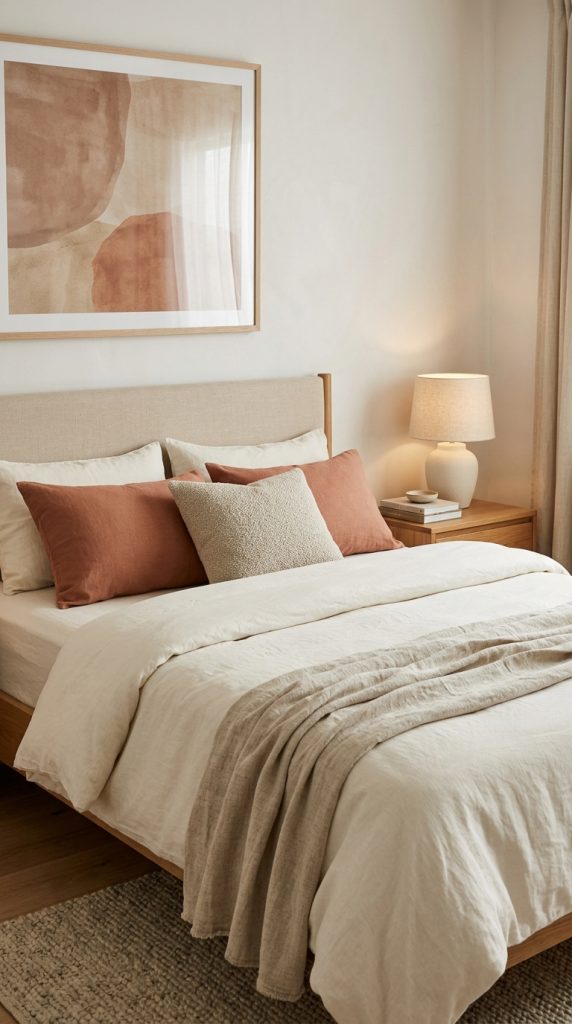
Cream linen bedding provides one of the most versatile foundations for a warm minimalist bedroom. Its soft appearance brightens the bed, while the natural texture prevents the neutral color from looking flat. When you add terracotta accent pillows, the room gains a warm focal point without losing its peaceful, uncluttered character.
Begin with a cream fitted sheet and a duvet cover in ivory, warm white, or pale vanilla. These shades are slightly softer than a stark, cool white and work beautifully with earthy colors. Choose linen or cotton with a matte finish rather than glossy fabric. The relaxed folds of washed linen create a comfortable appearance that suits minimalist interiors.
Next, introduce two terracotta pillow covers. Muted clay, cinnamon, and dusty rust are excellent options because they add warmth without becoming visually overpowering. If your bedroom receives plenty of daylight, a medium terracotta shade can create an attractive contrast against cream bedding. In a smaller or darker room, choose a softer clay tone that feels lighter.
Keep the pillow arrangement intentional. Begin with your regular sleeping pillows, then place the terracotta cushions in front. If you want an additional layer, add one smaller cushion in oatmeal or textured ivory. Avoid using too many shapes, colors, and patterns because they can make the bed feel crowded.
Materials and items to use:
- Cream linen or cotton duvet cover
- Ivory fitted sheet and pillowcases
- Two terracotta linen accent pillow covers
- One optional oatmeal textured cushion
- Natural wood bedside table
- Cream ceramic bedside lamp
To make the arrangement look professionally styled, pay attention to the relationship between the pillow colors and the surrounding furniture. Pale oak furniture complements soft terracotta, while medium walnut introduces a richer contrast. If your headboard is upholstered in beige or cream fabric, the pillows will stand out naturally. A wooden headboard can provide an additional earthy element.
For a simple styling routine, smooth the duvet across the bed, fold the upper edge back slightly, and arrange the pillows from largest to smallest. Allow the linen to retain a few natural creases rather than pulling it completely flat. The goal is a relaxed, comfortable bed rather than a perfectly rigid display.
You can also repeat terracotta in a small accessory elsewhere in the room. A clay vase, a piece of abstract artwork, or a ceramic bowl on the nightstand can connect the accent pillows to the rest of the interior. Choose just one or two complementary objects so the bedroom maintains its minimalist character.
This idea is especially useful if you want to refresh your bedroom without buying a new duvet, mattress, or bed frame. Cream bedding is easy to coordinate with existing furniture, and terracotta pillow covers are a relatively simple way to introduce a new color scheme. If you eventually want a different look, you can replace the accent covers while keeping the neutral foundation.
2. Style a Cream Duvet with a Terracotta Quilt at the Foot of the Bed
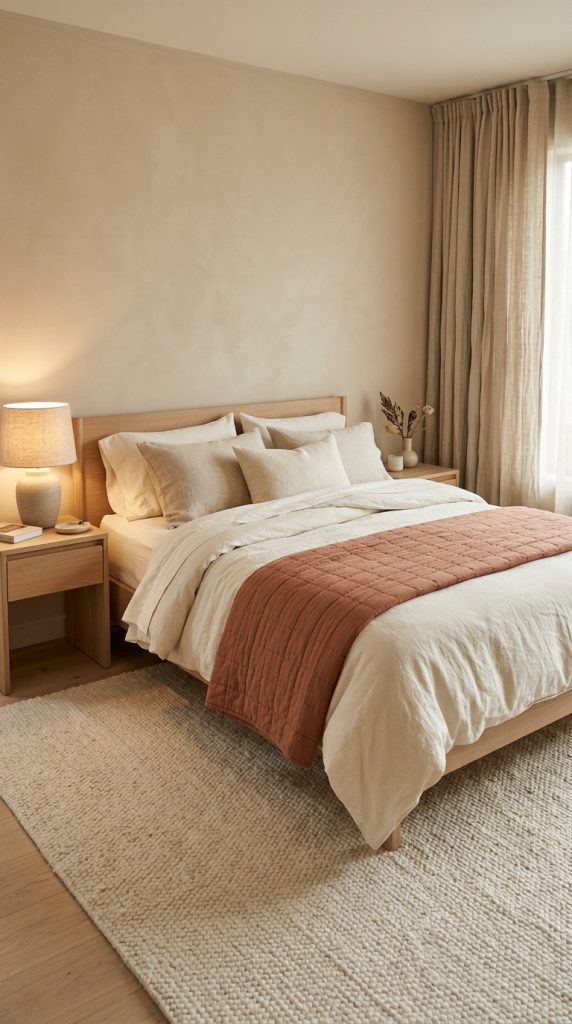
A terracotta quilt adds a distinct layer of color while allowing cream bedding to remain the main feature. This arrangement is ideal for anyone who prefers a calm, neutral bedroom but wants more visual depth than pillows alone can provide.
Start with a cream duvet and matching pillowcases. Choose a quilt in muted terracotta, warm rust, or a dusty clay shade. A quilt with understated stitching creates texture without introducing a busy pattern. Cotton quilts work well for everyday use, while lightweight linen blends offer a softer, more relaxed appearance.
Fold the quilt into a long, even band and place it across the lower third of the bed. This creates a visual anchor that balances the pillows at the opposite end. For a casual bedroom, allow one edge to fall slightly over the side. For a more structured look, fold the quilt neatly and align its edges with the mattress.
The amount of terracotta you introduce depends on the mood you want. A narrow folded quilt creates a subtle accent, while a wider layer makes the color more prominent. If you already have terracotta pillows, choose a quilt in a slightly different shade rather than trying to match everything exactly. Tonal variation makes the arrangement look more natural.
Materials and items to use:
- Cream duvet cover
- Ivory or warm-white sheets
- Terracotta cotton quilt
- Neutral pillowcases
- Pale wood or walnut bed frame
- Textured cream rug
Consider the weight of the quilt when selecting your bedding. A lightweight quilt can remain on the bed throughout the warmer months, while a thicker cotton layer provides extra comfort during cooler weather. For a bedroom that changes with the seasons, choose a versatile quilt that can be used on its own or layered over the duvet.
The surrounding room should support the bedding rather than compete with it. A simple wooden nightstand, a neutral lampshade, and understated artwork are enough to complete the arrangement. If the quilt has a visible stitched pattern, keep the other textiles relatively plain. If the quilt is smooth and simple, you can introduce a more pronounced waffle-weave blanket or textured cushion.
One common styling mistake is folding several blankets on top of one another simply to create volume. This can make the bed look heavy and difficult to maintain. Instead, use one quilt as the main accent and let the cream duvet provide the larger visual surface.
This arrangement is also practical for everyday living. You can remove the quilt easily, use it for additional warmth, or replace it with a lighter shade when you want a different seasonal appearance. The basic cream bedding remains unchanged, allowing the bedroom to evolve without a complete redesign.
3. Create a Soft Earthy Palette with Muted Terracotta and Ivory
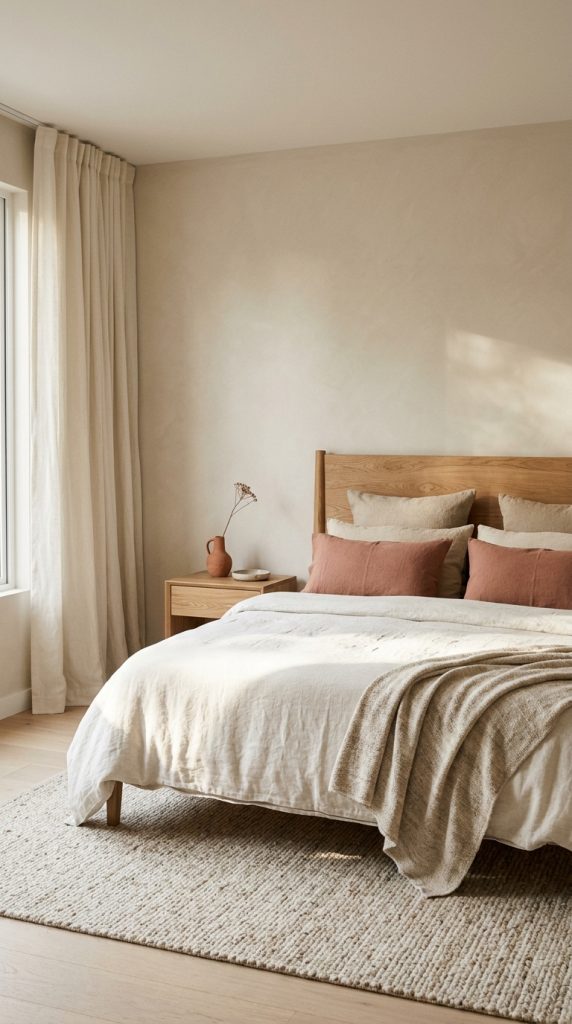
The specific shades you choose can determine whether a terracotta bedroom feels bold, romantic, rustic, or understated. For a warm minimalist aesthetic, muted terracotta and ivory create a particularly balanced combination. The colors have enough contrast to define the design, but neither needs to dominate the room.
Muted terracotta contains softer brown, pink, or clay undertones than a vivid orange. It feels earthy and restrained, making it suitable for accent pillows, duvet details, throws, and small decorative objects. Ivory provides a gentle neutral backdrop. Unlike a very bright white, ivory has a warmer appearance that blends naturally with terracotta and wood.
Begin by selecting your primary cream shade. Look at your walls, flooring, and existing furniture before choosing the bedding. If the room has warm beige walls, an ivory duvet may blend beautifully with the surroundings. If the walls are cooler white, choose cream bedding with enough warmth to create a gentle contrast.
Once the foundation is established, introduce muted terracotta in two or three places. For example, use terracotta pillow covers, an oatmeal throw, and a small clay-colored accessory. This repetition makes the palette feel intentional without requiring every item to match.
Materials and items to use:
- Ivory or warm cream duvet cover
- Muted terracotta pillow covers
- Oatmeal cotton throw
- Beige or sand-colored curtains
- Natural wood furniture
- Matte ceramic accessories
Think about how the colors change throughout the day. Strong sunlight can make terracotta appear more orange, while evening lighting may bring out its brown or red undertones. If possible, view fabric samples near the bed before making a final decision. This simple step can help you avoid purchasing pieces that look different from your intended palette.
You can also introduce subtle variations within the neutral family. Oatmeal, flax, warm taupe, and sand are useful supporting shades because they bridge the gap between ivory and terracotta. Use them in small amounts through a rug, cushion, or curtain rather than adding many unrelated colors.
Patterns should remain understated. A tiny woven stripe or a faint tonal pattern can work well, but large contrasting prints may interrupt the calm appearance. If you want more visual interest, rely on differences in fabric texture instead of strong patterns.
This color scheme suits both small and large bedrooms. In a compact space, keeping most bedding cream helps the room feel open. In a spacious bedroom, a deeper terracotta throw or a larger accent cushion can provide enough visual weight to balance the bed against the surrounding furniture.
The finished effect should feel cohesive rather than overly coordinated. Your terracotta pieces do not need to have exactly the same shade, and your cream textiles do not need to be identical. Small differences in tone create depth and help the bedroom look naturally assembled over time.
4. Add a Textured Terracotta Throw Blanket
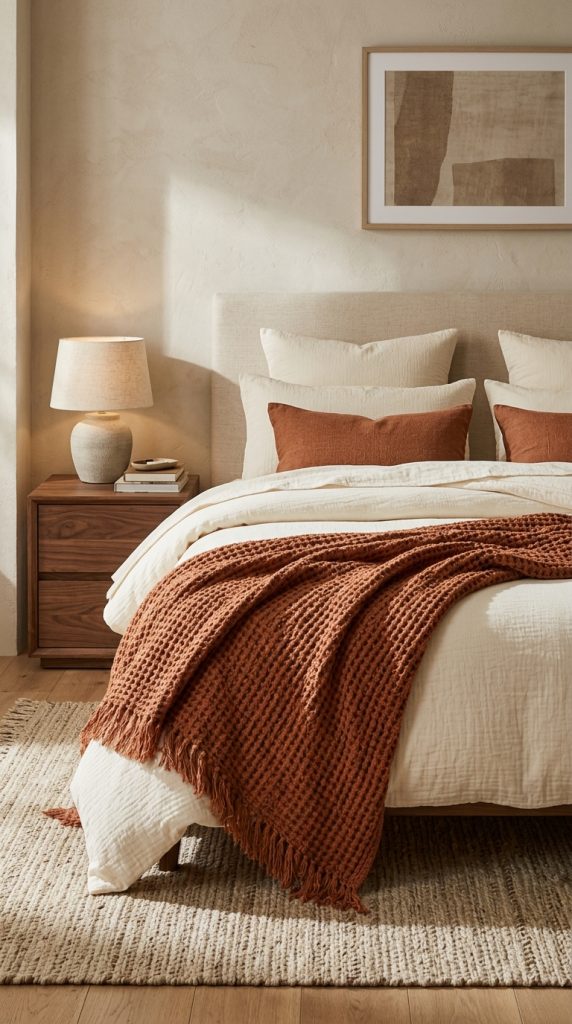
A terracotta throw blanket is a simple way to make cream bedding feel warmer and more layered. Because a throw can be folded, draped, or removed easily, it offers flexibility without requiring a major change to the room.
Choose a material that suits the atmosphere you want to create. A cotton waffle throw introduces a small-scale texture, a knitted blanket adds a softer and more substantial appearance, and a washed linen throw gives the bed a relaxed finish. For a warm minimalist bedroom, matte fabrics generally work better than highly reflective or glossy materials.
Select a terracotta shade that complements your existing bedding. Cinnamon and dusty clay are subtle options, while deeper rust creates stronger contrast. If your pillow accents are already dark, consider a lighter terracotta throw to keep the bed balanced.
There are several ways to arrange the blanket. Fold it lengthwise across the foot of the bed for a clean, organized appearance. Drape it diagonally over one corner for a more casual style. You can also place it over the side of a bed with a simple frame to add softness to the overall silhouette.
Materials and items to use:
- Cream duvet and sheets
- Terracotta cotton or linen throw
- Neutral sleeping pillows
- One textured accent cushion
- Wooden nightstand
- Warm bedside lighting
When styling the throw, consider the proportions of the bed. A narrow blanket can look lost on a king-size bed, while an oversized blanket may overwhelm a smaller mattress. Choose a size that creates a visible layer without covering most of the cream duvet.
The throw can also help connect different elements in the room. If you have terracotta artwork above the bed, a similarly toned blanket can echo the artwork’s color. If the room already contains a clay vase or a rust-colored lampshade, the throw can repeat that shade and bring the design together.
Avoid layering multiple accent blankets merely to create a fuller appearance. One well-chosen throw often looks more elegant than several blankets in similar colors. If you want additional dimension, introduce a different texture through the duvet or a cushion rather than adding another large layer.
For everyday use, keep the arrangement easy to maintain. Fold the blanket at the end of the day or drape it over a corner where it remains accessible. A bedroom should feel comfortable enough to use, not so carefully arranged that ordinary activities become inconvenient.
This idea is particularly suitable for renters and anyone working with an existing bedroom design. A throw can introduce the desired color without painting the walls, replacing the furniture, or investing in a completely new bedding set.
5. Pair Cream Bedding with a Natural Oak Bed Frame
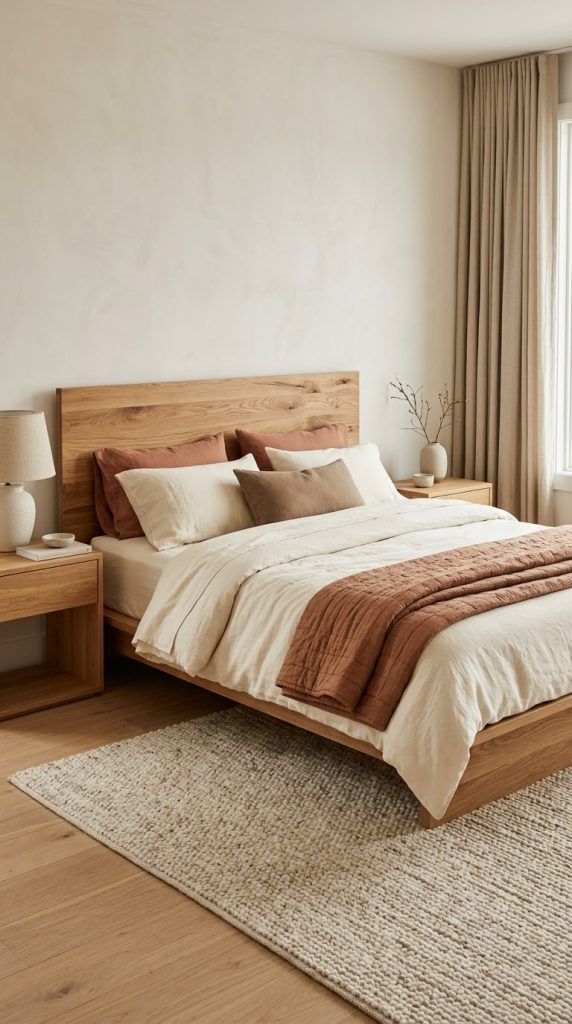
Natural oak furniture complements terracotta and cream bedding because it adds warmth through material rather than another strong color. The wood grain introduces natural variation, while its warm neutral tone helps connect the cream textiles with the earthy terracotta accents.
If you are selecting a new bed frame, look for a simple design with clean lines. A low-profile oak frame, a softly curved wooden headboard, or a platform bed with minimal detailing can all support the warm minimalist aesthetic. Choose a matte or lightly finished surface that allows the wood grain to remain visible.
For an existing bedroom, you do not need to replace your bed frame. A wooden headboard, oak bedside tables, or a small natural wood bench at the foot of the bed can introduce the same effect. The goal is to create a visual connection between the bedding and the furniture.
Start with cream bedding and add terracotta pillow covers or a folded quilt. Let the oak remain visible around the edges of the bed. This creates a balanced composition in which the light textiles, warm accent color, and natural wood each have their own role.
Materials and items to use:
- Cream duvet cover and pillowcases
- Terracotta accent cushions
- Natural oak or light walnut bed frame
- Matching wooden bedside table
- Neutral woven rug
- Ceramic lamp with a warm shade
The wood tone should relate comfortably to the rest of the room. Pale oak creates a lighter, airier result, while walnut gives the space more depth. Both can work with terracotta and cream, but it is helpful to avoid introducing too many unrelated wood finishes in a small bedroom.
You can soften the harder surfaces with tactile textiles. A woven rug beside the bed, linen curtains, and a cotton throw help balance the visual weight of the wood. These additions create comfort without making the room feel crowded.
For the bedside area, choose one or two useful accessories rather than a collection of decorative objects. A lamp, a small tray, or a ceramic vase can provide enough detail. Leave some of the tabletop visible so the furniture retains its clean, simple appearance.
If the bedroom has a wooden floor, consider how the floor and bed frame interact. They do not need to match perfectly, but a similar warmth can make the room feel connected. A cream rug beneath the bed can soften the transition between the furniture and the floor while keeping the overall palette light.
Natural oak is particularly useful if you want a bedroom that remains attractive even when you change the bedding. The furniture provides a versatile foundation for cream, terracotta, beige, olive, and other muted colors. This makes it a practical long-term choice for a minimalist interior.
6. Combine Cream Waffle-Weave Bedding with Terracotta Linen Accents
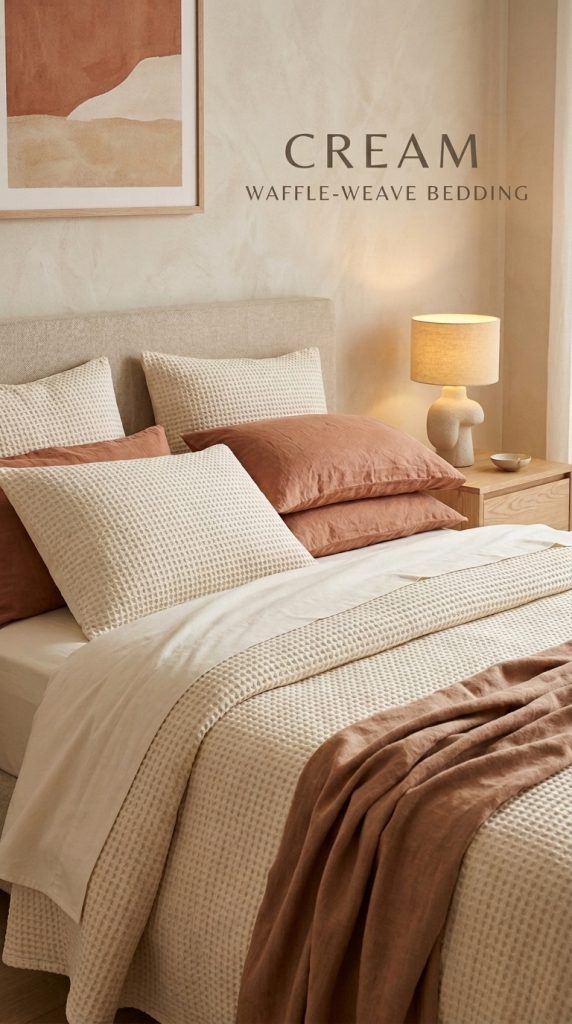
Texture can make a neutral bed look inviting without introducing elaborate patterns or additional colors. Cream waffle-weave bedding paired with terracotta linen accents creates a tactile arrangement that feels relaxed, modern, and comfortable.
Begin with cream sheets and a duvet cover in a soft cotton fabric. Add a waffle-weave blanket or coverlet to introduce a raised, grid-like texture. The small geometric pattern creates depth while remaining subtle enough for a minimalist bedroom.
Next, introduce terracotta through linen pillow covers or a lightweight throw. Linen has a slightly irregular surface that complements the structured texture of waffle cotton. The contrast between the two materials makes the bedding look more layered even though the color palette remains simple.
Choose a terracotta shade that works with the cream fabric. A dusty clay tone creates a gentle effect, while a deeper rust shade adds a stronger focal point. If you prefer a particularly understated bedroom, keep the terracotta accents to two pillows and allow the cream textiles to dominate.
Materials and items to use:
- Cream cotton sheets
- Cream waffle-weave coverlet
- Terracotta linen pillow covers
- Ivory duvet cover
- Oatmeal or flax-colored throw
- Natural wood bedside furniture
The arrangement should include a clear hierarchy. Use the largest cream pieces as the foundation, the waffle-weave layer for texture, and terracotta accents for color. This makes the bed look considered without requiring many separate products.
Pay attention to fabric care when choosing your bedding. Cotton waffle fabric and linen may have different washing requirements, so check the care labels before combining them. Prewashed fabrics can be especially useful if you prefer a relaxed appearance and want to reduce concerns about significant changes after washing.
For a neat but comfortable finish, fold the top of the duvet slightly over itself and allow the waffle layer to show underneath. Arrange the pillows with the largest at the back and the terracotta accents in front. Keep the number of cushions manageable so the bed remains easy to use.
The rest of the room can remain very simple. A neutral headboard, plain curtains, and a warm bedside lamp provide enough context for the textures to stand out. If you want to add artwork, choose a quiet abstract print with cream, clay, or warm brown tones rather than a busy multicolored design.
This approach works well throughout the year because the textures can be adapted to different temperatures. Lightweight cotton is suitable for warmer weather, while a thicker waffle coverlet or an additional throw can provide more warmth when needed.
The result is a bedroom that feels visually rich without looking decorated for decoration’s sake. The materials provide the interest, the cream base keeps the space calm, and the terracotta details introduce the earthy warmth that defines the aesthetic.
7. Introduce a Terracotta Accent Wall Behind the Bed
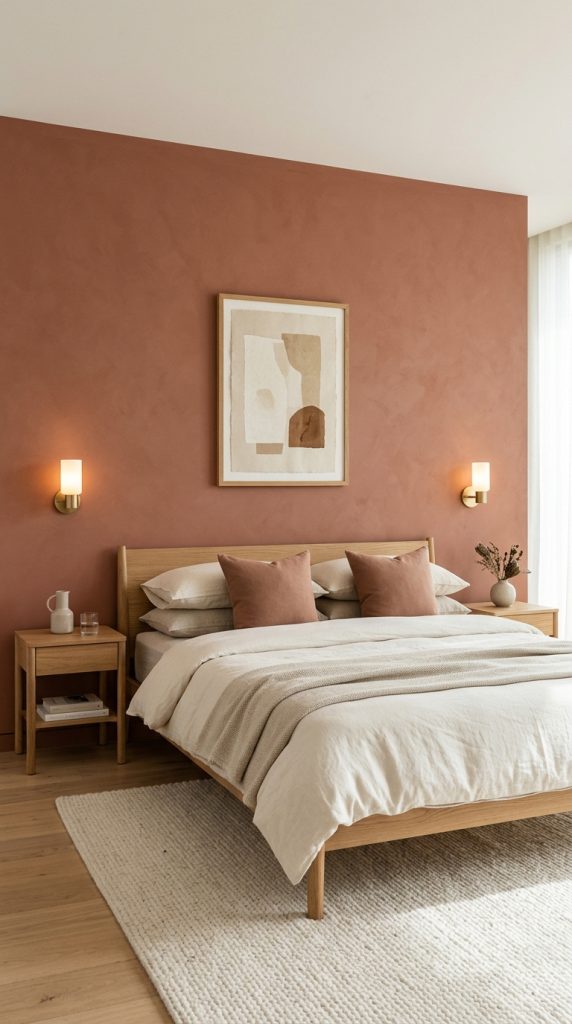
A terracotta accent wall can make cream bedding stand out while giving the bedroom a stronger architectural focal point. This approach is useful if you want the color palette to extend beyond textiles but still want to preserve a minimalist design.
Choose a muted terracotta paint with earthy brown or clay undertones. Soft dusty terracotta is generally easier to live with than a very bright orange, especially when the wall occupies a large area. A matte finish can create a gentle appearance that works well with linen bedding and natural wood.
Before painting, observe the wall at different times of the day. Natural daylight, artificial lighting, and nearby finishes can affect how the color appears. Test a sample on the wall and compare it with your cream bedding, curtains, and furniture before committing to the entire surface.
Once the wall is complete, keep the bed relatively neutral. Cream sheets, an ivory duvet, and a few terracotta accents create a connected design without making the wall feel repetitive. If the wall is already a strong color, you may need fewer terracotta pillows than you would in a completely neutral room.
Materials and items to use:
- Muted terracotta or clay wall paint
- Cream bedding
- Ivory or oatmeal pillows
- Natural oak or walnut bed frame
- Simple neutral artwork, if needed
- Warm bedside lamps
A headboard can help define the bed against the accent wall. An upholstered cream headboard creates a soft contrast, while a wooden headboard introduces another natural material. If you prefer a minimalist appearance, avoid a headboard with excessive decorative detailing.
Artwork is optional. If you choose to hang something above the bed, look for a simple abstract composition or a natural-texture piece that includes cream, beige, and warm brown. A single appropriately sized piece can be more effective than a crowded gallery wall.
Lighting should complement the wall rather than distort its color. Warm bedside lamps can create a cozy evening atmosphere, while natural daylight keeps the room from feeling too heavy during the day. If the room is small, use terracotta on one wall instead of all four and maintain lighter colors elsewhere.
For renters or anyone who cannot paint, achieve a similar effect with a large terracotta textile artwork, a removable wall covering where permitted, or a clay-toned upholstered headboard. These alternatives can introduce color without permanently changing the room.
The most important principle is to let the accent wall serve as the main statement. Keep other surfaces simple, limit additional saturated colors, and use cream bedding to create visual breathing room. The result is a bedroom that feels earthy and distinctive without sacrificing the calmness of minimalist design.
8. Use Warm Bedside Lighting to Enhance the Bedding Colors

Lighting plays an important role in how terracotta and cream appear in a bedroom. Even a well-coordinated bedding arrangement can feel less inviting if the room relies entirely on a bright overhead fixture. Layered lighting helps create a more comfortable atmosphere and allows the natural colors of the fabrics to remain visible.
Begin with bedside lamps or wall sconces that provide a soft, warm glow. Lamps with fabric shades can diffuse the light, while ceramic or wooden bases complement the organic materials in the room. Choose a design with simple lines so the lighting supports the bedding rather than becoming an unrelated focal point.
Place the lamps at a practical height for reading and relaxing. If you use bedside tables, ensure there is enough space for the lamp alongside any everyday items you need. Wall-mounted lights can be a useful option when the tables are small or when you want to keep the surfaces clear.
Materials and items to use:
- Pair of simple bedside lamps or wall sconces
- Warm-toned light bulbs suitable for the fixtures
- Cream or linen lampshades
- Natural wood nightstands
- Cream duvet and terracotta accents
- Lightweight neutral curtains
Warm light can enhance the richness of terracotta, but extremely dim lighting may make cream bedding appear darker than intended. Aim for a comfortable balance between a relaxing evening atmosphere and enough illumination for practical activities. Dimmable lighting can provide flexibility.
Natural light matters as well. During the day, lightweight curtains allow sunlight to enter while maintaining privacy. Ivory, flax, and pale beige curtains work especially well with the bedding palette. If the bedroom receives strong direct sunlight, consider a suitable lining or additional window treatment to control glare.
Avoid relying on decorative lighting alone if you need adequate illumination for reading or getting dressed. A layered arrangement can include general room lighting, bedside task lighting, and a softer ambient source. Each layer has a different function, making the bedroom more comfortable to use.
You can also coordinate lighting finishes with the rest of the room. Aged brass, warm wood, matte ceramic, and understated black details can all work with terracotta and cream. Choose finishes that complement the existing furniture instead of introducing many competing materials.
To test the final effect, view the bedding during the day and again in the evening. If the terracotta becomes too intense under the artificial light, consider a different bulb or lampshade. If the cream looks overly yellow, adjust the lighting to create a more balanced appearance.
The goal is not simply to make the bedroom look beautiful in photographs. Good lighting should support the room’s everyday use while creating a peaceful atmosphere at night. When the bedding, materials, and lighting work together, the space feels naturally warm rather than artificially styled.
9. Keep the Bedroom Minimal with Carefully Selected Accessories
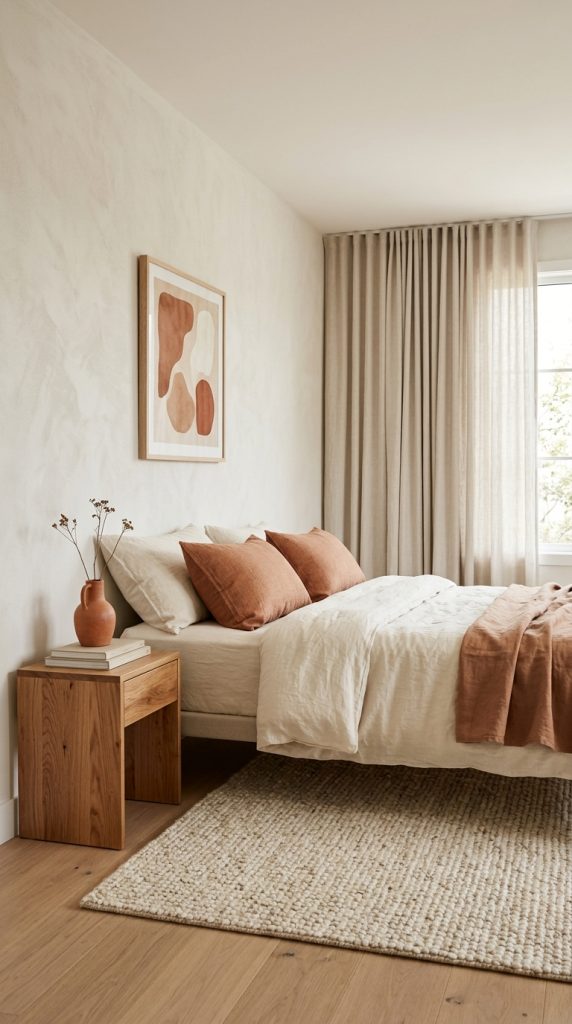
A warm minimalist bedroom should feel complete without being filled with decorative objects. Once the cream bedding, terracotta accents, and main furniture are in place, choose only a few accessories that improve the room’s function or visual balance.
Start with the bedside table. A ceramic vase, a small stack of books, or a useful tray can provide enough detail without filling the entire surface. If you already have a statement lamp, keep the remaining accessories particularly simple.
Choose ceramic pieces in warm white, sand, muted brown, or terracotta. Their matte surfaces complement the natural appearance of linen and cotton. A small handmade vessel can also echo the earthy character of the bedding without repeating the exact same shade everywhere.
Materials and items to use:
- One or two ceramic accessories
- Small wooden or stone bedside tray
- Simple books or a practical bedside item
- Neutral framed artwork
- Cream or oatmeal rug
- Natural-texture curtains
Consider the negative space in the room. Leaving some wall area empty and keeping the bedside table partially clear allows each object to be seen more easily. Minimalism is not about having no belongings; it is about making deliberate choices and giving the most important elements room to stand out.
A rug can be one of the most useful finishing pieces. Choose a neutral woven design in cream, beige, or oatmeal to soften the floor around the bed. The texture should complement the bedding rather than compete with it. If the duvet and throw are already highly textured, a simpler rug may provide better balance.
Artwork can connect the terracotta accents to the rest of the room. A restrained abstract print with clay and ivory shapes is one option, while a landscape in warm earthy tones can introduce a more natural feeling. Keep the scale appropriate to the wall and bed. A very small frame above a wide headboard may look disconnected, while an oversized piece can dominate the room.
Practical storage also contributes to the aesthetic. Use drawers, baskets, or closed storage to keep everyday items organized. A tidy environment allows the bedding and furniture to remain the main visual features without requiring constant decorative rearrangement.
Avoid purchasing accessories solely because they match the color palette. Every piece should either serve a purpose or contribute something meaningful to the design. A useful lamp, comfortable rug, or carefully chosen artwork will usually add more value than several small objects placed together without a clear plan.
Finally, live with the arrangement before adding anything else. Once the room is clean, the bed is layered, and the lighting is comfortable, you may find that no additional accessories are necessary. This approach saves money and helps maintain the peaceful, uncluttered character that makes warm minimalism appealing.
10. Complete the Look with a Cream Rug and Natural Curtains
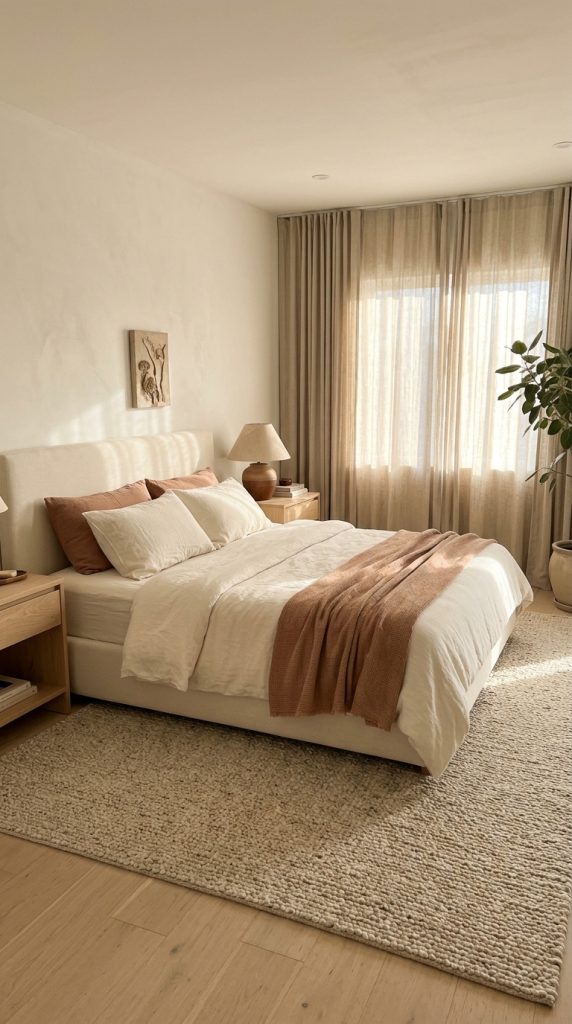
A cream rug and natural curtains can connect the bedding to the rest of the bedroom, making the terracotta and cream palette feel complete. These larger textile elements provide softness and balance while maintaining the understated character of a minimalist interior.
Begin with the rug. A woven cream rug creates a subtle texture beneath the bed, while an oatmeal design introduces slightly more contrast against pale flooring. Consider the size of the room and the placement of the furniture before choosing a rug. Ideally, it should extend beyond the sides of the bed enough to provide a comfortable surface when getting up.
A low-pile woven rug offers a clean, contemporary appearance and may be easier to maintain in a busy bedroom. A thicker rug can feel softer underfoot, although its suitability depends on the room’s needs and how easily it can be cleaned. Choose a texture that works with the other fabrics rather than adding a competing pattern.
Next, select curtains in ivory, flax, warm beige, or natural linen tones. These colors frame the windows without drawing attention away from the bed. Lightweight curtains can soften daylight, while lined curtains may be preferable when greater privacy or light control is needed.
Materials and items to use:
- Cream or oatmeal area rug
- Ivory or flax-colored curtains
- Simple curtain rod in a complementary finish
- Cream duvet and pillowcases
- Terracotta quilt or throw
- Natural wood furniture
The rug and curtains do not need to match exactly. Slight differences between ivory, cream, and oatmeal make the room feel layered and natural. Focus on the overall warmth of the shades rather than trying to find identical fabrics.
If your bedroom has dark flooring, a lighter rug can create a pleasant contrast and help the bed feel brighter. If the flooring is already pale oak, an oatmeal rug may provide enough definition without making the room look too uniform.
Curtain length also affects the appearance of the room. Floor-length curtains can create a calm, elongated effect when installed appropriately. Ensure the curtain panels suit the window and do not interfere with doors, radiators, or other functional elements.
Once these textiles are in place, review the room as a whole. The cream rug should connect visually with the bedding, while the curtains should support the overall neutral palette. Terracotta remains the accent color, appearing through the throw, pillows, or a few selected accessories.
For a final styling touch, fold the terracotta throw neatly across the lower portion of the bed and keep the bedside surfaces simple. Allow natural light to enter during the day and use warm lamps in the evening. The combination of soft textiles, earthy accents, and restrained decoration creates a bedroom that feels comfortable without being overdesigned.
How to Create a Terracotta and Cream Bedding Aesthetic Step by Step
Creating this aesthetic is easier when you approach the bedroom in a clear order. Rather than purchasing every item at once, begin with the largest elements and build the design gradually.
Step 1: Assess your existing bedroom. Look at the wall color, flooring, bed frame, curtains, and lighting. Identify which items already work with cream and terracotta. Keeping suitable furniture can reduce costs and make the redesign more sustainable.
Step 2: Choose the cream foundation. Select bedding in ivory, warm white, or cream. If you already own neutral sheets, use them as the starting point. Aim for a comfortable, cohesive base rather than trying to make every fabric identical.
Step 3: Select one terracotta shade. Choose dusty clay, cinnamon, muted rust, or a deeper earthy terracotta. Consider the room’s lighting and the existing finishes before making the final choice.
Step 4: Introduce the color through textiles. Start with pillow covers or a throw. Add a quilt if you want more color across the bed. Two or three terracotta elements are often enough for a balanced result.
Step 5: Add texture. Combine smooth cotton, linen, waffle weave, or a lightly quilted fabric. Use differences in texture to make the bed interesting without relying on bold prints.
Step 6: Connect the bedding to the furniture. Natural oak, walnut, and warm neutral upholstery complement this palette. You can also use small wood accessories if replacing furniture is not practical.
Step 7: Improve the lighting. Use appropriate bedside lighting and allow natural light to enter through suitable window treatments. Check how the colors look during both daytime and evening.
Step 8: Edit the accessories. Keep only the objects that contribute to the room’s function or appearance. Remove unnecessary pieces that make the bedside surfaces or surrounding areas feel crowded.
Step 9: Review the balance. Step back and consider whether cream remains the foundation and terracotta provides a clear accent. If the room feels too dark, reduce the amount of terracotta or introduce lighter textiles.
Step 10: Maintain the design. Wash bedding according to its care instructions, store extra textiles neatly, and rearrange the throw or pillows as needed. A simple design is easier to maintain when each item has a clear place.
Common Mistakes to Avoid When Styling Terracotta and Cream Bedding
One common mistake is choosing too many terracotta shades without a clear plan. While slight variations add depth, several unrelated orange, red, and brown tones can make the bedroom feel disconnected. Choose one dominant terracotta shade and use closely related colors where necessary.
Another mistake is relying entirely on color while ignoring texture. Cream and terracotta may coordinate well, but a bed made from flat fabrics can still look unfinished. Introduce a quilt, linen pillowcases, or a woven throw to add dimension without clutter.
Overfilling the bed with cushions is another problem. Too many pillows can make a minimalist bedroom difficult to maintain and reduce the amount of useful sleeping space. Begin with the pillows you need and add only a small number of decorative accents.
Lighting should also be considered before choosing the final bedding. A fabric that looks muted in daylight may appear brighter under artificial light. Test samples where possible, particularly if you are purchasing terracotta bedding or planning an accent wall.
Avoid matching every accessory exactly. A terracotta throw, identical terracotta pillows, a matching vase, and matching artwork can make the room look overly coordinated. Use repetition selectively and allow the materials to differ.
Finally, do not sacrifice comfort for appearance. Bedding should feel pleasant to sleep in, curtains should meet your privacy needs, and the room should provide adequate storage and lighting. A beautiful bedroom is most successful when it works well in everyday life.
Final Thoughts
A warm minimalist terracotta and cream bedding aesthetic combines earthy color, comfortable textiles, natural materials, and thoughtful simplicity. Cream bedding keeps the room light and peaceful, while terracotta introduces the depth and warmth that make the design feel inviting. Natural wood, soft rugs, linen curtains, and warm lighting complete the look without creating unnecessary clutter.
You can achieve this style gradually by using the bedding and furniture you already own. Begin with a neutral foundation, introduce terracotta through a few well-chosen textiles, and add texture where the room needs more depth. If you want a stronger transformation, consider a muted terracotta accent wall or a new natural wood headboard.
The best result is not necessarily the most decorated bedroom. It is a room in which the colors feel balanced, the fabrics are comfortable, the lighting is gentle, and each accessory has a purpose. With a few intentional choices, terracotta and cream can create a cozy, timeless bedroom that feels both elegant and genuinely relaxing.
Leave a Reply