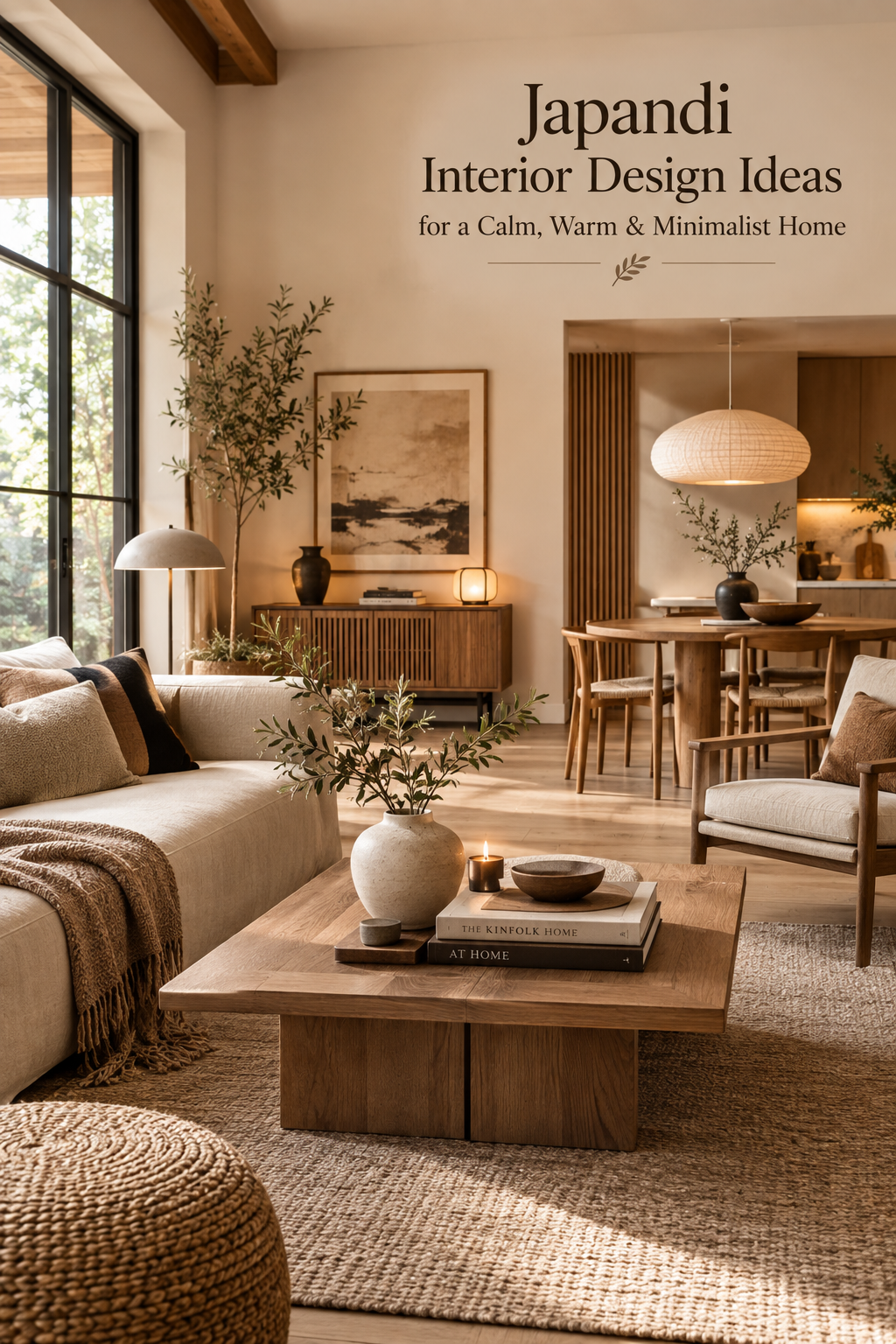
Japandi interior design is one of the most beautiful ways to create a home that feels calm, warm, intentional, and effortlessly sophisticated. By combining the simplicity of Japanese interiors with the cozy functionality of Scandinavian design, Japandi style creates spaces that feel peaceful without becoming cold and minimalist without feeling empty.
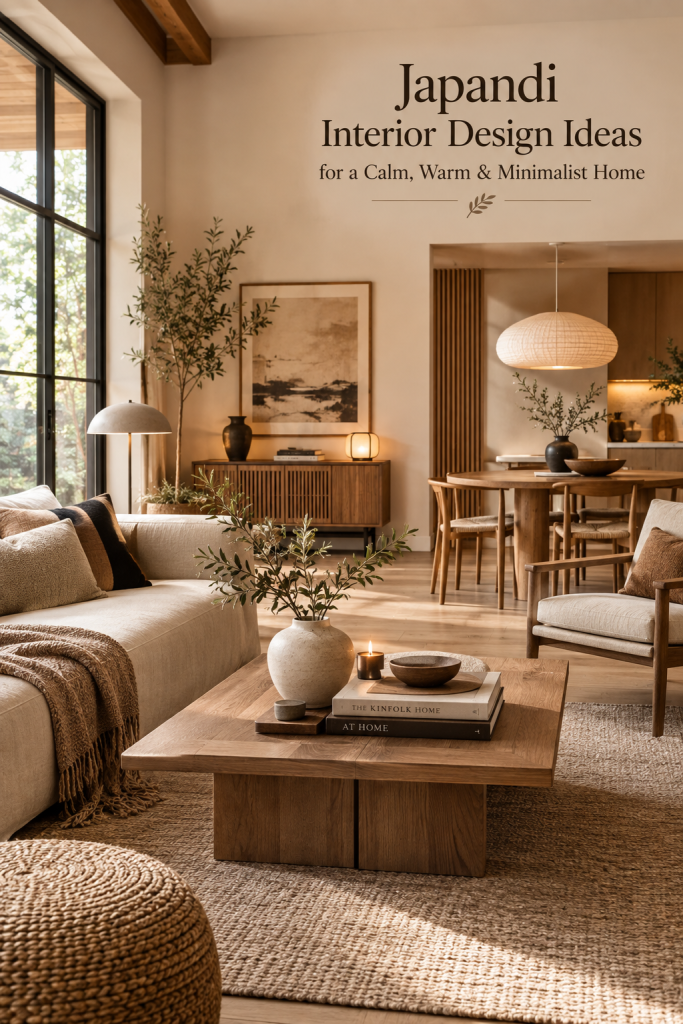
The beauty of Japandi interior design ideas comes from balance. Instead of filling a room with decorative objects, Japandi interiors focus on carefully selected furniture, natural materials, warm neutral colors, soft textures, organic shapes, and plenty of breathing room. Every item has a purpose, but the room still feels comfortable and inviting.
Japandi style is particularly appealing if you love minimalist interiors but do not want your home to look stark or overly modern. Scandinavian design contributes warmth, comfort, and practicality, while Japanese design brings simplicity, craftsmanship, natural materials, and a strong appreciation for negative space.
Think of a warm oak coffee table, a low-profile beige sofa, handmade ceramic accessories, soft linen curtains, woven baskets, sculptural branches, warm ambient lighting, and a few carefully chosen plants. Nothing needs to be excessive. The atmosphere comes from the relationship between the materials, colors, light, and space.
A Japandi home also does not have to look completely neutral. Although beige, cream, taupe, warm white, and natural wood are common, deeper shades such as charcoal, muted brown, olive, clay, and soft black can add contrast and character.
The goal is not simply to make a room look minimalist. It is to create an environment where the eye can rest.
That means avoiding unnecessary visual noise.
Instead of multiple small decorations, choose one beautiful ceramic vase.
Instead of several competing furniture pieces, select one well-proportioned sofa.
Instead of filling a wall with accessories, allow some empty space.
Instead of using bright artificial lighting everywhere, layer warm sources of illumination.
Japandi interiors also work beautifully with different types of homes. You can adapt the style to an apartment, family home, small living room, bedroom, kitchen, dining area, or open-plan space. You do not need to replace everything you own. Often, changing the color palette, reducing clutter, introducing natural materials, and adding softer lighting can move a room significantly closer to the Japandi aesthetic.
Another important characteristic is quality over quantity. Japandi design encourages choosing fewer pieces that are useful, durable, beautiful, and timeless. This makes the style especially suitable for anyone who wants a home that feels sophisticated without constantly following decorating trends.
The following ideas explore practical ways to bring Japandi interior design into your home while maintaining warmth, comfort, and personality.
1. Build a Warm Neutral Japandi Color Palette
Color is one of the easiest ways to establish a Japandi atmosphere.
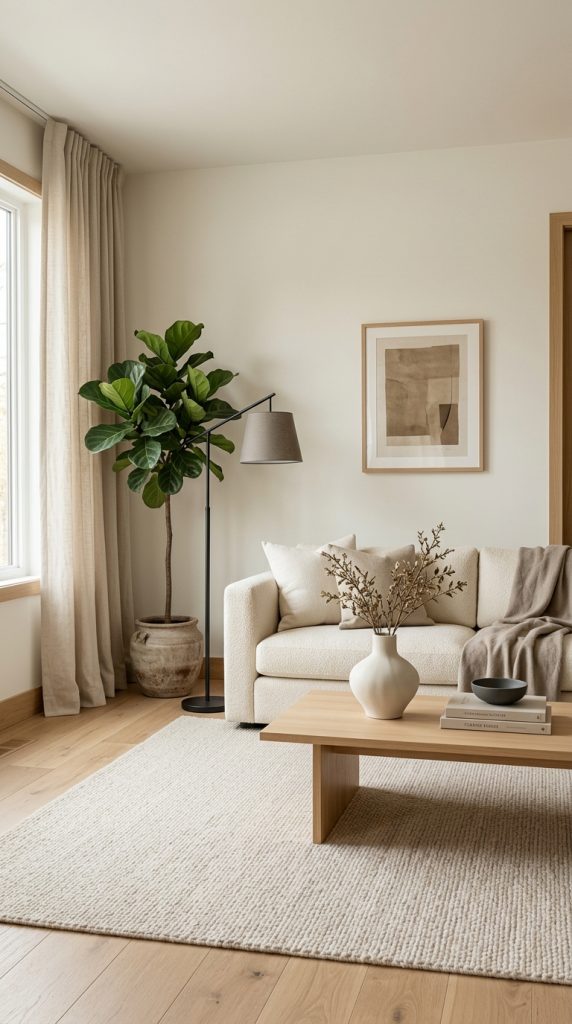
Start with a warm neutral foundation rather than a bright white one.
Consider:
- Warm ivory
- Cream
- Oatmeal
- Beige
- Taupe
- Sand
- Warm gray
- Mushroom
- Soft brown
These shades create a calm background that allows natural materials and furniture to become the visual focus.
Choose one dominant neutral
Avoid using too many unrelated neutrals.
For example, a living room might use warm ivory walls, a beige sofa, oatmeal curtains, and natural oak furniture.
The colors are different, but they belong to the same visual family.
Add darker accents
Japandi interiors benefit from controlled contrast.
Introduce charcoal, soft black, dark walnut, or deep brown through small furniture pieces, lighting, frames, ceramics, or textiles.
You do not need a lot of dark color.
A single black floor lamp or dark wood side table can provide enough definition.
Introduce muted earthy colors
If you want more personality, add muted tones such as:
- Olive green
- Clay
- Terracotta
- Dusty brown
- Muted rust
- Deep beige
Keep these shades soft rather than bright.
Why this works
A restrained color palette makes the room feel visually connected.
It also allows texture to become more important than color.
Linen, wood, stone, ceramic, and woven fibers can create depth even when the palette remains neutral.
2. Choose Low-Profile Natural Wood Furniture
Natural wood is one of the most recognizable elements of a warm Japandi interior.
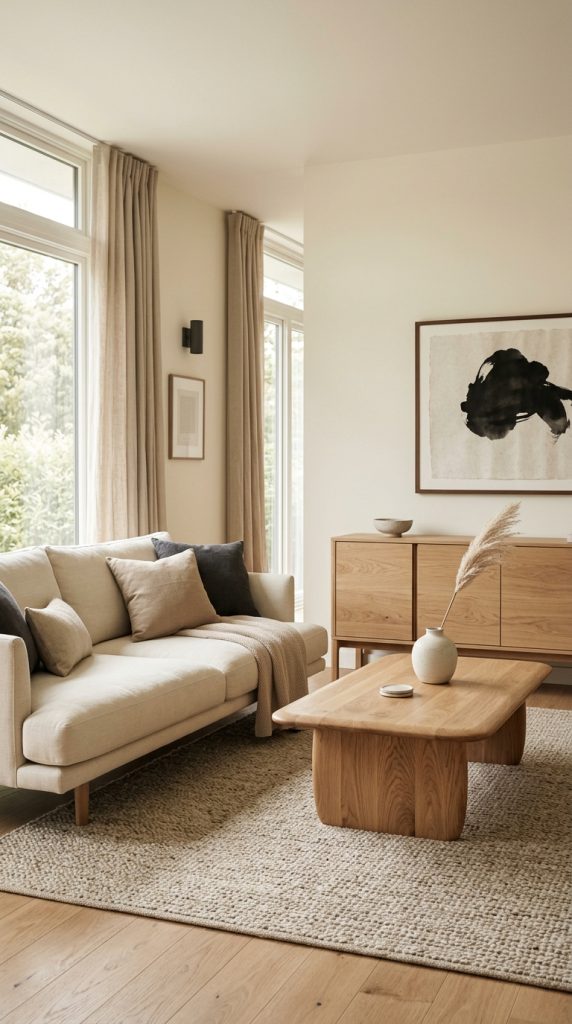
Choose furniture with clean lines and visible natural grain.
Oak is especially useful when you want a lighter, Scandinavian-inspired appearance.
Walnut creates a deeper and more sophisticated mood.
Ash and maple can provide a softer, lighter effect.
Look for simple silhouettes
Avoid furniture with excessive ornamentation.
A simple oak coffee table with gently rounded corners can have more visual impact than a heavily carved table.
Choose:
- Low-profile sofas
- Simple wooden coffee tables
- Minimal sideboards
- Clean-lined dining tables
- Slender wooden benches
- Simple bedside tables
Use rounded edges
Organic curves can soften the geometry of minimalist furniture.
Consider a rounded coffee table or dining table.
A curved wooden bench can also introduce visual softness.
Let the wood remain visible
Do not cover every wooden surface with accessories.
The grain itself is decorative.
A beautiful wooden sideboard may only need one ceramic vase and a small sculptural object.
Keep proportions balanced
Large furniture should have enough surrounding space.
This prevents the room from feeling crowded and helps preserve the calm quality associated with Japandi interiors.
3. Create a Japandi Living Room With Soft Textures
A Japandi living room should feel comfortable without becoming overloaded with cushions, blankets, and accessories.
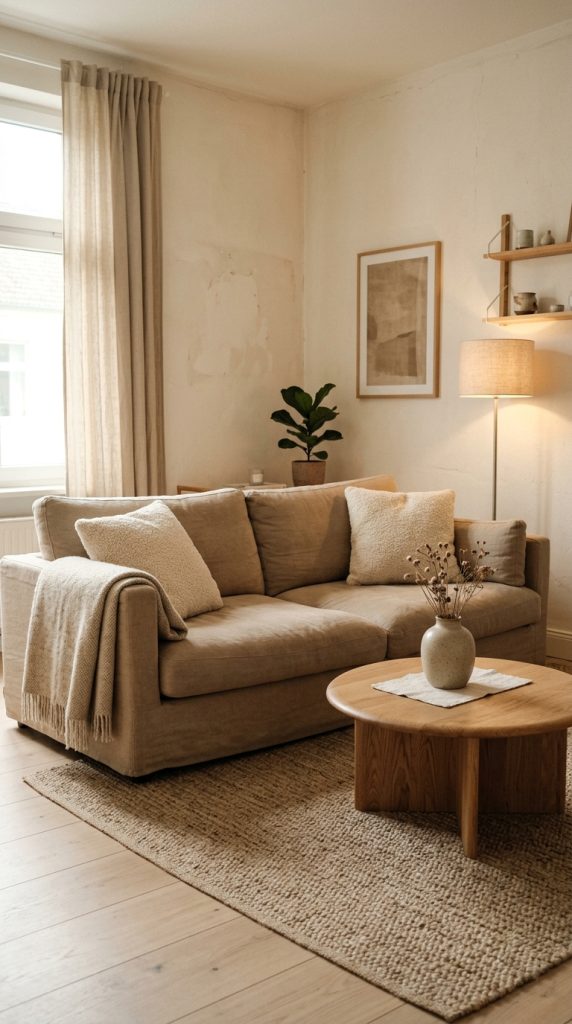
Start with a simple sofa in a warm neutral fabric.
Cream, beige, oatmeal, taupe, and light gray work especially well.
Add tactile cushions
Choose cushions made from:
- Linen
- Cotton
- Bouclé
- Wool
- Textured woven fabric
Use a limited number.
Two or three well-selected cushions can look more sophisticated than a sofa covered in decorative pillows.
Add one soft throw
A textured wool or cotton throw can be casually folded over the arm of the sofa.
Choose a neutral shade or muted earthy color.
Use an organic coffee table
Pair the sofa with a natural wood or stone coffee table.
A rounded or irregular shape can make the room feel softer.
Keep the floor visually calm
A large neutral area rug can connect the seating arrangement.
Choose a subtle woven pattern rather than a high-contrast design.
Add one plant
A single large plant can provide natural color and movement.
Consider an olive tree, ficus, rubber plant, or another architectural indoor plant.
The plant should feel like part of the composition rather than another object filling an empty corner.
4. Introduce Wabi-Sabi-Inspired Imperfection
One of the most appealing aspects of Japandi interiors is their appreciation for natural imperfections.

Instead of choosing objects that look perfectly manufactured, introduce pieces with subtle variations.
A handmade ceramic bowl might have a slightly uneven rim.
A wooden stool may show natural knots.
A stone vase might have an irregular surface.
A linen curtain may have visible texture.
These details create warmth.
Choose handcrafted ceramics
Place one handmade vase on a sideboard.
Add a small ceramic bowl to a coffee table.
Use handmade dinnerware in the kitchen or dining room.
Avoid displaying too many pieces.
The objective is to appreciate the individual object.
Use natural irregularities
Wood grain, stone variations, handmade glaze, and woven fibers can all add character.
This prevents minimalism from becoming sterile.
Keep the surrounding area simple
If one object has an interesting handmade quality, give it space.
Do not surround it with ten other decorative pieces.
Negative space makes the object more noticeable.
5. Use Layered Warm Lighting
Lighting is essential for creating a calm Japandi home.
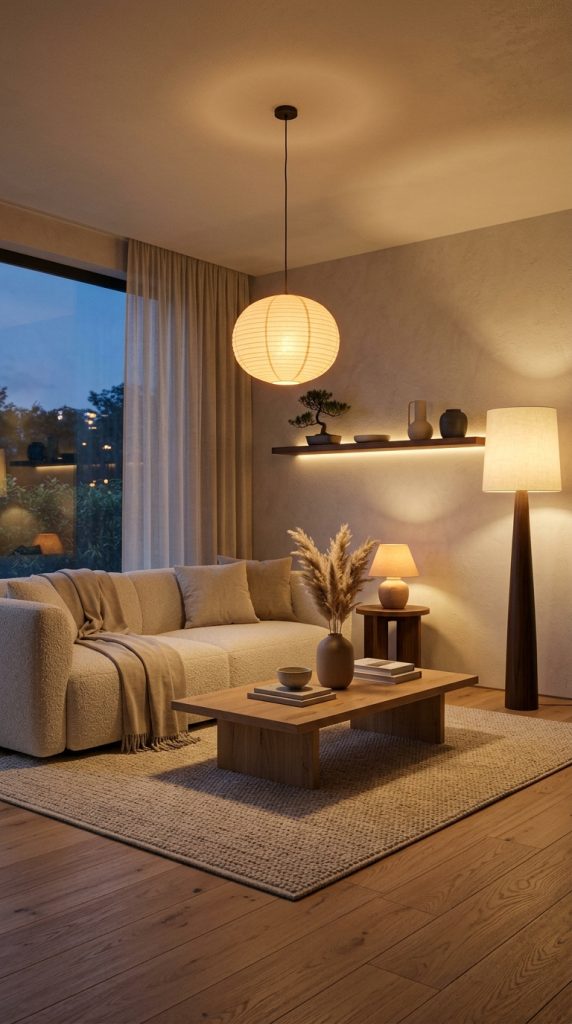
A room filled with one bright overhead fixture can feel much harsher than the same room illuminated through several softer sources.
Combine multiple light sources
Use a mixture of:
- Pendant lights
- Floor lamps
- Table lamps
- Wall sconces
- Under-cabinet lighting
- Warm accent lighting
You do not need every type in one room.
Choose two or three layers depending on the space.
Choose warm bulbs
Warm illumination works beautifully with wood, beige, cream, and natural textiles.
It can make the room feel softer during the evening.
Use sculptural lighting
A simple paper pendant, linen shade, ceramic lamp, or minimalist floor lamp can become part of the decor.
Choose a fixture with an interesting silhouette but limited visual detail.
Create pools of light
Instead of trying to illuminate every corner equally, allow some areas to remain softer.
A lamp beside a sofa can create a comfortable reading area.
A small lamp on a sideboard can highlight a ceramic vase.
Under-cabinet lighting can gently illuminate a kitchen workspace.
Why lighting matters
Japandi is about atmosphere as much as appearance.
Warm, layered lighting can make even a very simple room feel sophisticated.
6. Style a Minimal Japandi Bedroom
The bedroom is an ideal place to use Japandi principles because the style naturally supports a peaceful atmosphere.

Begin with a simple bed frame in natural wood or upholstered neutral fabric.
Choose bedding in:
- Ivory
- Cream
- Beige
- Oatmeal
- Soft gray
- Warm taupe
Layer natural fabrics
Use cotton or linen sheets.
Add a textured duvet.
Finish with a lightweight wool or woven throw.
The layers should feel soft rather than overly decorative.
Keep bedside styling minimal
A wooden bedside table may need only:
- One small lamp
- One ceramic cup or vase
- One book
Avoid filling the nightstand with unnecessary objects.
Use soft lighting
Warm bedside lamps create a relaxing evening atmosphere.
Avoid extremely bright overhead lighting when possible.
Keep wall decor restrained
One large piece of neutral artwork can be enough.
Alternatively, leave the wall mostly empty.
The empty space contributes to the sense of calm.
7. Design a Japandi Kitchen With Natural Materials
Japandi kitchen design combines functionality with visual simplicity.
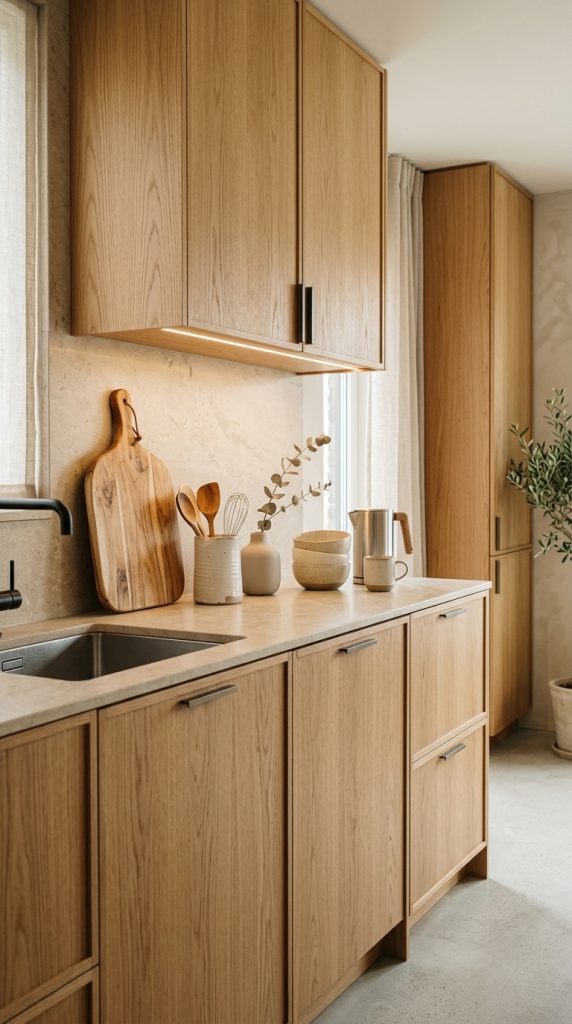
Start with warm wood cabinetry or wood accents.
Oak is especially effective for creating a light, contemporary appearance.
Pair wood with soft neutrals
Cream, warm white, beige, and pale stone countertops can complement natural wood beautifully.
For more contrast, introduce charcoal or dark brown hardware.
Keep countertops clear
Instead of covering the counter with appliances and decorations, select only the items you use regularly.
For example:
A wooden cutting board can lean naturally against the backsplash.
A handmade ceramic utensil holder can sit nearby.
A small plant or vase can add a touch of organic softness.
Everything else can remain stored.
Choose simple hardware
Matte black, brushed brass, aged bronze, or understated wood pulls can work depending on the kitchen palette.
Avoid overly decorative hardware.
Use open shelving carefully
If you have open shelves, display a small collection of cream ceramics, wooden bowls, and glassware.
Leave empty space between groups.
This keeps the shelving visually quiet.
8. Add Organic Shapes to Soften Minimalism
Minimalist rooms can sometimes become too geometric.

Organic shapes help create a softer, more welcoming environment.
Look for furniture and accessories with:
- Rounded corners
- Curved silhouettes
- Irregular edges
- Arched forms
- Natural asymmetry
Use a round coffee table
A circular or softly rounded coffee table can break up the straight lines of a sofa and rug.
Try an organic mirror
A softly irregular mirror can work beautifully above a console or dresser.
Choose a simple frame in wood, black, or warm metal.
Add curved seating
A rounded accent chair can introduce comfort and visual softness.
Use sculptural ceramics
An irregular vase or bowl can bring organic form to an otherwise clean arrangement.
Keep the shapes intentional
You do not need every object to be curved.
The contrast between straight furniture and a few organic accessories is often more effective.
9. Create Calm Through Intentional Negative Space
Negative space is one of the most important elements of a successful Japandi interior.

It means deliberately leaving areas of the room open rather than filling them simply because they are available.
Avoid filling every wall
A large blank wall can make a room feel more spacious.
Instead of several small artworks, consider one larger piece.
Give furniture breathing room
Do not push every piece against another.
Allow visual space around the sofa, coffee table, sideboard, and plants.
Reduce decorative objects
Before adding something new, ask whether it contributes to the room.
Does it provide function?
Does it add texture?
Does it have sentimental value?
Does it improve the composition?
If not, it may not need to be there.
Create intentional corners
An empty corner does not automatically need furniture.
Sometimes a single plant, floor lamp, or wooden stool is enough.
Sometimes leaving it empty is the better design decision.
Why negative space works
It gives the eye somewhere to rest.
This is one reason Japandi interiors often feel calmer than heavily decorated rooms.
10. Combine Japandi With Cozy Scandinavian Comfort
The Scandinavian influence in Japandi design is especially useful when you want minimalism to feel warm.

Introduce cozy elements without creating clutter.
Use:
- Soft rugs
- Linen curtains
- Wool throws
- Bouclé seating
- Warm wood
- Soft cushions
- Woven baskets
Create tactile contrast
A smooth wooden table can sit beside a textured rug.
A linen sofa can be paired with a wool throw.
A ceramic vase can sit on a woven tray.
The contrast makes the room feel layered.
Keep the palette controlled
The room should still feel calm.
Avoid introducing many bright colors.
Choose warm neutrals with one or two muted accents.
Focus on comfort
Furniture should not only look beautiful.
It should feel comfortable and useful.
A deep sofa, supportive dining chair, or soft bedroom rug can make the minimalist environment more inviting.
11. Add Nature Without Turning the Room Into a Jungle
Plants are excellent for Japandi interiors, but restraint is important.

You do not need dozens of plants.
Choose one or two architectural plants with simple forms.
Good options include:
- Olive trees
- Fiddle-leaf figs
- Rubber plants
- Snake plants
- Branch arrangements
- Minimal bonsai-inspired plants
Use simple planters
Choose ceramic, stone, terracotta, or woven planters in neutral shades.
Avoid highly decorative containers.
Try branches instead of flowers
A few sculptural branches in a ceramic vase can create a very Japandi-inspired arrangement.
This works especially well when you want something seasonal without introducing bright color.
Place plants intentionally
A tall plant can soften a hard architectural corner.
A small plant can add life to a shelf.
A branch arrangement can become the focal point on a dining table.
Each plant should have a visual purpose.
12. Create a Warm Japandi Dining Area
A Japandi dining area should feel simple, natural, and inviting.
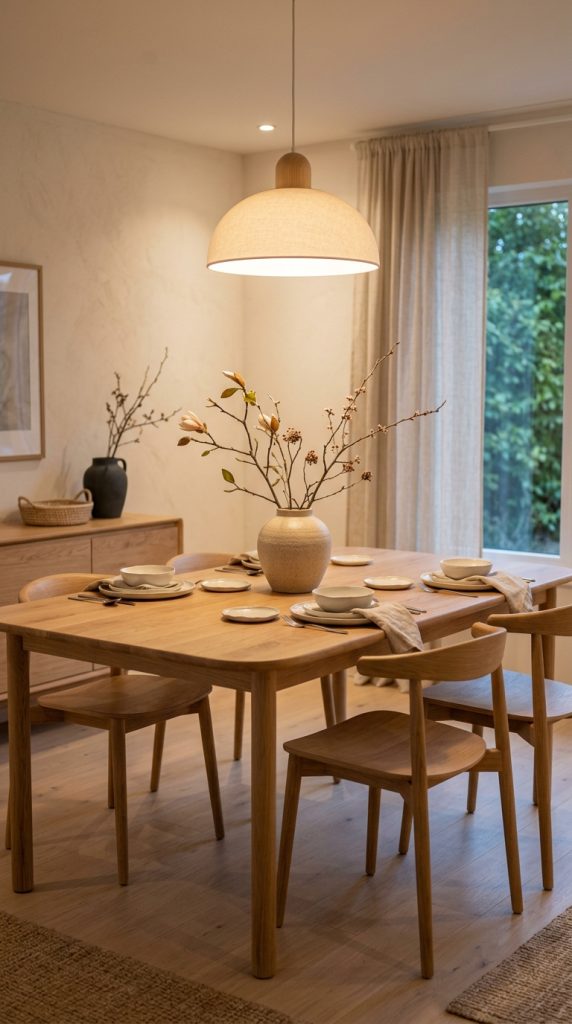
Start with a solid wood dining table.
Choose a design with a clean silhouette and visible grain.
Pair it with simple upholstered, wooden, or woven chairs.
Keep the table styling minimal
A ceramic vase with a few branches can be enough.
Alternatively, use a low stoneware bowl containing seasonal fruit.
Use natural textiles
Linen napkins can soften the setting.
A woven runner can add texture.
Choose simple dinnerware
Cream, beige, warm gray, or earthy ceramics work well.
Handmade textures can make the table feel more personal.
Add a soft pendant light
A simple pendant above the dining table can define the area.
Paper, linen, wood, or matte ceramic fixtures can work beautifully.
Use warm illumination for evening meals.
13. Bring Japandi Style Into a Small Apartment
Japandi is particularly effective in small homes because its emphasis on simplicity can help a space feel more open.

Begin by reducing visual clutter.
Instead of several small furniture pieces, choose a few multifunctional ones.
Use multifunctional furniture
Consider:
- Storage benches
- Nesting tables
- Storage beds
- Slim sideboards
- Extendable dining tables
- Ottomans with storage
Choose light natural colors
Cream, beige, warm white, and pale wood can help maintain an airy appearance.
Use vertical space carefully
A tall wooden cabinet can provide storage without requiring a large floor footprint.
Avoid oversized furniture
Choose pieces that fit the scale of the room.
A small sofa with clean lines may work better than a large sectional.
Keep sightlines clear
Avoid placing too many objects directly in walking paths.
The more open the circulation, the calmer the apartment will feel.
14. Use Japandi Bathroom Ideas for a Spa-Like Atmosphere
The bathroom is another space where Japandi principles can create a peaceful retreat.
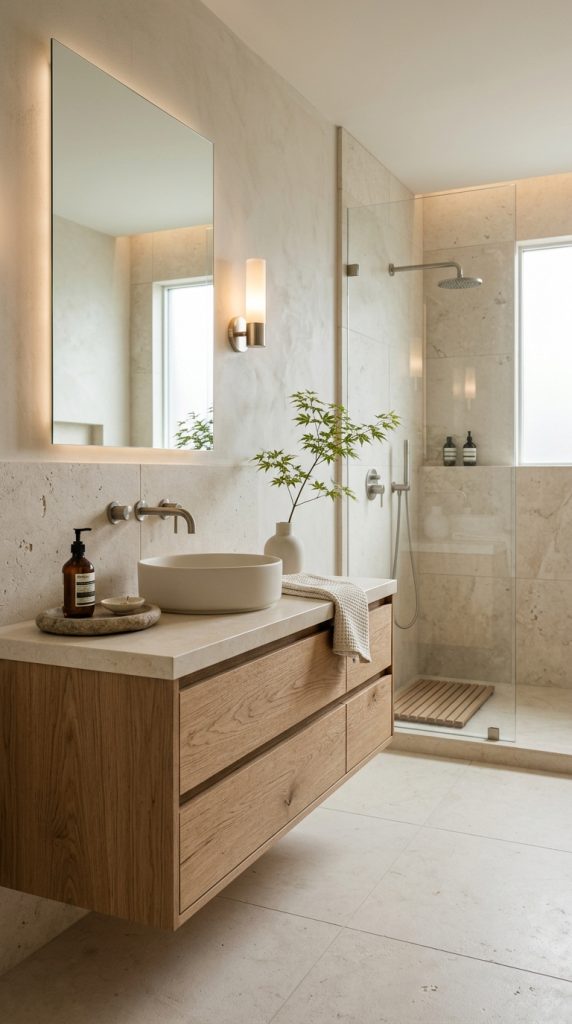
Begin with warm neutral finishes.
Consider:
- Beige stone
- Warm white tile
- Light oak
- Microcement-inspired surfaces
- Natural stone
- Matte ceramic
Add wood carefully
A floating wooden vanity can provide warmth.
Wood-look finishes can also create a similar appearance where real wood is unsuitable for moisture exposure.
Use simple accessories
A small stone tray can hold toiletries.
A wooden stool can provide a practical surface.
A ceramic container can organize small items.
Avoid leaving many colorful bottles visible.
Add soft lighting
Warm sconces or concealed lighting can create a relaxing atmosphere.
Bring in one plant
A moisture-tolerant plant can add natural character.
The final bathroom should feel calm rather than heavily decorated.
15. Create a Japandi Home With Fewer, Better Accessories
Accessories are important, but Japandi design works best when they are carefully edited.
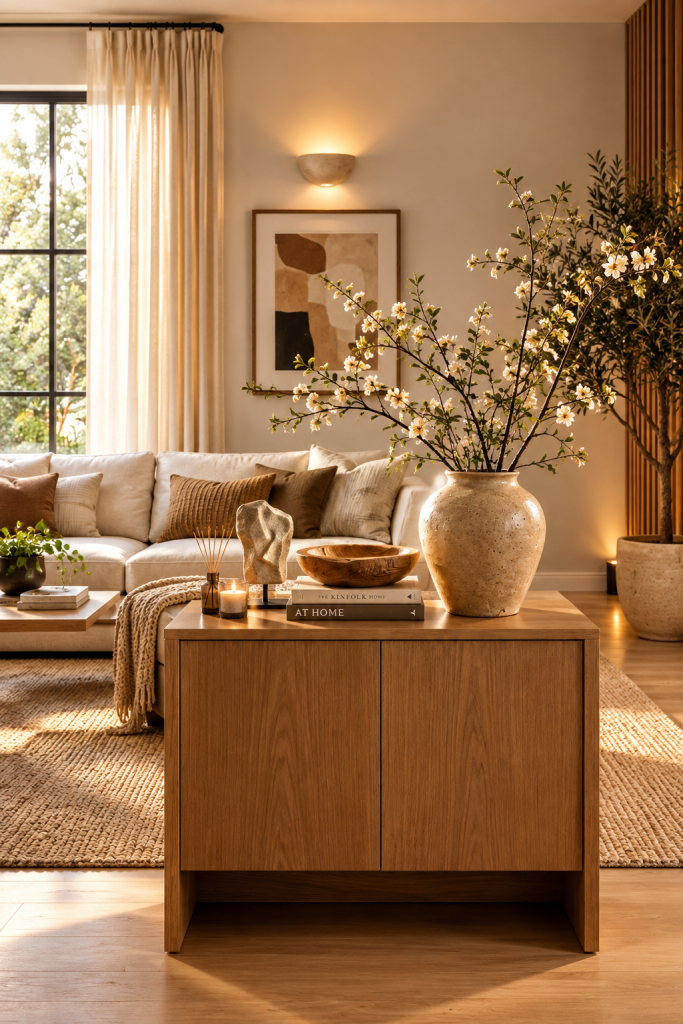
Instead of buying many decorative pieces, choose a small collection of objects that have strong shapes, natural textures, or practical functions.
Consider:
- Handmade ceramics
- Stone objects
- Wooden bowls
- Woven baskets
- Linen textiles
- Sculptural lamps
- Simple artwork
- Natural branches
- Minimal clocks
- Handmade trays
Create small groupings
Three objects can work beautifully together.
For example:
Ceramic vase + small wooden bowl + sculptural stone.
But do not repeat the same formula on every surface.
Leave breathing room
Place a few accessories on a large sideboard and leave the rest of the surface open.
This makes the objects more noticeable.
Choose quality-looking finishes
Matte ceramics, natural wood, textured linen, aged metal, and stone generally complement the Japandi aesthetic better than highly glossy or heavily decorative finishes.
How to Make Japandi Interior Design Feel Warm Instead of Cold
One common concern about minimalist interiors is that they can feel sterile.
The solution is not to add lots of decoration.
Instead, introduce warmth through materials.
Use natural wood.
Layer linen.
Add wool.
Choose warm cream instead of stark white.
Introduce soft lighting.
Use handmade ceramics.
Bring in muted earthy colors.
Add one or two plants.
These details create warmth while preserving the minimalist structure.
How to Make Japandi Decor Look Expensive
A sophisticated Japandi home is usually more about editing than spending.
Start by reducing visual clutter.
Then focus on proportion.
A well-sized coffee table can look more luxurious than an expensive but oversized one.
Choose materials that feel authentic.
Natural wood grain, linen texture, ceramic glaze, and stone surfaces provide visual richness.
Repeat materials throughout the home.
For example, if you use oak furniture in the living room, small oak or wood details can appear in the dining area.
Similarly, repeat warm cream textiles across multiple rooms.
This creates continuity.
Japandi Decorating Mistakes to Avoid
Using Too Much White
Bright white everywhere can make Japandi rooms feel cold.
Warm ivory and cream often create a softer atmosphere.
Adding Too Many Accessories
Minimalism requires editing.
Do not fill every shelf simply because you have space.
Choosing Only Modern Furniture
Japandi benefits from a mixture of contemporary simplicity and natural craftsmanship.
Handmade-looking pieces can add character.
Using Too Many Colors
Keep the palette restrained.
Muted earthy accents are usually more effective than bright colors.
Ignoring Texture
A room with only smooth surfaces can feel flat.
Introduce linen, wood, wool, ceramic, stone, and woven fibers.
Making Everything Match
Japandi does not mean every piece must come from the same collection.
Different materials and shapes can coexist when the overall palette remains cohesive.
How to Decorate a Japandi Home on a Budget
You do not need to redesign your entire home.
Start with the areas that create the most visual impact.
Remove unnecessary objects.
Change bright textiles to warm neutral ones.
Add one natural wood piece.
Replace several small decorations with one handmade ceramic vase.
Introduce warm lighting.
Use a neutral woven rug.
Add one plant.
Rearrange your furniture to create more open space.
These small changes can significantly alter the atmosphere.
You can also shop secondhand for wooden furniture, ceramic pieces, baskets, and vintage lamps.
The Japandi aesthetic works particularly well with simple secondhand finds because natural materials often become more attractive with age.
How to Combine Japandi With Other Interior Styles
Japandi can be adapted rather than followed rigidly.
Japandi + Modern
Use clean furniture, neutral colors, natural wood, and architectural lighting.
Japandi + Organic Modern
Add stone, curved furniture, plants, earthy colors, and handmade ceramics.
Japandi + Scandinavian
Increase the use of soft textiles, pale wood, cozy rugs, and functional furniture.
Japandi + Minimalist
Reduce accessories further and emphasize negative space.
Japandi + Rustic
Introduce aged wood, handmade pottery, woven baskets, and natural stone while maintaining simple silhouettes.
The key is to preserve the balance and calmness that make Japandi recognizable.
Final Thoughts
Japandi interior design is ultimately about creating a home that feels calm without feeling empty, minimalist without feeling cold, and sophisticated without feeling overly decorated.
The style works because it focuses on relationships rather than individual trends.
Warm wood looks beautiful against cream walls.
Linen becomes more interesting beside smooth ceramic.
A sculptural vase stands out when surrounded by negative space.
A simple sofa becomes more inviting when layered with one textured throw.
A small lamp can transform an entire room when the overhead lighting is reduced.
These relationships create the atmosphere.
If you are beginning with a completely different decorating style, you do not need to change everything at once. Start by removing unnecessary visual clutter. Introduce warmer neutrals. Replace overly decorative furniture with simpler silhouettes. Add natural wood. Bring in linen and other tactile fabrics. Choose a few handmade-looking ceramics. Then introduce warm layered lighting.
Most importantly, give every element room to breathe.
A Japandi home should not feel like a showroom where every object has been perfectly arranged. It should feel lived-in, comfortable, and intentional.
Use a beautiful wooden dining table without covering it with decorations.
Let a handmade ceramic vase sit alone on a sideboard.
Allow natural light to enter through simple linen curtains.
Place a comfortable chair near a warm floor lamp.
Keep kitchen countertops mostly clear.
Let your favorite objects have space around them.
And choose pieces that are useful as well as beautiful.
The result is a home that feels slower, softer, and more connected to natural materials.
Whether you are decorating a living room, bedroom, kitchen, bathroom, dining room, or small apartment, Japandi principles can help you create an environment that feels peaceful and timeless.
The most important idea is simple:
Choose less, but choose thoughtfully.
Use natural materials.
Keep colors warm and restrained.
Add texture instead of clutter.
Use organic shapes to soften clean lines.
Bring nature indoors.
Layer warm lighting.
And leave enough empty space for the room itself to become part of the design.
That balance is what gives Japandi interiors their distinctive sense of calm, warmth, and understated beauty.
Leave a Reply