
Decorating a small home on a budget can seem difficult when you want your space to look beautiful, comfortable, stylish, and organized at the same time. A small home gives you less floor space, fewer areas for furniture, and limited storage, so it is easy to feel that you need expensive furniture or a professional interior designer to create the look you want. The truth, however, is very different. You can transform a small home with simple, affordable decorating ideas that focus on making every inch useful while keeping the room visually light and inviting.
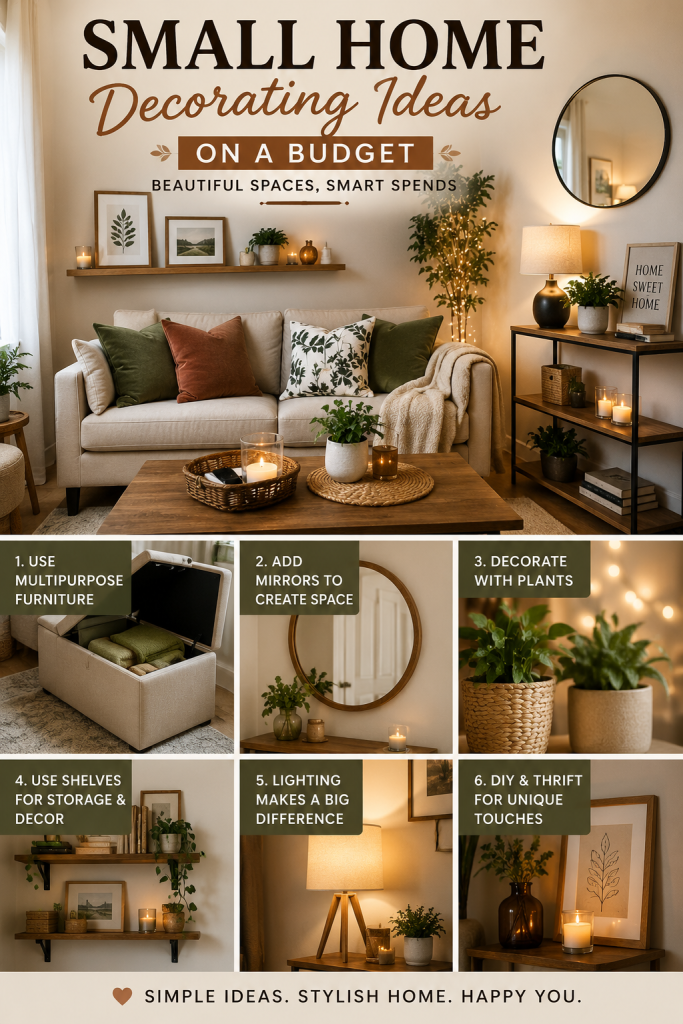
The biggest advantage of decorating a small home is that you do not need a huge number of items to make an impact. In a large home, empty walls and oversized rooms can sometimes require significant furniture and accessories. In a small home, a few carefully selected pieces can completely change the atmosphere. A beautiful mirror, cozy throw, stylish lamp, floating shelf, small rug, or attractive piece of artwork can become a focal point without overwhelming the room.
The key is to decorate with intention. Before purchasing anything, look around your home and identify what is actually missing. Maybe the living room feels dark. Perhaps the bedroom looks plain. Maybe your entryway has become cluttered. Your kitchen might need additional organization rather than more decoration. Once you identify the problem, you can choose a solution that improves both the appearance and functionality of the space.
One of the most useful tricks for small homes is to decorate vertically. When floor space is limited, walls provide valuable unused space. Floating shelves, wall-mounted storage, tall bookshelves, framed artwork, mirrors, and hanging plants can add personality without taking up precious floor area. This approach is particularly useful in apartments and rental homes where every square foot matters.
Mirrors are another affordable decorating tool. A strategically placed mirror can reflect light and make a room appear more open. It can also become an attractive focal point. You do not necessarily need to buy an expensive designer mirror. Thrift stores and secondhand marketplaces can offer beautiful frames at much lower prices, and an old mirror can sometimes be refreshed with a simple coat of paint.
Lighting can also transform a small home without requiring a major renovation. Many small rooms feel cramped because they depend on one bright ceiling fixture. Adding a table lamp, floor lamp, bedside lamp, or warm accent light can create layers of illumination. Warm lighting makes neutral colors feel richer and creates a cozy atmosphere during the evening.
Color is equally important. You do not have to make your entire home white to make it feel larger. Soft cream, beige, warm white, light taupe, pale gray, and natural wood can create an airy foundation while maintaining warmth. Small amounts of darker colors can then be introduced through pillows, artwork, furniture, or accessories.
Storage should be treated as part of the decorating process rather than something separate. In a small home, clutter can quickly make a room feel smaller. Choosing furniture that provides hidden storage can help solve this problem. A storage ottoman can hold blankets. A bench can hide shoes. Baskets can organize everyday items. A bed with drawers can provide additional clothing storage.
Another useful strategy is to refresh rather than replace. If your sofa is still comfortable but looks outdated, you do not necessarily need a new sofa. New cushion covers and a beautiful throw can give it a completely different appearance. An old side table can be painted. Cabinet handles can be replaced. A plain wall can become a gallery wall.
Decorating on a budget also encourages creativity. Instead of buying everything new, consider what you already own. A wooden tray can become a coffee-table centerpiece. A vase can be moved from the bedroom to the living room. A basket can hold blankets. A stack of books can become part of a decorative arrangement.
Thrifted pieces can also add character. Secondhand wooden furniture, vintage mirrors, ceramic vases, picture frames, lamps, and baskets can often be found at affordable prices. These items can make a small home feel more unique than a room filled entirely with mass-produced accessories.
The most important rule is to avoid clutter. Small rooms need breathing space. You should not feel pressured to fill every shelf, wall, corner, or tabletop. A carefully styled empty area can make the entire room feel more luxurious.
The ten decorating ideas in this article focus on affordable changes that can make a noticeable difference. They are suitable for small houses, apartments, studios, rental homes, and compact bedrooms.
You can use all ten ideas together or select only the ones that solve your biggest decorating problems.
The goal is simple: create a small home that feels beautiful, comfortable, organized, warm, and intentional without spending too much money.
1. Use Mirrors to Make Your Small Home Feel Bigger
Mirrors are one of the simplest decorating tools for small spaces because they can change the way a room feels without taking up much physical space.
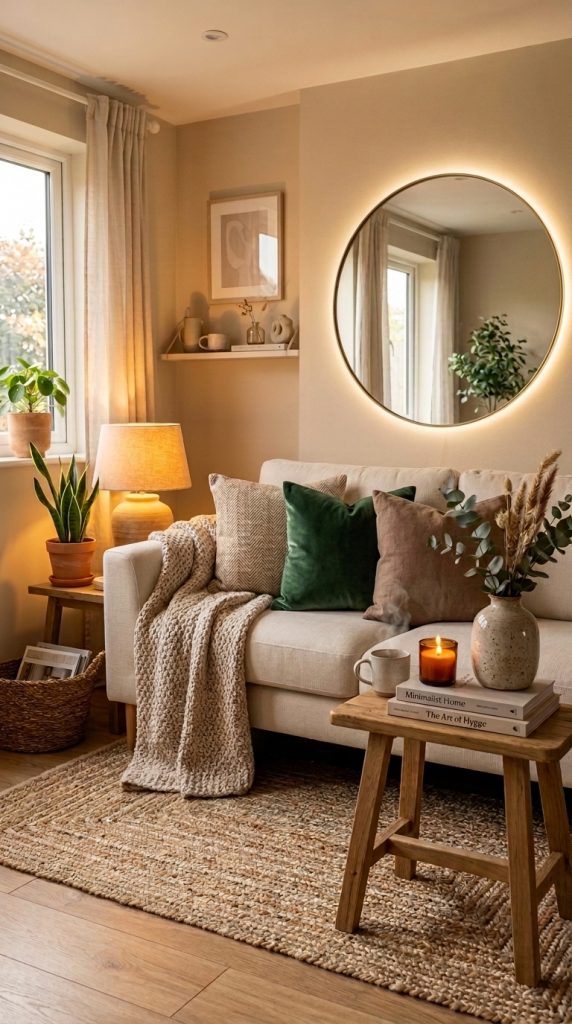
A well-positioned mirror reflects light and creates additional visual depth. This can make a compact room appear brighter and more spacious.
The most effective location for a large mirror is often opposite or adjacent to a window. When natural light enters the room, the mirror reflects that brightness back into the space.
You can also place a mirror near a lamp. During the evening, the reflection can make the room feel warmer and brighter.
What You Need
- Large mirror or several small mirrors
- Wall hooks
- Measuring tape
- Level
- Optional decorative frame
- Soft cleaning cloth
Step-by-Step
Start by deciding where the room feels most closed in.
Look for a wall that has enough space for a mirror but does not already contain too many decorations.
Measure the wall before purchasing anything.
If you have a large wall, consider using one oversized mirror as the main focal point.
If your wall is narrow, a vertical mirror can help emphasize height.
For an entryway, a full-length mirror is particularly useful because it provides both decoration and functionality.
For a living room, a large framed mirror above a console table can create a beautiful focal point.
For a bedroom, a tall mirror placed beside a wardrobe can make the room feel more open.
Budget-Friendly Approach
You do not need to buy an expensive new mirror.
Look at thrift stores, secondhand shops, flea markets, and online resale marketplaces.
An older mirror with a dated frame can often be transformed with paint.
Black, warm white, natural wood, antique gold, and soft brass finishes can work beautifully depending on your interior style.
The biggest mistake is using mirrors without thinking about what they reflect.
Do not position a mirror where it reflects clutter, an unattractive wall, or a messy storage area.
Instead, try to reflect a window, beautiful artwork, a lamp, plants, or an attractive furniture arrangement.
A mirror should enhance the room rather than simply occupy wall space.
2. Add Floating Shelves for Affordable Vertical Decorating
When floor space is limited, walls become one of your most valuable decorating resources.
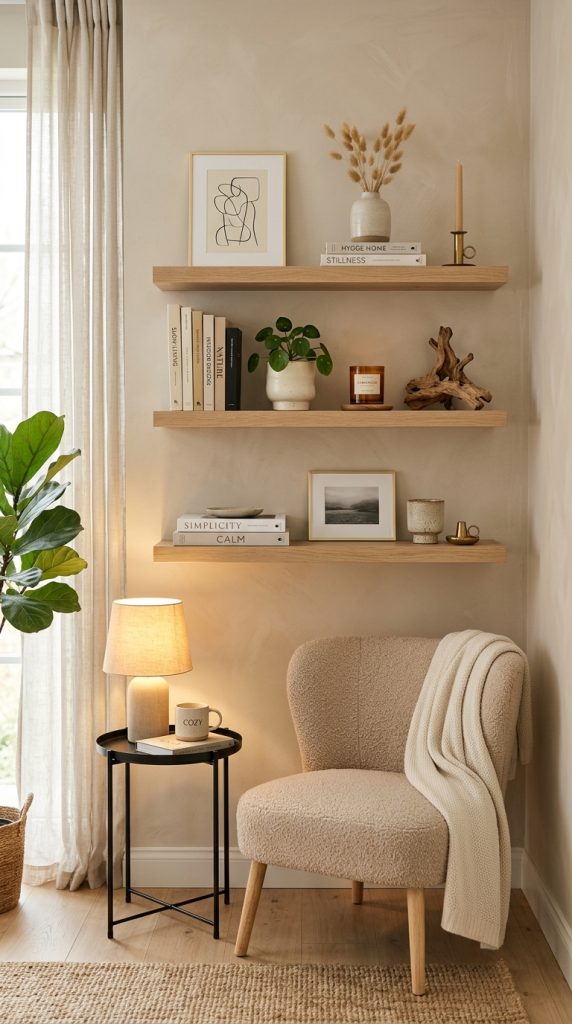
Floating shelves allow you to use vertical space for both storage and decoration.
They are particularly useful in small living rooms, kitchens, bedrooms, bathrooms, and entryways.
What You Need
- Floating shelves
- Wall anchors
- Screws
- Measuring tape
- Level
- Small baskets
- Books
- Small plants
- Frames
- Ceramic accessories
Step-by-Step
Begin by identifying an empty wall.
Measure its width and determine how many shelves would fit comfortably.
Do not install too many shelves close together.
Two or three shelves can often provide enough storage and decoration.
Once the shelves are installed securely, begin styling them.
Place larger objects toward the back and smaller accessories toward the front.
Combine useful items with decorative pieces.
For example, a bedroom shelf might contain books, a small framed picture, and a ceramic vase.
A kitchen shelf could hold mugs, attractive bowls, jars, and a small plant.
An entryway shelf could hold a small basket for keys and a decorative candle.
Avoid Shelf Clutter
The temptation with floating shelves is to fill every available inch.
Avoid doing this.
Leave some empty space between objects.
Use different heights.
Combine horizontal books with vertical objects.
Include one natural element such as a plant or dried branches.
You can also create a cohesive appearance by repeating one material.
For example, combine natural wood with cream ceramics and greenery.
Or use black shelves with neutral artwork and brass accessories.
The result should feel curated rather than crowded.
3. Give Your Sofa a Budget-Friendly Makeover
Your sofa is usually one of the largest pieces in a small living room, so changing its appearance can have a significant effect on the entire space.
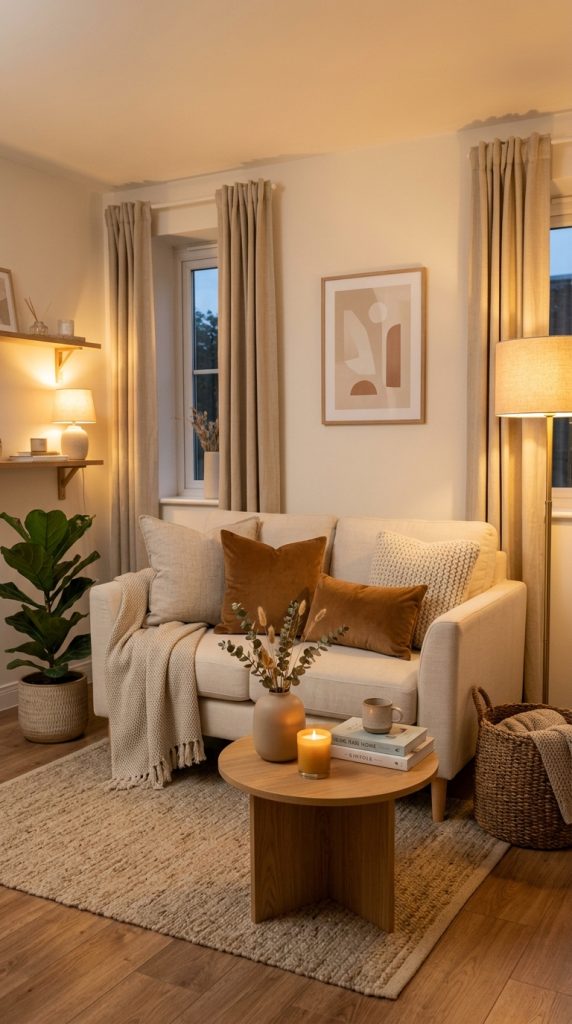
Fortunately, you do not have to replace the sofa.
Instead, refresh it with affordable textiles.
What You Need
- Two to four pillow covers
- Cushion inserts
- One textured throw
- Small decorative blanket
- Optional small rug
- Decorative basket
Step-by-Step
Begin by removing all the existing cushions and accessories.
Look at the sofa by itself.
Then select a simple color palette.
For example, if your sofa is beige, you might choose cream, warm brown, charcoal, and muted green.
If your sofa is gray, you could introduce cream, black, dusty blue, or terracotta.
Avoid choosing too many colors.
Two or three accent shades are generally enough.
Add pillows in different sizes.
You might use one larger square pillow, two medium pillows, and one smaller lumbar cushion.
Mix textures rather than patterns.
A linen pillow beside a velvet pillow can create visual interest without making the sofa look busy.
Finish with a soft throw casually placed over one side.
Why This Works
Textiles are one of the most affordable ways to change a room.
You can even keep the same sofa for several years and change the pillow covers seasonally.
Use lighter fabrics during spring and summer.
Introduce richer textures during autumn and winter.
This approach gives your small home a fresh appearance without requiring major furniture purchases.
4. Hang Curtains Higher to Make the Ceiling Look Taller
Curtains are often treated as purely functional, but they can have a major impact on the proportions of a small room.

Hanging curtains closer to the ceiling can visually increase the height of the room.
What You Need
- Curtain rod
- Floor-length curtains
- Curtain rings
- Measuring tape
- Wall brackets
Step-by-Step
Measure your window first.
Instead of installing the rod immediately above the window frame, consider positioning it higher if the wall allows.
Extend the curtain rod slightly beyond the window.
This can make the window appear wider.
Choose curtains that fall close to the floor.
Avoid curtains that stop halfway down the wall.
Best Colors for Small Rooms
Soft white curtains can create an airy appearance.
Cream curtains provide warmth.
Beige curtains create a soft, sophisticated look.
Light gray works well in contemporary interiors.
For a dramatic small room, deep brown or charcoal curtains can add depth, but use them carefully.
If your walls and curtains are similar in color, the transition between them becomes less noticeable.
This can make the room feel visually larger.
Sheer curtains are another excellent option because they allow natural light to enter while providing softness and privacy.
5. Create a Cozy Reading Corner in an Unused Space
Even a very small home can benefit from having one dedicated cozy corner.

You do not need an entire room.
A small section beside a window, in a bedroom corner, or beside a bookshelf can become a relaxing retreat.
What You Need
- Compact accent chair
- Small side table
- Warm table or floor lamp
- Throw blanket
- Cushion
- A few books
- Small rug
Step-by-Step
First, find an unused corner.
Measure the available space carefully.
Choose a chair that fits comfortably without blocking walkways.
A chair with visible legs can be particularly useful because more floor remains visible underneath it.
Add a small round side table.
Avoid oversized tables.
Place a warm lamp beside the chair.
Add one soft throw and a cushion.
If there is enough room, place a small rug underneath.
Finally, add two or three favorite books.
Keep It Simple
Do not fill the corner with too many accessories.
The chair should remain the focal point.
The lighting should make the space feel warm and inviting.
This corner can be used for reading, drinking coffee, relaxing, journaling, or simply enjoying a quiet moment.
It can also make your home feel more intentional.
Instead of having an unused corner, you now have a functional part of the room.
6. Create an Affordable Gallery Wall
Artwork can make a small home feel much more personal.

However, original artwork and large designer prints can be expensive.
A gallery wall allows you to create an impressive display on a budget.
What You Need
- Affordable frames
- Printable artwork
- Personal photographs
- Botanical prints
- Small mirror
- Measuring tape
- Hanging strips or suitable hardware
Step-by-Step
Start with one wall.
Do not try to decorate every wall at once.
Choose a simple color palette for the frames.
Black frames create a modern appearance.
Natural wood creates warmth.
White frames feel light and minimalist.
Brass or gold frames can create a more traditional appearance.
Choose several different pieces.
You can combine photographs, illustrations, botanical prints, abstract artwork, and small mirrors.
Before hanging anything, place the frames on the floor.
Experiment with different arrangements.
Once you find an arrangement you like, measure the spacing carefully.
Budget-Friendly Artwork
You can find inexpensive printable artwork online or create your own.
Personal photographs can also become beautiful artwork when printed in black and white.
Children’s artwork can be framed for a personal touch.
Pressed leaves or simple botanical illustrations can create an elegant natural theme.
The key is consistency.
The individual pieces do not have to match perfectly, but the overall collection should feel connected.
7. Choose Multifunctional Furniture With Hidden Storage
Small homes need furniture that works harder.

Instead of buying separate pieces for seating and storage, look for furniture that provides multiple functions.
Useful Options
- Storage ottoman
- Storage bench
- Bed with drawers
- Nesting tables
- Foldable desk
- Storage coffee table
- Slim cabinet
- Wall-mounted desk
Step-by-Step
Start by identifying the biggest source of clutter.
Maybe blankets are constantly lying on the sofa.
Perhaps shoes are collecting near the entrance.
Maybe your bedroom lacks space for seasonal clothing.
Choose furniture that solves the specific problem.
A storage ottoman can hide blankets while functioning as a footrest.
A storage bench can provide seating near the entryway while holding shoes.
A bed with drawers can provide valuable bedroom storage.
A nesting table can provide additional surfaces when needed and then be pushed together when you need more floor space.
Think About Daily Life
The best storage is storage that you will actually use.
Do not purchase complicated furniture if it makes everyday organization difficult.
Choose simple solutions.
Use baskets inside cabinets.
Label storage boxes if necessary.
Keep frequently used objects accessible.
Store seasonal items in less convenient areas.
When storage becomes easier, your small home automatically feels more spacious.
8. Make a Small Bedroom Look More Luxurious With Bedding
A small bedroom can look beautiful without expensive furniture.
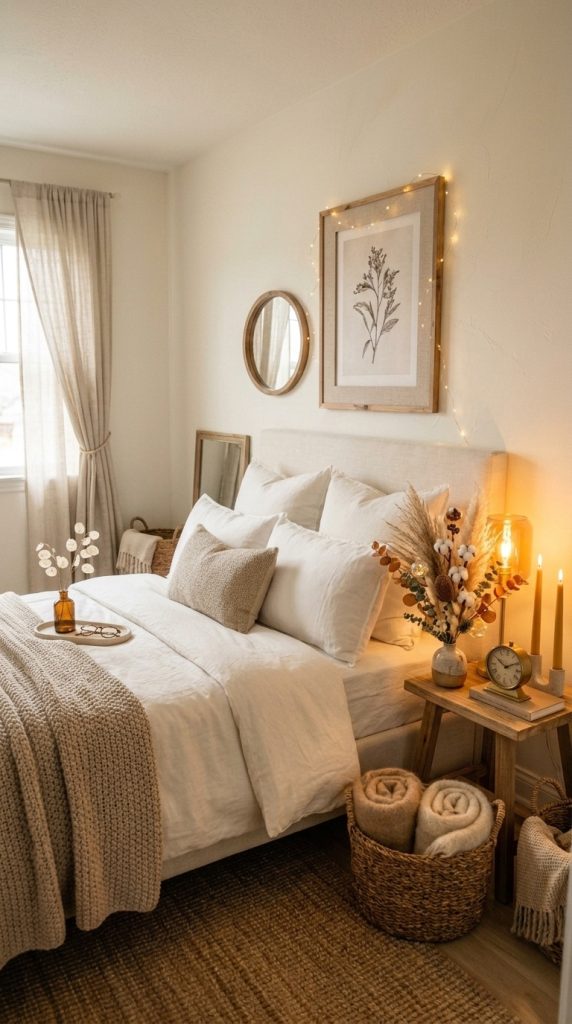
The bed is the main focal point, so concentrate your decorating budget there.
What You Need
- Neutral duvet
- Matching or coordinating sheets
- Two sleeping pillows
- Decorative pillows
- Textured throw
- Bedside lamp
- Small tray
Step-by-Step
Begin with a neutral foundation.
Cream, ivory, beige, taupe, and warm gray work beautifully.
Add layers.
Place sleeping pillows at the back.
Add one or two decorative pillows in front.
Fold a textured throw at the bottom of the bed.
Keep the bedside table simple.
A warm lamp, small tray, book, and tiny decorative object are enough.
Create a Hotel-Inspired Appearance
You do not need expensive bedding to create a luxurious appearance.
Focus on clean lines.
Iron or steam your bedding.
Use coordinated colors.
Avoid excessive patterns.
Add one rich texture such as velvet, chunky knit, or linen.
Keep the floor clear.
Make sure the bed remains the visual focus.
Warm lighting can make the room feel especially inviting at night.
9. Bring Nature Into Your Home With Carefully Placed Plants
Plants can instantly make a small home feel more alive.

But you do not need dozens of plants.
A few strategically placed plants are enough.
What You Need
- One medium or large plant
- Small tabletop plants
- Hanging planter
- Ceramic pots
- Woven baskets
- Small plant stand
Step-by-Step
Start with natural light.
Identify windows and bright corners.
Choose plants appropriate for the amount of light available.
Place one larger plant in an empty corner.
Use smaller plants on shelves or tables.
Consider hanging plants if floor space is extremely limited.
Choose attractive containers.
Natural ceramic, terracotta, woven, and neutral-colored pots can become part of your decor.
Avoid Overcrowding
A small home does not need to become a jungle.
One beautiful plant can have more impact than ten tiny plants scattered everywhere.
Use greenery to soften corners and add natural color.
You can also use dried branches if maintaining live plants is difficult.
A tall vase with dried branches can create vertical interest without requiring much floor space.
10. Transform the Entire Atmosphere With Warm Layered Lighting
Lighting is one of the most powerful and affordable decorating tools available.
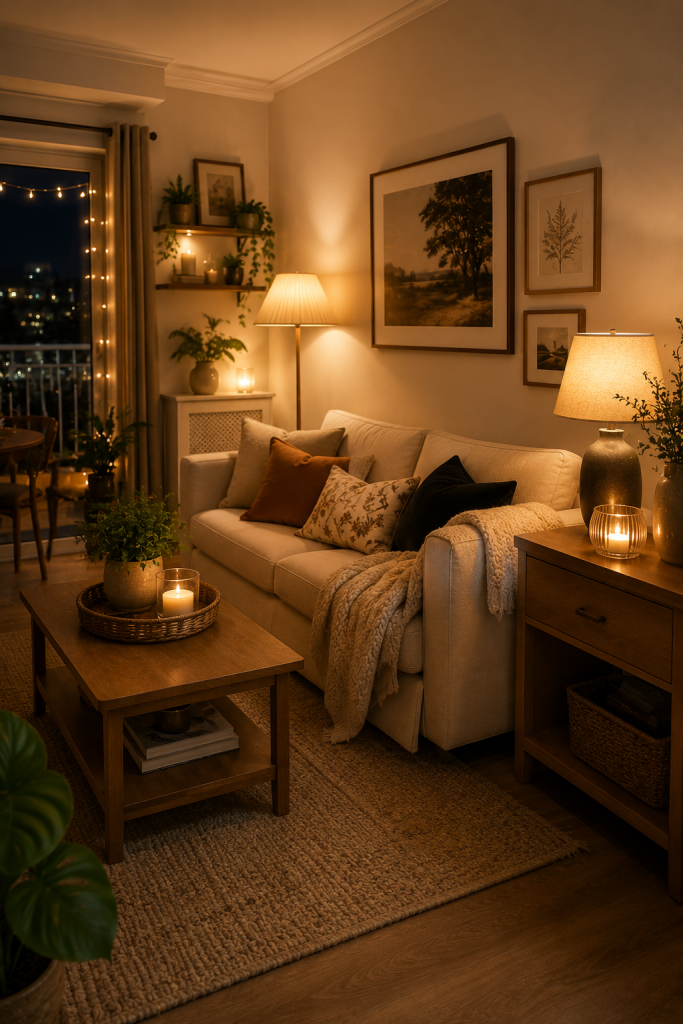
A small room can feel completely different after replacing harsh lighting with several warm sources.
What You Need
- Table lamp
- Floor lamp
- Bedside lamp
- Warm LED bulbs
- Wall light
- Small accent lamp
- Decorative candle where appropriate
Step-by-Step
Start by observing your room during the evening.
Identify dark corners.
Notice which areas feel too bright.
Then add smaller sources of light.
Place a table lamp beside the sofa.
Add a bedside lamp.
Use a floor lamp in an empty corner if there is sufficient space.
If you have artwork or shelves, a subtle accent light can highlight them.
Choose warm-toned bulbs rather than very cool white lighting if you want a cozy atmosphere.
Why Layered Lighting Matters
A single ceiling fixture illuminates the entire room from one direction.
Multiple smaller lights create depth.
They also allow you to control the atmosphere.
You can use brighter lighting when cleaning or working.
In the evening, turn off the main light and use lamps instead.
This creates a softer, more relaxing environment.
Warm lighting can also make affordable furniture and textiles appear richer and more sophisticated.
How to Make a Small Home Look Expensive Without Spending a Lot
A luxury appearance does not necessarily come from expensive furniture.
It often comes from organization, balance, and consistency.
Start by removing unnecessary objects.
A clutter-free room automatically looks more sophisticated.
Choose a limited color palette.
For example, cream, beige, warm brown, and black can create a timeless appearance.
Use different textures within the same palette.
Combine linen with velvet.
Mix wood with ceramic.
Add woven baskets.
Introduce subtle brass accents.
Avoid buying too many small decorative items.
Instead, choose one statement mirror, one beautiful lamp, or one attractive piece of artwork.
Pay attention to proportions.
A tiny rug floating in the middle of a large seating area can make the room look disconnected.
A properly sized rug can visually connect the furniture.
Keep furniture away from unnecessary visual obstacles.
Allow natural light to enter.
Keep windows relatively clear.
Use curtains that frame the window rather than covering it completely.
How to Decorate a Small Living Room on a Budget
Start with the sofa.
Arrange the seating so that conversation feels natural.
Add a small coffee table or nesting tables.
Use a rug to visually define the seating area.
Add two or three pillows.
Place a warm lamp nearby.
Use one large mirror or piece of artwork as the focal point.
Avoid placing too many small objects on the coffee table.
A tray can help organize decorative items.
For example, place one candle, a small vase, and a coffee-table book on the tray.
This creates a cohesive arrangement instead of scattered objects.
If the room is very small, consider a round coffee table.
Round furniture can make movement easier and reduce sharp visual lines.
How to Decorate a Small Bedroom on a Budget
Start with the bed.
Use neutral bedding.
Add one textured throw.
Choose two or three decorative pillows.
Use wall-mounted lighting if bedside tables take up too much space.
Install a floating shelf beside the bed if appropriate.
Use storage boxes under the bed.
Hang a mirror near the wardrobe.
Keep the floor as clear as possible.
A small bedroom can feel luxurious when it is calm and uncluttered.
How to Decorate a Small Entryway on a Budget
Entryways become cluttered quickly because they are often used for shoes, bags, keys, and coats.
Start with a narrow piece of furniture.
A slim console can work if space allows.
Otherwise, use a floating shelf.
Add a small basket for keys or accessories.
Install hooks for bags and coats.
Place a mirror above the shelf.
Add a small lamp or warm wall light.
Use one small plant or vase.
Keep shoes organized rather than scattered.
The entryway should feel welcoming rather than crowded.
How to Decorate a Small Kitchen on a Budget
Small kitchens benefit from organization more than excessive decoration.
Use open shelves carefully.
Display attractive mugs or dishes.
Transfer dry foods into matching containers if practical.
Add a small plant near a window.
Use a wooden cutting board as both a practical tool and decorative element.
Add a warm under-cabinet light if possible.
Replace outdated cabinet handles with affordable new hardware.
Use a narrow rolling cart if there is room.
Keep countertops mostly clear.
A clean countertop can make a small kitchen feel significantly larger.
How to Decorate a Rental Home Without Major Changes
Renters can still create a beautiful home without permanent renovations.
Use removable hooks.
Choose freestanding furniture.
Add rugs.
Use curtains.
Decorate with mirrors.
Create temporary gallery walls using suitable removable hanging solutions.
Use lamps instead of changing electrical fixtures.
Add plants.
Use decorative baskets for storage.
Textiles are particularly useful because they can completely change a rental without altering the walls or floors.
Budget-Friendly Decorating With Secondhand Finds
Secondhand shopping can help you create a more interesting interior while saving money.
Look for:
- Wooden side tables
- Mirrors
- Lamps
- Picture frames
- Ceramic vases
- Baskets
- Small cabinets
- Chairs
- Stools
- Decorative trays
Do not judge an item solely by its current finish.
An unattractive wooden table might look beautiful after sanding and painting.
An old frame might become stunning after a coat of black or antique-gold paint.
A secondhand mirror can become the focal point of a living room.
The goal is to see the potential in an object rather than simply its current appearance.
Easy DIY Decorating Projects for Small Homes
DIY projects are another way to make your home unique.
Paint a small side table.
Update cabinet handles.
Create inexpensive artwork.
Frame personal photographs.
Paint terracotta pots.
Turn a wooden board into a decorative tray.
Repurpose glass jars as storage containers.
Create a simple fabric cushion cover.
Refresh an old lamp shade.
Create a dried-branch arrangement.
These projects can provide a sense of customization without requiring professional skills.
How to Keep a Small Home From Looking Cluttered
The easiest way to make a small home look larger is to reduce visual clutter.
Before purchasing a new decorative item, ask yourself whether you actually need it.
Every object should have a place.
Use baskets to collect loose items.
Keep countertops clear.
Store seasonal decorations when they are not being used.
Avoid filling every shelf.
Leave empty areas around statement pieces.
Choose furniture with built-in storage.
Use vertical storage whenever possible.
When you maintain a consistent organization system, decorating becomes easier because you are not constantly fighting clutter.
Affordable Color Schemes for Small Homes
Cream, Beige, and Warm Wood
This combination creates a soft, timeless, welcoming atmosphere.
White, Light Gray, and Natural Wood
Ideal for a clean and airy appearance.
Beige, Terracotta, and Cream
Warm and cozy without becoming visually heavy.
Cream, Muted Green, and Brown
A natural palette that works beautifully with plants and wooden furniture.
Taupe, Black, and Cream
Sophisticated and slightly dramatic.
The important thing is not which palette you choose.
The important thing is consistency.
Use your selected colors repeatedly throughout the room.
Final Thoughts
Decorating a small home on a budget is completely possible when you focus on smart choices instead of expensive purchases.
You do not need a huge home to create a beautiful interior.
You need a thoughtful plan.
Start by understanding your space.
Measure your rooms.
Identify problem areas.
Remove unnecessary clutter.
Then decide which improvements will make the biggest difference.
A mirror can make a room feel brighter.
Floating shelves can provide vertical storage.
New pillow covers can refresh an old sofa.
Floor-length curtains can make the ceiling appear taller.
A small reading corner can turn an unused space into something useful.
A gallery wall can personalize an empty wall.
Multifunctional furniture can solve storage problems.
Beautiful bedding can make a small bedroom feel luxurious.
Plants can bring life into the home.
And layered warm lighting can completely transform the atmosphere.
The most important principle is to avoid filling your home simply because you have an empty space.
Empty space is valuable in a small room.
It allows your favorite pieces to stand out.
Instead of purchasing ten inexpensive decorations, consider buying one item that you genuinely love.
Instead of replacing all your furniture, refresh what you already own.
Instead of adding more storage boxes, first determine whether you can remove items you no longer use.
Instead of changing every color, select a simple palette and repeat it throughout your home.
These choices create a home that feels more cohesive.
Budget decorating is also an opportunity to become creative.
Secondhand furniture can provide character.
DIY projects can add personality.
Affordable textiles can introduce color and texture.
Plants can bring natural beauty.
Mirrors can improve light.
Lighting can completely change the mood.
The best part is that many of these improvements are reversible.
If you eventually change your style, you can replace pillow covers, move artwork, repaint furniture, or rearrange accessories without starting from scratch.
For apartment living, this flexibility is particularly valuable.
A small home should not feel like a storage area.
It should feel like a place where you can relax, entertain, work, and enjoy everyday life.
That means functionality should always remain part of your decorating plan.
Choose furniture that serves multiple purposes.
Use walls for storage.
Keep pathways clear.
Use baskets and hidden storage to control clutter.
Choose appropriately sized furniture.
Let natural light into the room.
And create small areas that serve specific purposes.
A cozy chair can become a reading corner.
A narrow console can become an entryway station.
A floating shelf can become a miniature display.
A storage ottoman can become seating and storage.
A small table can serve as both a workspace and dining area.
When every item has a purpose, your home becomes easier to maintain.
Remember that expensive-looking interiors are not necessarily expensive.
Often, they simply have good proportions, coordinated colors, thoughtful lighting, and less clutter.
Those are things you can achieve regardless of your budget.
Start small.
Change one area at a time.
Perhaps begin with the living room.
Then refresh the bedroom.
Organize the entryway.
Improve the lighting.
Add a few plants.
Over time, these small changes will create a home that feels completely different.
Your budget does not determine how beautiful your home can be.
Thoughtful decorating, creativity, organization, and attention to detail do.
A small home can be warm, stylish, functional, cozy, and incredibly inviting.
You do not need more space.
You simply need to make the space you already have work beautifully for you.
Leave a Reply