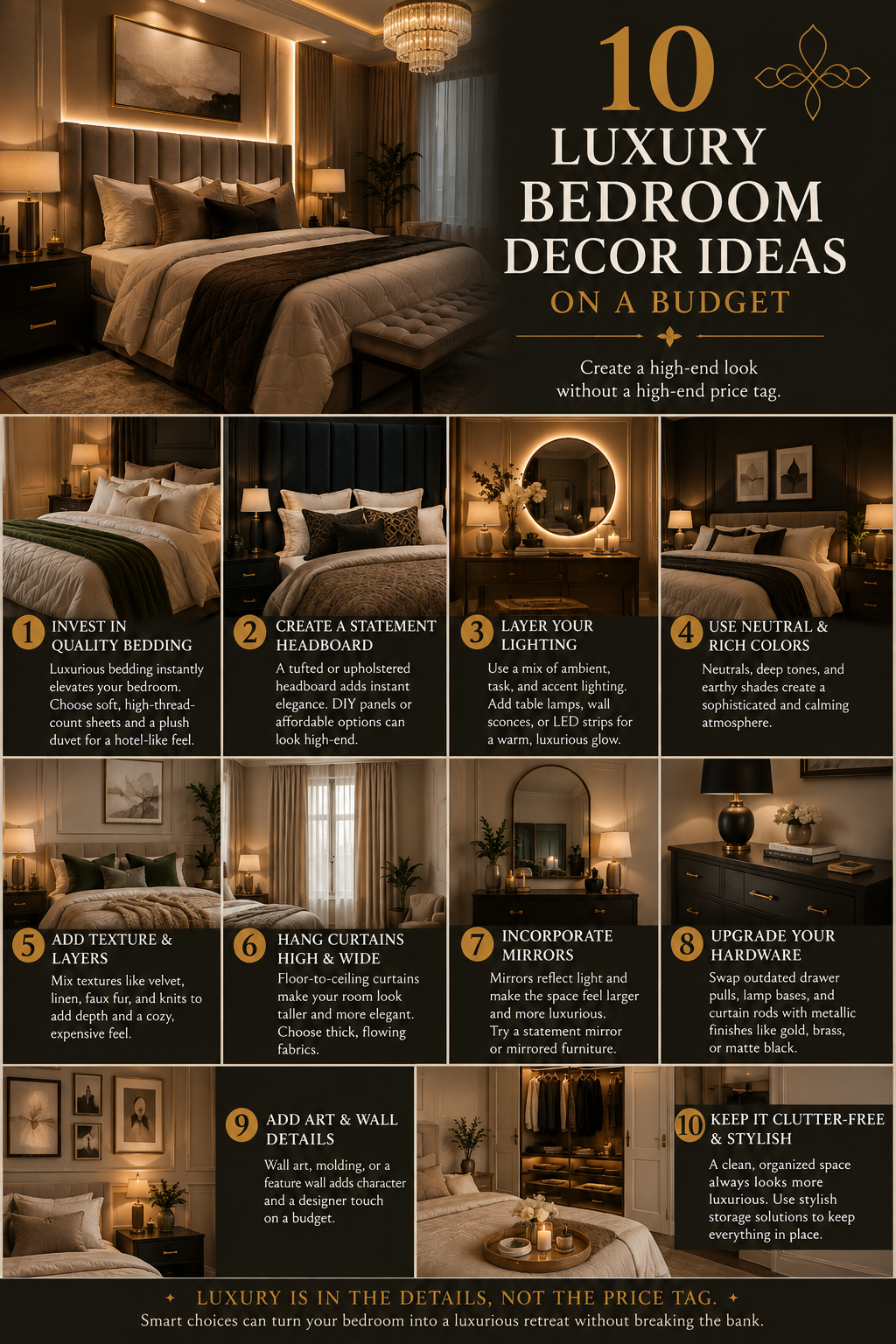
A luxurious bedroom does not have to require an enormous decorating budget. In fact, some of the most beautiful bedrooms are created through thoughtful styling rather than expensive furniture or designer accessories. The secret is knowing which changes create the greatest visual impact and then spending your money selectively. With the right combination of color, texture, lighting, bedding, curtains, mirrors, artwork, greenery, and organization, even a simple bedroom can be transformed into a sophisticated retreat that feels warm, comfortable, and expensive.
The bedroom is one of the most important rooms in the home because it is where you begin and end each day. It should feel peaceful enough for relaxation while still reflecting your personality. A luxury-inspired bedroom does not need to look formal or overly decorated. Instead, the best affordable luxury bedrooms combine comfort with intentional design. Soft fabrics, balanced furniture placement, warm lighting, carefully selected accessories, and a restrained color palette can create an atmosphere similar to an elegant boutique hotel without requiring a boutique-hotel budget.
One of the easiest places to begin is the bed. Because the bed is usually the largest piece of furniture in a bedroom, it naturally becomes the focal point. Even a basic bed frame can look significantly more luxurious when it is dressed with layered bedding. Start with a simple neutral duvet cover in cream, ivory, beige, taupe, or soft gray. Add pillows in different sizes and textures, followed by a folded quilt or throw at the foot of the bed. You do not need an excessive number of pillows. A carefully arranged combination of three or four different textures can look much more sophisticated than a large pile of mismatched cushions.
Texture is particularly important when working with neutral colors. A room decorated entirely in beige can feel flat if everything has the same surface. Instead, combine linen, cotton, velvet, knitted fabrics, woven materials, ceramic, wood, and glass. The contrast between smooth and textured surfaces creates depth and makes the room feel richer. This is one of the easiest ways to achieve an expensive-looking interior without actually purchasing expensive items.
Lighting is another major element of luxury bedroom design. A single overhead fixture rarely creates the warm atmosphere people associate with an elegant bedroom. Instead, consider using several light sources at different heights. Bedside lamps provide practical reading light, while a floor lamp can illuminate a dark corner. A small accent lamp on a dresser can create a beautiful evening focal point. If your bedroom has suitable architectural features, subtle accent lighting can also highlight artwork, shelving, or a mirror. The goal is not simply to make the room brighter. It is to create layers of illumination so the bedroom can feel different throughout the day.
Natural daylight should also be considered. During the day, keep windows as open as privacy allows so sunlight can enter the room. Sheer curtains can soften harsh sunlight while maintaining brightness. Floor-length curtains can make windows appear taller and give the bedroom a more finished appearance. Choosing curtains in a neutral color allows them to blend naturally with the rest of the room.
Color is another powerful decorating tool. A sophisticated bedroom usually benefits from a controlled palette rather than many unrelated colors. Warm white, cream, beige, taupe, walnut, caramel, muted olive, dusty rose, chocolate brown, and soft blue are all versatile choices. You can select one dominant neutral and add two accent colors. For example, cream, walnut, and olive create an earthy and elegant combination. Ivory, taupe, and dusty rose create a softer romantic atmosphere. Warm white, chocolate brown, and muted brass can create a richer, more dramatic look.
A feature wall behind the bed is another affordable way to create visual impact. If painting is allowed, choose a sophisticated shade such as mushroom, taupe, warm beige, muted olive, or soft charcoal. If you are renting, removable wallpaper can provide an alternative, subject to your lease and the product’s instructions. Rather than decorating every wall, concentrate your budget on the wall that naturally attracts the most attention.
Mirrors can also contribute to a luxury appearance. A large floor mirror can make a bedroom feel more spacious, while an elegant mirror above a dresser can become a decorative focal point. Mirrors can reflect daylight and help distribute brightness throughout the room. The key is positioning. A mirror should ideally reflect something attractive, such as a window, artwork, architectural feature, or greenery, rather than clutter.
Furniture placement is just as important as furniture selection. You can make a bedroom look more expensive simply by improving the layout. Leave clear pathways around the bed. Avoid pushing every piece of furniture against a wall simply because there is space available. When possible, create symmetry around the bed with matching or visually balanced bedside tables and lamps. If matching furniture is outside your budget, choose pieces that have similar height or visual weight.
A dresser can also become a decorative feature. Instead of covering the top with every accessory you own, create a simple arrangement. A lamp, framed artwork, ceramic vase, small plant, and a few books can be enough. Leave some empty space so the arrangement feels intentional.
Rugs are another affordable luxury element. A soft area rug can make a bedroom feel warmer and more complete. It also introduces another layer of texture. If a large rug is outside your budget, choose a smaller high-quality-looking rug and position it strategically beside the bed or at the foot of the bed. The important thing is to ensure that the rug is appropriately sized for the furniture.
Natural materials can make inexpensive decor look more sophisticated. Wood, woven baskets, linen, cotton, ceramic, rattan, and stone-inspired surfaces add warmth and visual variety. You can introduce these materials through small accessories rather than replacing your furniture.
Greenery can also improve the atmosphere of a bedroom. You do not need dozens of plants. A single attractive plant beside a window or a small plant on a dresser can introduce freshness. A little greenery works particularly well against neutral colors and natural materials. If your bedroom has limited natural light, choose plants appropriate for those conditions or use a realistic artificial alternative sparingly.
Decluttering is perhaps the most affordable luxury decorating technique of all. A room cannot feel sophisticated if surfaces are overflowing with objects, clothing is visible everywhere, and cables are scattered across the floor. Before buying new decorations, remove items that no longer belong. Clear the bedside tables, organize drawers, hide unnecessary cables, and use baskets or boxes for everyday objects.
This does not mean the bedroom should feel empty. Personal items are what make a room feel like home. Display a few meaningful photographs, favorite books, artwork, or objects that have sentimental value. The goal is not to eliminate personality but to present it thoughtfully.
Another important principle is that luxury does not have to mean formal. Your bedroom should still be comfortable. A perfectly styled bed that nobody wants to use is not successful design. Choose soft fabrics, comfortable pillows, practical lighting, and furniture that works with your daily routine.
Budget decorating also becomes easier when you decorate gradually. Instead of trying to transform everything in one weekend, start with the bed and lighting. Then improve the window treatment. Later, add a mirror or artwork. Eventually, you can introduce a rug or accent furniture when your budget allows. This approach prevents unnecessary purchases and gives you time to determine what the bedroom actually needs.
Secondhand shopping can also help you create a luxury-inspired bedroom. Vintage nightstands, wooden dressers, mirrors, chairs, and lamps can often provide more character than inexpensive mass-produced pieces. Look for solid construction, attractive proportions, and materials that can be cleaned or refreshed. A secondhand wooden nightstand with new hardware can become a beautiful focal point.
You can also repurpose furniture you already own. A small desk might become a dressing table. A console table might become a bedside table if the dimensions work. A decorative stool can become a plant stand or bedside surface. Moving objects between rooms can sometimes give you a completely new bedroom without spending anything.
The most important lesson is that expensive-looking design comes from cohesion. When the colors relate to one another, furniture is appropriately scaled, lighting is layered, surfaces are uncluttered, and textures are intentionally combined, even affordable pieces can look elevated.
The following 10 luxury bedroom decorating ideas are designed specifically for homeowners and renters who want an elegant bedroom without a huge budget. Each idea focuses on a different transformation so you can choose the options that best suit your space.
You can combine several ideas to create a complete makeover or use just one or two for a quick refresh. Whether your bedroom is large or small, modern or traditional, minimalist or cozy, these principles can be adapted to your personal style.
Remember that the goal is not to make your bedroom look like someone else’s. Pinterest can provide inspiration, but your bedroom should still reflect you. Choose colors that make you feel relaxed, fabrics that feel comfortable, artwork that means something to you, and furniture that supports your lifestyle.
1. Layer Your Bedding for a Boutique-Hotel Look
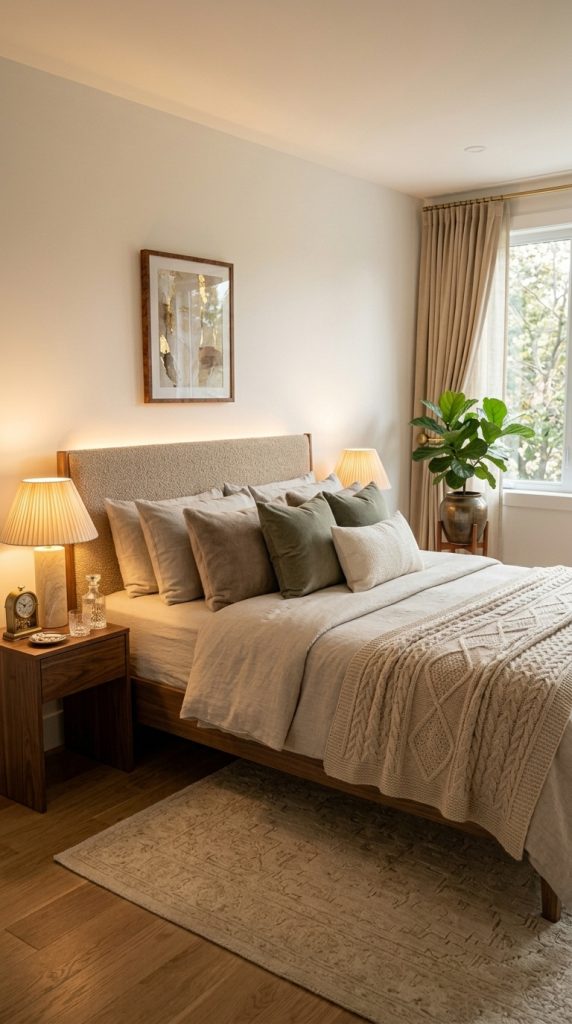
If you want your bedroom to look more luxurious without replacing expensive furniture, start with the bed.
The bed is normally the largest visual element in the room, so improving its appearance can transform the entire space. Even a simple bed frame can look sophisticated when the bedding is carefully layered.
The first step is choosing a controlled color palette. Neutral bedding is particularly useful because it provides flexibility. Cream, ivory, beige, taupe, soft gray, and warm white can all serve as beautiful foundations.
Instead of purchasing a complete matching bedding set, combine individual pieces that complement each other.
For example, use an ivory duvet cover with beige pillowcases, a textured cream quilt, and a caramel throw.
Another option is white bedding with muted olive cushions and a warm brown blanket.
The important thing is to create contrast through texture.
Materials and Things You Need
- Neutral duvet cover
- Fitted sheet
- Pillowcases
- Two sleeping pillows
- Two decorative pillows
- One lumbar cushion
- Lightweight quilt
- Textured throw
- Optional bed runner
Step-by-Step
Start by making the bed with clean, well-fitted sheets.
Add the duvet or comforter and smooth it carefully.
Fold a quilt or lightweight blanket across the lower third of the bed.
Arrange sleeping pillows at the back.
Add decorative pillows in front.
Use one smaller lumbar pillow to create a finished central focal point.
Finally, place a throw loosely over the foot or one corner of the bed.
Avoid making everything perfectly rigid. A slightly relaxed arrangement can feel more inviting.
Choosing Affordable Fabrics
You do not need expensive silk or luxury hotel bedding.
Look for fabrics that provide the visual qualities you want.
Cotton can look crisp and clean.
Linen can create a relaxed, sophisticated appearance.
Velvet can introduce a richer accent through one or two cushions.
Knitted fabric can make the bed feel cozy.
Woven materials add natural texture.
The key is combining different surfaces.
If everything is smooth, the room can feel flat.
If everything is heavily textured, the result can become visually overwhelming.
A balanced combination is more sophisticated.
Make the Bed the Focal Point
Avoid placing too many decorations around the room if the bed already has strong styling.
Let the bedding attract attention.
Keep the nightstands relatively simple.
Choose one or two lamps and perhaps a small decorative object.
This creates a visual hierarchy.
The bed becomes the main feature, while the rest of the bedroom supports it.
Budget-Friendly Strategy
Instead of purchasing a completely new bedding collection, buy a new duvet cover and two or three accent pillow covers.
This can refresh your existing bedding while costing considerably less than replacing everything.
You can also rotate seasonal throws and cushions.
Use lighter fabrics and softer colors in warmer months and heavier textures during colder seasons.
This allows you to change the appearance of the bedroom throughout the year without buying new furniture.
2. Create Elegant Bedside Lighting
Lighting can make an enormous difference to the perceived quality of a bedroom.
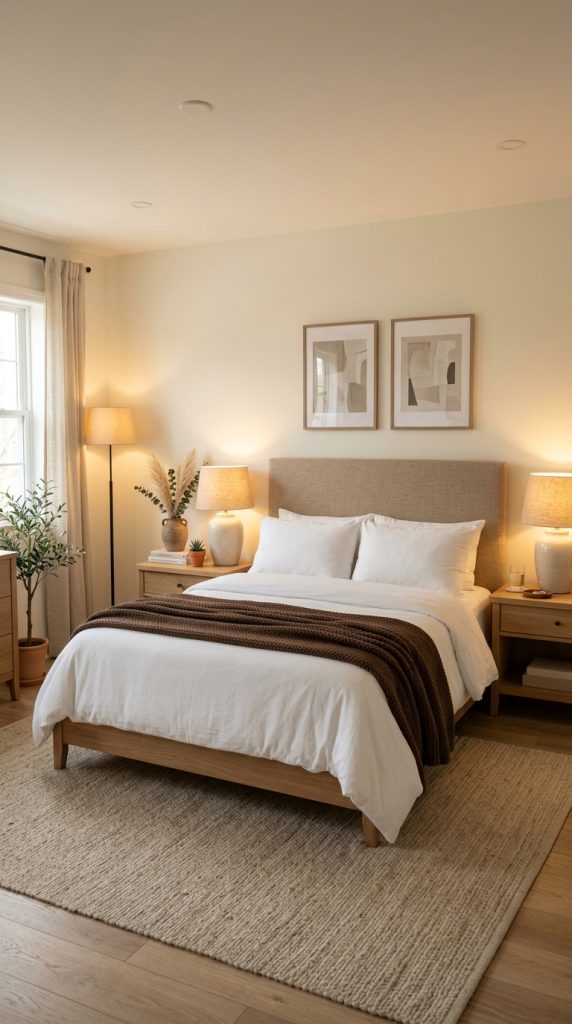
A room with beautiful furniture can still feel inexpensive if it relies entirely on one harsh overhead light.
Luxury bedrooms typically feel more inviting because they use several sources of illumination.
The bedside area is the perfect place to begin.
If your budget allows, use matching lamps on both sides of the bed. Symmetry immediately creates a sense of balance and order.
However, matching lamps are not essential.
You can also use different lamps that share a similar color, height, or shape.
For example, two ceramic lamps with different silhouettes can still feel coordinated.
Materials and Things You Need
- Two bedside lamps
- Warm-toned bulbs
- Bedside tables
- Optional floor lamp
- Optional accent lamp
- Cable management clips
Step-by-Step
First, position the bedside tables so they are comfortable to reach from the bed.
Place one lamp on each side.
Choose shades that provide pleasant light without shining directly into your eyes.
Use warm illumination for ambient lighting.
If you enjoy reading, make sure the lamp provides enough focused light for that activity.
Add another light source in a dark corner.
A floor lamp beside a chair can create a beautiful secondary focal point.
Why Layered Lighting Looks Expensive
Different light sources create depth.
The bedside lamps illuminate the bed.
The floor lamp brightens the corner.
The overhead fixture provides general illumination.
A small accent lamp can highlight the dresser.
Together, they prevent the room from looking flat.
You can also use lighting to change the mood.
During the day, allow natural daylight to dominate.
In the evening, reduce overhead lighting and use bedside and accent lamps.
This creates a softer atmosphere that feels much more relaxing.
Budget Lighting Ideas
You do not need designer lamps.
Look for simple ceramic, glass, metal, or fabric lamps with attractive proportions.
If your existing lamp bases are attractive but the shades look outdated, replace only the shades.
Another option is to purchase inexpensive lamps and use identical warm bulbs to create visual consistency.
Keep wires organized.
Visible tangled cables can make even beautiful furniture look messy.
Use discreet cable clips or cable management solutions where necessary.
3. Create a Luxury Accent Wall Behind the Bed
An accent wall can provide dramatic impact without requiring a complete bedroom renovation.

The wall behind the bed is usually the best location because it naturally functions as the room’s focal wall.
There are several ways to create this effect.
You can paint the wall.
You can use removable wallpaper.
You can create simple decorative molding if permitted.
Or you can simply use oversized artwork.
Materials and Things You Need
- Paint or removable wallpaper
- Painter’s tape
- Measuring tape
- Level
- Roller and brush
- Artwork
- Optional molding
- Appropriate mounting supplies
Choosing a Sophisticated Color
For an expensive-looking appearance, avoid overly bright colors unless they are central to your design style.
Consider:
- Warm taupe
- Mushroom
- Soft beige
- Muted olive
- Warm gray
- Deep chocolate
- Dusty blue
- Soft charcoal
Dark colors can create a dramatic atmosphere, but they should be balanced with lighter bedding and adequate lighting.
If the bedroom is small, a lighter accent wall may help preserve an airy feeling.
Step-by-Step
Clear the wall.
Measure the area.
Select your color or wallpaper.
Prepare the surface according to the chosen product’s instructions.
Apply the paint or wallpaper carefully.
Allow sufficient drying time.
Rearrange the furniture.
Add one large artwork if desired.
Keep surrounding walls relatively simple.
Renter-Friendly Approach
If you rent, removable wallpaper may offer a flexible alternative, subject to your lease and the manufacturer’s instructions.
Always check the surface compatibility before applying a product.
A small accent wall can also be more budget-friendly than covering an entire bedroom.
Avoid Overdecorating
If the accent wall already has a strong pattern, do not add a huge collection of artwork on top.
If the wall is a deep color, keep bedding relatively simple.
Luxury design is often about knowing when to stop.
4. Use Floor-Length Curtains to Add Height
Curtains can dramatically change the proportions of a bedroom.

Short or poorly positioned curtains can make the room feel unfinished.
Floor-length curtains create softness and vertical movement.
They can also make the windows appear larger.
Materials and Things You Need
- Curtain panels
- Curtain rod
- Measuring tape
- Curtain rings if required
- Sheer curtains
- Optional tiebacks
Step-by-Step
Measure the width and height of the window.
Determine how far the curtain rod can extend beyond the window.
Choose curtains that fall close to the floor.
Install the rod at an appropriate height.
Hang the curtains evenly.
If privacy is important, layer sheer curtains with heavier panels.
Choosing the Right Color
For a luxury-inspired bedroom, consider:
- Ivory
- Cream
- Warm white
- Taupe
- Soft beige
- Light gray
These colors blend easily with most bedding.
If your room already contains many neutrals, you can introduce subtle pattern through the curtains.
Why Curtains Matter
Textiles soften the architecture of a bedroom.
They also absorb sound and create a sense of comfort.
When curtains are long and appropriately proportioned, the entire room can feel more finished.
You do not need expensive custom curtains.
Affordable ready-made panels can create a similar visual effect when correctly measured and installed.
Budget Tip
If you already have curtains you like but they are too short, consider whether repositioning the rod or changing the arrangement can improve their appearance.
Sometimes the issue is installation rather than the curtains themselves.
5. Create a Sophisticated Neutral Color Palette
A coordinated color palette is one of the strongest tools for making affordable decor look luxurious.
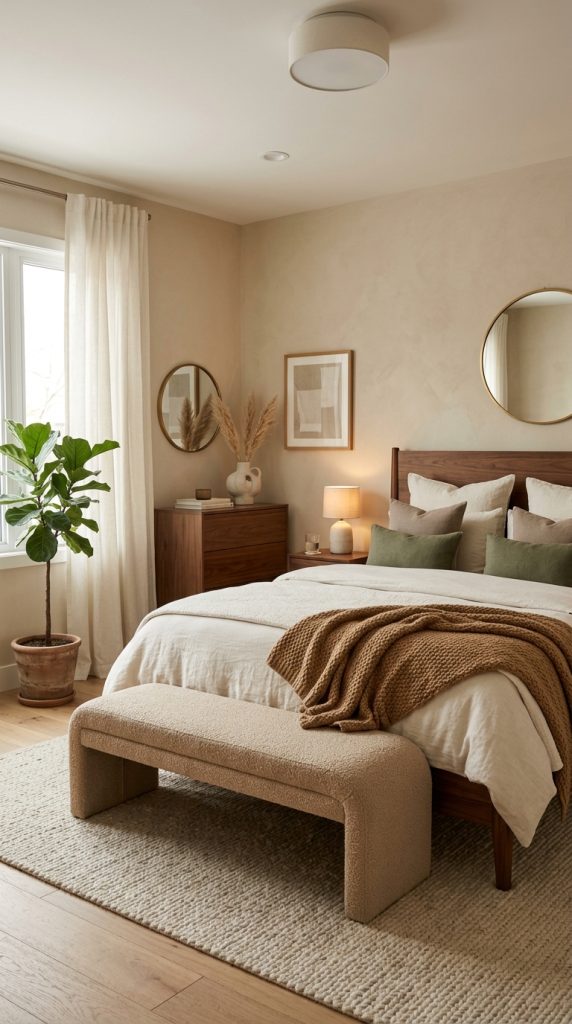
The goal is not to make everything beige.
Instead, choose colors that complement each other.
A sophisticated palette might include:
Cream + walnut + olive
Another possibility is:
Ivory + taupe + caramel
Or:
Warm white + chocolate + dusty rose
Materials and Things You Need
- Bedding
- Curtains
- Cushions
- Rug
- Artwork
- Lamps
- Decorative accessories
- Throw blankets
Step-by-Step
Look at the colors already present in the room.
Choose the dominant neutral.
Select one darker color for contrast.
Choose one accent shade.
Repeat those colors through different materials.
For example, if olive is your accent color, it might appear in one cushion, one artwork, and one plant pot.
Do not use it everywhere.
Use the 60-30-10 Approach
You can loosely divide colors into:
- 60% dominant color
- 30% secondary color
- 10% accent
This is not a strict rule.
It is simply a helpful way to prevent the room from becoming visually chaotic.
Add Contrast Through Materials
If the room contains many beige elements, add dark wood.
If the bedding is white, introduce caramel.
If the furniture is dark, use lighter curtains.
This creates depth.
Budget Benefit
A color palette allows you to shop more intelligently.
You do not have to buy complete sets.
You can purchase individual pieces whenever you find good deals because you already know which colors will work.
6. Add a Large Mirror as a Statement Piece
A large mirror can become one of the most visually impressive elements in an affordable bedroom.
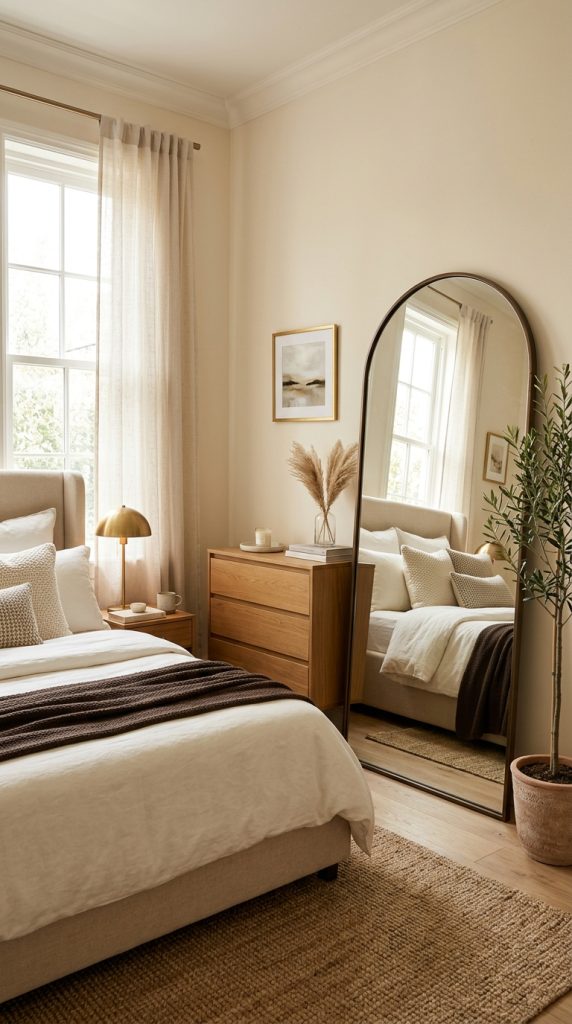
Instead of purchasing several small decorations, invest in one substantial mirror if your budget allows.
A floor mirror can create height.
A large round mirror can soften a room filled with straight furniture.
An arched mirror can introduce architectural interest.
Materials and Things You Need
- Large mirror
- Appropriate mounting hardware
- Dresser or console
- Small decorative accessory
- Optional plant
Step-by-Step
Choose a wall with enough surrounding space.
Position the mirror where it can reflect natural light.
Avoid reflecting clutter.
If placing it above a dresser, keep the dresser styling simple.
If using a floor mirror, secure it appropriately for safety.
Add one small accessory nearby.
What Should the Mirror Reflect?
Ideally:
- A window
- Artwork
- A beautiful light fixture
- A plant
- An attractive architectural feature
Avoid positioning the mirror so it reflects laundry, clutter, or an overcrowded storage area.
Affordable Options
Search secondhand stores for mirrors with attractive frames.
An older mirror can sometimes be refreshed with suitable paint or refinishing.
Simple black, brass, wood, or bronze frames tend to work well with many bedroom styles.
7. Style a Basic Dresser Like a Designer Console
Your dresser does not have to be expensive to look sophisticated.
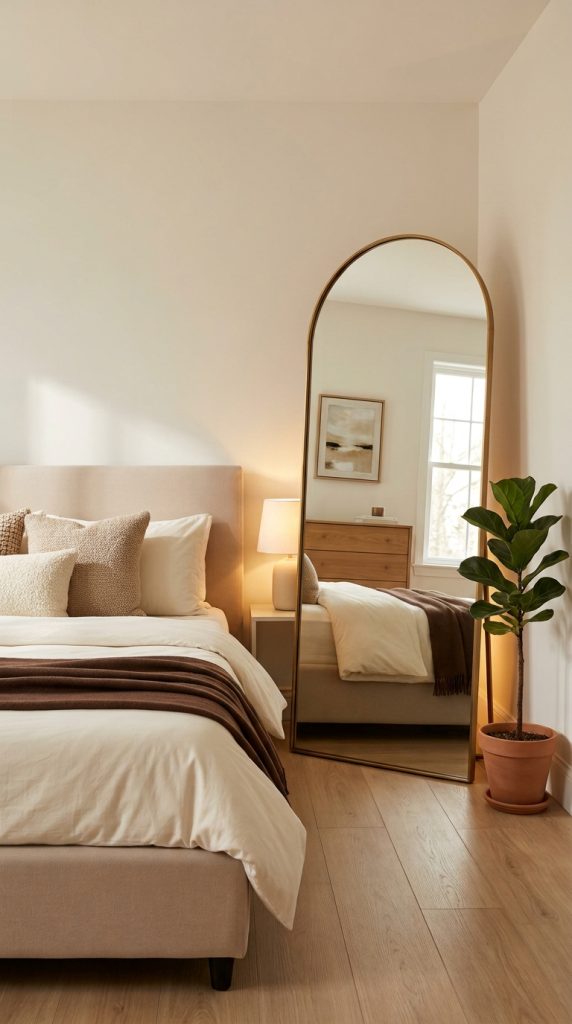
The secret is creating a simple composition.
Start by clearing the entire surface.
Then select a small number of objects.
Materials and Things You Need
- Table lamp
- Framed artwork
- Ceramic vase
- Decorative box
- Books
- Small plant
- Tray
Step-by-Step
Place a lamp toward one side.
Add artwork behind or beside it.
Place a vase on the opposite side.
Add two or three books.
Finish with one small object.
Leave empty space.
This creates balance.
Use Different Heights
If everything is the same height, the arrangement can look flat.
Combine:
- Tall lamp
- Medium vase
- Low books
- Small decorative object
This creates visual movement.
Add a Tray
A tray can organize smaller items such as perfume bottles, jewelry, or decorative objects.
It also makes the arrangement look intentional.
Avoid Overcrowding
One of the most common decorating mistakes is covering every inch of a dresser.
Luxury styling usually benefits from breathing room.
If the dresser is wide, you may need only four or five objects.
If it is small, two or three may be enough.
Reuse What You Own
You can create a completely new arrangement without purchasing anything.
Move a lamp from another room.
Use your favorite books.
Bring a ceramic vase from the living room.
Frame a photograph you already have.
This is one of the easiest ways to achieve a refreshed look for free.
8. Add a Soft Rug for Texture
A bedroom without a rug can sometimes feel cold, especially when the flooring is tile, laminate, or hardwood.
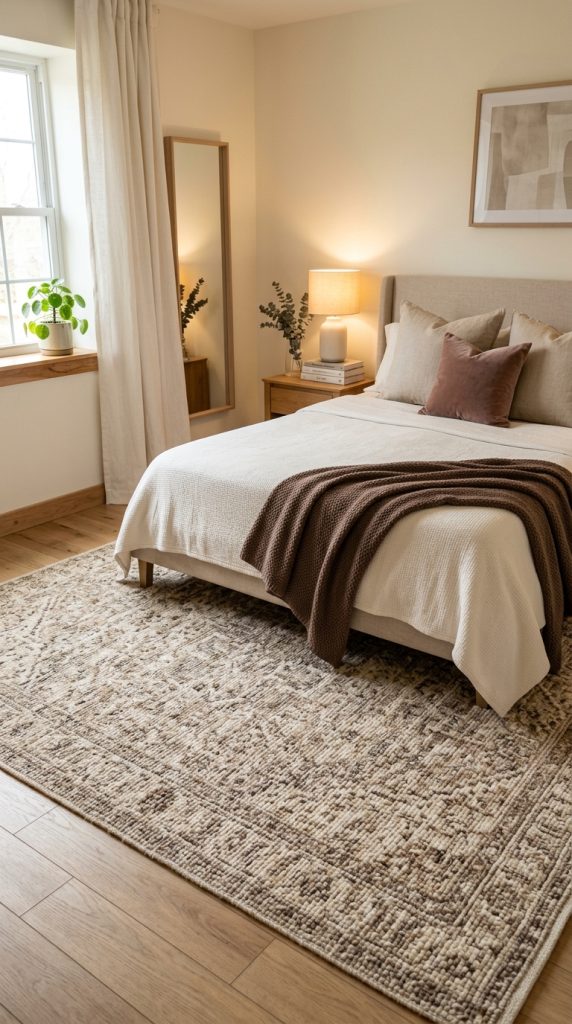
A rug introduces softness and helps visually connect the bed with the surrounding furniture.
Materials and Things You Need
- Area rug
- Rug pad
- Measuring tape
- Optional small bedside rugs
Choosing the Right Size
The rug should be large enough to create a meaningful visual connection.
If possible, place it beneath the lower portion of the bed.
If the bedroom is small, you can use runners or smaller rugs beside the bed.
Avoid purchasing a rug that is so small that it looks disconnected from the furniture.
Choosing the Right Color
Neutral rugs are particularly versatile.
Try:
- Cream
- Beige
- Taupe
- Soft gray
- Warm brown
If the bedroom already has neutral bedding, you can introduce subtle pattern.
Texture Matters
A textured rug can make the room feel richer.
Consider:
- Woven texture
- Low-pile pattern
- Soft shag
- Vintage-inspired pattern
- Natural fiber
Choose according to your lifestyle and cleaning needs.
Budget Tip
You do not have to cover the entire floor.
A strategically positioned rug can provide the visual effect you want without requiring the largest possible size.
Always use an appropriate rug pad where necessary to help prevent slipping and protect the flooring.
9. Introduce Natural Materials and Subtle Greenery
A luxury bedroom can sometimes feel too polished if every element is smooth, shiny, and artificial.
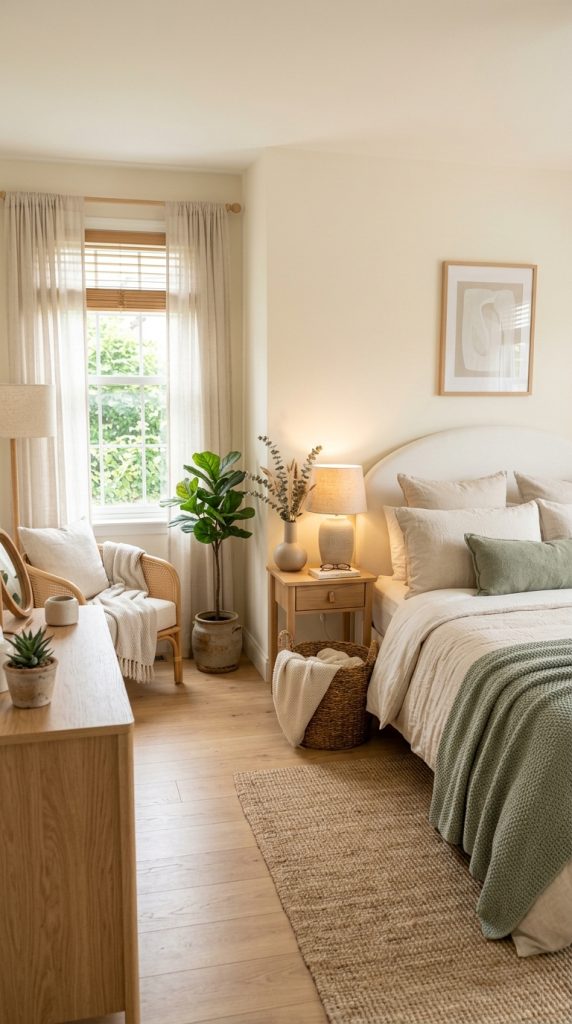
Natural materials create warmth.
Wood, linen, ceramic, woven fibers, cotton, and greenery can make the room feel more relaxed and sophisticated.
Materials and Things You Need
- Wooden tray
- Woven basket
- Linen throw
- Ceramic vase
- Small plant
- Natural wood accessory
Step-by-Step
Begin with one wooden element.
Add a woven basket for storage.
Use linen or cotton bedding.
Introduce ceramic decor.
Add one or two small plants.
Keep the greenery controlled.
Why Greenery Works
Plants introduce organic shapes.
Bedrooms often contain many straight lines:
- Bed frame
- Dresser
- Nightstands
- Windows
- Shelves
A plant adds softer visual movement.
It can also provide a subtle color contrast against neutral walls.
Do Not Overdo It
The goal is a little greenery, not a plant-filled bedroom.
One large plant in a corner can be enough.
Alternatively, use a small plant on the dresser.
If you have limited natural light, select a plant suited to your conditions.
Natural Materials on a Budget
You do not need expensive handcrafted furniture.
A wooden tray, woven basket, ceramic vase, or cotton throw can introduce the same general design language.
Mixing these materials creates depth.
10. Declutter and Create a Calm Luxury Atmosphere
The final idea costs almost nothing.
Declutter.
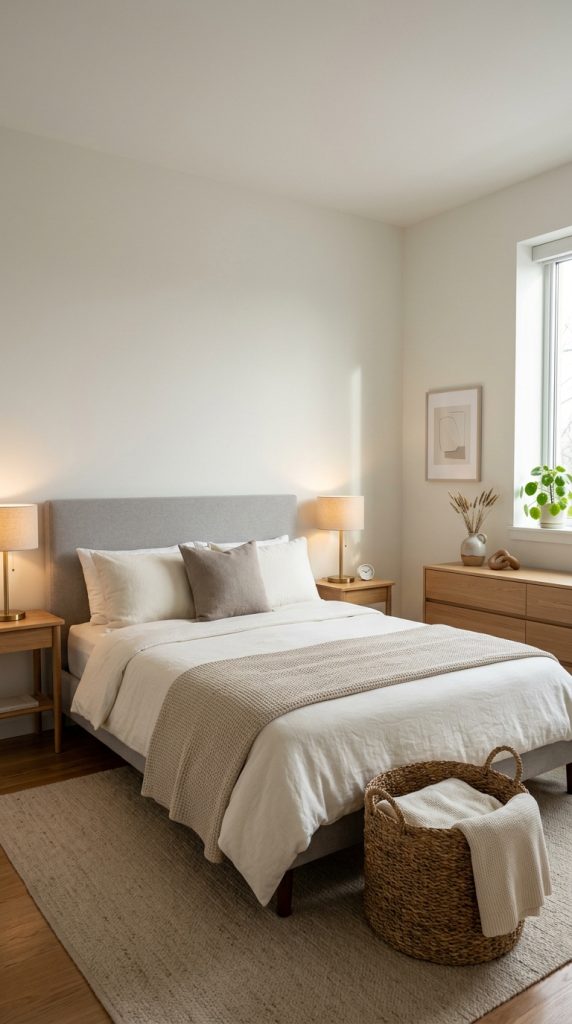
A sophisticated bedroom needs visual breathing room.
Even beautiful furniture can look inexpensive when surrounded by clutter.
Materials and Things You Need
- Storage baskets
- Decorative boxes
- Drawer dividers
- Under-bed containers
- Laundry basket
- Cable organizers
Step-by-Step
Start with the bedside tables.
Remove everything that is not necessary.
Organize chargers and cables.
Put books into a small intentional stack.
Clear clothing from chairs and floors.
Organize the dresser.
Use baskets for blankets.
Store seasonal clothing appropriately.
Use under-bed storage when available.
The Three-Question Test
For every visible object, ask:
Does it serve a purpose?
Does it add beauty?
Does it have personal meaning?
If the answer to all three is no, consider removing it.
This does not mean the bedroom should become minimalist.
It means that visible objects should feel intentional.
Create Visual Breathing Room
Leave portions of surfaces empty.
Allow the floor to remain visible.
Avoid pushing furniture too close together.
Keep pathways open.
Make the bed the primary focal point.
When there is less visual noise, the important elements become more noticeable.
Hide Everyday Clutter
Use decorative baskets for:
- Extra blankets
- Pillows
- Laundry
- Accessories
Use boxes inside drawers for smaller objects.
Keep cables organized.
This makes daily life easier while improving the appearance of the room.
Conclusion
Creating a luxurious bedroom on a budget is completely achievable when you focus on the elements that have the greatest visual impact.
You do not need a designer bed.
You do not need an expensive chandelier.
You do not need a complete furniture set.
You do not need to renovate the entire room.
Instead, start with what you already have.
Improve the bedding.
Layer the textures.
Introduce warm lighting.
Create a sophisticated color palette.
Add beautiful curtains.
Use a mirror strategically.
Style your dresser.
Introduce a soft rug.
Bring in natural materials and a little greenery.
Then remove unnecessary clutter.
These relatively simple changes can completely alter the way a bedroom feels.
The most important lesson is that luxury is about presentation and intention.
A $50 accessory placed thoughtfully can sometimes have a greater visual impact than a $500 accessory surrounded by clutter.
A simple lamp can look elegant when paired with balanced furniture.
A basic duvet can look luxurious when layered with beautiful textures.
A secondhand dresser can look sophisticated when carefully styled.
Affordable curtains can look expensive when they are correctly proportioned.
A simple plant can add more life to a room than a shelf full of unnecessary decorations.
This is why budget decorating can be so rewarding.
You are not simply purchasing a new room.
You are learning how to design the room you already have.
Begin with the largest visual elements.
The bed should usually receive the most attention because it dominates the room.
Then consider the lighting.
Lighting affects how every other object appears.
After that, look at the walls and windows.
Curtains and wall treatments establish the architectural character of the room.
Then introduce smaller layers such as rugs, cushions, artwork, plants, baskets, and decorative objects.
Always keep the overall palette in mind.
If you choose cream, walnut, and olive, allow those colors to repeat naturally.
If you choose ivory, taupe, and dusty rose, do not suddenly introduce five unrelated bright colors.
Consistency creates sophistication.
Texture is equally important.
Combine smooth and rough surfaces.
Pair soft bedding with woven baskets.
Use ceramic alongside wood.
Introduce linen curtains next to upholstered furniture.
Add greenery against neutral walls.
These contrasts create the visual richness often associated with luxury interiors.
Lighting should also be treated as decoration.
A beautiful lamp is both functional and decorative.
Warm bedside lamps can make the bedroom feel relaxing.
A floor lamp can transform an empty corner into a reading area.
A small dresser lamp can create a beautiful evening focal point.
Natural daylight should remain part of the design as well.
Keep windows as unobstructed as practical.
Use curtains that allow you to control privacy and brightness.
A mirror can help reflect available daylight into darker parts of the room.
Storage is another hidden part of luxury.
A bedroom feels much more peaceful when everything has a place.
Use baskets.
Use drawers.
Use boxes.
Use under-bed storage.
Use closet organizers.
But do not buy storage simply to collect more things.
Decluttering should happen first.
Ask yourself whether an item deserves to remain visible.
Your bedroom should contain the things you need and the things you love.
It should not become a storage area for everything that does not have a home elsewhere.
Personalization is what ultimately separates a beautiful bedroom from a generic one.
Display a favorite photograph.
Keep a few beloved books beside the bed.
Choose artwork that makes you feel something.
Use a decorative object connected to a memory.
Add a color that you genuinely enjoy.
Pinterest can provide ideas, but you do not need to copy an entire room.
Take the principles and adapt them to your home.
If your bedroom is small, use fewer pieces.
If your room has beautiful natural light, make that a feature.
If your furniture is dark, balance it with lighter textiles.
If your apartment has rental restrictions, use temporary and removable approaches where appropriate.
If your budget is extremely limited, start with rearranging furniture, decluttering, cleaning, and using what you already own.
Then gradually invest in the elements that will have the greatest impact.
A new duvet cover may be more valuable than several decorative objects.
A beautiful lamp may be more useful than another piece of wall art.
A properly sized rug may transform the room more than a collection of small accessories.
This is the essence of luxury bedroom decor on a budget.
Spend strategically.
Style intentionally.
Choose quality-looking textures.
Create balance.
Keep the room comfortable.
And do not underestimate the power of simplicity.
The most beautiful luxury-inspired bedrooms often contain relatively few elements.
A beautifully dressed bed.
Two attractive lamps.
Soft curtains.
One statement mirror.
A textured rug.
A small amount of greenery.
A few meaningful accessories.
And plenty of breathing room.
That combination can create a bedroom that feels peaceful, elegant, warm, and expensive without requiring an enormous decorating budget.
Whether you are refreshing your bedroom for a new season, preparing a rental apartment, updating a guest room, or simply wanting your everyday space to feel more special, these ten ideas give you a practical starting point.
You can complete the transformation gradually.
Start tonight by clearing the bedside tables.
This weekend, rearrange the furniture.
Next, refresh the bedding.
Then add better lighting.
Later, introduce curtains, a mirror, rug, artwork, or greenery.
There is no requirement to do everything at once.
The best decorating process is one that fits your lifestyle and budget.
And when you finally step back and see the finished bedroom, the goal is not simply for it to look expensive.
The goal is for it to feel comfortable, peaceful, personal, polished, and completely yours.
That is the real definition of affordable luxury.
Leave a Reply