
Decorating an apartment on a budget does not mean settling for a space that feels plain, temporary, or unfinished. Whether you live in a compact studio, a one-bedroom rental, or a larger apartment, thoughtful decorating can make your home feel comfortable, stylish, organized, and genuinely personal without requiring a huge investment. In fact, many of the most effective apartment decorating improvements are relatively simple: better lighting, appropriately sized furniture, attractive textiles, mirrors, greenery, clever storage, and a carefully chosen color palette. Current small-space design advice continues to emphasize these high-impact changes because they improve both appearance and functionality. (Real Simple)

The biggest mistake people make when decorating an apartment is assuming they need to purchase lots of new things. More furniture and accessories do not necessarily create a better-looking room. In a smaller home, excessive furniture can make the space feel crowded, while too many small decorative objects can create visual clutter. A more successful approach is to determine what the apartment actually needs before buying anything. Measure the rooms, understand how you use them, identify problem areas, and then make a decorating plan.
This is especially important when working with a limited budget. Your money should go toward changes that make a noticeable difference. A beautiful rug can define an entire living room. A pair of warm lamps can completely change the atmosphere at night. A large mirror can help a compact room feel more open. Coordinated curtains can make windows look taller and more finished. A few carefully selected cushions can refresh an existing sofa without requiring you to replace it.
Lighting is one of the most powerful tools available to apartment decorators. A room that looks ordinary during the day can feel dramatically different in the evening when it has several layers of warm illumination. Instead of depending entirely on a ceiling fixture, use a combination of table lamps, floor lamps, accent lighting, and appropriate bulbs. Layered lighting is frequently recommended for small apartments because it brightens dark corners and creates depth without taking up much space.
Color is equally important. You do not need to repaint an entire apartment to create a cohesive interior. Begin by identifying the colors already present in your sofa, flooring, cabinets, curtains, and larger furniture. Then choose a small group of complementary colors. Warm white, cream, beige, taupe, natural wood, olive, terracotta, muted blue, caramel, and soft brown can all create a sophisticated foundation. If you prefer stronger colors, use them through artwork, cushions, curtains, or one statement piece rather than allowing every room to compete for attention.
Texture is another affordable way to add depth. A simple sofa becomes much more inviting when combined with linen or cotton cushions, a knitted throw, and a textured rug. A basic bedroom can feel more luxurious when the bed is layered with coordinated bedding, a quilt, a few pillows, and a soft blanket. Texture creates richness without requiring expensive furniture.
Mirrors are especially valuable in apartments. They can reflect daylight, brighten darker areas, and create the visual impression of additional space. A large mirror can often make a greater impact than a collection of small decorative pieces. For the best effect, place a mirror where it reflects a window, attractive artwork, greenery, or another visually pleasing part of the room rather than clutter. Designers and home-staging experts continue to recommend strategic mirrors as one way to make compact rooms appear more spacious.
Renters also have many more decorating possibilities than they might initially realize. Removable wallpaper, temporary wall treatments, freestanding shelving, renter-friendly hooks, removable hardware, and peel-and-stick products can personalize an apartment while allowing changes to be reversed. Current renter-focused decorating guides emphasize temporary and low-commitment solutions for exactly this reason.
However, renters should always check their lease before making changes and follow the manufacturer’s instructions for removable products. Even products marketed as renter-friendly can behave differently depending on the wall paint, surface, temperature, and installation method. A careful patch test and documentation of the apartment’s original condition can help reduce problems later.
Plants are another inexpensive way to add personality. Greenery introduces color and organic texture while softening the straight lines of apartment furniture. A large plant can fill an empty corner, while smaller plants can brighten a kitchen, shelf, desk, or bedside table. If natural plants are unsuitable for your space, choose realistic alternatives carefully, but avoid filling the apartment with artificial foliage simply for the sake of decoration.
Storage should also be treated as part of the design. In a small apartment, clutter can quickly overpower even beautiful furniture. Baskets, storage ottomans, under-bed containers, vertical shelving, and furniture with hidden storage can keep everyday items organized. Open shelves can display books and decorative objects while closed baskets conceal less attractive necessities. The best solutions perform more than one function.
Furniture selection deserves particular attention. Instead of buying furniture simply because it is labeled “small-space furniture,” look at actual dimensions, proportions, and functionality. A piece that technically fits the room can still make the space feel cramped if it is too deep or visually heavy. Furniture with visible legs can sometimes create a lighter appearance because more of the floor remains visible.
Secondhand furniture is another excellent option for decorating on a budget. A solid wood side table, vintage dresser, console, dining chair, or bookshelf can often be found for considerably less than a comparable new piece. With cleaning, minor repairs, new hardware, or a suitable finish, an older piece can become a beautiful focal point. Mixing vintage and modern elements can also make an apartment feel more collected and personal rather than like a showroom.
Do not underestimate the importance of curtains and rugs. Curtains can visually change the proportions of a room, especially when they are hung appropriately and extend close to the floor. Rugs help establish zones and connect furniture. In an open-plan apartment, a rug can visually separate the living area from the dining or work area without requiring walls. Correct rug sizing is important; a rug that is too small can make furniture appear disconnected.
The kitchen can also be improved without renovation. Remove unnecessary countertop clutter and introduce a few attractive functional items. Wooden cutting boards, ceramic utensil containers, a coordinated fruit bowl, linen towels, a small plant, and a simple tray can make an ordinary kitchen feel more intentional. The goal is not to turn the countertop into a display shelf; it is to make everyday objects attractive enough to remain visible.
The entryway deserves attention as well. Even a narrow apartment entrance can become functional and stylish with wall hooks, a slim shelf, a mirror, a small runner, and a basket. Vertical storage is particularly useful because it keeps belongings off the floor and preserves walking space.
Bedrooms benefit from a similar strategy. Rather than purchasing a new bed, focus on the bedding, lighting, curtains, and wall behind the bed. A coordinated duvet, textured throw, attractive pillows, warm lamps, and one substantial artwork can completely change the atmosphere.
Small balconies should not be ignored either. A compact outdoor rug, folding chair, small table, plants, cushions, and appropriate lighting can turn an unused balcony into a relaxing retreat. The furniture should be scaled to the available space, and the arrangement should leave enough room to move comfortably.
A beautiful apartment does not need to look expensive. It needs to look considered.
That means choosing a cohesive palette, using appropriate scale, mixing textures, creating practical storage, and giving important pieces enough breathing room. Expensive-looking interiors often have fewer objects but stronger focal points. They combine materials such as wood, ceramic, linen, metal, glass, and woven fibers rather than relying on one style or matching furniture collection.
The following 15 apartment decorating ideas are designed around that philosophy. Each idea focuses on an affordable change that can make a meaningful difference to the way your apartment looks and functions. You can complete them individually, combine several together, or use them as the foundation for a complete apartment refresh.
Your apartment does not have to be large to feel beautiful. It does not have to contain designer furniture to feel sophisticated. And it certainly does not have to consume your entire decorating budget.
With creativity, planning, and a focus on high-impact details, you can create a home that feels cozy, stylish, functional, organized, and completely your own.
1. Create a Cozy Living Room With Affordable Textures
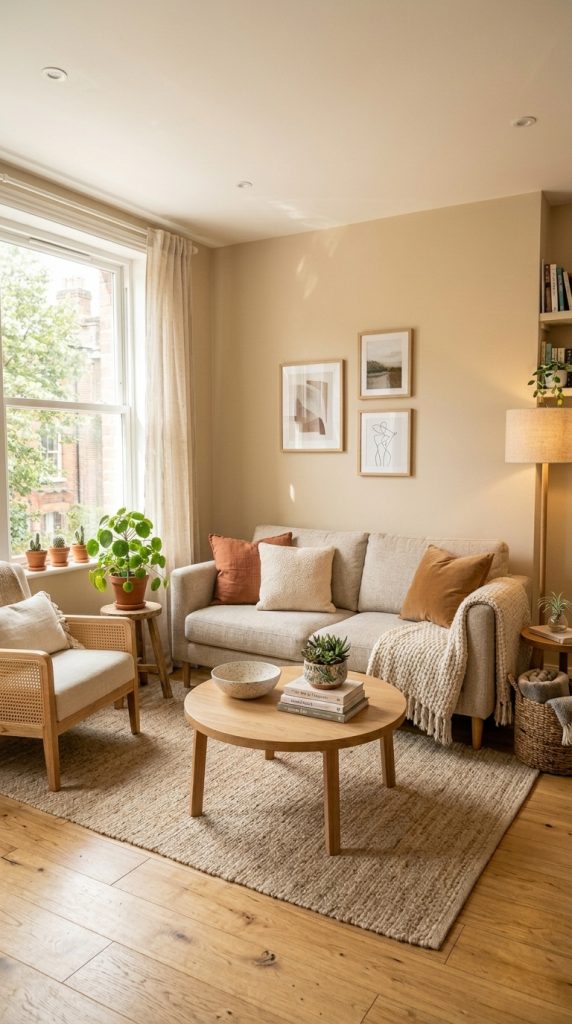
The living room is often the heart of an apartment, which makes it one of the best places to begin a budget-friendly decorating project. If your sofa, coffee table, and basic furniture are already functional, there is no need to replace them simply because the room feels boring. Instead, use texture, lighting, and carefully selected accessories to create a more finished appearance.
Begin by choosing a simple color palette. If the sofa is beige or cream, introduce caramel, olive, muted terracotta, warm brown, or soft black. If the sofa is gray, combine it with cream, taupe, muted blue, or warm wood. The goal is to create relationships between the colors rather than using many unrelated shades.
Materials and Things You Need
- Cushions
- Throw blanket
- Area rug
- Coffee table
- Decorative tray
- Ceramic vase
- Indoor plant
- Floor lamp
- Small artwork
- Woven basket
Step-by-Step Decorating Process
First, remove unnecessary objects from the living room.
Next, rearrange the furniture if necessary. Before purchasing anything, try a different layout. Make sure walking paths remain clear and that seating encourages conversation.
Add an appropriately sized area rug. Ideally, the rug should visually connect the major seating pieces rather than floating as a tiny island in the middle of the room.
Add cushions in different textures. Instead of buying six identical cushions, combine linen, cotton, velvet, woven, or knitted fabrics.
Place a throw naturally over one side of the sofa.
Style the coffee table with a tray containing a few books, a ceramic object, and a small plant or vase.
Add a floor lamp or table lamp to create another layer of lighting.
Finally, use a woven basket to store additional blankets.
The important principle is layering rather than accumulation.
A room does not become more stylish simply because more accessories are added. In fact, removing one or two unnecessary objects can sometimes make the entire room feel more polished. Current design advice similarly emphasizes editing clutter and improving visual balance.
How to Make the Room Look More Expensive
Choose a few substantial pieces rather than many tiny decorations.
A large ceramic vase can create a stronger focal point than several miniature objects. A properly sized rug can make the furniture arrangement feel intentional. A floor lamp can provide both function and visual height.
Use natural materials whenever possible. Wood, ceramic, woven fibers, linen, cotton, and glass tend to create more visual depth than a collection of unrelated plastic accessories.
The living room should feel comfortable enough for everyday life while still looking thoughtfully decorated.
2. Make a Small Apartment Look Bigger With Mirrors
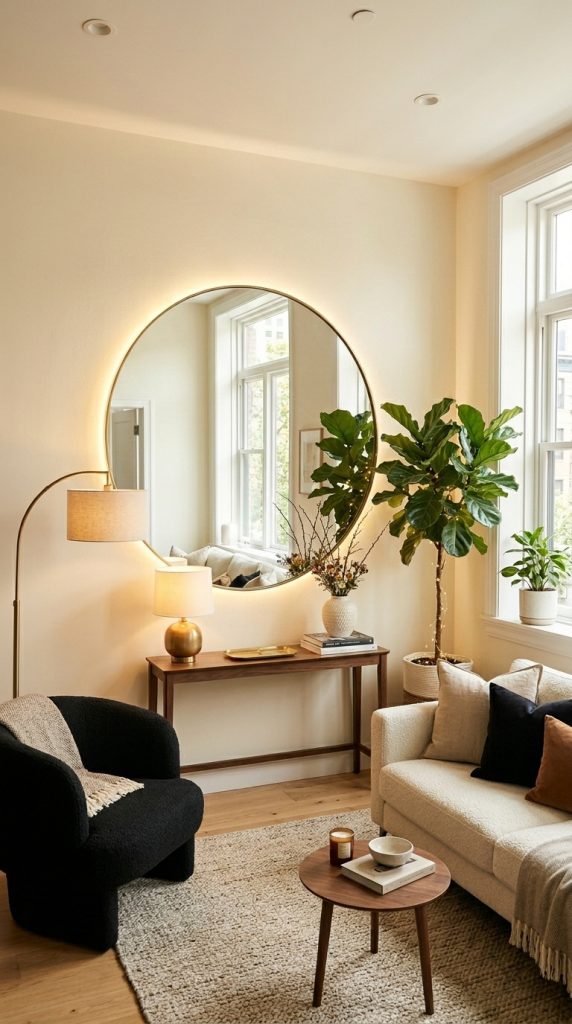
Mirrors are one of the most practical decorating tools for apartment living. They do not require much floor space, and a well-positioned mirror can reflect natural light and make a compact room feel visually larger.
Instead of covering the walls with several small mirrors, consider using one substantial mirror as a focal point.
Materials and Things You Need
- Large wall mirror
- Floor mirror
- Console table
- Small lamp
- Decorative vase
- Indoor plant
- Appropriate hanging hardware
Step-by-Step Decorating Process
Begin by identifying where the apartment feels darkest or smallest.
Look for a position where a mirror can reflect natural light.
If you have a large window, place the mirror where it can capture and reflect some of that brightness.
A floor mirror can work well in a bedroom or living room.
A round mirror above a narrow console can create an elegant entryway.
Keep the surrounding decoration relatively simple.
Do not use a mirror to reflect clutter.
Instead, make sure it reflects something attractive such as a window, plant, artwork, or architectural feature.
Mirrors are particularly useful in small apartments because they create the perception of additional depth without taking up much visual space.
Budget Strategy
You do not necessarily need a designer mirror.
Look for secondhand frames, affordable mirrors, or simple designs that can be elevated through their placement.
The size and positioning often matter more than the price.
A simple oversized mirror can create a much greater impact than several expensive miniature mirrors.
3. Decorate With Removable Wallpaper
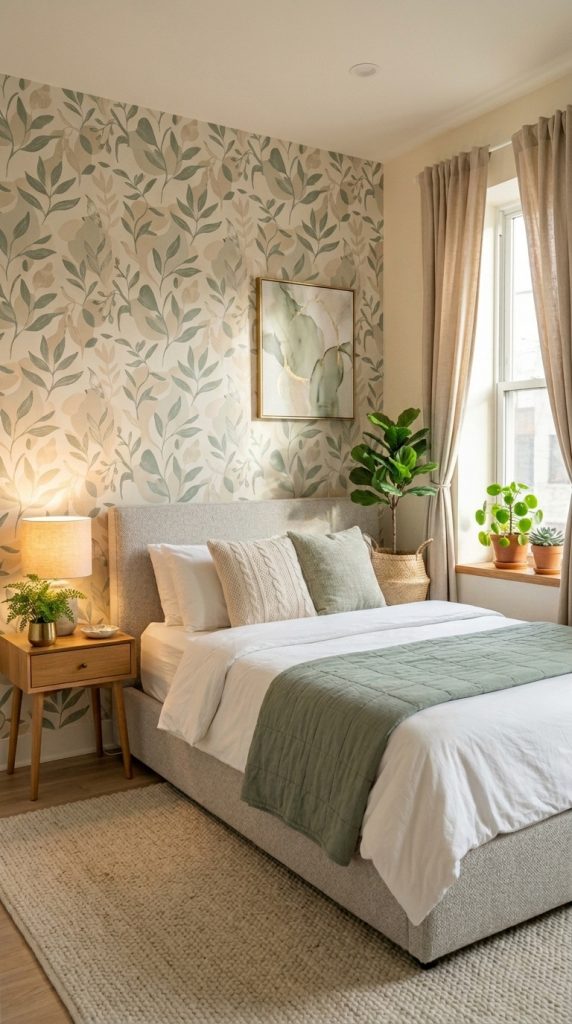
Blank apartment walls can make a rental feel temporary. Removable wallpaper offers a way to introduce color, pattern, and personality without committing to permanent renovations.
Current renter-focused decorating resources continue to highlight temporary wallpaper and similar reversible treatments as practical ways to personalize rental spaces.
Materials and Things You Need
- Removable wallpaper
- Measuring tape
- Level
- Squeegee
- Cleaning cloth
- Utility knife
- Optional smoothing tool
Step-by-Step Decorating Process
Measure the wall carefully.
Choose a pattern that complements the furniture already in the room.
Clean the wall according to the product instructions.
Begin at the recommended starting point.
Apply the wallpaper gradually.
Smooth out air bubbles as you work.
Trim edges carefully.
Step back frequently to check alignment.
For a sophisticated apartment, consider subtle botanical patterns, linen-inspired textures, delicate geometric designs, or soft abstract patterns.
Rather than wallpapering an entire apartment, create one focal wall behind a bed, sofa, dining table, or desk.
This gives you a significant visual transformation while limiting cost.
Important Rental Consideration
Always check your lease before applying anything to the walls.
Follow the manufacturer’s installation and removal instructions, and test the product in an inconspicuous location if recommended. Rental surfaces can vary considerably.
The objective is to create personality without sacrificing the ability to restore the space later.
4. Upgrade Your Apartment With Better Lighting

Lighting is one of the most powerful ways to improve an apartment without spending heavily.
A room with basic furniture can look beautiful under thoughtful lighting, while a well-decorated room can feel uncomfortable when illuminated only by harsh overhead fixtures.
The solution is layered lighting.
Materials and Things You Need
- Table lamp
- Floor lamp
- Warm light bulbs
- Accent lamp
- Wall light where permitted
- LED strip lighting
- Decorative lantern
Step-by-Step Decorating Process
Begin by turning on the main overhead fixture and identifying areas that still feel dark.
Add a table lamp to a console or side table.
Place a floor lamp beside a sofa or reading chair.
Add under-cabinet lighting in the kitchen if appropriate.
Use warm-toned bulbs suitable for the fixture and intended use.
Keep brighter task lighting in areas where you need it, such as a desk or kitchen workspace.
Use softer ambient lighting in living and bedroom areas.
Layered lighting is particularly valuable in small apartments because multiple smaller sources can brighten the space while creating depth. (Inspired Dreamer)
Budget Tip
You do not need to replace every fixture.
Start with the two areas where lighting bothers you most.
A single floor lamp and one attractive table lamp may make a larger difference than several inexpensive decorative objects.
5. Create a Stylish Gallery Wall on a Budget
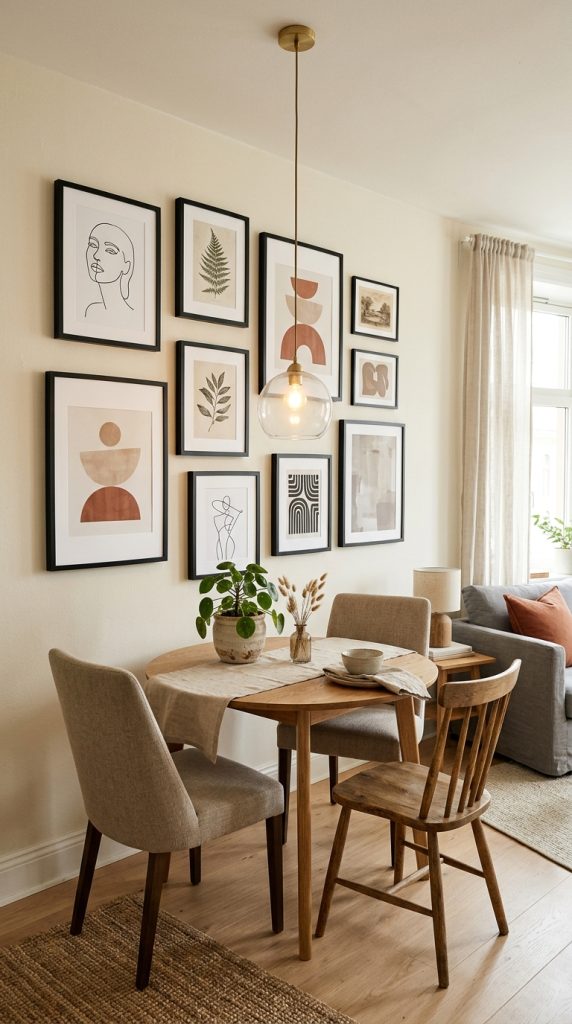
Artwork can make an apartment feel personal and complete, but decorating every wall with expensive originals is unnecessary.
A thoughtfully designed gallery wall can provide the same sense of personality for much less.
Materials and Things You Need
- Affordable prints
- Photographs
- Frames
- Painter’s tape
- Measuring tape
- Hanging hardware
- Optional mat boards
Step-by-Step Decorating Process
Choose a visual theme.
You might use botanical prints, black-and-white photography, abstract artwork, family photographs, or a combination of related images.
Select frames that coordinate.
Lay the pieces on the floor before hanging them.
Experiment with spacing.
Use painter’s tape to mark positions.
Install the artwork carefully.
Keep the overall arrangement balanced.
A gallery wall should not necessarily fill every inch of the wall.
Leaving appropriate negative space can make the collection feel more sophisticated.
Making Affordable Artwork Look Better
Frame quality can have a major visual effect.
Even inexpensive prints can look polished when placed inside well-proportioned frames.
You can also use larger artwork instead of many tiny prints.
One substantial piece can anchor a wall and create a cleaner appearance.
The most important goal is to make the artwork feel personal.
Your apartment should tell your story rather than simply reproducing a generic trend.
6. Add Affordable Plants for a Fresh Apartment Makeover
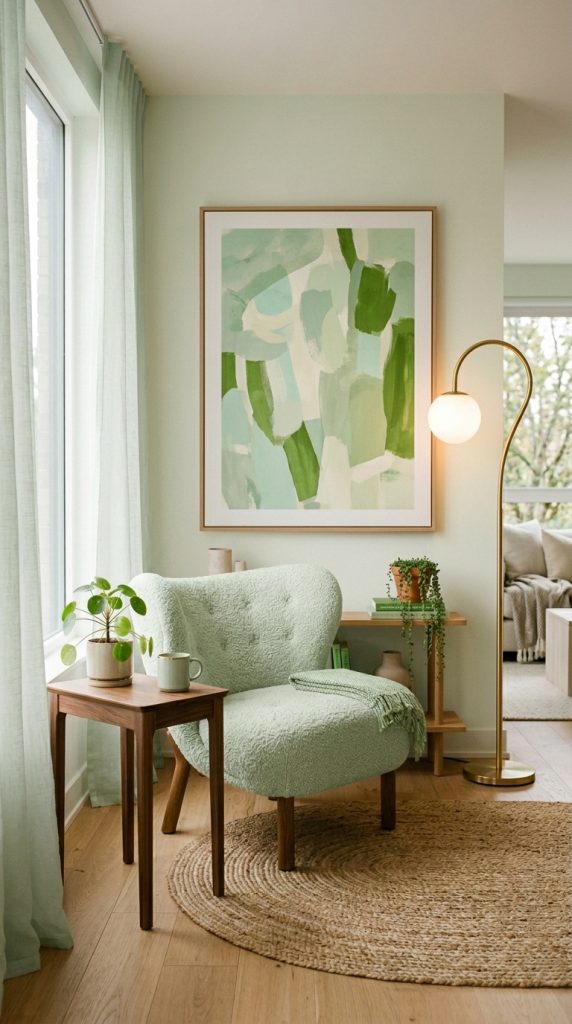
Plants are an easy way to introduce life, color, and texture into an apartment.
They can also help fill awkward corners without requiring large furniture.
Materials and Things You Need
- Indoor plants
- Planters
- Plant stands
- Woven baskets
- Potting supplies
- Small decorative pots
Step-by-Step Decorating Process
First, determine how much natural light each area receives.
Choose plants appropriate for those conditions.
Place a taller plant in an empty corner.
Use smaller plants on shelves, desks, or counters.
Place plants at different heights.
Use baskets or ceramic planters to coordinate them with the rest of the interior.
Avoid putting plants everywhere.
Instead, create a few intentional green moments.
Creating a Designer-Like Appearance
Use a mixture of shapes.
A tall plant with long leaves can contrast beautifully with a smaller rounded plant.
Natural wood, woven baskets, and ceramic planters can complement the greenery.
Plants can soften hard lines and make an apartment feel less sterile.
If you choose artificial plants, prioritize realistic-looking pieces and use them selectively.
7. Transform a Rental Kitchen With Temporary Decor
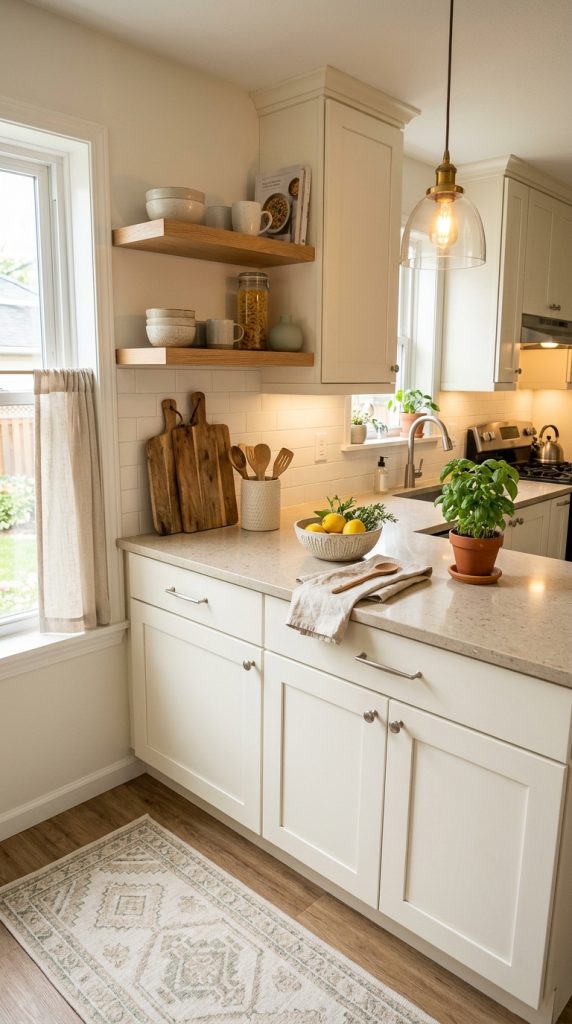
A rental kitchen may have cabinets and countertops that cannot be changed, but that does not mean it has to remain visually boring.
Countertop styling can make a major difference.
Materials and Things You Need
- Wooden cutting boards
- Ceramic utensil container
- Fruit bowl
- Small plant
- Decorative tray
- Linen towels
- Storage jars
- Ceramic bowl
Step-by-Step Decorating Process
Begin by removing unnecessary appliances and products from the counters.
Group everyday items together.
Lean two or three wooden cutting boards against the backsplash.
Add a ceramic container for utensils.
Place a fruit bowl in a convenient location.
Introduce one small plant.
Use a coordinated kitchen towel.
Put small items inside a decorative tray.
The kitchen should remain practical.
Do not cover every available surface with decoration.
Natural materials such as wood and ceramic can make a basic kitchen feel warmer and more sophisticated.
If you are renting, prioritize removable solutions for any larger changes and verify the rules before installing them.
8. Create a Budget-Friendly Bedroom Makeover

The bedroom can often be transformed without replacing the bed or major furniture.
Focus on the elements you see most: bedding, lighting, curtains, rug, and the wall behind the bed.
Materials and Things You Need
- Duvet cover
- Pillow covers
- Throw blanket
- Bedside lamps
- Curtains
- Area rug
- Artwork
- Decorative basket
Step-by-Step Decorating Process
Choose a simple color palette.
Replace mismatched bedding with coordinated pieces.
Layer pillows rather than using only one pillow per side.
Add a textured blanket.
Use warm bedside lamps.
Install or hang curtains appropriately.
Add a rug beside or underneath the bed where space permits.
Place one meaningful artwork above the bed or on a nearby wall.
The bedroom should feel calm rather than overcrowded.
Budget Tip
Changing the duvet cover can have more visual impact than buying several small decorative accessories.
Choose a neutral foundation and change accent textiles seasonally.
This allows you to refresh the room without replacing major pieces.
9. Use Secondhand Furniture for a Designer Look

Secondhand furniture can help you create a distinctive apartment without spending heavily.
Look for pieces with good proportions and solid construction rather than focusing only on appearance.
Materials and Things You Need
- Secondhand furniture
- Cleaning supplies
- Sandpaper if appropriate
- Paint or finish
- New hardware
- Screwdriver
- Protective coating where suitable
Step-by-Step Decorating Process
Search for solid tables, dressers, consoles, chairs, and bookshelves.
Check dimensions before purchasing.
Inspect the structure.
Clean the piece thoroughly.
Repair minor problems.
Replace outdated handles if appropriate.
Refinish or paint according to the material and desired result.
Style it with modern accessories.
A vintage sideboard can look beautiful against contemporary artwork.
An older wooden table can add warmth to an otherwise modern apartment.
Why This Works
Matching furniture sets can sometimes make an apartment look generic.
A mixture of old and new pieces creates a more collected appearance.
You can save money while also gaining furniture with more character.
10. Turn a Tiny Balcony Into a Cozy Outdoor Retreat
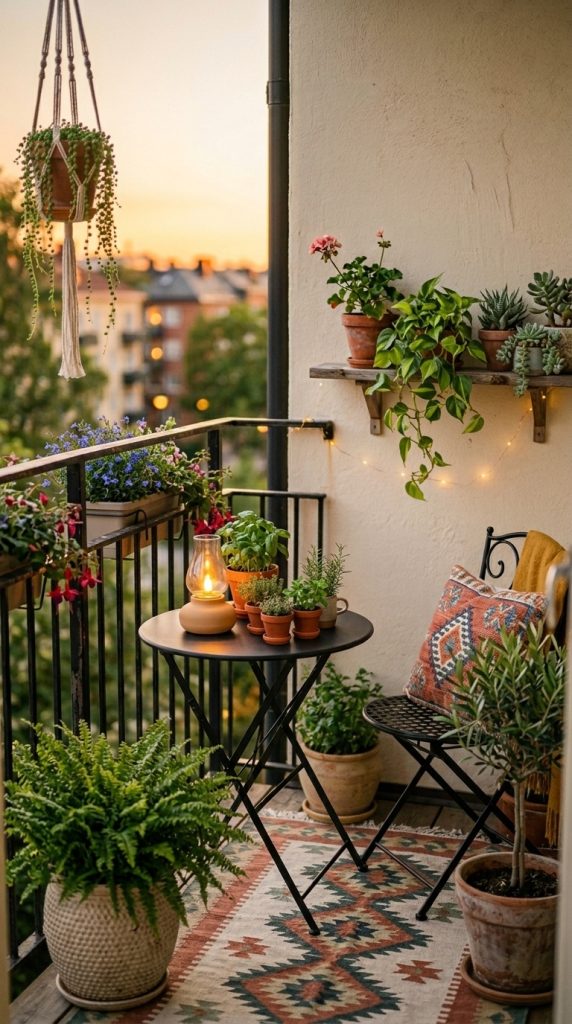
A small balcony can become one of the most enjoyable areas of an apartment.
You do not need a full outdoor furniture set.
Choose pieces based on the actual dimensions of the space.
Materials and Things You Need
- Compact outdoor chair
- Folding table
- Outdoor rug
- Cushions
- Plants
- Lanterns
- Outdoor lighting
- Storage basket
Step-by-Step Decorating Process
Clean the balcony thoroughly.
Measure the usable floor area.
Add a weather-appropriate rug.
Place one compact chair or bench.
Add a small folding table.
Introduce plants at different heights.
Use outdoor cushions for comfort.
Add appropriate lighting.
Keep enough open floor space for movement.
Vertical plants can save valuable floor area.
Rail planters, wall-mounted planters, or tall containers can introduce greenery without overcrowding the balcony.
11. Create a Stylish Entryway in a Tiny Apartment
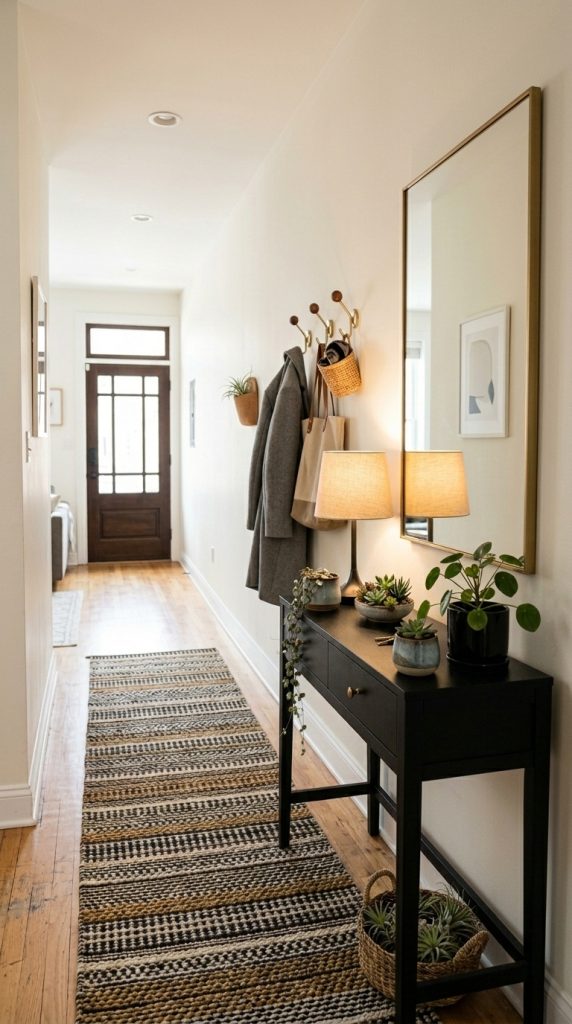
The entryway may be small, but it has a significant effect on how the apartment feels.
An organized entrance creates a sense of order immediately.
Materials and Things You Need
- Wall hooks
- Small mirror
- Narrow shelf
- Basket
- Runner
- Wall organizer
- Small tray
Step-by-Step Decorating Process
Install renter-appropriate hooks where permitted.
Add a narrow shelf above them.
Place a mirror nearby.
Use a basket for shoes, scarves, or bags.
Add a narrow runner if space allows.
Keep the floor clear.
A mirror can make the entrance feel larger.
Vertical storage keeps everyday items organized without consuming much floor space.
This is especially useful in apartments where every square foot matters.
12. Create a Cozy Reading Corner Without Spending Much

An unused corner can become a relaxing retreat without requiring expensive furniture.
Start with a comfortable chair you already own.
Materials and Things You Need
- Chair
- Floor lamp
- Side table
- Throw blanket
- Cushion
- Books
- Small plant
- Small rug
Step-by-Step Decorating Process
Choose a corner with reasonable natural light.
Position the chair comfortably.
Add a small side table.
Place a floor lamp nearby.
Add a cushion and throw.
Create a small stack of books.
Add a plant.
Use a small rug to visually define the area.
This creates a dedicated zone without requiring construction or major furniture purchases.
The corner can become a reading space, coffee area, journaling spot, or quiet place to relax.
13. Style Open Shelves Without Creating Clutter
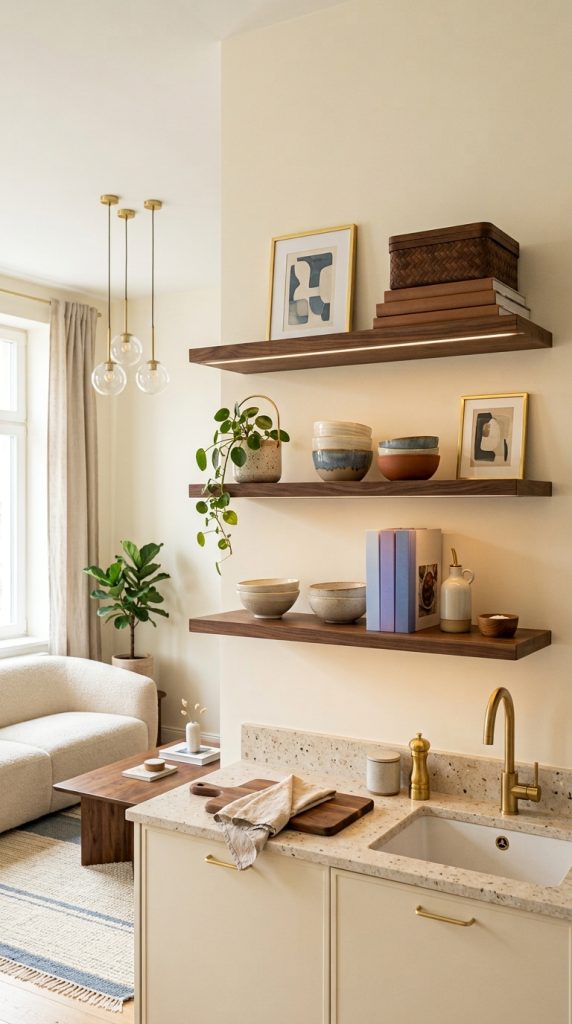
Open shelving can provide both storage and decoration, but it needs careful editing.
Begin by removing everything.
Then rebuild the shelves deliberately.
Materials and Things You Need
- Books
- Ceramic vases
- Small plants
- Baskets
- Artwork
- Decorative bowls
- Sculptural objects
Step-by-Step Decorating Process
Place the largest objects first.
Add groups of books.
Mix horizontal and vertical arrangements.
Introduce plants.
Add ceramic or wooden objects.
Leave empty spaces between groups.
Avoid making every shelf identical.
The goal is visual rhythm.
For example, one shelf can contain books, another can contain a woven basket, and another can feature a plant and ceramic vase.
This combination keeps the shelves useful while making them decorative.
14. Use Textiles to Change Your Apartment for Every Season
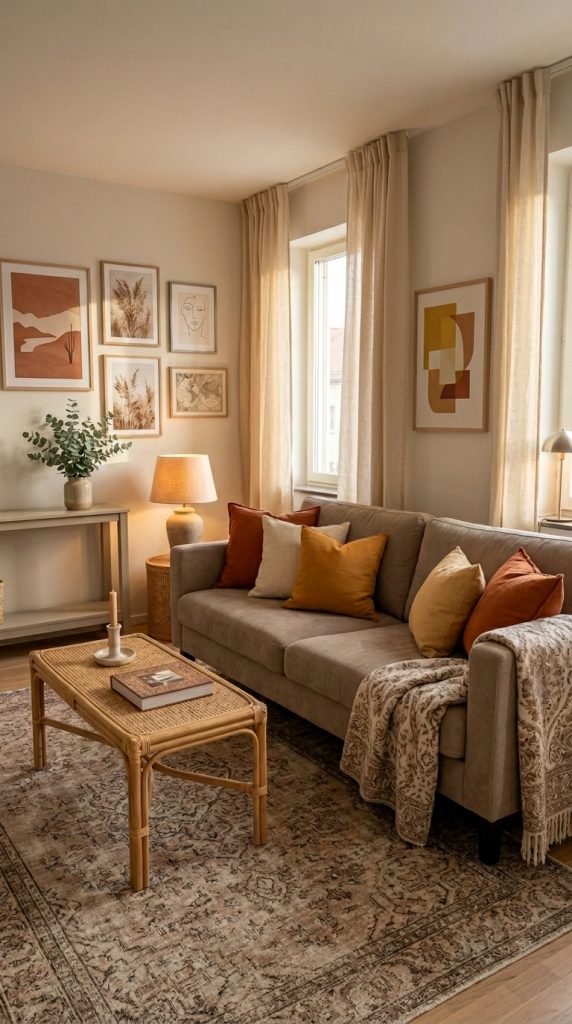
Textiles are among the easiest things to change.
They can completely alter the appearance of a room without changing furniture.
Materials and Things You Need
- Cushion covers
- Throw blankets
- Bedding
- Curtains
- Rugs
- Table linens
- Storage bags
Step-by-Step Decorating Process
Choose neutral major furniture.
Store seasonal textiles when they are not being used.
Use lighter colors and fabrics during warmer months.
Introduce deeper colors and heavier textures during fall and winter.
Change cushion covers rather than purchasing new cushions.
Use throws to introduce seasonal colors.
Switch bedding when appropriate.
The advantage is that textiles are relatively easy to store.
A neutral apartment can become completely different simply by changing its textile layers.
15. Create a Luxury Apartment Look With a Simple Color Palette
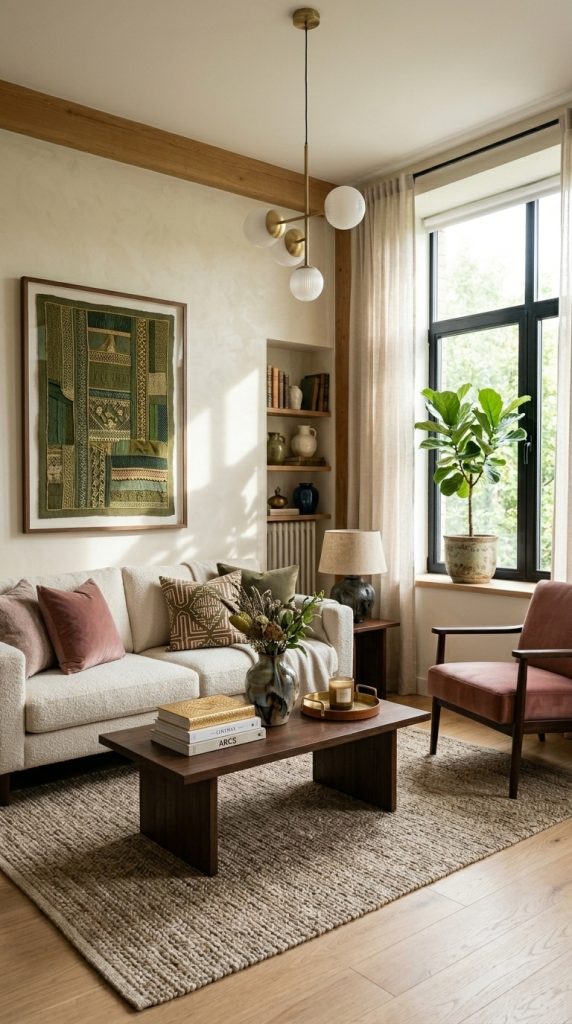
A cohesive color palette is perhaps the most powerful finishing technique.
Even inexpensive furniture can look intentional when the colors work together.
Materials and Things You Need
- Neutral curtains
- Cushions
- Area rug
- Artwork
- Decorative objects
- Lamps
- Plants
- Baskets
- Textiles
Step-by-Step Decorating Process
Begin by identifying the dominant colors already present.
Choose one primary neutral.
Add two or three accent colors.
Repeat those colors throughout the apartment.
Use natural materials to add texture.
Remove pieces that clash.
Keep large furniture relatively neutral when possible.
For example, you could combine cream, walnut, olive, and muted terracotta.
The living room might use cream and olive.
The bedroom could emphasize cream and walnut.
The kitchen could introduce terracotta through textiles or artwork.
The colors do not need to appear in identical proportions.
They simply need to feel connected.
The Final Editing Step
Walk through your apartment after everything has been arranged.
Look for objects that feel unnecessary.
Remove one or two items from crowded surfaces.
Check that furniture has enough breathing room.
Make sure walking paths remain clear.
Confirm that every room has a focal point.
The result should feel coordinated rather than overly decorated.
Conclusion
Creating a beautiful apartment on a budget is not about finding the cheapest version of every possible decoration. It is about deciding where your money, creativity, and attention will make the greatest difference.
Start with the basics: layout, scale, lighting, color, texture, and storage.
Before buying furniture, measure the room.
Before buying accessories, declutter.
Before adding artwork, decide what the wall needs.
Before installing renter-friendly products, check your lease and the manufacturer’s instructions.
These simple steps can prevent expensive mistakes.
Use mirrors to create depth.
Use rugs to define areas.
Use curtains to soften windows.
Use plants to introduce life.
Use textiles to create comfort.
Use lighting to establish atmosphere.
Use secondhand furniture to add character.
Use removable decorating techniques when you need flexibility.
Most importantly, remember that small apartments require thoughtful editing. Every item occupies valuable visual and physical space. A successful apartment is not one that contains the most furniture or decorations; it is one where every important element has room to work.
Current design guidance for small spaces consistently emphasizes appropriate scale, mirrors, layered lighting, rugs, vertical storage, and decluttering because these changes can improve both the visual perception and practical function of compact rooms. (Real Simple)
You also do not need to complete all 15 ideas at once.
Start with the room that bothers you most.
If your living room feels unfinished, begin with the rug, seating arrangement, lighting, and textiles.
If your bedroom feels plain, focus on bedding, curtains, lamps, and one strong artwork.
If your kitchen feels cluttered, clear the counters and introduce coordinated functional accessories.
If your entryway is chaotic, add vertical storage and a small mirror.
If your balcony is unused, create one comfortable seating area rather than trying to furnish the entire space.
The most successful budget decorating projects are gradual.
You discover what works.
You move furniture.
You reuse what you already own.
You buy only what is missing.
You edit the room.
Then you move on to the next area.
This approach is not only easier on your budget; it also produces a more personal result.
A home decorated entirely in one shopping trip can sometimes feel generic. A home created gradually can reflect your personality, experiences, preferences, and lifestyle.
Do not be afraid to mix affordable pieces with secondhand finds, inherited furniture, DIY projects, and a few carefully selected investments. You do not need every item to come from the same store or match perfectly.
In fact, variety can make an apartment feel more sophisticated.
Combine smooth ceramic with rough wood.
Mix soft textiles with metal.
Pair modern furniture with vintage accessories.
Use greenery against neutral walls.
Add personal photographs beside professionally printed artwork.
These contrasts create depth and character.
Finally, remember that decorating on a budget should never mean sacrificing comfort. Your apartment should be a place where you can relax, entertain, work, sleep, and enjoy everyday life.
The best budget-friendly apartment is not necessarily the one with the most impressive decorations.
It is the one that feels organized without being sterile, stylish without being excessive, comfortable without being cluttered, and personal without being chaotic.
With these 15 ideas, you can gradually transform even a basic apartment into a beautiful home that feels thoughtfully designed without requiring a huge decorating budget.
Leave a Reply