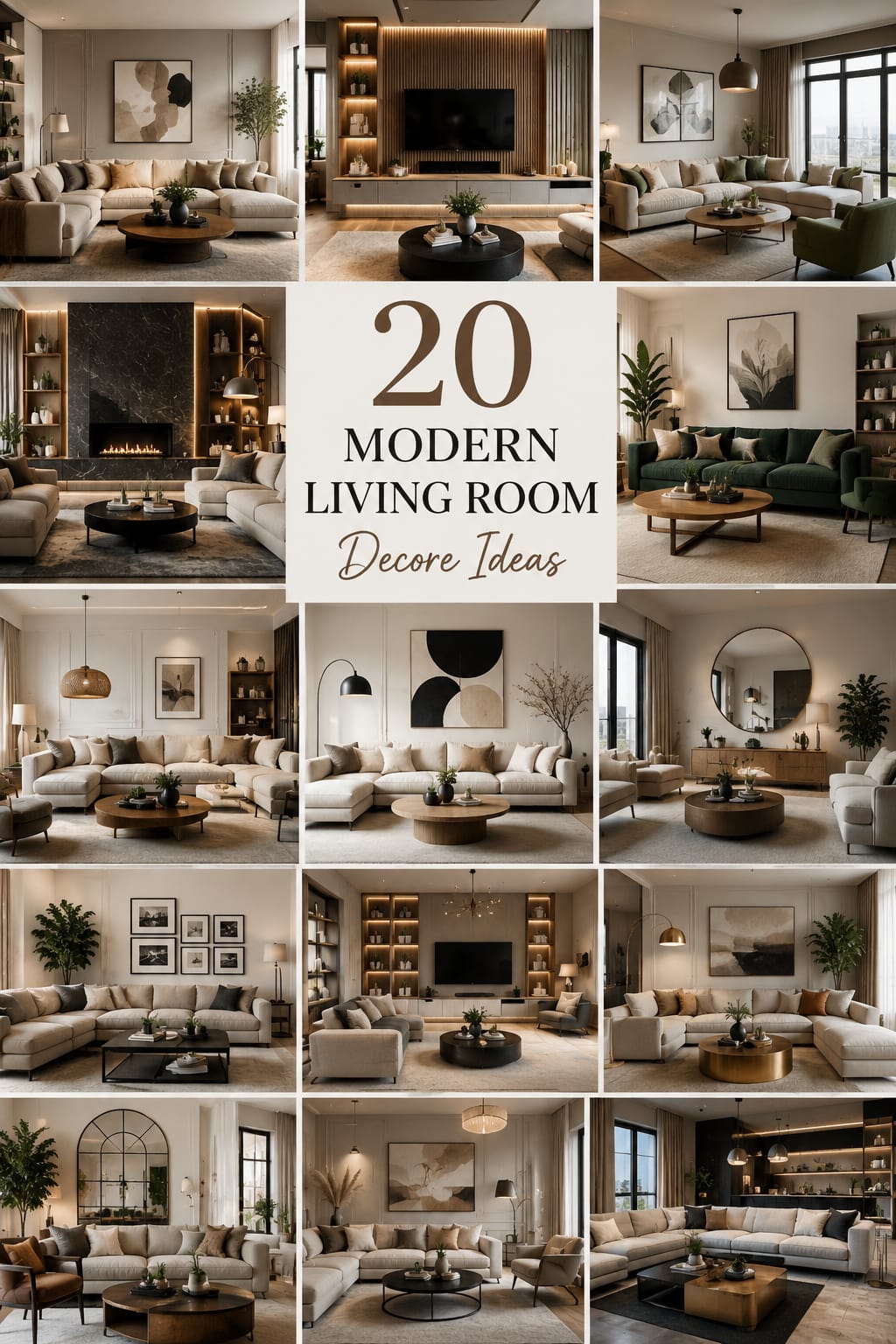
The modern living room has become much more than a place to relax after a long day.The living room is often the heart of a home. It is where family members gather after a long day, where guests are welcomed, where conversations happen, and where relaxing moments are enjoyed. Because of this, creating a beautiful and comfortable living room does not simply mean buying expensive furniture or following every decorating trend. The best living room decor combines comfort, personality, functionality, and visual appeal in a way that makes the space feel inviting. Today, homeowners are increasingly looking for living room decor ideas that are stylish but also practical, affordable, easy to recreate, and suitable for everyday life. This has made thoughtful living room design one of the most popular home decor topics on Pinterest.
Whether you have a small apartment living room, a spacious family room, a modern open-plan space, or a simple room that needs a refresh, there are countless ways to transform it. A few carefully selected changes can make a surprisingly big difference. Updating cushions, adding layered lighting, rearranging furniture, introducing greenery, creating a gallery wall, or choosing a beautiful area rug can completely change the atmosphere without requiring a full renovation.
One of the biggest advantages of decorating a living room is that you can work gradually. You do not need to purchase everything at once. Start with the largest pieces, such as the sofa and coffee table, then build the room around them. Add curtains, rugs, cushions, artwork, plants, lighting, and decorative accessories as your budget allows. This approach makes decorating less overwhelming and allows you to discover what actually works in your space.
Modern living room decor is also moving toward warm, comfortable interiors rather than rooms that look overly formal or staged. Soft neutral colors, natural materials, textured fabrics, warm wood tones, handmade-looking accessories, and indoor plants are popular because they make rooms feel relaxed and welcoming. At the same time, homeowners who prefer contemporary interiors can incorporate clean lines, simple furniture, minimalist accessories, and carefully selected statement pieces.
Color is another important part of living room decorating. A neutral room does not have to be boring. Beige, cream, white, taupe, warm gray, and soft brown can create an elegant foundation that can be enhanced with texture and small accents. On the other hand, adding colors such as olive green, terracotta, navy, dusty blue, muted yellow, or deep brown can give a room more personality. Even if you prefer a simple palette, colorful cushions, artwork, books, or decorative objects can introduce visual interest.
Small living rooms require a slightly different approach. Too many large pieces can make the space feel crowded, while undersized furniture may make the room look disconnected. Choosing furniture that fits the room, using mirrors strategically, keeping pathways clear, and selecting multifunctional pieces can help maximize the available space. Vertical storage and wall decor can also draw attention upward, making the room feel more spacious.
Another important trend is personalization. Pinterest users are increasingly interested in rooms that look lived-in rather than perfectly identical to showroom interiors. Family photographs, favorite books, travel souvenirs, handmade pieces, artwork, plants, and meaningful objects can make a living room feel unique. The goal is not simply to copy another person’s room but to use inspiration to create a space that reflects your own lifestyle.
Budget-friendly living room decorating is equally valuable. You can refresh a room by changing the arrangement of furniture, rearranging existing accessories, creating DIY artwork, adding inexpensive textiles, updating lampshades, or introducing plants. Shopping your own home can be surprisingly effective. A vase from another room, a chair moved from the bedroom, or artwork relocated to another wall can create a new look without spending anything.
The following living room decor ideas are designed to provide inspiration for different styles, budgets, room sizes, and decorating goals. Each concept can be adapted to your personal taste. You can use one idea as the foundation of your room or combine several ideas to create a layered and personalized interior.
These ideas are also particularly suitable for Pinterest because they focus on visually appealing transformations, practical decorating solutions, and achievable styling techniques. From cozy neutral interiors to clever small-space solutions, these living room decor ideas can help turn an ordinary room into a comfortable and beautiful part of your home.
Idea 1: Create a Cozy Neutral Living Room
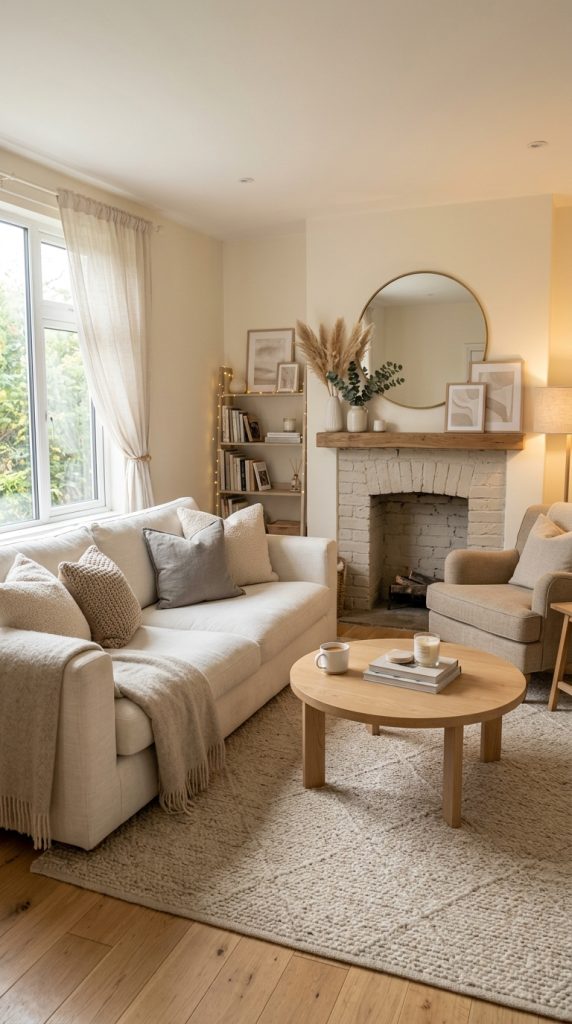
A cozy neutral living room is one of the easiest decorating styles to achieve because neutral colors create a calm foundation that works with many furniture styles. Instead of relying on bold colors, this approach uses cream, beige, taupe, warm white, soft brown, and gentle gray to create a peaceful atmosphere.
The beauty of a neutral living room is that it does not need to look plain. Texture becomes the secret to making the space interesting. A soft area rug, knitted throw, linen curtains, woven baskets, textured cushions, wooden furniture, and ceramic accessories can add layers without introducing too many colors.
This style works especially well for homeowners who want a timeless interior that can easily be updated. Seasonal changes can be introduced through small accessories rather than replacing major furniture pieces.
A neutral living room is also highly Pinterest-friendly because the soft palette photographs beautifully and creates an uncluttered visual appearance. It can work with modern, farmhouse, Scandinavian, minimalist, or transitional decorating styles.
How to Create the Look
Start by selecting a simple color palette. Choose two or three primary neutral shades rather than using every neutral color available. For example, combine warm white, beige, and light brown.
Next, evaluate the largest furniture pieces. A neutral sofa can become the central foundation of the room, but you can also work around an existing darker sofa by adding lighter textiles.
Add an area rug underneath the seating arrangement. Ideally, the rug should be large enough for at least the front legs of the main furniture pieces to sit on it.
Layer cushions in different textures. Combine linen, cotton, boucle, knitted, or woven fabrics. Keep the colors similar while varying the patterns and textures.
Add a soft throw over the sofa. Do not place everything perfectly. A casually folded or draped blanket can make the room feel more relaxed.
Introduce natural wood through a coffee table, side table, shelves, or decorative trays. Wood prevents a neutral room from feeling cold.
Finally, add warm lighting. Table lamps, floor lamps, and warm-toned bulbs can create a cozy evening atmosphere.
Materials and Things You Can Use
- Beige or cream sofa
- Neutral cushions
- Textured throw blankets
- Large area rug
- Wooden coffee table
- Woven baskets
- Linen curtains
- Ceramic vases
- Neutral artwork
- Table or floor lamps
- Indoor plants
- Decorative books
Why This Idea Works
Neutral interiors are versatile and easy to update. If you become tired of the look, you can introduce a new accent color through cushions, artwork, or accessories without changing the entire room.
For renters, this is especially useful because many improvements can be made without painting walls or making permanent changes.
The most important rule is to avoid making every object exactly the same shade. A beautiful neutral living room usually contains several shades and textures that create depth.
Idea 2: Design a Warm and Modern Living Room
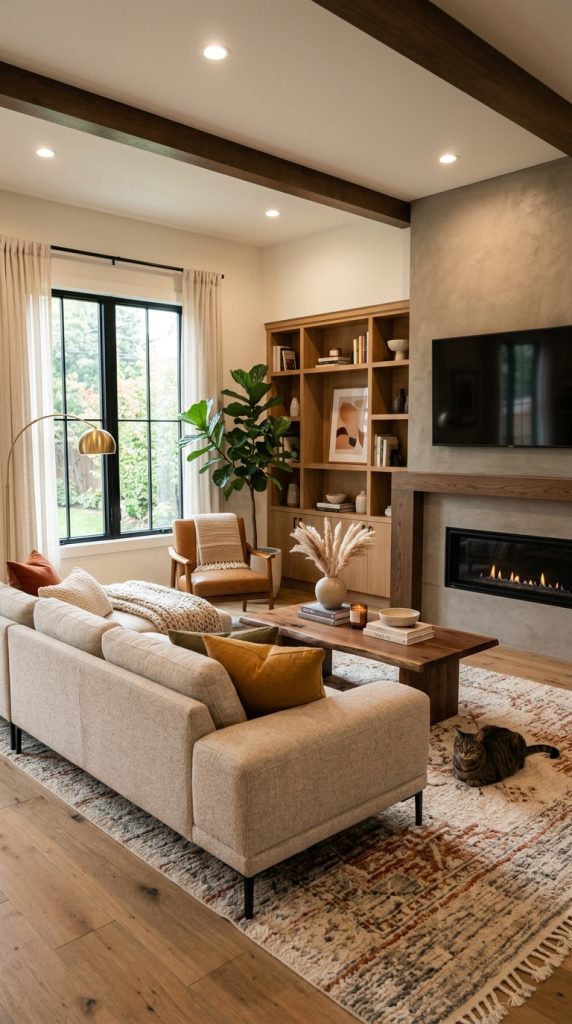
A warm modern living room combines contemporary design with the comfort people expect from a family space. Instead of creating an extremely minimal room filled with sharp lines and empty surfaces, warm modern decorating uses clean furniture shapes alongside natural materials, soft fabrics, and welcoming colors.
This style is perfect for people who like modern interiors but do not want their living room to feel cold or impersonal. The key is balance.
Begin with a simple foundation. A streamlined sofa, uncomplicated coffee table, and modern media unit can provide the contemporary structure. Then soften the room with rugs, cushions, curtains, plants, and warm lighting.
Wood is particularly useful in this style. A wooden coffee table, floating shelf, console, or accent chair can introduce natural warmth.
How to Create the Look
Choose a restrained color palette. Warm white, beige, charcoal, brown, and muted green are excellent choices.
Select furniture with clean silhouettes. Avoid filling the room with too many decorative pieces.
Add one large rug to visually connect the furniture. A simple textured rug is often more effective than several small rugs.
Introduce wood through furniture or accessories.
Use lighting at different heights. A ceiling light provides general illumination, while floor lamps and table lamps provide softer pools of light.
Add greenery to break up the neutral colors. One large plant can become a focal point, while smaller plants can be placed on shelves or tables.
For artwork, choose one large statement piece instead of filling every wall with small decorations.
Materials and Things You Can Use
- Modern sofa
- Wood coffee table
- Neutral area rug
- Floor lamp
- Table lamp
- Minimal artwork
- Decorative tray
- Indoor plants
- Textured cushions
- Curtains
- Wooden shelves
- Ceramic accessories
Styling Tips
Keep the coffee table relatively uncluttered. A tray can organize a few objects such as a candle, small vase, and decorative book.
Use repetition to make the design feel intentional. If you have warm wood on the coffee table, repeat the wood tone somewhere else in the room.
Do not use too many contrasting colors. Warm modern interiors usually depend on subtle variation rather than dramatic contrast.
This decorating idea is particularly useful for Pinterest because it combines the clean appearance of modern design with the cozy atmosphere people want in everyday homes.
Idea 3: Make a Small Living Room Feel Bigger

Small living rooms can be beautiful, functional, and comfortable when every piece of furniture is selected carefully. The goal is not to make the room completely empty. Instead, the goal is to make the available space work harder.
Furniture scale is one of the most important factors. A huge sofa may dominate a small room, while a compact sofa combined with a lightweight chair can provide enough seating without blocking movement.
Visual openness also matters. Furniture with visible legs can make more of the floor visible. Glass or slim coffee tables can reduce visual heaviness.
Mirrors can also help reflect light and create the impression of greater depth.
How to Create More Space
Start by measuring the room. Record the length and width and identify doors, windows, radiators, and other features that cannot be blocked.
Choose furniture according to those measurements rather than buying pieces simply because they look attractive.
Position the largest seating piece against an appropriate wall if the layout allows it.
Use a compact coffee table. A round table can be particularly useful because it eliminates sharp corners and improves movement around the room.
Consider nesting tables instead of one large table. They can be separated when you need additional surfaces and stacked when you need more floor space.
Mount shelves vertically to take advantage of wall space.
Use curtains that extend close to the ceiling to create a stronger sense of height.
Add a large mirror where it can reflect light or another attractive part of the room.
Materials and Things You Can Use
- Compact sofa
- Slim accent chair
- Round coffee table
- Wall shelves
- Large mirror
- Light-colored curtains
- Area rug
- Storage ottoman
- Floor lamp
- Small plants
- Floating cabinets
- Decorative baskets
Common Mistakes to Avoid
Do not push every piece of furniture against the wall simply because the room is small. Depending on the layout, slightly floating furniture can sometimes create a more intentional arrangement.
Avoid filling every surface with decorations.
Do not use multiple tiny rugs. One appropriately sized rug can make the room feel more connected.
Keep pathways open and prioritize movement.
A small living room becomes much more functional when storage and decoration are planned together. Instead of adding decorative items randomly, choose pieces that provide both beauty and usefulness.
Idea 4: Create a Cozy Living Room With Lots of Texture

If your living room feels flat or boring despite having attractive furniture, texture may be the missing element. A textured living room uses different materials and fabric finishes to create visual depth.
This decorating idea is especially effective when your color palette is simple. Instead of introducing many colors, you can create interest through soft rugs, woven baskets, knitted blankets, velvet cushions, linen curtains, wooden surfaces, ceramics, and natural fibers.
Texture also makes a room feel warmer and more comfortable.
How to Layer Texture
Begin with your sofa. Add cushions made from different materials. For example, combine a smooth cotton cushion with a woven cushion and a soft textured cushion.
Place a throw blanket across one side of the sofa.
Add an area rug with a visible weave or subtle pattern.
Introduce a wooden coffee table or side table.
Use woven baskets for storage.
Add ceramic vases and decorative objects to provide contrast against soft textiles.
Hang curtains made from linen or another fabric with visible texture.
Plants can add another natural texture through their leaves.
Materials and Things You Can Use
- Woven area rug
- Linen curtains
- Knitted throw
- Cotton cushions
- Textured cushions
- Velvet accent pillow
- Wooden furniture
- Woven baskets
- Ceramic vases
- Indoor plants
- Natural fiber accessories
- Textured artwork
Why Texture Matters
A room containing only smooth surfaces can sometimes appear visually cold. Texture creates variation and makes the eye move around the space.
The trick is to mix textures without creating chaos. Keep the color palette coordinated so the materials become the main source of interest.
For example, a beige room can contain a knitted cream blanket, woven beige cushions, a wooden coffee table, a textured rug, and a ceramic vase. The colors remain calm while the different surfaces create depth.
This is an excellent approach for people who love minimalist interiors but still want their homes to feel cozy.
Idea 5: Create a Stylish Gallery Wall

A gallery wall can transform an empty living room wall into a major focal point. It can also be one of the most personal decorating features because you can combine artwork, photographs, prints, quotes, or meaningful objects.
A gallery wall does not need to look expensive. Affordable prints can look sophisticated when they are arranged thoughtfully and placed inside coordinated frames.
How to Plan a Gallery Wall
First, decide which wall should become the focal point. The wall behind the sofa is often a natural choice.
Measure the available area.
Choose a theme or color palette. You could use black-and-white photography, botanical prints, abstract art, family photographs, or a mixture of styles.
Lay your frames on the floor before putting anything on the wall. Arrange them until you find a composition you like.
Keep spacing relatively consistent.
If you are nervous about making holes in the wall, create paper templates the same size as your frames and tape them to the wall first.
Start hanging from the center or from the largest artwork and work outward.
Materials and Things You Can Use
- Picture frames
- Art prints
- Family photographs
- Botanical prints
- Abstract artwork
- Measuring tape
- Pencil
- Level
- Wall hooks
- Paper templates
- Decorative objects
Styling Advice
Do not feel required to make every frame identical. Matching frames create a formal appearance, while mixed frames create a more collected look.
Keep at least one element consistent, such as frame color, artwork color, or theme.
A gallery wall should complement the rest of the room. If your furniture is already visually busy, choose simpler artwork.
You can also leave some negative space between the gallery wall and surrounding furniture so the display does not feel crowded.
This idea is particularly save-worthy on Pinterest because it provides both visual inspiration and a practical decorating project.
Idea 6: Add Indoor Plants for a Fresh Living Room
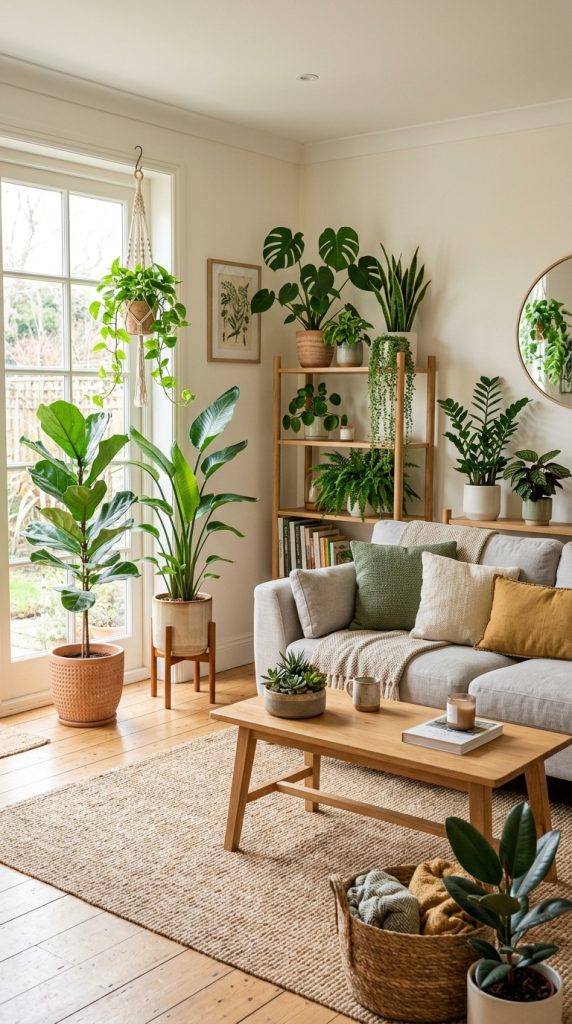
Indoor plants can instantly make a living room feel more natural and lively. They introduce organic shapes, fresh color, and visual movement into an otherwise structured interior.
You do not need dozens of plants to create a green living room. A few carefully placed plants can have a much stronger impact.
Large plants can fill empty corners, while smaller plants can decorate shelves, side tables, and windowsills.
How to Decorate With Plants
Start by identifying areas that look empty. A corner beside the sofa may be perfect for a tall plant.
Choose plants according to the amount of natural light available.
Use plant stands to create different heights.
Place a small plant on a bookshelf or console.
Use attractive planters that complement your interior.
Avoid placing plants in every corner. Leave some areas visually quiet.
Materials and Things You Can Use
- Large indoor plant
- Small tabletop plants
- Decorative planters
- Plant stands
- Woven baskets
- Plant trays
- Watering can
- Decorative shelves
- Hanging planter
- Faux greenery if necessary
Creating a Balanced Plant Display
Height is important. If every plant sits at the same level, the arrangement may look flat.
Combine a tall plant with medium-sized plants and smaller tabletop greenery.
Natural materials such as terracotta, ceramic, wood, and woven baskets work beautifully with plants.
If you travel frequently or have limited natural light, high-quality artificial plants can provide a similar decorative effect with less maintenance.
Plants are especially useful in neutral living rooms because green creates a gentle accent color without overwhelming the palette.
Idea 7: Design a Budget-Friendly Living Room Makeover

A beautiful living room does not require a huge budget. A budget-friendly makeover focuses on changing the elements that create the biggest visual impact while reusing furniture and accessories you already own.
Before buying anything, remove unnecessary objects and rearrange your existing furniture. Sometimes the room feels different simply because the layout has changed.
Step-by-Step Budget Makeover
Start by decluttering. Remove objects that no longer serve a purpose.
Clean the room thoroughly, including windows, lamps, shelves, and furniture.
Rearrange the seating area.
Move artwork from another room if it works better in the living room.
Change cushion covers rather than replacing the entire cushions.
Add a new throw blanket.
Use baskets to organize clutter.
Create simple DIY artwork using inexpensive frames and printable designs.
Add plants or branches in a simple vase.
Change lighting if the room feels dark.
Materials and Things You Can Use
- Existing furniture
- Cushion covers
- Throw blanket
- Affordable area rug
- Baskets
- DIY artwork
- Frames
- Decorative vase
- Plants
- Lamps
- Candles
- Decorative books
- Trays
Where to Spend and Where to Save
Spend more carefully on pieces you use every day, such as a sofa or durable rug.
Save money on small accessories because they can easily be changed.
You can also shop secondhand for wooden tables, chairs, mirrors, and decorative objects.
A cohesive color palette makes inexpensive pieces look more intentional. Instead of buying many random decorations, choose a few pieces that work together.
The best budget makeover is not necessarily the one with the cheapest products. It is the one that produces the biggest improvement without unnecessary spending.
Idea 8: Create a Modern Farmhouse Living Room

Modern farmhouse decor combines rustic warmth with a cleaner contemporary appearance. It is ideal for people who enjoy natural materials, comfortable furniture, neutral colors, and casual decorating.
Unlike heavily themed rustic rooms, modern farmhouse interiors do not need to contain every traditional farmhouse element. A few carefully selected details are enough.
How to Create the Style
Start with a neutral base. White, cream, beige, gray, and brown work well.
Introduce wood through a coffee table, console, shelves, or decorative beams where appropriate.
Choose comfortable seating with simple lines.
Add woven baskets for storage.
Use linen or cotton textiles.
Add a few vintage-inspired accessories without overcrowding the room.
Black metal accents can provide contrast and make the room feel more contemporary.
Materials and Things You Can Use
- Neutral sofa
- Wooden coffee table
- Woven baskets
- Linen cushions
- Cotton throw
- Black metal lamp
- Neutral rug
- Ceramic vase
- Wooden shelves
- Vintage-style artwork
- Indoor plants
- Rustic decorative tray
How to Keep It Modern
The biggest mistake is using too many rustic accessories. If every object looks distressed or vintage, the room can become overly themed.
Instead, combine one rustic element with several modern pieces.
For example, pair a reclaimed-looking wooden coffee table with a streamlined sofa, simple artwork, contemporary lighting, and modern cushions.
Keep decorative objects limited and intentional.
Modern farmhouse living rooms should feel comfortable and welcoming rather than like a themed display.
Idea 9: Create an Elegant Living Room With Simple Decor
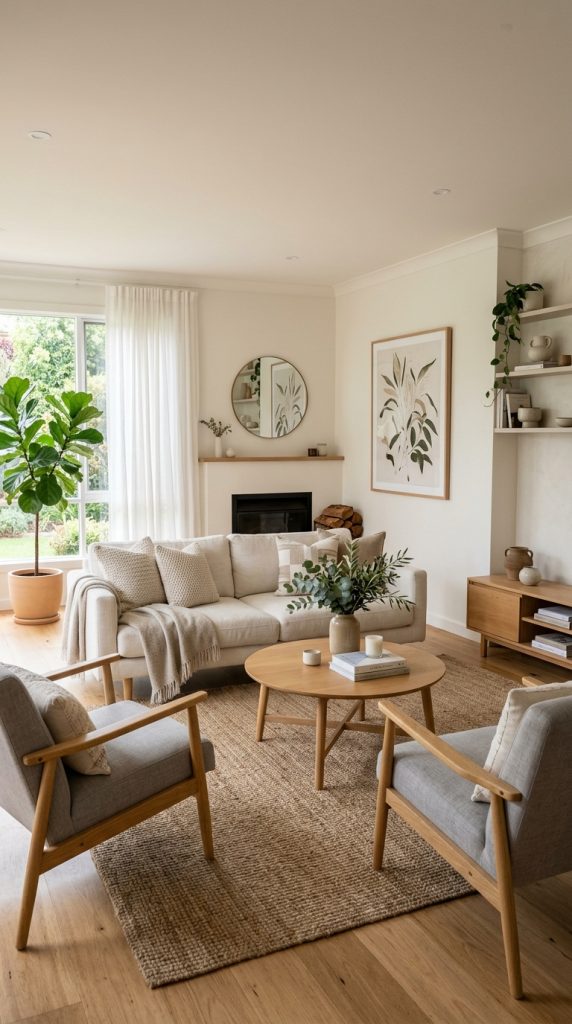
Elegant living room decor does not require expensive furniture. Elegance often comes from proportion, simplicity, consistency, and careful styling.
A room can look luxurious while using relatively simple objects if they are arranged thoughtfully.
Start with a controlled color palette. Cream, taupe, warm white, soft gray, brown, and black can create a sophisticated foundation.
How to Create an Elegant Look
Choose furniture with balanced proportions.
Use one large area rug to connect the seating arrangement.
Select curtains that reach close to the floor.
Add a statement mirror or large artwork.
Use layered lighting rather than relying only on a ceiling fixture.
Keep surfaces relatively uncluttered.
Use decorative trays to group small objects.
Choose accessories with interesting shapes or finishes rather than purchasing many inexpensive decorations.
Materials and Things You Can Use
- Neutral sofa
- Elegant armchair
- Large area rug
- Floor-length curtains
- Statement mirror
- Table lamps
- Floor lamp
- Decorative tray
- Ceramic vase
- Coffee table books
- Minimal artwork
- Metallic or glass accents
The Secret to Elegant Styling
Elegance is strongly connected to negative space. Empty space allows important objects to stand out.
Instead of filling the coffee table with ten accessories, choose three or four.
A vase, decorative book, and small tray may be enough.
Use symmetry when appropriate. Matching lamps on either side of a console or sofa can create a polished appearance.
However, avoid making the entire room perfectly symmetrical if you prefer a relaxed atmosphere. A few asymmetrical elements can make the room feel more natural.
Elegant living rooms are particularly suitable for Pinterest because they photograph beautifully and provide inspiration for both everyday decorating and special occasions.
Idea 10: Create a Cozy Boho Living Room
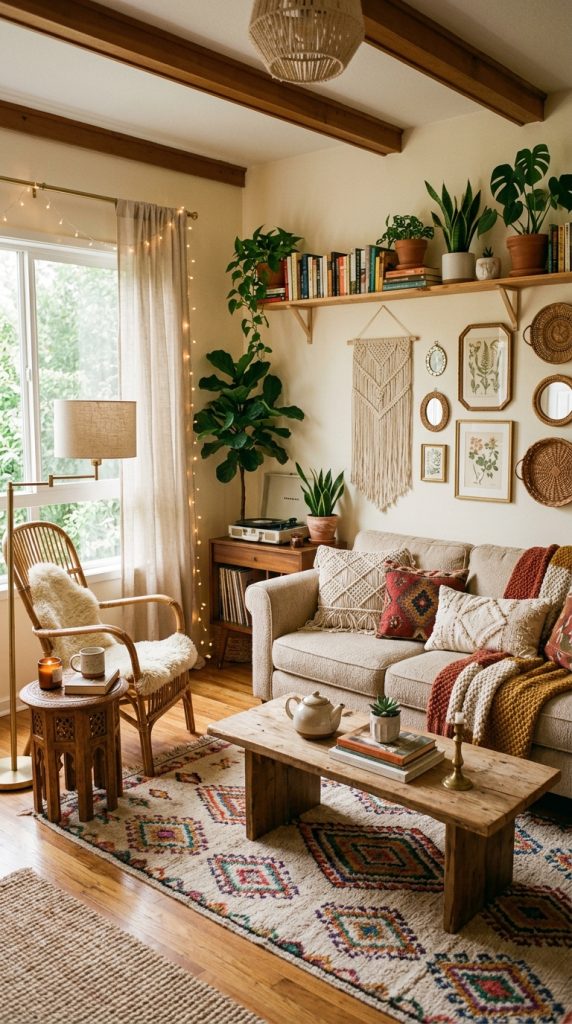
Boho living room decor is ideal for people who enjoy relaxed interiors, natural materials, layered textiles, plants, and artistic accessories. The style encourages individuality and does not require everything to match perfectly.
A successful boho living room feels collected over time rather than purchased as a single furniture set.
How to Create a Boho Look
Start with a comfortable sofa in a neutral color.
Add cushions featuring different patterns and textures.
Layer a textured rug over another rug if the room and materials allow it.
Use woven baskets for storage.
Introduce plants at different heights.
Add handmade-looking ceramics and decorative objects.
Use natural wood furniture.
Hang macramé, woven wall decor, or artwork.
Include warm lighting to make the room feel cozy at night.
Materials and Things You Can Use
- Neutral sofa
- Patterned cushions
- Textured rug
- Woven baskets
- Wooden coffee table
- Rattan furniture
- Macramé wall hanging
- Indoor plants
- Ceramic pottery
- Floor cushions
- Cotton throws
- Warm lamps
- Natural fiber accessories
How to Keep Boho Decor Organized
Boho style allows layering, but layering does not mean cluttering.
Choose a consistent color story. Earth tones such as beige, cream, brown, terracotta, olive, and muted mustard work particularly well.
Group decorative objects instead of scattering them randomly.
Use baskets to hide everyday clutter.
Leave some open space so the room can breathe.
If you have many colorful accessories, balance them with neutral furniture and walls.
Boho decor is particularly adaptable because you can introduce the style gradually. Start with textiles and plants, then add artwork and natural accessories as you discover what you like.
Pinterest SEO Keywords to Naturally Use
- living room decor ideas
- cozy living room ideas
- modern living room decor
- small living room ideas
- neutral living room decor
- budget living room makeover
- elegant living room ideas
- cozy home decor
- modern farmhouse living room
- boho living room ideas
- living room decorating ideas
- living room makeover ideas
- simple living room decor
- stylish living room ideas
- living room design inspiration
- affordable living room decor
- apartment living room ideas
- living room styling ideas
- warm living room decor
- Pinterest living room ideas
Final Thoughts
These first ten living room decor ideas provide a foundation for creating a space that feels stylish, comfortable, personal, and practical. The most successful living rooms do not necessarily follow one decorating style perfectly. Instead, they combine useful elements from different styles to create a room that works for the people who live there.
Start with the basics: furniture placement, lighting, color, and functionality. Then add personality through textiles, artwork, plants, books, and accessories. Whether you prefer neutral minimalism, warm modern design, farmhouse charm, elegant simplicity, or relaxed boho decorating, small changes can create a noticeable transformation.
For a Pinterest-worthy result, focus on creating a clear visual story. Choose a consistent color palette, repeat materials or colors throughout the room, and avoid unnecessary clutter. Most importantly, make the room comfortable enough to actually live in.
Idea 11: Create a Beautiful Living Room Accent Wall

An accent wall is one of the easiest ways to give a living room a dramatic transformation without decorating every wall. Instead of changing the entire room, you focus attention on one specific wall and turn it into a visual focal point. This can be especially useful when the rest of your living room has simple furniture and neutral colors.
An accent wall can be created in many ways. Paint is the most affordable option, but wallpaper, wood panels, decorative molding, stone-effect finishes, removable decals, or even a large gallery arrangement can also create the effect. The right choice depends on your decorating style, budget, and the condition of the wall.
For a modern living room, deep green, charcoal, warm beige, muted blue, or earthy brown can create an attractive feature. If you prefer a softer interior, choose a slightly darker version of your existing wall color. This creates contrast while maintaining a cohesive appearance.
The wall behind the sofa or television is often a natural location for an accent wall. However, you should consider the room’s layout before choosing the location. The best accent wall is usually the one you naturally notice when entering the room.
How to Create an Accent Wall
First, identify the wall you want to highlight. Avoid choosing a wall simply because it is empty. Think about where you want the eye to go when someone enters the room.
Next, select a color or material that complements your existing furniture.
If painting, clean the wall and repair any cracks or holes before applying paint.
Use painter’s tape to protect edges.
Apply primer if necessary, then apply the paint in thin, even coats.
Allow each coat to dry before applying another.
Once the wall is finished, keep the surrounding decoration relatively simple so the accent wall remains the main feature.
Materials and Things You Can Use
- Interior wall paint
- Paint roller
- Paintbrush
- Painter’s tape
- Drop cloth
- Wallpaper
- Removable wall panels
- Wooden slats
- Wall molding
- Measuring tape
- Level
- Decorative artwork
Styling Tips
Do not choose an accent color randomly. Pull a color from an existing cushion, rug, artwork, or decorative object.
If the room is small, a very dark accent wall can create drama but may also feel visually heavy. Balance it with lighter furniture, curtains, and accessories.
For renters, removable wallpaper or temporary wall decals can provide a similar effect without making permanent changes.
An accent wall works best when it looks intentional rather than isolated. Repeat a small amount of the accent color elsewhere in the room to create visual harmony.
Idea 12: Use Warm Lighting to Make Your Living Room Cozy

Lighting can completely change the atmosphere of a living room. Even a beautifully decorated space can feel uncomfortable if the lighting is too harsh, too bright, or limited to one ceiling fixture.
A cozy living room usually benefits from multiple sources of light placed at different heights. Instead of depending entirely on overhead lighting, combine ceiling lights with floor lamps, table lamps, wall lights, and decorative lighting.
Warm lighting is particularly effective during evenings because it creates a softer and more relaxing atmosphere. Lamps can also become decorative features themselves.
How to Layer Living Room Lighting
Start with general lighting. This could be a ceiling fixture that provides enough illumination for the whole room.
Add a floor lamp beside a sofa or reading chair.
Place a table lamp on a side table or console.
Use a small lamp on a bookshelf if there is enough space.
Consider wall lights if you want a more permanent lighting solution.
Use decorative lights sparingly for additional atmosphere.
Materials and Things You Can Use
- Ceiling light
- Floor lamp
- Table lamps
- Wall lights
- Warm-light bulbs
- Decorative lantern
- String lights
- Candles
- Lamp shades
- Side tables
- Console table
Where to Place Lamps
A floor lamp works well beside a sofa or reading chair.
Table lamps are useful on consoles and side tables.
If you have artwork or architectural details you want to highlight, directional lighting can draw attention to them.
Try to create several small areas of light rather than one extremely bright area.
Why Layered Lighting Works
Multiple light sources make the room more flexible. You can use bright lighting while cleaning or reading and softer lighting when relaxing.
Lighting also creates depth. Shadows and highlights make furniture, artwork, plants, and textures more noticeable.
For Pinterest photography, warm layered lighting can also make a living room look more inviting and atmospheric.
Idea 13: Design a Scandinavian-Inspired Living Room

Scandinavian-inspired living rooms are known for simplicity, functionality, natural materials, and comfortable minimalism. This style is particularly suitable for people who want a clean room without sacrificing warmth.
The Scandinavian approach generally avoids excessive decoration. Instead, each piece should have a purpose while also contributing to the overall appearance of the room.
A simple neutral color palette works well. White, cream, beige, light gray, pale blue, and natural wood can create a bright and peaceful environment.
How to Create Scandinavian Style
Begin with simple furniture featuring clean lines.
Choose light or natural wood where possible.
Use a soft area rug to make the room comfortable.
Add cushions and throws in simple textures.
Keep window treatments light to maximize natural light.
Introduce greenery through one or two plants.
Choose functional storage that hides clutter.
Use simple artwork rather than filling every wall.
Materials and Things You Can Use
- Light-colored sofa
- Natural wood coffee table
- Simple area rug
- Neutral cushions
- Wool or knitted throw
- Light curtains
- Wooden shelves
- Indoor plants
- Minimal artwork
- Woven storage baskets
- Simple floor lamp
- Ceramic accessories
Scandinavian Styling Rules
Avoid overcrowding the room.
Choose quality-looking pieces rather than large quantities of accessories.
Use natural textures to prevent minimalism from becoming cold.
Keep surfaces clean while allowing a few personal objects to remain visible.
Use daylight whenever possible.
A Scandinavian living room should feel peaceful, practical, and welcoming rather than completely empty.
Idea 14: Create a Luxury Living Room on a Budget

A luxurious living room does not necessarily require expensive furniture. Luxury is often created through presentation, proportion, texture, lighting, and organization.
You can make a standard living room appear more sophisticated by focusing on a few high-impact changes rather than purchasing dozens of expensive decorations.
Start by removing visual clutter. A clean and organized room immediately looks more polished.
Next, create a consistent color palette. Cream, beige, brown, black, taupe, and muted metallic accents can create a sophisticated foundation.
How to Create the Look
Use large curtains that reach close to the floor.
Choose a generously sized area rug.
Style the coffee table with a small number of attractive objects.
Add one large piece of artwork instead of many small decorations.
Use matching or coordinated lamps where appropriate.
Add cushions with substantial textures.
Introduce glass, ceramic, wood, or subtle metallic finishes.
Keep surfaces organized.
Materials and Things You Can Use
- Neutral curtains
- Large area rug
- Decorative cushions
- Coffee table books
- Ceramic vase
- Glass accessories
- Statement artwork
- Table lamps
- Floor lamp
- Decorative tray
- Wooden furniture
- Mirror
Budget-Saving Techniques
Instead of replacing a sofa, update it with new cushion covers and a beautiful throw.
Instead of buying expensive artwork, frame high-quality affordable prints.
Look for secondhand mirrors and wooden furniture.
Use fewer accessories but choose pieces with interesting shapes.
Keep cables hidden.
A luxury-looking room usually has strong visual organization. Even inexpensive furniture can look attractive when the room is clean, balanced, and thoughtfully styled.
Idea 15: Create a Renter-Friendly Living Room Makeover

Renters often face restrictions on painting, drilling, replacing fixtures, or making permanent changes. However, a rented living room can still become stylish and personalized.
The key is to focus on removable, movable, and reusable decorating solutions.
Textiles are particularly powerful. A new rug, curtains, cushion covers, and throw blankets can change the appearance of the room without altering the property.
How to Decorate a Rental Living Room
Start with a large area rug if the existing flooring does not suit your style.
Use removable wallpaper for a temporary feature wall if permitted by the product and lease.
Choose freestanding furniture instead of built-in storage.
Use tension rods or renter-friendly curtain solutions where appropriate.
Decorate with large leaning mirrors instead of wall-mounted mirrors.
Use removable hooks for lightweight artwork.
Add plants and decorative baskets.
Use floor lamps instead of changing permanent lighting fixtures.
Materials and Things You Can Use
- Area rug
- Removable wallpaper
- Cushion covers
- Throw blankets
- Floor lamps
- Freestanding shelves
- Leaning mirror
- Removable hooks
- Indoor plants
- Decorative baskets
- Curtains
- Portable storage
Why This Works
Most renter-friendly changes can move with you when you relocate.
You can also create a more personalized environment without making expensive permanent alterations.
If you cannot paint the walls, use artwork, mirrors, textiles, plants, and furniture to introduce color.
A large rug can visually define a seating area, while a large mirror can add depth.
The most important rule is to check your rental agreement before making changes that could affect walls or fixtures.
Idea 16: Use Multifunctional Furniture in the Living Room
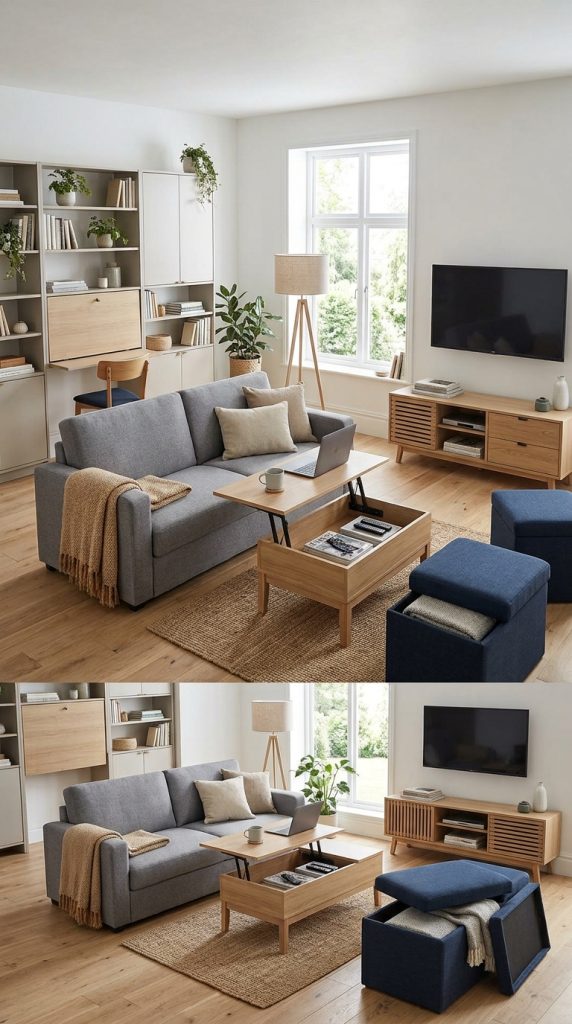
Multifunctional furniture is especially useful in small homes, apartments, and family living rooms where space needs to perform several roles.
A living room may need to function as a relaxation area, workspace, entertainment zone, reading corner, and occasional guest area. Furniture that performs more than one function can make this possible without overcrowding the room.
Useful Multifunctional Furniture
An ottoman can serve as a footrest, extra seating, and storage.
A storage coffee table can hide blankets, books, toys, or remote controls.
A sofa bed can provide additional sleeping space.
Nesting tables can provide extra surfaces when guests arrive.
A console table can work as decoration and storage.
A compact desk can create a small home office.
How to Choose the Right Furniture
Measure the available space before purchasing anything.
Consider how often each function will be used.
Choose pieces that are easy to move if the room needs to be rearranged.
Select colors that coordinate with existing furniture.
Avoid buying multifunctional furniture that is difficult to use simply because it has multiple features.
Materials and Things You Can Use
- Storage ottoman
- Sofa bed
- Lift-top coffee table
- Nesting tables
- Storage bench
- Console table
- Compact desk
- Foldable chairs
- Storage baskets
- Modular shelving
Styling Advice
Multifunctional furniture should still look like part of the decorating scheme.
Choose pieces that match the room’s color palette.
Hide everyday clutter inside storage furniture rather than leaving everything visible.
This approach is especially useful for small living room decorating because it increases functionality without requiring additional floor space.
Idea 17: Decorate a Colorful Living Room

If neutral interiors feel too plain, a colorful living room can bring personality and energy into the home. Color does not mean every item needs to be bright. You can create a sophisticated colorful room by selecting a few carefully coordinated shades.
The easiest approach is to start with a neutral foundation and introduce color through accessories.
For example, a cream sofa can be combined with olive cushions, terracotta artwork, mustard accents, and natural wood.
How to Choose a Color Palette
Choose one primary accent color.
Add one or two supporting colors.
Repeat these colors throughout the room.
For example, if you choose deep green, you can repeat green through cushions, plants, artwork, and decorative objects.
Use neutral colors for larger pieces if you want flexibility.
Materials and Things You Can Use
- Colorful cushions
- Patterned rug
- Colorful artwork
- Curtains
- Decorative vase
- Accent chair
- Throws
- Books
- Plants
- Decorative objects
- Painted furniture
How to Avoid a Chaotic Look
Do not introduce too many unrelated colors.
Repeat colors rather than using each color only once.
Balance strong colors with neutral surfaces.
If the sofa is colorful, keep the surrounding accessories more restrained.
You can also use the 60-30-10 decorating approach as a general guide: a dominant color, a secondary color, and a smaller accent color.
Colorful living rooms are highly suitable for Pinterest because they create strong visual interest and can inspire users who want alternatives to neutral decorating.
Idea 18: Create a Minimalist Living Room
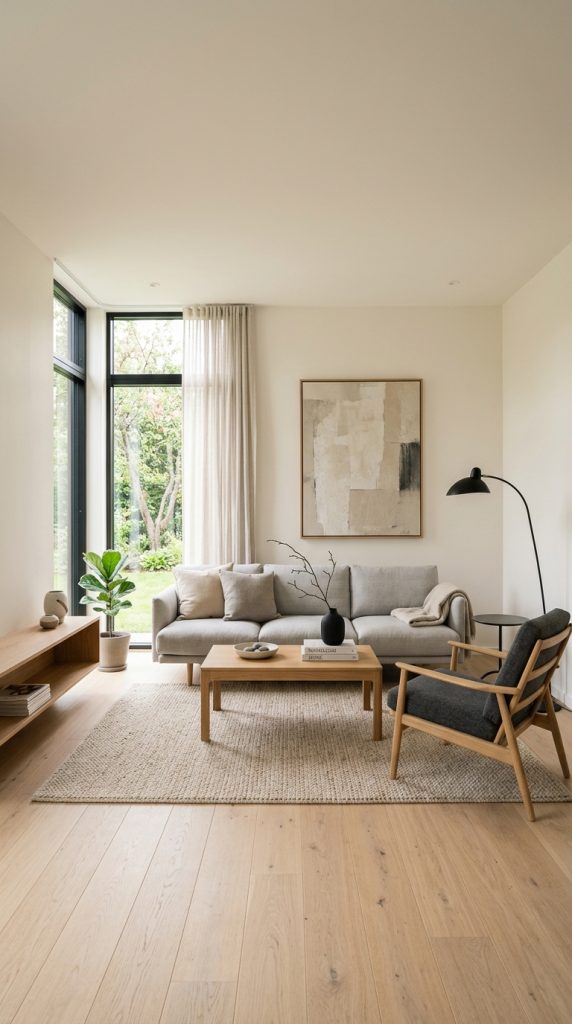
Minimalist living room decor focuses on simplicity, function, open space, and carefully selected objects. The goal is not to remove everything from the room but to keep only the things that contribute to comfort or purpose.
A minimalist room can still feel warm and beautiful when natural materials, soft textures, and thoughtful lighting are included.
How to Create a Minimalist Living Room
Begin by removing unnecessary furniture.
Declutter visible surfaces.
Choose a simple sofa and coffee table.
Use one large rug instead of several small rugs.
Select a limited color palette.
Keep decorative objects to a few meaningful pieces.
Use closed storage for items that create visual clutter.
Choose artwork carefully.
Add one or two plants.
Materials and Things You Can Use
- Simple sofa
- Minimal coffee table
- Large area rug
- Closed storage cabinet
- Simple artwork
- Floor lamp
- One or two plants
- Neutral cushions
- Wooden accessories
- Decorative tray
- Storage baskets
The Importance of Negative Space
Negative space is one of the most important parts of minimalist decorating.
Leave some shelves partially empty.
Avoid filling every wall.
Keep walking areas open.
Give important furniture pieces enough space around them.
A minimalist room becomes more attractive when each object has room to be noticed.
The style can also reduce cleaning and organizing time because fewer visible objects mean fewer surfaces to maintain.
Idea 19: Create a Seasonal Living Room Decor Plan
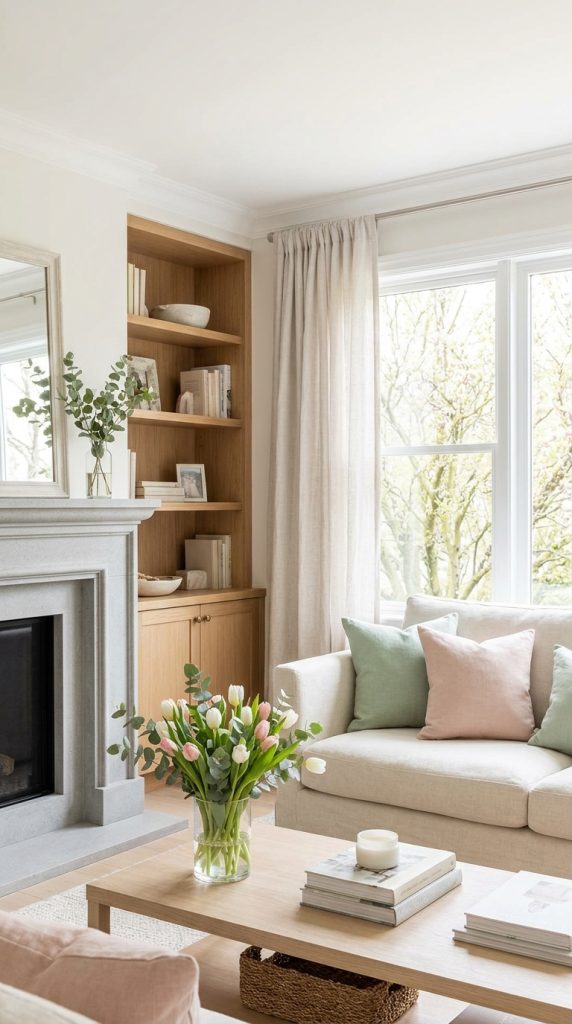
Seasonal decorating allows you to refresh your living room throughout the year without changing the major furniture pieces. Instead of redecorating the entire room every season, focus on small, removable elements.
This approach is practical and budget-friendly because many accessories can be stored and reused each year.
Spring Living Room
Use lighter textiles, fresh greenery, soft colors, and floral or botanical artwork.
Summer Living Room
Choose breathable fabrics, lighter colors, natural textures, and simple decorative accessories.
Autumn Living Room
Introduce warm browns, rust, terracotta, olive, and deeper neutral colors through cushions and throws.
Winter Living Room
Add cozy blankets, thicker rugs, warm lighting, candles, and comfortable textiles.
Materials and Things You Can Use
- Seasonal cushion covers
- Throw blankets
- Decorative pillows
- Small vases
- Artificial or fresh greenery
- Seasonal artwork
- Candles
- Decorative trays
- Table runners
- Baskets
- Seasonal ornaments
- Textured rugs
How to Make Seasonal Decorating Affordable
Do not buy a completely new collection every season.
Choose a neutral base that works throughout the year.
Change only a few accessories.
Store seasonal items in labeled containers.
Reuse decorations in different locations.
For example, an autumn throw can later be used in a bedroom or reading corner.
Seasonal decorating is particularly useful for Pinterest because users often search for fresh living room inspiration before holidays and seasonal changes.
Idea 20: Create a Personalized Family Living Room
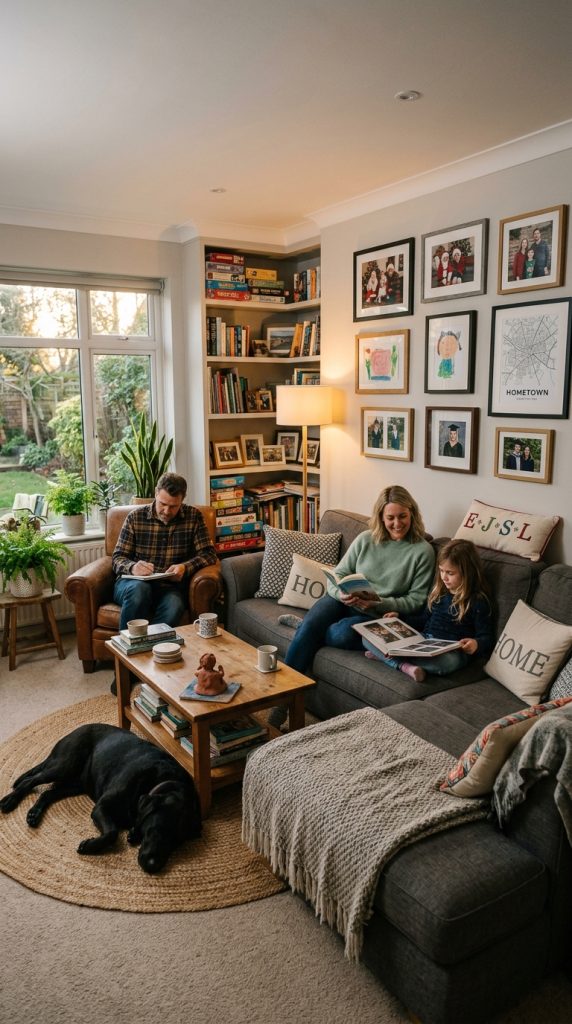
The most beautiful living room is not necessarily the one that looks like a showroom. A truly successful family living room should reflect the people who use it.
Personalized decor can include family photographs, children’s artwork, favorite books, travel memories, hobbies, plants, handmade pieces, or objects with sentimental value.
The goal is to combine personality with organization.
How to Personalize the Room
Start with photographs. Create a small gallery or display a few favorite family pictures.
Use books that reflect your interests.
Display meaningful souvenirs instead of hiding everything in storage.
Create a designated area for children’s belongings if necessary.
Use baskets to organize blankets, toys, and everyday items.
Choose artwork that you genuinely enjoy.
Include comfortable seating for the people who use the room most.
Materials and Things You Can Use
- Family photographs
- Picture frames
- Favorite books
- Decorative baskets
- Children’s artwork
- Travel souvenirs
- Handmade accessories
- Indoor plants
- Personalized cushions
- Storage ottoman
- Display shelves
- Decorative trays
How to Keep Personalized Decor Stylish
The secret is editing.
You do not have to display every meaningful object at the same time.
Choose your favorite pieces and rotate them occasionally.
Group similar objects together.
Use frames with coordinated colors.
Keep frequently used items organized.
For example, a collection of travel souvenirs can be displayed on one shelf rather than scattered throughout the room.
A personalized living room should feel authentic, comfortable, and welcoming. It should tell a story without becoming visually overwhelming.
Pinterest SEO Keywords for Part 2
- living room makeover ideas
- living room accent wall ideas
- cozy living room lighting
- Scandinavian living room decor
- luxury living room ideas on a budget
- renter friendly living room decor
- small living room furniture ideas
- colorful living room decor
- minimalist living room ideas
- seasonal living room decor
- family living room ideas
- stylish living room makeover
- affordable living room decorating ideas
- modern living room inspiration
- cozy home interior ideas
- living room styling tips
- beautiful living room ideas
- simple living room makeover
- living room design ideas
- Pinterest living room decor
Final Thoughts
These ten additional living room decor ideas show that a beautiful space can be created in many different ways. You can completely change the atmosphere with an accent wall, improve comfort through layered lighting, make a small room more functional with multifunctional furniture, or introduce personality through color and family memories.
The most important part of decorating is understanding your own space. Consider the size of the room, natural light, existing furniture, storage needs, lifestyle, and budget before choosing a particular decorating style.
For a Pinterest-worthy living room, focus on visual balance and practical details. Combine different textures, repeat colors throughout the room, create a clear focal point, and avoid unnecessary clutter. Most importantly, choose decor that makes your living room comfortable enough for everyday life.
A beautiful living room does not have to be expensive or professionally designed. With thoughtful planning, a few carefully selected accessories, and creative use of the furniture and items you already own, you can create a room that looks polished while still feeling personal and welcoming.
Leave a Reply