
A luxury bedroom should feel like more than a beautiful room. It should feel like a private retreat where you can slow down, relax, and enjoy a sense of comfort at the end of the day. The most successful luxury bedrooms are not necessarily the largest or most expensive. Instead, they combine thoughtful proportions, beautiful materials, layered textures, warm lighting, and carefully selected furniture to create an atmosphere that feels polished without becoming cold.

For 2026, luxury bedroom design is increasingly centered on quiet elegance and comfortable sophistication. Rather than filling a room with flashy accessories, designers are creating spaces where quality, texture, and atmosphere do most of the work. Upholstered beds, warm woods, soft neutral palettes, sculptural lighting, layered bedding, natural stone, oversized curtains, and subtle metallic accents can make an ordinary bedroom feel remarkably elevated.
The goal is also to maintain livability. A bedroom should not look like a showroom that is too perfect to use. It should have softness, practical storage, comfortable seating, accessible lighting, and enough personality to feel connected to the people who live there.
Whether you have a spacious primary bedroom or a smaller room, the following ideas can help you create a cozy and sophisticated retreat. Each approach has its own visual identity, allowing you to choose elements that suit your existing home rather than copying an entire design.
1. Create a Sophisticated Neutral Bedroom With Layered Textures
Neutral colors are one of the easiest ways to create a luxury bedroom because they provide a calm foundation while allowing texture and material quality to become the main focus.

Instead of decorating the entire room in plain white, build a layered neutral palette using several related shades.
Think about:
- Warm ivory
- Soft beige
- Oatmeal
- Taupe
- Mushroom
- Warm gray
- Caramel
- Chocolate brown
The secret is not simply choosing neutral colors. It is combining them in different materials.
For example, an ivory upholstered bed can be paired with beige linen bedding, a taupe throw, cream boucle cushions, a warm wooden nightstand, and a textured rug.
Although the colors are similar, the different surfaces prevent the room from looking flat.
Start With the Bed
The bed should be the visual anchor of a luxury bedroom.
An upholstered headboard immediately creates softness and visual importance.
For a sophisticated appearance, consider:
- Tall upholstered headboards
- Channel tufting
- Soft rounded edges
- Linen upholstery
- Velvet upholstery
- Boucle upholstery
- Natural woven upholstery
A tall headboard can make the ceiling appear higher while giving the bed a hotel-inspired appearance.
If your room is smaller, avoid choosing a headboard that is excessively wide or visually heavy. The proportions should match the room.
Layer the Bedding
Luxury bedding is rarely about one expensive duvet.
Instead, the appearance comes from layering.
Begin with high-quality sheets.
Add a duvet or quilt.
Then introduce a folded blanket or throw near the bottom of the bed.
Finish with several pillows arranged in decreasing sizes.
You can mix:
- Crisp cotton
- Linen
- Velvet
- Quilted fabrics
- Soft woven materials
Avoid making every textile identical.
The contrast creates visual depth.
Introduce Warm Wood
A neutral room can sometimes feel too pale.
Warm wood solves that problem.
Use walnut, oak, or medium-toned wood for nightstands, benches, shelving, or a dresser.
The wood introduces natural character while balancing soft textiles.
Add a Textured Rug
A large rug placed beneath the bed can make the room feel more cohesive.
Ideally, the rug should extend far enough beyond the bed to provide a soft landing area.
Neutral rugs with subtle patterns can add interest without overwhelming the room.
Use Soft Lighting
Lighting is especially important in neutral bedrooms because it creates the warmth that color alone may not provide.
Use several sources instead of relying entirely on a ceiling fixture.
Consider:
- Bedside lamps
- Wall sconces
- A floor lamp
- Pendant lighting
- Accent lighting
Place lights at appropriate places, especially warm bedside lighting on both sides of the bed and subtle ambient illumination throughout the room.
Avoid extremely cool white bulbs because they can make beige and cream materials appear flat or gray.
Finish With Minimal Accessories
Do not fill every surface.
A nightstand might only need a lamp, a small book, and one decorative object.
The simplicity allows the textures to remain visible.
The finished bedroom should feel quiet, warm, and expensive without appearing excessive.
2. Design a Warm Wood Luxury Bedroom
If you want a bedroom that feels sophisticated but grounded, make warm wood one of the primary design elements.
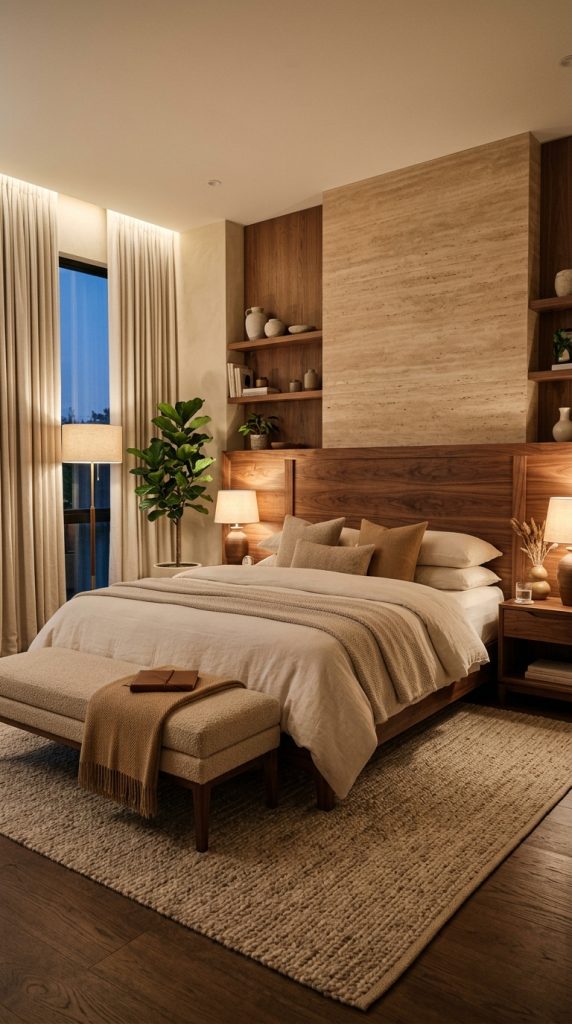
Wood brings natural warmth into a bedroom and can prevent luxury interiors from becoming overly formal.
For this approach, focus on walnut, oak, teak, or other warm-toned finishes.
Choose a Statement Wooden Bed
A wooden bed can become a beautiful focal point.
Look for clean architectural lines rather than highly ornate designs.
A large wooden headboard can create an impressive visual feature without requiring artwork above the bed.
You can choose:
- Vertical wood slats
- Wide wood panels
- Natural oak
- Walnut veneer
- Ribbed wood
- Curved wood
The finish should complement the existing flooring and furniture.
Balance Wood With Soft Fabrics
Too much wood can make the bedroom feel visually heavy.
Balance it with soft textiles.
Use:
- Cream bedding
- Beige curtains
- Boucle cushions
- Linen duvet covers
- Soft wool rugs
This creates contrast between hard and soft materials.
Add a Wooden Bench
A bench at the foot of the bed is both practical and decorative.
A simple upholstered bench with wooden legs can add another layer of sophistication.
It also provides a convenient place to sit while getting ready.
Add Natural Stone
Warm wood looks beautiful with stone.
Consider a small stone side table, marble tray, travertine lamp base, or stone decorative object.
You do not need a large stone installation.
Small touches can be enough.
Use Earthy Colors
A warm wood bedroom works particularly well with:
- Cream
- Sand
- Camel
- Terracotta
- Olive
- Taupe
- Chocolate
These shades reinforce the natural character of the room.
Keep Accessories Intentional
Use a few sculptural objects rather than many small decorations.
For example, a ceramic vase on a dresser can have more visual impact than a collection of ten unrelated pieces.
Add Warm Evening Lighting
Place lights at appropriate places, including bedside lamps, wall sconces, and a soft floor lamp in a reading corner.
Warm illumination will emphasize the wood grain and make the room feel especially cozy at night.
This style is ideal for anyone who wants a bedroom that feels luxurious without being overly glamorous.
3. Create a Boutique-Hotel Bedroom at Home
One of the most effective ways to make a bedroom feel luxurious is to borrow design principles from high-end boutique hotels.

The key is not copying a hotel room exactly.
Instead, focus on the elements that make hotel bedrooms feel comfortable, organized, and sophisticated.
Make the Bed the Star
Choose a substantial bed with a large upholstered headboard.
The headboard should visually anchor the wall.
For a boutique appearance, consider a headboard that extends wider than the mattress.
Use Symmetry
Symmetry creates an immediate sense of order.
Place matching or visually balanced nightstands on both sides of the bed.
Then add similar lamps.
You can still introduce small differences in accessories while maintaining overall balance.
Layer the Bedding
Use several layers.
A possible arrangement could include:
- Fitted sheet
- Flat sheet
- Duvet
- Folded blanket
- Decorative cushions
- Accent pillows
Choose fabrics that feel comfortable rather than purely decorative.
Add Full-Length Curtains
Curtains can dramatically improve a bedroom.
Install them high and wide enough to frame the windows.
Floor-length curtains can make the ceiling feel taller.
Choose:
- Linen
- Cotton blend
- Velvet
- Heavy woven fabric
For a sophisticated appearance, use curtains in a shade slightly darker or lighter than the walls.
Add a Large Rug
A generous rug beneath the bed helps unify the room.
A subtle geometric or organic pattern can provide sophistication without competing with the bedding.
Introduce a Seating Area
If space allows, add a small chair and side table near a window.
This creates a secondary zone within the bedroom.
It can become a reading corner, morning coffee area, or quiet place to relax.
Add Hotel-Inspired Lighting
Layer the lighting carefully.
Use bedside lamps for reading.
Use accent lighting for atmosphere.
Use a ceiling fixture for general illumination.
Place lights at appropriate places so that no single light source has to illuminate the entire room.
The final effect should be polished but still comfortable.
4. Add Elegant Velvet for a Rich and Cozy Retreat
Velvet can instantly make a bedroom feel richer because its surface catches light differently from cotton, linen, or wood.
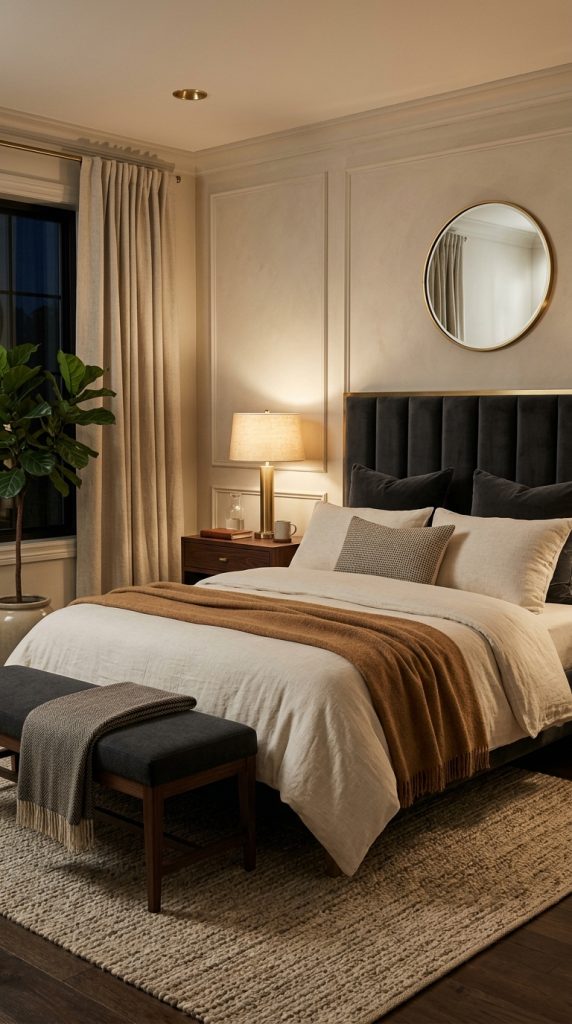
However, the goal is not to cover everything in velvet.
Use it strategically.
Choose One Main Velvet Feature
A velvet headboard is one of the most effective options.
Deep colors such as:
- Forest green
- Burgundy
- Chocolate
- Navy
- Charcoal
can create dramatic sophistication.
If you prefer a lighter bedroom, choose:
- Warm beige
- Taupe
- Dusty rose
- Cream
Pair Velvet With Linen
Velvet becomes more interesting when paired with a contrasting fabric.
Use linen bedding against a velvet headboard.
The relaxed texture of linen prevents the room from looking overly formal.
Add a Velvet Bench
If the headboard is not velvet, use a velvet bench at the foot of the bed.
This provides a luxurious accent without dominating the entire room.
Introduce Brass
Velvet and warm metals can work beautifully together.
Consider:
- Brass bedside lamps
- Brass handles
- A small brass tray
- Aged brass wall sconces
Choose brushed or aged finishes for a softer appearance.
Use Darker Colors Carefully
If you use a dark velvet headboard, balance it with lighter bedding and walls.
For example:
Charcoal headboard + cream bedding + warm wood + beige rug
This keeps the room sophisticated without becoming too dark.
Add Soft Lighting
Velvet looks particularly beautiful under warm evening light.
Place lights at appropriate places, especially beside the bed and near accent furniture.
Use warm bulbs and diffused shades to prevent harsh highlights.
Avoid Excessive Glamour
Velvet does not need crystal chandeliers, mirrored furniture, and metallic accessories everywhere.
One or two luxurious materials can be enough.
The strongest luxury bedrooms often combine one dramatic material with many quiet supporting elements.
5. Create a Cozy Luxury Bedroom With a Fireplace-Inspired Focal Point
A fireplace can transform a bedroom into an especially inviting retreat.

If your home already has a fireplace, make it a central design feature.
If you do not have one, you can create a similar architectural focal point with a mantel-style feature, textured wall, or carefully designed media area.
Use Natural Materials
A stone or plaster fireplace can introduce architectural character.
For a softer luxury aesthetic, consider:
- Limestone
- Travertine
- Plaster
- Light marble
- Textured stone
Choose a finish that works with your room rather than following a trend blindly.
Keep the Mantel Simple
Place only a few carefully selected objects.
For example:
- Large ceramic vase
- Small artwork
- Sculptural object
- Candle
- Dried branches
Do not cover the entire mantel.
Position the Bed Thoughtfully
If the architecture allows it, orient the bed so that the fireplace is visible from the sleeping position.
This creates a strong focal relationship between the bed and fireplace.
Use a Cozy Seating Area
Place an armchair near the fireplace.
Add a small side table and soft throw.
This can transform an unused corner into a comfortable retreat.
Use Warm Textiles
Layer:
- Wool
- Linen
- Boucle
- Cotton
- Velvet
The combination creates a tactile atmosphere.
Create Evening Ambiance
Place lights at appropriate places, such as a floor lamp near the chair, bedside lamps, and subtle accent lighting around the fireplace.
If using candles, place them safely away from curtains and bedding.
The goal is to create a peaceful evening atmosphere rather than excessive decorative lighting.
6. Create a Modern Luxury Bedroom With Sculptural Lighting
Lighting can become artwork in a luxury bedroom.
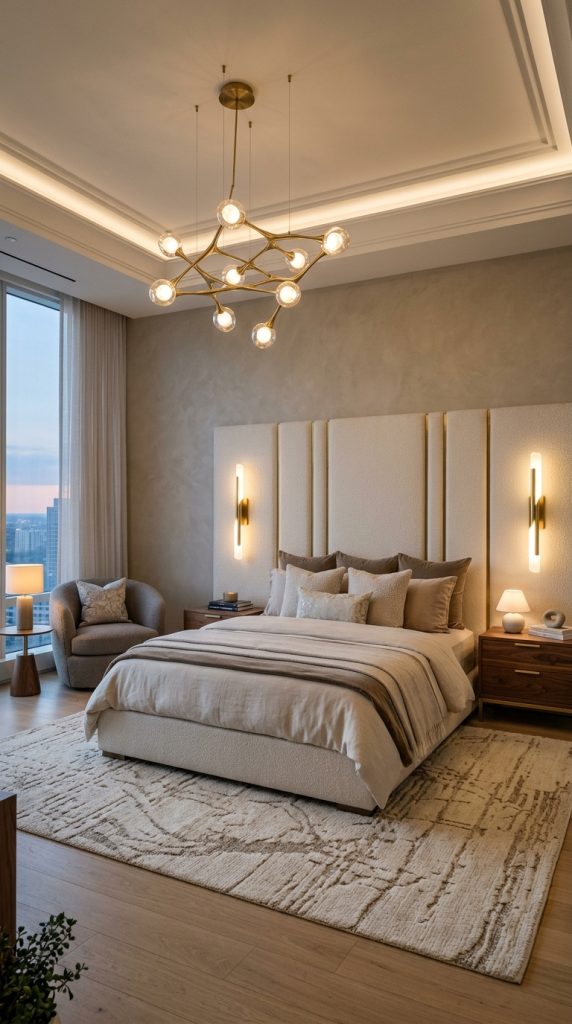
Instead of treating lighting as something purely functional, choose fixtures that contribute to the room’s design.
Choose a Statement Ceiling Fixture
A sculptural chandelier or pendant can create a dramatic focal point.
Look for designs with:
- Curved forms
- Soft geometric shapes
- Textured glass
- Matte metal
- Warm brass
- Sculptural silhouettes
The fixture should be appropriately scaled to the room.
Add Bedside Wall Sconces
Wall sconces can free up nightstand space.
They also create a symmetrical appearance.
Install them at a practical height for reading.
Use Decorative Table Lamps
If you prefer table lamps, select sculptural ceramic, stone, glass, or metal bases.
A beautiful lamp can function almost like a piece of art.
Add Floor Lighting
A floor lamp can create a cozy reading area.
Position it beside an armchair or near a corner that needs additional illumination.
Choose Warm Bulbs
Warm lighting is especially effective in bedrooms.
It creates a relaxing atmosphere and works beautifully with:
- Cream
- Beige
- Brown
- Wood
- Brass
- Taupe
Layer the Lighting
A sophisticated bedroom should have different lighting levels.
You might use:
Ceiling fixture → general illumination
Bedside lamps → reading
Floor lamp → seating area
Accent light → artwork or architectural feature
Soft ambient light → evening atmosphere
Place lights at appropriate places rather than simply adding more fixtures.
The objective is flexibility.
You should be able to create bright functional lighting in the morning and soft atmospheric lighting at night.
7. Design a Luxury Bedroom With an Elegant Statement Wall
A statement wall can make a bedroom look custom-designed without requiring a complete renovation.

The wall behind the bed is usually the strongest location because it naturally functions as the room’s focal point.
Try Architectural Wall Panels
Wall paneling can add sophistication.
Options include:
- Vertical panels
- Traditional molding
- Fluted panels
- Upholstered panels
- Wood slats
Choose a design that matches the architecture of your home.
Use Textured Wallpaper
A subtle wallpaper can create depth.
Consider:
- Linen-look wallpaper
- Grasscloth-inspired texture
- Soft geometric patterns
- Abstract organic patterns
- Subtle metallic details
Avoid extremely busy designs if you want the room to feel calm.
Create a Plaster-Look Wall
A textured plaster finish can provide an organic luxury appearance.
Soft beige, ivory, mushroom, or warm gray can work beautifully.
Add Artwork
Instead of a statement wall treatment, you can create impact with oversized artwork.
One large piece can often look more luxurious than several tiny frames.
Choose artwork with colors that complement your bedding.
Consider the Headboard
Do not forget the relationship between the statement wall and headboard.
If the wall is heavily textured, choose a simpler headboard.
If the wall is simple, the headboard can become more dramatic.
Add Appropriate Lighting
Place lights at appropriate places, particularly bedside sconces or subtle accent lighting that highlights the statement wall.
Avoid lighting that creates harsh glare.
Keep the Rest of the Room Quiet
When one wall becomes the focal point, simplify the surrounding decor.
This creates visual hierarchy.
The bedroom will feel designed rather than decorated randomly.
8. Create a Soft Cream and Warm Brown Luxury Retreat
For a bedroom that feels exceptionally cozy, combine creamy whites with warm brown.

This combination has a timeless quality and works across many design styles.
Start with warm cream walls.
Then introduce brown through furniture and accessories.
Use Warm Brown Furniture
Walnut nightstands, a dark oak dresser, or a brown upholstered bench can anchor the room.
Avoid choosing too many unrelated wood tones.
Try to keep the finishes within a similar warmth level.
Choose Cream Bedding
Cream bedding keeps the room light.
Layer different textures rather than different colors.
For example:
- Cotton sheets
- Linen duvet
- Quilted coverlet
- Boucle cushions
- Woven throw
Add Brown Accents
Introduce brown through:
- Throw blankets
- Cushions
- Leather chair
- Wooden frame
- Ceramic accessories
Add a Textured Rug
A cream or beige rug with subtle brown variation can connect the room together.
Use Curtains
Floor-length curtains in warm beige can make the room feel softer.
Layer sheer curtains with heavier panels if privacy and light control are important.
Add Natural Accessories
A ceramic vase, wooden bowl, stone lamp, or dried branches can add organic character.
Keep the quantity limited.
Warm the Room With Lighting
Place lights at appropriate places, especially bedside lamps with fabric shades, a floor lamp near the seating area, and gentle ambient lighting.
Warm light against cream and brown materials creates an especially inviting evening atmosphere.
This style is ideal if you want luxury that feels calm rather than dramatic.
9. Create a Small Luxury Bedroom That Feels Spacious
Luxury is not limited to large bedrooms.
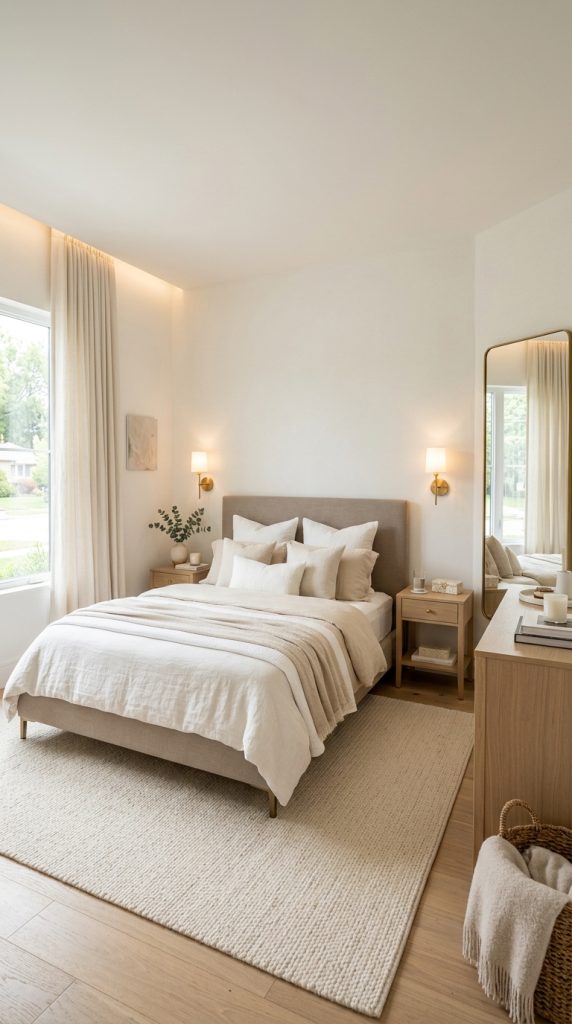
A small room can feel remarkably sophisticated when every piece is carefully selected.
The most important principle is to avoid filling the room simply because there is space available.
Choose the Right Bed
A large headboard can create luxury, but an oversized bed can make a small room feel cramped.
Choose proportions carefully.
An upholstered headboard with a slim profile can provide elegance without consuming too much visual space.
Use Wall-Mounted Lighting
Wall sconces are particularly useful in small bedrooms.
They free up bedside table space.
You can then use smaller nightstands.
Choose Furniture With Storage
A storage bed or narrow dresser can provide practical function.
Luxury should not come at the expense of organization.
Use Mirrors Strategically
A large mirror can make the room feel more open.
Place it where it reflects natural light or an attractive part of the room.
Avoid positioning it where it creates visual confusion.
Use One Large Rug
A small rug floating in the middle of the room can make the space feel fragmented.
A properly sized rug beneath the bed can visually unify the room.
Keep the Palette Light
Cream, beige, soft taupe, and warm white can help maintain visual openness.
You can still introduce darker accents through wood, lighting, or small accessories.
Use Curtains Correctly
Hang curtains close to the ceiling and allow them to fall to the floor.
This can make the room feel taller.
Layer Lighting
Place lights at appropriate places, particularly wall sconces beside the bed and a small ambient lamp elsewhere in the room.
Avoid relying on one bright overhead light.
Keep Surfaces Clear
A small room benefits enormously from visual simplicity.
Choose only the objects you genuinely love.
The result can feel more luxurious than a larger bedroom filled with unnecessary furniture.
10. Create an Ultimate Cozy & Sophisticated Bedroom Retreat
The final approach combines many of the most successful luxury bedroom principles into one cohesive design.
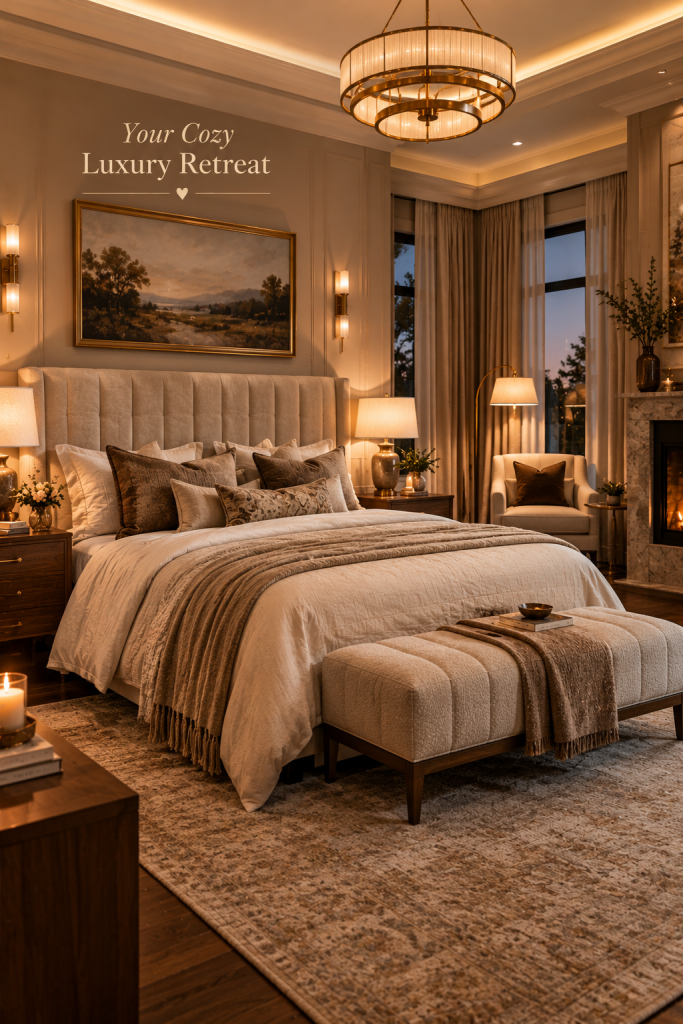
The objective is not to use every possible luxury element.
Instead, combine carefully chosen features that work together.
Start With a Strong Foundation
Choose a warm neutral palette.
Cream, beige, taupe, warm brown, and muted charcoal provide a timeless foundation.
Use one darker shade for contrast.
Invest in the Bed
The bed should be the most comfortable and visually important element.
Choose a quality mattress and comfortable bedding.
Then add a substantial headboard.
A tall upholstered headboard can create a sophisticated focal point.
Layer Different Textures
Use several materials without overwhelming the room.
For example:
Linen + velvet + boucle + wood + ceramic + glass + metal
Each texture contributes something different.
Add Warm Wood
Use warm wood for:
- Nightstands
- Dresser
- Bench
- Accent table
- Decorative objects
Wood adds depth and prevents the room from feeling sterile.
Introduce One Luxurious Material
Choose one material to make the room feel special.
It might be:
- Velvet
- Marble
- Brass
- Natural stone
- Boucle
- Handmade ceramic
You do not need all of them.
Create a Comfortable Seating Area
If the room allows, add an armchair.
Pair it with a small side table and floor lamp.
This transforms the bedroom into a retreat rather than simply a place to sleep.
Add Oversized Curtains
Full-length curtains can dramatically improve the atmosphere.
Choose soft neutral fabric with enough weight to create beautiful folds.
Add Art
Use one large piece above a dresser or a carefully selected piece near the seating area.
Art should support the room’s palette.
Style the Nightstands
Keep them functional.
A good arrangement might include:
- Lamp
- Book
- Small ceramic object
- Water glass or carafe
Avoid filling every available surface.
Create a Layered Lighting Plan
Lighting is what brings the entire bedroom together.
Use:
- Ceiling fixture
- Bedside lamps
- Wall sconces
- Floor lamp
- Accent lighting
Place lights at appropriate places according to how the room is used.
The bedroom should have enough lighting for practical activities while remaining capable of becoming soft and atmospheric at night.
Add Soft Evening Details
A folded throw at the foot of the bed can make the room feel inviting.
A candle on a dresser can introduce gentle ambiance when used safely.
A textured rug can make the first step out of bed more comfortable.
Fresh flowers or a small branch arrangement can add a natural finishing touch.
Keep the Bedroom Personal
The final step is often the most important.
Luxury should not eliminate personality.
Include a few objects that mean something to you.
A favorite book.
A meaningful artwork.
A vintage lamp.
A beautiful photograph.
A handmade ceramic piece.
These personal details keep the bedroom from feeling like a generic luxury hotel.
How to Choose a Luxury Bedroom Color Palette
Before purchasing furniture and accessories, choose your primary palette.
This prevents the bedroom from becoming visually disconnected.
Cream and Warm Beige
Best for a calm, timeless retreat.
Combine cream walls with beige bedding, warm wood, and brass accents.
Taupe and Brown
Ideal for a richer atmosphere.
Use taupe walls, brown furniture, cream textiles, and warm lighting.
Charcoal and Cream
Perfect for sophisticated contrast.
Use charcoal selectively so the bedroom does not become too dark.
Olive and Beige
Excellent for an organic luxury bedroom.
Pair muted olive with warm wood and cream.
Burgundy and Cream
Ideal for a dramatic romantic bedroom.
Use burgundy through velvet cushions, a throw, or an accent chair.
Soft Gray and Warm Wood
A sophisticated contemporary combination.
Choose warm gray rather than an overly cool gray.
How to Make a Bedroom Look Luxurious on a Budget
Luxury design does not require replacing everything.
Start with the elements that have the greatest visual impact.
Upgrade the Bedding
A beautifully made bed can transform the entire room.
Choose coordinated neutral bedding and add layers.
Improve the Lighting
Replace harsh bulbs with warm illumination.
Add a pair of matching lamps if possible.
Add Full-Length Curtains
Curtains can make the room appear taller and more polished.
Use Oversized Artwork
One large affordable artwork can have more impact than many small decorative pieces.
Add a Large Rug
A properly sized rug can visually connect the furniture.
Declutter
This costs nothing but can dramatically improve the room.
Remove unnecessary objects from surfaces.
Introduce One Luxury Accent
Choose one focal material.
A velvet bench, marble tray, sculptural lamp, or beautiful ceramic vase can elevate the entire space.
Use Matching Hardware
Updating dresser handles or nightstand hardware can create a more cohesive appearance.
Luxury Bedroom Lighting Guide
Lighting deserves special attention because it changes how every other element looks.
A room with beautiful furniture can still feel uncomfortable if the lighting is too harsh.
Ambient Lighting
This provides general illumination.
A ceiling fixture can serve this purpose.
Task Lighting
Bedside lamps and sconces are useful for reading.
Accent Lighting
Use accent lights to highlight artwork, architectural details, or a decorative feature.
Decorative Lighting
A sculptural chandelier or pendant can function as a visual statement.
Warm Lighting
For evening use, warm illumination generally creates a more relaxing bedroom atmosphere.
Place lights at appropriate places instead of concentrating every source in one area.
How to Arrange Furniture for a Luxury Look
Furniture placement can be just as important as the furniture itself.
Begin with the bed.
It should usually have a strong relationship with the main wall.
Then add nightstands.
Make sure there is enough room to comfortably access both sides of the bed.
If possible, create a clear pathway between the bed and the bedroom entrance.
Place a dresser where it does not interfere with movement.
If you have space, add a chair or bench to create a separate relaxation zone.
Do not push every piece of furniture against a wall simply because the room allows it.
Sometimes a small amount of breathing space around furniture makes the room feel much more intentional.
How to Avoid Making a Luxury Bedroom Look Overdecorated
One of the biggest mistakes in luxury decorating is assuming that more decoration automatically creates more luxury.
Usually, the opposite is true.
Luxury depends on visual control.
If you have a dramatic headboard, simplify the bedding.
If you have a statement chandelier, avoid adding several competing ceiling features.
If the wallpaper is patterned, choose calmer furniture.
If you have a large artwork, let it breathe.
Use negative space intentionally.
A few beautiful objects are more effective when they have room around them.
Final Thoughts
Creating a luxury bedroom is ultimately about designing an environment that feels beautiful, comfortable, calm, and intentional.
The most sophisticated bedrooms do not depend on a single expensive piece. They succeed because multiple details work together.
A beautiful bed establishes the focal point.
Layered bedding introduces softness.
Warm wood adds natural depth.
Velvet or boucle creates tactile luxury.
A large rug makes the room feel grounded.
Full-length curtains soften the architecture.
Artwork adds personality.
A carefully chosen chair creates a private retreat within the room.
And layered warm lighting transforms the entire atmosphere after sunset.
For a timeless approach, start with warm neutrals and natural textures.
For a richer look, introduce walnut, chocolate brown, burgundy, or deep olive.
For a modern luxury aesthetic, combine clean architectural forms with sculptural lighting and minimal accessories.
For a cozy hotel-inspired retreat, prioritize an exceptional bed, layered bedding, symmetry, soft curtains, and multiple lighting sources.
And if your bedroom is small, remember that luxury is still possible. Choose furniture carefully, use vertical space, keep surfaces uncluttered, and allow a few high-impact pieces to become the focus.
The most important thing is to design the room around how you want to feel, not simply how you want the room to photograph.
A luxury bedroom should make you want to stay there.
It should feel soft in the morning, peaceful in the afternoon, and warm and intimate in the evening.
It should have enough organization to feel calm but enough personality to feel like home.
For 2026, that balance between refinement and comfort is what makes a luxury bedroom truly successful.
You do not need to fill the room with expensive objects.
Instead, choose fewer pieces, make them work together, layer natural and luxurious materials, control the color palette, and pay close attention to lighting.
When every element has a purpose, even a relatively simple bedroom can feel remarkably sophisticated.
The result is not just a stylish bedroom.
It is a private retreat designed for rest, comfort, and everyday luxury.
Leave a Reply