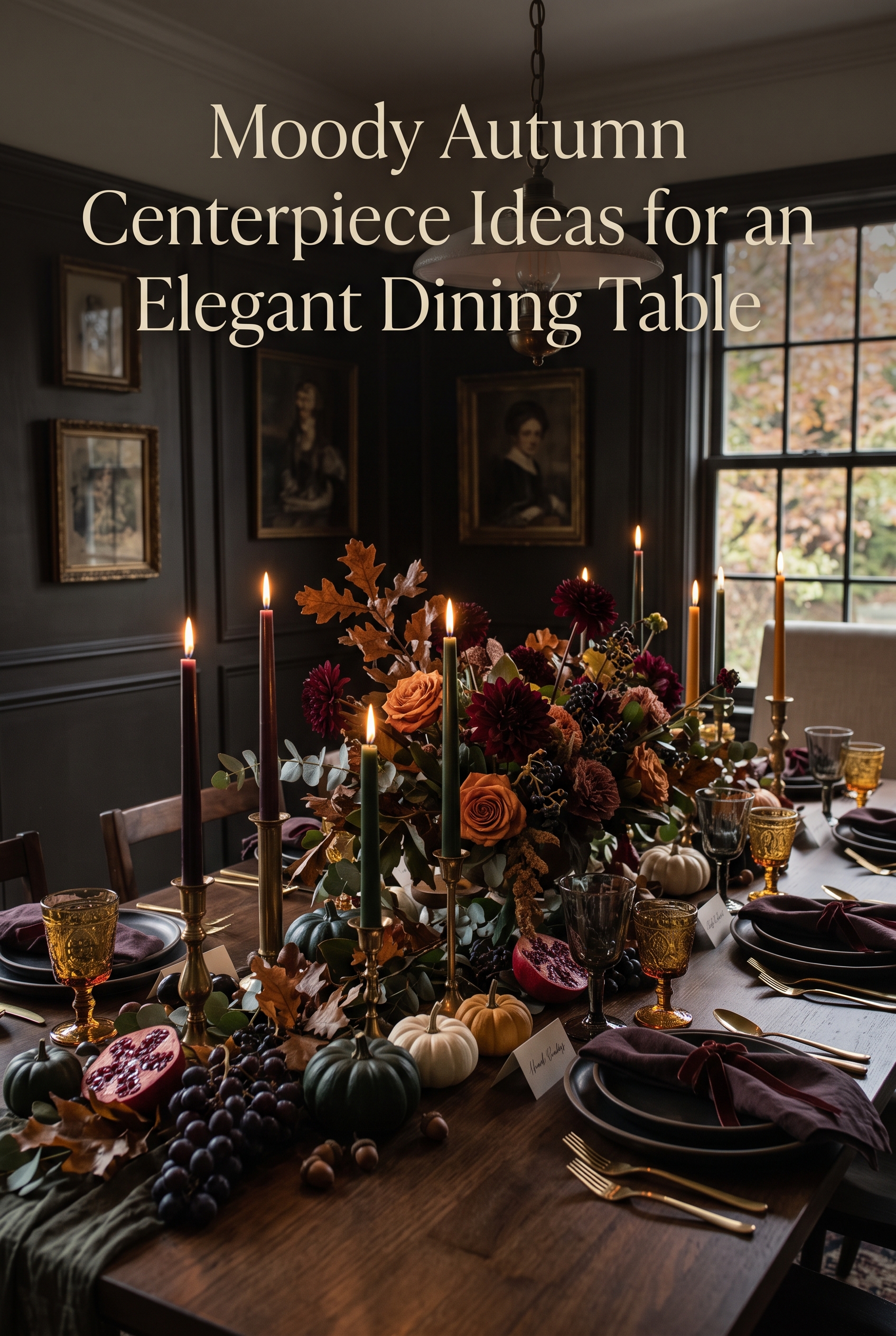
Autumn is the perfect season to transform your dining table into a warm, inviting, and beautifully styled focal point. As the days become shorter and the evenings grow cooler, rich colors, natural textures, and soft candlelight can make a dining room feel especially cozy. If you love sophisticated seasonal decorating but prefer something more refined than traditional orange pumpkins and bright fall leaves, moody autumn centerpiece ideas offer an elegant alternative. By combining deep burgundy, plum, chocolate brown, olive green, charcoal, antique brass, and muted cream, you can create a dining table that feels dramatic, timeless, and welcoming.
A moody autumn centerpiece does not need to be expensive, oversized, or complicated. The secret is choosing a thoughtful combination of flowers, branches, foliage, candles, ceramics, and seasonal objects that work together naturally. A simple arrangement of burgundy flowers in a dark vase can make a strong statement, while a wooden bowl filled with pears, figs, and miniature pumpkins can introduce a rustic harvest feeling. For a more luxurious look, antique brass candlesticks, smoked-glass vessels, velvet ribbons, and softly glowing votive candles can add depth without making the table feel crowded.
The best part about this decorating style is its flexibility. It works beautifully in traditional dining rooms with dark wood furniture, modern spaces with clean lines, farmhouse interiors with natural finishes, and transitional homes that combine classic and contemporary elements. You can create a dramatic tablescape for a formal autumn dinner or choose a smaller, understated arrangement for everyday family meals. Whether your dining table is long and rectangular, round and compact, or part of an open-plan kitchen, there is a centerpiece style that can complement its shape and proportions.
When planning your arrangement, begin with the mood you want to create. Burgundy roses and black taper candles produce a romantic, dramatic atmosphere. Olive branches, dried hydrangeas, and stoneware vases feel organic and understated. Pomegranates, figs, pears, and amber glass bring a rich harvest character to the table. Combining several of these elements can create a layered arrangement that looks professionally styled while remaining achievable at home.
Color balance is especially important when working with a darker palette. Too many black accessories can make a table feel heavy, while too much burgundy can overwhelm the rest of the room. Introduce lighter accents through ivory candles, cream pumpkins, pale linen, or natural wood. Metallic finishes such as antique brass and aged gold reflect candlelight beautifully and add warmth to dark arrangements. Instead of making every object match perfectly, choose a few complementary tones and repeat them throughout the centerpiece.
Texture also plays an important role. Smooth ceramic vases look more interesting beside loosely arranged branches. Velvet ribbons soften metallic candlesticks, while dried foliage contrasts beautifully with glossy fruit and translucent glass. Natural materials prevent a moody centerpiece from feeling too formal or artificial. Even a simple combination of a linen runner, a ceramic vessel, and a few branches can create an elegant autumn display when the shapes, colors, and heights are carefully considered.
Lighting is another essential element. Autumn centerpieces often look their best in the evening, when the dining room is illuminated by warm lamps and gentle candlelight. Taper candles create height and elegance, while small votives add a low, intimate glow. If you use candles, make sure they are positioned securely away from dried flowers, ribbons, foliage, and other flammable decorations. Battery-operated candles can provide a similar atmosphere when an arrangement contains delicate or highly combustible materials.
Practicality matters just as much as appearance. A centerpiece should enhance the dining experience rather than prevent people from seeing one another or reaching their plates. For everyday use, keep arrangements relatively low and compact. For a special dinner, you can create a longer centerpiece with repeated floral vessels and candlesticks, provided there is still enough room for serving dishes and comfortable conversation. A beautiful arrangement should feel like a natural part of the dining room instead of an obstacle on the table.
The following 15 moody autumn centerpiece ideas explore different ways to combine flowers, foliage, candles, seasonal produce, and decorative accessories. Some are ideal for a luxury dining room, while others suit a rustic farmhouse table or a minimalist modern interior. Each idea includes styling guidance and practical suggestions to help you recreate the look with materials that fit your budget and existing decor.
1. Burgundy Flowers With Antique Brass Candlesticks
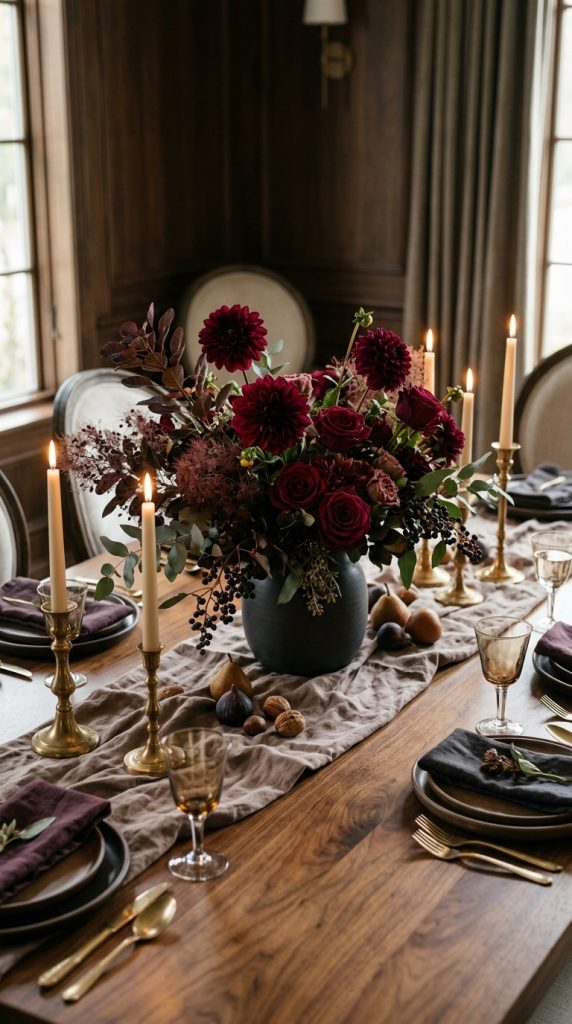
Burgundy flowers paired with antique brass candlesticks create a rich, romantic centerpiece that immediately brings an elegant autumn atmosphere to the dining table. This combination works particularly well if you enjoy dramatic floral arrangements but want to avoid a traditional Halloween-inspired look. Deep red and wine-colored flowers provide the visual depth, while the muted gold finish of the candlesticks introduces warmth and a subtle vintage quality.
Begin with a medium-sized ceramic or glass vase in charcoal, dark brown, deep olive, or warm ivory. Choose burgundy dahlias, garden roses, chrysanthemums, or other seasonal flowers with full petals and interesting shapes. If fresh burgundy flowers are unavailable, combine deep red blooms with darker foliage to create a similar effect. Select stems at different heights so the arrangement looks natural rather than perfectly rounded.
Place the vase in the center of the dining table, preferably on a simple linen runner in oatmeal, taupe, charcoal, or muted brown. Position two or three antique brass candlesticks around the arrangement, keeping enough space between them for a balanced composition. Using candlesticks with slightly different heights creates a more collected, layered appearance than choosing identical pieces.
For additional texture, introduce a few branches of eucalyptus or dark foliage. Keep the greenery restrained so the burgundy flowers remain the focal point. You can also add a small decorative brass bowl or a couple of understated seasonal objects nearby, but avoid filling every available space.
This centerpiece is particularly effective on dark walnut dining tables because the brass accents stand out against the wood. On a lighter oak table, the same arrangement creates a beautiful contrast and can be softened with cream napkins or pale stoneware plates.
Materials to gather:
- Burgundy flowers, fresh or high-quality faux stems
- A ceramic or glass vase
- Two or three antique brass candlesticks
- Burgundy, charcoal, or neutral taper candles
- A linen table runner
- Optional dark foliage
To keep the arrangement affordable, use fewer flowers and concentrate them in one compact bouquet. You can also find vintage-style brass candlesticks at secondhand shops or use existing gold-toned accessories. The key is to keep the metallic finish muted rather than overly shiny.
2. Dried Branches in a Dark Ceramic Vase
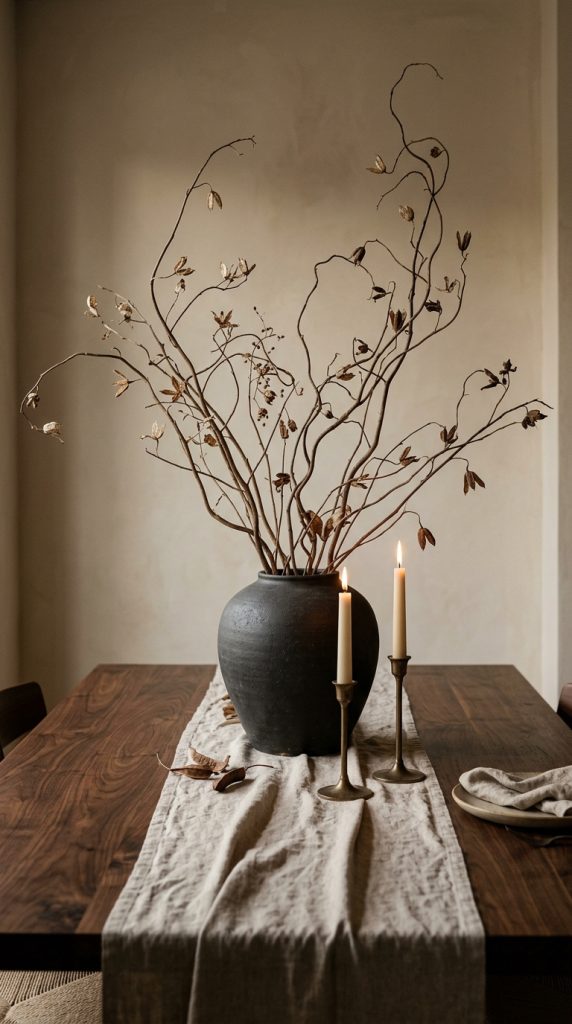
A sculptural arrangement of dried branches in a dark ceramic vase is an excellent choice for anyone who prefers minimalist autumn decor. Instead of relying on colorful flowers or numerous seasonal decorations, this centerpiece uses natural shapes, height, and contrast to create interest. It feels artistic and understated, making it especially suitable for modern, contemporary, Scandinavian-inspired, and warm minimalist dining rooms.
Choose a substantial ceramic vase in matte black, charcoal, deep brown, or dark olive green. A slightly irregular handmade shape adds character, while a smooth cylindrical vase creates a cleaner contemporary look. The vessel should be large enough to support the branches without tipping over.
Look for dried branches with interesting curves, branching patterns, seed pods, or delicate remaining leaves. Depending on availability, you might use preserved foliage, decorative curly willow, dried eucalyptus branches, or suitable branches collected from your garden. Make sure any collected branches are clean, dry, and free of insects before bringing them indoors.
Arrange the branches loosely, allowing some stems to extend outward while others rise vertically. Avoid trimming everything to the same height. The asymmetry makes the display feel natural and sculptural. If the arrangement looks too sparse, add a small number of additional branches rather than filling the vase completely.
Place the vase on a bare wooden table or a simple runner made from linen or cotton. You can add two low candleholders nearby, but leave enough negative space around the centerpiece to preserve its minimalist character. A few cream ceramic objects or a small wooden bowl can complement the arrangement without distracting from its shape.
This idea is particularly useful for dining rooms where fresh flowers are impractical or where you want a centerpiece that lasts throughout the season. Dried branches require little maintenance and can be reused for winter decorating by changing the surrounding accessories.
Styling tip: If your dining room already contains dark furniture, choose a vase with a textured finish or a slightly lighter charcoal tone so it does not disappear against the background. On a pale table, a black or deep brown vessel can create a strong focal point.
3. Cream Pumpkins With Burgundy Autumn Leaves
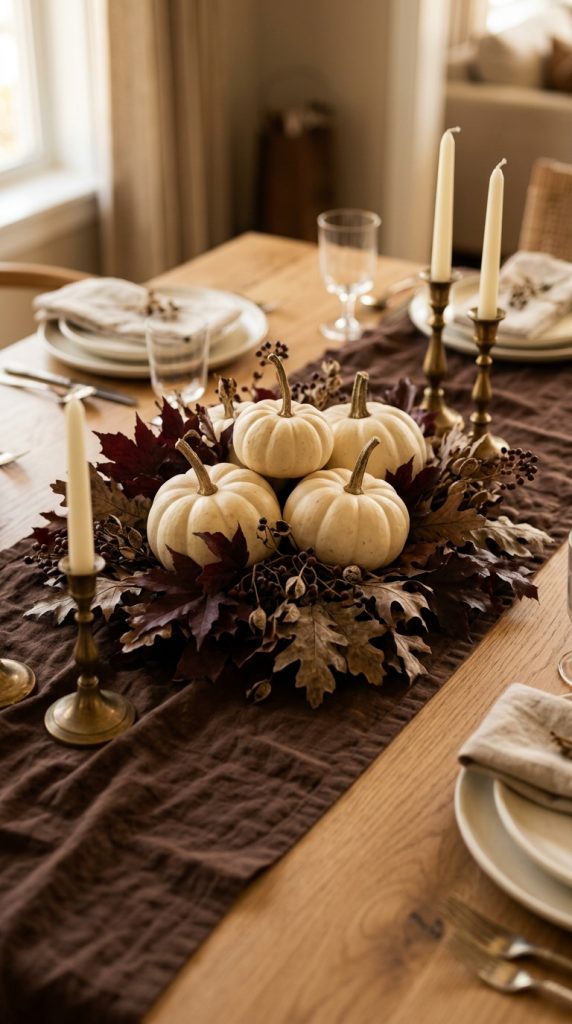
Cream pumpkins paired with burgundy autumn leaves create a softer interpretation of moody fall decorating. This arrangement combines the familiar shape of seasonal pumpkins with a more sophisticated color palette. It is an excellent option for people who want autumn charm without the bright orange tones often associated with traditional fall displays.
Start with three to five miniature cream pumpkins in varying sizes. Real white pumpkins, neutral-painted decorative pumpkins, or quality faux pumpkins can all work. Choose pieces with natural-looking stems and subtle variations in shape to prevent the display from appearing artificial.
Arrange the pumpkins along the center of a dining table, placing the largest one slightly off-center rather than creating a perfectly symmetrical row. Add burgundy leaves, deep red foliage, or preserved autumn branches between the pumpkins. A few muted brown or olive leaves can help bridge the contrast between the cream and burgundy elements.
For a more elevated presentation, place the arrangement on a dark linen runner or a narrow piece of textured fabric in chocolate brown. The darker background makes the cream pumpkins stand out and helps the burgundy foliage appear richer. Alternatively, a natural flax runner gives the centerpiece a softer farmhouse quality.
Introduce two or three short candleholders in antique brass or dark bronze. Use ivory or burgundy candles to reinforce the color palette, but keep them separate from dried foliage and other flammable materials. If the table is small, leave out the candleholders and allow the pumpkins and leaves to create the entire display.
You can also incorporate a low wooden tray to keep the components visually connected. Choose a tray with a natural or dark-stained finish, and arrange the pumpkins loosely rather than packing them tightly together.
Materials to gather:
- Miniature cream pumpkins
- Burgundy leaves or autumn foliage
- A dark or neutral table runner
- A low wooden tray, if desired
- Optional antique brass candleholders
- A few olive or brown foliage accents
This centerpiece works beautifully with cream tableware, dark wood furniture, and warm metallic accessories. After autumn, remove the burgundy leaves and replace them with evergreen sprigs or winter branches to adapt the display for the next season.
4. Dark Roses With Black Taper Candles
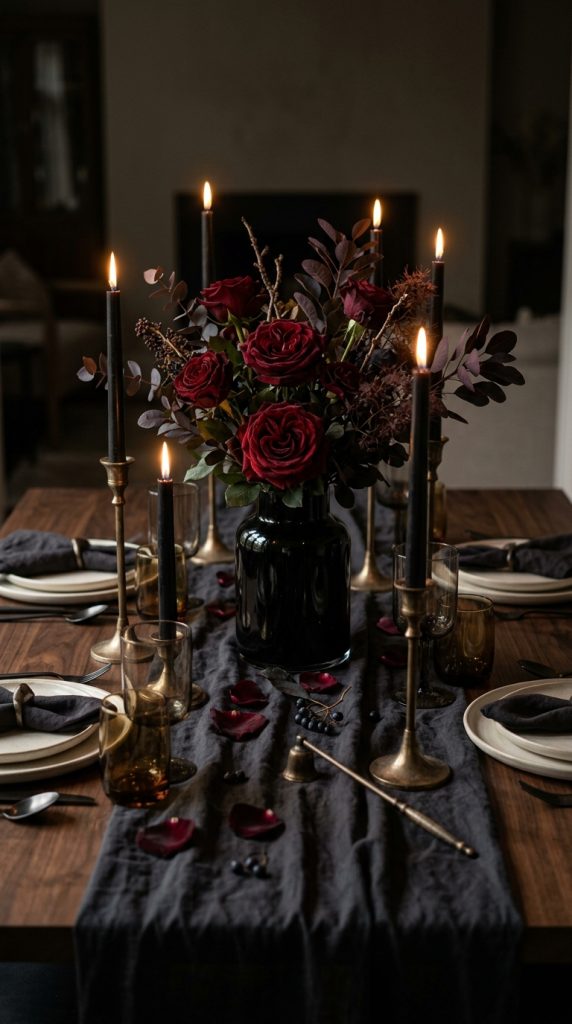
For a dramatic dining-table arrangement, combine deep burgundy or dark red roses with black taper candles. The result feels romantic, slightly gothic, and luxurious without requiring elaborate decorations. It is particularly attractive for evening dinner parties, formal autumn gatherings, or dining rooms decorated in charcoal, walnut, and antique gold.
Choose roses in a rich wine, oxblood, or deep red shade. Avoid mixing too many bright flower colors, because the impact of this arrangement depends on a concentrated palette. Place the flowers in a dark glass vase, a black ceramic vessel, or an antique-style container with a simple silhouette.
Trim the rose stems to create a compact arrangement that sits comfortably below eye level when guests are seated. Add a little dark greenery if needed, but let the rose petals remain the primary feature. A slightly loose arrangement often looks more natural than a tightly packed ball of flowers.
Place the vase in the middle of a charcoal or burgundy runner. Arrange black taper candles in holders of varying heights on either side. Brass or bronze candleholders soften the contrast, while matte black holders create a more contemporary appearance. For a warmer effect, add one or two ivory candles among the black ones, repeating the cream tone in napkins or plates.
Keep the remaining decorations simple. A few dark glass votives, black napkin rings, or understated metallic details are enough. Too many decorative objects can make the table look crowded and reduce the impact of the flowers.
For a budget-friendly version, use a smaller number of fresh roses and supplement the arrangement with suitable foliage. Faux roses can also work if their color and texture are realistic. Dusty, overly shiny artificial petals may reduce the sophisticated effect, so choose high-quality stems with natural variation.
Best setting: This centerpiece is especially striking on a dark wood table with warm lighting. If your dining room is small, use fewer candles and a compact floral arrangement to retain the dramatic style without overwhelming the space.
5. Autumn Fruit and Olive Branches
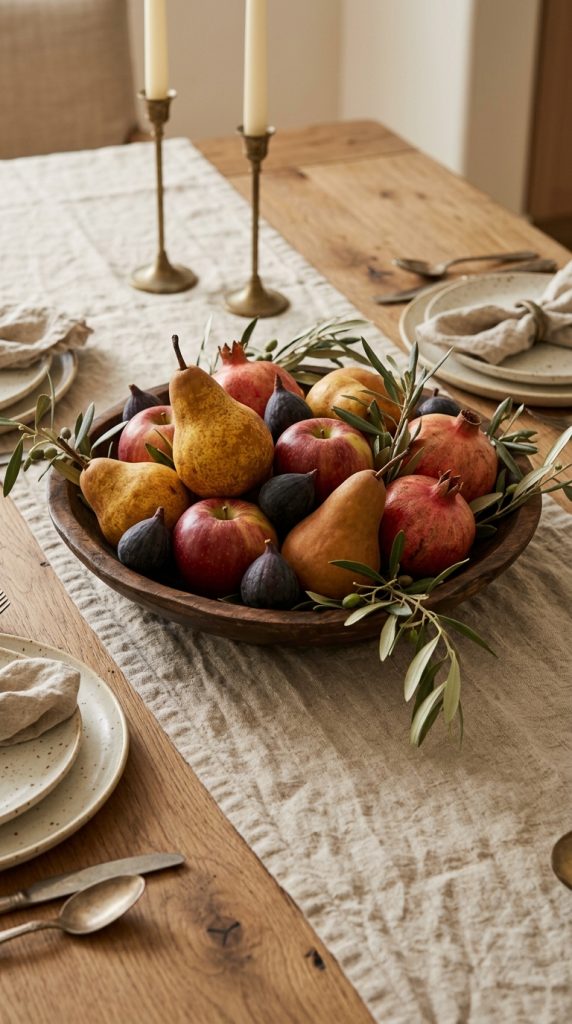
Autumn fruit and olive branches bring a natural, understated elegance to a dining table. Instead of using flowers as the main attraction, this centerpiece celebrates the colors and shapes of seasonal produce. Pears, apples, figs, and pomegranates offer rich autumn tones, while olive branches provide a soft, muted green that balances the darker colors.
Choose a shallow wooden bowl, a handmade ceramic platter, or a low stoneware dish. The vessel should be wide enough to hold several fruits without creating a tall mound. Select produce in complementary shades, such as burgundy figs, deep red apples, golden pears, and dark pomegranates. A limited selection usually looks more sophisticated than including every available color.
Arrange the largest fruit first, then fill the gaps with smaller pieces. Allow some fruit to overlap naturally, but avoid stacking everything too high. Tuck olive branches between the fruit, letting a few leaves extend over the edge of the bowl. Their delicate shape creates movement and prevents the arrangement from feeling too solid.
Place the bowl on a natural linen runner in taupe, oatmeal, or muted olive. If you want a more formal look, position a pair of antique brass candleholders nearby. For a rustic setting, use wooden candleholders or leave the fruit arrangement as the only centerpiece.
One advantage of this idea is that many of its elements are useful beyond decoration. You can refresh the fruit as it is eaten or replace individual pieces when needed. If the display includes fruit intended for consumption, wash it before serving and keep it away from candle wax and decorative materials.
For a long rectangular table, consider repeating the concept in two smaller bowls rather than using one oversized arrangement. This creates balance along the length of the table and leaves space for serving dishes.
Materials to gather:
- Pears, apples, figs, or pomegranates
- Olive branches or suitable greenery
- A shallow bowl or platter
- A linen runner
- Optional brass or wooden candleholders
The overall effect should feel generous but not excessive. Choose fruit with naturally rich colors and let the materials speak for themselves.
6. Burgundy Hydrangeas in Smoked Glass
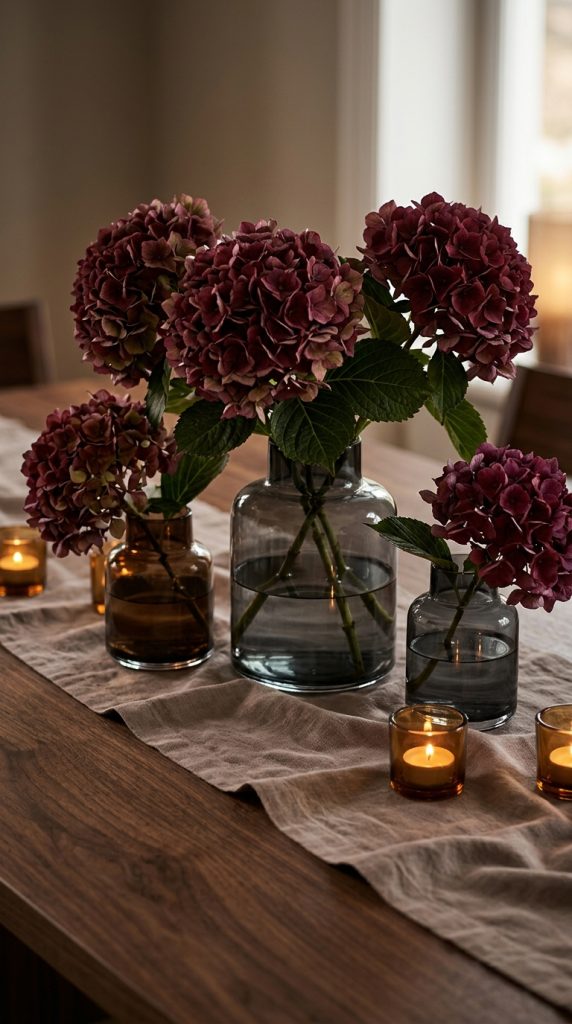
Burgundy hydrangeas arranged in smoked-glass vases create a rich, layered centerpiece with a soft, romantic character. The large flower heads provide volume, while the translucent dark glass adds depth and reflects the warm light of the dining room. This is a useful approach when you want a floral centerpiece that feels substantial but remains relatively simple to assemble.
Select one medium-sized smoked-glass vase or several smaller vessels. Smoked glass in gray, brown, or nearly black tones works well because it complements burgundy petals without competing with them. If you prefer a more collected appearance, combine vases of slightly different heights while keeping their colors similar.
Use burgundy hydrangeas as the main flowers. Depending on availability, you can supplement them with dark dahlias, preserved foliage, or a small amount of eucalyptus. Keep the flower palette concentrated so the centerpiece maintains its moody character.
For a single-vase arrangement, trim the stems to create a rounded shape with a few natural irregularities. For a group of smaller vases, place one or two flower heads in each container. This repeated arrangement works particularly well along a long dining table because it distributes color without blocking the view across the table.
A dark runner enhances the dramatic look, while taupe or cream linen introduces contrast. You can also add small votive holders in clear or amber glass. Their light will create subtle reflections through the smoked-glass vessels, giving the table a warm evening glow.
If fresh hydrangeas are used, check the water regularly and remove fading flowers. Faux hydrangeas offer a reusable alternative, especially when you want to maintain the same centerpiece throughout the autumn season.
Styling tip: Avoid surrounding the arrangement with too many additional flowers or decorative objects. Hydrangeas already have a full shape, so the most attractive composition often includes just the flowers, glass, and a few carefully chosen supporting elements.
7. Moss, Mini Pumpkins, and a Rustic Wooden Bowl
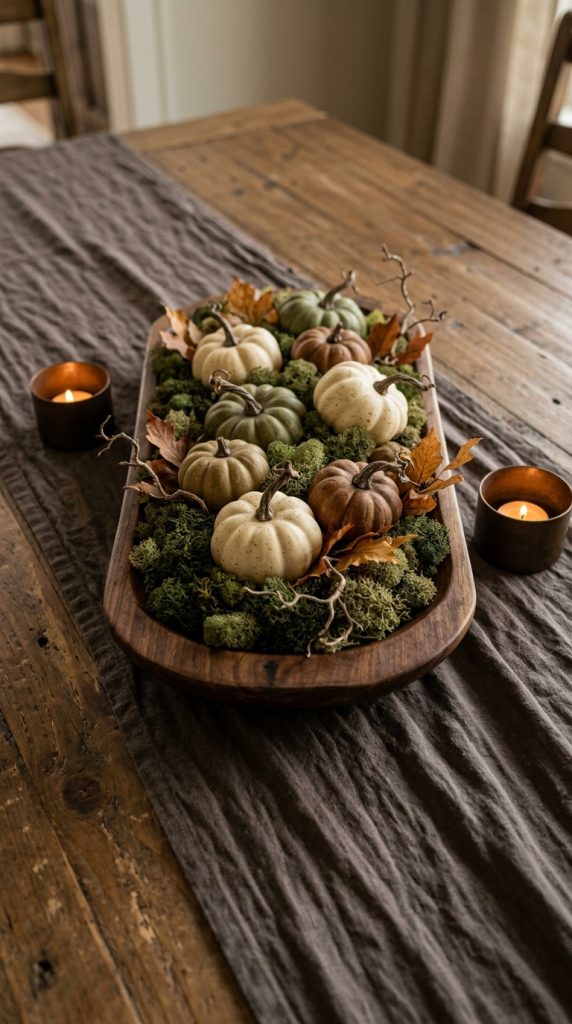
A rustic wooden bowl filled with moss and miniature pumpkins creates an organic autumn centerpiece with a darker, earthy mood. This idea is ideal for farmhouse dining rooms, cottage-inspired homes, and interiors that feature natural wood, linen, and handmade ceramics. It brings the outdoors inside while maintaining a controlled, decorative appearance.
Begin with a shallow wooden bowl in a natural, medium-brown, or dark walnut finish. A bowl with visible grain adds warmth and character. Place a small amount of preserved moss or suitable decorative moss inside the bowl, creating an uneven base rather than a flat layer.
Arrange miniature pumpkins in cream, muted green, dark brown, and subdued orange tones. For a moodier effect, keep bright orange to a minimum and emphasize cream, olive, and earthy brown. Vary the sizes so the display feels natural. Place the larger pumpkins first, then tuck smaller ones into the gaps.
Add a few dried leaves, small twigs, or preserved foliage around the pumpkins. The aim is to create the impression of a miniature woodland harvest rather than a tightly arranged decorative basket. Leave some moss visible so the different textures remain easy to distinguish.
Position the bowl on a linen runner in charcoal, taupe, or warm beige. If the table is large, you can flank the centerpiece with two low candleholders in dark bronze. For smaller tables, the bowl alone may be sufficient.
This arrangement can be assembled using inexpensive materials. A secondhand wooden bowl, faux pumpkins, and reusable decorative moss can create a seasonal centerpiece that lasts for years. Store the components separately after autumn and reuse them in different combinations next season.
If using real moss or natural materials, ensure everything is clean and dry before placing it on the table. Keep decorative materials away from open flames, particularly if the arrangement contains dried leaves or other combustible elements.
The finished centerpiece should feel tactile and natural, with a combination of wood grain, soft moss, curved pumpkin shapes, and scattered foliage. It is a simple way to create an inviting autumn table without relying on a traditional flower bouquet.
8. Antique Brass Candlesticks With Burgundy Velvet Details
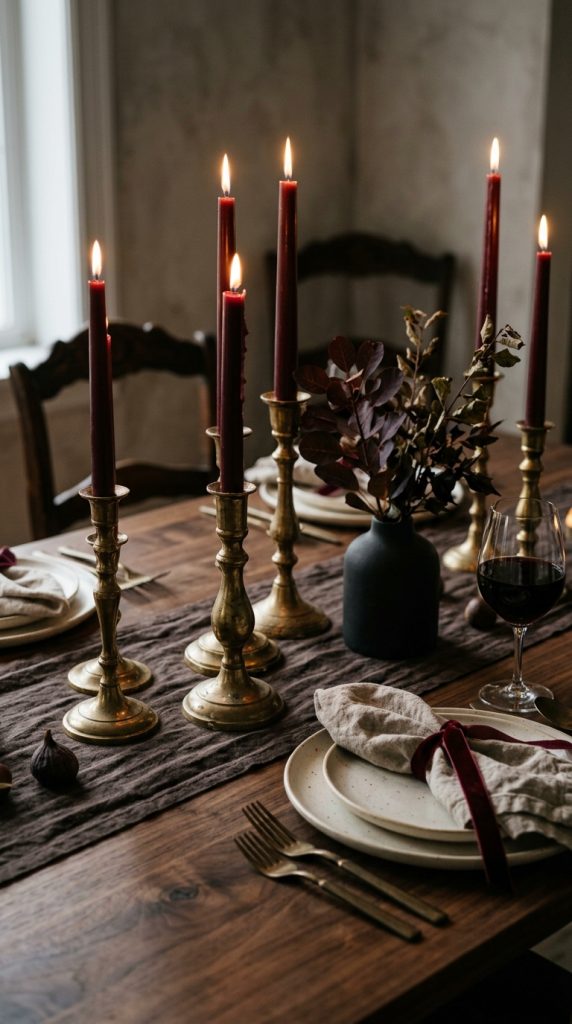
Antique brass candlesticks and burgundy velvet details create an elegant centerpiece that feels appropriate for a formal dinner or a sophisticated autumn gathering. This arrangement focuses on materials rather than a large floral display. The combination of muted metal, rich fabric, and warm candlelight adds depth to the table while leaving room for plates and serving dishes.
Start with three or five antique brass candlesticks in different heights. Odd-numbered groupings often feel visually balanced, although the exact number should depend on the size of your table. Choose candlesticks with a consistent finish so the arrangement looks intentional rather than mismatched.
Use burgundy taper candles to echo the velvet accents. If the table already has dark furniture or a dark runner, cream candles can provide a lighter contrast while the burgundy velvet remains the main color statement.
Introduce velvet through a narrow table runner, small ribbons tied around napkins, or discreet fabric accents at the base of the centerpiece. Avoid spreading velvet across every surface. A small amount of this plush material can make the entire setting feel richer without appearing heavy.
For an additional layer, add a low ceramic vase containing a few dried branches or dark foliage. Keep the arrangement compact so the candleholders remain visible. A simple vase in charcoal, brown, or muted olive will support the palette without adding unnecessary visual competition.
This centerpiece works especially well with dark wood dining tables, cream plates, linen napkins, and antique-style cutlery. On a pale table, use a burgundy or charcoal runner to anchor the composition.
How to style it on a budget: You do not need genuine antique brass. Look for secondhand candleholders, brushed gold finishes, or affordable pieces with a muted metallic surface. Velvet ribbon is also an economical way to introduce texture without purchasing a large fabric runner.
Always place candles in stable holders and keep fabric well away from flames. If you want the same visual effect without an open flame, choose realistic battery-operated taper candles.
9. Dried Hydrangeas and Sculptural Branches
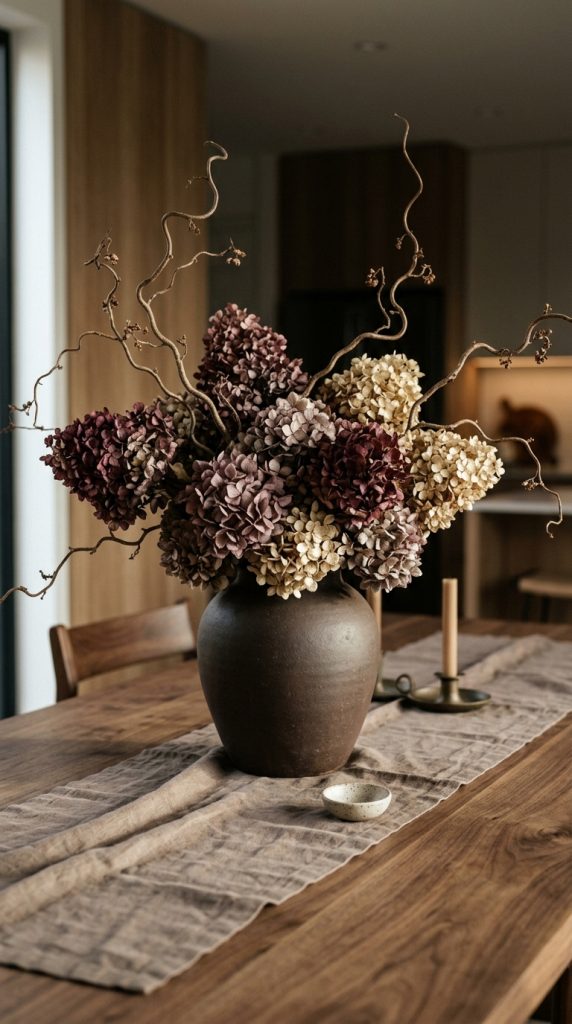
Dried hydrangeas and sculptural branches create a textural centerpiece that looks artistic, natural, and quietly dramatic. This combination is especially attractive for people who want autumn decor that lasts for several weeks or can be reused in other seasons. It is less dependent on bright color and more focused on form, texture, and proportion.
Choose dried hydrangeas in muted burgundy, dusty mauve, antique rose, brown, or faded cream. Their papery petals add volume and a soft, aged appearance. Combine them with branches that have interesting curves or branching patterns. The contrast between the clustered flowers and the linear branches creates visual movement.
Use a substantial ceramic vase in dark brown, charcoal, or warm stone. A matte finish works particularly well because it emphasizes the natural textures of the arrangement. The vase should be heavy enough to support the branches securely.
Place the branches in the vase first, arranging their heights and angles. Add the dried hydrangeas afterward, distributing them so the flowers do not form one dense mass. Leave some space between the stems to preserve the sculptural quality.
For a dining table, keep the lower portion of the arrangement compact. Very tall branches may look beautiful from a distance but can block guests’ views. If your table is narrow, choose a lower vase and a wider, more horizontal arrangement.
A neutral linen runner, wooden serving board, or small dark ceramic dish can complement the centerpiece. Avoid adding many extra decorations, because the flowers and branches already offer enough detail.
Dried materials are often economical over time because they do not need replacing as frequently as fresh flowers. Handle them gently, keep them away from moisture, and avoid placing them close to open flames or hot lighting fixtures.
This centerpiece is ideal for a warm minimalist dining room, a rustic interior, or a modern space that needs a natural focal point without a bright seasonal display.
10. Plum Dahlias With Copper Accents
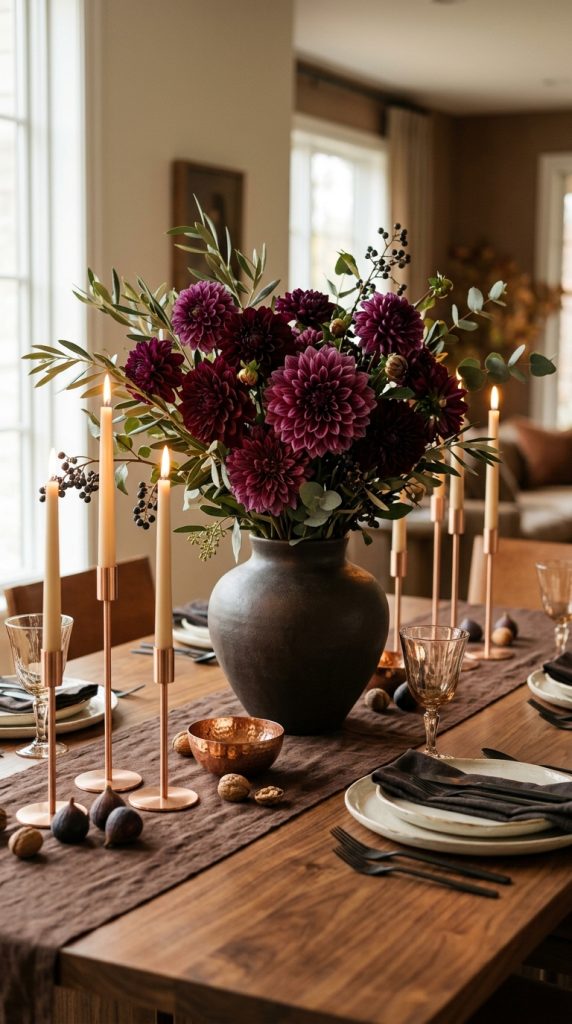
Plum dahlias combined with copper accents create a distinctive autumn centerpiece with rich color and a subtle metallic glow. Plum sits between burgundy and purple, making it an excellent choice for people who want something deeper and more unusual than standard red autumn flowers. Copper introduces warmth and helps the arrangement feel seasonal without becoming overly rustic.
Choose dahlias in plum, wine, or deep mauve tones. Their layered petals create a full, dramatic appearance, so you can make an attractive centerpiece with a relatively small number of blooms. Use a dark ceramic vase, a smoked-glass vessel, or a simple stoneware container in a complementary color.
Trim the stems to create a compact arrangement with a natural outline. A few blooms should sit slightly higher than the others, while some can angle outward to create movement. Add restrained greenery if needed, but avoid too many contrasting flower colors.
Introduce copper through small candleholders, a decorative bowl, or a narrow metallic tray. Choose a brushed or aged finish rather than a highly polished surface if you want the table to feel sophisticated. The copper should support the flowers rather than dominate the arrangement.
A taupe or chocolate-brown table runner works beautifully with plum flowers. Cream plates and linen napkins provide a lighter background, while dark wood furniture makes the metallic details appear warmer.
For an evening dinner, use warm ambient lighting to bring out the reddish undertones in the copper and the depth of the plum petals. Small battery-operated votives can be positioned around the centerpiece where appropriate, provided they do not crowd the table.
Materials to gather:
- Plum or wine-colored dahlias
- A ceramic or glass vase
- Copper-toned candleholders or accessories
- A neutral or chocolate-brown runner
- Optional muted greenery
If copper accessories are not already part of your decor, start with one small piece. Repeating the same finish in a second location, such as a napkin ring or serving bowl, is enough to make the palette feel coordinated.
11. A Minimalist Branch Arrangement in a Stoneware Vase
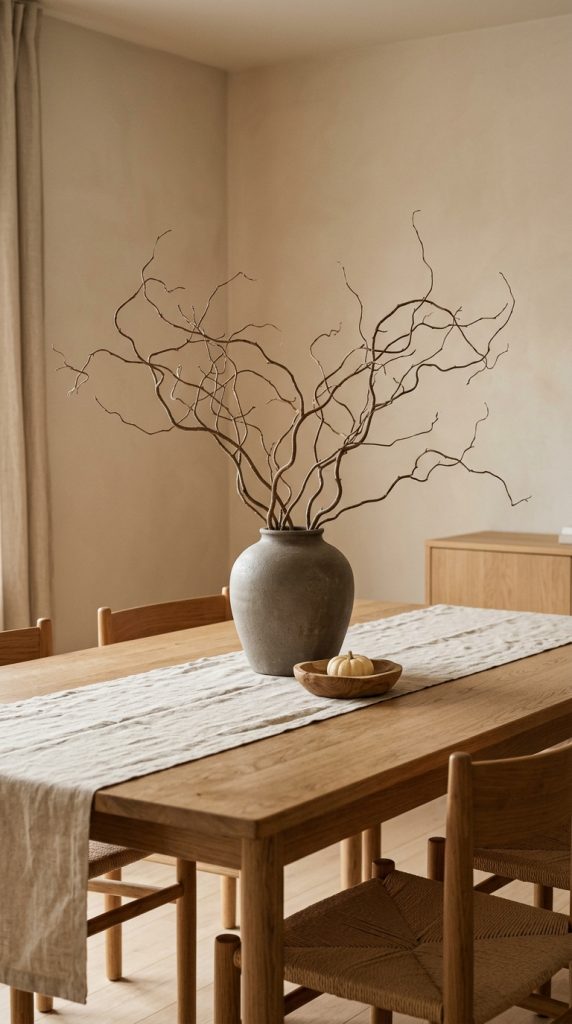
A minimalist branch arrangement in a stoneware vase offers a calm, architectural approach to autumn decorating. Rather than filling the table with pumpkins, flowers, and accessories, this centerpiece relies on a single sculptural object and a restrained palette. It is particularly suited to modern, Japandi-inspired, Scandinavian, and warm minimalist interiors.
Choose a stoneware vase with a natural matte finish. Colors such as mushroom, charcoal, warm gray, sand, and muted brown work well. Handmade variations in the surface can make the vase feel more organic and distinctive.
Select a small number of branches with graceful shapes. You might use dried branches, preserved foliage, or suitable decorative stems. Look for interesting angles and natural irregularities rather than perfectly straight stems. The arrangement should feel deliberate but not overly controlled.
Place the branches in the vase and adjust their positions until the composition looks balanced from multiple angles. One branch can rise higher, while the others extend outward at different heights. Avoid creating a perfectly symmetrical fan unless that is the specific look you prefer.
Position the vase in the center of the table with plenty of negative space around it. A simple linen runner can anchor the arrangement, but a bare wooden tabletop also works beautifully. If you want a little additional autumn warmth, place a small wooden bowl or one cream pumpkin nearby.
This style is especially effective when the dining room already contains layered natural materials, such as oak furniture, linen curtains, textured upholstery, or woven lighting. The centerpiece should complement those materials rather than introduce a completely different decorative language.
For a compact dining table, choose a low vessel and short branches. For a long table, a slightly wider arrangement can create more presence without requiring multiple decorative objects.
The advantage of this approach is its longevity. The branches can remain in place after autumn, while seasonal accessories around the vase can be changed throughout the year. This makes the centerpiece a practical investment for people who prefer restrained decorating.
12. Black Pumpkins With Burgundy Florals
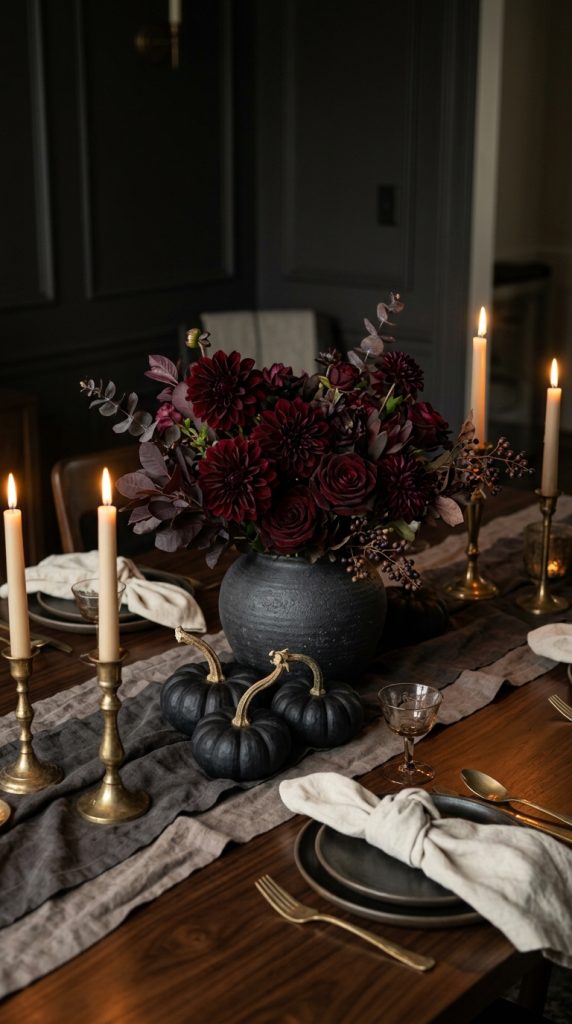
Black pumpkins and burgundy flowers create a dramatic centerpiece that combines autumn charm with a refined, slightly gothic character. It works particularly well for people who enjoy moody interiors but want something more sophisticated than an elaborate Halloween display. The black pumpkins create a dark foundation, while burgundy flowers introduce color and softness.
Choose two or three miniature black pumpkins in varying sizes. Matte finishes usually look more refined than highly glossy surfaces. If you are using plain decorative pumpkins, you can achieve the look with suitable paint designed for the material. Allow painted items to dry completely before arranging them on the table.
Select burgundy roses, dahlias, chrysanthemums, or other deep-toned flowers. Place them in a charcoal ceramic vase or a dark glass vessel. Keep the floral arrangement moderately sized so it complements rather than overwhelms the pumpkins.
Arrange the pumpkins and vase along the center of a dark or neutral runner. A deep brown runner creates warmth, while charcoal or black fabric makes the composition more dramatic. For contrast, add cream napkins or pale stoneware plates at each place setting.
A few antique brass details can prevent the dark palette from feeling flat. Consider using brass candleholders or a small metallic tray. However, keep metallic accents limited so the black and burgundy combination remains the main feature.
If the dining table is small, use a single black pumpkin beside a compact floral arrangement. On a longer table, repeat the visual theme with two smaller floral vessels and several pumpkins distributed between them.
Safety consideration: Keep dried flowers, artificial foliage, and decorative fabric away from open flames. If you use candles, place them in stable holders with ample clearance, or choose battery-operated alternatives.
This centerpiece is versatile enough for autumn dinner parties, Halloween gatherings, and moody seasonal decorating throughout the fall. After Halloween, remove any themed accessories and keep the pumpkins, flowers, and neutral textiles for a more general autumn look.
13. Pomegranates, Figs, and Taper Candles
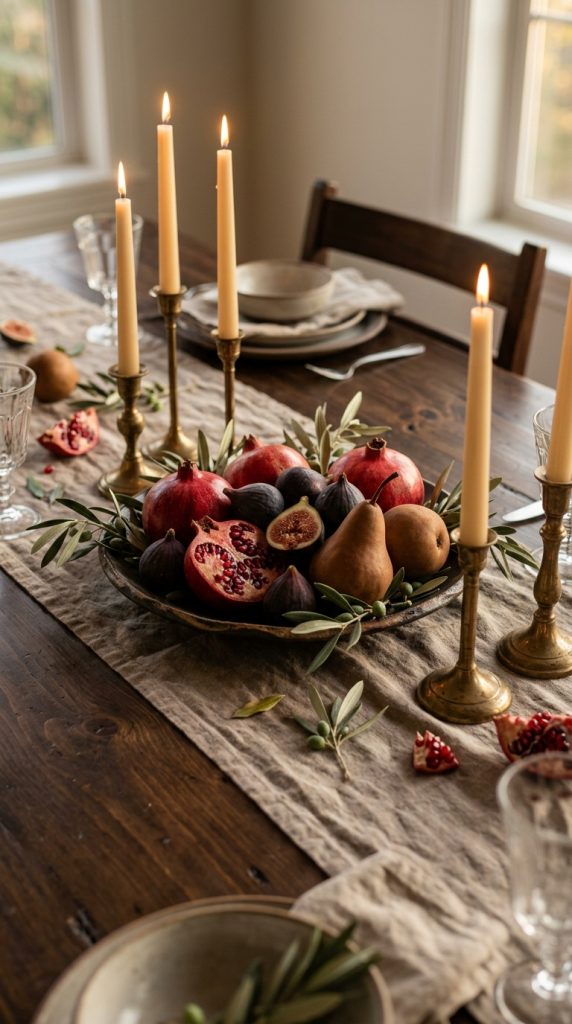
Pomegranates, figs, and taper candles create a richly layered autumn centerpiece inspired by the natural colors of the harvest. Deep red pomegranates, dusky purple figs, and warm brown accessories provide a palette that feels abundant and elegant. This arrangement is an excellent alternative to a traditional floral centerpiece because it uses the color, shape, and texture of seasonal produce as its main decorative elements.
Begin with a shallow bowl or long platter in dark ceramic, stoneware, or natural wood. Arrange several pomegranates as the main focal points, then add figs and a few pears if you want more variety. Keep the composition low enough for comfortable conversation across the table.
Choose fruit with complementary colors. The deep red of pomegranates works beautifully with purple figs, while brown pears and muted green foliage provide subtle variation. Avoid using too many bright colors, which can dilute the moody effect.
Place the fruit on a dark linen runner or a natural taupe textile. Add two or three taper candles in antique brass, bronze, or dark holders. For a more contemporary interpretation, use simple black holders and cream candles.
If you want a fuller arrangement, tuck a few olive branches between the fruit. Their muted leaves provide a delicate contrast to the heavier shapes of the pomegranates. Keep the greenery restrained so the fruit remains the primary focus.
This centerpiece is particularly attractive for autumn dinners, harvest celebrations, and intimate gatherings. It looks beautiful with cream dinnerware, linen napkins, and warm wood furniture.
Practical tip: If the fruit is intended to be eaten, keep it clean and avoid placing it where candle wax or decorative materials can contaminate it. Replace any fruit that becomes damaged or begins to spoil. You can also use realistic decorative fruit if you want the display to remain in place for a longer period.
For a long dining table, create two smaller fruit groupings with candles between them rather than building one large mound. This approach looks balanced and leaves space for serving dishes.
14. Olive Branches in a Dark Green Ceramic Vase
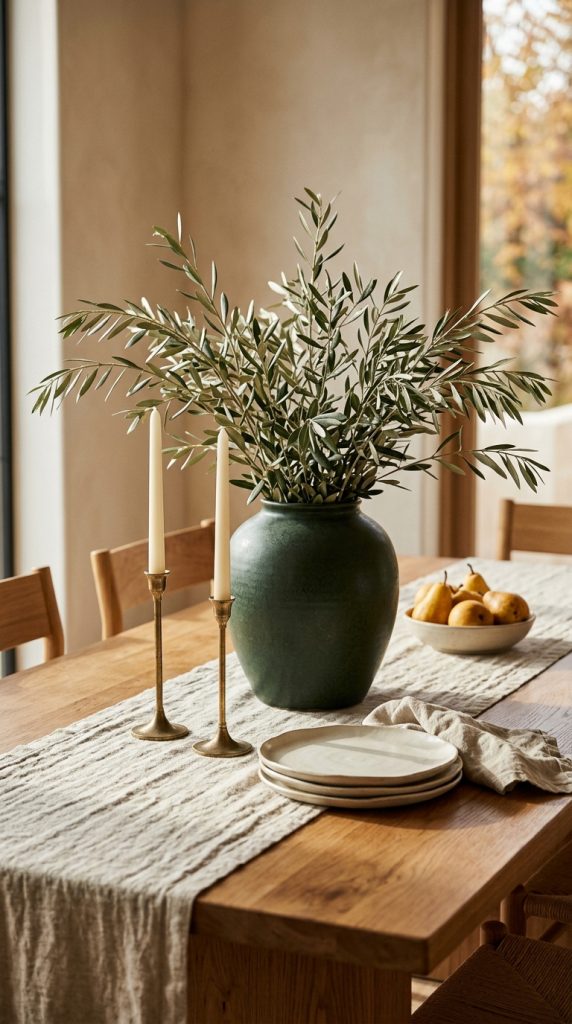
Olive branches arranged in a dark green ceramic vase create a refined centerpiece with an organic autumn mood. The combination of muted foliage and deep green pottery feels natural but sophisticated, making it suitable for contemporary, Mediterranean-inspired, rustic, and transitional dining rooms.
Choose a ceramic vase in forest green, deep olive, or a nearly black green. A matte or subtly glazed finish adds depth without drawing attention away from the foliage. The vase should be stable and proportionate to the size of your table.
Arrange several olive branches loosely inside the vessel. Let some branches extend outward to create a gentle, horizontal silhouette, while others rise slightly higher. The silvery-green leaves provide a soft contrast against the dark vase and work beautifully with warm wood.
If using fresh branches, trim the stems and refresh the water as needed. Preserved or high-quality faux olive branches can be useful alternatives if you want a centerpiece that requires less maintenance.
Keep the surrounding decor understated. A linen runner in oatmeal, taupe, or charcoal creates a suitable base, while a pair of antique brass candleholders can add warmth. You can also place a small bowl of pears or a single cream pumpkin nearby for a more seasonal look.
The strength of this centerpiece is its versatility. It suggests autumn through its earthy colors and natural materials rather than relying on obvious seasonal symbols. As a result, it can remain on the dining table for longer than a more specifically themed arrangement.
For smaller tables, use a low vase with short branches. For a large rectangular table, choose a wider vessel and a fuller arrangement, or place two matching vessels at intervals along the table.
Styling tip: Repeat one or two colors from the centerpiece elsewhere in the room. Olive cushions, dark green artwork, brown ceramics, or brass hardware can make the arrangement feel connected to the surrounding decor.
15. A Long Burgundy Floral Runner for a Formal Dining Table
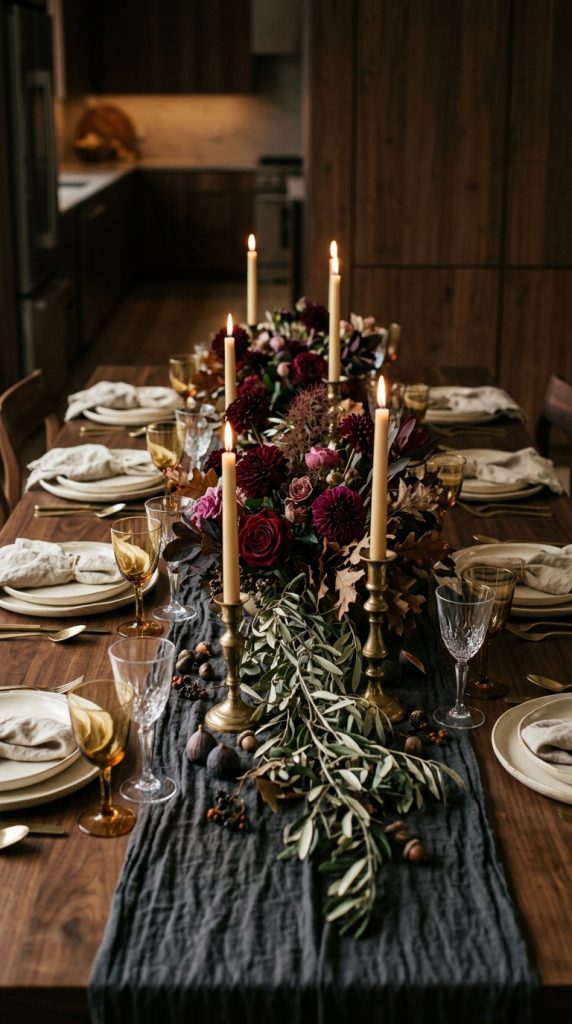
A long burgundy floral runner creates a luxurious autumn centerpiece that stretches across the dining table rather than concentrating everything in one vase. This approach is particularly effective for long rectangular tables, formal dinner parties, and special seasonal gatherings. It creates a continuous line of color and texture while allowing you to incorporate candles, small vessels, and other decorative elements.
Begin with a narrow linen runner in charcoal, chocolate brown, or muted taupe. This provides a foundation for the flowers without competing with their color. For a more dramatic setting, you can use burgundy fabric, but choose a shade that allows the flowers and other elements to remain distinguishable.
Arrange burgundy flowers along the center of the runner in a loose, organic line. You can use roses, dahlias, chrysanthemums, or a mixture of suitable blooms. Distribute the flowers unevenly to create natural movement rather than a rigid, symmetrical strip.
Add dark foliage and a few muted green branches to create contrast. If you prefer a fuller floral runner, use small floral clusters interspersed with open spaces. This keeps the centerpiece visually interesting without making it appear like a solid wall of flowers.
Introduce candleholders at intervals along the arrangement. Antique brass, dark bronze, or black holders can work, depending on the desired mood. Use varying heights to create dimension, but make sure the candles are stable and separated from flowers, foliage, ribbons, and other flammable elements. Battery-operated taper candles are a useful option for dense floral arrangements.
For a formal tablescape, pair the runner with cream plates, burgundy napkins, and understated metallic cutlery. A few small smoked-glass votives can add warmth, provided they are safely positioned and do not crowd the place settings.
If fresh flowers are too expensive, combine a smaller number of fresh blooms with reusable faux foliage. Concentrate the freshest, most attractive flowers in the central sections and use greenery to extend the arrangement along the table.
This centerpiece works best when the rest of the table remains relatively simple. Allow the burgundy floral line to be the main attraction, and avoid adding many unrelated decorative objects.
Best Colors for a Moody Autumn Centerpiece
The most effective moody autumn palettes combine dark, saturated shades with softer neutrals and natural materials. Burgundy, oxblood, plum, charcoal, chocolate brown, and deep olive green provide depth, while cream, ivory, taupe, and muted beige prevent the table from feeling too heavy.
Burgundy and antique brass create a classic, romantic combination. Plum and copper offer a slightly more unusual autumn palette. Black and burgundy feel dramatic, while olive green and dark brown create an organic, understated atmosphere. Cream pumpkins and pale linen provide contrast when the centerpiece contains several dark elements.
You do not need to use every color in one arrangement. Choose two or three main colors and add a small number of supporting shades. For example, a centerpiece featuring burgundy flowers, dark foliage, and brass candleholders may need only a neutral runner to feel complete.
Repeat the main colors subtly through napkins, plates, glassware, or other room accessories. Repetition helps the entire tablescape look coordinated without requiring every object to match.
Budget-Friendly DIY Tips for Moody Autumn Centerpieces
Creating an elegant autumn centerpiece does not require a large budget. Begin by shopping your own home for vases, bowls, candleholders, trays, and neutral textiles. A dark ceramic vase that you already own may be the perfect foundation for a new arrangement.
Use seasonal materials where available. Branches, fallen leaves, suitable seed pods, and natural-looking twigs can provide texture at little cost. Gather natural materials responsibly and check them for insects, moisture, and damage before using them indoors.
Instead of purchasing a large bouquet, choose a small number of focal flowers and supplement them with foliage. A few burgundy dahlias or roses can create a striking arrangement when placed in a suitable vase. Dried hydrangeas and branches can also be reused in different combinations throughout the season.
Decorative pumpkins are another useful investment because they can be stored and reused. Cream, black, muted green, and brown pumpkins are particularly versatile in a moody autumn palette. Store faux pumpkins carefully to prevent scratches and damage.
Look for affordable candleholders at thrift stores, flea markets, and secondhand shops. Slight differences in height can make a group of similar metal candleholders look collected and interesting. If the finishes do not match, consider grouping pieces with similar undertones rather than trying to make every item identical.
Use fabric strategically. A narrow runner can have a stronger visual effect than a large quantity of decorative accessories. Linen-look cotton, textured neutral fabric, or a simple piece of suitable upholstery fabric can provide a beautiful foundation.
The most important budget principle is to avoid buying items that serve no clear purpose in the composition. Choose a focal point, establish a limited color palette, and add only the elements needed to create balance.
Final Thoughts on Moody Autumn Centerpiece Ideas
Moody autumn centerpieces offer a beautiful way to decorate your dining table with rich colors, natural textures, and warm lighting. From burgundy flowers and antique brass candlesticks to dried branches, dark ceramic vases, seasonal fruit, and cream pumpkins, there are many ways to create an elegant fall arrangement that suits your home.
The most successful designs begin with a clear focal point and a restrained color palette. Choose a few complementary materials, vary their heights and textures, and leave enough open space for the table to remain functional. You can create a dramatic display with black pumpkins and burgundy flowers, a natural harvest arrangement with pomegranates and olive branches, or a minimalist centerpiece with sculptural branches in stoneware.
You do not need to purchase every item at once. Start with a vase or bowl you already own, add a few seasonal elements, and introduce candlelight or metallic accents only if they improve the composition. Thoughtful styling and careful editing can make even an inexpensive arrangement look polished.
Most importantly, choose a centerpiece that reflects your personal style and the way you use your dining room. Whether you prefer romantic florals, rustic textures, or contemporary minimalism, the right combination of autumn colors and natural materials can make your dining table feel warm, welcoming, and beautifully prepared for the season.