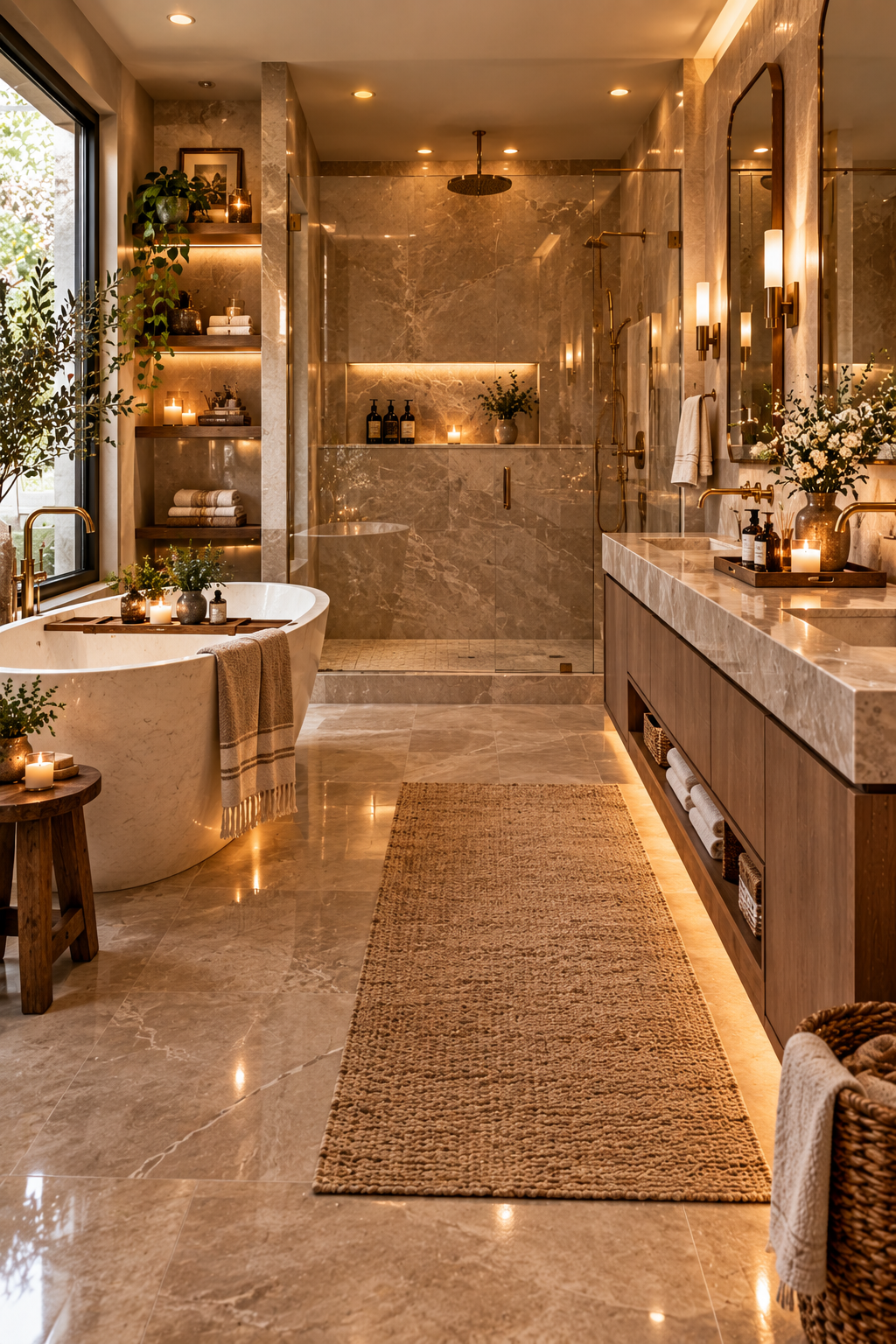
A modern luxury bathroom does not need excessive decoration, oversized chandeliers, or an enormous budget to feel sophisticated. The most memorable luxury bathrooms often rely on a carefully controlled combination of natural materials, thoughtful proportions, beautiful lighting, and a calming color palette. Natural stone brings depth and character to the room, while warm lighting creates the soft, inviting atmosphere that makes a bathroom feel more like a private spa than a purely functional space.

Natural stone is especially effective in modern bathrooms because every surface has subtle variations in tone, texture, and pattern. Marble can introduce elegant veining, travertine can create an earthy and architectural appearance, limestone can provide a soft minimalist finish, and slate can add darker visual depth. Instead of making the bathroom feel cold or overly formal, these materials can be balanced with warm wood, brushed metal, textured fabrics, soft beige tones, and carefully positioned lighting.
Warm lighting is equally important. A beautiful stone bathroom can lose much of its character under bright, cool-white lighting. Warm illumination brings out the natural variations in stone and creates softer shadows around architectural details. Wall sconces beside a mirror, concealed LED strips beneath a vanity, recessed ceiling lights, illuminated shower niches, and subtle floor-level lighting can work together to create layers of light rather than relying on one strong overhead fixture.
The goal is not simply to make a bathroom look expensive. The goal is to create a space that feels intentional. Every material should have a purpose, every light source should support the architecture, and every decorative element should contribute to the overall atmosphere.
Modern luxury also depends heavily on visual restraint. Too many materials competing for attention can make a bathroom look busy rather than sophisticated. A better approach is to choose one dominant stone, one complementary wood or finish, and one metal accent. For example, warm beige travertine paired with walnut cabinetry and aged brass can create an elegant organic look. Cream marble with dark walnut and brushed brass can feel more dramatic. Light limestone with oak and matte black can produce a refined contemporary aesthetic.
The size of the bathroom does not necessarily determine whether it can look luxurious. Small bathrooms can benefit from large-format stone surfaces, floating vanities, frameless glass, concealed storage, and warm lighting. These choices reduce visual interruptions and make the room appear more spacious. Larger bathrooms offer additional opportunities to create separate zones, such as a freestanding soaking tub, walk-in shower, double vanity, makeup area, or private toilet zone.
Another important aspect is texture. Luxury is often experienced through texture rather than decoration. A honed stone wall beside a softly polished vanity surface creates contrast. Ribbed wood cabinetry adds warmth. Linen towels introduce softness. Handmade ceramics can provide subtle irregularity. Brushed metal fixtures add a tactile quality that polished chrome may not provide.
When designing a bathroom around natural stone, maintenance should also be considered. Some stones are porous and may require sealing. The surface finish matters as well. Honed finishes are generally softer and more understated visually, while polished stone reflects more light and creates a glamorous appearance. Textured stone can add character but may require additional cleaning attention in wet areas.
The best modern luxury bathrooms therefore combine beauty with practicality. Storage should be easy to access. Shower controls should be positioned conveniently. Lighting should be flattering but functional. Mirrors should be large enough for the vanity. Countertops should have enough space for everyday essentials without becoming cluttered.
Warm lighting can also change throughout the day. During the morning, natural daylight can provide the primary illumination, while warm artificial lighting becomes more important during the evening. A dimmable lighting system allows the atmosphere to change depending on the activity. Bright task lighting can support grooming, while lower ambient lighting can create a relaxing spa-like mood when taking a bath.
Color plays an important role as well. Neutral colors are particularly effective with natural stone because they allow the material itself to become the visual feature. Cream, ivory, taupe, sand, warm gray, caramel, walnut, and soft beige all work beautifully with stone. Darker accents such as charcoal, espresso, bronze, or muted black can be introduced carefully to create contrast.
The following ideas explore different ways to combine natural stone and warm lighting in a modern luxury bathroom. Each concept focuses on a specific design feature so you can adapt the idea to a large master bathroom, compact ensuite, guest bathroom, or spa-inspired renovation.
Whether you prefer soft organic minimalism, dramatic marble, earthy travertine, or a sophisticated hotel-inspired atmosphere, the key is to create balance. Natural stone provides the foundation, warm lighting creates atmosphere, and carefully selected furniture and accessories complete the room.
1. Create a Full Natural Stone Feature Wall With Layered Warm Lighting

One of the easiest ways to establish a luxury feeling is to make one natural stone wall the architectural focal point of the bathroom. Instead of covering every surface with different materials, select one wall and allow the stone to command attention.
A large-format marble, limestone, travertine, or textured stone can transform an otherwise simple bathroom. The wall behind the vanity is especially effective because it is naturally visible when entering the room. Another option is the wall behind a freestanding bathtub.
Choose a stone with a pattern that complements the overall aesthetic. Cream marble with delicate veining works beautifully in elegant contemporary bathrooms. Travertine creates a warmer, more organic appearance. Dark stone can create drama, particularly when paired with soft lighting.
Large-format slabs are particularly useful in modern bathrooms because fewer grout lines create a cleaner visual appearance. If the budget allows, slab installation can create an almost continuous stone surface.
Warm lighting should be used to enhance the stone rather than overpower it. Concealed LED strips can be installed along the ceiling edge or behind architectural recesses. Vertical wall sconces can illuminate the vanity area while recessed ceiling lights provide general illumination.
Another beautiful technique is grazing light. This involves positioning a light source close enough to the stone surface that it emphasizes texture and variation. This works particularly well with textured limestone, travertine, and other naturally uneven materials.
Keep the remaining walls relatively quiet. A neutral plaster finish or simple large-format tile can allow the feature wall to remain dominant.
For the vanity, choose a floating design in warm oak or walnut. The contrast between natural wood and stone prevents the bathroom from feeling too hard or cold.
Materials and Items
- Natural stone slabs or large-format stone tiles
- Floating wood vanity
- Warm LED lighting
- Wall sconces
- Frameless mirror
- Minimal stone countertop
- Brushed brass or bronze hardware
- Neutral towels
- Simple ceramic accessories
How to Style It
Start by selecting the stone before choosing the accessories. Study the undertones carefully because some stones lean warm while others have cooler gray tones.
Match the vanity wood to the warmer tones within the stone. Avoid introducing several different wood finishes.
Use lighting at multiple levels. Ceiling lights provide general illumination, vanity lighting supports grooming, and concealed lighting highlights architectural surfaces.
Keep decorative accessories minimal. A single ceramic vessel, folded towels, and a small natural arrangement are usually enough.
The finished space should feel architectural rather than decorated. The stone itself becomes the artwork.
2. Design a Warm Travertine Spa Bathroom With Soft Ambient Lighting

Travertine has become a particularly appealing material for creating warm, sophisticated bathroom interiors because its natural texture gives a room an earthy architectural quality.
Unlike highly dramatic marble, travertine tends to feel quieter and more organic. Its creamy beige, sandy, and warm taupe tones work beautifully with wood and warm lighting.
For a modern luxury bathroom, consider using travertine across the shower walls, vanity wall, or even the floor. The key is to select a consistent finish so the bathroom feels cohesive rather than visually fragmented.
A walk-in shower with large-format travertine walls can become the central feature. Frameless glass keeps the stone visible from throughout the room.
A recessed shower niche can provide practical storage while also creating another opportunity for warm lighting. A subtle LED strip inside the niche can illuminate bottles and decorative objects without creating harsh brightness.
Pair the travertine with a floating walnut or natural oak vanity. The warm wood reinforces the earthy quality of the stone while adding storage.
Brushed brass fixtures can introduce a sophisticated metallic accent. Alternatively, aged bronze can create a more subdued and vintage-inspired luxury appearance.
Lighting should remain soft. Instead of relying exclusively on ceiling fixtures, use concealed lighting under the vanity and warm sconces around the mirror.
Textiles should continue the natural palette. Choose cream towels, beige bath mats, and woven baskets.
Materials and Items
- Warm travertine
- Walnut or oak vanity
- Frameless shower glass
- Brushed brass fixtures
- Recessed shower niche
- Warm LED strips
- Large mirror
- Cream linen towels
- Stone or ceramic accessories
How to Style It
Use travertine as the primary material and avoid introducing too many additional tile patterns.
Choose warm white or cream paint where stone is not used.
Select lighting around the warm-white range so the stone maintains its natural warmth.
Keep countertop accessories organized in one tray rather than scattering bottles across the vanity.
Finish the room with a few tactile materials such as woven storage baskets, linen towels, and handmade ceramics.
The result should feel like a quiet private spa with an elevated architectural character.
3. Combine Cream Marble, Walnut and Warm Brass for an Elegant Luxury Look
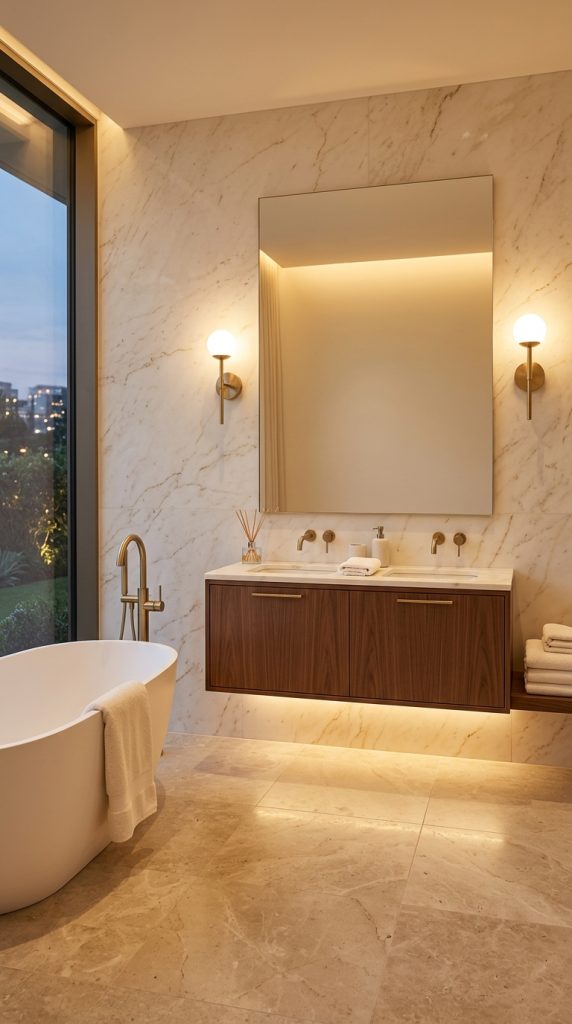
For a more glamorous interpretation of modern luxury, combine creamy marble with dark or medium walnut cabinetry and warm brass fixtures.
Marble immediately creates a sense of refinement because its natural veining provides visual movement. However, using marble everywhere can sometimes make a bathroom feel overly formal. Walnut helps soften the effect.
A marble vanity wall can serve as the main feature. If a full marble slab is not practical, large-format porcelain with a realistic marble appearance can provide a similar visual direction.
Choose marble with subtle warm veining rather than a pattern that dominates the entire room. Cream, ivory, beige, and softly veined marble work particularly well with warm lighting.
The vanity should have clean modern lines. A floating walnut vanity with integrated drawers creates an elegant contrast against the stone.
Brass fixtures can be used consistently across the bathroom. Choose the same finish for faucets, shower hardware, cabinet handles, and lighting fixtures.
Avoid mixing multiple metallic finishes unless the design is intentionally eclectic. Consistency creates a more expensive appearance.
Warm sconces positioned on both sides of the mirror can provide flattering facial illumination. Add concealed lighting beneath the vanity to create a floating effect.
If there is space, introduce a freestanding bathtub with a simple sculptural silhouette.
Materials and Items
- Cream or ivory marble
- Walnut vanity
- Warm brass fixtures
- Freestanding bathtub
- Large frameless mirror
- Warm wall sconces
- Under-vanity LED lighting
- Neutral textiles
- Minimal decorative objects
How to Style It
Let marble occupy the largest visual surface.
Use walnut to create warmth at eye level and below.
Repeat the brass finish throughout the room for cohesion.
Choose simple white or cream sanitaryware rather than highly decorative pieces.
Keep countertop styling restrained. A stone tray with a ceramic container and neatly folded hand towels is sufficient.
The finished bathroom should feel polished, timeless, and sophisticated without looking excessively ornate.
4. Create a Dramatic Dark Stone Bathroom With Golden Warm Illumination

Luxury does not always have to mean bright white interiors. Dark natural stone can create a dramatic, intimate atmosphere when paired with carefully controlled warm lighting.
Charcoal stone, dark slate, deep gray marble, or richly textured stone can be used on one or more walls.
The key to using dark materials successfully is balancing them with sufficient light. Rather than flooding the room with harsh white illumination, introduce several warm light sources.
A dark stone shower wall illuminated from above can create a dramatic architectural effect. Vertical sconces around a mirror can prevent the vanity from becoming visually lost.
A floating vanity in medium or dark walnut can blend naturally with the stone while providing warmth.
Metallic accents should be carefully selected. Aged brass or bronze can stand out beautifully against charcoal surfaces.
For smaller bathrooms, consider limiting the dark stone to one feature wall. Keep the remaining surfaces light and use a large mirror to reflect light around the room.
A backlit mirror is another excellent option. It creates a soft halo effect against the stone without adding another visible fixture.
Materials and Items
- Charcoal or dark natural stone
- Walnut vanity
- Aged brass or bronze fixtures
- Backlit mirror
- Warm recessed lights
- Wall sconces
- Frameless shower enclosure
- Cream towels
- Minimal ceramic accessories
How to Style It
Use dark stone strategically instead of covering every available surface.
Place warm lighting close to textured stone to reveal its character.
Add lighter towels and accessories to prevent the room from becoming visually heavy.
Choose a large mirror to increase reflected light.
Avoid excessive decorative objects. Dark stone already provides significant visual drama.
This approach is particularly effective for a master bathroom where the goal is to create a sophisticated, intimate retreat.
5. Build a Luxury Walk-In Shower With Stone, Glass and Integrated Lighting

A walk-in shower can become one of the most luxurious features in a modern bathroom when its architecture is carefully planned.
Instead of dividing the shower into multiple small areas, create a spacious open shower with large-format natural stone and frameless glass.
Stone can cover the back wall while the floor uses a complementary textured surface for practical reasons.
A recessed niche should be incorporated into the wall rather than relying on visible shelves. This keeps the shower visually clean.
Add integrated lighting inside or around the niche. A warm LED strip can create a soft glow while making everyday products easier to see.
A ceiling-mounted rainfall showerhead can strengthen the spa-like feeling. Pair it with a handheld shower for practical use.
A built-in stone bench is another luxury feature. It can provide seating while also giving the shower a more architectural appearance.
Keep plumbing fixtures visually coordinated. Brushed brass, brushed nickel, bronze, or matte black can all work depending on the stone.
Materials and Items
- Natural stone shower slabs or tiles
- Frameless glass
- Built-in stone bench
- Recessed niche
- Warm LED strip
- Rainfall showerhead
- Handheld shower
- Coordinated shower hardware
- Non-slip floor surface
How to Style It
Use the same primary stone on the main shower wall and vanity area when possible.
Avoid excessive grout lines by choosing larger tiles.
Keep bottles inside the niche rather than around the shower floor.
Use warm lighting as an architectural accent rather than a decorative afterthought.
Select a simple glass enclosure with minimal visible hardware.
The finished shower should feel open, calm, and custom-built.
6. Pair Natural Stone With Warm Wood for an Organic Modern Bathroom
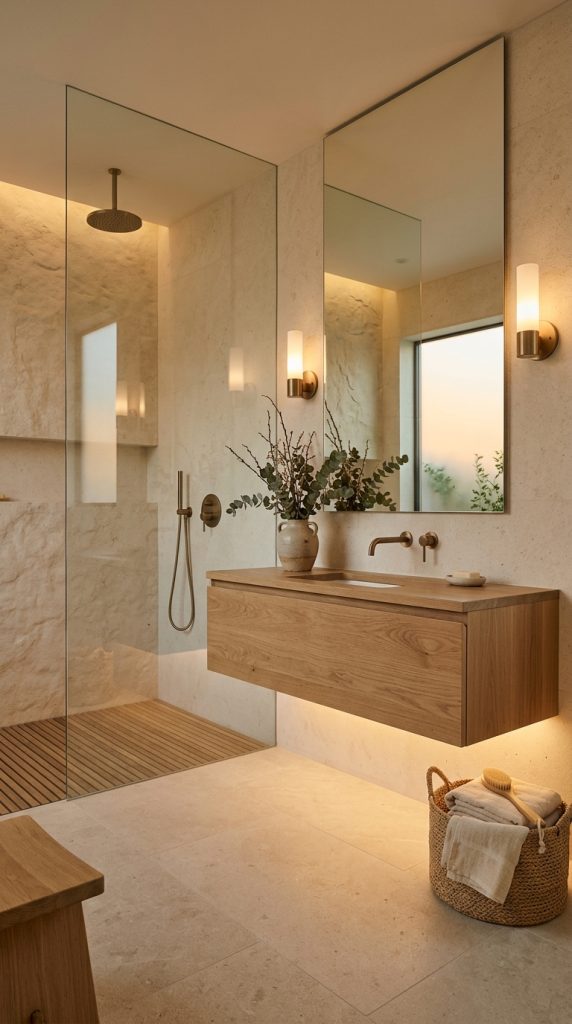
Natural stone becomes especially inviting when paired with warm wood. This combination creates an organic modern bathroom that feels luxurious without appearing overly formal.
Choose a stone with natural variation, such as limestone, travertine, or softly veined marble.
Then introduce wood through the vanity, shelving, ceiling detail, or small architectural elements.
Walnut provides a richer, more luxurious appearance, while light oak creates a brighter Scandinavian-inspired effect.
A floating vanity is ideal because it allows light to pass beneath the cabinetry. Adding a warm LED strip underneath creates a subtle floating effect at night.
The stone should remain the primary architectural material. Wood should support it rather than compete with it.
Use cream, beige, and warm gray accessories to continue the palette.
Natural woven baskets can add additional texture, but avoid filling the room with decorative objects. The luxury comes from the quality of the materials and the simplicity of the composition.
Materials and Items
- Limestone, travertine, or marble
- Natural oak or walnut vanity
- Warm LED strip
- Frameless mirror
- Brushed bronze or brass hardware
- Woven storage basket
- Linen towels
- Ceramic accessories
- Neutral bath mat
How to Style It
Choose one wood tone and repeat it consistently.
Keep the stone in a natural or softly honed finish for an understated appearance.
Use warm lighting beneath the vanity and around the mirror.
Introduce soft textiles to balance the harder surfaces.
Choose accessories with handmade or slightly irregular textures.
This approach creates a bathroom that feels connected to nature while maintaining a sophisticated modern structure.
7. Create a Hotel-Inspired Bathroom With Stone, Soft Lighting and a Sculptural Tub

Luxury hotels often use simple materials in highly controlled ways. You can recreate that feeling by focusing on proportion, symmetry, and lighting rather than excessive decoration.
A freestanding bathtub can become the central feature. Position it against a stone wall or beneath a large window if privacy allows.
Choose a simple sculptural tub with a smooth silhouette. Avoid overly ornate shapes.
Behind the tub, use natural stone in a warm neutral shade. This creates a dramatic but peaceful backdrop.
Install concealed lighting above or behind architectural features so the stone remains gently illuminated.
If there is a vanity nearby, choose matching or complementary stone and cabinetry.
Large mirrors can increase the feeling of space. If using double vanities, symmetry can make the bathroom feel especially polished.
Use hotel-style textiles: large fluffy towels, a simple bath mat, and neatly arranged hand towels.
A small stool or stone side table beside the tub can hold a book, candle, or ceramic vessel.
Materials and Items
- Freestanding sculptural bathtub
- Natural stone feature wall
- Floating or built-in vanity
- Large mirror
- Warm concealed lighting
- Wall sconces
- Stone or wood side table
- High-quality neutral towels
- Minimal ceramics
How to Style It
Make the bathtub the focal point rather than adding numerous decorative elements.
Use symmetry around the vanity where practical.
Keep towels folded neatly.
Choose one or two subtle decorative objects rather than creating a large display.
Use warm lighting to make the room feel inviting in the evening.
The finished bathroom should resemble a private luxury hotel suite while remaining comfortable for everyday use.
8. Use Large-Format Stone Flooring With Soft Architectural Lighting

Flooring can completely change the perception of a bathroom. Large-format natural stone flooring creates fewer visual interruptions and can make the space appear wider and more continuous.
Choose a stone with subtle movement. Cream limestone, warm beige travertine, and muted gray stone are particularly versatile.
Large-format slabs or tiles can reduce grout lines, giving the floor a cleaner contemporary appearance.
The flooring should coordinate with the wall material but does not necessarily need to match it exactly.
For example, warm limestone flooring can be paired with softly veined marble walls. The relationship between the tones creates depth without introducing competing patterns.
Lighting is particularly important near the floor. A floating vanity with concealed LED illumination can create a soft horizontal glow that visually separates the cabinetry from the floor.
Floor-level lighting can also be used along a feature wall or beneath a bathtub platform.
Use recessed ceiling lights for functional illumination and wall sconces for facial lighting.
Materials and Items
- Large-format natural stone flooring
- Complementary wall stone
- Floating vanity
- Under-vanity LED lighting
- Warm recessed ceiling lights
- Wall sconces
- Frameless glass
- Neutral textiles
- Minimal accessories
How to Style It
Choose large-format flooring that has enough texture for bathroom safety.
Keep the grout color close to the stone for a seamless appearance.
Avoid adding too many floor accessories.
Use floating cabinetry to reveal more of the flooring.
Repeat the flooring tone in small accessories to create visual continuity.
This idea works particularly well in medium and large bathrooms where expansive floor surfaces can become an important part of the overall design.
9. Add a Backlit Stone Vanity Wall for a Custom Luxury Effect

For a truly architectural bathroom, consider using translucent stone or stone-look material with integrated illumination behind it.
Certain natural stones can be backlit to reveal their patterns and translucent qualities. When used correctly, the result can resemble a piece of illuminated artwork.
A backlit stone vanity wall can become the primary focal point of the bathroom.
The vanity itself should remain simple. Floating cabinetry with clean drawers allows the illuminated surface to remain visually dominant.
Warm illumination should be carefully diffused so there are no visible hot spots or harsh LED points.
A large mirror can be mounted in front of or incorporated into the stone wall depending on the design.
Brushed brass or bronze hardware can add subtle contrast.
Because the illuminated stone already creates a strong visual statement, keep other surfaces restrained.
Materials and Items
- Suitable translucent stone or stone-look surface
- Integrated LED backlighting
- Floating vanity
- Minimal countertop
- Large mirror
- Warm metal fixtures
- Soft neutral towels
- Simple ceramic accessories
How to Style It
Treat the illuminated stone as artwork.
Use warm, dimmable lighting so its intensity can change throughout the day.
Avoid installing multiple competing statement surfaces.
Keep vanity accessories organized.
Use simple fixtures with refined shapes.
This concept works especially well in contemporary luxury bathrooms where the architecture is intended to be the main decorative feature.
10. Finish the Bathroom With Layered Warm Lighting and Minimal Luxury Accessories
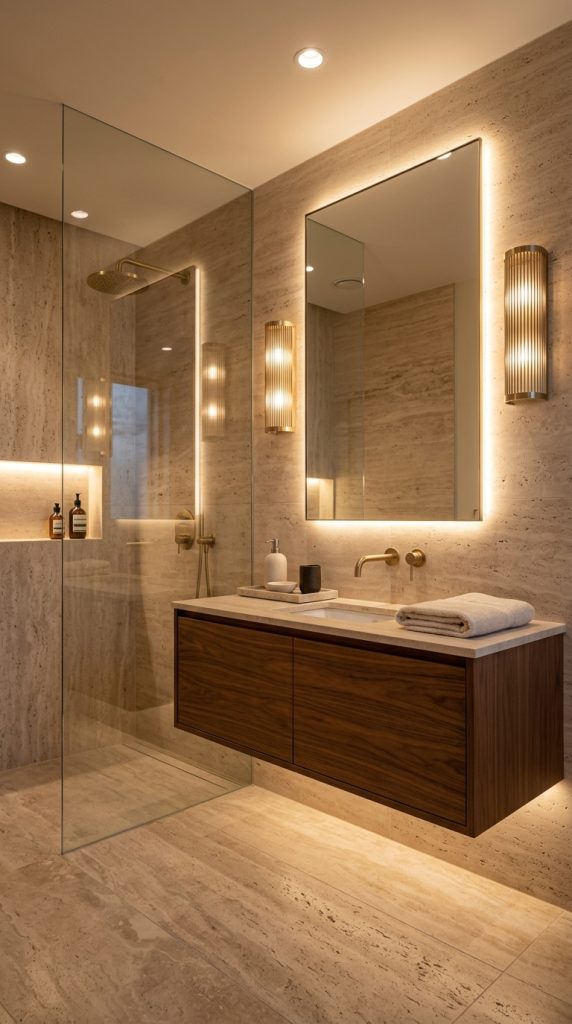
Even the most beautiful stone bathroom can feel ordinary if its lighting and finishing details are not carefully considered.
The final layer of luxury comes from creating a lighting system rather than simply installing light fixtures.
Start with ambient lighting. Recessed ceiling lights should provide enough general illumination for everyday activities.
Next, add task lighting around the vanity. Wall sconces positioned on both sides of the mirror can provide more even illumination than a single overhead light.
Then introduce accent lighting. LED strips beneath floating cabinetry, inside niches, behind mirrors, or along architectural edges can create subtle layers.
Finally, consider decorative lighting. A sculptural pendant or elegant wall light can act as a design feature if the room has enough ceiling height and the fixture is appropriate for the bathroom environment.
Use warm lighting for areas where relaxation and atmosphere are priorities while ensuring task areas have adequate illumination for grooming.
Accessories should remain minimal.
Choose a stone tray, ceramic container, folded towels, a small artwork piece suitable for a bathroom environment, or a single natural arrangement.
Avoid leaving numerous bottles and products exposed on the countertop. Luxury bathrooms usually feel organized because visual clutter is controlled.
Storage therefore becomes part of the design. Deep drawers, mirrored cabinets, concealed niches, and built-in storage can keep everyday objects out of sight.
Materials and Items
- Warm recessed ceiling lights
- Dimmable LED lighting
- Wall sconces
- Backlit mirror
- Under-vanity LED strip
- Stone tray
- Ceramic containers
- Linen towels
- Minimal artwork
- Decorative vessel
How to Style It
Begin with functional lighting and then add atmosphere.
Use dimmers wherever possible.
Position sconces at an appropriate height around the mirror.
Use concealed lighting to highlight architectural details.
Keep decorative accessories limited to a few intentional pieces.
Store daily products inside drawers or cabinets.
Choose towels in cream, ivory, beige, or warm gray.
Add one subtle natural element, such as a small branch arrangement or simple greenery, if the bathroom has suitable conditions.
The final result should feel calm rather than decorated.
How to Choose the Right Natural Stone for a Modern Luxury Bathroom
Choosing the right stone is one of the most important decisions in the entire design.
Marble is ideal when you want elegance and visible veining. It can create a sophisticated high-end appearance, especially when paired with brass and walnut.
Travertine works beautifully for warmer organic interiors. Its earthy texture and beige tones complement wood and warm lighting.
Limestone provides a softer minimalist appearance. It is especially effective in contemporary spa-inspired bathrooms.
Slate creates stronger contrast and works well when the goal is a darker dramatic atmosphere.
Granite can provide durability and distinctive patterning, although the visual character varies significantly between varieties.
Before selecting a stone, examine a large sample rather than relying on a small color chip. Natural materials can look dramatically different depending on scale and lighting.
Consider the undertones as well. A stone with yellow or beige undertones will work differently from one with cool gray undertones.
How to Make Natural Stone Look More Expensive
Luxury is not necessarily about using the most expensive material. It is about using materials consistently and intentionally.
Choose fewer materials and repeat them throughout the room.
For example, use one stone, one wood tone, and one metal finish.
Large-format surfaces generally create a cleaner appearance because they reduce visual interruptions.
Floating vanities also contribute to a more architectural look.
Keep plumbing fixtures coordinated.
Use concealed storage whenever possible.
Pay attention to grout color. Strongly contrasting grout can emphasize individual tiles, while a closely matched grout can create a more continuous surface.
Lighting is another major factor. Even an expensive stone can look ordinary under poor lighting.
Use warm layered illumination to reveal texture and depth.
How to Use Warm Lighting Without Making the Bathroom Too Dark
Warm lighting should not mean insufficient lighting.
The goal is to combine warm illumination with enough brightness for practical activities.
Use stronger task lighting around mirrors and vanity areas.
Use softer accent lighting in shower niches, under cabinetry, and around architectural features.
Dimmable lighting is particularly useful because the bathroom can serve multiple purposes throughout the day.
During cleaning or grooming, brighter lighting is useful. During a relaxing bath, softer lighting creates a calmer environment.
Avoid placing all lighting on one ceiling plane. Multiple light levels create depth.
How to Keep a Luxury Bathroom Looking Uncluttered
Storage is essential.
Use drawers with internal organizers for cosmetics and grooming products.
Install mirrored cabinets for smaller items.
Use recessed niches inside showers.
Choose floating vanities with deep drawers.
Keep only a few decorative objects on the countertop.
Instead of displaying every product, transfer frequently used items into attractive containers when practical.
Fold towels consistently.
Use one tray to group small items rather than scattering them around the vanity.
A visually quiet bathroom allows natural stone and architectural details to remain the focus.
How to Add Warmth Without Losing the Modern Look
Warmth can be introduced through materials rather than excessive decoration.
Wood cabinetry is one of the most effective solutions.
Warm metal finishes such as brass and bronze can add subtle richness.
Cream and beige textiles soften hard stone.
A woven basket can introduce natural texture.
Rounded accessories can balance the straight lines of modern cabinetry.
However, restraint remains important.
A modern luxury bathroom should still have clear visual hierarchy. The stone should establish the architectural foundation, the vanity should provide function and warmth, and the lighting should create atmosphere.
Final Thoughts
Modern luxury bathroom design is ultimately about creating a thoughtful relationship between materials, light, proportion, and function.
Natural stone gives the room character that manufactured surfaces often struggle to reproduce. Every vein, pore, texture, and tonal variation contributes to the personality of the space. Warm lighting then brings those details to life, especially during the evening when the bathroom becomes more than a functional room.
Whether you choose creamy marble, earthy travertine, elegant limestone, or dramatic dark stone, the strongest approach is to keep the overall palette controlled. Combine the stone with warm wood, refined metal finishes, soft textiles, and carefully positioned lighting.
You do not need to cover every wall in expensive stone or fill the bathroom with luxury accessories. One exceptional feature wall, a beautifully designed vanity, a spacious walk-in shower, and thoughtful lighting can create a stronger impression than an overloaded design.
The most successful modern luxury bathrooms also feel comfortable. They provide convenient storage, practical lighting, durable materials, and easy-to-use fixtures while maintaining a beautiful visual atmosphere.
Start with the stone you love. Build the palette around its natural undertones. Choose cabinetry that adds warmth, select one consistent metal finish, and create multiple layers of lighting.
Then remove anything that does not serve the design.
The result can be a bathroom that feels sophisticated, peaceful, warm, and timeless—a private retreat designed for both everyday routines and moments of relaxation.