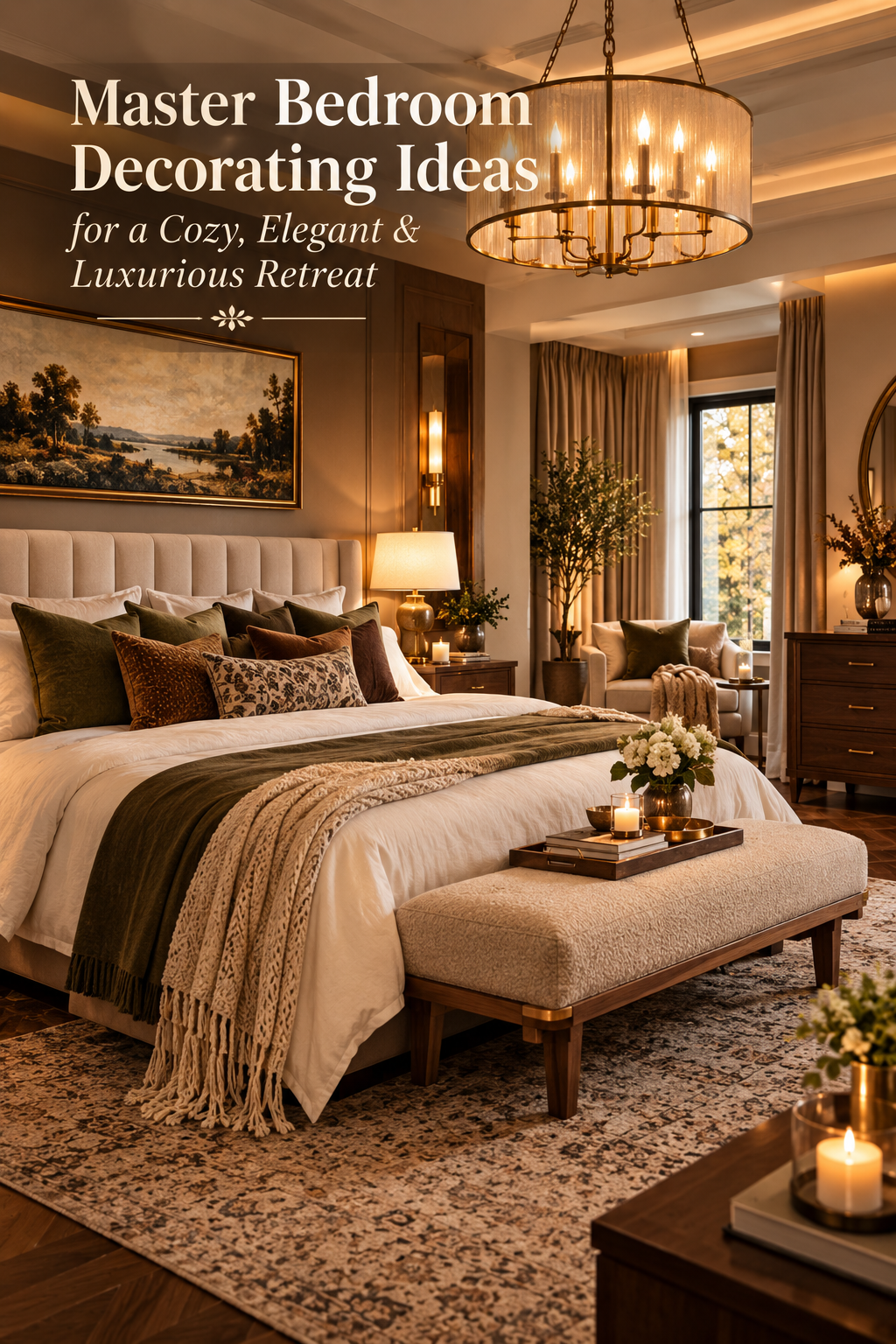
Your master bedroom should feel like more than a place to sleep. It should be a private retreat where you can slow down, relax, recharge, and enjoy a sense of comfort at the end of the day. The most beautiful bedrooms are not necessarily the largest or the most expensive. They are the spaces where furniture, lighting, colors, fabrics, and personal details work together to create an atmosphere that feels welcoming and intentional.
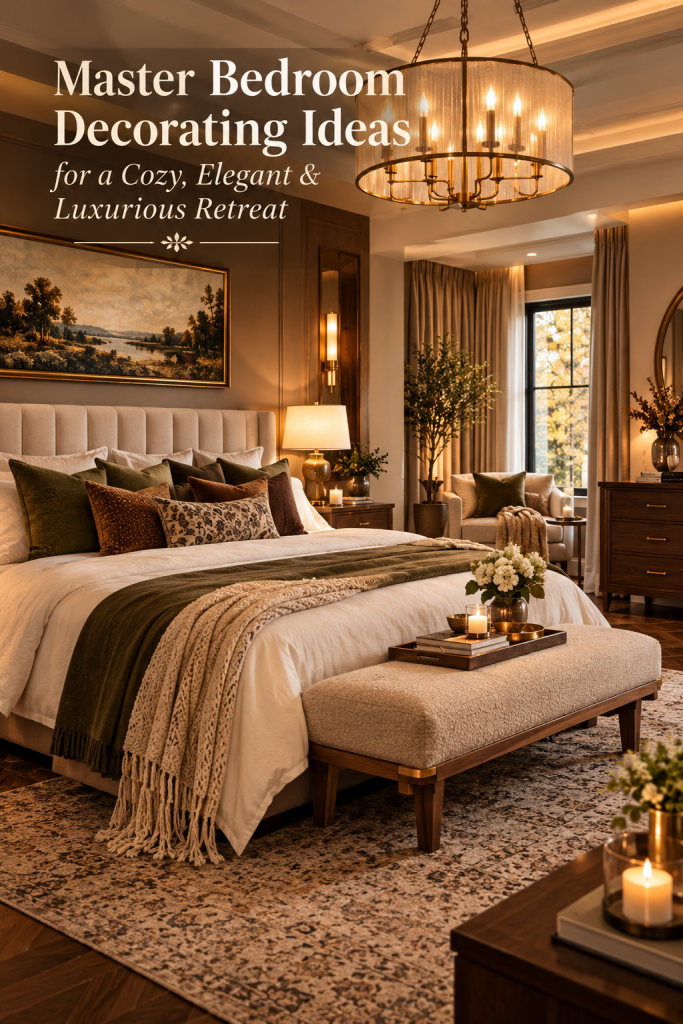
If you are searching for master bedroom decorating ideas for a cozy, elegant and luxurious retreat, the key is to balance softness with sophistication. A room can look luxurious without feeling formal, and it can feel cozy without becoming cluttered. The goal is to create layers of comfort while keeping the overall design polished.
Current 2026 bedroom trends are moving toward warmer, more personal interiors rather than overly stark spaces. Designers are highlighting earthy colors, richer textures, layered lighting, natural materials, statement headboards, cocooning layouts, and bedrooms that feel genuinely restorative. (Homes and Gardens)
This shift is particularly useful when decorating a master bedroom because it allows you to create luxury through atmosphere rather than simply buying expensive furniture. A beautifully layered bed, warm bedside lighting, substantial curtains, natural wood, tactile fabrics, and carefully selected accessories can completely transform an ordinary room.
Color also plays an important role. Cream, taupe, warm beige, chocolate brown, muted olive, soft clay, dusty blue, charcoal, and warm gray can all create an elegant foundation. Deeper colors can make a bedroom feel intimate and cocooning, while lighter neutrals can make it feel airy and spacious. The important part is choosing a palette that feels harmonious rather than filling the room with too many unrelated shades.
Texture is equally important. A bedroom decorated entirely with smooth surfaces can look flat even when the furniture is expensive. Introducing linen, velvet, boucle, wool, cotton, wood, woven materials, stone, ceramic, and softly finished metals gives the eye different surfaces to discover. Architectural Digest’s 2026 bedroom guidance similarly emphasizes materiality, proportion, layered lighting, tactile textiles, and intentional editing when creating a refined bedroom. (Architectural Digest)
Lighting can then bring everything together. Instead of depending entirely on one ceiling fixture, use several sources at different heights. Bedside lamps, sconces, floor lamps, concealed lighting, and a decorative pendant can create a much softer atmosphere. Layered lighting is also repeatedly highlighted in current bedroom design guidance because it allows the room to shift from bright and functional during the day to warm and relaxing at night. (HomeLane)
The following ten master bedroom decorating ideas are designed to help you create that balance. Some ideas focus on major elements such as the bed and walls, while others show how smaller details can create a luxurious finished look. You do not need to use every idea. Instead, choose the elements that fit your room, lifestyle, budget, and personal style.
1. Create a Statement Bed With an Oversized Upholstered Headboard
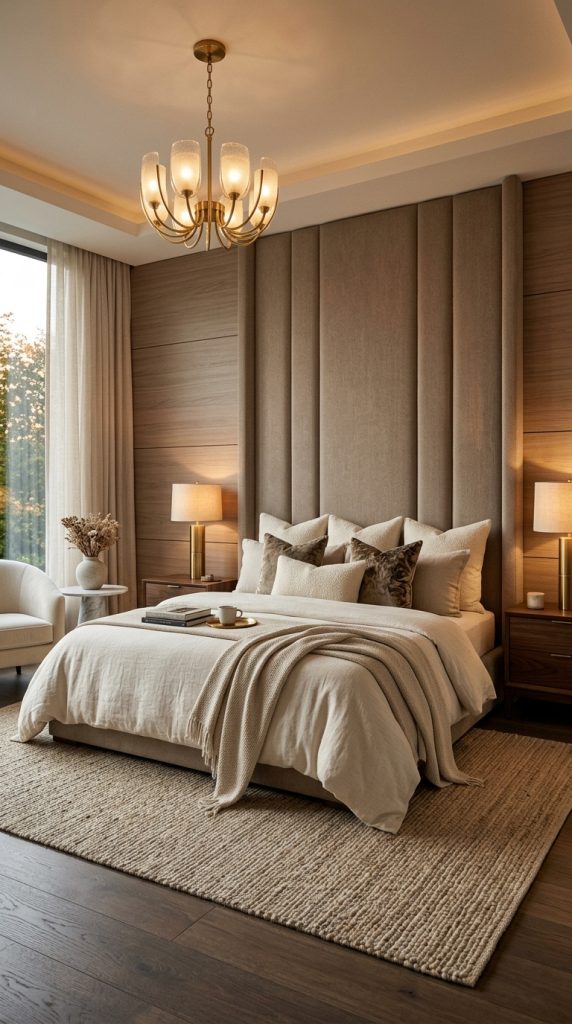
The bed should be the visual anchor of your master bedroom, and one of the easiest ways to make it feel luxurious is to give it a substantial upholstered headboard.
An oversized headboard instantly adds presence to the room. Instead of allowing the bed to look like an isolated piece of furniture, the headboard creates a strong visual center and gives the wall behind it architectural importance.
For a cozy elegant bedroom, consider a tall headboard covered in linen, boucle, velvet, cotton, or another tactile fabric. Warm ivory, oatmeal, taupe, mushroom, caramel, soft gray, and muted brown work beautifully when you want a timeless appearance.
If you prefer a more dramatic bedroom, choose charcoal, deep olive, chocolate brown, navy, or muted burgundy.
The shape of the headboard matters as well. A simple rectangular design feels contemporary, while curved edges create a softer and more romantic appearance. Vertical channel tufting can introduce subtle architectural detail without requiring complicated wall construction.
One of the most effective approaches is to make the headboard slightly wider than the mattress. This creates a more substantial visual frame and gives the bed a custom-designed appearance.
Build a layered luxury bed
The headboard is only the foundation. The bedding should continue the same sense of softness.
Start with high-quality-looking neutral sheets. Layer a duvet or quilt over them and add a textured coverlet or folded blanket near the foot of the bed. Finish with a carefully edited collection of pillows.
Avoid filling the bed with an excessive number of decorative pillows. Instead, use different shapes and textures. Two large sleeping pillows can form the base, followed by two decorative pillows and one long lumbar cushion.
For example, you could combine:
- Cream linen bedding
- A taupe textured coverlet
- Two oversized ivory pillows
- One caramel velvet cushion
- One long boucle lumbar pillow
- A soft wool throw at the foot
The result feels luxurious because of the layering rather than because of excessive decoration.
Make the wall behind the bed part of the design
If you want the room to feel more custom, extend the headboard concept into the surrounding wall.
You could use:
- Upholstered wall panels
- Vertical wood slats
- Warm-toned molding
- Soft textured wallpaper
- Limewash-style paint
- Simple panel molding
- A full-height fabric headboard
Current bedroom design trends are increasingly embracing padded and enveloping surfaces to create cocoon-like spaces. (ELLE Decor)
For a sophisticated result, keep the wall treatment and headboard within the same color family. A beige headboard against a slightly deeper taupe wall, for example, creates depth without harsh contrast.
Add proportionate nightstands
Large beds require furniture with appropriate scale. Tiny nightstands beside an oversized bed can make the entire arrangement feel unbalanced.
Choose nightstands that are approximately level with the mattress or slightly below it. Look for substantial materials such as walnut, oak, dark wood, stone, or painted wood.
Add one beautiful lamp, a small decorative object, and perhaps a book. Avoid turning the nightstand into a storage pile.
The finished composition should feel intentional from across the room.
2. Use a Warm, Sophisticated Color Palette
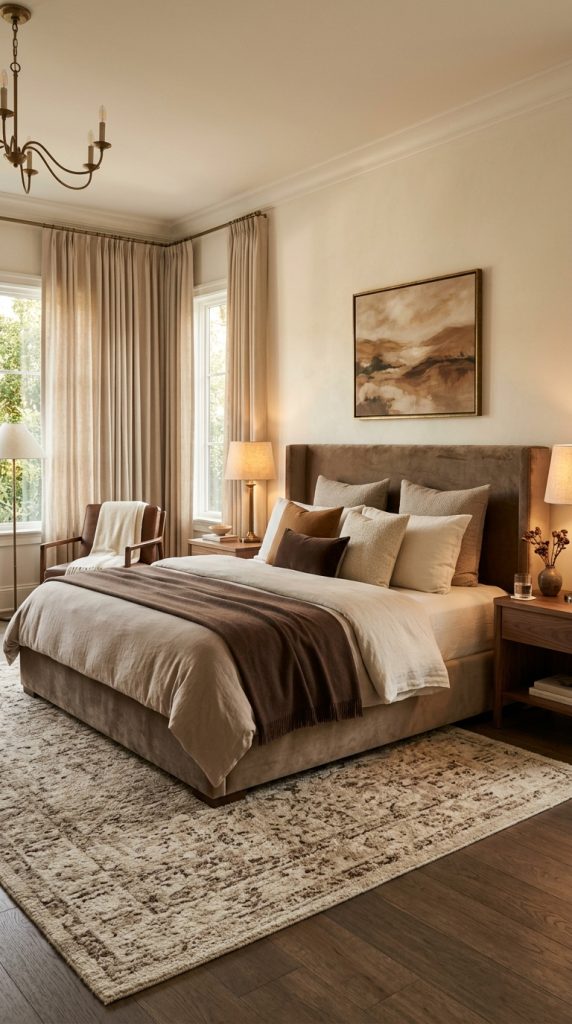
Color is one of the fastest ways to change the emotional atmosphere of a bedroom.
For a cozy and luxurious master bedroom, consider moving away from extremely cool whites and building your palette around warmer neutrals and sophisticated earth tones.
A warm palette can include:
- Cream
- Oatmeal
- Beige
- Taupe
- Mushroom
- Caramel
- Walnut brown
- Chocolate
- Muted olive
- Clay
- Dusty rose
- Warm charcoal
These colors work especially well because they can be layered without making the bedroom visually chaotic.
Try tonal decorating
Tonal decorating means using several shades from the same color family instead of creating strong contrast everywhere.
Imagine a bedroom using:
- Warm ivory walls
- Beige curtains
- Oatmeal bedding
- Taupe upholstered bed
- Walnut nightstands
- Caramel throw
- Soft brown rug
Nothing screams for attention, but the room can still feel rich because every layer contributes to the overall atmosphere.
This approach is particularly useful for luxury bedrooms because it creates visual continuity.
Consider a deeper color for a cocoon effect
If your master bedroom is large enough or receives plenty of natural light, consider using a deeper shade across the walls.
Chocolate brown, smoky olive, deep blue-gray, charcoal, or warm cocoa can create an intimate atmosphere.
ELLE Decor’s 2026 bedroom coverage notes the growing use of color-drenched bedrooms, where walls, trim, and sometimes ceilings are unified in a rich color to create an immersive retreat. (ELLE Decor)
You do not necessarily have to paint every surface. A single deeply colored wall behind the bed can provide a similar effect.
For a softer appearance, combine the dark wall with cream bedding and warm wood furniture.
Keep the ceiling in mind
A common decorating mistake is treating the ceiling as an afterthought.
In a traditional neutral bedroom, a soft warm-white ceiling can keep the room feeling open. In a more dramatic design, painting the ceiling a related color can create an enveloping effect.
If your bedroom has beautiful architectural details, a subtle ceiling treatment can make those features feel intentional rather than accidental.
Use accent colors carefully
Luxury does not mean avoiding color. It means using color with control.
Instead of introducing five bright accent colors, choose one or two supporting shades.
For example:
Warm neutral bedroom: cream + taupe + walnut + muted brass
Earthy bedroom: beige + olive + clay + dark wood
Moody bedroom: chocolate + ivory + burgundy + antique brass
Soft elegant bedroom: warm white + dusty rose + caramel + walnut
The fewer competing colors you use, the easier it becomes to create a sophisticated appearance.
3. Layer Soft Lighting for a Boutique-Hotel Atmosphere
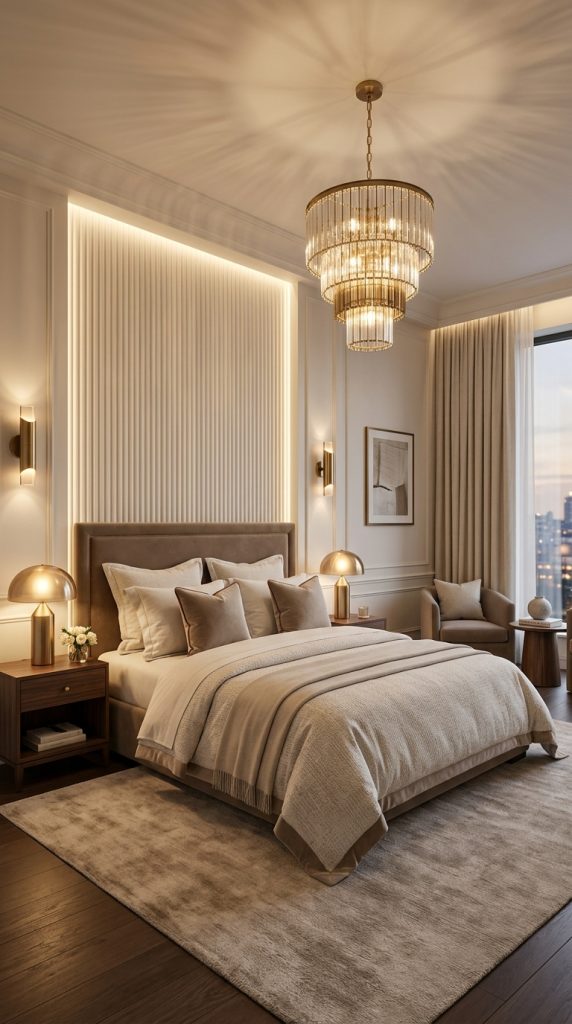
Lighting can completely change how a master bedroom looks after sunset.
A beautiful room with harsh overhead lighting can feel ordinary, while a relatively simple room with carefully layered lighting can feel intimate and luxurious.
Instead of using a single ceiling fixture as your primary light source, create several levels of illumination.
Start with bedside lighting
Bedside lamps are one of the most important lighting elements in a master bedroom.
Choose lamps with warm-toned shades and soft diffusion. Ceramic, alabaster-style, linen, ribbed glass, aged brass, bronze, and wood can all complement an elegant bedroom.
Place matching lamps on both nightstands if you want symmetry.
For a more collected appearance, you can use two different lamps that share similar proportions and finishes.
Add wall sconces
Wall sconces are especially useful when you want the nightstands to remain uncluttered.
Mount them on both sides of the bed at a comfortable reading height. Choose fixtures that complement your room rather than overpowering it.
Brushed brass, aged bronze, matte black, ceramic, and soft glass can work beautifully with warm neutral bedrooms.
Use a decorative ceiling fixture
A ceiling fixture can become a sculptural centerpiece.
Instead of a generic flush-mount light, consider:
- A soft-glass pendant
- A sculptural chandelier
- A woven pendant
- A linen-shaded fixture
- A simple brass chandelier
- A modern organic fixture
The fixture should be proportional to the room. A huge chandelier in a small bedroom can make the ceiling feel visually heavy.
Add low-level lighting
Luxury bedrooms benefit from illumination at different heights.
A floor lamp beside a reading chair can create a separate pool of light. Concealed LED lighting behind architectural elements can provide a gentle glow. Small accent lights can illuminate artwork or architectural details.
This creates visual depth because the room is not illuminated uniformly.
Current bedroom guidance strongly favors layered lighting rather than relying on harsh overhead illumination. (HomeLane)
Choose warm light
For a relaxing bedroom atmosphere, warm lighting generally works better than very cool white light.
Use warm bulbs in bedside lamps and decorative fixtures, and consider dimmable lighting wherever possible.
The goal is to make the bedroom transition naturally from daytime functionality to evening relaxation.
4. Add Rich Textures Through Bedding, Curtains, and Rugs
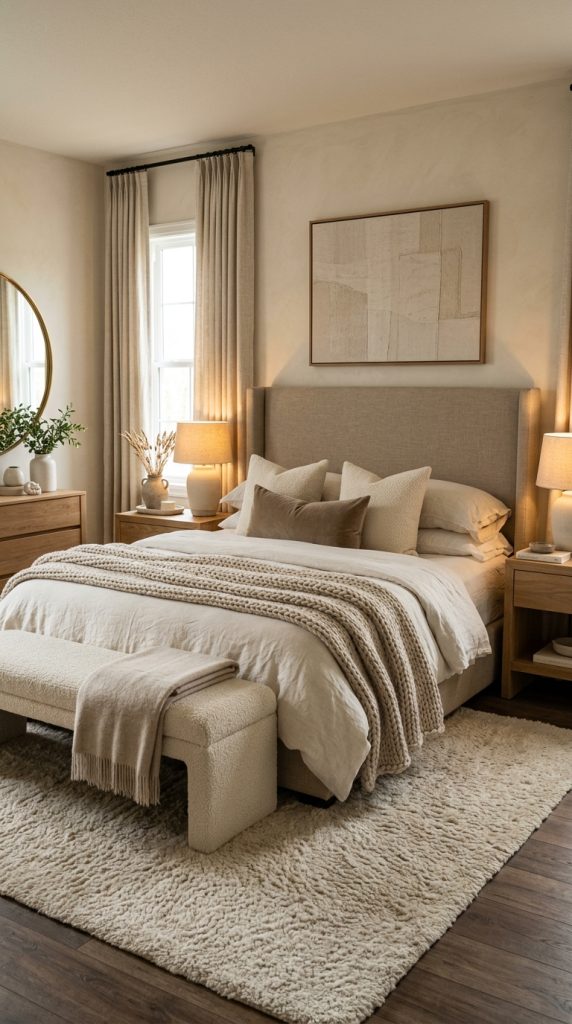
If you want your master bedroom to feel cozy, texture is essential.
A room can have beautiful furniture and still feel cold if every surface is smooth and visually flat.
Texture adds dimension without requiring bold colors.
Mix bedding materials
Rather than buying an entire matching bedding set, layer different materials.
Try:
- Crisp cotton sheets
- Washed linen duvet
- Quilted coverlet
- Velvet accent pillow
- Boucle lumbar cushion
- Knitted throw
The different textures create depth even when the colors remain neutral.
The key is to keep the palette controlled.
Use curtains to soften the room
Floor-to-ceiling curtains can make a master bedroom feel taller, softer, and more finished.
Choose fabrics such as linen blends, cotton, velvet, or textured woven materials.
Hang curtains as close to the ceiling as practical and allow them to fall generously toward the floor.
For a sophisticated look, select curtains that are slightly deeper or lighter than the wall color rather than introducing a completely unrelated shade.
Curtain-wrapped bedrooms are also appearing in current design discussions because drapery can soften architectural lines and create a more intimate atmosphere. (Martha Stewart)
Place a substantial rug underneath the bed
A rug anchors the bed and makes the room feel more comfortable.
For a king or queen bed, choose a rug large enough to extend well beyond the sides and foot of the bed.
If you cannot fit a large rug, consider placing two runners on either side of the bed or using a smaller rug positioned at the lower portion of the bed.
Choose soft wool, cotton, jute, viscose, or another material appropriate for your lifestyle.
Do not use only one texture
A luxurious bedroom should have visual variety.
Pair:
- Smooth wood with soft bedding
- Linen with velvet
- Woven baskets with polished metal
- Matte ceramics with glass
- Plush rugs with crisp curtains
This contrast makes the room feel layered and sophisticated without needing excessive decoration.
5. Bring in Warm Wood and Natural Materials
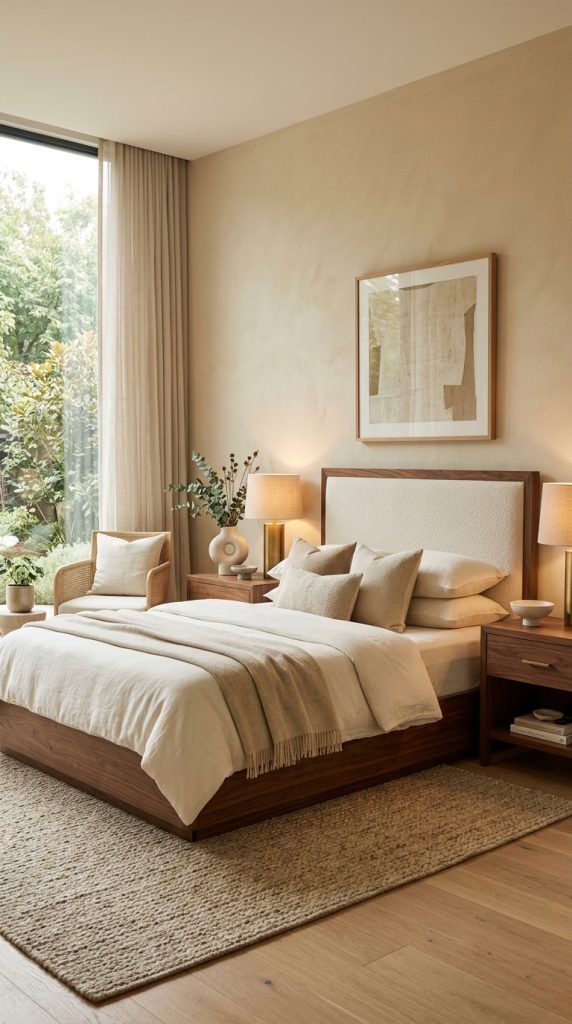
Natural materials are an excellent way to make a luxury bedroom feel grounded.
Dark and medium wood tones are especially useful when you want to create warmth.
Current 2026 bedroom trends are highlighting natural materials, brown furniture, earthy palettes, and more collected interiors. (HomeLane)
Choose one dominant wood tone
You do not need every piece of furniture to match perfectly.
A walnut bed can work with oak accessories. A dark wood dresser can work beside a lighter wood bench.
However, choose one dominant wood tone so the room still feels cohesive.
For a luxurious appearance, consider:
- Walnut
- Dark oak
- Smoked oak
- Warm medium oak
- Rich mahogany-inspired finishes
Add natural accessories
Use a few organic pieces rather than filling the room with decorative objects.
Consider:
- A stone vase
- Hand-finished ceramic bowl
- Woven basket
- Wooden tray
- Marble accessory
- Linen-covered storage box
- Small sculptural object
These details give the bedroom a tactile quality.
Create a natural-material focal point
If your room is mostly upholstered furniture, a wooden dresser or substantial wood nightstands can provide contrast.
If your furniture is mostly wood, introduce softness through upholstered seating and textiles.
The goal is balance.
Add one comfortable chair
If there is enough space, create a small seating area near a window or empty corner.
A boucle chair, upholstered slipper chair, wooden lounge chair, or compact armchair can turn an unused corner into a functional retreat.
Place a small side table beside it and add a reading lamp.
This creates a secondary zone without taking attention away from the bed.
6. Create an Elegant Seating Area at the Foot of the Bed
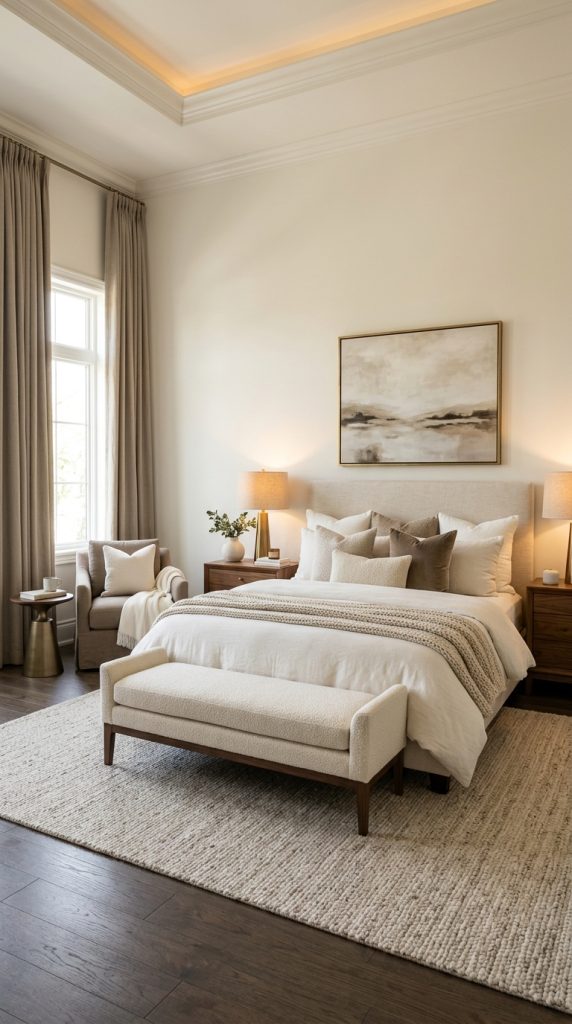
A seating area can make a master bedroom feel significantly more complete.
If space allows, place a bench at the foot of the bed.
A long upholstered bench is particularly effective because it visually connects the bed to the rest of the room.
Choose the right bench
For an elegant bedroom, consider:
- Boucle bench
- Velvet bench
- Linen bench
- Upholstered storage bench
- Wood-and-fabric bench
- Cane bench
The bench should be narrower than the width of the bed so that the composition feels balanced.
Make it functional
A bedroom bench should not exist purely for decoration.
Use it for:
- Sitting while getting dressed
- Placing folded blankets
- Storing extra pillows
- Putting on shoes
- Creating a comfortable pause between the bed and the rest of the room
A storage bench is particularly helpful in bedrooms where space is limited.
Add a throw
Place one carefully folded throw across one side of the bench.
Avoid covering the entire bench with blankets and pillows.
The luxury effect comes from restraint.
Create a conversation corner
In a larger master bedroom, go beyond a single bench.
Place two comfortable chairs across from a small round table.
This can create a private morning coffee area or reading space.
Use a floor lamp nearby to visually define the zone.
The furniture should be positioned so that it feels connected to the room but does not interfere with movement around the bed.
Pay attention to empty space
Luxury interiors often feel spacious because they allow furniture to breathe.
Do not fill every corner simply because you have space.
An elegant bedroom needs negative space around major furniture pieces.
7. Use Elegant Wall Treatments to Add Architectural Character
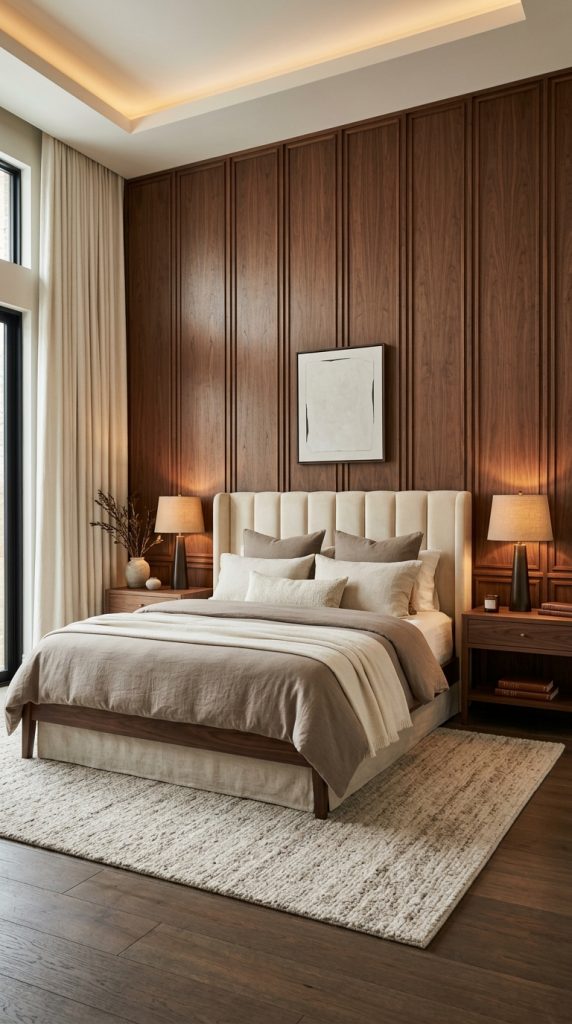
Walls provide one of the biggest opportunities to make a bedroom feel custom.
If the room has plain drywall, even a simple wall treatment can add architectural depth.
Try wall molding
Traditional panel molding can create an elegant backdrop for the bed.
Use a monochromatic approach by keeping the molding and wall color similar.
This creates subtle shadows rather than a high-contrast pattern.
Consider textured wallpaper
Wallpaper can bring personality to a master bedroom without requiring large pieces of furniture.
For a sophisticated appearance, consider:
- Grasscloth-inspired textures
- Linen-look wallpaper
- Soft geometric patterns
- Botanical designs
- Subtle stripes
- Hand-painted-style patterns
- Tonal damask
If you prefer a calm bedroom, select a low-contrast design.
If the furniture is simple, you can allow the wall treatment to become the main decorative feature.
Create a wood-paneled wall
Vertical wood paneling can make a ceiling appear taller.
Warm oak or walnut tones are particularly effective in bedrooms because they immediately introduce warmth.
You can combine the wood wall with cream bedding and soft lighting for a modern luxury appearance.
Use color drenching
For a more dramatic room, paint the walls, trim, and possibly ceiling in a related shade.
A smoky olive bedroom can feel sophisticated with cream bedding and walnut furniture.
A chocolate brown bedroom can feel luxurious with ivory textiles and aged brass.
A deep blue-gray bedroom can become elegant when paired with warm wood and soft beige.
Color drenching is one of the bedroom directions highlighted by designers for 2026. (ELLE Decor)
Keep wall art intentional
Do not cover every available wall.
One oversized artwork above a dresser may have more impact than six small unrelated pieces.
Choose artwork that repeats one or two colors already present in the room.
This creates cohesion without looking overly coordinated.
8. Design a Calm Luxury Bedroom With Hotel-Inspired Details
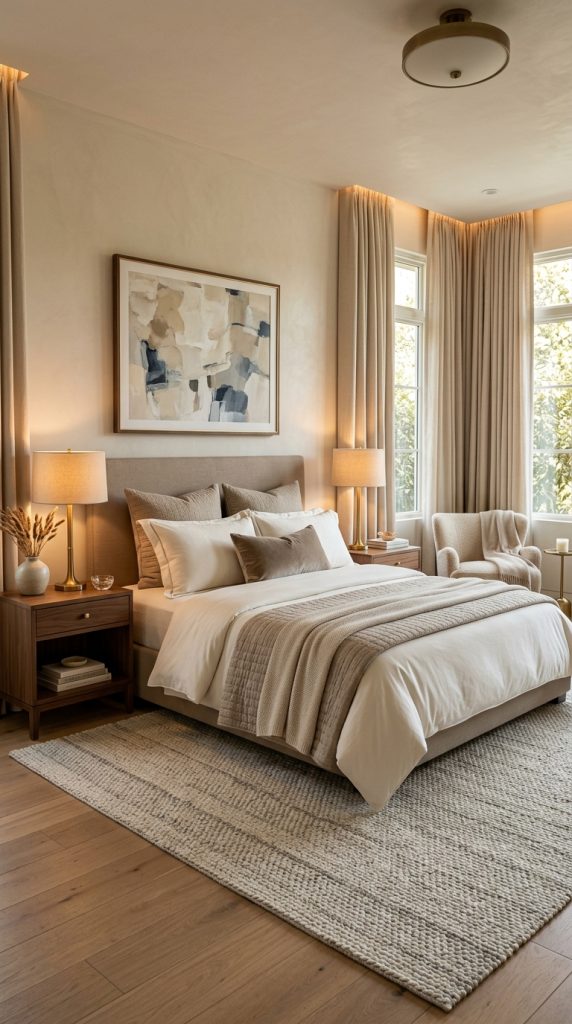
A hotel-inspired bedroom does not mean copying a hotel exactly.
Instead, borrow the principles that make hotel bedrooms feel comfortable: clear organization, quality-looking bedding, symmetry, soft lighting, layered textures, and minimal visual clutter.
Current bedroom designers are describing this direction as a move toward calm, cocooning, hotel-like comfort at home. (Homes and Gardens)
Start with symmetry
Place matching nightstands on either side of the bed.
Add similar lamps and keep the visual weight balanced.
Symmetry immediately creates a sense of order.
Hide unnecessary clutter
Luxury becomes difficult to achieve when chargers, packaging, random cosmetics, clothes, and miscellaneous objects cover every surface.
Use drawers, baskets, trays, and concealed storage.
Keep only the things you genuinely need on display.
Create a beautiful bedside arrangement
A sophisticated nightstand could contain:
- One warm lamp
- One small ceramic object
- One book
- One small tray
- A glass or carafe
That is enough.
Upgrade the small details
Luxury is often communicated through small elements.
Replace mismatched plastic containers with coordinated storage.
Use attractive tissue-box covers.
Choose a beautiful tray for jewelry or perfume.
Select matching hangers inside the closet.
Use soft baskets for blankets.
These details may not be the first thing visitors notice, but together they make the room feel carefully considered.
Add a subtle scent
A bedroom should feel pleasant without being overwhelmed by fragrance.
A light diffuser, natural candle, or linen spray can become part of the evening ritual.
Choose a subtle scent profile such as:
- Sandalwood
- Vanilla
- Lavender
- Cedar
- Bergamot
- Amber
Keep fragrance products safely positioned away from fabrics and areas where they could be knocked over.
9. Create a Moody, Cozy Retreat With Deeper Tones
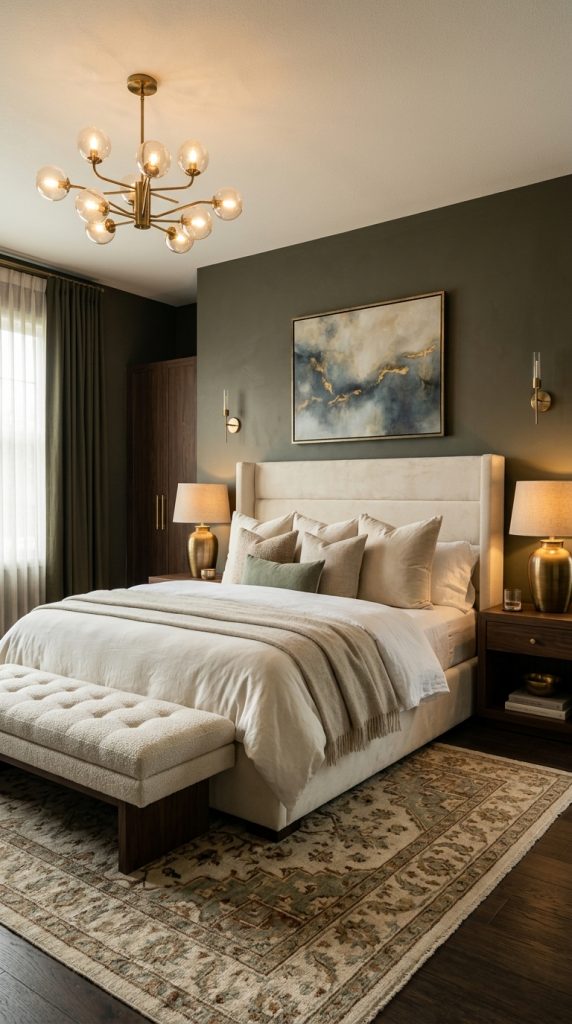
Not every luxurious bedroom needs to be pale and bright.
A darker bedroom can feel exceptionally cozy when its colors and lighting are carefully balanced.
The key is to create depth rather than darkness.
Choose a deep base color
Consider:
- Chocolate brown
- Charcoal
- Deep olive
- Navy
- Espresso
- Warm taupe
- Blue-gray
The exact color should respond to the room’s natural light.
A room with large windows can often support deeper colors more easily than a small room with limited natural light.
Balance dark walls with lighter bedding
This is one of the easiest ways to prevent the room from becoming visually heavy.
Imagine:
Chocolate walls + ivory bedding + walnut furniture + brass accents.
Or:
Deep olive walls + cream bedding + natural oak + aged bronze.
The contrast keeps the room sophisticated.
Use multiple sources of warm light
Dark colors absorb more visual light, so lighting becomes even more important.
Place warm lamps beside the bed.
Add a decorative ceiling fixture.
Use a floor lamp in a seating corner.
Consider concealed lighting around architectural elements.
The objective is not to make every corner equally bright. Instead, create several pools of soft illumination.
Introduce reflective details
Small reflective surfaces can prevent a moody bedroom from feeling flat.
Use:
- Antique brass
- Aged bronze
- Smoked glass
- Antique mirror
- Polished stone
Do not overuse shiny finishes.
A few carefully positioned reflective details are enough.
Add softness
Dark rooms benefit from tactile materials.
Use velvet, linen, wool, boucle, quilted fabrics, and plush rugs to make the space feel inviting.
The result should feel like a cocoon rather than a cave.
10. Finish the Room With Thoughtful Luxury Accessories
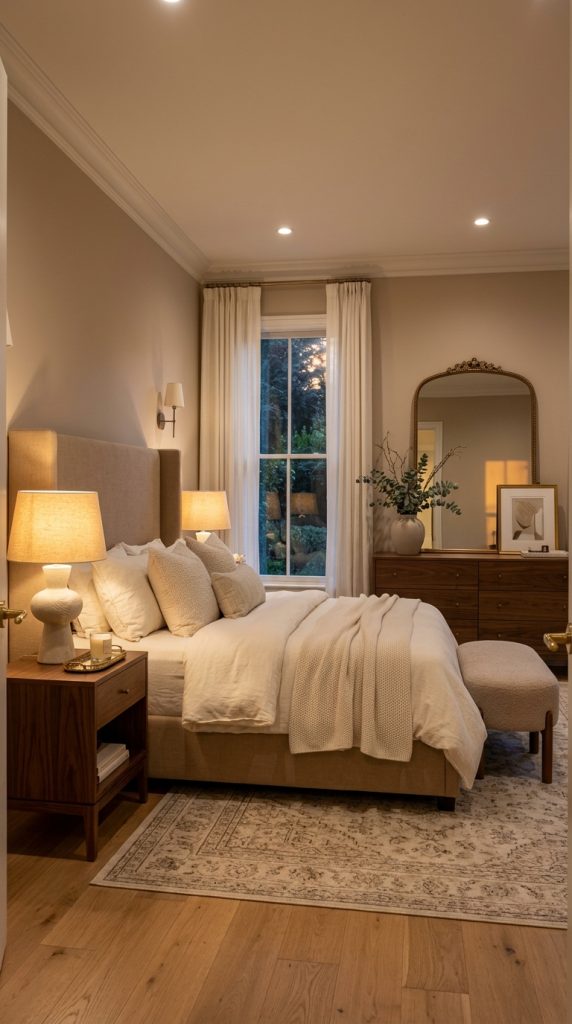
Accessories should be the final layer rather than the foundation.
Once the bed, furniture, lighting, walls, curtains, and rug are working together, add a small number of carefully selected decorative pieces.
Style the dresser
Instead of covering the dresser with objects, create one intentional arrangement.
For example:
- One oversized mirror
- One sculptural lamp
- One ceramic vase
- One small tray
- One framed artwork
Leave some of the surface visible.
Use mirrors strategically
A large mirror can make a bedroom feel brighter and more spacious.
Place one above a dresser or against a wall where it can reflect natural light.
For a luxury appearance, consider an arched, oversized, antique-inspired, or subtly framed mirror.
Add greenery selectively
One beautiful plant can soften a bedroom.
Choose plants appropriate for your home’s light and maintenance conditions.
If you do not want living plants, dried branches or understated botanical arrangements can provide a similar sculptural effect.
Avoid placing small plants everywhere. One substantial plant often has more visual impact.
Add meaningful objects
A master bedroom should feel personal.
Display:
- A favorite photograph
- A travel souvenir
- A meaningful book
- A family heirloom
- A handmade ceramic piece
- A vintage object
- A piece of artwork you genuinely love
Current design coverage is also emphasizing bedrooms that feel collected and personal rather than as though every item was purchased at the same time. (Good Housekeeping)
Keep accessories connected to your palette
If your room is cream, taupe, walnut, and brass, avoid suddenly introducing bright red, cobalt blue, neon green, and orange accessories.
Instead, choose pieces that repeat existing colors.
This makes the room look curated.
How to Make a Master Bedroom Look Expensive on a Budget
You do not need a complete renovation to make your bedroom look luxurious.
Start with the elements that have the biggest visual impact.
Upgrade the bedding first
A beautifully layered bed can transform the entire room.
Instead of buying numerous decorative items, invest in good-looking bedding and add texture through blankets and pillows.
Improve the lighting
Replace a harsh overhead bulb with warm, layered lighting.
Even inexpensive lamps can look sophisticated when their proportions, placement, and shades are carefully chosen.
Use large-scale curtains
Full-length curtains can make a room feel taller and more finished.
Hang them high and allow them to extend toward the floor.
Declutter aggressively
A clean room often looks more expensive than a room filled with decorative objects.
Clear unnecessary items from:
- Nightstands
- Dresser tops
- Chairs
- Floor areas
- Open shelving
Introduce one substantial statement
Instead of buying ten small decorations, choose one impressive feature.
It could be:
- An oversized headboard
- Large artwork
- Sculptural light
- Statement mirror
- Beautiful rug
- Elegant dresser
One strong focal point creates more impact than many unrelated accessories.
Master Bedroom Decorating Ideas for Small Rooms
A smaller bedroom can still feel luxurious.
The key is to control scale and visual clutter.
Choose furniture with clean silhouettes rather than extremely bulky pieces.
Use a tall upholstered headboard to create vertical emphasis.
Keep the color palette relatively controlled.
Use mirrors strategically.
Choose wall-mounted sconces instead of large table lamps when nightstand space is limited.
Use under-bed storage where appropriate.
A storage bench at the foot of the bed can provide both seating and hidden organization.
Avoid placing furniture in front of walking paths.
The goal is to create a bedroom where every piece has a clear purpose.
Master Bedroom Decorating Ideas for Large Rooms
Large bedrooms require a different approach.
The challenge is often making the room feel cozy rather than empty.
Use furniture to establish zones.
You can create:
- A sleeping zone
- A reading area
- A dressing area
- A small seating area
- A vanity zone
A large rug can visually connect the primary furniture.
A substantial bed and oversized headboard can provide the necessary focal point.
Large artwork can prevent expansive walls from feeling unfinished.
Layered curtains can add softness to large windows.
Do not attempt to fill every empty space. Instead, allow certain areas to remain open so the room retains a sense of luxury.
How to Choose the Right Master Bedroom Color Scheme
Before buying anything, select your color palette.
A simple formula is:
60% dominant color + 30% supporting color + 10% accent color.
For example:
Warm Luxury:
60% cream and ivory
30% walnut and taupe
10% antique brass
Earthy Retreat:
60% warm beige
30% olive and brown
10% clay
Moody Luxury:
60% chocolate brown
30% cream
10% aged brass
Soft Elegant:
60% warm white
30% taupe
10% dusty rose
This makes decorating much easier because every purchase can be evaluated against the palette.
How to Make Your Bedroom Feel Cozy Without Looking Cluttered
Cozy does not mean crowded.
This distinction is extremely important.
Use texture instead of excessive objects.
Use a thick rug instead of multiple small rugs.
Use layered bedding instead of dozens of pillows.
Use one large artwork instead of many tiny frames.
Use a substantial lamp instead of several small decorative lights.
Use curtains to soften the windows.
Use baskets to organize necessary items.
Keep the floor mostly clear.
The room should feel comfortable and welcoming while still allowing the eye to rest.
Common Master Bedroom Decorating Mistakes to Avoid
Choosing furniture that is too large
Always consider walking space before buying a statement bed, dresser, or seating piece.
Using only one light source
A single ceiling light rarely creates the warm atmosphere associated with a luxury bedroom.
Making everything match perfectly
A completely matching bedroom set can feel less personal.
Mix materials and finishes while keeping the overall palette connected.
Using too many decorative pillows
Pillows should enhance the bed rather than make it difficult to use.
Ignoring the windows
Window treatments have a major effect on the finished appearance.
Using too many colors
Choose a controlled palette and repeat the colors throughout the room.
Filling every surface
Negative space is part of sophisticated design.
Forgetting functionality
A bedroom should be beautiful but also practical.
Make sure there is comfortable access to storage, lighting, outlets, wardrobes, and walking paths.
Using cold lighting
Very cool lighting can undermine a warm bedroom palette.
Use warm, adjustable illumination where possible.
A Simple Formula for a Cozy, Elegant and Luxurious Master Bedroom
If you want an easy starting point, build the room in this order:
1. Choose the mood.
Decide whether you want warm neutral, earthy, moody, modern, classic, or romantic.
2. Select the main color palette.
Choose two or three major colors and one subtle accent.
3. Make the bed the focal point.
Use a substantial headboard and beautifully layered bedding.
4. Add appropriate furniture.
Choose nightstands, dresser, bench, and seating according to the room’s proportions.
5. Add window treatments.
Use full-length curtains to soften the room.
6. Anchor the furniture with a rug.
Choose a size that works with the bed and surrounding furniture.
7. Layer the lighting.
Combine bedside, overhead, accent, and task lighting.
8. Introduce natural materials.
Add wood, stone, ceramic, linen, or woven pieces.
9. Add wall character.
Consider molding, wallpaper, paneling, artwork, or color drenching.
10. Edit the accessories.
Keep only the pieces that contribute to the atmosphere or have personal meaning.
This approach prevents the room from becoming a collection of random purchases.
Final Thoughts
The most beautiful master bedrooms are not necessarily the ones with the most expensive furniture or the largest spaces. They are the rooms where every element contributes to a particular feeling.
A cozy, elegant and luxurious retreat begins with a comfortable bed and grows through thoughtful layers. A substantial upholstered headboard creates a focal point. Warm colors establish atmosphere. Natural wood adds grounding character. Soft bedding creates comfort. Curtains bring softness. A well-sized rug anchors the room. Layered lighting transforms the mood after sunset. Finally, carefully selected accessories give the bedroom personality.
The 2026 design direction toward warmer, more tactile and personal bedrooms makes this approach particularly relevant. Designers are increasingly emphasizing cocooning spaces, earthy palettes, tactile fabrics, natural materials, layered lighting, and rooms that feel connected to the people who use them. (Homes and Gardens)
You do not need to copy a showroom or recreate a five-star hotel exactly. Instead, take the elements that make those spaces feel special and translate them into your own home.
Choose colors that make you feel relaxed. Select fabrics you enjoy touching. Use lighting that creates a peaceful evening atmosphere. Keep clutter under control. Mix timeless furniture with personal pieces. Give the bed enough visual importance to anchor the room, but leave enough negative space for the bedroom to breathe.
Most importantly, remember that luxury is not only about appearance. A truly successful master bedroom should be comfortable enough to live in every day.
When soft textures, warm lighting, beautiful proportions, natural materials, and meaningful details come together, an ordinary bedroom can become a private retreat that feels cozy in the evening, elegant during the day, and luxurious without feeling excessive.