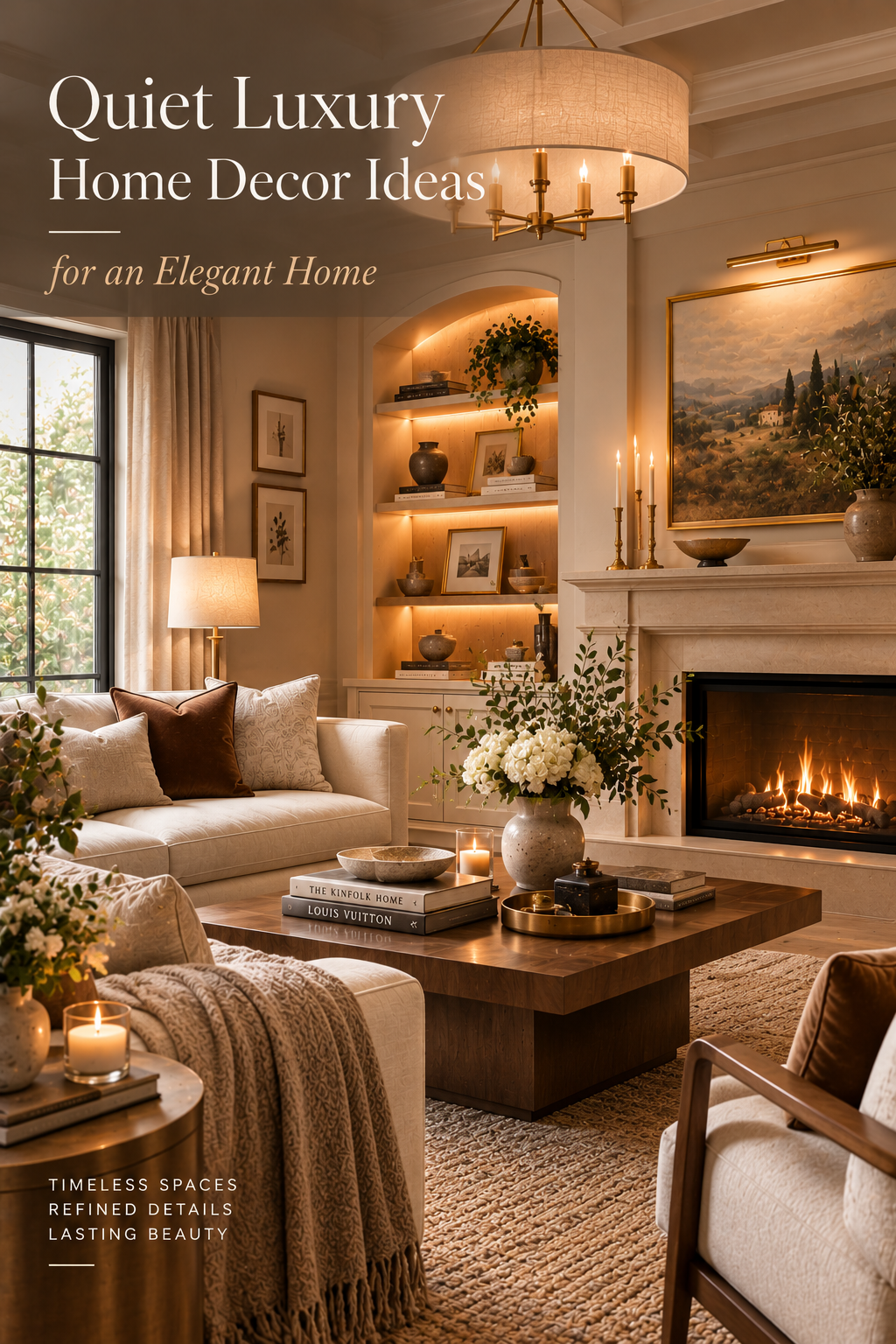
Quiet luxury home decor is about creating a home that feels sophisticated, timeless, comfortable, and beautifully considered without looking overly decorated or obviously expensive. Instead of relying on flashy finishes, excessive ornamentation, or trendy statement pieces, quiet luxury focuses on quality materials, refined proportions, elegant details, natural textures, and a restrained color palette.
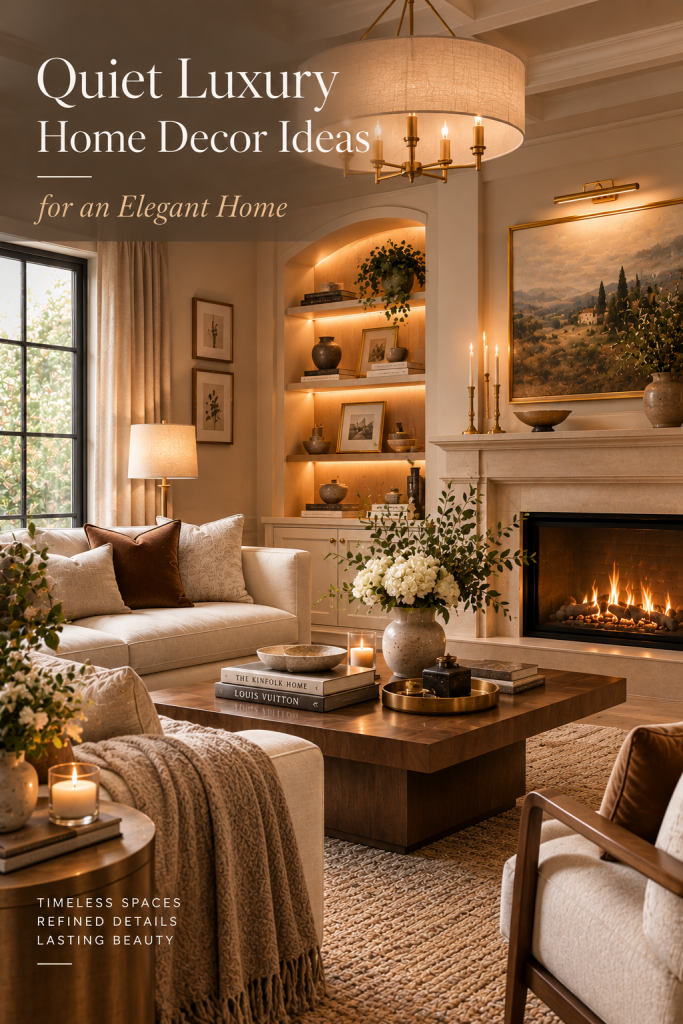
The appeal of quiet luxury is that it does not need to announce itself. A beautifully upholstered sofa, a natural stone surface, a walnut console, an oversized linen curtain, or a carefully selected piece of artwork can communicate elegance more effectively than a room filled with expensive-looking accessories.
The style is particularly attractive for homeowners who want their interiors to feel polished while remaining warm and livable. The goal is not to create a showroom. A quiet-luxury home should still feel comfortable enough for everyday life.
Color is one of the easiest places to begin. Quiet luxury interiors typically use sophisticated neutrals such as warm white, ivory, cream, beige, taupe, mushroom, camel, soft brown, greige, and charcoal. These colors create a calm foundation that allows materials and proportions to become the focus.
However, neutral does not mean boring. A room built entirely from one flat shade of beige can feel lifeless. Quiet luxury depends on subtle tonal variation. A creamy wall can sit beside an oatmeal sofa, a taupe rug, warm walnut furniture, and ivory curtains. Although the colors are similar, their different textures and undertones create depth.
Materials are equally important. Natural stone, solid wood, linen, wool, leather, velvet, aged brass, ceramic, and glass can instantly make a room feel more refined. These materials do not need to be used everywhere. In fact, using fewer high-quality materials usually produces a more sophisticated result than combining too many finishes.
Wood is particularly valuable because it introduces warmth. Walnut can give a room a rich, elegant appearance, while oak creates a lighter organic feeling. A beautiful wood console or coffee table can often do more for a room than a collection of decorative accessories.
Lighting also has a major role in quiet luxury interiors. Harsh overhead lighting can flatten a sophisticated space. Instead, designers often use multiple light sources at different heights. Table lamps, floor lamps, wall sconces, pendants, concealed LEDs, and candlelight can create layers of illumination.
Warm lighting is especially effective with cream, brown, beige, walnut, brass, and natural stone. In the evening, these materials reflect the light and create a soft atmosphere that feels luxurious without being dramatic.
Furniture should be selected for both appearance and comfort. Quiet luxury does not mean buying furniture that looks impressive but is uncomfortable. Deep seating, quality upholstery, generous proportions, and timeless silhouettes are more valuable than unusual shapes that will quickly become dated.
One of the most important principles is restraint.
A quiet-luxury room might contain a beautiful sofa, coffee table, rug, artwork, lamp, and a few carefully selected accessories. Each object has enough space around it to be appreciated.
This is different from minimalist design because quiet luxury can be layered and visually rich. Books, textiles, artwork, ceramics, flowers, and decorative objects can all be used. The difference is that they are carefully edited.
Another important element is symmetry and balance. Matching lamps on a console, paired nightstands, balanced artwork, or a centered dining pendant can create an immediate feeling of order. You do not need every room to be perfectly symmetrical, but balanced compositions often make interiors feel more expensive.
Architectural details can also contribute significantly to the look. Crown molding, wall paneling, wainscoting, arched doorways, built-in cabinetry, detailed trim, and substantial doors can create character. Even if your home does not have original architectural details, some can be introduced through relatively simple upgrades.
Curtains are another overlooked detail. Cheap-looking window treatments can make an otherwise beautiful room feel unfinished. Floor-length linen or linen-look curtains, mounted close to the ceiling and allowed to fall generously to the floor, can create a much more polished appearance.
The same principle applies to rugs. A rug should be large enough to connect furniture rather than appearing like a small island floating in the middle of the room. Natural wool, subtle vintage-inspired patterns, and textured neutral rugs work particularly well.
Accessories should be selected slowly. Instead of buying dozens of decorative objects at once, look for pieces with interesting shapes, materials, or craftsmanship. A handmade ceramic bowl can be more impactful than five generic ornaments.
Fresh flowers and greenery can also bring quiet luxury to a room. Choose simple arrangements rather than oversized bouquets. Olive branches, eucalyptus, seasonal branches, white flowers, or leafy stems can look elegant in a sculptural vessel.
Artwork is another opportunity to create personality. Quiet luxury does not require famous artwork or expensive originals. The key is choosing pieces that suit the room’s proportions and palette. Large-scale artwork often creates a stronger impact than many tiny frames.
The style can also be adapted to different decorating preferences. You can combine quiet luxury with modern interiors, traditional interiors, transitional design, organic modern style, European-inspired decor, or contemporary spaces.
For a modern home, focus on clean furniture, natural stone, warm wood, and restrained accessories.
For a traditional home, introduce paneling, classic silhouettes, aged brass, tailored upholstery, and elegant artwork.
For an organic version, incorporate linen, travertine, oak, handmade ceramics, woven textures, and earthy colors.
The most important thing is consistency.
Rather than purchasing individual pieces because they look luxurious on their own, think about how everything works together. The goal is to create a visual story throughout the home.
You should also avoid confusing quiet luxury with perfection. A beautiful home can still contain children’s belongings, books, everyday objects, and signs of life. The style becomes successful when those practical elements are organized rather than completely hidden.
Quiet luxury is ultimately about editing.
Ask yourself whether an object contributes to the room. Does it provide function, comfort, texture, beauty, or meaning? If it does none of these things, it may not need to be there.
The following ten ideas show how to bring this approach into different areas of the home while keeping the result elegant, warm, and practical.
1. Create a Sophisticated Cream Living Room With Tailored Furniture
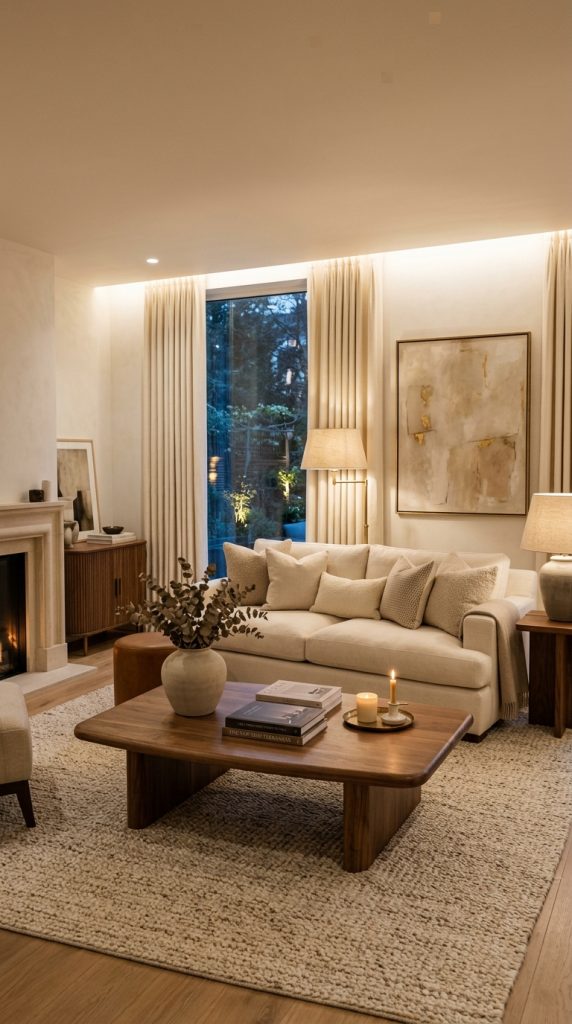
The living room is one of the best spaces for introducing quiet luxury because it allows you to combine beautiful furniture, textiles, artwork, lighting, and accessories.
Start with the sofa because it will usually be the largest visual element. Choose a generously proportioned sofa in cream, ivory, oatmeal, or warm beige. Look for tailored upholstery, substantial cushions, and a silhouette that feels timeless rather than heavily trend-driven.
A sofa with rounded arms can create a softer contemporary appearance, while a straight-arm design can feel more architectural.
Once the sofa is selected, introduce a large neutral rug. Wool is particularly effective because it feels luxurious underfoot while remaining understated.
Choose a coffee table made from natural stone or warm wood. A travertine table can provide an organic luxury feeling, while walnut introduces depth and contrast.
The coffee table should not become a display shelf. Instead, use one tray, a sculptural ceramic vessel, and perhaps a small stack of beautiful books.
Materials and Items
- Cream or ivory tailored sofa
- Large wool or textured neutral rug
- Walnut or natural stone coffee table
- Linen cushions
- Wool or cashmere-style throw
- Large-scale artwork
- Ceramic vase
- Decorative books
- Floor lamp
- Table lamp
- Linen curtains
Step-by-Step
Begin by establishing the seating arrangement.
Position the sofa so it faces the main architectural or entertainment feature of the room.
Place the rug beneath the sofa and accompanying seating so that the furniture feels connected.
Add one substantial coffee table instead of several small tables.
Introduce a warm wood side table to balance the stone or upholstered elements.
Choose two or three cushions in slightly different neutral shades.
Hang artwork at a comfortable viewing height.
Add a floor lamp beside the sofa.
Place a table lamp on a console or side table to create another level of illumination.
Finish with a small number of accessories.
The most important detail is spacing. Do not push every piece against the wall simply because the room is large. Give the furniture enough room to create a deliberate composition.
How to Make It Look More Expensive
Use fewer but larger accessories.
A single oversized ceramic vase can look more sophisticated than a collection of tiny decorative objects.
Choose curtains that reach the floor.
Keep electrical cords hidden whenever possible.
Select lamps with substantial bases and quality-looking shades.
These small details can make the entire room feel more considered.
2. Add Warm Walnut Furniture for Timeless Sophistication
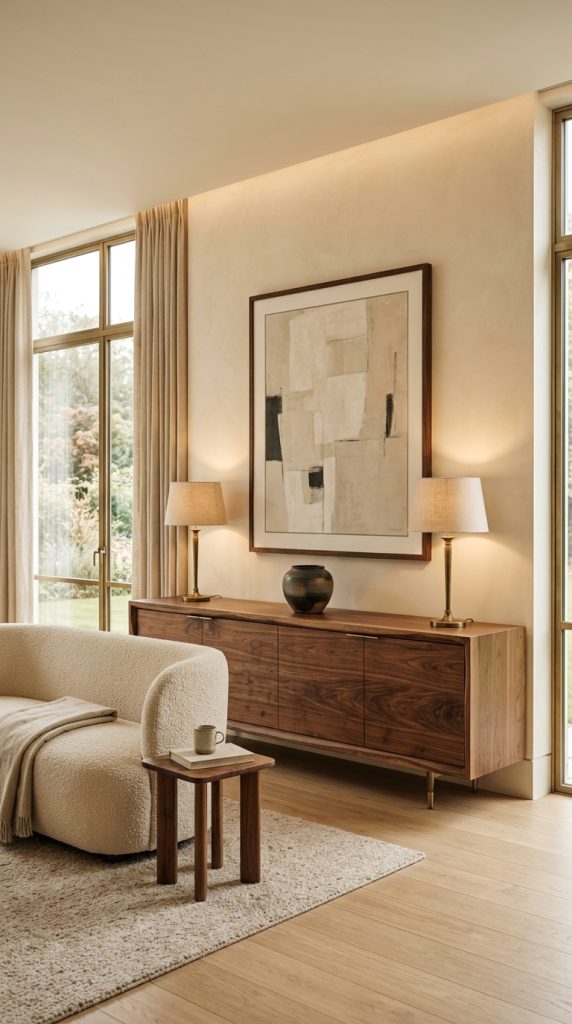
Walnut is one of the easiest materials to introduce when you want a room to feel instantly richer.
Its deep natural color works beautifully against cream, ivory, beige, and soft white.
Instead of using walnut everywhere, choose one or two major pieces.
A walnut console, media cabinet, dining table, or bedroom nightstand can become an anchor.
For example, a long walnut console placed against a warm white wall can create an elegant focal point with very little decoration.
Style it with two matching lamps, one large artwork, and a small central object.
Materials and Items
- Walnut console or cabinet
- Cream wall color
- Pair of elegant lamps
- Large artwork
- Ceramic bowl
- Neutral rug
- Linen furniture
- Aged brass details
Step-by-Step
Choose one walnut piece with clean lines.
Position it against a relatively quiet wall.
Center the furniture visually within the space.
If using lamps, select a balanced pair.
Place artwork above the furniture.
Keep the decorative styling low.
Add one ceramic or stone object.
Use warm lighting to highlight the walnut grain.
Avoid combining too many competing wood tones.
Why Walnut Works
Walnut creates contrast without requiring bold color.
The dark wood adds depth to neutral rooms while maintaining a timeless appearance.
It also pairs beautifully with brass, cream upholstery, natural stone, and linen.
3. Design a Luxury Bedroom With Hotel-Inspired Layering
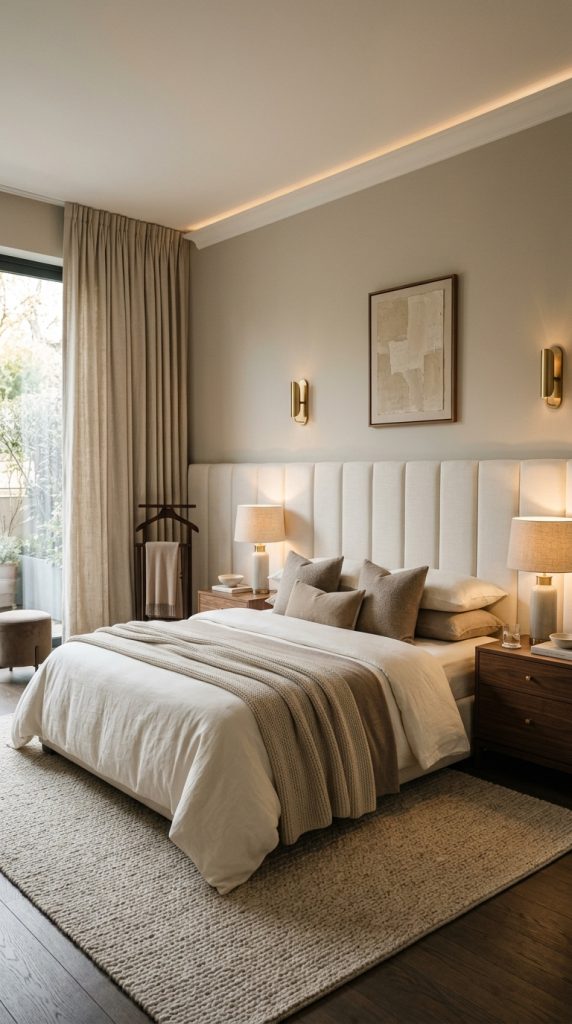
A quiet-luxury bedroom should feel restful before it feels decorative.
Start with the bed.
Choose a substantial upholstered headboard in cream, beige, taupe, or soft gray-beige.
An oversized headboard can create a strong architectural focal point without requiring a large amount of artwork.
Use high-quality-looking bedding with multiple neutral layers.
Start with ivory sheets, add a warm cream duvet, then introduce a taupe or oatmeal coverlet.
Place a textured throw at the end of the bed.
Avoid covering the entire bed with decorative pillows. A few well-selected cushions are enough.
Materials and Items
- Upholstered headboard
- Ivory bedding
- Cream duvet
- Oatmeal coverlet
- Textured throw
- Matching nightstands
- Table lamps
- Linen curtains
- Neutral rug
- Minimal artwork
- Ceramic accessories
Step-by-Step
Choose a large upholstered headboard.
Center the bed carefully on the main wall.
Place matching nightstands on both sides.
Use identical or visually balanced lamps.
Layer bedding from lightest to darkest neutral.
Add one textured blanket.
Use floor-length curtains.
Place a soft rug beneath the bed if the room allows.
Keep nightstand styling minimal.
Lighting
Warm bedside lamps are essential.
Consider adding hidden LED lighting behind the headboard or beneath cabinetry for a subtle nighttime glow.
Avoid relying entirely on bright ceiling lights.
The bedroom should transition easily from daytime brightness to evening calm.
4. Use Natural Stone to Create a High-End Focal Point
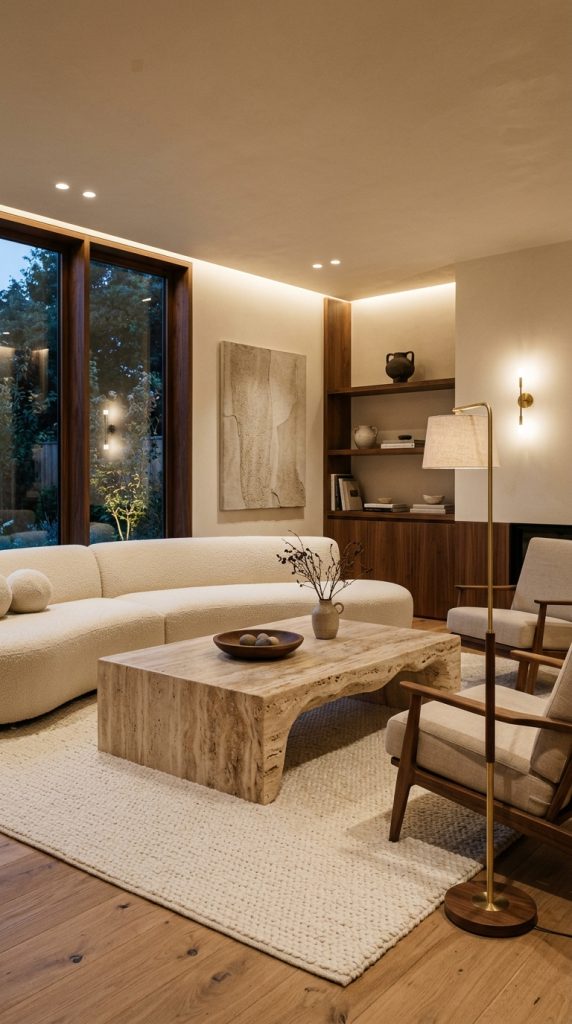
Natural stone immediately communicates quality because of its texture, variation, and organic character.
You do not need to cover an entire room in marble to create a luxurious appearance.
A single stone surface can become the focal point.
Consider a travertine coffee table, marble fireplace surround, limestone console, stone backsplash, or natural-stone bathroom vanity.
Choose stone with subtle movement rather than extremely dramatic patterns if you want a timeless appearance.
Cream, beige, warm white, and softly veined stones work particularly well.
Materials and Items
- Travertine or limestone
- Light marble
- Stone coffee table
- Stone console
- Warm wood
- Cream upholstery
- Neutral rug
- Ceramic accessories
- Warm lighting
Step-by-Step
Choose one architectural or furniture feature for stone.
Select a finish appropriate for the room.
Balance the stone with warm materials.
If the stone is visually dramatic, simplify surrounding decor.
Use warm lighting to reveal the natural texture.
Add soft textiles nearby to prevent the space from feeling too hard.
Styling Principle
Stone should be allowed to breathe.
Do not cover a beautiful stone surface with excessive accessories.
Its natural variation is already decorative.
5. Elevate the Dining Room With an Elegant Tablescape
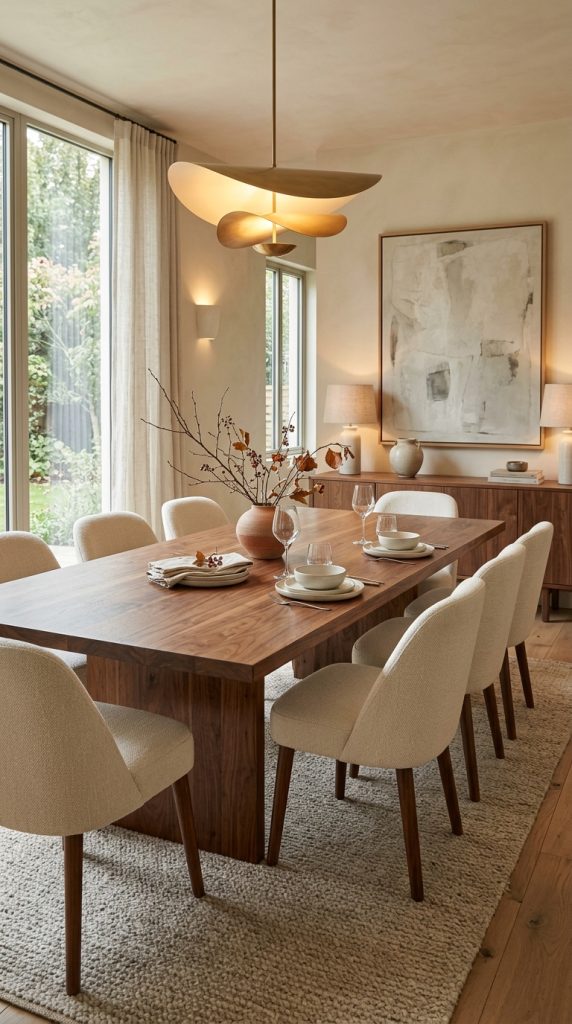
A quiet-luxury dining room should feel sophisticated enough for entertaining but relaxed enough for everyday meals.
Start with the dining table.
Solid wood, stone, or a beautifully finished dark table can provide the foundation.
Choose comfortable chairs with tailored upholstery.
Above the table, install a sculptural chandelier or elegant pendant with warm illumination.
The tablescape should remain understated.
Instead of filling the table with decorative pieces, use one central arrangement.
A low ceramic bowl filled with seasonal fruit can look beautiful.
For a more formal occasion, use linen napkins, simple dinnerware, and subtle glassware.
Materials and Items
- Solid wood or stone dining table
- Upholstered dining chairs
- Sculptural pendant
- Linen napkins
- Neutral tableware
- Handmade ceramic centerpiece
- Glassware
- Natural runner
- Sideboard
- Artwork
Step-by-Step
Center the table within the room.
Leave generous walking space around it.
Choose a chandelier that is proportional to the table.
Place one central decorative element.
Use natural linen rather than heavily patterned textiles.
Coordinate dinnerware with the neutral palette.
Keep the sideboard lightly styled.
Add artwork to one wall.
Quiet-Luxury Tablescape Tip
Avoid making the table look permanently prepared for a formal event.
A single beautiful vessel or bowl can be more elegant for everyday living.
6. Create an Elegant Entryway With a Statement Console and Mirror
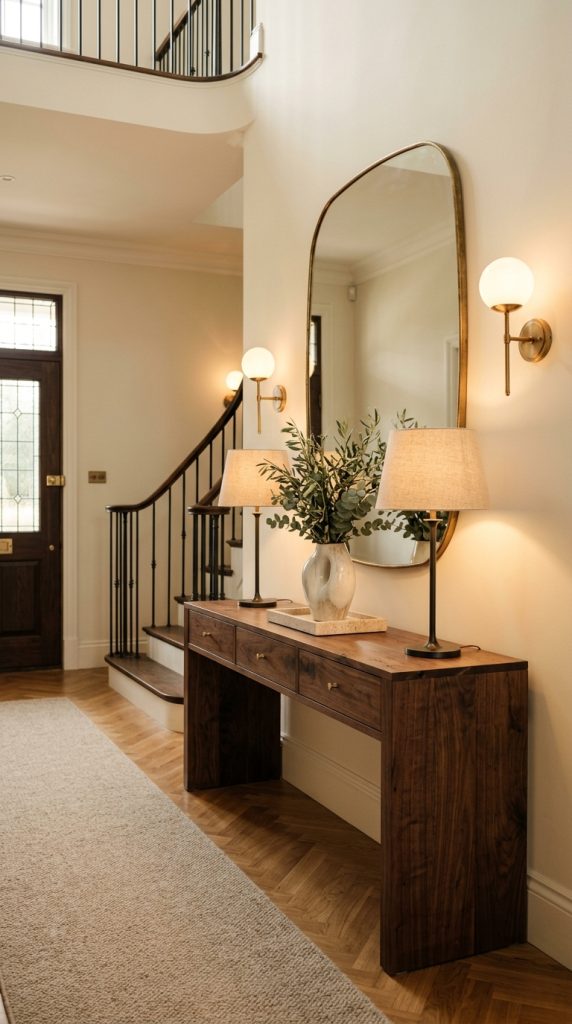
The entryway establishes the mood for the entire home.
A quiet-luxury entryway should feel organized, welcoming, and polished.
Choose a console with a strong material presence.
Walnut, oak, stone, or painted cabinetry can all work.
Above the console, use a large mirror or artwork.
A large mirror can make a smaller entryway feel more spacious while reflecting light.
Style the console with restraint.
A pair of lamps can create symmetry.
Add one tray for practical items and one sculptural object.
Materials and Items
- Walnut or oak console
- Large mirror
- Pair of table lamps
- Ceramic vase
- Small tray
- Fresh greenery
- Neutral runner
- Aged brass hardware
Step-by-Step
Choose a console appropriate to the hallway width.
Center it against the main wall.
Hang a large mirror above it.
Use matching lamps if the room allows.
Place a tray between them.
Add one natural arrangement.
Keep shoes and daily belongings concealed.
Use a runner to soften the floor.
Why It Works
The arrangement combines symmetry, texture, functionality, and negative space.
Those elements make the entryway feel intentional without requiring expensive decoration.
7. Introduce Tailored Curtains and Upholstery for an Expensive Finish
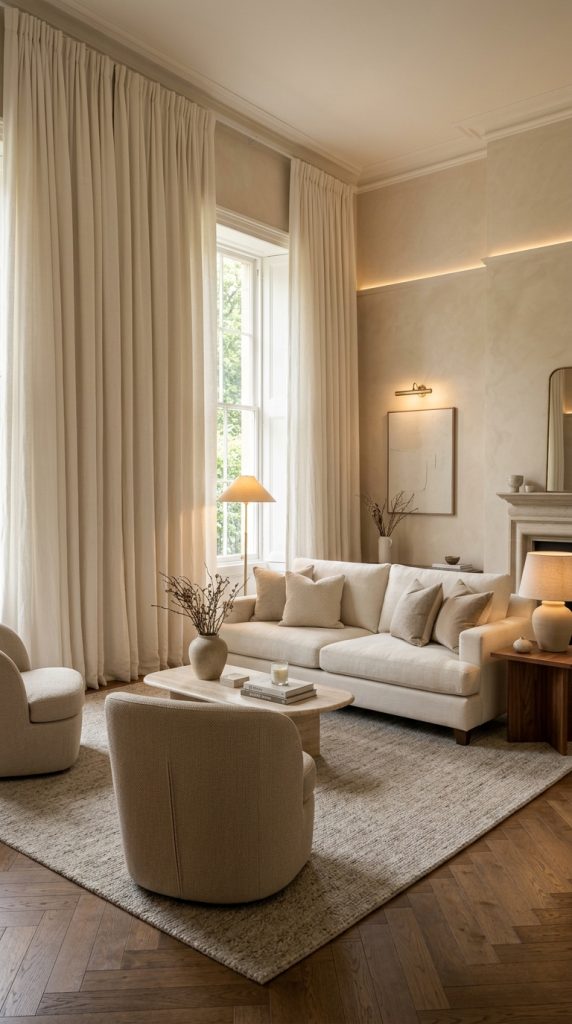
Sometimes the biggest difference between an ordinary room and an elegant room is not the furniture but the soft furnishings.
Curtains, upholstery, cushions, and rugs occupy a large visual area.
Choose fabrics with natural-looking texture.
Linen and linen-blend curtains are especially effective.
Hang curtains higher than the actual window frame when possible.
Allow them to extend close to the floor.
For upholstery, choose fabrics that look substantial rather than thin or shiny.
Materials and Items
- Linen or linen-look curtains
- Upholstered sofa
- Wool rug
- Linen cushions
- Cotton bedding
- Textured throw
- Roman shades if appropriate
Step-by-Step
Measure the full window area.
Install the curtain rod closer to the ceiling than the top of the window.
Choose panels wide enough to create generous folds.
Allow the fabric to fall elegantly toward the floor.
Coordinate curtain tones with the walls.
Use upholstery in complementary rather than identical shades.
Add one or two textured cushions.
The Expensive-Looking Detail
Do not choose curtains that are too short.
A beautifully proportioned curtain can make the ceiling appear taller and the entire room more architectural.
This is a relatively simple change that can have a surprisingly large visual effect.
8. Style Shelves With Curated Quiet-Luxury Accessories
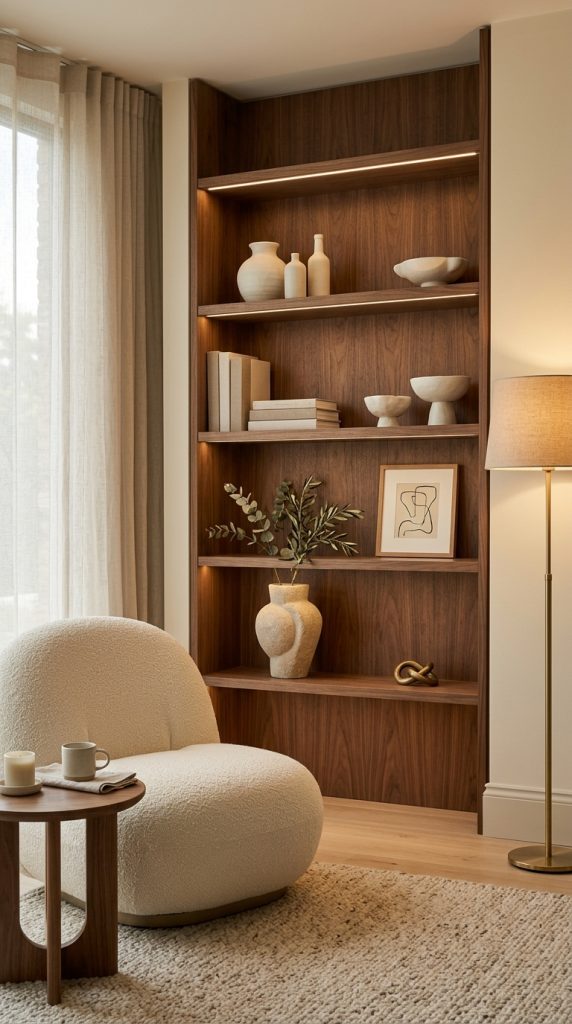
Open shelves should never become a dumping ground.
In quiet-luxury interiors, shelves are better treated as curated compositions.
Start with larger pieces.
A sculptural ceramic vase, framed artwork, or substantial book stack can establish the visual structure.
Then introduce smaller objects around them.
Use similar materials throughout the shelving.
Cream ceramics, aged brass, natural wood, glass, linen-bound books, and small stone objects work beautifully.
Materials and Items
- Natural wood shelving
- Ceramic vases
- Coffee-table books
- Small framed artwork
- Stone objects
- Brass accessory
- Glass vessel
- Neutral decorative box
- Small plant
Step-by-Step
Remove everything from the shelves.
Choose a limited material palette.
Place the largest pieces first.
Create groups of two or three objects.
Leave empty areas between groups.
Vary the height of objects.
Avoid placing identical pieces beside each other.
Step back and assess the entire shelving unit.
Remove anything that feels unnecessary.
Styling Formula
Think in terms of:
Large object + books + small object + empty space.
Then repeat the composition with variations.
This creates rhythm without making the shelves look overly styled.
9. Create a Quiet-Luxury Bathroom With Stone, Wood and Brass
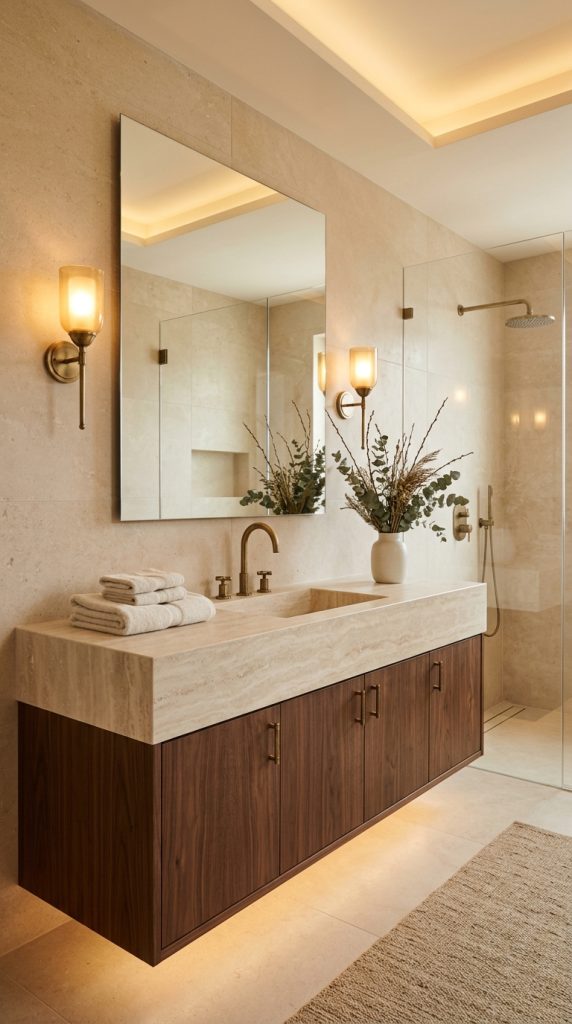
The bathroom can become one of the most luxurious spaces in the home without requiring excessive decoration.
Focus on materials.
A warm stone vanity, cream tile, natural wood cabinetry, and aged brass hardware can create a sophisticated foundation.
Choose large-format tiles where possible to reduce visual interruptions.
A frameless glass shower can make the room feel more spacious.
Use warm lighting around the mirror rather than relying only on ceiling fixtures.
Materials and Items
- Natural stone or stone-look vanity
- Cream or beige tile
- Warm wood cabinetry
- Aged brass hardware
- Frameless glass shower
- Large mirror
- Warm sconces
- Linen towels
- Ceramic vessel
- Small natural arrangement
Step-by-Step
Choose a warm neutral tile.
Use a consistent flooring and wall palette.
Select a vanity with substantial visual weight.
Choose one metal finish and repeat it.
Install layered lighting around the mirror.
Keep countertops mostly clear.
Display only beautiful functional items.
Use folded linen or cotton towels for softness.
Luxury Without Clutter
Instead of placing numerous bathroom accessories around the vanity, choose a beautiful soap dispenser, one ceramic container, and a small natural arrangement.
The room should feel like a refined private spa rather than a storage area.
10. Build a Cohesive Quiet-Luxury Home With a Signature Palette
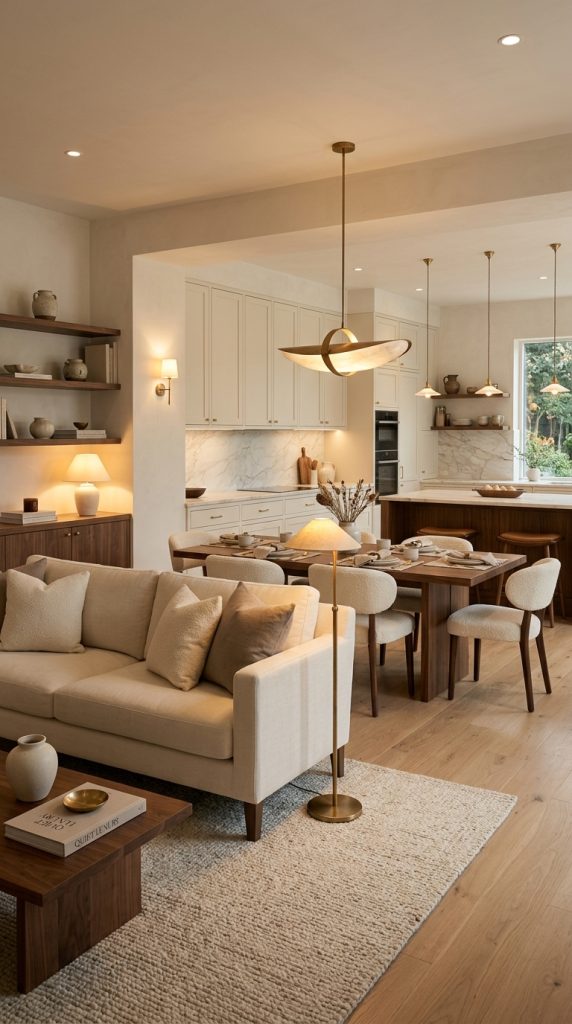
The most sophisticated quiet-luxury homes usually feel connected from room to room.
This does not mean every room should look exactly the same.
Instead, repeat a few signature elements.
For example, you might use:
Warm white walls.
Natural walnut furniture.
Cream upholstery.
Aged brass lighting.
Natural stone.
Linen textiles.
Soft taupe accents.
These materials can appear differently in every room while still creating continuity.
Materials and Items
- Warm white or cream paint
- Walnut or oak
- Natural stone
- Linen
- Wool
- Ceramic
- Aged brass
- Neutral artwork
- Warm lighting
- Natural greenery
Step-by-Step
Choose three or four dominant colors.
Select one primary wood tone.
Choose one metal finish.
Establish a consistent lighting temperature.
Repeat similar textile textures.
Use similar hardware styles throughout the home.
Allow individual rooms to have different focal points.
Keep the overall color transitions subtle.
Example of a Cohesive Palette
The living room could use cream, walnut, and brass.
The kitchen could use cream, walnut, and stone.
The bedroom could use ivory, taupe, walnut, and linen.
The bathroom could use warm stone, cream, walnut, and brass.
The entryway could combine the same walnut and brass with a beige runner.
Nothing is identical, but everything belongs to the same visual family.
How to Choose Quiet-Luxury Colors
The easiest quiet-luxury palette begins with warm neutrals.
Try combining:
- Warm white
- Ivory
- Cream
- Beige
- Oatmeal
- Taupe
- Mushroom
- Camel
- Warm brown
- Walnut
- Soft charcoal
You can introduce color, but it should usually feel intentional rather than overwhelming.
Olive green, dusty blue, muted burgundy, chocolate brown, and deep charcoal can work beautifully as accents.
The important thing is to avoid creating too many competing focal points.
If you use a deep accent color, let it appear in only a few places.
For example, a chocolate brown lounge chair can become a beautiful focal point against cream walls and a beige rug.
How to Make Affordable Decor Look Like Quiet Luxury
Quiet luxury does not require every item to be expensive.
Focus on visual qualities rather than price tags.
Choose simple silhouettes.
Avoid excessive logos.
Select materials that look natural.
Use fewer decorative objects.
Buy one good-looking lamp rather than several cheap-looking ones.
Choose a large mirror with a substantial frame.
Use floor-length curtains.
Upgrade cabinet hardware.
Replace overly shiny accessories with ceramic, stone, glass, wood, or aged metal.
A room with inexpensive but carefully selected materials can look far more sophisticated than a room filled with expensive but unrelated pieces.
Quiet Luxury Lighting Rules
Lighting deserves special attention.
Use at least three types of lighting whenever possible.
Ambient lighting provides general illumination.
Task lighting supports activities such as reading or cooking.
Accent lighting highlights artwork, architectural features, shelves, or decorative objects.
Choose warm bulbs for living spaces.
Place lamps at different heights.
Use dimmers where possible.
Avoid making the ceiling fixture the only light source.
In the evening, turn on several smaller lamps instead of relying on one extremely bright light.
This creates the layered atmosphere associated with luxury hospitality spaces.
How to Avoid Making Quiet Luxury Look Cold
A common mistake is using too much beige without enough texture.
If the room feels flat, do not immediately add more accessories.
Instead, introduce tactile materials.
Try:
Linen curtains.
Wool rugs.
Boucle upholstery.
Natural wood.
Travertine.
Handmade ceramics.
Textured cushions.
Soft throws.
Woven baskets.
These materials create visual richness without creating clutter.
Plants and flowers can also help.
Choose simple greenery with sculptural shapes rather than filling every surface with plants.
The Difference Between Quiet Luxury and Overdecorating
Quiet luxury depends on editing.
Before adding an accessory, ask:
Does it provide function?
Does it add texture?
Does it have sentimental meaning?
Does it improve the composition?
Does it complement the existing material palette?
If the answer is no to all of these questions, the object probably does not need to be displayed.
This does not mean your home should feel empty.
It means the objects that remain should have enough space to be appreciated.
Final Thoughts
Quiet luxury home decor is less about purchasing expensive things and more about developing a sophisticated way of selecting, arranging, and editing what you already have.
The most successful interiors use a restrained palette, natural materials, comfortable furniture, thoughtful proportions, layered lighting, and carefully selected accessories.
Cream walls can provide a timeless foundation. Walnut can add depth. Natural stone can introduce organic elegance. Linen and wool can soften the room. Aged brass can provide subtle refinement. Beautiful lighting can transform everything in the evening.
Most importantly, quiet luxury should feel livable.
Your home should not feel like a showroom where nothing can be touched. It should feel comfortable, personal, and welcoming.
Choose furniture that you can actually relax on. Use textiles that feel good. Display books that you enjoy reading. Keep meaningful objects rather than removing all personality. Organize practical belongings so they do not dominate the room.
When every element is considered but not overdone, the result is naturally elegant.
That is the real appeal of quiet luxury: the home feels beautiful without trying too hard.
The best quiet-luxury interior does not immediately make visitors think about how much everything cost. Instead, they notice that the room feels balanced, comfortable, timeless, and remarkably well designed.
That understated quality is what makes quiet luxury such a powerful approach for creating an elegant home that can remain beautiful for years rather than just looking fashionable for one season.