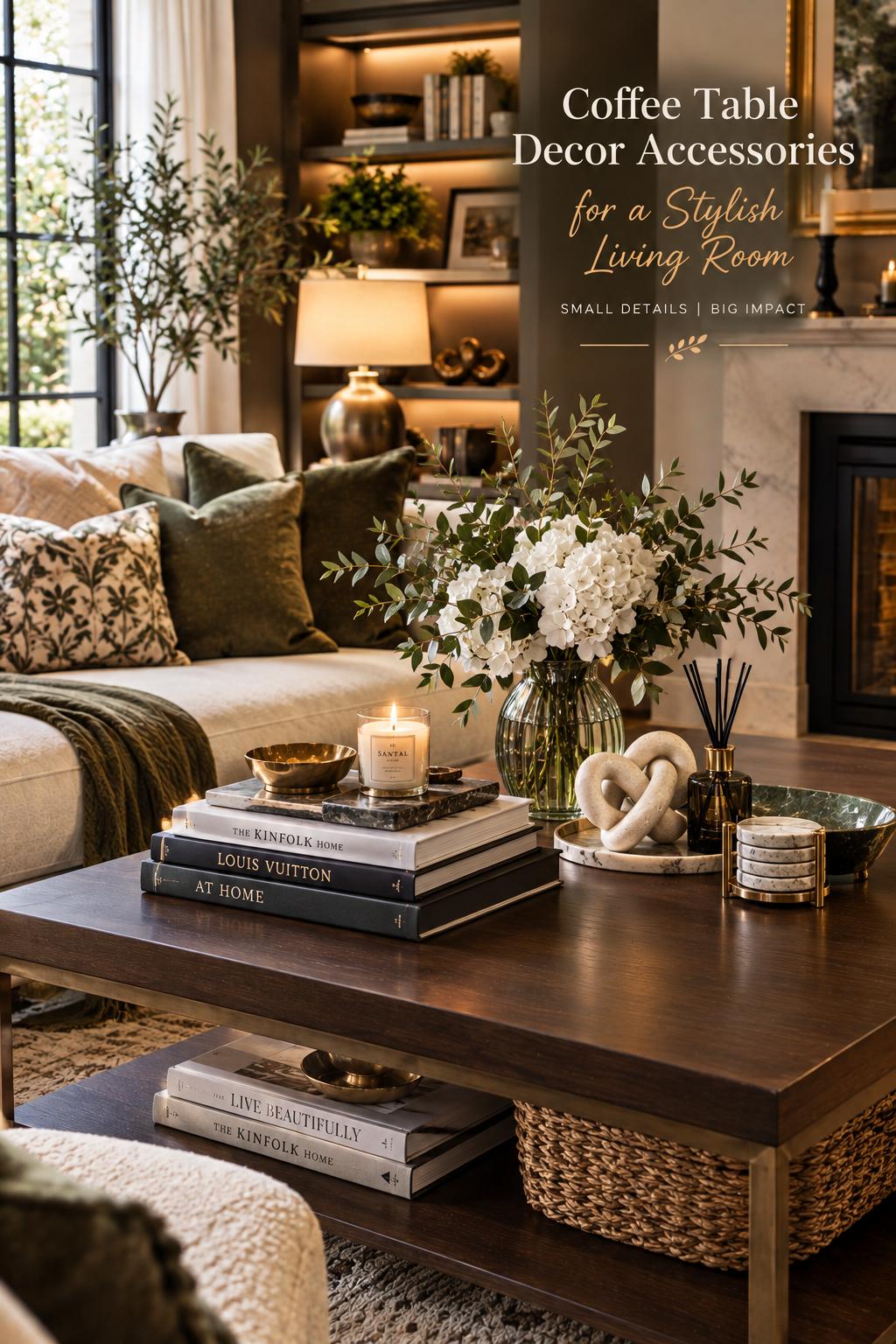
A coffee table may be one of the smallest pieces of furniture in your living room, but it can have an enormous effect on how the entire space looks and feels. Positioned at the center of the seating area, it naturally becomes one of the first places the eye travels. When it is thoughtfully styled, even a simple living room can feel polished, welcoming, and professionally decorated.
The best coffee table decor is not about covering every inch of the surface with beautiful objects. In fact, current interior styling is moving toward fewer, more meaningful pieces, natural materials, sculptural accessories, and arrangements that feel collected rather than perfectly manufactured. Designers are increasingly treating coffee tables as a place to show personality through vintage finds, handmade objects, books, natural elements, and pieces that have a story.
That shift makes coffee table decorating much more approachable.
You do not need a huge collection of expensive accessories to create a stylish arrangement. A carefully selected tray, a beautiful book stack, a sculptural vase, a natural branch, or a handmade bowl can provide more visual impact than a tabletop filled with random decorative objects.
The secret is understanding how each accessory contributes to the overall composition.
A tray can create structure and contain smaller items. Books introduce height and personality. A vase can provide vertical interest. A bowl can create a low sculptural layer. Candles add warmth. Natural elements soften hard surfaces. A small decorative object can provide an unexpected focal point. When these elements are combined thoughtfully, the coffee table becomes a miniature composition that complements the entire living room.
Your coffee table accessories should also relate to the furniture surrounding them.
A warm walnut table might look beautiful with handmade ceramic accessories, cream books, aged brass, and natural greenery. A marble table can be softened with woven textures, wood, linen, and organic shapes. A glass coffee table can benefit from sculptural pieces and carefully selected books because the transparent surface already creates visual lightness.
The shape of the table matters too.
A rectangular coffee table can accommodate multiple zones, while a round table often benefits from a central composition that allows the curved edges to remain visible. An oval table can be styled with a long horizontal arrangement. A small coffee table requires greater editing because too many accessories can quickly make it impractical.
Function should always remain part of the design.
Your coffee table is not simply a display pedestal. It is where you put your coffee, book, remote control, snacks, flowers, and sometimes even your laptop. A beautiful arrangement that prevents you from actually using the table is not successful decorating.
That is why negative space is so important.
Leaving part of the surface empty gives your arrangement room to breathe and preserves the table’s practical function. Current coffee-table styling advice frequently emphasizes intentional empty space rather than filling the entire tabletop.
There is also a growing preference for personal objects.
Instead of relying entirely on generic decorative accessories, consider including something that has meaning to you. It could be a small travel souvenir, an inherited ceramic dish, a vintage frame, a handmade sculpture, or a beautiful object discovered at a local market. These pieces make the room feel authentic.
A stylish coffee table should look as though someone actually lives there.
That does not mean clutter.
It means creating a balance between beauty and everyday life.
You can also use coffee table decor to reinforce the colors already present in your living room. If your sofa is cream, you might introduce warm brown, olive, burgundy, or muted black through accessories. If your room contains walnut furniture, repeat that warmth through a wooden tray or natural object. If your artwork contains blue, green, or terracotta, a small accessory in the same family can create visual continuity.
Texture is another important element.
A table covered entirely in glossy objects can feel cold and flat. Mix smooth ceramic with rough stone, soft linen with hard wood, matte finishes with subtle metallic details, or transparent glass with woven fibers. Designers are increasingly emphasizing layered textures to create comfortable, tactile interiors.
The following 15 coffee table decor accessory ideas will help you create a stylish living room that feels intentional, sophisticated, and comfortable without becoming cluttered.
1. Style a Decorative Tray as the Foundation
A decorative tray is one of the most useful accessories for creating an organized coffee table arrangement.
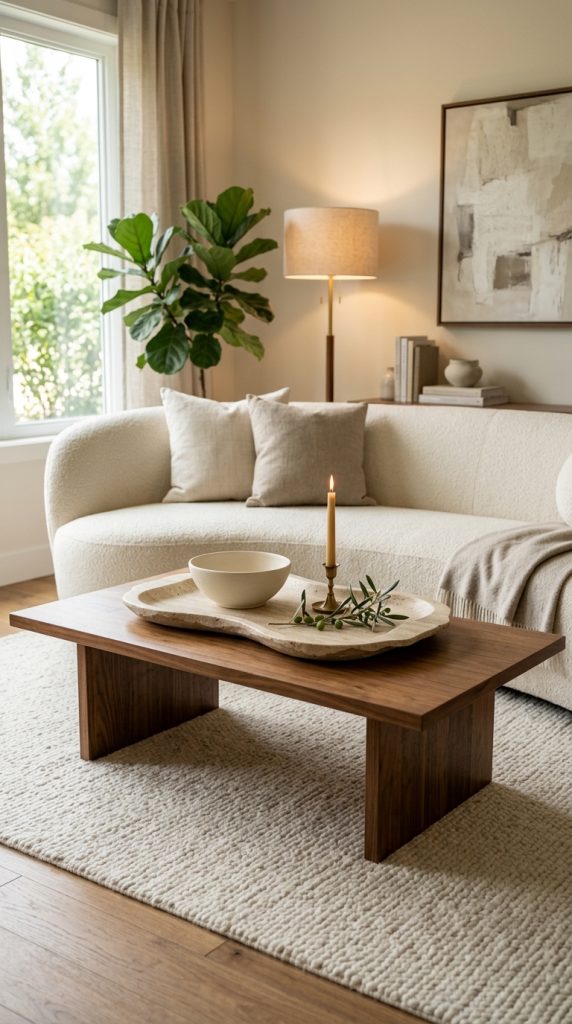
Rather than placing several small objects directly across the surface, use a tray to establish a visual zone. It immediately makes individual pieces feel like part of one intentional composition.
For a warm and luxurious living room, consider a walnut, dark wood, natural stone, marble, brass, or textured ceramic tray. The material should complement the coffee table rather than simply match it.
For example, a walnut tray on a lighter oak table creates subtle contrast. A marble tray can look sophisticated on dark wood. A woven tray can soften a modern glass table.
Place the tray slightly off-center instead of automatically positioning it directly in the middle.
Inside the tray, keep the arrangement simple.
You might use a candle, a small bowl, a decorative object, and a few coasters. The tray provides containment while still allowing the objects to remain visible.
For everyday living, choose a tray that is large enough to lift easily when you need to clear the table.
This is particularly helpful when entertaining.
Instead of individually moving every accessory, you can simply move the entire arrangement.
Avoid filling the tray completely. A tray packed with objects can look more like storage than decoration.
Allow some of its surface to remain visible.
That empty area provides contrast and helps the objects appear more intentional.
The best tray arrangements also relate to the surrounding room. If your living room contains brass lighting, a subtle brass tray can repeat that finish. If your furniture is dominated by natural wood, a wooden tray can reinforce the organic feeling.
Think of the tray as the architectural foundation of your coffee table styling.
Everything else should build around it.
2. Add a Stack of Beautiful Coffee Table Books
Coffee table books are classic for a reason.
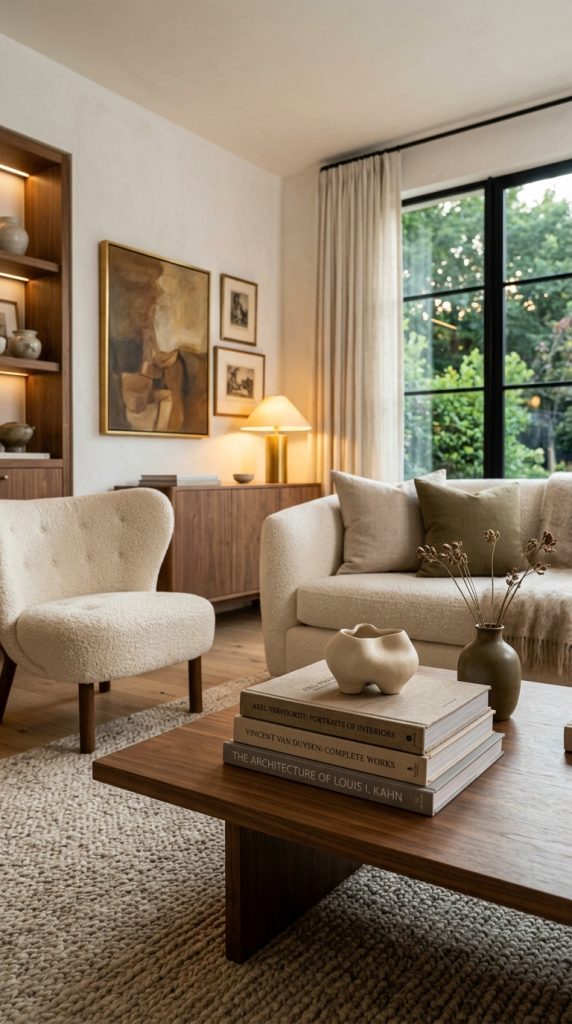
They add height, color, personality, and visual weight while remaining genuinely useful.
Choose books with attractive covers and subjects that reflect your interests. Interior design, architecture, travel, fashion, photography, art, gardening, food, and cultural books can all work beautifully.
Avoid selecting books simply because they have fashionable covers.
The most interesting coffee tables often include books that reveal something about the people who live in the home.
Stack two to four books horizontally.
The largest book should generally form the base, with smaller books placed above it.
You can place a small decorative object on top of the stack to create another level.
For example, a ceramic bowl on a stack of neutral books creates a simple layered arrangement.
Color matters as well.
If your living room is neutral, a muted olive, burgundy, charcoal, terracotta, or deep brown book cover can provide a subtle accent.
If the room already contains strong colors, choose books with cream, beige, taupe, or muted covers to prevent visual competition.
Books also provide a natural opportunity to introduce personality.
A travel book can remind you of a favorite destination. An art book can connect with wall artwork. A photography book can become a conversation starter.
Current coffee-table styling is increasingly moving away from perfectly matched decorative book stacks and toward more personal pieces that tell a story.
That makes your book collection part of the decor rather than simply a styling prop.
3. Use a Sculptural Object as the Main Focal Point
A sculptural accessory can give your coffee table an artistic quality without requiring a large arrangement.
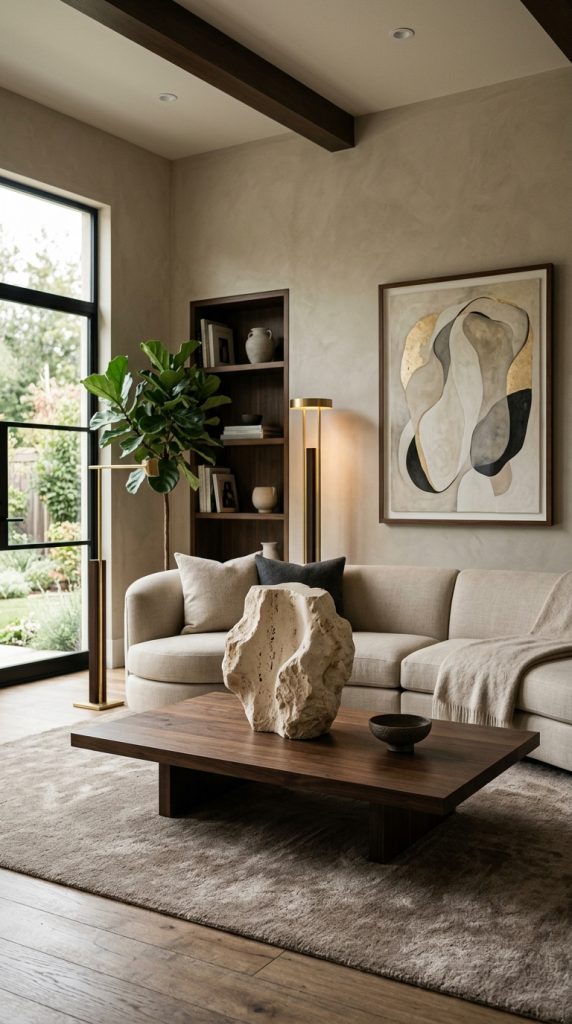
Choose one object with a strong silhouette.
It might be an abstract ceramic sculpture, carved wooden form, stone object, metal sculpture, or handmade clay piece.
The shape is more important than the number of objects.
One beautifully designed sculptural piece can create stronger visual impact than several small accessories competing for attention.
Place it directly on the table or elevate it slightly on a stack of books.
If the object has a tall silhouette, position it where it will not interfere with conversation across the table.
Organic shapes work particularly well in contemporary and organic-modern interiors.
Rounded ceramic forms, irregular stone shapes, curved wood, and handmade pottery can soften rooms dominated by straight furniture lines.
For a more sophisticated look, choose a sculptural piece with a matte finish.
Cream stone, charcoal ceramic, dark bronze, natural wood, and warm clay tones are versatile choices.
You can also use the sculpture to introduce contrast.
A black sculptural object on a light marble table can become a dramatic focal point.
A cream ceramic sculpture on dark walnut can create a quieter, more elegant effect.
The important thing is to give the piece breathing room.
Do not surround it with numerous small objects.
Let the silhouette speak for itself.
4. Introduce a Handmade Ceramic Vase
A ceramic vase can bring both height and texture to your coffee table.
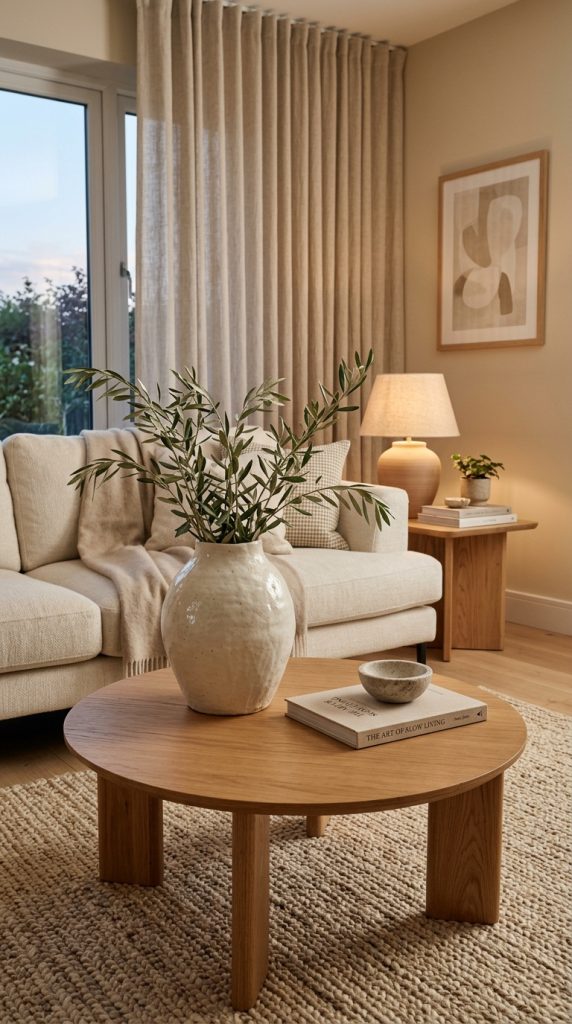
Look for pieces with an artisanal appearance rather than perfectly uniform shapes.
Handmade ceramics often have subtle irregularities that make them feel more personal and collected.
A low, rounded vase works well on smaller tables.
A taller narrow vase can create vertical interest on a larger rectangular table.
Choose the color according to your living room palette.
Cream and ivory work beautifully in neutral interiors.
Olive green can introduce an earthy accent.
Burgundy can provide dramatic fall color.
Warm terracotta can complement natural wood.
Charcoal can add modern contrast.
You do not necessarily need flowers.
An empty sculptural vase can look just as beautiful, particularly when its shape is distinctive.
If you want to soften the arrangement, add a few branches.
Fresh eucalyptus, olive branches, flowering stems, dried grasses, or seasonal foliage can introduce organic movement.
Keep the arrangement relatively loose.
A perfectly symmetrical bouquet can make the table feel formal, while a naturally shaped branch arrangement feels relaxed and sophisticated.
If your table is already visually busy, choose a monochromatic vase rather than one with a strong pattern.
5. Add a Decorative Bowl for Low-Level Interest
Not every accessory needs to create height.
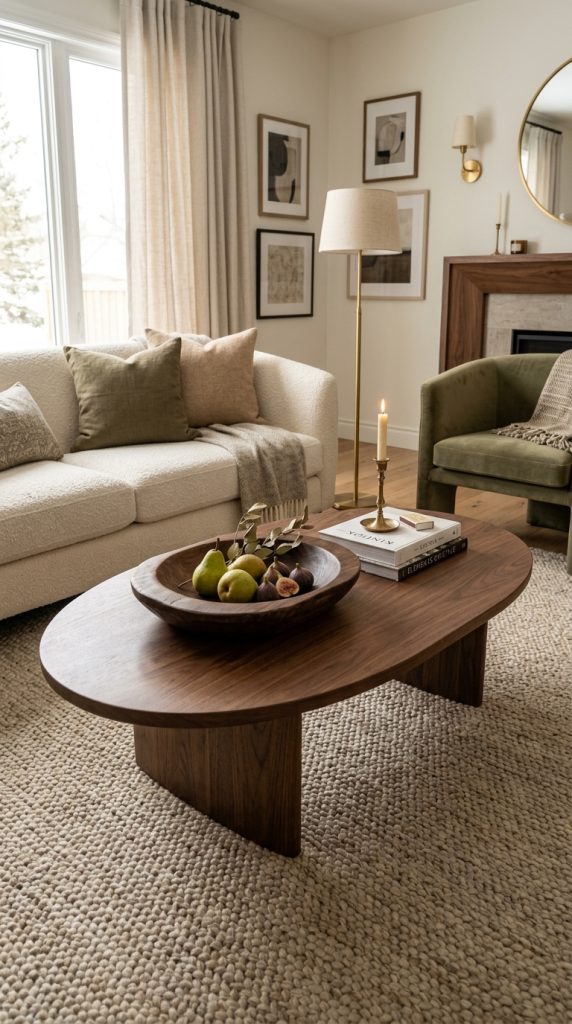
A decorative bowl creates an attractive low layer that balances taller objects.
Choose a bowl made from ceramic, stone, wood, marble, glass, or metal.
The shape should complement the other objects rather than repeat them.
For example, if you already have a rectangular tray and square books, a rounded bowl introduces useful visual contrast.
You can leave the bowl empty or fill it with a carefully selected collection.
Seasonal fruit is an easy option.
Figs, pears, apples, lemons, or oranges can add natural color while remaining functional.
For a more minimalist arrangement, place a few smooth decorative stones inside.
You can also use the bowl to hold small everyday items such as remote controls, although it is better to keep practical objects visually contained rather than allowing them to spread across the table.
A handmade ceramic bowl with a slightly irregular edge can add warmth to a modern living room.
A polished stone bowl can create a more luxurious effect.
A dark wooden bowl works beautifully in organic and earthy interiors.
The bowl also helps fill the visual space without making the table feel overcrowded.
6. Use Candles to Add Warmth and Atmosphere
Candles can transform the mood of a living room, especially in the evening.
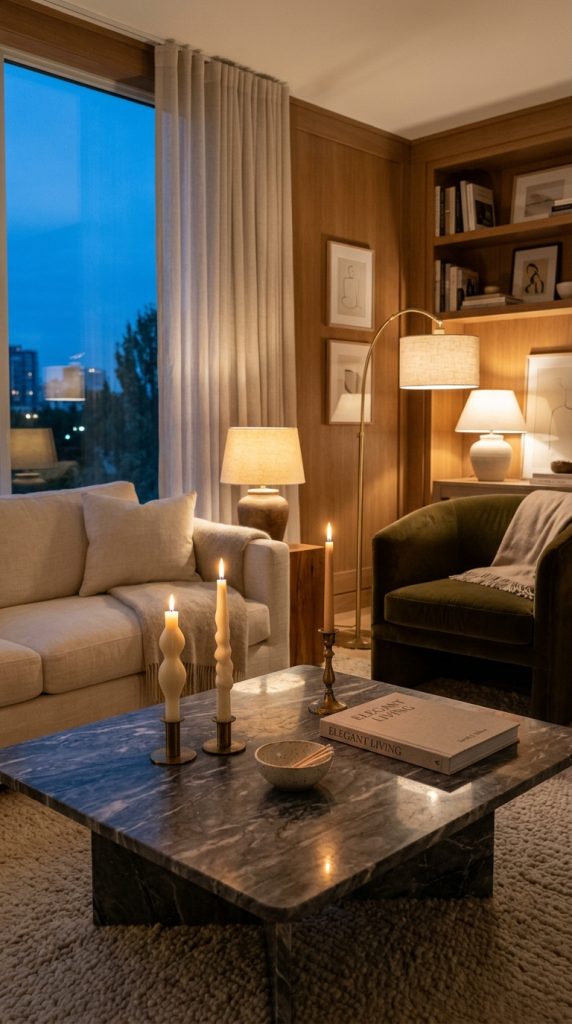
Rather than using many small candles scattered randomly across the table, choose one or two substantial pieces.
A sculptural pillar candle can act as both lighting and decoration.
A glass candle can introduce transparency.
A ceramic candle container can add texture.
A brass candleholder can bring a subtle metallic accent.
For a sophisticated look, select candle colors that connect with the room.
Cream, ivory, taupe, warm brown, burgundy, olive, charcoal, and muted amber can all work beautifully.
If your coffee table is made from natural wood, warm ivory candles can create a soft contrast.
On a marble table, aged brass or dark ceramic candleholders can provide warmth.
Safety should always remain a priority. Keep candles away from loose textiles, overhanging branches, and areas where children or pets can easily reach them.
If you want the appearance of candlelight without an open flame, high-quality flameless candles can provide a similar warm glow.
The purpose is not simply to add another decorative object.
Candlelight changes the way the entire room is perceived.
It highlights textures, creates softer shadows, and makes neutral interiors feel more intimate.
7. Bring in a Natural Element
Natural elements prevent a coffee table arrangement from feeling overly manufactured.
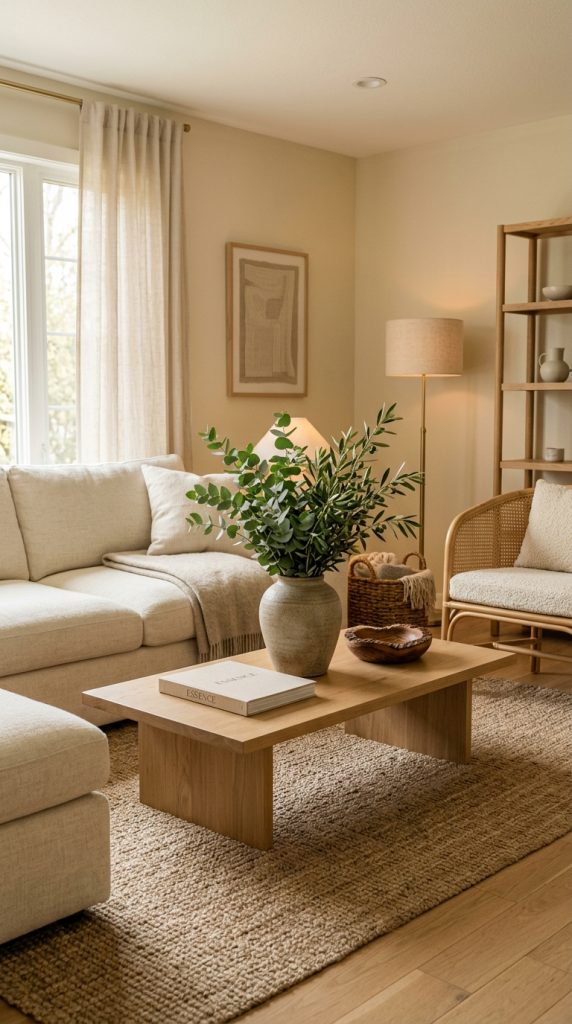
This could be a small plant, fresh flowers, dried branches, a piece of natural stone, a wooden object, or a bowl filled with seasonal produce.
Greenery is particularly effective because it introduces an organic color and irregular shape.
A small potted plant can work well on a modern coffee table.
For a more refined arrangement, use a single branch in a sculptural vase.
Natural stone accessories are another option.
A piece of travertine, marble, limestone, or river stone can add visual weight without requiring strong color.
Wood can also provide warmth.
A carved wooden bowl or small turned object can introduce natural grain and texture.
The important point is to avoid using too many natural elements at once.
One or two are usually enough.
The natural element should feel like part of the composition rather than an afterthought.
Current styling trends favor organic materials and handmade objects because they create a warmer, more personal atmosphere.
8. Create a Luxe Look With a Marble or Stone Accessory
Stone accessories can make a coffee table feel instantly sophisticated.
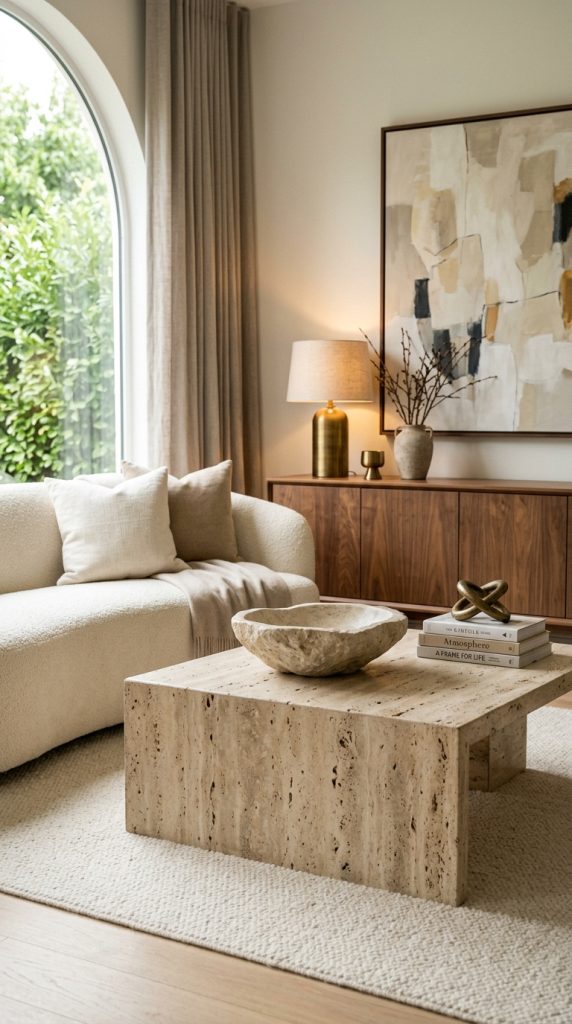
You do not need an entire marble collection.
One carefully chosen piece can provide enough luxury.
Consider a marble tray, stone bowl, travertine pedestal, limestone object, or small alabaster accessory.
The natural variations in stone create visual interest without requiring patterns.
Cream marble works beautifully with warm neutral living rooms.
Dark stone can create contrast in lighter spaces.
Travertine is particularly useful in organic-modern interiors because its warm beige color works naturally with wood, linen, and cream upholstery.
Pair stone with softer materials.
A marble tray with a linen-bound book and a ceramic candle feels more inviting than several polished stone objects grouped together.
This combination of hard and soft materials creates balance.
Stone also works well with brass.
A small aged-brass object placed beside a pale stone bowl can produce a subtle luxury effect without becoming overly glamorous.
If your coffee table itself is marble, choose accessories in contrasting materials rather than adding more marble.
Wood, ceramic, linen, and glass will create more dimension.
9. Display a Meaningful Personal Object
One of the easiest ways to make your coffee table feel genuinely stylish is to include something that means something to you.
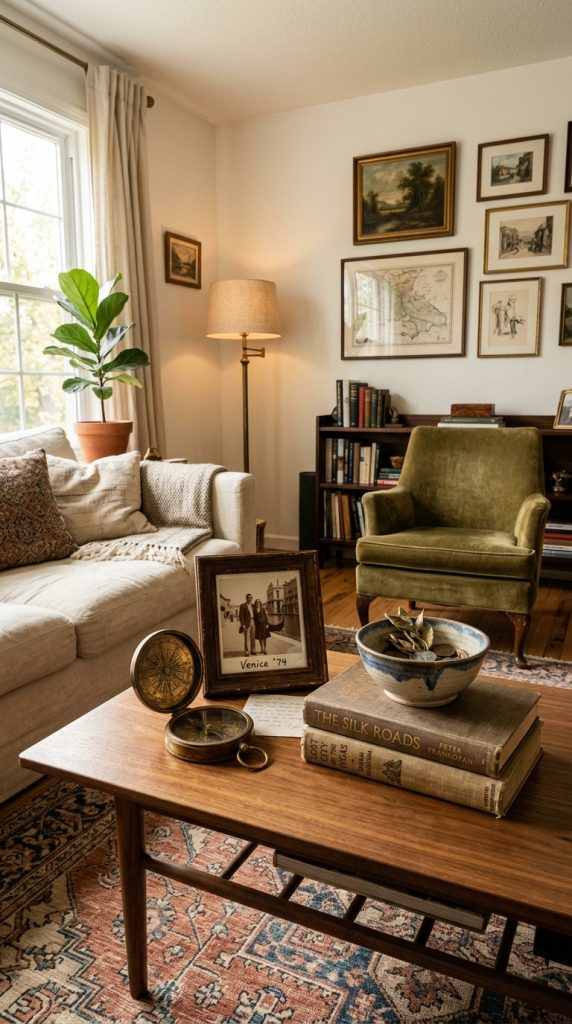
This could be a small sculpture purchased during travel, an inherited bowl, a vintage object, a framed photograph, a handmade ceramic piece, or a souvenir with beautiful design.
The goal is not to display personal belongings randomly.
Choose one object that has both meaning and visual appeal.
For example, a small vintage brass box might sit on top of your coffee-table books.
A ceramic object from a favorite trip could become the focal point of a tray.
A small framed photograph can introduce warmth and personality.
Current design thinking increasingly favors coffee tables that feel personal and collected rather than perfectly coordinated with mass-produced accessories.
This approach also helps your home feel less like a showroom.
Your living room becomes a reflection of your experiences.
When styling the piece, give it space.
Meaningful objects become more powerful when they are not surrounded by dozens of competing decorations.
10. Add a Small Decorative Box for Hidden Organization
Beautiful decor can also solve practical problems.
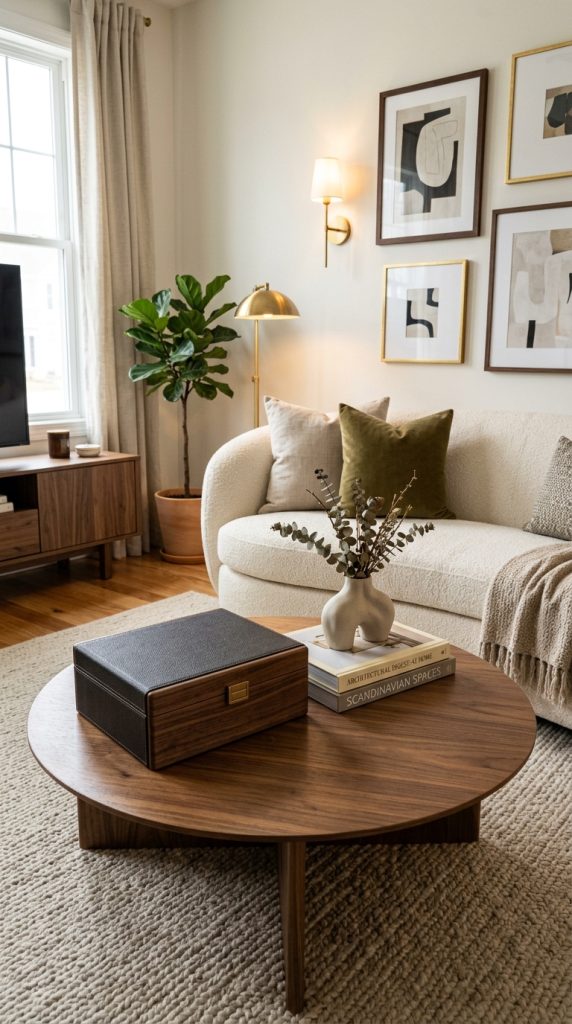
A decorative box is an excellent coffee-table accessory because it can conceal small items while maintaining a polished appearance.
Use it for remote controls, charging cables, matches, coasters, or other everyday items that would otherwise make the tabletop look messy.
Choose a box that complements your interior.
Wood works well in warm and organic rooms.
Lacquer can suit contemporary spaces.
Leather adds softness.
Rattan introduces texture.
Brass or metal can create a more glamorous effect.
A box can also provide a lower visual layer when placed beside books or a tray.
If your coffee table is small, choose a compact box with a clean silhouette.
Avoid highly decorative patterns unless they connect with your overall interior.
The best storage accessories should almost disappear into the composition.
Guests should see an elegant decorative box rather than immediately recognizing it as a storage solution.
This is especially useful for family living rooms where the coffee table needs to remain practical.
11. Use Glass Accessories to Keep the Table Feeling Light
Glass accessories can prevent a heavily styled coffee table from feeling visually dense.
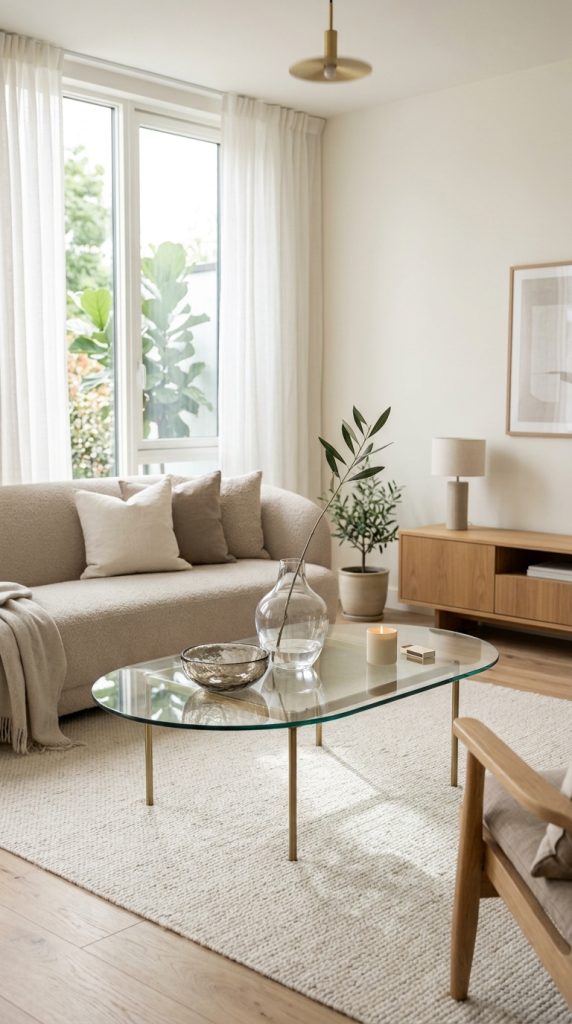
A transparent vase, glass candleholder, decorative bowl, or small glass object can add shape without introducing much visual weight.
This is particularly useful on smaller tables.
If your living room already contains dark wood, burgundy, olive, or other rich colors, transparent glass can provide breathing room.
Pair glass with natural materials.
A clear glass vase containing one branch can look beautiful beside a walnut tray.
A smoked-glass bowl can create a more dramatic appearance.
Amber glass can add warmth.
For an elegant arrangement, avoid combining too many transparent objects because the composition can begin to feel disconnected.
One glass element is often enough.
Glass also interacts beautifully with light.
During the day, it catches natural light.
In the evening, it reflects warm lamp or candlelight.
This gives the coffee table subtle movement throughout the day.
12. Layer a Small Framed Artwork or Photograph
A small framed piece can bring vertical interest and personality to the tabletop.
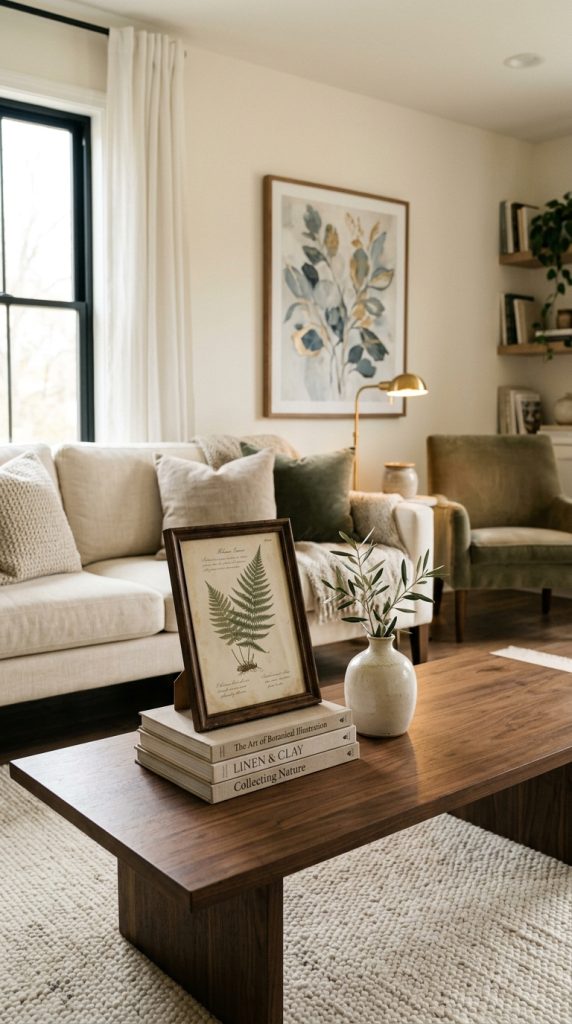
Lean it against a stack of books or place it inside a tray arrangement.
Choose artwork that relates to the larger room.
If your living room contains botanical artwork, use a smaller botanical print on the coffee table.
If your walls contain abstract art, choose a small piece with similar colors but a different composition.
A family photograph can create a warmer atmosphere.
For an elegant look, choose a refined frame.
Aged brass, walnut, black, brushed silver, or natural wood can all work depending on the room.
Avoid placing too many framed photographs together.
One meaningful image usually has more impact.
This technique is particularly useful if your coffee table is large and you need a vertical element without using a tall vase.
It also makes the coffee table feel personal rather than purely decorative.
13. Create a Minimalist Coffee Table With One Statement Accessory
Sometimes the most stylish coffee table is the simplest one.
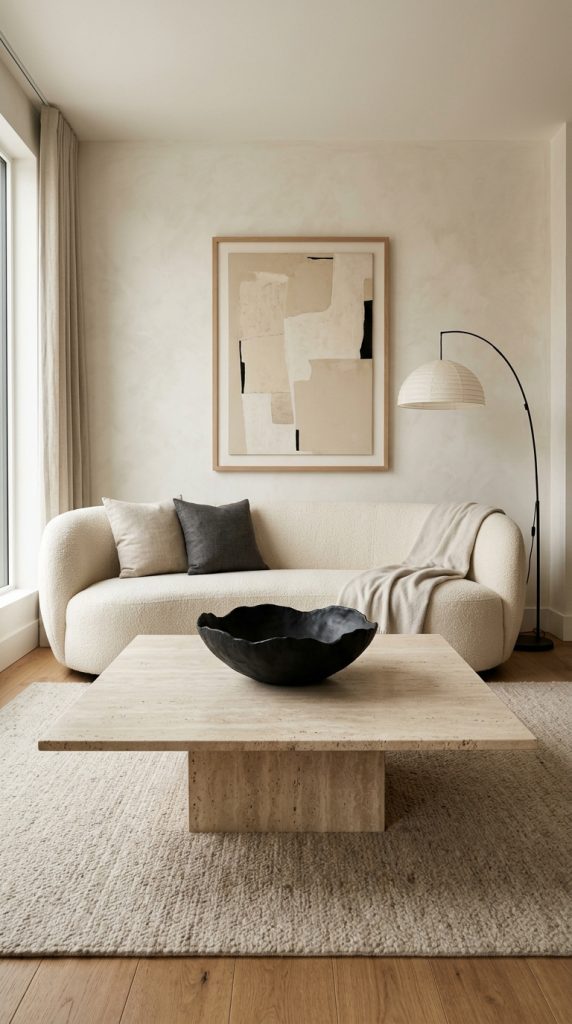
If your living room already contains dramatic furniture, artwork, lighting, or architectural details, you may not need a complicated tabletop arrangement.
Choose one statement accessory.
This could be an oversized sculptural bowl, a large stone object, a dramatic ceramic vase, or an artistic centerpiece.
Place it slightly off-center.
Then leave the rest of the tabletop open.
This approach is especially effective with beautiful coffee tables made from walnut, marble, stone, or distinctive wood grain.
The table itself becomes part of the composition.
Minimalist styling also works well in small living rooms because it preserves visual openness.
The key is choosing an accessory with enough presence to hold the space.
A tiny object sitting alone on a large table may look accidental.
A substantial sculptural piece looks intentional.
Consider scale carefully.
The accessory should feel proportionate to the table and the furniture surrounding it.
14. Combine Vintage and Modern Coffee Table Accessories
Mixing old and new can create a much more sophisticated living room than purchasing a matching accessory set.
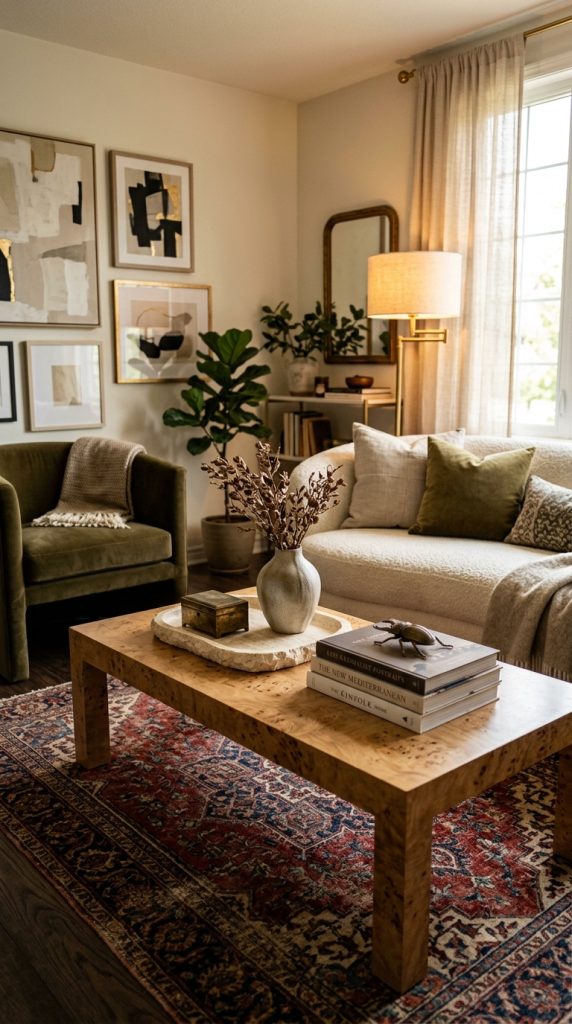
For example, combine a modern stone tray with a vintage brass object.
Place contemporary ceramic beside an antique bowl.
Pair modern coffee-table books with an old wooden box.
Use a sleek candleholder beside a handmade pottery piece.
The contrast makes the arrangement feel collected over time.
This approach also prevents your living room from looking overly coordinated.
Vintage pieces introduce patina, irregularity, and history.
Modern objects provide clean lines and simplicity.
The combination works especially well in transitional, traditional, organic-modern, and contemporary interiors.
Current design coverage is placing greater emphasis on meaningful, collected pieces and handmade or vintage objects rather than interiors filled entirely with mass-produced accessories.
You do not need expensive antiques.
Even a small vintage brass dish from a thrift store can create a beautiful contrast against modern decor.
The key is selecting pieces with attractive shape, material, or patina.
15. Create a Complete Layered Coffee Table Arrangement
If you want the most versatile approach, combine several accessory types into one carefully edited composition.
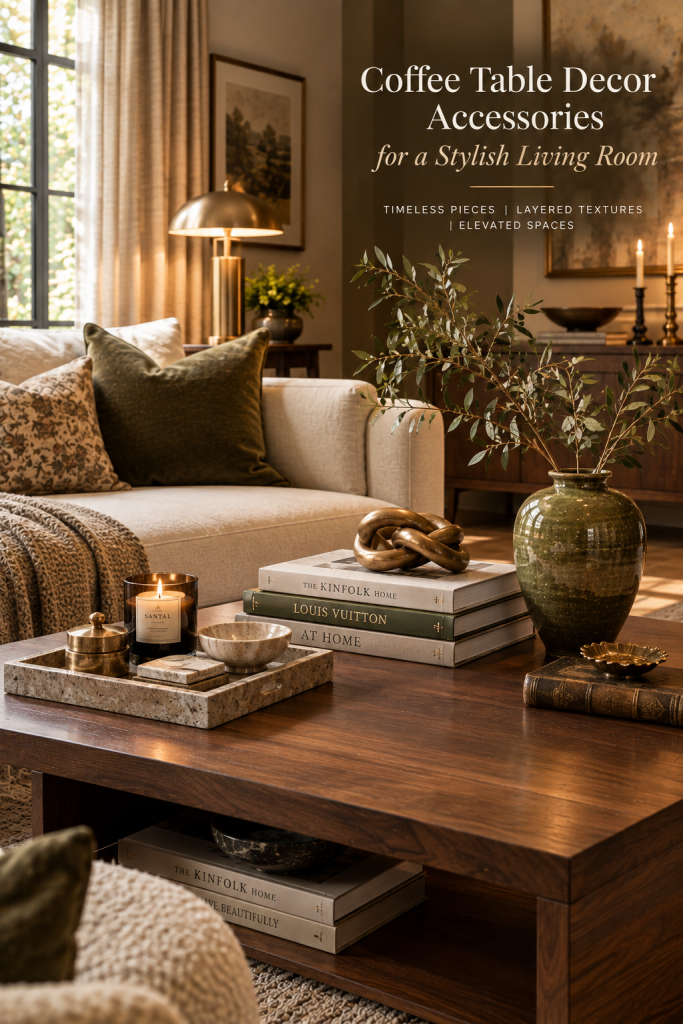
Begin with one anchor.
A tray, decorative bowl, or substantial sculptural piece can establish the main zone.
Next, add a stack of two or three coffee-table books.
Place one medium-height object on top, such as a ceramic bowl, candle, or small sculpture.
Then introduce a natural element.
This could be a small plant, one branch, or a few flowers.
Finally, add one personal or decorative object.
The arrangement should contain different heights and materials without becoming crowded.
For example, imagine a rectangular walnut coffee table.
On one side, place a textured cream tray holding a candle and small ceramic bowl.
Beside it, stack three neutral books with a small sculptural object on top.
At the opposite side, add an olive ceramic vase containing one loose branch.
Leave a generous section of the tabletop completely empty.
This creates a balanced composition while preserving space for everyday use.
The arrangement works because each element has a role.
The tray creates structure.
The books create height.
The sculpture creates personality.
The vase adds organic movement.
The empty space prevents visual overload.
This kind of layered but edited arrangement reflects the current preference for coffee tables that feel collected and personal rather than excessively staged.
How to Choose Coffee Table Accessories for Different Table Shapes
The shape of your coffee table should influence the arrangement.
Rectangular Coffee Tables
Rectangular tables provide the most flexibility.
You can create two or three visual zones along the length of the table.
Use a tray on one side, books in the center, and a vase or natural element toward the opposite end.
Keep enough space between each group so they do not merge visually.
Round Coffee Tables
Round tables benefit from a central or triangular arrangement.
A large tray can anchor the center.
Alternatively, place a book stack, small vase, and sculptural bowl at slightly different positions to create movement.
Keep the outer edge relatively clear so the circular shape remains visible.
Oval Coffee Tables
Oval tables work beautifully with elongated arrangements.
A long tray can follow the shape of the table.
Pair it with a low bowl and one vertical vase.
Avoid placing everything directly in the center because it can make the arrangement feel static.
Small Coffee Tables
Small tables require editing.
Choose two or three important elements rather than trying to recreate a large tabletop arrangement.
A small tray, one book stack, and one ceramic object may be enough.
Function should take priority.
How to Make Coffee Table Decor Look Expensive
Expensive-looking decor is usually about presentation rather than price.
Start by choosing materials with visual depth.
Natural wood, stone, ceramic, glass, linen, aged brass, and leather can all create a sophisticated appearance.
Then vary the textures.
A smooth stone object beside a rough ceramic vase creates contrast.
A soft linen book cover next to polished glass adds another layer.
Scale also matters.
Instead of displaying many tiny accessories, select fewer objects with stronger silhouettes.
Color coordination can help too.
Choose two or three colors already present in your living room and repeat them subtly.
For example, if your sofa is cream and your rug is beige, introduce walnut, olive, and muted brass.
If your room contains burgundy artwork, echo that color through one candle or decorative bowl.
The arrangement should look intentional rather than purchased as a complete matching set.
How to Avoid a Cluttered Coffee Table
The easiest way to prevent clutter is to begin with an empty surface.
Do not simply add new accessories on top of whatever is already there.
Remove everything.
Clean the table.
Then select the pieces you actually want to use.
Start with one major object.
Add one or two supporting pieces.
Step back.
If the table still looks empty, add something with a different height or texture.
Do not automatically add another small object.
Sometimes the missing element is height, not quantity.
You can also remove one item after finishing.
This editing step often makes the arrangement stronger.
Keep everyday clutter contained.
Remote controls can go inside a decorative box.
Mail should not become part of the styling.
Chargers should be stored when possible.
Coasters can be grouped inside a tray.
The goal is for practical items to have designated places rather than becoming visual noise.
How to Keep Coffee Table Styling Functional
A coffee table must still work as furniture.
Leave enough open surface for a drink.
Make sure decorative objects do not block the television remote or prevent people from placing down a plate.
Avoid extremely tall arrangements in homes where people frequently gather around the table.
If you entertain often, choose accessories that can be moved quickly.
A large tray is particularly useful because it allows you to relocate the entire arrangement in seconds.
Families with young children or pets should also consider stability.
Avoid fragile objects placed near edges.
Choose heavier ceramic or stone accessories when appropriate.
Beautiful styling should make daily life easier rather than more difficult.
Final Thoughts
The right coffee table decor accessories can completely transform the personality of a living room.
You do not need a huge collection of objects.
You need a thoughtful combination of shape, height, texture, color, function, and personality.
Start with a foundation such as a tray or decorative bowl. Add books for visual layering, introduce a sculptural object for character, and bring in something natural to soften the arrangement. From there, consider candles, handmade ceramics, stone accessories, personal treasures, vintage pieces, or a small framed artwork.
Most importantly, leave room to breathe.
An elegant coffee table is not the one with the most accessories. It is the one where every object feels intentional.
For a modern room, keep the arrangement clean and sculptural.
For an organic-modern interior, emphasize wood, stone, ceramics, and greenery.
For a traditional living room, combine books, brass, vintage objects, and classic pottery.
For a luxury space, focus on scale, natural materials, and restrained composition.
For a small apartment, prioritize function and visual lightness.
And for a cozy fall room, introduce richer colors and tactile materials without turning the table into a seasonal display.
The strongest coffee-table styling also tells a story. A favorite book, a handmade bowl, an object collected during travel, a vintage frame, or a sculptural piece can make the living room feel like your home rather than a showroom.
Current design direction is increasingly favoring this sense of personality and collected character.
So before buying another accessory, look around your home.
You may already own everything you need.
Sometimes the most beautiful coffee table arrangement is simply a few meaningful pieces, arranged with intention, surrounded by enough empty space to let each one be appreciated.
That is the real secret to creating a stylish living room: decorate less, choose better, layer thoughtfully, and always leave space for real life.