Tag: home accessories

  • Console Table Decor Accessories for an Elegant Entryway

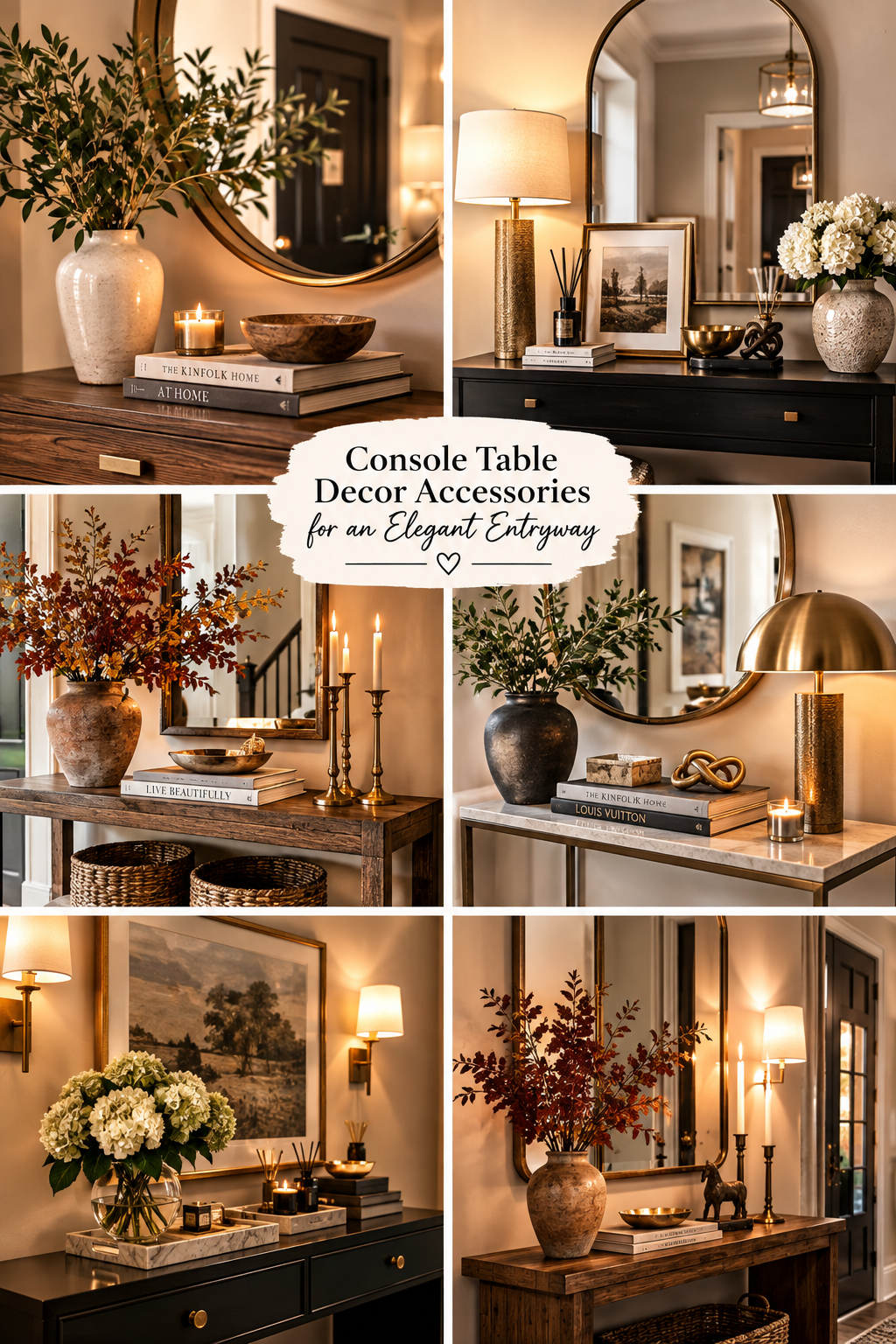
    Console Table Decor Accessories for an Elegant Entryway

    An entryway may be one of the smallest areas in a home, but it has an outsized effect on how the entire house feels. It is the first space you see when you arrive home, the first area guests experience, and often the transition point between the outside world and your private living spaces.
    That makes an entryway worth decorating intentionally.

    A console table is one of the easiest ways to give this area structure. It fills an empty wall, provides a convenient surface for everyday items, and creates a natural place to introduce the colors, materials, and personality found throughout the rest of the home.

    But an elegant console table does not require dozens of decorative objects.

    In fact, the opposite is usually true.

    A successful arrangement depends more on selection and proportion than quantity. One beautiful mirror can have more impact than a crowded gallery wall. One sculptural lamp can make a stronger statement than several small accessories. A carefully chosen tray can make everyday keys and sunglasses feel organized rather than messy.

    Current entryway styling guidance continues to emphasize this balance between decoration and function. Designers are recommending practical catch-all pieces, soft lighting, mirrors, ceramic vessels, natural textures, and personalized objects while discouraging surfaces that become overloaded with small decorative items.

    This approach is particularly useful for modern homes because entryways need to look beautiful while still handling real life.

    Keys need somewhere to go.

    Mail needs to be controlled.

    Small personal belongings inevitably arrive at the front door.

    The console table should accommodate those habits rather than fight them.

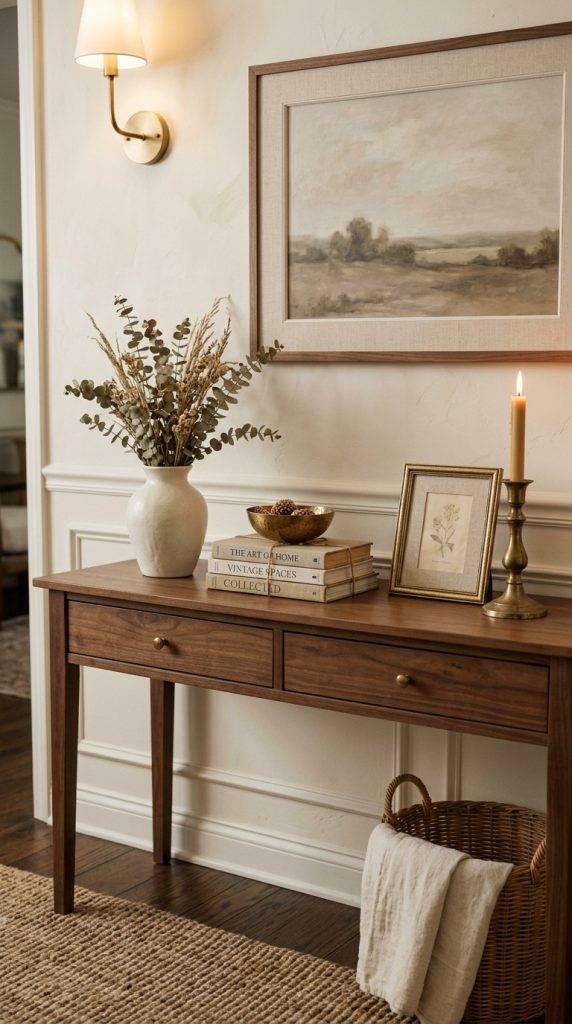
    A decorative tray can provide a landing zone. A bowl can collect keys. A lamp can provide warm evening illumination. A vase can bring height and organic texture. Books can add personality. A sculptural object can introduce an artistic element.

    The goal is to make every accessory earn its place.

    Another important consideration is scale.

    A console table that is beautifully styled with appropriately sized accessories can make an entryway feel polished and intentional. The same table can feel cluttered if it is covered with objects that are all the same size or competing for attention.

    The wall above the table matters just as much as the tabletop.

    A mirror or artwork establishes the vertical focal point, while the objects below create a visual connection between the wall and furniture. Together, they form one composition rather than two separate decorating projects.

    For smaller entryways, restraint becomes even more important. A narrow console should not be overwhelmed by oversized accessories, and the walking path should remain comfortable. A slim table paired with a mirror, one tall accessory, a functional tray, and a little greenery can be enough to make a compact foyer feel complete.

    Larger entryways offer more freedom, but even a wide console does not need to be filled from end to end. Empty space helps important pieces stand out and preserves the practical purpose of the surface.

    The most elegant entryways also tend to feel personal.

    They are not simply collections of things that look good together. A framed photograph, vintage object, handmade ceramic piece, travel find, or favorite book can give the arrangement a sense of history and individuality.

    The following ten accessories provide a flexible starting point for creating an elegant console table. You do not need every item. Select the pieces that suit your table, entryway, lifestyle, and decorating style.

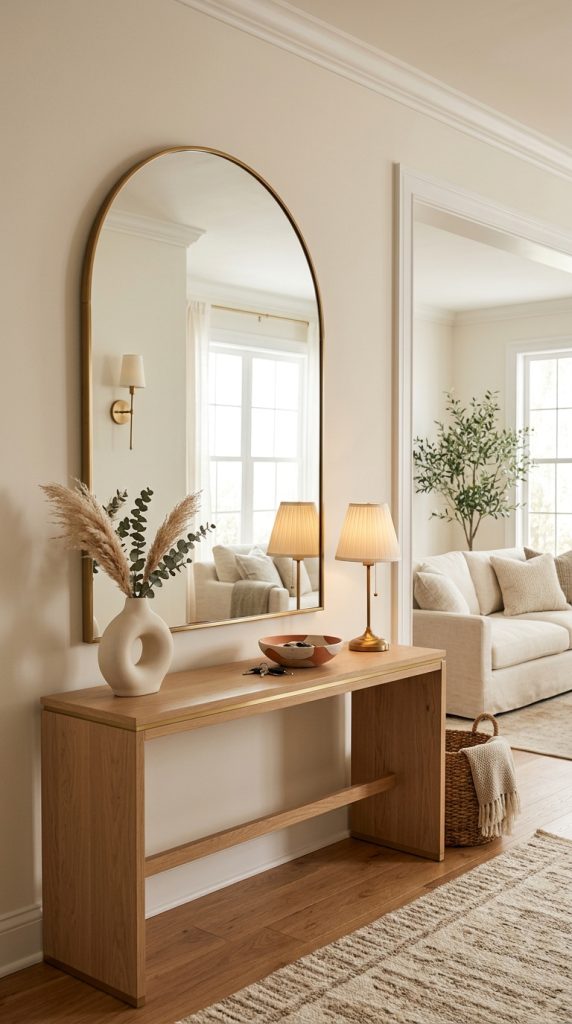
    1. Make a Statement With a Mirror

    A mirror is one of the most effective accessories for an entryway console because it combines decoration with everyday function.
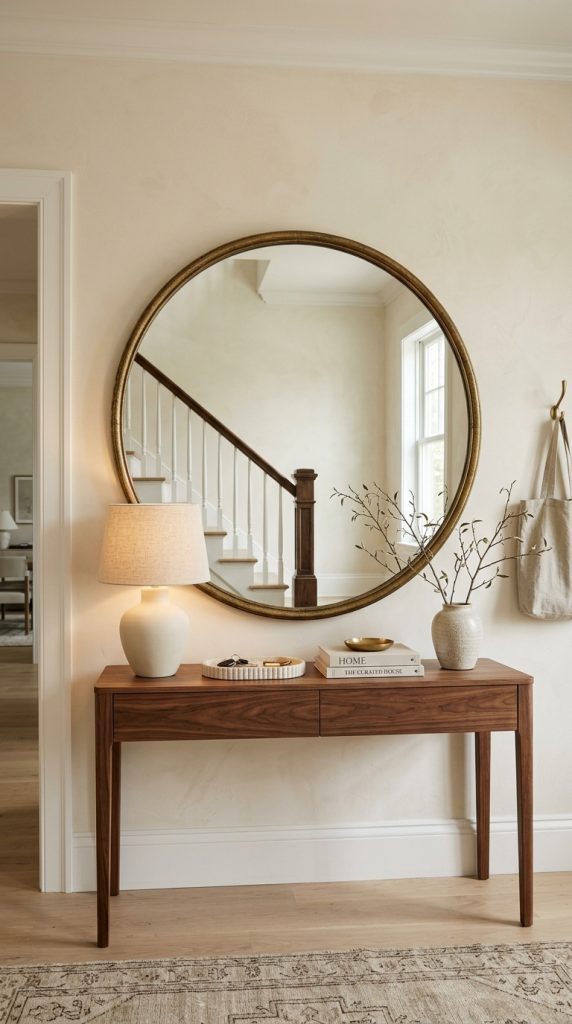
    It gives the wall above the console a clear focal point while reflecting available light and creating a greater sense of openness. This can be particularly valuable in narrow hallways, apartments, or entryways without large windows.

    The shape of the mirror can influence the character of the entire arrangement.

    A round mirror introduces softness and works especially well with rectangular furniture. An arched mirror adds architectural interest and draws the eye upward. A rectangular mirror creates a more structured appearance and can suit contemporary or minimalist interiors.

    The frame provides another opportunity to establish the design direction.

    Consider warm walnut for an organic interior, aged brass for traditional elegance, matte black for contrast, natural oak for a relaxed look, or champagne-toned metal for subtle sophistication.

    The mirror should relate visually to the console rather than appear disconnected from it. A useful starting point is a mirror that is somewhat narrower than the console, allowing the furniture to remain visually grounded.

    Instead of surrounding a large mirror with numerous wall decorations, allow it to function as the primary focal point.

    The simpler surrounding wall often makes the mirror feel more substantial.

    A mirror can also be positioned strategically to reflect a window, attractive artwork, architectural feature, or light source. This adds depth without requiring additional decoration.

    2. Introduce a Sculptural Table Lamp

    A table lamp is both a practical lighting source and a decorative accessory, making it particularly valuable on an entryway console.
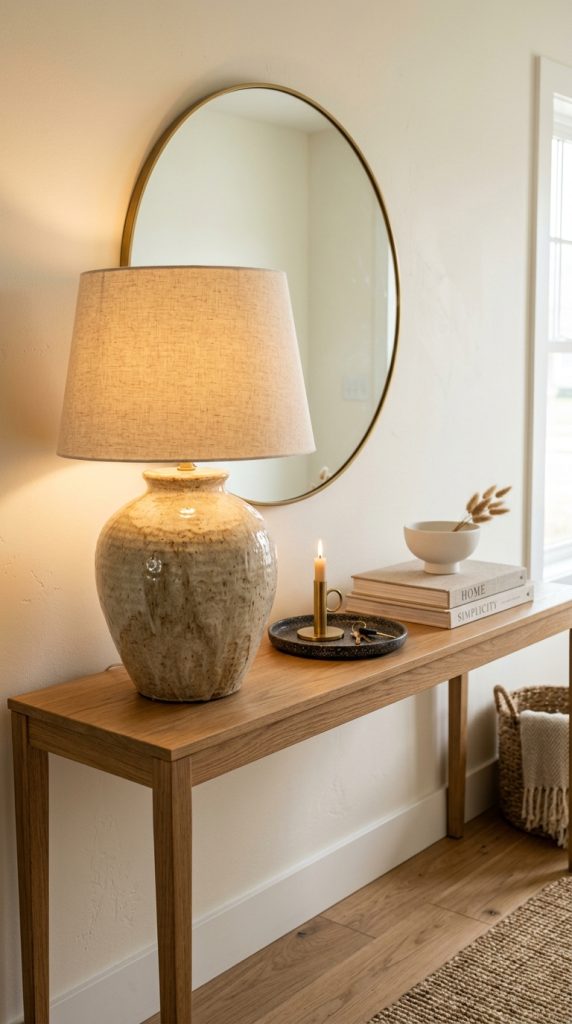
    During daylight, the lamp contributes shape and material. In the evening, it creates a warm pool of light that makes the entryway feel more welcoming.

    Current design advice increasingly favors decorative lamps and layered lighting instead of relying exclusively on overhead fixtures. Sculptural lamps can provide warmth while also functioning as an intentional design feature.

    The lamp itself can establish the mood.

    A ceramic lamp feels soft and handcrafted.

    A stone or plaster-style lamp suits organic modern interiors.

    A brass base introduces warmth.

    A linen shade creates a relaxed, timeless appearance.

    A dark sculptural lamp can provide contrast against a light console or wall.

    For a narrow console, choose a lamp with a relatively compact footprint. A wider console can support a more substantial design or even a pair of lamps.

    One lamp works especially well with an asymmetrical arrangement, allowing the opposite side of the table to contain a vase, books, or another lower object.

    Warm-toned lighting is generally more inviting in an entryway than harsh, cool illumination. The lamp should illuminate the surrounding area without producing uncomfortable glare in the mirror.

    The best lamp is one that looks intentional even when it is switched off.

    3. Add a Decorative Tray for Everyday Function

    A decorative tray is one of the most useful accessories you can add to an entryway console.
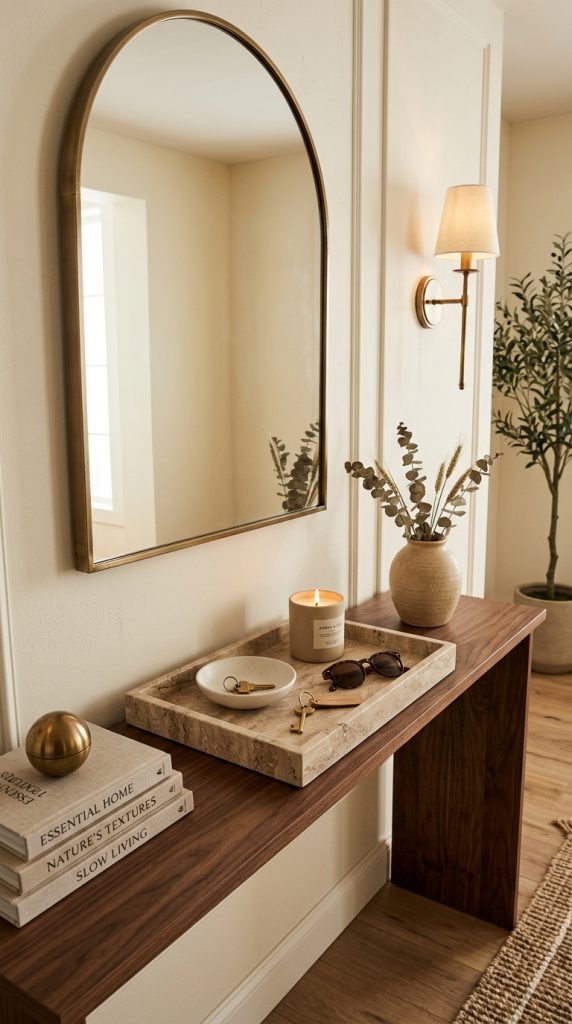
    Its primary purpose is organization, but it can also strengthen the visual composition.

    Keys, sunglasses, wallets, small accessories, and other daily necessities tend to spread across an unstructured surface. A tray creates a defined zone for those objects.

    This means the console can remain functional without looking like a storage station.

    The material of the tray can also introduce contrast.

    A wooden tray works naturally with walnut or oak.

    A stone tray adds sophistication.

    A brass tray creates a subtle glamorous accent.

    A woven tray introduces warmth and texture.

    A lacquered tray can complement a more polished contemporary interior.

    A shallow catch-all bowl can be placed inside the tray or used independently for keys and loose items.

    The important distinction is between organized function and accumulated clutter.

    The tray should not become a container for every object that enters the house. Give it a clear purpose and remove items that do not belong there.

    This is one of the simplest ways to make an elegant entryway practical enough for everyday use. Designers continue to recommend trays and catch-all bowls as stylish ways to control loose belongings.

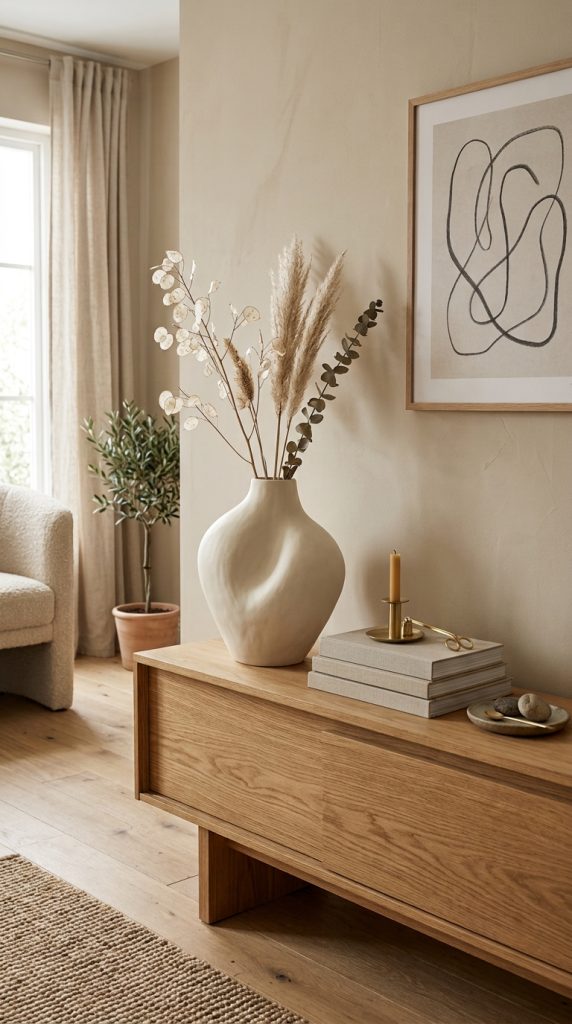
    4. Bring Height With a Ceramic Vase and Branches

    A tall vase provides vertical interest and gives a console table a natural focal element.
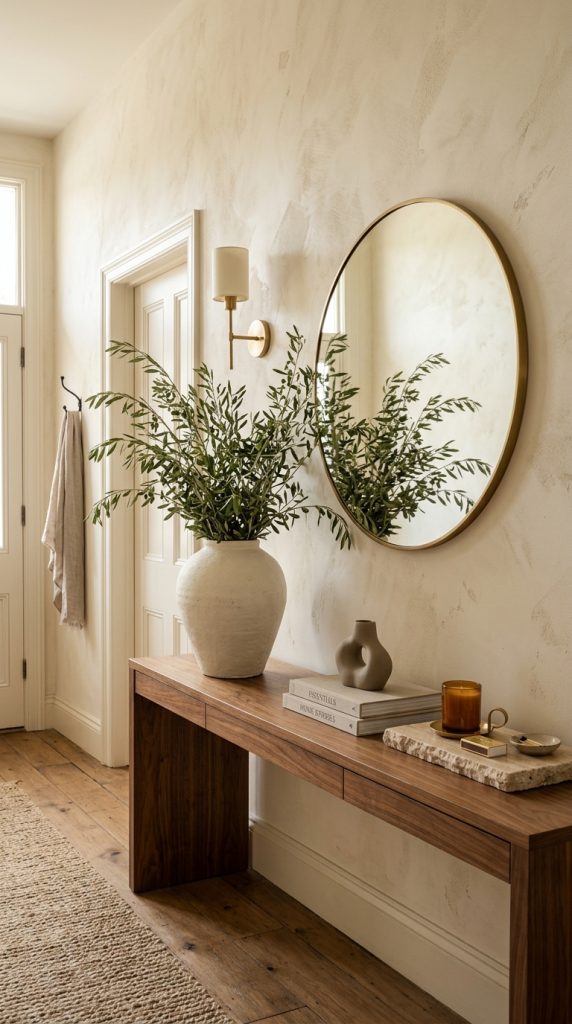
    Ceramic is particularly versatile because it can look sophisticated without feeling overly formal.

    Choose a vessel with a shape that complements the furniture rather than competing with it.

    A handmade-looking ceramic vase can add character to a modern wood console. A smooth stone-colored vessel works beautifully in minimalist interiors. Dark ceramic provides contrast against pale walls, while warm white can maintain a softer neutral palette.

    Instead of filling the vase with an enormous bouquet, consider a smaller arrangement of branches.

    Suitable options include:

    • olive branches
    • eucalyptus
    • dried grasses
    • delicate flowering branches
    • preserved greenery
    • seasonal foliage

    The slightly irregular shapes of branches create movement and keep the arrangement from appearing overly manufactured.

    A tall vase is especially useful when the console itself is low or visually horizontal.

    It introduces another vertical layer without requiring additional wall decoration.

    Keep the arrangement proportionate to the table. The vase should have enough presence to be noticed while leaving enough visual room for the other accessories.

    5. Layer Two or Three Books

    Books add personality while also providing a practical styling layer.
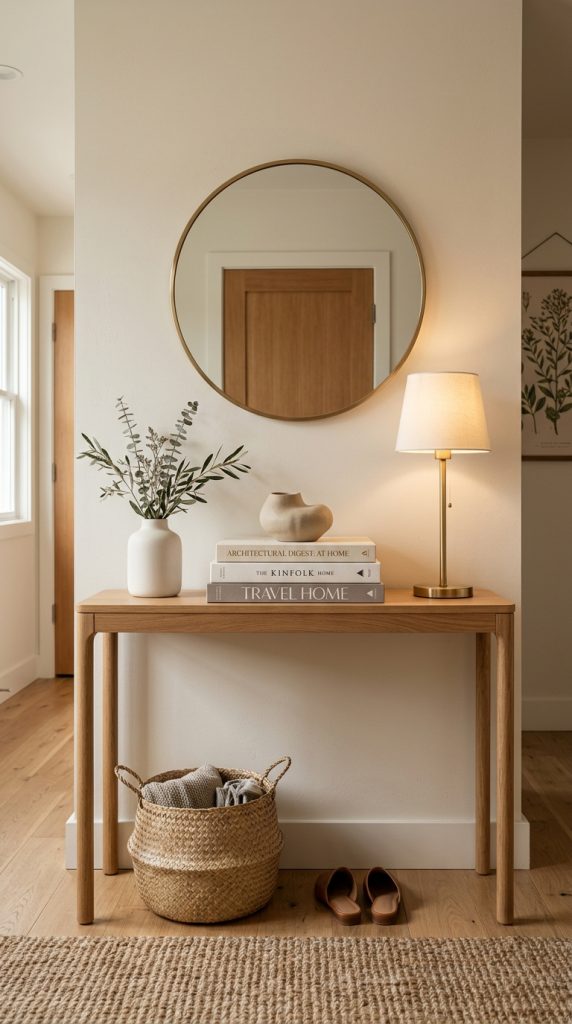
    A small horizontal stack can raise a decorative object, create visual weight, or bridge the height difference between larger and smaller accessories.

    Choose books that you genuinely enjoy whenever possible. Their presence should make the entryway feel lived-in rather than staged.

    Neutral covers work particularly well in elegant interiors:

    • cream
    • beige
    • warm brown
    • charcoal
    • black
    • muted green
    • soft taupe

    Two or three books are generally enough.

    A small ceramic object, candle, or decorative bowl can sit on top of the stack.

    Books are especially useful when the other accessories are tall. They introduce a lower horizontal layer that keeps the composition from becoming a collection of vertical objects.

    They can also connect the entryway to the personality of the people who live in the home.

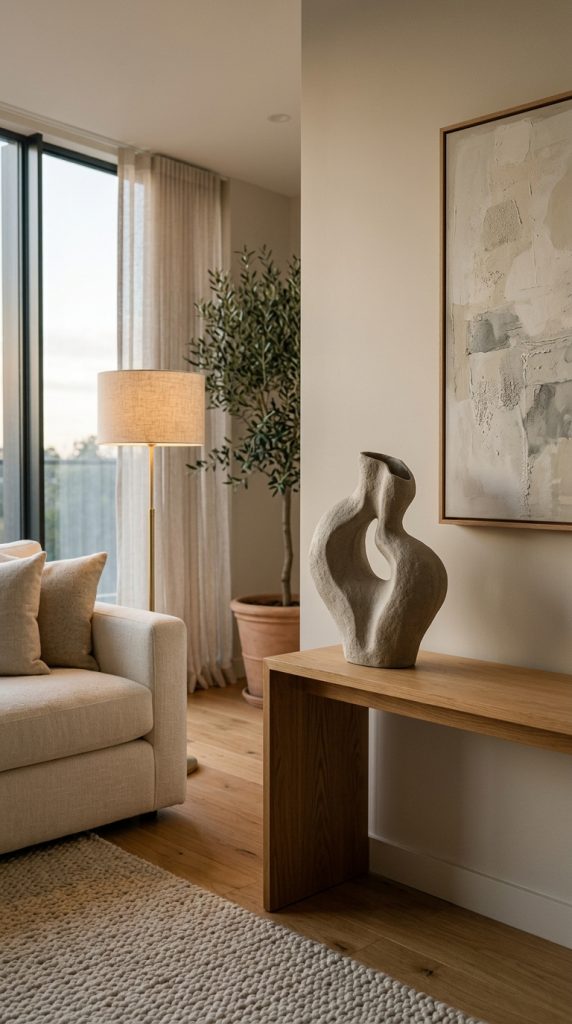
    6. Add One Sculptural Object

    A single sculptural object can prevent an elegant console from feeling too predictable.
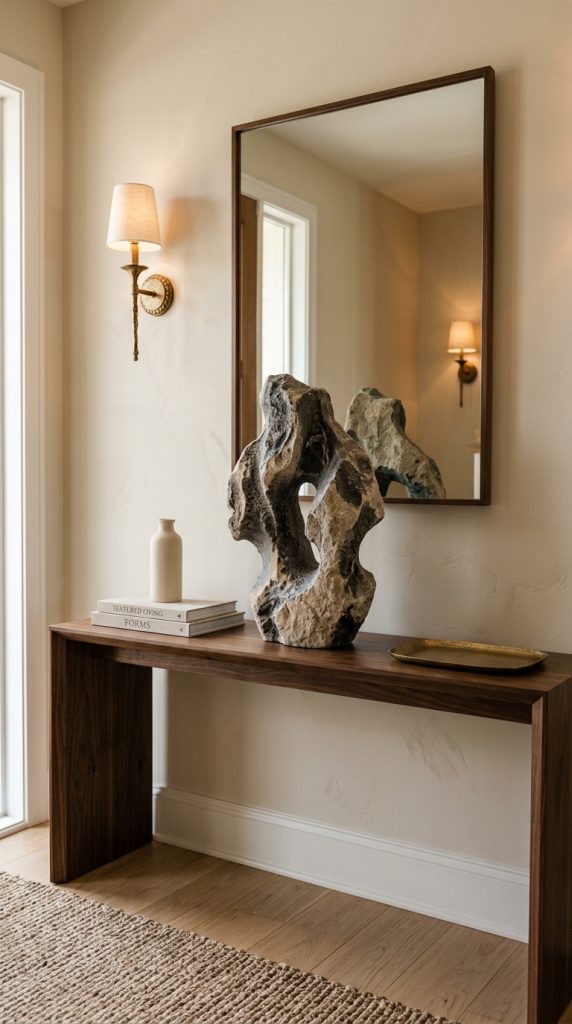
    This could be an abstract ceramic form, stone sculpture, wooden object, metal shape, architectural piece, decorative knot, or handcrafted vessel.

    The purpose is not necessarily to communicate a particular theme.

    Instead, look for something with an interesting silhouette.

    Shape can become the decoration.

    If your console has straight architectural lines, a rounded sculpture can soften it. If you already have a round mirror, a more angular object can provide contrast.

    The material can introduce another layer of texture.

    Stone feels grounded.

    Wood feels warm.

    Metal adds structure.

    Ceramic feels artistic and tactile.

    Glass can provide lightness.

    One strong sculptural piece is usually more effective than several small decorative objects competing for attention.

    Let the sculpture provide personality without asking it to share the spotlight with too many other statement pieces.

    7. Add a Candle for Warmth and Atmosphere

    A candle is a small accessory that can have a surprisingly strong effect on an entryway.
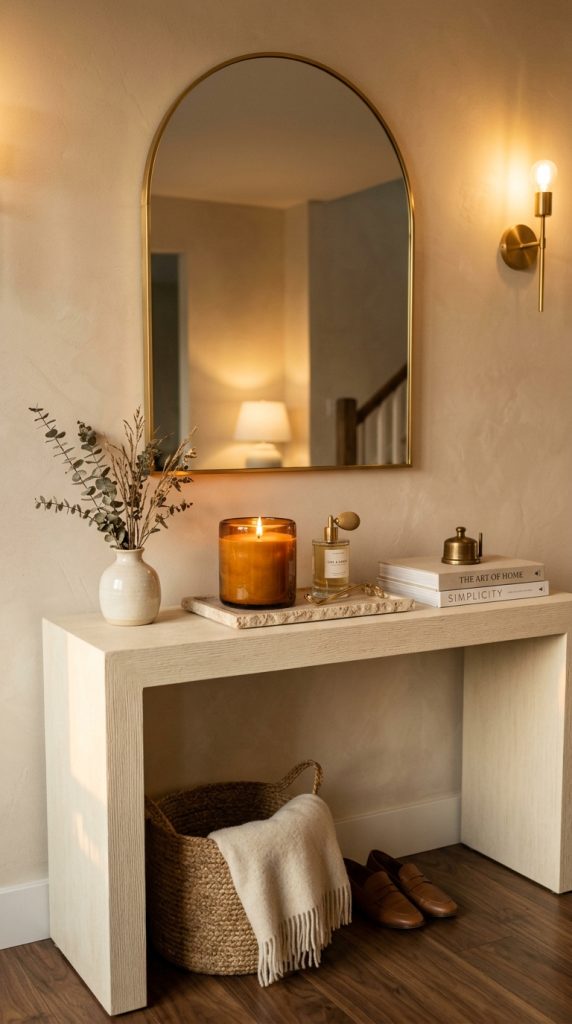
    Its container contributes to the visual design, while its fragrance can influence how the home feels when someone enters.

    For a refined arrangement, consider candles housed in ceramic, amber glass, stone, brass, or other understated vessels.

    Warm scents such as cedar, sandalwood, amber, fig, vanilla, or bergamot can create an inviting atmosphere.

    Choose one fragrance direction rather than combining several strong scents in a small space.

    The candle can sit directly on the console, on top of a small stack of books, or inside a decorative tray.

    A candleholder can also function as a sculptural accessory even when no candle is burning.

    If you prefer not to use an open flame in an entryway, a high-quality flameless candle can provide a similar visual effect.

    Always keep real candles away from curtains, branches, paper, and other combustible materials.

    8. Include One Personal Object

    A polished entryway should still feel like someone’s home.
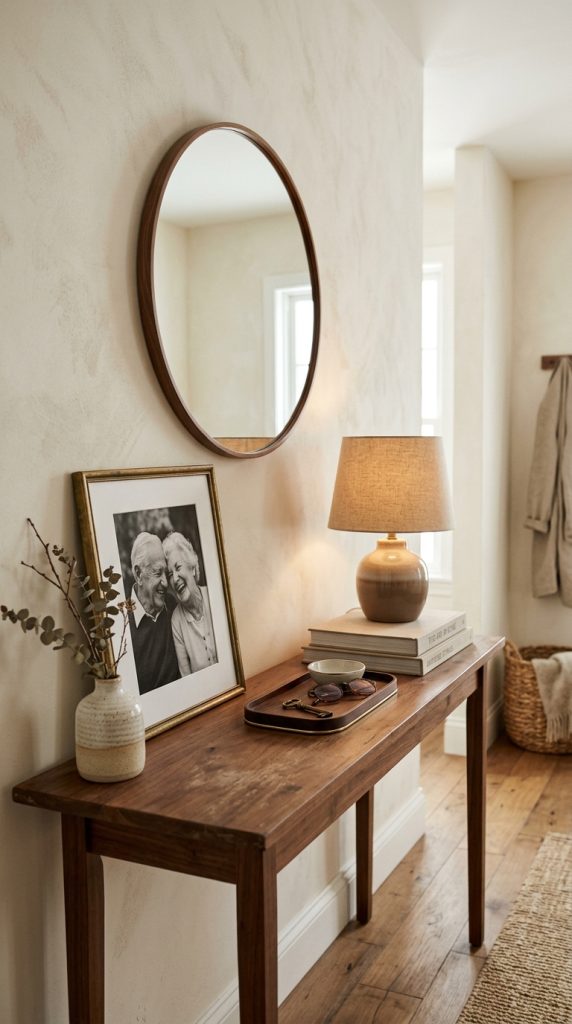
    One personal object can make a major difference.

    Consider displaying:

    • a framed photograph
    • a small travel souvenir
    • an inherited object
    • handmade pottery
    • a favorite book
    • a vintage box
    • a small artwork
    • a meaningful sculpture

    The goal is not to turn the console into a family archive.

    One carefully selected object can communicate more personality than a collection of unrelated pieces.

    A framed photograph can be particularly effective when the frame connects with another material in the entryway.

    Walnut can echo a wooden console.

    Brass can connect with lighting.

    Matte black can repeat hardware.

    Natural oak can complement flooring.

    This creates continuity while allowing the personal object to remain individual.

    9. Add a Small Plant or Natural Greenery

    Greenery introduces life and softness into an entryway.
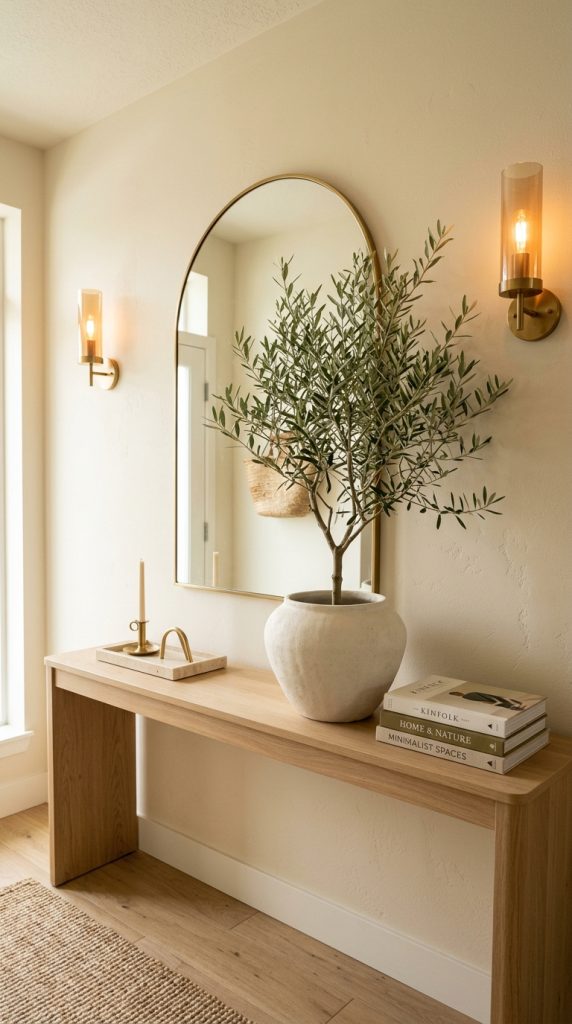
    If the area receives enough natural light, a small living plant can work beautifully. In darker spaces, preserved, dried, or high-quality faux greenery can provide a similar visual effect without demanding unsuitable growing conditions.

    Choose greenery according to the scale of the console.

    A small table does not need an enormous plant.

    A larger console can support a more substantial arrangement.

    The container is also part of the design.

    A ceramic planter creates a clean, sophisticated look.

    A woven vessel introduces natural texture.

    A stone pot reinforces an organic palette.

    Greenery is particularly effective when the console contains hard materials such as marble, glass, metal, or polished wood. The organic shapes soften those surfaces.

    You can also use greenery to connect the entryway with other rooms. If olive branches, eucalyptus, or muted greenery appear elsewhere in the home, repeating them near the front door can create visual continuity.

    10. Complete the Arrangement With a Layered Composition

    The final accessory is not necessarily a physical object.
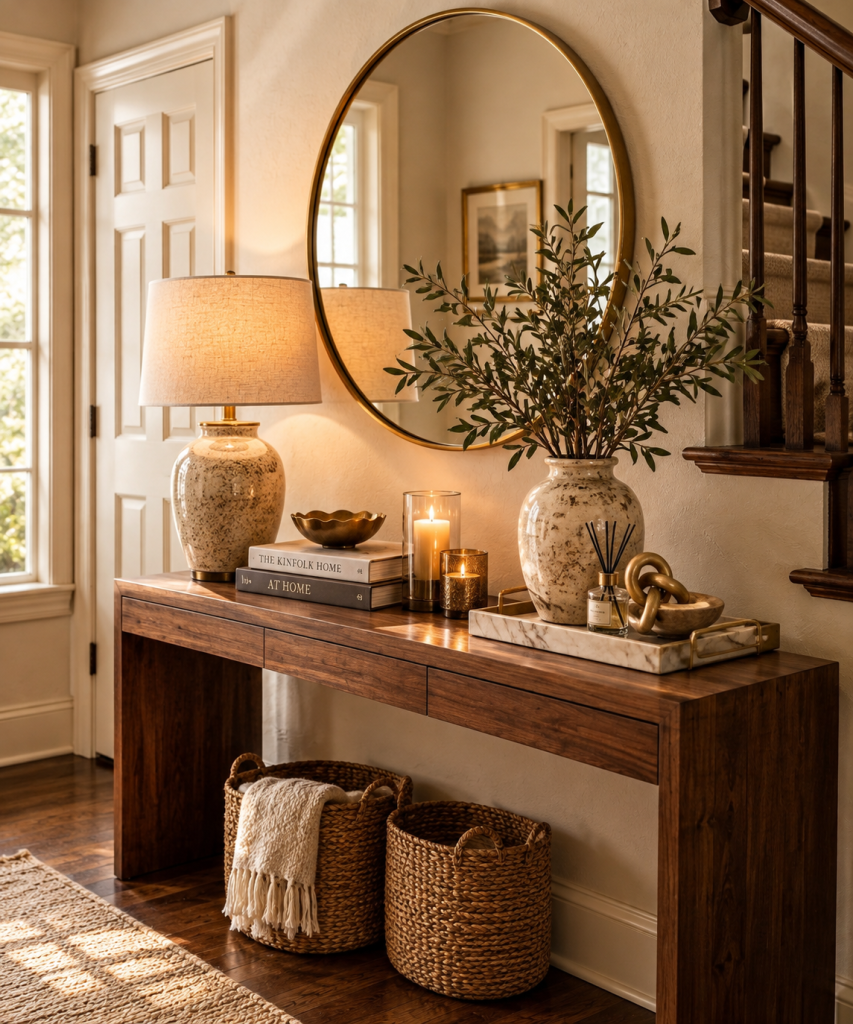
    It is the way everything works together.

    Once the mirror, lamp, tray, vase, books, sculpture, candle, personal piece, and greenery have been considered, select only the pieces that genuinely improve the arrangement.

    The goal is a composition with different visual levels.

    A typical combination might include:

    Tall: lamp or vase

    Medium: books or framed object

    Low: tray, bowl, or candle

    This creates movement across the tabletop.

    A symmetrical arrangement can work beautifully in traditional interiors, particularly when using matching lamps on both sides.

    An asymmetrical composition often feels more relaxed and contemporary.

    For example, place a lamp on one side, a small stack of books toward the center, and a low tray or bowl on the opposite side.

    The mirror or artwork above can remain centered.

    The arrangement does not need mathematical symmetry.

    It needs visual balance.

    A darker object can carry more visual weight than a lighter object of the same size. A large lamp may balance several smaller accessories. A substantial vase may require fewer surrounding objects.

    Step away from the console after arranging it and look at the entire wall rather than only the tabletop.

    That broader view makes it easier to see whether the composition feels balanced.

    Universal Styling Rules for an Elegant Console Table

    Rather than repeating the same styling advice for every accessory, use these universal principles throughout the entire arrangement.

    Start With One Strong Vertical Anchor

    Begin with the wall.

    A mirror or large piece of artwork establishes the primary focal point and gives the console a sense of scale.

    A useful starting point is an anchor that is narrower than the console so the furniture remains visually grounded. Recent console-styling guidance similarly recommends treating the mirror or artwork and console as one composition rather than unrelated pieces.

    Create Three Height Levels

    Avoid placing accessories in one flat row.

    Combine:

    • one tall element
    • one medium layer
    • one low element

    A lamp or vase can provide height. Books or a framed object can occupy the middle layer. A tray, bowl, or candle can create the lowest level.

    This simple variation gives the eye somewhere to move.

    Give Function a Dedicated Zone

    Because the entryway is a working space, reserve part of the console for everyday necessities.

    A tray or bowl can contain keys, sunglasses, and other small items.

    If shoes, bags, or coats tend to collect nearby, consider baskets, drawers, hooks, or another dedicated storage solution rather than forcing the tabletop to handle everything. Current entryway guidance emphasizes combining decorative styling with practical storage to prevent everyday clutter.

    Keep Materials Related

    You do not need everything to match.

    Instead, repeat a few materials or finishes.

    For example:

    Walnut + ceramic + aged brass

    Oak + linen + stone

    Black + ivory + wood

    Marble + bronze + glass

    Repeating a finish once or twice throughout the entryway creates cohesion without making the room look like a matching furniture set.

    Vary Shapes

    If every piece has the same silhouette, the arrangement can feel flat.

    Combine straight and curved forms.

    Pair a rectangular console with a round mirror.

    Place a curved vase beside angular books.

    Use a sculptural object against a simple architectural frame.

    Shape variation creates interest without requiring more accessories.

    Leave Meaningful Empty Space

    Do not feel obligated to fill every inch.

    Empty tabletop space allows decorative objects to remain visible and gives you somewhere to place everyday items.

    Recent console-styling guidance commonly recommends leaving a significant portion of the surface open rather than treating the entire table as a display shelf.

    If the console feels crowded, remove something before adding anything else.

    Consider the Walking Path

    The console must fit the architecture of the entryway.

    Measure the furniture before purchasing it and make sure doors can open comfortably and people can move through the area without bumping into the table or accessories.

    For narrow hallways, shallow consoles and wall-mounted solutions can preserve circulation while still providing the visual effect of an entryway table.

    Use Lighting to Finish the Mood

    A beautiful console can disappear after sunset if the entryway depends entirely on overhead lighting.

    A table lamp, wall sconce, or appropriate cordless light source can provide a softer layer.

    Warm illumination is particularly effective when paired with wood, ceramic, linen, brass, or stone.

    The lighting should support the arrangement rather than dominate it.

    Choose Personality Over Perfect Matching

    A home feels more sophisticated when it contains objects with meaning and character.

    Mix contemporary pieces with something vintage.

    Combine a new ceramic vase with an inherited photograph.

    Place a favorite book beside a modern sculpture.

    These small contrasts can make the entryway feel collected rather than purchased as a complete set.

    Edit Before You Finish

    Once the console is styled, look at it from the doorway.

    Ask:

    • Is there an obvious focal point?
    • Can I still use the surface?
    • Are the accessories different heights?
    • Is anything competing with the mirror or artwork?
    • Does the color palette feel connected?
    • Does the entryway still feel easy to walk through?
    • Does every object have a purpose?

    If something feels unnecessary, remove it.

    The goal is not to create the fullest possible arrangement.

    It is to create the clearest one.

    Styling a Narrow Console Table

    A narrow console requires particularly careful selection.

    Choose pieces with compact footprints and strong vertical presence.

    A slim lamp, small tray, narrow vase, and one decorative object may be enough.

    Avoid large bowls, oversized sculptures, or accessories that extend into the walking path.

    Wall-mounted lighting can be useful when the tabletop is extremely shallow.

    The most important rule is to protect circulation.

    The entryway should feel open even when the console is fully styled.

    Styling a Large Console Table

    A large console provides additional surface area, but that does not mean every section needs decoration.

    You can introduce a pair of lamps, a larger vase, a substantial tray, or a wider arrangement of books and accessories.

    However, preserve visual pauses between groups.

    A wide walnut console with two lamps, a large mirror, and one low bowl can feel more luxurious than the same table covered with dozens of objects.

    Scale the accessories upward rather than simply increasing their quantity.

    Modern Elegant Entryway

    For a modern elegant look, focus on clean forms and a restrained palette.

    A combination such as walnut, cream, black, brass, and stone can create depth without visual noise.

    Choose an oversized round or arched mirror, one sculptural lamp, a ceramic vase, and a simple tray.

    Keep decorative objects purposeful.

    Texture becomes particularly important when the color palette is minimal.

    Ceramic, stone, wood, linen, and woven materials prevent the space from feeling sterile.

    Traditional Elegant Entryway

    Traditional interiors can support greater symmetry.

    Consider a rectangular mirror, paired lamps, a wooden console, brass details, books, and a decorative bowl.

    A vintage or antique-inspired accessory can introduce character.

    Warm wood and aged finishes usually feel more timeless than an arrangement dominated by glossy, perfectly matching surfaces.

    Organic Modern Entryway

    Organic modern styling combines clean architecture with natural materials.

    Try a natural oak console with a rounded mirror, handmade ceramic vase, branches, stone tray, and linen-shaded lamp.

    A palette of cream, sand, taupe, warm brown, natural wood, and muted green creates a calm foundation.

    Current interior-design reporting also highlights warm earth tones, tactile materials, meaningful decor, and a mixture of vintage-inspired pieces rather than overly coordinated sets.

    Luxury Entryway

    Luxury styling is less about expensive accessories and more about proportion, materials, and restraint.

    Choose a few substantial pieces.

    For example:

    • walnut console
    • oversized mirror
    • sculptural lamp
    • stone vase
    • aged-brass tray
    • two carefully selected books

    Keep the surface open.

    Use materials that feel tactile and substantial.

    Instead of adding more accessories to make the console appear luxurious, allow the quality and scale of the existing pieces to create the effect.

    How to Keep the Console Looking Elegant Every Day

    Even the most carefully styled console can become cluttered when everyday life takes over.

    Create a simple routine.

    Keys go into the bowl.

    Mail gets removed.

    Bags return to their storage area.

    Books are straightened.

    Decorative pieces return to their original positions.

    A tray should control daily objects rather than permanently store everything.

    If the same item repeatedly ends up on the console, that is useful information. It probably needs a permanent home nearby.

    Good decorating works with your habits instead of constantly requiring you to fight them.

    Seasonal Updates Without Redecorating the Whole Table

    The easiest way to update a console for the seasons is to keep the main structure unchanged.

    Keep the mirror, lamp, and tray.

    Change the botanical element, candle, or one decorative object.

    For fall, you might introduce dried branches, amber glass, warm brown ceramics, or muted rust tones.

    For winter, use evergreen branches, darker vessels, or subtle metallic accents.

    For spring, choose lighter greenery and softer ceramics.

    For summer, natural textures and lighter colors can refresh the arrangement.

    This approach keeps seasonal decorating sophisticated instead of turning the entryway into a heavily themed display.

    Final Thoughts

    An elegant console table does not require a large collection of accessories.

    It requires thoughtful choices.

    Start with a strong mirror or artwork.

    Add a lamp or tall vase for vertical interest.

    Give everyday objects a home with a tray or bowl.

    Introduce books, greenery, a candle, or one sculptural piece for texture and personality.

    Then edit.

    The most successful console arrangements feel intentional without appearing overworked.

    They combine beauty with function.

    They provide enough decoration to make the entryway memorable while leaving enough space for everyday life.

    Whether your console is a substantial walnut piece in a spacious foyer or a slim table in a narrow hallway, the principle remains the same:

    Choose fewer, better-connected pieces and give each one a clear role.

    A beautiful entryway does not need to look like a showroom.

    It should feel like a natural extension of the home beyond the front doorโ€”welcoming, organized, personal, and effortlessly elegant.
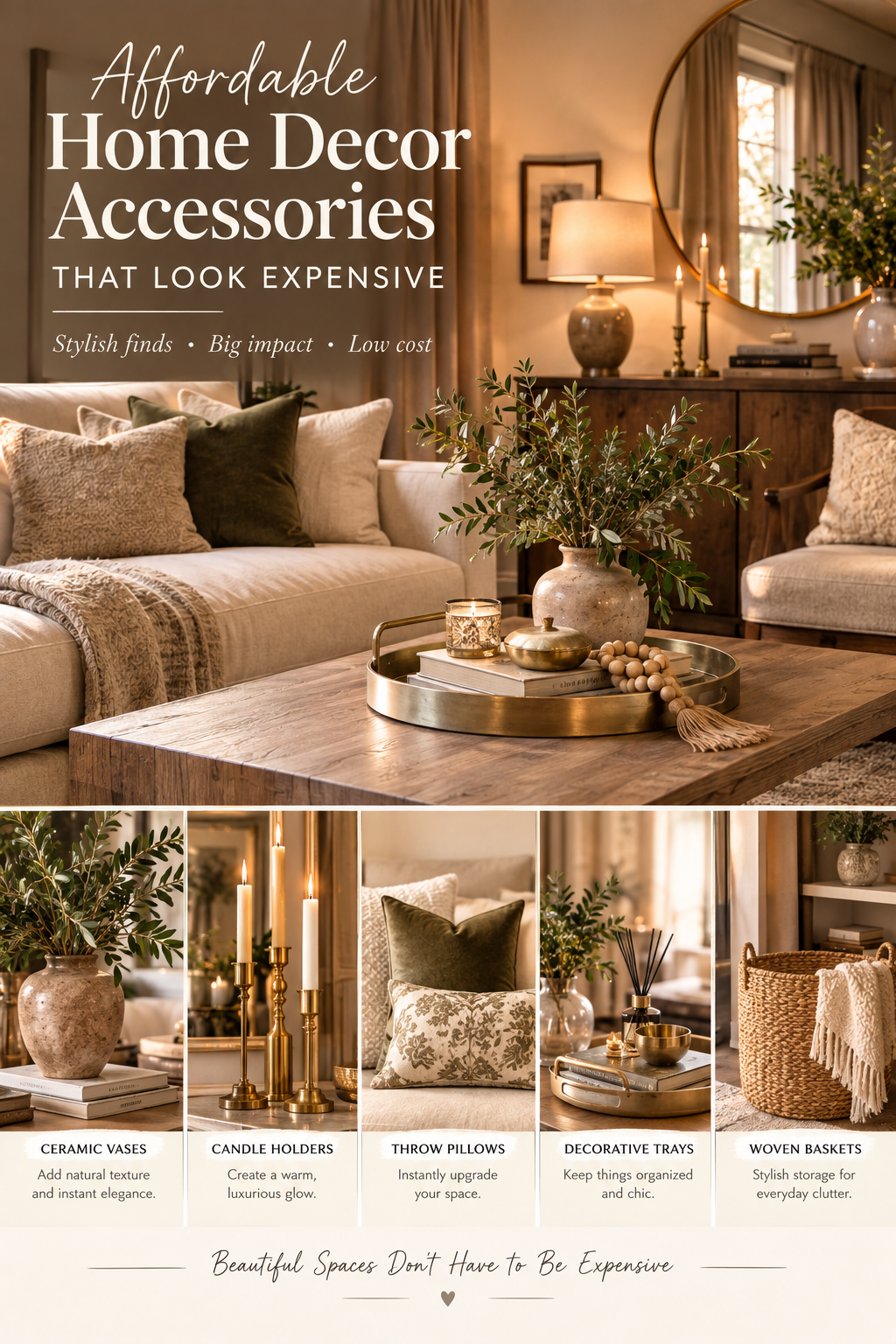

  • Affordable Home Decor Accessories That Look Expensive

    Affordable Home Decor Accessories That Look Expensive

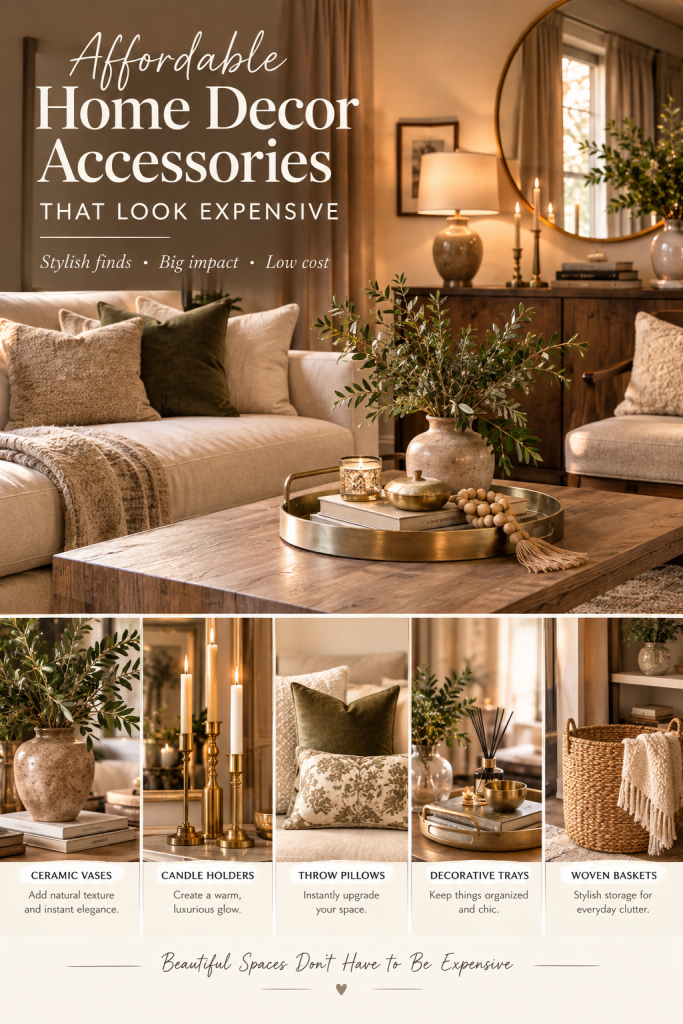
    Creating a beautiful home does not always require an expensive furniture budget, designer accessories, or a complete renovation. Sometimes, the smallest decorative changes can have the biggest visual impact. The right vase on a console, a beautiful tray on a coffee table, an oversized mirror on an empty wall, or a pair of elegant lamps can completely change the atmosphere of a room.

    That is the secret behind affordable home decor accessories that look expensive. Instead of filling your home with lots of inexpensive decorations, the goal is to choose a smaller number of pieces with beautiful shapes, sophisticated finishes, interesting textures, and timeless colors. When those accessories are styled intentionally, the entire room can feel more polished and luxurious.

    This approach is especially useful if you are decorating an apartment, refreshing a rental, furnishing your first home, or simply trying to make your existing space look more elevated without spending a fortune. You do not necessarily need expensive marble, designer furniture, or custom-made pieces. You can create a similar visual impression by paying attention to proportion, texture, symmetry, material, and placement.

    Pinterest is particularly well suited to this type of decorating content because people often use the platform to discover visual ideas before making changes to their homes. Pinterest’s 2026 trend reporting highlights a movement toward more personal, expressive interiors rather than perfectly uniform spaces, while its broader home trends include vintage influences, statement colors, layered textures, and creative low-lift room updates. (Pinterest)

    That makes affordable luxury home decor a particularly useful content direction. It combines several strong search intentions: budget home decor, affordable home accessories, luxury home decor on a budget, cheap home decor that looks expensive, elegant home accessories, high-end home decor ideas, and affordable luxury decor.

    The key is understanding what actually makes an accessory appear expensive.

    A luxury-looking piece usually has one or more of these characteristics: a sophisticated silhouette, a restrained color palette, tactile material, substantial visual weight, an elegant finish, or a distinctive shape. It does not have to be genuinely expensive to create that impression.

    For example, a simple ceramic vase in a sculptural shape can look more refined than a shelf filled with numerous small decorative objects. A large framed art print can create more visual impact than several tiny pictures scattered across a wall. A textured neutral pillow can make an inexpensive sofa feel considerably more polished when paired with the right throw and coffee table styling.

    The same principle applies throughout the home.

    In the living room, decorative trays, sculptural objects, lamps, pillows, mirrors, and coffee-table accessories can create a sophisticated focal point. In the bedroom, bedding accents, bedside lamps, artwork, and decorative boxes can make the space feel more like a boutique hotel. In the kitchen, beautiful cutting boards, ceramic vessels, trays, and carefully selected countertop accessories can add warmth without creating clutter. Even a bathroom can benefit from a stone-look tray, elegant soap dispenser, folded towels, or a small sculptural vessel.

    Another important principle is editing.

    A room rarely looks expensive because it contains more things. It usually looks expensive because the things that are visible have been selected carefully. Too many decorative objects can compete with one another and make a space feel chaotic. Affordable pieces become much more convincing when they are given enough visual breathing room.

    Color matters too. Cream, ivory, taupe, warm beige, walnut, natural wood, charcoal, soft black, muted green, aged brass, and earthy tones can create an elegant foundation. However, an expensive-looking home does not have to be completely neutral. Pinterest’s 2026 trend direction is increasingly embracing personal expression, richer color, vintage character, and decorative individuality. (Pinterest)

    The goal is therefore not to copy a particular luxury style. Instead, it is to learn how to choose affordable pieces that have strong visual character.

    Below are 20 affordable home decor accessories that can help create that elevated effect.

    1. Sculptural Ceramic Vases for an Instant Designer Look

    A sculptural ceramic vase is one of the easiest affordable home decor accessories to use when you want a room to feel more expensive.

    Unlike ordinary decorative vases that simply function as containers for flowers, sculptural vessels can act almost like artwork. Their unusual silhouettes, rounded shapes, narrow openings, curved handles, asymmetrical forms, or handmade-looking surfaces create visual interest even when the vase is empty.

    Look for pieces in matte ivory, warm white, stone, taupe, charcoal, muted brown, or soft earthy shades. These colors tend to work easily with different decorating styles and can remain useful even when you change your room’s color palette.

    The most important factor is scale. A vase that is too small can disappear on a large console or coffee table. A larger sculptural vessel immediately creates a stronger focal point.

    For a sophisticated living room, place one large ceramic vase on a console table and leave some surrounding space rather than filling the surface with accessories. Add a few tall dried branches if you want height, but allow the shape of the vessel itself to remain visible.

    You can also use two vases with different heights on an open shelf. The forms should complement each other without being identical.

    In a bedroom, a small sculptural ceramic vessel can sit on a nightstand beside a lamp and a book. In a bathroom, a tiny stone-colored vessel with one or two delicate stems can provide an understated decorative touch.

    The luxury effect comes from the shape and restraint, not from filling the room with vases.

    This makes sculptural ceramics one of the most versatile affordable luxury home decor accessories for almost any room.

    2. Oversized Decorative Mirrors That Add Architectural Impact

    An oversized mirror can make an ordinary room feel considerably more finished.

    Instead of selecting several small decorative mirrors, consider one large mirror with a distinctive frame. A rounded, arched, organic, antique-inspired, or softly rectangular silhouette can become a major design feature.

    For a luxury-looking effect, pay attention to the frame.

    Thin black frames can create a contemporary appearance. Warm brass can add a subtle glamorous quality. Natural wood can make the mirror feel organic and sophisticated. A vintage-style frame can introduce character and make the room feel collected rather than newly purchased.

    Placement also matters.

    An oversized mirror above a console creates a classic entryway arrangement. In a dining room, a large mirror can reflect light and visually expand the space. In a bedroom, an arched mirror leaning against a wall can create a relaxed boutique-hotel feeling.

    If your budget is limited, you do not need an expensive custom mirror. Focus on finding an affordable mirror with a convincing silhouette and a frame that works with your existing finishes.

    Avoid surrounding it with too many small objects. Let the mirror carry the visual weight.

    The result can look far more sophisticated than a wall covered with numerous inexpensive decorations.

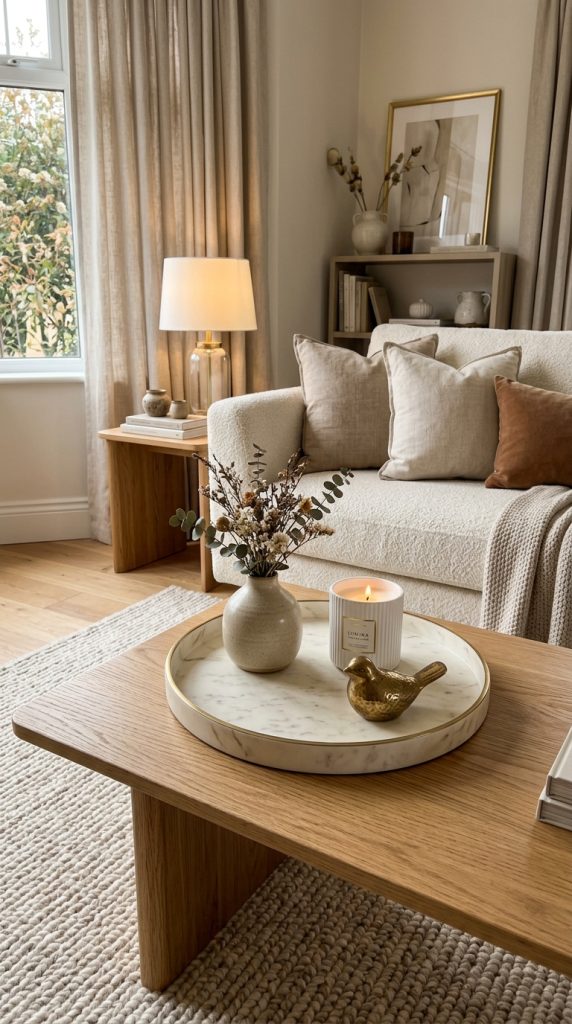
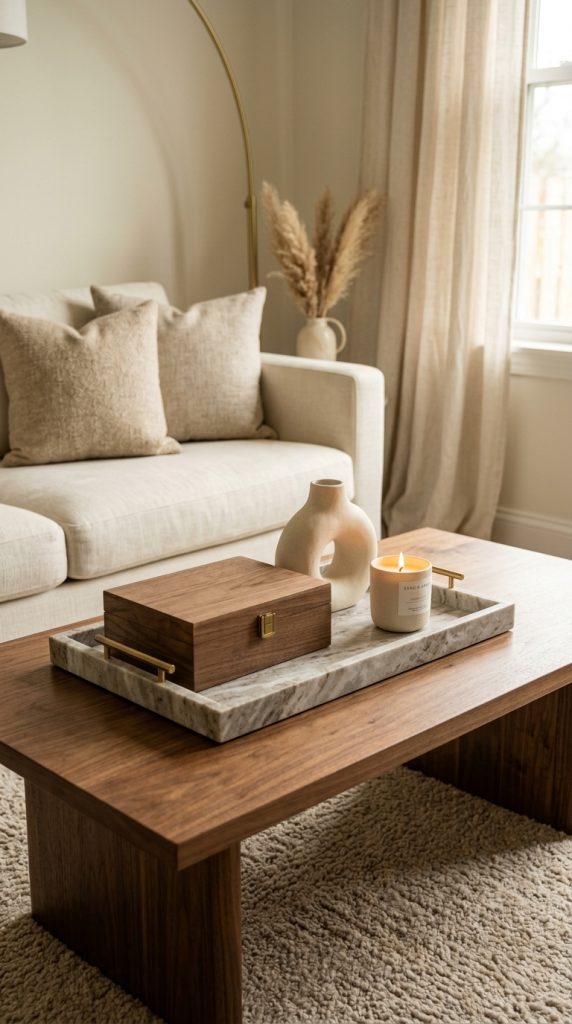
    3. Decorative Trays for Coffee Tables and Consoles

    A decorative tray is a small accessory with surprisingly strong styling potential.

    It creates a visual boundary that makes individual objects appear intentionally grouped rather than randomly placed. This is particularly useful on coffee tables, ottomans, consoles, bathroom counters, and bedroom dressers.

    For an expensive-looking appearance, choose trays with materials or finishes such as faux marble, natural wood, brushed metal, stone, rattan, or textured resin.

    A rectangular tray can work beautifully on a long coffee table. A round tray can soften a square ottoman. A narrow tray can organize perfume bottles and jewelry on a dresser.

    The key is what you put inside it.

    Instead of filling the tray completely, create a small composition. You might combine a candle, a small ceramic vessel, and one decorative object. On a console, a tray could hold a bowl and a small sculpture.

    Leave visible space around the objects.

    That empty space is important because it prevents affordable accessories from looking crowded. The tray gives everything a clear visual home.

    For renters and apartment dwellers, this is particularly useful because a single inexpensive tray can be moved from room to room as your decorating needs change.

    4. Elegant Table Lamps With Sculptural Bases

    Lighting is one of the easiest ways to change how expensive a room feels.

    A basic room with overhead lighting can look flat, while a room with thoughtfully positioned table lamps can feel warm, layered, and intentional.

    You do not need a designer lamp to achieve this effect.

    Look for affordable lamps with sculptural bases, ceramic bodies, fluted details, linen shades, ribbed glass, dark wood, antique-inspired metal, or simple architectural shapes.

    A pair of matching lamps on a console or bedroom nightstands can create symmetry and immediately make the arrangement feel deliberate.

    For a more collected look, use two complementary lamps instead of identical ones. For example, a ceramic lamp on one side of a console could be balanced by a smaller brass or dark wood lamp on the other side.

    The shade is just as important as the base.

    Linen-look shades often produce a softer, more refined glow than shiny synthetic shades. Warm bulbs can further improve the atmosphere.

    Place lights at appropriate locations so the room has multiple levels of illumination rather than depending entirely on one overhead fixture.

    This is one of the most effective ways to make cheap home decor look expensive because lighting changes the entire perception of surrounding furniture and accessories.

    5. Textured Throw Pillows That Make a Sofa Look Custom

    Throw pillows are inexpensive compared with replacing a sofa, but they can dramatically alter its appearance.

    The secret is avoiding a collection of unrelated pillows.

    Instead, create a controlled combination of textures. A neutral sofa could be paired with an ivory bouclรฉ pillow, a warm beige linen pillow, and a darker velvet accent.

    You can also introduce subtle patterns such as stripes, small checks, geometric designs, or vintage-inspired motifs.

    The most luxurious-looking pillow arrangements usually combine different textures rather than relying entirely on matching patterns.

    For example, place a larger neutral textured pillow toward the back, add a medium-sized linen pillow in front, and finish with one smaller accent pillow.

    The goal is depth.

    Avoid stuffing every available section of the sofa with pillows. Leave enough room for the furniture itself to remain visible.

    For an affordable update, replacing pillow covers rather than purchasing entire pillows can be particularly economical.

    Seasonal covers can also refresh the room without requiring permanent changes.

    6. Large Framed Art Prints for a Gallery-Inspired Interior

    Wall art can completely transform a room, but expensive-looking art is not necessarily about the price of the original artwork.

    A well-selected large print in a beautiful frame can have tremendous impact.

    Look for abstract artwork, botanical illustrations, architectural photography, vintage-inspired prints, still-life compositions, or artistic landscapes.

    The frame should complement the room.

    Warm wood works beautifully in organic interiors. Black frames can create contrast in contemporary spaces. Aged brass or antique-style frames can suit traditional and vintage rooms.

    Instead of covering a wall with many tiny prints, consider one larger piece.

    Scale is important because oversized artwork can create the impression of a professionally designed room. A small piece placed on a large empty wall may look accidental, while a larger work can anchor the surrounding furniture.

    You can also create an inexpensive gallery wall, but keep the frame colors and visual theme controlled.

    For Pinterest-friendly interiors, art that feels personal, collected, and slightly unexpected can be especially effective because current Pinterest design trends emphasize self-expression rather than perfectly generic rooms. (Pinterest)

    7. Stone-Look Bowls and Catchall Dishes

    A decorative bowl is an underrated accessory.

    Place one on a coffee table, kitchen island, console, dresser, or entryway table and it can provide both style and function.

    Look for bowls inspired by marble, travertine, limestone, ceramic, or natural stone.

    The objective is not to make the accessory look artificially luxurious. Instead, choose a design with a simple shape and substantial appearance.

    A shallow stone-look bowl can hold decorative spheres or a few natural objects on a coffee table. A smaller bowl can collect keys in an entryway.

    In the bedroom, a sculptural bowl can sit on a dresser for jewelry.

    The best designs are often simple.

    Avoid overly elaborate patterns or excessive metallic decoration if your goal is an understated luxury appearance.

    A beautiful shape combined with a restrained finish can be much more effective.

    8. Faux Marble and Wood Accent Pieces

    Natural materials have long been associated with elevated interiors, but affordable versions can still provide a sophisticated visual effect when selected carefully.

    Faux marble trays, wood boxes, stone-look coasters, decorative blocks, and small accent tables can introduce material contrast without requiring a large investment.

    The trick is to avoid products that look overly glossy or artificially printed.

    Matte and lightly textured surfaces tend to feel more convincing.

    Pairing different materials can also improve the result.

    For example, place a stone-look tray on a wooden coffee table, or use a warm wood decorative box beside a ceramic vase.

    Contrast creates depth.

    If everything in the room has the same finish, the space can feel flat. A combination of wood, ceramic, woven fibers, glass, and metal can create a richer visual experience.

    This is especially useful for luxury home decor on a budget because the visual richness comes from layering materials rather than purchasing expensive objects.

    9. Decorative Candles and Sophisticated Candleholders

    Candles can make a room feel warmer and more elegant, but the container and presentation matter.

    Instead of choosing novelty designs, look for candles housed in ceramic, glass, stone-look, or understated metallic containers.

    You can also use decorative candleholders.

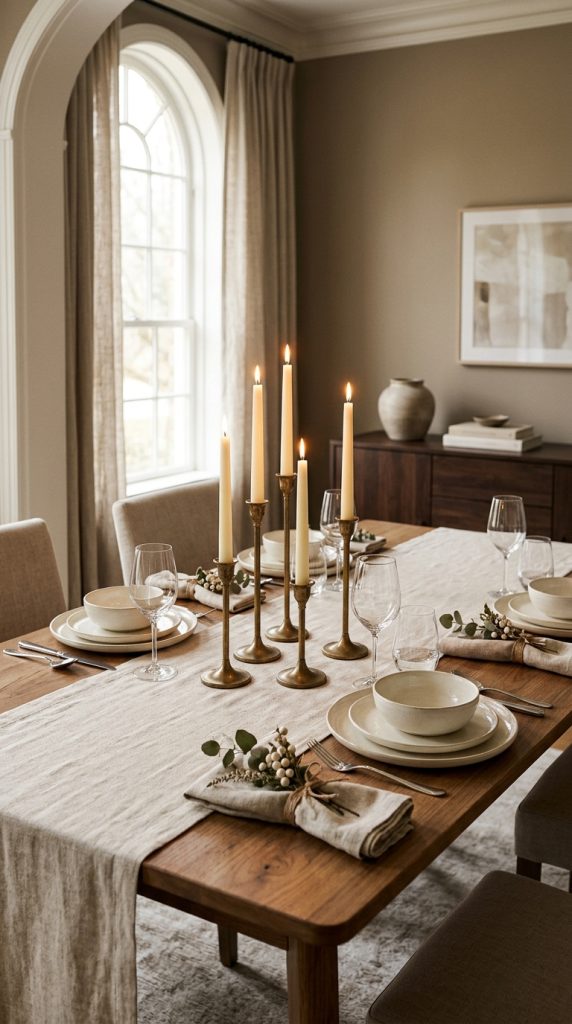
    A pair of vintage-inspired brass candlesticks can create a classic appearance on a dining table or console. A black sculptural candleholder can add contrast to a neutral room. Ceramic holders can introduce softness.

    Arrange candles at different heights when creating a centerpiece.

    On a coffee table, a single substantial candle may be enough.

    On a dining table, several slender candles can create a sophisticated evening atmosphere without taking up much visual space.

    Choose scents carefully if fragrance is important to you. Warm woods, amber, vanilla, sandalwood, fig, or subtle citrus can complement an elegant interior.

    Avoid filling every surface with candles.

    One thoughtfully styled arrangement usually has greater impact than multiple scattered pieces.

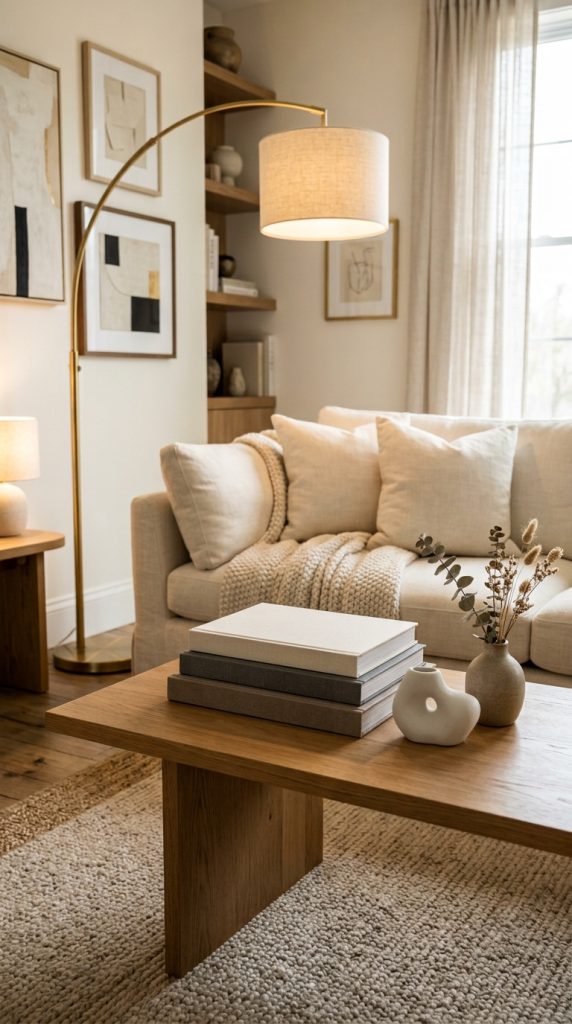
    10. Decorative Books That Create a Curated Coffee Table

    Coffee-table books have become a popular styling tool because they add both visual structure and personality.

    You do not need a large collection.

    Two or three attractive books can create an elegant foundation for a coffee-table arrangement.

    Look for books with neutral covers, beautiful photography, architecture, design, travel, art, gardening, or subjects that genuinely interest you.

    Stack them horizontally and place one sculptural object or small vase on top.

    You can also display a single large book slightly open to an attractive page.

    The key is authenticity.

    A home tends to feel more sophisticated when the objects appear connected to the people who live there.

    Avoid buying dozens of books solely for decoration. A few thoughtfully selected volumes can provide the same visual effect.

    This also gives you an opportunity to combine function and styling. Guests can actually browse the books, making the arrangement feel natural rather than staged.

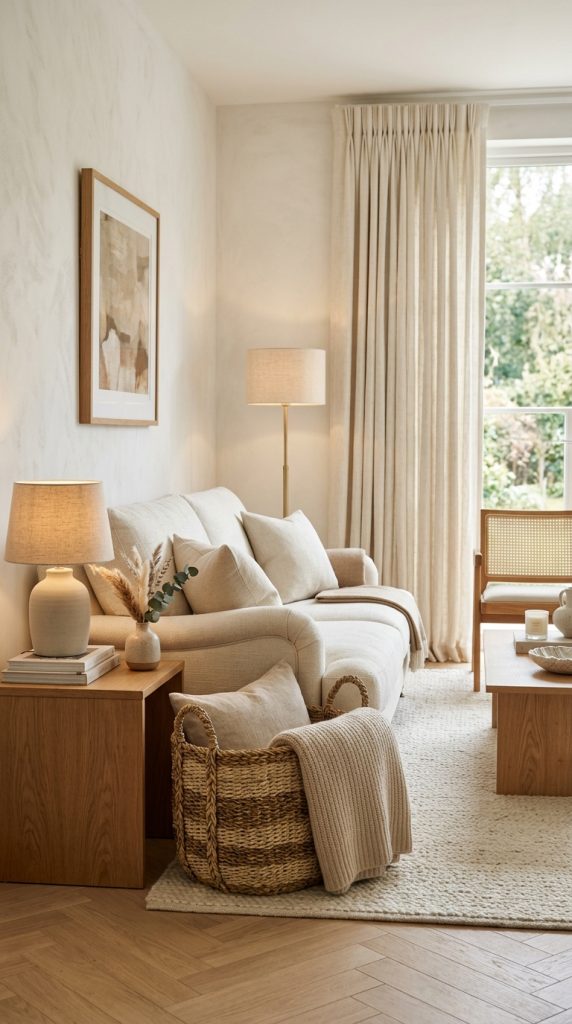
    11. Woven Baskets With Beautiful Natural Texture

    Woven baskets can add warmth while also providing practical storage.

    Choose baskets made from natural-looking materials such as seagrass, rattan, jute, cane, or woven fibers.

    A large basket beside a sofa can hold blankets. A smaller basket can organize bathroom towels. Several coordinated baskets can improve open shelving or bedroom storage.

    Their texture is particularly useful in neutral interiors.

    If a room contains many smooth surfaces such as painted walls, glass, metal, and polished furniture, woven accessories introduce softness.

    For an expensive-looking result, select baskets with clean shapes and consistent construction.

    Avoid filling every corner with baskets. One large, well-positioned basket can look more intentional than several unrelated ones.

    Natural texture also works beautifully with wood, linen, ceramic, and muted colors.

    12. Vintage-Inspired Brass Accessories

    Brass accessories can add warmth and visual depth without dominating the room.

    Look for small pieces such as candlesticks, picture frames, trays, bowls, table clocks, decorative boxes, or small sculptures.

    The finish matters.

    Highly shiny gold can sometimes feel less refined, while aged, brushed, antique, or softly polished brass can create a more collected appearance.

    You can use brass as a small accent rather than covering the entire room in metallic finishes.

    For example, pair a brass picture frame with a warm wood console. Add a brass candleholder to a coffee table. Use a small brass bowl on a dresser.

    Current Pinterest trend reporting also identifies brass and antique-inspired elements within the rising Neo Deco direction, including searches around brass aesthetics and antique bar carts. (Pinterest)

    The important thing is balance.

    A few warm metallic accents can make neutral furnishings feel considerably richer.

    13. Sculptural Decorative Objects

    Sculptural objects can make inexpensive styling feel artistic.

    Look for abstract forms, rounded stone-like shapes, geometric objects, wooden sculptures, metal forms, or handmade-looking pieces.

    These accessories work particularly well on bookshelves, consoles, coffee tables, and open shelving.

    A sculpture should have enough surrounding space to be noticed.

    Place it against a relatively simple background rather than surrounding it with numerous small decorations.

    You can also use asymmetry.

    For example, place a large sculptural object on one side of a console and balance it visually with a lamp or vase on the opposite side.

    This creates a professionally styled appearance without requiring a large collection.

    Choose pieces that have interesting silhouettes from different angles.

    Because these accessories function visually like artwork, they can make a room feel more curated and individual.

    14. Linen-Look Textiles for Soft Luxury

    Textiles are one of the easiest ways to introduce understated luxury.

    Curtains, table runners, pillow covers, napkins, throws, and bedding accents can all benefit from linen or linen-look fabrics.

    The texture is more important than creating a perfectly matching set.

    A cream linen-look curtain can soften a bedroom. A taupe throw can add depth to a sofa. A natural runner can make a dining table feel more relaxed and elegant.

    Choose colors that complement the existing architecture.

    Cream, oatmeal, flax, warm white, beige, taupe, muted olive, dusty blue, and earthy brown are versatile options.

    If your room already has strong patterns, keep the textiles relatively quiet.

    If the furniture is simple, you can introduce subtle texture or pattern through fabric.

    The goal is to make the room feel tactile.

    Luxury interiors rarely rely exclusively on hard surfaces. Soft textiles help create that layered quality.

    15. Oversized Decorative Baskets and Storage Boxes

    Beautiful storage can serve as both organization and decoration.

    Instead of leaving blankets, magazines, children’s items, or everyday objects exposed, use attractive baskets and boxes to hide visual clutter.

    Choose storage pieces that coordinate with the room’s materials.

    A woven basket works beautifully with organic modern interiors. A fabric storage box can suit a bedroom. A wood box can add warmth to an office or living room.

    Decorative boxes can also sit on shelves or consoles.

    When everything has a designated place, the room naturally looks more polished.

    This is an especially useful strategy for small homes and apartments where visible clutter can quickly overwhelm the space.

    The expensive-looking effect does not come from the storage container itself. It comes from the overall feeling of organization.

    16. Glass Accessories for Light and Airiness

    Glass is an excellent material for adding elegance without visually crowding a room.

    Try clear glass vases, cloches, candleholders, decorative bottles, bowls, or small tabletop objects.

    Because transparent accessories allow light to pass through them, they can work particularly well in smaller spaces.

    Place a clear vase on a dining table with a few delicate branches. Use glass candleholders on a console. Add a transparent decorative bowl to a coffee table.

    Mix glass with heavier materials.

    For example, clear glass beside dark wood creates contrast. Glass combined with brass feels more traditional. Glass with stone and linen creates a softer organic look.

    The key is keeping the shapes elegant.

    Avoid using too many glass objects together because the room can begin to feel visually disconnected.

    One or two well-selected pieces are usually sufficient.

    17. Decorative Hardware as a Small Luxury Upgrade

    Sometimes the accessory that makes the biggest difference is not something you place on a table.

    Cabinet knobs, drawer pulls, hooks, and small hardware can dramatically influence how a kitchen, bathroom, or storage area feels.

    Affordable hardware in aged brass, brushed metal, matte black, or warm bronze can replace basic builder-grade pieces.

    This is a relatively small change but can create a more custom appearance.

    In a kitchen, coordinated cabinet hardware can make inexpensive cabinetry appear more intentional.

    In a bathroom, updated vanity pulls can complement mirrors and lighting.

    The important thing is consistency.

    Choose a finish that works with the other metals already present in the room.

    You do not necessarily need every metal to match perfectly, but the combination should feel deliberate.

    This is a particularly useful idea for renters or homeowners working with existing cabinetry because the visual improvement can be significant without replacing the entire structure.

    18. Beautiful Decorative Boxes and Catchalls

    Small decorative boxes are perfect for hiding everyday items while maintaining a polished appearance.

    Use them on nightstands for charging cables, on desks for small office supplies, or on consoles for keys and miscellaneous objects.

    Choose boxes with interesting materials such as wood, faux leather, textured fabric, ceramic, or metal.

    A decorative box can also become part of a shelf composition.

    Place it beneath a stack of books or beside a small vase.

    This creates visual variation while providing useful storage.

    Function is one of the easiest ways to make budget decorating feel intentional.

    When accessories solve a practical problem while looking attractive, they become part of the home’s design rather than simply additional objects.

    19. Natural Branches and Dried Botanical Arrangements

    You do not need an expensive floral arrangement to create a dramatic centerpiece.

    Natural branches, dried grasses, preserved stems, eucalyptus, pampas-style textures, or seasonal botanical elements can provide height and movement.

    Use a large vessel with a small number of branches rather than a crowded arrangement.

    The shape should extend naturally upward and outward.

    This works especially well on dining tables, consoles, mantels, and entryway tables.

    Choose muted tones if you want an understated luxury effect.

    For autumn, for example, dried branches in warm brown, rust, ochre, or burgundy can introduce seasonal character without relying on novelty decorations. Recent design advice has similarly emphasized natural materials, dried florals, handmade pottery, and muted seasonal colors as alternatives to overly themed decorating. (The Spruce)

    For an evergreen arrangement, natural branches and dried foliage can remain in the room throughout much of the year.

    20. One Statement Accessory With a Strong Silhouette

    Sometimes the most effective affordable decor strategy is simply buying one memorable piece.

    Instead of purchasing ten inexpensive decorations, choose one object with a strong shape.

    It could be a large sculptural vase, an oversized bowl, an unusual lamp, an artistic mirror, a distinctive clock, a vintage-inspired object, or a substantial decorative sculpture.

    Give it space.

    A statement piece needs visual breathing room to work.

    Place it somewhere where the eye naturally lands, such as the center of a console, the middle of a coffee table, or a prominent shelf.

    Then keep the surrounding accessories restrained.

    This principle can make even an inexpensive item feel more important.

    The objective is not to make visitors think the object cost a certain amount. The objective is to make the room feel intentional, interesting, and visually complete.

    How to Make Affordable Home Decor Look Expensive

    Buying the right accessories is only half of the process. Styling determines whether those pieces look sophisticated or simply inexpensive.

    Start by choosing a visual direction.

    You might prefer warm organic luxury, modern neutral, vintage-inspired elegance, contemporary black-and-brass, or colorful collected interiors.

    Once you establish a direction, choose accessories that support it.

    Do not buy every beautiful object you see.

    A room becomes more cohesive when accessories share a relationship through color, material, shape, or period.

    For example, a warm neutral living room could combine:

    • Natural wood
    • Cream ceramic
    • Aged brass
    • Linen
    • Stone-look accessories
    • Warm brown accents

    Another room might use:

    • Black metal
    • Walnut
    • Ivory
    • Glass
    • A small amount of brass

    Neither approach requires expensive purchases.

    The visual consistency does much of the work.

    Use the Rule of Visual Breathing Room

    One of the most common mistakes in budget decorating is filling every surface.

    If a console has six different accessories, each item competes for attention.

    Instead, allow empty areas.

    An oversized vase may look far more impressive when it stands alone than when it is surrounded by ten small objects.

    The same applies to shelves.

    Leave some sections empty and vary the heights of the pieces you display.

    Negative space gives the eye somewhere to rest and makes individual accessories feel more significant.

    Mix Textures Instead of Buying More Decorations

    If your room feels boring, your first reaction might be to buy additional accessories.

    Try adding texture instead.

    A smooth ceramic vase can be paired with a woven basket. A linen pillow can sit beside velvet. A wood tray can hold a stone-look bowl.

    Different textures create depth without requiring many objects.

    This is particularly effective in neutral rooms where color variation is limited.

    Pay Attention to Scale

    Scale is one of the strongest tools for creating a designer-inspired appearance.

    Tiny accessories can disappear in large rooms.

    At the same time, too many oversized objects can overwhelm a small apartment.

    Consider the furniture around the accessory.

    A large sectional can support larger pillows, artwork, lamps, and coffee-table pieces. A small side table needs more delicate accessories.

    When the proportions feel right, the room immediately appears more intentional.

    Choose Quality of Appearance Over Quantity

    Affordable decorating does not mean buying the cheapest possible version of everything.

    It means spending selectively.

    You might purchase one excellent-looking ceramic vase instead of three ordinary ones.

    You might invest slightly more in a large mirror while saving money on decorative bowls.

    You might choose beautiful pillow covers and keep your existing sofa.

    This approach creates a better overall result because the eye naturally notices the strongest pieces first.

    How to Style Affordable Accessories in the Living Room

    The living room usually benefits from accessories that combine comfort with visual sophistication.

    Start with the largest elements.

    A rug, sofa, coffee table, and curtains establish the foundation.

    Then introduce accessories through smaller layers.

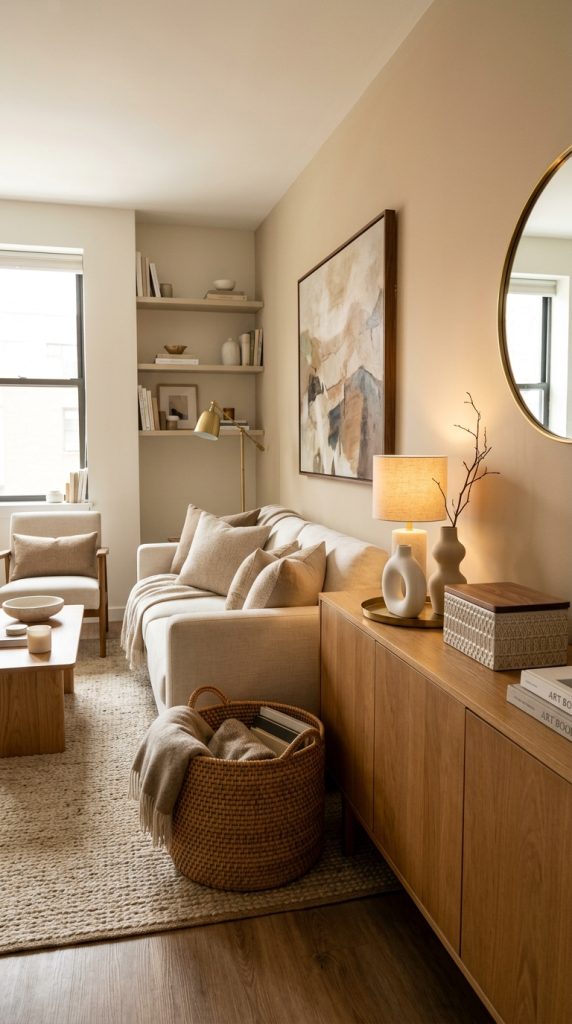
    A coffee table might include a tray, two books, a ceramic vessel, and one sculptural object.

    A console could feature a lamp, artwork or mirror, and one decorative bowl.

    A sofa can receive textured pillows and a throw.

    Do not attempt to decorate every surface.

    Choose a few focal zones.

    This creates a more natural and professionally styled appearance.

    How to Make a Bedroom Look Expensive on a Budget

    The bedroom should feel calm rather than overloaded.

    Start with bedding.

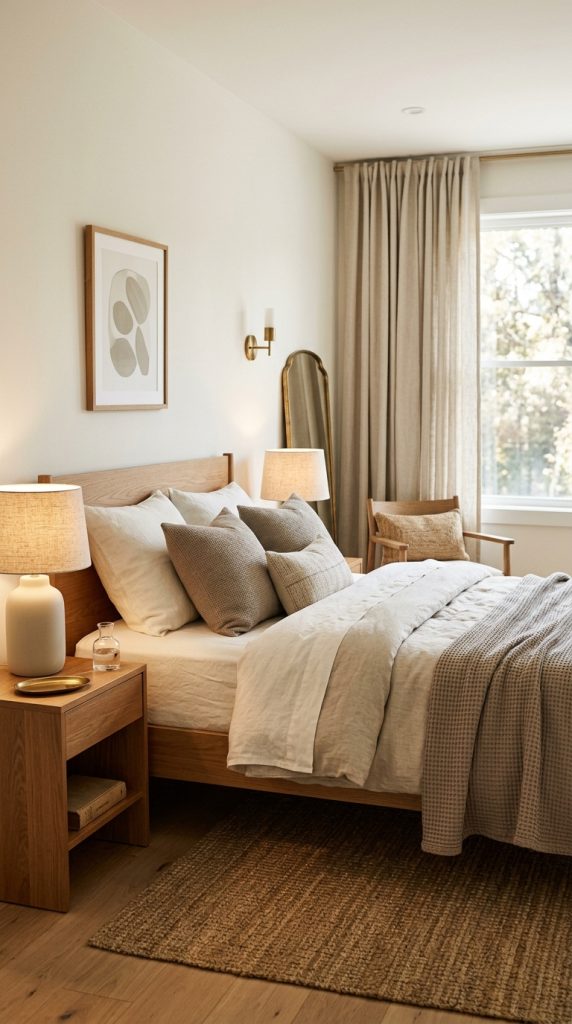
    Neutral sheets, textured pillows, a soft throw, and layered materials can create a boutique-inspired atmosphere.

    Add matching or complementary bedside lamps.

    Place one decorative object on each nightstand rather than filling them with accessories.

    An oversized framed artwork or mirror can become the main wall feature.

    A woven basket near the bed can provide storage while contributing texture.

    The result should feel comfortable enough for everyday life but polished enough to photograph beautifully.

    Affordable Accessories for a Luxury-Looking Kitchen

    Kitchen accessories should be particularly selective because countertops already contain functional objects.

    Instead of displaying everything, create one or two attractive zones.

    A wooden cutting board can lean against the backsplash. Beside it, place a ceramic utensil container.

    A stone-look tray can organize olive oil bottles or coffee supplies.

    A sculptural vase with a small branch can soften an island.

    A beautiful bowl filled with seasonal fruit can create a natural centerpiece.

    The important thing is to avoid turning the countertop into a storage area.

    A few carefully chosen accessories can look more luxurious than an entire collection.

    Affordable Bathroom Accessories That Look High End

    Bathrooms benefit from simple details.

    Replace mismatched containers with coordinated soap dispensers.

    Fold towels neatly and place them in a woven basket.

    Use a small stone-look tray to organize everyday products.

    Add a ceramic vessel with a few stems.

    Choose a mirror with an architectural silhouette.

    A small candle can create a spa-like mood.

    The goal is cleanliness, simplicity, and texture.

    Bathrooms rarely need many decorative objects to feel luxurious.

    Affordable Entryway Accessories That Create a Polished First Impression

    The entryway is the first part of the home many visitors see.

    A small console can become a sophisticated focal point with the right accessories.

    Try an oversized mirror, a small lamp, a decorative bowl, and one sculptural object.

    If space is limited, use a wall-mounted shelf with a framed print and a small vase.

    Add a woven basket for shoes or everyday items if needed.

    Keep the floor clear whenever possible.

    A clean entryway instantly creates a sense of organization.

    Affordable Luxury Decor for Small Apartments

    Small homes require a different strategy.

    Instead of purchasing numerous accessories, choose pieces that serve multiple purposes.

    A decorative tray can organize objects on a coffee table.

    A mirror can add decoration while making the room feel visually larger.

    A woven basket can provide storage and texture.

    A sculptural lamp can provide both lighting and visual interest.

    A decorative box can hide small everyday items.

    This approach prevents the space from becoming crowded.

    For apartment decorating, the goal should be high visual impact with low visual clutter.

    Pinterest’s current design direction toward low-lift, personalized room updates makes this especially relevant for renters and people working with existing spaces. (Pinterest)

    Mistakes That Can Make Affordable Decor Look Cheap

    Not every inexpensive accessory looks inexpensive, but certain styling choices can reduce the overall effect.

    One common problem is excessive quantity.

    Another is mixing too many unrelated colors.

    Overly shiny finishes can sometimes look less sophisticated than matte or aged surfaces.

    Very small accessories scattered across large furniture can also make a room feel unfinished.

    Matching every object perfectly can create a showroom-like appearance rather than a personal home.

    Another issue is choosing decorative pieces purely because they are trendy.

    A more timeless approach is to combine a few current accents with pieces that have enduring appeal.

    This is particularly important because Pinterest’s 2026 reporting suggests users are increasingly treating trends as opportunities for personal expression rather than rigid decorating rules. (Pinterest)

    How to Create an Expensive-Looking Home Without Overdecorating

    The most important principle is intentionality.

    Before adding an accessory, ask yourself three questions:

    Does this improve the room visually?

    Does it contribute texture, function, color, or shape?

    Does it work with the pieces already here?

    If the answer to all three is yes, it may deserve a place.

    If the answer is no, leaving the space empty may actually create a better result.

    Luxury is often communicated through restraint.

    You do not need a house filled with expensive objects to create an elevated interior. You need a home where the visible pieces feel thoughtfully selected.

    How to Shop for Affordable Home Decor Accessories

    When shopping for affordable home accessories, avoid focusing only on the price.

    Look at the silhouette first.

    Then examine the material appearance.

    Check the dimensions.

    Think about where the item will be placed.

    Consider whether it can work in more than one room.

    A versatile accessory gives you more value because you can change its location when you refresh your decor.

    Neutral ceramics, wood accessories, woven baskets, trays, mirrors, lamps, and decorative textiles are especially versatile.

    For more distinctive pieces, vintage-inspired accessories can add character.

    The combination of timeless basics and a few expressive accents creates a more personalized result than purchasing everything from the same collection.

    Final Thoughts

    Creating a beautiful home does not have to mean spending thousands of dollars on designer accessories.

    The real secret behind an expensive-looking interior is thoughtful selection.

    A sculptural ceramic vase can create a focal point. A large mirror can transform an empty wall. A textured pillow can refresh an old sofa. A decorative tray can organize a coffee table. A beautiful lamp can change the atmosphere of an entire room. A woven basket can add texture while solving a storage problem.

    The most effective affordable home decor accessories that look expensive are not necessarily the most elaborate ones. They are the pieces with beautiful proportions, sophisticated finishes, useful functions, interesting textures, and strong visual presence.

    Rather than decorating every surface, choose a few accessories that deserve attention.

    Rather than buying everything in one style, create relationships between materials.

    Rather than following every trend, select pieces that reflect your personality.

    And rather than thinking luxury means expensive, think of luxury as intentional, comfortable, layered, and beautifully edited.

    That approach allows you to create an elegant home while staying within a realistic budget.

    For Pinterest, this also creates a strong content opportunity because the subject naturally connects with multiple search intentions, including cheap home decor that looks expensive, affordable luxury home decor, budget-friendly home accessories, elegant home decor on a budget, luxury home decor ideas, high-end home decor on a budget, and affordable home accessories.

    Most importantly, these ideas are not limited to one season. You can use them throughout the year and adapt them to changing colors, holidays, and decorating styles.

    A beautiful home is not defined by how much was spent on every object.

    It is defined by how thoughtfully everything works together.