Introduction
A grey couch can be the perfect foundation for a warm and inviting boho living room, especially when it is balanced with natural wood, woven materials, soft textiles, earthy colors, and relaxed decorative details. Grey is often considered a cool or neutral color, but it can become surprisingly cozy when surrounded by the right textures and warm finishes. Instead of creating a cold or overly modern room, a carefully styled grey boho living room can feel layered, comfortable, collected, and effortlessly beautiful. This combination works particularly well for homeowners and apartment dwellers who want a relaxed interior with personality without making the room feel excessively colorful or cluttered.
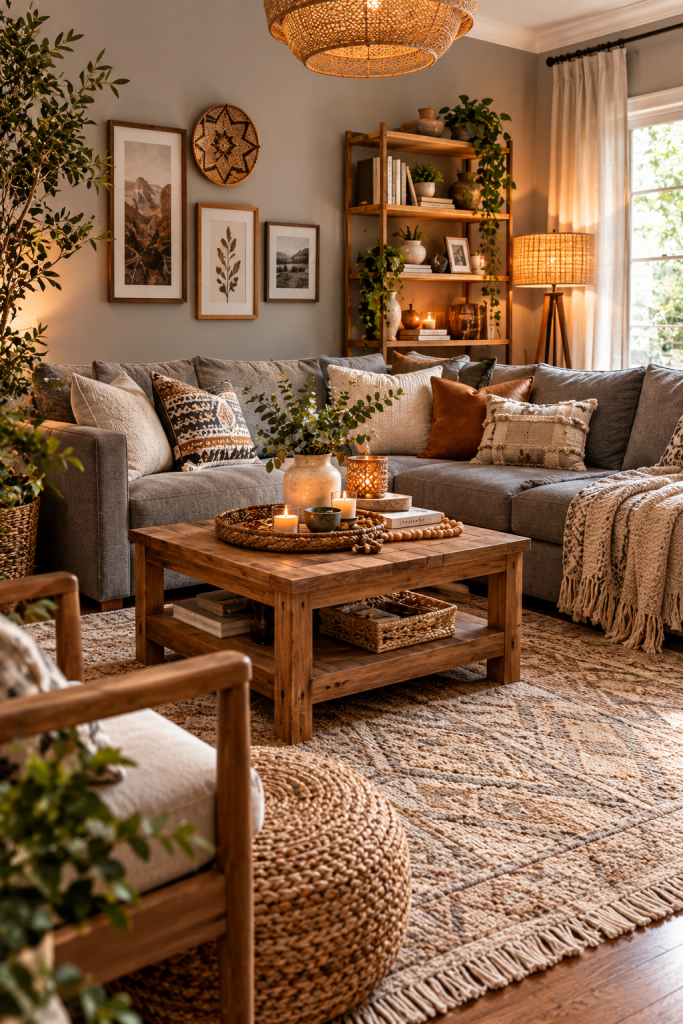
The beauty of boho decorating is that it does not require everything to match perfectly. The style is built around visual layers, natural materials, handcrafted-looking accessories, comfortable textiles, organic shapes, and a sense of individuality. A grey sofa provides a calm anchor that allows these details to stand out. Warm walnut furniture can bring depth to the room, while jute rugs, rattan baskets, woven lamps, linen cushions, ceramic accessories, and textured throws can introduce softness. The result is a room that feels casual and sophisticated at the same time.
When decorating around a grey couch, one of the most important decisions is choosing the right supporting color palette. Rather than filling the room with multiple bright shades, consider warm neutrals such as ivory, oatmeal, beige, camel, taupe, sand, terracotta, muted olive, and warm brown. These shades prevent grey from feeling too stark. Small amounts of charcoal or black can add definition, while creamy whites help the room maintain brightness.
Warm wood is especially valuable in a grey boho living room because it introduces an organic warmth that grey furniture sometimes lacks. A walnut coffee table, oak console, wooden side table, carved stool, or exposed wood shelving can immediately make the space feel more welcoming. You do not need to use the same wood finish everywhere. Mixing two complementary wood tones can actually create the relaxed, collected character associated with bohemian interiors.
Natural textures are another essential part of the look. Texture is what gives a neutral room visual interest without relying on strong color. A chunky woven throw, boucle cushion, jute rug, rattan basket, linen curtains, cane furniture, handmade ceramics, and textured wall art can all contribute to the atmosphere. The trick is to layer these materials rather than repeating one texture throughout the room.
Lighting also plays an important role. Grey furniture can appear dramatically different depending on the light surrounding it. Cool white bulbs can make grey look harder and more blue, while warm lighting can bring out its softer side. Floor lamps, table lamps, woven pendant lights, wall sconces, and candles can create multiple levels of illumination. During the evening, warm lamps can make the entire room feel intimate and comfortable.
The layout should remain practical. Boho style can sometimes become associated with lots of decorative objects, but a beautiful living room still needs clear pathways and comfortable seating. Start with the sofa and determine how people will move through the room. Then introduce a coffee table, side tables, floor lamp, rug, and storage pieces according to the available space. In a smaller room, choose furniture with open legs and lighter visual profiles to preserve a sense of space.
Wall decoration offers another opportunity to introduce bohemian character. Instead of filling every wall with small objects, create one intentional focal area. A large woven wall hanging, oversized neutral artwork, textured plaster-style artwork, or a curated collection of natural frames can provide enough visual interest without making the room feel busy.
Plants can also work beautifully with this aesthetic, although they should be selected according to the actual light and maintenance conditions of the room. A large leafy plant beside a grey sofa can add height and organic color, while a small plant on a wooden side table can provide a subtle accent. If live plants are not practical, dried grasses or branches can provide a similar sculptural effect.
Accessories should feel collected rather than overly coordinated. Look for pieces with different shapes and finishes: a rounded ceramic vase, woven basket, carved wooden bowl, linen cushion, textured candle holder, or handmade-looking planter. These details can make the room feel personal.
The following ten grey boho living room ideas explore different ways to create this style while keeping the grey couch as the central foundation. Some focus on warm wood, others emphasize layered textiles, natural lighting, wall décor, plants, small-space organization, or earthy accents. Each approach can be adapted to different room sizes and budgets.
The goal is not to copy every element at once. Instead, choose the idea that best matches your existing room and build from there. If your grey couch is already in place, you may only need a warm rug, wooden coffee table, woven accessories, and a few cushions to transform the atmosphere. If you are starting from scratch, you can coordinate the furniture, lighting, and decorative materials from the beginning.
A successful grey boho living room should ultimately feel comfortable before it feels decorative. It should invite people to sit down, relax, read, talk, or enjoy a quiet evening. By combining the calm foundation of grey with the warmth of wood and the tactile quality of natural materials, you can create a space that feels stylish without looking overly designed.
1. Layer a Grey Couch With Warm Wood and Earthy Neutrals

One of the easiest ways to create a sophisticated grey boho living room is to use the grey couch as the foundation and surround it with warm wood and earthy neutrals. This approach creates a balanced palette where the coolness of grey is softened by natural brown tones.
Begin with the sofa as your largest visual element. If the couch is medium or light grey, introduce warmer shades around it rather than adding more cool grey. Cream, oatmeal, beige, camel, and warm brown cushions can immediately make the seating area feel more inviting.
Materials and Items to Use
- Grey sofa
- Walnut or oak coffee table
- Beige area rug
- Linen cushions
- Woven throw
- Wooden side table
- Rattan basket
- Ceramic vase
- Neutral artwork
- Warm floor lamp
Choose a coffee table with visible wood grain. Walnut gives the room a richer appearance, while lighter oak creates a softer Scandinavian-boho feeling. A table with rounded edges can also prevent the room from appearing too rigid.
Next, add an area rug beneath the seating arrangement. A natural jute rug is an obvious choice, but a patterned wool or cotton rug in beige and muted brown can create a softer surface. Make sure the rug is large enough to visually connect the sofa and surrounding furniture.
Layer cushions rather than placing identical pillows across the couch. Start with two larger neutral cushions, then add one or two textured pieces. A subtle geometric pattern can introduce bohemian character without overwhelming the grey upholstery.
A woven throw can be casually placed over one arm of the sofa. Choose a cream, oatmeal, taupe, or muted brown shade. Avoid arranging it too perfectly; the relaxed appearance is part of the aesthetic.
For the coffee table, keep the decoration simple. A ceramic vase with dried stems, a small wooden bowl, and one coffee-table book can provide enough interest.
A rattan basket beside the sofa can store additional blankets while adding another natural texture. This is a particularly useful accessory because it combines decoration with practical storage.
Lighting should remain warm. Place a floor lamp near the sofa where it can provide reading light. A linen or woven lampshade can reinforce the boho character.
For the walls, choose one large neutral artwork rather than many tiny pieces. Abstract artwork with beige, brown, cream, and charcoal tones can connect the entire palette.
The finished room should feel warm but not dark. Use cream curtains and keep larger surfaces relatively light so the wood and textiles become accents rather than making the space visually heavy.
This approach works especially well for people who want boho style without excessive color. The grey couch remains sophisticated and versatile, while natural materials provide the warmth and personality that make the room feel distinctly bohemian.
2. Create a Soft Boho Look With Layered Cream and Linen Textiles
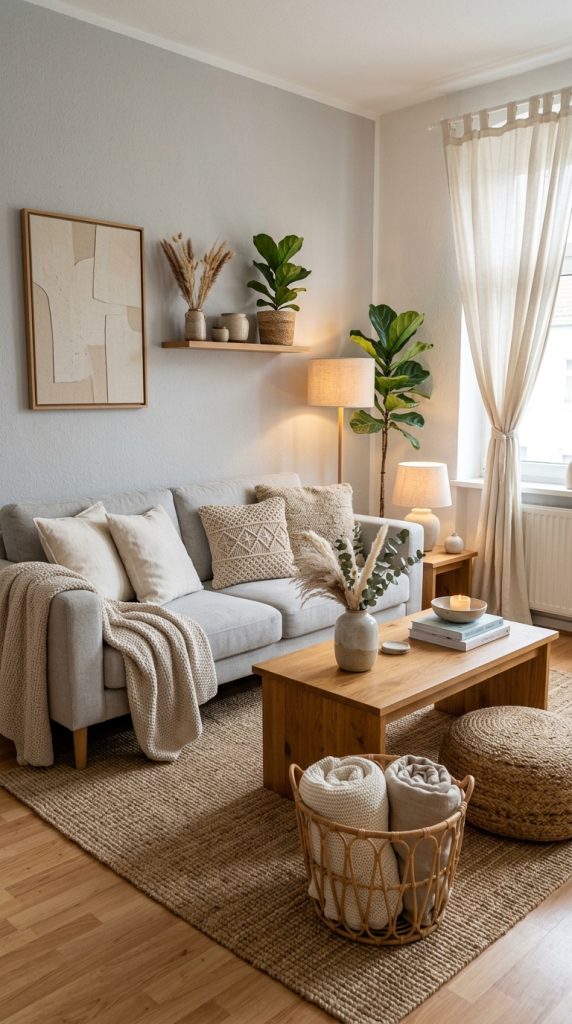
If your grey sofa feels too plain or contemporary, textiles can transform it without requiring major furniture changes. Layering cream, ivory, beige, and natural linen around the sofa creates a soft boho atmosphere while preserving a calm color palette.
Start with the sofa cushions. Rather than purchasing a complete matching set, combine different shapes and textures. Use larger square cushions at the back, followed by smaller lumbar cushions toward the front.
Materials and Items to Use
- Grey couch
- Ivory linen cushions
- Beige textured cushions
- Cotton throw
- Chunky woven blanket
- Natural fiber rug
- Linen curtains
- Soft floor pouf
- Wooden coffee table
- Woven basket
Texture should be the main source of variation. One cushion might have a subtle woven pattern, another could feature linen, and a third could have a small geometric design.
Keep the colors related so the arrangement feels cohesive.
A large cream or beige rug can soften the area beneath the sofa. If you prefer stronger natural texture, use a jute rug with a relatively simple weave.
Add a floor pouf near the coffee table. Choose a woven, knitted, or textured fabric version in oatmeal or beige. The pouf can provide extra seating without visually competing with the sofa.
Linen curtains can soften the windows and allow natural light to filter into the room. Choose warm white rather than icy white to maintain the cozy atmosphere.
For the coffee table, use a wooden design with a simple silhouette. Place a shallow ceramic bowl or handmade-style vase on top rather than filling the surface with accessories.
A large woven basket can sit near the sofa and hold blankets. Choose one with visible natural fibers because the texture will contribute to the overall design.
The floor should remain visually connected to the rest of the room. If you have wood flooring, allow some of it to remain visible around the rug. This creates a natural transition between surfaces.
Lighting should emphasize softness. A table lamp with a fabric shade can create a warm pool of light beside the sofa. If the room has overhead lighting, use it as general illumination rather than the only light source.
This style is particularly useful when you want a peaceful living room that feels bohemian without becoming visually busy. The personality comes from tactile materials rather than strong patterns.
You can also change the textiles seasonally. During warmer months, use lightweight linen and cotton. During colder weather, replace some pieces with chunky knits and heavier woven throws.
The finished result should feel comfortable, layered, and relaxed. The grey couch becomes a neutral backdrop for an entire collection of natural textiles, making the room feel much warmer without requiring a new sofa.
3. Add a Statement Rattan Pendant Above a Warm Wood Coffee Table
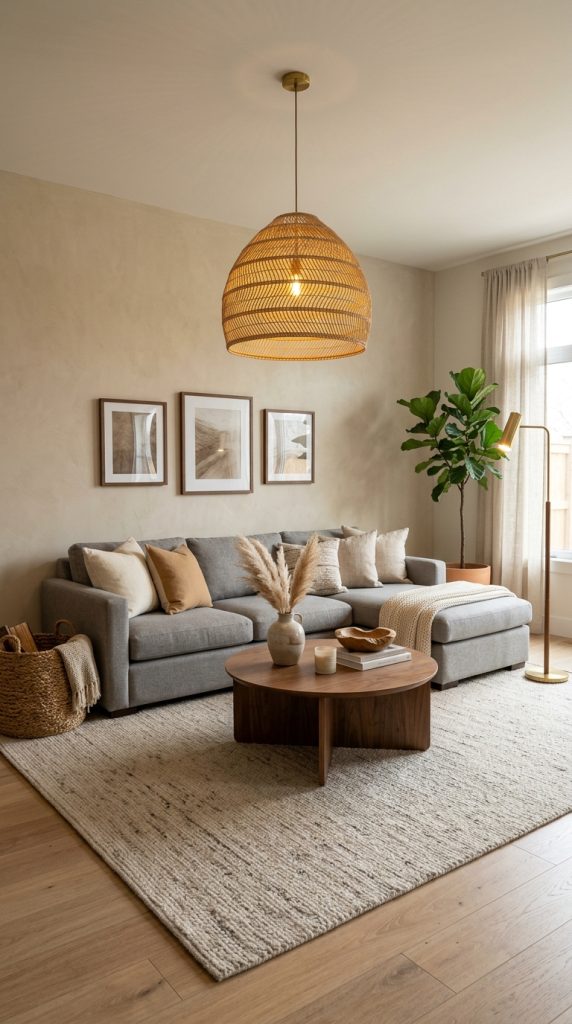
Lighting and furniture can establish the boho identity of a room more dramatically than small accessories. A rattan pendant paired with a warm wooden coffee table creates a strong natural focal point while keeping the grey sofa visually grounded.
Begin by positioning the grey couch so that it faces the main coffee table. The table should be proportional to the seating area and leave enough room for comfortable movement.
Materials and Items to Use
- Grey sofa
- Rattan pendant light
- Walnut coffee table
- Neutral area rug
- Ceramic vase
- Wooden bowl
- Woven basket
- Linen cushions
- Warm floor lamp
- Earth-toned artwork
Choose a pendant with an open woven structure. When illuminated, the weave can create gentle shadows across the room, adding visual depth.
Select a warm wood coffee table beneath it. Walnut creates a sophisticated contrast against grey upholstery, while oak produces a lighter appearance.
Keep the coffee table styling restrained. One ceramic vase, a wooden bowl, and perhaps a small stack of books are enough.
The rug beneath the table should connect the sofa and table visually. Choose a neutral design with subtle texture rather than a highly complicated pattern.
Introduce additional rattan or woven material through one or two accessories. For example, a woven basket can sit beside the sofa, while a small cane container can hold magazines.
Avoid using rattan in every piece of furniture. Too much of one material can make the room feel themed rather than naturally collected.
The grey sofa can be warmed with cushions in rust, camel, cream, or muted olive. Use only small amounts of stronger colors so the room remains sophisticated.
Lighting should be layered. The pendant provides overhead atmosphere, while a floor lamp or table lamp supplies localized illumination.
For wall decoration, consider a large piece of abstract art containing warm neutrals. This will help visually connect the wood and textiles.
If the room has high ceilings, the pendant can help bring the visual scale downward, making the seating area feel more intimate.
In a small room, select a pendant that is visually interesting but not oversized. An extremely large fixture can dominate the space.
The overall effect is warm and architectural. The grey couch provides simplicity, the wood adds depth, and the rattan pendant introduces unmistakable natural texture.
This arrangement is ideal for someone who wants a boho living room that still feels polished and contemporary. Instead of relying on dozens of decorations, the design uses a few substantial materials to establish the character of the room.
4. Build a Grey Boho Gallery Wall With Natural Wood Frames

A grey couch can look dramatically more interesting when placed beneath a carefully planned gallery wall. For a boho aesthetic, use natural wood frames, textured artwork, neutral photography, and handmade-looking pieces rather than a collection of identical modern prints.
Start by determining the width of the wall behind the sofa. The artwork should relate to the sofa’s scale. A tiny collection above a large couch may appear disconnected, while an enormous arrangement can overwhelm a compact room.
Materials and Items to Use
- Natural wood frames
- Neutral artwork
- Abstract prints
- Botanical artwork
- Woven wall piece
- Small ceramic wall object
- Grey sofa
- Warm wood side table
- Linen cushions
- Accent lighting
Choose a limited palette for the artwork: cream, beige, brown, muted grey, terracotta, charcoal, and perhaps soft olive.
Mix artwork sizes. One larger print can act as an anchor, while smaller pieces fill the surrounding space.
Introduce one dimensional object, such as a small woven wall hanging or textured fiber piece. This prevents the gallery wall from feeling like a conventional picture arrangement.
Use natural wood frames rather than identical black frames. The wood connects the wall to other furniture and reinforces the organic character.
Before hanging anything, arrange the pieces on the floor. Experiment with spacing until the composition feels balanced.
Keep the lower edge of the artwork at a comfortable relationship to the sofa. Avoid hanging the arrangement excessively high.
Under the gallery wall, style the sofa with a restrained combination of cushions. Because the wall already provides visual interest, the seating area does not need excessive decoration.
A warm wooden side table can sit beside the sofa with a small ceramic lamp. The lamp provides practical lighting while reinforcing the palette.
If possible, use a dimmable warm bulb. Evening illumination will make the wood frames and textured wall pieces appear richer.
You can also include a small mirror among the artwork. A rounded wood-framed mirror can reflect natural light and make a compact living room feel more spacious.
Avoid adding too many unrelated themes. The gallery wall should feel like a collection that belongs together.
This approach is especially useful if the grey couch itself is simple or minimalist. Rather than replacing the sofa, you can give the wall behind it enough personality to turn the seating area into a focal point.
The result is a boho room that feels collected and personal without relying on bright colors. Natural wood frames, organic artwork, and tactile wall décor provide the visual richness.
5. Introduce Muted Terracotta and Olive Accents Around the Grey Sofa
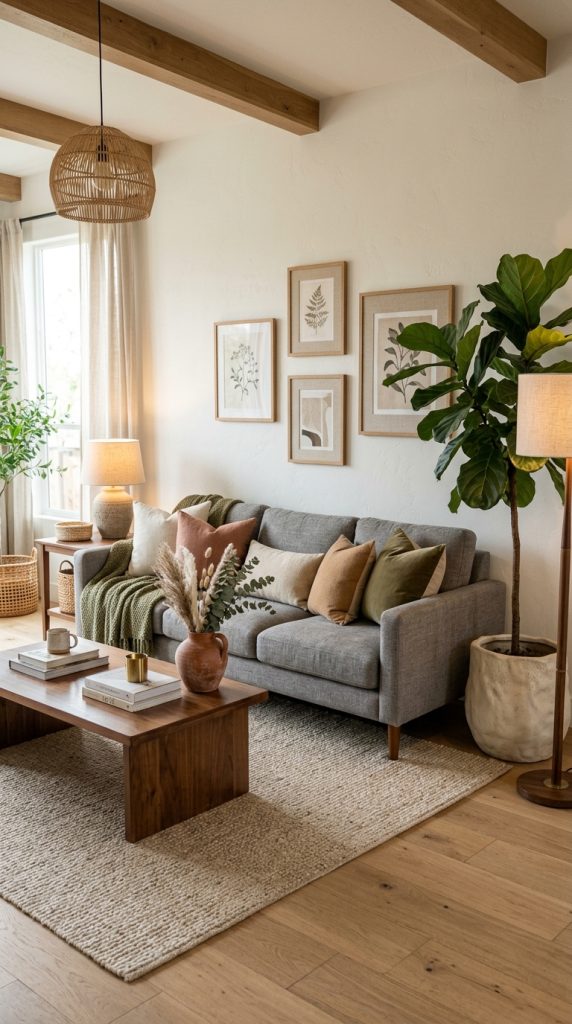
Grey works beautifully with earthy accent colors. If you want a boho living room with more personality than a neutral palette provides, introduce small amounts of muted terracotta and olive.
The important word is muted. Instead of highly saturated orange or bright green, choose dusty terracotta, clay, olive, sage, or earthy rust tones.
Materials and Items to Use
- Grey couch
- Terracotta cushions
- Olive throw
- Beige rug
- Warm wooden coffee table
- Ceramic vase
- Olive-toned plant
- Woven basket
- Natural wood frames
- Warm table lamp
Begin with two or three neutral cushions and introduce one terracotta cushion as an accent. This keeps the grey sofa visually balanced.
Add a muted olive throw on the opposite side of the couch. The colors should appear intentionally distributed rather than concentrated in one area.
A beige rug provides a bridge between the grey upholstery and earthy accents. Choose a textured or subtly patterned design.
Warm wood furniture will help reinforce the earth-inspired palette. A walnut coffee table can provide depth, while lighter wood can create a softer look.
Ceramics are an excellent way to introduce small amounts of terracotta. A handmade-style clay vase on the coffee table can become a subtle focal point.
If the room receives adequate natural light, add a green plant near the sofa. The foliage can naturally reinforce the olive palette without requiring additional decorative color.
Use a woven basket to store throws or magazines. The natural fibers prevent the colored accessories from appearing overly decorative.
For wall art, choose neutral pieces with small amounts of earthy pigment. A large abstract canvas featuring cream, clay, and charcoal can connect the color scheme.
Lighting should remain warm and soft. A ceramic or wood-based table lamp can provide another organic element.
Do not introduce terracotta and olive into every accessory. Their purpose is to provide controlled visual contrast.
This approach works particularly well when the grey sofa has cool undertones because warm earthy accents can visually balance it.
The finished room feels richer without becoming colorful in an overwhelming way. Grey remains the foundation, while terracotta and olive provide small moments of warmth.
This is also a flexible design because the accent colors can be changed later. Terracotta can be replaced with rust or muted burgundy, while olive can shift toward sage or warm green.
The result is a relaxed boho living room with a stronger sense of personality while maintaining the calm sophistication of a neutral foundation.
6. Style a Small Grey Boho Living Room With Space-Saving Furniture
Boho style can work beautifully in a small living room, but furniture selection becomes especially important. The goal is to create layers without sacrificing walking space.
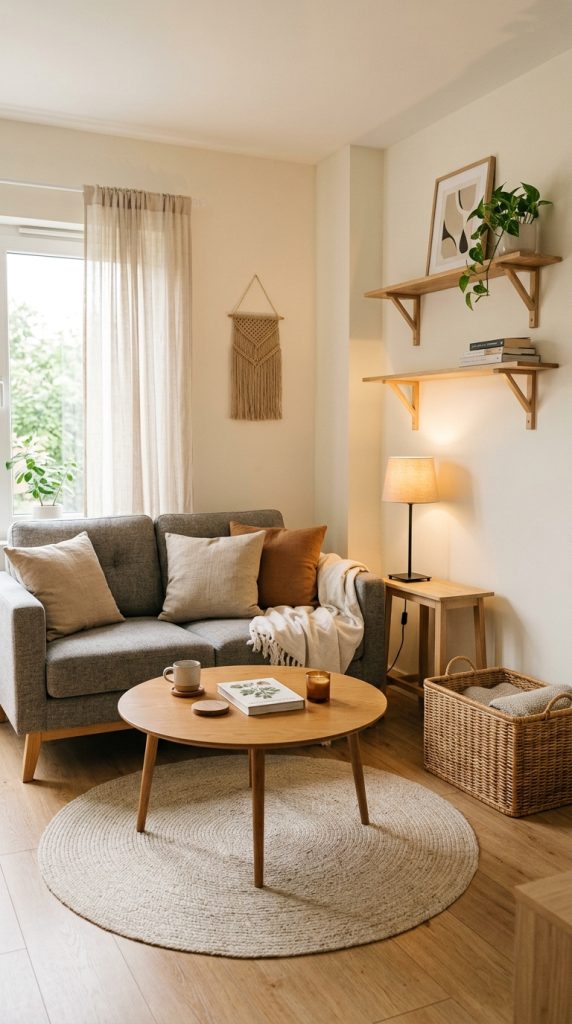
Start with the grey couch. If the room is very small, choose a sofa with a relatively compact profile and visible legs. Furniture raised slightly from the floor can create a sense of openness.
Materials and Items to Use
- Compact grey sofa
- Round wooden coffee table
- Slim side table
- Jute rug
- Wall-mounted shelves
- Woven basket
- Floor lamp
- Linen cushions
- Small plant
- Natural wood décor
A round coffee table can improve movement because it eliminates sharp corners. Choose a warm wood finish to introduce natural character.
Instead of adding several large side tables, use one slim table beside the sofa. A narrow surface is enough for a lamp, book, or cup.
Wall-mounted shelves can provide display space without taking floor area. Use them for a few ceramics, books, and small decorative objects.
A jute rug can define the seating zone. In a small room, make sure the rug does not extend into every pathway.
Storage should be integrated into the design. A woven basket beneath a shelf or beside the sofa can hold blankets without looking like an obvious storage container.
Choose a floor lamp with a slim profile rather than a bulky base. Place it behind or beside the sofa where it uses otherwise difficult space.
Use cushions to introduce texture rather than adding numerous decorative objects around the room.
For wall color, warm white, soft beige, or light greige can help the room maintain brightness. If the walls are already grey, introduce warmer accessories to prevent the space from becoming too cool.
A small plant can occupy a corner that would otherwise remain empty. Choose a plant with a vertical shape if you need height without width.
Keep the coffee table styling minimal. One tray, one vase, and perhaps a book are enough.
Mirrors can help visually expand a compact room. A large rounded mirror with a wood frame can reflect light and reinforce the organic aesthetic.
The key to a small boho living room is controlled layering. Every item should either serve a practical purpose or contribute meaningfully to the visual composition.
This approach allows you to enjoy the warmth and texture associated with boho style without filling the room with furniture.
The final space should feel open, comfortable, and personal rather than crowded. Grey provides a quiet foundation while wood and natural materials create enough warmth to make the room feel inviting.
7. Create a Natural Boho Focal Point With Plants and Wood
Plants can transform a grey living room by adding organic color, height, and movement. Combined with warm wood, they can create a natural focal point around the sofa without relying heavily on decorative accessories.
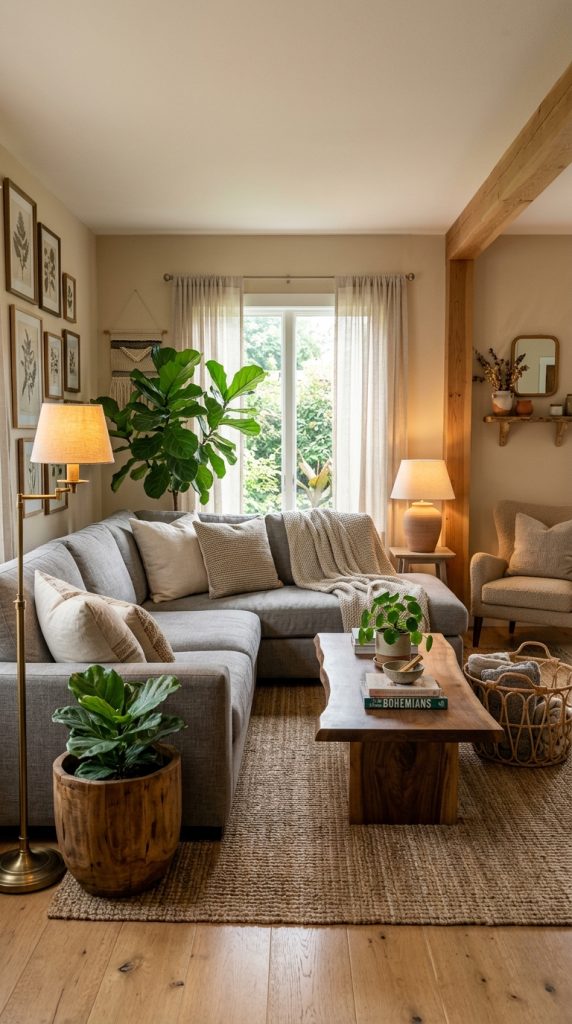
Begin by identifying the brightest area of the living room. Select plants according to the actual lighting conditions rather than choosing them solely for appearance.
Materials and Items to Use
- Grey sofa
- Large indoor plant
- Wooden planter
- Small tabletop plant
- Walnut coffee table
- Woven basket
- Jute rug
- Linen cushions
- Ceramic planter
- Warm floor lamp
Place a taller plant beside the grey sofa to create vertical interest. A wooden or textured planter can reinforce the warm material palette.
Use a smaller plant on a coffee table or side table to introduce greenery at a lower level.
Avoid placing plants everywhere. Two or three thoughtfully positioned plants can have more impact than many small pots.
Choose a coffee table with visible grain. The combination of wood and foliage creates a strong organic connection.
A jute or natural-fiber rug can anchor the seating area. Add cream or beige cushions to soften the grey couch.
A woven basket beside the sofa can hold a throw while adding another natural material.
If you use ceramic planters, choose earthy finishes such as cream, sand, clay, or stone. Handmade-looking surfaces work especially well with boho interiors.
Lighting should highlight the plants without overheating them. A floor lamp can illuminate the seating area while a warm table lamp can create a secondary layer.
Consider using a large neutral artwork piece behind the sofa so the plants become the primary source of organic color.
Wooden furniture should not necessarily match perfectly. A walnut coffee table can work alongside a lighter wooden planter, creating the collected character typical of bohemian spaces.
Make sure plant placement does not obstruct walkways or furniture use. Large leaves should have enough space to grow naturally.
The final arrangement should create a visual transition from grey upholstery to warm wood and then to green foliage. This progression makes the room feel balanced.
This idea is especially useful for people who want a natural-looking living room without introducing many bright colors. Green plants provide color naturally while remaining compatible with grey, beige, brown, and cream.
The result feels fresh, warm, and relaxed, with the grey couch acting as a sophisticated anchor rather than dominating the room.
8. Add a Cozy Boho Reading Corner Beside the Grey Couch
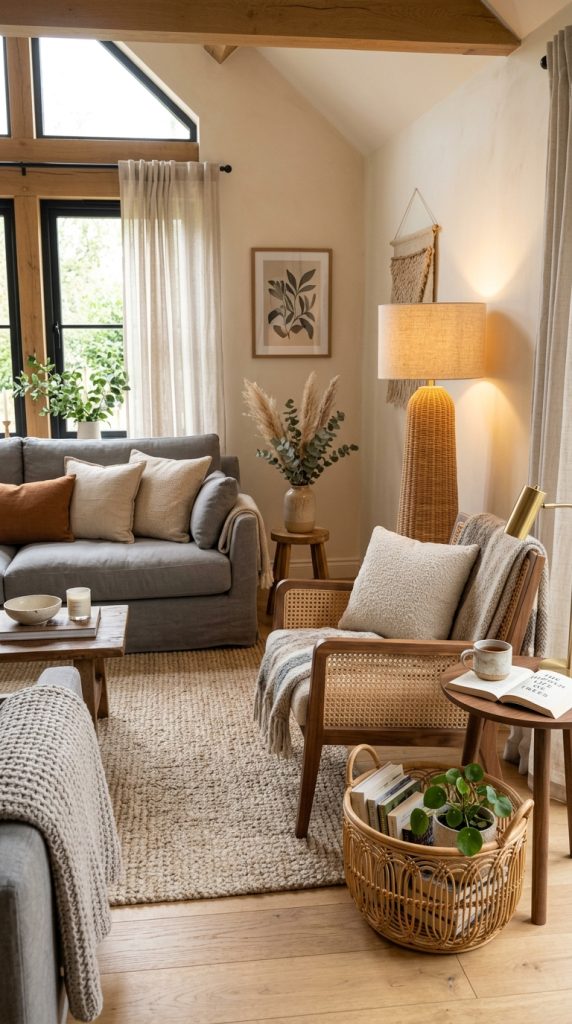
A living room becomes more functional when one section is designed around a specific activity. A small reading corner beside a grey couch can introduce another layer of comfort while creating a beautiful boho composition.
Choose an unused corner near the sofa, preferably close to natural light.
Materials and Items to Use
- Grey sofa
- Wooden accent chair
- Woven floor lamp
- Small round side table
- Textured cushion
- Soft throw
- Jute rug
- Ceramic mug
- Small plant
- Wooden bookshelf or basket
A wooden or cane accent chair works particularly well because it introduces warmth without matching the grey sofa exactly.
Place a small round side table beside the chair. It should be large enough for a book, drink, or small lamp but not so large that it consumes the corner.
A woven floor lamp can create a warm glow while reinforcing the natural texture of the room.
Add one comfortable cushion to the chair and a soft throw over its back. Choose cream, oatmeal, camel, or muted earth tones.
A small plant can occupy the space beside the chair if lighting conditions allow.
If additional storage is needed, use a woven basket for books and magazines. This is more visually relaxed than adding another large storage cabinet.
The grey sofa should remain visually connected to the reading corner through the rug. If the existing rug covers the entire seating area, position the chair partially within its boundary.
A small wooden bookshelf can also work if there is enough room. Keep it relatively narrow and avoid overfilling it.
For lighting, select a warm bulb that is comfortable for reading. The light should illuminate the chair without creating harsh glare.
The reading corner provides an opportunity to add a slightly different wood tone or textile without disrupting the overall design.
You can also introduce a small handmade ceramic piece on the side table. Keep decorative objects limited so the corner remains practical.
This design is particularly effective in larger living rooms where one side of the sofa area feels empty. Instead of filling the space with random furniture, create a purposeful activity zone.
The combination of grey upholstery, warm wood, woven lighting, and soft textiles makes the entire room feel more layered.
The finished space becomes more than a decorated living room. It becomes a comfortable retreat where the materials encourage relaxation.
9. Use a Low Wooden Coffee Table and Floor Seating for Relaxed Boho Style

For a more relaxed interpretation of bohemian design, combine the grey couch with a low warm-wood coffee table and flexible floor seating. This creates an informal atmosphere while adding visual variation to a conventional sofa arrangement.
Start with a sturdy low-profile wooden coffee table. Choose a design with rounded edges or a simple handcrafted appearance.
Materials and Items to Use
- Grey couch
- Low wooden coffee table
- Floor cushions
- Woven pouf
- Neutral rug
- Ceramic bowl
- Wooden tray
- Textured throw
- Rattan basket
- Warm table lamp
Place a large rug beneath the sofa and table. A woven or natural-fiber rug works particularly well because it provides texture beneath the low furniture.
Add one or two floor cushions near the coffee table. Choose neutral colors with subtle patterns rather than highly contrasting designs.
A woven pouf can provide another casual seating option while adding texture.
The coffee table should remain practical. A wooden tray can organize small objects, while a ceramic bowl can hold decorative or everyday items.
Keep the floor area around the table clear enough for people to move comfortably.
Use the grey sofa as the structured element and let the lower furniture provide a more relaxed contrast.
Cushions on the sofa can feature natural materials such as linen, cotton, or woven fabric. Introduce one muted pattern if desired.
A rattan basket can store extra floor cushions when they are not being used.
Lighting should remain warm and low. A table lamp or floor lamp can create an intimate atmosphere in the evening.
This arrangement works especially well for households that enjoy casual gatherings. Floor seating provides flexible options without requiring additional permanent chairs.
For a sophisticated result, keep the palette controlled. Grey, cream, beige, brown, and one earthy accent color are enough.
Choose natural wood with visible grain rather than heavily polished furniture. Small imperfections and variation can actually enhance the boho character.
The low coffee table also changes the visual scale of the room. It creates a grounded, relaxed feeling that works beautifully with soft textiles.
If you have children or frequently entertain guests, choose durable washable textiles and sturdy furniture.
The final result feels informal but intentional. It avoids the overly formal appearance that a grey sofa can sometimes create while preserving a clean and sophisticated aesthetic.
10. Finish the Grey Boho Living Room With Warm Layered Lighting

Lighting can completely change the atmosphere of a grey boho living room. Even when the furniture and accessories are already correct, the wrong lighting can make the grey couch appear cold. Warm layered illumination can solve that problem while emphasizing wood and natural textures.
Begin by identifying the existing light sources. Do not depend entirely on the ceiling fixture.
Materials and Items to Use
- Grey sofa
- Warm floor lamp
- Table lamp
- Woven pendant
- Ceramic lamp base
- Warm LED bulbs
- Wooden side table
- Linen cushions
- Textured throw
- Decorative candleholders
Create at least three levels of lighting where the room allows it: overhead or general light, task lighting near seating, and accent lighting for atmosphere.
A floor lamp beside the grey sofa can provide comfortable illumination for reading or conversation.
Place a table lamp on a warm wooden side table. A ceramic base can introduce another tactile element.
If the room has an appropriate ceiling fixture, consider a woven pendant. Its texture can become a decorative feature even when the light is turned off.
Choose warm-toned bulbs rather than cool daylight bulbs for the evening environment. The exact color temperature should be selected according to the fixture and personal preference, but the goal is a warm, comfortable appearance.
Accent lighting can highlight artwork, shelves, or plants. Small rechargeable lamps can be useful where wiring is limited.
Candles can provide an additional decorative glow when used safely and appropriately.
Keep lamp shades in natural-looking materials such as linen, cotton, paper, or woven fibers.
Warm lighting should not make the entire room excessively dark. Maintain enough general illumination for normal activities.
The lighting arrangement should interact with the natural materials already present. Light falling across a woven basket creates texture, while illumination on a wooden table emphasizes grain.
Grey upholstery can also appear softer under warm lighting, helping the sofa integrate with beige and brown accessories.
Consider installing dimmers where compatible with the lighting system. Adjustable brightness allows the room to transition from daytime activity to evening relaxation.
Avoid placing every light at the same height. A floor lamp, table lamp, pendant, and lower accent light can create visual depth.
The finished room should feel inviting rather than dramatically lit. The objective is a comfortable glow that makes people want to sit down.
This final approach is especially valuable because it does not require replacing major furniture. Even a basic grey couch can feel dramatically more luxurious when surrounded by thoughtfully layered warm illumination.
Final Thoughts
A grey couch provides an incredibly flexible starting point for a boho living room. Its neutral character allows warm wood, natural fibers, earthy colors, plants, handmade-looking ceramics, and layered textiles to become part of the design without competing for attention.
The most effective approach is to build the room gradually. Start with the sofa and determine what the space is missing. If the room feels cold, introduce warm wood. If it feels flat, add texture through rugs, cushions, baskets, and woven lighting. If it feels empty, create a focal point with artwork or plants. If it feels crowded, remove unnecessary objects and use vertical storage instead.
Natural materials are especially powerful because they create visual interest without requiring dramatic colors. Jute, rattan, cane, linen, cotton, wool, wood, ceramic, and stone can all work together while maintaining a calm palette.
Warm wood should be used as an intentional counterbalance to grey. A coffee table, side table, shelving, stool, or planter can provide enough warmth without turning the room into a heavily rustic space.
For color, earthy accents such as terracotta, camel, muted olive, rust, beige, and cream can add personality while preserving the sophisticated foundation. Use them selectively rather than distributing every shade equally.
Texture should also be layered thoughtfully. A smooth grey sofa can contrast beautifully with a chunky throw, woven basket, natural-fiber rug, linen cushion, and carved wooden accessory.
Most importantly, remember that boho decorating is about creating a relaxed environment rather than following a strict checklist. You do not need every traditional bohemian element. Choose the materials and objects that make the room feel comfortable and personal.
A small living room can use the same principles. Select furniture with a lighter visual profile, use vertical surfaces for décor, keep pathways clear, and choose multifunctional accessories.
A larger living room can support more substantial pieces, such as a statement pendant, oversized plant, accent chair, or larger gallery wall.
Whether your preferred version is minimalist boho, modern boho, earthy boho, Scandinavian boho, or a more collected style, the combination of grey upholstery, warm wood, and natural textures provides a dependable foundation.
The finished room should feel welcoming from the moment you enter. The grey couch gives the space structure, the wood brings warmth, and the natural textures add the tactile richness that makes boho interiors feel relaxed and lived-in.
With thoughtful layering, even a simple grey sofa can become the centerpiece of a beautiful living room that feels cozy, sophisticated, natural, and distinctly your own.