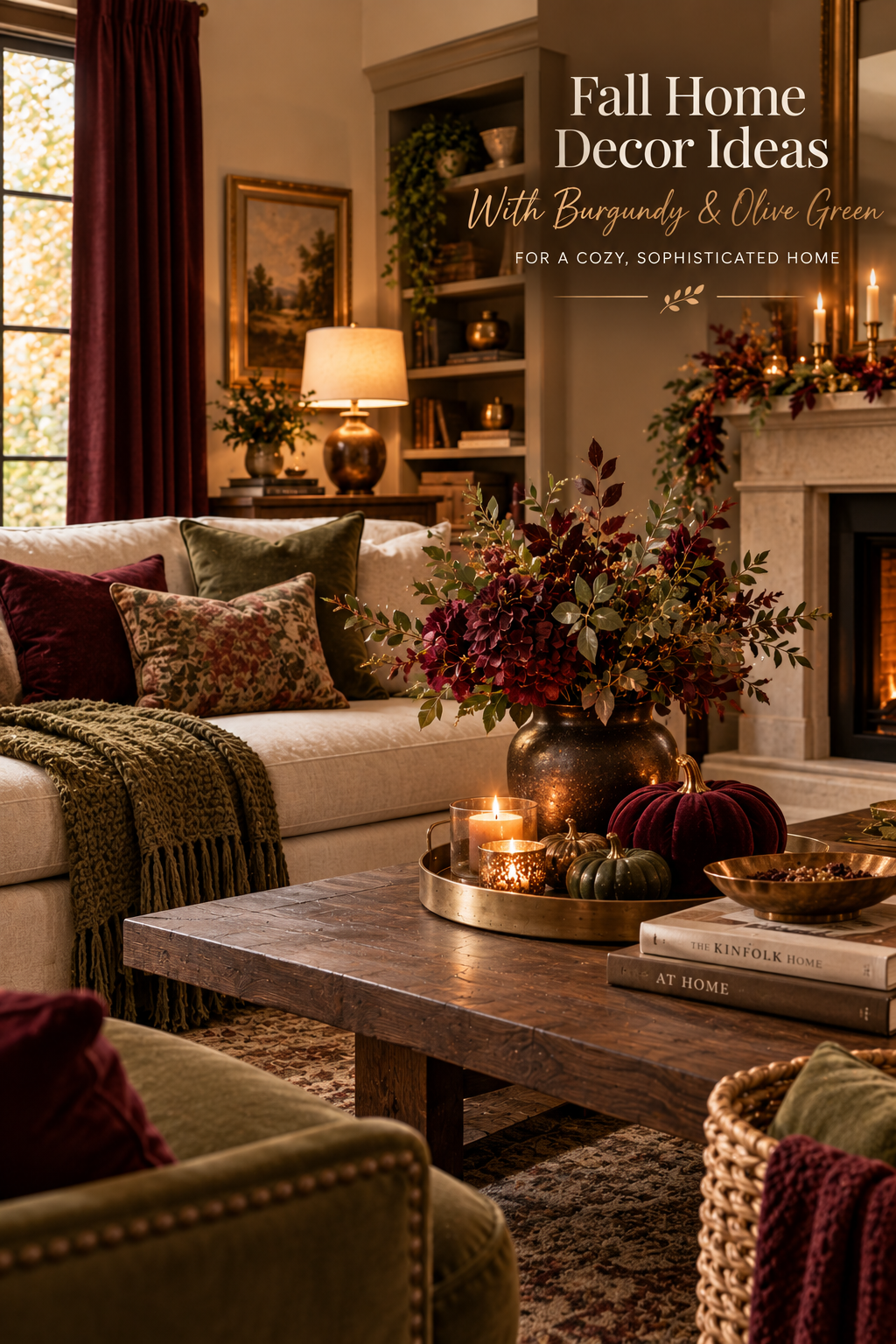
Fall decorating does not have to mean filling every corner with pumpkins, orange leaves, and traditional seasonal signs. A more sophisticated approach is to create an atmosphere that feels warm, layered, inviting, and distinctly autumnal through color, texture, lighting, and carefully selected decorative details. One of the most beautiful combinations for achieving that look is burgundy and olive green.
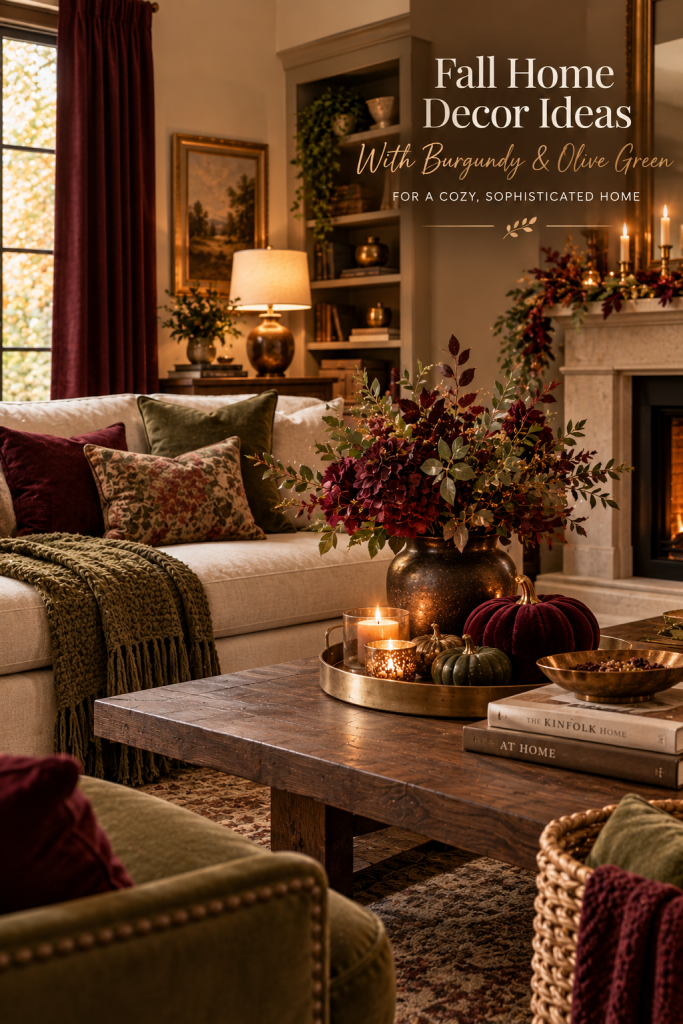
Burgundy brings richness, depth, and a luxurious autumn character, while olive green introduces an earthy, natural quality that keeps the palette grounded. Together, they create a refined color story that can work beautifully with cream, beige, warm white, walnut, oak, taupe, aged brass, natural linen, and soft brown.
This combination is especially useful if you want your home to feel seasonal without looking overly decorated. Instead of depending on obvious fall motifs, you can allow deeper colors and tactile materials to create the atmosphere. A burgundy velvet pillow, an olive ceramic vase, a walnut tray, a linen throw, or a branch arrangement can completely change the mood of a room without making the space look like a temporary holiday display.
Current fall decorating coverage is moving toward exactly this type of approach. Designers and home publications are highlighting richer earthy colors, natural materials, warm woods, deeper greens, burgundy, and layered textures as alternatives to traditional bright orange fall styling. (The Spruce)
Burgundy is particularly effective because it can act almost like jewelry in a room. You do not need much of it. A few carefully positioned burgundy accents can add visual weight to an otherwise neutral space. Depending on the shade, burgundy can range from wine-inspired and romantic to dramatic and luxurious. It works especially well in velvet, linen, wool, ceramic, glass, artwork, and floral arrangements.
Olive green performs differently. Rather than creating drama, it provides a quiet connection to nature. It looks beautiful beside natural wood, stone, woven fibers, cream upholstery, aged brass, and warm neutral walls. Because olive is muted rather than extremely saturated, it can be used in larger quantities without overwhelming a room.
The secret is balance.
If both colors are used everywhere, the room can begin to feel overly coordinated. Instead, allow warm neutrals and natural materials to act as the foundation. Then introduce olive green through larger grounding pieces such as upholstery, artwork, ceramics, or textiles. Use burgundy selectively in smaller moments such as cushions, throws, candles, flowers, table linens, or decorative accessories.
This creates a layered color story rather than a themed room.
Another advantage of this palette is versatility. Burgundy and olive green can work in a traditional home, modern apartment, organic modern interior, vintage-inspired space, transitional living room, farmhouse-inspired home, or even a luxury minimalist room. The final appearance depends largely on the materials and supporting colors you choose.
For a softer interpretation, combine burgundy and olive with ivory, oatmeal, light oak, and linen.
For a more luxurious appearance, add walnut, dark bronze, aged brass, velvet, marble, and smoked glass.
For a rustic autumn atmosphere, introduce woven baskets, distressed wood, dried branches, wool, pottery, and natural stone.
For a modern look, keep the shapes simple and use burgundy and olive as controlled accents against cream, black, taupe, or warm white.
You also do not need to redecorate your entire home. Seasonal decorating can be accomplished through small changes that have a surprisingly large visual impact. Swapping lightweight summer cushions for richer textiles, adding an autumn-colored throw, changing a centerpiece, introducing olive-toned ceramics, or placing a burgundy floral arrangement on a console can make a room feel completely different.
Lighting matters just as much.
The deeper colors in this palette become particularly beautiful under warm evening illumination. Table lamps, floor lamps, sconces, candles, and small accent lights can emphasize velvet, woven fabrics, ceramic surfaces, wood grain, and metallic finishes. Instead of depending on one bright overhead light, layer several sources throughout the room to create depth and softness.
Another important consideration is proportion. You can think of your palette as a visual hierarchy rather than simply choosing two colors. A useful starting point is to let warm neutrals dominate the room, use olive as the grounding secondary color, and reserve burgundy for concentrated accents.
For example, imagine a cream sofa with olive green cushions, a burgundy throw, a walnut coffee table, an ivory rug, and aged-brass lighting. The burgundy immediately attracts attention, while the olive connects the composition to the natural wood and neutral textiles.
That is what makes this color combination feel sophisticated.
The following 15 elegant fall home decor ideas with burgundy and olive green are designed to help you bring this palette into different areas of your home without creating repetition or excessive seasonal clutter.
1. Create a Burgundy and Olive Green Living Room With Warm Neutrals
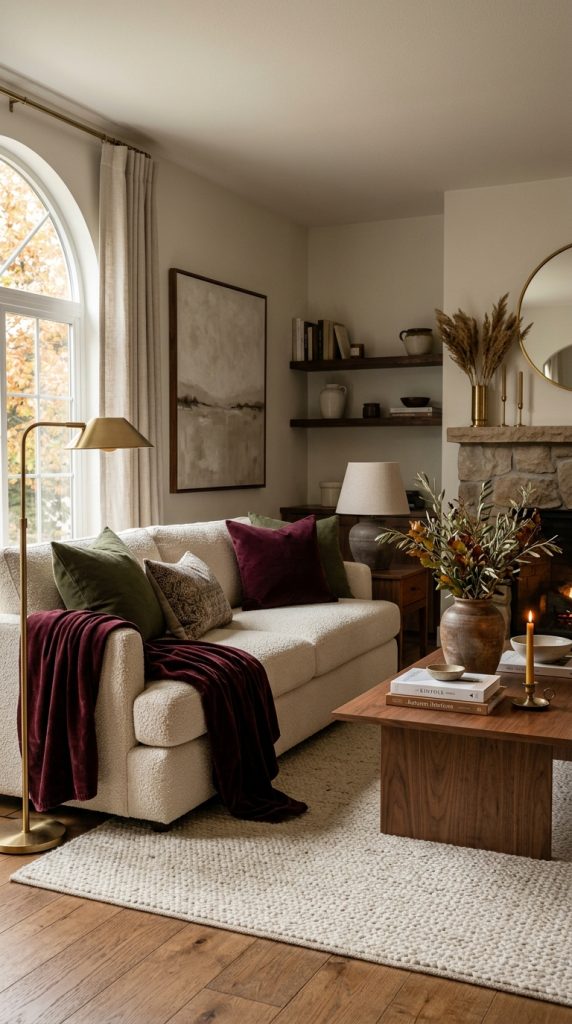
The living room is one of the easiest places to introduce a burgundy and olive green fall color palette because textiles can completely change the appearance of an existing space without requiring major renovations.
Begin with a warm neutral foundation. A cream, ivory, oatmeal, beige, or light taupe sofa provides the perfect background for deeper autumn colors. Instead of replacing the main furniture, introduce the seasonal palette through cushions, throws, artwork, ceramics, and small decorative pieces.
Use olive green as the grounding color.
Try two or three olive cushions in different textures rather than selecting several identical pillows. A soft linen pillow beside a slightly heavier woven or velvet pillow creates more depth. Then introduce burgundy through one statement throw or a pair of smaller cushions.
The contrast between the two colors becomes much more attractive when they are surrounded by neutral upholstery.
A walnut or medium-brown coffee table can connect the palette to the earthy feeling of fall. On top, use a simple ceramic bowl, a low olive-toned vase, and perhaps a small stack of neutral coffee-table books. Avoid filling every inch of the table.
For the rug, choose a neutral design with subtle variation rather than a strongly patterned seasonal rug. Cream, beige, taupe, muted brown, or ivory with a soft geometric texture will allow the burgundy and olive accents to remain visually important.
Lighting should be warm and layered. A floor lamp beside the sofa can create a soft evening glow, while a table lamp on a nearby console can illuminate decorative objects and artwork.
If you have a fireplace, use the mantel as a controlled focal point rather than covering it with seasonal decorations. A large ceramic vase filled with olive branches, a burgundy-toned floral arrangement, or a framed botanical print can provide enough autumn character.
The result should feel like a naturally warmer version of your everyday living room rather than a completely different seasonal installation.
2. Style a Burgundy Velvet Accent Chair Beside an Olive Green Reading Corner
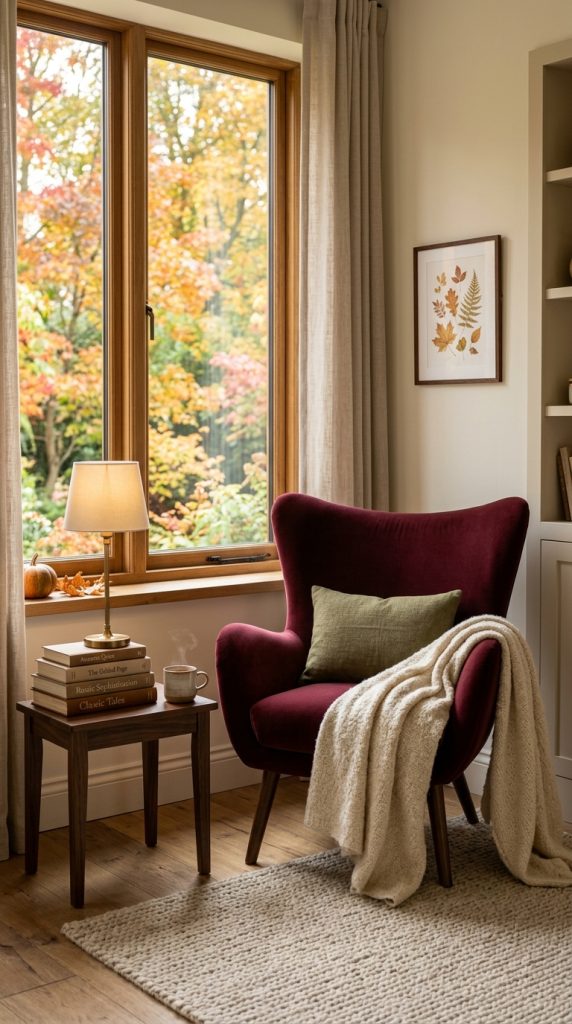
A single burgundy velvet chair can become a powerful focal point in an otherwise neutral room.
Choose a chair with a classic or sculptural silhouette rather than an overtly seasonal design. Velvet naturally reflects light and gives burgundy a particularly rich appearance, making the color feel luxurious.
Position the chair beside a window, bookcase, fireplace, or floor lamp to create a dedicated reading corner.
Add a small olive green lumbar pillow or textured cushion. The olive does not need to dominate the chair. A small amount is enough to connect the chair to the rest of the room.
Next to the chair, use a dark wood or antique-style side table. A ceramic olive-toned lamp base or aged-brass lamp can introduce another layer without making the corner feel busy.
A folded cream or oatmeal throw placed over one arm of the chair softens the strong burgundy color. The neutral textile also prevents the arrangement from becoming too dark.
For the floor, a small woven rug can visually define the reading zone. Natural jute, wool, or a muted vintage-style rug works especially well.
This idea is particularly effective in homes where you want to experiment with burgundy without committing to a burgundy sofa or accent wall.
The chair becomes a seasonal statement piece, but because the silhouette and materials are timeless, it can remain useful throughout the year.
3. Decorate the Fireplace With Olive Branches and Burgundy Accents
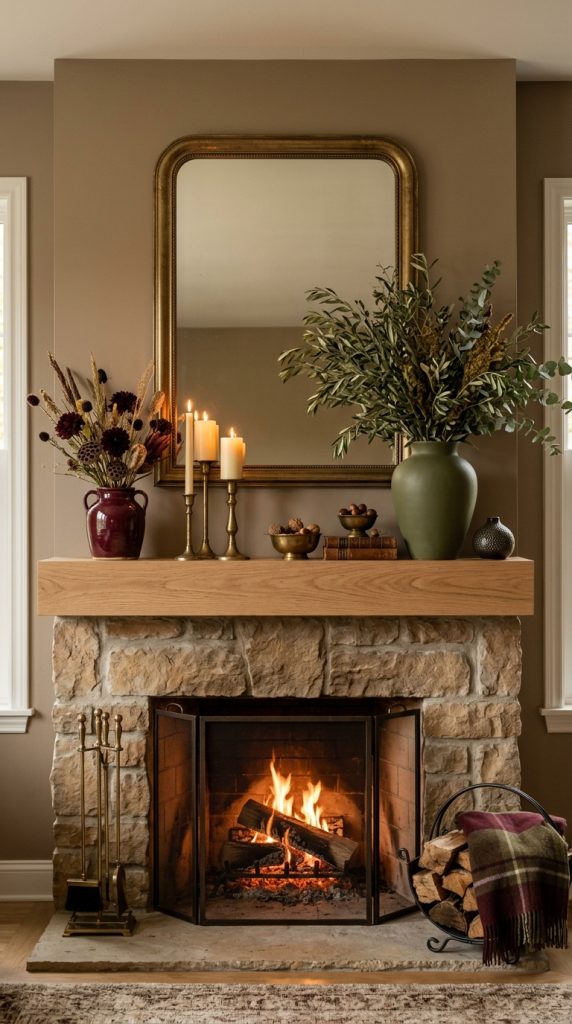
A fireplace naturally attracts attention, making it an ideal location for creating an elegant fall focal point.
Instead of placing multiple pumpkins, signs, garlands, and seasonal ornaments across the mantel, create a more restrained composition.
Start with a large olive green ceramic vase or a neutral stone vessel. Fill it with olive branches, eucalyptus, preserved greenery, or realistic seasonal stems.
Place the arrangement slightly off-center rather than directly in the middle.
On the opposite side, introduce a smaller burgundy element. This could be a ceramic vase, candleholder, floral arrangement, or decorative object.
The difference in scale creates visual balance.
If your fireplace has a neutral stone or white mantel, burgundy immediately provides contrast. If the fireplace is made from dark brick or walnut-toned material, olive green can help soften the heavier background.
Add one or two aged-brass candleholders for a warm metallic detail. Avoid creating a row of identical objects.
Above the mantel, a large mirror or neutral artwork can complete the arrangement. Botanical artwork with muted olive and burgundy tones can connect the seasonal palette without appearing overly literal.
For evening styling, use warm candlelight or low-level accent lighting around the fireplace. The deeper colors will become especially atmospheric under warm illumination.
This approach works beautifully for both modern and traditional fireplaces because the design relies on composition rather than a specific decorating style.
4. Use Burgundy and Olive Green on a Fall Coffee Table
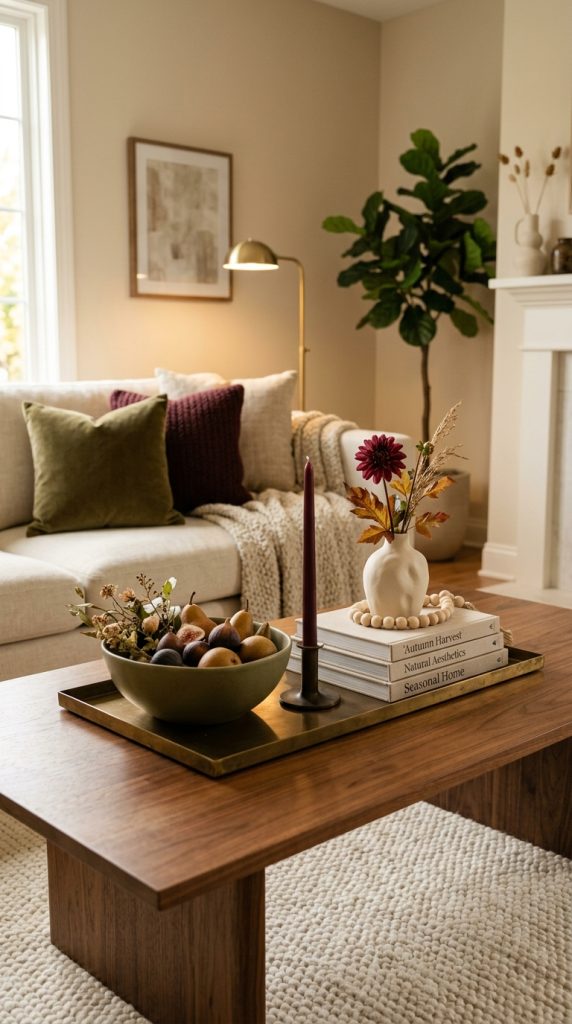
A coffee table can become an elegant seasonal display with only a few carefully chosen objects.
The key is to create height variation without overcrowding the surface.
Begin with a rectangular or round decorative tray in walnut, dark wood, aged brass, or natural stone. The tray visually organizes the objects and makes the arrangement feel intentional.
Place a low olive green ceramic bowl inside the tray. Fill it with natural seasonal elements such as pears, figs, walnuts, or a small number of dried botanicals.
Introduce burgundy through a candle, small vase, floral stem, or decorative book cover.
The combination of burgundy, olive, and natural brown creates an autumn palette without requiring traditional fall decorations.
Texture is equally important. A matte ceramic vase beside a glossy glass candleholder creates subtle contrast. A linen-bound book can add softness to harder surfaces.
Keep some of the coffee table visible.
Negative space is important because it allows each piece to be noticed individually. A luxurious arrangement often looks expensive because it is edited rather than because it contains many expensive objects.
If your coffee table is already visually busy, remove several existing accessories before adding seasonal pieces.
This simple adjustment can make the burgundy and olive palette feel much more intentional.
5. Create an Elegant Fall Bedroom With Burgundy Bedding Accents
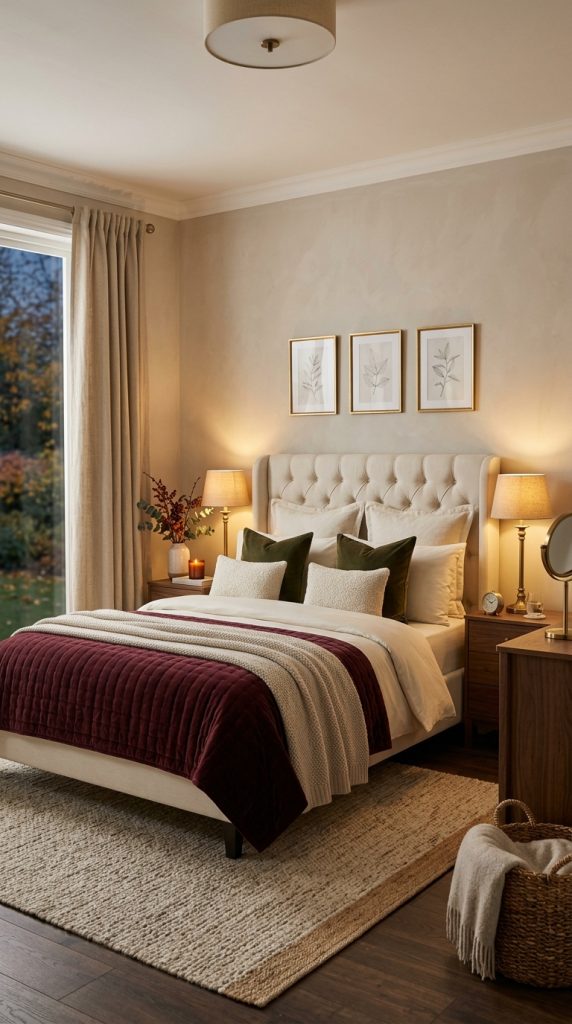
The bedroom can take on a dramatically warmer feeling through textiles alone.
Rather than using burgundy bedding from top to bottom, begin with cream, ivory, or oatmeal sheets and a neutral duvet.
Layer a burgundy quilt or folded coverlet near the foot of the bed.
Then add olive green cushions against the neutral pillows.
This creates a clear color hierarchy.
For an especially sophisticated result, use different textures within the same palette. Burgundy velvet can be paired with olive linen, cream boucle, and a soft wool throw.
Avoid choosing every item in exactly the same shade. Slight variations make the composition feel more collected.
Wooden nightstands work beautifully with this palette. If your bedroom has walnut furniture, the warm brown tones naturally connect with both burgundy and olive.
Use aged-brass or bronze bedside lamps to introduce a subtle metallic element.
Curtains should remain relatively neutral if the bedding is already colorful. Warm ivory, beige, taupe, or natural linen curtains will soften the overall composition.
You can also bring the palette into the artwork. Choose abstract or botanical artwork with small touches of wine, olive, brown, and cream.
The goal is to create a bedroom that feels cozy enough for fall but remains elegant throughout the season.
6. Design a Burgundy and Olive Green Dining Room for Fall Entertaining
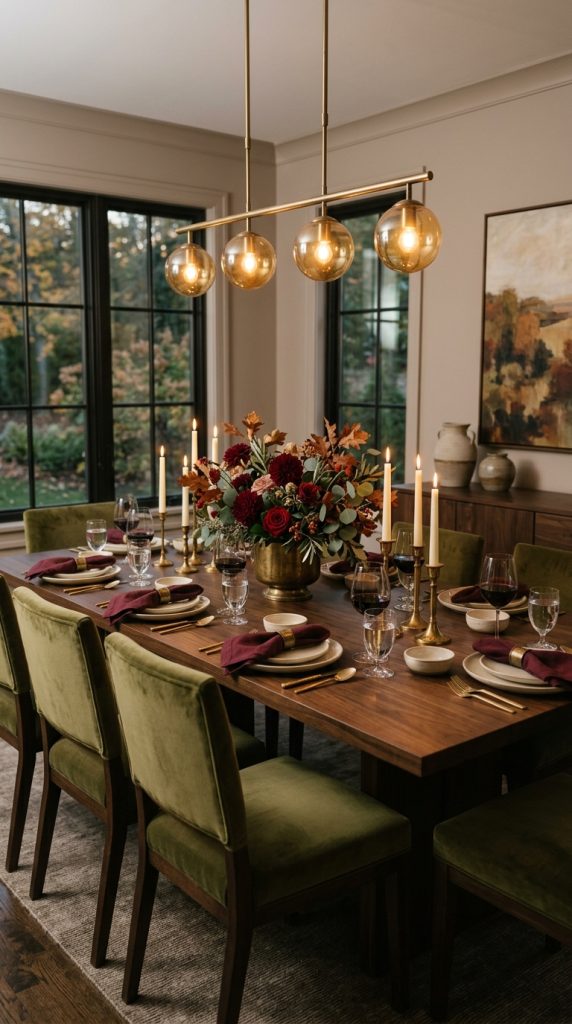
A dining room offers an opportunity to use the palette in a more dramatic way.
Start with the dining furniture.
A walnut or dark oak table provides a rich foundation for burgundy and olive accessories. If the table is lighter, use darker textiles to create contrast.
Olive green dining chairs can establish the primary color, especially when paired with a natural wood table.
If replacing chairs is not practical, introduce olive through seat cushions or a narrow runner.
Burgundy can appear through napkins, floral arrangements, candles, or glassware.
For the centerpiece, create a low arrangement that does not block conversation. Use burgundy flowers mixed with muted greenery and a few olive branches.
A long wooden bowl filled with pears, figs, or seasonal produce can provide a more natural alternative to a traditional floral arrangement.
Use warm pendant lighting above the table and supplement it with candlelight during dinner.
The combination of wood, linen, greenery, burgundy accents, and warm illumination creates a sophisticated autumn atmosphere without relying on obvious seasonal symbols.
For everyday use, reduce the arrangement to a single olive vase and burgundy candle. For entertaining, build the table out with coordinated linens and ceramics.
7. Build a Burgundy and Olive Green Fall Tablescape
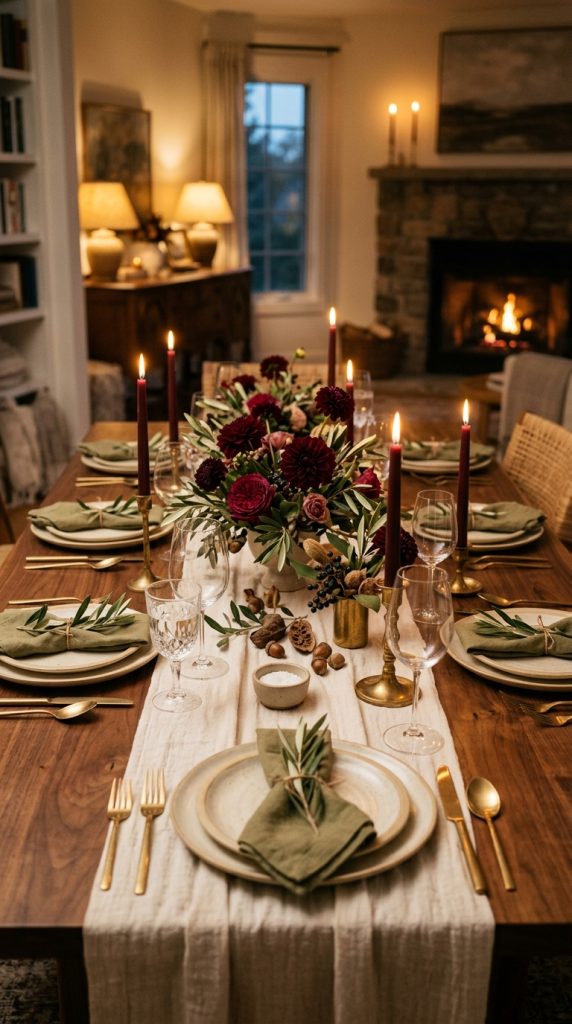
For an elegant fall tablescape, let the table itself remain relatively calm.
Use a cream or oatmeal tablecloth, natural linen runner, or bare wood surface depending on your dining style.
Then introduce olive green through plates, napkins, foliage, or ceramic vessels.
Burgundy can become the accent color through linen napkins, flowers, taper candles, or small glass details.
One effective arrangement is an ivory plate layered over a slightly darker neutral charger, finished with an olive napkin and a burgundy floral stem.
Aged brass flatware can add warmth without becoming overly formal.
For the centerpiece, use several low vessels rather than one extremely large arrangement. This allows guests to see across the table.
Mix natural textures such as linen, ceramic, wood, and glass.
The contrast between matte and reflective surfaces makes the tablescape more interesting.
You can also add seasonal fruit such as pears, figs, or grapes. These natural elements reinforce the fall feeling while remaining elegant.
The finished table should look inviting enough for a formal dinner but relaxed enough for a casual family meal.
8. Refresh the Entryway With Burgundy, Olive, and Natural Wood
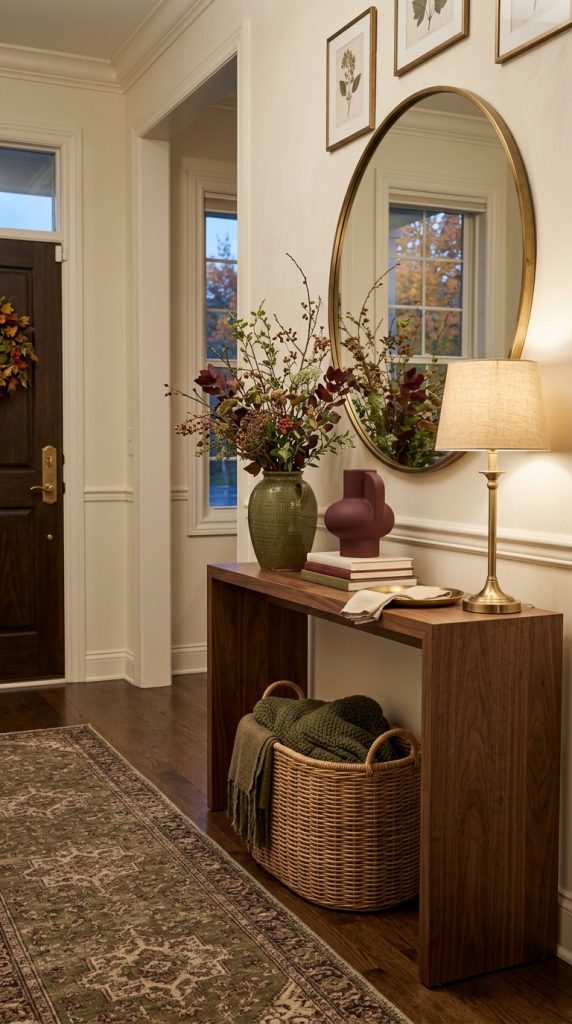
The entryway is a small space, but it can establish the color story for the entire home.
If you have a console table, begin with a large mirror or artwork above it.
Place an olive green ceramic vase on one side of the console and a burgundy decorative object on the other.
Use a wooden tray to collect small everyday items so the surface remains functional.
A woven basket beneath the console can introduce natural texture and provide practical storage.
For a seasonal floral moment, choose dried branches or preserved foliage in muted earthy colors.
If you have a bench, place an olive green cushion on it with a small burgundy lumbar pillow.
Keep the floor relatively open.
Entryways benefit from visual simplicity because they are transitional spaces. Too many accessories can make them feel cramped.
Warm lighting is especially important here. A table lamp on the console can create an inviting glow in the evening and highlight the deeper colors.
A burgundy runner or muted olive rug can also establish the palette underfoot without requiring major changes.
9. Add Burgundy and Olive Green to a Cozy Fall Kitchen
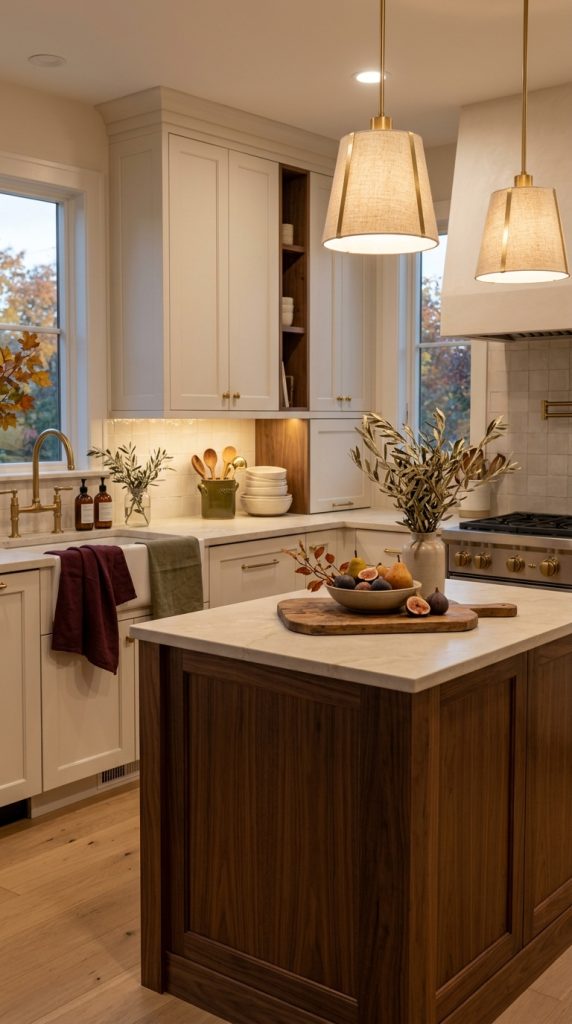
The kitchen does not need traditional fall decorations to feel seasonal.
Instead, focus on functional objects that happen to reinforce your color palette.
An olive green ceramic utensil holder can sit beside the stove. Burgundy dish towels can be folded over the oven handle or placed near the sink.
A wooden cutting board leaning against the backsplash introduces warmth.
On open shelving, combine cream ceramics with olive pottery and one or two burgundy-toned pieces.
A bowl of pears or apples can act as a natural centerpiece on the kitchen island.
If your kitchen is primarily white, these darker colors will create beautiful contrast.
If your kitchen has dark cabinets, keep the burgundy accents limited and use more cream or warm wood to maintain brightness.
Lighting beneath cabinets and above the island should provide enough illumination for practical use while warmer decorative lighting can create atmosphere in the evening.
Avoid covering countertops with seasonal objects.
The most successful kitchen decor keeps working areas functional while allowing the color palette to appear through everyday accessories.
10. Create an Olive Green Home Office With Burgundy Details
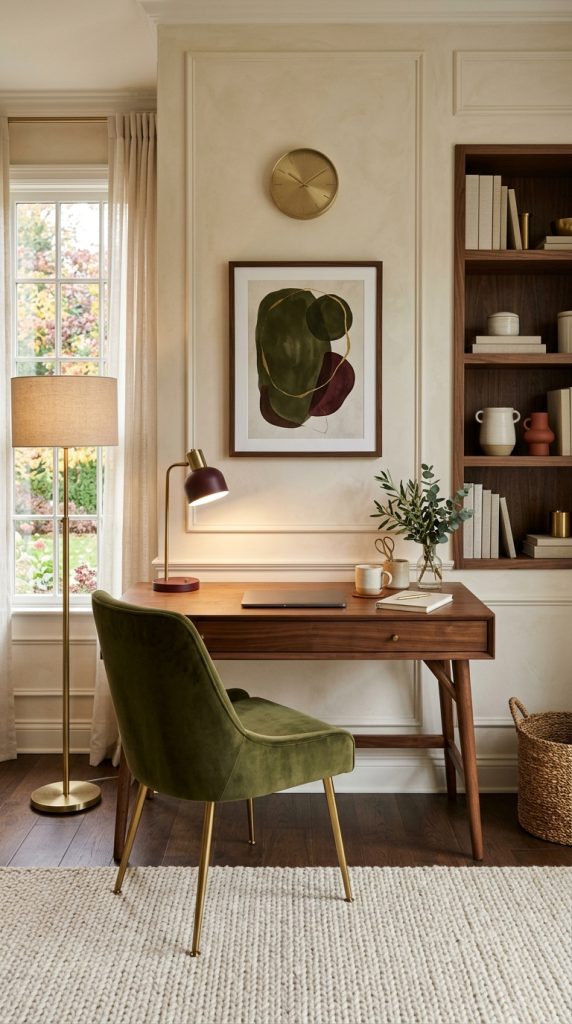
An olive green home office can feel grounded and sophisticated without becoming visually heavy.
If painting the walls is not an option, introduce olive through the desk chair, curtains, artwork, rug, or storage accessories.
A burgundy desk lamp or small upholstered chair cushion can become the accent point.
Use warm wood furniture to bridge the colors.
A walnut desk with an olive chair and burgundy notebook, vase, or artwork detail creates a sophisticated autumn composition.
Keep the desktop relatively clear.
Instead of displaying many small decorations, select one sculptural object, one ceramic container, and perhaps a small botanical arrangement.
Wall artwork can incorporate burgundy, olive, cream, and brown in a subtle abstract or botanical composition.
For lighting, combine a functional desk lamp with a secondary floor or table lamp. This prevents the room from relying entirely on harsh overhead lighting.
The result is an office that feels seasonally appropriate but professional enough for everyday work.
11. Style a Burgundy and Olive Green Fall Mantel With Vintage Character
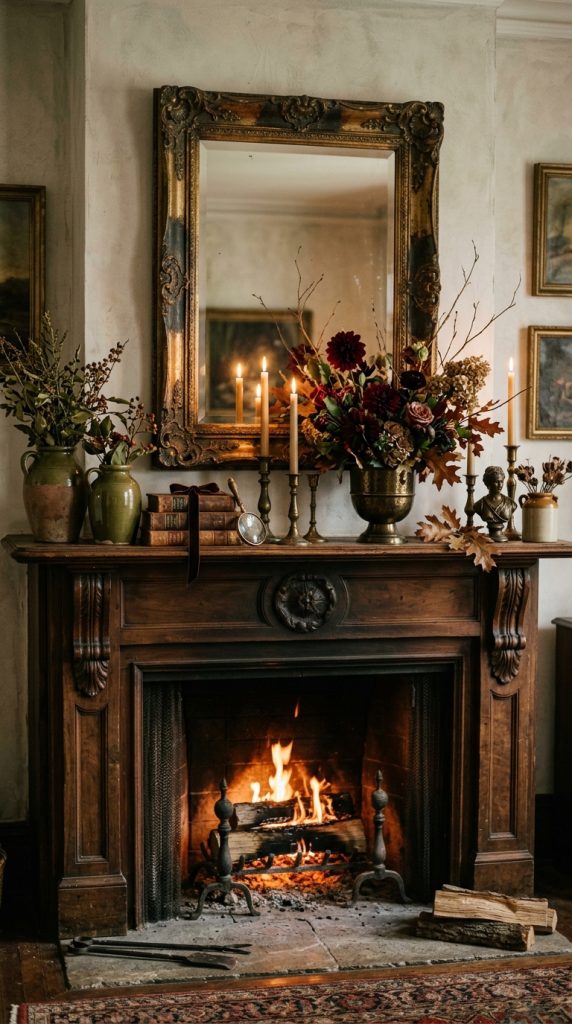
For homes with a traditional or vintage aesthetic, burgundy and olive can create a particularly beautiful mantel arrangement.
Start with an antique-style mirror, vintage artwork, or aged frame.
Add olive ceramic vessels with irregular handmade shapes.
Then introduce burgundy through a small floral arrangement or deep-colored candleholders.
Vintage brass is an excellent supporting material because it adds warmth without creating excessive shine.
You can also incorporate old books, a small wooden box, or a decorative object with visible patina.
The arrangement should not look perfectly symmetrical.
A slightly collected appearance gives the mantel more character.
If you use dried branches, allow their natural shape to remain visible rather than trimming everything into a perfect arrangement.
The combination of aged materials, olive green, burgundy, and natural wood creates an autumn atmosphere that feels established rather than newly purchased.
This is especially effective in dining rooms, libraries, living rooms, and homes with traditional architectural details.
12. Introduce Burgundy and Olive Through Artwork Instead of Accessories
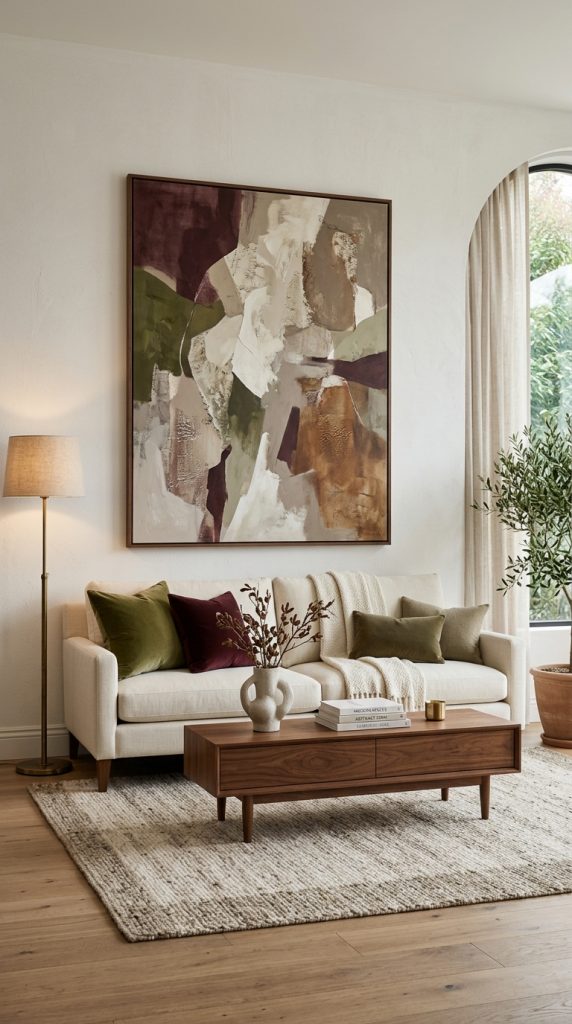
If you prefer minimal decorating, artwork may be the best way to introduce the palette.
Choose a large piece containing subtle burgundy, olive, cream, taupe, and brown.
Abstract landscapes, botanical artwork, still-life paintings, and vintage-inspired prints all work well.
Hang the artwork above a neutral sofa, console, dining table, or bed.
Then repeat only one or two colors from the artwork elsewhere in the room.
For example, if the painting contains a small burgundy shape, repeat burgundy in a single cushion.
If olive appears in the background, echo it with a ceramic vase.
This creates a coordinated room without matching everything.
The artwork becomes the source of the palette rather than the accessories being selected first.
For a more luxurious effect, choose a substantial frame in walnut, dark wood, antique brass, or matte black.
Large-scale artwork can also make a room feel more finished without requiring many decorative objects.
This is an excellent option for people who prefer a clean, sophisticated interior.
13. Layer Burgundy and Olive Green Textiles for a Cozy Fall Sofa
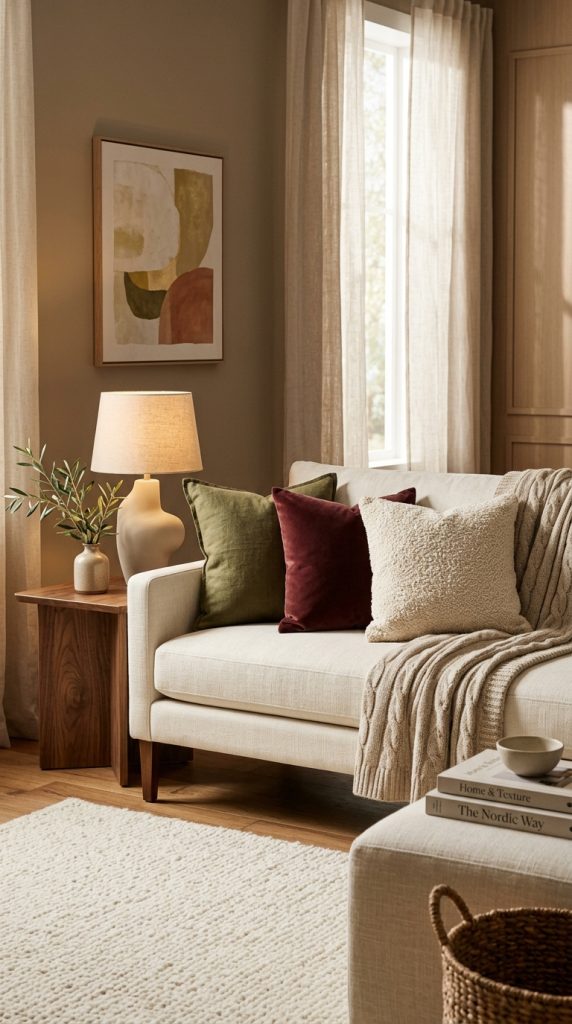
Textiles are among the easiest ways to transition a home into fall.
Start with your existing neutral sofa.
Instead of adding a large number of seasonal cushions, choose a small collection with clearly different textures.
An olive linen cushion can establish the earthy foundation.
A burgundy velvet cushion introduces depth.
A cream boucle or woven cushion provides softness and prevents the palette from becoming too dark.
Then add one warm neutral throw, such as oatmeal, camel, beige, or soft brown.
The important detail is variation.
Avoid using five pillows with the same material and identical color.
Texture allows a limited color palette to feel much richer.
You can also change the arrangement depending on the season. During early fall, use more cream and olive. As temperatures become cooler, increase burgundy and heavier fabrics.
This approach gives you a seasonal refresh without purchasing an entirely new collection of decor.
For a final touch, place a natural wood or stone side table beside the sofa and add a warm table lamp.
The result is comfortable, layered, and sophisticated.
14. Create a Luxury Fall Bathroom With Olive and Burgundy Accents
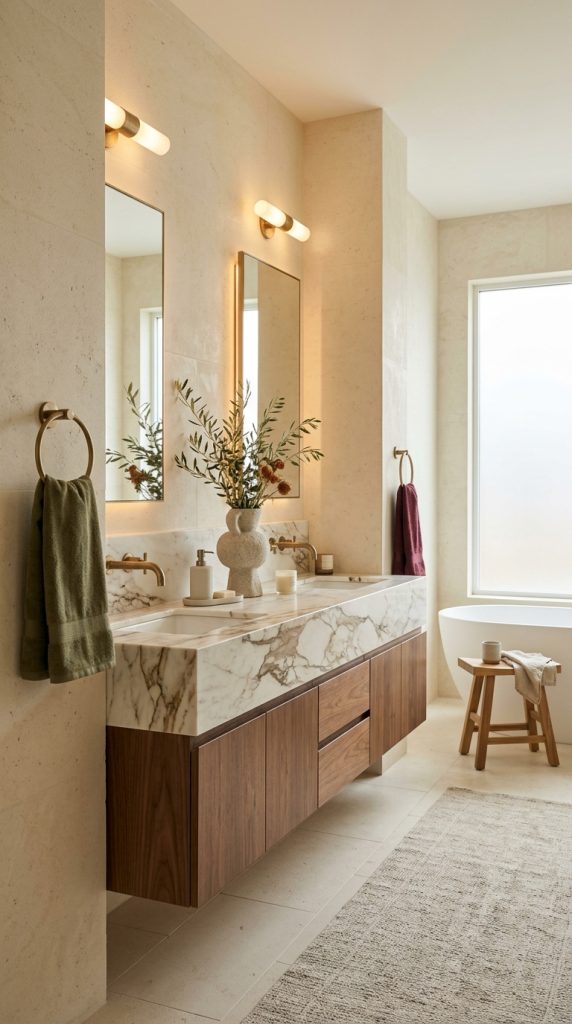
The bathroom is often overlooked when decorating for fall, but a few subtle changes can create a surprisingly elegant seasonal atmosphere.
Keep the permanent finishes neutral.
Cream stone, white tile, warm beige, natural wood, or soft gray can all provide an excellent foundation.
Introduce olive through hand towels, a small ceramic container, a soap dispenser, or botanical artwork.
Use burgundy sparingly.
A burgundy hand towel, small candle, or floral arrangement can provide the richer autumn accent.
Wooden accessories can make the space feel warmer. A teak bath tray, wood stool, or natural basket introduces organic texture.
For a spa-like appearance, keep the countertop mostly clear.
Place only a few intentional objects around the sink.
A small olive branch in a stone vase can provide seasonal character without making the bathroom feel decorated for a specific holiday.
Warm lighting is essential.
Use layered illumination around the vanity and, when possible, a secondary low-level light source for evening relaxation.
The deeper palette should remain an accent rather than overwhelming the room.
This creates a bathroom that feels warm and luxurious while remaining clean and functional.
15. Create a Whole-Home Burgundy and Olive Green Fall Color Story
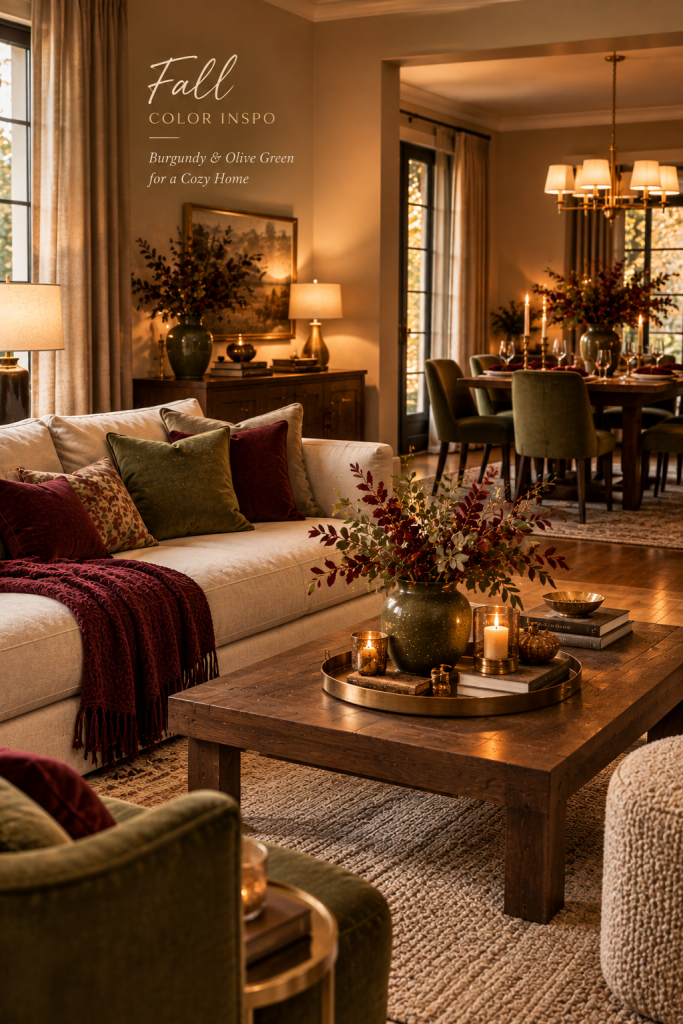
The most sophisticated way to use burgundy and olive green is not necessarily to decorate one room dramatically.
Instead, allow the colors to appear subtly throughout the home.
This creates continuity.
For example, the living room might feature an olive cushion and burgundy throw.
The dining room could use burgundy napkins and olive foliage.
The entryway might contain an olive vase.
The bedroom could introduce burgundy through a quilt.
The kitchen could feature olive ceramics.
The bathroom might have one burgundy towel.
None of these spaces needs to contain both colors in equal quantities.
The repeated color relationship is enough to make the home feel cohesive.
Use warm neutrals as the connecting foundation.
Cream, ivory, beige, oatmeal, walnut, natural wood, taupe, and warm white can appear throughout multiple rooms.
This approach is particularly useful in open-plan homes because the eye can move naturally from one area to another.
You can also vary the intensity.
Use lighter olive in one room and deeper olive in another.
Similarly, burgundy can range from muted wine to deeper oxblood depending on the surrounding colors.
The result should feel collected rather than color-matched.
The purpose of a whole-home palette is not to make every room identical. It is to create visual relationships between different spaces.
How to Choose the Right Burgundy for Fall Home Decor
Not every burgundy shade produces the same atmosphere.
A wine-inspired burgundy creates a romantic and elegant feeling.
A deeper oxblood shade feels more dramatic.
A muted berry-burgundy can feel softer and more relaxed.
For bright rooms with lots of natural light, deeper burgundy can create beautiful contrast.
For darker rooms, choose a slightly warmer or softer burgundy and balance it with cream, warm white, or light wood.
If your home already contains warm brown furniture, burgundy will usually integrate naturally.
If your home is very cool-toned, introduce warm neutrals before adding significant amounts of burgundy.
This prevents the colors from appearing disconnected.
How to Choose the Right Olive Green
Olive green can range from grayish and muted to warm and yellow-leaning.
For an elegant fall interior, muted olive usually works particularly well because it has enough color to create interest without becoming overpowering.
If your room has warm wood, choose an olive with earthy undertones.
If the room has lots of cream and ivory, a slightly deeper olive can create attractive contrast.
For small rooms, consider using olive in accessories, textiles, or artwork rather than covering large surfaces.
For larger rooms, olive upholstery or cabinetry can create a stronger statement.
Always examine the color under both daytime and evening lighting because green can change dramatically depending on the surrounding light.
How to Make Burgundy and Olive Green Look Expensive
Luxury is not created simply by using dark colors.
It comes from the relationship between color, texture, proportion, material, and lighting.
Choose fewer pieces but make them visually intentional.
Velvet can make burgundy feel richer.
Linen can soften olive.
Walnut can ground the palette.
Aged brass can add warmth.
Natural stone can create visual sophistication.
Ceramic surfaces can introduce handmade character.
Glass can add lightness.
The most expensive-looking spaces also tend to have negative space.
Do not fill every shelf, tabletop, or mantel.
Allow some surfaces to remain quiet.
This gives the eye somewhere to rest and makes the selected pieces feel more important.
How to Decorate for Fall Without Making the Home Look Too Themed
One of the biggest advantages of burgundy and olive green is that they can create an autumn atmosphere without obvious seasonal decorations.
You do not need pumpkins everywhere.
You do not need large seasonal signs.
You do not need orange accessories in every room.
Instead, allow the season to appear through deeper colors, warmer lighting, richer fabrics, natural branches, wood, ceramics, and subtle botanical elements.
A burgundy velvet cushion can feel like fall without showing any seasonal symbol.
An olive linen runner can create the same effect.
A bowl of figs or pears can become a natural seasonal centerpiece.
This restrained approach is particularly suitable for elegant, modern, organic, transitional, and luxury interiors.
Budget-Friendly Burgundy and Olive Green Fall Decorating Ideas
You do not need to buy new furniture to create this look.
Start with textiles.
A few cushions or one throw can change the color balance of a living room.
Second, shop your existing home.
Move an olive vase from one room to another.
Rearrange books and decorative objects.
Bring a wooden tray into the living room.
Repurpose a neutral vase with dried branches.
Use seasonal produce as decoration.
Pears, figs, grapes, and apples can provide beautiful natural color.
You can also create inexpensive arrangements using branches from your garden or preserved foliage.
If purchasing new items, prioritize pieces that can remain useful beyond fall.
A burgundy velvet cushion, olive ceramic vase, walnut tray, or neutral linen throw can work throughout multiple seasons.
This is more practical than buying highly specific seasonal decorations that will only be used for a few weeks.
Burgundy and Olive Green Fall Decor for a Cozy Traditional Home
Traditional interiors can support a richer interpretation of this palette.
Use burgundy velvet, patterned textiles, dark wood, brass, vintage artwork, and olive upholstery.
A patterned rug containing muted burgundy and olive can connect multiple furniture pieces.
Layer curtains, cushions, throws, and traditional accessories to create depth.
Vintage-inspired lighting can make the room particularly atmospheric in the evening.
The key is to keep the colors slightly muted so the room feels collected rather than overly saturated.
Common Mistakes to Avoid With Burgundy and Olive Green Decor
Using equal amounts of burgundy and olive everywhere can make the room feel overly coordinated.
Instead, establish one as the dominant accent and allow the other to appear in smaller doses.
Another common mistake is combining too many additional colors.
If burgundy and olive are already strong accents, you usually do not need bright orange, yellow, red, purple, and multiple greens.
Let the primary palette breathe.
Another mistake is ignoring lighting.
Deep colors can appear dramatically different under cool white bulbs compared with warm lighting.
Use warm illumination where appropriate to bring out the richness of the palette.
Finally, avoid turning every surface into a seasonal display.
The most elegant fall interiors usually feel seasonal because of atmosphere, texture, and color rather than because every object announces the season.
How to Make Burgundy and Olive Green Fall Decor Pinterest-Worthy
Pinterest-friendly interiors benefit from a strong visual focal point.
Choose one element that immediately catches the eye.
This could be a burgundy velvet chair, an olive green sofa, a beautifully styled fireplace, a dramatic dining table, or a layered fall bedroom.
Keep the surrounding area relatively clean so the focal point remains clear.
Natural light is excellent for daytime images, while warm lamps and candles can create beautiful evening scenes.
Use vertical compositions when photographing rooms for Pinterest.
Show enough of the room to communicate the overall design while keeping the main decorating detail visually prominent.
Avoid excessive text over the image.
A strong photograph with a simple title is generally more visually appealing than an image covered with multiple lines of information.
For this topic, visual details such as velvet, linen, walnut, olive foliage, burgundy florals, brass, ceramic, and warm lighting can communicate the entire decorating concept without requiring heavy graphic elements.
Final Thoughts
Elegant fall decorating does not require a complete home makeover.
The combination of burgundy and olive green offers a sophisticated way to bring autumn warmth into your home while maintaining a timeless interior style. Burgundy adds depth and richness, while olive green provides an earthy foundation that connects beautifully with natural materials.
The most successful approach is to balance these colors with warm neutrals, natural wood, soft textiles, aged metals, ceramics, and carefully layered lighting.
You can begin with something as simple as a burgundy throw and olive cushions in the living room. From there, repeat the palette through a dining centerpiece, bedroom textiles, entryway accessories, kitchen ceramics, or artwork.
The goal is not to make every room look identical.
Instead, create a subtle visual relationship throughout the home.
Let cream and warm neutrals provide the background. Let olive green bring nature and depth. Let burgundy appear as the richer autumn accent. Then use texture and lighting to make the entire palette feel warm and dimensional.
Most importantly, decorate with restraint.
A beautifully styled olive vase, a single burgundy velvet pillow, a walnut tray, warm candlelight, and natural foliage can often create more impact than an entire room filled with seasonal decorations.