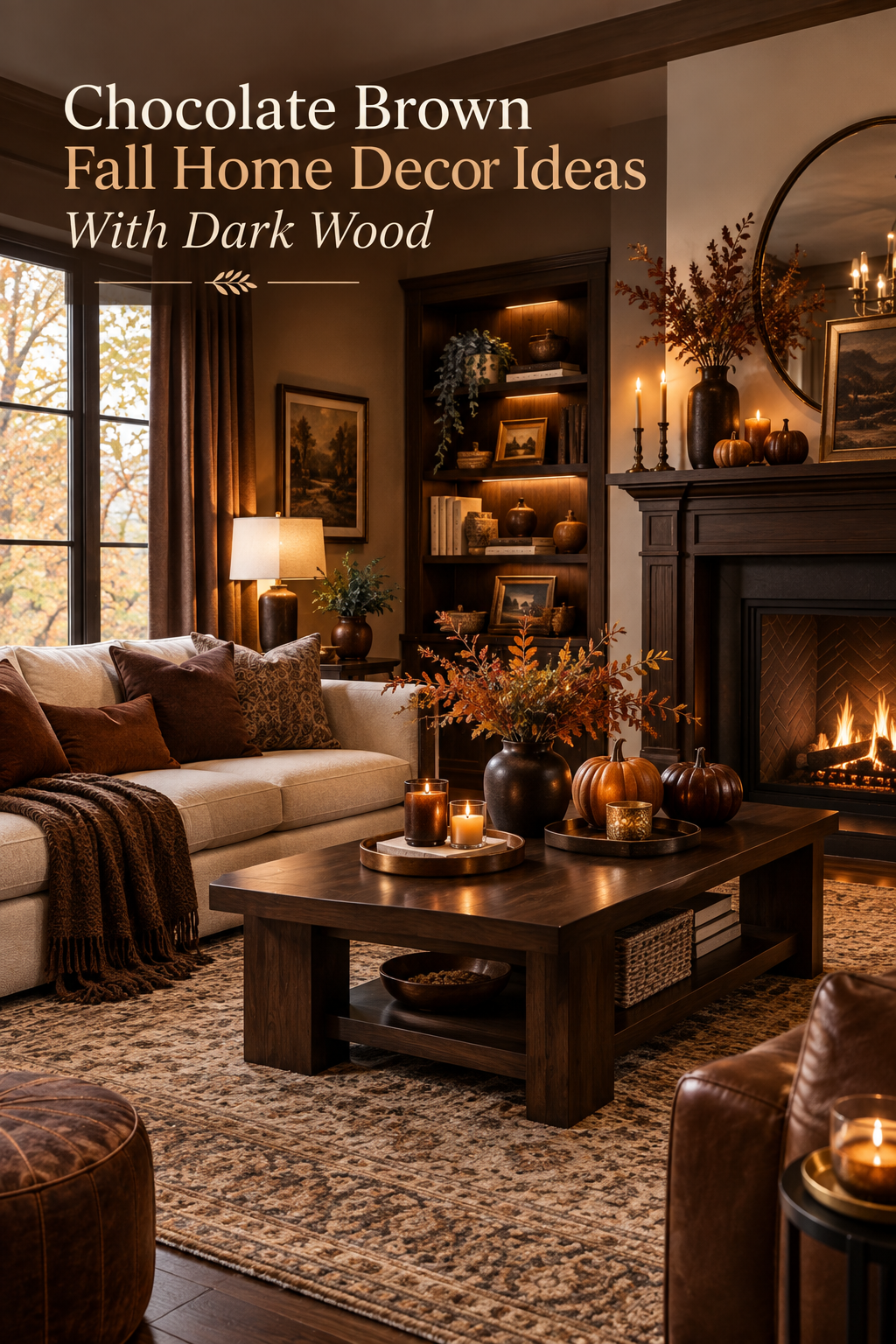
Chocolate brown fall home decor ideas with dark wood are creating some of the warmest, richest, and most sophisticated interiors for the 2026 autumn season. Instead of relying on bright orange pumpkins, artificial leaves, and heavily themed seasonal accessories, this approach uses deep brown tones, walnut furniture, espresso finishes, warm textiles, natural materials, and soft lighting to create a home that feels beautifully connected to fall while remaining elegant enough for everyday living.
Fall decorating has traditionally focused on obvious seasonal colors such as orange, rust, red, and yellow. Those colors can certainly create a festive atmosphere, but current interior design is moving toward a more sophisticated interpretation of autumn. Chocolate brown has emerged as one of the strongest fall colors because it provides the warmth of traditional autumn palettes without making a room feel overly seasonal. Homes & Gardens identifies chocolate brown as a key fall 2026 color and notes that designers are using it as a grounding neutral alongside cream, green, natural timber, aged brass, and other warm materials. (Homes and Gardens)
Dark wood complements this direction particularly well. Walnut, espresso oak, smoked oak, mahogany-inspired finishes, and other deep wood tones bring natural depth to a room without requiring a large amount of seasonal decoration. Current fall design coverage also highlights the return of darker woods after years of pale oak and lighter finishes dominating contemporary interiors. (ELLE Decor)
The beauty of a chocolate brown and dark wood color palette is that it can work across almost every room in the home. You can use it to create a cozy living room, a sophisticated bedroom, a welcoming dining room, a dramatic reading nook, a warm kitchen, or even a refined home office. It can also be introduced gradually through smaller accessories if you do not want to repaint walls or replace furniture.
Another reason this palette works so well is its connection to natural materials. Brown naturally appears in wood, leather, woven fibers, stone, clay, dried botanicals, and aged metals. When those materials are layered together, the room develops visual depth without needing excessive decoration. This makes chocolate brown fall decor especially useful for homeowners who want an autumn atmosphere that feels timeless rather than temporary.
The 2026 design direction is also moving toward interiors that feel collected, personal, and tactile. Designers are increasingly highlighting material contrast, vintage pieces, natural textures, darker woods, and rooms that do not look as though every item was purchased from the same collection. (ELLE Decor)
That means your fall decorating does not need to look like a seasonal display. Instead, imagine a room with a walnut coffee table, a chocolate velvet pillow, a cream boucle chair, a warm ivory rug, an aged brass lamp, and a few dried branches in a handmade ceramic vase. The result immediately feels like autumn, but nothing has to literally say “fall.”
This is particularly valuable for Pinterest-inspired interiors because sophisticated, highly visual spaces tend to work better when the viewer can imagine living in them. A beautiful room with layered brown tones, dark wood, elegant lighting, and tactile materials can inspire a reader to save the image for an upcoming room makeover, seasonal refresh, or decorating project.
Whether you live in a small apartment, a traditional house, a modern home, or a rental, you can adapt these ideas according to your existing furniture and budget. You do not need to purchase an entirely new furniture collection. In many cases, one dark wood piece, a carefully selected textile, a warm lamp, or a sophisticated decorative object can completely change the atmosphere.
The key is balance. Chocolate brown is deep and visually strong, while dark wood also carries significant visual weight. If every surface becomes dark, the room can feel heavy. Pairing those tones with cream, warm white, oatmeal, beige, natural stone, muted olive, soft caramel, antique brass, or aged bronze creates breathing room and allows the darker elements to stand out.
Below are 10 carefully differentiated chocolate brown fall home decor ideas with dark wood that can help you create a warm, elegant, and Pinterest-worthy home for autumn.
1. Create a Chocolate Brown and Dark Wood Living Room
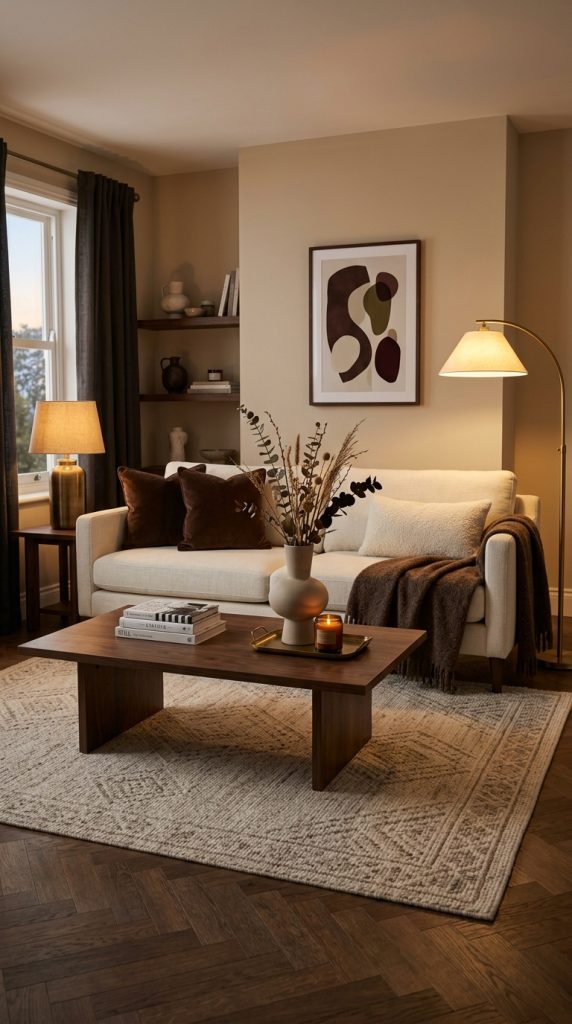
The living room is one of the easiest places to introduce a chocolate brown and dark wood fall color palette because textiles and furniture can dramatically change the mood without requiring permanent renovations.
Begin with a warm neutral foundation. A cream, ivory, oatmeal, or beige sofa provides an ideal background for deeper brown accents. Instead of covering the entire sofa with dark accessories, introduce chocolate brown selectively through two or three substantial elements.
A chocolate brown velvet pillow can create an immediate sense of richness. Add a second pillow in a woven caramel or warm taupe fabric to prevent the arrangement from looking too uniform. A folded chocolate, espresso, or cognac-colored throw can be placed over the arm of the sofa for additional depth.
The dark wood element should have enough visual presence to balance the darker textiles. A walnut coffee table is particularly effective because the rich wood grain adds natural variation to the room. Rather than selecting a perfectly matching set of dark wood furniture, allow different but related wood tones to coexist.
For example, you might combine a walnut coffee table with a slightly lighter dark oak side table. This creates a collected appearance instead of a showroom-like furniture arrangement.
Underneath the furniture, use an area rug that provides contrast. A warm ivory, beige, muted taupe, or subtle brown patterned rug can connect the sofa and coffee table while keeping the floor visually lighter.
Lighting becomes especially important when using chocolate brown and dark wood. Place a warm table lamp on a side table, add a floor lamp beside a reading chair, and use soft ambient lighting instead of relying entirely on one overhead fixture. Layered lighting is also a major part of current fall design direction. (Parade)
For decorative accessories, think in terms of shape and texture rather than quantity. A sculptural ceramic vase, a stone bowl, a small brass object, or a stack of neutral coffee-table books can provide enough detail without cluttering the room.
Natural materials work beautifully here. A woven basket beside the sofa can hold a blanket, while a large ceramic vase filled with a few dried branches creates height without introducing excessive seasonal decoration.
If you want a more dramatic result, paint one architectural feature in a deep warm brown. A fireplace wall, built-in shelving area, or small accent wall can carry chocolate brown beautifully when balanced with lighter upholstery and natural wood.
The most important principle is to let the room feel like a beautiful everyday living space first and a fall-inspired room second. That makes the design more timeless and gives the chocolate brown palette room to remain relevant beyond October and November.
2. Style a Walnut Coffee Table With Rich Fall Accessories
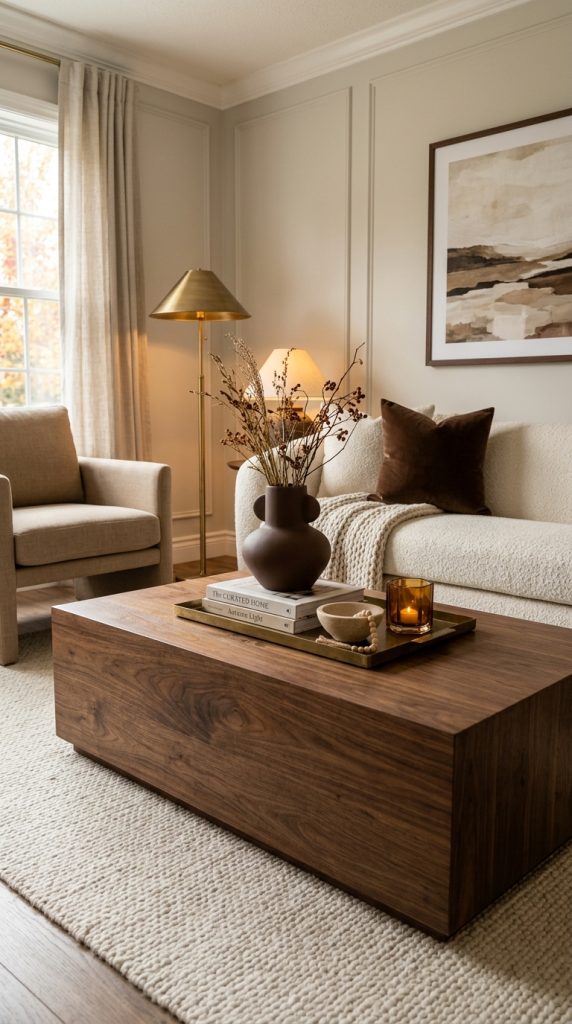
A dark wood coffee table can become the visual anchor of a fall living room, especially when its natural grain is allowed to remain visible.
Walnut is particularly effective because it has a deep brown character without appearing completely black. Its warmth works naturally with chocolate textiles, cream upholstery, brass, leather, stone, and muted autumn colors. Dark woods such as walnut and smoked oak are receiving renewed attention in 2026 interiors, especially when contrasted with lighter stone and soft furnishings. (Royal Design)
Rather than filling the coffee table with many small decorations, create one intentional composition.
Begin with a low-profile tray. A dark wood, aged brass, travertine, or stone tray can establish a visual boundary for your arrangement. Inside the tray, place a small ceramic bowl and one decorative object.
Next, introduce books with neutral or brown covers. Avoid selecting books simply because their covers match. Choose books that genuinely add character to the space through photography, design, architecture, travel, or art.
A chocolate brown ceramic vase can become the tallest element in the arrangement. Add a few dried stems rather than an enormous floral arrangement. The goal is to preserve the beauty of the walnut surface.
You can also introduce an amber glass object. Amber has a naturally warm appearance and becomes particularly attractive when light passes through it. Brown, amber, olive, and smoky glass can create an autumnal feeling without using obvious Halloween or pumpkin-themed decorations.
Another option is a hand-carved wooden bowl. Its organic shape provides contrast against the straight lines of books and the smooth surface of a tray.
For a more luxurious composition, combine three different material categories: wood, stone, and metal. For example, use a walnut tray, a cream travertine bowl, and a small aged-brass sculpture.
This material contrast gives the coffee table a sophisticated quality because each surface reacts differently to light.
Keep the center of the table visually breathable. A coffee table should still function for everyday living, so leave enough clear space for placing a drink, serving guests, or using the table comfortably.
The same approach can be adapted to smaller living rooms. Instead of using a large coffee table, choose a compact walnut table and style only one side with a low bowl and one sculptural accessory.
The finished result should feel collected rather than decorated. That distinction is important. A sophisticated fall coffee table does not need dozens of seasonal items. It needs a few pieces that work together through color, material, scale, and shape.
3. Use Chocolate Brown Textiles to Warm a Neutral Sofa
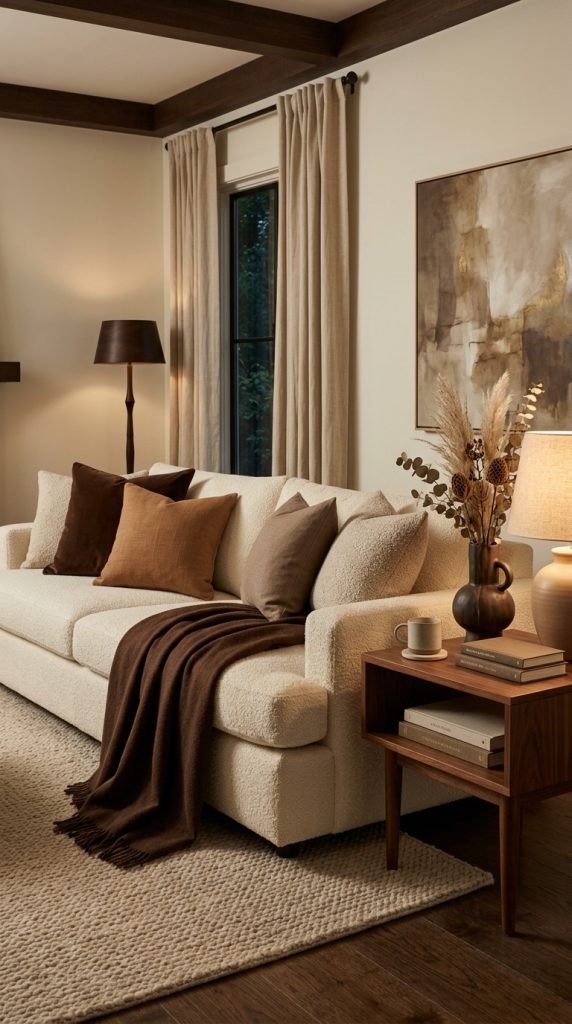
If your existing furniture is light or neutral, textiles offer one of the easiest ways to experiment with chocolate brown fall decor without making a major investment.
A cream sofa can look completely different when layered with rich brown fabrics.
Start with one substantial chocolate brown textile. This could be a velvet throw, chunky woven blanket, boucle pillow, linen cushion, or soft wool accent.
Then build around that color using related shades rather than exact matches. Caramel, tobacco, cognac, taupe, mushroom, warm beige, and espresso can create a sophisticated tonal range.
This technique prevents the sofa from looking flat.
For example, imagine an ivory sofa with one chocolate velvet pillow, one caramel woven pillow, one oatmeal boucle pillow, and a dark brown wool throw. Each piece belongs to the same warm family but has a different texture and depth.
Texture is particularly important during fall because the season naturally encourages tactile materials. Velvet, wool, boucle, brushed cotton, linen, and woven fabrics can make a room visually warmer even when the architecture remains unchanged.
Chocolate brown also works exceptionally well with leather. A cognac leather accent chair or leather ottoman can introduce another warm brown without making the room feel monochromatic.
If your room already contains a lot of dark wood, avoid adding chocolate brown to every textile. Instead, allow the upholstery to remain mostly light and use brown as an accent color.
On the other hand, if your furniture is predominantly white or pale beige, you can use more chocolate brown textiles to create a stronger seasonal transformation.
One useful approach is to repeat the color in different locations. For example, use chocolate brown on the sofa, then echo it in a small cushion on a nearby chair and a ceramic object on the coffee table.
The repetition connects the room visually without making everything identical.
You can also use chocolate brown curtains if the room needs greater visual drama. Floor-length curtains in a warm brown linen or textured fabric can make a living room feel more intimate, especially when paired with walnut furniture.
However, dark curtains should be balanced carefully. If the room has limited natural light, choose a lighter chocolate or warm taupe rather than an extremely dark espresso fabric.
Another simple option is a chocolate brown area rug. A large rug can unify the room and provide a stronger foundation beneath lighter furniture. Current fall color coverage specifically highlights chocolate wool rugs as one way to bring this rich shade into interiors. (Homes and Gardens)
The goal is not to make the room brown from top to bottom. Instead, use textiles to create layers that make your existing neutral furniture feel warmer, richer, and more appropriate for autumn.
4. Create a Dark Wood Fall Dining Room
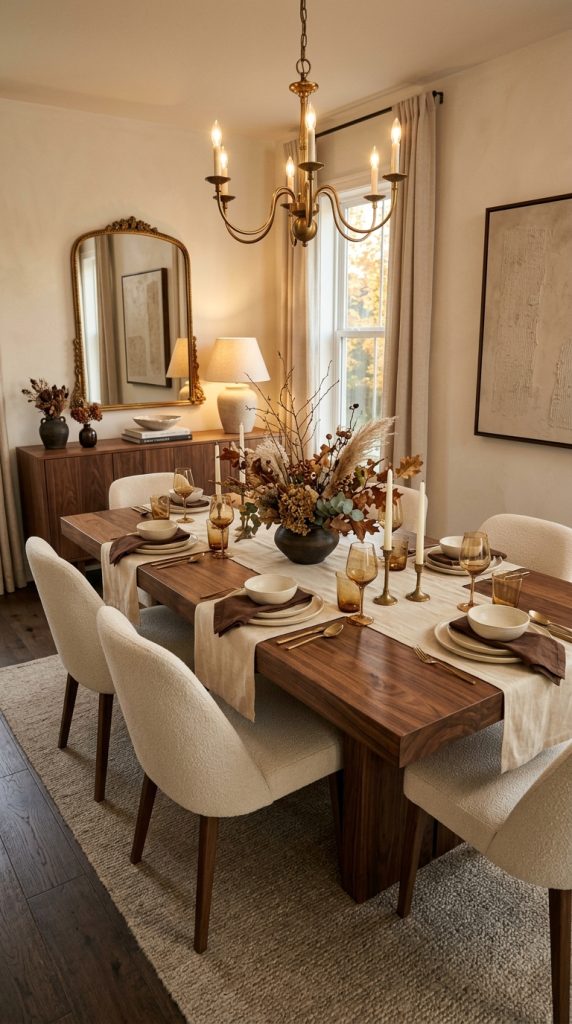
The dining room is an ideal setting for chocolate brown and dark wood because dining furniture naturally provides large surfaces where rich wood tones can become the main architectural feature.
A dark walnut or espresso dining table can immediately establish the mood.
If you already own a dark dining table, there is no need to replace it. Instead, update the surrounding styling.
Begin with the chairs. Cream upholstered chairs provide beautiful contrast against dark wood. Alternatively, use natural woven seating, caramel leather, or deep brown fabric.
For the dining table itself, avoid an overly complicated centerpiece. A long low arrangement can be made with a stone vessel, dark ceramic bowl, or oversized wood bowl filled with dried branches.
For a more refined autumn atmosphere, use seasonal produce instead of traditional decorative objects. Figs, pears, artichokes, apples, or pomegranates can create natural color and texture while remaining appropriate for a dinner table.
This approach aligns with the broader 2026 movement toward more natural, personal, and less overtly themed fall entertaining. (Good Housekeeping)
Layer the table with linen napkins in chocolate, oatmeal, or warm ivory. Ceramic dinnerware in cream or off-white will stand out beautifully against the dark surface.
For tableware accents, aged brass or antique bronze can introduce a subtle glow.
Glassware can provide another visual layer. Amber, smoky, olive, or clear glass can all work with the palette, depending on how dramatic you want the table to feel.
Lighting should be soft and atmospheric. A pendant above the dining table can provide the primary source, while candles or small lamps can create secondary pools of light.
If your dining room includes a sideboard, use it as an opportunity to repeat the dark wood theme without creating a matching furniture set. Place a large mirror or artwork above it and style the surface with a ceramic lamp, a sculptural bowl, and a few carefully chosen objects.
A vintage painting or antique-style frame can add character. Current designer surveys also point toward continued interest in vintage and antique pieces, which fits naturally with rich wood interiors. (Q4 Investor Relations)
The result should feel suitable for both everyday dinners and special fall gatherings. Rather than creating a Thanksgiving-only table, design a foundation that can remain beautiful throughout the season.
5. Style a Chocolate Brown Fall Bedroom With Walnut Accents
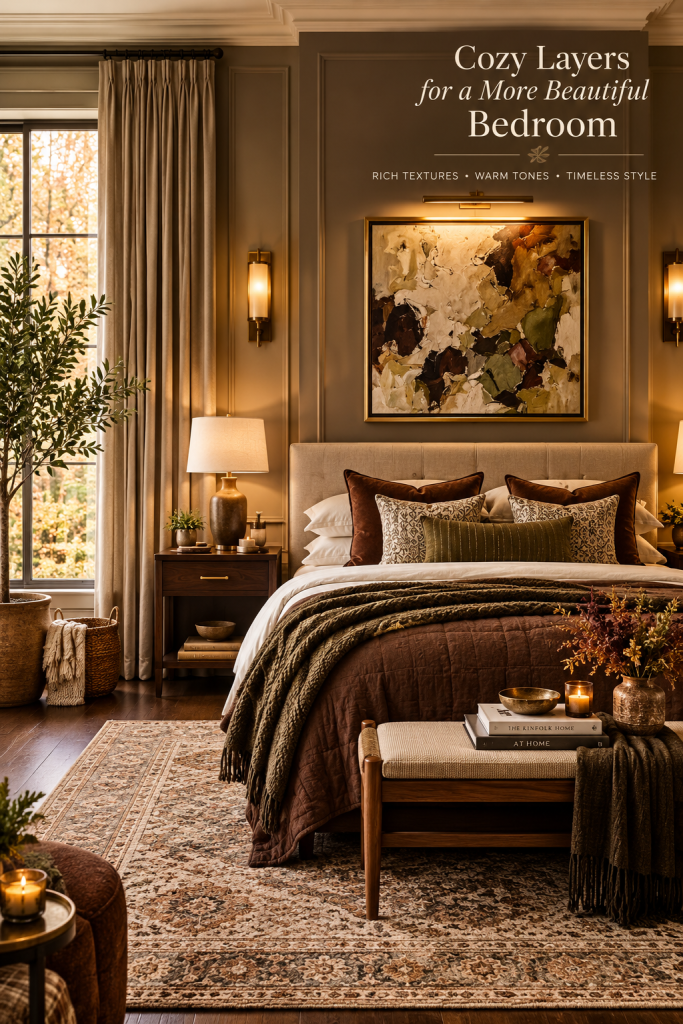
The bedroom is where chocolate brown can become especially calming because its depth creates a cocooning atmosphere.
Instead of introducing brown through dozens of accessories, start with the bed.
A chocolate brown quilt, duvet cover, or upholstered headboard can become the central feature. Pair it with warm ivory sheets to create contrast and prevent the room from becoming too dark.
For a sophisticated layered bed, use three levels of color.
The first layer can be ivory or cream.
The second can be warm beige, camel, or taupe.
The final layer can be chocolate brown.
This creates visual depth without requiring complicated patterns.
Walnut nightstands are an excellent companion to a chocolate brown bed because the natural grain adds variation. Look for pieces with simple silhouettes rather than ornate finishes if you want a modern bedroom.
On each nightstand, use a warm-glowing lamp. A ceramic, linen, bronze, or aged-brass lamp can soften the darker palette.
Wall color is another opportunity.
A warm off-white wall can make the chocolate bedding and walnut furniture stand out. If you prefer a more enveloping atmosphere, consider a muted mushroom, warm taupe, or brown wall color.
Dark brown walls can also work beautifully in bedrooms when balanced with sufficient light-colored textiles and appropriate illumination.
For artwork, select pieces with warm neutrals, landscapes, botanical forms, abstract brown tones, or muted olive accents.
Avoid filling the bedroom with obvious autumn symbols. Instead, let the color palette and materials communicate the season.
A small wooden bench at the foot of the bed can provide both function and warmth. A woven basket can hold extra blankets, while a wool rug beside the bed gives the room softness underfoot.
Window treatments should contribute to the cocooning effect. Linen curtains in warm beige, taupe, or cocoa can soften the room without making it visually heavy.
For a luxury bedroom feel, incorporate one refined material such as velvet, brushed brass, stone, or boucle.
For example, a chocolate velvet bench can provide a rich contrast against a light upholstered bed.
The most successful chocolate brown bedrooms feel restful rather than dramatic. Use the darker tones to create intimacy while allowing cream, natural fibers, and warm light to maintain a sense of comfort.
6. Create a Cozy Dark Wood Fireplace and Mantel
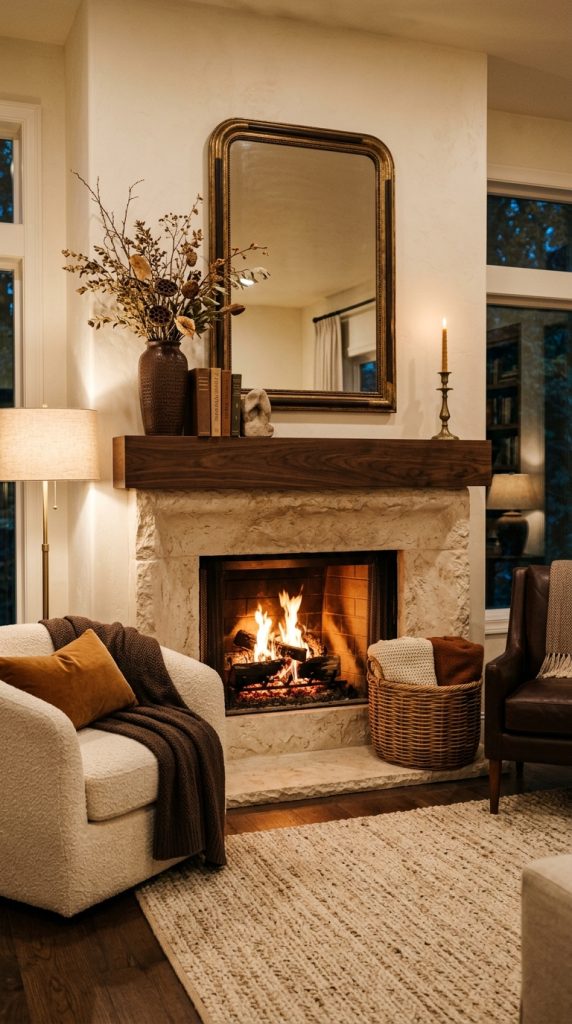
A fireplace naturally becomes a focal point during fall, making it a perfect place to highlight the connection between chocolate brown and dark wood.
If your fireplace already has a dark wood mantel, allow it to become the foundation rather than covering it with excessive seasonal decoration.
A large piece of artwork or mirror can sit above the mantel. Choose something with warm brown, ivory, muted green, or aged gold tones.
Below it, create an asymmetrical arrangement.
Place a tall ceramic vase on one side and a smaller stack of books or a sculptural object on the other. Keep the center relatively open so the architectural feature remains visible.
If you have built-in shelves around the fireplace, use the shelves to introduce smaller touches of chocolate brown. A dark wooden bowl, brown ceramic vessel, vintage frame, leather-bound books, or amber glass object can bring warmth into the display.
Do not make every shelf identical.
One shelf might contain books and a ceramic object. Another might feature artwork leaning against the back. A third can remain partially empty.
Negative space helps dark colors feel intentional rather than overwhelming.
If the fireplace itself is light stone or cream, dark wood accessories can provide beautiful contrast. A walnut log holder, dark wooden stool, or brown woven basket can reinforce the theme without changing the architecture.
For a more rustic interpretation, use natural branches, rough stone, woven fibers, and aged wood.
For a modern interpretation, use clean-lined walnut, smooth ceramic, bronze, and minimalist artwork.
For a vintage-inspired room, introduce an antique mirror, old books, brass candlesticks, and a dark wood chest.
The same palette can therefore support several different interior styles.
Lighting around the fireplace should be layered. A nearby floor lamp can illuminate the seating area, while candles provide a softer glow around the mantel.
If you use real candles, place them carefully away from flammable branches and textiles.
The fireplace area should feel inviting rather than overloaded. One strong composition will generally create more visual impact than many tiny seasonal decorations.
7. Bring Chocolate Brown Into the Kitchen With Dark Wood Details
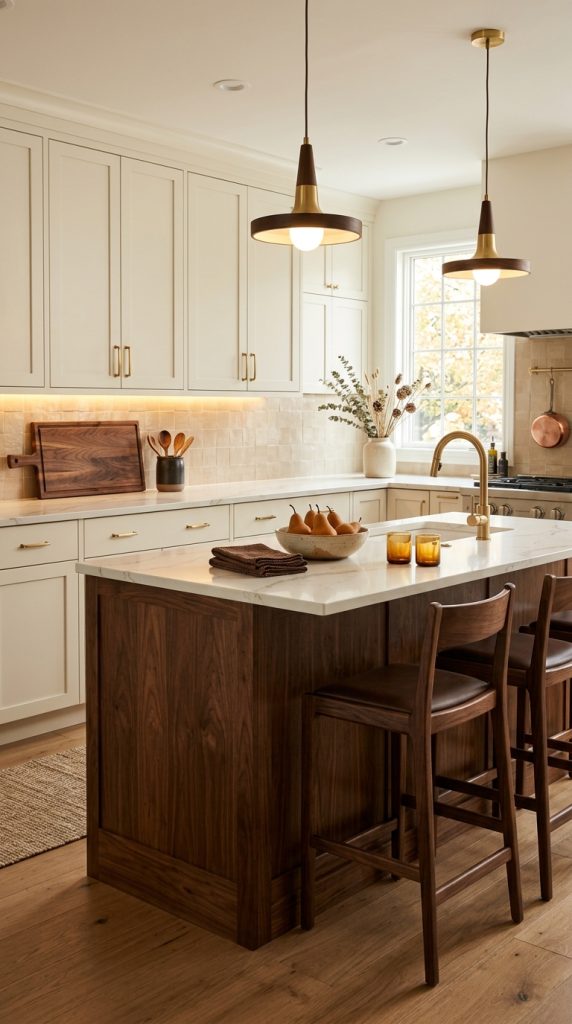
Chocolate brown fall kitchen decor can transform a bright kitchen without requiring a full remodel.
If your kitchen has cream, white, or beige cabinetry, introduce dark wood through a cutting board collection, stools, open shelving, a small sideboard, or decorative bowls.
A walnut island or dark wood island extension can become the main visual feature in a neutral kitchen.
If replacing cabinetry is not realistic, use smaller furniture pieces instead.
A dark wood breakfast table can create warmth in an open kitchen. Walnut counter stools can also introduce enough depth to make the room feel more grounded.
Chocolate brown can be added through textiles. Consider cocoa-colored kitchen towels, a warm brown runner, linen napkins, or a subtle patterned fabric.
Countertop styling should remain restrained.
A large wooden cutting board can lean against the backsplash. Next to it, place a stoneware bowl containing pears or apples.
A dark brown ceramic utensil holder can introduce another layer of color.
For a more refined look, combine dark wood with warm white ceramics and brushed brass.
This creates a classic combination that feels sophisticated without becoming overly formal.
Lighting is particularly important in kitchens because dark brown surfaces can appear much richer under warm illumination. Under-cabinet lighting can highlight the countertop and backsplash while pendant lighting above an island provides a stronger focal point.
If your kitchen includes open shelves, use them carefully. A few dark wood boards, brown ceramics, cream dishes, and amber glass pieces can create a cohesive display.
Avoid filling every shelf with autumn decorations.
Instead, allow everyday kitchen objects to create the seasonal feeling.
This approach also makes the decor more versatile. Once fall ends, you can keep the walnut boards, ceramic vessels, and warm textiles and simply remove a few seasonal accents.
For homeowners working with a small kitchen, dark wood can be introduced through one compact piece such as a rolling cart or narrow console.
A chocolate brown runner can visually connect that piece with the rest of the kitchen.
The goal is to create warmth while maintaining functionality.
8. Create a Moody Fall Reading Nook With Dark Wood
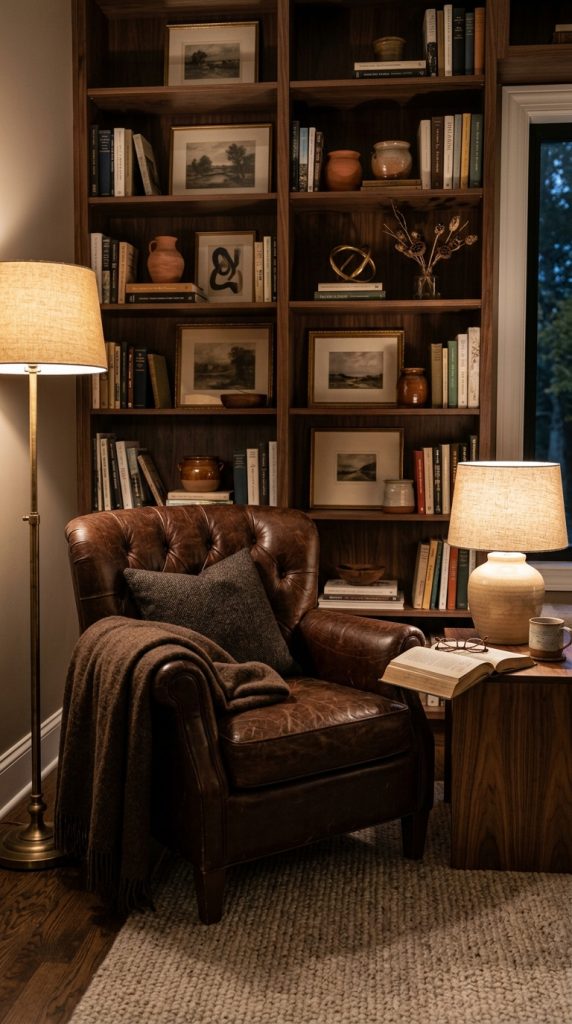
A reading nook is one of the most intimate ways to use a chocolate brown and dark wood palette.
Choose one quiet corner near a window, bookshelf, fireplace, or unused wall.
The foundation should be comfortable rather than decorative.
A deep brown leather chair can create a classic library atmosphere. If leather feels too formal, choose an upholstered chair in cream, camel, oatmeal, or muted brown.
Pair it with a walnut side table.
The side table only needs enough space for a lamp, book, and drink.
Lighting is the defining element of a reading nook.
Use a floor lamp with a warm bulb positioned beside or slightly behind the chair. A small table lamp can provide additional glow if the space allows it.
Avoid harsh white lighting because it can flatten the richness of brown materials.
Add a textured throw in chocolate, camel, or warm ivory.
A small footstool or ottoman can increase comfort.
Behind the chair, consider a narrow bookshelf in walnut or espresso wood. Style it with a combination of books, pottery, framed artwork, and a few meaningful objects.
This is an ideal place to embrace the collected aesthetic that is becoming increasingly popular in interiors.
Instead of purchasing every accessory at once, allow the bookshelf to evolve.
Include objects from different sources, different periods, and different materials.
A vintage brass candlestick can sit beside a modern ceramic vase. A dark wood box can be placed near an old-looking frame.
The contrast creates personality.
For the wall, choose artwork with warm brown, cream, olive, muted burgundy, or charcoal tones.
A botanical print can introduce a subtle connection to autumn without using literal seasonal imagery.
If the reading nook is near a window, use natural linen curtains to soften the daylight.
At night, the warm lamp becomes the primary visual feature.
A small rug beneath the chair can define the area and make it feel like a deliberate destination rather than a random corner.
For a stronger library-inspired look, use a chocolate brown wall behind the chair and balance it with lighter artwork, warm brass, and cream textiles.
For a modern look, keep the walls light and use dark wood furniture as the main source of contrast.
The finished nook should communicate one simple idea: this is a place where you want to slow down.
9. Add Chocolate Brown and Dark Wood Through Accessories and Artwork
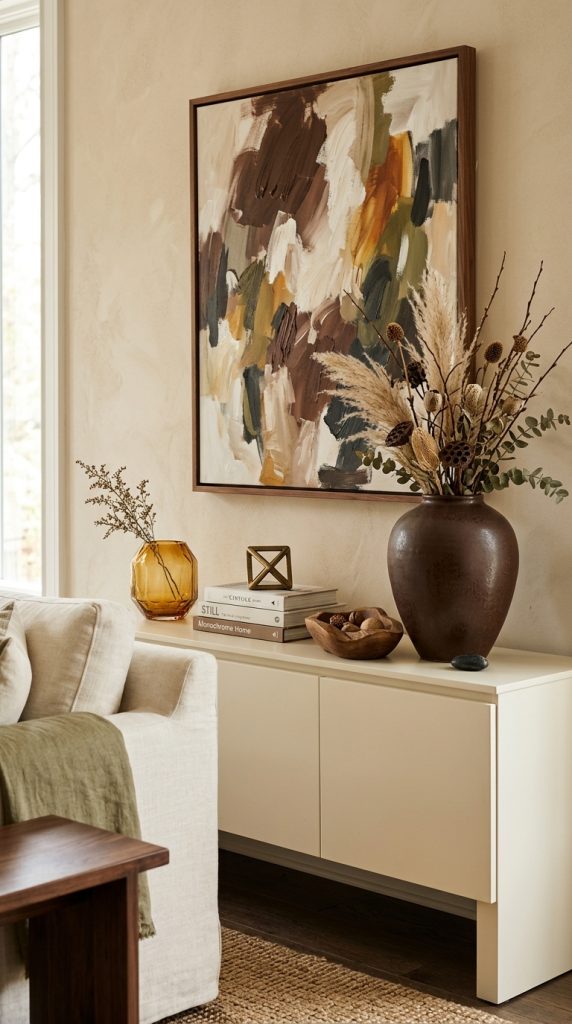
You do not need to change your furniture to embrace this fall palette.
Accessories can create a surprisingly strong transformation when they are selected strategically.
Begin with artwork.
A large abstract print containing chocolate, espresso, cream, muted olive, charcoal, or warm beige can introduce the color palette at a larger visual scale.
This is often more effective than placing many small brown accessories around the room.
Next, introduce dark wood.
A walnut frame can surround artwork or a mirror. A carved wooden bowl can sit on a console. A dark wood pedestal can display a ceramic object.
Choose pieces with different shapes.
For example, pair a rectangular framed artwork with a round wooden bowl and an organic ceramic vase.
The variation keeps the arrangement visually interesting.
Chocolate brown ceramics are another useful accessory category.
A large chocolate vase can become the focal point of a console table. A smaller brown vessel can be placed on a bookshelf or nightstand.
Amber glass is particularly attractive when paired with dark wood because its transparency prevents the arrangement from becoming visually heavy.
A chocolate brown lamp shade can also create a subtle but significant shift.
If you have a neutral lamp base, replacing the shade with a deeper brown fabric shade can instantly change its character.
Mirrors can help balance the darker palette.
A bronze or antiqued mirror placed near dark wood reflects light and adds dimension. This is particularly useful in smaller rooms where too many dark accessories might otherwise make the space feel enclosed.
Textiles can continue the color story through a small number of carefully chosen pieces.
A brown throw on a cream chair, a cocoa cushion on a beige sofa, or a warm brown runner on a console can be enough.
The key is repetition without duplication.
Use chocolate brown in several locations, but do not buy ten accessories in exactly the same shade.
You can move between chocolate, espresso, caramel, cognac, walnut, and warm taupe.
This creates tonal sophistication.
Another effective strategy is to introduce one vintage object.
A dark wood antique-style frame, small chest, carved bowl, old-looking book, or brass accessory can provide the patina that makes the room feel collected.
Current design reporting emphasizes personalization, patina, vintage character, and interiors that feel lived-in rather than universally styled. (ELLE Decor)
That makes this approach particularly useful if you want your fall decor to feel distinctive rather than copied from a seasonal catalog.
10. Create a Whole-Home Chocolate Brown and Dark Wood Fall Color Story
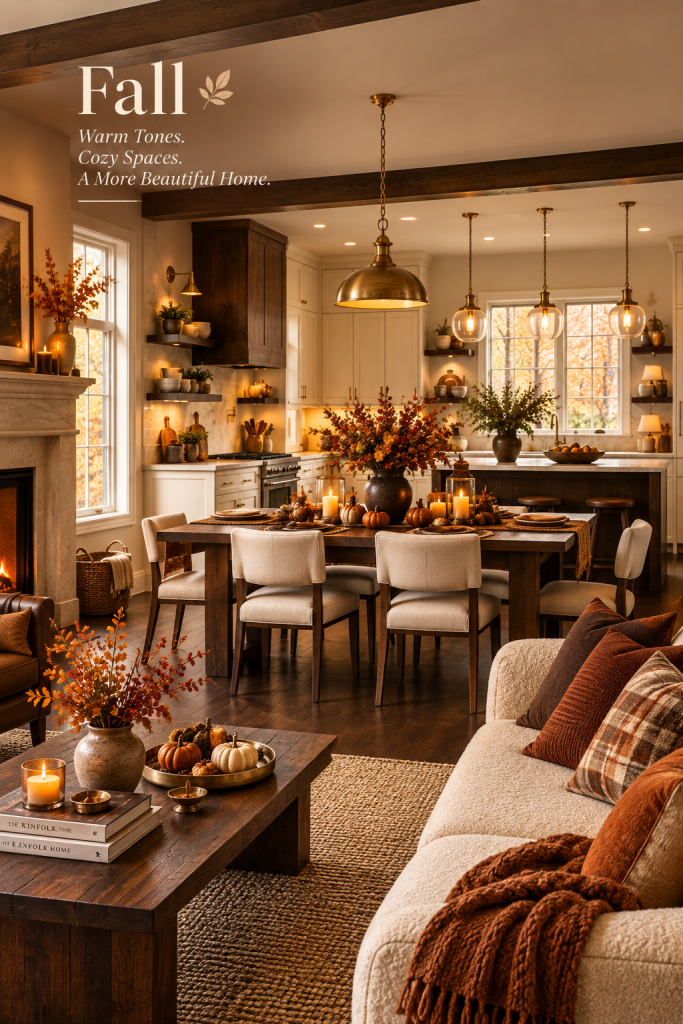
The final approach is not about decorating one individual room. It is about creating a subtle visual connection throughout the entire home.
A whole-home chocolate brown and dark wood color story can make separate rooms feel intentionally connected without forcing every space to look identical.
Start by choosing your core palette.
Chocolate brown and dark wood should form the foundation.
Then select two or three supporting colors.
Warm ivory is one of the most useful because it provides contrast.
Muted olive green can add an organic note.
Caramel can soften the transition between light and dark.
A small amount of burgundy can provide richness.
Aged brass can add warmth and reflect light.
Once the palette is established, assign different materials to different rooms.
In the living room, chocolate brown might appear through pillows, a rug, and a walnut coffee table.
In the dining room, dark wood can become the main furniture material while chocolate appears in linens and glassware.
In the bedroom, chocolate can dominate the bedding while walnut appears on the nightstands.
In the kitchen, dark wood might appear through stools, boards, and accessories.
In the hallway, the color could appear through artwork, a mirror frame, or a small console.
This creates continuity without repetition.
You can also vary the intensity.
The living room might be warm and moderately dark.
The bedroom can be deeper and more cocooning.
The kitchen can remain brighter.
The dining room can become more dramatic.
This variation prevents the entire house from feeling like one large themed room.
Pay attention to transitions between spaces.
If the living room contains walnut furniture and the dining room contains espresso wood, introduce a small walnut or brown detail near the transition so the materials feel related.
Do not worry about achieving an exact wood match. Different dark wood tones can coexist when the overall undertone is warm.
Natural materials can further connect the rooms.
Use stone in the kitchen, ceramic in the living room, linen in the bedroom, and woven materials in the hallway.
The materials will change, but the color family remains recognizable.
Lighting should also follow the same warm philosophy throughout the house.
Use warm bulbs, table lamps, sconces, pendants, and floor lamps where appropriate.
This is especially important with chocolate brown because warm illumination reveals its depth.
Natural daylight should remain part of the design as well. Keep windows relatively open during the day so dark furniture and accessories do not dominate the room.
Finally, resist the temptation to add seasonal decorations everywhere.
A few pumpkins or autumn branches can certainly be included if they suit your style, but they should not become the main visual language.
The strongest whole-home fall interiors allow the materials, colors, lighting, and textures to create the atmosphere naturally.
How to Choose the Right Chocolate Brown for Fall Decorating
Not every chocolate brown looks the same.
Some shades have red undertones, while others lean toward espresso, taupe, caramel, or almost-black brown.
Before choosing paint, furniture, or textiles, observe the natural light in your room.
A north-facing room may make brown appear cooler and deeper.
A south-facing room can bring out warmer red or caramel undertones.
If the room receives limited daylight, consider pairing chocolate brown with generous amounts of warm ivory and beige.
If the room is filled with natural light, you can experiment with deeper espresso tones.
For furniture, look at the wood grain rather than focusing only on the color.
Walnut can contain subtle variations that make it more visually interesting than a completely uniform dark finish.
Smoked oak can create a more contemporary atmosphere.
Mahogany-inspired finishes can feel traditional and dramatic.
Choose the finish according to the architecture and existing furniture rather than trying to follow a single trend.
Colors That Pair Beautifully With Chocolate Brown and Dark Wood
Warm ivory is one of the easiest colors to use because it creates immediate contrast.
Cream is softer and more relaxed.
Beige creates a tonal, understated palette.
Camel introduces warmth.
Olive green brings an organic quality.
Muted burgundy creates a richer, more dramatic fall atmosphere.
Ochre can add a small amount of golden warmth.
Dusty blue can create an unexpected contrast while maintaining sophistication.
Aged brass works beautifully as a metallic accent.
Natural stone provides another useful neutral.
Current designer guidance specifically highlights combinations such as chocolate brown with warm cream, olive, ochre, green, natural timber, aged brass, and antiques. (Homes and Gardens)
How to Make Chocolate Brown Fall Decor Look Expensive
Luxury is not necessarily about buying expensive objects.
It is more often about proportion, material quality, editing, and visual consistency.
Choose fewer substantial pieces instead of many tiny decorations.
A large ceramic vase generally has more visual impact than a collection of small ornaments.
A beautiful walnut side table can contribute more to a room than ten decorative accessories.
Use texture to create richness.
Velvet, wool, linen, leather, stone, ceramic, glass, and wood all reflect light differently.
This material variation makes a room feel layered.
Pay attention to scale.
An oversized artwork can look more sophisticated than several tiny frames scattered across a wall.
A large rug can make furniture feel intentionally connected.
A substantial coffee table can anchor a seating arrangement.
Lighting also plays a major role.
A room filled with beautiful furniture can still look flat if it is illuminated only by a ceiling fixture.
Use several light sources at different heights.
A floor lamp, table lamp, wall light, pendant, and candlelight can create a much more dimensional environment.
Finally, leave some empty space.
Luxury interiors rarely require every surface to be filled.
Chocolate Brown Fall Decor Ideas for Small Spaces
Small rooms can use this palette successfully as long as dark elements are carefully balanced.
Instead of painting every wall chocolate brown, consider one focal wall or introduce brown through furniture.
A walnut coffee table can work beautifully in a small living room.
A chocolate brown accent chair can define a reading corner.
A brown rug can anchor a compact seating area.
In a small bedroom, chocolate bedding can provide the seasonal transformation while the walls remain warm ivory.
Mirrors can reflect light and prevent the room from feeling enclosed.
Use furniture with visible legs when possible because it allows more floor area to remain visually open.
Choose one substantial statement piece rather than many small accessories.
The fewer objects you use, the more intentional each piece can feel.
Budget-Friendly Chocolate Brown Fall Decorating
You can create this look without replacing major furniture.
Start with textiles.
Pillow covers are often one of the easiest ways to introduce chocolate brown.
A brown throw can create another layer.
Next, look for small dark wood objects.
A secondhand wooden bowl, vintage frame, small stool, or compact side table can provide character without requiring a major purchase.
Paint can also make a difference.
A small accent wall, built-in shelf, or piece of furniture can be transformed with a warm brown finish.
Lighting is another high-impact area.
A warm lamp can completely change the evening atmosphere.
Look for lamps with ceramic, wood, bronze, or linen elements that complement your existing furniture.
Instead of buying a large seasonal centerpiece, use natural branches from your garden or locally available dried botanicals in a simple ceramic vessel.
This keeps the look elegant and economical.
How to Avoid Making Chocolate Brown Decor Feel Too Dark
The easiest way to prevent heaviness is contrast.
Pair dark wood with lighter walls.
Pair chocolate textiles with cream upholstery.
Use natural stone alongside dark wood.
Introduce glass so light can pass through the arrangement.
Use brass or bronze for small reflective highlights.
Keep windows visually open.
Layer lighting at different heights.
And most importantly, avoid using dark brown on every surface.
A room becomes more sophisticated when dark elements are allowed to stand out.
Think of chocolate brown as punctuation rather than filling every sentence with the same word.
How to Make This Fall Style Pinterest-Worthy
A Pinterest-worthy chocolate brown fall interior should have a strong focal point.
The viewer should immediately understand what makes the room special.
In a living room, this could be a walnut coffee table against a cream sofa.
In a bedroom, it could be a chocolate upholstered bed surrounded by warm lighting.
In a dining room, it could be a dark wood table with elegant neutral tableware.
In a reading nook, it could be a deep brown chair beside a walnut bookshelf.
Use vertical composition when photographing or creating Pinterest graphics.
Show enough of the room to communicate the complete design while keeping the primary focal point visually dominant.
Natural-looking styling is generally more inspiring than an overloaded seasonal arrangement.
Use warm lighting, visible textures, balanced furniture placement, and a clear color story.
If text is added to the Pinterest image, keep it minimal.
A simple title such as “Chocolate Brown Fall Decor” or “Chocolate Brown + Dark Wood” is enough.
The image should do most of the communication.
Final Thoughts
Chocolate brown fall home decor ideas with dark wood offer a sophisticated way to welcome autumn without relying on overly obvious seasonal decorations. The combination works because both colors are naturally connected to materials found in beautiful interiors: walnut, espresso wood, leather, wool, stone, ceramic, woven fibers, and aged metal.
For 2026, chocolate brown is receiving significant attention as a grounding interior color, while darker wood tones such as walnut and espresso oak are returning to prominence. Designers are also emphasizing richer materials, contrast, personalization, and spaces that feel collected rather than perfectly coordinated. (Homes and Gardens)
The most effective way to use this trend is not to turn your home completely brown.
Instead, create contrast.
Let chocolate brown bring depth.
Let dark wood provide structure.
Let cream and warm ivory create light.
Let natural textures introduce softness.
Let brass or bronze add subtle reflection.
Let olive, burgundy, caramel, or muted ochre appear in carefully selected areas.
Most importantly, allow your existing home to influence the final design.
A modern home might use sleek walnut furniture, chocolate textiles, stone, and minimal accessories.
A traditional home might combine dark wood, antique frames, brass, velvet, and classic artwork.
A small apartment might use chocolate pillows, a walnut side table, and warm lighting.
A farmhouse-inspired home might combine dark wood with linen, woven baskets, ceramics, and natural branches.
A luxury interior might layer walnut, chocolate velvet, travertine, aged brass, and sculptural lighting.
The possibilities are broad because chocolate brown is not limited to one decorating style.
Rather than treating fall as a short season that requires an entirely different home, think of autumn as an opportunity to make your existing rooms warmer, deeper, and more inviting.
A dark wood coffee table can remain long after fall.
A chocolate velvet pillow can work throughout winter.
A walnut console can become part of your permanent furniture collection.
A warm ivory rug can transition between seasons.
A beautiful ceramic vase can hold autumn branches in October and fresh greenery in spring.
This is what makes the chocolate brown and dark wood approach so practical.
You are not simply decorating for a holiday.
You are creating a home with depth, texture, warmth, and character.
For a Pinterest audience, that timeless quality is particularly valuable. A beautifully styled chocolate brown living room can inspire a fall makeover today while still remaining relevant when someone saves the image for a future renovation.
The best fall interiors do not need to announce the season loudly.
Sometimes the feeling comes from a walnut table glowing beneath a warm lamp, a chocolate throw resting on a cream sofa, a ceramic vase filled with dried branches, and the quiet contrast between dark wood and soft natural textiles.
That is the essence of sophisticated fall decorating: warmth without clutter, richness without heaviness, and seasonal character without sacrificing timeless style.