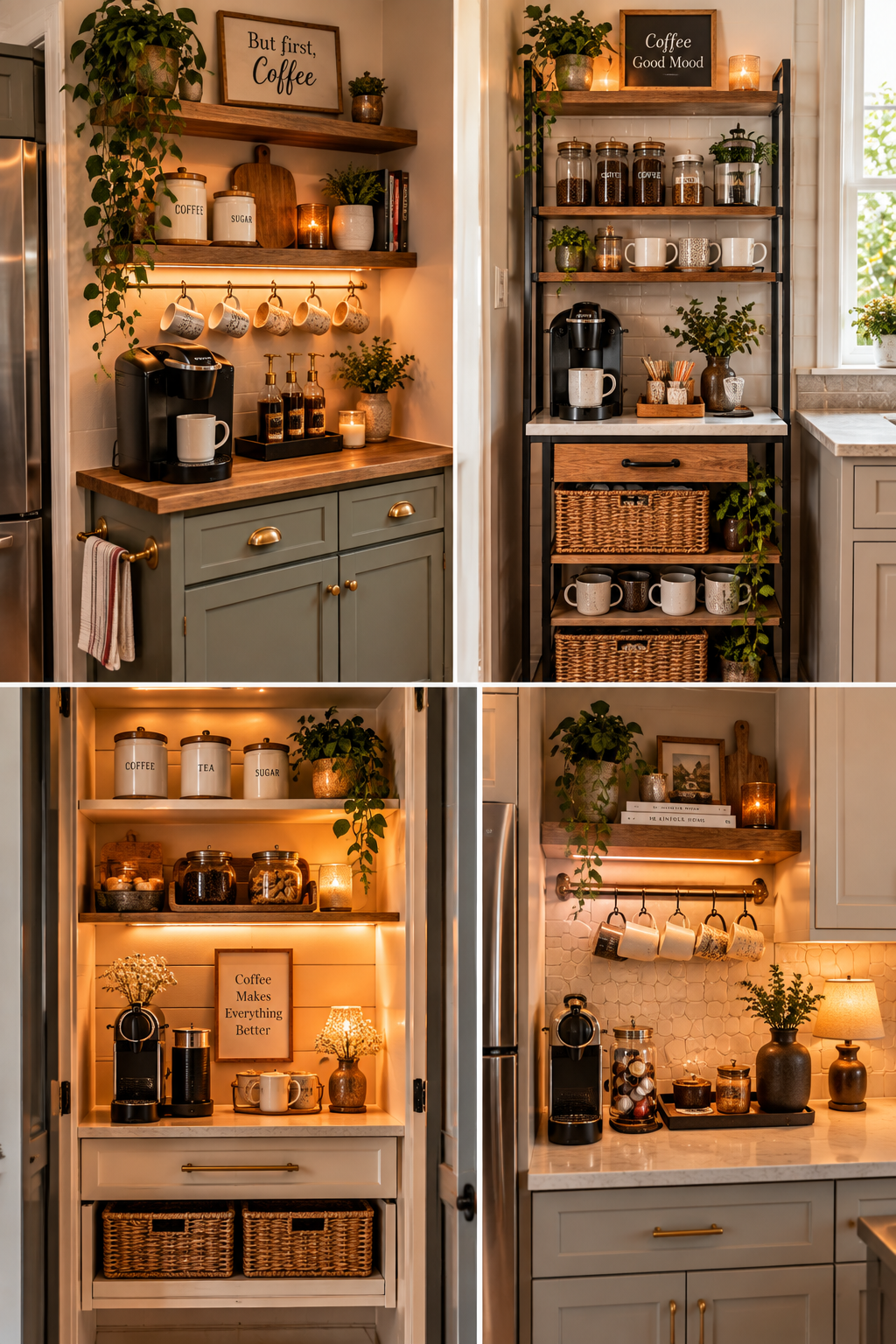
A small kitchen does not have to mean giving up the dream of having a beautiful, organized coffee station. With thoughtful planning, even a narrow countertop, unused wall, awkward corner, or tiny cabinet can become a functional coffee bar that feels intentional rather than cramped. Small kitchen coffee bar ideas are especially useful for apartments, condos, compact homes, rental kitchens, and busy households where every inch of counter space matters. The key is not trying to fit a full-size café into a miniature kitchen. Instead, the goal is to create a dedicated coffee zone where the equipment, ingredients, cups, and accessories are easy to reach without interfering with food preparation.
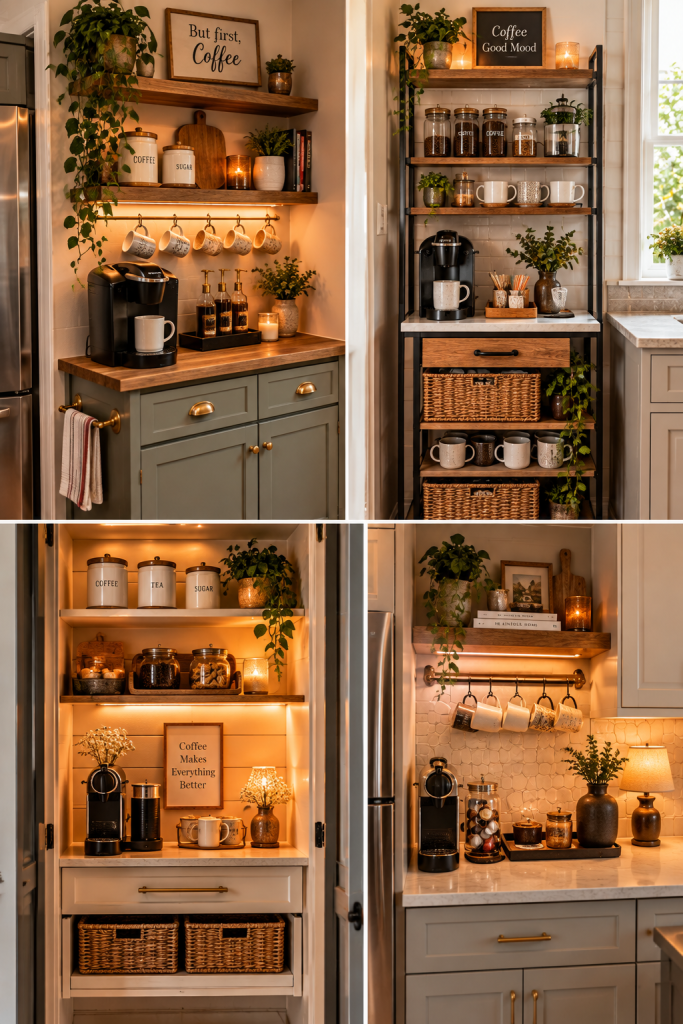
A well-designed coffee station can also become one of the most inviting details in a kitchen. Coffee naturally creates a sense of comfort and routine, so a small area with a beautiful mug collection, warm lighting, attractive containers, and carefully selected accessories can make an ordinary kitchen feel much more personal. The best designs balance appearance with everyday practicality. A coffee bar should look good when photographed for Pinterest, but it should also be easy to clean, refill, and use every morning.
Before creating a coffee station, consider how much space is actually available. Measure the countertop or wall area rather than purchasing accessories first. A compact espresso machine may require less horizontal space than a large drip coffee maker, while a coffee grinder, kettle, milk frother, and storage containers can quickly consume the remaining surface. Vertical storage becomes extremely valuable in a small kitchen because walls can hold mugs, shelves, coffee supplies, artwork, or small baskets without taking up precious counter space.
Another important consideration is choosing one primary coffee-making area. Instead of scattering coffee supplies throughout different cabinets and drawers, concentrate frequently used items in one zone. This makes the station feel more cohesive and saves time during busy mornings. You can keep everyday coffee beans, pods, sweeteners, mugs, spoons, and filters nearby while storing less frequently used items elsewhere. The result is a compact station that works like a miniature beverage center.
Style matters too. A small coffee bar can complement virtually any kitchen aesthetic. A warm wood shelf can create an organic look, while white ceramics and brass details can give the station a refined appearance. Black accessories can work beautifully in modern kitchens, and woven baskets can add softness to minimalist spaces. If your kitchen already has a strong color palette, use the coffee station to reinforce it rather than introducing too many unrelated colors.
Lighting is another simple way to make a tiny coffee corner feel special. Under-shelf lighting, a small rechargeable lamp, or warm LED lighting can highlight mugs and accessories while making the area more pleasant in the early morning. The goal is gentle illumination rather than a bright spotlight. A warm glow can transform a basic countertop into a cozy ritual space.
Organization should remain at the center of the design. Every item should have a reason for being there. If a station becomes overloaded with decorative objects, it can quickly look messy. Keep the items you use every day within easy reach and reserve decorative space for a few meaningful details. A small tray can visually group coffee essentials, while matching containers can make everyday ingredients look more polished.
You should also think about maintenance. Coffee grounds, sugar, milk residue, and water can create messes quickly, particularly around compact appliances. Choose washable trays, easy-to-clean surfaces, sealed containers, and storage solutions that can be removed when the countertop needs wiping. A beautiful coffee bar that takes ten minutes to clean every morning will eventually become frustrating. A practical one should make the routine easier.
Renters can create impressive coffee stations without permanent renovations. Removable hooks, freestanding shelves, adhesive organizers designed for the appropriate surface, countertop trays, and small carts can provide flexible solutions. Homeowners may have more options, including floating shelves, built-in cabinetry, recessed storage, or dedicated electrical outlets.
The following ten small kitchen coffee bar ideas focus on different ways to solve common space problems. Some use vertical surfaces, others rely on hidden storage, mobile furniture, cabinet interiors, narrow counters, or carefully organized trays. Each approach can be adapted according to your kitchen layout, coffee preferences, and decorating style.
Whether you have only a small section of countertop or an entire wall available, the goal is the same: create a coffee station that feels cozy, organized, attractive, and effortless to use. With the right combination of storage, layout, lighting, and accessories, a compact kitchen can have a coffee corner that feels surprisingly luxurious without requiring a major remodel.
1. Turn a Small Countertop Corner Into a Dedicated Coffee Station
One of the easiest ways to create a coffee bar in a small kitchen is to transform an unused countertop corner into a dedicated beverage zone. This approach works particularly well when you do not have enough room for additional furniture. Instead of trying to create a separate coffee cabinet or cart, simply choose one existing section of the counter and give it a clear purpose.
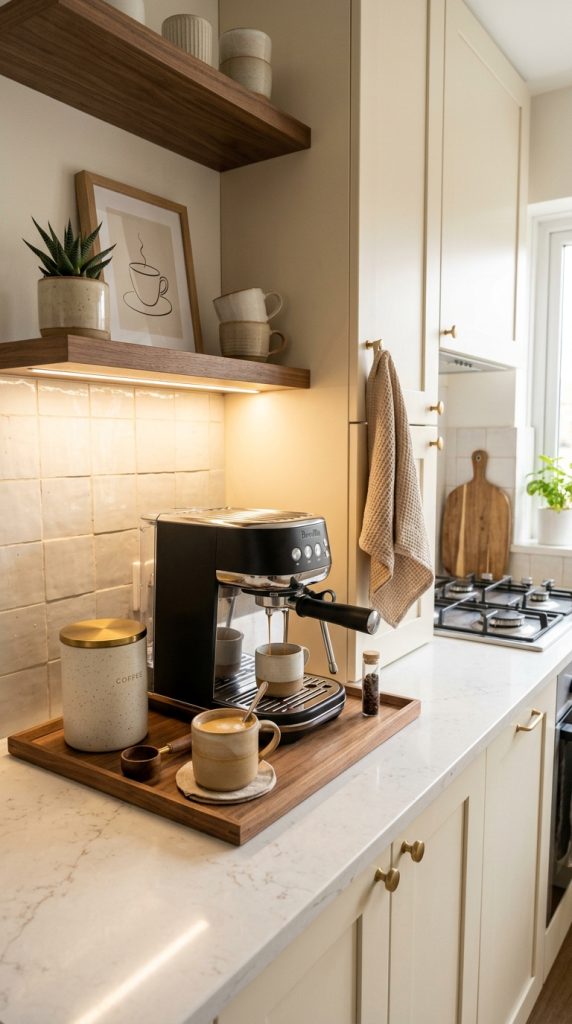
Begin by selecting a corner that is close to an electrical outlet. Position the main coffee maker toward the back of the counter, leaving enough space around it for ventilation, water filling, and opening any removable components. Avoid placing the machine directly against a wall if its water reservoir or lid needs additional clearance.
Once the appliance is positioned, create a defined base underneath it. A wooden serving board, stone tray, or washable rectangular mat can visually separate the coffee station from the rest of the countertop. This small design trick makes the area appear intentional even though you have not added any permanent furniture.
Next, place the supplies you use most frequently beside the coffee maker. Depending on your routine, this could include a container of coffee beans, a small jar of sugar, a milk frother, or a container for coffee pods. Do not place every coffee-related item on the counter. Keep only the essentials visible.
Materials and Items to Use
- Compact coffee maker or espresso machine
- Wooden or stone serving tray
- Airtight coffee container
- Small sugar or sweetener jar
- Mug or cup
- Coffee scoop
- Small spoon holder
- Optional milk frother
- Washable countertop mat
- Small decorative object
A narrow tray is particularly useful because it creates visual boundaries. If you later need the counter for food preparation, you can lift the entire coffee arrangement and temporarily move it.
For a cozy look, use materials that complement the kitchen. Warm wood works beautifully with white cabinets, while dark stone or matte black accessories can create a contemporary appearance. Ceramic containers can soften a modern kitchen, and aged-metal details can add a more sophisticated feel.
Think vertically whenever possible. If the corner is beneath a cabinet, use the cabinet underside or nearby wall for additional storage. A mug hook system underneath an upper cabinet can hold several favorite cups without consuming counter space.
You can also add a small rechargeable lamp if the corner feels visually dark. Choose warm lighting and position it so it illuminates the coffee-making area without creating glare.
The biggest advantage of this arrangement is simplicity. You do not need construction, new cabinetry, or a large budget. The existing counter becomes the foundation, while a tray and a few coordinated accessories create the feeling of a miniature café.
To keep the station functional, establish a simple daily reset. Wipe coffee grounds from the tray, return the scoop to its container, and keep empty cups from accumulating. Once the coffee zone has a defined home, maintaining it becomes much easier.
This idea is especially useful for apartment kitchens where every countertop surface must perform multiple functions. The coffee station can occupy a small corner during everyday use and remain compact enough that the rest of the kitchen stays available for cooking.
2. Use a Floating Shelf Coffee Bar to Take Advantage of Vertical Space
When countertop space is extremely limited, look upward. A floating shelf can transform an unused wall into a stylish coffee station without taking valuable workspace away from food preparation.
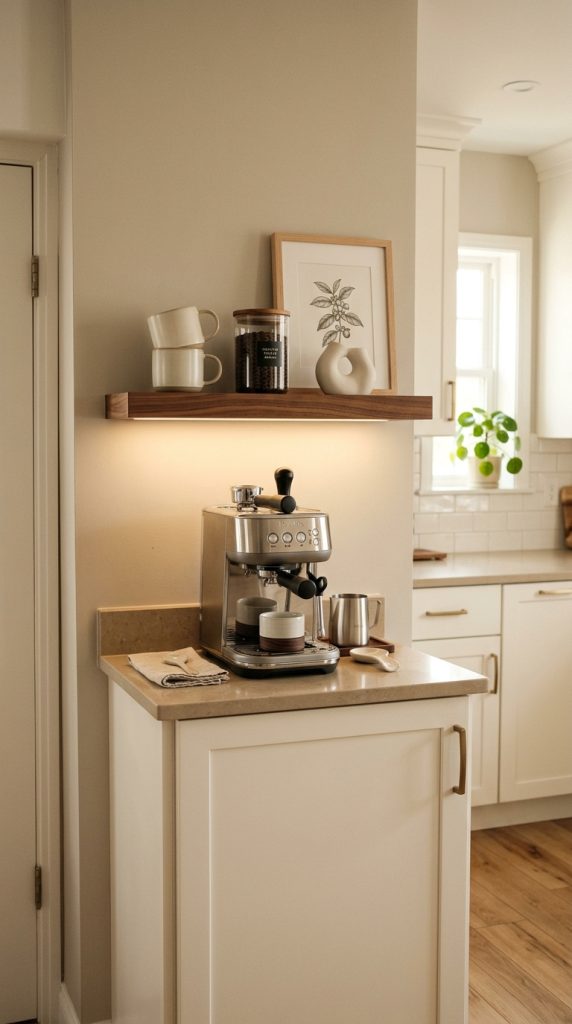
The most important decision is determining what the shelf will actually hold. A single shelf should not become a storage location for every coffee accessory you own. Instead, use it for lightweight and frequently accessed items such as mugs, coffee containers, decorative jars, and a small piece of artwork.
If your coffee maker must remain on the countertop, place the floating shelf above it. This creates a vertical composition where the appliance occupies the lower zone and the shelf handles storage above. The result can feel like a compact built-in coffee station.
Materials and Items to Use
- One sturdy floating shelf
- Appropriate wall anchors
- Coffee maker
- Matching mugs
- Airtight coffee canister
- Small ceramic container
- Decorative artwork
- Coffee scoop
- Optional warm LED strip
- Small plant or dried botanical accent
Before installing the shelf, measure the height required to comfortably use the coffee maker. Make sure the appliance lid or water reservoir can open completely. This is especially important with machines that have top-loading compartments.
For visual balance, place the largest object slightly off-center. For example, a stack of two or three mugs can occupy one side while the coffee container sits toward the other. Avoid arranging every object at exactly the same height. A little variation makes the shelf look more natural.
You can create a particularly attractive Pinterest-style arrangement by combining three categories: something functional, something decorative, and something textured. A coffee canister provides function, framed artwork provides visual interest, and a small woven basket or wooden object adds texture.
If you have a narrow kitchen, consider a shelf that is deeper than a picture ledge but not so deep that it interferes with movement. The shelf should provide enough room for cups and containers without becoming a head-level obstacle.
Lighting can elevate this idea considerably. A slim warm LED strip installed beneath the shelf can softly illuminate the countertop and make the coffee station feel intentional in the evening. Choose lighting that does not generate excessive heat around the coffee supplies.
If drilling is not an option, renters can explore freestanding shelving or removable solutions appropriate for the wall surface and load requirements. Always follow the manufacturer’s weight limits rather than assuming an adhesive product can safely support heavy ceramic items.
Another advantage of floating shelves is that they can be styled seasonally without redesigning the entire kitchen. During autumn, a small ceramic accent or warm-toned mug can change the atmosphere. During spring, lighter ceramics or subtle botanical details can refresh the space.
Keep the shelf relatively edited. A small coffee station looks more luxurious when each object has breathing room. Overfilling it defeats the purpose of vertical organization.
The floating shelf approach proves that a coffee bar does not have to spread horizontally. By using the wall intelligently, you can create storage, display, and personality in an area that would otherwise remain unused.
3. Create a Slim Coffee Bar on a Narrow Side Counter
Some kitchens have tiny strips of counter space beside the refrigerator, near a pantry, or along a wall that are too narrow for traditional kitchen activities. These overlooked areas can become excellent coffee stations.
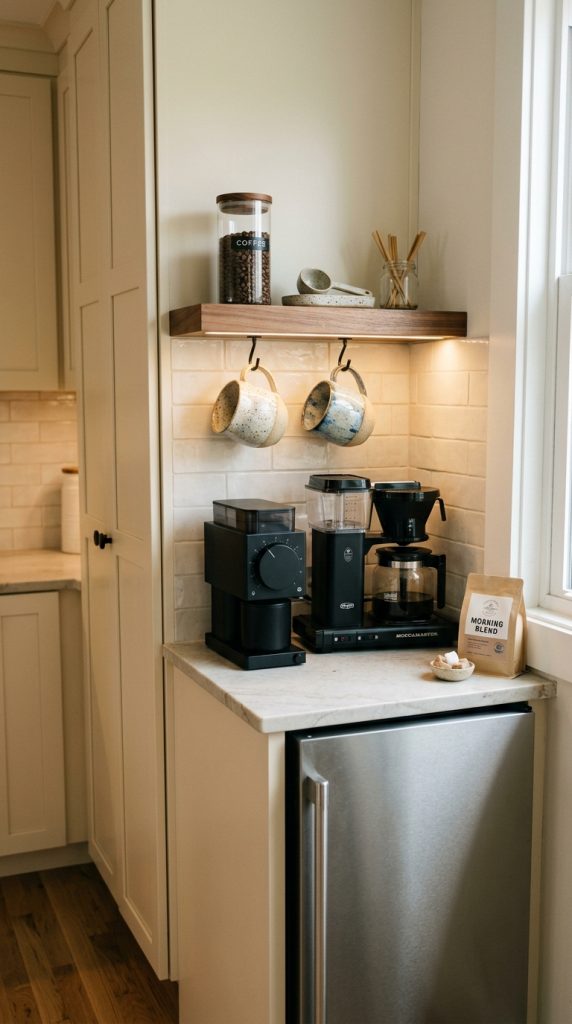
Start by measuring the width and depth of the available surface. The measurements should determine the equipment you choose rather than the other way around. A compact coffee maker may fit comfortably where a larger machine would overwhelm the space.
The ideal narrow coffee station should have a vertical arrangement. Keep the coffee machine on the counter and use the wall above for storage. A slim shelf can hold mugs and coffee supplies, while a narrow container keeps small accessories organized.
Materials and Items to Use
- Compact coffee machine
- Narrow wooden shelf
- Slim coffee canister
- Small mug collection
- Wall-mounted mug hooks
- Coffee scoop
- Small tray
- Vertical organizer
- Warm lighting
- Decorative ceramic accent
One clever technique is to use a tall, narrow container rather than a wide one. Coffee pods, stir sticks, filters, or individually packaged sweeteners can be stored vertically, reducing the footprint of the station.
For coffee lovers who use capsules, a vertical pod organizer can be especially useful. Rather than allowing colorful packaging to accumulate around the machine, store the capsules in one designated container.
Mugs can also be stored vertically. Hooks mounted underneath a shelf allow cups to hang rather than sit on the countertop. This leaves the actual work surface available for the coffee maker.
Pay attention to traffic flow. A coffee station beside a frequently used refrigerator door may become inconvenient if the appliance blocks access. Similarly, avoid placing the machine where someone preparing food will constantly bump into it.
The narrow-counter concept works especially well in kitchens where the main countertop is reserved for cooking. The coffee station becomes an independent micro-zone rather than competing with chopping boards, appliances, or food preparation.
For aesthetics, repeat one or two materials from the rest of the kitchen. If your cabinets are walnut, consider a walnut shelf. If your kitchen features marble or stone, choose a small tray with a similar visual character. Coordinating the coffee bar with existing finishes makes the station look like part of the kitchen rather than an afterthought.
A small framed print can provide personality, but avoid covering every inch of wall space. The goal is a focused vertical arrangement.
Consider adding a small drawer organizer if the narrow counter includes a nearby drawer. Coffee filters, measuring spoons, tea bags, and extra supplies can remain hidden while the countertop stays visually clean.
This arrangement is particularly valuable in compact apartments because it takes advantage of a piece of real estate that often goes unused. Rather than needing an entirely new piece of furniture, you simply assign a purpose to an existing narrow area.
4. Hide Your Coffee Station Inside a Kitchen Cabinet
A hidden coffee station is an excellent solution for people who love the convenience of having coffee supplies together but prefer a clean, uncluttered kitchen during the day.

The basic concept is simple: dedicate part of a cabinet to coffee preparation and storage. When the cabinet doors are closed, the kitchen maintains a streamlined appearance. When they open, everything needed for coffee is immediately accessible.
Begin by selecting a cabinet with enough depth for your coffee equipment. Measure the machine carefully, including the space required for opening the top, removing the water reservoir, or accessing controls.
Materials and Items to Use
- Kitchen cabinet
- Compact coffee maker
- Removable shelf or riser
- Airtight coffee container
- Mug organizer
- Small tray
- Drawer organizer
- Coffee scoop
- Filter container
- Small cleaning cloth
A riser can create two levels inside a cabinet. The coffee machine remains below while cups or smaller supplies occupy the upper level. This makes better use of vertical cabinet space.
If the cabinet contains an electrical outlet, you may be able to operate the coffee machine without moving it. Electrical work should be handled according to local requirements and by a qualified professional when necessary. Never create an unsafe cord arrangement inside a cabinet.
For cabinets without an outlet, the station can still function as storage. Keep the machine on the counter during use and return it to the cabinet afterward if that suits your routine.
One of the most useful features of a hidden station is the ability to organize supplies by frequency. Everyday items should occupy the easiest-to-reach section, while backup coffee, filters, and less-used accessories can go toward the back.
Use matching containers where possible. Clear labels can make the interior easier to navigate, especially when several coffee varieties are stored together.
A shallow tray beneath the coffee maker can protect the cabinet surface from occasional drips. Choose one that can be removed easily for cleaning.
For mugs, consider an under-shelf rack that creates an additional storage level. This is more efficient than stacking large quantities of cups.
Avoid turning the cabinet into a storage dumping ground. If the coffee station contains unrelated items, its purpose becomes less clear and daily use becomes frustrating.
A hidden coffee bar is particularly attractive for minimalist kitchens because it preserves visual calm. Instead of seeing appliances and accessories across the countertop, you can open one cabinet when you want your morning coffee and close it when you are finished.
This idea also works well for homeowners who entertain frequently. When guests arrive, the cabinet can be opened and instantly function as a beverage station without requiring a permanent coffee display.
5. Build a Coffee Bar on a Small Rolling Cart
A rolling cart can turn a coffee station into a flexible piece of furniture. This is particularly useful when the kitchen layout changes frequently or when there is not enough permanent counter space.

Choose a cart that is narrow enough to fit comfortably against a wall without obstructing walkways. The top surface should hold the coffee maker, while lower shelves provide additional storage.
Materials and Items to Use
- Slim rolling cart
- Compact coffee maker
- Coffee container
- Mug collection
- Small storage baskets
- Syrup or sweetener containers
- Coffee scoop
- Small tray
- Cleaning cloth
- Decorative accent
Before purchasing a cart, measure the available floor space and the route you will use to move it. A cart that technically fits but blocks a cabinet door will become inconvenient.
Place the heaviest items on the lowest shelf to keep the cart stable. The coffee machine should generally sit on the most secure level, with lightweight accessories stored above or around it according to the cart design and manufacturer’s limits.
Use baskets on lower shelves to prevent small items from becoming visually scattered. One basket can hold coffee filters and napkins, while another can contain backup supplies.
The cart’s top should remain relatively uncluttered. A tray can group the coffee maker, scoop, and coffee container while maintaining a tidy appearance.
For a cozy Pinterest-inspired look, choose a cart that complements your kitchen materials. A warm wood cart can soften a contemporary kitchen, while a simple metal frame can work beautifully in an industrial or modern space.
The mobility of the cart creates several possibilities. You can keep it beside the kitchen counter in the morning and move it against a wall later. During gatherings, it can be positioned where guests can easily serve themselves.
If your kitchen is very small, the cart can even serve multiple purposes. When not being used as a coffee station, it can hold cookbooks, serving items, or small kitchen appliances. However, keep the coffee supplies organized so that switching functions does not become complicated.
A rolling cart can also be useful for renters because it requires no permanent installation. You can take it with you if you move.
The key is selecting a cart with enough structure to support your equipment safely. Avoid extremely lightweight decorative carts if the coffee maker and accessories are heavy.
Use the lower levels strategically. Instead of filling them with random supplies, create categories. Coffee preparation items should stay together, serving items in another area, and backup stock somewhere else.
A rolling coffee bar offers a combination of organization and flexibility that fixed countertop arrangements cannot provide. It is especially effective for kitchens where available space changes throughout the day.
6. Design a Cozy Coffee Nook Beneath Open Kitchen Shelves
Open shelving can become more than simple kitchen storage when it is designed around a coffee station. By placing your coffee maker underneath a carefully styled set of shelves, you can create a compact nook with strong visual appeal.
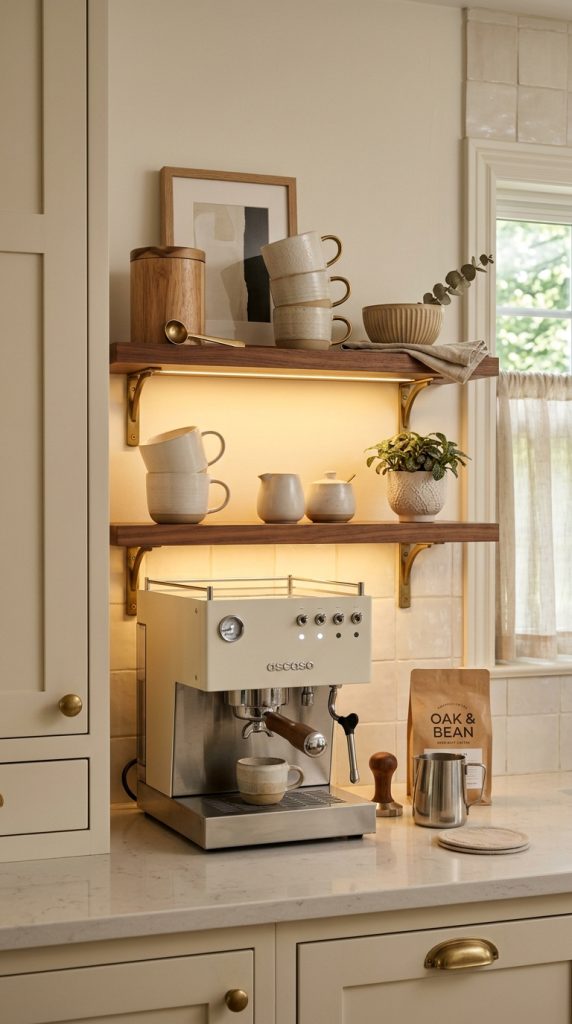
Begin with the countertop area. Place the coffee machine beneath the shelves and leave sufficient clearance for operation. Then use the shelves above for mugs, coffee containers, small artwork, and carefully selected decorative objects.
Materials and Items to Use
- Open shelves
- Compact coffee machine
- Ceramic mugs
- Coffee canisters
- Small tray
- Coffee scoop
- Framed artwork
- Ceramic vessel
- Small basket
- Warm under-shelf lighting
The lower portion should remain functional. Keep the coffee maker, water, and immediately needed supplies within easy reach. The shelves can provide both storage and visual personality.
A useful styling formula is to vary heights and shapes. Place taller mugs beside shorter containers, then introduce one flat artwork piece or small bowl. This keeps the composition interesting without requiring many objects.
Do not fill every shelf completely. Empty space is especially valuable in a small kitchen because it prevents the coffee station from appearing crowded.
If you have multiple coffee mugs, display only your favorites. Store the rest elsewhere. A small collection of coordinated cups can look intentional, whereas a large mismatched pile can quickly become visually noisy.
Lighting can make this arrangement particularly inviting. Install warm illumination underneath the lowest shelf so the countertop receives a soft glow. This creates an attractive evening atmosphere and makes the coffee area easier to use early in the morning.
Consider using one repeating color throughout the station. For example, cream mugs, a natural wood shelf, and neutral ceramic containers can create a calm look. Alternatively, dark mugs and black hardware can give the area a more modern character.
Open shelves are also useful for renters if freestanding versions are appropriate for the available space. For permanent installations, use proper anchors and make sure the shelf system is rated for the intended load.
Keep cleaning in mind. Open shelves expose everything to kitchen dust and cooking residue, so avoid displaying too many delicate objects that require frequent maintenance.
This idea works especially well in kitchens with an unused stretch of wall above the counter. Instead of allowing the wall to remain empty, the shelves create a complete vertical coffee composition.
You can make the station feel even more personal by adding a small piece of art related to coffee, a handwritten-style label, or a meaningful ceramic object. Keep decorative details secondary to function.
The finished effect should feel like a tiny café built directly into your kitchen. The coffee maker anchors the bottom while the shelves create height, storage, and personality above it.
7. Use a Pull-Out Drawer System for Hidden Coffee Storage
A small kitchen becomes much easier to organize when storage is designed around how you actually use your supplies. A pull-out drawer can create an efficient coffee storage zone while keeping ingredients and accessories out of sight.
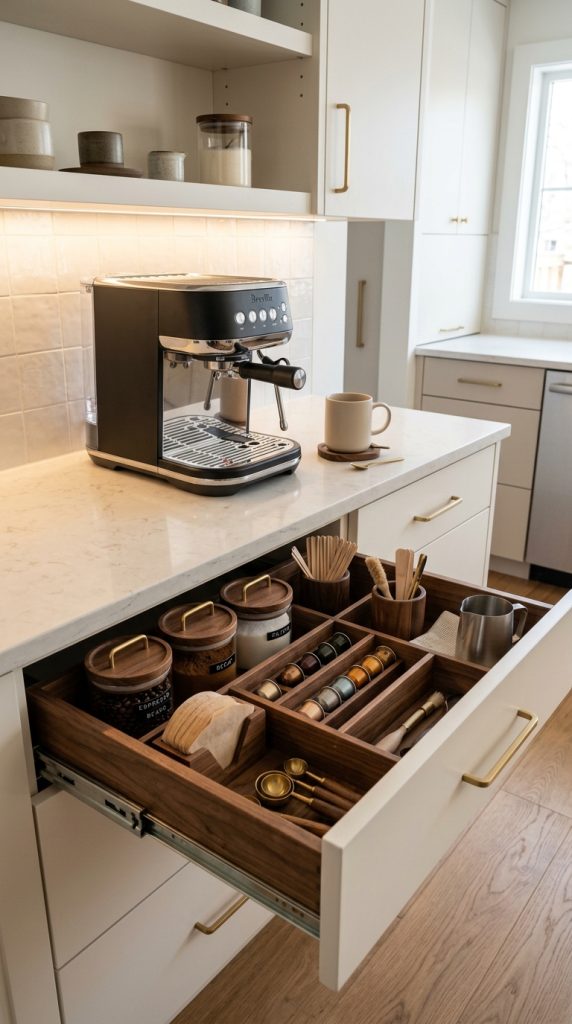
This approach is particularly useful for coffee supplies that tend to spread across several cabinets. Beans, pods, filters, scoops, stirrers, napkins, and sweeteners can all become difficult to locate when they are stored randomly.
A deep drawer beneath or near the coffee-making area can serve as the primary storage zone.
Materials and Items to Use
- Deep kitchen drawer
- Adjustable drawer dividers
- Airtight coffee containers
- Coffee pod organizer
- Filter holder
- Measuring spoon
- Small labels
- Napkins
- Stir sticks
- Small cleaning cloth
Begin by removing everything from the drawer and categorizing the supplies. Separate everyday coffee ingredients from backup stock.
Use dividers to establish dedicated sections. One section can hold filters, another can hold scoops and measuring tools, and another can store pods or packets.
If you store coffee beans, use airtight containers designed for coffee storage rather than leaving opened bags loose inside the drawer. This keeps the area neater and helps protect the coffee from unnecessary exposure to air.
A pull-out arrangement is especially convenient because you can see the contents from above. Unlike deep cabinets, where items at the back often disappear, drawers bring the entire collection into view.
For a visually organized interior, use containers with similar dimensions. Clear containers make it easy to identify supplies, while opaque containers create a cleaner appearance. Choose based on your preference.
Labels can be useful when several containers look alike. Keep them simple and consistent.
The drawer should be located close enough to the coffee machine that you do not have to walk across the kitchen during preparation. Ideally, the workflow should be straightforward: open drawer, retrieve coffee, prepare drink, return supplies.
Do not overcrowd the drawer. Leave enough room to remove items without moving everything else.
This system is less about decoration and more about efficiency, making it a useful choice for homeowners who prefer countertops that remain almost completely clear.
You can combine this hidden storage with a minimalist countertop coffee station. The machine stays visible, but nearly all supporting accessories disappear into the drawer.
For families, this can also help establish a consistent storage routine. Everyone knows exactly where coffee supplies belong, making it easier to maintain the kitchen.
A pull-out drawer coffee system is particularly valuable when cabinets are limited but existing drawers can be reorganized. It does not necessarily require purchasing new furniture or expanding the kitchen.
The overall result is a coffee station that feels sophisticated because the visible area remains simple while the hidden storage handles the practical details.
8. Create a Mini Coffee Pantry With Door-Mounted Storage
Kitchen cabinet doors are often overlooked storage surfaces. With appropriate organizers, the inside of a cabinet door can become valuable real estate for small coffee accessories.
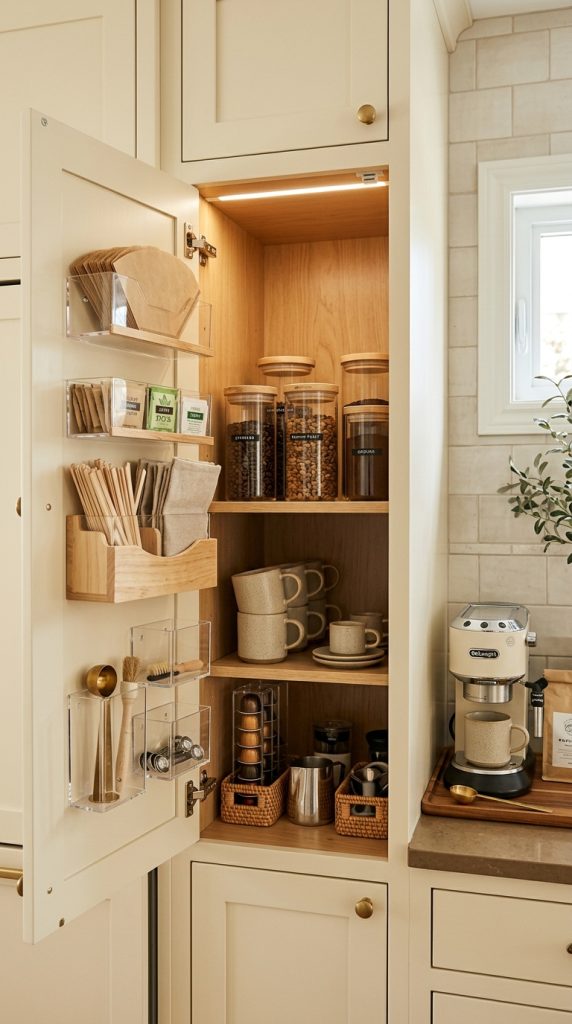
This idea works especially well when cabinet interiors are already full. Instead of adding another cabinet, use the door for lightweight supplies.
Materials and Items to Use
- Cabinet-door organizer
- Small storage bins
- Coffee filters
- Tea bags
- Sweetener packets
- Stir sticks
- Measuring spoons
- Small labels
- Compact coffee containers
- Mug storage hooks
Start by checking the cabinet door and organizer specifications. Make sure the chosen system is compatible with the door thickness and cabinet construction. Avoid placing excessive weight on hinges or doors that are not designed to support it.
Small pockets or bins can hold items that are otherwise difficult to organize. Coffee filters are an obvious candidate, but the space can also accommodate individually packaged sweeteners, napkins, stirrers, or reusable cleaning accessories.
Keep the heaviest supplies elsewhere. Door storage works best for lightweight objects.
Inside the cabinet, use the main shelves for larger items such as coffee beans, mugs, or backup supplies. The door then becomes a convenient location for small pieces.
This creates a miniature coffee pantry without adding floor space.
One advantage of this system is visibility. When you open the cabinet, everything is easy to see rather than buried in the back.
You can organize the door vertically according to frequency of use. The most frequently accessed items should be positioned around eye or hand level.
Labels can make the system easier to maintain, particularly if multiple household members use the coffee station.
For aesthetics, choose organizers that blend with the cabinet interior. White, clear, wood, or neutral finishes can create a cohesive look.
This solution can also support a coffee station located on a nearby countertop. The countertop holds only the coffee maker and perhaps one attractive tray. The cabinet handles all the supporting supplies.
If you have a small kitchen with limited drawers, this technique can free up drawer space for cooking utensils.
Avoid using the door for too many categories. A dedicated coffee door is easiest to maintain when its purpose remains clear.
This idea is especially useful in rental kitchens where you cannot add permanent cabinetry. A properly installed removable organizer can provide additional storage without changing the kitchen layout.
The result is subtle but highly functional. Guests may never realize that an ordinary cabinet door contains an organized coffee pantry, while you benefit from having everything close at hand.
9. Create a Coffee and Breakfast Station in One Compact Zone
If your kitchen does not have enough room for separate beverage and breakfast areas, combine them. A carefully organized coffee-and-breakfast station can use one compact section of counter while serving multiple morning routines.
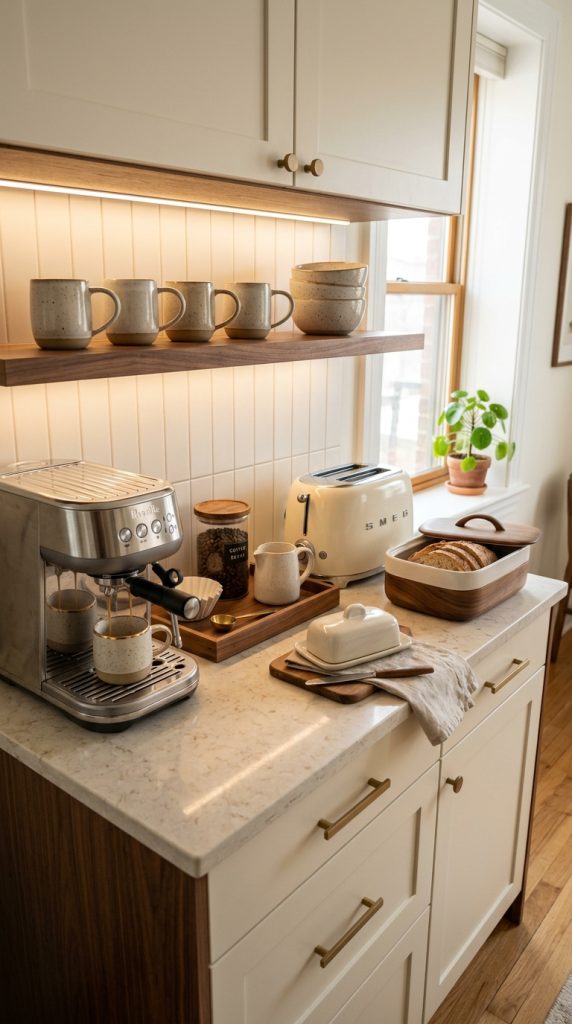
The key is dividing the area into functional zones rather than allowing everything to mix together.
Materials and Items to Use
- Compact coffee maker
- Toaster or small breakfast appliance
- Wooden tray
- Coffee canister
- Bread box or narrow container
- Small bowl
- Mug hooks
- Condiment container
- Napkins
- Compact shelf
Begin by deciding which appliances genuinely need to remain visible. If you rarely use the toaster, store it elsewhere and bring it out when needed. The goal is to avoid turning the station into a collection of every breakfast appliance.
Place the coffee maker toward one side and the breakfast component toward the other. Use a tray or subtle visual boundary to distinguish them.
For example, the coffee zone might contain mugs, beans, and a scoop, while the breakfast zone holds a toaster and bread container.
A small shelf above the area can increase storage without expanding the footprint. Use it for mugs, bowls, or small jars.
Keep food storage sealed and away from heat-producing appliances. Follow the manufacturer’s instructions for appliance clearance and safe operation.
For a cohesive appearance, repeat materials between the two zones. A wooden tray and wooden bread box can visually connect the areas, while neutral ceramics can keep the arrangement calm.
This approach is particularly practical for busy households. Instead of moving around the entire kitchen each morning, frequently used breakfast supplies are grouped together.
You can also create a simple workflow. Coffee beans and mugs are positioned closest to the coffee machine. Breakfast bowls and bread sit on the opposite side. Cleaning cloths and backup supplies remain stored below.
A small basket can hold napkins or packaged breakfast items without allowing them to spread across the counter.
If your kitchen has a breakfast nook nearby, this compact station can act as a transition point between kitchen preparation and dining.
The most important principle is restraint. A combined station can easily become overcrowded, so rotate appliances and decorative items based on actual use.
For Pinterest appeal, use a limited palette and create a clear focal point. The coffee maker can remain the visual anchor while the breakfast accessories support it without competing.
This idea transforms one small kitchen area into a practical morning command center. Instead of needing separate storage for coffee and breakfast, you create one organized destination for the routines you perform most often.
10. Create an Elegant Minimalist Coffee Bar With a Single Styled Tray
For kitchens where space is extremely limited, the simplest coffee bar may be the most effective. A single beautifully styled tray can gather the essential coffee supplies into one compact arrangement.
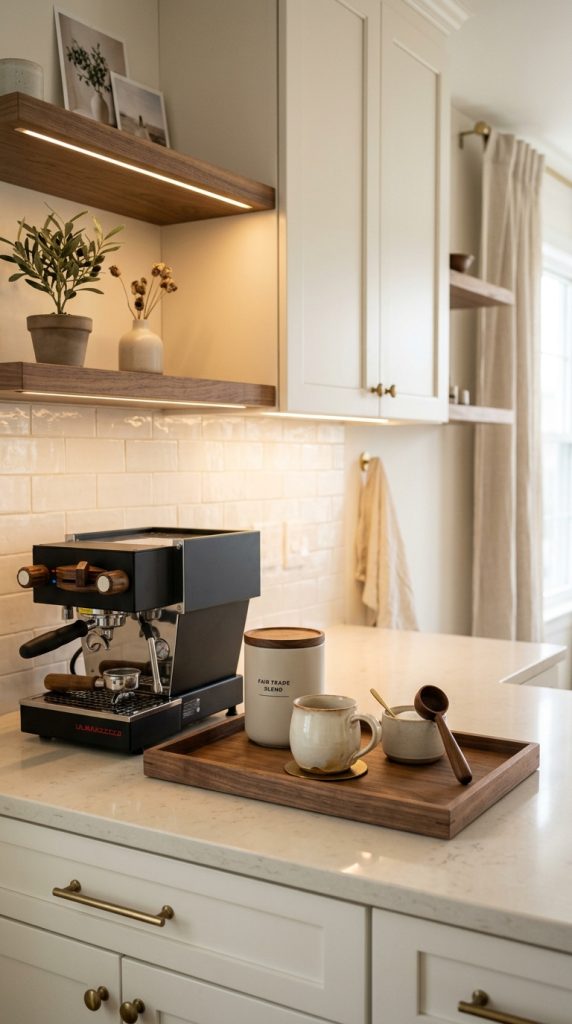
This approach is ideal when you want your coffee station to look polished without adding shelves, carts, cabinets, or complicated organizers.
Materials and Items to Use
- Compact coffee maker
- Small decorative tray
- Airtight coffee container
- Favorite mug
- Coffee scoop
- Small ceramic sugar bowl
- Spoon
- Optional small vase
- Optional warm lamp
- Washable cloth
Start with the tray. Choose one that is large enough to contain your daily essentials but small enough to leave usable counter space around it.
Place the coffee maker either directly on the tray if the tray is suitable for appliance use or position the tray beside it for the supporting accessories. Do not use decorative materials that are not designed to tolerate heat, moisture, or the appliance’s weight.
Keep the visible collection intentionally small.
A coffee container, scoop, favorite mug, and sugar bowl may be enough. If you do not use sugar, replace the bowl with a milk pitcher, small spoon container, or another item that genuinely supports your routine.
The minimalist approach relies on quality and coordination rather than quantity. Matching neutral ceramics, natural wood, glass, or subtle metal details can make a tiny arrangement feel refined.
Use height carefully. A taller coffee container can provide vertical interest, while a low tray and small cup balance the composition.
If the counter is beneath a cabinet, a small warm light can make the arrangement feel more inviting. Avoid adding multiple decorative lights in such a small area.
One of the greatest advantages of a tray-based coffee bar is portability. If you need the countertop for cooking, you can move the tray and its contents as a single unit.
This also makes cleaning easier. Instead of wiping around ten individual objects, remove the tray, clean the surface, and return the arrangement.
A minimalist coffee station can be especially attractive in small modern kitchens because it reinforces a clean visual style. It does not compete with cabinetry, countertops, or other decorative features.
The trick is to resist the temptation to keep adding accessories. If an object does not contribute to the coffee routine or improve the overall appearance, it probably does not need to stay.
You can introduce personality through one standout element, such as a handmade ceramic mug, sculptural coffee container, textured wooden tray, or subtle artwork nearby.
The finished station should feel warm rather than sterile. Minimalism does not mean removing every cozy detail. Soft materials, warm wood, gentle lighting, and a favorite cup can create comfort while maintaining visual simplicity.
For Pinterest content, this type of coffee station photographs particularly well because the composition is clear and easy to understand. Viewers immediately see the coffee maker, the essential supplies, and the small amount of space required.
Most importantly, this idea demonstrates that a beautiful coffee bar does not require a large kitchen. A carefully selected tray and a few practical pieces can create a complete coffee ritual in a surprisingly small footprint.
How to Make Any Small Kitchen Coffee Bar Feel More Spacious
The biggest challenge with a small coffee station is preventing it from visually taking over the kitchen. Regardless of which design you choose, a few basic principles can help the area feel larger.
First, keep the countertop visible. A station that occupies the entire surface will make the kitchen feel smaller. Leave some breathing room around the main appliance whenever possible.
Second, use vertical storage strategically. Shelves, hooks, and cabinet-door organizers can hold supplies without expanding the countertop footprint.
Third, coordinate colors. A coffee bar with too many contrasting colors can look busy. Neutral ceramics, natural wood, soft black accents, or colors already present in the kitchen usually create a more cohesive appearance.
Fourth, store backup supplies away from the main station. Your everyday coffee should be accessible, but extra bags, boxes, and bulk packages do not need to remain visible.
Fifth, choose multifunctional accessories. A tray can organize supplies and make cleaning easier. A shelf can display mugs while providing storage. A rolling cart can serve as a coffee station and additional kitchen storage.
Finally, consider the actual workflow. A beautiful station is only successful if you can make coffee comfortably. Make sure appliance doors open properly, outlets are accessible, cords are safely managed, and frequently used supplies are within reach.
A small kitchen coffee bar should simplify your morning rather than create another organizing project.
Final Thoughts
Creating a coffee station in a small kitchen is ultimately about using available space with intention. You do not need a dedicated coffee room, oversized cabinetry, or a huge countertop to enjoy a cozy beverage corner. A tiny section of counter, a vertical shelf, an organized cabinet, a rolling cart, or even a single tray can become a practical and beautiful coffee bar.
The strongest small kitchen coffee bar ideas combine three qualities: efficient storage, comfortable workflow, and personal style. When these elements work together, even a compact station can feel intentional and luxurious.
Start with the space you already have. Measure it, identify the items you actually use, and decide which storage method solves your biggest problem. If your counter is crowded, move storage upward. If your kitchen looks cluttered, hide supplies inside a cabinet. If your layout changes frequently, consider a rolling cart. If you want the simplest possible solution, use a carefully styled tray.
Remember that a coffee station should serve your routine first and your decorating style second. Choose attractive pieces, but make sure they are useful. Keep the equipment accessible, the supplies organized, and the cleaning process simple.
With a little planning, a small kitchen can support a coffee station that feels warm, organized, and inviting every day. The finished space does not have to look like a commercial café. It simply needs to create a pleasant little corner where your favorite morning ritual feels easier and more enjoyable.
Whether your style is modern, cozy, minimalist, rustic, Scandinavian, contemporary, or warmly traditional, the same space-saving principles can be adapted to fit your kitchen. Use vertical space, reduce visual clutter, group related items, and let a few carefully chosen details provide personality.
Most importantly, do not underestimate a small space. When every inch is planned thoughtfully, a compact kitchen can have a coffee bar that feels just as intentional and special as one found in a much larger home.