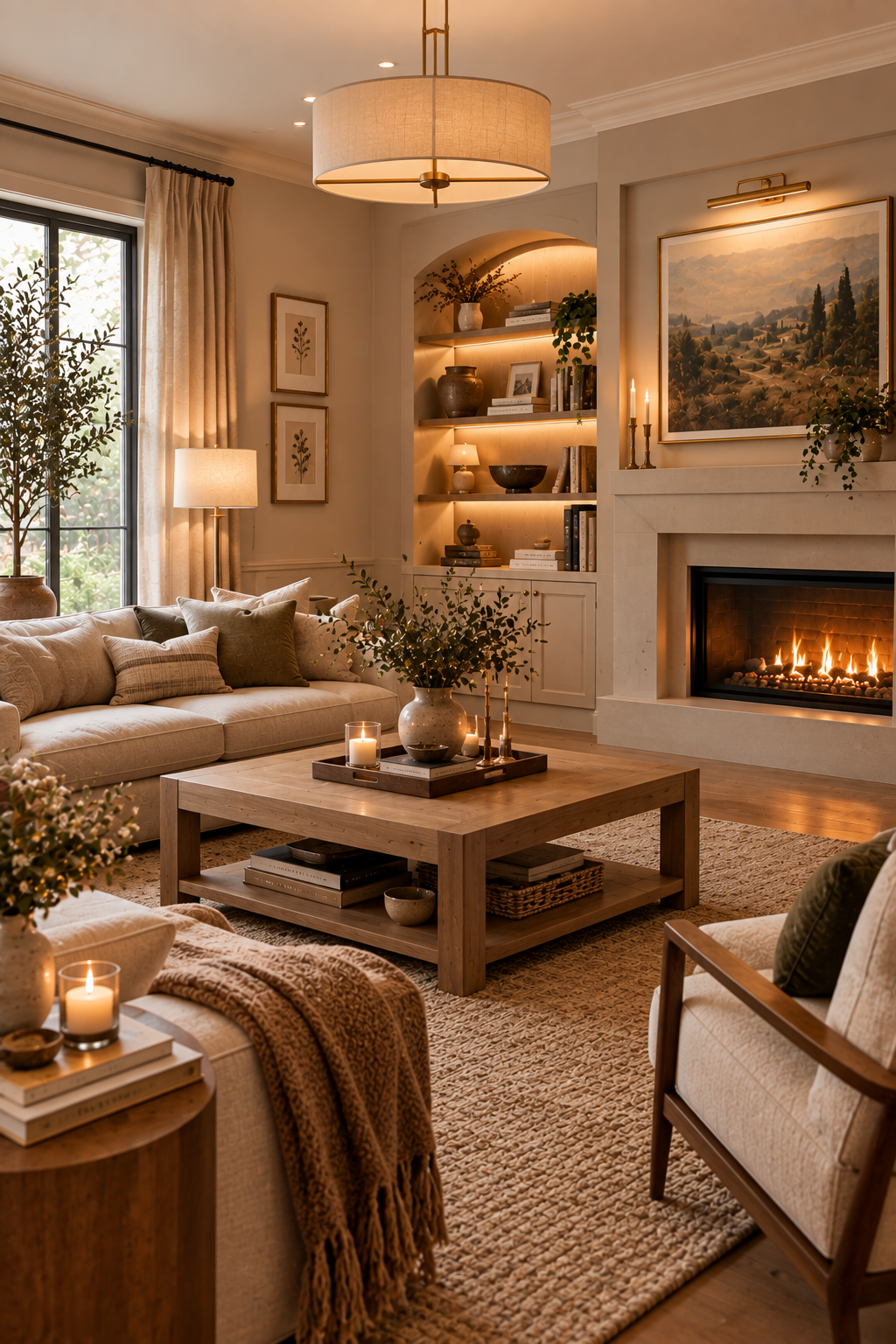
Tag: Cozy

  • Warm Minimalist Interior Ideas for a Cozy, Elegant & Clutter-Free Home

    Warm Minimalist Interior Ideas for a Cozy, Elegant & Clutter-Free Home

    Warm minimalist interior design brings together two qualities that can sometimes seem difficult to combine: simplicity and comfort. Traditional minimalism often focuses heavily on clean lines, empty surfaces, limited decoration, and a restrained color palette. While this can create a beautiful home, it can occasionally feel cold or impersonal. Warm minimalism takes the same appreciation for simplicity and adds natural materials, soft textures, warm colors, thoughtful lighting, and carefully selected furnishings to create spaces that feel calm, elegant, and genuinely comfortable.
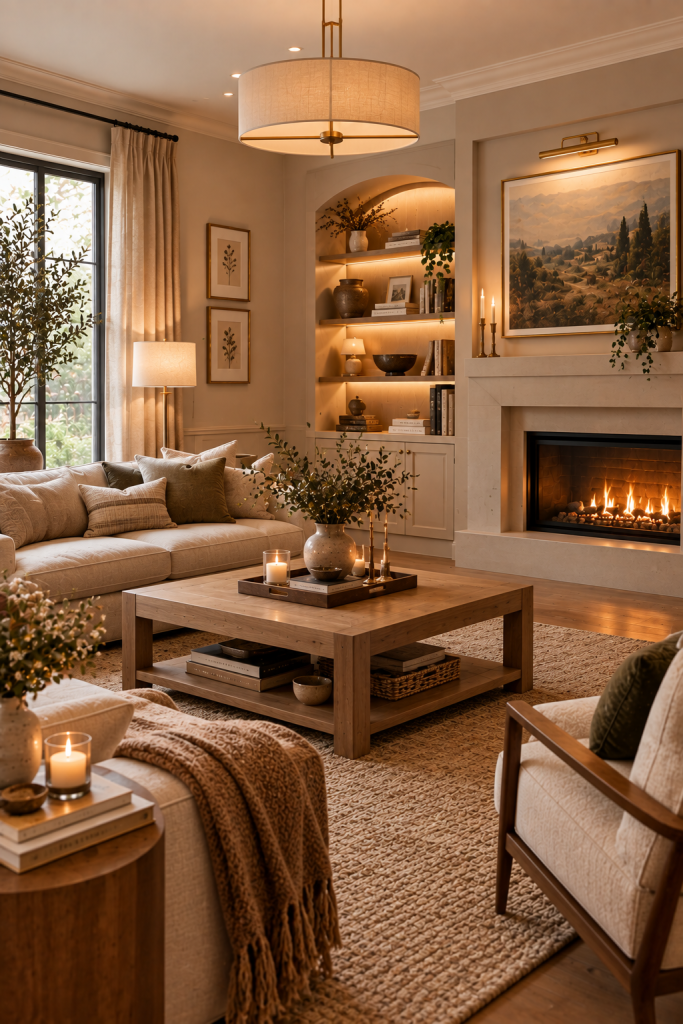
    A warm minimalist home is not an empty home. Instead, it is a home where every visible item has a reason for being there. Rather than filling shelves with dozens of decorative objects, you might choose one sculptural ceramic vase. Instead of layering multiple competing patterns, you might combine cream linen, warm oak, textured wool, and a soft beige rug. The result is visually peaceful without sacrificing personality.

    Color plays a major role in creating this atmosphere. Warm white, ivory, cream, beige, taupe, oatmeal, caramel, muted brown, and soft greige are particularly effective foundations. These shades reflect light gently and make rooms feel welcoming. They can then be complemented with natural wood, aged brass, stone, woven materials, and subtle earthy colors.

    Natural materials are another essential part of warm minimalist interiors. Wood immediately adds warmth to rooms dominated by clean architectural lines. Oak can create a light contemporary atmosphere, while walnut offers a deeper and more luxurious appearance. Linen, cotton, wool, boucle, rattan, stone, ceramic, and jute can introduce tactile variation without making the room visually busy.

    Lighting is equally important. A warm minimalist room can look completely different depending on the lighting. Bright, cool overhead illumination can make neutral spaces feel flat. Layered warm lighting creates depth and atmosphere. Floor lamps, table lamps, wall sconces, pendant lights, concealed LEDs, and candlelight can all contribute to a softer environment.

    The goal is to create several levels of illumination. General lighting should make the room functional, task lighting should support specific activities, and accent lighting should highlight architectural details or favorite objects. Warm bulbs can make cream walls, wood furniture, and natural textiles appear richer during the evening.

    Furniture selection should also be intentional. Instead of buying several small pieces simply to fill a room, choose fewer substantial pieces with comfortable proportions. A large linen sofa can become the anchor of a living room. A solid wood dining table can define a dining area. A sculptural accent chair can provide personality without requiring an entire collection of accessories.

    Storage is another important part of warm minimalism. A room cannot feel calm if everyday belongings are constantly visible. Closed cabinets, baskets, built-in shelving, storage ottomans, drawers, and multifunctional furniture help maintain the uncluttered appearance that defines minimalist interiors.

    However, storage should not eliminate personality. A warm minimalist home should still include meaningful details. Family photographs, books, handmade ceramics, artwork, plants, or objects collected during travels can all be included. The difference is that these items are displayed selectively rather than covering every available surface.

    Warm minimalism also works across many decorating styles. It can be combined with Scandinavian simplicity, organic modern design, Japandi influences, contemporary interiors, modern farmhouse elements, or subtle Mediterranean textures. The common thread is restraint, warmth, and intentionality.

    One of the easiest ways to begin is to identify the visual noise in a room. Look at the surfaces that accumulate objects: coffee tables, kitchen counters, nightstands, bathroom vanities, entryway consoles, and open shelving. Instead of automatically adding more storage or decoration, determine which items are genuinely useful and which can be removed.

    Next, establish a consistent material palette. For example, you might combine warm oak, cream linen, natural stone, matte black, and handmade ceramics. Keeping the number of dominant materials limited makes the room feel more cohesive.

    Texture then becomes the tool that prevents simplicity from becoming boring. A cream sofa can be paired with a boucle cushion, a wool rug, linen curtains, a rough ceramic vase, and a woven basket. All of these pieces can share a neutral color family while offering completely different tactile qualities.

    Proportion is also important. A minimalist room should not necessarily contain tiny furniture. Oversized curtains, generous rugs, large artwork, and substantial sofas can actually make a space feel more polished. What matters is that the pieces are appropriately scaled for the room.

    The ideas below explore different ways to create a warm minimalist home while maintaining comfort, elegance, and functionality. Each concept focuses on a specific design strategy so you can apply it to your own space without needing to completely renovate your home.

    Whether you live in a small apartment or a spacious house, warm minimalism can help you create rooms that feel lighter, calmer, and easier to maintain. The goal is not perfection. The goal is to create an environment where your surroundings support relaxation instead of competing for your attention.

    1. Create a Warm Neutral Living Room With Layered Natural Textures
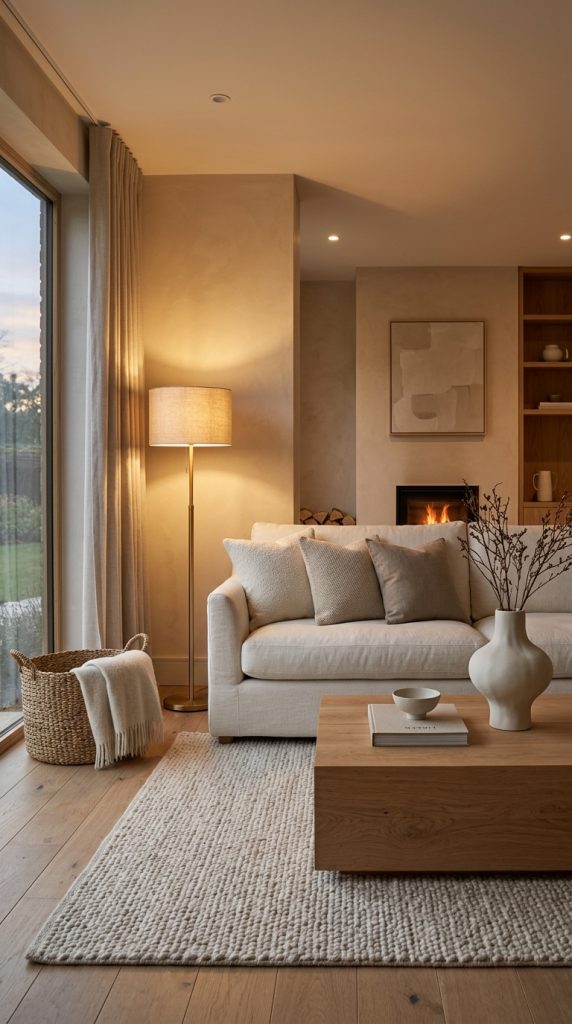
    The living room is often the best place to introduce warm minimalism because it benefits from both visual calm and physical comfort.

    Begin with a neutral foundation. Choose a cream, ivory, oatmeal, or warm beige sofa with clean contemporary lines. Avoid extremely ornate upholstery if you want the room to maintain a modern minimalist character.

    Instead of adding many decorative cushions, select two or three with different textures. Linen, boucle, cotton, and soft wool can create enough variation without introducing excessive patterns.

    A large textured rug can anchor the furniture arrangement. Choose a wool, jute, or low-pattern neutral rug in cream, beige, taupe, or soft brown.

    Introduce warm wood through a coffee table, side table, media console, or accent chair. Oak works particularly well for lighter rooms, while walnut can add contrast.

    Materials and Items

    • Cream or beige sofa
    • Neutral textured rug
    • Oak or walnut coffee table
    • Linen cushions
    • Boucle or wool throw
    • Ceramic vase
    • Woven basket
    • Floor lamp
    • Soft curtains
    • Minimal artwork

    Step-by-Step

    Start by removing unnecessary furniture and decorative objects.

    Position the largest seating piece first.

    Place the rug underneath the main seating arrangement so the room feels connected.

    Add one substantial wood coffee table rather than several small tables.

    Layer two or three textiles with different textures.

    Place a floor lamp beside the sofa to create a warm reading zone.

    Add one large artwork rather than several small pieces.

    Finish with one ceramic or natural decorative object.

    Why It Works

    The room remains visually simple because the color palette is restrained. Texture provides richness instead of excessive decoration.

    This creates the comfortable side of minimalism without making the room look crowded.

    2. Use Warm Wood as the Main Architectural Element

    Natural wood can instantly transform a minimalist interior.

    Instead of treating wood as a small accent, use it as an architectural feature. This could be a wood-paneled wall, built-in shelving, a ceiling detail, a large vanity, or a substantial furniture piece.

    Oak is especially useful when you want a light and contemporary appearance. Its natural grain provides visual interest without requiring strong colors.

    Walnut works well when you want a more sophisticated and dramatic result.

    A wood feature wall behind a sofa or bed can become the focal point of a room while eliminating the need for excessive artwork.

    Materials and Items

    • Natural oak or walnut panels
    • Wood furniture
    • Clear protective finish
    • Neutral sofa or bed
    • Cream textiles
    • Ceramic accessories
    • Warm lighting
    • Natural fiber rug

    Step-by-Step

    Choose one architectural surface for the wood treatment.

    Select a wood tone that complements the flooring and existing furniture.

    Avoid using several unrelated wood colors.

    Install the panels vertically if you want to emphasize ceiling height.

    Keep surrounding walls simple.

    Use warm lighting to emphasize the wood grain.

    Add soft textiles in cream, beige, or taupe.

    Styling Tip

    If the wood wall is visually strong, resist the temptation to cover it with large amounts of artwork.

    Let the natural grain provide the visual interest.

    3. Design a Clutter-Free Entryway With Hidden Storage

    An organized entryway can immediately make the entire home feel calmer.

    The key is to provide a designated location for everyday items without leaving everything visible.

    A minimalist entryway might include a slim console, closed shoe storage, a wall-mounted cabinet, or a built-in bench with drawers.

    Use warm wood for storage furniture and a cream or beige wall color to create an inviting first impression.

    Materials and Items

    • Slim wood console
    • Closed shoe cabinet
    • Storage baskets
    • Wall hooks
    • Large mirror
    • Neutral runner
    • Ceramic tray
    • Warm wall lighting

    Step-by-Step

    Remove unnecessary objects from the entryway.

    Determine what items actually need to remain near the entrance.

    Create a dedicated storage zone for shoes.

    Add a tray for keys and small essentials.

    Install hooks at a practical height for frequently used items.

    Place a large mirror above the console to reflect light.

    Use one basket for miscellaneous belongings.

    Add a warm wall lamp or pendant.

    Why It Works

    Everything has a designated place, so the entryway can remain visually clean even during busy days.

    The goal is not to hide every object but to prevent everyday necessities from becoming visual clutter.

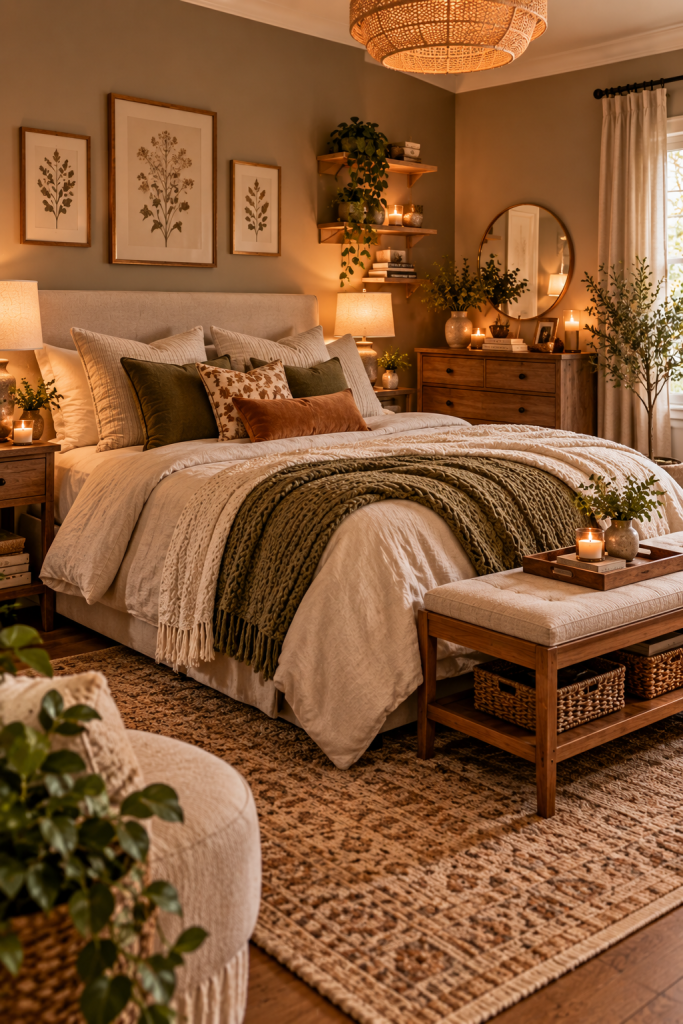
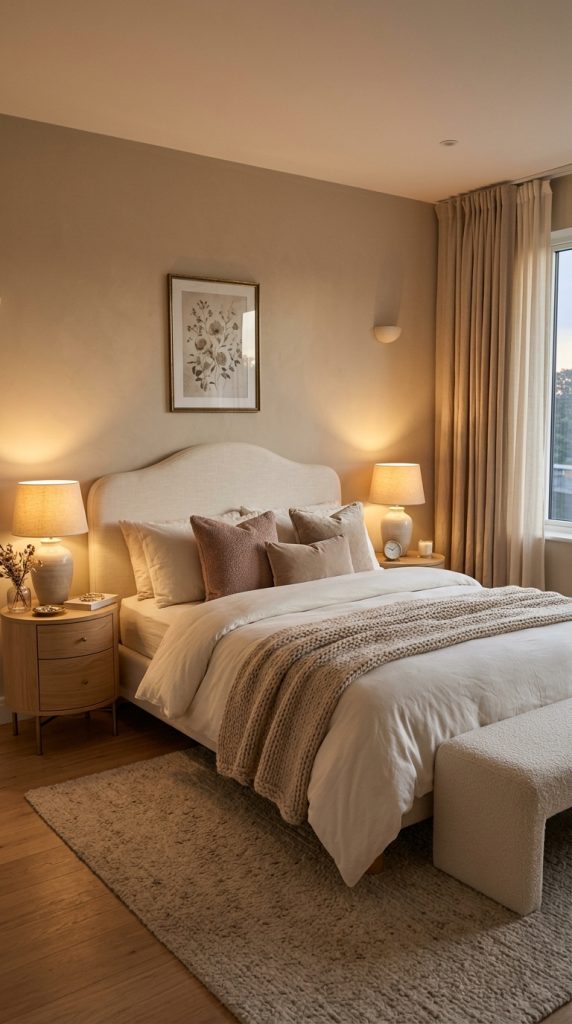
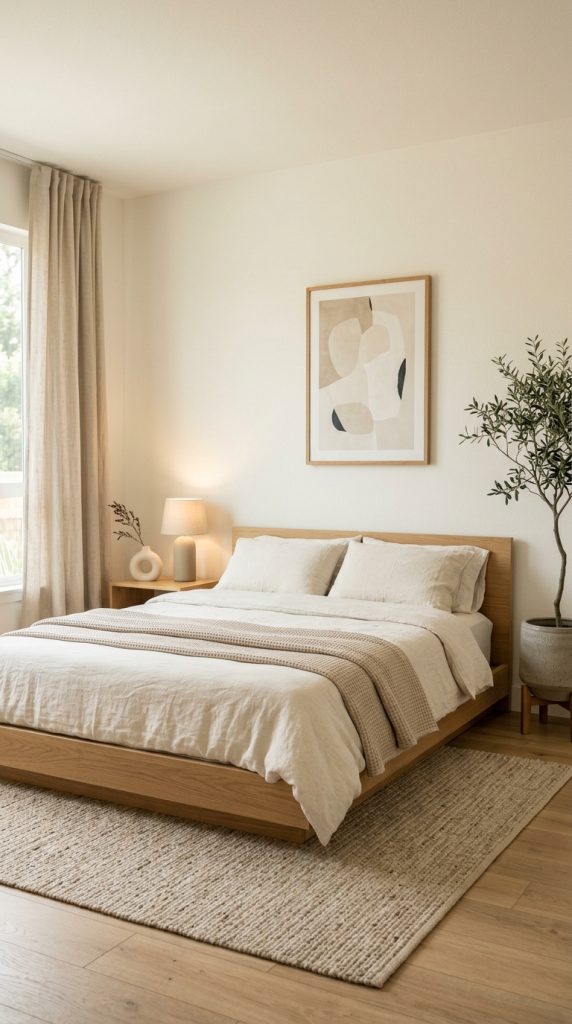
    4. Create a Cozy Minimalist Bedroom With Soft Layered Bedding
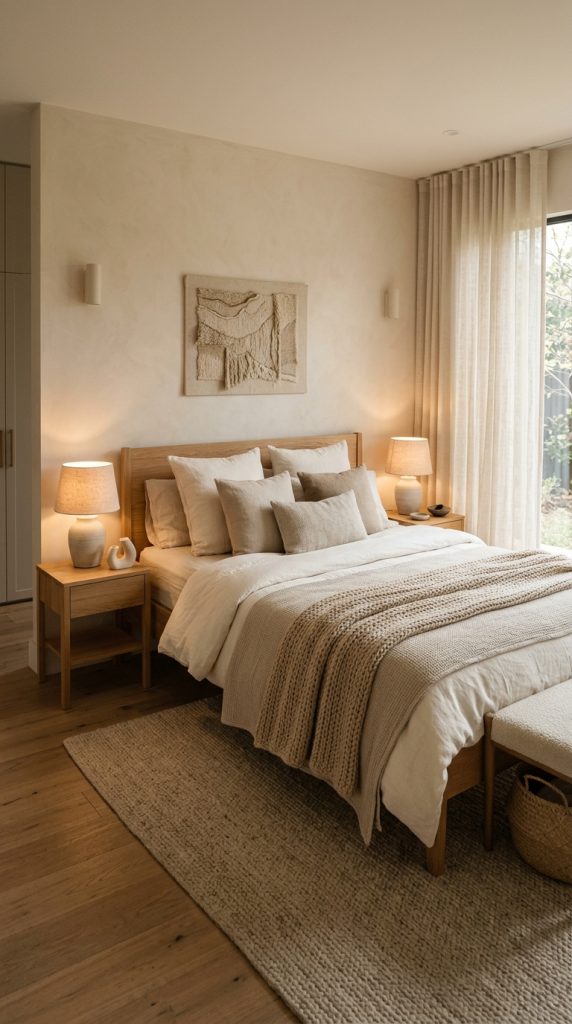
    A bedroom should feel especially calm, making it an ideal space for warm minimalist design.

    Start with a simple upholstered or natural wood bed frame.

    Choose bedding in multiple shades from the same warm neutral family. For example, combine ivory sheets with a beige duvet, oatmeal blanket, and taupe accent cushions.

    Avoid excessive decorative pillows. A small number of comfortable layers will create a more relaxed appearance.

    Natural textiles are especially effective because they provide texture without introducing busy patterns.

    Materials and Items

    • Simple wood or upholstered bed
    • Linen bedding
    • Cotton duvet
    • Wool or boucle throw
    • Warm wood nightstands
    • Ceramic lamp
    • Neutral rug
    • Linen curtains
    • Minimal artwork

    Step-by-Step

    Remove unnecessary objects from the nightstands.

    Choose one main bedding color.

    Add a second neutral tone for contrast.

    Layer one textured blanket across the lower portion of the bed.

    Use matching or complementary bedside tables.

    Choose warm lamps with soft shades.

    Add one artwork piece above the bed if desired.

    Keep the floor area open.

    Styling Tip

    Do not try to make the bed look like a hotel display every day. Warm minimalism should remain comfortable and practical.

    Natural wrinkles in linen can actually make the room feel more relaxed.

    5. Combine Cream Walls With Sculptural Furniture
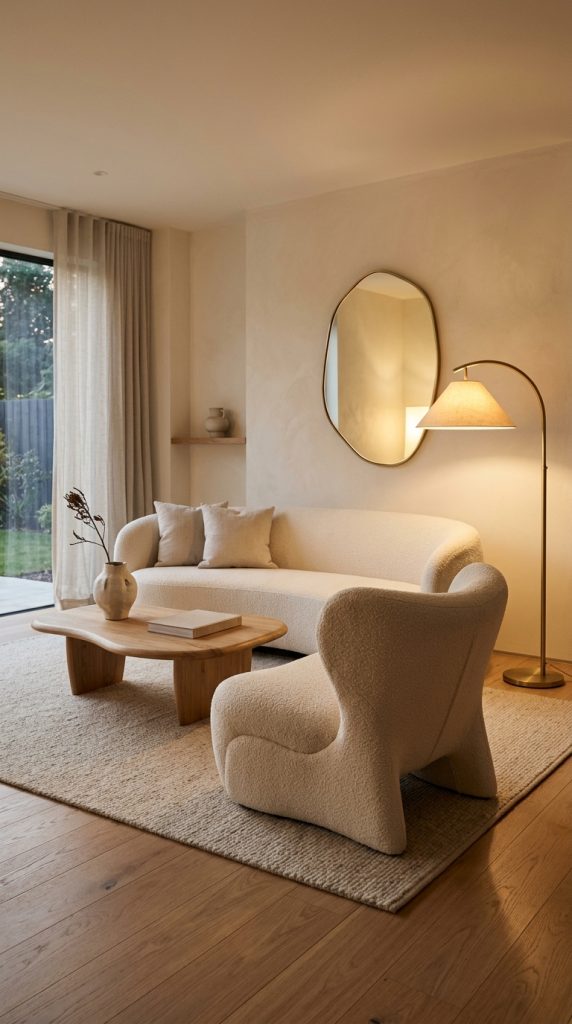
    Minimalist interiors often depend on furniture shape because there are fewer decorative objects.

    Cream walls create a soft backdrop that allows sculptural furniture to become the focal point.

    Choose pieces with curved edges, rounded arms, organic silhouettes, or interesting natural materials.

    A curved boucle chair, rounded coffee table, sculptural sofa, or organically shaped mirror can add personality without creating clutter.

    Materials and Items

    • Warm cream wall paint
    • Sculptural sofa or chair
    • Rounded coffee table
    • Natural wood furniture
    • Organic-shaped mirror
    • Neutral rug
    • Ceramic object
    • Warm floor lamp

    Step-by-Step

    Paint the room in a warm neutral rather than a stark white.

    Select one sculptural furniture piece as the focal point.

    Keep surrounding furniture simple.

    Choose a rug with subtle texture rather than a strong pattern.

    Add one organic-shaped mirror.

    Use warm lighting to emphasize curves and shadows.

    Avoid filling every empty corner.

    Why It Works

    The furniture becomes the decoration.

    This is one of the simplest ways to maintain a minimalist aesthetic while still giving the room personality.

    6. Build a Warm Minimalist Kitchen With Concealed Storage
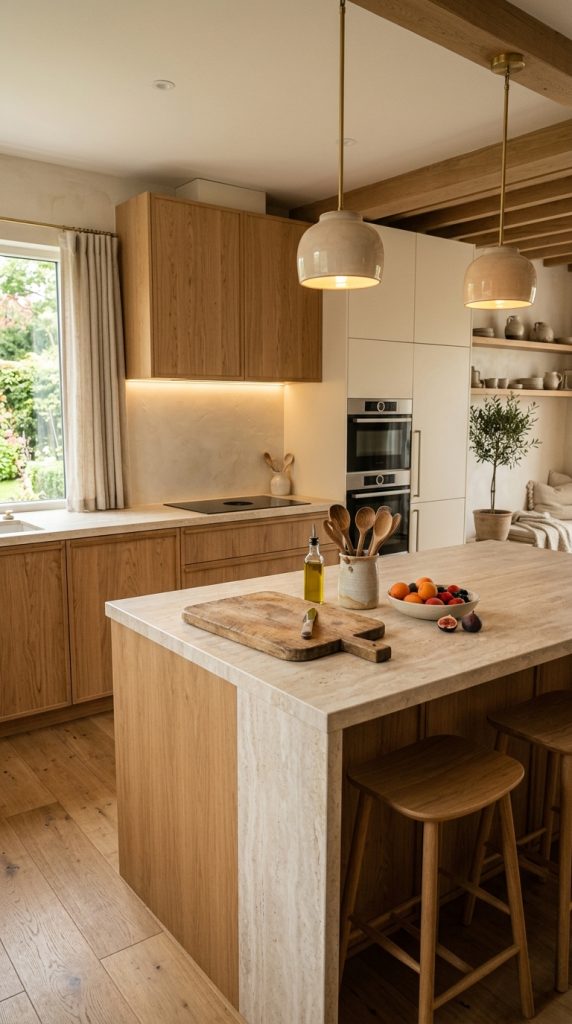
    The kitchen can quickly become one of the most visually cluttered rooms in a home because appliances, utensils, food containers, and small appliances naturally accumulate on countertops.

    Warm minimalism works especially well when storage is designed to keep most everyday items organized and concealed.

    Choose warm oak cabinetry, cream cabinets, or a combination of natural wood and soft neutral paint.

    A stone countertop in warm white, beige, or subtle veining can complete the palette.

    Materials and Items

    • Warm oak or cream cabinetry
    • Natural stone countertop
    • Simple hardware
    • Integrated appliances
    • Wood cutting boards
    • Ceramic containers
    • Neutral backsplash
    • Under-cabinet lighting
    • Minimal countertop accessories

    Step-by-Step

    Remove appliances you rarely use from the countertop.

    Group everyday cooking items into designated cabinet zones.

    Use drawer organizers for utensils.

    Install under-cabinet lighting.

    Choose a simple backsplash.

    Keep only a few attractive objects visible.

    Use natural wood cutting boards as functional decor.

    Store food containers together rather than scattering them across shelves.

    Styling Tip

    The kitchen should look usable, not sterile.

    One bowl of fruit, a wooden cutting board, or a ceramic utensil container can provide enough personality.

    7. Create an Organic Minimalist Dining Area With Natural Materials
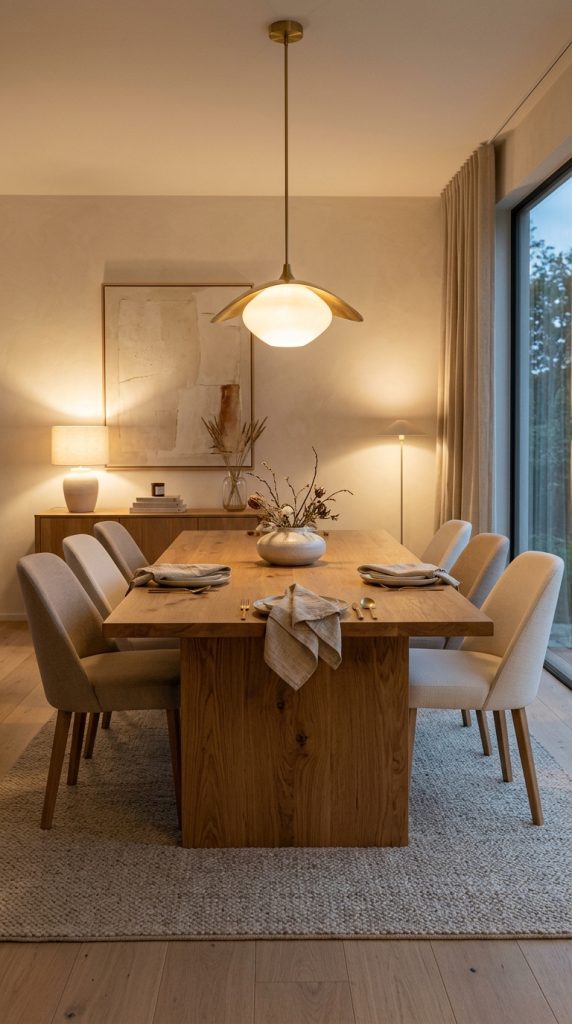
    A warm minimalist dining room does not require elaborate decoration.

    A solid wood table can become the central feature.

    Pair it with simple upholstered or wooden chairs in neutral tones.

    Instead of covering the table with many decorative objects, choose one low centerpiece such as a ceramic vessel or natural arrangement.

    Warm pendant lighting should be positioned directly above the table.

    Materials and Items

    • Solid wood dining table
    • Neutral dining chairs
    • Warm pendant light
    • Ceramic centerpiece
    • Linen napkins
    • Neutral rug
    • Natural wood sideboard
    • Simple artwork

    Step-by-Step

    Choose the dining table based on the size of the room.

    Leave enough circulation space around the chairs.

    Position the pendant so it visually anchors the table.

    Add a neutral rug underneath if appropriate.

    Use one central decorative object.

    Keep the sideboard mostly clear.

    Display only a few meaningful pieces.

    Why It Works

    The natural materials create warmth while the simple composition keeps the dining area elegant.

    This style also transitions easily between everyday meals and special occasions.

    8. Add Warm Layered Lighting Instead of Excessive Decoration
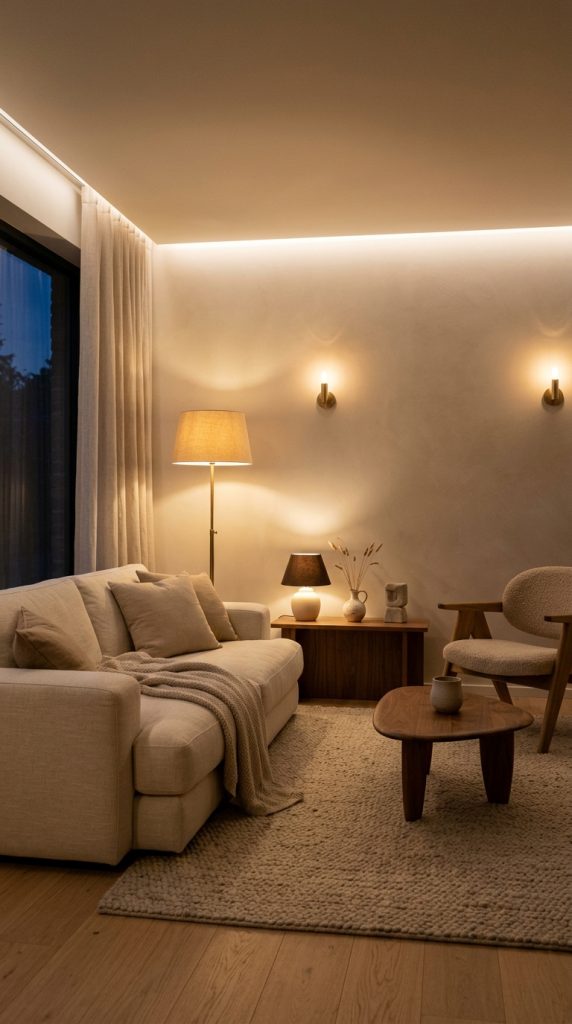
    Lighting can completely change a minimalist interior.

    Instead of filling an empty wall with decorative objects, use lighting to create atmosphere.

    Combine ceiling lighting with floor lamps, table lamps, sconces, and concealed LEDs.

    Warm bulbs can make neutral materials appear richer and more inviting.

    Materials and Items

    • Warm ceiling fixture
    • Floor lamp
    • Table lamp
    • Wall sconces
    • LED strips
    • Dimmable bulbs
    • Ceramic or fabric lamp shades
    • Candleholders

    Step-by-Step

    Identify the main activities in each room.

    Add task lighting where activities require focused illumination.

    Place ambient lamps near seating areas.

    Use wall lighting to highlight artwork or architectural details.

    Add concealed lighting beneath cabinets or shelves.

    Use dimmers wherever possible.

    Turn off unnecessary overhead lighting during relaxing evening periods.

    Styling Tip

    The goal is not to make the room brighter.

    The goal is to create several comfortable pools of light.

    9. Use Minimalist Open Shelving Without Creating Visual Clutter
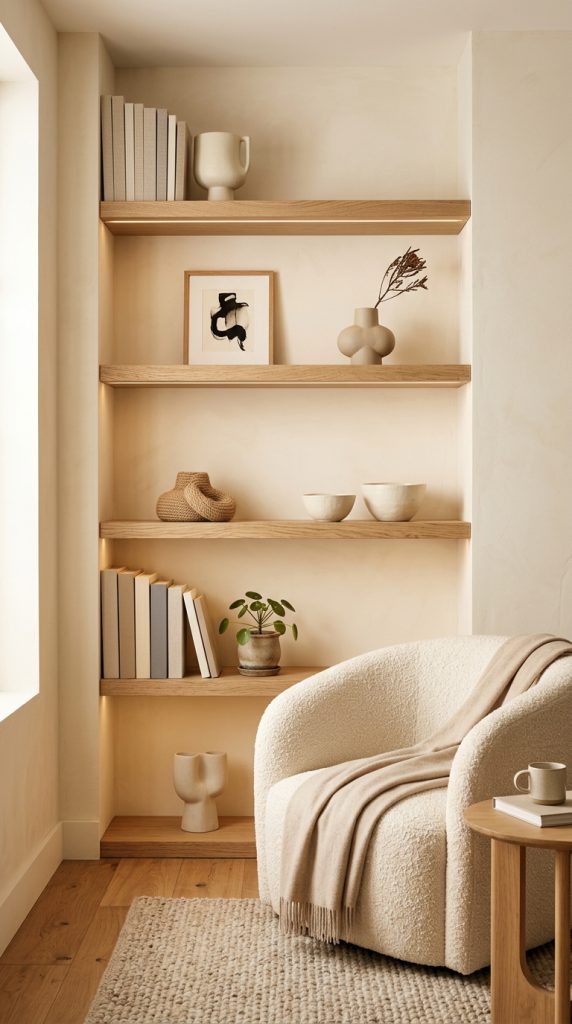
    Open shelving can look beautiful in warm minimalist homes, but it needs careful editing.

    The biggest mistake is treating open shelves like storage for everything.

    Instead, use them as curated displays.

    Combine books, ceramics, small artwork, natural objects, and one or two functional items.

    Leave empty space between groups.

    Materials and Items

    • Natural wood shelves
    • Neutral ceramics
    • Books
    • Small artwork
    • Woven object
    • Glass vase
    • Decorative bowl
    • Small plant

    Step-by-Step

    Remove everything from the shelves before restyling.

    Choose three or four material categories.

    Place the largest objects first.

    Group smaller pieces around them.

    Leave visible negative space.

    Avoid placing similar objects next to each other.

    Step back and evaluate the entire shelving unit.

    Remove one or two items if it feels crowded.

    Why It Works

    Negative space becomes part of the design.

    The empty areas allow individual objects to stand out instead of competing with one another.

    10. Finish the Home With a Consistent Warm Minimalist Material Palette
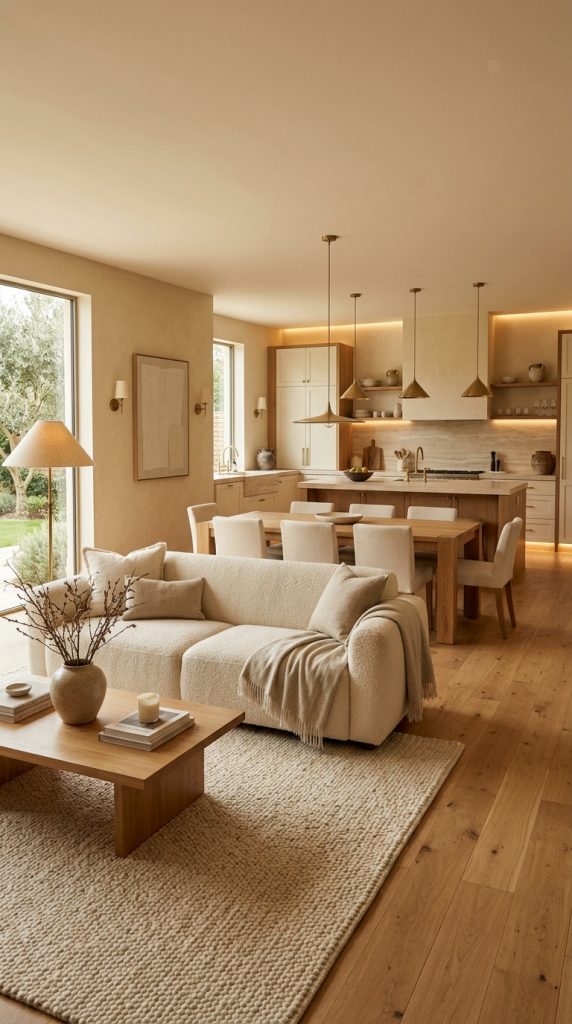
    A warm minimalist home feels especially cohesive when the same materials and colors appear throughout different rooms.

    You do not need every room to look identical. Instead, repeat certain visual elements.

    For example, warm oak can appear in the living room coffee table, kitchen cabinetry, bedroom nightstands, and entryway console.

    Cream walls can connect several rooms.

    Brushed brass can appear in lighting and hardware.

    Natural stone can repeat through countertops and bathroom surfaces.

    Materials and Items

    • Warm oak or walnut
    • Cream and beige textiles
    • Natural stone
    • Linen
    • Wool
    • Ceramic
    • Aged brass
    • Woven materials
    • Warm lighting

    Step-by-Step

    Choose three primary colors for your home.

    Select one or two dominant wood tones.

    Choose a consistent metal finish.

    Repeat natural textiles throughout different rooms.

    Keep large furniture pieces within the same visual family.

    Use artwork to introduce personality without changing the overall palette.

    Edit accessories regularly.

    Why It Works

    Consistency creates the feeling of a professionally designed home.

    Each room can have its own personality while still belonging to the same overall visual story.

    How to Make Warm Minimalism Feel Cozy Instead of Empty

    The biggest challenge with minimalist decorating is avoiding a sterile appearance.

    Texture is the easiest solution.

    Layer wool, linen, cotton, boucle, wood, stone, and woven materials.

    Use rugs to soften hard floors.

    Add curtains to large windows.

    Choose furniture with comfortable proportions.

    Warm lighting is also essential.

    Instead of relying entirely on recessed ceiling lights, add lamps at different heights.

    A small amount of natural greenery can also introduce life without overwhelming the room.

    The objective is to remove visual noise, not remove warmth.

    How to Declutter Without Making Your Home Feel Personality-Free

    Decluttering does not mean throwing away everything you love.

    Start by identifying objects that no longer serve a purpose.

    Then separate meaningful objects from items that are simply occupying space.

    Keep pieces that have emotional or practical value.

    Display them intentionally.

    Instead of placing ten souvenirs across a shelf, choose two or three favorites.

    Rotate seasonal accessories rather than displaying everything simultaneously.

    This approach allows the home to remain personal while maintaining visual calm.

    How to Choose a Warm Minimalist Color Palette

    A simple palette might begin with warm white as the main wall color.

    Add cream and beige through upholstery and textiles.

    Introduce warm brown through wood.

    Use taupe or greige for subtle contrast.

    Then add one muted accent such as olive, terracotta, dusty blue, or charcoal.

    Avoid using too many saturated colors at once.

    The beauty of warm minimalism comes from subtle tonal variation.

    How to Make a Small Home Feel Warm and Minimalist

    Small spaces benefit significantly from minimalist organization.

    Choose furniture with multiple functions.

    Use storage ottomans.

    Select wall-mounted shelving carefully.

    Use mirrors to reflect natural light.

    Choose curtains that extend from near the ceiling to the floor to create visual height.

    Avoid filling every corner with furniture.

    Use one large rug rather than multiple small rugs when possible.

    Keep surfaces relatively clear.

    The result can make a compact home feel more spacious without sacrificing comfort.

    Final Thoughts

    Warm minimalist interior design is ultimately about creating a home that feels peaceful without becoming impersonal.

    The foundation is simple: choose fewer things, but choose them thoughtfully.

    Warm wood brings natural character. Cream and beige create a calming backdrop. Linen, wool, boucle, ceramic, stone, and woven materials provide texture. Layered lighting creates atmosphere. Smart storage keeps everyday clutter under control.

    The most successful warm minimalist interiors are not completely empty. They contain books, artwork, plants, photographs, comfortable furniture, and objects that have meaning. The difference is that everything has a place and the overall composition remains intentional.

    Start with one room rather than trying to transform your entire home at once. Remove unnecessary items, establish a warm neutral palette, introduce natural materials, and improve the lighting.

    Then observe how the room feels.

    If it still feels cold, add texture rather than more objects. If it feels cluttered, edit rather than simply adding storage containers. If it feels flat, introduce variation through wood grain, textiles, ceramics, and lighting.

    Warm minimalism works because it focuses on the qualities that make a home genuinely enjoyable: comfort, simplicity, natural beauty, organization, and atmosphere.

    With the right balance, a clutter-free home can still feel layered, personal, elegant, and invitingโ€”a space that looks beautiful in photographs but also feels wonderful to live in every day.
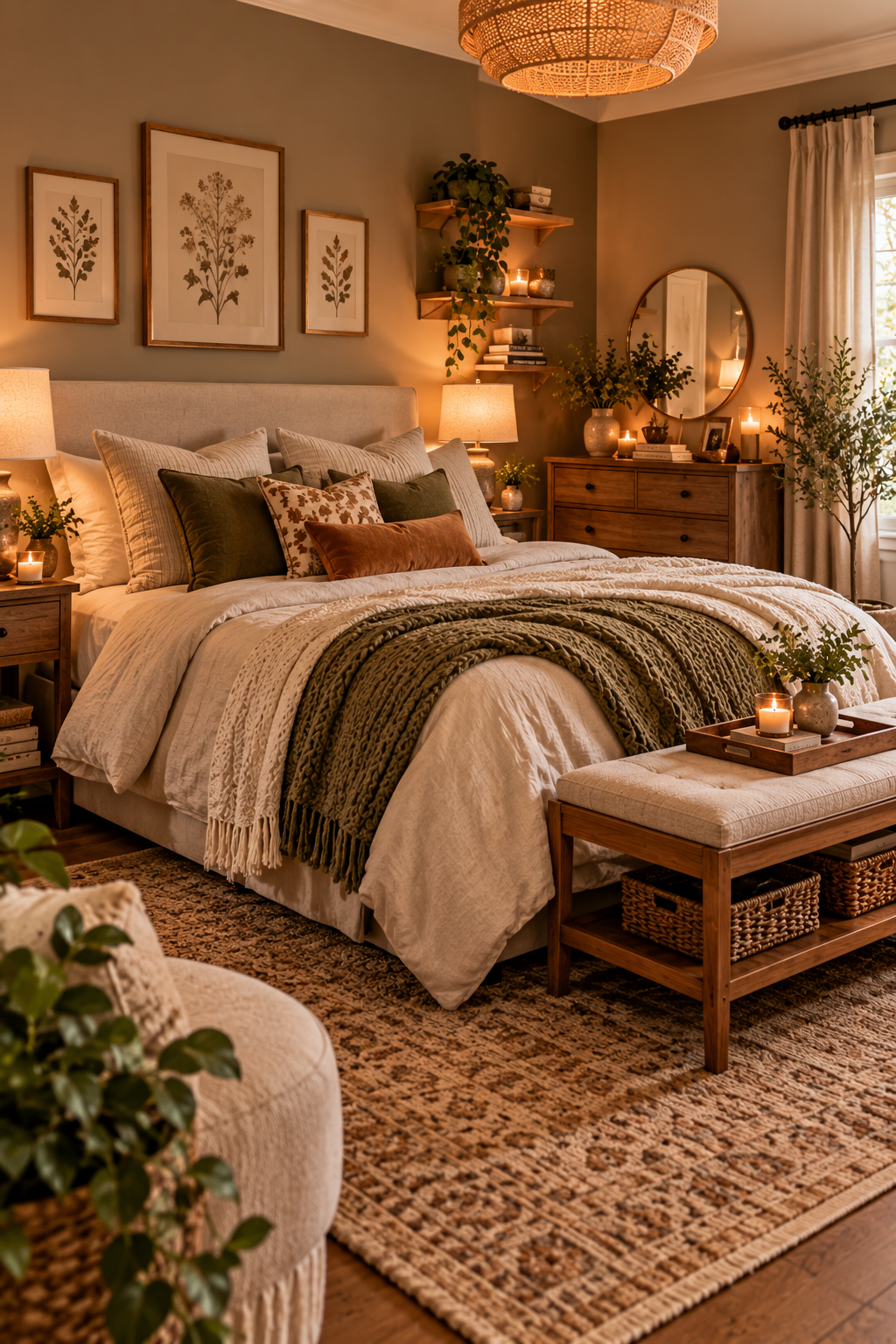

  • Aesthetic Bedroom Decor Ideas for a Cozy, Relaxing & Beautiful Retreat

    Aesthetic Bedroom Decor Ideas for a Cozy, Relaxing & Beautiful Retreat

    Creating a bedroom that feels cozy, relaxing, and beautiful is about much more than choosing attractive furniture. Aesthetic bedroom decor ideas for a cozy, relaxing and beautiful retreat should combine comfort, texture, lighting, color, storage, and personality so the room feels peaceful while still looking thoughtfully designed. The bedroom is one of the most personal rooms in a home, and because it is where you begin and end each day, its atmosphere can have a powerful effect on how comfortable the entire home feels.

    A beautiful bedroom does not have to be enormous, expensive, or filled with designer furniture. A carefully styled small bedroom can feel just as inviting as a large master suite. What matters most is how the different elements work together. A soft bed, warm lighting, natural materials, attractive window treatments, thoughtful artwork, and a few carefully selected accessories can completely change an ordinary room.

    The first step is deciding how you want the bedroom to feel.

    Do you want it to feel warm and cocoon-like?

    Perhaps you prefer a bright, airy retreat with soft neutral colors.

    Maybe you love a luxurious hotel-inspired bedroom with layered bedding and elegant lighting.

    You may prefer organic modern design with wood, linen, stone, and natural textures.

    Or perhaps your ideal bedroom is romantic, vintage-inspired, minimalist, or slightly dramatic.

    Knowing the atmosphere you want makes it easier to decide which colors, materials, furniture, and accessories belong in the space.

    Color provides the foundation.

    Soft neutrals are particularly effective in bedrooms because they create a calm visual background. Cream, ivory, beige, oatmeal, taupe, warm gray, and soft brown can be combined without making the room feel visually busy. These colors can also be paired with natural wood, aged brass, muted green, dusty rose, terracotta, or charcoal when additional personality is needed.

    A neutral bedroom does not have to be boring.

    The secret is layering.

    A cream wall can sit behind an ivory upholstered bed.

    A beige rug can introduce subtle pattern.

    Warm brown cushions can create contrast.

    A walnut nightstand can add depth.

    A linen curtain can soften the window.

    A ceramic lamp can introduce an organic shape.

    When these elements have different textures, even a simple color palette becomes visually interesting.

    Texture is especially important because bedrooms are naturally associated with softness and comfort.

    Think about how many different textures can exist around a single bed.

    Smooth cotton sheets.

    A quilted coverlet.

    A fluffy duvet.

    A knitted throw.

    A velvet cushion.

    A woven bench.

    A wool or textured rug.

    A linen curtain.

    Each material contributes something different.

    The result is a room that looks inviting before you even sit down.

    The bed should generally remain the strongest visual anchor.

    Instead of trying to compete with it using dozens of decorations, make the bed itself beautiful.

    Layer the bedding thoughtfully.

    Begin with quality sheets.

    Add a duvet or quilt.

    Place sleeping pillows behind decorative cushions.

    Introduce one or two accent pillows.

    Then finish with a throw folded or casually draped near the foot of the bed.

    The arrangement should look comfortable rather than excessively formal.

    Lighting is another essential component of bedroom design.

    Bright overhead lighting is useful when cleaning, dressing, or organizing, but it should not be the only source of illumination.

    Layered lighting creates a much more relaxing environment.

    Bedside lamps can provide gentle reading light.

    Wall sconces can save space and create a sophisticated appearance.

    A floor lamp can brighten a dark corner.

    A small decorative lamp can illuminate a dresser.

    Warm lighting is particularly effective because it complements cream, beige, wood, brass, and other bedroom materials.

    The placement of lighting matters as much as the fixture itself.

    A lamp should illuminate the area where it is needed without producing harsh glare.

    Bedside lighting should be comfortable when viewed from the pillow.

    Accent lighting can highlight artwork, architectural details, or a decorative arrangement.

    The result is a bedroom that feels different throughout the day.

    Natural daylight can make the room feel fresh and open in the morning.

    Warm lamps can make it feel intimate in the evening.

    Window treatments also have a major influence on atmosphere.

    Bare windows can sometimes make a bedroom feel unfinished.

    Floor-length curtains can soften the architecture and introduce another layer of texture.

    Linen curtains create an airy, relaxed feeling.

    Heavier curtains can make the room feel warmer and more private.

    Layering sheer curtains beneath heavier panels can provide flexibility while adding depth.

    The goal is to frame the window without making it feel visually heavy.

    Furniture selection should also support the desired atmosphere.

    A large bedroom does not necessarily need more furniture.

    Too many pieces can reduce the sense of calm.

    Choose furniture according to function.

    The bed is essential.

    Nightstands provide convenient storage.

    A dresser can organize clothing.

    A bench can offer seating.

    A small chair can create a reading corner.

    Beyond that, consider whether additional furniture actually improves the room.

    Leaving some open space allows the bedroom to breathe.

    Small bedrooms require even more attention to scale.

    A large bed may already occupy much of the available floor area, so oversized nightstands or bulky chairs can make the room feel cramped.

    Choose slimmer furniture where appropriate.

    Use vertical space for storage.

    Choose one large artwork instead of many small pieces.

    A wall-mounted sconce can replace a table lamp if bedside surface space is limited.

    Mirrors can also help a small bedroom feel more open.

    Artwork gives the bedroom personality.

    A large piece above the headboard can establish the room’s visual character immediately.

    Abstract artwork works beautifully in modern spaces.

    Botanical prints can complement organic interiors.

    Vintage artwork can create a collected atmosphere.

    Black-and-white photography can provide contrast in a neutral bedroom.

    You do not need to cover every wall.

    Sometimes one carefully selected piece has more impact than a gallery wall.

    Decorative accessories should be used with similar restraint.

    A bedroom can become cluttered quickly because nightstands, dressers, and shelves often collect everyday items.

    Instead of displaying everything, choose a few pieces that contribute to the overall aesthetic.

    A ceramic vase.

    A small stack of books.

    A candle or battery-operated candle.

    A framed photograph.

    A decorative bowl.

    A sculptural object.

    These details can make the room feel finished without making it feel crowded.

    Natural materials are especially useful for creating warmth.

    Wood introduces organic texture.

    Linen softens the room.

    Woven baskets add storage and visual interest.

    Ceramic objects provide handmade character.

    Stone accessories can create subtle contrast.

    Brass can add a refined touch.

    These materials can be combined across furniture and accessories so the room feels cohesive.

    A bedroom should also have practical storage.

    Beautiful design cannot compensate for constant clutter.

    If clothing, electronics, books, and everyday objects remain scattered across surfaces, even an expensive bedroom can feel stressful.

    Use closed storage for items that need to disappear visually.

    Baskets can hold extra blankets.

    Storage benches can hide seasonal bedding.

    Nightstands with drawers can contain small personal items.

    Decorative boxes can organize accessories.

    A calm bedroom usually has a balance between visible personality and hidden everyday clutter.

    Personal touches are equally important.

    A bedroom should feel like your space rather than a hotel showroom.

    Photographs, artwork, books, meaningful objects, and collected pieces can give the room character.

    The key is editing.

    You do not need to display every sentimental item.

    Choose the pieces that have the strongest meaning or fit naturally with the design.

    This creates a room that feels personal without becoming visually overwhelming.

    Seasonal changes can also refresh an aesthetic bedroom.

    You might use lightweight linen bedding during warmer months and heavier quilts during colder weather.

    Summer can bring softer whites and natural textures.

    Autumn can introduce caramel, chocolate brown, muted olive, and warm rust.

    Winter can bring velvet, chunky knits, deeper browns, and warm candlelight.

    These smaller changes can make the bedroom feel fresh without replacing major furniture.

    Most importantly, a beautiful bedroom should remain functional.

    Aesthetics should never make it difficult to sleep, move around, read, dress, or relax.

    Leave enough room around the bed.

    Keep bedside surfaces usable.

    Choose washable or practical fabrics where appropriate.

    Position rugs so they are comfortable underfoot.

    Keep lighting accessible.

    Make storage easy to use.

    When beauty and functionality work together, the result is much more satisfying.

    The following ten ideas focus on different ways to create an aesthetic bedroom without relying on excessive decoration. Each approach has its own visual identity, allowing you to adapt the concepts to your room, budget, and personal style.

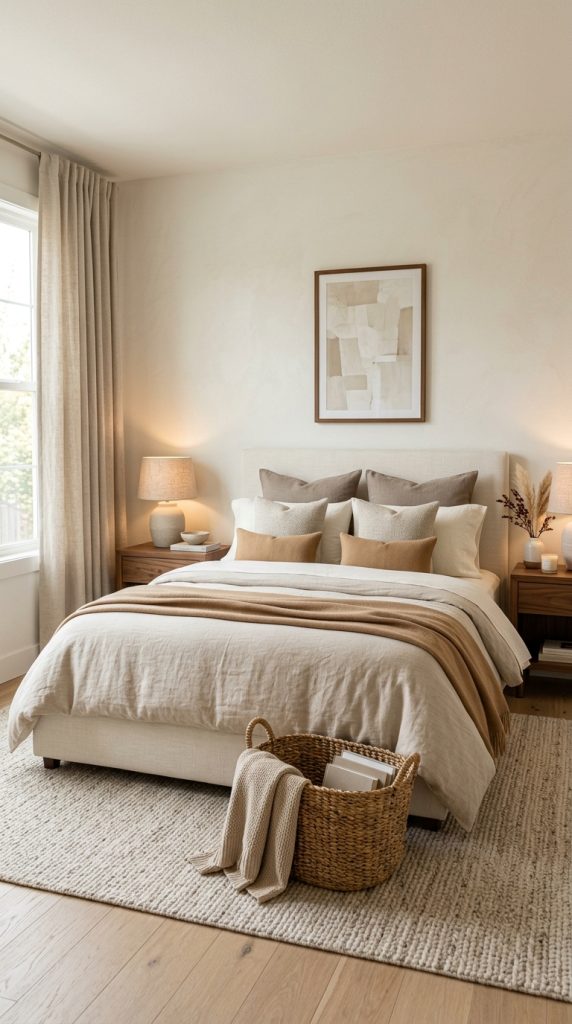
    1. Create a Layered Neutral Bedroom With Soft Textures

    A layered neutral bedroom is one of the easiest ways to create a calm and sophisticated retreat.

    Instead of using one shade of beige throughout the room, combine several related neutral tones.

    Begin with a warm ivory or creamy wall color.

    Choose an upholstered bed in a slightly deeper beige or oatmeal shade.

    Then layer the bedding with ivory sheets, a soft beige duvet, taupe cushions, and a warm camel throw.

    The different shades should be close enough to feel cohesive but different enough to create depth.

    Texture becomes particularly important in this type of bedroom.

    A completely smooth neutral room can appear flat.

    Introduce a chunky knitted blanket across the end of the bed.

    Add bouclรฉ cushions for softness.

    Choose linen curtains for a relaxed appearance.

    Place a woven rug beneath the bed.

    Use a ceramic vase or textured pottery on the nightstand.

    The materials create interest without requiring strong colors.

    For the nightstands, natural wood can provide warmth.

    Walnut is especially attractive with cream and beige because its darker grain creates contrast.

    Oak can create a lighter Scandinavian-inspired appearance.

    If the room already contains darker furniture, choose lighter wood accessories to prevent the palette from becoming too heavy.

    Lighting should remain warm.

    Choose bedside lamps with fabric or linen shades.

    The diffused light will soften the neutral materials in the evening.

    If the bedroom has enough space, a small floor lamp in a corner can create another layer of illumination.

    Avoid relying entirely on a central ceiling fixture.

    The bed arrangement should look inviting rather than overly formal.

    Instead of lining every pillow perfectly, create a relaxed layered arrangement.

    Place sleeping pillows at the back.

    Add two larger decorative cushions.

    Then introduce one smaller lumbar cushion in front.

    A folded throw at the foot of the bed can complete the arrangement.

    Keep the floor area relatively open.

    Neutral bedrooms benefit from visual breathing room.

    Rather than adding several decorative chairs, baskets, stools, and plants, choose one or two functional pieces.

    A woven basket beside the bed can hold extra blankets.

    A small upholstered bench can provide seating at the foot of the bed.

    Artwork should be subtle.

    A large abstract print in warm neutral shades can create a focal point above the headboard.

    Alternatively, a textured wall hanging can introduce dimension without adding strong color.

    For a more luxurious appearance, introduce a small amount of brass.

    Brass can appear in lamp bases, drawer hardware, a mirror frame, or a decorative object.

    Do not use brass everywhere.

    A few repeated details are enough.

    The beauty of a layered neutral bedroom is its versatility.

    You can change the atmosphere throughout the year by replacing a few textiles.

    In summer, use lightweight linen.

    In autumn, introduce caramel or warm brown.

    During winter, add heavier blankets and richer textures.

    The main foundation remains timeless.

    This approach works particularly well when you want a bedroom that feels peaceful every day rather than strongly themed around one decorating trend.

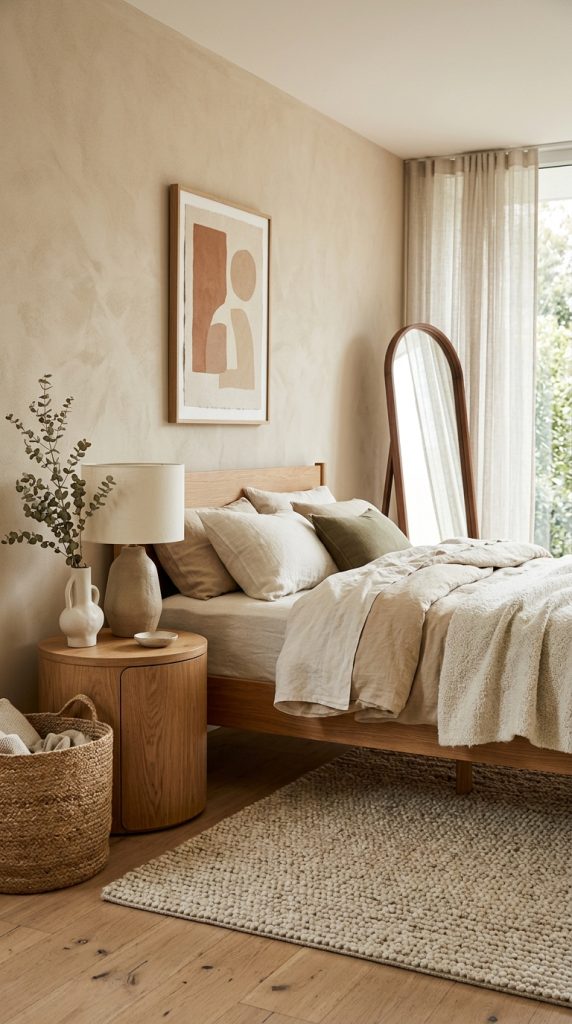
    2. Design an Organic Modern Bedroom With Natural Materials

    An organic modern bedroom combines clean contemporary shapes with warm natural materials.

    The style works particularly well if you want a bedroom that feels modern without becoming cold or overly minimal.

    Start with a simple bed frame.

    Natural oak, walnut, or light wood can establish the foundation.

    If you prefer an upholstered bed, choose a warm neutral fabric with a simple silhouette.

    Keep the furniture lines relatively clean.

    Then introduce organic shapes through accessories.

    A rounded ceramic lamp.

    An irregular wooden bowl.

    A sculptural vase.

    A curved mirror.

    A woven basket.

    These shapes soften the straight lines of modern furniture.

    Color should remain restrained.

    Cream, warm white, sand, beige, taupe, brown, and muted green create a natural palette.

    You can introduce a small amount of charcoal for contrast.

    Avoid using too many saturated colors because the organic-modern aesthetic depends on visual calm.

    Natural wood is particularly important.

    Use it through the bed, nightstands, bench, frames, or accessories.

    The goal is not to make every piece the same wood tone.

    Instead, choose compatible finishes that create a collected appearance.

    Textiles should feel tactile.

    Linen bedding works beautifully.

    A woven throw can add warmth.

    A wool or jute-inspired rug can create texture beneath the furniture.

    Bouclรฉ upholstery can provide softness.

    Layer these materials without introducing excessive patterns.

    Plants can also contribute to the organic feeling.

    Choose one or two carefully positioned plants rather than turning the bedroom into a jungle.

    A tall plant can occupy an empty corner.

    A smaller plant can sit on a dresser.

    If natural plants are not practical, dried branches can create a similar sculptural effect.

    Lighting should be soft and warm.

    A ceramic table lamp beside the bed can combine function and decoration.

    A woven pendant can provide a striking ceiling focal point.

    Wall sconces can work especially well when you want to preserve nightstand space.

    Artwork can reinforce the natural theme.

    Abstract landscapes, botanical illustrations, line drawings, or earthy-toned artwork can complement the materials.

    Choose pieces with subtle color variation rather than highly saturated prints.

    Storage should remain visually simple.

    Closed wooden drawers, woven baskets, and upholstered storage benches can help maintain the uncluttered appearance.

    Avoid leaving large numbers of everyday objects on surfaces.

    One of the most appealing aspects of organic modern design is its ability to feel both refined and relaxed.

    It does not require perfect symmetry.

    A slightly asymmetrical arrangement can look more natural.

    For example, a large ceramic vase could sit on one side of a dresser while a stack of books and a small lamp balance the opposite side.

    The materials create cohesion even when the objects are different.

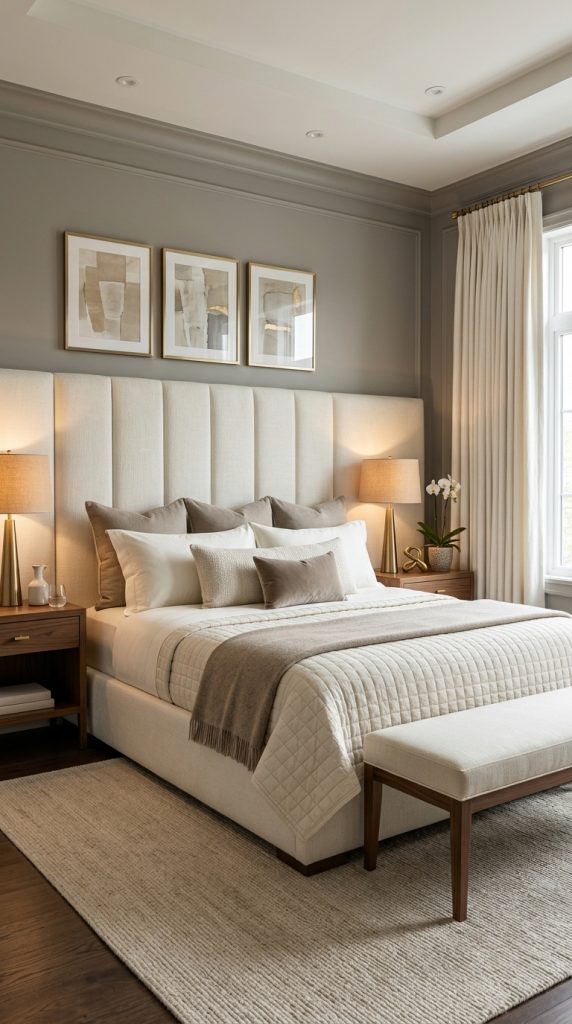
    3. Create a Hotel-Inspired Luxury Bedroom at Home

    A hotel-inspired bedroom can feel elegant, comfortable, and polished without becoming excessively formal.

    The bed should be the centerpiece.

    Choose a substantial upholstered headboard or a beautifully finished wood bed.

    The headboard should have enough visual presence to anchor the room.

    Then focus on bedding.

    Layer several pieces to create a luxurious appearance.

    Start with high-quality-looking neutral sheets.

    Add a duvet or quilt.

    Place several pillows in different sizes.

    Finish with a neatly folded throw across the lower portion of the bed.

    White, cream, ivory, beige, and warm gray work particularly well for a hotel-inspired palette.

    The secret is layering rather than simply buying more bedding.

    Choose fabrics with different textures.

    Smooth cotton can contrast with quilted fabric.

    Velvet cushions can add depth.

    A linen throw can soften the composition.

    Keep the colors coordinated.

    Nightstands should feel balanced.

    Matching nightstands with matching or complementary lamps create a polished appearance.

    If you prefer symmetry, use identical lamps.

    If you want something more relaxed, choose lamps that share the same finish but have slightly different forms.

    A bench at the foot of the bed can add another layer of luxury.

    Choose upholstered seating in a fabric that coordinates with the headboard.

    It should be practical enough for everyday use.

    Window treatments should extend toward the floor.

    Neutral curtains can create a taller appearance and make the room feel more finished.

    If privacy is important, layer sheers with heavier panels.

    Lighting should resemble a hotel room’s layered atmosphere.

    Use bedside lamps for reading.

    Add a ceiling fixture for general illumination.

    Include a floor lamp or accent lamp if the room has a seating area.

    A dimmer can make it easier to change the atmosphere throughout the day.

    Mirrors can add elegance.

    A large framed mirror above a dresser can create a focal point.

    A rounded mirror can soften a room filled with rectangular furniture.

    Use subtle metallic details to enhance the luxury.

    Aged brass, brushed brass, or soft champagne tones can appear through lamp bases, hardware, frames, or decorative accessories.

    Avoid excessive shine.

    Luxury often looks more sophisticated when metallic details are restrained.

    Keep surfaces organized.

    A hotel-inspired bedroom should feel clean and intentional.

    Use decorative trays to contain smaller objects.

    Keep cords organized.

    Store everyday clutter in drawers.

    Leave enough space on nightstands for practical use.

    Artwork should be carefully selected.

    One large piece above the bed or dresser can create more impact than numerous small pieces.

    Abstract artwork in muted neutral tones works well.

    Black-and-white photography can add contrast.

    Soft landscape artwork can introduce color without disturbing the calm palette.

    The final result should feel comfortable rather than sterile.

    Add one personal object on the nightstand.

    Display a favorite book.

    Place a small photograph in a frame.

    Use a meaningful ceramic piece.

    These details prevent the bedroom from feeling like a showroom.

    4. Create a Romantic Bedroom With Soft Lighting and Elegant Details

    A romantic bedroom does not have to be overly decorative or filled with pink and floral patterns.

    A more sophisticated romantic approach focuses on softness, curved forms, warm lighting, and delicate details.

    Begin with the bed.

    An upholstered headboard with a gently curved shape can immediately create a softer appearance.

    Choose cream, warm beige, dusty rose, muted taupe, or soft gray.

    Layer bedding with fabrics that feel comfortable and elegant.

    Linen, cotton, velvet, and soft woven materials can work together.

    Introduce one or two subtle floral or botanical patterns if desired.

    Keep the pattern scale controlled.

    Lighting plays a particularly important role.

    Choose bedside lamps that produce a warm glow.

    Wall sconces can create an intimate appearance.

    A small decorative lamp on a dresser can provide another layer of light.

    Candles can contribute atmosphere, but use them safely and keep them away from fabrics and other flammable materials. Battery-operated candles can be useful alternatives.

    Furniture should include softer shapes where possible.

    A rounded bedside table, curved mirror, upholstered bench, or small oval stool can balance the rectangular shape of the bed.

    Choose a rug with a soft texture.

    A plush rug beside the bed can make the room more comfortable when you get up in the morning.

    For wall decor, consider botanical artwork, vintage-inspired prints, delicate abstract artwork, or a large soft-toned painting.

    Avoid filling every wall.

    A romantic bedroom benefits from visual calm.

    Curtains should feel soft and flowing.

    Floor-length linen or cotton panels can frame the windows beautifully.

    For a more luxurious atmosphere, layer sheers underneath heavier curtains.

    Accessories should be limited but intentional.

    A ceramic vase with delicate branches can sit on the dresser.

    A jewelry dish can provide both function and decoration.

    A small stack of books can add personality.

    A framed photograph can make the room feel personal.

    Metallic accents can be introduced through small details.

    Warm brass or antique gold works particularly well.

    Use it in lamp bases, drawer hardware, mirror frames, or small decorative objects.

    Avoid highly reflective finishes if you want a soft atmosphere.

    The goal is to make the bedroom feel intimate without making it overly themed.

    A sophisticated romantic bedroom should still feel practical and comfortable.

    5. Style a Cozy Small Bedroom Without Making It Feel Crowded

    A small bedroom can still have a beautiful aesthetic.

    The key is choosing furniture and accessories carefully.

    Start by identifying the strongest focal point.

    In most bedrooms, this is the bed.

    Instead of decorating every wall, make the bed area visually appealing.

    Choose attractive bedding and a simple but distinctive headboard.

    Use one large piece of artwork rather than several small frames.

    A large mirror can help reflect light and create a greater sense of openness.

    Choose bedside furniture that fits the available space.

    If traditional nightstands are too large, consider narrow tables, floating shelves, or compact cabinets.

    Wall-mounted sconces can free the nightstand surface.

    Storage should be carefully planned.

    Use baskets beneath a bench.

    Choose a bed frame with drawers if appropriate.

    Use the vertical space above the dresser.

    Keep frequently used items within easy reach while storing less attractive objects out of sight.

    Color can also affect how spacious the bedroom feels.

    Lighter colors such as cream, ivory, beige, and soft gray can create an open feeling.

    You can still use dark accents.

    A charcoal cushion, dark wood nightstand, or black frame can provide contrast.

    The trick is to use deeper colors selectively.

    Mirrors should be positioned strategically.

    A large mirror across from a window can help distribute natural light.

    A full-length mirror can be mounted on a wall or positioned where it does not obstruct movement.

    Choose furniture with visible legs when possible.

    This allows more of the floor to remain visible.

    Avoid oversized upholstered pieces that consume too much visual space.

    Lighting should be layered without requiring multiple bulky fixtures.

    Wall sconces are particularly useful.

    A small pendant can also replace a traditional table lamp if the electrical setup allows it.

    Use warm lighting to create a cozy evening atmosphere.

    Textiles should add comfort without excessive bulk.

    One soft throw and several coordinated pillows are enough.

    A large rug can visually connect the room, but choose the size carefully so doors and pathways remain functional.

    Keep decorative surfaces edited.

    A nightstand might only need a lamp, book, and small ceramic dish.

    The dresser could feature one vase and framed artwork.

    Leaving some surface space empty makes a small room feel calmer.

    The final result should feel intentional rather than minimized.

    A small bedroom can be incredibly cozy when every element serves a purpose.

    6. Build a Warm Chocolate Brown and Cream Bedroom

    Chocolate brown can create a rich, cocooning bedroom atmosphere when balanced with lighter shades.

    Instead of making every element dark, use brown as an anchoring color.

    Begin with cream walls or light neutral bedding.

    Then introduce chocolate brown through the headboard, throw, cushions, curtains, or furniture.

    Walnut wood can reinforce the darker palette naturally.

    The contrast between cream and brown creates depth without requiring bright colors.

    Bedding can combine several neutral shades.

    Use ivory sheets.

    Add a cream duvet.

    Introduce chocolate brown cushions.

    Finish with a warm beige or caramel throw.

    This creates a layered appearance without excessive pattern.

    Lighting should soften the deeper tones.

    Use warm lamps with cream or linen shades.

    Brass details can provide subtle contrast.

    Aged brass is particularly attractive with chocolate brown because it adds warmth without becoming too shiny.

    Choose a rug in cream, beige, or warm taupe.

    A lighter floor covering can visually balance darker furniture.

    For artwork, choose pieces with earthy colors.

    Abstract artwork containing brown, beige, cream, and muted charcoal can connect the palette.

    A landscape print can introduce subtle greens or rust tones.

    Avoid using too many additional colors.

    The beauty of this palette comes from its simplicity.

    Natural materials are particularly effective.

    Use wooden trays.

    Ceramic vases.

    Linen curtains.

    Woven baskets.

    Stone accessories.

    These materials prevent the brown palette from feeling heavy.

    If the room has limited natural light, use lighter cream surfaces to maintain brightness.

    A dark bedroom does not need to be gloomy.

    Warm layered lighting can create a rich evening atmosphere while maintaining visual comfort.

    The chocolate-and-cream combination can also transition across seasons.

    Add lighter linen during summer.

    Introduce heavier blankets in winter.

    Use muted rust or olive accents in autumn.

    This gives the room flexibility without changing the primary design.

    7. Create a Calm Japandi-Inspired Bedroom

    A Japandi-inspired bedroom combines Japanese simplicity with Scandinavian warmth.

    The result should feel uncluttered, natural, and comfortable.

    Begin with a low-profile bed.

    Choose natural wood or a simple upholstered frame.

    Keep the silhouette clean.

    Avoid furniture with unnecessary decorative details.

    The color palette should remain restrained.

    Cream, warm white, beige, light brown, muted gray, and soft charcoal work well.

    Natural wood provides warmth.

    Use oak or similar light-to-medium wood finishes for furniture and accessories.

    Texture should come from natural materials rather than excessive decoration.

    Linen bedding is ideal.

    A woven rug can soften the floor.

    A simple wool or cotton throw can add comfort.

    Ceramic pottery can introduce handmade character.

    Choose objects with irregular or organic shapes.

    Avoid filling surfaces.

    One carefully selected vase can be more effective than a collection of decorative objects.

    The bedside table might contain only a lamp and a small ceramic piece.

    Lighting should be gentle.

    Paper-style pendant lights, linen shades, and simple wooden lamps can reinforce the aesthetic.

    Avoid harsh cool-white illumination.

    Artwork should be understated.

    A single abstract print, Japanese-inspired brushwork, botanical drawing, or neutral landscape can create a focal point.

    Plants can be used sparingly.

    One sculptural plant in a simple ceramic pot may be enough.

    The room should retain generous open space.

    Storage should be mostly closed.

    This keeps everyday clutter out of sight and supports the calm visual character.

    A small wooden bench can be placed at the foot of the bed if space allows.

    Choose a simple shape and natural finish.

    The Japandi approach works particularly well for people who want a bedroom that feels peaceful rather than highly decorated.

    Its beauty comes from proportion, material quality, and restraint.

    8. Create an Elegant Vintage-Inspired Bedroom

    A vintage-inspired bedroom can feel collected, personal, and timeless.

    The key is combining older-looking details with comfortable modern functionality.

    Begin with one distinctive vintage-inspired focal point.

    This could be an antique-style dresser, ornate mirror, curved headboard, traditional bedside table, or aged wooden bench.

    Do not use every vintage element available.

    One or two strong pieces can establish the atmosphere.

    The color palette can include cream, warm beige, muted sage, dusty rose, brown, charcoal, and antique brass.

    Avoid overly bright colors.

    Bedding should remain comfortable and relatively simple.

    A quilted coverlet can create a traditional feeling.

    Layer it with linen sheets and a soft throw.

    Vintage-inspired cushions can add pattern.

    Choose floral, botanical, striped, or subtle geometric designs.

    Keep the patterns connected through color.

    Lighting should feel warm and atmospheric.

    An antique-style brass lamp can become a beautiful bedside feature.

    A small glass lamp can add softness.

    Wall sconces can reinforce the traditional appearance.

    Artwork can be a major part of the design.

    Botanical prints, old landscape paintings, vintage photographs, or decorative frames can create character.

    Instead of covering every wall, create one carefully edited arrangement.

    A mirror with an aged frame can add depth.

    Position it where it can reflect light or an attractive architectural feature.

    Natural wood adds warmth.

    A wooden dresser or nightstand can balance more ornate details.

    Do not make every piece look old.

    Modern bedding and simple accessories can prevent the room from feeling like a period display.

    Personal objects are especially effective in vintage rooms.

    A small collection of books.

    A ceramic vase.

    A framed photograph.

    A jewelry box.

    A decorative tray.

    These details make the room feel naturally collected.

    The final effect should feel like a comfortable bedroom that has evolved over time rather than a room designed around a single theme.

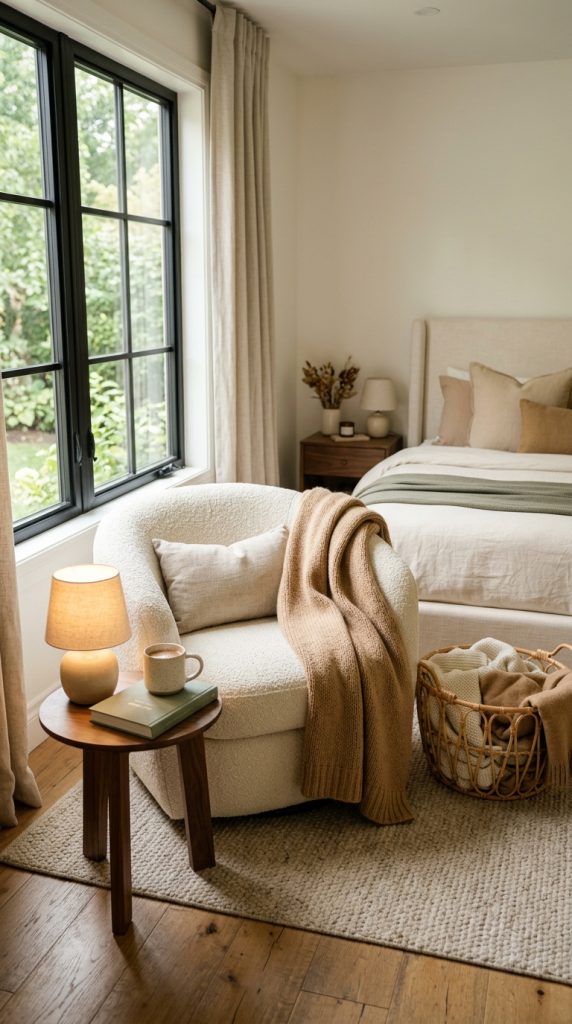
    9. Design a Cozy Bedroom With a Dedicated Reading Corner

    A reading corner can transform a bedroom from a simple sleeping space into a more complete retreat.

    Choose an area that is not needed for circulation.

    A corner near a window is ideal when available.

    Start with a comfortable chair.

    An upholstered armchair can provide softness.

    A wooden lounge chair can create a more natural look.

    A small side table should sit within easy reach.

    Place a reading lamp beside or behind the chair.

    Choose a warm light source that illuminates the book without creating harsh glare.

    Add a small stack of books.

    A ceramic mug can create a cozy visual detail, although it should be kept away from electronics and delicate fabrics.

    A soft throw can be draped over the chair.

    Place a small rug beneath the seating area to visually define the corner.

    The palette should connect to the rest of the bedroom.

    If the bedroom uses cream and brown, repeat those colors in the chair and rug.

    If the bedroom uses beige and muted green, introduce those shades subtly through cushions or artwork.

    A small plant can add life.

    A tall floor lamp can provide both lighting and vertical interest.

    Wall artwork behind the chair can make the corner feel intentional.

    A small floating shelf can display books if floor space is limited.

    The reading corner should not become a storage area.

    Keep it visually calm.

    Only display the books and objects you actually want there.

    The chair should remain comfortable and usable.

    The goal is to create a place where you can sit for a few minutes before bed, read in the morning, or simply enjoy a quiet moment.

    This addition can make a bedroom feel significantly more personal.

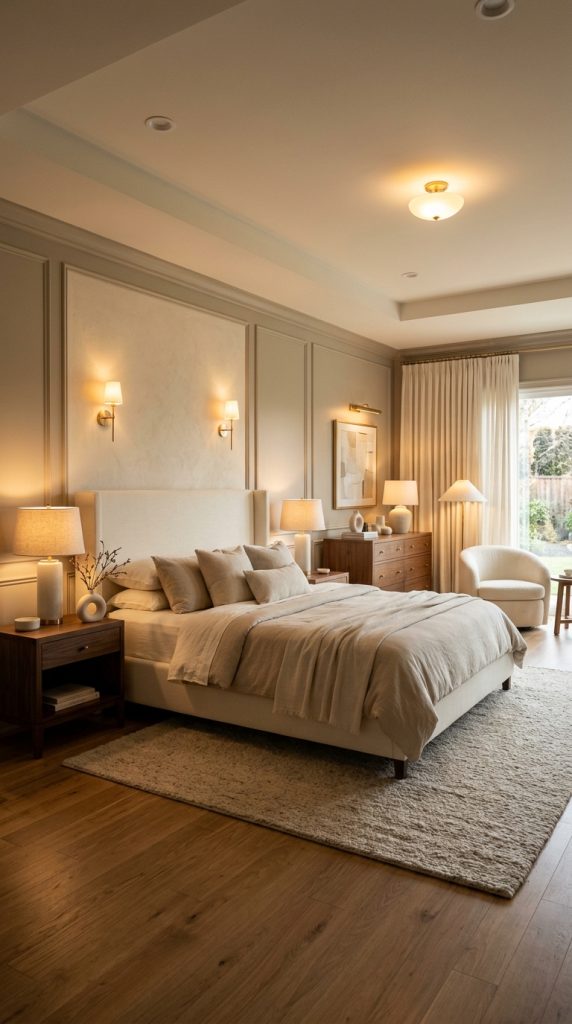
    10. Create a Soft, Luxurious Bedroom With Layered Lighting

    Lighting can become the central design feature of a bedroom when it is carefully layered.

    Begin with the main ceiling fixture.

    Choose a design that fits the overall room without overwhelming it.

    Then introduce bedside lighting.

    Matching lamps create symmetry.

    Wall sconces create a more architectural appearance and can save valuable nightstand space.

    Add a third lighting layer somewhere else in the room.

    A floor lamp beside a chair.

    A small lamp on a dresser.

    A subtle accent light near artwork.

    This creates multiple visual zones.

    Warm bulbs are particularly effective for bedrooms.

    They create a softer evening atmosphere and complement warm materials.

    The lighting should not be so dim that the room becomes impractical.

    Instead, create different levels for different activities.

    Bright enough general lighting for dressing and cleaning.

    Comfortable bedside lighting for reading.

    Low accent lighting for relaxing.

    This approach gives the bedroom flexibility.

    The fixtures themselves can become decorative elements.

    Linen shades create softness.

    Ceramic bases add handmade texture.

    Wooden lamps reinforce natural warmth.

    Brass fixtures introduce a refined touch.

    Smoked or textured glass can create subtle visual interest.

    Coordinate the lighting with the rest of the room.

    If the bedroom has brass hardware, repeat brass through the lamps.

    If the furniture is natural wood, a wood or ceramic lamp can create cohesion.

    Avoid choosing every fixture from a completely different style.

    The room should feel connected.

    Layered lighting also works beautifully with textiles.

    Warm light falling across linen curtains creates gentle shadows.

    A lamp beside the bed can highlight textured bedding.

    Accent lighting can bring attention to artwork.

    A floor lamp can illuminate a reading chair.

    The result is a bedroom that changes character after sunset.

    During the day, natural light highlights the colors and materials.

    At night, layered artificial lighting creates a softer and more intimate atmosphere.

    How to Keep an Aesthetic Bedroom Beautiful Without Clutter

    Once the main design is complete, resist the temptation to continue adding accessories.

    Aesthetic bedrooms depend on balance.

    Every visible object should either provide function, personality, texture, or visual interest.

    If an accessory does none of these things, it may not need to be there.

    Keep bedside tables edited.

    Use trays for small objects.

    Store cables neatly.

    Keep clothing inside appropriate storage.

    Use baskets for blankets.

    Do not allow decorative objects to occupy every surface.

    Open space is part of the design.

    How to Make an Aesthetic Bedroom Look More Expensive

    An expensive-looking bedroom does not necessarily require expensive furniture.

    Focus on proportion and consistency.

    Choose curtains that reach the floor.

    Use bedding with several layers.

    Select lamps that are appropriately scaled for the nightstands.

    Repeat materials such as wood or brass.

    Use fewer decorative objects but choose pieces with interesting shapes and textures.

    Keep the color palette controlled.

    Natural materials often create a richer appearance than excessive decorative items.

    Most importantly, maintain a clean visual hierarchy.

    The bed should remain important.

    Lighting should support it.

    Artwork should complement it.

    Accessories should finish the composition rather than compete with it.

    How to Refresh Your Bedroom on a Budget

    You can create a noticeable transformation without replacing the furniture.

    Start with the bedding.

    Changing the duvet cover, cushions, or throw can alter the entire appearance.

    Next, improve lighting.

    Replace harsh bulbs with warmer ones.

    Add an affordable table lamp or floor lamp if necessary.

    Rearrange artwork.

    Move a mirror.

    Bring a basket from another room.

    Add a wooden tray to the nightstand.

    Declutter the dresser.

    Rearrange existing accessories into smaller, more intentional groups.

    You can also introduce inexpensive natural materials through dried branches, woven baskets, ceramic objects, or simple wooden accessories.

    The goal is to spend on the elements that have the greatest visual impact rather than buying many small decorations.

    Final Thoughts

    An aesthetic bedroom should be beautiful enough to enjoy visually but comfortable enough to live in every day.

    The most successful bedroom designs combine soft bedding, warm lighting, natural materials, thoughtful furniture placement, calming colors, functional storage, personal accessories, and carefully selected decorative details.

    You do not need to follow one strict decorating style.

    A neutral layered bedroom can feel peaceful.

    An organic-modern space can feel natural and contemporary.

    A hotel-inspired room can feel polished.

    A romantic bedroom can feel intimate.

    A Japandi room can feel exceptionally calm.

    A vintage-inspired space can feel collected and personal.

    A chocolate-brown bedroom can feel rich and cocooning.

    A reading corner can turn an unused area into a favorite retreat.

    And thoughtful lighting can completely transform the room after sunset.

    The most important thing is to avoid decorating simply for appearance.

    Choose pieces that make the bedroom more comfortable, more functional, or more personal.

    Let the bed remain the visual anchor.

    Use texture instead of excessive decoration.

    Choose warm lighting instead of relying entirely on overhead fixtures.

    Introduce natural wood and organic materials for warmth.

    Use artwork to express personality.

    Keep everyday clutter organized.

    Leave enough open space for the room to breathe.

    When these elements are balanced, even a simple bedroom can become a beautiful retreat that feels peaceful, cozy, and genuinely personal.

    Aesthetic bedroom decorating is ultimately about creating an environment that supports the way you want to feel at home.

    Keep the colors calm, the textures layered, the lighting warm, the accessories intentional, and the room comfortable.

    That combination can turn an ordinary bedroom into a relaxing retreat that feels beautiful from morning until night.