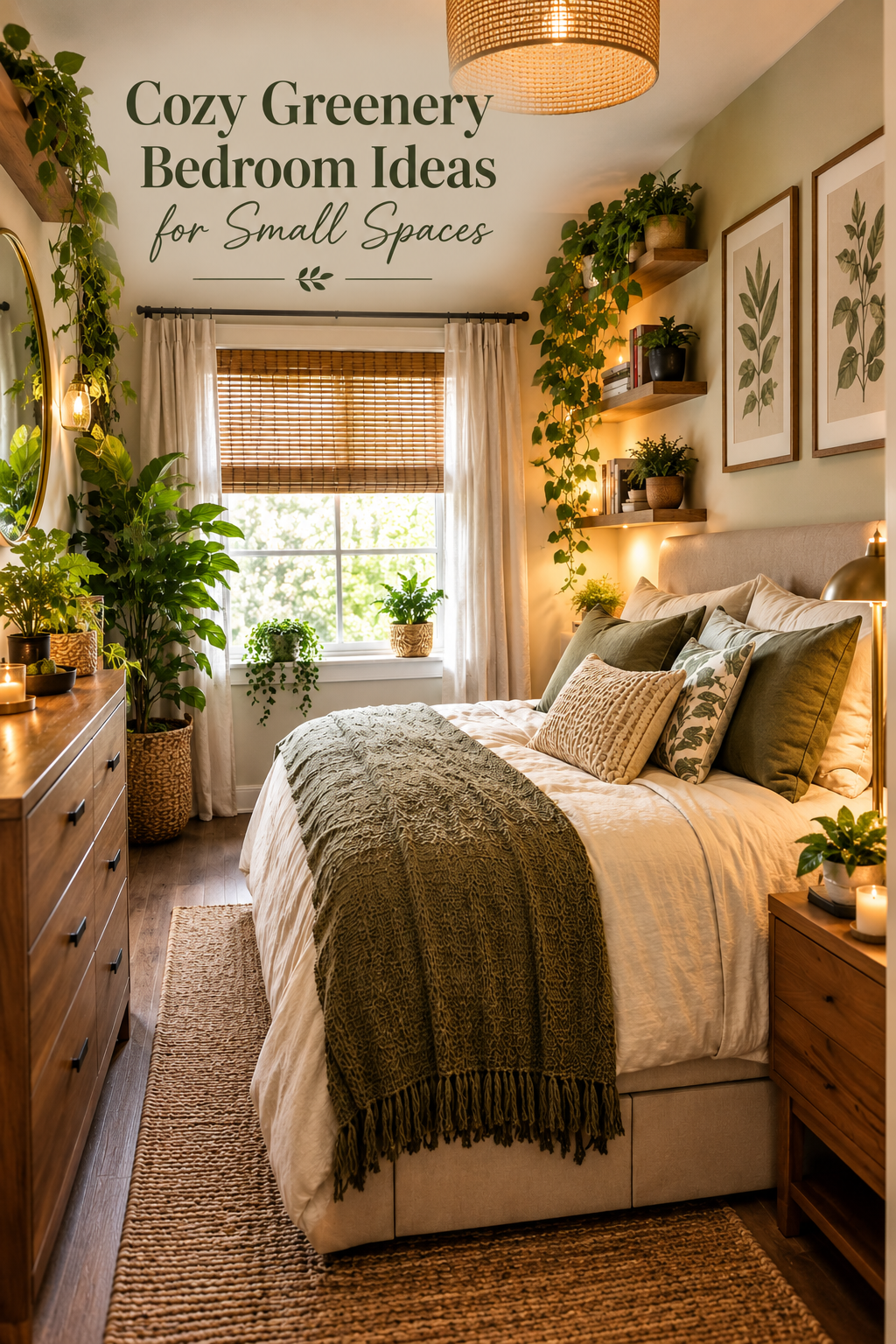
There is a profound psychological and sensory transformation that occurs when living botanical life is introduced into a personal sleeping environment. In contemporary interior architecture, urban living quarters and studio apartments consistently present the challenge of compact, space-constrained bedrooms. When living areas become restricted, personal bedrooms are frequently reduced to strictly utilitarian holding zones—crammed with wardrobe storage, bulky dressers, rigid bedframes, and digital workstations. This spatial congestion inadvertently breeds visual anxiety and physiological restlessness, stripping the primary sleeping sanctuary of its foundational purpose: restorative physical regeneration and mental decompression. Integrating living greenery directly into a small bedroom design bridges the critical gap between space-efficient compact living and the deeply therapeutic principles of biophilic architecture. Living botanical elements soften hard rectilinear plaster walls, cleanse stale indoor air of airborne toxins, introduce rich living color variations, and instill an unmistakable aura of grounded serenity. High-ranking Pinterest home design trends and modern wellness studies consistently validate this design philosophy: modern dwellers do not merely desire a tidy, clutter-free bedroom; they crave an intimate, deeply sensory botanical haven that feels emotionally expansive, physically comforting, and connected to the natural world.
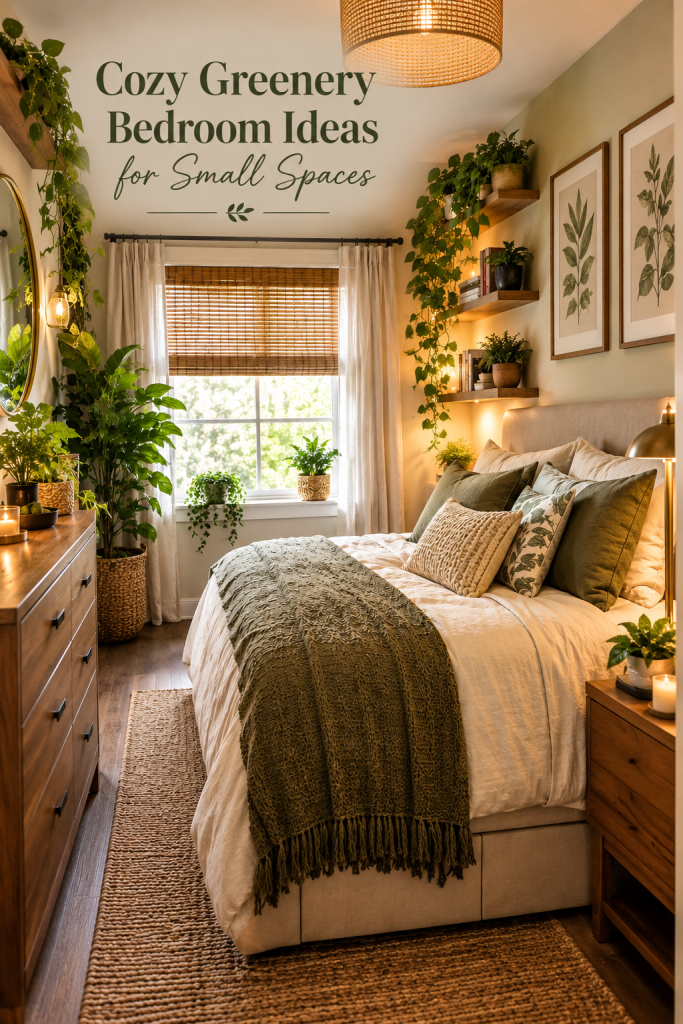
Executing an elevated, magazine-worthy botanical sanctuary within a compact room requires a disciplined design philosophy that balances organic foliage with spatial ergonomics, architectural verticality, and ambient illumination. The most prevalent error in amateur plant styling is cluttering valuable horizontal surfaces—crowding narrow bedside tables, obstructing windowsill drafts, and colonizing valuable floor real estate with wide, cumbersome plant pots. In a compact bedroom, where every single square meter dictates functional flow and ease of movement, ground-level clutter creates spatial friction and optical chaos. The authentic secret to sophisticated small-room plant design lies in commanding vertical airspace and embedding living foliage directly into the structural architecture of the room itself. By leveraging overhead ceiling heights, floating timber ledges, vertical climbing trellises, suspended window tension rods, and multi-functional architectural furniture pieces, you construct an immersive green oasis without sacrificing walking clearance, door swings, or bedside functionality.
Equally critical to achieving long-term botanical beauty is honoring the distinct microclimate inherent to compact residential quarters. Small bedrooms frequently feature specific lighting and environmental constraints: single-direction window exposures, dry artificial heating during the winter, fluctuating summer air conditioning currents, and variable air stagnation. A plant-filled bedroom cannot remain aesthetic or cozy if the chosen botanical specimens suffer from improper cultural conditions. True design success requires pairing specific botanical morphologies and physiological requirements with your room’s precise natural illumination footprint. Low-light architectural heroes such as velvet-textured prayer plants, structural snake plants, resilient ZZ plants, and moisture-retaining hanging vines each possess distinct silhouettes that complement modern interior aesthetics while thriving within varied residential light levels. When these living specimens are thoughtfully paired with natural, tactile finishes—such as washed raw French linens, natural woven jutes, brushed honey-toned timbers, and hand-thrown porous terracotta—the entire room coalesces into a warm, grounded visual tapestry that invites deep, restorative rest.
Beyond physical placement and plant health, the ultimate hallmark of a Pinterest-worthy aesthetic bedroom is the deliberate interplay between verdant foliage and ambient lighting architecture. Natural daylight showcases the vivid cellular tones and variegated patterns of your indoor greenery, but as twilight approaches, the lighting configuration determines the room’s emotional atmosphere. Relying on an unshielded, stark central ceiling fixture instantly flattens room depth, creates sterile glare, and disrupts your body’s natural circadian wind-down sequence. A masterfully curated cozy bedroom employs layered, low-glare, warm illumination strategically positioned to graze living foliage. By positioning dimmable warm-amber lights (strictly calibrated between 2200K and 2700K) behind and beneath broad leaves, the architectural contours of the plants cast intricate, dancing shadows across walls and ceilings, effectively turning living foliage into natural artwork after dark. Through this harmonious combination of space-saving vertical placement, organic material palettes, careful botanical selection, and ambient lighting design, even the smallest box-like bedroom can be converted into an enchanting botanical haven. Below is a complete, step-by-step masterplan detailing ten transformative design ideas tailored to craft an exceptionally cozy, space-efficient botanical bedroom sanctuary.
1. Floating Wall-Mounted Botanical Ledges Above the Bed
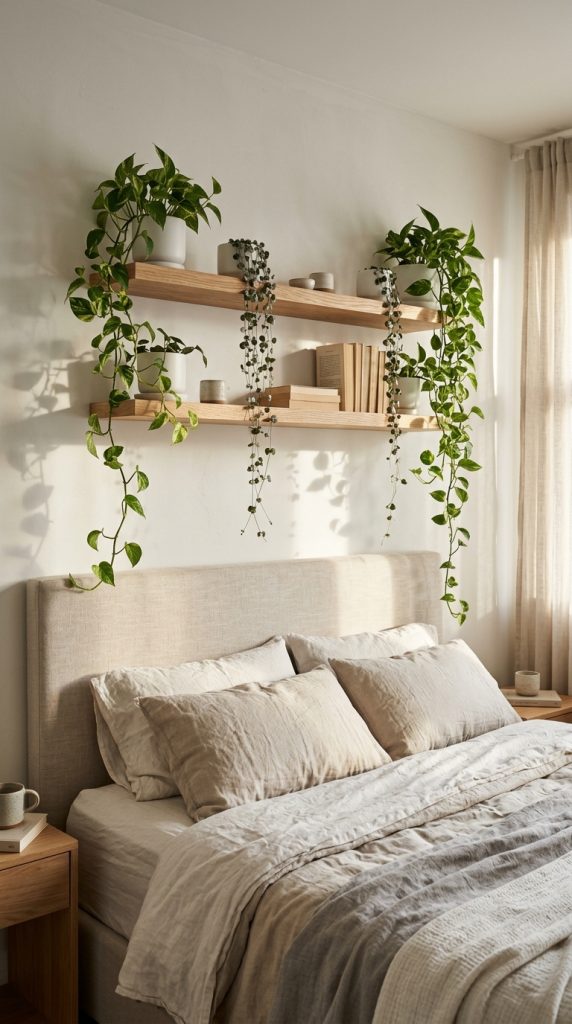
Maximizing the vertical plane is the cornerstone of compact spatial planning, especially in spaces where floor area is strictly limited. Installing slim, wall-mounted display ledges directly across the expanse above your headboard allows you to curate an elevated canopy of living greenery without encroaching upon nightstands, dressers, or essential walkways. This arrangement draws the visual gaze upward toward the ceiling line, generating a heightened optical sense of volume within a low or narrow bedroom. The resulting display acts as an organic, living headboard extension that surrounds your rest area in calming verdant foliage.
To execute this layout successfully without creating a claustrophobic overhang, select shallow-profile floating picture ledges constructed from solid hardwood such as oak, walnut, or pine. The presence of a subtle front-retaining lip is vital, as it locks pots in place and prevents accidental slipping. The primary design focus centers on trailing botanical varieties that tumble over the edge, creating a lush, vertical curtain of foliage that frames the head of the bed. Mixing leaf textures—such as the heart-shaped foliage of Devil’s Ivy, the delicate tendrils of a String of Hearts, and the lime-green tones of a Neon Pothos—produces visual depth while maintaining a unified, streamlined aesthetic along the wall.
- Required Elements and Materials:
- 2 solid oak or pine shallow floating picture ledges (90 cm to 120 cm length, with front safety lip)
- Heavy-duty steel wall anchors and screws rated for structural drywall or masonry
- 4 to 6 lightweight matte stoneware or terracotta cachepots with sealed matching catch-plates
- Cascading botanical specimens: Epipremnum aureum (Golden Pothos), Ceropegia woodii (String of Hearts), and Philodendron hederaceum
- Handheld drill, level, measuring tape, and pencil
Begin by marking the wall studs or mapping drywall anchor locations directly above your headboard. Ensure the lower shelf is positioned at least 35 to 45 centimeters above the top of the mattress or pillows when you are sitting fully upright to guarantee head clearance. Mount the lower ledge using a level, then measure 35 centimeters upward to install the secondary parallel ledge. Repot your trailing plants into lightweight internal nursery pots set inside your decorative cachepots. Arrange the trailing specimens toward the outer edges of the ledges so their cascading vines frame the headboard, and place compact, upright varieties toward the center to maintain structural visual balance across the shelves.
2. Corner Macramé and Brass Ceiling Hanging Cluster
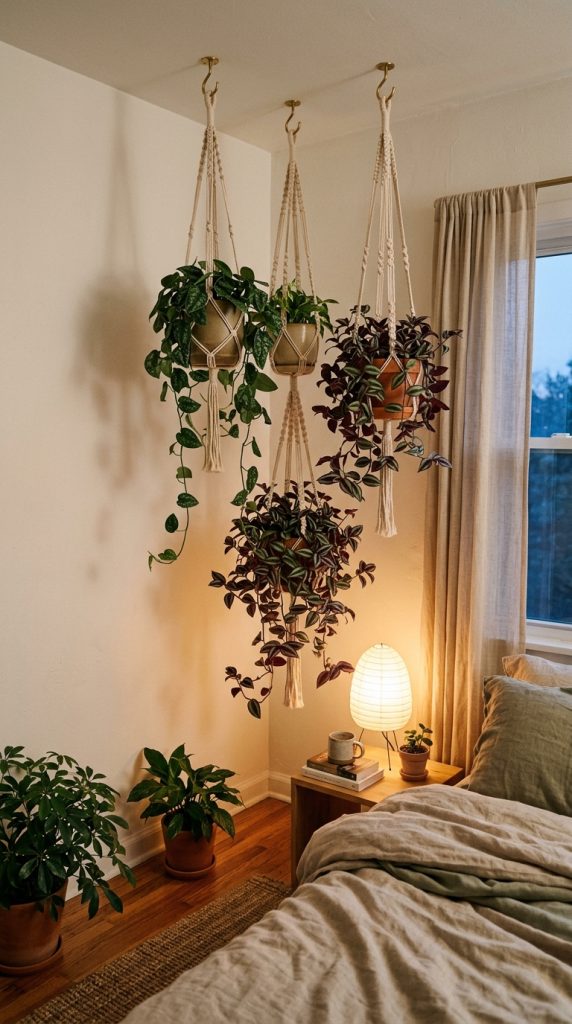
Unused structural corners frequently turn into visually dead, awkward zones in small bedrooms, often collecting misplaced items or remaining shadowed and cold. Suspending a tiered, multi-level cluster of hanging planters from the ceiling transforms an empty corner into a three-dimensional vertical indoor garden. This approach introduces soft movement, rich botanical textures, and organic architectural lines while leaving 100% of your floor and baseboard footprint completely free.
The visual beauty of this concept relies on contrasting organic hand-crafted textiles with polished, architectural hardware. Pairing unbleached natural cotton macramé hangers or woven jute ropes with sleek brushed brass ceiling hooks and minimalist ceramic vessels strikes a balance between bohemian warmth and modern Scandinavian refinement. Staggering the planters at different vertical drops creates visual flow, naturally guiding the eye through the corner and creating the impression of a deep, multi-layered forest nook.
- Required Elements and Materials:
- 3 heavy-duty ceiling-swag toggle hooks rated for dynamic ceiling loads
- Hand-knotted unbleached natural cotton or raw jute macramé plant holders (lengths: 60 cm, 80 cm, and 100 cm)
- 3 lightweight, leak-proof fiberglass or unglazed terracotta hanging bowls
- Trailing varieties: Scindapsus pictus (Satin Pothos), Tradescantia zebrina, and Dischidia ruscifolia (Million Hearts)
- Brass extender link chains and a ladder for installation
Locate an unencumbered corner of the bedroom that receives indirect natural window illumination. Mark three hanging drill points on the ceiling in an asymmetric triangular pattern, spacing each mark 20 to 25 centimeters apart to prevent foliage from crowding. Drill the pilot holes, insert the toggle bolts, and screw the brass hooks tight against the ceiling plaster. Suspend the macramé holders using the brass chain links, adjusting their drops so the lowest planter rests roughly eye level, the middle planter hangs slightly above shoulder level, and the shortest planter floats near the ceiling. Seat your trailing plants securely within each vessel, fluffing their runners outward to form a seamless vertical column of greenery.
3. The Window-Frame Plant Arch and Tension Rod Canopy
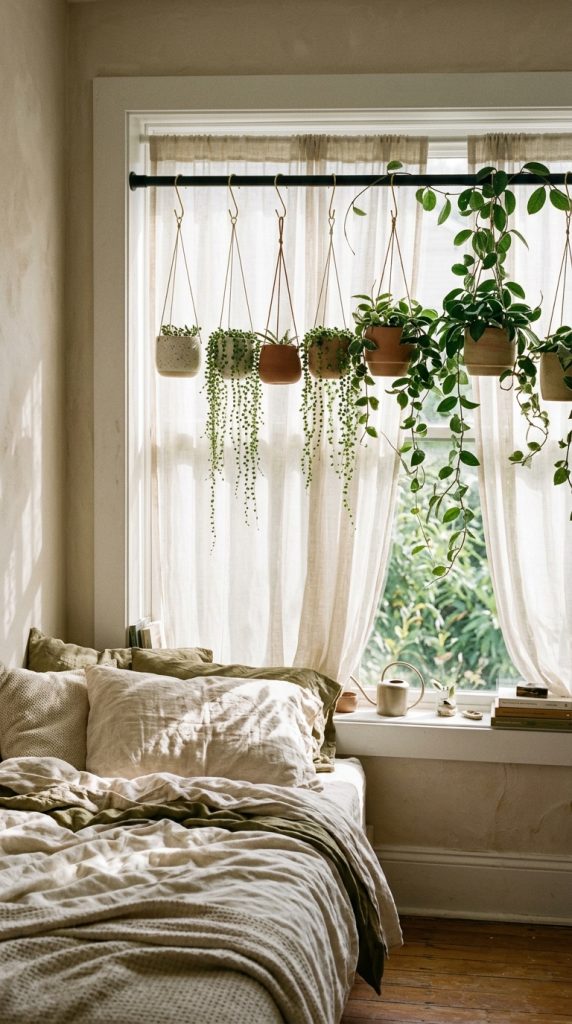
Bedroom windows are the vital source of natural daylight and outdoor ventilation, yet heavy fabric window treatments often make small bedrooms feel closed-in and dim. By framing the interior window casing with a layered arrangement of suspended botanical pots, you construct a natural, living archway. This botanical canopy filters direct, intense sunlight, introduces natural privacy from neighbors, and highlights your primary daylight source without requiring space-consuming window shelves.
To achieve this without damaging the surrounding wall plaster, utilize an industrial-strength adjustable steel tension rod fitted firmly within the upper reveal of the window casing. Suspending light-loving trailing plants directly along the window’s glass plane allows incoming morning light to illuminate the translucent leaves. This projects soft, dappled leaf silhouettes across your bed and floor, producing a calm, greenhouse-like ambiance throughout the entire room.
- Required Elements and Materials:
- 1 high-strength adjustable matte black or brushed steel tension shower/drapery rod
- 5 to 6 heavy-gauge brass or matte black S-shaped hanging hooks
- Lightweight fluted ceramic or aluminum hanging pots with internal drainage reservoirs
- Sun-thriving trailing and compact plants: Hoya carnosa, Peperomia hope, Senecio rowleyanus (String of Pearls), and Rhipsalis
- Clear adhesive rubber pads to protect the interior window jambs from mechanical friction
Thoroughly wipe down the interior sides of your window casing to remove dust and ensure maximum friction. Affix protective clear rubber pads to the ends of the tension rod, position it approximately 5 to 8 centimeters below the top casing reveal, and twist the rod firmly until it is locked securely under high tension. Space the S-hooks evenly across the rod span. Hang your lightweight planters, distributing the weight evenly from end to end to prevent localized bowing. Pair this floating botanical valance with sheer, airy linen curtains that flutter with passing breezes to complete a relaxed, sun-drenched sanctuary.
4. Multi-Tiered Minimalist Bamboo Plant Ladder
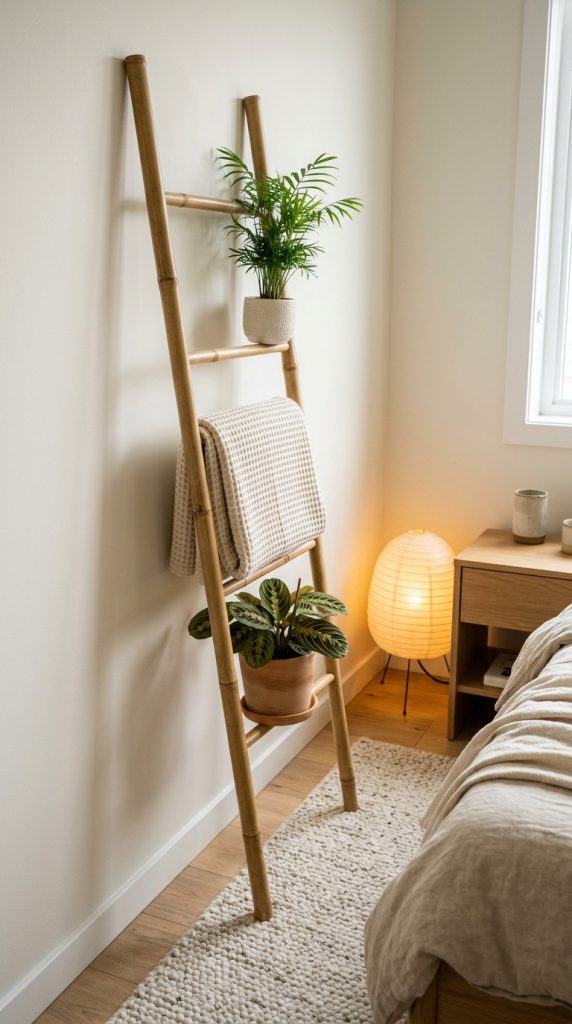
In rental properties or bedrooms where wall drilling and ceiling anchors are prohibited, a slender, leaning bamboo plant ladder offers a versatile, non-damaging vertical display. Leaning ladder shelves utilize vertical wall height while requiring a minimal floor footprint, resting cleanly against an open wall segment or sliding into the narrow gap between a wardrobe and a window.
The open rung design of a timber ladder maintains clear sightlines across the bedroom, preserving an airy, spacious feel. Because the rungs ascend at a gentle angle, sunlight reaches plants on every level without the upper tiers casting shadows on the lower ones. This structure doubles as a multi-functional organizer, accommodating small trailing pots on upper steps, larger upright statement plants on the wide lower tiers, and cozy folded knit throws across the central rungs.
- Required Elements and Materials:
- 1 natural solid bamboo or beech leaning ladder shelf with 4 to 5 stepped trays or flat rungs
- S-hooks and wide leather strap hanging pots designed for rungs
- 3 to 4 lightweight ceramic planters with integrated bottom drip trays
- Foliage mix: Maranta leuconeura (Prayer Plant), Chamaedorea elegans (Parlor Palm), and Zamioculcas zamiifolia (ZZ Plant)
- Non-marking silicone furniture pads for wall and floor contact points
Attach soft silicone bumpers to the top tips of the ladder rails to prevent scuffs or paint transfer on your walls. Affix non-slip rubber pads to the ladder feet and set the ladder on a firm surface, positioning the base approximately 25 to 35 centimeters out from the wall to establish a stable angle. Place your heaviest, most upright botanical specimen—such as an architectural ZZ plant or a low parlor palm—on the lowest tier to ground the unit’s center of gravity. Fasten leather strap planters or clip-on cachepots to the upper rungs, guiding small trailing vines along the side rails to weave the living foliage into the timber structure.
5. Built-In Bed Headboard with Integrated Foliage Planter
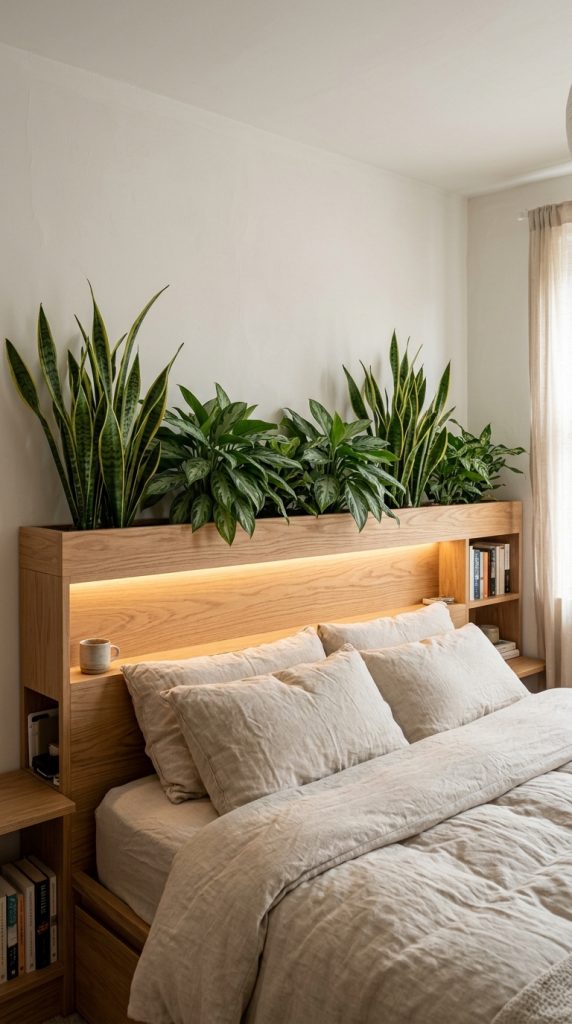
Replacing a standard flat headboard with a deep, functional storage ledge is an effective way to optimize layout in a space-constrained bedroom. An integrated planter headboard provides a dedicated resting ledge for a lush garden of low-profile greenery directly behind your resting head, while serving as a functional surface for reading lamps and bedside essentials, eliminating the need for bulky side tables.
Waking up directly beneath living botanical foliage grounds your morning routine in natural calm, lowering stress levels and establishing a relaxing retreat. Selecting air-purifying, low-maintenance varieties that thrive in indirect indoor light guarantees that your integrated headboard garden remains vibrant without constant maintenance or messy leaf drops.
- Required Elements and Materials:
- 1 deep wooden storage headboard featuring a top shelf ledge (15 cm to 22 cm shelf depth)
- Custom-fitted waterproof rubber or galvanized metal planter tray liners
- 3 to 4 uniform rectangular or cylindrical matte stoneware planters with drainage inserts
- Low-light air purifiers: Sansevieria trifasciata (Snake Plant), Aspidistra elatior (Cast Iron Plant), and Aglaonema (Chinese Evergreen)
- Felt floor protectors and seismic wall-anchor safety brackets
Anchor the wooden storage headboard securely to your wall studs or directly to your heavy bed base to eliminate wobbling. Lay continuous waterproof protective liners across the top shelf to protect the finished woodwork from incidental moisture or watering overflow. Place matching planters along the headboard ledge, spacing them evenly. Anchor the outer ends with upright snake plants to visually frame the bed, and position broad-leafed Chinese evergreens across the central span, creating a lush living border above your pillows.
6. Mirrored Greenery Reflections and Light-Bouncing Styling
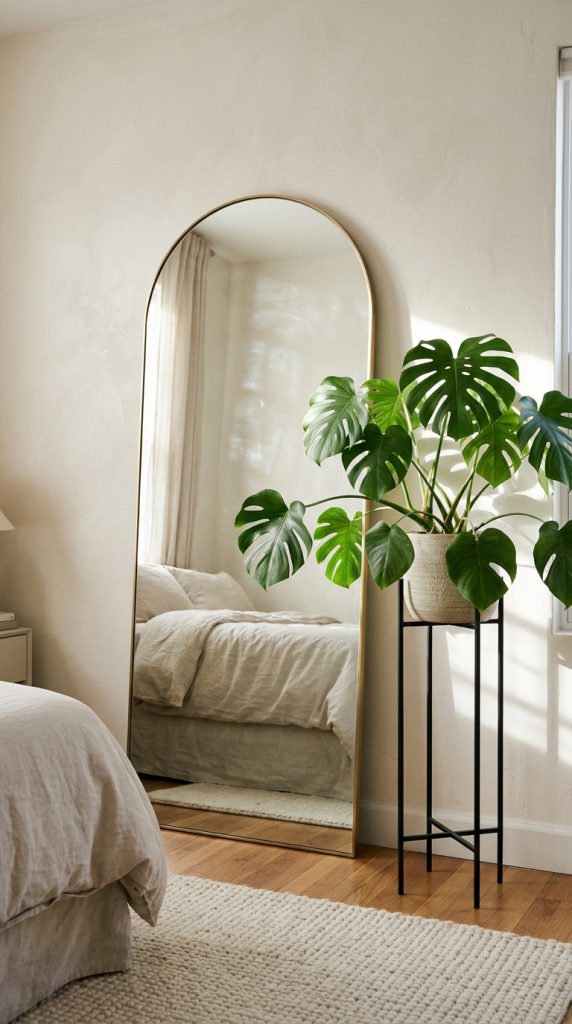
Mirrors are celebrated for visually expanding compact residential interiors, making tight rooms feel noticeably larger and brighter. By positioning an arched or full-length wall mirror adjacent to your bedroom greenery, you double the perceived volume of living foliage, turning a modest grouping of two or three potted specimens into a deep, vibrant botanical garden.
Beyond expanding visual boundaries, a thoughtfully positioned mirror captures incoming daylight from nearby windows and redirects it deep into dimmer bedroom corners. This secondary ambient bounce brightens the entire sleeping space while delivering vital natural light to shade-tolerant plants situated further from the primary window.
- Required Elements and Materials:
- 1 arched or rectangular full-length mirror featuring a slender brass, matte black, or natural oak frame
- 1 slender architectural metal or hardwood pedestal plant stand (60 cm to 80 cm elevation)
- 1 sculptural ceramic or terracotta pot with fluted, ribbed exterior detailing
- Broad-leaf architectural plants: Monstera deliciosa (Swiss Cheese Plant) or Ficus elastica (Rubber Tree)
- Heavy-duty wall-cleat mounting hardware for flush wall stability
Mount the mirror flush to the wall opposite or perpendicular to your main window to maximize its light-catching angle. Place the tall, slender pedestal plant stand directly beside the outer edge of the mirror frame. Position your structural, broad-leafed specimen on the pedestal so its sculptural leaves partially overlap the mirror glass. The reflection creates rich visual depth, turning a single botanical specimen into an expansive green display.
7. Floating Nightstand Botanical Shelf with Integrated Warm Lamp
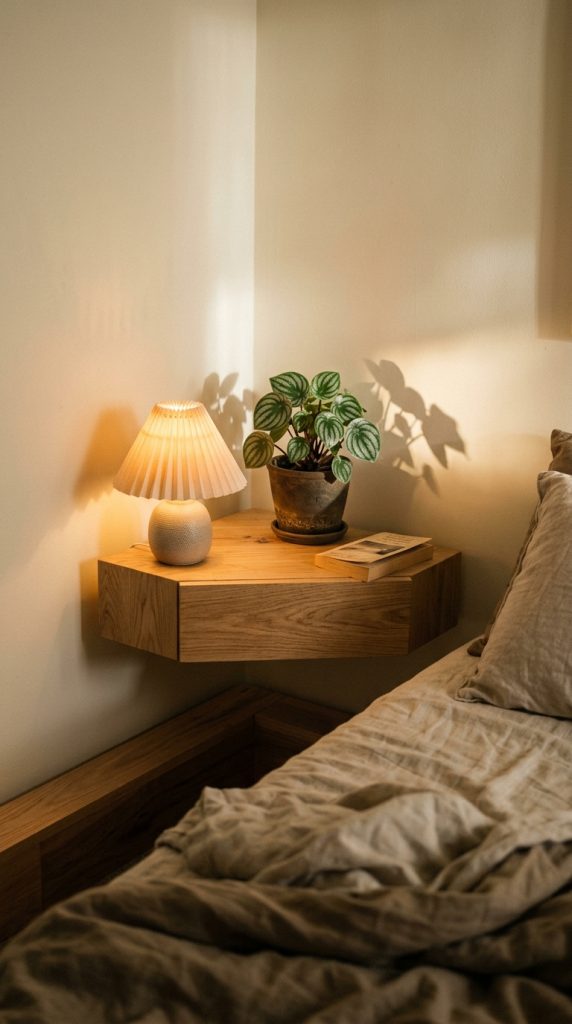
Floor area on either side of the bed is frequently compromised in small bedrooms, making standard four-legged bedside tables impractical. Replacing bulky furniture with a wall-mounted floating timber shelf clears open floor area beneath while providing dedicated space for evening essentials, a compact ambient lamp, and a mood-boosting plant.
Combining warm ambient lighting with tactile greenery on a floating bedside shelf creates an intimate evening vignette. As the nightstand lamp casts its warm glow through the leaves of your bedside plant, it projects soft botanical silhouettes across the wall, helping you wind down naturally before sleep.
- Required Elements and Materials:
- 1 wall-mounted floating hardwood drawer or ledge shelf with smooth rounded corners
- Heavy-duty hollow-wall anchors and screws
- 1 compact Nordic ceramic table lamp with a pleated fabric shade (warm 2700K LED bulb)
- 1 petite sculptural stoneware planter (raw clay or warm beige glaze)
- Compact bedside plants: Calathea orbifolia, Peperomia watermelon, or Chlorophytum comosum (Spider Plant)
Mount your floating nightstand 60 centimeters from the floor, perfectly level with your mattress top. Place your warm ceramic bedside lamp closest to the wall corner. Set your potted plant toward the front edge of the shelf where it receives filtered light and can drape softly over the side. Keep cables neatly hidden using paintable wall conduit running down to the baseboard outlet.
8. Vertical Wall Trellis and Climber Botanical Accent Wall
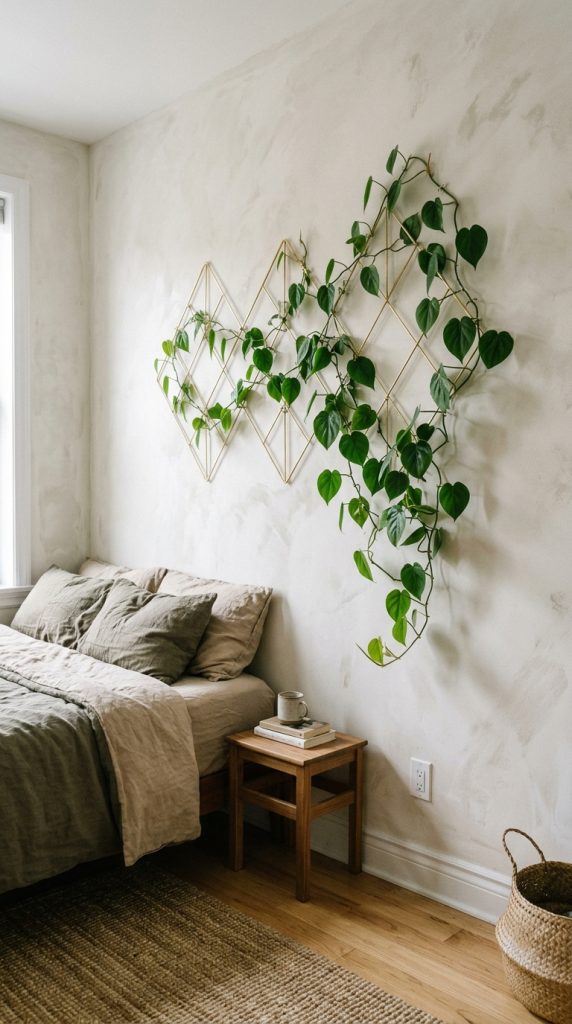
When horizontal surfaces are completely occupied, vertical drywall offers an expansive blank canvas. Installing a modern interior geometric wall trellis turns vigorous indoor climbing vines into a living accent wall, producing custom organic artwork that slowly grows and evolves across the room over time.
Instead of heavy wooden garden trellises, opt for modern minimalist brass wire grids, hexagonal wooden modules, or discreet clear wall anchors. Guiding trailing vines upward along geometric patterns introduces structured biophilic art into your bedroom, grounding the space in natural wonder without occupying an inch of valuable floor area.
- Required Elements and Materials:
- 1 modern geometric brass wire wall trellis or a set of adhesive botanical wall cable clips
- 1 medium floor planter or shelf-mounted pot with an integrated catch basin
- 1 mature, healthy vining plant: Philodendron hederaceum (Heartleaf Philodendron) or Epipremnum pinnatum
- Gentle botanical velcro ties or clear plant-training clips
- Non-damaging removable mounting strips or fine brass nails
Mount your brass trellis or geometric clips securely to your chosen accent wall, creating a path that travels upward and outward toward natural window light. Place your potted climber on a nearby shelf or low plant perch. Gently guide the longest vine runners toward the base of the trellis, securing them loosely with soft botanical clips to encourage natural upward climbing without pinching tender stems.
9. Hanging Wardrobe Botanical Rail and Closet Integration
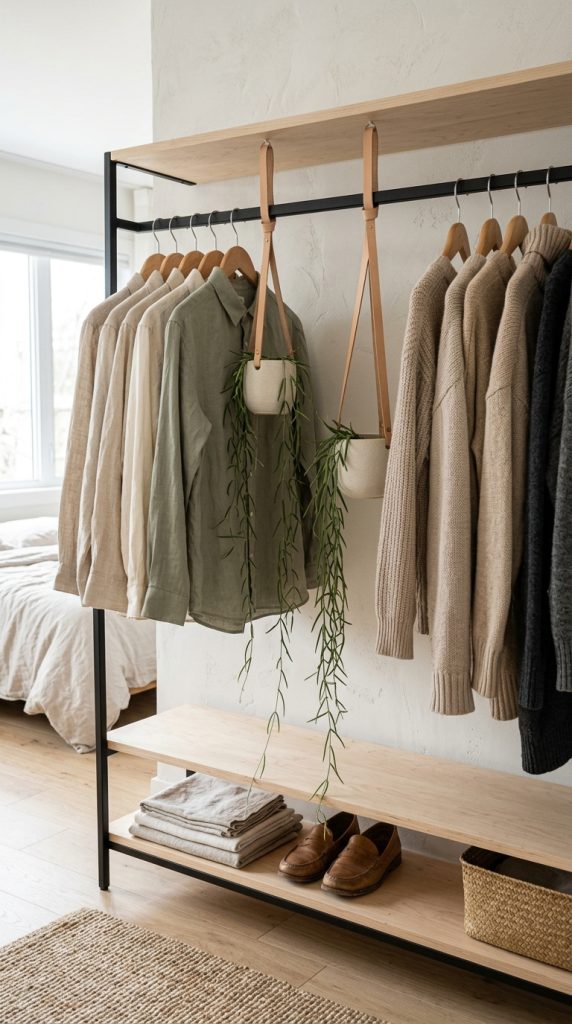
Open wardrobe systems and clothing racks are popular small-bedroom fixtures that keep clothing accessible and open. Integrating living foliage directly into your open closet structure softens rigid metal rails, masks utilitarian storage boxes, and infuses your daily dressing routine with fresh botanical charm.
Clothing racks naturally offer high structural bars ideally suited for hanging lightweight plant pots. Interspersing hanging greenery between curated linen shirts, neutral knitwear, and woven storage baskets transforms a functional garment rack into an artisanal boutique display that feels intentional, organized, and deeply cozy.
- Required Elements and Materials:
- 1 freestanding minimalist metal or timber clothing rail with top bar clearance
- 2 to 3 lightweight self-watering hanging pots with integrated leather or cotton straps
- S-hooks sized to fit the closet hanging rail
- Trailing, resilient plants: Hoya linearis, Curio radicans (String of Bananas), and Pilea depressa
- Natural canvas garment covers to keep leaves separate from delicate fabrics
Distribute your hanging clothes evenly along the rail, creating a natural 20-centimeter opening near one end where the rack receives the most indirect room light. Hang your leather strap planters using S-hooks along this opening, ensuring pots are hung at varying heights to avoid crowding. Tuck trailing vines so they drape naturally alongside your wardrobe items, adding organic softness to clean apparel lines.
10. Floating Ceiling-Hung Wooden Plant Shelf Canopy
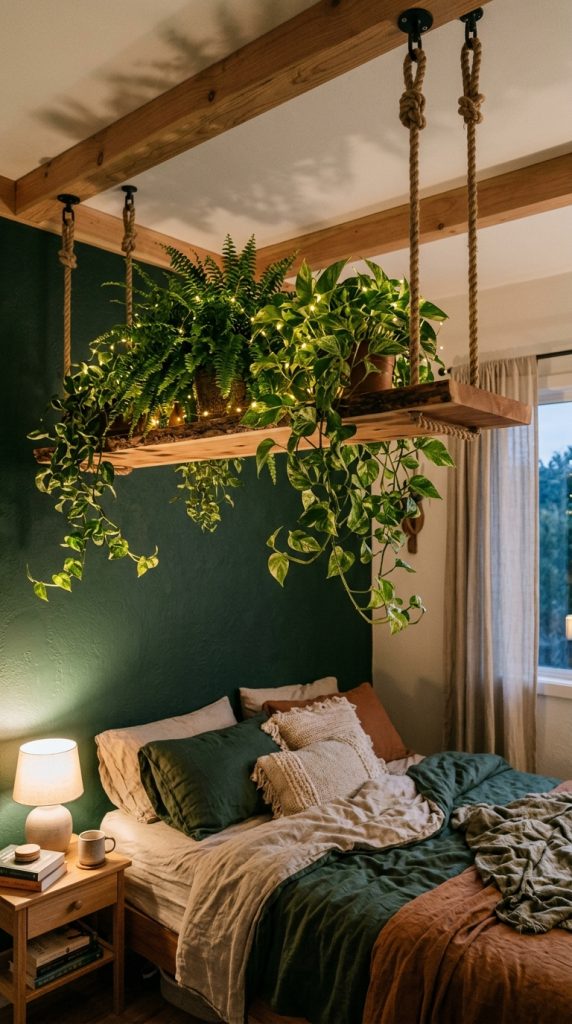
For the ultimate cozy small-bedroom experience, suspend a wide timber plank directly from the ceiling to create an aerial botanical canopy over an accent wall or across your room’s periphery. This airborne plant display creates an immersive treehouse-like atmosphere while keeping every single wall and floor surface completely clear.
A suspended ceiling shelf creates a dedicated aerial platform for multiple small potted plants, ambient fairy wire lights, and cascading foliage. Suspended by marine-grade jute rope or sturdy steel aircraft cables, this design element bridges rustic warmth with modern space efficiency, turning an overlooked ceiling into the standout design feature of your home.
- Required Elements and Materials:
- 1 solid cedar or pine timber plank (100 cm length, 20 cm width, 2.5 cm thickness, sanded and sealed)
- 2 heavy-duty eye-bolt ceiling anchors rated for 25 kg+ dynamic loads
- Marine-grade natural jute rope (12 mm diameter) or braided steel suspension wire
- 4 to 5 small assorted glazed ceramic planters with non-drip inner cachepots
- Plants: Epipremnum aureum ‘Marble Queen’, Aeschynanthus radicans (Lipstick Plant), and Nephrolepis exaltata (Boston Fern)
Locate two solid ceiling joists running parallel to your chosen wall. Pre-drill and screw heavy-duty eye-bolts securely into the timber joists. Thread your heavy jute rope through pre-drilled holes in the four corners of your wooden plank, securing them underneath with heavy structural knots. Use a spirit level to ensure the plank hangs balanced and level. Arrange your assorted potted plants across the shelf, allowing lush fronds and trailing vines to spill freely over the edges to form a lush overhead canopy.
Complete Botanical Harmony for Small Sanctuaries
Transforming a compact bedroom into a thriving botanical retreat is fundamentally an exercise in mindful spatial editing and creative vertical design. Living in a small room never requires sacrificing style or connection to the natural world; rather, spatial boundaries invite you to move beyond conventional layouts and explore the architectural potential of your walls, ceilings, and window reveals. By embracing vertical hanging systems, integrated furniture perches, and light-reflecting glass surfaces, you craft an immersive green environment that preserves functional flow and open space.
The emotional rewards of resting in a nature-filled room unfold every single day. A plant-rich bedroom softens hard architectural lines, cleanses indoor air, and surrounds you with dynamic, living beauty that changes with every new leaf and trailing vine. Combined with warm ambient lighting and soft natural textiles, your bedroom transforms from a purely functional sleeping space into a serene, deeply personal botanical sanctuary—a private haven for slow mornings, quiet evenings, and restorative sleep.