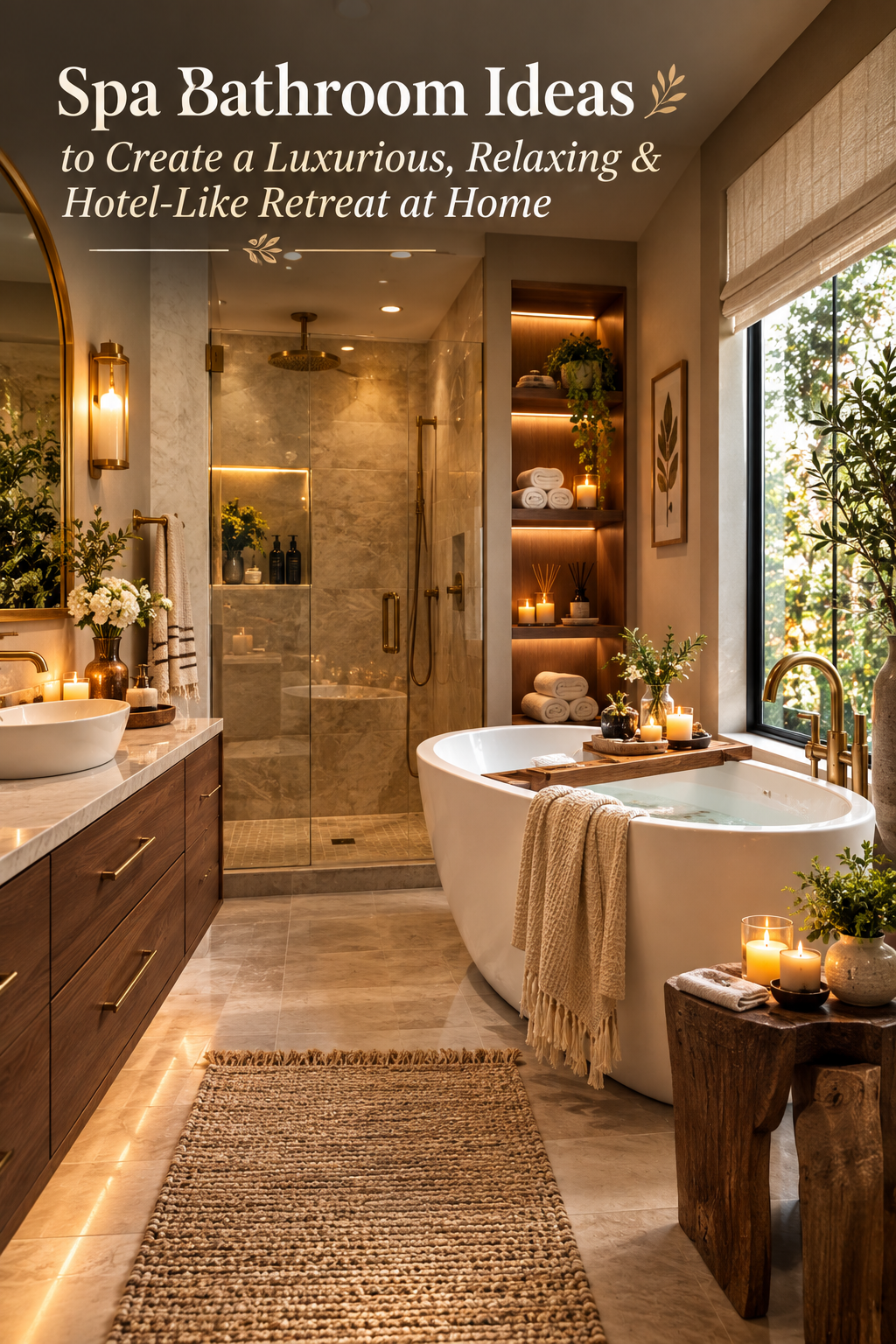
Spa bathroom ideas can completely transform an ordinary bathroom into a luxurious, relaxing, hotel-like retreat where every shower, bath, and morning routine feels more enjoyable. Instead of treating the bathroom as a purely functional space, today’s most beautiful designs focus on tranquility, natural materials, soft lighting, comfortable textures, thoughtful storage, and an uncluttered atmosphere that makes the room feel like a private wellness sanctuary.
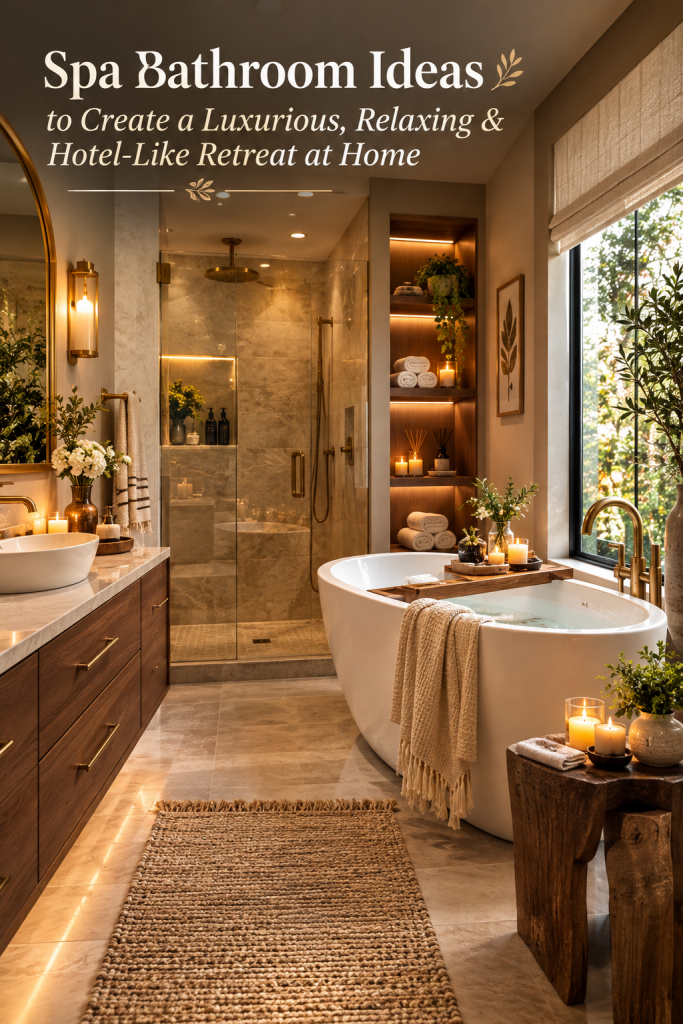
The modern spa bathroom is no longer limited to enormous luxury homes or expensive hotels. Even a compact bathroom can feel more sophisticated when its materials, colors, lighting, and accessories are carefully selected. A simple wooden vanity, warm stone surface, soft towels, beautiful lighting, and a few carefully chosen accessories can make a dramatic difference.
For 2026, bathroom design is moving strongly toward spaces that feel warm, restorative, and personal rather than cold or overly clinical. Current design coverage highlights natural stone, warm wood, soft greens, warm neutrals, microcement, sculptural lighting, wet-room layouts, and serene spa-like environments.
This shift makes sense because the bathroom is one of the few rooms in the home where people naturally slow down. A beautifully designed bathroom can become a quiet transition between the beginning and end of the day. Instead of rushing through the space, you can create an environment that encourages calm.
The hotel-like bathroom aesthetic is especially appealing because hotels often achieve luxury through simplicity rather than excessive decoration. A high-end hotel bathroom may contain only a few major elements: beautiful stone, an elegant vanity, carefully designed lighting, plush towels, a large mirror, premium fixtures, and a clean architectural layout. Nothing feels random.
That principle can easily be adapted at home.
You do not need to cover every wall in expensive marble or install a massive freestanding bathtub to create a spa atmosphere. The feeling comes from how the individual elements work together.
Natural materials are particularly effective. Wood introduces warmth against tile and stone. Marble or stone creates visual sophistication. Glass keeps the room feeling open. Ceramic accessories add handcrafted character. Soft textiles prevent hard surfaces from becoming too severe.
Color is equally important.
Pure white bathrooms can certainly look beautiful, but current 2026 bathroom trends are moving toward warmer shades such as ivory, warm stone, mushroom, clay, soft green, earthy beige, and gentle blue. These tones connect bathrooms to the natural world and can create a more calming environment.
Lighting is another major part of the spa experience. A single bright ceiling light can make even an expensive bathroom feel ordinary. Layered illumination is much more effective. Wall sconces around the vanity, soft recessed lighting, pendant fixtures, and subtle accent lights can create depth and atmosphere.
Storage also matters more than many people realize. A beautiful bathroom can quickly lose its luxury feeling when bottles, cosmetics, cleaning products, and towels are scattered across every surface. Thoughtful storage allows the room to remain visually calm.
Current spa-bathroom guidance also emphasizes intentional accessories and organized everyday essentials. Trays, attractive containers, natural materials, and carefully selected storage can make practical items look like part of the design rather than visual clutter.
The ideas below are designed to work across different bathroom sizes and decorating styles. Some focus on architectural changes, while others can be achieved through styling and accessories. You can combine several ideas to create a complete luxury bathroom or simply choose one or two for a smaller refresh.
1. Create a Warm Natural Stone Spa Bathroom
Natural stone is one of the easiest ways to make a bathroom feel luxurious because it introduces texture, variation, and a connection to nature.
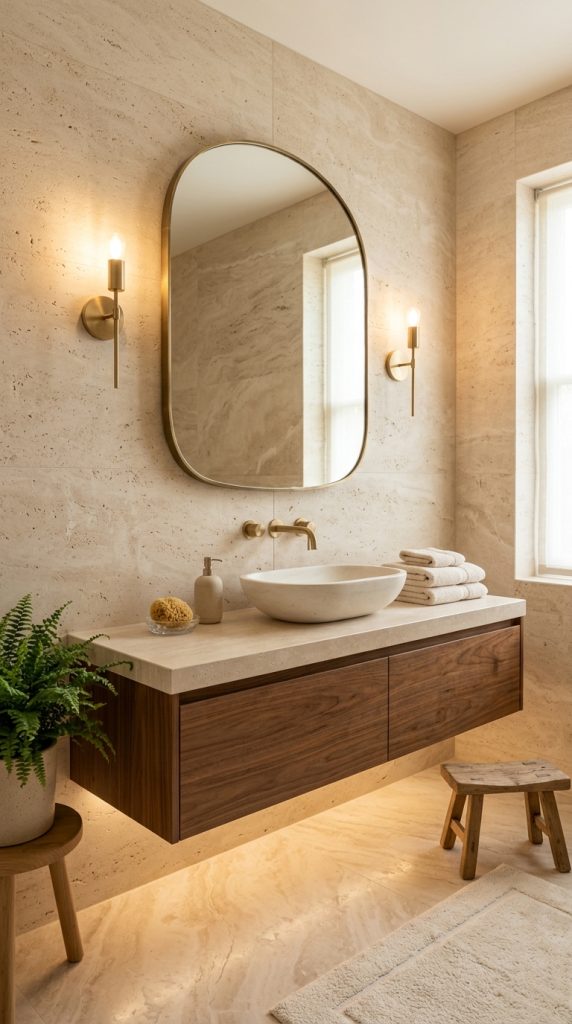
Instead of choosing a bathroom filled with highly polished white surfaces, consider warmer stone tones such as creamy limestone, travertine-inspired finishes, beige marble, warm quartzite, or honed stone.
The key is to choose a finish that feels calm rather than visually overwhelming.
A large-format stone wall behind the vanity or bathtub can become the room’s architectural focal point. Large surfaces also reduce the visual interruption created by numerous grout lines.
For the floor, a matte or honed stone-inspired tile can create an understated foundation.
Pair the stone with a warm wood vanity. Walnut, natural oak, teak-inspired finishes, or medium warm timber can soften the harder surfaces.
This contrast between stone and wood is particularly effective because it creates luxury without making the room feel cold. Current bathroom design guidance specifically highlights natural stone and warm wood as important ingredients in creating restorative spa-like bathrooms.
Keep the accessories minimal.
A sculptural ceramic vase, folded cream towels, a wooden bath stool, and one small plant may be enough.
For hardware, choose brushed brass, aged bronze, or another warm metal if you want a traditional luxury atmosphere. Matte black can create a more contemporary contrast.
The lighting should emphasize the stone rather than flatten it. Use warm sconces around the mirror and subtle ceiling illumination.
If your budget does not allow genuine natural stone throughout the room, use a high-quality stone-look porcelain tile on one major surface and invest in better lighting and hardware elsewhere.
The goal is to create a bathroom where the material itself becomes the decoration.
2. Design a Walk-In Shower With a Luxury Hotel Feel
A spacious walk-in shower can instantly make a bathroom feel more like a luxury hotel.

The most important feature is visual continuity.
Instead of dividing the shower into multiple small areas, use a large glass panel or frameless enclosure where appropriate to maintain an open sightline.
A curbless or low-threshold shower can create a streamlined appearance, although any structural changes should be planned with proper waterproofing and drainage by qualified professionals.
Inside the shower, use one dominant material.
Large-format stone-look porcelain, microcement, or a continuous tile surface can create the seamless appearance associated with upscale spas.
Current 2026 shower trends emphasize more monolithic materials and larger-format surfaces because they reduce visual noise and create a quieter architectural effect.
Add a built-in shower niche rather than placing multiple plastic shelves against the wall.
The niche can be finished in a contrasting stone or tile to create a subtle design moment.
For the shower hardware, a large overhead rain shower can provide a luxurious visual focal point, while a separate handheld fixture adds practical flexibility.
Choose finishes that suit your overall scheme.
Brushed brass works beautifully with cream stone and warm wood.
Brushed nickel creates a softer contemporary look.
Matte black provides stronger contrast against pale tile.
Avoid mixing too many metal finishes unless the combination is deliberate.
A built-in bench can elevate the shower from a basic washing area to a spa-inspired retreat.
Use a stone bench that matches or complements the walls.
Add a small teak or natural wood bath stool only if there is sufficient space and the material is suitable for wet environments.
Keep bottles organized inside the niche rather than scattered along the floor.
The finished shower should look calm even when it is not being used.
3. Make a Freestanding Bathtub the Main Focal Point
Nothing communicates relaxation quite like a beautiful freestanding bathtub.

Instead of placing the tub wherever there happens to be empty floor space, treat it as an architectural centerpiece.
A sculptural oval bathtub can soften a bathroom filled with straight lines.
A rectangular soaking tub can feel more contemporary.
A gently curved tub can create an especially calming silhouette.
If the bathroom has a suitable private window, positioning the bathtub near natural light can make the bathing experience feel more connected to the outdoors. Current 2026 bathroom coverage highlights soaking tubs positioned beneath windows, provided privacy is properly addressed.
A small wooden stool beside the tub can hold a folded towel, book, or bath accessories.
Keep the area around the bathtub relatively open.
Do not fill the surrounding floor with baskets, plants, candles, and decorative objects.
The negative space is part of the luxury.
For a hotel-inspired appearance, use a floor-mounted or freestanding tub faucet.
A sculptural faucet in brushed brass, bronze, or polished nickel can become a jewelry-like detail.
Above the tub, consider a single oversized pendant.
The fixture should be visually interesting without becoming excessively decorative.
Soft lighting is essential.
A bright overhead fixture can destroy the relaxed atmosphere, while warm accent lighting can make the tub feel inviting in the evening.
If you love the idea of a freestanding bathtub but have a small bathroom, choose a compact model rather than forcing an oversized tub into the room.
The bathtub should enhance the space, not make it difficult to move around.
4. Use Warm Layered Lighting for a Five-Star Spa Atmosphere
Lighting can make or break a luxury bathroom.
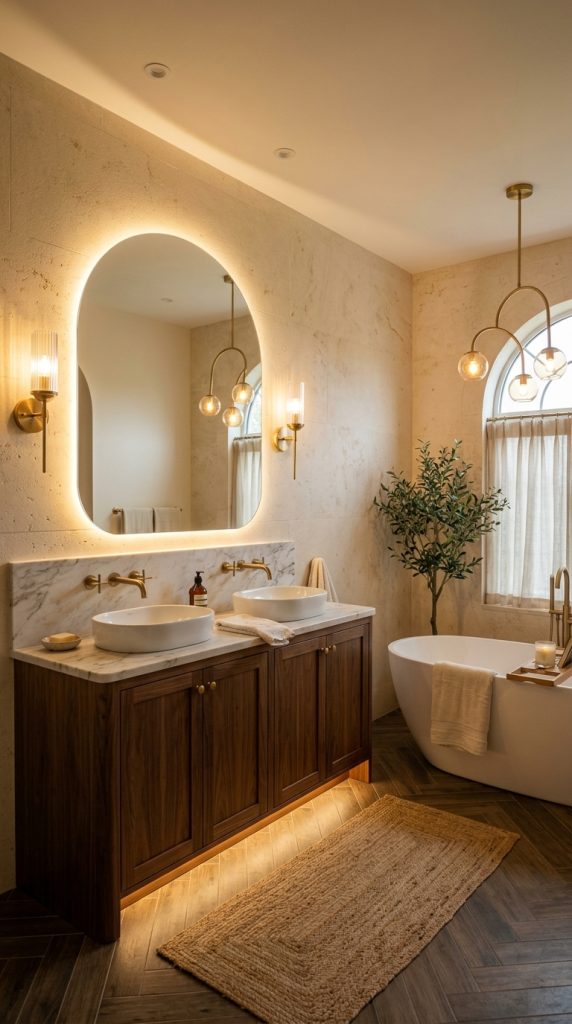
Even beautiful tile and expensive fixtures will look ordinary under harsh, flat lighting.
The solution is layered illumination.
Start with functional lighting around the vanity.
Wall sconces positioned on both sides of the mirror can provide more flattering and balanced illumination than a single light directly above the head.
Add ceiling lighting for general visibility.
Then introduce a softer layer.
A decorative pendant near the bathtub can create a focal point.
Under-vanity lighting can create a subtle floating effect.
Recessed accent lights can highlight a stone wall or architectural niche.
The idea is to avoid having one source do all the work.
Current bathroom trends are increasingly treating lighting fixtures as decorative architectural elements rather than purely functional objects. Oversized fixtures and more residential-style lighting are helping bathrooms feel warmer and more livable.
Choose warm light rather than an excessively cool white when creating a relaxing environment.
The exact lighting specification should suit the fixture, room, and local electrical requirements, particularly in wet areas.
You can also use dimmable lighting where compatible.
A bright setting is useful for grooming.
A softer setting works beautifully for evening relaxation.
For a hotel-like look, keep visible bulbs and fixtures visually coordinated.
A brass sconce with a warm cream shade can feel elegant and timeless.
A sculptural black pendant can create a modern contrast.
A simple opal-glass fixture can produce a soft, diffused glow.
Think about what the room will look like at night, not just during the day.
5. Add a Warm Wood Vanity for Organic Luxury
Bathrooms can contain a lot of hard materials.
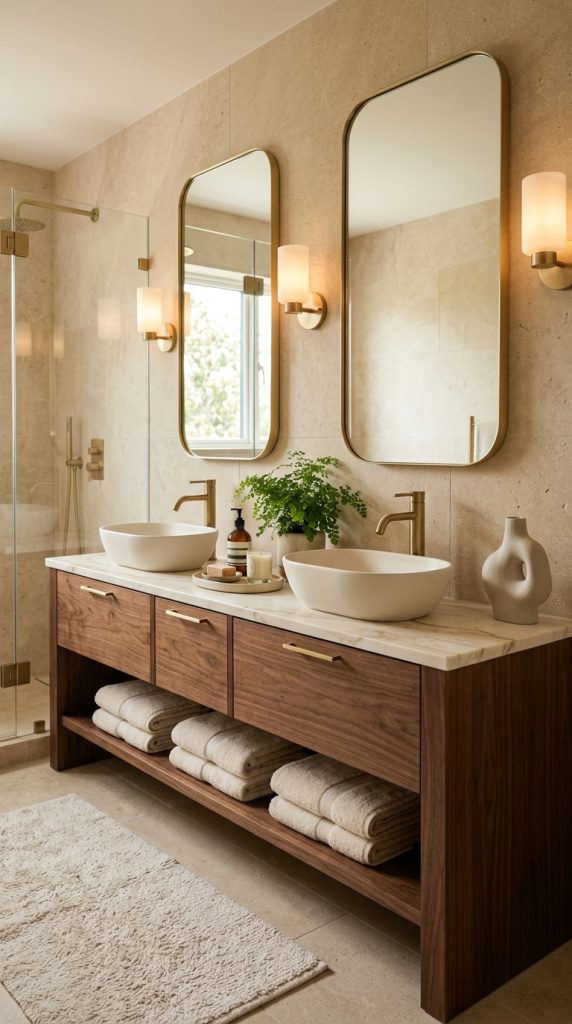
Tile, stone, glass, metal, and porcelain are all useful, but too many hard surfaces can make the room feel sterile.
A wood vanity introduces warmth immediately.
Walnut is excellent for a sophisticated luxury bathroom.
Natural oak works well in Scandinavian or organic-modern interiors.
Teak-inspired finishes are ideal for coastal or spa-style spaces.
A furniture-style vanity can make the bathroom feel more like a designed room and less like a purely functional utility area.
Choose drawers rather than only open shelving if you want to keep everyday products hidden.
Pair the vanity with a stone countertop.
Cream marble, quartzite-inspired surfaces, limestone-look porcelain, or warm quartz can complement the wood beautifully.
Hardware should be simple.
Long brushed-brass pulls can emphasize the furniture-like character.
Small round knobs create a softer traditional effect.
Integrated handles can create a minimalist appearance.
For the mirror, consider a large rounded shape.
Curves can soften the straight geometry of cabinets and tiles, and curved shower profiles and arched elements are also emerging in 2026 bathroom design.
Keep the countertop mostly clear.
One beautiful soap dispenser, a small ceramic tray, and perhaps a vase are enough.
The visual restraint makes the vanity look more expensive.
6. Create a Microcement Bathroom for Seamless Minimalism
Microcement is an excellent option if you want a minimalist spa bathroom with subtle texture.

Its seamless appearance can create a calm architectural envelope around the room.
Rather than introducing multiple tile patterns, you can use microcement-style finishes across walls and selected surfaces while adding contrast through wood, stone, metal, and textiles.
Current 2026 bathroom coverage identifies microcement as a major direction because it offers tactile interest while maintaining a clean, minimal appearance.
Choose warm greige, mushroom, soft beige, or creamy stone tones rather than a cold gray if your goal is relaxation.
Pair the walls with a natural wood vanity.
A large round mirror can soften the composition.
For hardware, brushed nickel or aged brass can provide understated contrast.
The shower can use the same finish for visual continuity, provided the chosen product and installation system are appropriate for wet areas.
Add a single sculptural pendant or wall light.
Keep decorative accessories extremely limited.
A microcement bathroom looks best when the architecture does most of the visual work.
If a full microcement installation is beyond your budget, a large-format porcelain tile with a similar plaster or cement appearance can create a related effect.
7. Build a Soft Green and Stone Spa Retreat
Green is particularly effective in bathrooms because it naturally connects the room with outdoor landscapes.
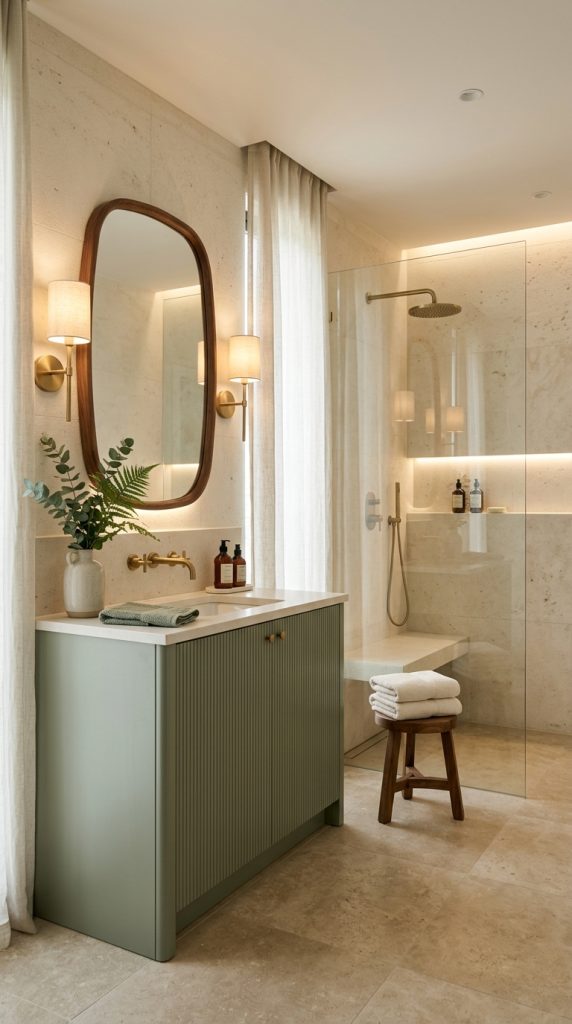
Instead of a bright emerald green, choose soft sage, olive, lichen, eucalyptus, or muted moss.
Pair the green with warm stone and natural wood.
For example, imagine a soft sage vanity against a warm ivory wall, a limestone-look floor, a walnut mirror frame, and brushed brass fixtures.
The result feels organic without becoming rustic.
Current 2026 bathroom color trends emphasize soft greens alongside stone-inspired neutrals as a calming alternative to stark white bathrooms.
Green can be introduced in different ways.
You could paint the vanity.
Use green wall tile.
Add a small amount through artwork.
Or simply use a plant and a few accessories.
If the bathroom is small, using green only on the vanity can create color without visually closing the room.
For a more immersive design, use green tile across the shower walls and balance it with cream stone elsewhere.
Avoid too many different shades.
Choose one dominant green and allow the materials to provide variation.
8. Create a Luxury Wet Room
Wet rooms are increasingly associated with luxury rather than simply being a solution for awkward bathroom layouts.

A properly designed wet room can create a seamless spa-like experience by visually connecting the shower and bathing areas.
Current 2026 bathroom trends highlight wet rooms as a more luxurious way to create an uninterrupted spa atmosphere.
The design should feel continuous.
Large-format floor and wall surfaces can help achieve this.
A glass screen can separate the shower zone while maintaining openness.
A freestanding bathtub can sit nearby without creating a visually heavy division.
For an elegant look, use one main stone or porcelain finish and introduce a secondary material only where necessary.
A wood vanity can warm the composition.
A built-in niche can eliminate unnecessary storage furniture.
If you have enough room, a small teak-style bench can provide seating.
Lighting should be integrated into the architecture rather than relying entirely on decorative objects.
Because wet-room construction involves drainage, waterproofing, floor slopes, and other technical considerations, this is an area where professional planning is particularly important.
The visual result should be simple.
The luxury comes from the seamless layout.
9. Add a Hotel-Inspired Towel and Textile Experience
Luxury hotels understand the power of textiles.

You can recreate part of that experience without changing the bathroom architecture.
Start with towels.
Choose large, plush towels in a coordinated palette such as white, cream, warm beige, or soft stone.
Avoid too many colors.
Fold them neatly and store them in a way that makes them easy to reach.
A heated towel rail can provide both function and comfort where practical and safely installed.
For decorative storage, use a woven basket.
Place rolled towels inside rather than stacking everything in a cupboard.
A small bench can also hold folded towels.
For a more sophisticated appearance, introduce one textile with subtle texture rather than a bold pattern.
A waffle towel, ribbed bath mat, or linen hand towel can add interest.
Choose a bath mat that complements the floor rather than competing with it.
Neutral textiles allow the architectural materials to remain the focus.
If you want a hotel-like effect, keep the textile palette consistent throughout the bathroom.
White towels with warm wood and cream stone create a timeless combination.
Taupe towels can make a darker bathroom feel more cocooning.
Soft green textiles can reinforce a nature-inspired scheme.
The secret is presentation.
Even inexpensive towels can look more luxurious when they are folded consistently and stored neatly.
10. Design a Calm Bathroom With a Freestanding Vanity and Symmetry
Symmetry is one of the easiest ways to create a polished hotel-like appearance.
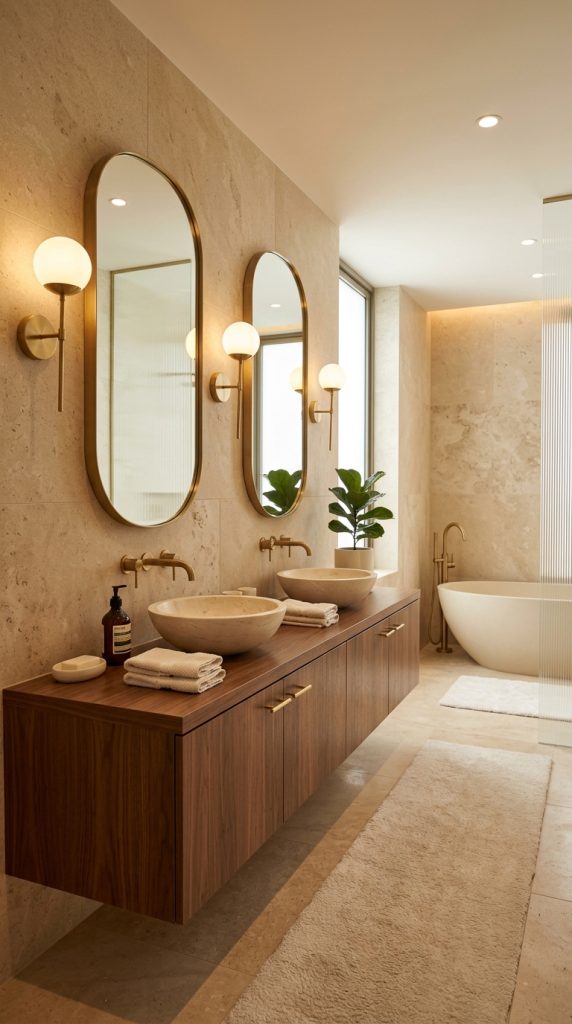
If space allows, use a wide vanity with two sinks.
Place matching mirrors above each basin.
Use coordinated sconces on both sides.
The repetition creates a sense of order.
A symmetrical arrangement works especially well with classic materials such as marble, walnut, cream tile, and brushed brass.
However, symmetry does not mean every accessory must be identical.
Keep the architecture balanced while allowing small styling variations.
For example, place a small plant on one side and a ceramic container on the other.
The overall arrangement should still feel visually even.
Use drawers to hide personal products.
Leave the countertop relatively empty.
This is one of the simplest ways to create a high-end bathroom appearance.
The more visual noise you remove, the more the architectural details become noticeable.
A large mirror can also visually expand the room.
Choose a framed mirror for a furniture-inspired look or a frameless design for minimalist luxury.
For a softer appearance, use rounded or arched mirrors.
11. Add a Sculptural Pendant Above the Bathtub
A bathroom does not have to rely only on recessed ceiling lights.
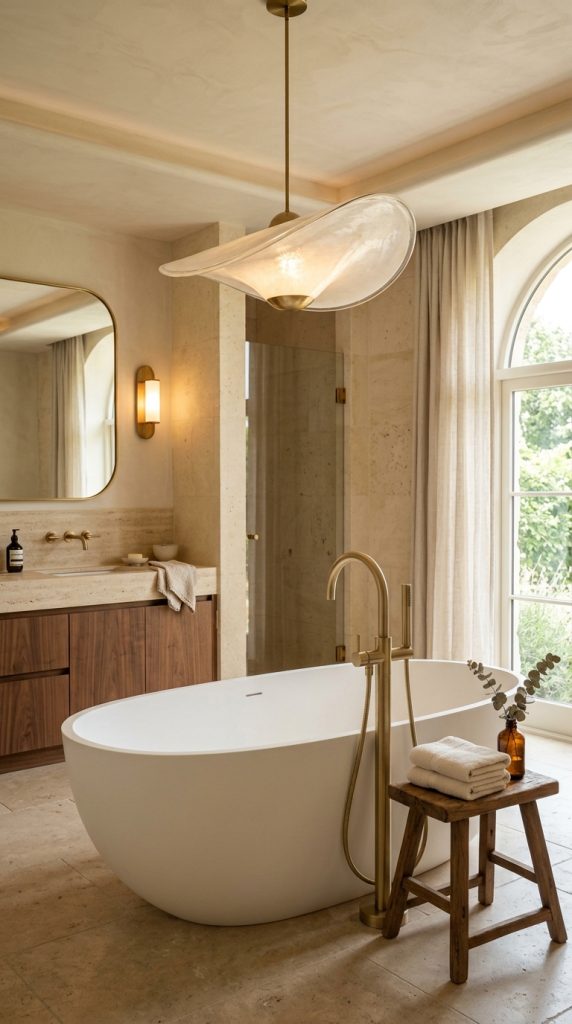
A beautiful pendant can make the room feel more like a luxury suite.
Position it near the bathtub or another suitable location where it can be safely installed according to applicable electrical codes.
Choose a fixture with an elegant silhouette.
A linen shade creates softness.
Opal glass gives diffused illumination.
A sculptural metal fixture creates drama.
A woven pendant can work in an organic spa bathroom when appropriately rated and located.
The pendant should complement the room rather than compete with it.
If the bathroom already contains strong marble veining or patterned tile, choose a simpler light.
If the room is minimalist, the pendant can become the main decorative feature.
Keep the rest of the accessories restrained.
One strong lighting feature can create more impact than a collection of small decorations.
12. Create a Small Bathroom With a Luxury Spa Feeling
A small bathroom can still feel luxurious.
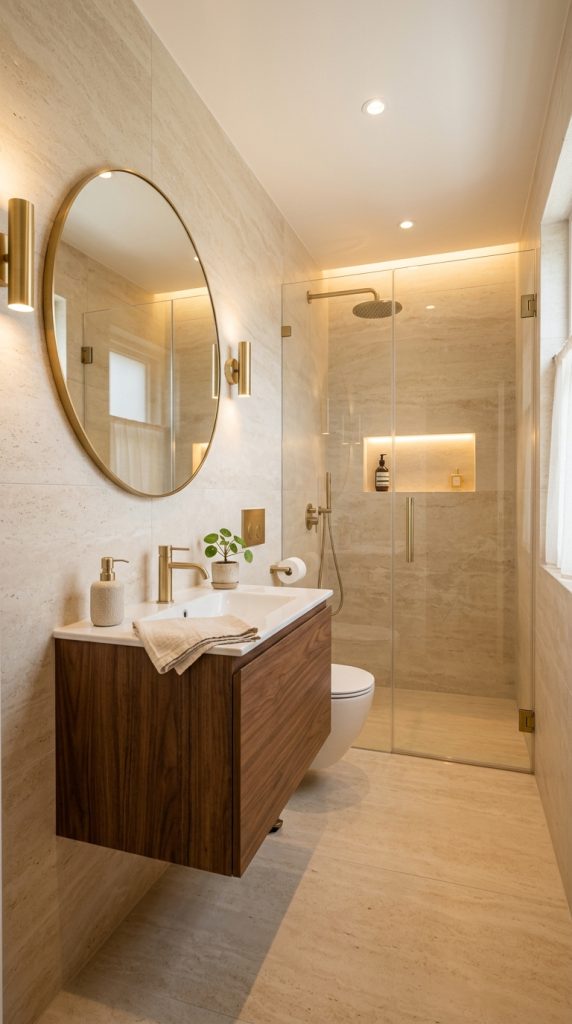
The key is to prioritize visual continuity and remove unnecessary objects.
Start with a limited color palette.
Warm white, beige, soft stone, and natural wood are excellent choices.
Use large-format tiles if appropriate for the space because fewer grout lines can create a calmer appearance.
A wall-mounted vanity can expose more floor area and make the room feel visually lighter.
Use a large mirror to reflect available light.
A frameless glass shower enclosure can maintain the sightline through the room.
Instead of a bulky storage cabinet, use a recessed niche or mirrored cabinet.
Choose one beautiful accessory.
Perhaps a ceramic soap dispenser.
Perhaps a small plant.
Perhaps a wooden stool.
Do not try to fit every spa accessory into the room.
In a small bathroom, restraint creates luxury.
A single warm wood element can also make a major difference.
For example, a compact walnut vanity against creamy walls can create enough warmth without darkening the entire room.
13. Introduce a Natural Stone Shower Niche
A shower niche can be functional and beautiful at the same time.
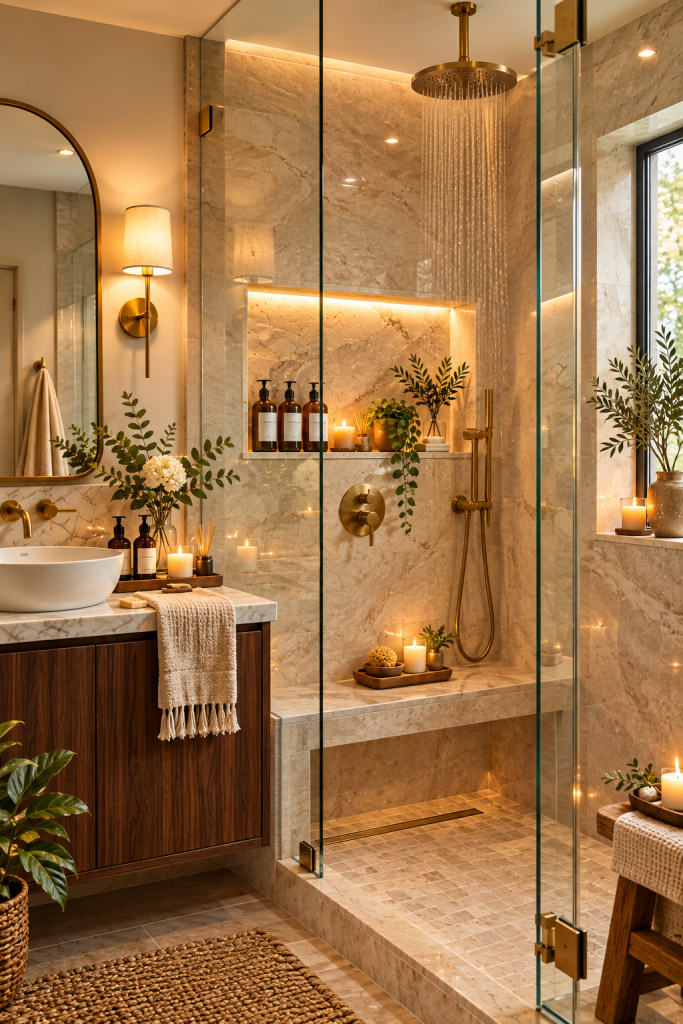
Instead of treating it only as storage, make it a deliberate architectural detail.
Use a contrasting stone inside the niche.
If your shower walls are warm beige, consider a slightly darker stone.
If your walls are marble-look porcelain, use a complementary slab or mosaic.
Keep the products inside the niche organized.
Use matching or neutral containers rather than displaying brightly colored packaging.
A small ledge can hold a soap bar or bath accessory.
The niche should not become a crowded shelf.
For a luxury hotel feeling, repeat the niche material somewhere else in the room.
For example, the stone could also appear on the vanity countertop.
This repetition creates cohesion.
You can add subtle integrated lighting if professionally designed and appropriate for the wet environment.
A softly illuminated niche can become a beautiful evening feature.
14. Use Soft Blue for a Calm Coastal Spa Bathroom
Soft blue can create a surprisingly sophisticated bathroom when used in muted tones.
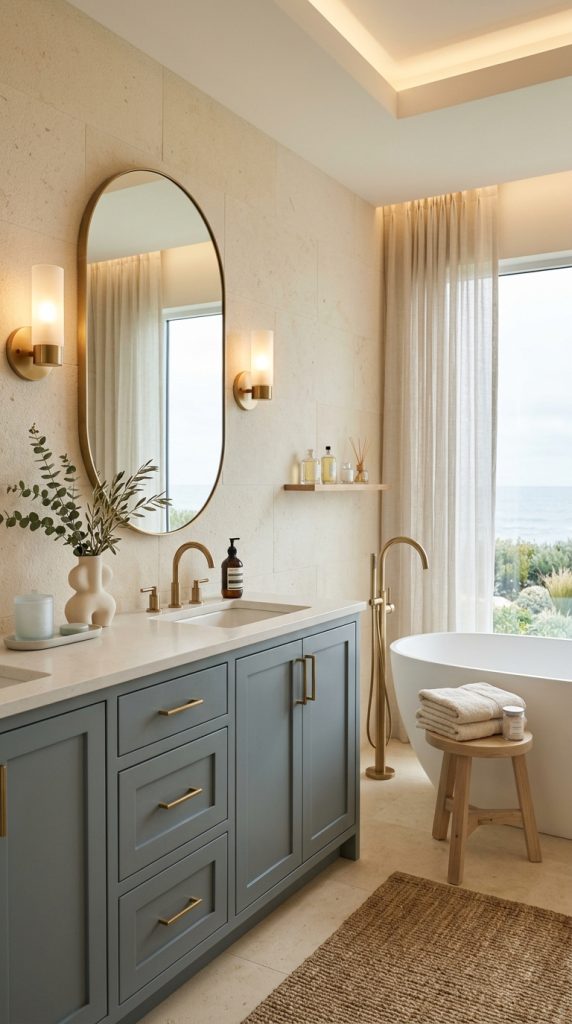
Choose dusty blue, pale mineral blue, blue-gray, or soft mist rather than bright aqua.
Pair it with warm white and natural wood.
A pale blue vanity against creamy walls can feel fresh without becoming beach-themed.
Alternatively, use blue tile inside the shower.
Natural stone accessories can prevent the palette from feeling too cool.
Warm brass hardware also works beautifully with soft blue.
Current 2026 bathroom color coverage identifies softer blue tones as part of the movement toward calming, restorative bathroom spaces.
For a more sophisticated interpretation, use blue in only one major area.
A blue vanity with warm stone walls can look more expensive than covering every surface in the same color.
Add cream towels, natural wood, and one ceramic accessory.
The result should feel tranquil and airy.
15. Create a Warm Earth-Tone Spa Bathroom
If you want something richer than an ivory bathroom, consider an earthy palette.
Use mushroom, clay, terracotta, warm beige, caramel, muted brown, and natural stone.
Earthy bathrooms can feel exceptionally cozy while still looking luxurious.
The trick is to keep the palette restrained.
Choose one dominant earth tone.
Then support it with warm neutrals and natural materials.
For example, use warm taupe walls, a walnut vanity, cream stone countertops, and brushed bronze fixtures.
Or choose clay-colored tile with an ivory bathtub and dark wood stool.
Earth-inspired colors are becoming increasingly important in 2026 bathroom design as homeowners move away from stark white and cool gray schemes.
Add soft lighting to bring out the warmth.
Avoid excessively glossy surfaces if you want a relaxed atmosphere.
Honed, matte, textured, or softly reflective finishes generally support the spa feeling better.
16. Add a Wooden Bath Stool for Organic Texture
A small wooden stool may seem like a minor accessory, but it can dramatically change the character of a bathroom.
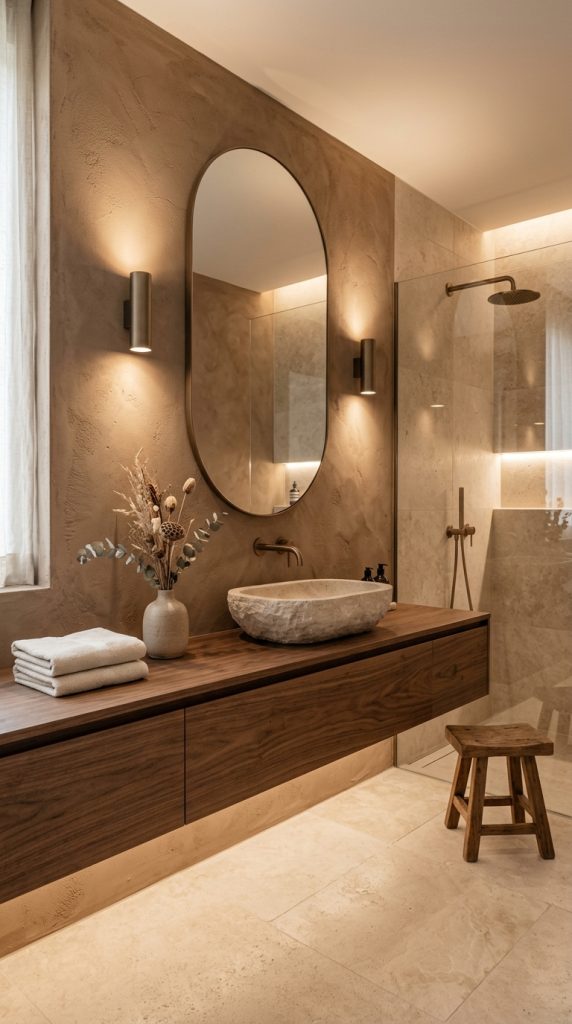
Place it beside the bathtub or shower.
Use it to hold a folded towel, soap, candle, or small ceramic bowl.
Choose a simple design.
Teak-inspired wood is especially associated with spa environments because of its visual warmth and practical relationship with wet-area design, though the suitability of any wood product depends on the product and placement.
A stool also introduces a furniture-like quality.
This is important because current bathroom design is moving toward spaces that feel more residential and comfortable rather than purely utilitarian.
Do not overload the stool.
One or two objects are enough.
A folded cream towel and small ceramic container can create a complete arrangement.
17. Use an Oversized Mirror to Create Hotel-Style Impact
The mirror is one of the most visually important elements in a bathroom.

Instead of choosing a tiny mirror above the sink, consider a larger design that fills more of the vanity wall.
A large mirror reflects light and can make the bathroom feel more spacious.
For a traditional luxury style, use a thin brass or bronze frame.
For a contemporary look, choose a frameless mirror.
For organic modern design, consider a rounded or arched silhouette.
If you have a double vanity, a single large mirror can create a unified appearance, while two individual mirrors can create symmetry.
Add sconces around the mirror rather than relying exclusively on overhead lighting.
The combination of a large reflective surface and warm lighting creates a particularly polished effect.
Keep the mirror relatively clean and visually simple if the room already contains dramatic tile or stone.
18. Create a Quiet Luxury Bathroom With Minimal Accessories
Luxury does not always require more.
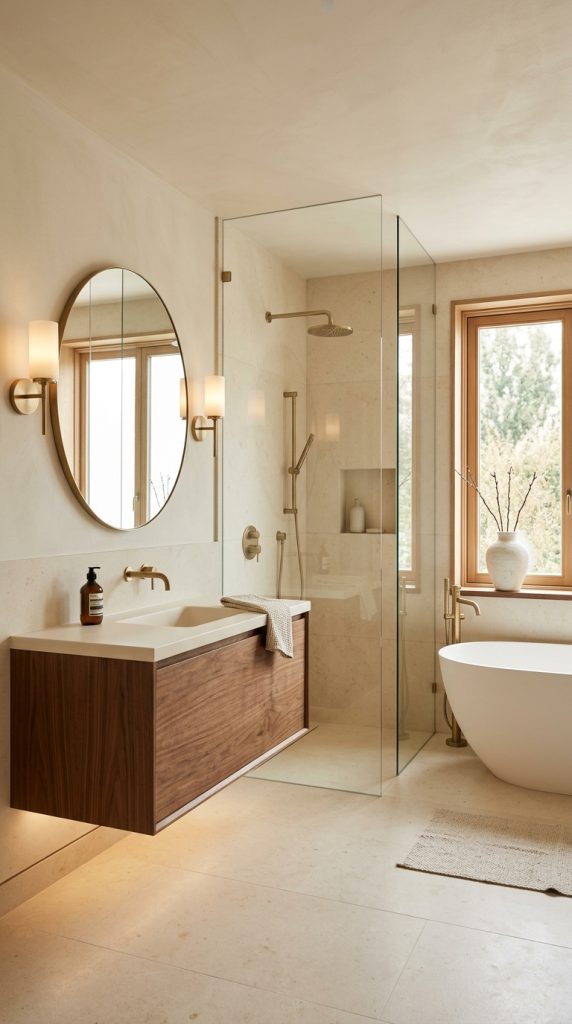
In fact, a restrained bathroom can feel considerably more expensive than one filled with decorative items.
Choose a few beautiful materials.
Perhaps warm stone, walnut, cream ceramic, and aged brass.
Then let those materials speak for themselves.
Keep countertops almost completely clear.
Store everyday products behind closed doors.
Choose one beautiful tray.
Add one vase or plant.
Use high-quality towels.
Allow empty wall and floor space to remain visible.
This approach aligns with the current movement toward curated simplicity in spa bathrooms, where the focus is on calm materials, intentional design, and sensory comfort rather than excessive decoration.
The bathroom should feel peaceful when you walk into it.
Nothing should immediately demand your attention.
The visual hierarchy should move naturally from the major architectural feature to the vanity, bathtub, shower, and smaller details.
19. Add Spa-Like Greenery and Natural Elements
Plants can bring life into a bathroom and reinforce the connection with nature.

Choose varieties that are genuinely appropriate for the available light and humidity.
If natural plants are not practical, use a few high-quality botanical branches or another natural element instead.
Avoid turning the bathroom into a jungle.
One large plant can have more impact than ten tiny pots.
Place greenery near a window, beside the bathtub, or on a suitable shelf.
A small branch in a sculptural ceramic vase can create a particularly elegant arrangement.
Natural wood accessories can reinforce the same idea.
Use a wooden bath tray, stool, bowl, or framed mirror.
Stone also contributes to the natural material palette.
The objective is to make the bathroom feel connected to organic textures rather than decorated with artificial spa symbols.
Keep colors quiet.
Soft greens, cream, beige, brown, and stone work beautifully together.
20. Create a Complete Hotel-Like Spa Bathroom Experience
The final idea brings all the previous principles together into one cohesive bathroom.

Imagine entering a bathroom with warm ivory stone walls, a large walk-in shower, a sculptural freestanding bathtub, a walnut vanity, oversized rounded mirrors, brushed-brass fixtures, plush cream towels, and soft layered lighting.
The shower contains a built-in stone niche.
The bathtub sits beneath a beautiful window with appropriate privacy.
A small wooden stool rests beside the tub.
A large ceramic vase contains a single sculptural branch.
The countertop remains almost completely clear.
The floor uses a warm matte stone finish.
A subtle pendant hangs near the bathtub.
Warm sconces illuminate the vanity.
The palette includes cream, warm beige, walnut, soft green, and muted brass.
Nothing feels excessive.
Every object has a purpose.
This is the essence of a hotel-like bathroom.
The luxury comes from the combination rather than any single expensive feature.
If your budget is limited, begin with the elements that have the greatest visual impact.
Improve the lighting.
Declutter the vanity.
Upgrade towels.
Add a beautiful mirror.
Introduce one warm wood element.
Use a coordinated color palette.
Then gradually improve the larger features when possible.
If you are renovating from scratch, consider the layout first.
Create clear zones for showering, bathing, grooming, and storage.
Plan lighting before the walls are finished.
Choose the main material before selecting accessories.
Think about where towels will be stored.
Think about where everyday products will live.
Think about what the bathroom will look like at night.
This planning prevents the room from becoming visually crowded.
How to Choose the Best Color Palette for a Spa Bathroom
A spa bathroom should generally have a controlled color palette.
Warm ivory is one of the safest foundations.
Beige adds softness.
Warm stone creates an architectural feeling.
Mushroom introduces depth.
Soft green adds an organic quality.
Muted blue creates calm.
Natural wood adds warmth.
Brushed brass or bronze can provide subtle luxury.
If you want a darker bathroom, use deep brown or charcoal strategically and balance it with lighter surfaces.
Avoid using too many unrelated colors.
The goal is to create visual continuity.
How to Make a Bathroom Look More Expensive Without a Full Renovation
You do not always need new tile or a new bathtub.
Start by removing visual clutter.
Then improve the lighting.
Replace mismatched storage containers with coordinated ones.
Add plush towels.
Introduce a beautiful tray.
Use a large mirror if the existing one is too small.
Add one natural material such as wood or stone.
Replace worn hardware if practical.
Add a small plant.
Use a neutral bath mat.
These changes can create a surprisingly significant visual improvement.
The most important principle is editing.
Remove anything that does not contribute to function or beauty.
How to Create a Spa Bathroom on a Budget
Begin with textiles and accessories.
Cream towels, a woven basket, a wooden stool, a ceramic soap dispenser, and a warm lamp can create the foundation.
Next, improve organization.
Hide unnecessary products.
Use trays to group the items that must remain visible.
If you can make one larger change, consider replacing the vanity hardware or mirror.
Paint can also transform a bathroom if the product is appropriate for the room and surface.
Choose a warm neutral or soft green.
Avoid buying large quantities of inexpensive decorations.
Instead, purchase one or two larger, useful pieces.
A beautiful mirror or vanity light can have more impact than many small accessories.
How to Keep a Spa Bathroom Clutter-Free
Every item should have a home.
Use drawers for personal products.
Use a recessed niche in the shower where possible.
Use attractive containers for frequently used items.
Keep cleaning supplies hidden.
Store extra towels in a dedicated cabinet or basket.
Do not allow the countertop to become the storage location for everything.
A tray can contain a few essentials while keeping them visually grouped.
This is important because clutter is fundamentally incompatible with the peaceful atmosphere of a spa-inspired room. Current spa-bathroom guidance specifically emphasizes thoughtful storage and restraint in the number of visible items.
How to Make Your Spa Bathroom Pinterest-Worthy
A Pinterest-worthy bathroom needs one strong visual story.
Do not try to show every feature equally.
If the bathtub is beautiful, make it the focal point.
If the shower has dramatic stone, photograph the shower.
If the vanity is the star, frame the image around it.
Use vertical photography with a clear composition.
Natural light works beautifully during the day.
Warm layered lighting creates a more atmospheric evening image.
Keep towels neatly arranged.
Remove unnecessary bottles.
Use one or two plants rather than filling the room with greenery.
Choose a restrained palette.
For Pinterest graphics, minimal text is usually more elegant than covering the image with multiple words.
A simple title such as “20 Spa Bathroom Ideas” can be enough.
The image should create the desire to save the idea before the viewer even reads the title.
Common Mistakes to Avoid in a Spa Bathroom
One common mistake is using too many decorative accessories.
Another is relying entirely on cool white lighting.
A third is choosing several unrelated materials without a clear color story.
Bathrooms can also feel less luxurious when every surface is glossy.
Mix matte, honed, textured, and subtly reflective finishes.
Avoid placing too many products on the vanity.
Do not make every surface dark unless you have enough natural and artificial light.
Avoid using artificial greenery excessively.
And do not sacrifice functionality for appearance.
A luxury bathroom should still be comfortable to use every day.
Final Thoughts
The most beautiful spa bathroom ideas are not necessarily the most expensive ones. They are the designs that create a sense of calm through thoughtful materials, restrained colors, comfortable textures, beautiful lighting, and excellent organization.
The strongest 2026 bathroom direction is particularly suited to this philosophy. Designers are increasingly treating bathrooms as personal retreats rather than purely functional rooms, with natural stone, warm wood, earthy colors, soft greens, microcement, wet-room layouts, sculptural lighting, and carefully edited accessories appearing across current design coverage.
You can create that feeling in many different ways.
A warm natural stone bathroom can feel like a Mediterranean retreat.
A walnut vanity with cream stone can create quiet luxury.
A soft green bathroom can bring nature indoors.
A microcement shower can create minimalist sophistication.
A freestanding bathtub can become a sculptural focal point.
A small bathroom can feel luxurious through careful editing.
A beautiful lighting plan can transform the atmosphere after sunset.
The most important thing is to think about the bathroom as an experience rather than simply a collection of fixtures.
What do you see when you enter?
Where does your eye go first?
Where will towels be stored?
Where will everyday products live?
How will the room feel in the morning?
How will it feel at night?
Where will you sit?
Where will the light come from?
What materials will you touch?
These questions help create a bathroom that feels intentionally designed.
A truly hotel-like bathroom also does not need to look sterile.
Warm wood, natural stone, soft textiles, handmade ceramics, plants, vintage-inspired details, and carefully selected lighting can make the room feel personal.
That balance between luxury and comfort is what turns an ordinary bathroom into a retreat.
If you are starting with a small budget, focus first on decluttering, lighting, towels, storage, and one strong decorative material.
If you are planning a larger renovation, prioritize the layout, shower design, vanity, lighting, and primary surface materials.
And if you already have a beautiful bathroom, you may only need a few finishing touches.
A wooden stool beside the tub.
A sculptural vase.
A plush cream towel.
A beautiful tray.
A soft green plant.
A warm lamp.
A clean countertop.
Sometimes luxury is simply the result of removing what does not belong and giving more attention to what does.
The ultimate goal is a bathroom that makes you want to stay for a few extra minutes.
A room where the lighting feels soft, the materials feel natural, the storage feels effortless, and the atmosphere immediately communicates calm.
That is what makes a spa bathroom successful.
It does not simply look luxurious.
It feels luxurious.