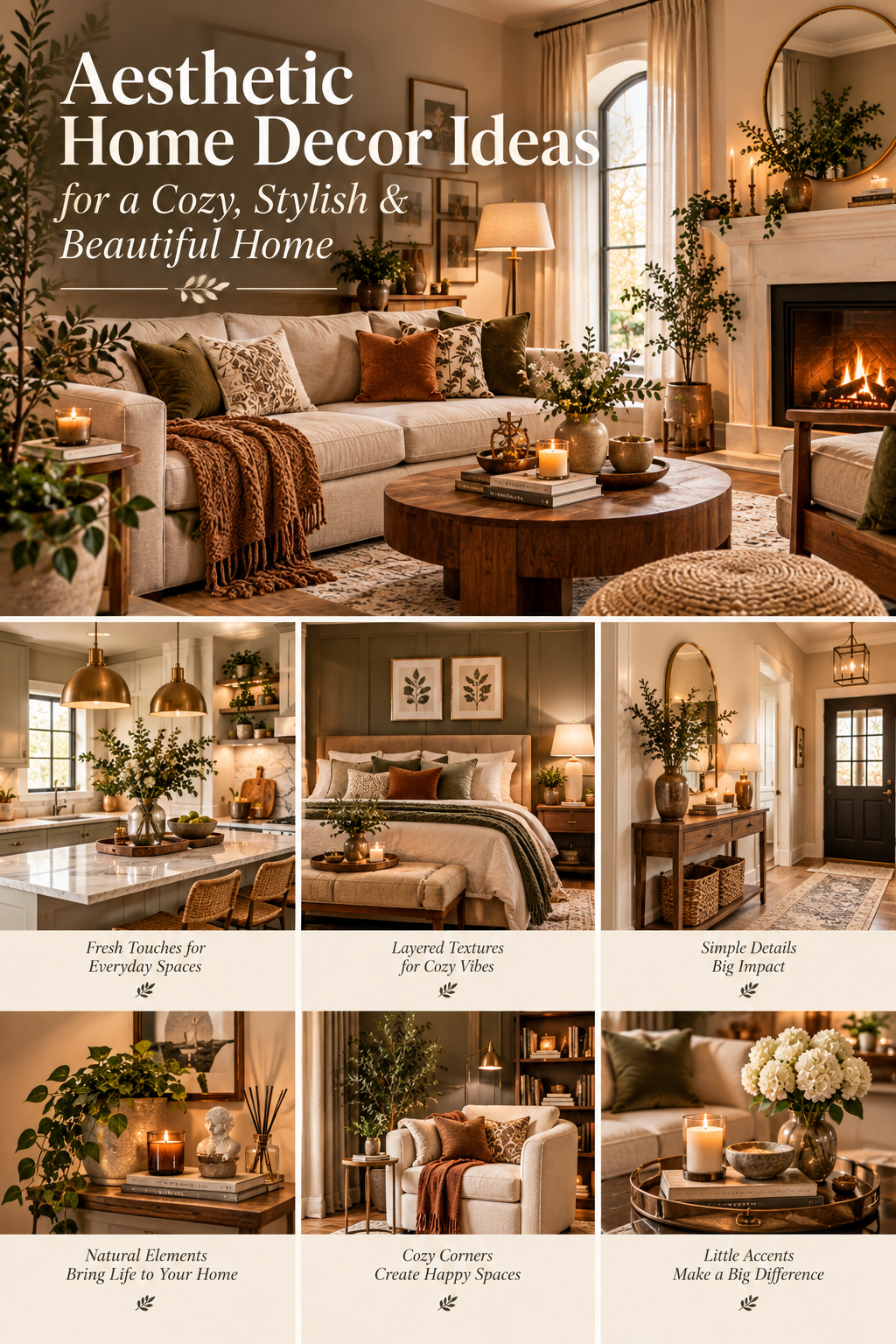
Creating a beautiful home does not always require expensive furniture, a huge renovation, or a perfectly coordinated collection of decorations. The most inviting homes usually come from thoughtful choices that make everyday spaces feel comfortable, personal, and visually balanced.
An aesthetic home is more than simply choosing attractive colors or following the latest decorating trend. It is about creating a space where furniture, lighting, textures, colors, accessories, and architectural details work together naturally. The goal is to make your home feel beautiful when you look at it while still being comfortable enough to actually live in.
A cozy aesthetic can be soft and neutral, warm and earthy, modern and sophisticated, vintage-inspired, organic, or even slightly eclectic. What matters most is creating visual harmony. When every item has a purpose and the room has enough breathing space, even a simple home can feel incredibly stylish.
One of the easiest ways to achieve this look is to begin with a calm foundation. Cream, warm white, beige, taupe, soft brown, muted olive, dusty terracotta, and natural wood can create a welcoming backdrop. From there, you can introduce personality through artwork, cushions, ceramics, lighting, books, mirrors, plants, vintage finds, and other meaningful objects.
Texture is equally important. A room filled with flat, smooth surfaces can feel cold even when the color palette is warm. Adding bouclé, linen, wool, cotton, woven materials, wood, ceramic, stone, rattan, and brushed metal gives the eye something interesting to explore.
Lighting can completely change the atmosphere of an aesthetic room as well. Instead of depending on one bright ceiling fixture, consider several softer sources throughout the room. Table lamps, floor lamps, sconces, pendant lights, candles, and subtle accent lighting can create small pools of illumination that make the space feel warmer and more sophisticated.
Window treatments also deserve attention. Full-length curtains can visually increase the height of a room, while linen or sheer fabrics allow natural light to move through the space. Layered window treatments can add depth without taking up valuable floor space, making them especially useful in bedrooms and smaller living areas.
The most beautiful aesthetic homes also tend to have personality. Instead of buying every accessory from the same collection, mix new pieces with vintage objects, personal photographs, handmade ceramics, books, artwork, and items collected over time. This prevents the room from looking like a furniture showroom.
For 2026, designers are increasingly emphasizing interiors that feel lived-in, warm, personal, and connected to natural materials rather than spaces that look overly coordinated. Warm wood, tactile materials, layered lighting, meaningful objects, and individuality are all useful directions for creating this type of home.
The following aesthetic home decor ideas will help you create that feeling room by room. You do not need to use all of them. Choose the ideas that fit your home, budget, lifestyle, and personal taste, then build your space gradually.
1. Create a Warm Neutral Foundation
One of the easiest ways to create a beautiful aesthetic home is to begin with a warm neutral color palette.
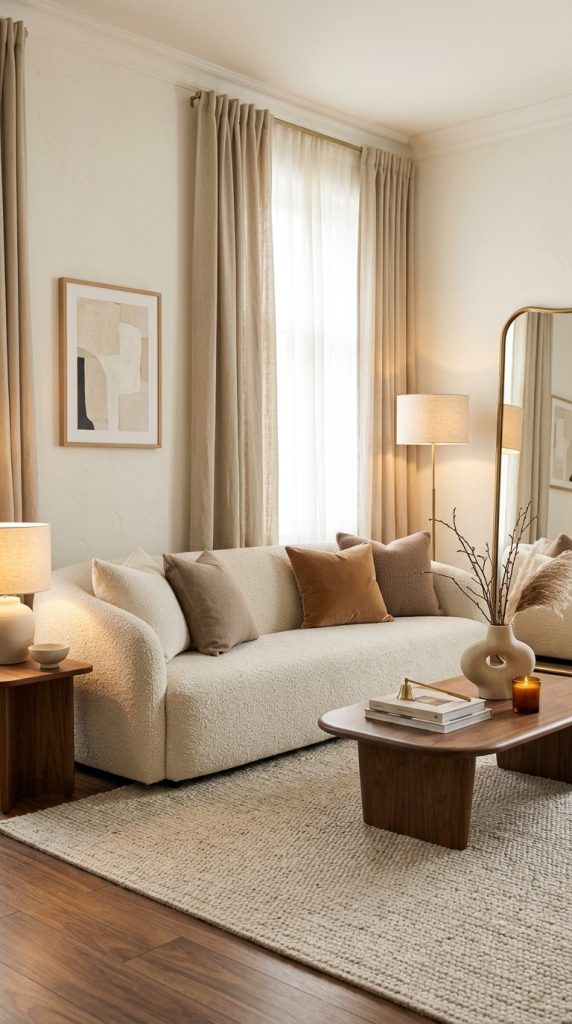
Neutral decorating does not have to mean boring. In fact, warm neutrals can create some of the most sophisticated and relaxing interiors when they are layered correctly.
Instead of decorating an entire room in one shade of white, combine several related colors. Try warm ivory walls with a beige sofa, oatmeal curtains, a taupe rug, walnut furniture, and cream-colored accessories. Small variations between the shades create depth while keeping the overall appearance calm.
Natural wood is especially useful in a warm neutral room. A walnut coffee table, oak console, wooden dining table, or cane accent chair can introduce warmth without making the room visually heavy.
The key is to avoid making everything the exact same color.
For example, a cream sofa can be paired with a slightly darker beige rug. Add caramel or warm brown cushions, a walnut coffee table, and aged-brass accents. The room remains neutral, but it has enough contrast to feel intentional.
If your walls are already white, you do not necessarily need to repaint them. Instead, introduce warmth through furniture and textiles.
Try adding:
- Beige or oatmeal curtains
- Cream cushions
- Natural wood furniture
- Textured neutral rugs
- Woven baskets
- Ceramic vases
- Linen throws
- Warm metallic accents
- Soft brown artwork
For a stronger aesthetic effect, choose one darker neutral as an anchor color.
Chocolate brown works beautifully with cream. Charcoal can create a more contemporary look. Deep olive gives a natural feeling, while muted terracotta adds warmth.
The most important thing is balance.
If everything is extremely light, the room may lack visual definition. If every accessory is dark, the space can feel heavy. Use lighter shades for large surfaces and introduce darker tones through smaller furniture pieces and accessories.
A warm neutral foundation is also practical because it allows you to change the personality of your home without replacing large pieces. You can switch cushions, artwork, throws, flowers, and small accessories seasonally while keeping the same basic furniture.
This makes neutral decorating especially useful if you enjoy refreshing your Pinterest-inspired home throughout the year.
For an especially sophisticated appearance, repeat your main neutral colors in several different materials. For example, use cream in upholstery, ivory in ceramics, oatmeal in curtains, beige in the rug, and warm white in artwork.
The colors remain connected, but the different textures prevent the room from looking flat.
2. Layer Different Textures for a Cozy Aesthetic
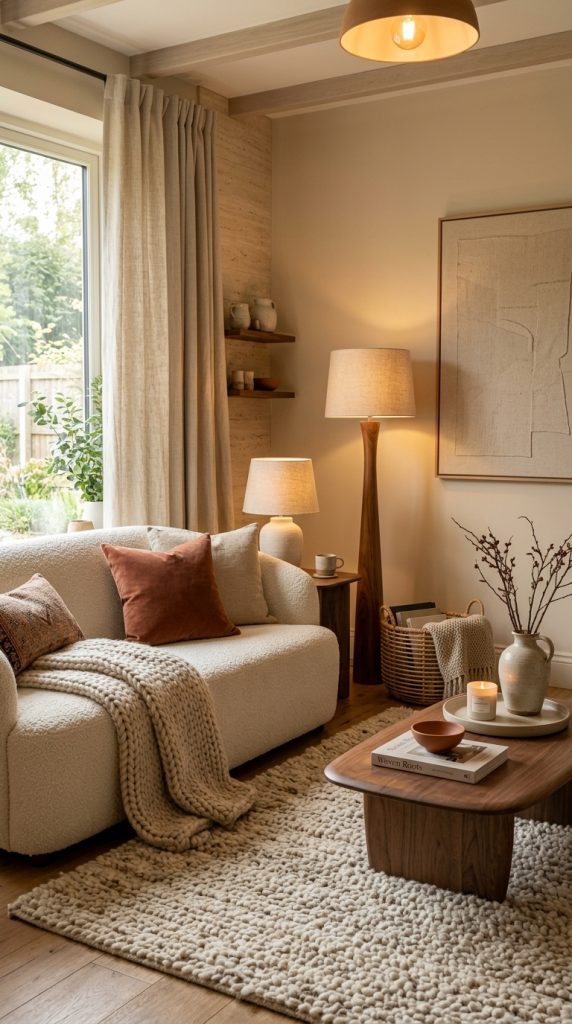
Texture is one of the biggest secrets behind a cozy and visually attractive home.
A room can have beautiful furniture and an excellent color palette but still feel unfinished if every surface is smooth and visually similar.
Layering textures gives a room depth.
Think about the difference between a plain sofa with one cushion and a sofa layered with linen pillows, a bouclé cushion, a knitted throw, and a soft textured blanket. The furniture itself may be identical, but the second version immediately feels more inviting.
Start with large textures and gradually add smaller ones.
Your rug is one of the most important texture layers in a room. Choose something with a subtle woven, looped, vintage, or slightly irregular surface rather than a completely flat design.
Then introduce upholstered furniture.
Bouclé is useful for creating a soft contemporary appearance, while linen gives a relaxed natural feeling. Velvet can add richness and a touch of luxury, particularly when used on one or two accent pieces.
Wood introduces another kind of texture.
Instead of choosing furniture with completely smooth painted surfaces, consider natural or lightly finished wood that allows some grain to show.
Ceramic accessories can add tactile contrast. Look for handmade-looking vases, bowls, candleholders, and decorative objects with imperfect surfaces.
Woven materials are also excellent for aesthetic decorating.
Consider:
- Rattan baskets
- Woven lampshades
- Cane furniture
- Jute rugs
- Seagrass storage
- Woven wall art
- Linen curtains
- Cotton throws
The secret is not to use every texture at once.
Choose a few major textures and repeat them naturally throughout the room.
For example, a living room could combine:
Cream bouclé upholstery + walnut wood + woven rug + linen curtains + ceramic accessories + brushed brass lighting.
That combination already creates significant visual interest without requiring lots of decoration.
Texture is particularly important in bedrooms because softness contributes directly to the feeling of comfort.
Layer a quilt or coverlet beneath a duvet. Add two or three decorative pillows rather than covering the entire bed. Place a soft throw casually over the foot of the bed.
You can also use texture on walls through limewash-inspired finishes, subtle wallpaper, wood paneling, or woven artwork.
In smaller homes, texture can be more useful than adding more objects. Instead of filling a small shelf with decorations, choose one textured vase, one small framed artwork, and a beautiful woven basket underneath.
The room will feel interesting without becoming cluttered.
3. Use Layered Lighting to Transform the Atmosphere
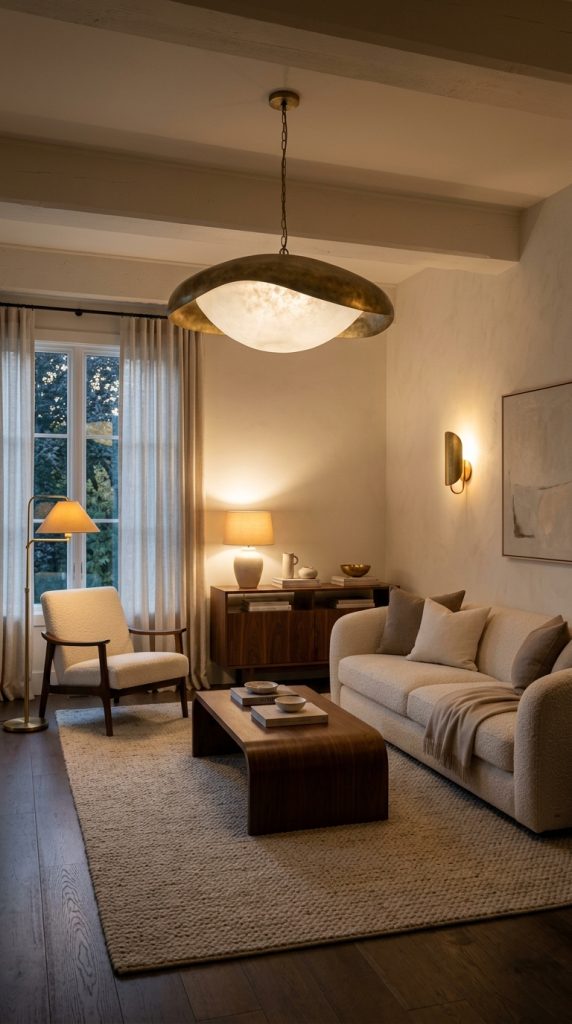
Beautiful decor can lose its impact under harsh overhead lighting.
Lighting should be considered part of the decorating scheme rather than something added after the room is finished.
One of the most effective ways to create an aesthetic home is to use several different light sources.
A basic living room might include a ceiling fixture for general illumination, a floor lamp beside a sofa, a table lamp on a console, and perhaps a small accent lamp on a shelf.
Each light serves a different purpose.
Instead of making the entire room equally bright, layered lighting creates several smaller areas of warmth. This makes the space feel more intimate and visually sophisticated. Designers are continuing to emphasize layered lighting rather than relying on one central source.
Begin with your main ceiling light.
Choose something that complements the overall aesthetic. A sculptural pendant can become a focal point in a modern home, while a linen-shaded fixture can create a softer atmosphere.
Then add secondary lighting.
A floor lamp beside a reading chair can create a dedicated cozy corner. A small table lamp on a console can make an entryway feel more welcoming. Wall sconces can provide beautiful accent lighting around a mirror or artwork.
Bedrooms benefit enormously from bedside lighting.
Instead of relying on a bright ceiling fixture, use matching or complementary bedside lamps to create a soft evening atmosphere.
The lampshade matters as much as the fixture itself.
Fabric shades diffuse light and can make a room feel warmer. Decorative shades can also introduce pattern or color without requiring major changes.
Warm bulbs are generally useful for cozy living spaces because they create a softer atmosphere than very cool, blue-toned light.
Do not forget decorative lighting.
Candles, small rechargeable lamps, picture lights, and subtle accent lights can create additional layers.
Place lighting where it supports the way you use the room.
For example:
A reading chair needs focused light.
A console needs decorative illumination.
A dining table benefits from a pendant or chandelier.
A bedroom benefits from soft bedside lighting.
Artwork can be highlighted with a picture light.
A dark corner can become more attractive with a floor lamp.
The goal is to make lighting feel intentional.
A beautiful room should not look dramatically different only during daylight. At night, the lighting should create its own atmosphere.
4. Build an Aesthetic Living Room Around One Beautiful Focal Point
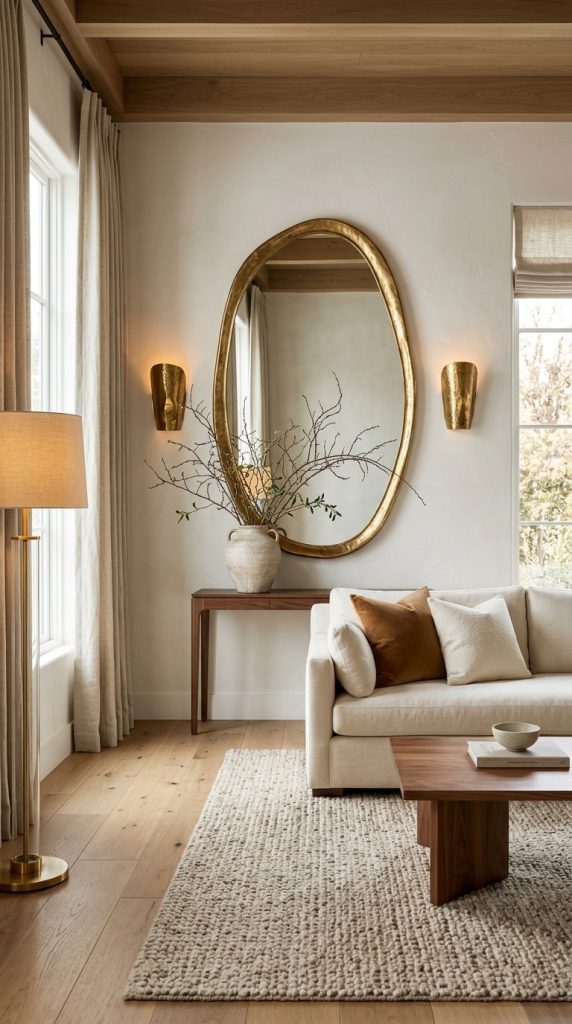
A common decorating mistake is trying to make every object in a room compete for attention.
Instead, choose one primary focal point and allow the rest of the room to support it.
Your focal point could be a beautiful sofa, fireplace, large artwork, sculptural coffee table, statement chandelier, oversized mirror, or architectural feature.
For a cozy modern living room, an oversized cream sofa can become the foundation.
Add a large textured rug beneath it and position a substantial coffee table in front. Place one or two accent chairs nearby so the furniture creates a comfortable conversation area.
Then choose a focal point for the wall.
An oversized artwork can immediately give the room personality. If you prefer a more minimal aesthetic, try a large organic-shaped mirror.
The mirror can reflect natural light and visually expand the room.
A console behind the sofa or against a wall can provide another opportunity for styling. Keep the surface edited rather than filling it with accessories.
Try a simple arrangement:
One large ceramic vase + a small stack of books + a candle or sculptural object.
This is often more effective than ten tiny decorations.
For cushions, use variation rather than matching sets.
A cream sofa could have:
- One warm brown cushion
- One textured ivory cushion
- One muted rust or olive cushion
- One patterned accent cushion
The combination feels collected rather than overly coordinated.
A throw should also look naturally placed rather than perfectly folded. Drape it over one arm or the corner of the sofa.
This creates the lived-in feeling that makes an aesthetic room more welcoming.
Keep walking paths open.
Beautiful interiors need negative space. If every corner contains furniture or accessories, the room becomes visually tiring.
Leave some areas intentionally quiet.
A beautiful empty wall can be more effective than a wall covered with decorations.
The same principle applies to the coffee table.
Instead of filling it completely, create one central arrangement and leave generous open space around it.
Aesthetic decorating is often about editing rather than adding.
5. Add Natural Wood and Organic Materials
Natural materials can instantly make a home feel warmer and more grounded.
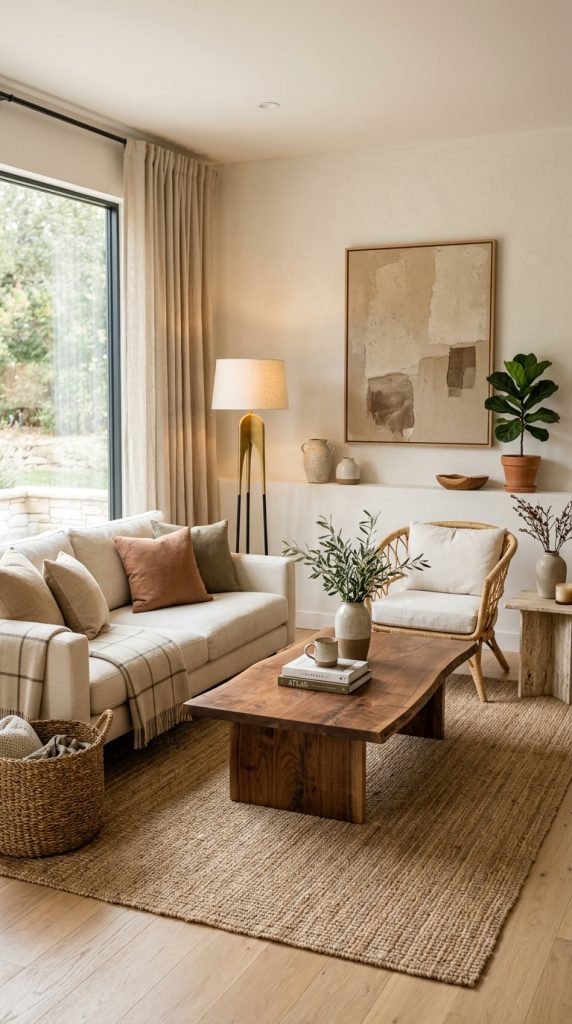
Wood is particularly powerful because it works across many interior styles.
You can use pale oak for a Scandinavian-inspired room, medium walnut for a sophisticated modern space, or darker wood for a richer traditional atmosphere.
Do not feel pressured to make every wooden item match perfectly.
A home can look more natural when different wood tones are connected thoughtfully.
For example, a walnut coffee table can work beautifully with a lighter oak side table if both are balanced by similar warm tones elsewhere in the room.
Beyond wood, introduce other organic materials.
Try:
- Rattan
- Cane
- Linen
- Cotton
- Jute
- Woven grass
- Ceramic
- Stone
- Marble
- Terracotta
- Natural fibers
A wooden dining table with linen chairs and ceramic tableware creates an entirely different feeling from a room dominated by glossy synthetic surfaces.
Organic materials also help prevent neutral interiors from feeling sterile.
Imagine a cream bedroom with white walls, white bedding, and white furniture. It may look clean but could lack warmth.
Now introduce a walnut nightstand, woven basket, linen curtains, ceramic lamp, and oak-framed artwork.
The same neutral palette suddenly feels much richer.
Natural materials also age beautifully.
Wood develops character. Brass develops patina. Linen becomes softer. Handmade ceramics have small variations.
These imperfections can make a home feel more personal.
Current design discussions are placing increasing emphasis on natural materials, craftsmanship, and spaces that feel grounded rather than overly polished.
For an aesthetic home, this does not mean every object must be handmade or expensive.
A simple woven basket from an affordable store can provide the same visual idea.
The important thing is how it works with everything around it.
6. Create a Beautiful Bedroom With Soft Layers
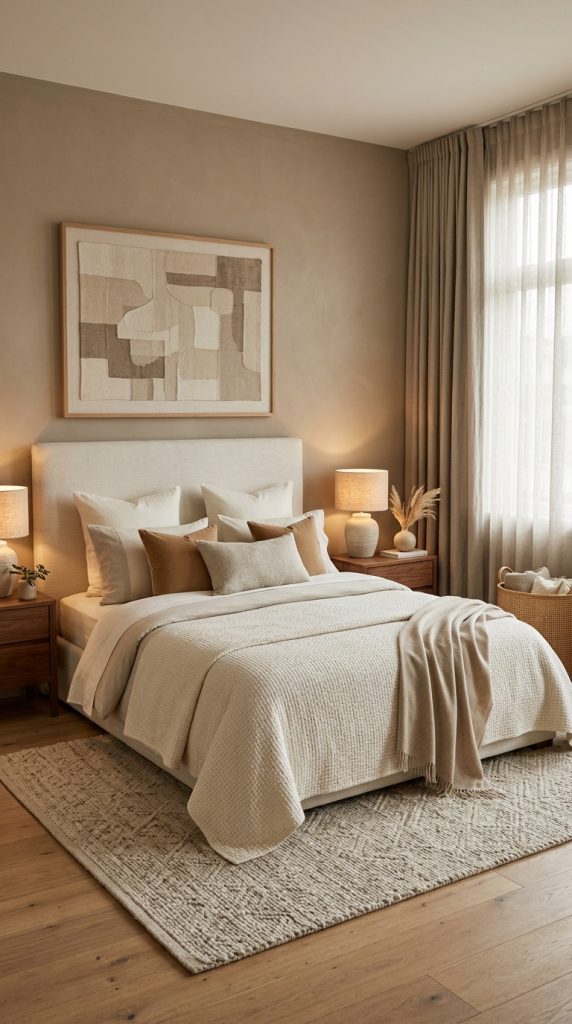
The bedroom should be one of the calmest rooms in your home.
Instead of treating it simply as a place for sleeping, think of it as a private retreat.
Start with the bed.
A large upholstered headboard can immediately create a luxurious appearance. If your bed does not have one, you can create visual height with oversized artwork, wall molding, wallpaper, or carefully arranged pillows.
Keep the bedding palette soft.
Cream, ivory, beige, oatmeal, taupe, muted brown, soft sage, or dusty blue can all create a relaxing environment.
Layer the bedding instead of using one flat duvet.
Start with the fitted sheet and main bedding. Add a folded quilt or coverlet across the lower portion of the bed. Then add two or three decorative cushions and a soft throw.
The goal is to create softness without making the bed look overloaded.
Bedside tables should be functional but attractive.
Choose a table large enough for your essentials without overwhelming the bed.
A beautiful lamp, small ceramic object, book, and perhaps a tiny vase can be enough.
Do not fill every inch of the nightstand.
Curtains can dramatically change the bedroom.
Floor-to-ceiling linen or linen-look curtains make the room feel taller and softer. If privacy or light control is important, layer sheer curtains with a more substantial outer layer. Layered window treatments can create additional depth without taking up floor space.
A rug placed beneath or around the bed adds warmth underfoot.
If your bedroom is small, you do not need a huge rug. Even a properly positioned runner or smaller textured rug can create comfort.
Lighting should remain soft.
Use bedside lamps rather than depending entirely on a bright ceiling fixture.
If you have space, add a small chair or bench.
A single upholstered chair near the window can create a peaceful reading or dressing corner.
Finish the room with a few meaningful accessories.
A framed photograph, favorite artwork, ceramic vase, decorative book, or small plant can make the room feel like yours.
Avoid turning the bedroom into a storage area for every decorative object you own.
The most relaxing aesthetic bedrooms have enough detail to feel beautiful but enough empty space to feel peaceful.
7. Style Shelves and Surfaces With an Intentional Aesthetic
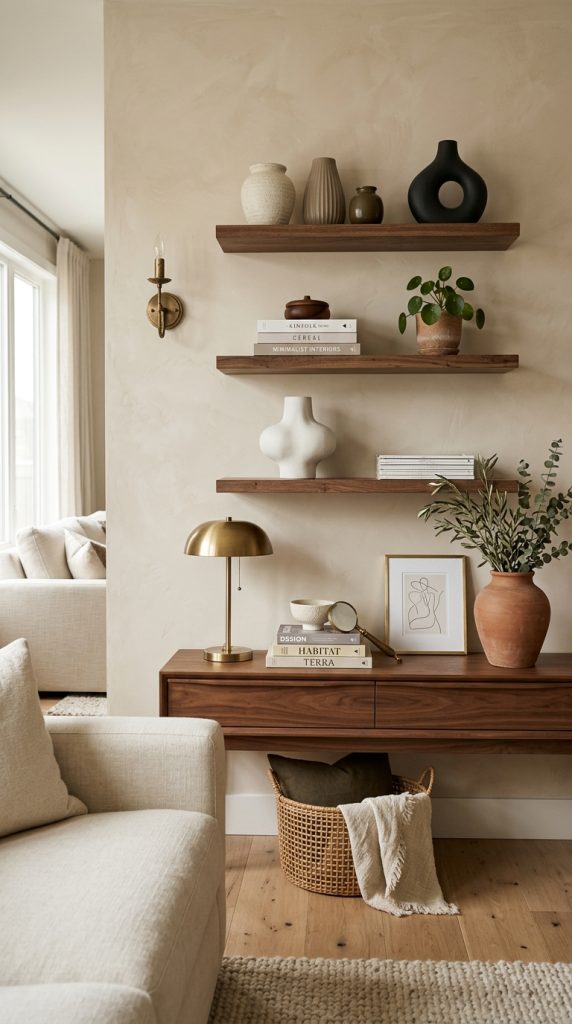
Shelves, consoles, coffee tables, dressers, and sideboards are some of the easiest places to create an aesthetic look.
They are also some of the easiest places to create clutter.
The secret is to style surfaces in small groups instead of scattering objects randomly.
Start with one larger anchor object.
This could be:
- A ceramic vase
- A framed artwork
- A sculptural lamp
- A large bowl
- A stack of books
- A mirror
Then add smaller objects around it.
For example, a console might include a large ceramic vase on one side, a stack of two books in the center, and a small candle or bowl on the other side.
The arrangement should have variation in height.
If everything is the same height, the display can look flat.
Use a tall vase next to a shorter bowl. Place books horizontally beneath a smaller decorative object. Lean artwork against the wall rather than hanging everything.
This creates a more relaxed appearance.
Books are particularly useful because they add both color and personality.
Choose books that genuinely interest you rather than using them only as decorative props.
A shelf can tell a story about the people who live in the home.
Add a few personal objects.
Travel souvenirs, family photographs, handmade ceramics, inherited pieces, or artwork can make a display feel meaningful.
This is where an aesthetic home becomes more than a trend.
A perfectly coordinated room can be attractive, but personal details make it memorable.
When styling shelves, leave empty space between groups.
You do not need something on every shelf.
Empty areas allow individual objects to stand out.
For open shelving in a kitchen, combine useful items with decorative ones.
Place attractive ceramics beside a few cookbooks, a wooden cutting board, and a small plant.
In a bathroom, use folded towels, a ceramic soap dispenser, a small tray, and one decorative object.
The principle remains the same: group, vary height, repeat materials, and leave breathing room.
8. Use Artwork and Mirrors to Give Your Home Personality
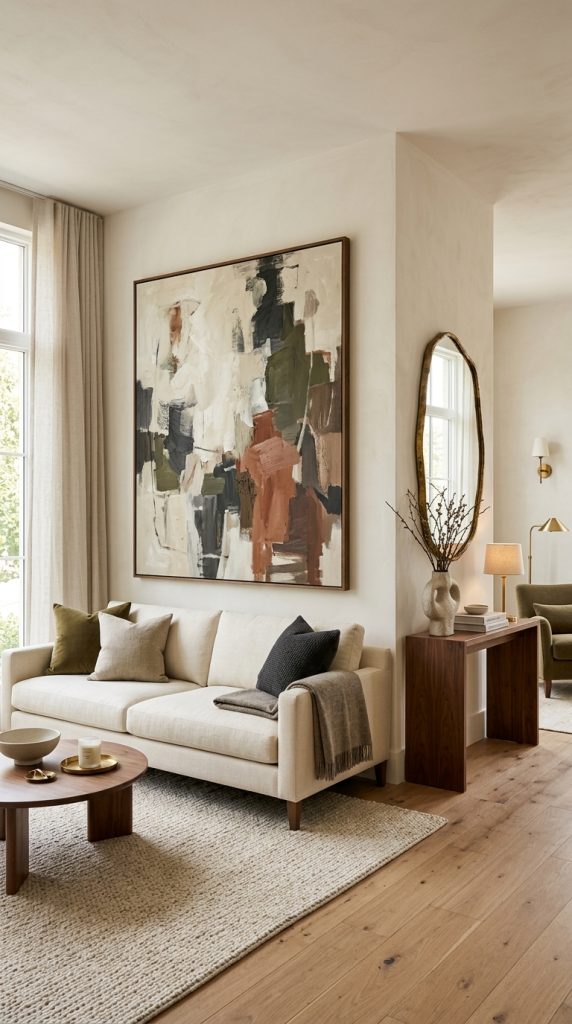
Walls have a major influence on how a room feels.
Completely empty walls can sometimes make a room feel unfinished, while overcrowded gallery walls can make a small home feel visually busy.
The right balance depends on scale.
One large artwork can often have more impact than several tiny pieces.
For a living room, consider an oversized abstract artwork in muted tones.
A palette of cream, brown, charcoal, olive, rust, and beige can connect beautifully with a warm neutral interior.
If you prefer a more personal style, create a gallery wall.
Keep the frame colors coordinated so the artwork can vary without looking chaotic.
Natural wood frames create a relaxed organic feeling. Black frames create more contrast. Brass or antique frames can add traditional character.
You do not need dozens of pieces.
Three to seven thoughtfully selected artworks can be enough depending on the wall size.
Mirrors are another powerful decorating tool.
A large mirror can reflect daylight and make a smaller room feel more open. Position it where it reflects something attractive rather than an empty wall or cluttered area.
Organic-shaped mirrors are particularly useful when a room contains many straight lines.
An arched or softly rounded mirror can introduce visual softness.
You can also use mirrors in unexpected locations.
A narrow mirror in an entryway can make the space feel more functional. A decorative mirror above a bedroom dresser can become a focal point. A small vintage mirror on a gallery wall can add dimension.
Artwork does not always need to be expensive.
Look for affordable prints, vintage-style posters, photography, botanical illustrations, or handmade artwork.
The frame often has as much influence on the final appearance as the artwork itself.
If you want an expensive-looking result, prioritize proportion.
A large wall deserves artwork large enough to hold its own visually.
Tiny artwork floating in the center of a large empty wall can make the room feel disconnected.
Measure before buying.
9. Bring Nature Indoors With Plants and Organic Details
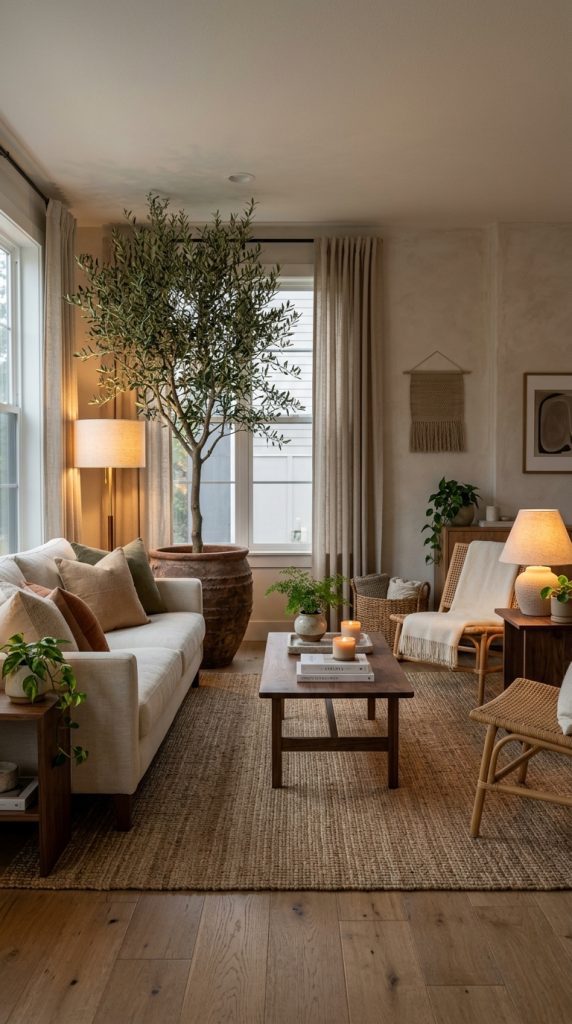
Plants can make an aesthetic home feel alive.
However, you do not need to turn your home into a jungle.
A few carefully selected plants are usually more effective than dozens of small pots scattered throughout the room.
Choose plants according to the amount of natural light available.
A large floor plant can fill an empty corner beautifully.
Place it beside a sofa, near a window, or next to a console where its shape can soften the furniture.
Smaller plants work well on shelves, kitchen counters, bathroom ledges, and bedside tables.
The planter is important.
Instead of using brightly colored plastic pots, choose ceramic, terracotta, stone, woven, or textured planters that connect with your overall palette.
A terracotta planter can introduce warmth.
A cream ceramic planter can maintain a neutral look.
A dark charcoal planter can create contrast.
You can also use branches or dried botanicals when live plants are not practical.
A tall arrangement of dried branches in a sculptural vase can become a striking focal point.
Olive branches, eucalyptus, pampas-style grasses, dried seed pods, and other natural arrangements can add organic movement.
But restraint matters.
If every surface has greenery, the room can begin to feel visually repetitive.
Use plants to highlight important areas rather than filling every empty corner.
Nature can also appear through color.
Muted olive, sage, moss, clay, sand, and warm brown are easy ways to introduce an organic feeling without relying heavily on actual plants.
Stone and wood provide another connection to nature.
A marble tray, wooden bowl, stone vase, ceramic lamp, or woven basket can create the same grounded atmosphere.
The objective is to make the room feel connected to natural materials without becoming overly themed.
10. Add Personal Details That Make the Home Feel Uniquely Yours
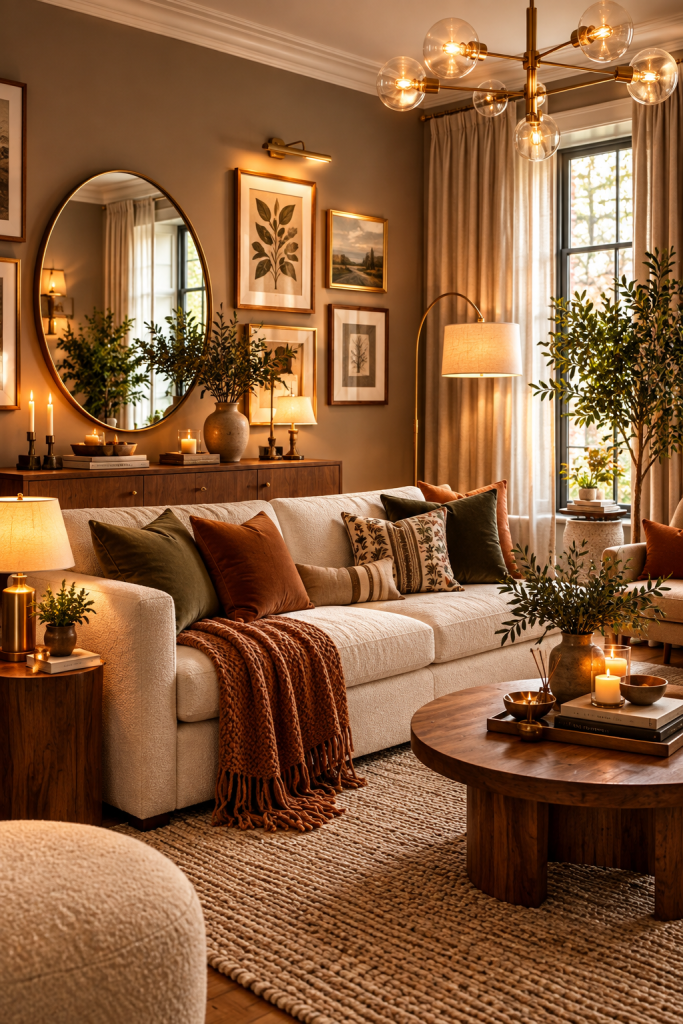
The final step in creating a beautiful aesthetic home is perhaps the most important: add personality.
Without personal details, even a perfectly decorated room can feel generic.
Your home should show some evidence of the people who live there.
Display books you actually read.
Frame photographs that have meaning.
Keep a favorite vintage object.
Display artwork you genuinely enjoy.
Use a ceramic piece from a local artist or a bowl passed down through your family.
Mixing old and new pieces can create a much richer interior than buying everything at the same time.
An antique side table beside a contemporary sofa can look beautiful.
A vintage mirror above a modern console can create contrast.
A traditional rug beneath contemporary furniture can add character.
The goal is not to make every object match.
Instead, create connections through color, material, scale, or shape.
For example, an old wooden stool may not match your modern furniture exactly, but if its warm wood tone connects with your coffee table and picture frames, it can feel intentional.
Personal decorating also means allowing some imperfection.
A home should not feel like a showroom.
A slightly worn wooden table, books stacked beside the sofa, a blanket casually resting on a chair, or a favorite mug left on a kitchen counter can make a room feel real.
The most inviting spaces balance beauty with everyday life.
Current interior design commentary increasingly points toward homes that feel personal and lived-in rather than overly curated.
This is especially useful for anyone trying to create a Pinterest-worthy home without making it look artificial.
Pinterest inspiration should provide ideas, not dictate exactly how your home must look.
Take the colors you love.
Choose the textures that make you comfortable.
Keep furniture that works for your lifestyle.
Then add beautiful details gradually.
How to Create an Aesthetic Home on a Budget
You do not need a large decorating budget to create a beautiful home.
The first step is to avoid buying too many small items.
Instead of purchasing ten inexpensive accessories, save for one piece that will make a stronger visual impact.
This could be a beautiful rug, a large mirror, a quality lamp, an oversized artwork, or a wooden coffee table.
You can also transform existing furniture.
Paint an old side table.
Change cabinet hardware.
Replace lampshades.
Add new cushion covers.
Rearrange artwork.
Move furniture into a more functional layout.
These changes can dramatically alter the feeling of a room without requiring major spending.
Thrift stores, antique markets, secondhand shops, and online marketplaces can also be excellent sources for aesthetic furniture and accessories.
Look for pieces with good proportions and interesting materials rather than focusing only on brand names.
A simple vintage wooden stool can become a beautiful plant stand.
An old frame can be repainted.
A secondhand ceramic vase can become a centerpiece.
A vintage mirror can add more character than a brand-new mass-produced piece.
Textiles are another affordable way to change a room.
New cushion covers, a throw blanket, curtains, or a small rug can shift the entire color story.
If you are working with a limited budget, prioritize in this order:
Furniture layout.
Lighting.
Large textiles.
Wall decor.
Small accessories.
This approach prevents you from spending money on decorative objects before the room itself feels functional.
How to Make a Small Home Look More Aesthetic
Small homes can be incredibly beautiful when the decorating strategy focuses on scale, function, and visual breathing room.
Start by avoiding oversized furniture that blocks pathways.
Choose pieces that provide more than one function whenever possible.
An ottoman can provide seating, storage, and a coffee-table surface.
A console can function as storage and a workspace.
A narrow wall-mounted shelf can display accessories without consuming floor space.
Use vertical space.
Tall curtains can make ceilings appear higher.
Vertical artwork can draw the eye upward.
Tall bookshelves can provide storage while emphasizing the height of the room.
Mirrors can also be helpful.
Place one opposite a window when possible so it reflects natural light.
Keep colors relatively connected across rooms.
You do not need every room to look identical, but a consistent base palette can make a small home feel larger and more cohesive.
Avoid filling every surface.
In a small home, negative space is valuable.
One beautiful lamp is better than five small decorations.
One large artwork can be more effective than a crowded collection.
One substantial rug can visually connect the furniture better than several small rugs.
Think carefully about what deserves attention.
How to Create a Cozy Aesthetic Kitchen
The kitchen is often one of the hardest spaces to make aesthetic because it must remain highly functional.
Begin with the countertop.
Remove anything that does not need to remain visible.
Then choose a few beautiful everyday objects to display intentionally.
A wooden cutting board leaning against the backsplash can add warmth.
A ceramic utensil holder can make practical tools look decorative.
A small bowl of fruit can provide natural color.
A linen tea towel can soften the space.
Warm lighting can make a huge difference.
Under-cabinet lighting provides useful illumination while creating a cozy evening atmosphere.
Pendant lights over an island or peninsula can become a decorative focal point.
Natural wood accessories can also soften kitchens dominated by stone, tile, or metal.
Try wooden trays, cutting boards, stools, bowls, and serving pieces.
For an aesthetic open shelf, avoid filling it with too many objects.
Combine plates, bowls, glasses, cookbooks, ceramics, and one or two decorative pieces.
The goal is for the kitchen to look functional rather than staged.
How to Create an Aesthetic Bathroom
Bathrooms can become beautiful through small details.
Start with towels.
Replace mismatched towels with a coordinated palette such as ivory, beige, taupe, white, or muted sage.
Then introduce a beautiful bath mat.
Use matching or complementary containers for soap and lotion.
A wooden or stone tray can organize everyday products.
Add one plant if the lighting and humidity conditions are appropriate.
Artwork can also make a bathroom feel more finished.
Choose something simple and moisture-appropriate.
Lighting should be flattering and functional.
Wall sconces beside a mirror can create a more sophisticated appearance than relying entirely on a ceiling fixture.
For a luxury aesthetic, keep countertops relatively clear.
One vase, candle, tray, or decorative object is enough.
The combination of clean surfaces, warm materials, soft towels, and beautiful lighting can make even a small bathroom feel like a peaceful retreat.
How to Make Your Entryway Aesthetic
The entryway creates the first impression of your home.
Even if your entrance is tiny, you can make it feel intentional.
A mirror is one of the most useful additions.
It gives you a practical place to check your appearance while visually expanding the space.
Add a slim console if you have enough room.
If the entryway is narrow, choose a wall-mounted shelf instead.
Use a small bowl or tray for keys.
Add one decorative vase or lamp.
A runner can define the space and add warmth.
Hooks can provide practical storage for bags, coats, or hats without requiring a large cabinet.
The important thing is to keep the entryway functional.
A beautiful entrance that cannot handle everyday belongings will quickly become frustrating.
Use closed storage wherever possible.
Then reserve the visible areas for a few carefully selected decorative details.
How to Combine Different Aesthetic Styles
You do not have to choose one decorating style and follow it perfectly.
Some of the most interesting homes combine several influences.
For example, you could combine:
Modern + organic
Vintage + contemporary
Scandinavian + warm rustic
Minimalist + traditional
Bohemian + modern
Japandi + organic modern
The key is to create connections.
If you mix styles randomly, the room can look disconnected.
Instead, repeat colors and materials.
A vintage wooden table can work with modern cream seating if both are connected through warm neutral colors.
A traditional brass lamp can look contemporary when paired with simple furniture.
A modern sofa can feel more relaxed when combined with a vintage rug and handmade ceramics.
Think of your home as a collection rather than a matching set.
Common Mistakes to Avoid When Creating an Aesthetic Home
One of the biggest mistakes is buying too many decorative accessories.
More does not automatically mean more beautiful.
When every shelf, table, and corner is filled, individual pieces lose their impact.
Another mistake is choosing everything in the same color.
A beige room can be beautiful, but if every surface is the exact same beige, it may look flat.
Introduce tonal variation and texture.
Avoid using too many unrelated accent colors.
Choose a primary palette and one or two supporting colors.
Lighting is another common problem.
A room can look beautiful during the day but feel completely different at night if the only light source is a bright ceiling fixture.
Create several layers of light.
Scale is equally important.
A tiny coffee table can look lost in front of a large sectional.
A small artwork can disappear on a huge wall.
A massive pendant can overwhelm a compact dining area.
Always consider the size of the room before purchasing furniture or decor.
Finally, avoid copying an aesthetic so literally that your home stops feeling personal.
Pinterest and social media are excellent sources of inspiration, but your home should still reflect your lifestyle.
Keep the pieces that matter to you.
Use the colors you enjoy.
Choose furniture that is comfortable.
Create rooms that support how you actually live.
How to Make an Aesthetic Home Feel More Expensive
An expensive-looking home is usually not about having the most expensive objects.
It is about creating visual consistency.
Start with quality-looking lighting.
Beautiful lamps can instantly elevate a room.
Then focus on curtains.
Hang them as high and wide as practical rather than stopping them directly above the window frame.
Choose substantial-looking fabrics such as linen or linen-look textiles.
Next, focus on scale.
Large artwork, properly sized rugs, substantial coffee tables, and appropriately scaled lighting can make a room feel more professionally designed.
Use fewer accessories but choose them carefully.
A large ceramic vase can have more visual impact than several tiny ornaments.
A substantial mirror can become an architectural feature.
A sculptural lamp can function as both lighting and artwork.
Finally, keep surfaces clean.
Luxury often comes from restraint.
A clear kitchen counter, an edited coffee table, and an uncluttered console allow the beautiful pieces to stand out.
A Simple Room-by-Room Aesthetic Decorating Formula
If you are unsure where to begin, use this simple formula.
For the living room:
Comfortable seating + large rug + coffee table + layered lighting + artwork or mirror + natural material + a few personal accessories.
For the bedroom:
Soft bedding + upholstered or visually substantial bed + bedside lighting + curtains + rug + artwork + natural textures.
For the kitchen:
Functional storage + warm wood accents + decorative lighting + limited countertop styling + attractive everyday objects.
For the bathroom:
Coordinated towels + beautiful containers + warm lighting + natural materials + minimal countertop decor.
For the entryway:
Mirror + practical storage + one decorative surface + lighting + runner or natural texture.
For a home office:
Functional desk + comfortable chair + task lighting + artwork + organized storage + one or two personal objects.
This formula creates structure while leaving room for your own style.
Final Thoughts
Creating an aesthetic home is not about making every room look perfect.
It is about creating a space that feels beautiful, comfortable, intentional, and connected to the people who live there.
Start with a color palette that makes you feel relaxed. Add natural materials to bring warmth. Layer textures to create depth. Use several sources of lighting to transform the atmosphere. Choose artwork that gives the walls personality. Add plants and organic details where they make sense.
Most importantly, do not be afraid to leave empty space.
A beautiful room needs breathing room.
You do not need to decorate every corner.
You do not need every trend.
You do not need to replace everything you already own.
Sometimes the most effective transformation comes from rearranging furniture, changing the lighting, adding a textured rug, replacing a few cushions, introducing warm wood, and removing unnecessary clutter.
The strongest aesthetic homes usually feel collected rather than manufactured. They combine comfort with beauty, modern pieces with older objects, clean lines with soft textures, and stylish details with everyday functionality.
Your home can be cozy without looking cluttered, elegant without feeling formal, stylish without becoming trendy, and beautiful without becoming impractical.
The best aesthetic is ultimately the one that makes you want to stay.