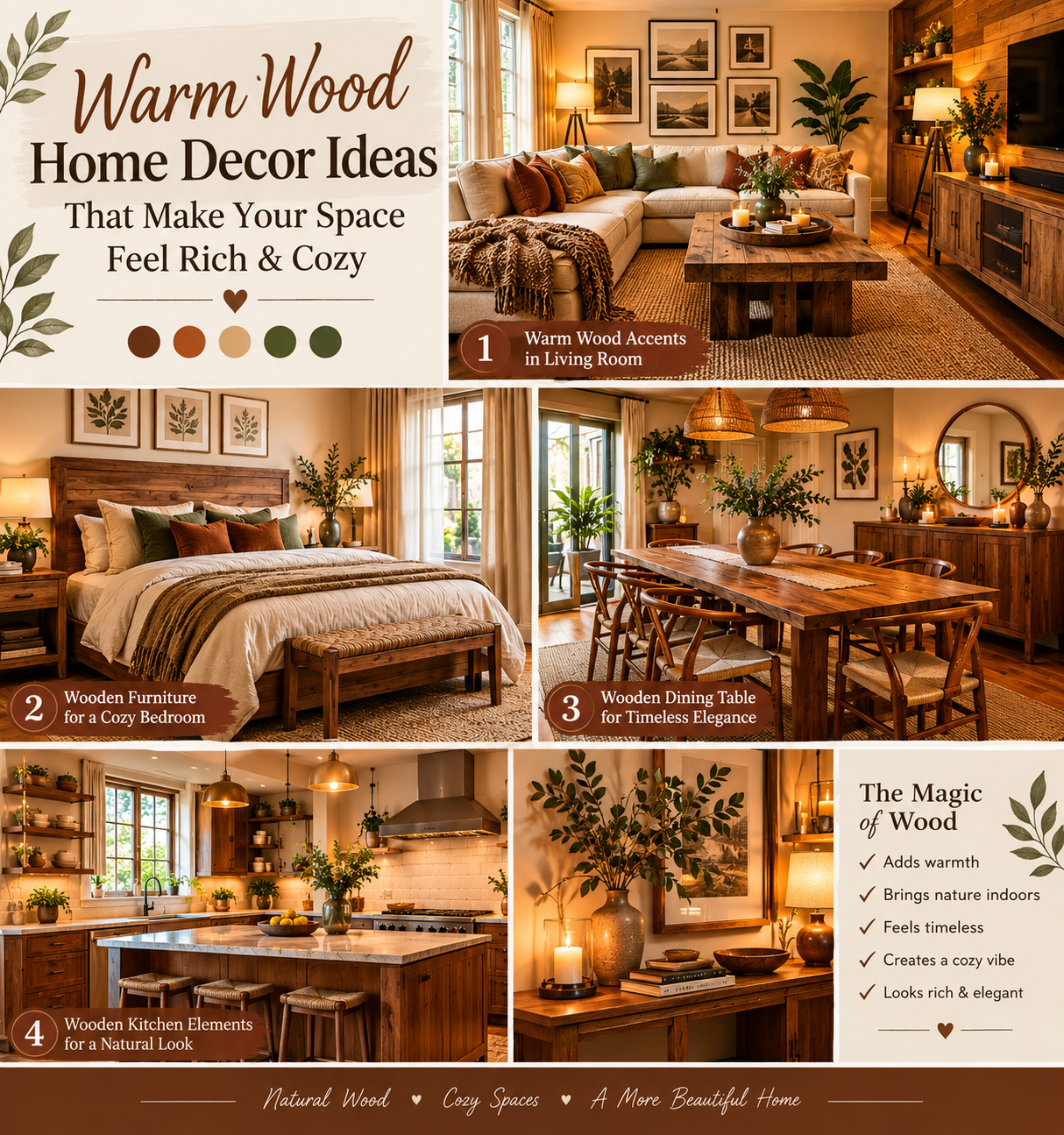
Warm wood has a special ability to make a home feel instantly more inviting. Whether it appears through a beautiful walnut coffee table, oak shelving, a wooden ceiling, a vintage cabinet, or a collection of smaller natural accessories, wood introduces warmth, texture, and character that can make even a simple room feel richer.
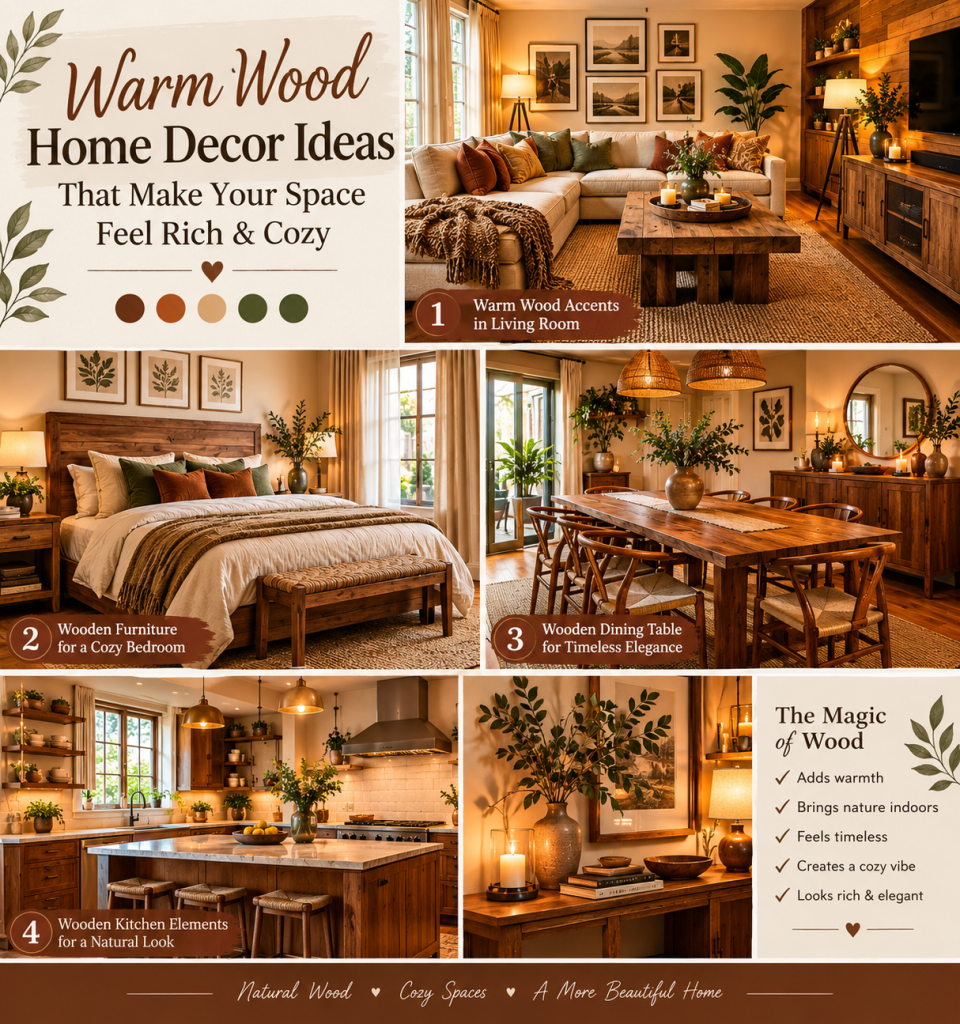
In recent years, many interiors have moved away from extremely cold, stark, and overly minimalist spaces. Homeowners are increasingly looking for rooms that feel comfortable, natural, collected, and personal. Warm wood fits perfectly into this approach because it adds depth without requiring bright colors or excessive decoration.
The beauty of warm wood is its versatility. It can look sophisticated in a luxury living room, relaxed in a farmhouse kitchen, earthy in an organic-modern bedroom, or dramatic in a traditional home library. It can also be paired with contemporary furniture, vintage accessories, natural stone, woven textures, linen, leather, greenery, and soft neutral colors.
When used correctly, wood does more than simply provide a natural material. It becomes part of the emotional atmosphere of the room.
A walnut table can make a living room feel grounded. Oak shelves can make a home office feel warm and approachable. Wooden cabinetry can give a kitchen a timeless quality. A carved wooden bench can make an entryway feel thoughtfully designed.
However, adding wood does not mean filling every room with wooden furniture. Too much of the same wood tone can make a space feel heavy. The key is to create balance by combining different textures, finishes, fabrics, colors, and materials.
Warm wood looks particularly beautiful alongside creamy whites, beige, taupe, camel, terracotta, olive green, charcoal, muted black, and soft brown. These colors allow the natural grain of the wood to remain the star while creating a comfortable, sophisticated palette.
Texture is equally important. Pair smooth wood surfaces with boucle upholstery, linen curtains, woven baskets, wool rugs, ceramic accessories, stone surfaces, and soft throws. This contrast prevents the room from becoming visually flat.
Lighting can also dramatically affect the appearance of wood. Warm evening illumination can bring out walnut, oak, and honey-colored finishes, making them appear deeper and more luxurious.
Whether you are completely redesigning a room or simply looking for a few ways to make your existing home feel warmer, these fifteen warm wood decorating ideas offer practical ways to introduce richness and comfort without creating a cluttered appearance.
1. Make a Warm Wood Coffee Table the Living Room Focal Point
A beautiful wooden coffee table can completely change the character of a living room.
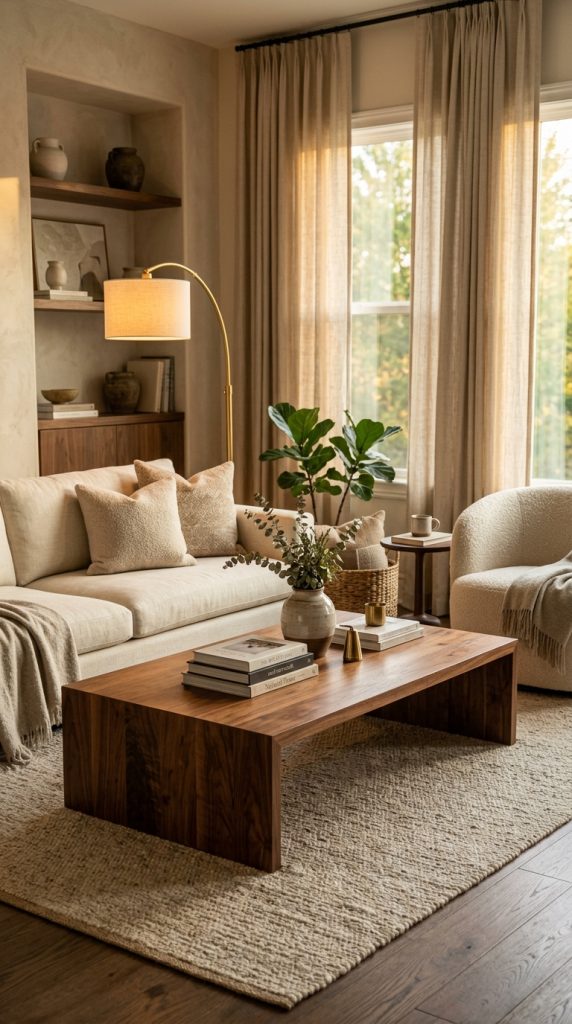
Instead of choosing a table simply for function, select one with an interesting silhouette, visible grain, or sculptural shape. Walnut, oak, teak, and other warm-toned woods can create a strong natural focal point.
Materials and Elements You Need
- Warm wood coffee table
- Cream or beige sofa
- Neutral area rug
- Decorative tray
- Ceramic vase
- Coffee-table books
- Small plant
- Textured cushions
- Warm lighting
Begin by choosing a coffee table that is proportional to your sofa and seating arrangement.
A large living room can accommodate a substantial rectangular or oval table, while a smaller space may benefit from a compact round design.
If the room already contains many straight lines, consider a round or organically shaped table to soften the appearance.
Once the table is positioned, avoid covering the entire surface with accessories.
Use a simple tray to group a few objects.
For example, combine two coffee-table books with a ceramic vase and a small decorative bowl.
The natural grain of the wood should remain visible.
Pair the table with a soft cream sofa and a textured neutral rug. The contrast between the hard wooden surface and soft textiles creates an inviting atmosphere.
Make the Wood Look More Luxurious
Choose furniture with visible natural grain rather than a very glossy synthetic finish.
A matte or satin finish often allows the material to look more natural and sophisticated.
Add warm lighting nearby so the grain becomes more noticeable in the evening.
A floor lamp positioned beside the sofa can create a soft pool of light across the table.
2. Add Warm Wood Wall Paneling for Instant Character
Wood wall paneling can make a room feel architectural, sophisticated, and cozy.
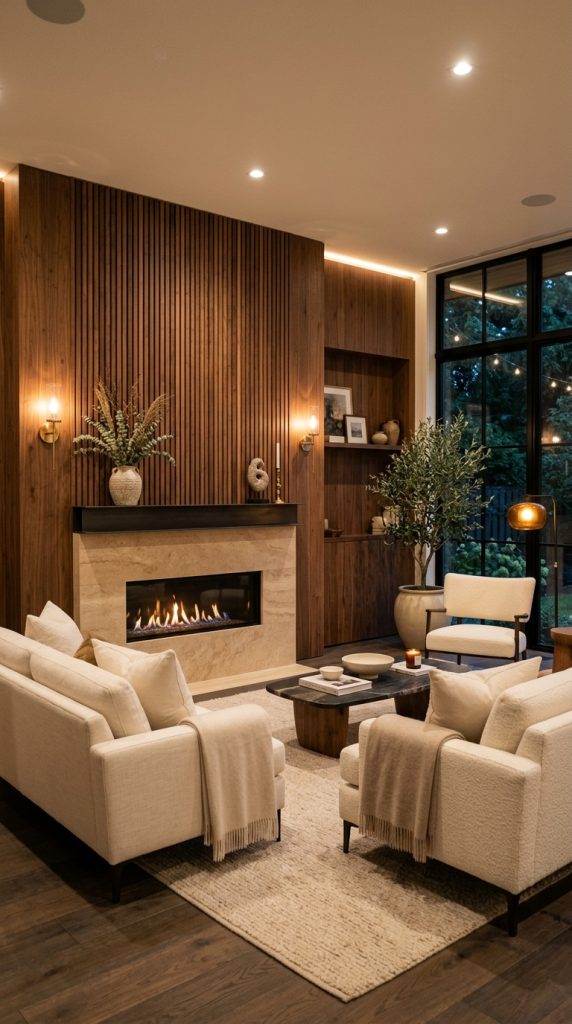
It works particularly well behind a bed, television, fireplace, dining table, or home office desk.
Materials and Elements You Need
- Wood wall panels
- Warm oak or walnut finish
- Measuring tools
- Appropriate installation materials
- Neutral furniture
- Wall lighting
- Minimal artwork
- Soft textiles
Choose one wall rather than automatically covering the entire room.
A single feature wall creates visual impact without making the space feel enclosed.
Vertical wood slats can make ceilings appear taller, while horizontal paneling can visually emphasize the width of a room.
For a modern home, simple vertical panels with narrow spacing can create a clean architectural appearance.
For a more traditional environment, wider boards or reclaimed-looking wood can introduce character.
Once the wall is installed, keep the surrounding furniture relatively simple.
You do not need to cover the wood with artwork.
Allow the grain and texture to become the primary feature.
Cream upholstery, linen curtains, soft rugs, and muted accessories can prevent the wood from feeling too heavy.
Add Lighting
Wall sconces can emphasize the texture of wood paneling beautifully.
Warm illumination creates subtle shadows between the panels, making the wall appear more dimensional.
Always follow appropriate installation requirements and use suitable materials for your wall and electrical setup.
3. Create a Warm Wood Kitchen With Natural Cabinets
Warm wood cabinetry can give a kitchen an inviting and timeless appearance.
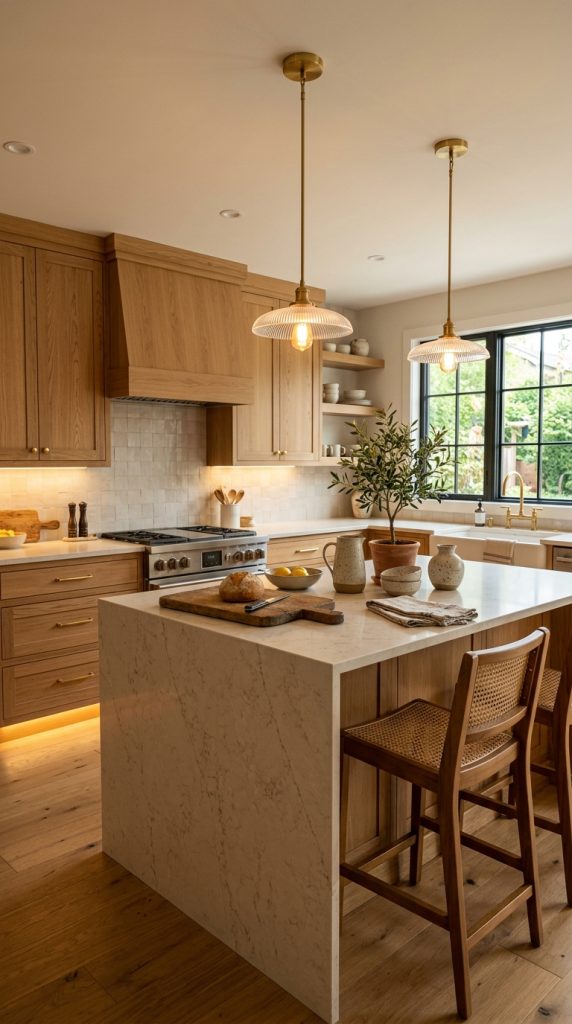
Instead of relying entirely on white or gray cabinetry, introduce oak, walnut, or another warm wood finish.
Materials and Elements You Need
- Warm wood cabinets
- Stone countertop
- Neutral backsplash
- Brass or matte hardware
- Wooden cutting boards
- Ceramic accessories
- Natural textiles
- Greenery
- Warm pendant lights
Start with the cabinetry because it will establish the room’s visual foundation.
Light oak can create an airy Scandinavian or organic-modern kitchen.
Walnut can create a deeper and more luxurious atmosphere.
If full wood cabinetry feels too heavy, combine wood lower cabinets with light upper cabinets.
Another option is to use wood on the kitchen island while keeping the perimeter cabinetry neutral.
Natural stone countertops pair beautifully with wood because they introduce another organic texture.
Choose hardware that complements the warmth of the cabinets. Aged brass, bronze, matte black, or understated metal finishes can all work.
Add Simple Natural Decor
Display wooden cutting boards against the backsplash.
Add a ceramic bowl filled with fruit.
Place a small plant near the window.
Use linen kitchen towels instead of overly patterned textiles.
These small additions reinforce the natural character without cluttering the counters.
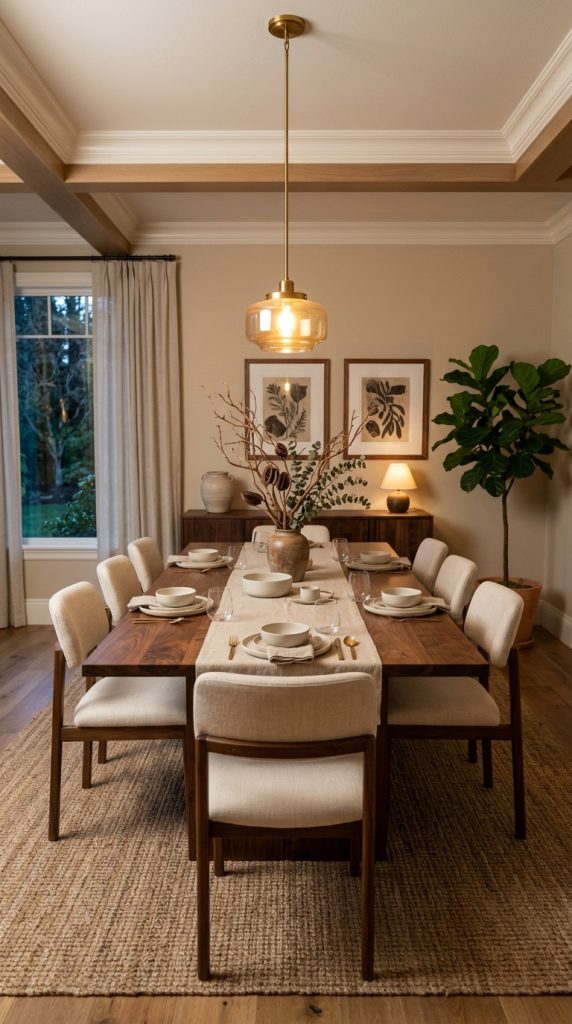
4. Use a Warm Wood Dining Table for a Cozy Gathering Space
The dining table is one of the best places to introduce warm wood because it naturally becomes the social heart of a home.
Materials and Elements You Need
- Solid wood dining table
- Upholstered or wooden dining chairs
- Linen table runner
- Ceramic dinnerware
- Pendant light
- Candles
- Simple centerpiece
- Natural centerpiece materials
Choose a table with enough visual weight to anchor the room.
A long farmhouse-style table can create a relaxed atmosphere, while a refined walnut table can feel more luxurious.
The most important thing is to choose a finish that complements the rest of your home.
Do not worry if the chairs do not match the table exactly.
Mixing upholstered chairs with wooden chairs can create a more collected appearance.
Style the Center
Keep the dining table centerpiece relatively low.
A ceramic vase filled with branches, dried foliage, or seasonal flowers can provide height without blocking conversation.
Add a few candles for evening gatherings.
A warm pendant light above the table can reinforce the wood’s natural color.
The combination of wood, soft lighting, linen, and ceramics creates a dining room that feels welcoming rather than overly formal.
5. Add Floating Wood Shelves for Warm Storage
Floating shelves are an easy way to introduce warm wood without purchasing large pieces of furniture.

They work in living rooms, kitchens, bathrooms, bedrooms, and home offices.
Materials and Elements You Need
- Wood floating shelves
- Wall brackets or appropriate mounting system
- Books
- Ceramic objects
- Small plants
- Framed artwork
- Baskets
- Decorative bowls
Choose shelves in a finish that complements existing furniture.
Walnut works beautifully with cream and darker interiors.
Oak is excellent for lighter spaces.
Install the shelves at appropriate heights and ensure they are properly secured to support their intended load.
Style Them Carefully
Avoid filling every inch.
Arrange books vertically in one section and horizontally in another.
Add a ceramic vase beside one group.
Place a small plant on another shelf.
Leave some negative space.
The empty areas are important because they allow the wood itself to remain visible.
Why This Works
Floating shelves provide useful storage while also creating warmth.
They are particularly effective in minimalist homes where large furniture pieces might make the room feel crowded.
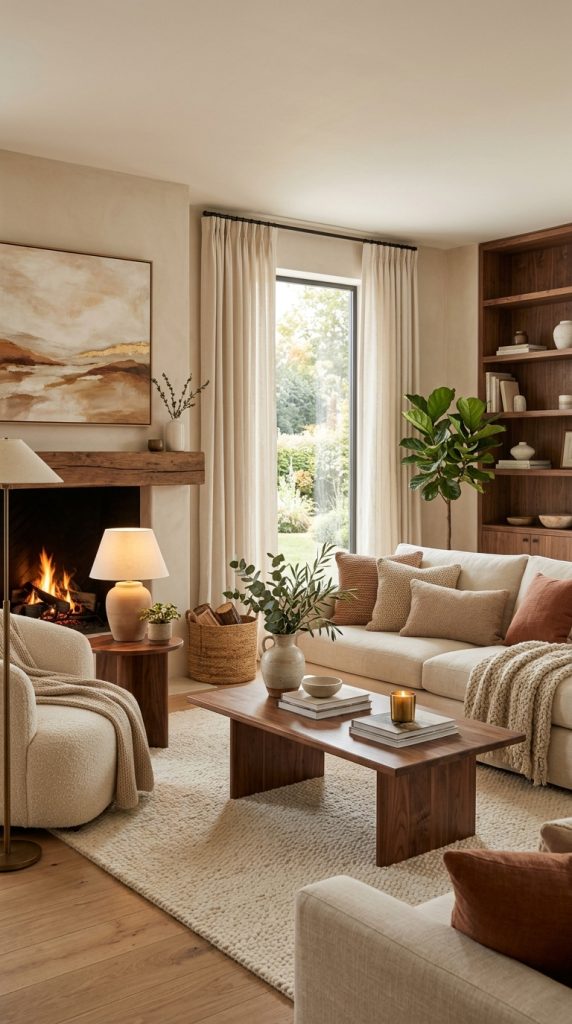
6. Pair Warm Wood With Cream and Beige Textiles
One of the easiest ways to make wood furniture feel luxurious is to surround it with soft neutral fabrics.
Materials and Elements You Need
- Cream sofa
- Beige cushions
- Linen curtains
- Textured rug
- Wool throw
- Warm wood furniture
- Boucle chair
- Neutral artwork
Wood can sometimes feel visually hard.
Cream and beige fabrics soften it immediately.
Imagine a walnut coffee table surrounded by a cream linen sofa, beige boucle chair, ivory rug, and soft linen curtains.
The contrast creates a warm and sophisticated atmosphere.
Layer the Textures
Do not use exactly the same fabric everywhere.
Combine linen with boucle.
Combine wool with cotton.
Combine smooth upholstery with woven baskets.
The different textures create depth while keeping the color palette calm.
Keep the Palette Cohesive
Choose several neutral shades rather than one exact beige.
Cream, ivory, oatmeal, taupe, camel, and warm gray can create subtle variation.
This allows the wood to remain the strongest natural element in the room.
7. Create a Warm Wood Bedroom With a Statement Headboard
A wooden bed or statement headboard can make a bedroom feel grounded and luxurious.

Materials and Elements You Need
- Wooden headboard
- Warm wood nightstands
- Cream bedding
- Linen duvet
- Soft pillows
- Bedside lamps
- Neutral rug
- Artwork
- Small greenery
Choose a headboard with enough visual presence to anchor the bed.
A fluted wood headboard can create a contemporary appearance.
A carved wood headboard can introduce traditional or handcrafted character.
A simple oak panel can work beautifully in an organic-modern bedroom.
Keep the bedding soft and neutral.
Cream, oatmeal, beige, white, and warm gray are excellent companions to wood.
Add bedside tables in a similar or slightly contrasting finish.
Use Warm Lighting
Place warm lamps on each nightstand.
The combination of warm light and wood creates a particularly relaxing evening atmosphere.
Avoid making the room too dark by balancing the deeper wood with light bedding and curtains.
8. Add a Wooden Bench to the Entryway
A wooden bench is both practical and decorative.

It gives you somewhere to sit while putting on shoes while also introducing warmth to the entryway.
Materials and Elements You Need
- Wooden bench
- Cushion
- Woven basket
- Mirror
- Wall hooks
- Runner rug
- Small plant
- Decorative bowl
Choose a bench with a simple silhouette.
Oak, walnut, teak, or reclaimed-looking wood can all work depending on your interior style.
Add a thin upholstered cushion if you want extra comfort.
Place baskets underneath for shoes, scarves, or other everyday items.
Above the bench, install a mirror.
The combination of mirror and wood creates an attractive focal point while also making the entryway feel brighter.
Keep the Surface Simple
Do not turn the bench into a storage pile.
Instead, use one basket, one cushion, and perhaps a folded throw.
The result should look organized and intentional.
9. Mix Different Wood Tones Without Making the Room Feel Messy
Using more than one wood finish can make an interior feel collected and sophisticated.

The trick is to create relationships between the tones rather than choosing completely unrelated finishes.
Materials and Elements You Need
- Walnut furniture
- Oak accessories
- Medium-tone wood flooring
- Wooden frames
- Woven accessories
- Neutral upholstery
For example, you might combine a walnut coffee table with an oak bookshelf.
The two finishes do not need to match exactly.
Instead, repeat each tone at least twice.
If you have a walnut table, introduce another walnut or dark-brown detail somewhere else.
If you use light oak shelving, repeat that lighter wood through a frame or decorative object.
Use Textiles to Connect Everything
Neutral fabrics act as a visual bridge between different wood tones.
Cream upholstery, beige rugs, linen curtains, and warm brown accessories can help the finishes feel intentional.
Avoid Too Many Similar Pieces
Three or four wood tones in one small room may become distracting.
Keep the dominant wood finish clear and use other tones as supporting accents.
10. Add a Warm Wooden Ceiling Detail
Wood on the ceiling can create an unforgettable architectural feature.
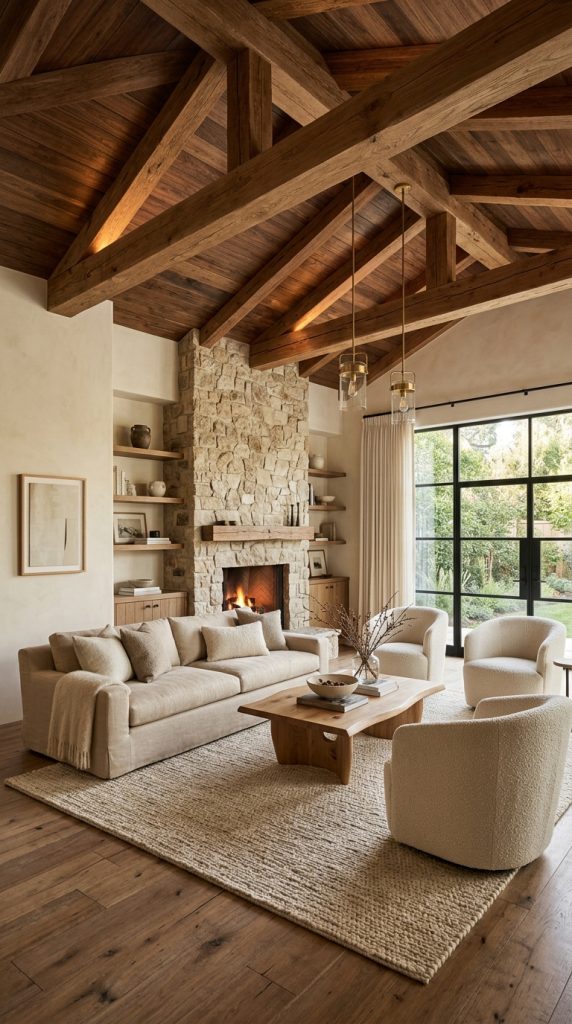
It is especially effective in bedrooms, living rooms, dining rooms, and rooms with high ceilings.
Materials and Elements You Need
- Wood ceiling boards or beams
- Appropriate installation system
- Neutral wall color
- Simple furniture
- Warm lighting
- Natural textiles
If a full wood ceiling feels too dramatic, use exposed beams instead.
Wood beams can add character while allowing the ceiling itself to remain light.
For a more contemporary design, narrow wood slats can create a modern architectural pattern.
Balance the Room
When the ceiling becomes a major feature, keep the walls and furniture relatively restrained.
Use cream, white, beige, or warm gray walls.
Avoid introducing too many competing patterns.
The ceiling should remain the visual centerpiece.
Lighting Matters
Warm recessed lighting or carefully positioned fixtures can highlight the wood texture.
The goal is to make the ceiling feel intentional rather than simply darker than the walls.
11. Style a Warm Wood Home Office
A wooden desk can make a home office feel more established, comfortable, and sophisticated.

Materials and Elements You Need
- Wooden desk
- Comfortable upholstered chair
- Wooden shelves
- Desk lamp
- Neutral rug
- Storage baskets
- Books
- Green plant
- Ceramic accessories
Choose a desk with a substantial but manageable surface.
Walnut can create a rich executive atmosphere.
Oak can produce a lighter and more relaxed workspace.
Place the desk near a window if possible to benefit from natural daylight.
Add a comfortable chair in cream, camel, tan, or muted brown.
Use floating shelves or a compact bookcase for storage.
Keep office accessories organized in boxes, trays, or baskets.
Make It Feel Less Corporate
Add a plant.
Display a few favorite books.
Use ceramic containers instead of plastic organizers where practical.
Include one piece of artwork.
These small details can make your office feel like part of your home rather than a separate workplace.
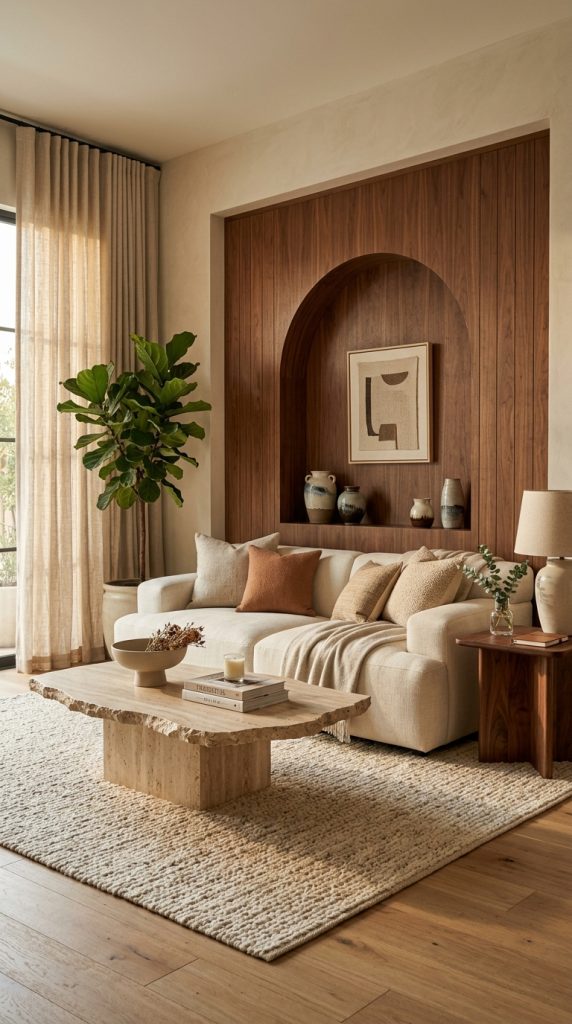
12. Combine Warm Wood With Natural Stone
Wood and stone are both natural materials, so they often complement each other beautifully.
Materials and Elements You Need
- Warm wood furniture
- Natural stone
- Marble or travertine accessory
- Neutral rug
- Ceramic objects
- Linen textiles
- Greenery
- Warm lighting
A walnut table beside a travertine lamp creates an elegant contrast.
Oak cabinetry paired with natural stone countertops can create a sophisticated kitchen.
A wooden vanity combined with stone surfaces can make a bathroom feel like a luxury retreat.
Focus on Contrast
Wood provides warmth and visual grain.
Stone provides coolness, weight, and subtle variation.
Together they create balance.
If the wood is dark, consider lighter stone.
If the wood is pale, a warmer or darker stone can add contrast.
Keep Other Materials Simple
Because both wood and stone have strong natural character, you do not need dozens of decorative materials.
Use linen, ceramics, and greenery as supporting elements.
13. Use Vintage Wooden Furniture for Character
Vintage wooden furniture can add personality that new furniture sometimes lacks.

An old wooden cabinet, antique console, writing desk, or carved bench can become a beautiful focal point.
Materials and Elements You Need
- Vintage wooden furniture
- Neutral wall color
- Modern lamp
- Ceramic accessories
- Artwork
- Books
- Greenery
- Textured rug
Look for pieces with interesting grain, carved details, aged finishes, or traditional craftsmanship.
You do not need to create a completely vintage room.
In fact, combining one older wooden piece with contemporary furniture often creates a more sophisticated result.
For example, place an antique wooden console beneath a modern oversized mirror.
Or combine a vintage wooden cabinet with a contemporary cream sofa.
Do Not Over-Restore the Character
Small imperfections can contribute to the charm.
Scratches, subtle color variation, and visible grain can make a wooden piece feel authentic.
If restoration is needed, prioritize preserving the piece’s character while making sure it is structurally sound and safe to use.
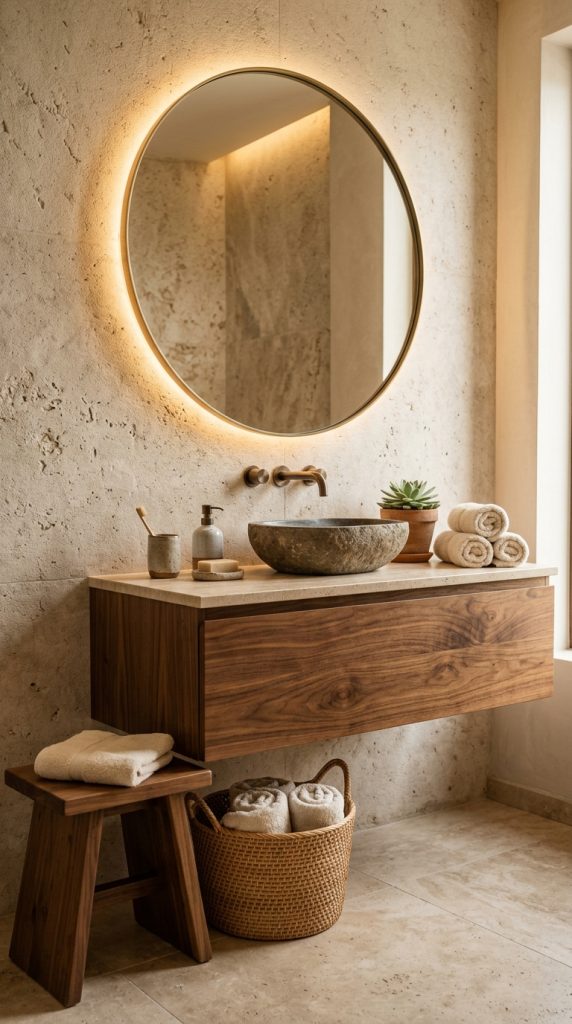
14. Bring Warm Wood Into the Bathroom
Wood can make a bathroom feel warmer and more spa-like.
Materials and Elements You Need
- Wood vanity
- Natural stone or tile
- Warm mirror lighting
- Wooden stool
- Woven basket
- Neutral towels
- Ceramic accessories
- Small plant
A warm wood vanity can immediately soften a bathroom dominated by hard tile and stone.
Choose moisture-appropriate materials and finishes designed for bathroom use.
Pair the vanity with cream, beige, stone, or softly patterned tile.
A backlit mirror can add another layer of warmth.
Use wooden accessories sparingly.
A small stool or tray may be enough.
Add Natural Textures
Place folded neutral towels in a woven basket.
Add a ceramic soap dispenser.
Introduce a small plant that is appropriate for the bathroom’s light and humidity.
The combination of wood, stone, soft textiles, and greenery can create a peaceful spa-inspired atmosphere.
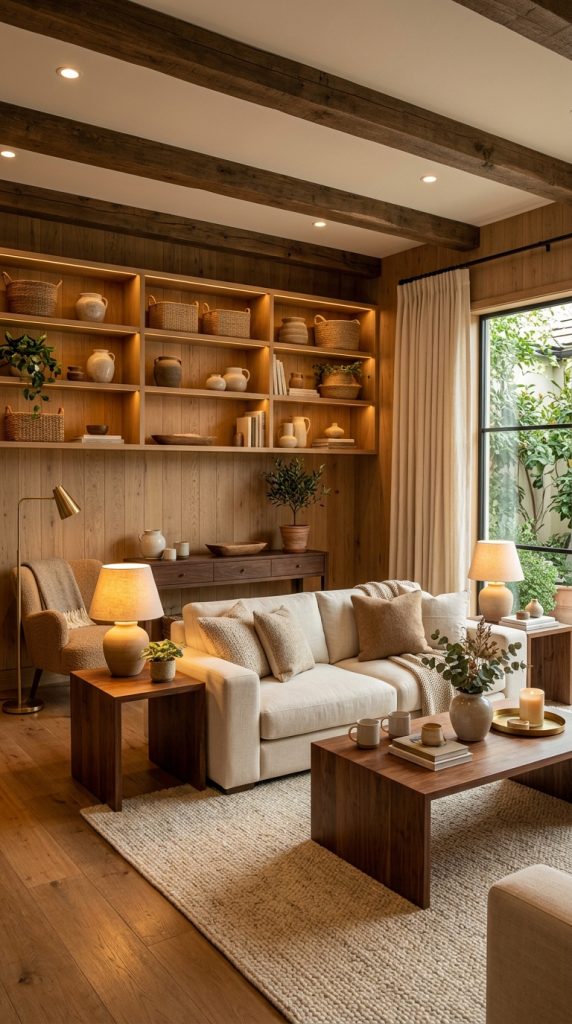
15. Create a Rich and Cozy Wood-Layered Living Room
For the ultimate warm wood interior, combine several wooden elements throughout one living room while keeping the rest of the design soft and balanced.
Materials and Elements You Need
- Warm wood coffee table
- Wooden side tables
- Wood console
- Neutral sofa
- Textured accent chair
- Wooden shelving
- Natural rug
- Woven baskets
- Ceramic accessories
- Green plants
- Warm lamps
- Soft curtains
Begin with one dominant wood tone.
Walnut is excellent if you want a rich, luxurious appearance.
Oak creates a lighter organic feeling.
Then introduce smaller wooden elements throughout the room.
A coffee table can anchor the seating arrangement.
A wooden console can sit behind the sofa.
A small side table can provide another layer.
Wooden shelves can introduce vertical warmth.
Soften Everything With Textiles
Use a cream or oatmeal sofa.
Add textured cushions in beige, camel, olive, or rust.
Place a large woven or wool rug beneath the furniture.
Add linen curtains to soften the windows.
The room should feel warm but not heavy.
Add Greenery
Plants create a natural connection between the wooden furniture and the rest of the room.
Choose a few larger plants rather than many tiny ones.
A large leafy plant beside a wooden console can become a beautiful focal point.
Finish With Warm Lighting
Use multiple light sources.
A floor lamp beside the sofa, table lamp on a console, and warm ceiling fixture can create a layered evening atmosphere.
Avoid relying entirely on bright overhead lighting.
The glow of warm lamps across natural wood surfaces can make the entire room feel richer and more inviting.
How to Make Warm Wood Decor Look Expensive
You do not necessarily need expensive furniture to create a luxurious appearance.
Start with proportion.
A few appropriately sized pieces often look more sophisticated than many small objects.
Next, focus on texture.
Wood becomes more luxurious when paired with linen, wool, boucle, leather, stone, and ceramics.
Avoid overly shiny finishes if you want an organic, high-end appearance.
Matte and natural-looking surfaces tend to emphasize the material’s character.
Lighting is another major factor.
Warm illumination can bring out the grain and depth of wooden furniture.
Finally, keep the room edited.
Luxury is often communicated through restraint.
Allow your best wooden pieces to stand out.
How to Decorate With Wood Without Making Your Home Feel Dark
Dark wood can create a rich atmosphere, but too much of it can make a room feel visually heavy.
Balance it with lighter surfaces.
Use cream walls, light rugs, soft upholstery, linen curtains, and pale accessories.
Introduce greenery for contrast.
Mirrors can also help reflect light around the room.
If your furniture is predominantly walnut or dark brown, avoid using dark finishes on every other surface.
Let the wood become the grounding element while lighter colors provide visual relief.
How to Mix Modern and Rustic Wood Decor
You do not have to choose between modern and rustic design.
A sophisticated home can combine both.
Pair a clean-lined walnut coffee table with a vintage wooden stool.
Combine modern oak shelving with an antique wooden cabinet.
Place contemporary cream furniture around a rustic dining table.
The key is to repeat materials and colors so the different styles feel connected.
Modern furniture provides simplicity.
Rustic pieces provide character.
Together, they can create a home that feels collected rather than overly coordinated.
How to Use Warm Wood in a Neutral Home
Neutral interiors sometimes become too flat when every surface is the same color.
Wood provides the texture and contrast needed to create depth.
For a beige living room, add a walnut coffee table.
For an all-white kitchen, introduce oak shelving or a wood island.
For a cream bedroom, choose a natural wood bed.
For a neutral entryway, use a wooden bench and mirror.
The wood does not need to be dramatic.
Even a few carefully selected pieces can completely change the feeling of the room.
Final Thoughts
Warm wood is one of the easiest materials to use when you want your home to feel richer, cozier, and more connected to nature.
From statement furniture and architectural wall paneling to small shelves, vintage accessories, kitchen cabinetry, and bedroom details, there are countless ways to introduce it.
The secret is balance.
Let wood provide warmth while soft textiles provide comfort. Use stone and ceramics for contrast. Add greenery for freshness. Introduce neutral colors to keep the room calm. Then use warm lighting to bring everything together in the evening.
You also do not need every wooden piece to match perfectly.
A home can feel more interesting when different wood tones are carefully layered.
Choose one dominant finish, repeat it throughout the room, and introduce contrasting tones in smaller amounts.
Most importantly, choose pieces that you genuinely enjoy.
A beautiful wooden table, an inherited cabinet, a handcrafted shelf, or a vintage bench can give your home a sense of character that goes far beyond following a decorating trend.
Whether your style is modern, organic, traditional, rustic, Scandinavian, or luxury-inspired, warm wood can become the foundation for a home that feels welcoming and timeless.
The result should not look overly decorated.
It should feel rich, warm, natural, comfortable, and lived-in—the kind of space where you naturally want to slow down, relax, and stay awhile.