
Organic modern home decor has become one of the most appealing ways to create a home that feels sophisticated without feeling cold. It combines the clean lines and simplicity of modern design with the warmth, texture, and natural beauty of organic materials. The result is a space that feels calm, welcoming, timeless, and effortlessly stylish.
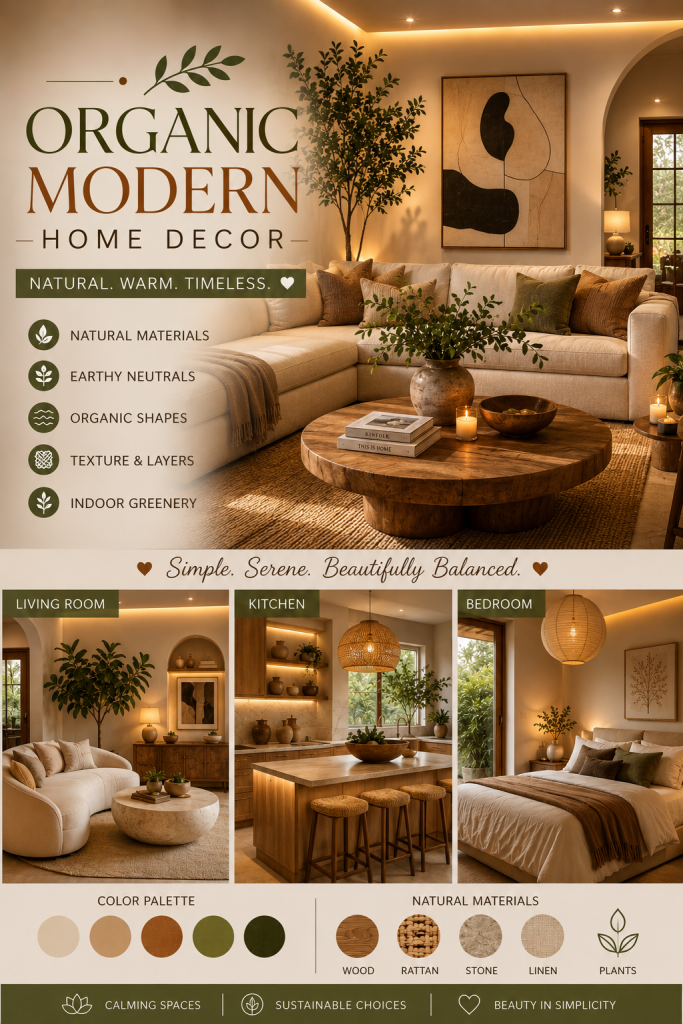
Unlike some modern decorating styles that rely heavily on stark white walls, glossy surfaces, sharp furniture, and minimal accessories, organic modern interiors introduce softness through natural wood, linen, stone, woven materials, greenery, earthy colors, and tactile fabrics. The style is modern enough to feel polished but comfortable enough to feel lived in.
One of the best things about organic modern decorating is that you do not need to completely redesign your home to achieve the look. Small changes can make a significant difference. Replacing a synthetic-looking accessory with a handmade ceramic vase, adding a chunky woven throw, introducing natural wood furniture, changing harsh lighting to warm illumination, or layering neutral textures can immediately make a room feel more organic.
The color palette is also important. Organic modern homes typically use colors inspired by nature. Warm white, ivory, beige, taupe, sand, oatmeal, camel, soft brown, muted olive, clay, and earthy gray can all work beautifully. These colors create a peaceful background while allowing natural materials to become the visual focus.
Texture is another defining feature. A room decorated entirely in one neutral color can feel flat if every surface has the same finish. Organic modern design solves this by layering different textures. A linen sofa can be paired with a woven rug, a wooden coffee table, a stone vase, a boucle chair, and a knitted throw. Although the colors may be similar, the different textures create depth.
Plants are also an important part of this aesthetic. Greenery adds life to neutral interiors and reinforces the connection with nature. Large leafy plants can fill an empty corner, while smaller plants can decorate shelves, consoles, and coffee tables.
Lighting should be warm and layered rather than overly bright. Natural sunlight is ideal during the day, while warm floor lamps, table lamps, wall sconces, and pendant lights can create a cozy atmosphere at night.
Organic modern decorating is also about restraint. The goal is not to fill every surface with accessories. Instead, choose a smaller number of meaningful or beautiful objects and give them room to breathe.
The following 10 ideas will help you bring organic modern style into your home in a practical and approachable way. Whether you are decorating a living room, bedroom, dining area, entryway, or small apartment, these ideas can be adapted to different spaces and budgets.
1. Create a Warm Neutral Organic Modern Living Room
The living room is one of the easiest places to introduce organic modern design because it naturally combines furniture, textiles, lighting, artwork, and decorative accessories.
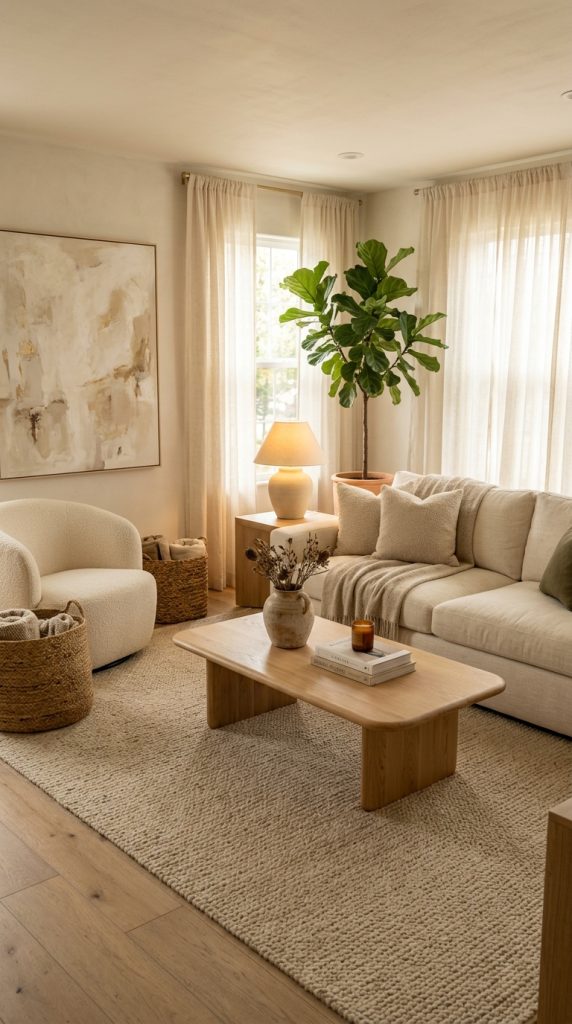
Start by creating a warm neutral foundation.
Instead of relying on pure white, consider shades such as warm ivory, creamy beige, oatmeal, soft taupe, or light greige. These colors make the room feel softer and work beautifully with natural materials.
Materials and Elements You Need
- Neutral sofa
- Natural wood coffee table
- Textured area rug
- Linen or cotton cushions
- Woven basket
- Ceramic vase
- Neutral artwork
- Greenery
- Warm floor or table lamp
- Natural wood accessories
How to Create the Look
Begin with the sofa.
A cream, beige, oatmeal, or warm gray sofa provides an excellent foundation. Choose a silhouette with relatively clean lines rather than extremely ornate details.
Next, add a natural wood coffee table.
Look for visible wood grain and an organic shape. A rounded or slightly irregular tabletop can soften the geometric appearance of a modern sofa.
Add a large textured rug underneath the furniture.
The rug should help visually connect the seating area rather than simply sit underneath the coffee table.
Layer cushions in different fabrics.
For example, combine linen, cotton, boucle, and knitted textures while keeping the colors within the same neutral family.
Place a woven basket beside the sofa.
Use it to store blankets, magazines, or other everyday items.
Finally, introduce greenery.
A large plant placed beside the sofa can create height and bring natural color into the neutral room.
Why This Works
The combination of modern furniture and natural materials creates the balance that defines organic modern style.
The furniture provides structure.
The wood adds warmth.
The textiles provide softness.
The greenery introduces life.
The result feels sophisticated without looking overly decorated.
2. Add Natural Wood as the Main Design Feature
Natural wood is one of the most effective ways to bring organic warmth into a modern interior.

Modern rooms can sometimes feel visually hard because they contain many straight lines and smooth surfaces. Wood immediately introduces warmth and natural variation.
Materials and Elements You Need
- Oak or walnut furniture
- Wooden coffee table
- Wood console
- Wooden shelving
- Natural wood stools
- Woven accessories
- Neutral textiles
- Ceramic objects
How to Use Wood
You do not need wood everywhere.
Choose one or two major wooden pieces and allow them to become focal points.
A large oak coffee table can completely change the feeling of a neutral living room.
In a dining room, a solid wood dining table can become the central feature.
In a bedroom, a natural wood bed frame can create warmth against cream bedding.
In an entryway, a simple wooden console can provide both function and character.
Choose Natural Finishes
Avoid overly glossy finishes if you want an organic appearance.
Matte or lightly finished wood tends to feel more natural.
Visible knots, grain variations, and subtle imperfections can make the furniture feel more authentic.
Pairing Wood With Neutrals
Natural wood works beautifully with:
- Cream
- Ivory
- Beige
- Taupe
- Soft gray
- Olive
- Terracotta
- Warm brown
For a lighter organic modern room, use pale oak.
For a richer atmosphere, choose walnut or medium-toned wood.
Beginner Tip
If replacing furniture is outside your budget, introduce smaller wood accents.
A wooden stool, tray, picture frame, bowl, or side table can still make a noticeable difference.
3. Layer Natural Textures for a Cozy Look
Organic modern design is not only about color. Texture is one of the most important elements.

Imagine a room where everything is beige but every object has the same smooth finish. It may look coordinated, but it can also feel flat.
Layering textures solves this problem.
Materials to Use
- Linen
- Cotton
- Boucle
- Wool
- Jute
- Rattan
- Woven baskets
- Natural wood
- Stone
- Handmade ceramics
How to Layer Textures
Start with your largest textile.
An area rug establishes the foundation.
Choose a natural-looking rug with subtle variation.
Next, introduce soft upholstery.
A linen or cotton sofa works beautifully.
Then add cushions.
Mix at least three different textures.
For example, use:
- Linen cushion
- Chunky knitted cushion
- Boucle accent cushion
Add a woven basket near the seating area.
Place a ceramic vase on the coffee table.
Finish with a soft throw casually draped across the sofa.
Keep the Colors Controlled
You can use many textures without creating visual chaos if the colors remain coordinated.
For example:
Cream sofa
Beige rug
Oatmeal throw
Taupe cushions
Natural wood table
Warm white ceramics
The room will have plenty of visual interest without requiring bright colors.
Why Texture Matters
Texture makes a neutral room feel warm.
It also creates the relaxed, tactile quality associated with organic interiors.
When designing an organic modern room, ask yourself:
“What can I touch?”
If the answer is mostly smooth surfaces, introduce more textiles, woven materials, and natural finishes.
4. Design an Organic Modern Bedroom
An organic modern bedroom should feel peaceful, comfortable, and uncluttered.
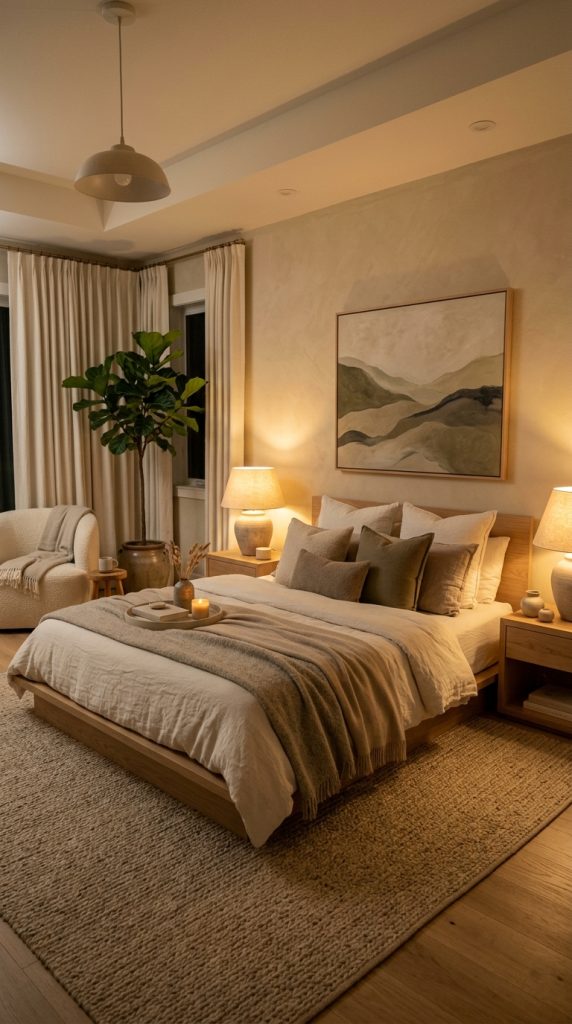
The bedroom is particularly suited to this style because neutral colors and natural materials naturally create a relaxing environment.
Materials and Elements You Need
- Upholstered or natural wood bed
- Linen bedding
- Neutral duvet
- Wooden nightstands
- Woven rug
- Ceramic lamps
- Warm lighting
- Minimal artwork
- Greenery
- Woven basket
Start With the Bed
The bed should remain the focal point.
Choose neutral bedding in cream, beige, oatmeal, or soft gray.
Layer the bed with different fabrics.
Use a duvet, quilt, throw, and several pillows rather than relying on one flat layer.
Add Natural Wood
Wooden nightstands or a wood bed frame can introduce warmth.
Choose pieces with simple silhouettes.
Avoid overly ornate furniture.
Lighting
Use warm bedside lamps.
Ceramic or textured lamps can reinforce the organic feeling.
Instead of extremely bright overhead lighting, rely on multiple warm sources whenever possible.
Decorate the Walls Carefully
A single large neutral artwork can be more effective than many small pieces.
Consider abstract artwork inspired by natural landscapes, stone formations, branches, or subtle earthy shapes.
Add Greenery
A small plant on the nightstand or a larger plant in an empty corner can add freshness.
Keep the number of plants controlled so the bedroom remains calm.
5. Create a Minimal Organic Modern Entryway
The entryway sets the tone for the rest of your home.
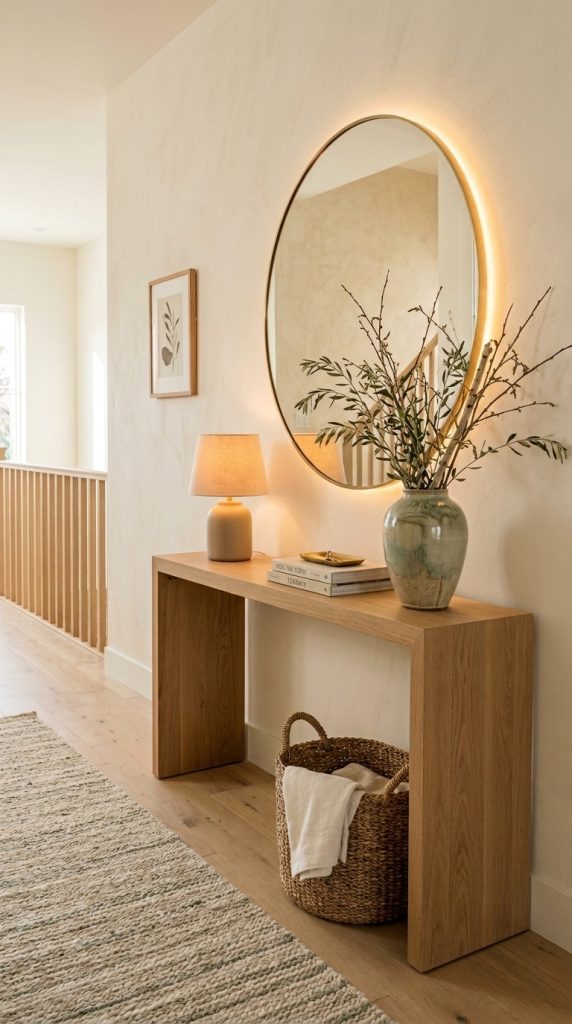
An organic modern entryway should feel welcoming, functional, and visually calm.
Materials and Elements
- Wooden console
- Round mirror
- Ceramic vase
- Branches or greenery
- Woven basket
- Neutral runner
- Warm lamp
- Small decorative tray
How to Style It
Place a wooden console against the wall.
Choose a simple design with clean lines.
Hang a large round mirror above it.
The curved shape of the mirror softens the straight lines of the console.
Add a ceramic vase with natural branches.
Place a small tray on the console for keys and everyday items.
Add a woven basket underneath.
Use it for shoes, umbrellas, scarves, or other items.
Add a Runner
A neutral woven runner can introduce texture.
Choose a subtle pattern or natural variation rather than a bold geometric design.
Lighting
A small table lamp with warm illumination can make the entryway feel much more welcoming in the evening.
Keep It Uncluttered
The organic modern style works best when surfaces are intentionally edited.
Instead of covering the console with accessories, select three or four beautiful pieces.
The negative space around them is part of the design.
6. Use Stone and Ceramic Accessories
Natural stone and handmade-looking ceramics are excellent ways to add organic character without making major furniture changes.
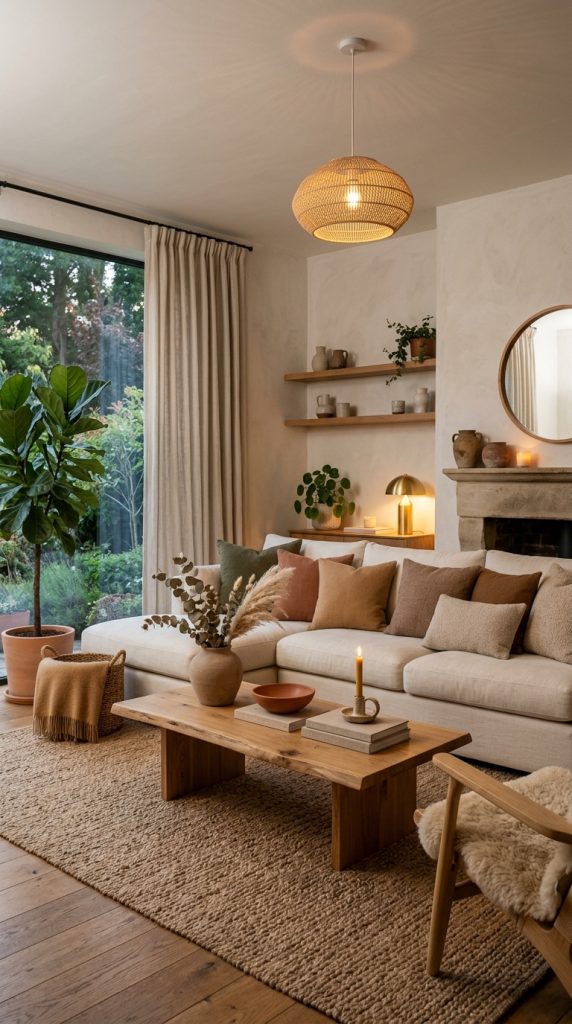
Materials and Elements
- Stone vase
- Ceramic bowls
- Clay vessels
- Travertine tray
- Marble accent
- Handmade pottery
- Neutral sculptures
How to Use Them
Start with one large sculptural object.
A stone vase can become the focal point of a coffee table.
Add a small ceramic bowl nearby.
Place a candle or small decorative object inside it.
On a console, combine a ceramic vase with a wooden tray and a simple piece of artwork.
Choose Imperfect Shapes
Organic modern design benefits from objects that look handmade or naturally formed.
Look for:
- Uneven edges
- Matte surfaces
- Natural variation
- Rounded shapes
- Subtle texture
Perfectly identical objects can make a room feel overly manufactured.
Avoid Overdecorating
You do not need a large collection.
One beautiful ceramic vase can have more impact than ten small decorative pieces.
The goal is to create a curated environment.
7. Bring in Earthy Colors Through Small Accents
Organic modern interiors are often neutral, but that does not mean they must be completely colorless.
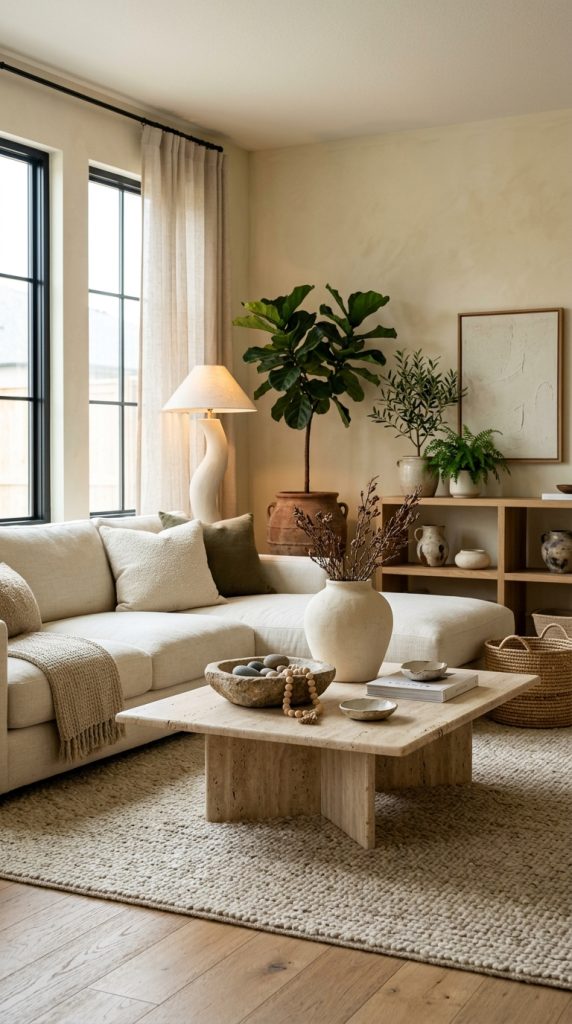
Earth-inspired accent colors can add depth.
Colors to Consider
- Olive green
- Terracotta
- Clay
- Camel
- Warm brown
- Muted rust
- Dusty beige
- Soft ochre
How to Introduce Color
Start small.
Use an olive cushion on a cream sofa.
Add a terracotta vase to a wooden console.
Use a muted rust throw at the end of a bed.
Choose a camel leather accent chair.
Add warm brown artwork.
Why Earthy Colors Work
These colors are naturally compatible with wood, stone, linen, and greenery.
They create warmth without disrupting the calm appearance of the room.
The 80/20 Approach
A useful approach is to keep approximately 80 percent of the room neutral and use the remaining 20 percent for earthy accents.
This does not need to be exact.
The principle is simply to allow the natural neutrals to remain dominant.
Seasonal Flexibility
Earthy accents can also change with the seasons.
Use lighter beige and soft green during spring and summer.
Introduce terracotta, rust, and deeper brown during fall.
Use warm cream and camel during winter.
The base of the room can remain unchanged.
8. Create a Cozy Organic Modern Dining Area
The dining room is another perfect place to combine modern simplicity with natural materials.
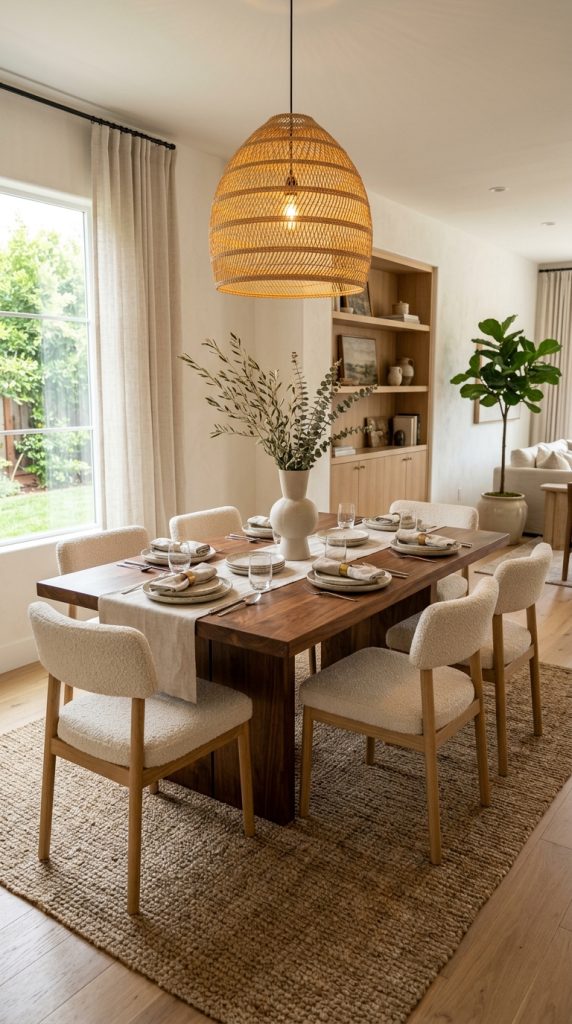
Materials and Elements
- Solid wood dining table
- Upholstered dining chairs
- Woven pendant
- Neutral rug
- Ceramic centerpiece
- Linen table runner
- Natural branches
- Warm lighting
Start With the Table
A solid wood table should be the main feature.
Choose a simple silhouette.
Round tables work beautifully in smaller dining areas, while rectangular tables can create a more traditional arrangement.
Choose Soft Seating
Instead of choosing chairs that are entirely hard and visually heavy, introduce upholstery.
Cream, beige, taupe, or light brown fabrics work well.
Add a Woven Pendant
A woven or natural-fiber pendant above the table can create texture and visual warmth.
Make sure the fixture is properly suited to the space and installed safely.
Keep the Centerpiece Simple
Place a ceramic vase in the middle of the table.
Fill it with branches or seasonal greenery.
Avoid extremely elaborate floral arrangements.
The organic modern look is more relaxed.
Add a Rug
A neutral rug underneath the table can define the dining area.
Choose a durable material that suits the amount of use and cleaning required.
9. Transform a Small Apartment With Organic Modern Style
Organic modern design is particularly effective in small spaces because it relies on simplicity and natural materials rather than excessive decoration.

Materials and Elements
- Compact wood furniture
- Neutral sofa
- Round coffee table
- Woven basket
- Wall mirror
- Linen curtains
- Small plants
- Neutral rug
- Warm lighting
Choose Furniture Carefully
Avoid filling a small apartment with oversized furniture.
Choose pieces that provide function without visually overwhelming the room.
A compact wooden coffee table with rounded edges can work better than a large rectangular table.
Use Mirrors
A large mirror can reflect light and create the perception of additional space.
Choose a simple round or softly curved frame.
Keep Window Treatments Light
Linen or lightweight neutral curtains can soften the room while allowing natural light to enter.
Use Vertical Space
Wall-mounted shelves can provide storage without taking up floor space.
Decorate them with a small number of carefully selected objects.
Add Plants Strategically
One large plant in a corner can be more effective than many tiny plants scattered around the apartment.
Keep walkways clear.
Focus on Quality Over Quantity
Small spaces benefit enormously from editing.
Every object should either serve a purpose or contribute something meaningful to the overall aesthetic.
10. Create a Warm Organic Modern Home With Layered Lighting
Lighting can completely change an organic modern interior.
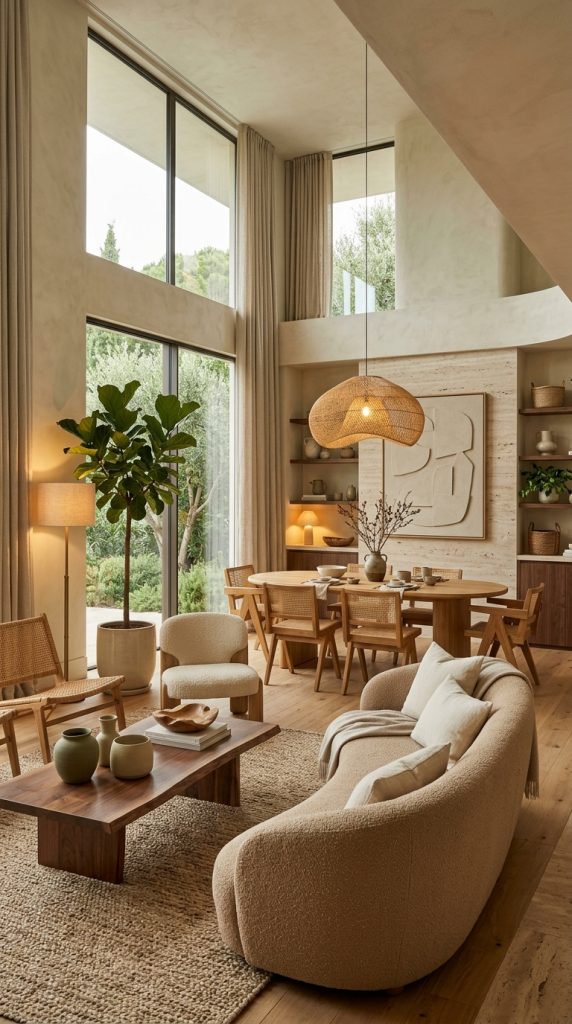
Even a beautifully decorated room can feel cold if the lighting is harsh.
The goal is to create layers of warm illumination.
Lighting Elements
- Table lamps
- Floor lamps
- Wall sconces
- Pendant lights
- Recessed lighting
- Candles where appropriate
- Under-cabinet lighting
Start With Ambient Lighting
General lighting should illuminate the room without feeling overly intense.
Warm-toned lighting can make beige, cream, wood, and stone appear richer.
Add Task Lighting
Task lighting is useful for reading corners, desks, kitchen counters, and bedside areas.
Choose fixtures that provide enough illumination for the activity.
Add Accent Lighting
Accent lighting can highlight:
- Artwork
- Plants
- Architectural details
- Shelving
- Decorative objects
Use Warm Light
For living spaces where you want a cozy atmosphere, warmer color temperatures are generally more comfortable.
The exact lighting choice should still depend on the room’s purpose.
Why Lighting Completes Organic Modern Decor
Natural materials look particularly beautiful under soft, warm illumination.
Wood gains depth.
Stone becomes more dimensional.
Linen looks softer.
Ceramics develop subtle shadows.
This is why lighting should be considered part of the decorating plan rather than something added at the very end.
How to Choose an Organic Modern Color Palette
A successful organic modern palette usually begins with a warm neutral.
Choose one dominant background color.
Examples include:
- Warm white
- Cream
- Ivory
- Beige
- Taupe
- Greige
Then add natural materials.
Wood introduces brown.
Plants introduce green.
Stone introduces gray or beige.
Ceramics can introduce subtle clay tones.
Finally, add one or two earthy accent colors.
This creates a palette that feels connected to nature.
How to Mix Modern and Organic Elements
The style works because of contrast.
A sleek modern sofa can be paired with a rough wooden table.
A clean-lined console can be decorated with an imperfect ceramic vase.
A modern black light fixture can hang above a rustic wood table.
A smooth stone countertop can be paired with woven stools.
Do not make every object rustic.
Do not make every object perfectly modern.
The combination creates character.
Common Organic Modern Decorating Mistakes
One common mistake is using too much beige without enough texture.
If every item is the same color and finish, the room may feel dull.
Another mistake is adding too many natural materials at once.
Wood, rattan, jute, stone, bamboo, wicker, and unfinished materials can become overwhelming if every object uses a different texture.
Choose a few primary materials and repeat them.
Another mistake is overcrowding.
Organic modern interiors need breathing room.
Do not fill every shelf, wall, and tabletop.
Finally, avoid making everything look perfectly coordinated.
Natural interiors are more appealing when there is subtle variation.
How to Make Organic Modern Decor Look Expensive
You do not necessarily need expensive furniture.
Instead, focus on proportion, texture, and editing.
Choose one beautiful focal point.
Keep the color palette consistent.
Use large-scale artwork rather than many tiny pieces.
Choose curtains that reach the floor.
Use appropriately sized rugs.
Add warm lighting.
Mix textures.
Hide unnecessary clutter.
Use natural materials wherever practical.
A simple room with excellent proportions and thoughtful materials often looks more sophisticated than an expensive room filled with too many decorative objects.
Budget-Friendly Organic Modern Decorating
You can create this style gradually.
Start with textiles.
Replace colorful or mismatched cushions with neutral linen or cotton options.
Add a textured throw.
Introduce a woven basket.
Add a ceramic vase.
Bring in one plant.
Then consider larger changes.
Replace a small coffee table with a natural wood version.
Add a neutral rug.
Update lighting.
Rearrange furniture to create more breathing room.
You do not have to purchase everything at once.
The organic modern aesthetic actually works well with gradual decorating because it favors a collected and intentional appearance.
Final Thoughts
Organic modern home decor is about creating a balance between simplicity and warmth.
It combines the clean structure of modern design with the natural beauty of wood, stone, linen, ceramics, woven materials, plants, and earthy colors.
The style does not require perfection.
In fact, small imperfections can make the room feel more authentic.
A slightly irregular ceramic vase, visible wood grain, softly textured linen, natural stone variation, or handwoven basket can give a modern room character.
If you are beginning from scratch, start with the largest elements.
Choose a warm neutral color palette.
Select simple furniture.
Introduce natural wood.
Add a textured rug.
Layer soft textiles.
Bring in greenery.
Then finish the room with ceramics, woven accessories, artwork, and warm lighting.
If you already have a furnished home, focus on smaller changes.
Swap cold accessories for natural materials.
Add a wooden tray.
Place a woven basket beside the sofa.
Replace harsh lighting with warmer lamps.
Introduce a few neutral cushions.
Add greenery.
Remove unnecessary clutter.
These small adjustments can gradually shift the atmosphere of the entire room.
The most beautiful organic modern homes also understand the importance of negative space. Empty space is not wasted space. It allows furniture, artwork, plants, and decorative objects to stand out.
Instead of asking what else you can add, occasionally ask what you can remove.
That simple change in perspective can make a room feel calmer and more sophisticated.
Whether you live in a large house, a small apartment, or a compact studio, organic modern decorating can create a home that feels peaceful, welcoming, and timeless.
The style is flexible enough to adapt to different budgets and personal tastes. You can make it minimalist, cozy, luxurious, rustic, contemporary, or slightly traditional while keeping the same basic foundation.
Most importantly, choose materials and objects that make your home feel comfortable to you.
Organic modern design is not about following a rigid set of rules.
It is about creating a thoughtful relationship between modern simplicity and natural warmth.
When those two qualities are balanced successfully, the result is a home that feels beautiful without trying too hard — polished enough to look sophisticated, but comfortable enough to truly live in.