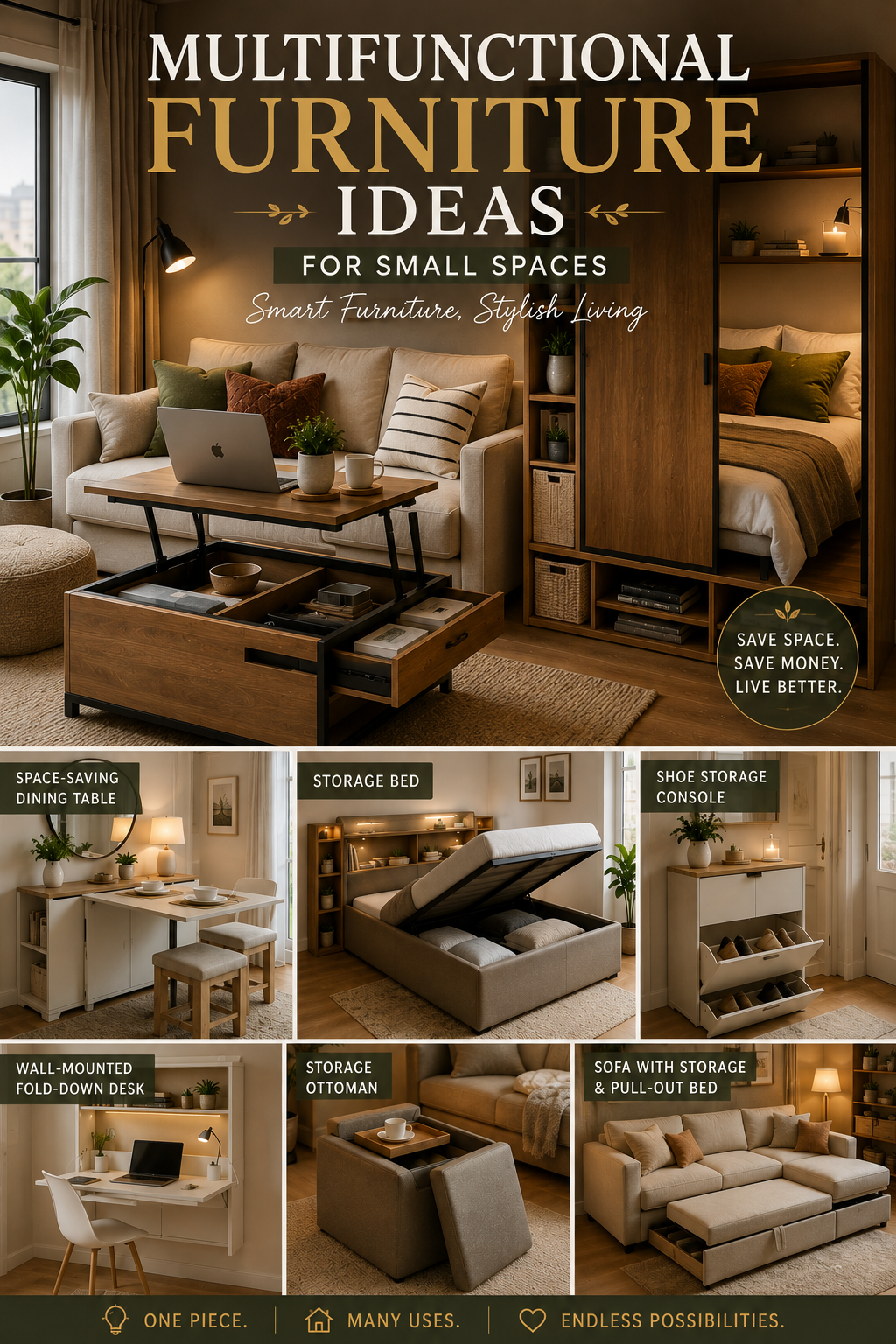
Living in a small home does not mean you have to give up comfort, style, or functionality. Whether you live in a compact apartment, studio, tiny house, small bedroom, or a home with limited rooms, the right furniture can make an enormous difference. The secret is choosing pieces that perform more than one job.

Multifunctional furniture is designed to solve several problems at once. A storage ottoman can work as a footrest, extra seating, and hidden storage. A sofa bed can transform a living room into a guest bedroom. A narrow console can become a workspace when needed. A storage bench can provide seating while hiding shoes, blankets, or everyday belongings.
For small spaces, this type of furniture is especially valuable because every square foot matters. Traditional furniture often performs only one function and occupies a large amount of floor space. Multifunctional pieces allow you to combine several purposes into one carefully chosen item.
The best part is that multifunctional furniture does not have to look purely practical. Today’s small-space furniture can be stylish, elegant, comfortable, and decorative. With the right styling, functional furniture can become part of your home’s overall design rather than something you try to hide.
Before purchasing anything, it is important to understand how you actually use your space. Think about your daily routine. Do you work from home? Do you frequently have guests? Do you need extra storage? Do you eat meals in your living room? Do you need a place for children to study? Do you have limited closet space?
Your answers should guide your furniture choices.
For example, someone working from home might benefit from a fold-down wall desk rather than a traditional desk. Someone who regularly hosts guests might prefer a sofa bed. A family with limited storage could choose a bed with built-in drawers. Someone living in a studio apartment might benefit from nesting tables that can expand when guests arrive and disappear when they leave.
Another important factor is furniture scale. Multifunctional furniture should fit your room properly. A piece that performs three jobs is not useful if it takes up half the room and blocks movement.
Look for furniture with a compact footprint, clean lines, and flexible functionality.
Furniture with visible legs can also help a small room feel more open because you can see more of the floor underneath it. Glass or acrylic surfaces can provide a similar visual effect because they allow light to pass through.
Color matters too. Large furniture pieces in soft neutral shades such as cream, beige, taupe, warm gray, or light brown can blend naturally into a small room. If you prefer darker furniture, balance it with lighter walls, textiles, and accessories.
Storage is one of the biggest reasons multifunctional furniture works so well in small homes. Clutter makes compact spaces feel even smaller. When furniture includes hidden compartments, drawers, shelves, or storage baskets, everyday items can disappear from view.
However, functionality should not mean sacrificing beauty.
The most successful small-space interiors combine practical furniture with thoughtful styling. A storage bench can look elegant with a soft cushion. A sofa bed can look like a beautiful sofa during the day. A storage coffee table can become a stylish centerpiece. A compact desk can blend into a living room rather than looking like an office.
The ten ideas below will show you how to use multifunctional furniture in different areas of your home. Each idea includes practical suggestions, materials or furniture features to consider, step-by-step guidance, and styling advice.
Whether you are decorating your first apartment or simply trying to make a small home work better, these ideas can help you create a space that feels more organized, comfortable, and attractive.
1. Choose a Storage Ottoman That Works as Seating, Storage, and a Table
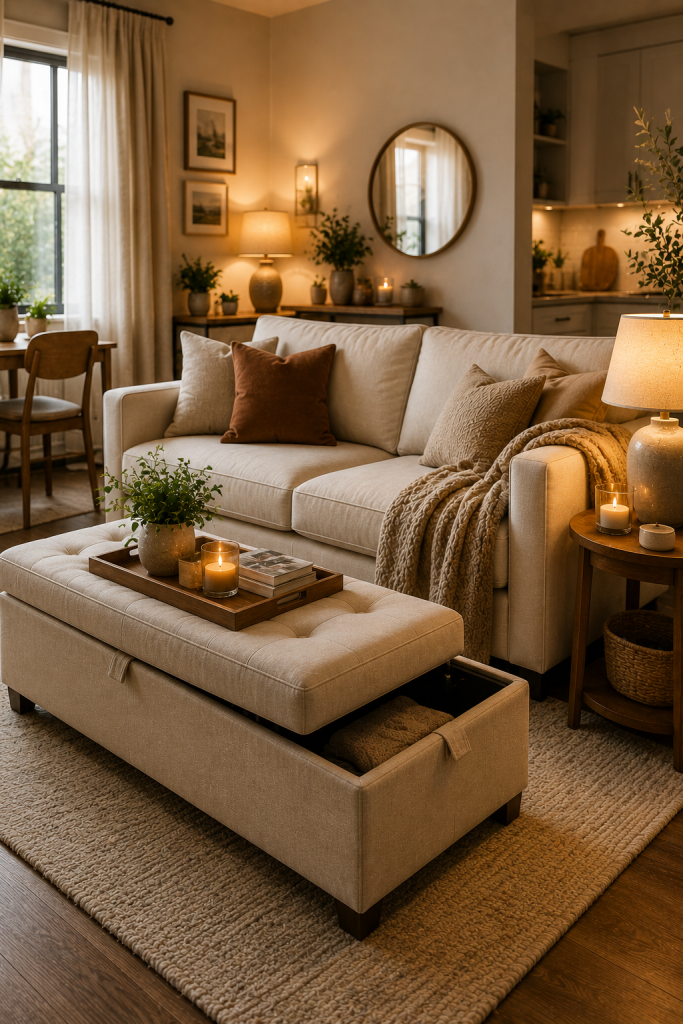
A storage ottoman is one of the most versatile pieces of furniture for a small living room.
It can perform several functions without requiring a large amount of space. You can use it as a footrest while relaxing on the sofa, extra seating when guests arrive, a surface for a tray, and hidden storage for blankets, pillows, books, or other items.
This makes it particularly useful when you do not have enough room for a separate coffee table and additional seating.
What to Look For
Choose an ottoman with:
- A removable or hinged top
- Internal storage
- A sturdy surface
- Washable or durable fabric
- A compact shape
- Neutral or coordinating colors
A rectangular ottoman can work well in front of a sofa because it provides plenty of usable surface area.
A round ottoman can create softer visual lines and make movement around the room easier.
How to Style It
Place the ottoman in front of the sofa.
Add a decorative tray to the top.
The tray can hold a candle, small vase, coffee-table book, or remote controls.
When you need to use the ottoman as extra seating, simply move the tray aside.
Inside the storage compartment, keep items you use regularly.
Blankets and pillows are particularly convenient because they can be quickly removed when needed.
Step-by-Step
- Measure the area in front of your sofa.
- Leave enough space for comfortable movement.
- Choose an appropriately sized ottoman.
- Select a fabric that complements your existing furniture.
- Use the interior for hidden storage.
- Add a decorative tray to create a stable surface.
- Keep the top relatively uncluttered.
A storage ottoman is especially useful in a small apartment where buying separate furniture for every purpose would quickly consume the available space.
2. Invest in a Sofa Bed for a Living Room That Doubles as a Guest Room

A sofa bed is an excellent solution for homes that do not have a dedicated guest bedroom.
During the day, it functions as comfortable living-room seating.
At night, it can become a sleeping area.
This is especially useful in studio apartments, one-bedroom homes, and small apartments where space needs to perform multiple functions.
What to Look For
Consider:
- Comfortable seating
- Easy conversion mechanism
- Supportive mattress
- Durable upholstery
- Compact depth
- Neutral color
- Built-in storage if available
The sofa should look attractive when it is being used as normal seating.
How to Style It
Use decorative cushions and a soft throw during the day.
Choose cushions that can easily be removed when the bed is opened.
A nearby storage basket can hold additional bedding.
A narrow side table can provide space for a lamp, book, or drink without occupying much room.
Step-by-Step
- Measure the sofa area.
- Measure the fully extended bed dimensions.
- Make sure the bed can open without blocking doors or pathways.
- Choose a style that matches your living room.
- Add comfortable cushions.
- Store bedding in a nearby basket or compartment.
- Keep the surrounding area easy to rearrange.
Always consider the fully opened size rather than only the sofa dimensions.
This is one of the most important rules when choosing furniture for small rooms.
A sofa bed is only practical if you can comfortably convert it without moving half the room.
3. Use a Lift-Top Coffee Table as a Workspace and Dining Surface
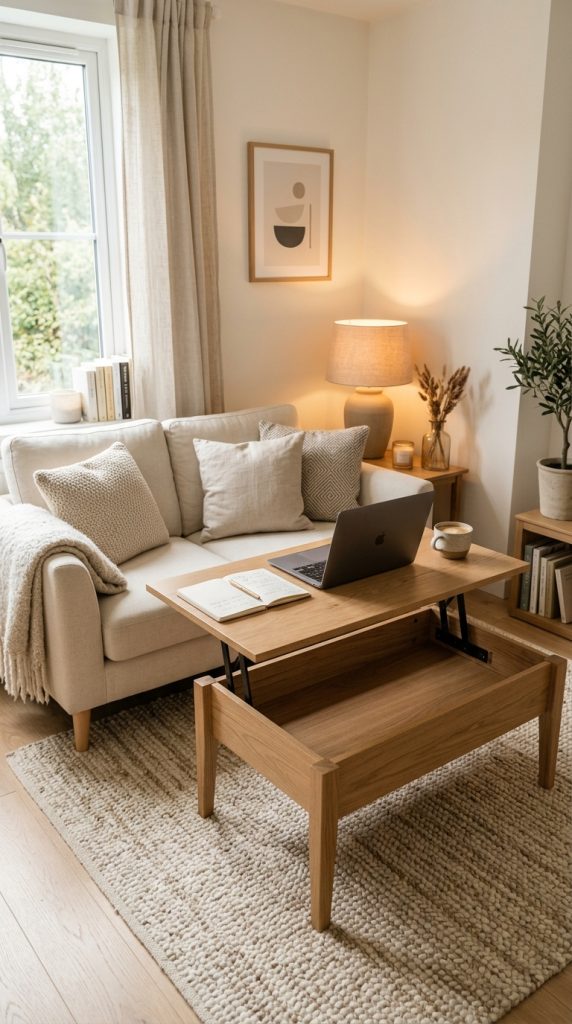
A lift-top coffee table can be extremely useful when you need a workspace but do not have enough room for a traditional desk.
The tabletop can rise to a more comfortable working height.
Depending on the design, it may also provide hidden storage underneath.
This makes it useful for working, eating, writing, studying, or organizing everyday items.
What You Need
Look for a coffee table with:
- Lift mechanism
- Hidden storage
- Stable tabletop
- Compact dimensions
- Durable finish
- Rounded edges if appropriate
Step-by-Step
- Place the table in front of the sofa.
- Keep enough room around it for movement.
- Use the hidden compartment for notebooks, chargers, and stationery.
- Lift the tabletop when working.
- Lower it when relaxing.
- Use a small basket nearby for additional items.
Why It Works
A traditional desk can occupy valuable floor space all day.
A lift-top table allows the same area to serve multiple purposes.
During the morning, you can use it as a desk.
At lunchtime, it can become a dining surface.
In the evening, lower it and use it as a conventional coffee table.
This flexibility makes it particularly valuable in studio apartments.
For a polished appearance, keep the tabletop simple.
A small tray, vase, or decorative object is enough when the table is not being used for work.
4. Add a Storage Bed to Maximize Bedroom Space
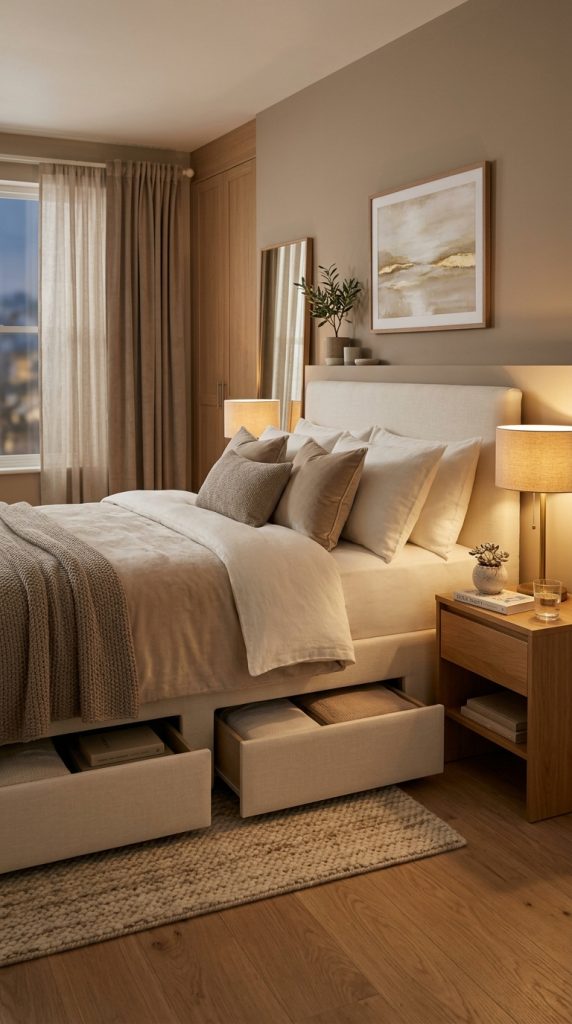
The area underneath your bed is valuable storage space.
Instead of leaving it empty or filling it with mismatched boxes, choose a bed specifically designed with built-in storage.
Storage beds can include drawers, lift-up platforms, shelves, or hidden compartments.
What to Store
Use the storage area for:
- Extra bedding
- Seasonal clothing
- Shoes
- Towels
- Blankets
- Bags
- Extra pillows
- Rarely used items
What to Look For
Choose a bed with:
- Strong construction
- Smooth drawer mechanisms
- Easy access
- Durable upholstery or finish
- Appropriate height
- A design that fits your bedroom
Step-by-Step
- Measure the bedroom.
- Determine how much storage you need.
- Choose drawers or lift-up storage based on your needs.
- Organize items into categories.
- Use storage bags or boxes inside larger compartments.
- Keep frequently used items accessible.
A storage bed can eliminate the need for an additional bulky dresser.
This creates more walking space and makes a small bedroom feel less crowded.
For the most attractive result, keep the bed itself simple.
Neutral bedding, warm lighting, and minimal bedside accessories can make a storage bed look sophisticated rather than purely functional.
5. Use a Fold-Down Wall Desk for a Small Home Office
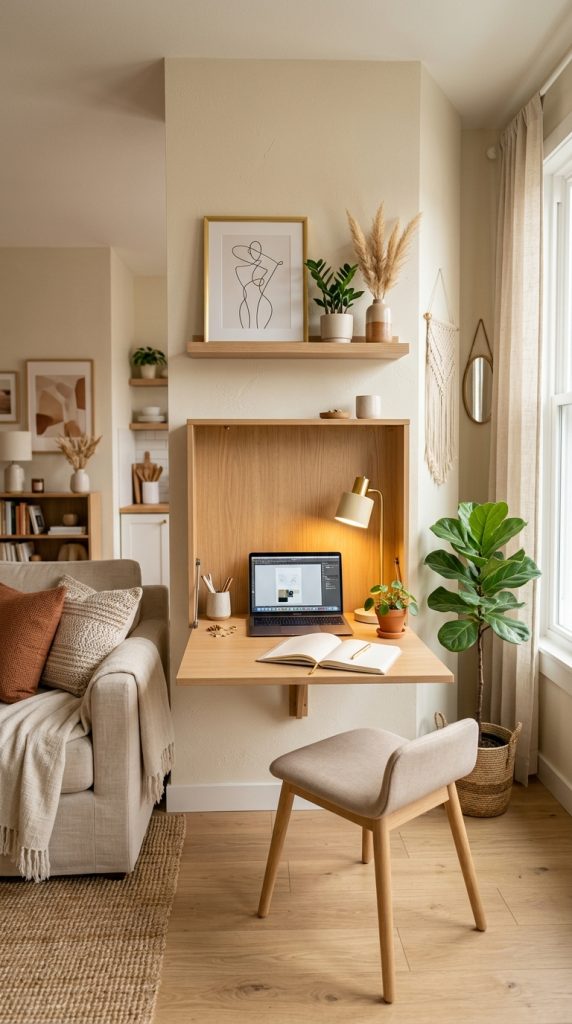
If you work or study at home but do not have enough room for a dedicated office, a fold-down wall desk can be a brilliant solution.
When opened, it provides a functional workspace.
When closed, it takes up very little room.
Some designs also include shelves or compartments for storing stationery.
What You Need
- Fold-down desk
- Secure wall mounting
- Compact chair
- Small storage containers
- Desk lamp
- Cable organizer
Step-by-Step
- Identify a suitable wall.
- Make sure the desk can open fully.
- Check that the wall can support the installation.
- Mount the desk securely.
- Add a compact chair.
- Organize cables.
- Store office supplies inside the desk if compartments are available.
Styling the Workspace
Choose a desk finish that matches the surrounding room.
Natural wood can create warmth.
White can make the area feel lighter.
Black can create a sophisticated appearance.
Add one small lamp.
Avoid covering the desk with unnecessary decorations.
When the desk is closed, the surrounding wall can remain visually clean.
A framed artwork or small shelf nearby can help integrate the workspace into the room.
This is particularly effective in apartments where the living room has to serve as both a home office and relaxation space.
6. Choose a Storage Bench for the Entryway
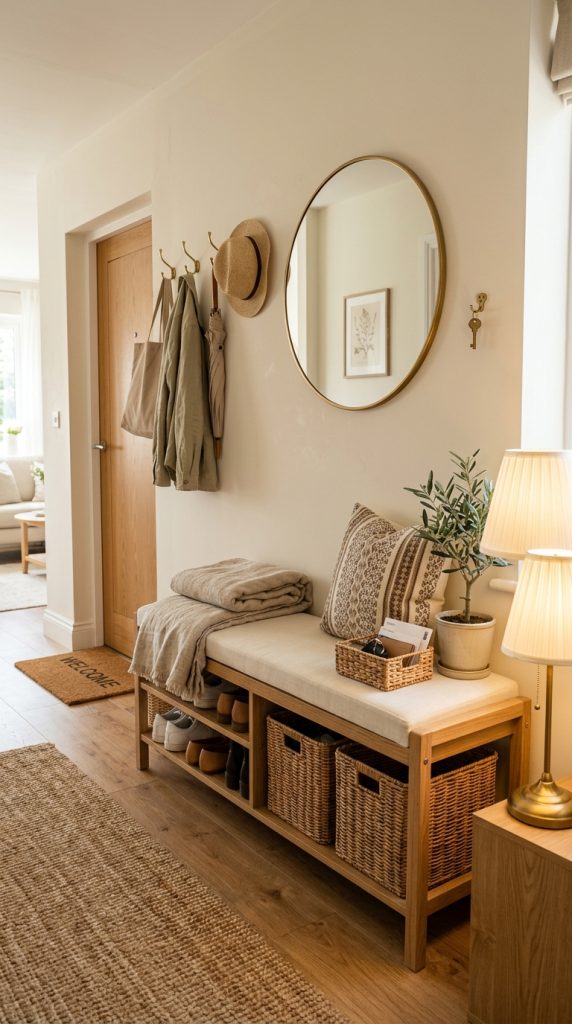
Entryways in small homes often become cluttered with shoes, bags, coats, and everyday accessories.
A storage bench can solve several problems simultaneously.
It provides a place to sit while putting on shoes and creates hidden storage underneath.
What You Need
- Storage bench
- Cushion
- Shoe storage
- Small basket
- Wall hooks
- Mirror
Step-by-Step
- Measure the entryway width.
- Choose a narrow bench.
- Make sure doors can open comfortably.
- Store shoes or bags inside.
- Add a soft cushion if desired.
- Install hooks above the bench.
- Add a mirror above it.
This creates a complete entryway station using a relatively small footprint.
The bench provides seating.
The storage compartment hides clutter.
The hooks provide vertical storage.
The mirror adds functionality and can make the entryway feel larger.
Styling Tip
Keep the top of the bench simple.
A small cushion, one basket, and perhaps a decorative pillow are enough.
Too many objects can make the entryway feel crowded.
7. Use Nesting Tables Instead of a Large Coffee Table

Nesting tables are ideal for people who occasionally need additional surfaces but do not want a large coffee table taking up space permanently.
Several smaller tables can fit underneath one another.
When you need additional surfaces, simply separate them.
What to Look For
- Lightweight construction
- Different heights
- Compact footprint
- Stable bases
- Coordinating finishes
How to Use Them
Keep the largest table beside or in front of the sofa.
Slide the smaller tables underneath.
When guests arrive, pull the smaller tables out.
Use them for drinks, snacks, books, or decorative items.
Afterward, return them to their original position.
Why They Work
Traditional coffee tables occupy one large footprint.
Nesting tables provide more flexibility.
They can also be moved around the room easily.
A small table can become a bedside table.
Another can serve as a plant stand.
Another can sit beside a chair.
This flexibility is particularly useful when you frequently change your room arrangement.
Round nesting tables can also make a compact room easier to navigate because they do not have sharp corners.
8. Add a Storage Bench at the End of the Bed

A bench at the foot of the bed can provide seating, storage, and decorative balance.
In a small bedroom, this can be much more useful than adding a separate chair.
Choose a bench with a lift-up seat or internal storage.
What to Store
Use it for:
- Extra blankets
- Bed linens
- Pillows
- Seasonal clothing
- Bags
- Towels
Step-by-Step
- Measure the width of your bed.
- Choose a bench slightly narrower than the bed.
- Leave enough walking space around it.
- Select a fabric or finish that coordinates with the bedding.
- Use the storage compartment for soft items.
- Keep the top mostly clear.
A soft upholstered bench can create a luxurious bedroom appearance.
A wooden storage bench can create a more natural or rustic atmosphere.
A woven bench can introduce texture.
Important Consideration
Do not choose a bench that is too deep.
In a small bedroom, excessive depth can reduce walking space.
The goal is to add functionality without creating another obstacle.
9. Choose a Narrow Console That Can Become a Dining or Work Area
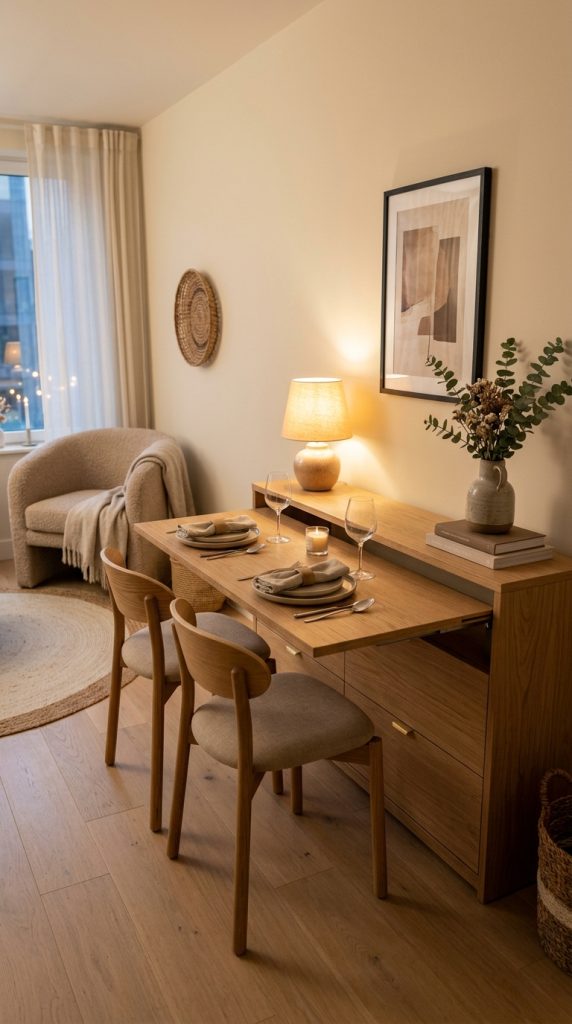
A narrow console table can be surprisingly multifunctional.
It can serve as an entryway table, living-room console, workspace, or even a small dining surface depending on its design.
This is especially useful in open-plan apartments.
What to Look For
Choose a console with:
- Slim depth
- Storage drawers
- Extendable surface if possible
- Durable construction
- Neutral finish
- Easy-to-clean surface
An extendable console can remain compact against a wall most of the time.
When you need a larger surface, it can be expanded.
Step-by-Step
- Place the console against an available wall.
- Keep decorative accessories minimal.
- Use drawers for small items.
- Add a stool or compact chair nearby.
- Extend the table when needed.
- Return it to its narrow form afterward.
This allows one piece of furniture to support several activities.
During the day, it can function as a decorative console.
When working, it can become a desk.
When entertaining, it can potentially provide additional dining space if designed for that purpose.
Styling
Place a mirror or artwork above it.
Add one lamp.
Include a small vase or plant.
Use a tray to organize small objects.
The result can look elegant even when the furniture is highly functional.
10. Use a Room Divider That Also Provides Storage
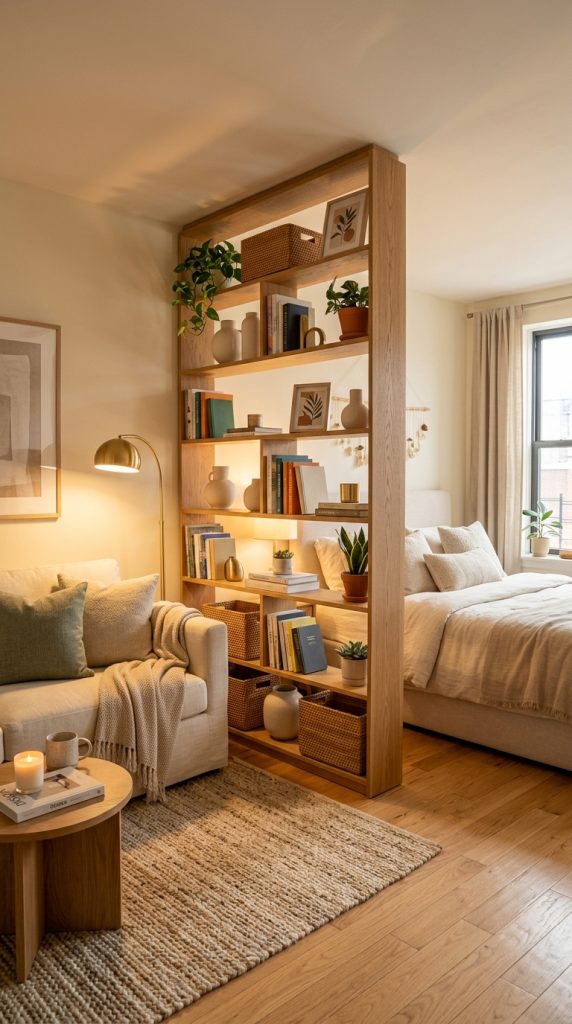
Open-plan living can be challenging in a small home.
You may need to separate your bedroom from your living room or your workspace from your relaxation area.
Instead of using a solid wall, choose furniture that doubles as a room divider.
A bookcase, open shelving unit, or storage cabinet can create separation while providing additional storage.
What You Need
- Open bookshelf
- Storage cube unit
- Freestanding shelving
- Baskets
- Books
- Plants
- Decorative boxes
Step-by-Step
- Identify where you need visual separation.
- Measure the area carefully.
- Choose an appropriately sized shelving unit.
- Position it so that it does not block natural light.
- Use baskets to hide clutter.
- Leave some shelves open.
- Add plants and decorative objects.
Why Open Shelving Works
An open shelf can divide a room without making either side feel completely enclosed.
Light can still pass through.
The room maintains a sense of openness.
At the same time, the shelving provides valuable storage.
For example, in a studio apartment, the shelf could separate the sleeping area from the living area.
One side could hold books and decorative objects.
The other could store baskets containing clothing or personal belongings.
The result is a flexible divider that performs both a decorating and organizational role.
How to Choose Multifunctional Furniture for a Small Space
Before buying multifunctional furniture, measure everything.
Measure the room.
Measure doorways.
Measure hallways.
Measure the furniture itself.
If the furniture expands or folds, measure the expanded dimensions as well.
This prevents one of the most common small-space decorating mistakes: buying furniture that technically fits but makes the room impossible to use comfortably.
Think about movement.
You should be able to walk around your furniture without constantly bumping into corners.
You should be able to open drawers.
Doors should open fully.
Fold-out furniture should have enough space to operate.
The second consideration is quality.
Because multifunctional furniture is used for several purposes, it may experience more wear than traditional furniture.
Look for sturdy construction and reliable mechanisms.
A fold-down desk needs strong hinges.
A storage bed needs durable drawers.
A sofa bed needs a comfortable mechanism.
A lift-top table needs a stable lifting system.
Do not choose a piece solely because it performs many functions.
It still needs to perform those functions well.
How to Make Multifunctional Furniture Look Stylish
The key is to avoid making your home look like every object has been chosen purely for practical reasons.
Style multifunctional furniture just as you would style ordinary furniture.
Add textiles.
Use coordinated colors.
Introduce natural materials.
Choose attractive hardware.
Keep surfaces uncluttered.
For example, a storage ottoman can look sophisticated with a woven tray on top.
A storage bench can look elegant with a textured cushion.
A sofa bed can look like a normal luxury sofa when styled with beautiful pillows.
A storage bed can look sophisticated with layered bedding.
A bookshelf divider can become a decorative focal point when styled with plants, books, ceramics, and artwork.
Best Multifunctional Furniture for Studio Apartments
Studio apartments require especially careful furniture choices because one room may need to function as a bedroom, living room, dining room, office, and storage area.
Some of the most useful options include:
- Sofa beds
- Storage ottomans
- Lift-top tables
- Fold-down desks
- Storage beds
- Room-divider shelving
- Nesting tables
- Folding dining tables
Try to create zones.
Use a rug to define the living area.
Use shelving to separate sleeping space.
Use lighting to distinguish different functions.
Use furniture placement to create natural boundaries.
You do not necessarily need physical walls to make different areas feel separate.
Multifunctional Furniture for Small Bedrooms
Small bedrooms benefit from furniture that uses hidden space.
Choose a storage bed.
Use a storage bench.
Install floating shelves.
Choose a compact bedside table with drawers.
Consider wall-mounted lighting.
Use a mirror with hidden jewelry storage if appropriate.
Avoid oversized dressers.
If your closet is limited, use under-bed storage for seasonal items.
Keep the center of the room relatively clear.
This creates a stronger sense of space.
Multifunctional Furniture for Small Living Rooms
Start with the sofa.
If you host guests, consider a sofa bed.
Add a storage ottoman.
Use nesting tables.
Choose a lift-top coffee table if you work from home.
Use a narrow console against the wall.
Add a storage cabinet rather than multiple small shelves.
Keep the furniture arrangement simple.
A small living room often looks larger when there is a clear central pathway.
Multifunctional Furniture for Small Dining Areas
If you do not have a dedicated dining room, consider:
- Extendable dining tables
- Drop-leaf tables
- Folding tables
- Wall-mounted tables
- Storage benches
- Stackable chairs
An extendable table can remain compact during everyday use and expand when guests arrive.
A wall-mounted table can disappear when you need additional floor space.
A storage bench can provide seating without requiring several individual chairs.
Multifunctional Furniture for Renters
Renters often cannot make permanent structural changes.
Fortunately, multifunctional furniture does not require major renovations.
Choose freestanding pieces.
Use storage ottomans.
Choose movable shelving.
Use folding desks.
Select portable room dividers.
Use nesting tables.
Add rolling carts where appropriate.
This allows you to create flexible zones without changing the structure of the home.
Common Mistakes to Avoid
One common mistake is buying furniture that is too large.
A multifunctional item is not automatically space-saving.
Always consider its footprint.
Another mistake is choosing furniture with complicated mechanisms.
If you avoid using the feature because it is difficult to operate, it is not truly functional.
Another problem is excessive storage furniture.
You still need open space.
Do not fill every wall with cabinets simply because storage is available.
Finally, avoid sacrificing comfort.
A sofa bed should still be comfortable as a sofa.
A desk should have a usable working height.
A storage bench should be comfortable enough to sit on.
A coffee table should remain stable.
Functionality and comfort should work together.
How to Create a Cozy Small Space With Multifunctional Furniture
Multifunctional furniture does not mean your home has to look minimalist or cold.
You can create a very cozy atmosphere.
Use warm textiles.
Add soft rugs.
Choose warm wood.
Use cream and beige tones.
Add cushions.
Include plants.
Use warm lamps.
Display a few favorite objects.
The trick is to keep the number of large furniture pieces under control while using textiles and accessories to create softness.
A small room can feel incredibly inviting when it has the right balance between functionality and comfort.
Budget-Friendly Ways to Use Multifunctional Furniture
You do not always need to purchase expensive specialized furniture.
Look at what you already own.
A sturdy wooden bench can become both seating and storage if baskets are placed underneath.
A small desk can become a dining table.
A console can become a workspace.
A trunk can become a coffee table.
A stool can become a side table.
A bookcase can become a room divider.
A basket can function as both storage and decoration.
Secondhand stores can also be excellent places to find multifunctional pieces.
Look for solid furniture that can be repurposed.
With paint, new hardware, or fresh upholstery, an older item can become a beautiful part of your small-space interior.
Final Thoughts
Small spaces require thoughtful decorating, but they do not require boring or uncomfortable furniture.
The right multifunctional pieces can completely change the way you experience your home.
Instead of asking whether you have enough space, start asking whether your furniture is using the space efficiently.
A storage ottoman can provide seating, storage, and a table surface.
A sofa bed can turn a living room into a guest bedroom.
A lift-top coffee table can become a workspace.
A storage bed can eliminate the need for additional bedroom furniture.
A fold-down desk can create a home office without permanently taking over the room.
A storage bench can organize an entryway.
Nesting tables can provide extra surfaces when needed and disappear when they are not.
A bench at the foot of the bed can provide both seating and storage.
An extendable console can serve several purposes.
And a storage bookshelf can divide a room while keeping it organized.
These solutions are particularly valuable because they allow one piece of furniture to do the work of several.
However, the goal should never be to fill your home with clever furniture simply because it is multifunctional.
Every piece should solve an actual problem.
Think about how you live.
If you rarely have guests, you may not need a sofa bed.
If you never work from home, a fold-down desk might not be necessary.
If you have plenty of storage, you might prefer a simpler coffee table.
The best furniture is furniture that fits your lifestyle.
Measurements are equally important.
Always measure your available space before purchasing.
Consider the furniture’s normal size and its expanded size.
Check doorways.
Check walking paths.
Check whether drawers can open.
Check whether a sofa bed can fully extend.
Check whether a folding desk can open comfortably.
A beautiful piece of furniture is only useful if you can actually use it.
Style should also remain part of the decision.
Small homes can still look sophisticated.
Choose colors that complement your existing decor.
Use warm neutrals.
Introduce natural wood.
Add textured fabrics.
Use a few carefully selected decorative accessories.
Keep surfaces organized.
Layer warm lighting throughout the room.
When practical furniture is combined with thoughtful styling, it no longer looks purely functional.
It becomes part of the home’s personality.
One of the easiest ways to make multifunctional furniture look expensive is to avoid clutter.
Do not cover every surface.
Instead, choose one focal point.
For example, style your storage ottoman with a beautiful tray.
Style your storage bench with one textured cushion.
Style your room-divider shelf with a mixture of books, plants, ceramics, and artwork.
Keep everything else relatively simple.
Remember that empty space is valuable.
A small home should have enough room for you to move comfortably.
You should not have to navigate an obstacle course simply because every corner contains furniture.
The best small-space design creates breathing room.
Multifunctional furniture also works particularly well when combined with vertical decorating.
Use wall-mounted shelves above a desk.
Place artwork above a storage bench.
Use a mirror above a console.
Install wall lighting instead of using bulky floor lamps where appropriate.
This allows you to maximize both horizontal and vertical space.
Another important strategy is to create zones.
Even if your home is only one room, you can create separate areas for sleeping, working, dining, and relaxing.
A rug can define the living area.
A bookshelf can separate the bedroom.
A fold-down desk can create a workspace.
A compact table can create a dining zone.
Different lighting can reinforce each area.
The result is a home that feels more organized even though the actual floor plan has not changed.
Ultimately, decorating a small home successfully is about making intentional choices.
You do not need more furniture.
You need better-functioning furniture.
You do not need a larger room.
You need to use your existing space more effectively.
You do not need an unlimited budget.
You need pieces that provide genuine value.
When every major furniture item serves more than one purpose, your home becomes easier to organize and more comfortable to live in.
A small space can still have a beautiful sofa, a cozy bedroom, a useful workspace, comfortable seating, attractive storage, and a welcoming atmosphere.
The secret is choosing pieces that work harder while taking up less room.
With the right combination of storage, flexibility, comfort, and thoughtful styling, even a compact apartment can feel spacious, organized, cozy, and beautifully designed.