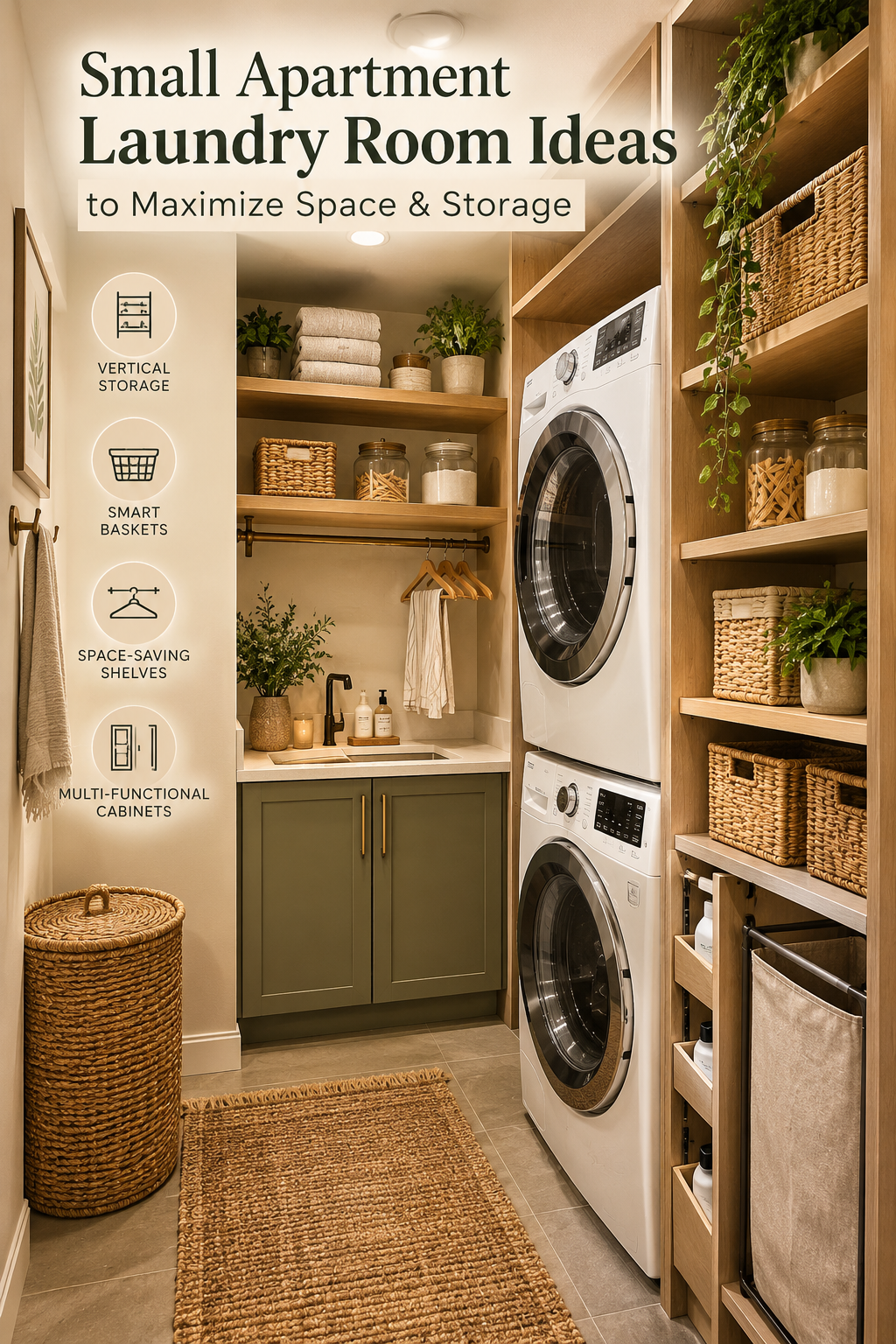
Small apartment laundry rooms can be challenging to organize, especially when you need to fit a washer, dryer, laundry supplies, cleaning products, and storage into a limited area. Whether your laundry space is tucked inside a kitchen, hidden in a hallway closet, positioned in a bathroom corner, or arranged along a narrow utility wall, thoughtful design can make it feel more spacious, functional, and attractive. The secret is to use every available inch wisely while keeping the room easy to maintain.
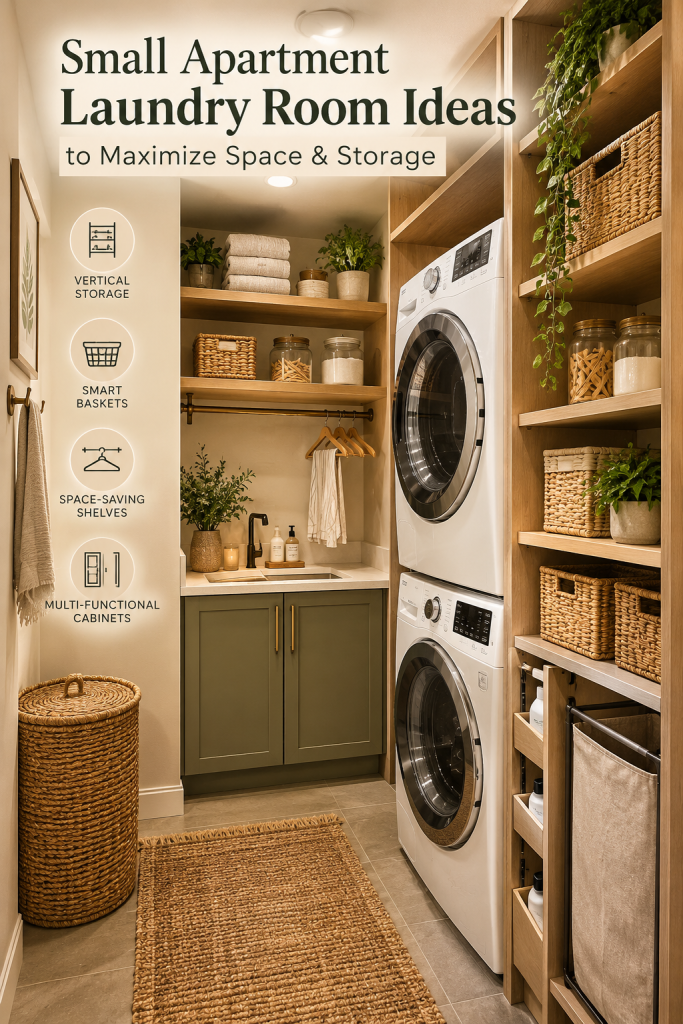
The best small apartment laundry room ideas combine smart storage, practical layouts, and beautiful details. Instead of allowing detergent bottles, baskets, and cleaning supplies to occupy every surface, create specific places for the items you use regularly. Wall-mounted shelves, slim cabinets, over-the-washer storage, rolling carts, and folding surfaces can help transform an awkward laundry corner into an organized part of your home.
A small laundry room does not need to look like a crowded utility area. With a coordinated color palette, attractive containers, suitable lighting, and carefully selected accessories, even a compact laundry closet can feel intentional and polished. Cream, warm white, light beige, pale oak, and soft gray are useful choices when you want a bright and uncluttered appearance. Natural textures, simple hardware, and a few decorative details can add warmth without taking up valuable space.
Storage should always begin with the layout. Before buying organizers, measure the available wall space, the width and depth of your appliances, and the clearance needed for doors, drawers, and ventilation. A narrow space may benefit from vertical shelving, while a laundry closet might need slim pull-out storage or a shelf above the machines. If your apartment has a stacked washer and dryer, the area beside the appliances can become useful storage for detergent, stain removers, and laundry accessories.
Another important consideration is accessibility. Everyday supplies should be easy to reach, while seasonal products and extra linens can be stored higher up. Heavy detergent containers are generally best kept on a stable, accessible shelf rather than an overhead ledge. Laundry baskets should be easy to move, and folding surfaces should not block appliance doors or essential walkways. Good organization makes the room more convenient, not merely more attractive.
Renters can also create a beautiful laundry space without making permanent changes. Freestanding shelving, removable labels, portable carts, countertop boards designed for the specific appliances, and lightweight baskets offer flexible solutions. Before drilling into walls, installing shelves, or modifying plumbing, check your lease and any building requirements. Avoid placing heavy items on unstable shelves or blocking appliance ventilation and service access.
Lighting and color can make a noticeable difference in a compact laundry area. Bright, even illumination helps you sort clothes, check stains, and read product labels. Under-shelf lighting can brighten a work surface, while light-colored cabinetry and coordinated containers reduce visual clutter. If your laundry room has no window, use suitable artificial lighting and keep reflective surfaces clean to help the space feel brighter.
The most effective small laundry room designs also reduce unnecessary movement. A basket near the washer, a place for stain-treatment products, a folding surface, and an accessible drying rack create a practical routine. When each task has a convenient location, laundry becomes easier to manage even when the room is small.
You do not need to renovate the entire space to achieve these results. Sometimes adding one shelf, relocating supplies into matching containers, or introducing a narrow rolling cart is enough to improve the layout. The key is to choose solutions that fit the dimensions of your apartment and the way you actually do laundry.
In this guide, you will discover 15 small apartment laundry room ideas to maximize space and storage. Each idea focuses on a practical design approach, including vertical organization, hidden storage, folding stations, renter-friendly improvements, and attractive finishing touches. You can use one idea to solve a specific problem or combine several to create a compact laundry area that looks organized, feels spacious, and works efficiently every day.
1. Install Wall-Mounted Shelves Above the Washer and Dryer
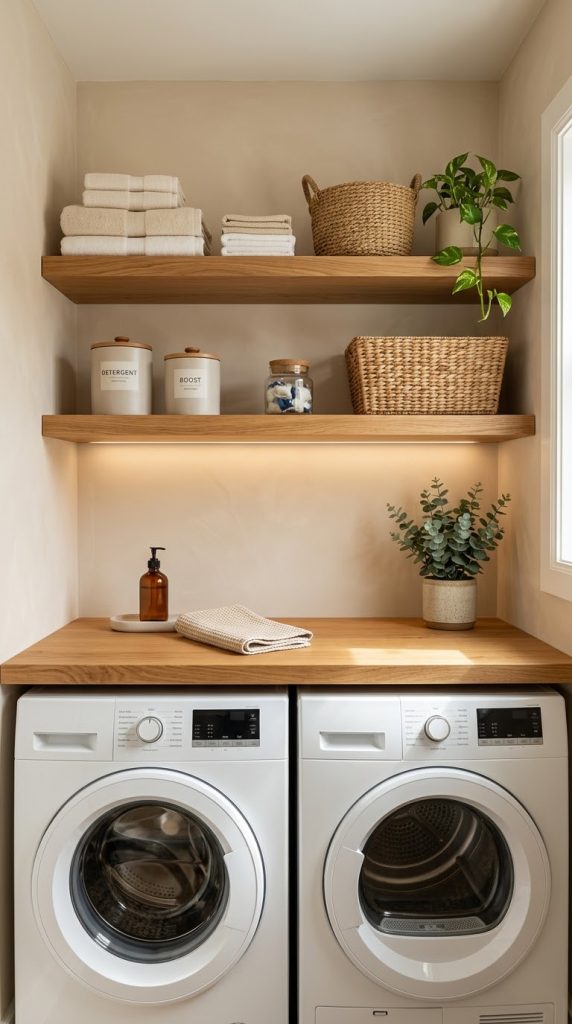
Wall-mounted shelves are one of the most effective ways to increase storage in a small apartment laundry room without taking up additional floor space. The wall above the washer and dryer often remains unused, even though it can accommodate detergents, fabric-care products, small baskets, and other laundry essentials.
Begin by measuring the available wall width and the height above your appliances. Consider the manufacturer’s clearance requirements, appliance vibration, access to controls, and the space needed to open lids or doors. Choose shelf dimensions that provide useful storage without making the area feel cramped.
For a warm, modern appearance, consider pale oak shelves against a cream or warm-white wall. Natural wood introduces texture, while light walls help the small room feel brighter. If your apartment has a more contemporary style, white shelves with simple brackets can create a clean, understated look.
Organize the shelves according to how often you use each item. Keep everyday detergent, stain remover, and dryer supplies on the easiest-to-reach shelf. Place spare products, extra clothespins, or seasonal items higher up if the shelf is suitable for their weight. Heavy bottles should remain within a comfortable lifting range and on sturdy, properly secured surfaces.
Matching baskets can help prevent the shelves from looking cluttered. Use one container for stain-treatment products, another for laundry accessories, and a third for spare cleaning cloths. Labels make it easier to identify the contents without opening every basket.
Materials and items to use:
- Wall-mounted shelves sized for the available space
- Suitable brackets and wall fixings
- Small storage baskets
- Reusable labels
- Coordinated detergent containers, if practical
- A compact light for the work area, if needed
To keep the arrangement visually balanced, avoid filling every shelf from end to end. Leave a little open space between containers so the wall does not become visually overwhelming. A small framed print or a simple decorative object can be included if there is enough room, but practical storage should remain the priority.
Renters should check whether drilling is permitted before installing shelves. If permanent mounting is not allowed, a suitable freestanding shelving unit or an existing approved storage system may offer a safer alternative. Any shelf placed above appliances must be stable and installed in a way that accounts for appliance movement.
The finished arrangement should make supplies easy to reach while keeping the washer and dryer surfaces clear. By using the vertical space efficiently, you can create a more organized laundry area without sacrificing valuable floor space.
2. Use a Slim Rolling Cart Between Appliances
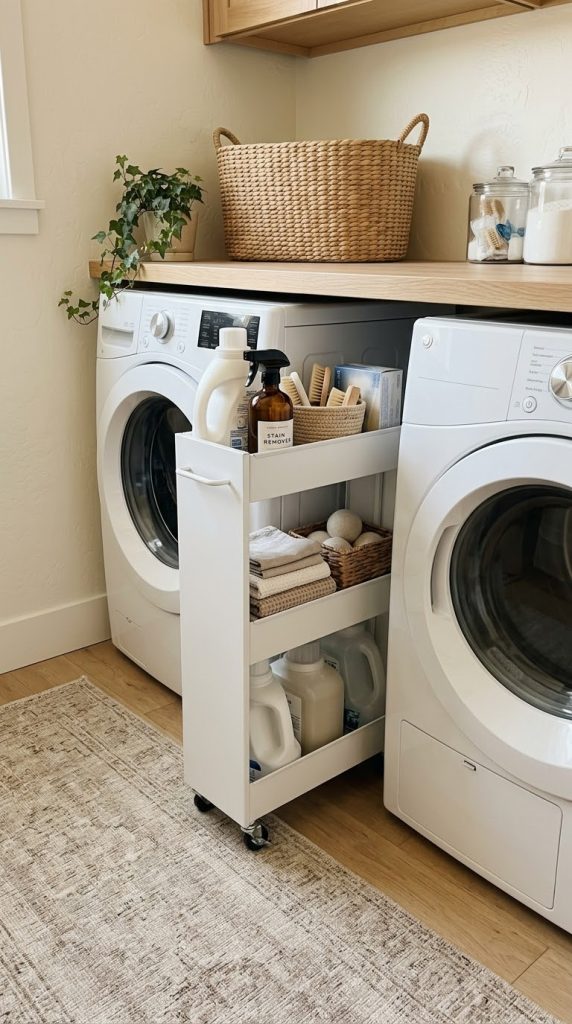
A slim rolling cart is especially useful when your washer and dryer sit side by side with a narrow gap between them. Rather than leaving this space unused, you can turn it into storage for detergent, stain removers, dryer sheets, cleaning cloths, and other small supplies.
Measure the gap carefully before purchasing a cart. Account for the appliances’ dimensions, nearby walls, hoses, cords, and any movement required for servicing. The cart should slide out smoothly without catching on pipes or interfering with appliance doors.
Choose a model with two or three shelves, raised edges, and wheels that move easily across your flooring. A narrow metal cart can suit a modern apartment, while a white or neutral plastic version may blend more quietly into the room. If you prefer a warmer aesthetic, use coordinated containers on the shelves to soften the appearance.
Organize the cart by task. Place frequently used laundry products on the top shelf, smaller accessories in the middle, and lightweight refill items or spare cloths on the bottom. Keep heavy containers low enough to make the cart stable and avoid overloading it.
Materials and items to use:
- Narrow rolling storage cart
- Small bins or removable containers
- Labels for different laundry categories
- Compact lint brush or laundry accessories
- Lightweight cleaning cloths
A rolling cart works particularly well in apartment laundry closets where permanent cabinetry would be too expensive or difficult to install. You can move it aside when you need to clean behind the appliances or access an area that must remain clear.
However, do not force a cart into a gap that is too narrow. It should not press against hoses, restrict airflow, or block access to electrical connections. If the space is extremely tight, a wall-mounted organizer may be more suitable.
To maintain an attractive appearance, avoid storing mismatched bottles loosely on every shelf. Use a small number of clearly defined categories and return items to their proper places after each load. This keeps the cart useful without turning it into another source of clutter.
A slim rolling cart is an inexpensive, flexible way to make better use of a small laundry room. It offers convenient storage, adapts to changing needs, and can be removed easily if your apartment layout changes.
3. Create a Countertop Over a Front-Loading Washer and Dryer
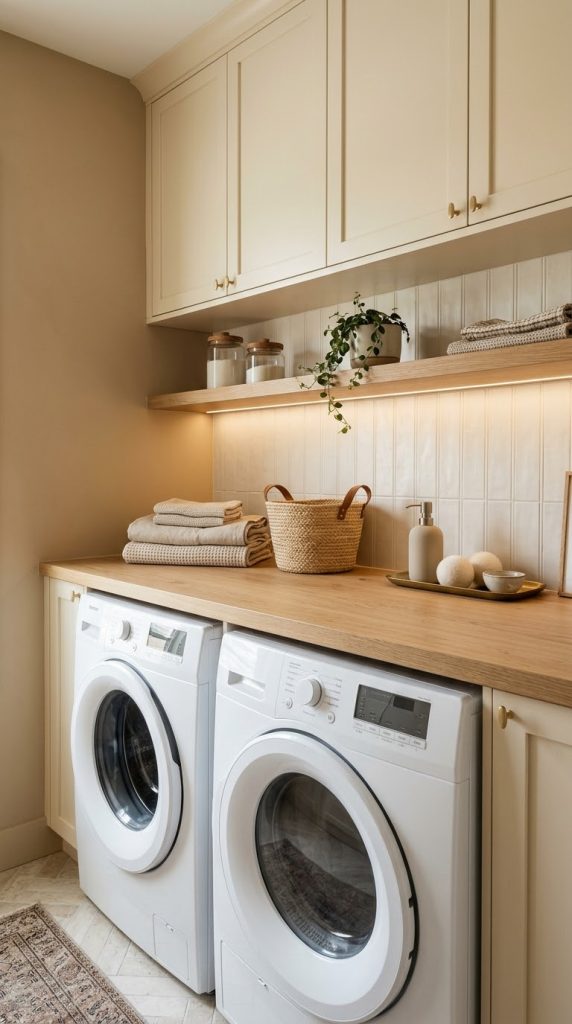
A countertop above front-loading laundry machines can create a useful folding station in a small apartment. Instead of carrying clean clothes to another room, you can fold them immediately after drying and sort them into baskets nearby.
The first step is to confirm that the countertop design is appropriate for your specific appliances. A rigid board should not obstruct ventilation, controls, detergent drawers, door openings, or access needed for maintenance. It must also be supported safely rather than resting in a way that places unintended pressure on the machines.
If the layout permits, choose a smooth countertop in white, pale oak, warm beige, or a durable laminate finish. A light surface helps maintain the airy look of a compact room, while natural wood tones introduce warmth. The material should be easy to wipe clean and suitable for the intended environment.
Keep the surface mostly clear. A small tray for laundry supplies, a compact basket for socks, or a folded cloth can be useful, but avoid turning the countertop into permanent storage for every product in the room.
Materials and items to use:
- Properly sized countertop or approved laundry worktop
- Appropriate support system
- Small sorting basket
- Compact tray for essential supplies
- Laundry hamper or folding basket
- Cleaning cloth
If your washer and dryer are positioned side by side, the shared surface can offer a generous folding area. In a particularly narrow laundry closet, a shorter or removable worktop may be more practical.
Measure the full width and depth before selecting the countertop. Ensure there is adequate access to appliance doors and that the installation can be removed or opened for servicing. If you rent, choose a removable solution that does not permanently modify the property, provided it remains stable and safe.
You can also improve the workflow by placing a clean-clothes basket beside the folding area. Fold garments into separate piles and move them directly into a bedroom or closet. This simple routine prevents clean laundry from accumulating on the washer or spilling onto the floor.
A countertop can make a small laundry room feel more like a purpose-designed workspace. It provides a practical surface, improves the daily laundry routine, and creates a clean horizontal line that helps the room appear organized.
4. Install a Tall, Narrow Storage Cabinet
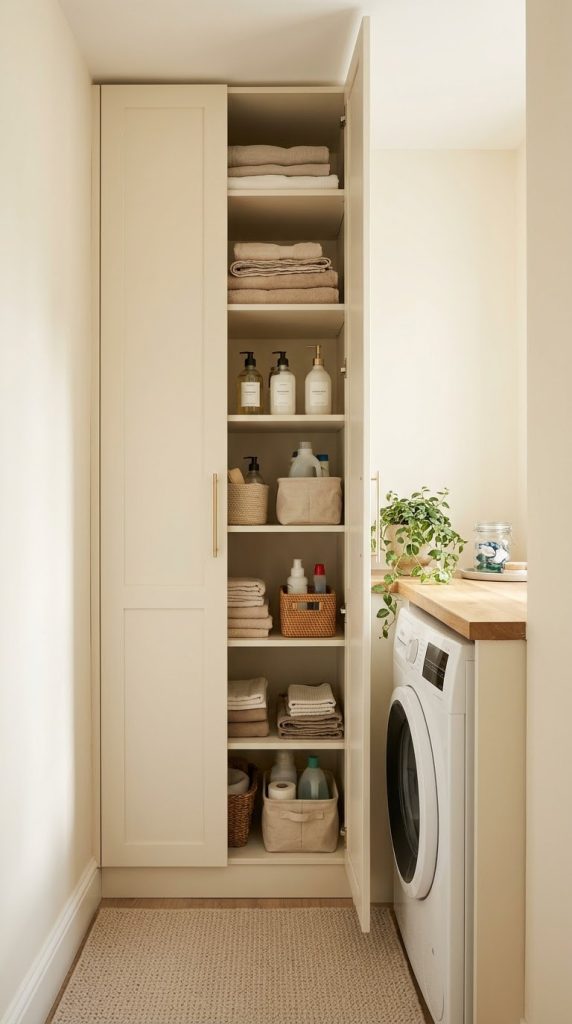
A tall, narrow cabinet is a practical solution when your laundry room has limited floor width but some available vertical space. It can store detergent, cleaning cloths, spare laundry bags, ironing accessories, and other essentials behind closed doors, making the room appear calmer and less cluttered.
Before selecting a cabinet, measure the available width, height, and depth. Consider nearby doors, appliance access, skirting boards, pipes, and electrical outlets. A cabinet should fit without narrowing the walking area or preventing the washer and dryer from opening fully.
Choose a design that complements the rest of your apartment. White cabinetry creates a bright, seamless appearance, while pale oak or warm beige can add softness. A simple door front with minimal handles often works well in modern interiors.
Inside the cabinet, divide the space into useful categories. Use adjustable shelves where possible so you can accommodate bottles of different heights. Keep heavy products on lower shelves and lightweight supplies higher up. Store products in their original, clearly labeled containers, and follow their instructions for safe storage.
Materials and items to use:
- Tall, narrow cabinet
- Adjustable shelves
- Small interior baskets
- Labels for laundry categories
- Non-slip shelf liners, if suitable
- A compact bin for accessories
A cabinet with doors is particularly useful if your laundry area is visible from the kitchen or hallway. Closing the doors conceals colorful packaging and helps the laundry area blend into the surrounding decor.
For renters, a freestanding cabinet may be easier to use than custom built-ins. Make sure it is stable and follow the manufacturer’s guidance regarding anchoring, particularly if it is tall or may tip. Do not place it where it obstructs required appliance ventilation or maintenance access.
Avoid buying a cabinet simply because it offers the most shelves. The best option is one that fits your actual supplies and allows you to retrieve them comfortably. Overfilled cabinets quickly become difficult to maintain.
A tall storage cabinet creates a more orderly environment by separating supplies from the work surface. When combined with a folding counter or wall shelves, it can provide a surprising amount of storage in a small apartment laundry room.
5. Stack the Washer and Dryer to Free Up Floor Space
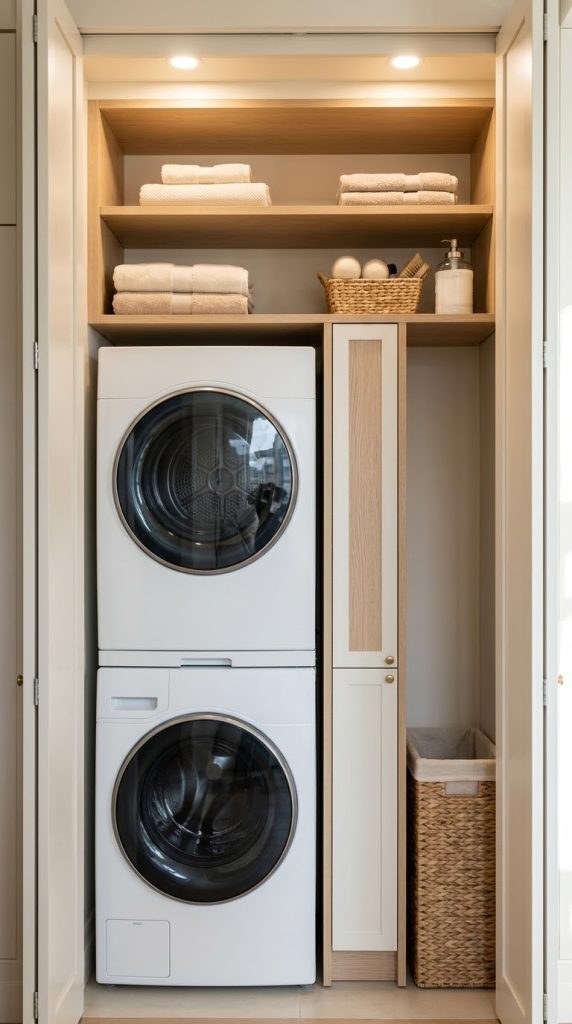
Stacking a washer and dryer can be an effective way to free up floor space in a small apartment laundry room, provided both appliances are designed and approved for stacking. The vertical arrangement reduces the width needed for the machines and may leave room for a cabinet, laundry hamper, or folding station.
Before considering this layout, check the appliance specifications. Many manufacturers require a compatible stacking kit and particular machine models. Do not simply place a dryer on top of a washer without the required equipment. The installation must be stable, suitable for the appliances, and compliant with the manufacturer’s instructions.
Once the machines are safely arranged, evaluate the newly available floor area. A narrow cabinet may fit beside the stacked appliances, or you may be able to position a rolling hamper nearby. If there is sufficient room, a small shelving unit can store everyday laundry supplies.
Materials and items to use:
- Compatible washer and dryer
- Manufacturer-approved stacking kit
- Slim laundry hamper
- Wall-mounted shelves or suitable cabinet
- Labeled storage containers
- A compact folding surface, if space allows
A stacked arrangement can also create a more visually streamlined laundry closet. Matching appliance finishes and coordinating surrounding cabinetry help the area appear intentional. White machines against pale walls create a clean appearance, while wood shelving can add warmth.
Think carefully about accessibility. The controls and loading doors should remain comfortable to reach, and the dryer should not be positioned so high that loading wet laundry becomes difficult or unsafe. If the upper appliance cannot be accessed comfortably, a different arrangement may be more suitable.
Make sure the laundry setup retains the clearances, ventilation, plumbing access, and service space required by the manufacturers. Do not use the newly freed area to store objects that block doors or emergency access.
If stacking is not possible, a side-by-side arrangement with a slim cart or wall shelves may provide a better solution. The goal is not to stack appliances at all costs; it is to choose a layout that fits the room safely and improves daily use.
When properly planned, a stacked washer and dryer can create valuable room for storage and make a compact apartment laundry area feel more efficient.
6. Add an Over-the-Door Organizer for Small Laundry Supplies
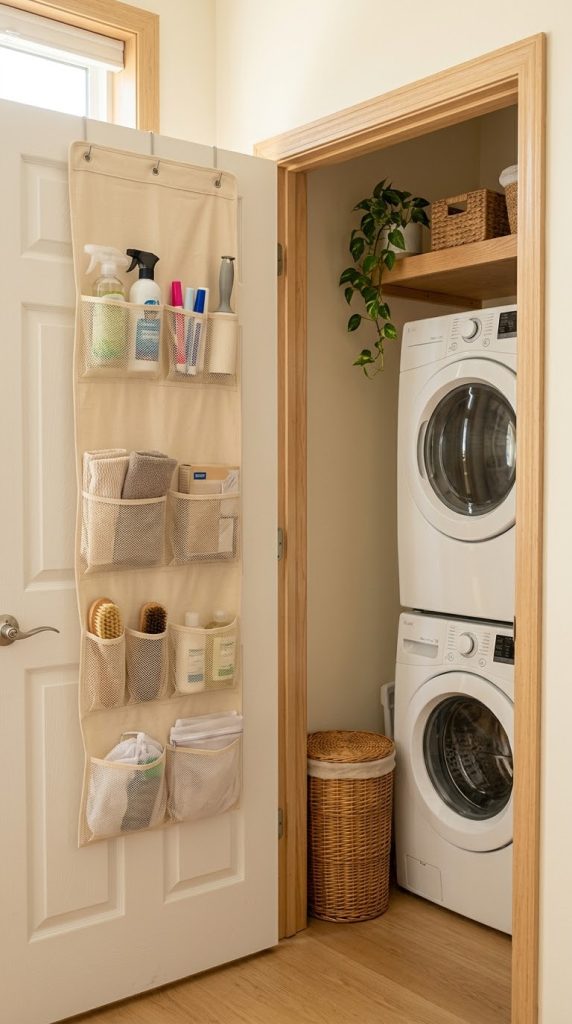
An over-the-door organizer is a convenient way to use an overlooked surface in a small laundry room. The back of a suitable cabinet door or closet door can hold lightweight accessories, allowing the main shelves and countertop to remain clear.
Choose an organizer that fits the door without preventing it from closing. Measure the door thickness, available height, and clearance from nearby walls or appliances. Some organizers use hooks, while others require a different mounting method, so confirm compatibility before purchasing.
Use the pockets or baskets for small items that are easy to lose. Clothespins, mesh laundry bags, stain-treatment brushes, lint rollers, and spare labels are good examples. Avoid placing heavy detergent bottles in a lightweight organizer unless it is specifically designed and rated for that purpose.
Materials and items to use:
- Over-the-door organizer or approved hanging rack
- Small labeled pouches or baskets
- Mesh laundry bags
- Clothespins and lint rollers
- Stain-treatment accessories
- Compact laundry instruction cards, if useful
For a clean appearance, select a neutral organizer that blends with the door. White, beige, or clear pockets can make the storage less visually noticeable. If the organizer is exposed whenever the laundry area is open, use a consistent arrangement rather than mixing unrelated products in every pocket.
Place items according to frequency of use. Frequently used accessories should be easy to reach, while occasional-use items can go higher. Keep anything sharp, hazardous, or unsuitable for children out of reach and stored according to its safety instructions.
An over-the-door organizer is particularly helpful in a rental because it may not require drilling. Nevertheless, check that the door can support the organizer and its contents without damage. Do not use it on a door that must remain unobstructed or where it could interfere with ventilation or safe access.
This solution is not intended to replace a proper cabinet for large supplies. Instead, it provides a dedicated location for small items that otherwise end up scattered across shelves or counters.
By giving these accessories a predictable home, you can reduce visual clutter and make everyday laundry tasks more efficient without using any additional floor space.
7. Use Matching Baskets to Organize Laundry Supplies
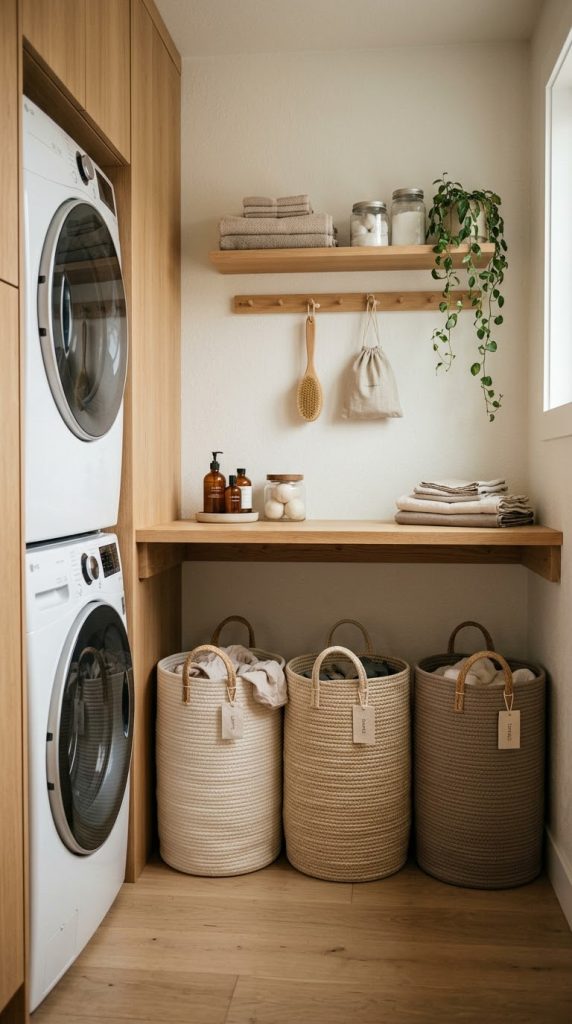
Matching baskets can transform a crowded laundry shelf into a visually coordinated storage area. They group smaller items together, conceal unnecessary packaging, and make it easier to return supplies to their proper locations.
Start by deciding what you need to store. You might create separate categories for stain-treatment products, laundry accessories, cleaning cloths, spare bags, and dryer supplies. Choose baskets that fit the shelves or cabinet you already have rather than purchasing containers first and trying to fit them afterward.
For a warm minimalist apartment, consider woven baskets, natural-fiber designs, or neutral fabric bins. White or beige plastic baskets can also work well, especially in areas where easy cleaning matters. Choose a material that suits the room’s moisture conditions and the items being stored.
Materials and items to use:
- Matching storage baskets
- Simple reusable labels
- Shelf or cabinet space
- Small dividers, where useful
- A dedicated container for laundry accessories
Labels should be short and practical. Words such as “Stain Care,” “Laundry Tools,” and “Refills” are easier to scan than lengthy descriptions. If several people share the apartment, clear labels can also help everyone return supplies to the correct place.
Avoid placing every bottle into an opaque container if you need to check product names, warnings, or instructions frequently. Keep products in their original packaging where appropriate, or ensure that any permitted storage container remains clearly labeled and compatible with the product.
Choose baskets with handles if you expect to move them regularly. A removable basket can be carried to the washer or taken out when you need to clean a shelf. However, make sure the handles are sturdy enough for the intended contents and avoid overloading them.
For a polished appearance, use a limited range of basket sizes and colors. They do not need to be perfectly identical, but a consistent style helps reduce visual noise. Leave enough space to remove each basket without disturbing the others.
Matching baskets work especially well on open shelves, where every item is visible. They can also improve the inside of a cabinet by separating products into manageable groups. This small organizational change often makes the entire laundry area feel more intentional.
8. Create a Compact Folding Station with a Wall-Mounted Drop-Down Table
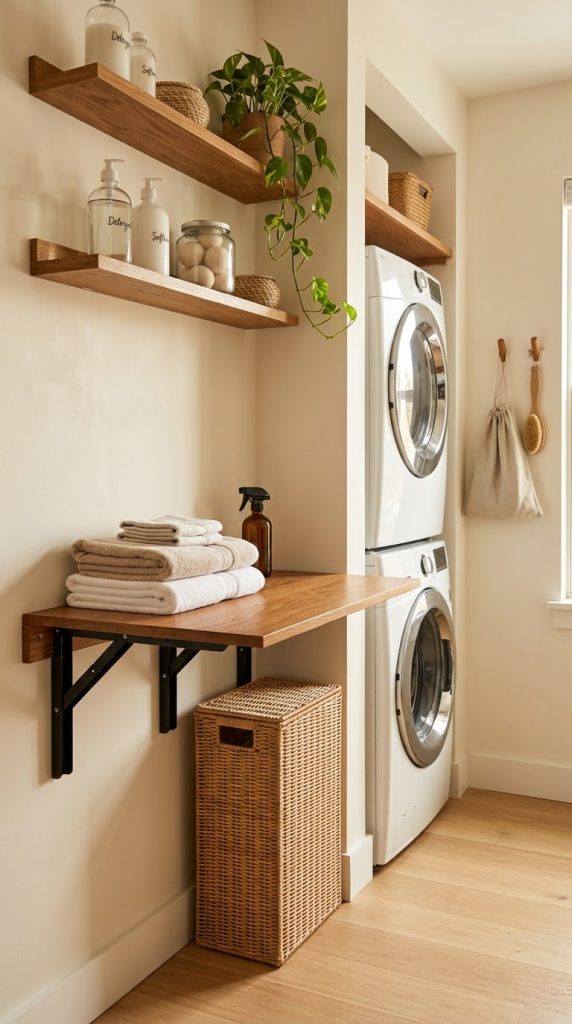
A wall-mounted drop-down table can provide a useful folding surface without permanently occupying floor space. When the table is not in use, it folds against the wall, allowing a narrow laundry area to remain open.
This idea is particularly useful in laundry closets, hallway utility spaces, and compact apartment rooms where a permanent countertop would obstruct movement. Before installation, measure the table’s open depth and the clearance needed to stand comfortably in front of it.
Choose a model designed for the expected load and suitable for your wall construction. It must be attached securely according to the manufacturer’s instructions. If you rent, obtain permission before drilling or modifying the wall. A freestanding folding table may be a better alternative if permanent installation is not allowed.
Materials and items to use:
- Wall-mounted folding table
- Compatible mounting hardware
- Small laundry basket
- Foldable hamper, if appropriate
- A nearby shelf for essentials
- Easy-to-clean work surface
Keep the folding station simple. The tabletop should be clear enough to handle a load of clothes without requiring you to move several decorative items first. A small basket nearby can hold socks or items waiting to be paired.
If the wall above the table has room, add a narrow shelf for lightweight supplies, provided the shelf does not interfere with the table’s movement. Position frequently used items within comfortable reach, but avoid placing heavy objects above the work area where they could fall.
Consider the table’s surface material as well. A smooth, durable finish is easy to wipe clean and can support everyday folding tasks. If you prefer a natural look, a suitable wood-finish surface can complement pale cabinets and cream walls.
Always fold the table away when it is not needed, especially if the laundry area doubles as a passageway. Ensure the folded table locks or remains securely in its closed position according to the product instructions.
A drop-down table offers the convenience of a dedicated folding surface without requiring a permanent piece of furniture. It makes the laundry routine more efficient while allowing the room to remain flexible.
9. Install a Pull-Out Hamper or Use a Narrow Laundry Sorter
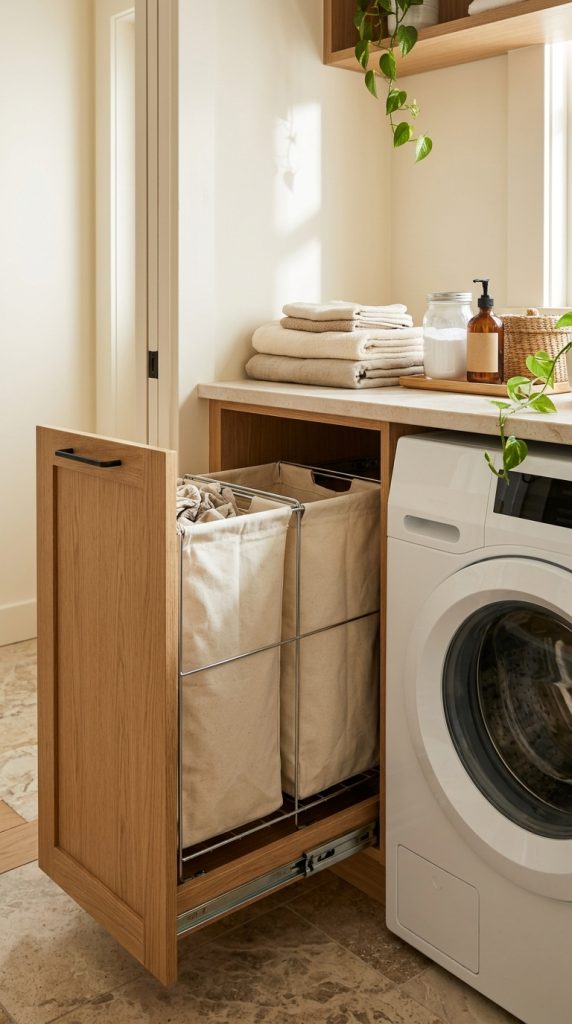
Laundry hampers can take up a surprising amount of space in a small apartment. A pull-out hamper or narrow sorter helps keep dirty clothes contained without blocking the walking area or crowding the washer and dryer.
If you have a suitable cabinet, a pull-out hamper may fit inside it. Measure the internal dimensions and confirm that the cabinet can support the selected system. Ensure that the hamper can be removed or cleaned as needed and that it does not interfere with plumbing or appliance access.
If built-in storage is not practical, choose a slim freestanding hamper with a stable base and a removable liner. A tall, narrow design may fit beside a cabinet or along a wall. For shared households, a two-section sorter can separate lights and darks, provided there is enough room for it.
Materials and items to use:
- Pull-out hamper or narrow laundry sorter
- Removable washable liner
- Simple labels, if sorting by category
- A designated space near the washer
- A small basket for delicate items
Think about your actual laundry habits before choosing the number of compartments. A large multi-section sorter may sound convenient, but it can overwhelm a very small room. If you usually wash everything together, one compact hamper may be enough.
Place the hamper where it is easy to use but does not obstruct appliance doors. A location near the entrance can work well if household members bring their laundry from bedrooms. In a closet laundry area, a foldable hamper may be preferable because it can be stored elsewhere when empty.
Choose a washable liner if you want to make cleaning easier. Empty the hamper regularly and allow damp items to dry appropriately rather than leaving wet laundry enclosed for extended periods.
For a cohesive look, select a hamper in neutral fabric, woven material, or a simple finish that complements the room. The aim is to make the container feel like part of the design rather than an object that has been squeezed into an inconvenient corner.
A suitable hamper improves organization by separating dirty laundry from clean folding areas and keeping clothes off the floor. It is a small change that can make the whole room feel more orderly.
10. Make Use of the Space Above the Laundry Closet Door
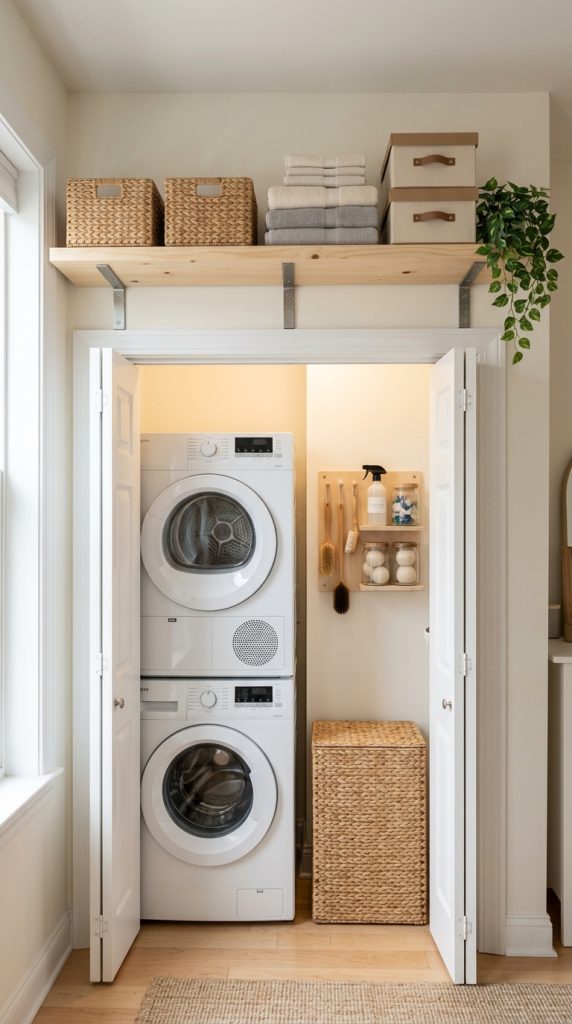
The area above a laundry closet door is often overlooked, yet it may provide useful storage for lightweight items that are not needed every day. A properly installed shelf can hold spare linens, empty laundry bags, or other suitable supplies without occupying the main work area.
First, check the available height and depth. Measure the door frame, nearby ceiling, and any existing trim. The shelf should not interfere with the door, and its contents should remain accessible without unsafe reaching.
Choose a shelf that complements the apartment’s decor. A simple white shelf can blend into the wall, while pale wood can add warmth. Use appropriate supports and wall fixings for the wall type and expected load.
Materials and items to use:
- Shelf suitable for the wall and available space
- Correct brackets and mounting hardware
- Lightweight storage baskets
- Labels for infrequently used supplies
- A suitable step stool, if needed for safe access
This upper shelf is best reserved for lightweight items you do not need every day. Keep heavy detergent containers, cleaning chemicals, and frequently used products in more accessible locations. Do not store anything that could fall onto people or appliances.
Matching baskets can make the shelf look neat and contain smaller items. Use labels so you can identify the contents without pulling every basket down. Avoid stacking loose objects near the edge.
If your apartment has a low ceiling or the shelf would obstruct the door, choose another storage solution. The available space should be used only when it can be accessed safely and without making the room feel cramped.
Renters should check permission requirements before drilling. A shelf that appears simple still needs suitable installation, particularly if it will hold multiple containers.
The benefit of this idea is that it reserves the lower part of the laundry room for tasks that require easy access while moving occasional-use items out of the way. When combined with accessible shelves and a well-organized cabinet, the space above the door can contribute to a more efficient storage system.
11. Use a Foldable Drying Rack for Small Apartments
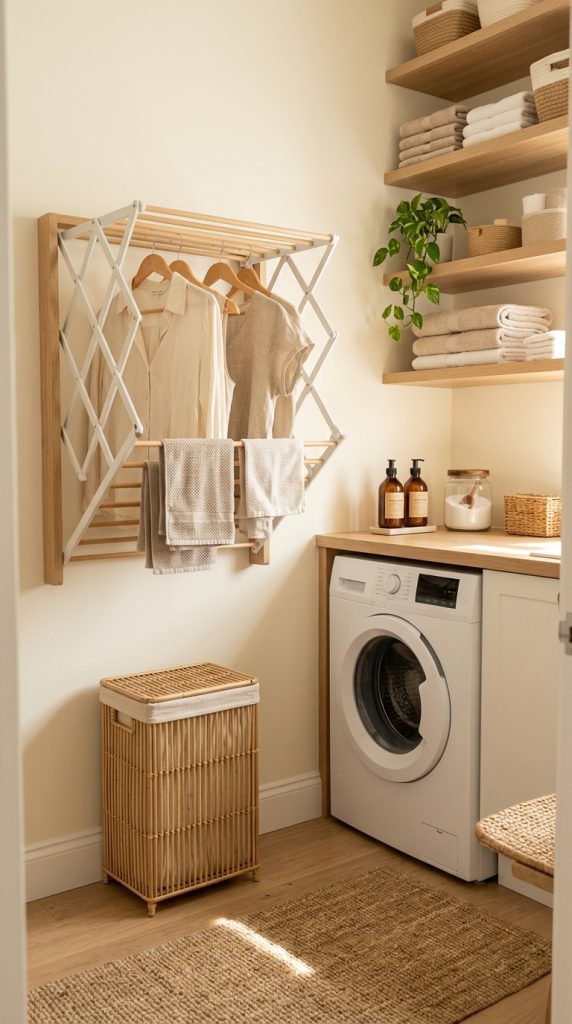
A foldable drying rack is valuable in an apartment where there is not enough space for a permanent laundry-drying station. It provides a place for delicate garments, air-drying clothes, and items that should not go into the dryer, then folds away when the job is complete.
Choose a rack according to the amount of laundry you typically air-dry. A wall-mounted folding rack may work well in a narrow laundry closet if installation is permitted and the wall can support it. A freestanding rack is more flexible because you can move it to a suitable location when needed.
Materials and items to use:
- Foldable drying rack
- Wall fixings if required by the chosen model
- Small basket for delicate garments
- Clothespins, if appropriate
- A clear drying location with suitable airflow
Before placing a drying rack in the laundry room, consider moisture and ventilation. Wet clothing releases moisture into the surrounding air, so avoid filling an unventilated closet with damp laundry. Follow the building’s guidance and use suitable ventilation to reduce condensation.
Keep the rack away from appliance vents, electrical equipment, and walkways. If you choose a wall-mounted design, make sure it folds securely and does not interfere with doors when closed.
A neutral or simple metal rack can blend into a minimalist laundry room. If the rack remains visible, store it neatly and avoid leaving unrelated products hanging from it.
To make air-drying more efficient, sort delicate items into a small basket and hang them promptly after washing. When the garments are dry, fold the rack and return it to its designated storage location. This prevents the drying equipment from becoming a permanent obstacle.
A foldable rack can also reduce the need for a large dedicated drying area. It offers flexibility for apartment living while supporting a more organized laundry routine.
12. Add a Magnetic Organizer to the Side of Metal Appliances
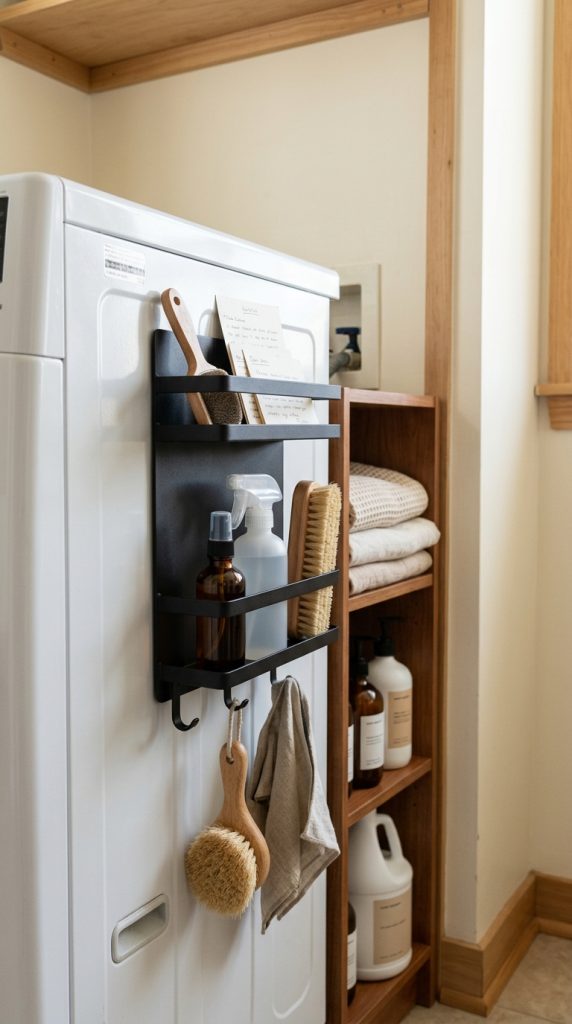
The side of a metal washer or dryer may provide a convenient place for a lightweight magnetic organizer. This can hold small accessories that are otherwise scattered across shelves or counters.
Before using this approach, check whether your appliance side is magnetic and whether the manufacturer permits accessories to be attached there. Some appliance surfaces are not suitable for magnets, and attachments should never obstruct ventilation, controls, or service panels.
Choose a compact magnetic basket, hook, or small holder designed for the intended use. It may be suitable for a lint brush, laundry bag, clothespins, or lightweight accessories. Avoid placing heavy bottles or objects on a holder that is not rated for their weight.
Materials and items to use:
- Suitable magnetic organizer
- Lightweight laundry accessories
- Small mesh bag
- Lint brush or clothespins
- A clear label, if useful
Position the organizer where you can reach it easily without blocking the appliance door. Keep the area around controls and vents clear, and do not attach anything to a surface that becomes hot or is otherwise unsuitable according to the manufacturer’s instructions.
This idea is most useful for small items rather than bulky supplies. For example, a magnetic hook may hold a reusable laundry bag, while a compact basket can keep clothespins together. These small conveniences reduce the number of objects that accumulate on the folding surface.
If your appliances are not magnetic, a nearby wall hook or approved adhesive organizer may offer a similar function. Any adhesive product should be suitable for the surface and the expected load, and renters should consider whether it could damage the finish when removed.
Keep the overall arrangement restrained. One or two useful organizers are generally better than covering the appliance sides with numerous accessories.
A magnetic organizer can make a small laundry area more functional by turning a suitable unused surface into accessible storage. It works best as part of a larger plan that already includes proper storage for heavier products and everyday essentials.
13. Create a Bright, Minimalist Look with Light Colors

Color can influence how spacious a small apartment laundry room appears. Light colors help reflect available light and create a visually consistent background, especially when the room has no window or only a narrow opening.
Warm white, cream, pale beige, and soft gray are versatile choices for walls, cabinets, shelving, and storage containers. They can make the room feel brighter without the starkness that some people associate with a completely white interior.
Start by looking at the existing surfaces. If the walls are already light, you may only need to coordinate your baskets, labels, and storage containers. If painting is permitted, choose a finish appropriate for the room’s conditions and follow the product instructions.
Materials and items to use:
- Warm-white or pale neutral wall finish, if permitted
- Light-colored shelves or cabinets
- Coordinated storage baskets
- Neutral detergent containers, where suitable
- Simple hardware
- Appropriate bright task lighting
To avoid making the room look flat, introduce a little variation through materials. Pale oak shelving, woven baskets, matte ceramic accessories, or a beige countertop can add warmth while preserving the light palette.
Consistency is important. You do not need every container to be identical, but limiting the number of colors makes open storage appear less crowded. If product packaging is visually distracting, organize items inside clearly labeled baskets while retaining essential product information.
Lighting is equally important. A light-colored room may still feel gloomy if the only fixture is dim or poorly positioned. Choose suitable illumination for the tasks you perform and ensure that any fixtures are appropriate for the location.
Avoid using mirrors or reflective surfaces without considering their practical placement. A simple reflective element may help distribute light, but it should not obstruct storage, create glare, or interfere with appliance access.
Light colors are particularly useful in laundry closets connected to a hallway or kitchen because they help the utility area blend into the surrounding apartment. Coordinated finishes create a calmer appearance when the doors are open.
The objective is to make the room feel bright and orderly, not sterile. Warm neutrals, natural textures, and a small amount of wood detail can create a welcoming atmosphere while maintaining the clean appearance that works so well in compact spaces.
14. Install Under-Shelf Lighting to Brighten the Work Area
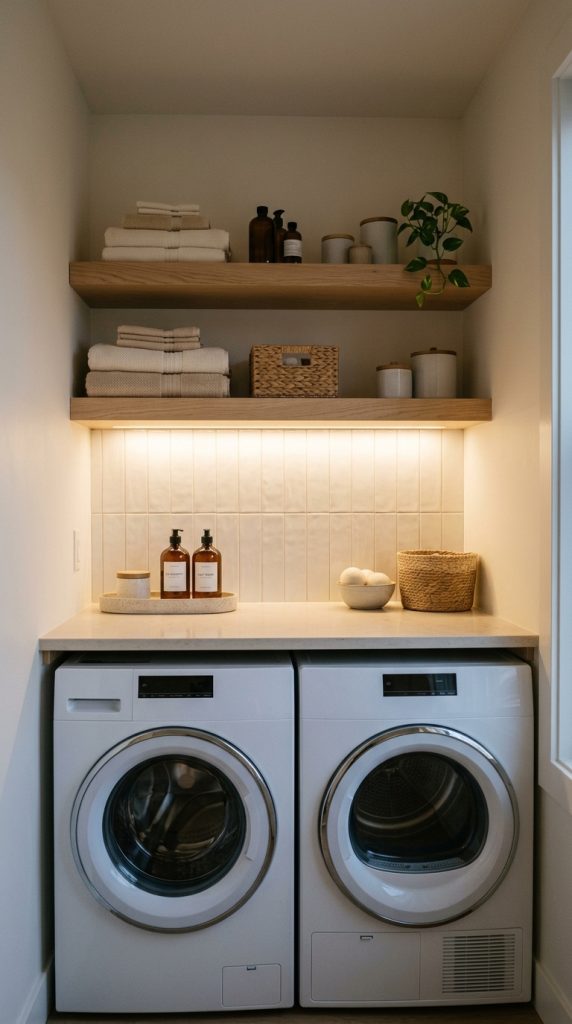
Under-shelf lighting can improve visibility in a small laundry room, especially when shelves cast shadows over the washer, countertop, or storage area. It provides focused illumination without requiring additional floor space.
Begin by identifying where you need more light. The underside of a shelf above a folding surface is a useful location, while a light inside a cabinet may help you identify supplies more easily. Choose a product designed for the intended installation and environment.
Battery-powered or plug-in lights may be suitable for some setups, depending on the location and the manufacturer’s instructions. Ensure that cords are routed safely and do not hang near moving appliance parts, hot surfaces, water, or walkways. Any fixed electrical work should be completed by a qualified professional where required.
Materials and items to use:
- Suitable under-shelf light or light strip
- Compatible mounting accessories
- Cable clips, where appropriate
- A clear work surface
- Neutral storage containers
- Existing general room lighting
Consider the light color and brightness. Neutral or warm-white lighting can create a comfortable appearance, while adequate task illumination helps you read labels, inspect garments, and handle small items. The ideal choice depends on the room’s existing light and your preferences.
Install the light so it illuminates the work surface rather than shining directly into your eyes. If the laundry room has glossy cabinet fronts, test the position to avoid uncomfortable reflections.
Keep the design simple. A discreet strip beneath a shelf can provide a polished look without drawing attention to the fixture itself. It also helps distinguish the work area from the surrounding storage, making the room easier to use.
Lighting should complement, not replace, the room’s general illumination. A small task light may not be sufficient for sorting laundry or moving around safely, so retain appropriate overall lighting.
Under-shelf lighting is particularly effective when combined with pale walls and coordinated storage. The result is a laundry space that feels more considered and is easier to use, even if it occupies only a small corner of an apartment.
15. Design a Hidden Laundry Nook with Coordinated Doors and Storage
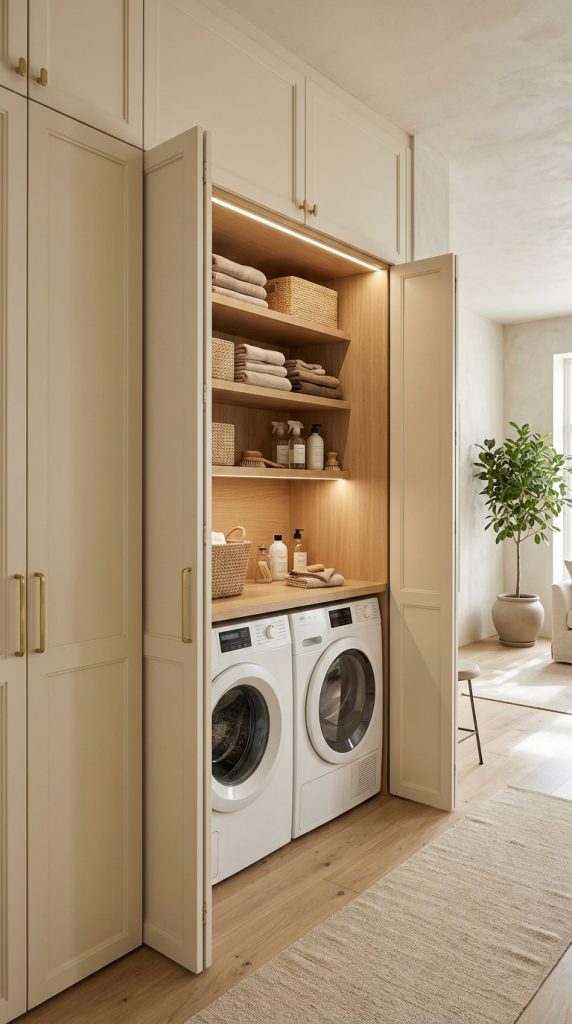
A hidden laundry nook can help a small apartment feel more organized by concealing the washer, dryer, and laundry supplies behind suitable closet or cabinet doors. This approach is especially useful when the laundry area opens directly into a kitchen, hallway, or living space.
Start by evaluating the existing layout. Measure the opening, appliance dimensions, door swing, and space required for plumbing, ventilation, and servicing. Laundry appliances need appropriate clearances and connections, so a concealed arrangement should be designed around the appliance specifications rather than forcing machines into a cabinet that is too small.
If your apartment already has a laundry closet, you may be able to improve its appearance without a major renovation. Coordinate the visible shelves, baskets, and containers, and use the existing doors to conceal the area when it is not in use.
Materials and items to use:
- Suitable existing laundry closet or approved enclosure
- Coordinated storage baskets
- Wall shelves or a narrow cabinet
- Compact hamper
- Appropriate lighting
- Simple labels and organizers
Choose a door finish that complements the rest of the apartment. Warm white or cream doors can blend into light walls, while a pale wood finish can connect the nook to natural furniture. Simple handles and clean lines maintain a minimalist appearance.
Inside the nook, create clear zones for appliances, supplies, folding, and laundry collection. Keep frequently used products accessible and avoid storing unrelated household items in the same space unless there is sufficient room.
A hidden laundry nook should not compromise ventilation, appliance safety, or maintenance access. Follow the manufacturer’s clearance requirements and any building rules, particularly for dryers that require specific ventilation arrangements. Do not block vents, pipes, or access panels with storage.
If you rent, focus on reversible changes such as removable labels, baskets, portable organizers, and approved freestanding storage. Do not alter doors, cabinetry, or connections without the necessary permission.
Finally, keep the area easy to reset. After completing laundry, return supplies to their assigned locations, remove empty packaging, and leave the folding surface clear. Closing the doors then conceals a functional, organized space rather than a collection of scattered items.
A thoughtfully arranged laundry nook makes a small apartment feel more cohesive. It allows the utility area to serve its purpose without dominating the surrounding room and provides a practical way to combine storage with a clean interior design.
Final Thoughts on Small Apartment Laundry Room Ideas
A small apartment laundry room can be attractive, organized, and functional when every part of the layout serves a purpose. Wall-mounted shelves, slim rolling carts, suitable countertops, tall cabinets, and compact hampers can increase storage without making the room harder to use.
The best solution depends on the dimensions of your apartment, the type of appliances you own, and the way you handle laundry. A stacked washer and dryer may be ideal for one layout, while a folding table or narrow cart may work better in another. Measure carefully before buying organizers, and always preserve appliance ventilation, safe access, and maintenance clearance.
For a polished appearance, coordinate storage containers and use a restrained palette of warm white, cream, beige, and natural wood. Keep everyday supplies accessible, store occasional-use items appropriately, and avoid filling every available surface. Good lighting and a clear folding area can make the room feel more comfortable without requiring a full renovation.
Renters can achieve many of these improvements through reversible solutions, including freestanding shelves, portable carts, removable labels, and foldable drying racks. Permanent shelves, cabinetry, electrical work, or appliance modifications should be handled according to the property rules and manufacturer requirements.
Ultimately, the most successful small laundry room is one that supports your daily routine. When everything has a designated place and the layout remains easy to navigate, even a compact laundry closet can feel efficient, welcoming, and beautifully organized.