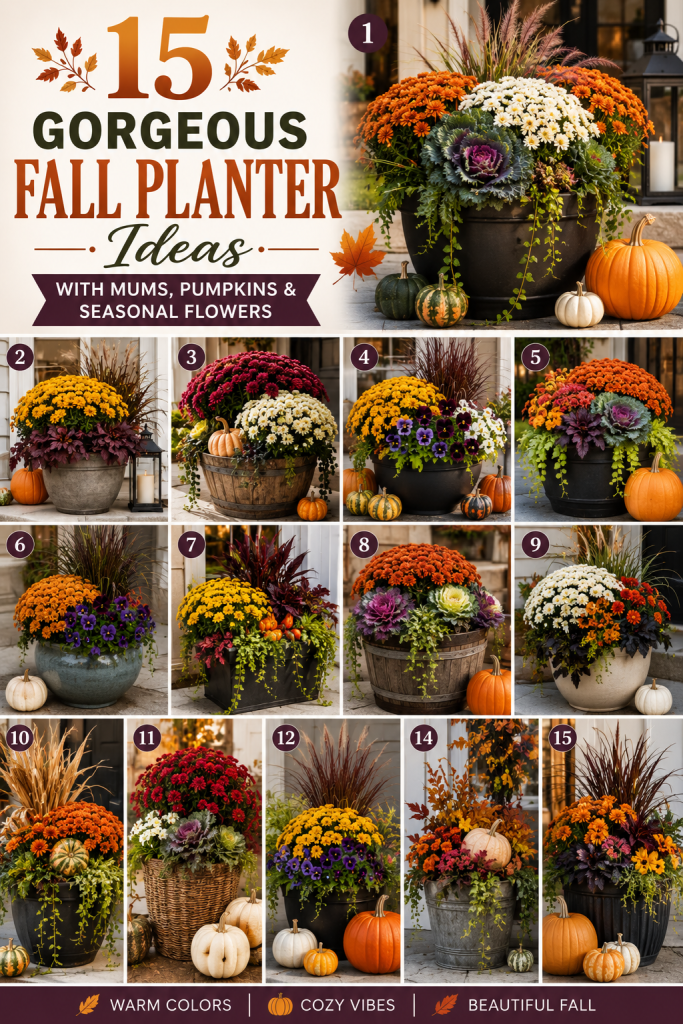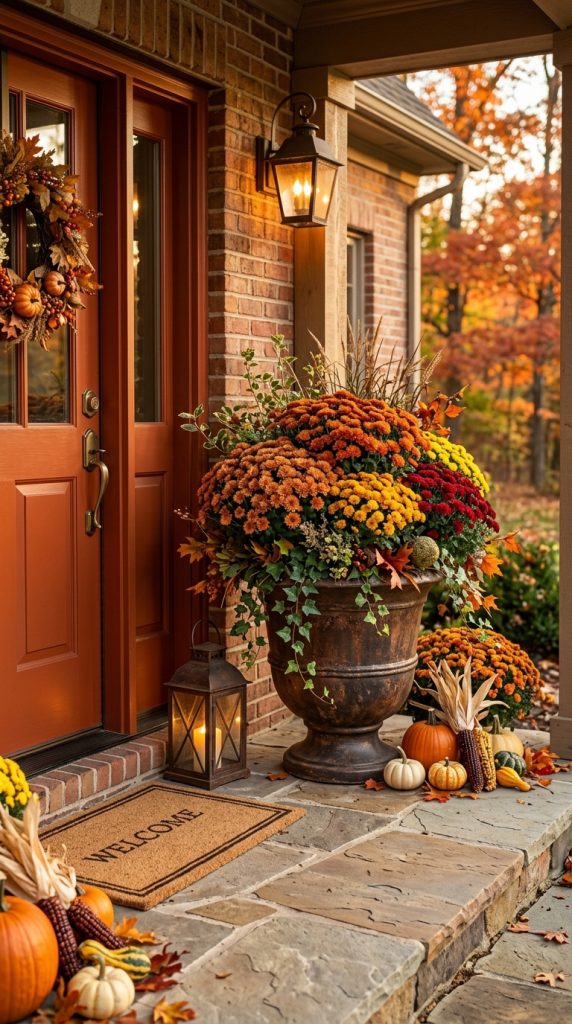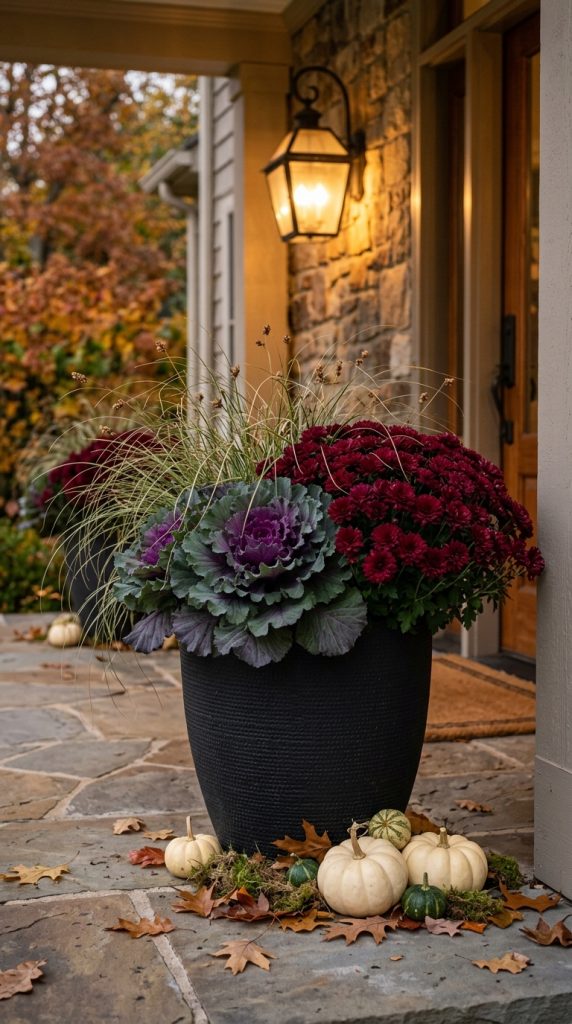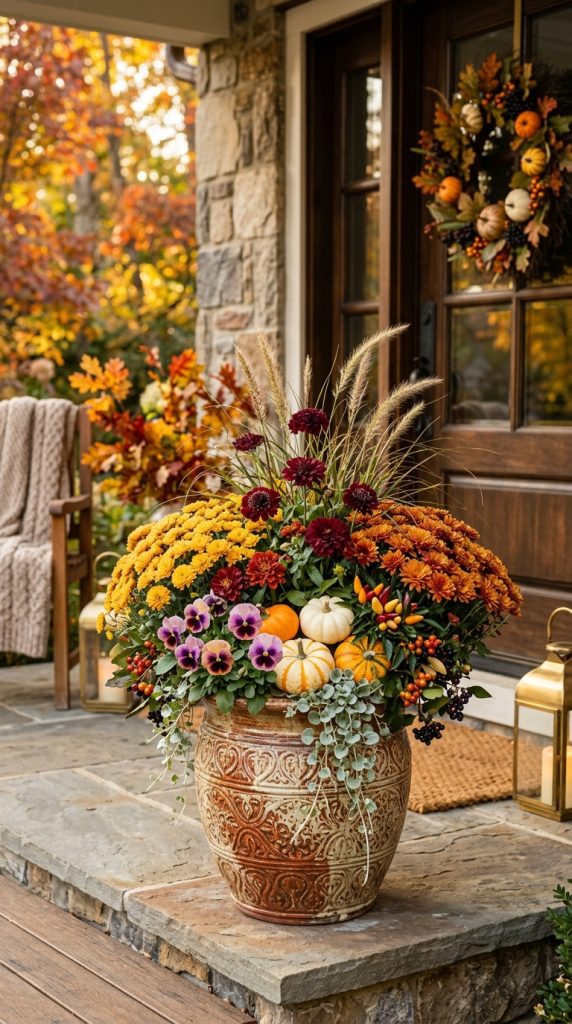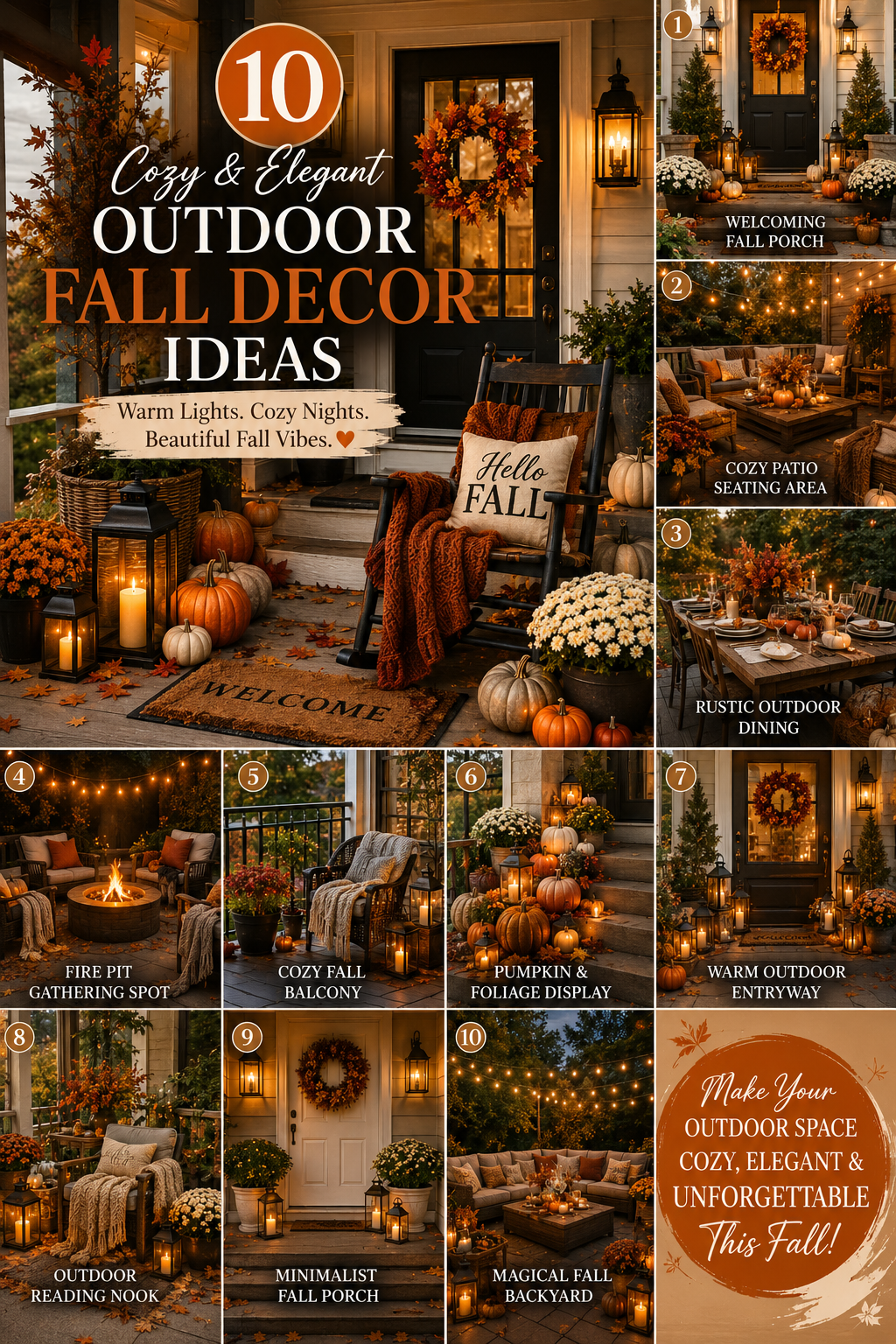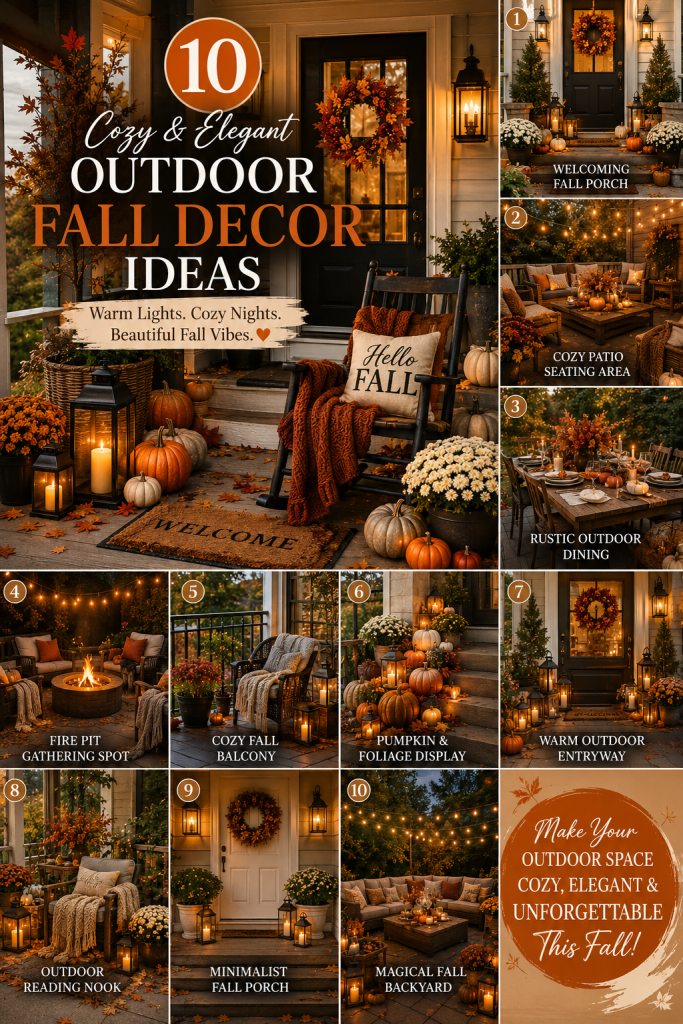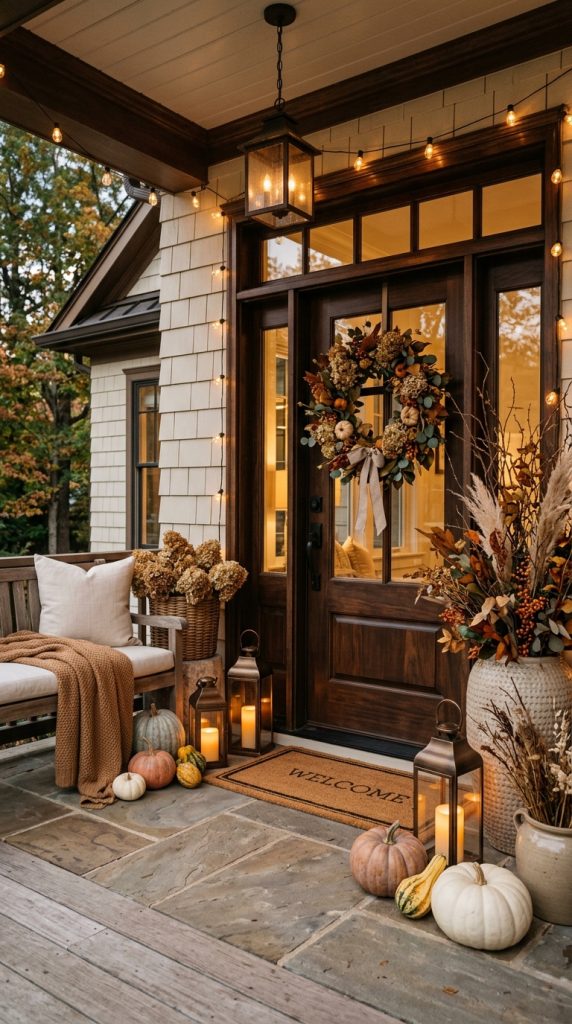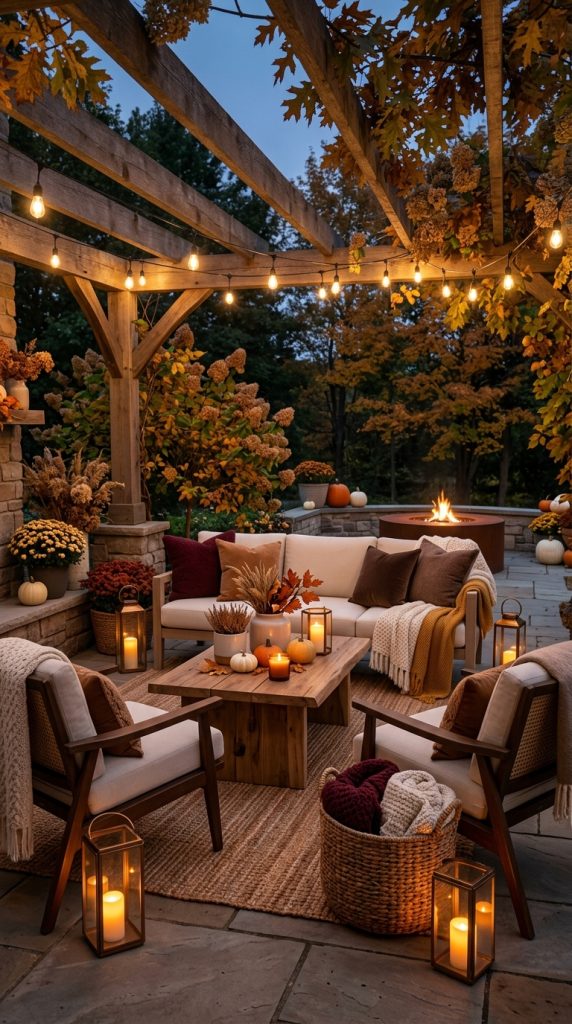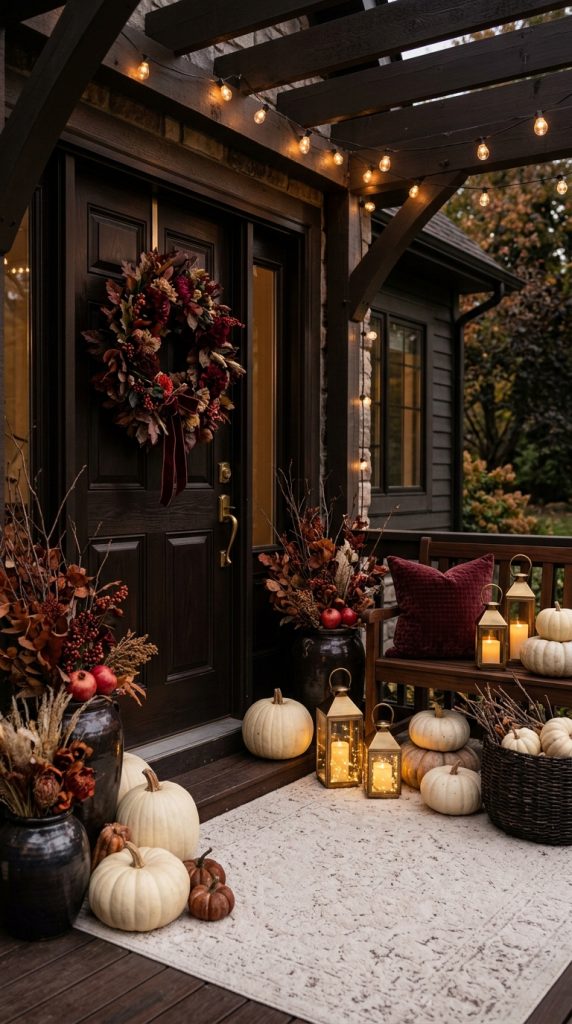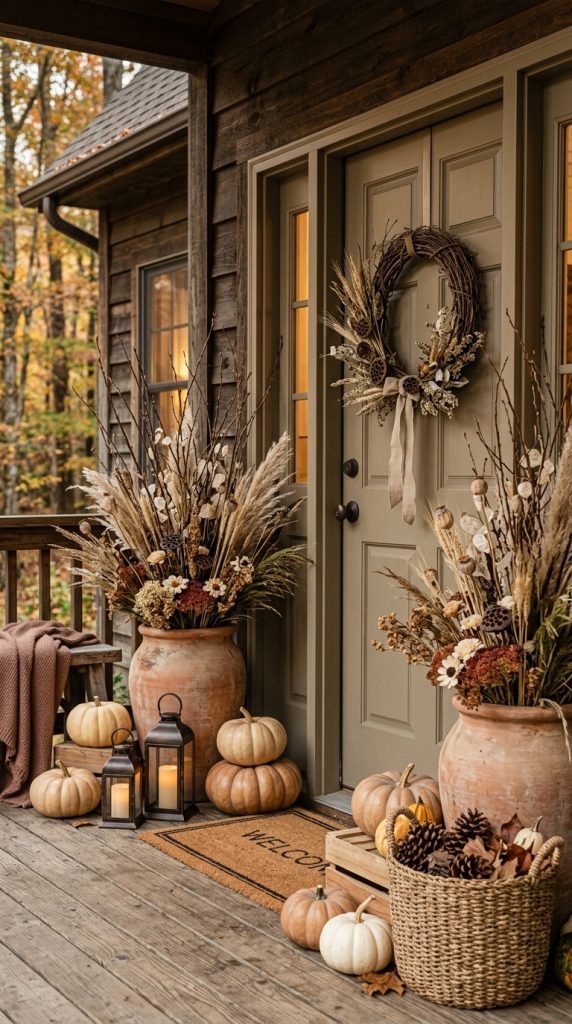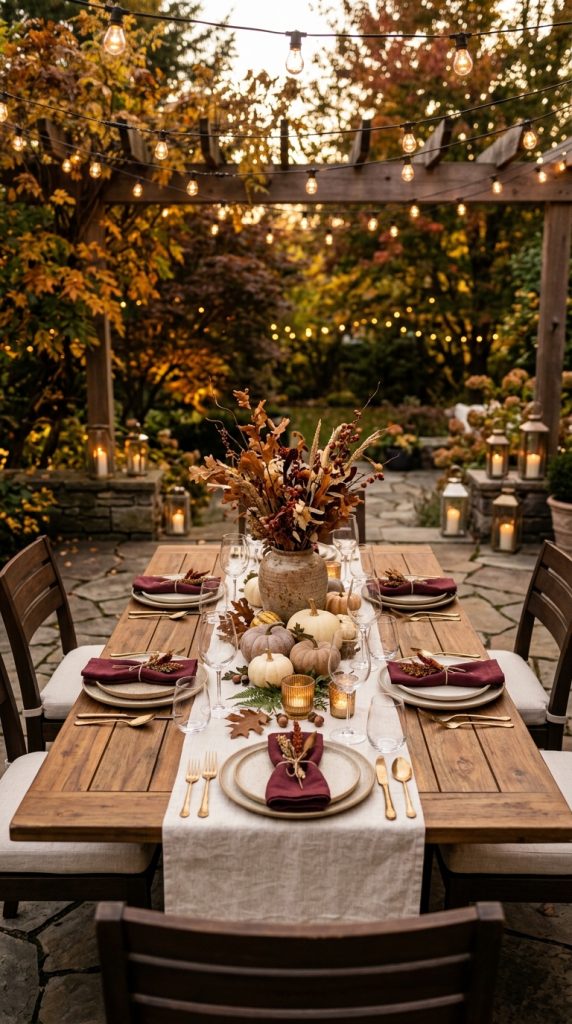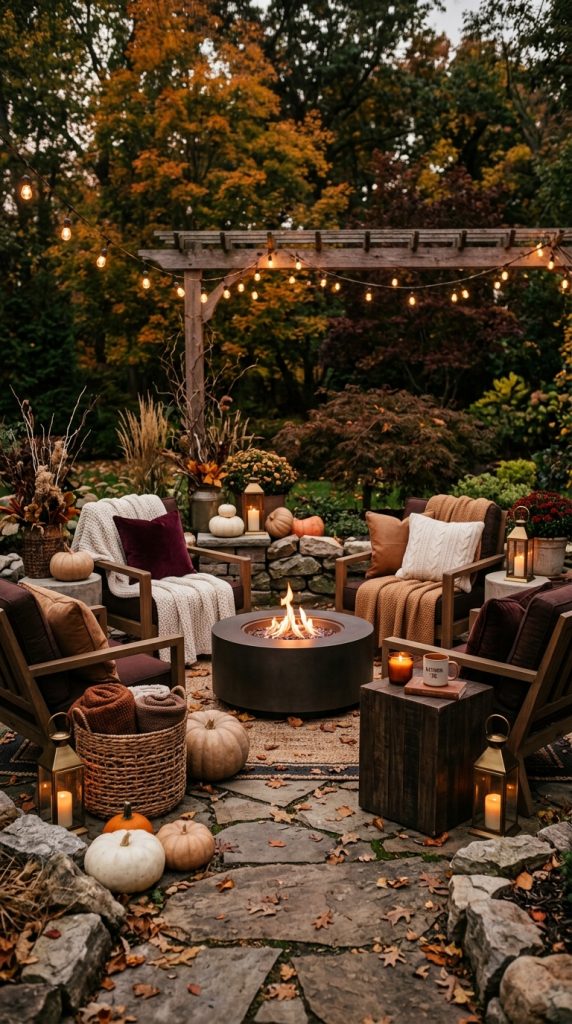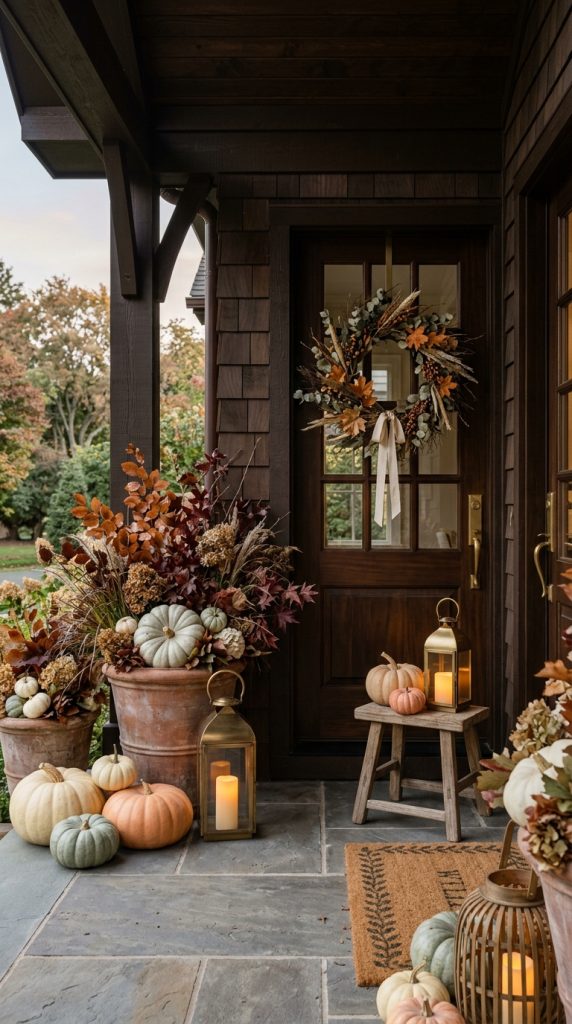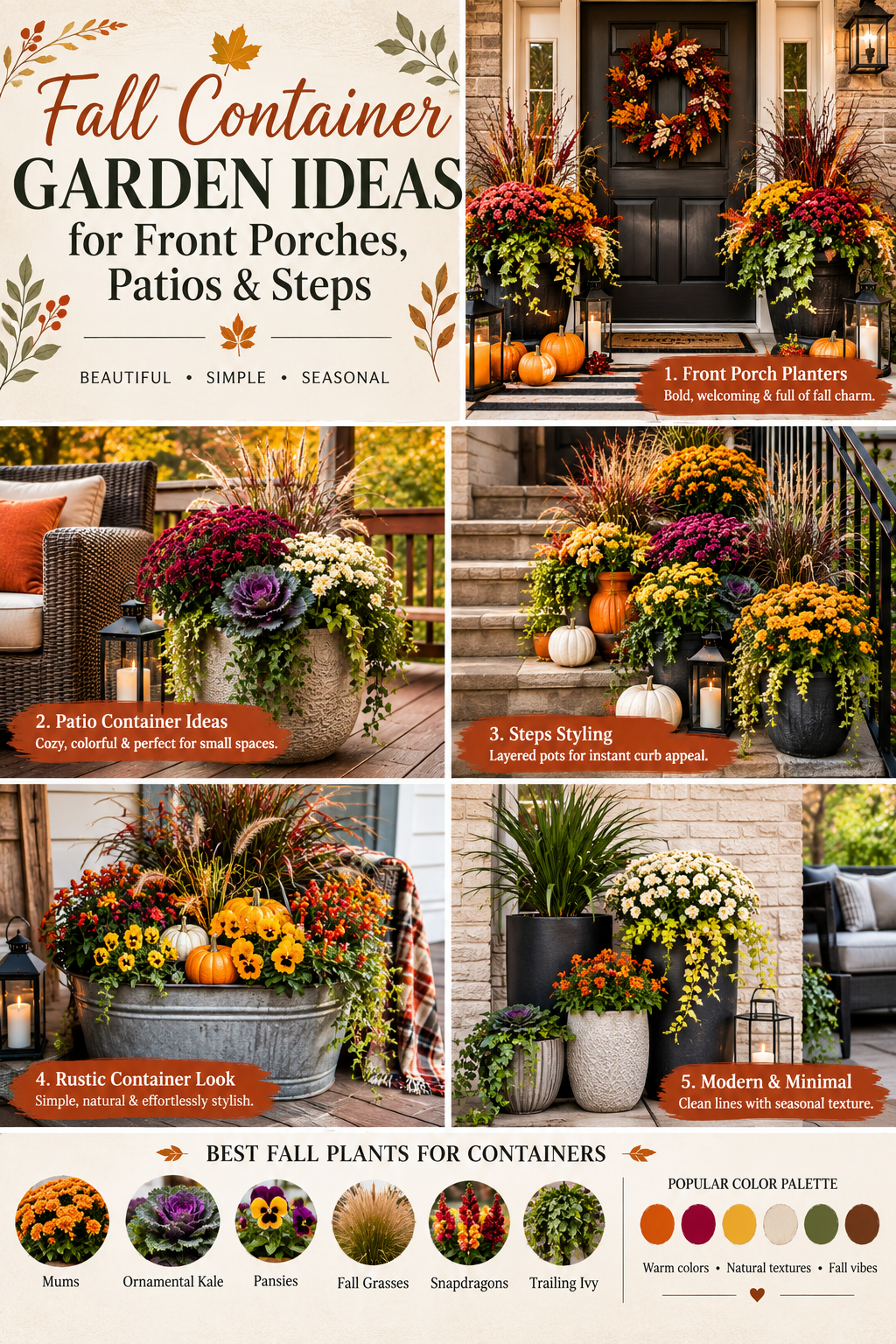
Fall is one of the most beautiful seasons for container gardening. As summer flowers begin to fade, cooler temperatures create the perfect opportunity to refresh your front porch, patio, entryway, and steps with rich seasonal colors, beautiful foliage, ornamental grasses, pumpkins, and cool-weather flowers.
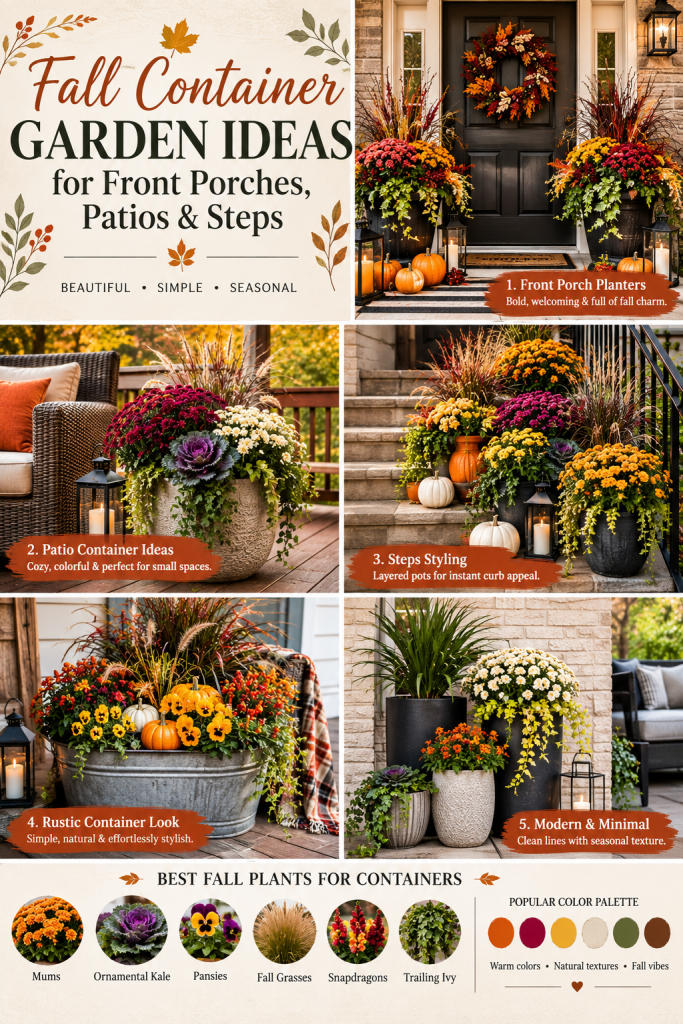
You do not need a huge garden to create an impressive fall display. Even a small front step can become a beautiful seasonal focal point with one well-designed planter. A patio can be transformed with a pair of large containers, while a wide porch can accommodate several layered pots in different heights.
The most successful fall containers combine color, texture, height, and movement. Mums are an obvious favorite, but they are not your only choice. Pansies, violas, ornamental cabbage, ornamental kale, asters, sedums, grasses, coral bells, peppers, and other cool-season plants can make a container feel fuller and more interesting.
A useful design principle is the thriller, filler, spiller method. The thriller provides height and drama, the filler creates fullness and color, and the spiller trails over the edge of the container. This structure helps a planter look balanced rather than like several unrelated plants placed in the same pot.
Fall is also a wonderful time to combine living plants with seasonal accents. A few pumpkins or gourds around a planter can add autumn character without overwhelming the flowers. Current outdoor decorating trends are also moving toward more natural, curated displays instead of excessive plastic decorations, making plants, pumpkins, wood, lanterns, and natural textures especially effective.
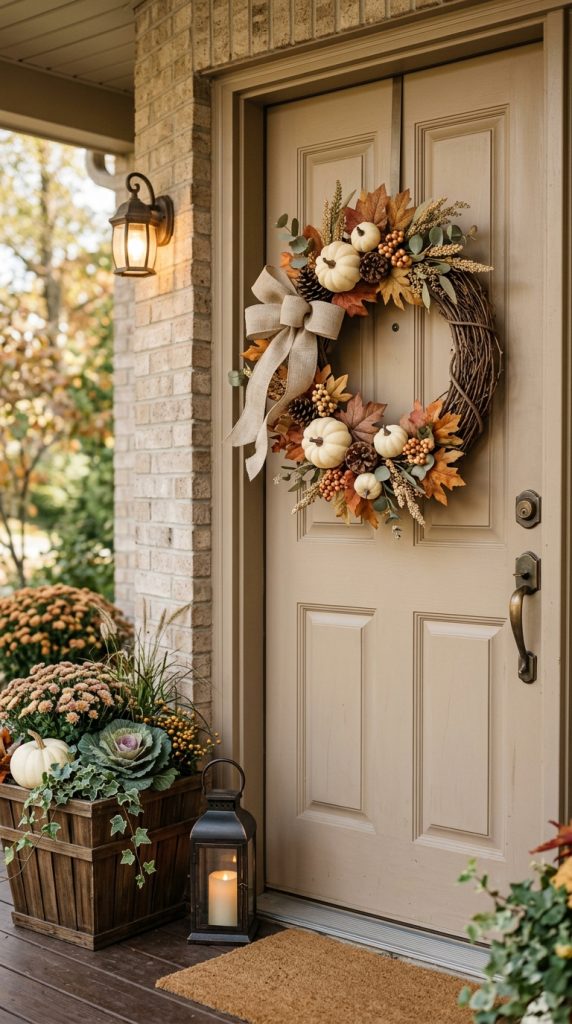
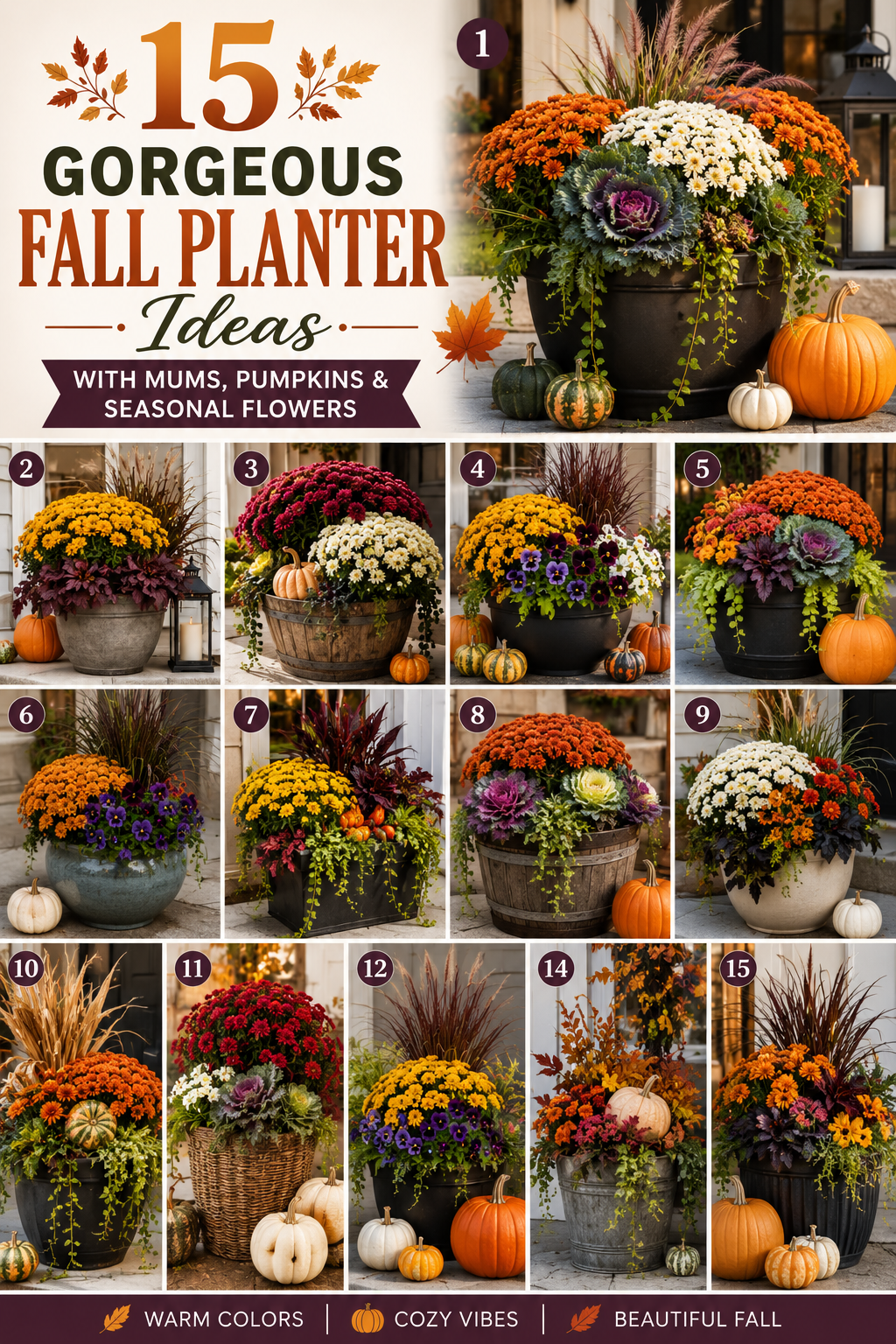
Here are 10 beautiful fall container garden ideas that can work on front porches, patios, entry steps, balconies, and other outdoor spaces.
1. Classic Mums, Pumpkins & Ornamental Grass Planter

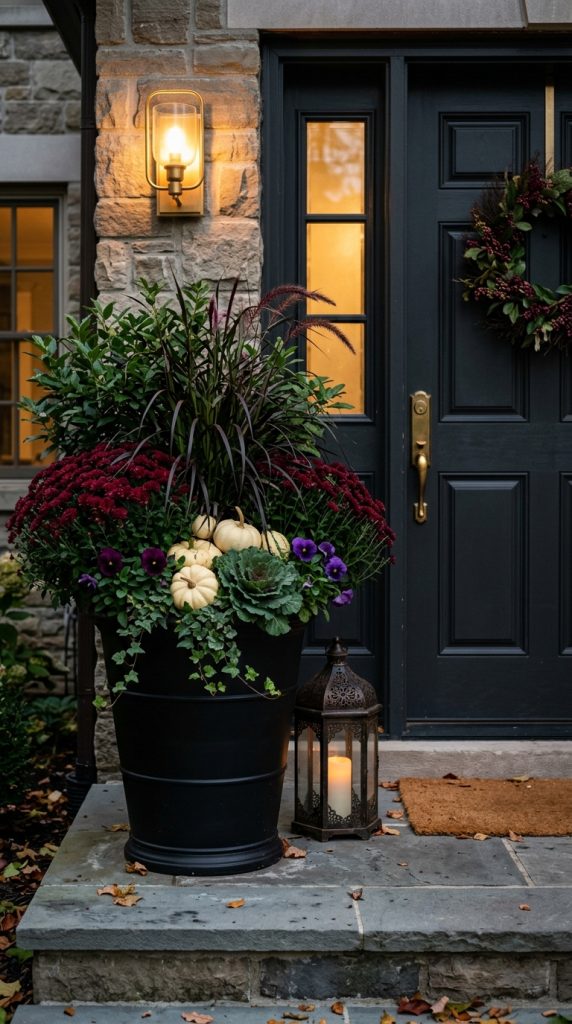
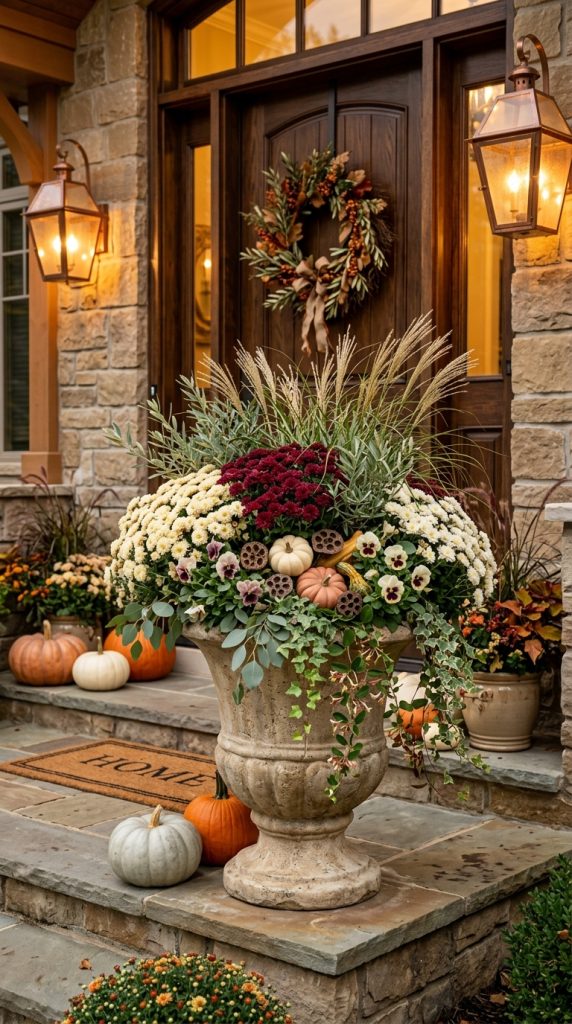
If you want a traditional fall container that immediately feels warm and welcoming, start with the classic combination of mums, pumpkins, and ornamental grass.
This arrangement works particularly well beside a front door because it provides both height and strong seasonal color.
Choose a large container in a neutral material such as:
- Black
- Charcoal
- Stone
- Terracotta
- Cream
- Weathered gray
- Dark bronze
A large container gives you enough room to create layers without making the plants look crowded.
Begin with one tall ornamental grass positioned toward the back or center of the pot. Purple fountain grass can provide dramatic burgundy foliage, while other ornamental grasses can create a softer green or golden effect depending on your climate and availability.
The grass becomes your thriller.
Next, add one or two mums.
Choose a color that complements your home’s exterior.
Traditional combinations include:
- Orange and bronze
- Burgundy and gold
- White and rust
- Yellow and deep red
- Cream and burgundy
Mums create the main burst of seasonal color and work beautifully as the filler.
Around the front edge, add a few smaller plants or trailing foliage.
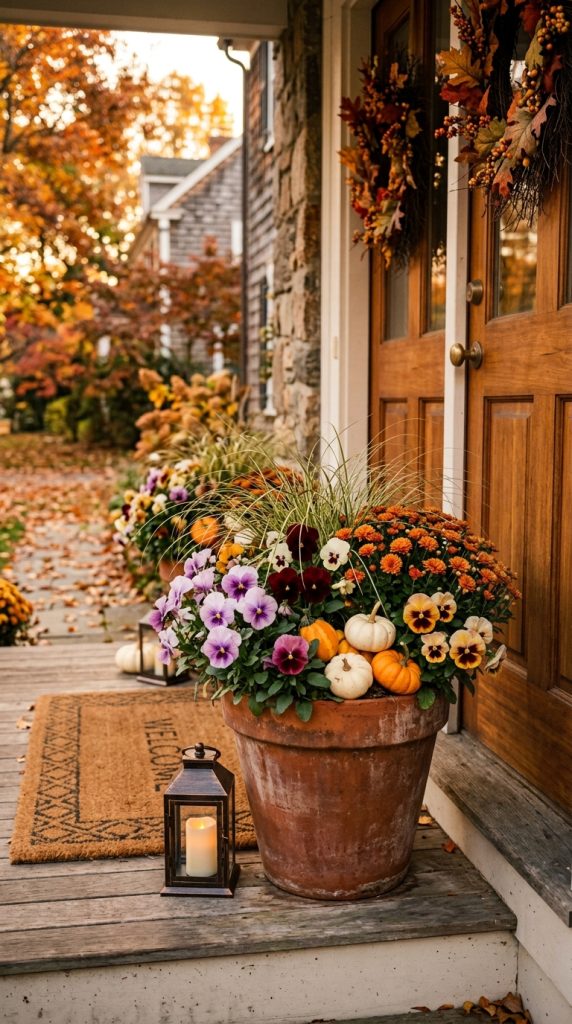
Pansies and violas are excellent cool-season choices, and trailing plants can soften the edge of the container. Pansies can also provide color after some summer plants have faded.
Then add two or three small pumpkins around the base.
Do not bury the planter under pumpkins.
A few carefully positioned pumpkins will look more sophisticated than a huge pile.
For an elegant front porch, try a palette of cream pumpkins, white mums, burgundy foliage, and dark grass.
For a traditional autumn appearance, use orange pumpkins, bronze mums, golden grass, and rustic containers.
If you are placing two planters beside your front door, make them symmetrical.
Use matching containers and similar plant combinations.
Symmetry creates an instant sense of order and makes even a small entryway look more polished.
If your doorway is narrow, use one large statement container instead of two.
A single impressive planter can have more impact than several small pots.
How to Create It
Start by making sure your container has drainage holes.
Use a quality potting mix suitable for containers.
Place your tallest plant first.
Then position the mums around it.
Finally, add smaller plants around the edges.
Water thoroughly after planting so the root balls settle into the soil.
Keep the container watered according to your plants’ needs, remembering that containers can dry out faster than garden beds.
For colder weather, monitor nighttime temperatures and protect or move containers when necessary according to the plants and container materials you are using.
Why This Idea Works
This combination gives you almost everything a fall container needs:
Height + flowers + foliage + seasonal accents.
It is traditional, welcoming, and easy for beginners.
2. Elegant Neutral Fall Container With White Mums
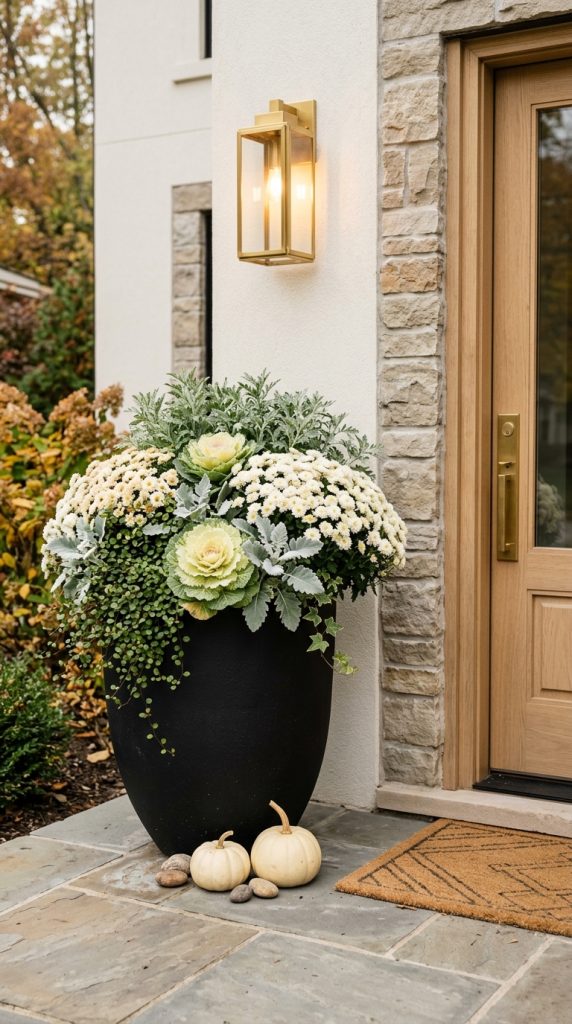
Fall decorating does not have to mean bright orange.
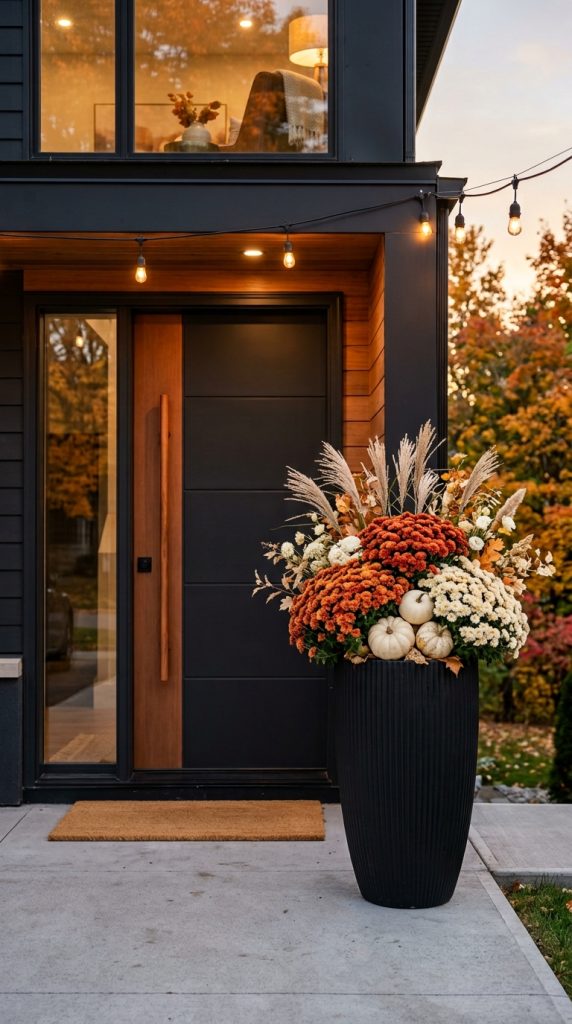
If your home has a modern, farmhouse, Scandinavian, or neutral exterior, a cream-and-white fall container can look incredibly elegant.
Start with a large black, charcoal, stone, or natural terracotta planter.
Use white or cream mums as your primary flower.
The pale flowers create a beautiful contrast against dark containers.
Then add foliage in muted green, silver, or dusty tones.
Silver-leaved plants can create a soft transition between the flowers and the container.
For additional texture, add ornamental kale or cabbage.
Their large rosette-shaped leaves provide visual interest even when flowers are not the main focus. Ornamental kale and cabbage are particularly useful in cool-season containers because their foliage can remain attractive as temperatures fall.
Add a small cream pumpkin at the base.
You can also place one natural dried branch into the soil for height.
The goal is to keep the palette restrained.
Think:
Cream + white + sage + silver + natural brown.
This creates an elegant fall display without the traditional bright autumn colors.
It is particularly beautiful against:
- White siding
- Gray stone
- Dark brick
- Natural wood
- Black doors
- Modern neutral exteriors
If your porch has several containers, repeat the same palette rather than changing the color scheme for every pot.
Repetition creates cohesion.
For example, place a large white-mum container near the door and two smaller matching containers along the steps.
You could also use cream pumpkins instead of orange ones.
This gives you an autumn look that feels sophisticated rather than overly seasonal.
How to Style It
Use one large white mum as the main focal point.
Add ornamental cabbage or kale around it.
Then soften the edge with a trailing plant where appropriate.
Finish with one or two cream-colored pumpkins.
Avoid adding too many accessories.
The beauty of this planter comes from the plants themselves.
Why This Idea Works
Neutral fall containers are incredibly versatile.
They work with many architectural styles and can remain attractive from early fall through the transition toward winter.
3. Rich Burgundy & Jewel-Tone Porch Planter
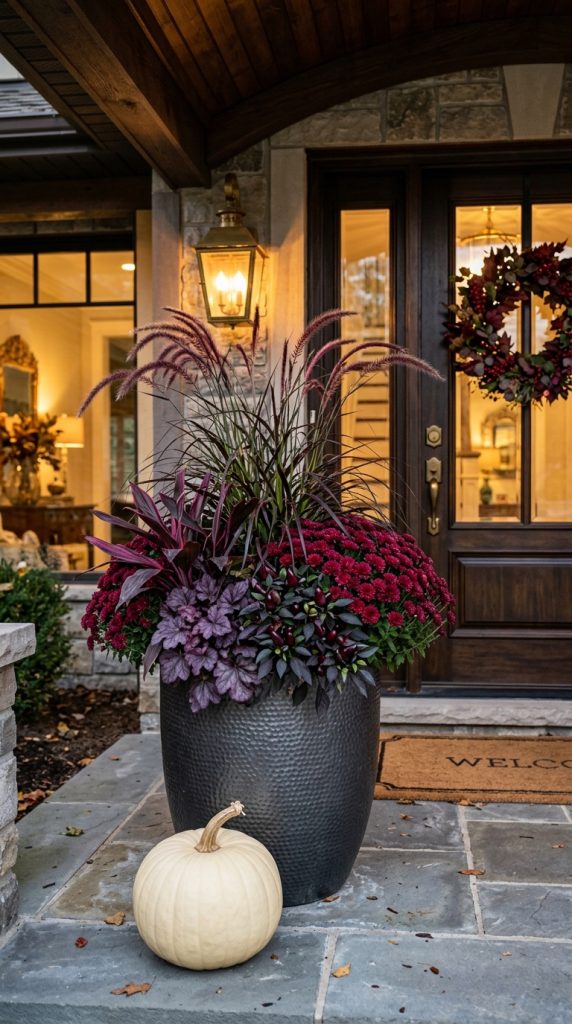
If you want your front porch to feel dramatic and luxurious, use deep autumn colors instead of the traditional orange-and-yellow palette.
A burgundy container can include:
- Deep red mums
- Purple foliage
- Burgundy ornamental peppers
- Dark grasses
- Purple-leaved coral bells
- Deep-toned pansies
The result is rich and sophisticated.
Start with a dark container.
Black, charcoal, or deep brown works particularly well.
Add a tall grass or upright foliage as your thriller.
Then place burgundy mums around the center.
Add one or two plants with contrasting foliage.
For example, a deep purple plant beside a red-burgundy mum creates subtle variation without introducing too many colors.
Then add a few dark red or burgundy ornamental peppers if they are suitable for your climate.
Ornamental peppers can add unusual color and glossy texture to fall containers. They are among the plants frequently recommended as alternatives or additions to traditional mums.
Finish the display with a few small pumpkins in cream or muted orange.
Do not use bright orange if you want a sophisticated appearance.
Instead, choose muted shades.
A cream pumpkin against burgundy flowers can look especially beautiful.
This type of container works wonderfully beside dark doors.
It also pairs beautifully with brass lanterns.
Place one warm LED lantern near the planter during evening hours.
The warm glow will make the burgundy foliage look even richer.
Color Palette
A strong palette for this arrangement is:
Burgundy + plum + deep green + cream + dark brown.
Another option is:
Wine red + purple + charcoal + muted orange.
Why This Idea Works
Deep colors make a container look luxurious and create a more dramatic curb appeal than traditional bright autumn colors.
It is particularly attractive for homeowners who want fall decor that feels elegant rather than rustic.
4. Small Fall Container Garden for Front Steps
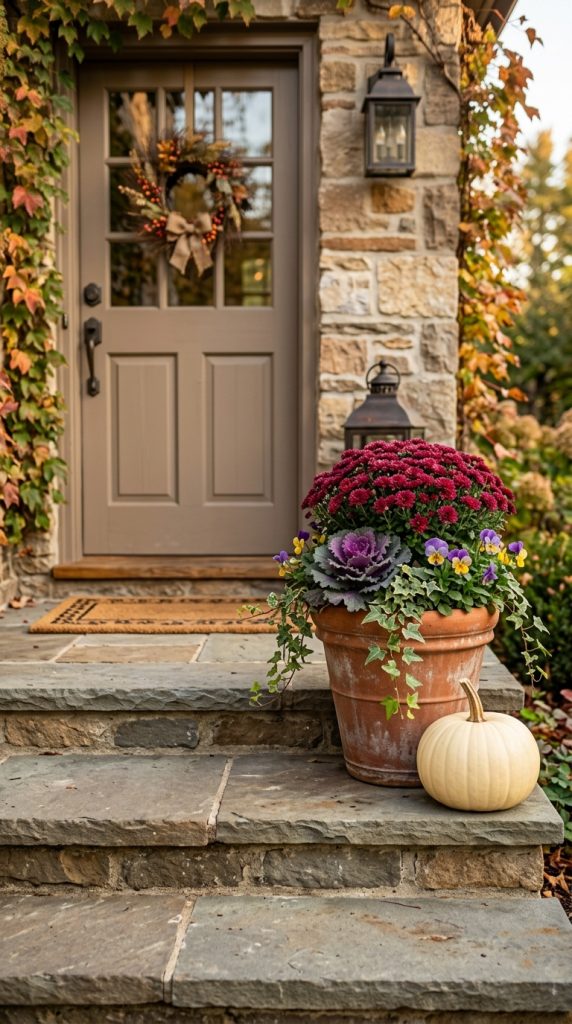
You do not need a large porch to create a beautiful fall container garden.
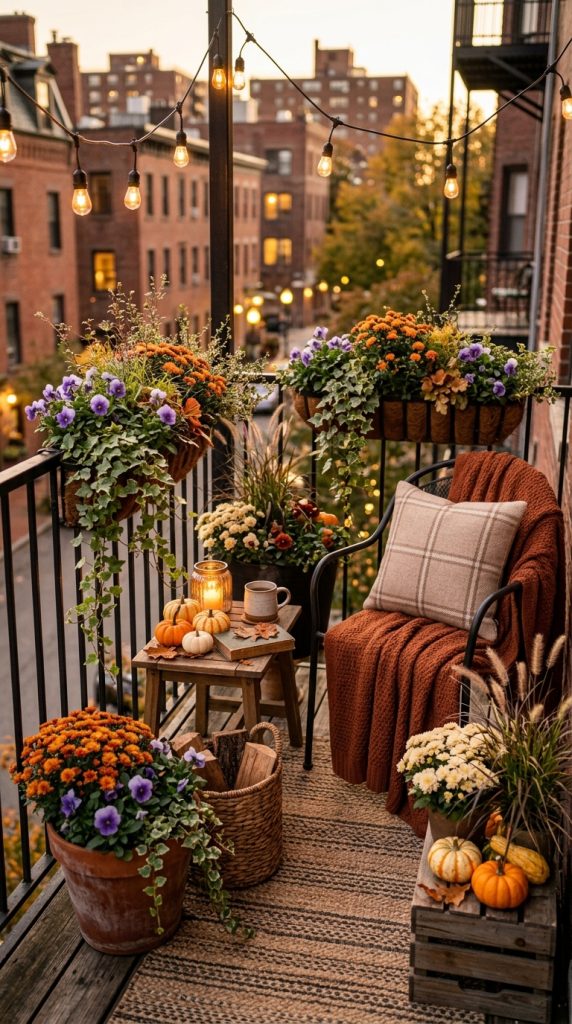
A small front step can look just as attractive with one or two compact containers.
The key is choosing plants that fit the scale of the space.
A giant planter may make a narrow step feel crowded.
Instead, use medium-sized pots.
Choose a simple combination of:
- One compact mum
- One ornamental kale
- Several pansies
- One trailing plant
Place the tallest element toward the back.
The mum provides the main flower color.
The ornamental kale adds structure.
Pansies provide small blooms around the base.
The trailing plant softens the container edge.
If the step is very narrow, use one container on one side rather than blocking the walkway.
For wider steps, use two matching containers on opposite sides of the entrance.
A small pumpkin can sit beside each pot.
This creates symmetry without consuming much space.
You can also use a vertical arrangement.
Place a smaller planter on a sturdy plant stand behind a lower pot.
This creates the appearance of a larger display without requiring a large floor footprint.
Another option is to use a narrow rectangular planter box.
A long window-box-style container can hold several fall plants while remaining relatively narrow.
This works especially well on:
- Apartment entrances
- Townhouse steps
- Small porches
- Narrow patios
- Balcony entrances
Budget Tip
You do not need five different plants.
One mum plus two complementary foliage plants can be enough.
Instead of buying lots of varieties, focus on making the arrangement look full.
Why This Idea Works
Small spaces benefit from simplicity.
A carefully proportioned planter can make a tiny entrance feel intentionally decorated rather than crowded.
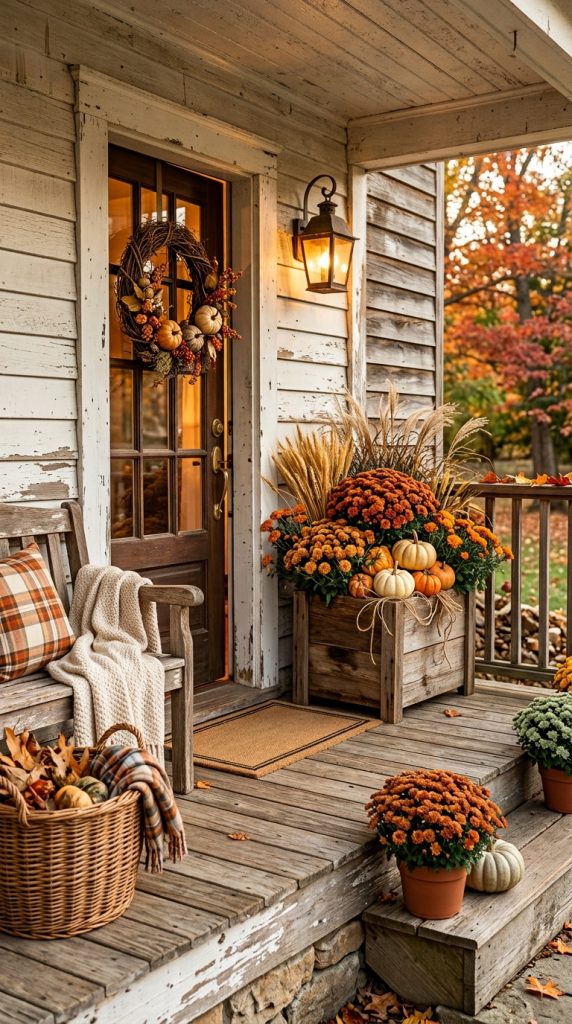
5. Rustic Wooden Box Fall Container
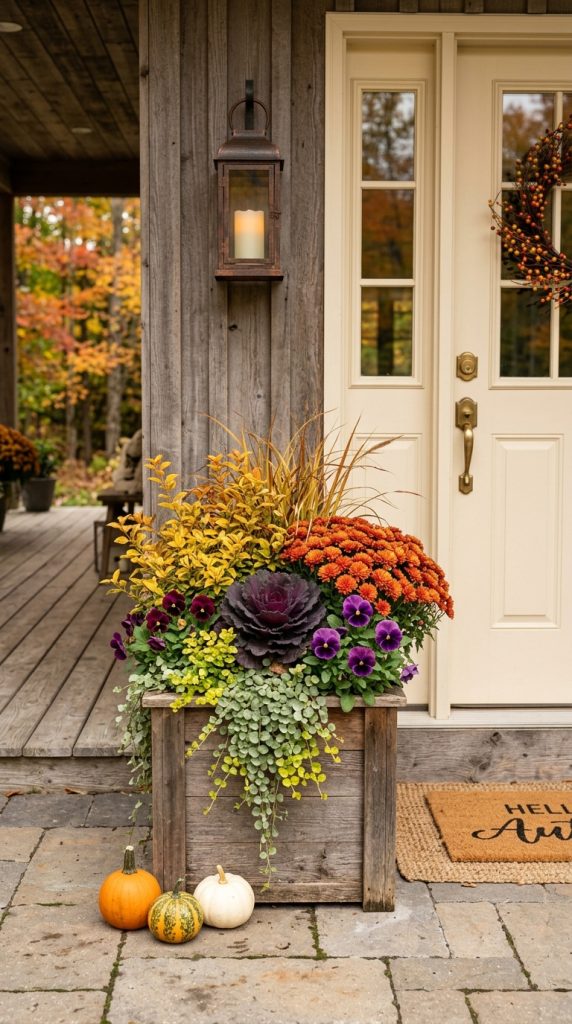
For a farmhouse or rustic outdoor space, replace the traditional round planter with a wooden box.
A weathered wooden crate, window box, or rustic rectangular container can create a completely different appearance.
Choose plants with contrasting textures.
For example:
- Burgundy mums
- Ornamental cabbage
- Golden foliage
- Pansies
- Trailing greenery
Because the container is rectangular, you can create a beautiful layered arrangement from back to front.
Place the tallest plants toward the back.
Use medium-height flowers in the center.
Place low or trailing plants toward the front.
This is essentially the thriller-filler-spiller method adapted to a rectangular container.
Add a few small gourds between the plants.
The wooden container itself becomes part of the seasonal decoration.
Choose natural wood rather than painting it bright orange.
The combination of natural wood and autumn foliage creates a warm, organic appearance.
You can place the box:
- Beside a front door
- Under a window
- Along a patio wall
- Beside outdoor seating
- On a wide stair landing
For a more sophisticated version, combine white flowers with burgundy foliage and natural wood.
For a classic rustic look, use orange mums, golden foliage, and brown gourds.
Maintenance Tip
Make sure the container has adequate drainage.
Wooden planters can retain moisture depending on their construction, so drainage is essential.
Use a suitable potting mix and avoid leaving the container sitting permanently in standing water.
Why This Idea Works
The wooden box gives you both the planter and the decorative container in one piece.
It feels seasonal without needing additional signs or artificial decorations.
6. Fall Hanging Basket With Pansies & Trailing Foliage
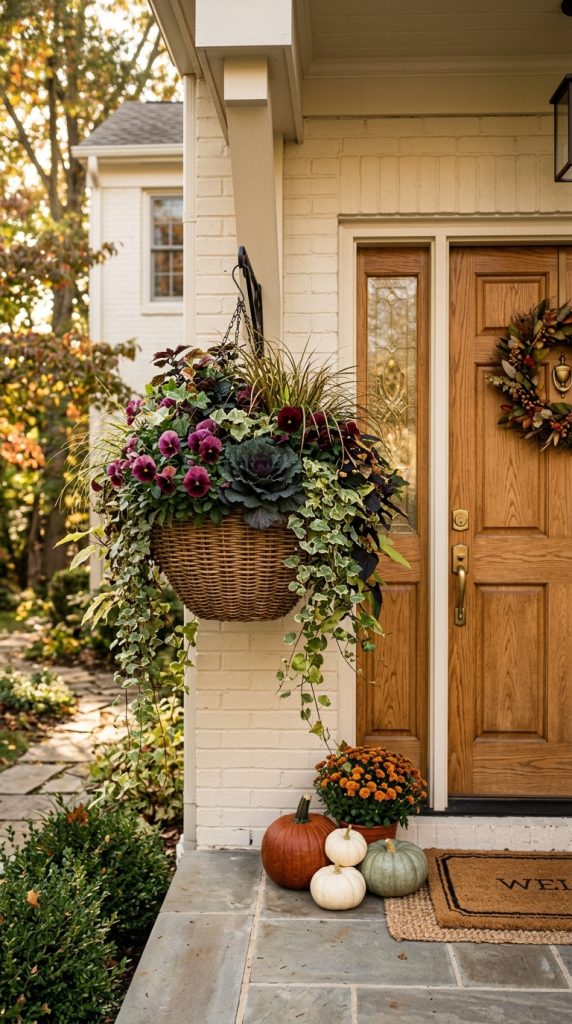
If floor space is limited, look upward.
A hanging basket can provide a beautiful fall garden without taking up porch or patio floor space.
Start with a basket that is large enough to hold several plants.
A larger hanging basket generally provides more room for roots and soil and can be easier to maintain than a tiny basket. One current guide recommends baskets around 16–20 inches for fuller fall displays, while also emphasizing appropriate lining and drainage.
Choose a central upright plant as your thriller.
Good possibilities depend on your climate and local availability.
You could use:
- Ornamental kale
- Heather
- Compact grasses
- Upright foliage
Then add colorful pansies or violas.
These become your fillers.
Finally, add trailing foliage around the edge.
The spiller creates the graceful shape that makes a hanging basket feel abundant.
For a classic fall palette, use:
Purple + yellow + burgundy + green.
For a softer appearance:
Cream + lavender + sage + silver.
For a dramatic look:
Burgundy + deep purple + charcoal + muted orange.
Hang the basket near the front door or beside a seating area.
You can also place two matching hanging baskets on either side of a porch.
Make sure the hanging hardware is secure and appropriate for the weight of the watered basket.
Watering Tip
Hanging baskets can dry out more quickly because they are exposed to air on all sides.
Check the soil regularly rather than assuming rainfall is enough.
Why This Idea Works
Hanging baskets add vertical interest and allow you to create a lush fall display even when your porch has almost no floor space.
7. Modern Fall Planter With Ornamental Grasses
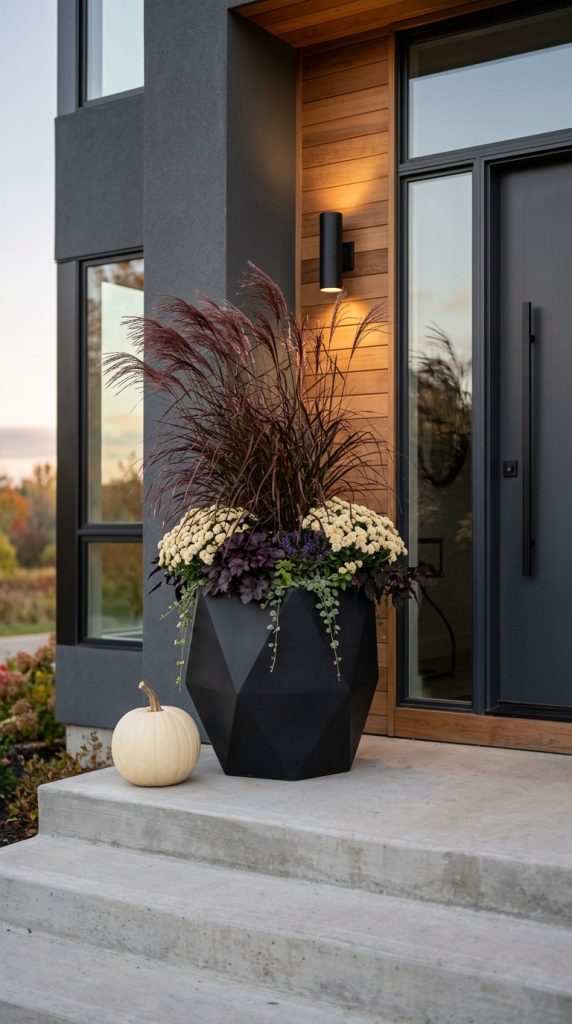
If you prefer modern outdoor design, create a fall container around ornamental grasses rather than making mums the main focus.
Grasses create movement.
When the wind passes through them, the container feels alive.
Choose a tall grass as the main architectural element.
Depending on your climate, ornamental grasses can provide different colors and textures, including green, bronze, burgundy, and golden tones.
Purple fountain grass is particularly dramatic when paired with autumn colors, although its hardiness varies by region.
Surround the grass with lower plants.
You could use:
- Burgundy mums
- Ornamental kale
- Sedum
- Pansies
- Heuchera
- Small ornamental peppers
Then use one or two small pumpkins outside the container.
The goal is a clean, modern composition.
Avoid overcrowding.
A large black planter with one tall burgundy grass and a few cream flowers can be more attractive than a pot filled with ten different plant varieties.
This design works especially well with:
- Modern homes
- Contemporary porches
- Minimalist patios
- Black doors
- Gray siding
- Concrete steps
Use simple containers.
Matte black, charcoal, concrete-look, or dark gray planters create a sophisticated foundation.
Add warm outdoor lighting nearby.
A simple lantern or subtle warm light can make the grass silhouette beautiful after sunset.
Why This Idea Works
Modern fall containers rely on shape and texture rather than excessive decoration.
The movement of grass adds personality without requiring many accessories.
8. Pollinator-Friendly Fall Container With Asters & Sedum
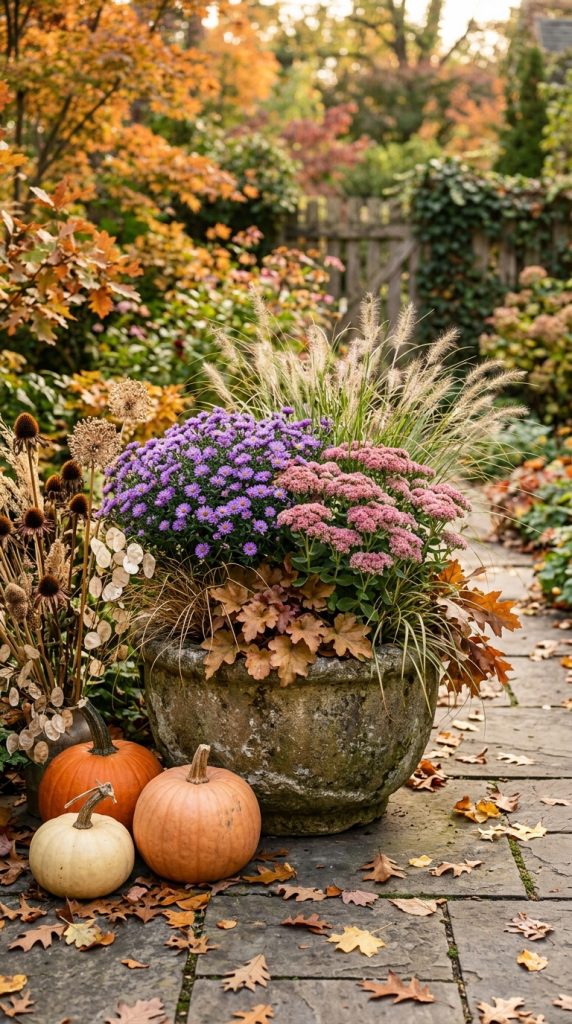
If you want your fall container to be beautiful and beneficial to wildlife, consider using plants beyond traditional mums.
Native asters can be particularly valuable for pollinators, and current gardening guidance highlights them as an alternative to mums for fall displays.
Asters can provide beautiful flowers in shades such as:
- Purple
- Lavender
- Pink
- White
Combine them with sedum for contrasting texture.
Sedum can provide sturdy foliage and flower heads that remain interesting as the season progresses.
Add ornamental grasses or another upright plant for height.
Then finish the container with a few natural elements.
Instead of plastic Halloween decorations, use:
- Small pumpkins
- Pinecones
- Dried seed heads
- Natural branches
This keeps the arrangement attractive while supporting a more natural outdoor aesthetic.
If you want an even stronger pollinator display, research plants that are native to your specific region.
Native species can offer ecological benefits that vary significantly by location.
This is especially important because not every plant sold as a fall favorite is equally useful to local wildlife.
Design Formula
Try:
Tall grass + asters + sedum + natural pumpkin.
Or:
Asters + ornamental kale + trailing foliage.
The combination of flowers and foliage gives the container depth.
Why This Idea Works
You get seasonal beauty without relying entirely on traditional fall flowers.
It is an excellent option for gardeners who want their porch to look beautiful while thinking about pollinators and local ecology.
9. Symmetrical Twin Planters for the Front Door
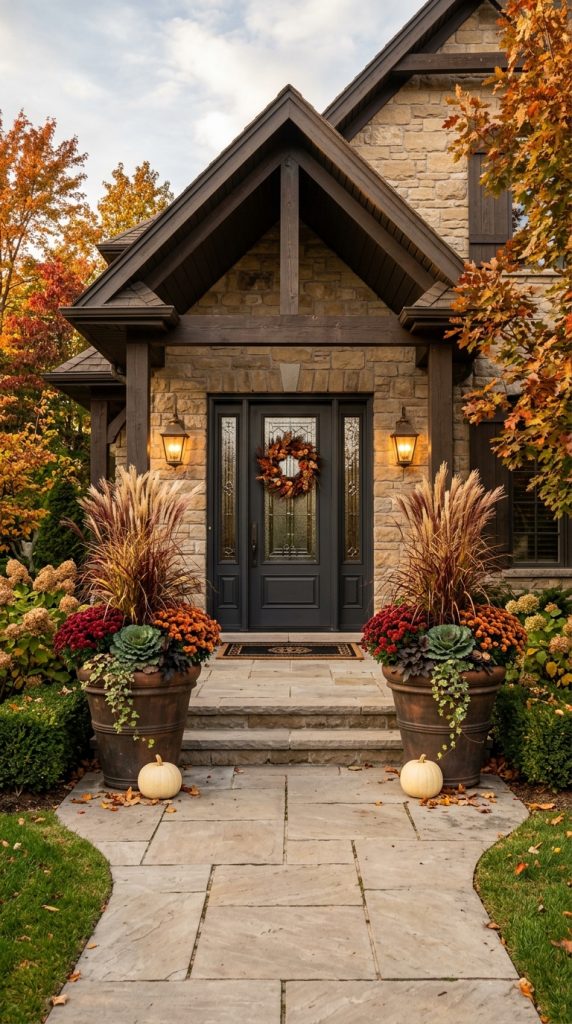
If you want your home entrance to look instantly polished, symmetrical planters are one of the easiest design choices.
Place one large container on each side of the front door.
Use matching containers.
Then use identical or nearly identical plant combinations.
This could be:
- Orange mums
- Ornamental kale
- Purple grass
- Pansies
Or something more elegant:
- White mums
- Silver foliage
- Burgundy kale
- Cream pumpkins
The symmetry creates a formal frame around the entrance.
It works particularly well on:
- Wide porches
- Double doors
- Large entryways
- Brick homes
- Colonial-style homes
- Traditional houses
If the doorway is already visually busy, keep the planters simple.
If the doorway is plain, you can make the containers more dramatic.
A good rule is to repeat colors from the house.
For example, if your front door is black, use black containers.
If your exterior has warm brick, use terracotta or dark brown.
If your home is white, almost any fall palette will work.
Add Seasonal Accents Carefully
You can place one small pumpkin at the base of each planter.
Do not create a pile.
A pair of pumpkins on each side can be enough.
You can also add a small lantern.
But keep the plants as the main focal point.
Why This Idea Works
Symmetry creates visual balance and makes the front entrance feel professionally designed.
It also makes decorating easier because you can repeat the same formula on both sides.
10. Layered Fall Containers Along the Steps
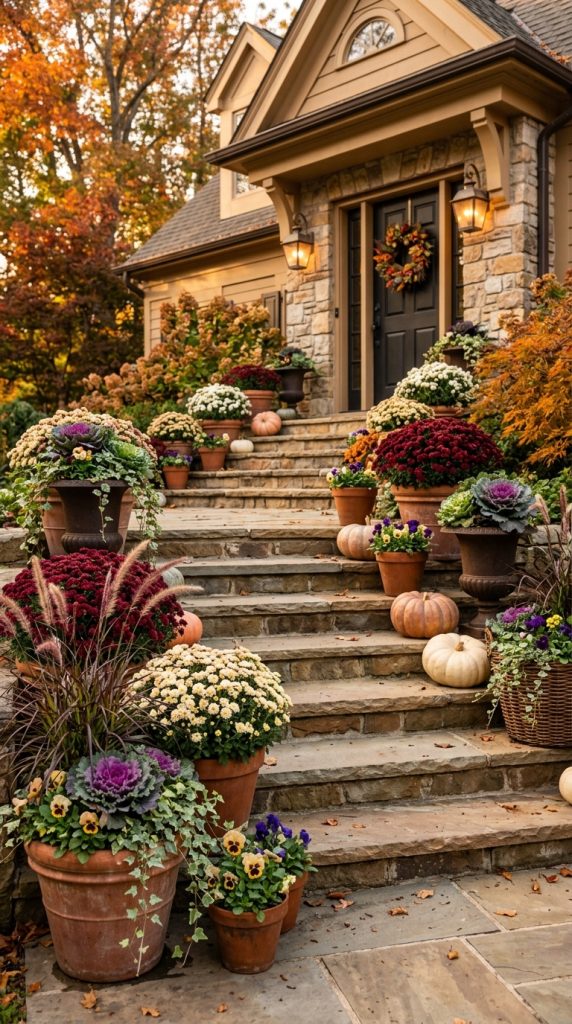
If you have several front steps, use them as a natural stage for a layered fall garden.
Instead of placing identical pots in a straight line, vary their heights and sizes.
For example:
Top step: Large planter with tall grass and mums.
Middle step: Medium planter with kale, pansies, and foliage.
Lower step: Smaller container with trailing plants.
Add a few pumpkins between the containers rather than placing them all together.
This creates a flowing arrangement.
You can repeat one main color throughout.
For example:
- Burgundy mums
- Cream pumpkins
- Purple kale
- Green foliage
The repeated colors make the entire staircase feel connected.
You can also use different containers while keeping the plants within the same palette.
Try:
- One large black urn
- One galvanized metal planter
- One terracotta pot
- One wooden box
The plants become the visual connection.
This approach is especially useful when you want your porch to look abundant without buying dozens of decorative objects.
Safety Matters
Do not allow containers to block the walking path.
Keep stairs clear and make sure pots are stable.
Avoid placing lightweight containers where strong wind could knock them over.
If you use electrical lighting, make sure outdoor-rated equipment is used appropriately.
Why This Idea Works
The steps naturally create different levels, allowing you to build a layered garden without installing anything permanent.
How to Choose the Right Container for Fall
The container itself is part of the design.
A beautiful plant combination can still look wrong if the pot is too small or visually incompatible with the house.
For fall, popular choices include:
- Terracotta
- Ceramic
- Stone-look containers
- Fiberglass
- Resin
- Metal
- Wooden boxes
If your container will remain outdoors through freezing weather, choose a material appropriate for your climate.
Drainage is essential.
A container without adequate drainage can leave roots sitting in excess water and can also create problems when temperatures fall.
One current fall planter guide recommends using containers with drainage holes and choosing materials that can handle outdoor temperature changes.
The Best Fall Container Plant Combinations
You do not need to use every fall plant in one pot.
Instead, choose combinations with different heights and textures.
Classic
Mums + ornamental kale + pansies + pumpkin
Elegant
White mums + silver foliage + ornamental cabbage + cream pumpkin
Rustic
Orange mums + grasses + pansies + gourds
Dramatic
Burgundy mums + purple grass + dark foliage + cream pumpkin
Pollinator-Friendly
Asters + sedum + ornamental grass + natural branches
Modern
Tall grass + one strong flowering plant + simple foliage + one pumpkin
The best combination depends on your local climate, sunlight, and expected frost.
Use the Thriller, Filler & Spiller Method
The thriller-filler-spiller method is one of the easiest ways to design a professional-looking container.
Thriller
This is your tallest plant.
Examples include:
- Ornamental grass
- Upright kale
- Heather
- Tall foliage
Filler
This creates volume.
Examples include:
- Mums
- Pansies
- Asters
- Ornamental cabbage
- Coral bells
Spiller
This grows over the edge.
Examples can include:
- Trailing foliage
- Creeping plants
- Trailing pansies or violas where suitable
This formula creates visual movement from top to bottom.
Instead of seeing a flat collection of plants, your eye travels through the entire arrangement.
How to Care for Fall Containers
Fall containers may require less frequent watering than summer containers because temperatures are cooler, but they still need regular attention.
Check the soil rather than watering automatically.
If the top layer feels dry and the plants require moisture, water thoroughly.
Make sure excess water can drain away.
Deadheading flowers can encourage continued blooming for some plants.
Remove damaged foliage as needed.
If temperatures are expected to fall significantly below what your plants can tolerate, consider moving containers to a protected location.
This is especially important for plants that are only lightly frost tolerant.
Some fall plants tolerate cool temperatures very well, while others are damaged by freezing temperatures. Your local climate and the exact plant variety matter.
How to Make Fall Containers Look Expensive
You do not need expensive planters or dozens of plants.
Instead, focus on composition.
Choose one strong color palette.
Repeat it across your containers.
Use different textures.
Combine:
- Smooth ceramic
- Rough wood
- Soft foliage
- Spiky grass
- Round pumpkins
- Small flowers
This creates visual richness without requiring many different items.
Natural materials can also make seasonal displays feel more sophisticated. Current design advice increasingly favors real plants, natural textures, heirloom-style pumpkins, lanterns, and curated arrangements over excessive novelty decorations.
Another trick is to use fewer but larger containers.
One large planter often looks more intentional than six tiny pots scattered randomly.
If you want a budget-friendly display, reuse your existing summer containers.
Remove plants that are finished, refresh the soil where appropriate, and introduce fall plants.
This can dramatically reduce the cost of seasonal gardening.
You can also reuse decorative elements from previous years.
A pumpkin does not need to be placed inside the planter.
Sometimes putting it beside the container creates a much better composition.
Final Thoughts
Fall container gardening is one of the easiest ways to transform a front porch, patio, or set of steps for the season.
You do not need a large garden.
You do not need expensive landscaping.
And you do not have to fill every available space with decorations.
Start with the container.
Choose plants that suit your climate and light conditions.
Build your arrangement around height, fullness, and trailing texture.
Then introduce a few seasonal details such as pumpkins, gourds, lanterns, or natural branches.
Mums remain a classic choice, but fall offers a much wider range of possibilities. Pansies, ornamental kale, ornamental cabbage, asters, sedums, grasses, coral bells, and other cool-season plants can create displays with more texture and longer seasonal interest.
For a classic porch, choose mums, pumpkins, and ornamental grasses.
For an elegant entrance, try white flowers, silver foliage, and cream pumpkins.
For a dramatic display, use burgundy, purple, and deep green.
For a small step, keep the container compact and let the plants do the work.
For a large porch, use matching containers or layered groups to create a stronger focal point.
And if you want your fall garden to do more than simply look beautiful, consider incorporating native asters and other plants that can support local pollinators.
The most successful fall container gardens feel intentional.
They use seasonal color without becoming overwhelming.
They combine plants with different shapes and textures.
They make the entrance feel warm and welcoming.
And most importantly, they allow you to enjoy the beauty of autumn even if your outdoor space is only a few steps, a tiny patio, or a small front porch.
With the right container, a thoughtful plant combination, and a few simple seasonal accents, every outdoor space can have its own beautiful little fall garden.