Category: enterway decore

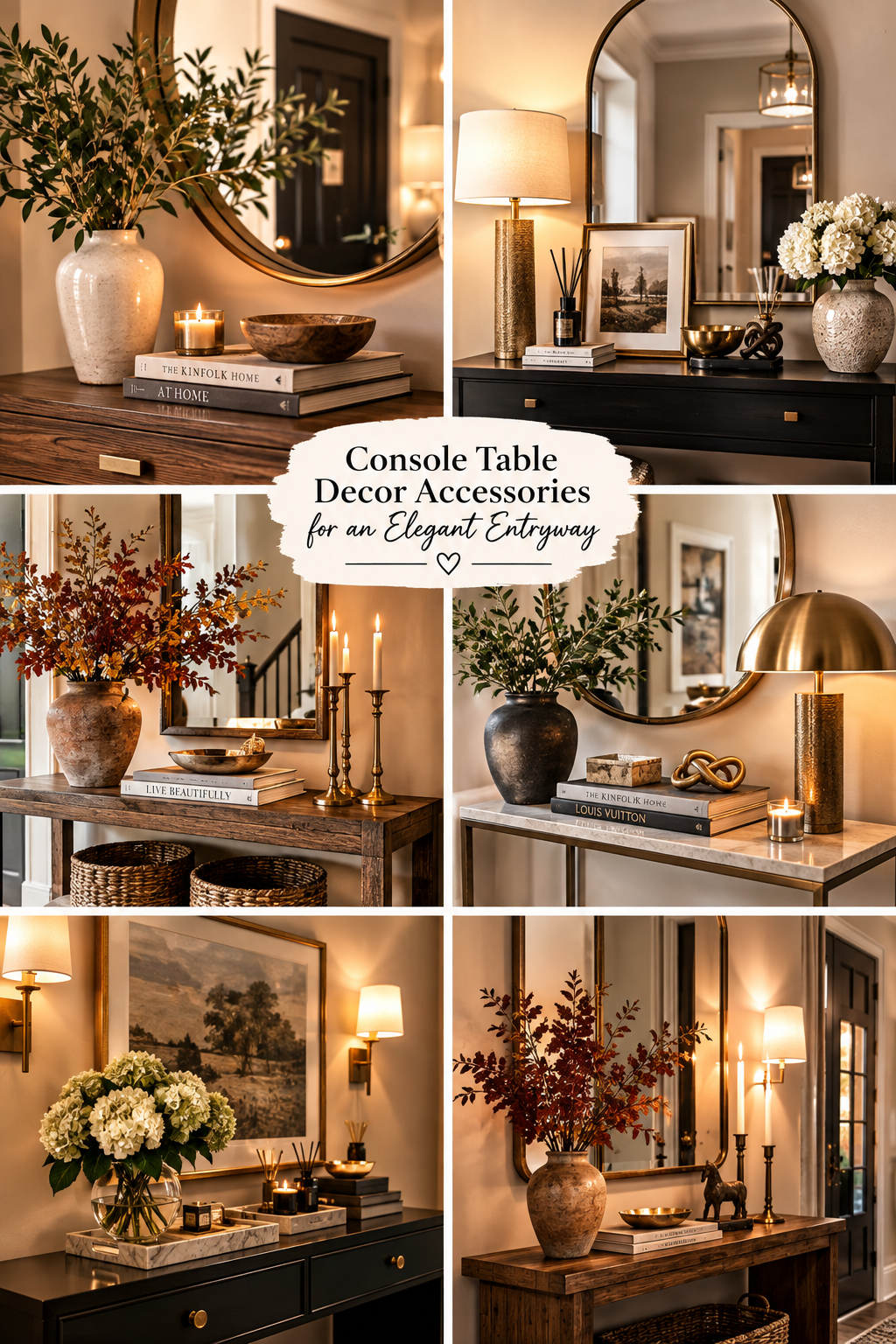
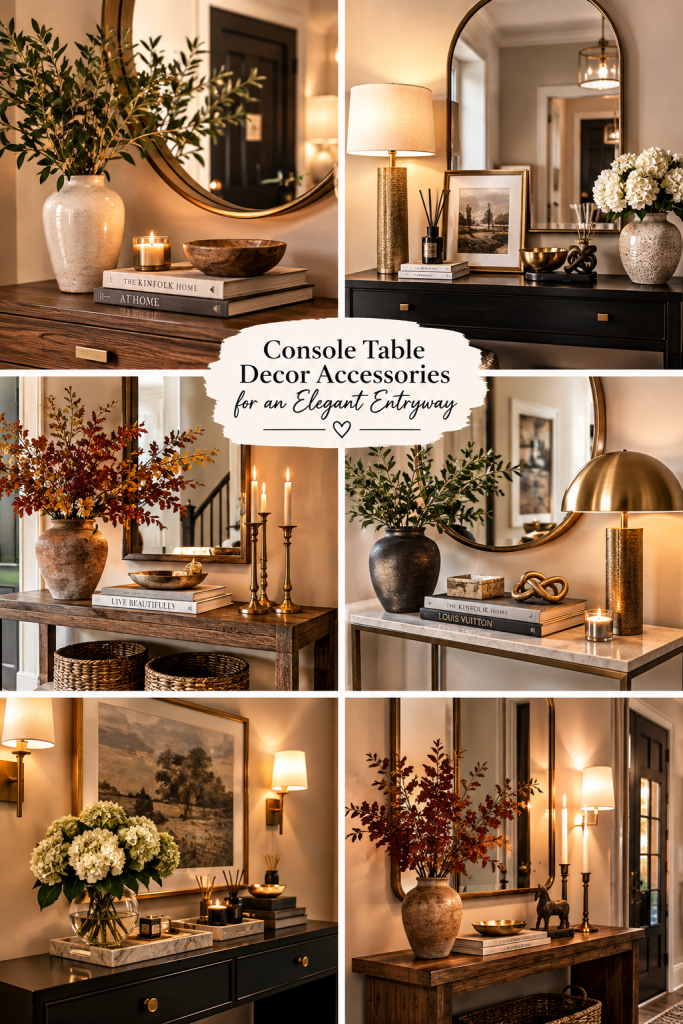
  • Console Table Decor Accessories for an Elegant Entryway

    Console Table Decor Accessories for an Elegant Entryway

    An entryway may be one of the smallest areas in a home, but it has an outsized effect on how the entire house feels. It is the first space you see when you arrive home, the first area guests experience, and often the transition point between the outside world and your private living spaces.
    That makes an entryway worth decorating intentionally.

    A console table is one of the easiest ways to give this area structure. It fills an empty wall, provides a convenient surface for everyday items, and creates a natural place to introduce the colors, materials, and personality found throughout the rest of the home.

    But an elegant console table does not require dozens of decorative objects.

    In fact, the opposite is usually true.

    A successful arrangement depends more on selection and proportion than quantity. One beautiful mirror can have more impact than a crowded gallery wall. One sculptural lamp can make a stronger statement than several small accessories. A carefully chosen tray can make everyday keys and sunglasses feel organized rather than messy.

    Current entryway styling guidance continues to emphasize this balance between decoration and function. Designers are recommending practical catch-all pieces, soft lighting, mirrors, ceramic vessels, natural textures, and personalized objects while discouraging surfaces that become overloaded with small decorative items.

    This approach is particularly useful for modern homes because entryways need to look beautiful while still handling real life.

    Keys need somewhere to go.

    Mail needs to be controlled.

    Small personal belongings inevitably arrive at the front door.

    The console table should accommodate those habits rather than fight them.

    A decorative tray can provide a landing zone. A bowl can collect keys. A lamp can provide warm evening illumination. A vase can bring height and organic texture. Books can add personality. A sculptural object can introduce an artistic element.

    The goal is to make every accessory earn its place.

    Another important consideration is scale.

    A console table that is beautifully styled with appropriately sized accessories can make an entryway feel polished and intentional. The same table can feel cluttered if it is covered with objects that are all the same size or competing for attention.

    The wall above the table matters just as much as the tabletop.

    A mirror or artwork establishes the vertical focal point, while the objects below create a visual connection between the wall and furniture. Together, they form one composition rather than two separate decorating projects.

    For smaller entryways, restraint becomes even more important. A narrow console should not be overwhelmed by oversized accessories, and the walking path should remain comfortable. A slim table paired with a mirror, one tall accessory, a functional tray, and a little greenery can be enough to make a compact foyer feel complete.

    Larger entryways offer more freedom, but even a wide console does not need to be filled from end to end. Empty space helps important pieces stand out and preserves the practical purpose of the surface.

    The most elegant entryways also tend to feel personal.

    They are not simply collections of things that look good together. A framed photograph, vintage object, handmade ceramic piece, travel find, or favorite book can give the arrangement a sense of history and individuality.

    The following ten accessories provide a flexible starting point for creating an elegant console table. You do not need every item. Select the pieces that suit your table, entryway, lifestyle, and decorating style.

    1. Make a Statement With a Mirror

    A mirror is one of the most effective accessories for an entryway console because it combines decoration with everyday function.
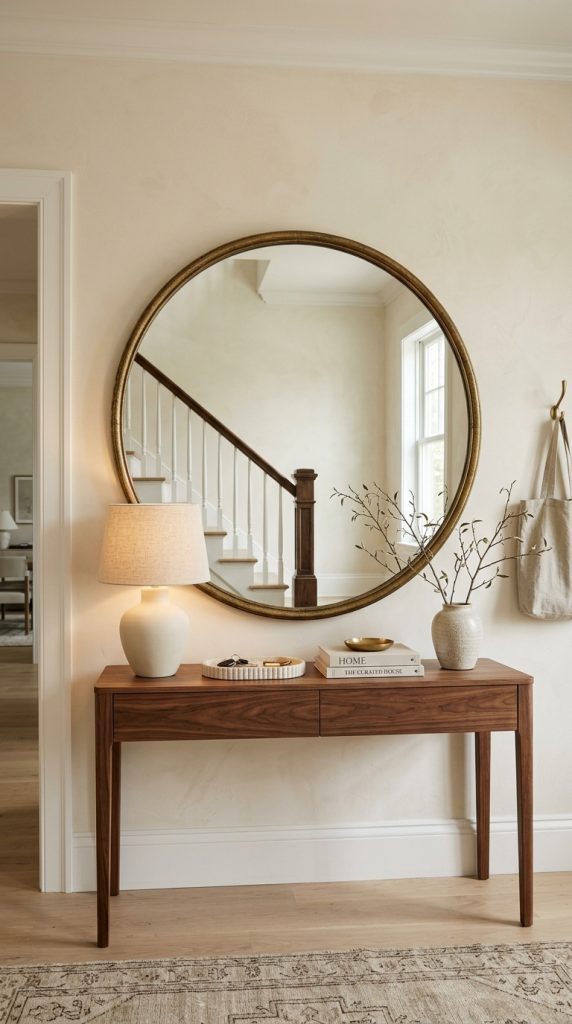
    It gives the wall above the console a clear focal point while reflecting available light and creating a greater sense of openness. This can be particularly valuable in narrow hallways, apartments, or entryways without large windows.

    The shape of the mirror can influence the character of the entire arrangement.

    A round mirror introduces softness and works especially well with rectangular furniture. An arched mirror adds architectural interest and draws the eye upward. A rectangular mirror creates a more structured appearance and can suit contemporary or minimalist interiors.

    The frame provides another opportunity to establish the design direction.

    Consider warm walnut for an organic interior, aged brass for traditional elegance, matte black for contrast, natural oak for a relaxed look, or champagne-toned metal for subtle sophistication.

    The mirror should relate visually to the console rather than appear disconnected from it. A useful starting point is a mirror that is somewhat narrower than the console, allowing the furniture to remain visually grounded.

    Instead of surrounding a large mirror with numerous wall decorations, allow it to function as the primary focal point.

    The simpler surrounding wall often makes the mirror feel more substantial.

    A mirror can also be positioned strategically to reflect a window, attractive artwork, architectural feature, or light source. This adds depth without requiring additional decoration.

    2. Introduce a Sculptural Table Lamp

    A table lamp is both a practical lighting source and a decorative accessory, making it particularly valuable on an entryway console.
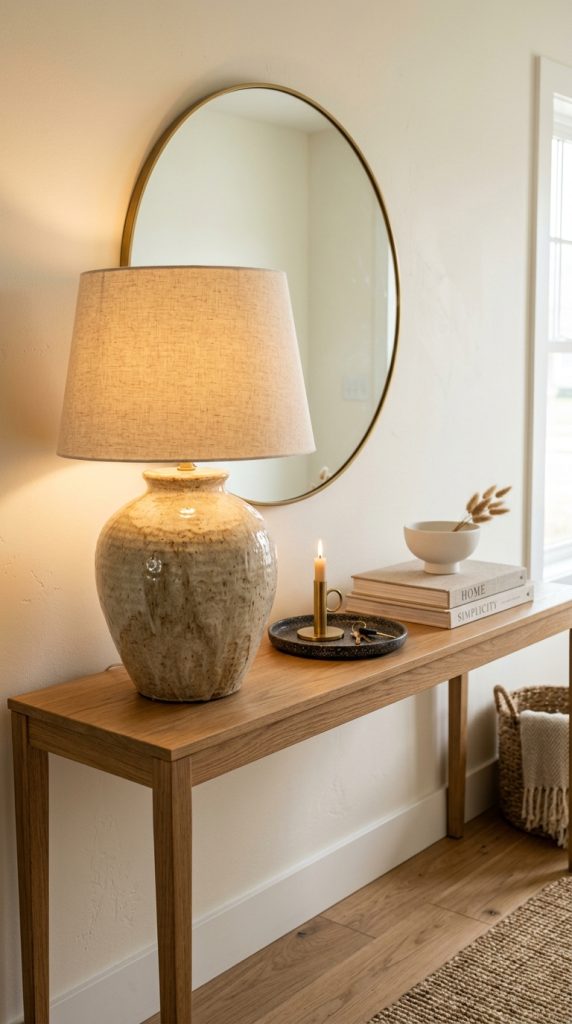
    During daylight, the lamp contributes shape and material. In the evening, it creates a warm pool of light that makes the entryway feel more welcoming.

    Current design advice increasingly favors decorative lamps and layered lighting instead of relying exclusively on overhead fixtures. Sculptural lamps can provide warmth while also functioning as an intentional design feature.

    The lamp itself can establish the mood.

    A ceramic lamp feels soft and handcrafted.

    A stone or plaster-style lamp suits organic modern interiors.

    A brass base introduces warmth.

    A linen shade creates a relaxed, timeless appearance.

    A dark sculptural lamp can provide contrast against a light console or wall.

    For a narrow console, choose a lamp with a relatively compact footprint. A wider console can support a more substantial design or even a pair of lamps.

    One lamp works especially well with an asymmetrical arrangement, allowing the opposite side of the table to contain a vase, books, or another lower object.

    Warm-toned lighting is generally more inviting in an entryway than harsh, cool illumination. The lamp should illuminate the surrounding area without producing uncomfortable glare in the mirror.

    The best lamp is one that looks intentional even when it is switched off.

    3. Add a Decorative Tray for Everyday Function

    A decorative tray is one of the most useful accessories you can add to an entryway console.
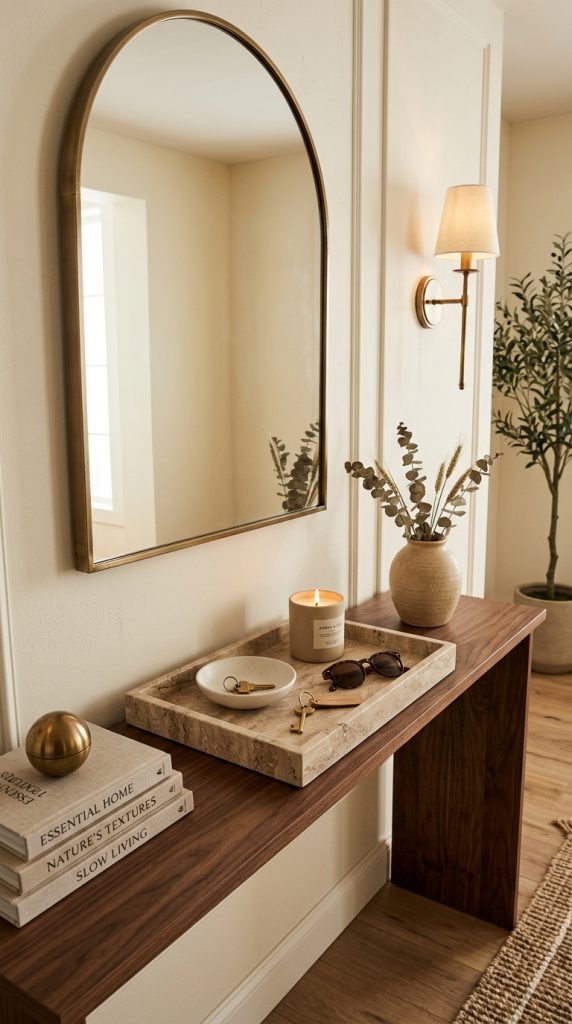
    Its primary purpose is organization, but it can also strengthen the visual composition.

    Keys, sunglasses, wallets, small accessories, and other daily necessities tend to spread across an unstructured surface. A tray creates a defined zone for those objects.

    This means the console can remain functional without looking like a storage station.

    The material of the tray can also introduce contrast.

    A wooden tray works naturally with walnut or oak.

    A stone tray adds sophistication.

    A brass tray creates a subtle glamorous accent.

    A woven tray introduces warmth and texture.

    A lacquered tray can complement a more polished contemporary interior.

    A shallow catch-all bowl can be placed inside the tray or used independently for keys and loose items.

    The important distinction is between organized function and accumulated clutter.

    The tray should not become a container for every object that enters the house. Give it a clear purpose and remove items that do not belong there.

    This is one of the simplest ways to make an elegant entryway practical enough for everyday use. Designers continue to recommend trays and catch-all bowls as stylish ways to control loose belongings.

    4. Bring Height With a Ceramic Vase and Branches

    A tall vase provides vertical interest and gives a console table a natural focal element.
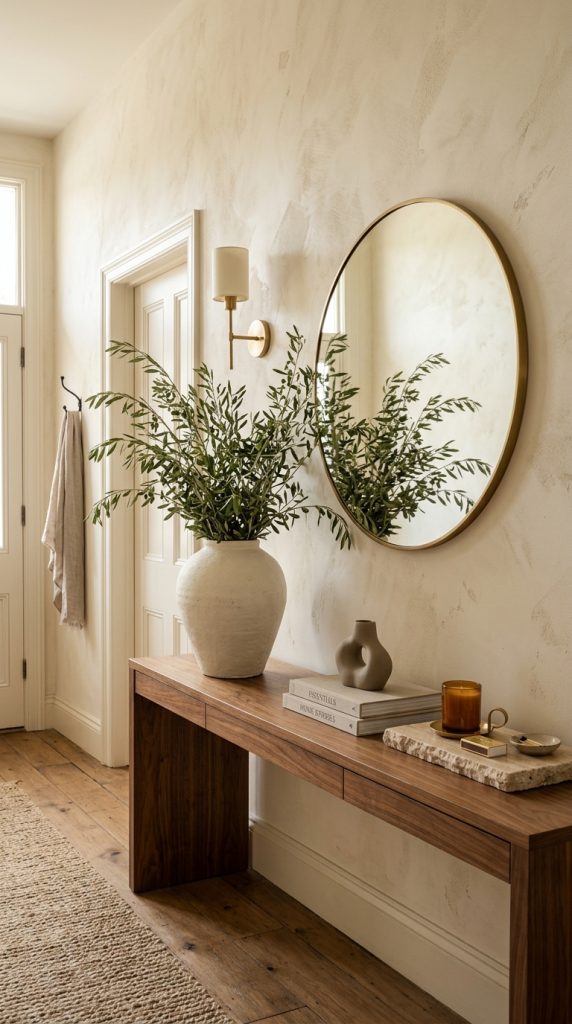
    Ceramic is particularly versatile because it can look sophisticated without feeling overly formal.

    Choose a vessel with a shape that complements the furniture rather than competing with it.

    A handmade-looking ceramic vase can add character to a modern wood console. A smooth stone-colored vessel works beautifully in minimalist interiors. Dark ceramic provides contrast against pale walls, while warm white can maintain a softer neutral palette.

    Instead of filling the vase with an enormous bouquet, consider a smaller arrangement of branches.

    Suitable options include:

    • olive branches
    • eucalyptus
    • dried grasses
    • delicate flowering branches
    • preserved greenery
    • seasonal foliage

    The slightly irregular shapes of branches create movement and keep the arrangement from appearing overly manufactured.

    A tall vase is especially useful when the console itself is low or visually horizontal.

    It introduces another vertical layer without requiring additional wall decoration.

    Keep the arrangement proportionate to the table. The vase should have enough presence to be noticed while leaving enough visual room for the other accessories.

    5. Layer Two or Three Books

    Books add personality while also providing a practical styling layer.
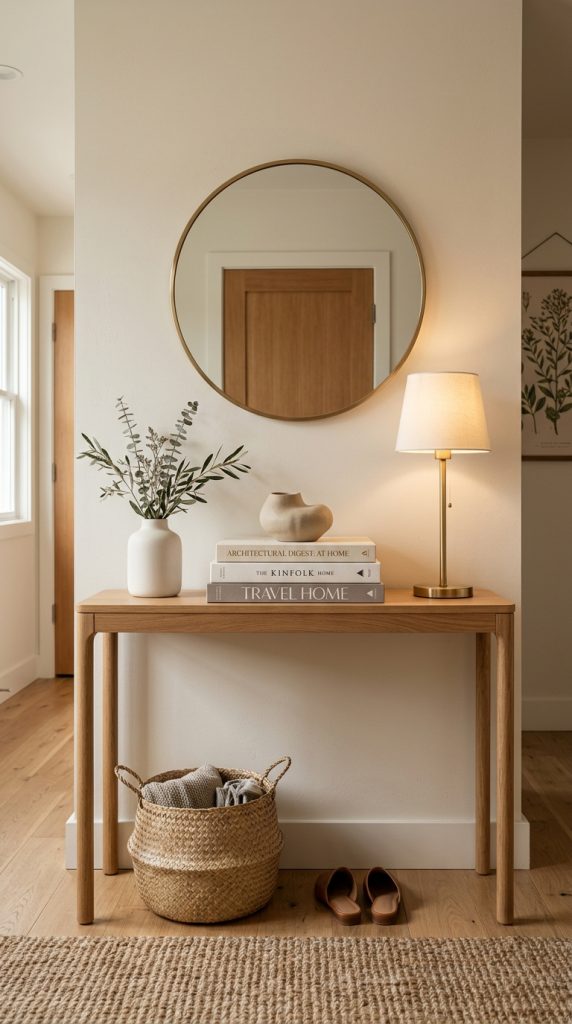
    A small horizontal stack can raise a decorative object, create visual weight, or bridge the height difference between larger and smaller accessories.

    Choose books that you genuinely enjoy whenever possible. Their presence should make the entryway feel lived-in rather than staged.

    Neutral covers work particularly well in elegant interiors:

    • cream
    • beige
    • warm brown
    • charcoal
    • black
    • muted green
    • soft taupe

    Two or three books are generally enough.

    A small ceramic object, candle, or decorative bowl can sit on top of the stack.

    Books are especially useful when the other accessories are tall. They introduce a lower horizontal layer that keeps the composition from becoming a collection of vertical objects.

    They can also connect the entryway to the personality of the people who live in the home.

    6. Add One Sculptural Object

    A single sculptural object can prevent an elegant console from feeling too predictable.
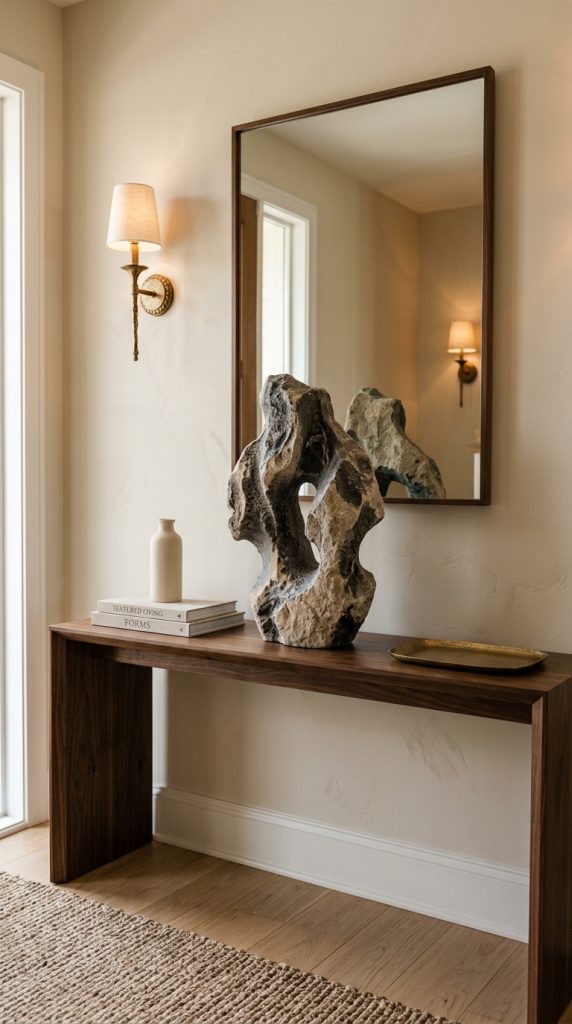
    This could be an abstract ceramic form, stone sculpture, wooden object, metal shape, architectural piece, decorative knot, or handcrafted vessel.

    The purpose is not necessarily to communicate a particular theme.

    Instead, look for something with an interesting silhouette.

    Shape can become the decoration.

    If your console has straight architectural lines, a rounded sculpture can soften it. If you already have a round mirror, a more angular object can provide contrast.

    The material can introduce another layer of texture.

    Stone feels grounded.

    Wood feels warm.

    Metal adds structure.

    Ceramic feels artistic and tactile.

    Glass can provide lightness.

    One strong sculptural piece is usually more effective than several small decorative objects competing for attention.

    Let the sculpture provide personality without asking it to share the spotlight with too many other statement pieces.

    7. Add a Candle for Warmth and Atmosphere

    A candle is a small accessory that can have a surprisingly strong effect on an entryway.
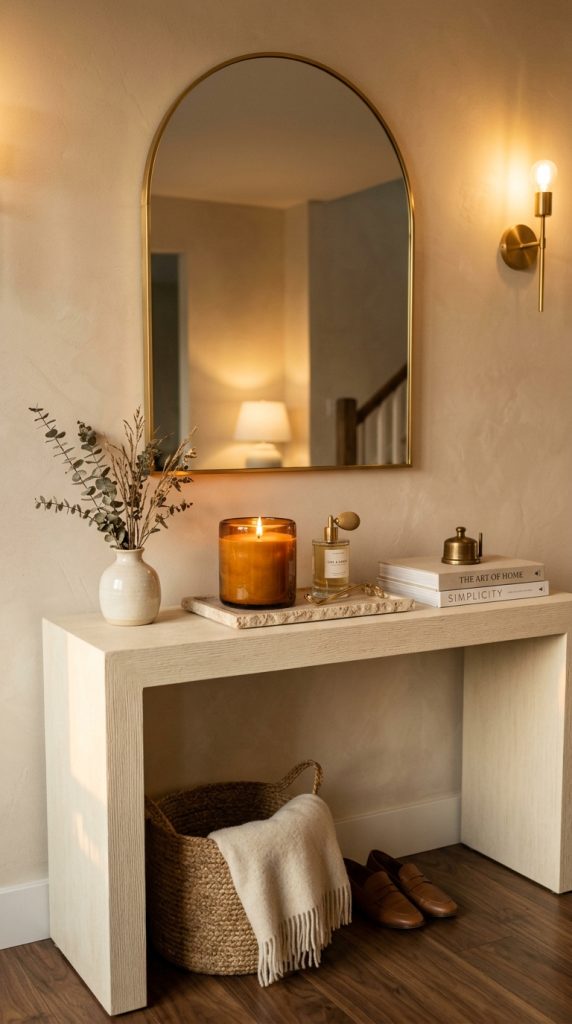
    Its container contributes to the visual design, while its fragrance can influence how the home feels when someone enters.

    For a refined arrangement, consider candles housed in ceramic, amber glass, stone, brass, or other understated vessels.

    Warm scents such as cedar, sandalwood, amber, fig, vanilla, or bergamot can create an inviting atmosphere.

    Choose one fragrance direction rather than combining several strong scents in a small space.

    The candle can sit directly on the console, on top of a small stack of books, or inside a decorative tray.

    A candleholder can also function as a sculptural accessory even when no candle is burning.

    If you prefer not to use an open flame in an entryway, a high-quality flameless candle can provide a similar visual effect.

    Always keep real candles away from curtains, branches, paper, and other combustible materials.

    8. Include One Personal Object

    A polished entryway should still feel like someone’s home.
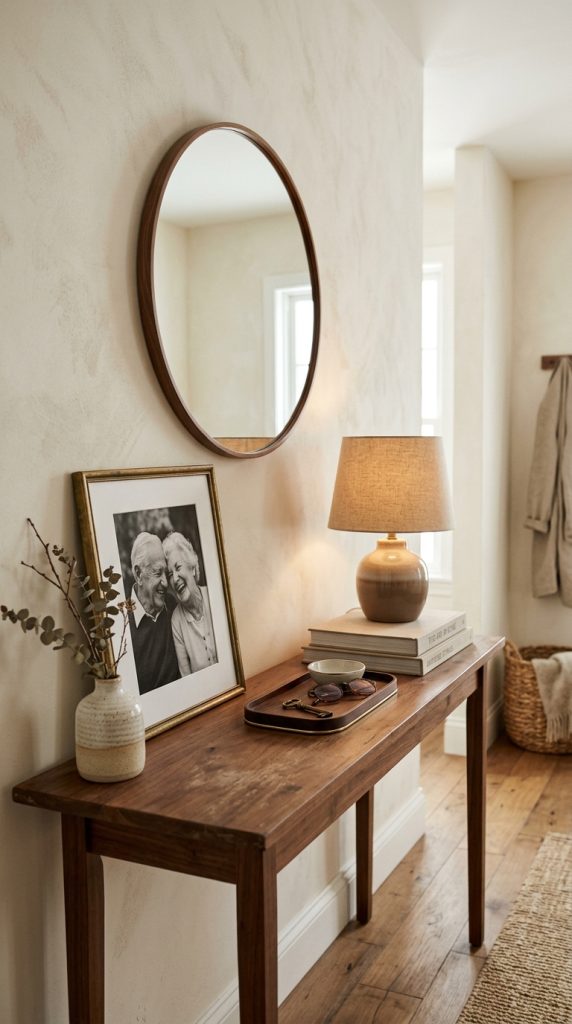
    One personal object can make a major difference.

    Consider displaying:

    • a framed photograph
    • a small travel souvenir
    • an inherited object
    • handmade pottery
    • a favorite book
    • a vintage box
    • a small artwork
    • a meaningful sculpture

    The goal is not to turn the console into a family archive.

    One carefully selected object can communicate more personality than a collection of unrelated pieces.

    A framed photograph can be particularly effective when the frame connects with another material in the entryway.

    Walnut can echo a wooden console.

    Brass can connect with lighting.

    Matte black can repeat hardware.

    Natural oak can complement flooring.

    This creates continuity while allowing the personal object to remain individual.

    9. Add a Small Plant or Natural Greenery

    Greenery introduces life and softness into an entryway.
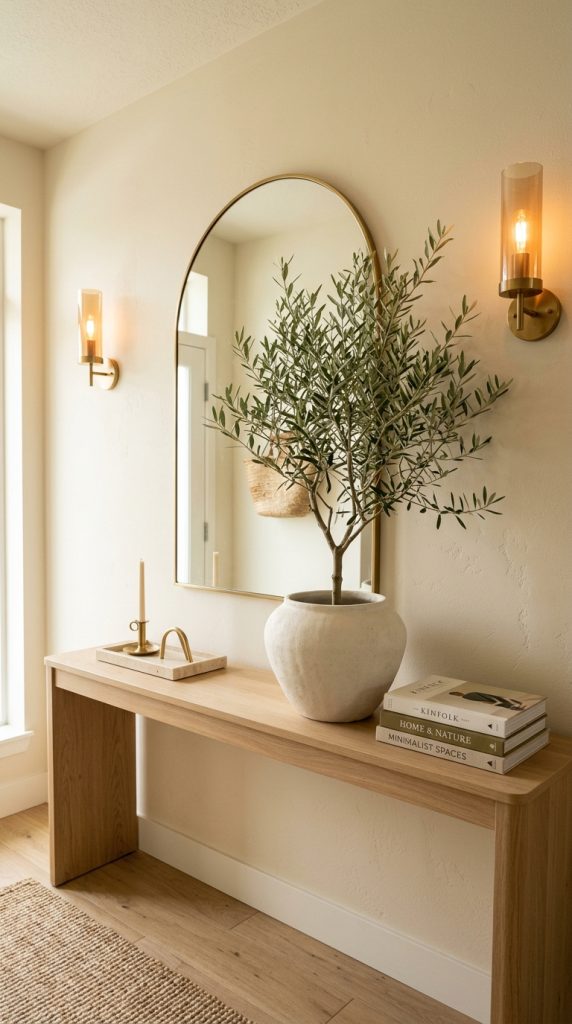
    If the area receives enough natural light, a small living plant can work beautifully. In darker spaces, preserved, dried, or high-quality faux greenery can provide a similar visual effect without demanding unsuitable growing conditions.

    Choose greenery according to the scale of the console.

    A small table does not need an enormous plant.

    A larger console can support a more substantial arrangement.

    The container is also part of the design.

    A ceramic planter creates a clean, sophisticated look.

    A woven vessel introduces natural texture.

    A stone pot reinforces an organic palette.

    Greenery is particularly effective when the console contains hard materials such as marble, glass, metal, or polished wood. The organic shapes soften those surfaces.

    You can also use greenery to connect the entryway with other rooms. If olive branches, eucalyptus, or muted greenery appear elsewhere in the home, repeating them near the front door can create visual continuity.

    10. Complete the Arrangement With a Layered Composition

    The final accessory is not necessarily a physical object.
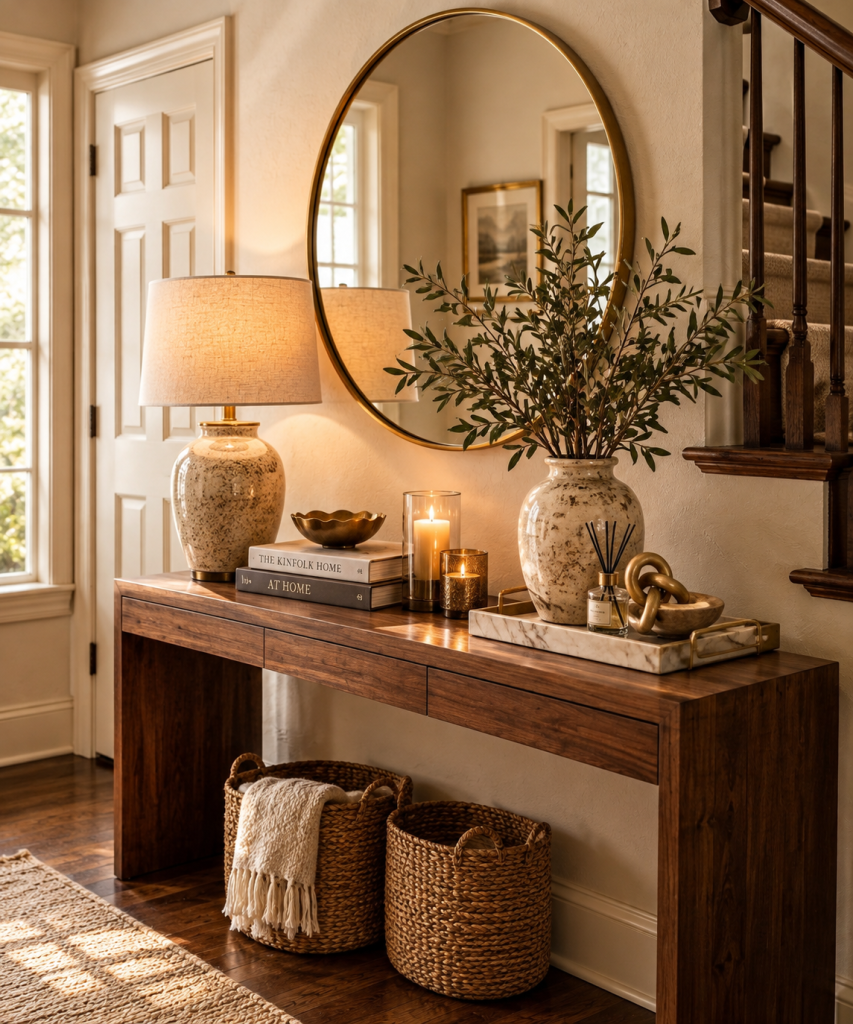
    It is the way everything works together.

    Once the mirror, lamp, tray, vase, books, sculpture, candle, personal piece, and greenery have been considered, select only the pieces that genuinely improve the arrangement.

    The goal is a composition with different visual levels.

    A typical combination might include:

    Tall: lamp or vase

    Medium: books or framed object

    Low: tray, bowl, or candle

    This creates movement across the tabletop.

    A symmetrical arrangement can work beautifully in traditional interiors, particularly when using matching lamps on both sides.

    An asymmetrical composition often feels more relaxed and contemporary.

    For example, place a lamp on one side, a small stack of books toward the center, and a low tray or bowl on the opposite side.

    The mirror or artwork above can remain centered.

    The arrangement does not need mathematical symmetry.

    It needs visual balance.

    A darker object can carry more visual weight than a lighter object of the same size. A large lamp may balance several smaller accessories. A substantial vase may require fewer surrounding objects.

    Step away from the console after arranging it and look at the entire wall rather than only the tabletop.

    That broader view makes it easier to see whether the composition feels balanced.

    Universal Styling Rules for an Elegant Console Table

    Rather than repeating the same styling advice for every accessory, use these universal principles throughout the entire arrangement.

    Start With One Strong Vertical Anchor

    Begin with the wall.

    A mirror or large piece of artwork establishes the primary focal point and gives the console a sense of scale.

    A useful starting point is an anchor that is narrower than the console so the furniture remains visually grounded. Recent console-styling guidance similarly recommends treating the mirror or artwork and console as one composition rather than unrelated pieces.

    Create Three Height Levels

    Avoid placing accessories in one flat row.

    Combine:

    • one tall element
    • one medium layer
    • one low element

    A lamp or vase can provide height. Books or a framed object can occupy the middle layer. A tray, bowl, or candle can create the lowest level.

    This simple variation gives the eye somewhere to move.

    Give Function a Dedicated Zone

    Because the entryway is a working space, reserve part of the console for everyday necessities.

    A tray or bowl can contain keys, sunglasses, and other small items.

    If shoes, bags, or coats tend to collect nearby, consider baskets, drawers, hooks, or another dedicated storage solution rather than forcing the tabletop to handle everything. Current entryway guidance emphasizes combining decorative styling with practical storage to prevent everyday clutter.

    Keep Materials Related

    You do not need everything to match.

    Instead, repeat a few materials or finishes.

    For example:

    Walnut + ceramic + aged brass

    Oak + linen + stone

    Black + ivory + wood

    Marble + bronze + glass

    Repeating a finish once or twice throughout the entryway creates cohesion without making the room look like a matching furniture set.

    Vary Shapes

    If every piece has the same silhouette, the arrangement can feel flat.

    Combine straight and curved forms.

    Pair a rectangular console with a round mirror.

    Place a curved vase beside angular books.

    Use a sculptural object against a simple architectural frame.

    Shape variation creates interest without requiring more accessories.

    Leave Meaningful Empty Space

    Do not feel obligated to fill every inch.

    Empty tabletop space allows decorative objects to remain visible and gives you somewhere to place everyday items.

    Recent console-styling guidance commonly recommends leaving a significant portion of the surface open rather than treating the entire table as a display shelf.

    If the console feels crowded, remove something before adding anything else.

    Consider the Walking Path

    The console must fit the architecture of the entryway.

    Measure the furniture before purchasing it and make sure doors can open comfortably and people can move through the area without bumping into the table or accessories.

    For narrow hallways, shallow consoles and wall-mounted solutions can preserve circulation while still providing the visual effect of an entryway table.

    Use Lighting to Finish the Mood

    A beautiful console can disappear after sunset if the entryway depends entirely on overhead lighting.

    A table lamp, wall sconce, or appropriate cordless light source can provide a softer layer.

    Warm illumination is particularly effective when paired with wood, ceramic, linen, brass, or stone.

    The lighting should support the arrangement rather than dominate it.

    Choose Personality Over Perfect Matching

    A home feels more sophisticated when it contains objects with meaning and character.

    Mix contemporary pieces with something vintage.

    Combine a new ceramic vase with an inherited photograph.

    Place a favorite book beside a modern sculpture.

    These small contrasts can make the entryway feel collected rather than purchased as a complete set.

    Edit Before You Finish

    Once the console is styled, look at it from the doorway.

    Ask:

    • Is there an obvious focal point?
    • Can I still use the surface?
    • Are the accessories different heights?
    • Is anything competing with the mirror or artwork?
    • Does the color palette feel connected?
    • Does the entryway still feel easy to walk through?
    • Does every object have a purpose?

    If something feels unnecessary, remove it.

    The goal is not to create the fullest possible arrangement.

    It is to create the clearest one.

    Styling a Narrow Console Table

    A narrow console requires particularly careful selection.

    Choose pieces with compact footprints and strong vertical presence.

    A slim lamp, small tray, narrow vase, and one decorative object may be enough.

    Avoid large bowls, oversized sculptures, or accessories that extend into the walking path.

    Wall-mounted lighting can be useful when the tabletop is extremely shallow.

    The most important rule is to protect circulation.

    The entryway should feel open even when the console is fully styled.

    Styling a Large Console Table

    A large console provides additional surface area, but that does not mean every section needs decoration.

    You can introduce a pair of lamps, a larger vase, a substantial tray, or a wider arrangement of books and accessories.

    However, preserve visual pauses between groups.

    A wide walnut console with two lamps, a large mirror, and one low bowl can feel more luxurious than the same table covered with dozens of objects.

    Scale the accessories upward rather than simply increasing their quantity.

    Modern Elegant Entryway

    For a modern elegant look, focus on clean forms and a restrained palette.

    A combination such as walnut, cream, black, brass, and stone can create depth without visual noise.

    Choose an oversized round or arched mirror, one sculptural lamp, a ceramic vase, and a simple tray.

    Keep decorative objects purposeful.

    Texture becomes particularly important when the color palette is minimal.

    Ceramic, stone, wood, linen, and woven materials prevent the space from feeling sterile.

    Traditional Elegant Entryway

    Traditional interiors can support greater symmetry.

    Consider a rectangular mirror, paired lamps, a wooden console, brass details, books, and a decorative bowl.

    A vintage or antique-inspired accessory can introduce character.

    Warm wood and aged finishes usually feel more timeless than an arrangement dominated by glossy, perfectly matching surfaces.

    Organic Modern Entryway

    Organic modern styling combines clean architecture with natural materials.

    Try a natural oak console with a rounded mirror, handmade ceramic vase, branches, stone tray, and linen-shaded lamp.

    A palette of cream, sand, taupe, warm brown, natural wood, and muted green creates a calm foundation.

    Current interior-design reporting also highlights warm earth tones, tactile materials, meaningful decor, and a mixture of vintage-inspired pieces rather than overly coordinated sets.

    Luxury Entryway

    Luxury styling is less about expensive accessories and more about proportion, materials, and restraint.

    Choose a few substantial pieces.

    For example:

    • walnut console
    • oversized mirror
    • sculptural lamp
    • stone vase
    • aged-brass tray
    • two carefully selected books

    Keep the surface open.

    Use materials that feel tactile and substantial.

    Instead of adding more accessories to make the console appear luxurious, allow the quality and scale of the existing pieces to create the effect.

    How to Keep the Console Looking Elegant Every Day

    Even the most carefully styled console can become cluttered when everyday life takes over.

    Create a simple routine.

    Keys go into the bowl.

    Mail gets removed.

    Bags return to their storage area.

    Books are straightened.

    Decorative pieces return to their original positions.

    A tray should control daily objects rather than permanently store everything.

    If the same item repeatedly ends up on the console, that is useful information. It probably needs a permanent home nearby.

    Good decorating works with your habits instead of constantly requiring you to fight them.

    Seasonal Updates Without Redecorating the Whole Table

    The easiest way to update a console for the seasons is to keep the main structure unchanged.

    Keep the mirror, lamp, and tray.

    Change the botanical element, candle, or one decorative object.

    For fall, you might introduce dried branches, amber glass, warm brown ceramics, or muted rust tones.

    For winter, use evergreen branches, darker vessels, or subtle metallic accents.

    For spring, choose lighter greenery and softer ceramics.

    For summer, natural textures and lighter colors can refresh the arrangement.

    This approach keeps seasonal decorating sophisticated instead of turning the entryway into a heavily themed display.

    Final Thoughts

    An elegant console table does not require a large collection of accessories.

    It requires thoughtful choices.

    Start with a strong mirror or artwork.

    Add a lamp or tall vase for vertical interest.

    Give everyday objects a home with a tray or bowl.

    Introduce books, greenery, a candle, or one sculptural piece for texture and personality.

    Then edit.

    The most successful console arrangements feel intentional without appearing overworked.

    They combine beauty with function.

    They provide enough decoration to make the entryway memorable while leaving enough space for everyday life.

    Whether your console is a substantial walnut piece in a spacious foyer or a slim table in a narrow hallway, the principle remains the same:

    Choose fewer, better-connected pieces and give each one a clear role.

    A beautiful entryway does not need to look like a showroom.

    It should feel like a natural extension of the home beyond the front doorโ€”welcoming, organized, personal, and effortlessly elegant.
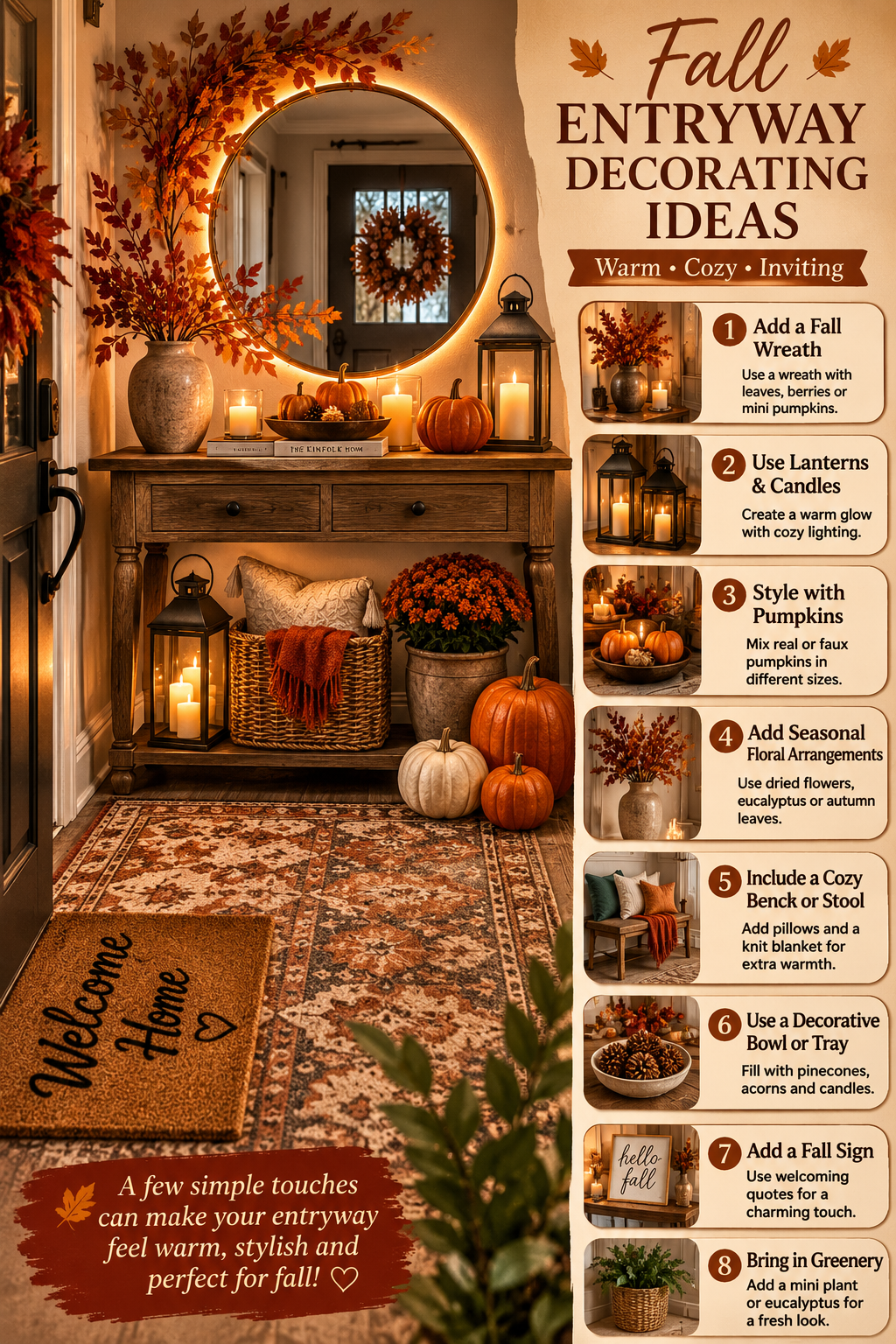

  • Fall Entryway Decorating Ideas

    Fall Entryway Decorating Ideas

    Fall is one of the easiest seasons to bring warmth, personality, and cozy charm into your home, and the entryway is the perfect place to begin. Your entryway is the first area guests see when they enter your home, so even a small decorating update can create a strong first impression. You do not need a large foyer, expensive furniture, or an elaborate renovation to create a beautiful fall-inspired entrance. With thoughtful color choices, seasonal textures, warm lighting, natural elements, and a few carefully selected decorations, you can transform even a narrow apartment entryway into a welcoming autumn retreat.

    The best fall entryway decorating ideas combine seasonal beauty with everyday practicality. An entryway still needs to function as a place for shoes, coats, bags, keys, umbrellas, and other daily essentials. The challenge is creating a space that feels festive without becoming cluttered. Instead of covering every available surface with pumpkins and autumn decorations, focus on creating one or two strong focal points and then supporting them with smaller details.

    Warm colors immediately communicate the feeling of fall. Burnt orange, rust, terracotta, caramel, mustard, deep brown, cream, muted olive, and warm beige are especially effective. You can introduce these colors through a seasonal wreath, runner, throw, artwork, ceramic pieces, pumpkins, dried foliage, or a simple welcome mat. You do not have to use every fall color at once. A restrained palette often creates a more sophisticated result.

    Natural materials are another excellent way to create autumn atmosphere. Wood, wicker, rattan, jute, dried branches, woven baskets, linen, ceramic, and natural foliage can make an entryway feel warm and organic. These materials also work beautifully with modern, farmhouse, rustic, traditional, and contemporary interiors.

    Lighting is particularly important during fall because the days become shorter and evenings arrive earlier. A small table lamp on a console, a warm wall light, lanterns, or subtle battery-operated accent lighting can make an entryway feel inviting. Warm lighting should enhance the decorations rather than overpower them. The goal is a gentle golden glow, not an overly bright space.

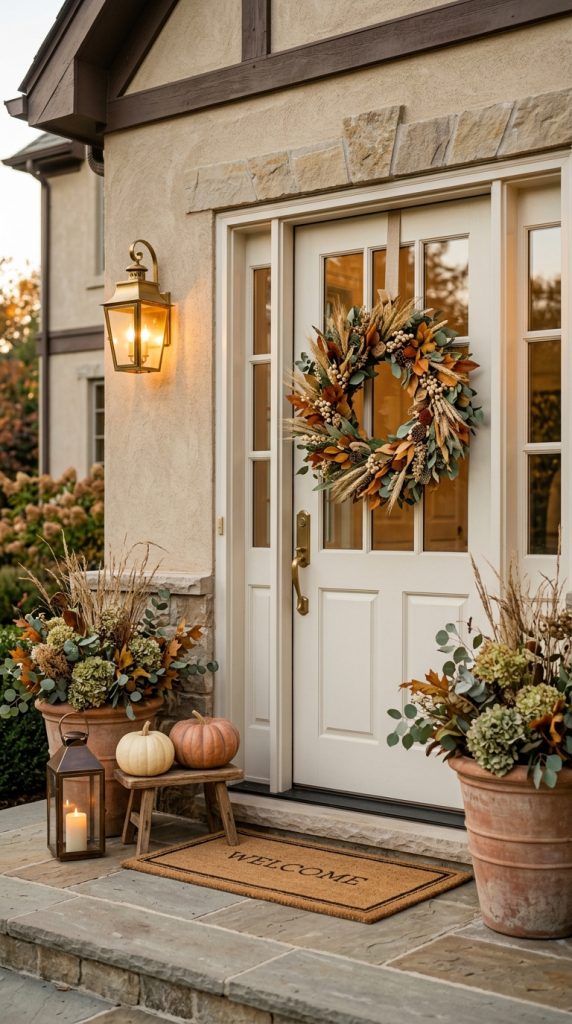
    One of the easiest fall decorating updates is a seasonal wreath. A wreath on the front door creates an immediate autumn statement before guests even enter the house. You can choose dried leaves, wheat, eucalyptus, berries, pinecones, cotton stems, miniature pumpkins, or a combination of these elements. For a more elegant look, use a restrained wreath with neutral colors and one or two autumn accents.

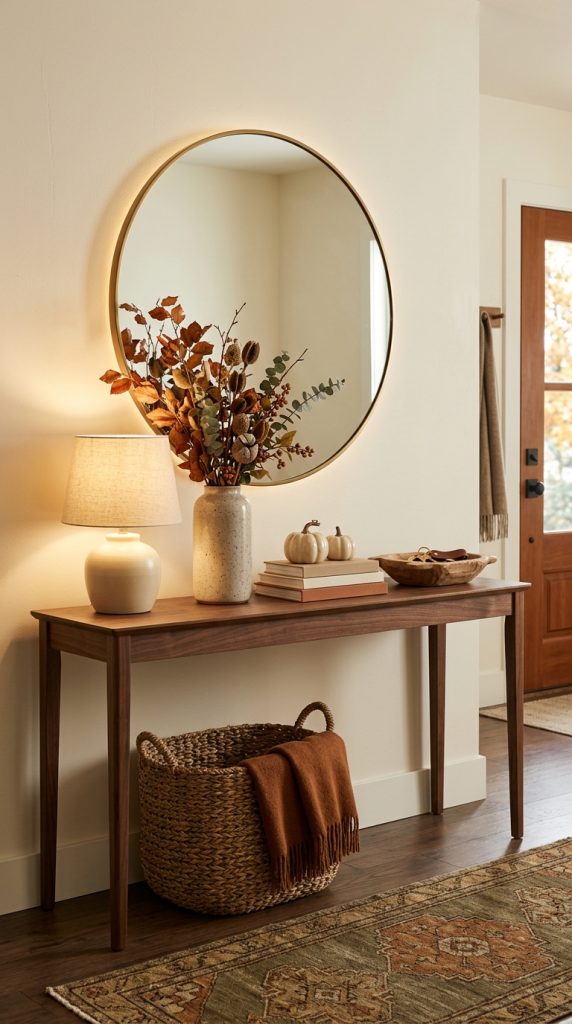
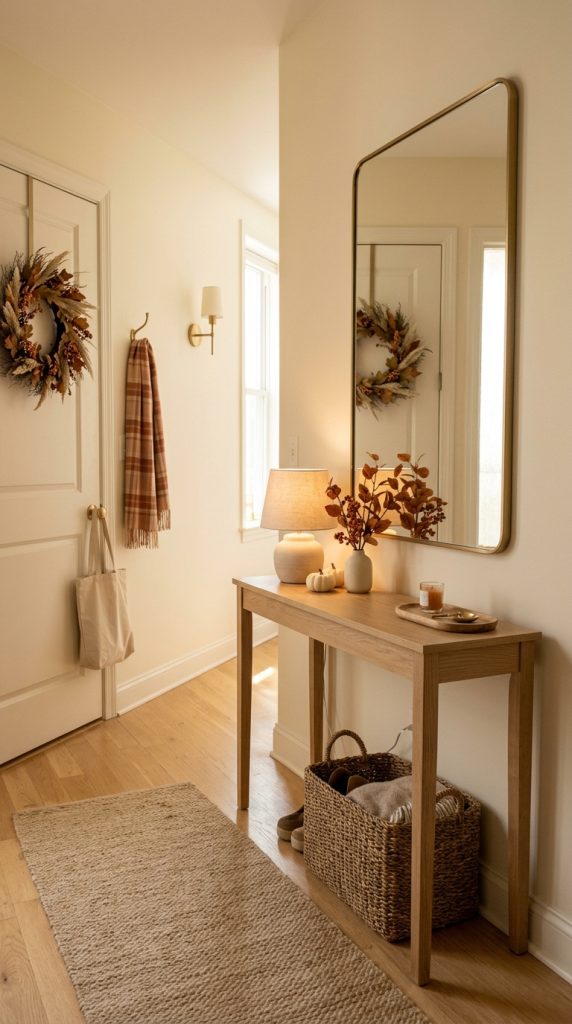
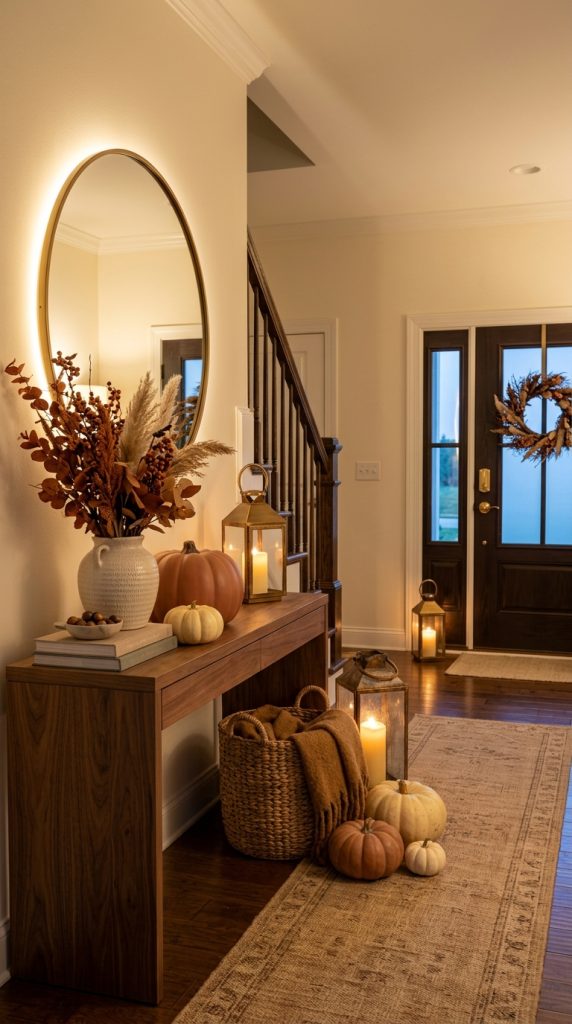
    A console table is another important entryway feature. If you already have one, you can transform it for fall without buying new furniture. Start with a mirror or artwork above the console, then add a lamp, a ceramic vase, a small arrangement of dried foliage, and one seasonal object. Leave some empty space so the arrangement feels intentional.

    If your entryway is small, vertical decorating becomes especially useful. Wall hooks, mirrors, narrow shelves, tall baskets, and vertical artwork can add personality without taking up valuable floor space. A tall mirror can also reflect light and make a small entryway appear larger.

    Fall decorating can also be very budget-friendly. You can collect natural branches, reuse existing baskets, move a lamp from another room, refresh an old wreath, or style pumpkins in a new way. Even inexpensive faux foliage can become beautiful when arranged carefully.

    The following 10 fall entryway decorating ideas are designed to be practical, attractive, beginner-friendly, and highly suitable for Pinterest content. Each concept provides a different way to create an inviting autumn entrance while keeping the overall look stylish and livable.

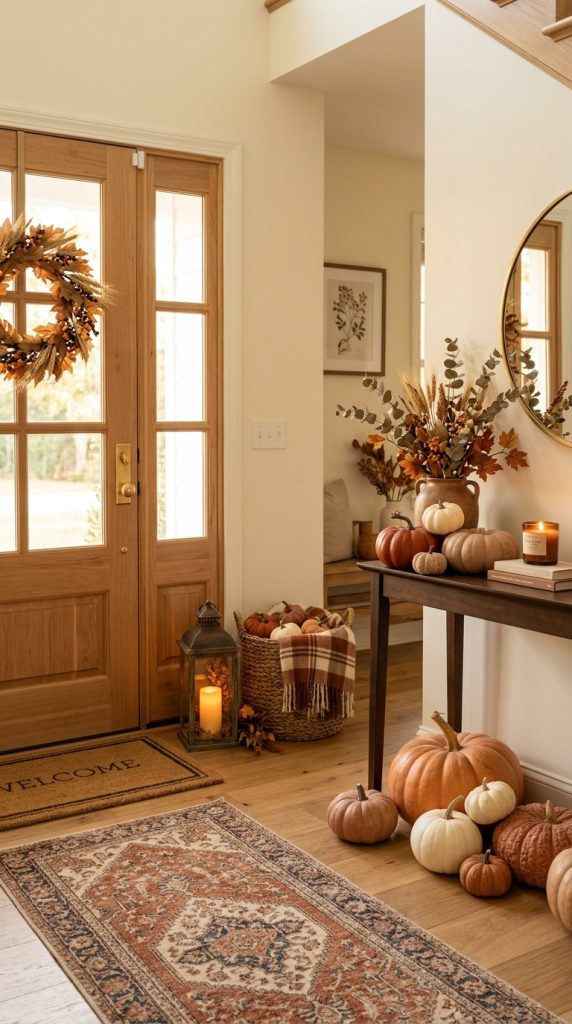
    1. Create a Warm Pumpkin-Filled Entryway

    Pumpkins are one of the most recognizable symbols of fall, making them an easy way to transform an entryway for the season. However, creating a beautiful pumpkin display is about more than placing as many pumpkins as possible near the door. A thoughtful arrangement using different sizes, shapes, colors, and textures can look much more sophisticated.

    Start with the area beside your front door or underneath your entryway console. Select pumpkins in a coordinated palette rather than choosing completely random colors. Traditional orange pumpkins create a cheerful autumn atmosphere, while cream, beige, muted green, and soft terracotta pumpkins create a more elegant appearance.

    You can mix real and faux pumpkins depending on your budget and how long you want the display to last. Faux pumpkins are particularly useful if you decorate early in the season because they can be stored and reused every year.

    Materials and Things You Need

    • Small pumpkins
    • Medium pumpkins
    • One or two larger pumpkins
    • Cream or neutral pumpkins
    • Woven basket
    • Wooden crate or low stand
    • Faux or dried autumn foliage
    • Warm lantern
    • Seasonal welcome mat

    Step-by-Step

    Begin by choosing the main location for your pumpkin display.

    If you have a large porch-style entry, create an arrangement beside the front door.

    If you have a narrow indoor entryway, place several small pumpkins beneath a console table.

    Start with your largest pumpkin.

    Add medium pumpkins around it.

    Then fill small gaps with miniature pumpkins.

    Introduce dried leaves, wheat, or branches between the pumpkins.

    Finally, add one warm lantern or small light source.

    Avoid making the display perfectly symmetrical.

    A slightly natural arrangement often feels more authentic and welcoming.

    Create Different Heights

    One of the easiest ways to make a pumpkin display more visually interesting is to use different heights.

    Place one pumpkin directly on the floor.

    Put another on a small wooden crate.

    Use a woven basket for smaller pumpkins.

    This creates layers without requiring expensive decorating accessories.

    Choose a Cohesive Color Palette

    For a traditional fall look, use orange, cream, brown, and green.

    For an elegant look, try cream, beige, muted orange, and walnut.

    For a modern look, use black, cream, terracotta, and warm brown.

    For a rustic look, combine orange pumpkins with wood, wicker, and dried leaves.

    Add Warm Lighting

    A pumpkin arrangement becomes especially beautiful during the evening when illuminated by warm lighting.

    Use a lantern with a warm LED light near the display.

    You can also use subtle string lights inside a glass container.

    Avoid excessive lighting.

    A gentle glow will make the entryway feel cozy while preserving the natural autumn atmosphere.

    Budget-Friendly Tip

    You do not need dozens of pumpkins.

    A small group of five to seven pumpkins can create a strong display when they are arranged thoughtfully.

    You can also reuse the same pumpkins in different arrangements throughout the fall season.

    2. Decorate the Front Door With an Elegant Fall Wreath

    A fall wreath is one of the simplest ways to give your entryway an immediate seasonal transformation.

    Because the front door is usually the first visible feature, a beautiful wreath can establish the color palette for the entire entryway.

    Instead of choosing a wreath with every possible autumn decoration, select a clear style.

    You might create a rustic wreath using dried wheat and eucalyptus.

    You might choose a traditional wreath filled with orange leaves and berries.

    Or you could create an elegant neutral wreath using cream foliage, dried grasses, and small terracotta accents.

    Materials and Things You Need

    • Grapevine or faux wreath base
    • Dried leaves
    • Wheat stems
    • Faux eucalyptus
    • Small berries
    • Mini pumpkins
    • Ribbon
    • Floral wire
    • Door-safe hanging hardware

    Step-by-Step

    Choose your wreath base.

    Decide on two or three primary colors.

    Arrange the largest foliage first.

    Add smaller leaves and stems.

    Introduce berries or miniature pumpkins.

    Secure everything with floral wire.

    Add a ribbon if desired.

    Hang the wreath securely using an appropriate method for your door.

    Make the Wreath Look Expensive

    The key to an expensive-looking wreath is restraint.

    Use repeated colors.

    Leave some of the wreath base visible.

    Do not cover every inch with decorations.

    Mix textures rather than adding more objects.

    For example, combine dried grasses, smooth leaves, and a few berries.

    Add a Seasonal Door Mat

    Place a simple natural-fiber mat underneath the wreath.

    A jute or coir-style mat can complement the natural colors of autumn.

    Avoid choosing a mat with a very bold design if the wreath is already visually strong.

    The two should work together.

    Add Subtle Lighting

    If the entrance is dim in the evening, add warm lanterns on either side of the door where appropriate.

    The wreath will then remain visible after sunset.

    This creates a welcoming glow and adds another layer of seasonal atmosphere.

    3. Style a Fall Entryway Console

    If your home has an entryway console, it can become the main decorating feature for fall.

    You do not need to replace the console.

    Instead, change the accessories displayed on it.

    Start by clearing the surface completely.

    Then build the arrangement from large elements to small details.

    Materials and Things You Need

    • Entryway console
    • Mirror or artwork
    • Table lamp
    • Ceramic vase
    • Dried branches
    • Small pumpkins
    • Decorative bowl
    • Books
    • Small woven basket

    Step-by-Step

    Place a mirror or artwork above the console.

    Add a lamp to one side.

    Place a vase with dried branches on the other side.

    Add a small stack of books.

    Place one or two miniature pumpkins near the arrangement.

    Use a bowl or tray for keys.

    Leave some open space.

    Use the Rule of Different Heights

    A lamp provides height.

    A vase creates another vertical element.

    Books create a low layer.

    A pumpkin provides a seasonal accent.

    This makes the arrangement visually dynamic.

    Choose Seasonal Foliage

    Dried branches can be particularly effective because they add height and texture without requiring extensive maintenance.

    Try:

    • Dried eucalyptus
    • Wheat
    • Pampas-style grasses
    • Autumn leaves
    • Berry branches

    Keep the arrangement slightly loose and natural.

    Add Warm Lighting

    A table lamp can dramatically change the appearance of the entryway at night.

    Choose a warm bulb and a shade that produces soft illumination.

    You can also place a small decorative light behind the console if the furniture allows for safe installation.

    The goal is a gentle glow.

    Keep It Functional

    Do not sacrifice the console’s practical purpose.

    If you need a place for keys, include a beautiful tray.

    If you need storage, use baskets underneath.

    Decorating should improve the space rather than make everyday life harder.

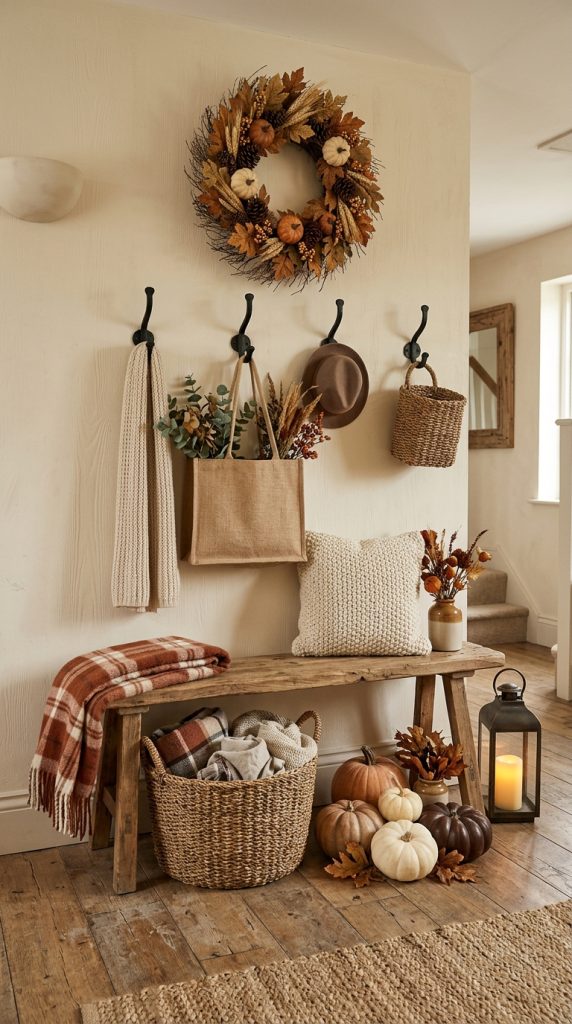
    4. Create a Cozy Rustic Fall Entryway

    A rustic fall entryway is ideal if you love warm wood, natural textures, vintage-inspired pieces, and traditional autumn colors.

    The goal is to create an entrance that feels like a cozy countryside home.

    Start with natural materials.

    Wood should be one of the primary elements.

    You can use a wooden bench, console, coat hooks, framed artwork, or decorative crate.

    Materials and Things You Need

    • Wooden bench
    • Woven basket
    • Jute runner
    • Plaid throw
    • Rustic hooks
    • Small pumpkins
    • Dried foliage
    • Lantern
    • Wooden sign or artwork

    Step-by-Step

    Place a wooden bench against the wall.

    Add a neutral or plaid cushion.

    Drape a warm throw across one side.

    Place a large woven basket beneath the bench.

    Add a few seasonal items inside the basket.

    Hang rustic hooks above the bench.

    Add a wreath or autumn artwork.

    Place a lantern near the floor.

    Add Warm Textures

    Plaid immediately creates a fall feeling.

    Choose warm shades such as:

    • Rust
    • Brown
    • Cream
    • Mustard
    • Olive

    Combine plaid with woven materials and natural wood.

    Use Vintage Details

    A vintage-style frame or antique-looking lantern can give the entryway character.

    You do not need authentic antiques.

    Affordable vintage-inspired pieces can create a similar visual effect.

    Avoid Excessive Rustic Decor

    Do not cover every surface with farmhouse signs and seasonal decorations.

    One or two rustic focal pieces are enough.

    Allow the natural wood and textures to remain visible.

    5. Design a Small Apartment Fall Entryway

    A small entryway does not mean you have to sacrifice seasonal style.

    In fact, small spaces can look especially beautiful when decorated with a carefully edited collection of fall elements.

    The most important principle is to use vertical space.

    Materials and Things You Need

    • Narrow console
    • Wall mirror
    • Wall hooks
    • Small wreath
    • Slim runner
    • Small basket
    • Mini pumpkins
    • Small lamp
    • Dried branches

    Step-by-Step

    Start with a narrow runner.

    Install or use a slim console if space allows.

    Place a mirror above it.

    Add one small lamp.

    Use a tiny vase with dried foliage.

    Place two or three miniature pumpkins on the surface.

    Add a small basket underneath.

    Use the Walls

    Wall hooks can provide practical storage without taking up floor space.

    A vertical mirror makes the space feel larger.

    A narrow floating shelf can provide another decorating surface.

    Avoid Large Decorations

    A giant pumpkin display may overwhelm a small apartment entry.

    Instead, use miniature pumpkins and small seasonal accessories.

    One beautiful wreath can create more impact than ten small decorations.

    Choose Light Colors

    If the entryway is narrow or lacks natural light, consider cream, beige, warm white, and muted terracotta.

    These colors help maintain an airy appearance.

    Add darker colors through small accents rather than large furniture pieces.

    Lighting Matters

    A small entryway can feel dark.

    Use a compact warm lamp if there is a safe surface for it.

    Battery-operated decorative lighting can also add warmth where appropriate.

    Keep all cords and lighting safely arranged away from walking paths.

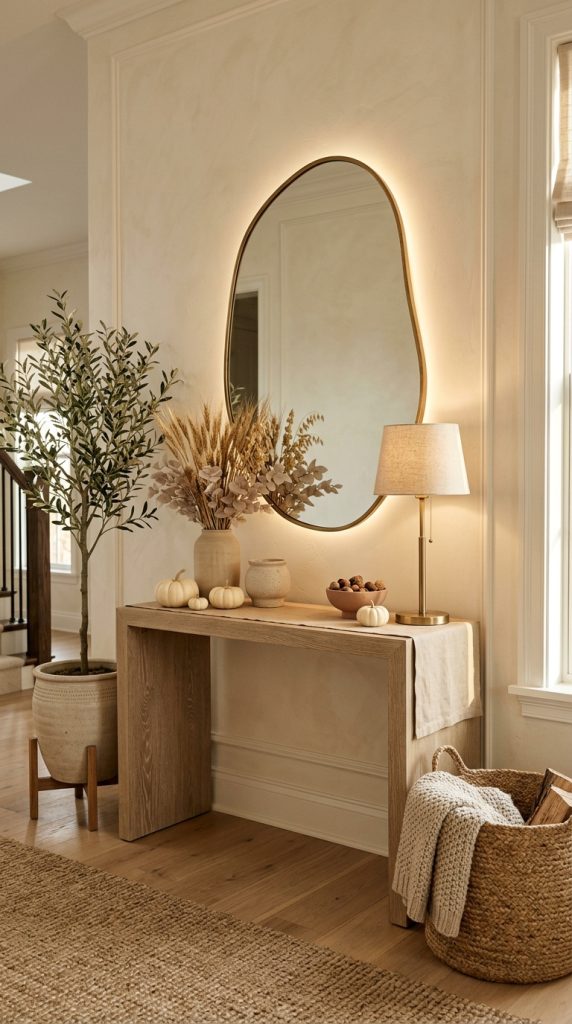
    6. Create an Elegant Neutral Fall Entryway

    Fall decorating does not have to mean bright orange everywhere.

    A neutral autumn entryway can feel sophisticated, modern, and timeless.

    Use cream, beige, taupe, brown, muted olive, and subtle terracotta.

    Materials and Things You Need

    • Cream pumpkins
    • Beige ceramic vase
    • Dried grasses
    • Wooden console
    • Neutral mirror
    • Linen runner
    • Woven basket
    • Warm lamp
    • Small olive-toned foliage

    Step-by-Step

    Place a wooden or neutral console.

    Add a large mirror.

    Use a beige ceramic vase with dried grasses.

    Place cream pumpkins around the vase.

    Add a warm lamp.

    Use a woven basket underneath.

    Finish with one muted terracotta accent.

    Why Neutral Fall Decor Works

    Neutral colors allow the textures to become the main feature.

    The rough surface of a pumpkin contrasts with smooth ceramic.

    Woven baskets contrast with polished wood.

    Dried grasses introduce movement.

    Warm lighting adds depth.

    Add a Touch of Green

    Muted olive or eucalyptus tones can prevent a neutral entryway from feeling flat.

    Use greenery sparingly.

    A single branch arrangement may be enough.

    Make It Pinterest-Friendly

    A neutral entryway photographs beautifully because the colors create a calm visual composition.

    Use natural daylight during the day.

    For evening images, use warm lamps and subtle accent lighting.

    Keep the background clean.

    Allow one focal point to dominate.

    7. Decorate an Entryway Bench for Fall

    A bench is one of the most useful entryway furniture pieces because it provides both seating and storage.

    It can also become a beautiful seasonal decorating feature.

    Materials and Things You Need

    • Entryway bench
    • Neutral cushion
    • Fall throw
    • Plaid pillow
    • Woven basket
    • Small pumpkins
    • Seasonal artwork
    • Warm lantern

    Step-by-Step

    Place the bench against a wall.

    Add a comfortable cushion.

    Layer one fall-colored pillow.

    Drape a throw over one side.

    Place baskets underneath.

    Use the baskets for shoes, scarves, or seasonal accessories.

    Add small pumpkins beside the baskets.

    Choose Comfortable Textiles

    Fall is associated with warmth and comfort.

    Use:

    • Chunky knits
    • Cotton
    • Linen
    • Plaid
    • Soft woven fabrics

    Combine textures rather than using too many patterns.

    Add a Wall Focal Point

    Hang a mirror, wreath, or seasonal artwork above the bench.

    A large round mirror can soften a rectangular bench.

    A fall wreath can immediately establish the season.

    Add Lighting

    A small wall light or nearby floor lamp can create a cozy evening atmosphere.

    Warm illumination works particularly well with wood and textiles.

    Keep the Bench Functional

    Remember that people need to sit on it.

    Do not cover the entire bench with pumpkins.

    Decorations should remain primarily on the sides or underneath.

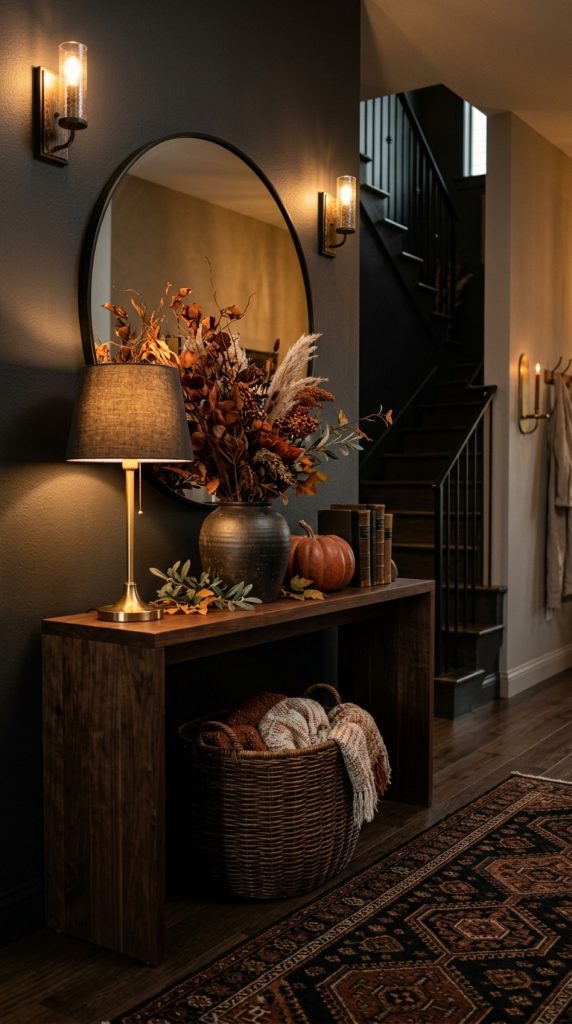
    8. Create a Moody Fall Entryway With Dark Accents

    For a dramatic autumn look, use darker colors such as charcoal, black, deep brown, and dark olive.

    This style works particularly well in homes with traditional or modern interiors.

    Materials and Things You Need

    • Dark console
    • Black mirror frame
    • Dark ceramic vase
    • Rust-colored foliage
    • Deep brown basket
    • Warm lamp
    • Small orange pumpkin
    • Dark runner

    Step-by-Step

    Start with a dark console or furniture piece.

    Hang a black-framed mirror above it.

    Add a warm lamp.

    Place rust-colored dried foliage in a dark ceramic vase.

    Add one or two orange pumpkins.

    Use a dark runner to ground the arrangement.

    Balance Dark Colors

    Dark decor can make a small entryway feel visually heavy.

    Balance it with cream walls, warm lighting, and lighter seasonal accents.

    For example:

    Black + cream + rust

    or

    Chocolate brown + ivory + terracotta.

    Use Lighting as Contrast

    Warm lighting is especially important in a moody entryway.

    A glowing lamp or lantern creates a beautiful contrast against darker furniture.

    Keep the light soft.

    The goal is atmospheric rather than gloomy.

    Add Texture

    Dark colors become more interesting when combined with texture.

    Use:

    • Woven baskets
    • Rough ceramic
    • Wood
    • Linen
    • Dried foliage

    This keeps the design from feeling flat.

    9. Create a Budget-Friendly DIY Fall Entryway

    You do not need to purchase a complete collection of seasonal decorations.

    A DIY approach can create a beautiful fall entryway for very little money.

    Start by looking around your home.

    You may already have baskets, vases, frames, candles, lamps, books, and wooden accessories that can be reused.

    Materials and Things You Need

    • Existing vase
    • Existing basket
    • Small pumpkins
    • Dried branches
    • Ribbon
    • Old picture frame
    • Kraft paper
    • Warm LED lights
    • Wooden crate

    Step-by-Step

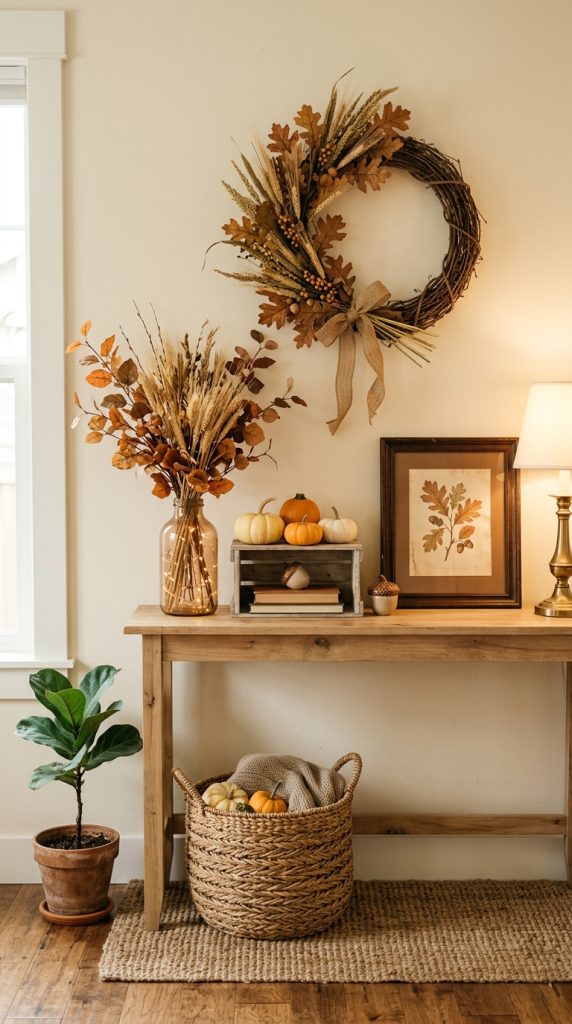
    Create a simple fall artwork using an existing frame.

    Fill an existing vase with dried branches.

    Decorate a wooden crate with pumpkins.

    Use ribbon to create a seasonal wreath accent.

    Move a lamp from another room.

    Style books under a vase to create height.

    Repurpose Existing Items

    A serving tray can become an entryway catch-all.

    A plant pot can hold dried branches.

    A storage basket can become part of the seasonal display.

    A wooden stool can elevate pumpkins.

    DIY Wreath Idea

    Use a grapevine wreath base.

    Add dried foliage.

    Secure wheat stems around one side.

    Add a few berries.

    Finish with a simple ribbon.

    This asymmetrical style can look more modern than a wreath completely covered with decorations.

    DIY Budget Rule

    Before buying anything new, ask:

    Can I make it?

    Can I reuse something?

    Can I move something from another room?

    Can I purchase just one small seasonal accent?

    This approach keeps the decorating budget under control.

    10. Create a Warm and Inviting Fall Entryway With Lighting

    Lighting can be the final element that transforms an ordinary fall entryway into a magical seasonal space.

    During fall, natural daylight becomes shorter, so your entryway may need additional illumination.

    Instead of relying on one bright ceiling light, use multiple smaller sources.

    Materials and Things You Need

    • Table lamp
    • Floor lamp
    • Lantern
    • Warm LED bulbs
    • Battery-operated fairy lights
    • Candles or safe flameless alternatives
    • Decorative glass container

    Step-by-Step

    Identify dark areas.

    Place a table lamp on a console if appropriate.

    Add a floor lamp near a bench.

    Place a lantern beside a pumpkin display.

    Use subtle string lighting around a wreath or inside a glass container.

    Turn on the warm lights during the evening.

    Choose Warm Light

    Warm-toned illumination works particularly well with fall colors.

    It enhances:

    • Rust
    • Orange
    • Brown
    • Cream
    • Terracotta
    • Gold

    It also creates a cozy atmosphere.

    Do Not Overlight the Space

    Too much light can make the decorations look harsh.

    Use several small sources instead of one extremely bright light.

    The result should feel warm and layered.

    Combine Lighting With Fall Decor

    Place a warm lantern next to pumpkins.

    Use a lamp beside dried foliage.

    Position subtle lighting near a mirror so it reflects a soft glow.

    This creates depth.

    Safety First

    Use appropriate lighting products and keep cords away from walking paths.

    For unattended seasonal displays, flameless LED candles are generally a practical alternative to open flames.

    Conclusion

    Fall entryway decorating is about creating a warm welcome before anyone even reaches the rest of your home.

    You do not need a huge foyer or an expensive collection of seasonal decorations.

    A carefully chosen wreath, a few pumpkins, warm lighting, natural textures, and a thoughtfully styled console can completely transform the space.

    The key is to decorate with intention.

    Choose a color palette before buying accessories.

    Decide on one main focal point.

    Layer different textures.

    Use natural materials.

    Add subtle greenery.

    Introduce warm lighting.

    Keep everyday storage practical.

    And most importantly, leave enough empty space for the entryway to remain functional.

    Pumpkins are an easy starting point, but they do not need to dominate the entire space.

    A small collection can look more sophisticated when paired with dried foliage and natural materials.

    A wreath can instantly establish the autumn mood.

    A console table can become a seasonal centerpiece.

    A bench can combine comfort, storage, and decoration.

    A small apartment can still have a beautiful fall entryway when vertical space is used effectively.

    A neutral palette can create an elegant alternative to traditional orange decorations.

    A darker palette can create a dramatic and sophisticated autumn atmosphere.

    And a DIY approach can make the entire transformation affordable.

    The best fall entryways also transition naturally from day to evening.

    During daylight, natural sunlight highlights the textures of wood, baskets, pumpkins, foliage, and textiles.

    As evening arrives, warm lamps and lanterns create a softer atmosphere.

    This layered lighting makes seasonal decorations feel even more inviting.

    For a Pinterest-worthy result, focus on composition.

    Do not simply place decorations wherever there is empty space.

    Create height.

    Create balance.

    Mix textures.

    Repeat colors.

    Leave breathing room.

    Choose one strong focal point.

    For example, if your wreath is large and detailed, keep the console arrangement simple.

    If your console is filled with pumpkins and foliage, choose a simpler wreath.

    This prevents visual competition.

    Fall decorating is also an opportunity to make your entryway more functional.

    Use baskets for shoes and accessories.

    Add hooks for coats.

    Place a tray for keys.

    Use a bench for seating.

    Choose a runner that protects the floor while adding warmth.

    The best seasonal decorating ideas do not simply look beautiful.

    They make everyday life easier.

    You can also update your fall entryway gradually.

    Start with a wreath.

    Then add a few pumpkins.

    Next, introduce a warm lamp.

    Later, add a seasonal runner or basket.

    There is no need to purchase everything at once.

    In fact, decorating slowly often produces better results because you can see what the space actually needs.

    You may discover that one large mirror has more impact than several small decorations.

    You may realize that warm lighting makes a bigger difference than another pumpkin.

    You may find that a beautiful basket provides both storage and seasonal texture.

    These are the kinds of decorating decisions that create a polished home.

    Ultimately, the perfect fall entryway should feel warm, welcoming, practical, seasonal, and personal.

    It should make you happy when you walk through the door.

    It should make guests feel comfortable.

    And it should capture the cozy feeling of autumn without becoming cluttered or overwhelming.

    Whether you prefer rustic farmhouse style, elegant neutral decor, modern minimalism, traditional autumn colors, or a dramatic moody aesthetic, these ideas can be adapted to your home.

    Start with what you already own.

    Add seasonal elements thoughtfully.

    Use warm lighting.

    Mix natural textures.

    Keep the colors cohesive.

    And let the beauty of fall become the inspiration rather than the excuse to fill every corner.

    That approach will give you an entryway that feels beautifully decorated throughout the entire autumn season while remaining timeless, practical, and highly Pinterest-worthy.